Kelsey Timmerman's Blog, page 50
August 2, 2011
Be Selfish, Volunteer
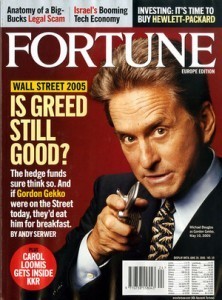
The Ayn Rand Institute is now accepting volunteers.
From the institute's website:
If you are unable to make monetary contributions or just want to do a little extra to help ARI, we invite you to become a volunteer!
ARI relies on volunteers to assist us with various departmental projects and with the running of special events. While we have a wonderful and very capable staff, we can always use additional help at peak times.
If the irony of this doesn't slap you upside the head, you must not know who Ayn Rand is.
Ayn Rand is most well known for her novels The Fountainhead and Atlas Shrugged. She is a champion of rational egoism: an action is rational only if it maximizes self-interest. And she spoke out against ethical truism: our actions should serve and benefit others even at the cost of our self-interest.
Basically, her philosophy is that if we all look out for "numer uno" then society will take care of itself. Her philosophy is a precursor to Gordon Gekko's "greed is good" mantra.
If that's the case, then why would anyone volunteer, ever? How could the Ayn Rand Institute ask for volunteers without shouldering an Atlas-like load of hypocrisy?
The act of volunteering, and any act of civic engagement, can serve your self-interest.
I moved to Muncie in 2007 after a decade of homelessness. Nope, I wasn't living out of a grocery cart. But any day over the previous decade could have found me in one of four states or fifty different countries. I was a citizen of everywhere and nowhere.
Muncie is the first place I ever began to settle into as an adult. Ayn Rand might cringe a bit, but as I settled into my new home, I wanted to give back. I became a big brother, I began working with a group that helps lift people out of poverty in Muncie, I raised $30,000 for a charity that works in the slums of Africa, and I raised $3,000 for people living with cancer.
I like to think my motives weren't selfish, but let's say they were. What did I get out of giving back?
I dined with the CEO of Ford, a host of West Point leaders, and member of President Obama's cabinet at an exclusive Park Avenue event.
I've met city council members, county commissioners, and state senators.
I've learned how to ask for money.
I ran a marathon and got in the best shape of my life.
I got a free trip to Africa and back on which I collected stories that I eventually got paid for, and that I'm now compiling into my second book, which I'll get paid for again.
I was featured in ads in Relevant Magazine – free publicity that led to sales of my book and paid speaking engagements.
My little brother has helped me learn more about Muncie, what there is to do, and what raising a teenager might look like when my kids become teens.
And just since joining the Leadership Board, BJ has helped guide me to amazing resources that are helping to shape a possible new business venture and Brandon has taught me how to use social media better.
I've gained financial and social capital, and enhanced and learned skills. Not even considering all of that warm and fuzzy moral obligation to help others stuff, giving back has paid off big time.
Ayn Rand would be proud! But my grandma is too!
How will giving back pay off for you? Become a member of the Leadership Board and find out how membership can benefit you. If you're not in the Muncie area, here's a resource I compiled to help you find volunteer opportunities in your area and around the world.


Announcing LeadershipBoard.org: Follow your passion & lead the way:

I'm excited to announce a new local group that I've helped found in Muncie along with Brandon Coppernoll and BJ McKay – LeadershipBoard.org. Last week we appeared at our first public event – Converge 2011 at the Horizon Convention Center. Today, I'm doing a three-part series on LeadershipBoard.org.
To kick the day off and to bring you up to speed on what we're about, I simply cut and pasted our About page below. ( I wrote it, so why not!) I'd love for you to check out the site, if you're a resident of Muncie we'll find a way to put your feet on the ground and start making connections and a difference. If you're not a resident of Muncie, I'd still love for you to join our discussion on the site or facebook.
Our Vision
A community overflowing with young, professional leaders addressing serious issues.
Our Mission
To grow and connect future leaders and harness their individual skills into an unstoppable force of good.
Grow
What do you want to get better at? The Leadership Board is a peer-to-peer education resource that can help you grow your skills. Tap into our community and make leadership development happen in your world.
Become a community leader and advocate by doing the things you love:
social media
civic engagement
public speaking
writing
design
marketing
event planning
Connect
Did you ever think what would've happened if Batman never had Robin? At some point all of our utility belts are missing the utility that we need. To strengthen our careers and missions we need to connect with others who are strong where we are weak.
So, you're not a millionaire playboy with a penchant for dressing in tights? No problem. The Leadership Board unites Batmans and Robins.
Peer-to-peer education resource
Online and face-to-face the Leadership Board connects leaders through upcoming events, engaging presenters and workshops. The Leadership Board is a network of do-gooders. We are mentors for mentors and where leaders turn for direction.
Harness
The Leadership Board harnesses its members abilities and laser-focuses them on issues in our community. We raise funds and awareness, inspire others to give back and develop mentors.
Our Pilot Initiative
Researchers found that after 18 months of spending time in the Big Brothers and Big Sisters program, the Little Brothers and Little Sisters, compared to those children not in the program were:
46% less likely to begin using illegal drugs
27% less likely to begin using alcohol
52% less likely to skip school
37% less likely to skip a class
33% less likely to hit someone
Mentoring matters. It makes a difference. Yet in the Muncie community their are 30 little boys waiting for matches. Some of them will wait for two years before being matched.
This is unacceptable.
We know how fun and rewarding being a Big can be. There should be a waiting list to be a mentor, and we won't rest until that happens.
July 28, 2011
Asking the wrong questions about TOMS Shoes

I'm quoted in a LA Weekly story on TOMS shoes.
Since I've started to think about and research TOMS my stance has been best summed up as such: the problem isn't shoelessness; it's poverty.
At the best TOMS is addressing a symptom of poverty, not poverty itself. At the worst, TOMS is exploiting those living in poverty to sell shoes and hindering the local shoe business of their giving locations by giving away free shoes.
The author of the piece, Patrick McDonald, even gave me the last word on TOMS in the piece:
"You see the impact of how a job can change lives," says Timmerman, "of how it can give a person dignity."
He adds, "TOMS is a feel-good story, but you pull back the veil a little bit and you just go, 'Oh, man, I really wish that's not the case.' "
But it's not the last word that makes me uneasy about this piece. It's the first words. The piece is titled: "Is Blake Mycoskie an Evangelical?" (I knew that the business model of TOMS was being called into question when I granted the interview, but I didn't know the hook was going to focus on the religious beliefs of TOMS' founder.)
So what if he is?
From the LA Weekly story:
Christianity Today reporter Sarah Pulliam Bailey points out that, in the past, Mycoskie's evangelical activity "hasn't been a problem for him. But now, it is."
She revealed July 10 that Mycoskie attends Mosaic, an L.A. evangelical Christian church that's considered more multicultural than mainstream evangelical institutions.
Mycoskie also spoke at an official TOMS event at Abilene Christian University, an evangelical college that refused to allow formation of a gay-straight alliance; and at an evangelical Christian conference hosted by influential pastor Bill Hybels of Willow Creek Community Church, a megachurch that has promoted the idea that gays and lesbians should be celibate or seek therapy.
The whole "Blake is an evangelical Christian and evangelical Christians hate the gays" leap is a big one. Yes, there are churches and groups that are actively involved in the anti-gay rights movement, but it takes a pretty broad brush to say they ALL are — every single one of them — for praying away the gay. This whole issue blew up after Mycoskie spoke to Focus on the Family a group known for it's strong anti-gay stance.
In response to the uproar Blake writes on his blog:
These past few weeks have been some of the most difficult of my life. When I accept an invitation for a public speaking engagement, my purpose is to share the TOMS story and our giving mission. In no way do I believe that this means I endorse every single aspect of the organization I am speaking to. That may be naïve, and you may disagree, but it is my sincere belief.
As someone who speaks all over the country to all kinds of groups, I agree with Blake. I've talked with groups whose worldviews are different than my own. In fact, I think it's important to do this. Whether on stage or in life we shouldn't isolate our interactions to those who only see the world exactly as we do. Otherwise – if we believe their views need changed – how will we change them?
I believe that gay rights is a human rights issue and not a faith one. But it doesn't matter what I believe about gay rights because groups don't bring me in to talk about it. To me it doesn't matter what the groups politics or faith is, I have my message and I'm honored to deliver it. I suspect Blake is the same.
But the question about Blake shouldn't be, "Is he an evangelical? It should be, "Can producing shoes in China for $2.50, selling those shoes to American consumers for $60 using the faces and feet of the world's poor as a marketing agent, and giving an even cheaper pair of shoes away in Ethiopia, all while being a private company operating with the opacity with which that provides, an ethical way to do business or just a way to make lots of money? To me TOMS 1-for-1 model looks more like 1 for TOMS and .1 for those living in poverty.
Nike has more social accountability than TOMS. And all of this "Blake believes in Jesus so he must hate gay people" business is just distracting from what really matters…
People that have jobs can always buy shoes.
I'd like to see TOMS manufacture all of their shoes in factories that provide good jobs that put the workers' kids through school and improve lives. If they did this, I would go from being the go-to-guy for quotes criticizing TOMS to one of the company's biggest supporters.
That would be a business I would support, and, I don't care what you believe, I'd tell you about it.
—

Does this guy look like he'd be against gay rights?
July 27, 2011
A brush with the paparazzi

On Monday I had my photo taken at least a thousand times by no less than 20 different photographers. It was one of those psuedo-famous moments where I felt like I was someone else, maybe even Lady Gaga. (Note: My butt cheeks weren't hanging out.)
I was addressing high school students participating in Ball State's summer journalism workshop. Photogs circled around the stage, in front and in back. At the top of the auditorium they stood on seats and tried to get an angle that no one else had imagined. I was less of a pseudo-celebrity and more of a bowl of fruit.
The title of my talk was "Confessions of an Untraditional Journalist." You can read a summary of the talk on the site of the workshop. I talked about my path to do doing what I do today and how I didn't wait for permission or assignments to go and tell the stories I wanted to tell. I should write this all down in a future blog post.
After my talk I did a 10-minute interview with some students that you can listen to here. The first question the student asked I found particularly interesting: "Have there been any stores that you've been emotionally unable to tell?"
A summary of my answer: It is my responsibility to the people who let me into their lives to tell their stories. I've yet to come across a story that, with the passing of some time, I've been unable to write about. That's the thing I love about writing: it helps me make sense of the world.
July 22, 2011
WTAMU using WAIW as their first year reader!

I'm not sure if I've shared this yet, but four schools in the great state of Texas are using "Where Am I Wearing?" as a common reader this fall. This means that every single freshmen will get a copy of the book and be expected to read it. How awesome is that?!?
West Texas A&M University located just south of Amarillo is one of those schools. Here's what they had to say in a recent press release about selecting WAIW in:
"We always try to select books with global issues for the Readership WT program and to have students consider what kind of impact they can have on our local and global communities," Kendra Campbell, director of First Year Experience, said. "With this year's book, Kelsey Timmerman gives us insight into the lives of people from several locations around the world and has us consider how we are connected to their circumstances."
Copies of Where Am I Wearing are being distributed to incoming freshmen at the various New Student Orientations scheduled at WTAMU throughout the summer and at Buff Branding. Not only will the students be encouraged to "check your tag" but also to take part in the essay contest on the book, and semi-finalists for a spring trip to Honduras will be announced at the annual Convocation Sept. 29. Timmerman, author of the book, will be the Convocation's keynote speaker. Where Am I Wearing also is the common reader for WTAMU sister schools Tarleton State and Texas A&M University at Texarkana.
"I love that it's something 18 year olds can relate to and be challenged at the same time," Campbell said. "They care about the clothes they wear, but have probably never considered how it connects them to the broader world. Their decision to buy that T-shirt had an impact on the lives of other people around the world. The conversation around the book reminds us to learn about the larger world of which we are a part and to strive to have a responsible impact on our global community."
I want to win the trip to Honduras! Am I eligible?
I think I'm facebook friends with every single student leader at WTAMU so far. In honor of WTAMU centering their freshman experience around the phrase "check the tag" I'm bringing back my daily tag check. Each day I'll do an update about where I'm wearing on facebook and twitter. I hope you'll join me. I'll use the hashtag #CheckTheTag.
July 21, 2011
New video game lets you be a lord of the sweatshop

Your boss is hounding you to produce more t-shirts faster, but he's not willing to give you more money to hire new employees. You have two choices: don't meet his unrealistic expectations or higher children at 1/3 of the price of an adult worker?
These are the decisions you face in the new online game Sweatshop.
Sweatshop is a light-hearted game, but it's based upon very present realities that many workers around the world contend with each day.
Littleloud and Channel 4 worked with experts on sweatshops to integrate some of these realities into the game design.
In addition, there are numerous facts and figures spread throughout the game, highlighting the plight of the workers who may well have made the clothes you are wearing today.
The review
The game is actually quite addictive. I like the retro graphics and sound track, which are very NES. Between levels, facts and stories about the industry are shared to remind the player that this is not a game. Facts like…
Of the total retail cost of a garment, less than 1% is shared between the people who made it in many sweatshops.
The thing I like best about the game is that you play from the POV of a middle manager and some times the right thing to do is a little ambiguous.
My biggest criticism is that, as the anti-sweatshop movement consistently does, it ignores poverty and doesn't address the question: Why would someone work in these conditions for such horrible pay and poor treatment? To survive the game you'll have to employee children and pay them less than an adult, but you never learn why it is that the child showed up at the factory in the first place.
The anti-sweatshop movement's lack of effort to focus on poverty and utter lack of context holds it back from making more and lasting change within the industry.
As I write in Where Am I Wearing?
…it's easy to inspire pity and to cry sweatshop. What's not easy is coming to terms with the context in which the factories and workers exist and initiating dialogue based on this.
 The real problem
Sweatshop, the game, is heartbreaking and in a guilty sort of way fun. It's both a reminder of both what is wrong with the garment industry and what's wrong with the anti-sweatshop movement.
Sweatshops aren't the problem. They are the symptom. The problem is poverty. The problem is an extreme lack of options. The workers can't say, "take this job and shove it!" because they are on the edge of not feeding their families. So they suffer unreasonable demands, long hours, and bosses like me who made it to level nine before someone died. After working three workers to death (I forgot to give them water), I still won the level. I still made money.
And that's where this game succeeds. Sometimes the wrong thing is the right thing for the company's bottom line.
July 13, 2011
The Human Narrative bends toward empathy
If I had to narrow the goal of my writing to one thing, it would be empathy. I try to make my readers feel what I feel or feel what it's like to be in my subjects' shoes. That's why I'm such a huge fan of this video and of Jeremy Rifkin's book, The Empathic Civilization.
Rifkin traces humans from our early day's, trying not to be eaten on the African savannas, to modern day, and how we have divided the world into Us and Them. First it was blood, then tribes, then religions, then nations, and so on. Our Us continues to expand. It's with some hope that our Us can expand to encapsulate all of humanity, the earth, and all of the other creatures on it.
What if empathy shaped our future, not wars? Riffkin argues that it always has and it always will.
When he talks about the "empathic civilization" I hear him talking about Glocals.
—
Some quotes from the video:
We are soft-wired for empathy.
Empathy is the invisible hand.
July 12, 2011
What do Indian call centers think of you?

"Hello," the heavily-accented voice on the line said, "this is T-Rex. How can I be of service to you today?"
I was calling about a credit card or maybe my website. I can't remember for sure, but I needed help and had to place the dreaded call to customer service.
"T-Rex? Your name is T-Rex?"
"Yes, sir, like the dinosaur in Jurassic Park!"
I'm glad he clarified that because I might have thought he was referring to the British band and that would just be weird.
What's your most memorable chat with India?
Andrew Marantz wrote an amazing piece in Mother Jones about Indian call centers. He actually worked in one!
On training:
For three weeks, a culture trainer will teach us conversational skills, Australian pop culture, and the terms of the mobile-phone contracts we'll be peddling. Those of us who pass the training course will graduate to the calling floor. Our first job at DCC will be to interrupt Australians at dinner and ask them to switch phone providers.
…
trainees memorize colloquialisms and state capitals, study clips of Seinfeld and photos of Walmarts, and eat in cafeterias serving paneer burgers and pizza topped with lamb pepperoni.
…
I loved that Marantz puts lives to the voices fixing all of our problems over the phone from the other side of the globe.
Every month, thousands of Indians leave their Himalayan tribes and coastal fishing towns to seek work in business process outsourcing, which includes customer service, sales, and anything else foreign corporations hire Indians to do.
…
They will earn as much as 20,000 rupees per month—around $2 per hour, or $5,000 per year if they last that long, which most will not. In a country where per-capita income is about $900 per year, a BPO salary qualifies as middle-class. Most call-center agents, however, will opt to sleep in threadbare hostels, eat like monks, and send their paychecks home. Taken together, the millions of calls they make and receive constitute one of the largest intercultural exchanges in history."
…
On his first day, Nishant donned his headset, dialed the number on the screen and was connected to a 60-year-old woman in Tennessee. She had an outstanding hospital bill for $400. "I told her, 'Just pay this, what's the problem?' She told me, 'You don't understand, I can't pay.'" They talked for 45 minutes, and the woman cried as she told Nishant about the Iraq War and its toll on American families. "By this time I'm crying also," Nishant said.
The same day, he was connected with a man living in a trailer. "I told him, 'What's a trailer?' He told me, 'It's this tin shed; it gets 90 degrees; we don't have our own washroom.'" Nishant learned more about America that first day, he told me, than he had in his whole childhood.
…
"When do we get paid?" asked a young man wearing a Nike cap, yellow-tinted sunglasses, and carefully crafted facial stubble. In New York, I would have pegged him as a party promoter from Long Island City.
"Very funny," Lekha said. "You'll be paid for your time, including this training, but only after you've stayed two months. You know the drill: We wouldn't want people taking off as soon as training is over."
During our first cigarette break, Mr. Long Island City revealed that, indeed, his plan was to do precisely that—he'd already gone through this routine at some 15 BPOs around Delhi. "Who needs to stay for the actual work? Plus," he added, flashing a salacious smile, "that way you meet more girls."
…
Call-center employees gain their financial independence at the risk of an identity crisis. A BPO salary is contingent on the worker's ability to de-Indianize: to adopt a Western name and accent and, to some extent, attitude. Aping Western culture has long been fashionable; in the call-center classroom, it's company policy. Agents know that their jobs only exist because of the low value the world market ascribes to Indian labor. The more they embrace the logic of global capitalism, the more they must confront the notion that they are worth less.
…
Australians are dumb and Americans will just shout at you.
"Just stating facts, guys," Lekha began, as we scribbled notes, "Australia is known as the dumbest continent. Literally, college was unknown there until recently. So speak slowly." Next to me, a young man in a turban wrote No college in his notebook.
"Technologically speaking, they're somewhat backward, as well. The average person's mobile would be no better than, say, a Nokia 3110 classic." This drew scoffs from around the room.
"Australians drink constantly," Lekha continued. "If you call on a Friday night, they'll be smashed—every time. Oh, and don't attempt to make small talk with them about their pets, okay? They can be quite touchy about animals."
"What kind of people are there in Australia?" a trainee asked. "What are their traits?"
"Well, for one thing," Lekha said, "let's admit: They are quite racist. They do not like Indians. Their preferred term for us is—please don't mind, ladies—'brown bastards.' So if you hear that kind of language, you can just hang up the call."
..
"Americans will just shout at you," Sube said. Mittu agreed: "I have only been cursed by Americans. They are sharp-witted and very articulated and yet very free with their anger."
The call centers prep the BPOs for seven types of callers:
"First is your eccentric!" she yelled.
"Second is your arrogant!
"Third is your bumpkin!
"Fourth is your quarrelsome!
"Fifth is your prudent!
"Sixth is your assertive!
"And seventh is your sweet-spoken!
What kind of caller are you? After reading this piece you might have a little more empathy for the Indian operator on the other end.
—-
And now a message from the other T-Rex!
Click here to view the embedded video.
July 11, 2011
Poverty of Community
I've been to some of the most poverty-stricken places on earth, including shanty towns, villages made up of mud huts, dumps where mothers and fathers scavenge alongside their children, and urban slums. What often strikes me the most isn't what they don't have, but what they do have: a strong sense of community, much stronger than our sense of community in Muncie, Indiana. Their communities live in abject poverty. We have a poverty of community.
What are you doing to build community?
July 4, 2011
Warning! Flaming Balls!
Happy 4th of July!
My buddy Alex here is pictured standing in front of a 7-foot and $350 box of artillery. Yes there's not much more American than these bombs of patriotism, made in China.

May your day be void of Flaming Balls!