Peter Smith's Blog, page 62
January 24, 2020
Natural deduction for quantifier logic
It’s very late in the day, as I hope to get IFL2 finally off to the Press within the next fortnight or so. But since the natural deduction chapters are new to the second edition it is understandable (I hope!) that I am still worrying away at them, tinkering here and there. Here then is the latest version of the three main chapters on QL proofs. Any last minute corrections and/or helpful comments (other than, perhaps, “use a different proof system”) will still be most welcome …
There is no real novelty here except perhaps by mistake: though one feature of the handling of QL proofs is the sharp distinction made between dummy names (parameters) and fixed-interpretation proper names, as I think this makes for conceptual clarity.
Some context for these chapters: As background, the reader will already be familiar with a Fitch-style system for propositional logic (pretty similar to The Logic Book‘s system, but with an absurdity constant and EFQ). The reader will also have done a lot of prior work on the language of QL, at least in an initial way, hopefully coming to these chapters with a decent understanding of the quantifier/variable notation, and a lot of practice at translations. They won’t, however have met yet the identity predicate, and QL= proofs will come later.
The post Natural deduction for quantifier logic appeared first on Logic Matters.


January 21, 2020
Category theory and quantum mechanics
My last link to something categorical turned out to be pointing to a less-than-splended online resource. I hope this is rather better!
I’d heard tell of people interested in quantum foundations and quantum information getting entangled (see what I did there?) with category theory. And by chance, I stumbled a few days ago across details of a course currently being run in Oxford. The course materials are a late draft of Categorical Quantum Mechanics by Chris Heunen and Jamie Vicary which has recently in fact been published as a book by OUP. This strikes me (in contrast I fear to that book I mentioned by Fong and Spivak) as extremely lucid and well-organized; and you don’t in fact have to read very far to see why quantum theorists might indeed be interested in monoidal categories as a mathematical tool. My QM is very very rusty; but if you have a smidgin of knowledge, this does seem worth dipping into, if only to get a glimpse from the sidelines about what the cool kids are up to …
The post Category theory and quantum mechanics appeared first on Logic Matters.
Empty domains, again
Here’s a rewritten four-page chapter from IFL2 on empty domains. Difficult to know how to handle this topic. Many intro texts just skate over the issue. An earlier draft perhaps said a bit too much a bit too confusingly. Hope this strikes a better balance. Last-minute comments always welcome!
(By the way, “sets*” with a star is my usage in the book for when I really mean sets as objects in their own right — the ones that play a starring role in full-blown set* theory — as opposed to when I’m occasionally using lightweight talk of virtual classes which can be translated away.)
The post Empty domains, again appeared first on Logic Matters.
January 20, 2020
Programming with categories, again
Well, I started watching the on-going series of lectures which I’d linked to a couple of blogposts ago. Frankly I can’t say the lectures are at all good, and can’t now recommend you try them. They all seem, to put it kindly, very underprepared, underpowered, undercooked, low in nutritious content!
I’d say more, but I’m saved the effort because there’s now a long comment to that earlier post sent by Peter F. which well expresses some of my concerns about the whole thing.
The post Programming with categories, again appeared first on Logic Matters.
January 13, 2020
January 9, 2020
Programming with categories
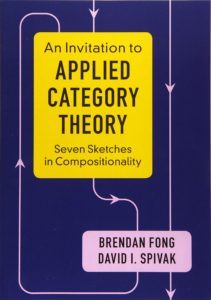 One of the books I’d set aside until the main work on IFL2 was done and dusted is Brendan Fong and David Spivak’s An Invitation to Applied Category Theory (CUP, 2019 — there’s a late version freely available here). I’ve now had a first proper look. I can’t say that the book overall works very well for me. When the authors are talking about things I already know a fair bit about, I find there are indeed interesting approaches and illuminating comparisons. But when they are introducing new-to-me material it, all goes by too fast to be very helpful. That could of course just be a comment on my inadequacies as a reader! — but I’d be quite surprised if mine weren’t a common reaction. Chapter 7 on sheaves and toposes, for example, is surely going to pretty impenetrable to someone who doesn’t already have some handle on this stuff.
However, there are obviously lively minds at work here, and so I’m encouraged to take a look at another of their projects — an MIT course of lectures with the estimable Bartosz Milewski (whose Category Theory for Programmers I think is terrific). The course, Programming for Categories, has a web page here with planned links to videos of each lecture and also links to lecture notes. The lectures are just starting, and new videos/notes should appear five times a week for four weeks. I’ll hope to learn a lot!
The post Programming with categories appeared first on Logic Matters.
January 6, 2020
Logic: another “Five Books”
There is an entry I hadn’t noticed before (a recent one?) on the always interesting though sometimes annoying Five Books website, this one suggesting five books on logic.
The recommendations come from Tom Stoneham (a professor of philosophy at York). And they do seem to me to be a somewhat rum collection. I wouldn’t have dreamt in a month of Sundays of starting with Colin Allen and Michael Hand’s Logic Primer (this very brisk and to my mind dull effort may or may not work as a back-up to a suitably tailored lecture course, but as a teach-yourself book there are surely dozens better). Wilfrid Hodges’s Logic, Stoneham’s other mainstream textbook recommendation, is a vast improvement; but has its quirks. While the idea that you’d recommend Wittgenstein’s Tractatus to someone wanting to find out about logic and why it matters strikes me as frankly perverse.
But it is very easy to carp! So what would I be recommending to the same intended readership?
Well, why not start off with Graham Priest’s typically zestful Logic: A Very Short Introduction (OUP), which should intrigue and tantalize.
And then I’ll suggest — well, forgive me, but of course I will! — the forthcoming second edition of my Introduction to Formal Logic (CUP) as a gentle introduction with a natural deduction flavour, followed by Nick Smith’s longer and more discursive Logic: The Laws of Truth (Princeton). My namesake’s book engagingly re-covers the same ground as mine and rather more as it highlights trees, with more side-discussions along the way (lots of interesting endnotes!).
I’ll follow Stoneham in rounding off the introductions to formal work with two more books that look sideways at related philosophical issues (rather than pushing on with more technical logic — the TYL Guide will give someone more than enough pointers on that!). But which two books? Stoneham recommends Quine’s short Philosophy of Logic as being “all about the philosophical arguments that underlie the decisions to do logic in one way or another”. But my book and Nick Smith’s already say quite a bit of that. So let’s set Quine aside, good though it is. As an alternative, how about Stephen Read’s still zippy, but more expansive and more adventurous, Thinking about Logic (OUP)?
Stoneham also recommends Mark Sainsbury’s Paradoxes, but this revisits topics already touched on in Graham Priest’s little book and in Read’s. So why not have some very instructive logical fun with Raymond Smullyan (to be read in parallel with the worthy books by the Smiths!)? How about starting with his old What is the Name of this Book? (now republished by Dover)?
So there you have Stoneham’s five (if you’ve clicked the link, you can also read his reasons, which I’d certainly want to challenge), and you have my five (as of this evening!). What would be your five, still bearing in mind the intended audience?
The post Logic: another “Five Books” appeared first on Logic Matters.
December 31, 2019
Three CDs of the year
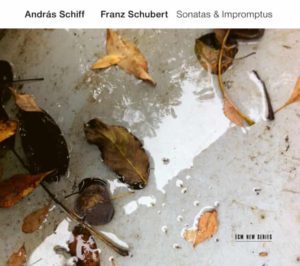 Schubert’s late piano works have long been some of the most important music of all for me. So one of the highlights of this last year was going to hear Imogen Cooper’s wonderful 70th birthday concert at Wigmore Hall, when she played the last three sonatas, every bar revealing her deep and lasting engagement with this music. More recently, I’ve discovered Francesco Piemontese’s rightly much admired recordings of the same sonatas. But the most revelatory Schubert this year must surely be the second installment of Andras Schiff’s recordings made on a Franz Brodmann fortepiano, made in Vienna around 1820. Schiff’s performances are utterly convincing and make you hear these pieces anew; I was bowled over again, as I was by the preceding disks. Listen, for example, to the Drei Klavierstücke D 946 (favourites of mine): magical playing.
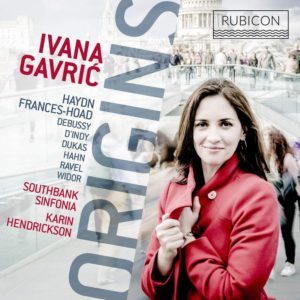 I have much admired Ivana Gavrić’s previous recordings, and praised them here. So I would have bought her new release, whatever it was. This new CD, Origins, starts with a sparkling performance of the Haydn D Major Concerto (it took me a few moments to adapt my ears to the orchestral texture, so used am I to listening to “period” performances of Haydn, but this is joyous playing). There follow the six short homages to Haydn for solo piano commissioned from French composers for the 100th anniversary of his death, and a seventh homage from Gavrić’s Cambridge contemporary, the composer Cheryl Frances-Hoad. And then there follows a performance of the piano concerto Between the Skies, the River and the Hills written for Gavrić by Frances-Hoad. This nods to Haydn (particularly his last movement thought sometimes to be based on a Bosnian dance) and uses a Bosnian folk song in its own third movement: the connection here is that Gavrić herself was born and spent her early years in Sarajevo. There’s more about the CD in three short videos here. I’ve listened and re-listened with warm admiration — both for Frances-Hoad’s composition and Gavrić’s playing! — and I have enjoyed this CD a lot: well worth seeking out.
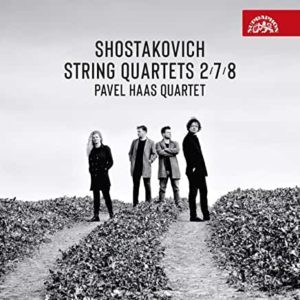 But the CD of the year has to be the Pavel Haas Quartet’s Shostakovich disk. This isn’t comfortable listening. As the reviewer on the BBC Radio 3 Record Review programme put it, “It’s absolutely gut wrenchingly intense. It’s almost unlistenable to, it’s so fabulous, it’s such committed playing, it’s such deep, deep sincerity.” That gets it exactly right: I’ve heard them play Shostakovich in concert with the same completely overwhelming mastery and emotional depth. This is all quite extraordinary playing, intense indeed, but also in places heartstoppingly beautiful (listen to Veronika Jarůšková in the Adagio of the 2nd Quartet). There’s a revealing interview with PHQ here that tells us something about how they prepare and rehearse and come to terms with the music with such concentrated attention: the result is stunning.
The post Three CDs of the year appeared first on Logic Matters.
December 30, 2019
Teach Yourself Logic 2020 updated
Since I posted it on Dec 11, the newly revised Teach Yourself Logic Study Guide has already been visited a few thousand times — more than enough to confirm my impression that it is worth continuing to maintain and update the Guide when the spirit moves me.
Thanks in particular to some very useful comments from Daniel Nagase when I posted that initial version (see the comments here), I have now updated TYL 2020 again.
The post Teach Yourself Logic 2020 updated appeared first on Logic Matters.
December 24, 2019
A Christmas card

Fra Filippo Lippi, Mystical Nativity (or The Adoration in the Forest) c. 1459
With every good wish for a happy Christmas and a peaceful New Year.
The post A Christmas card appeared first on Logic Matters.