Paul O'Connor's Blog, page 3
February 5, 2023
“Everything is engaging, or can be made so. There is no p...


January 18, 2023
Super-commuters. A promise of return.
This is another piece I wrote for Emigre Travel.
January 16, 2023
January 7, 2023
BBC Radio 5 Live - In Short, Skateboarding in middle age can help mental health
It came to my attention that this recap of an interview I did last January on BBC5Live with Sarah Brownlow has been receiving renewed attention. I don’t think I posted it before… so here it is now.
December 24, 2022
Hostile designs across public campuses in the United States, United Kingdom, and Australia
Chris Giamarino has led a new project which I have collaborated in alongside Dr Indigo Willing. We looked at skatestoppers on University Campuses in the US, UK, and Australia. This blog post details some of the photo evidence and gives context. The full article will be out early next year in Cities & Health.
I feel quite strongly that the pedagogical and social impact of skateboarding is precisely the sort of thing university campuses should be encouraging. All the entrepreneurial talk of innovation and collaboration and the grass roots model for that exists in skateboarding. Also, aren’t skateboarders the type of tenacious, creative, resilient folk that universities want?
I was very happy to contribute to this project as it connects with my feelings about participation and access in Higher Education. You can read more of that in my THE article.
Some universities are starting to cotton on to this… (Research Notes)
https://sport.leeds.ac.uk/sports-a-z/skateboarding/
https://engage.luu.org.uk/groups/P3P/skate?utm_source=luuorguk&utm_campaign=clubsocpage/
https://www.thestudentroom.co.uk/showthread.php?t=4195457
https://www.thesubath.com/bathskaters/
Nottingham is way out there in the lead https://www.ntu.ac.uk/research/find-a-phd-opportunity/studentship-projects/skateboarding-for-all-exploring-inequality-in-beginner-focussed-skateboarding-content
https://www.metroleague.org/why-we-should-skateboard-in-college/
December 18, 2022
Concerning Grey Spaces: Contradictions and Conceits of Urban Leisure
I wrote about my most recent collaborative publication and blogged it on Medium.
Follow the link.
December 9, 2022
New Publication: ‘Skateboarding in the Anthropocene: Grey...
New Publication: ‘Skateboarding in the Anthropocene: Grey spaces of polluted leisure’.
Latest article in Leisure Studies with co-authors Clifton Evers, Brian Glenney, and Indigo Willing. We discuss skateboarding both materially and symbolically through pollution.
Symbolically, Skateboarders occupy a grey space, seen as both pollution while reusing the overlooked spaces of the city, and polluters via mass consumption, travel, and waste. Materially, skateboarders occupy the grey spaces of our built environment, amidst its smog and fumes.
Their terrain is the anthropogenic rock, concrete, and their leisure takes place in the grey spaces of the urban, the skin of the city.
The article is Open Access and free to download. Follow the link.
November 7, 2022
Lefebvre’s Triad and the MetronomeI sketched this diagram for an...
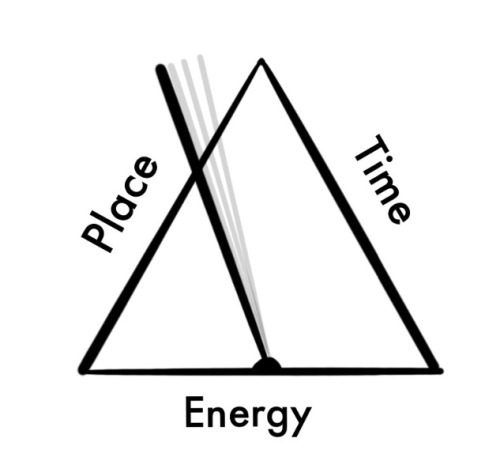
Rhythmanalysis Lefebvre's Triad as Metronome (Paul O'Connor)
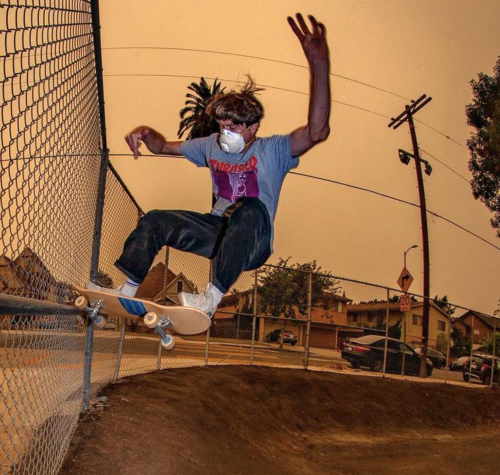
Steve Mull June 2020 Los Angeles during Covid and Smoke Pollution from local fire (Photo: Brian Glenney)
Lefebvre’s Triad and the Metronome
I sketched this diagram for an academic paper on skateboarding and rhythmanalysis that Brian Glenney and I worked on. Originally Brian’s idea, we were discussing skateboarding during Covid and the new patterns that emerged. We performed our own little mini ethnographies but when the paper took form the feedback we received was to basically jettison the ethnographic stuff and stick to the social theory. The accompanying photos of Steve Mull and video below comes from Brian and captures both the discordant nature of skateboarding and the polluted leisure aspect that we have been toying with. If you want to read the full published academic paper - it is open access and free to download here.
This post acts as an annex for Brian and I to share some of the additional content.
Firstly, the diagram is for me a helpful way to think about the conceptual triad that underpins Lefebvre’s thinking on rhythmanalysis.
“For Lefebvre the first step to understanding is that rhythm always begins with the body. In this way, his temporal science rests on organic foundations, it is fleshy, grounded, tactile. It occupies space and moves through time. The body is also a repository of rhythms, from heartbeat to sleep patterns and thus we recreate the social world with a panoply of rhythms in the tempo of our walking, talking, play and work. As creatures of rhythm, phenomenologically we experience the world through rhythms. At the heart of Lefebvre’s body of work is the importance of the body subsumed in capitalism. His critique of everyday life is concerned with rupturing the hypnosis of the capitalist world and remaking life afresh. The body as organic, the society made up of these bodies, and the economy dependent on the very same bodies all collide as nodes of analysis. (Glenney & O’Connor 2022: 3)
I used the metronome to express this idea because I spent much of the first year of Covid at Stalin Plaza in Prague. The metronome was for me the perfect representation of rhythmanalysis, and the arrhythmia of skateboarding disaster leisure that Brian and I seek to articulate. Part of what makes it so poignant to me is the history of the spot and relevance of compressed and disrupted time.
What follows is my culled text from our original draft article. It includes lots of observations and meanderings and hopefully add context to the diagram. My musings first and then Brian’s.
Arrhythmia at the Stalin Metronome (Paul)
The arrhythmic issue was apparent to me months before the first news of Covid-19 broke. lockdown began on the 4th of March in Prague, Czech Republic. I badly sprained my ankle in December of 2018 and had made a slow recovery. Injury is a distinct example of arrhythmia for skateboarders, always a haunting spectre, unpredictable and disruptive and relates directly to Lefebvre’s understanding of rhythmanalysis as beginning with the body. I was acutely aware of how my skateboarding had been interrupted and frustrated that, as an ageing skateboarder, I was already battling time. A further rhythmic break could be traced to my working schedule where I was immersed in finishing a book, and the decision in April of 2019 to leave my long time home in Hong Kong and move to Prague, leaving behind friends and a long established skate community. I was buoyed by the fact that at least, on arrival in Prague I would be able to skate the legendary Stalin Plaza only minutes from my new home. Yet shortly after arrival my time at the plaza was cut short as Stalin was closed due to structural concerns.
The rhythmic importance of Stalin Plaza extends beyond skateboarding. The area at the summit of Letná park was home, for only a meagre seven years, to an enormous 17,000 ton 15 metre high statue of Josef Stalin erected overlooking the city. It was demolished with dynamite in 1962 after the statue became an embarrassment to the Soviet regime concerned with downplaying the personality cult of Stalin. To this day photographs and footage of the statue are rare, almost erased from history. After the end of the cold war a giant metronome was placed on the podium where Stalin’s statue once stood. The metronome is thought to be a reminder of the trials of the Czech people’s past and evocative of their future hope and aspirations. For thirty years skateboarders have occupied the plaza and retained the name Stalin despite the metronome they skateboard beneath.
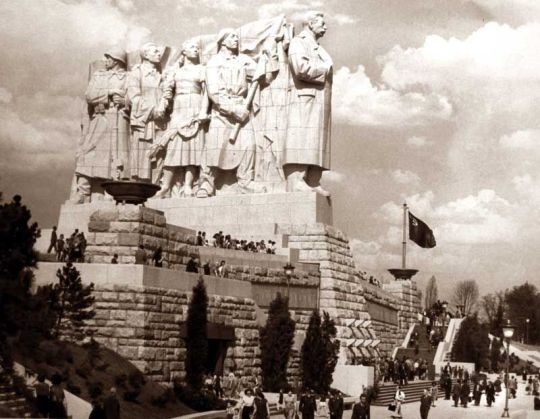
When Stalin Plaza opened again in mid-October 2019, my skateboarding resumed only to then to be interrupted weeks later by the assault of European winter. This was a reality I had not endured for nearly twenty years. By the time the weather was improving the news of the virus had become more urgent. I was all the more alert as my 15-year-old son occupied an at-risk category being Type 1 diabetic. I voluntarily kept him home from school one week before the official lockdown began. Immediately I compromised the rhythm I was just getting back, of skateboarding three or four times a week. This was a disruption that had become all too familiar. The only constant it seems, is the repeated fracture, rupture, and discordance of rhythm. Skateboarding seems in some ways such an unnatural habit that it is coarsely affected by daily nuances, rain, daylight, day, time, work and health. It seems much more accessible to youth, free of the routine and obligations that adulthood brings. But my first instinct was relief, after more than a year of trying to get my skateboarding rhythm back, it was no longer possible. I need not try. Everyone was now subject to the same arrhythmia.
While I refused to go skateboarding, deeply cautious about bringing the virus into my home, I immersed myself in the ways other skateboarders were managing the lockdown. Twitter for talking about it, Instagram for viewing it. Stalin plaza featured in my feed regularly with skateboarders donning the masks that became a legal necessity in the Czech Republic in mid-March. The metronome ever-present in the background, but the type of skateboarding being enacted transformed.
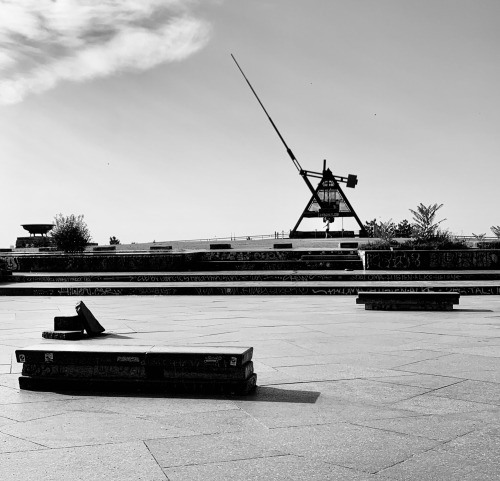
In other clips celebratory high-fives after landed tricks were dropped for elbow bumps. Skateparks were increasingly shunned as skateboarders chose to skate in small groups, or solo in the desolate parts of the city. Obviously, this was not universal, first I got news that a skatepark in Brisbane had been covered in sand to prevent skateboarders using it during lockdown (Barnsley 2020). News from Hong Kong that skateparks were locked and closed to the public. Next I heard that a park in Houston Texas had angle iron welded on to the metal ramps at the local park. Most evocatively in Los Angeles the Venice Beach skatepark had tonnes of sand bulldozed into it (Castrodale 2020). Reactions on social media were diverse, some claiming the park would be forever ruined, others embracing the opportunity for skateboarders to return to the streets. Unthinkable at the start of the year, the 2020 Olympics postponed, an event that appeared to loom large in the skateboarding calendar, eradicated. Then news much closer to home only a few minutes’ walk from my apartment in Prague that another statue, this time of a controversial Russian general, was opportunely removed by the government during lockdown. I learned of Russian protests (RFERL, 2020) and hoped that the marble that surrounded the statue where I would occasionally skate, remains in place. After weeks at home I began to venture back to Letná park, but as yet, slowly returning to Stalin and the metronome. I embraced skateboarding alone, my sessions infrequently punctuated by a jogger or dog walker. I went out typically earlier than other skateboarders, and yet still due to Covid there were few people around. Others were skateboarding at home, in the back yard, garage, or living room. One morning while skateboarding I was approached by another solitary skateboarder. He appeared a novice and solicited some information about his board. He moved too close to me and wore no facemask. Immediately I sought to distance myself from the stranger, breaking the communal code of skateboarding, the fraternity that is so often celebrated. However, it was evident that this was a return to the subcultural boundary construction of skateboarding where tacit knowledge was the dominant currency. A bygone era where observation was key, earning the right to be spoken to, not the freedom to ask banal questions about wheelbite. I quickly felt a nostalgia for the past where the abrasive and arcane culture of skateboarding required effort to decode. I felt uncomfortably aware that I was shedding a prosocial discourse that had been imposed on me and I had long been complicit with. This further supports my belief that skateboarding is arrhythmic, discordant, yet always seeking transformation. As Lefebvre argued, the banality of everyday life is waiting, expectant, pregnant for revolution.
Vermont Winters (Brian)
Vermont winters, notorious for their unpredictability, descended in early November 2019, simultaneously ending the skateboarding season while opening the popular alternative board sport season of snowboarding for many locals. This is a rhythmic occurrence, a New England norm contributing to its familiar beat diagnosed as follows by Lefebvre:
Everyday life remains shot through and traversed by great cosmic and vital rhythms: day and night, the months and the seasons, and still more precisely biological rhythms. (Lefebvre, 1992, p. 73).
This seasonal beat in a Vermonter’s life is habituated in the local skate scene. DIY Curbs, metal bars, ramps, and ledges begin to appear at the local covered garage just outside of Burlington, Vermont’s main city, known as “The Gardens” and there are nightly sessions that dwindle as the temperatures decrease and security guards and police become aware of our presence. However, this winter was given way to a special disruption from a re-formed indoor non-profit skatepark that opened in January, with a dedicated space for skateboarding, Talent Skatepark. This reprieve from the cold was short-lived, as the park was shut down again early March in response to the pandemic, de-regulating a new habit. A return to The Gardens was imminent, but was in fact not needed. The winter and its snowfall was mercifully short, opening the streets for, albeit cold (-2 C average), street skating.
Overall, things did not feel normal in the 2019-20 Vermont winter. Why? The meaning of time, as Lefebvre writes, cannot be separated from the meaning of place:
Concrete times have rhythms, or rather are rhythms – and all rhythms imply the relation of a time to a space, a localised time, or, if one prefers, a temporalised space. Rhythm is always linked to such and such a place, to its place, be that the heart, the fluttering of the eyelids, the movement of a street or the tempo of a waltz. (Lefebvre, 1992, p. 89)
On this view, if our habituated place for skating shifts—from the streets, to a park, back to the streets, so too does our habituated “time we are skating.” And if this spatial shift becomes deregulated, then the meaningful rhythm or beat has also become irregular, perhaps accounting for the lack of energy by local skaters.
However, as Winter ended during this shut down, there came new opportunities as the streets were empty and the temperatures were up in March to a blazing high of 45F (7C). In normal conditions, the streets would be flooded with skateboarders. But, as there was never a pandemic “season” to habituate to, it seemed that this was more of a disruption and time was spent re-habituating to a new “pandemic” rhythm. The domestic duties that constitute most of a skateboarder’s life became deregulated. It’s not just that we were currently “stay to work” but also “stay to play,” “stay to eat,” and “stay to fitness.” Our time was arrhythmic, “a discordance of rhythms (p. 16).” The spaces of production: work, play, eating, and fitness were cemented to the park, the café, and the gym. Now at home, everything about them is askew, we all were suffering an existential pandemic of arrhythmia.
In addition, the entire country was in an arrhythmic pandemic, just as an arrhythmic heart also predisposes one to physical disease and death: an arrhythmic supply chain predisposes it to overproduction: both supply waste and empty shelves. An arrhythmic economy predisposes it to massive job losses: 16 Million in three weeks, and a Market Crash (- 28%), and also some of the largest gains since 1938. No doubt an arrhythmic existence does the same for our sense of meaning and purpose as so many people suffer and die while we shelter with our families and make new beats for our long-suffering threat.
But this discordance was shaken off after a few weeks, and the appearance of skateboarders in the streets became a new normal. It was common to see skaters at local spots and the main skatepark, A-Dog, remained open as long as skaters practiced social distancing. However, we saw an increase in street sessions, with spots previously policed being free to skate, but for the occasional security guard dropping by as if they still had a job. Skateboarders were again back in the streets with a new freedom from pedestrians, police, and cars. In addition, A-Dog was finally closed May 1st, due to a lack of social distancing, with two-weeks left of stay-at-home orders. With this hybrid space closed, would skaters take over the streets?
In addition, what are the streets in a time of coronavirus? Given the freedom from disruption, do the streets become a fully realized park? If the streets lack their arrhythmic beat, can skateboarding be discordant? This is a test-case for our thesis.
Lefebvre’s Cure: Know Thyself
Lefebvre’s spatial and temporal theories help us understand the shifts in spatial and temporal meanings that occur to socialized humans in disaster. His prescription? Attend to the disruption to learn about yourself. He’s right I think. It seems that I’m more aware of my past rhythms now that they are unavailable. If I’ve learned anything, it’s how little I knew, or as Lefebvre puts it: “rhythm enters into the lived; though that does not mean it enters into the known (p. 77).” Now is our time, as Socrates wrote so long ago, to ‘know thyself.’
As a postscript to these thoughts here is Steve Mull masked skateboarding as polluted leisure amidst Covid and a smoke pollluted L.A. (courtesy of Brian Glenney)
Text Brian Glenney / Paul O’Connor
October 22, 2022
The Car Skate Video ConnectIt is widely known that Iain Borden...
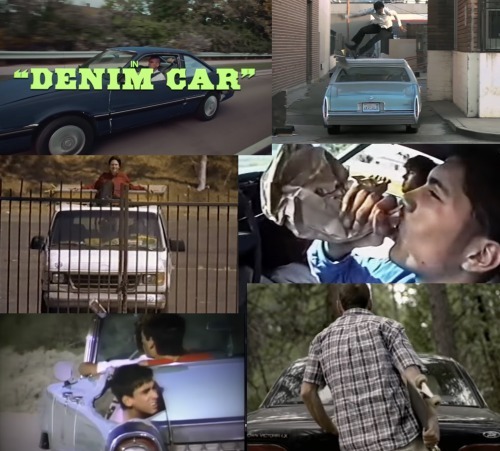
The Car Skate Video Connect
It is widely known that Iain Borden has the seminal text on skateboarding and his 2019 reboot consolidated this authority. But it is perhaps much less well known that Iain also wrote a fascinating book on the bond between film, cars, and landscape. Looking at a host of iconic movies and the way they give a feel to landscape, place and time.
The recent release of of Gilbert Crockett’s Denim Car got me thinking of the numerous times that cars make narrative contributions to skateboard videos. Jobs Never stood out as the most immediately analogous to Iain’s book. A dream project could be for Iain two mesh these two pursuits.
I put together a quick collage of some standout scenes in my own mind. I am sure there are many more.
October 6, 2022
Realised I have not recently updated my archive here on...
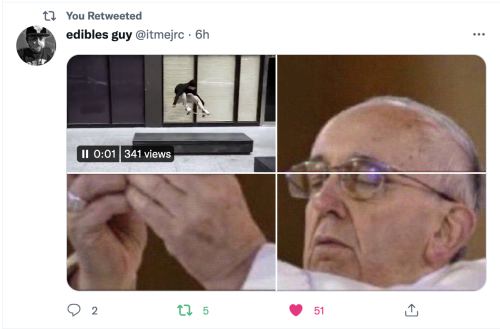
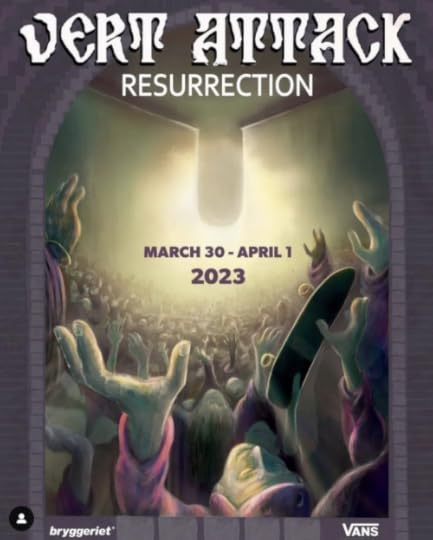
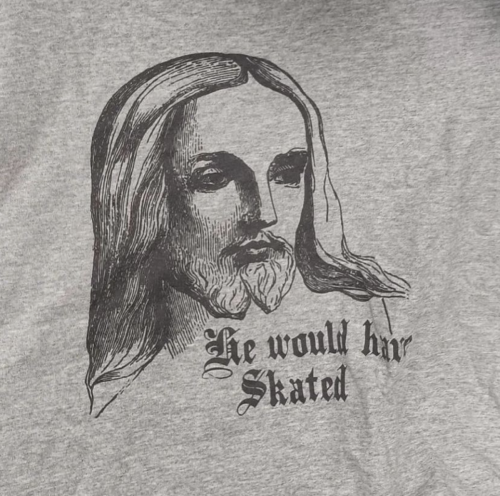
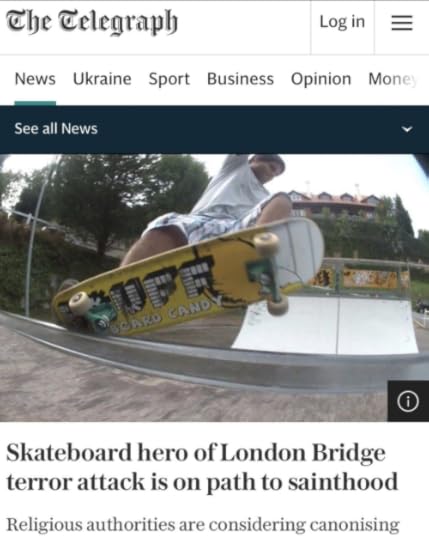
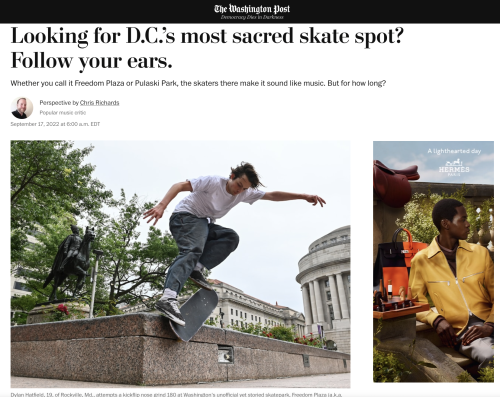
Realised I have not recently updated my archive here on Skateboarding and Religion. Simply there is so much stuff I just post the ones that amuse me on my Insta ( https://www.instagram.com/skateboardingreligion/ ).
Anyway for the archive, and to underline why my book exists. Here are a few more.