Jeremy L. Jones's Blog, page 6
February 27, 2020
8 Things About The Huralon Incident
It was supposed to be a simple mission. Evander McCray and his crew have taken the newly-christened warship Springbok out to hunt down a pirate that’s been plaguing the Huralon system.
But when he captures the cunning and cruel Mallouk, McCray accidentally triggers a political firestorm that threatens to cost the lives and freedom of the entire population of Huralon. Now McCray must fight for his own life and that of his crew while Mallouk launches a propaganda campaign for Huralon to succeed from Elysium and join the theocratic, authoritarian Democratic Peoples of Madakal.
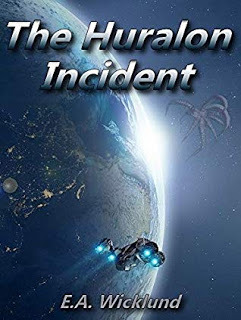
1. Wait Spaceships and Space Warfare are Fictional Right?According to his Goodreads profile, E.A. Wicklund is a military historian and it shows. He writes about the technology and tactics of space battles with a level of detail that could make a reader forget that it's all happening in a fictional world. If anything, I think he could pull back on that just a smidge; I feel he gets slightly lost describing fictional physics. But, overall, he paints an amazingly detailed, well-thought-out vision of distant future military operations.
2. Brilliant Solutions to Space Battles:There are a couple of little details I really love. You know how there's no sound in space? Which means any movie that depicts explosions in a vacuum is adding that for effect? He gets around that by simply having the AI of the warship inject those sounds for the crew? Why? Well, for the same reason the movies do it, so it seems more 'real' to our human senses.
You know how high powered lasers used for battle would probably be so energetic that they would exist beyond the visible spectrum? No? Oh... well that's a thing. Anyhoo... Wicklund gets around that with a similar strategy.
Taking those little issues about physics into consideration and coming up with solutions for them that work... well, maybe I'm a geek (shocker, I know) but it makes my pedantic heart happy.
3. The Sci-Fi fantasy mirror:One of the things that sci-fi and fantasy have the ability to do is take thorny issues regarding race, religion, politics and other issues that are likely to generate a lot of strong opinions, and pull them out of our world. When they are placed in a new setting outside our preconceived biases, it has the ability to display current issues in a new light.
4. What issues exactly?
Well, let me put it this way. Elysium is a society built on a foundation of free expression and thought. But it is still run by humans and so a neighboring ethnic and religious group, the Madakal, are often seen as oppressed by a larger majority. Except the Madakal government is actually an oppressive theocratic authoritarian state that is actively using free expression to try and crush it in the Elysian planet, Huralon and uses feelings of guilt and counter-culture rage to fuel its campaign effectively turning free expression against itself.
Sound at all familiar? Even a little bit?
5. The Forgotten Art Of SubtletyThe thing about political commentary in novels is that it has to be done with some finesse. If you try and beat people over the head with it, you risk becoming preachy at best. At worst, you can alienate about half your audience.
But Wicklund manages to avoid either of those pitfalls. For people like me who are interested and concerned about how totalitarian regimes can exploit societies that value free expression, this novel provides something extra to think about.
For those that just want space explosions, big guns and a roller-coaster thrill ride, you can just enjoy the story.
And if you do want to see it, it's just an idea. Agree with him or not, but it's an idea. Go ahead. Pick it up. It's yours to take with you if you want it.
6. The Timeless StruggleEven looking outside current events, one has to appreciate the universal theme presented in this book. You got McCray, the honest man fighting for deeply held principals. Those principals get him in trouble as often as not, but his sincerity is genuine. And then there is Mallouk and the rest of the Madakal Elites. These are a group of people who cruelly oppress their people while growing fat off their labor and treating them like shit all while trying to use the goodwill of others against them.
It's one of those ideas that pops up constantly. Why? Well, because it's how humans work.
7. Again, Dial It Back A Smidgin:The only other criticism that I have is that the Madakalian Elites come across as almost comically evil without any redeeming qualities. While I like bad people who do bad things (I mean, who doesn't. ....In fiction that is.) I prefer a touch of nuance. Most people don't actually believe they are evil even when they are in the middle of being the evilest, evils who ever eviled an evil.
8. The Verdict ⭐⭐⭐⭐⭐Fans of political thrillers, hard-ish sci-fi, space battles, intrigue and military fiction will all find something to like in this book. But the characters are engaging enough, and the story is well-written enough that I feel a wide range of readers would find something to dig about this book.
But when he captures the cunning and cruel Mallouk, McCray accidentally triggers a political firestorm that threatens to cost the lives and freedom of the entire population of Huralon. Now McCray must fight for his own life and that of his crew while Mallouk launches a propaganda campaign for Huralon to succeed from Elysium and join the theocratic, authoritarian Democratic Peoples of Madakal.
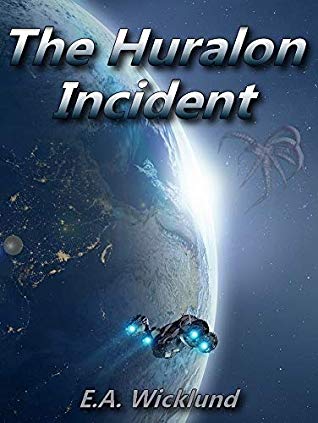
1. Wait Spaceships and Space Warfare are Fictional Right?According to his Goodreads profile, E.A. Wicklund is a military historian and it shows. He writes about the technology and tactics of space battles with a level of detail that could make a reader forget that it's all happening in a fictional world. If anything, I think he could pull back on that just a smidge; I feel he gets slightly lost describing fictional physics. But, overall, he paints an amazingly detailed, well-thought-out vision of distant future military operations.
2. Brilliant Solutions to Space Battles:There are a couple of little details I really love. You know how there's no sound in space? Which means any movie that depicts explosions in a vacuum is adding that for effect? He gets around that by simply having the AI of the warship inject those sounds for the crew? Why? Well, for the same reason the movies do it, so it seems more 'real' to our human senses.
You know how high powered lasers used for battle would probably be so energetic that they would exist beyond the visible spectrum? No? Oh... well that's a thing. Anyhoo... Wicklund gets around that with a similar strategy.
Taking those little issues about physics into consideration and coming up with solutions for them that work... well, maybe I'm a geek (shocker, I know) but it makes my pedantic heart happy.
3. The Sci-Fi fantasy mirror:One of the things that sci-fi and fantasy have the ability to do is take thorny issues regarding race, religion, politics and other issues that are likely to generate a lot of strong opinions, and pull them out of our world. When they are placed in a new setting outside our preconceived biases, it has the ability to display current issues in a new light.
4. What issues exactly?
Well, let me put it this way. Elysium is a society built on a foundation of free expression and thought. But it is still run by humans and so a neighboring ethnic and religious group, the Madakal, are often seen as oppressed by a larger majority. Except the Madakal government is actually an oppressive theocratic authoritarian state that is actively using free expression to try and crush it in the Elysian planet, Huralon and uses feelings of guilt and counter-culture rage to fuel its campaign effectively turning free expression against itself.
Sound at all familiar? Even a little bit?
5. The Forgotten Art Of SubtletyThe thing about political commentary in novels is that it has to be done with some finesse. If you try and beat people over the head with it, you risk becoming preachy at best. At worst, you can alienate about half your audience.
But Wicklund manages to avoid either of those pitfalls. For people like me who are interested and concerned about how totalitarian regimes can exploit societies that value free expression, this novel provides something extra to think about.
For those that just want space explosions, big guns and a roller-coaster thrill ride, you can just enjoy the story.
And if you do want to see it, it's just an idea. Agree with him or not, but it's an idea. Go ahead. Pick it up. It's yours to take with you if you want it.
6. The Timeless StruggleEven looking outside current events, one has to appreciate the universal theme presented in this book. You got McCray, the honest man fighting for deeply held principals. Those principals get him in trouble as often as not, but his sincerity is genuine. And then there is Mallouk and the rest of the Madakal Elites. These are a group of people who cruelly oppress their people while growing fat off their labor and treating them like shit all while trying to use the goodwill of others against them.
It's one of those ideas that pops up constantly. Why? Well, because it's how humans work.
7. Again, Dial It Back A Smidgin:The only other criticism that I have is that the Madakalian Elites come across as almost comically evil without any redeeming qualities. While I like bad people who do bad things (I mean, who doesn't. ....In fiction that is.) I prefer a touch of nuance. Most people don't actually believe they are evil even when they are in the middle of being the evilest, evils who ever eviled an evil.
8. The Verdict ⭐⭐⭐⭐⭐Fans of political thrillers, hard-ish sci-fi, space battles, intrigue and military fiction will all find something to like in this book. But the characters are engaging enough, and the story is well-written enough that I feel a wide range of readers would find something to dig about this book.


February 26, 2020
On Hangovers and General Awkwardness
A new day dawns on Cytherea, and the gang gears up to explore this strange society.
Viekko's scene in chapter 12 was a recent addition, and, after reading through it, I'm not entirely sure why I felt the need to have another freaking hangover scene in the book. I think people get it. There was a party, and both Isra and Viekko are ruins of themselves.
I think I wanted some transition, something to place Viekko at a specific place in time and explain why and how Viekko is going to be on patrol with a bunch of Cytherean soldiers. It is something that I totally could have mentioned in Isra's scene or even a short exposition in Viekko's next scene.
That being said, I rather like this scene. It's fun. It adds some depth to the world by showing us what daily life is really like in this completely alien culture. Plus, it gives Viekko the opportunity to be... well, Viekko.
If I were to rewrite the book (I am totally not going to rewrite this book. Ever.) I would probably hack this scene down. But as a break from the tension of the last chapters, I rather like it.
 Architecture on the Greek Islands provided quite a lot of inspiration for Cytherea
Cronus' storyline is way more autobiographical than I care to admit. Like many a young man who was totally awkward around women (or really any other human if I'm being totally honest), I often relied on good-intentioned but poorly-executed advice. I'm sure many of you can identify with this.
At the same time, I realize there is a reflection of Viekko and Althea's relationship in this scene. Reading it again, I realized that if both Cornus and Joana could get over themselves, they could totally bang and be happy about it. Sound familiar?
But that's harder than it sounds, besides Cronus' crippling social ineptitude, Joana has to get over her entire place in society. The result is this wonderfully fun scene that I'm hoping is somewhat frustrating for the reader.
I guess what I am saying is if, by the end of the chapter, you facepalm, and mutter, "For fuck's sake. Will you two just bone already! This is painful," then I have accomplished my goal.
Viekko's scene in chapter 12 was a recent addition, and, after reading through it, I'm not entirely sure why I felt the need to have another freaking hangover scene in the book. I think people get it. There was a party, and both Isra and Viekko are ruins of themselves.
I think I wanted some transition, something to place Viekko at a specific place in time and explain why and how Viekko is going to be on patrol with a bunch of Cytherean soldiers. It is something that I totally could have mentioned in Isra's scene or even a short exposition in Viekko's next scene.
That being said, I rather like this scene. It's fun. It adds some depth to the world by showing us what daily life is really like in this completely alien culture. Plus, it gives Viekko the opportunity to be... well, Viekko.
If I were to rewrite the book (I am totally not going to rewrite this book. Ever.) I would probably hack this scene down. But as a break from the tension of the last chapters, I rather like it.
 Architecture on the Greek Islands provided quite a lot of inspiration for Cytherea
Cronus' storyline is way more autobiographical than I care to admit. Like many a young man who was totally awkward around women (or really any other human if I'm being totally honest), I often relied on good-intentioned but poorly-executed advice. I'm sure many of you can identify with this.
At the same time, I realize there is a reflection of Viekko and Althea's relationship in this scene. Reading it again, I realized that if both Cornus and Joana could get over themselves, they could totally bang and be happy about it. Sound familiar?
But that's harder than it sounds, besides Cronus' crippling social ineptitude, Joana has to get over her entire place in society. The result is this wonderfully fun scene that I'm hoping is somewhat frustrating for the reader.
I guess what I am saying is if, by the end of the chapter, you facepalm, and mutter, "For fuck's sake. Will you two just bone already! This is painful," then I have accomplished my goal.
February 20, 2020
6 Things About The Witches Vacuum Cleaner
Very simply, this book is a glimpse into the early career of one of the finest wordsmiths ever to live. This collection of short stories are silly and fun. Magical but down to earth.
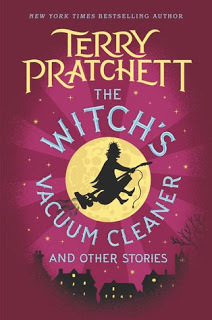 1. It Is What It Is:And that is a collection of short stories for children. They have a bit of Pratchettian flare to them, but otherwise, they are just cute little stories. They don't really go anywhere they are just random bits of imagination that sweep you away on a journey before dropping you back at the station.
2. Also, I Invented the Word 'Pratchettian'Deal with it.
3. Cute Is The Best Word:And really the only word to describe this book. They are fun little stories but that's about it. The author dreams up a bizarre situation, it meanders through a narrative and then goes away. What it's missing are the clever little twists that would be a defining characteristic in his later works.
4. Nobody Starts Out Good At This:And that brings me to the most valuable part of this book. It's a look into the early career of a writer who would go on to become one of the most popular authors in the world. As a writer still hacking his way through an early career, its heartening to know that even the greatest writers needed time to work on their craft.
Okay, there are probably a few people who burst onto the scene writing brilliant works the first time out but, seriously, fuck those people.
5. Come For The Wild Welsh West Alone:There are three stories that are basically Westerns set in Wales. And they are amazing. Desperados leaping from bikes onto trains, a frenzied coal rush, swindling sheep rustlers and more apologies than a Canadian regret convention.
6. The Verdict ⭐⭐⭐⭐It was a fun book. I found the stories to be a bit simplistic but they are mostly for kids so... you know... deal with that. The stories arent great but Pratchett admited a few times that he isn't terribly good at short stories. But they were fun. That's good enough for me.
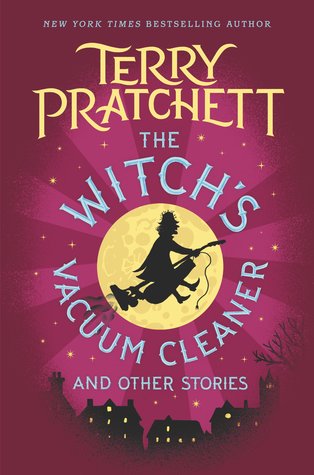 1. It Is What It Is:And that is a collection of short stories for children. They have a bit of Pratchettian flare to them, but otherwise, they are just cute little stories. They don't really go anywhere they are just random bits of imagination that sweep you away on a journey before dropping you back at the station.
2. Also, I Invented the Word 'Pratchettian'Deal with it.
3. Cute Is The Best Word:And really the only word to describe this book. They are fun little stories but that's about it. The author dreams up a bizarre situation, it meanders through a narrative and then goes away. What it's missing are the clever little twists that would be a defining characteristic in his later works.
4. Nobody Starts Out Good At This:And that brings me to the most valuable part of this book. It's a look into the early career of a writer who would go on to become one of the most popular authors in the world. As a writer still hacking his way through an early career, its heartening to know that even the greatest writers needed time to work on their craft.
Okay, there are probably a few people who burst onto the scene writing brilliant works the first time out but, seriously, fuck those people.
5. Come For The Wild Welsh West Alone:There are three stories that are basically Westerns set in Wales. And they are amazing. Desperados leaping from bikes onto trains, a frenzied coal rush, swindling sheep rustlers and more apologies than a Canadian regret convention.
6. The Verdict ⭐⭐⭐⭐It was a fun book. I found the stories to be a bit simplistic but they are mostly for kids so... you know... deal with that. The stories arent great but Pratchett admited a few times that he isn't terribly good at short stories. But they were fun. That's good enough for me.
February 18, 2020
Althea's Ghosts and Isra's Impulses
The time has come to delve into the history of Althea. She is a fascinating character to flesh out. She is, on one hand, probably the most emotionally stable and capable member of the group. On the other, one gets the feeling that she is teetering right on the edge and is totally capable of burning it all to the ground if the mood strikes her wrong.
I don't exactly remember where Althea's urge to steal came from. Very early in this process, I remember flipping through some table-top gaming books for character ideas (yes, I am a nerd) and I think it was just something I threw in. Imagine me surrounded by a pile of books jotting shit down on in a notebook muttering, "Let's see, compassionate... er... high medical skills. Obviously. Oooh! Kleptomania! Hell yeah!"
Most of the characters ended up with a litany of traits, most of which got purged when I actually sat down to write the bloody books.
Yet, somehow, Althea's compulsion was a strange idea that stuck around. And mostly because, one some level, it doesn't fit. Kind, caring people don't normally want to steal other people's shit. That makes them cry.
On another level, as a contrasting character to Viekko, it makes perfect sense. It's the two sides of the same coin idea; same person just expressed in totally different ways.
But I knew there would have to be a time when I explained this in a way that made some bloody sense. It came surprisingly easy. It was one of those scenes that practically wrote itself and fleshed out this duality that Althea seems to live with. It's also one of the more heartbreaking things I've ever sit down and try to imagine. To this day, I don't know what I think of Ethan Fallon, but he's weirdly one of my most intriguing minor characters.
***
One of my biggest challenges in writing this book was trying to balance what I needed Isra to do with what Isra would do. I hate plot-driven fiction when it steamrolls over the characters. Most everyone has seen or read something along these lines. The characters and plot are chugging along. And then, for no reason, the character CHANGES! Just out of the blue.
Like there will be a character, and for whatever reason, he has a thing. Let's say she hates fish. And then cut to the next scene, and she is going to town on a halibut fillet. And you're watching her devour it like a bear on a March morning with a confused look. And the next chapter, BAM! Mercury poisoning.
And the reader is left pondering, "Okay, yes, I see. If she didn't get mercury poisoning, then she would have never tried to cure it with the radioactive juju ring and accidentally turn the king into a wolf spider in the process but still, what the figgity fuck! She hates fish!
Well, at least she did until the plot needed her to like it.
That kind of shit irritates me. And this first draft had a lot of it.
Without going into too much detail and spoiling the next few chapters, my original draft had Isra pretty much going completely off the rails. I think one of the best things about Saturnius Mons was that every character practically had their own set of ideals and their own agendas. So I ramped that up a little for Templum Veneris.
With Isra, I went too far at first, and that's all that I am going to say about it.
Except that, in the process, I got to know that deeper side of Isra. That almost preternatural ability to not only read people but read her environment. I picture her having that strange innate ability humans have to just know something is not right, but ramped up to... like... a thousand.
And I like this growing feeling that something is terribly awry in Cytherean culture. I mean there is a lot obviously wrong but I like the idea that there is something even deeper and, yet, somehow is right in plain sight.
I don't exactly remember where Althea's urge to steal came from. Very early in this process, I remember flipping through some table-top gaming books for character ideas (yes, I am a nerd) and I think it was just something I threw in. Imagine me surrounded by a pile of books jotting shit down on in a notebook muttering, "Let's see, compassionate... er... high medical skills. Obviously. Oooh! Kleptomania! Hell yeah!"
Most of the characters ended up with a litany of traits, most of which got purged when I actually sat down to write the bloody books.
Yet, somehow, Althea's compulsion was a strange idea that stuck around. And mostly because, one some level, it doesn't fit. Kind, caring people don't normally want to steal other people's shit. That makes them cry.
On another level, as a contrasting character to Viekko, it makes perfect sense. It's the two sides of the same coin idea; same person just expressed in totally different ways.
But I knew there would have to be a time when I explained this in a way that made some bloody sense. It came surprisingly easy. It was one of those scenes that practically wrote itself and fleshed out this duality that Althea seems to live with. It's also one of the more heartbreaking things I've ever sit down and try to imagine. To this day, I don't know what I think of Ethan Fallon, but he's weirdly one of my most intriguing minor characters.
***
One of my biggest challenges in writing this book was trying to balance what I needed Isra to do with what Isra would do. I hate plot-driven fiction when it steamrolls over the characters. Most everyone has seen or read something along these lines. The characters and plot are chugging along. And then, for no reason, the character CHANGES! Just out of the blue.
Like there will be a character, and for whatever reason, he has a thing. Let's say she hates fish. And then cut to the next scene, and she is going to town on a halibut fillet. And you're watching her devour it like a bear on a March morning with a confused look. And the next chapter, BAM! Mercury poisoning.
And the reader is left pondering, "Okay, yes, I see. If she didn't get mercury poisoning, then she would have never tried to cure it with the radioactive juju ring and accidentally turn the king into a wolf spider in the process but still, what the figgity fuck! She hates fish!
Well, at least she did until the plot needed her to like it.
That kind of shit irritates me. And this first draft had a lot of it.
Without going into too much detail and spoiling the next few chapters, my original draft had Isra pretty much going completely off the rails. I think one of the best things about Saturnius Mons was that every character practically had their own set of ideals and their own agendas. So I ramped that up a little for Templum Veneris.
With Isra, I went too far at first, and that's all that I am going to say about it.
Except that, in the process, I got to know that deeper side of Isra. That almost preternatural ability to not only read people but read her environment. I picture her having that strange innate ability humans have to just know something is not right, but ramped up to... like... a thousand.
And I like this growing feeling that something is terribly awry in Cytherean culture. I mean there is a lot obviously wrong but I like the idea that there is something even deeper and, yet, somehow is right in plain sight.
February 12, 2020
9 Things About Darkness Falls
A natural disaster leaves teenage sisters Quinn and Riley isolated and struggling to survive an increasingly hostile environment alone. Humankind’s greed and apathy have left the world a turbulent and dangerous place to live.
But things get worse when Quinn’s sister goes missing. And now she must gauge who to trust in a world where life is cheap and make her way in a dying world where if crazed survivors don't kill you, Nature will.
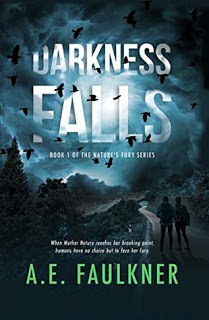
1. Just the Kind of Thrill Ride One Expects:This book is a pretty standard natural disaster / apocalyptic survival thriller. If you're looking for teens trying to scrape together food and shelter in a post-civilization hellscape, this book will appeal to you. It's got a cast of interesting, three-dimensional characters, twists around every corner, a breakneck pace, and that out-of-control-rollercoaster feel.
2. It's the Pacing, Stupid.The most well-done aspect of this book is the pacing. It's a page-turner which, again, is what one expects in a book like this. At the same time, it takes enough breaks from the action so that the story can breathe and the characters have a moment to fully develop. And then, just when everything is kinda-sorta okay, BOOM! Shit hits the fan, and everything is awful again!
In addition, the writer has a keen sense of when to throw another twist in the story to keep the reader off-balance and turning pages.
3. Characters characterizing:The author has, as well, done an excellent job of crafting a group of dynamic, realistic characters. The main character, Quinn, especially comes off as sincere and fully-realized. On one side, she is just an average teenage girl caught in spectacular situations. But, at the same time, she has unique traits, clear motivations, dubious decision-making skills... all the good stuff.
4. Where Writing Advice Falls Short:So it's like this, Quinn and her sister Riley begin the story holed up in a trailer after an earthquake hit while they were on the road. The wreck killed their parents and somehow cuts them off from the rest of the world (no indication why). All of this happens before the book begins, and we are left trying to figure out what is happening.
There is this maxim going around these days, "Start as far into the story as you can." Authors of thrillers, in particular, have taken this to an extreme starting their books right in the middle of a fight or having their characters literally hanging off a cliff in the first few seconds.
Its good advice and, for those writing thrillers, important advice. The last thing a thriller should be is boring.
But in this case, the idea has been taken too far. We missed the inciting incident, and the story has to constantly go back and reference the event that brought Quinn and her sister into this situation, but, in my opinion, I would have much rather have had that happen on camera.
I don't know why this movie came to mind, but imagine if the first shot of Independence Day was Will Smith dragging an alien body through the desert.
Yeah, that's what happened here.
5. A Disaster Story Without The Disaster:Because the book pretty much skipped the big disaster sequence, we are left without a good idea of what is actually happening.
There's an earthquake, that's pretty clear. Although the extent of the damage is hard to parse out. For example, it seems that all the roads are closed, but I'm not sure how an earthquake would have caused that. (I can guess how an earthquake could cause that, but it's never brought up specifically)
Also, there is a fracking disaster, but, again, it's hard to pinpoint what exactly happened and how bad it is. This is affecting the weather. Nobody knows why.
6. Where Is Everyone?Most of the book has a zombie movie feel to it. Most people are just gone without a good explanation. The book implies that most people were evacuated, but evacuation should include emergency personnel, and the military and national guard; all of whom are missing for this book.
About halfway in, we start to run into survivors (with predictably nasty results). But one is still left with the question, where are the cops, the firefighters, the military, the FEAKING COAST GUARD if nothing else.
I get that during a major natural disaster those systems can fail spectacularly (ask anyone who lived in New Orleans in 2005). But, again, there's no good explanation here. They are just not there.
7. So That's The End, Huh?This book is part of a series, and I get that the author wants to leave her audience hanging because... well, that's how you sell a sequel, isn't it? It's an option anyway.
That being said, I felt a little cheated. Yes, the primary conflict was resolved (sorta), but it felt abrupt. Again, since I'm using Independence Day as an example (still don't know why, it's just where my brain went) it would be like if the movie cut from Smith and Jeff Goldblum walking away from the wreck directly to the report that a second ship had appeared behind the moon. Then credits.
Which is, come to think of it, not much worse than the way the movie actually ended, but I stand by my point.
8. The Journey Continues?Despite the issues, I found myself wanting to continue this series. Mostly because the characters Faulkner has created have a way of pulling the reader along with them. If I had to pick a word for what that quality is, I'd say sincerity. There is something earnest in the way her characters make their way through the world that's endearing.
9. The Verdict ⭐⭐⭐⭐This book is... well.... bookended with problems, but it was an entertaining thrill ride that I find myself wanting to continue. It's a fun YA thriller and, given the current trend in the genre's, I think most people will forgive the abrupt beginning and end.
But things get worse when Quinn’s sister goes missing. And now she must gauge who to trust in a world where life is cheap and make her way in a dying world where if crazed survivors don't kill you, Nature will.

1. Just the Kind of Thrill Ride One Expects:This book is a pretty standard natural disaster / apocalyptic survival thriller. If you're looking for teens trying to scrape together food and shelter in a post-civilization hellscape, this book will appeal to you. It's got a cast of interesting, three-dimensional characters, twists around every corner, a breakneck pace, and that out-of-control-rollercoaster feel.
2. It's the Pacing, Stupid.The most well-done aspect of this book is the pacing. It's a page-turner which, again, is what one expects in a book like this. At the same time, it takes enough breaks from the action so that the story can breathe and the characters have a moment to fully develop. And then, just when everything is kinda-sorta okay, BOOM! Shit hits the fan, and everything is awful again!
In addition, the writer has a keen sense of when to throw another twist in the story to keep the reader off-balance and turning pages.
3. Characters characterizing:The author has, as well, done an excellent job of crafting a group of dynamic, realistic characters. The main character, Quinn, especially comes off as sincere and fully-realized. On one side, she is just an average teenage girl caught in spectacular situations. But, at the same time, she has unique traits, clear motivations, dubious decision-making skills... all the good stuff.
4. Where Writing Advice Falls Short:So it's like this, Quinn and her sister Riley begin the story holed up in a trailer after an earthquake hit while they were on the road. The wreck killed their parents and somehow cuts them off from the rest of the world (no indication why). All of this happens before the book begins, and we are left trying to figure out what is happening.
There is this maxim going around these days, "Start as far into the story as you can." Authors of thrillers, in particular, have taken this to an extreme starting their books right in the middle of a fight or having their characters literally hanging off a cliff in the first few seconds.
Its good advice and, for those writing thrillers, important advice. The last thing a thriller should be is boring.
But in this case, the idea has been taken too far. We missed the inciting incident, and the story has to constantly go back and reference the event that brought Quinn and her sister into this situation, but, in my opinion, I would have much rather have had that happen on camera.
I don't know why this movie came to mind, but imagine if the first shot of Independence Day was Will Smith dragging an alien body through the desert.
Yeah, that's what happened here.
5. A Disaster Story Without The Disaster:Because the book pretty much skipped the big disaster sequence, we are left without a good idea of what is actually happening.
There's an earthquake, that's pretty clear. Although the extent of the damage is hard to parse out. For example, it seems that all the roads are closed, but I'm not sure how an earthquake would have caused that. (I can guess how an earthquake could cause that, but it's never brought up specifically)
Also, there is a fracking disaster, but, again, it's hard to pinpoint what exactly happened and how bad it is. This is affecting the weather. Nobody knows why.
6. Where Is Everyone?Most of the book has a zombie movie feel to it. Most people are just gone without a good explanation. The book implies that most people were evacuated, but evacuation should include emergency personnel, and the military and national guard; all of whom are missing for this book.
About halfway in, we start to run into survivors (with predictably nasty results). But one is still left with the question, where are the cops, the firefighters, the military, the FEAKING COAST GUARD if nothing else.
I get that during a major natural disaster those systems can fail spectacularly (ask anyone who lived in New Orleans in 2005). But, again, there's no good explanation here. They are just not there.
7. So That's The End, Huh?This book is part of a series, and I get that the author wants to leave her audience hanging because... well, that's how you sell a sequel, isn't it? It's an option anyway.
That being said, I felt a little cheated. Yes, the primary conflict was resolved (sorta), but it felt abrupt. Again, since I'm using Independence Day as an example (still don't know why, it's just where my brain went) it would be like if the movie cut from Smith and Jeff Goldblum walking away from the wreck directly to the report that a second ship had appeared behind the moon. Then credits.
Which is, come to think of it, not much worse than the way the movie actually ended, but I stand by my point.
8. The Journey Continues?Despite the issues, I found myself wanting to continue this series. Mostly because the characters Faulkner has created have a way of pulling the reader along with them. If I had to pick a word for what that quality is, I'd say sincerity. There is something earnest in the way her characters make their way through the world that's endearing.
9. The Verdict ⭐⭐⭐⭐This book is... well.... bookended with problems, but it was an entertaining thrill ride that I find myself wanting to continue. It's a fun YA thriller and, given the current trend in the genre's, I think most people will forgive the abrupt beginning and end.
February 11, 2020
Althea's Revenge and the Finer Points of Landing A Shuttle
Author's CommentaryChapter 10
This is probably one of my favorite chapters so far. After coming out of a pretty intense situation like we did in chapter 9, I like that we slide into something lighter, a little absurd, and amusing.
And speaking of absurd, I sometimes second guess myself and wonder if having Viekko engaging in group sex is just over the top. I mean, it clearly is. But the appropriate question to ask is if it over the top in a way that serves the story?
I will say this, in context, I think it works because it serves as an extreme contrast to the intimate relationship that Viekko and Althea have. Getting drunk and being carted away by a group of beautiful women is such a stupid male adolescent fantasy, and I honestly can't think of any sexual situation less intimate and meaningful than that. And in a book that deals with love and sex vs. duty to the state, I think it serves a useful function.
Besides, I like Viekko's cavaleir attitude. It makes me giggle.
And that's kind of the heart of writing. Right or wrong, Viekko's sex party has a purpose, so I stand by the decision. It is not the first nor the last dumb decision I have or will have to own.
Overall, I love how the personalities bounce off each other in this chapter. From Althea's exasperation, to Cronus airing out his strange and disturbing ideas of love and sex, to Viekko just wanting to shut it all out and enjoy himself. I like how he ends up making the relationship between himself and Althea even worse, I love her petty revenge, and Viekko trying to give a sex talk to Cronus is one of my favorite things that I've ever had to write.
And, yes, I know how narcissistic it is to be amused by one's own writing. But given how much I tend to disparage most of it, I think I'm allowed a few lines that make me smile.
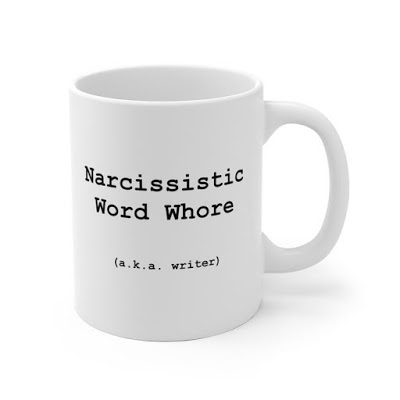 It's such a well-known thing that someone has gone out and made a coffee mug.
And on a related note, I want to end this post with a little story.
I did a series of holiday markets shortly after this book came out. At one of them, a woman approached me and was asking me questions about the book. I gave my usual sales pitch. 'Pulp sci-fi space adventure! A little bit Firefly and Cowboy Bebop! Complex themes, interesting characters, a fun story to dive into!"
At one point, she asked, "So my thirteen-year-old son is really into sci-fi. Do you think these books are appropriate for him?"
The question caught me off guard for a couple of reasons. First, I honestly hadn't thought about what age-groups I thought this would be appropriate for. I sort of wrote them trying to keep a wide audience in mind, i.e., minimizing crude language or explicit sex. But I really hadn't thought hard about what is appropriate for who and why.
And second, I think it's an awkward question. What is 'appropriate' is a totally subjective idea. Without getting deep into the weeds, I think my ideas run far more liberal than the average person in this regard. And I don't have a kid, so I have a hard time even knowing how I would feel in the same situation.
So I did my best to tell the truth. I told her that the books contained violence and sexual situations. These scenes could be intense, but they were never explicit or graphic.
That seemed to satisfy her. She bought a copy of each book and smiled, "You're sure he's not going to find anything weird in these books, right?"
My response was, "Depends on what your definition of 'weird' is. I think they are weird, but that's kinda my style."
And, again, she seemed satisfied as she paid for the books and tucked them away.
It wasn't until later that the phrase 'transplanetary orgy' drifted across my brain, and I got a little anxious about what I had just done. I don't think I mislead her about what was in the books but I could see that part being a sticking point. But, whatever, the books were sold, and on their way to a teenage boy that might be getting a little more of an education than his mother had anticipated.
I guess what I am saying is, if you're the mother and your reading this after an awkward conversation about that phrase or the situation in general, I guess I want to say, "Oops" and "Sorry?"
And if you're the young man in question, you're welcome.
This is probably one of my favorite chapters so far. After coming out of a pretty intense situation like we did in chapter 9, I like that we slide into something lighter, a little absurd, and amusing.
And speaking of absurd, I sometimes second guess myself and wonder if having Viekko engaging in group sex is just over the top. I mean, it clearly is. But the appropriate question to ask is if it over the top in a way that serves the story?
I will say this, in context, I think it works because it serves as an extreme contrast to the intimate relationship that Viekko and Althea have. Getting drunk and being carted away by a group of beautiful women is such a stupid male adolescent fantasy, and I honestly can't think of any sexual situation less intimate and meaningful than that. And in a book that deals with love and sex vs. duty to the state, I think it serves a useful function.
Besides, I like Viekko's cavaleir attitude. It makes me giggle.
And that's kind of the heart of writing. Right or wrong, Viekko's sex party has a purpose, so I stand by the decision. It is not the first nor the last dumb decision I have or will have to own.
Overall, I love how the personalities bounce off each other in this chapter. From Althea's exasperation, to Cronus airing out his strange and disturbing ideas of love and sex, to Viekko just wanting to shut it all out and enjoy himself. I like how he ends up making the relationship between himself and Althea even worse, I love her petty revenge, and Viekko trying to give a sex talk to Cronus is one of my favorite things that I've ever had to write.
And, yes, I know how narcissistic it is to be amused by one's own writing. But given how much I tend to disparage most of it, I think I'm allowed a few lines that make me smile.
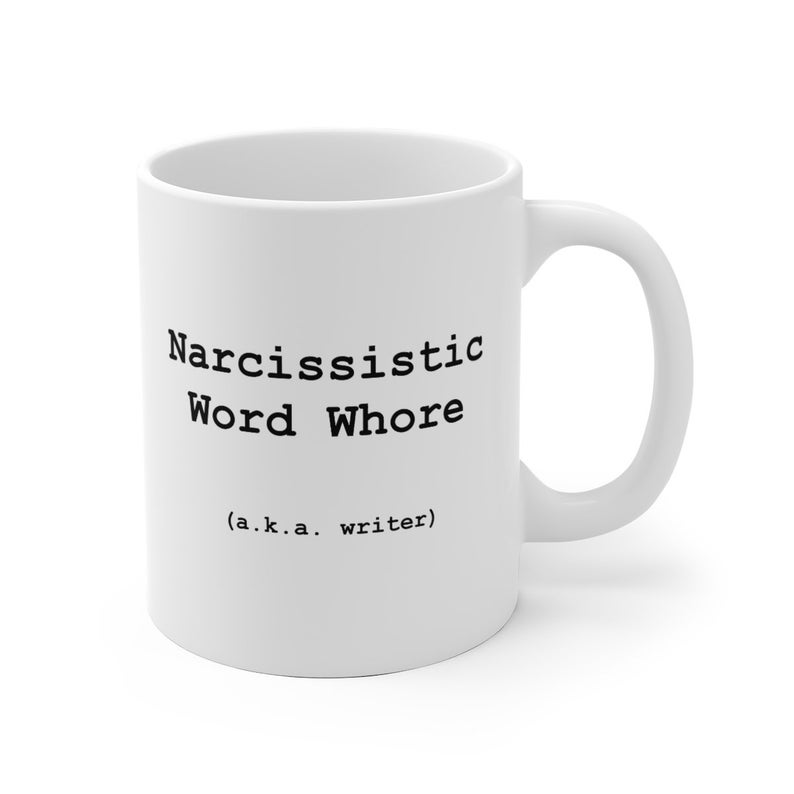 It's such a well-known thing that someone has gone out and made a coffee mug.
And on a related note, I want to end this post with a little story.
I did a series of holiday markets shortly after this book came out. At one of them, a woman approached me and was asking me questions about the book. I gave my usual sales pitch. 'Pulp sci-fi space adventure! A little bit Firefly and Cowboy Bebop! Complex themes, interesting characters, a fun story to dive into!"
At one point, she asked, "So my thirteen-year-old son is really into sci-fi. Do you think these books are appropriate for him?"
The question caught me off guard for a couple of reasons. First, I honestly hadn't thought about what age-groups I thought this would be appropriate for. I sort of wrote them trying to keep a wide audience in mind, i.e., minimizing crude language or explicit sex. But I really hadn't thought hard about what is appropriate for who and why.
And second, I think it's an awkward question. What is 'appropriate' is a totally subjective idea. Without getting deep into the weeds, I think my ideas run far more liberal than the average person in this regard. And I don't have a kid, so I have a hard time even knowing how I would feel in the same situation.
So I did my best to tell the truth. I told her that the books contained violence and sexual situations. These scenes could be intense, but they were never explicit or graphic.
That seemed to satisfy her. She bought a copy of each book and smiled, "You're sure he's not going to find anything weird in these books, right?"
My response was, "Depends on what your definition of 'weird' is. I think they are weird, but that's kinda my style."
And, again, she seemed satisfied as she paid for the books and tucked them away.
It wasn't until later that the phrase 'transplanetary orgy' drifted across my brain, and I got a little anxious about what I had just done. I don't think I mislead her about what was in the books but I could see that part being a sticking point. But, whatever, the books were sold, and on their way to a teenage boy that might be getting a little more of an education than his mother had anticipated.
I guess what I am saying is, if you're the mother and your reading this after an awkward conversation about that phrase or the situation in general, I guess I want to say, "Oops" and "Sorry?"
And if you're the young man in question, you're welcome.
February 5, 2020
Althea's Story Begins
Author's CommentaryChapter 9
The build-up is finally done. In a traditional three-act structure (which I have been known to flirt with but am not necessarily bound by), this would be the beginning of Act II.
As the cover of Templum Veneris suggests, while Viekko and Althea feature highly in this book, I wanted this book to be more about Althea. I flirted a little bit about who Althea is and what kind of person she is and was in Saturnius Mons, but I kept her largely on the sidelines. She would appear to talk Viekko down of some madness or another, patch up some injuries, put a brave face on things, and then fade into the background.
This was partly by design, although I wish I had done a little more with her in that book. I'm not sure what that would have been or how I would have worked it into the story, but it's one of those little things I feel I could have done slightly better. Or different. But I didn't at the time because I wanted each character's story to unfold when it was time.
A lot of the feeling and emotion that Althea is going through comes from my personal experience; different circumstances, but the same general feeling. And that is the idea of outsider desperately wishing she knew the combination, the secret phrases, or the magical incantations that everyone else seems to have instinctually.
Her situation is different; her 'outsider' status is conferred mainly from her economic class and history rather than just being a socially awkward introvert with an identity crisis. And she deals with it differently. She steals money and uses it to remake herself into what she thinks other people want. I mostly just embraced my introvertish nature and learned to smooth over the worst of my awkward impulses.
But anyone who has been pushed to the outside of social groups or cliques can probably identify with Althea's situation in this chapter. There is that strange duality, a conflict that stems from deep in one's psyche. There is a more primal urge to be part of the group. After all, in our animal ancestry, being excluded from the group meant death. So there's a primal urge involved, which is a hard thing to ignore.
At the same time, you can watch a group of people and feel a wrongness about it. Usually, it's something benign, they share an interest that is foreign or even obscure, there is chemistry involved that doesn't make any sense, or the people are just not your type of people.
 To be fair, those fish are assholes.
And other times its more insidious.
And I like how this chapter deals with those feelings and how it unfolds. Althea is not sure of what do like I think most people in her situation wouldn't be. It's hard to trust one's own gut feelings, especially when the consequences are as dire as they are here. And what Althea finds in this chapter propels her into the next act and into a collision course with the rest of the team. I like that sort of thing. We get to see the exact reason that Althea is about to lose her shit.
At the same time, we can sort of understand everyone else's reaction.
The build-up is finally done. In a traditional three-act structure (which I have been known to flirt with but am not necessarily bound by), this would be the beginning of Act II.
As the cover of Templum Veneris suggests, while Viekko and Althea feature highly in this book, I wanted this book to be more about Althea. I flirted a little bit about who Althea is and what kind of person she is and was in Saturnius Mons, but I kept her largely on the sidelines. She would appear to talk Viekko down of some madness or another, patch up some injuries, put a brave face on things, and then fade into the background.
This was partly by design, although I wish I had done a little more with her in that book. I'm not sure what that would have been or how I would have worked it into the story, but it's one of those little things I feel I could have done slightly better. Or different. But I didn't at the time because I wanted each character's story to unfold when it was time.
A lot of the feeling and emotion that Althea is going through comes from my personal experience; different circumstances, but the same general feeling. And that is the idea of outsider desperately wishing she knew the combination, the secret phrases, or the magical incantations that everyone else seems to have instinctually.
Her situation is different; her 'outsider' status is conferred mainly from her economic class and history rather than just being a socially awkward introvert with an identity crisis. And she deals with it differently. She steals money and uses it to remake herself into what she thinks other people want. I mostly just embraced my introvertish nature and learned to smooth over the worst of my awkward impulses.
But anyone who has been pushed to the outside of social groups or cliques can probably identify with Althea's situation in this chapter. There is that strange duality, a conflict that stems from deep in one's psyche. There is a more primal urge to be part of the group. After all, in our animal ancestry, being excluded from the group meant death. So there's a primal urge involved, which is a hard thing to ignore.
At the same time, you can watch a group of people and feel a wrongness about it. Usually, it's something benign, they share an interest that is foreign or even obscure, there is chemistry involved that doesn't make any sense, or the people are just not your type of people.
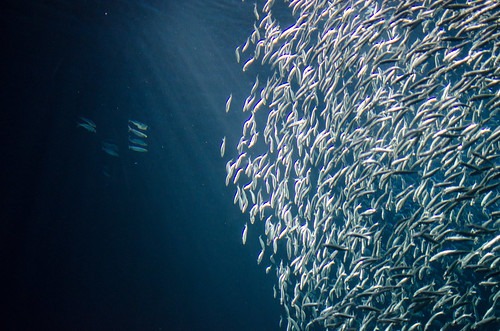 To be fair, those fish are assholes.
And other times its more insidious.
And I like how this chapter deals with those feelings and how it unfolds. Althea is not sure of what do like I think most people in her situation wouldn't be. It's hard to trust one's own gut feelings, especially when the consequences are as dire as they are here. And what Althea finds in this chapter propels her into the next act and into a collision course with the rest of the team. I like that sort of thing. We get to see the exact reason that Althea is about to lose her shit.
At the same time, we can sort of understand everyone else's reaction.
January 30, 2020
9 Things About I Am Marcus Fox
A boy raised by the most notorious gangsters in American history.
The greatest hunter who ever lived.
A vigilante running from his own past.
Is it a dream or is it real?
Who is Marcus Fox?
1. If you believe what you read, this book is kinda stupid and batshit insane.Stupid because there is no overarching goal. Marcus is never on any of quest nor is he, until the very end, pursuing any goal of any kind. He's just there and the world happens to him. There are elements of The Hero's Journey but it's chaotic, unfocused, and never settles into any kind of satisfying narrative.
And insane because there is a lot of shit that doesn't make any sense.
2. Suspend Your Disbelief Across An OceanTake this example, the first third of the book is about him growing up in the Zambian Savanah... or jungle, it's hard to tell sometimes. There he fights giant three-toed sloths (they live in South America), elephant bumblebees (not a thing) and prattlesnakes (can't tell if this is a typo or if there is a species of snake that just can't get to the point).
It's not just Fox's adventures in Africa. None of this book stands up well under the slightest scrutiny. Even those willing to stretch their suspension their disbelief will find this a hard chasm to cross.
3. No Pot of Gold At The End Of This RainbowAnd even for a reader that is willing to forgive the inaccuracies in the story, nature, engineering, and physics, there is no ending there to reward their efforts. The story just terminates. The words stop being written and the reader is left to check to make sure that they don't have a book with some missing pages.
4. Stupid... Like a Fox?And yet, it might be brilliant.
About a third to halfway into the book, the author drops some hints to suggest that none of this is as it seems. The story is told to us by Marcus Fox himself and we are left to wonder if he's giving us the whole story, or any part of the story for that matter. It becomes clear that Fox's grasp on reality is tenuous at best, and he is self-aggrandizing to the point of delusion.
Once I figured this out, everything changed.
5. The Detective Is... ... YOU!If, indeed, we are working with an unreliable narrator, then this book becomes an exercise in trying to figure out what the truth really is. It is up to the reader to determine what parts of Marcus' tale are true... or based in truth, and which were completely made up by a lunatic.
I have my own theories but, bottom line, it's up to the reader to figure this out.
So its like this: Marcus actually was raised by notorious criminals and was a 'hostage' in the standoff. But every memory between that and waking up in the hospital is false. There is not telling what he actually was doing but he never went to Africa, nor did he ever become a strange vigilante with Charlie. He actually was in a mental institution but how he escaped is either a lie or a false memory. There is no Charlie, there is no Terence they are both products of some dissociative disorder (as evidenced by the fact that they don't tend to interact with anyone else) but he actually does break into the zoo and confront the woman who I assume is his mother? That's the best I got. Click to show my theory
6. Nothing Behind The CurtainI will say this, and this is less a spoiler and more of a warning. There are no answers by the end of this book. If, indeed, parts of this story are completely dreamed up, then the author has yet to make that clear. There is no big reveal that makes the whole story make sense. There is no moment where Marcus realizes that he might very well be nuttier than squirrel shit. The book just ends and the reader is left screaming, "What the figgity fuck did I just read!?"
7. The Truth Is Out There... Maybe...I will say two things for sure. First, this might be part of a series. The listings on Goodreads and Amazon don't make this clear but the book itself calls 'I Am Marcus Fox: Lost Identity Book #1'. That seems to suggest there is more to the story.
So if there is another book and, at some point, the author manages to tie all of this together in a way that weaves together fantasy and reality into a narrative that makes sense, then this book is brilliant on the level of Franz Kafka or William S. Burroughs.
Hell, even if the author meant to do what I think he's trying to do, its strangely brilliant if not terribly well executed.
8. You Can't Argue With The Result:In any case, the book was entertaining. Maybe the author has outsmarted me and I can't really comprehend what I am reading. Maybe I'm looking for something that isn't there; trying to find meaning in, what is essentially, the narrative version of word salad.
I don't know!
But it was fun to figure out.
9. The Verdict ⭐⭐⭐⭐If there is an answer to my questions, they exist in a book that is not published yet. So my review is based completely on entertainment value along with the hope that we haven't heard the entire story of Marcus Fox yet.
It was fun and it kept me guessing at every turn. So, until, Lost Identity Book #2 comes out, we are left to guess.
I'm hoping for the best though.
The greatest hunter who ever lived.
A vigilante running from his own past.
Is it a dream or is it real?
Who is Marcus Fox?
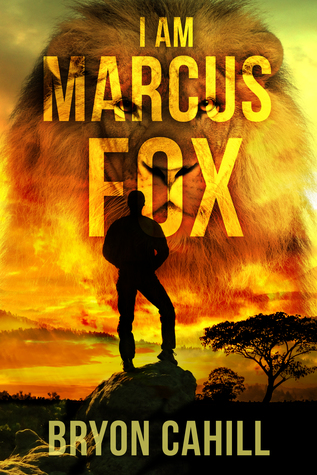
1. If you believe what you read, this book is kinda stupid and batshit insane.Stupid because there is no overarching goal. Marcus is never on any of quest nor is he, until the very end, pursuing any goal of any kind. He's just there and the world happens to him. There are elements of The Hero's Journey but it's chaotic, unfocused, and never settles into any kind of satisfying narrative.
And insane because there is a lot of shit that doesn't make any sense.
2. Suspend Your Disbelief Across An OceanTake this example, the first third of the book is about him growing up in the Zambian Savanah... or jungle, it's hard to tell sometimes. There he fights giant three-toed sloths (they live in South America), elephant bumblebees (not a thing) and prattlesnakes (can't tell if this is a typo or if there is a species of snake that just can't get to the point).
It's not just Fox's adventures in Africa. None of this book stands up well under the slightest scrutiny. Even those willing to stretch their suspension their disbelief will find this a hard chasm to cross.
3. No Pot of Gold At The End Of This RainbowAnd even for a reader that is willing to forgive the inaccuracies in the story, nature, engineering, and physics, there is no ending there to reward their efforts. The story just terminates. The words stop being written and the reader is left to check to make sure that they don't have a book with some missing pages.
4. Stupid... Like a Fox?And yet, it might be brilliant.
About a third to halfway into the book, the author drops some hints to suggest that none of this is as it seems. The story is told to us by Marcus Fox himself and we are left to wonder if he's giving us the whole story, or any part of the story for that matter. It becomes clear that Fox's grasp on reality is tenuous at best, and he is self-aggrandizing to the point of delusion.
Once I figured this out, everything changed.
5. The Detective Is... ... YOU!If, indeed, we are working with an unreliable narrator, then this book becomes an exercise in trying to figure out what the truth really is. It is up to the reader to determine what parts of Marcus' tale are true... or based in truth, and which were completely made up by a lunatic.
I have my own theories but, bottom line, it's up to the reader to figure this out.
So its like this: Marcus actually was raised by notorious criminals and was a 'hostage' in the standoff. But every memory between that and waking up in the hospital is false. There is not telling what he actually was doing but he never went to Africa, nor did he ever become a strange vigilante with Charlie. He actually was in a mental institution but how he escaped is either a lie or a false memory. There is no Charlie, there is no Terence they are both products of some dissociative disorder (as evidenced by the fact that they don't tend to interact with anyone else) but he actually does break into the zoo and confront the woman who I assume is his mother? That's the best I got. Click to show my theory
6. Nothing Behind The CurtainI will say this, and this is less a spoiler and more of a warning. There are no answers by the end of this book. If, indeed, parts of this story are completely dreamed up, then the author has yet to make that clear. There is no big reveal that makes the whole story make sense. There is no moment where Marcus realizes that he might very well be nuttier than squirrel shit. The book just ends and the reader is left screaming, "What the figgity fuck did I just read!?"
7. The Truth Is Out There... Maybe...I will say two things for sure. First, this might be part of a series. The listings on Goodreads and Amazon don't make this clear but the book itself calls 'I Am Marcus Fox: Lost Identity Book #1'. That seems to suggest there is more to the story.
So if there is another book and, at some point, the author manages to tie all of this together in a way that weaves together fantasy and reality into a narrative that makes sense, then this book is brilliant on the level of Franz Kafka or William S. Burroughs.
Hell, even if the author meant to do what I think he's trying to do, its strangely brilliant if not terribly well executed.
8. You Can't Argue With The Result:In any case, the book was entertaining. Maybe the author has outsmarted me and I can't really comprehend what I am reading. Maybe I'm looking for something that isn't there; trying to find meaning in, what is essentially, the narrative version of word salad.
I don't know!
But it was fun to figure out.
9. The Verdict ⭐⭐⭐⭐If there is an answer to my questions, they exist in a book that is not published yet. So my review is based completely on entertainment value along with the hope that we haven't heard the entire story of Marcus Fox yet.
It was fun and it kept me guessing at every turn. So, until, Lost Identity Book #2 comes out, we are left to guess.
I'm hoping for the best though.
January 29, 2020
Viekko's Provacao and Civilization vs Society
Chapter 8Author Commentary One of my favorite things in storytelling is when there is a character I'm highly invested in doing something that is very obviously stupid and counterproductive and doing so for all the reasons that I like that person. My assumption is that others might like that too. Or maybe I'm about to annoy a lot of people.
Well, it won't be the first time.
This is one of the first key turning points of Templum Veneris, and we see just how seductive this society and, indeed, just about any totalitarian society is. People don't gravitate to totalitarianism because they enjoy having their rights stripped away and being ground into a mindless tool of the State. There is a sense of belonging that appeals to our most basic nature as a species. We are hard-wired to cooperate and be part of the group, and it doesn't take a lot for a dictator to manipulate that. And that's what's happening to Viekko right now. He and Isra have never formed a strong bond, he likes Cronus well enough but doesn't share any commonality with someone essentially raised inside a computer. Althea is the only person that really ties him to the team, and, as of the last chapter, she's essentially severed that. Possibly with an ax.
But that could happen to anyone. There is something unique to Viekko and his situation.
One of the continuing themes in the book is this conflict between civilized society and the State of Nature. If you've made it this far in the series, you might know that the Martian society tends to exist on the far side of society. Yes, there is a settlement with an organized security force, but it was more like an outpost of civilization in a world of barbarism. It's been established that Viekko spent most of his time fighting the raiders that would attack his settlement. At the same time, I think he has a deep respect for their way of life; it's that respect a warrior gives to a worthy enemy.
So what does that have to do with what's going on right now?
For me, it adds an extra layer to a deeper, reoccurring conflict. Althea, for me, represents Civilization as a concept. Her appearance, her education, her profession, her desires, even her compulsion toward theft are all products of an advanced urban society. Viekko, of course, makes several references to being a wild man or a barbarian. And every time Althea pulls away from him —either because of his baggage or hers— he has a tendency to sink back into those things that satisfy his baser human needs.
Cytherea basically fill that void at the moment. It's the civilizational equivalent of a drug. It's built to target the reward centers of our brains, and Viekko, being only a few steps removed from the wild, is especially susceptible.
It's the same reason that, throughout ancient history, 'barbarian hordes' sacking the great cities of the world tended to get sidetracked by the sudden availability of luxury. The two ways of life are incompatible and tend to annihilate each other when in contact.
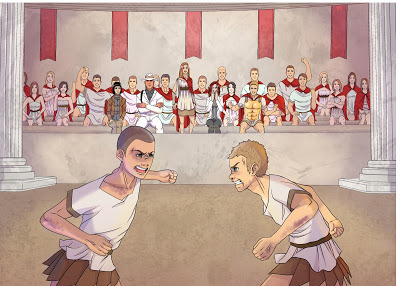
And for all those reasons, we know its a terrible idea when Viekko says, 'Awww fuck it' and jumps into the ring with Gabriel. We all know its a bad idea, but he just can't stop himself.
I like that sort of thing, but I'm a little deranged.
Well, it won't be the first time.
This is one of the first key turning points of Templum Veneris, and we see just how seductive this society and, indeed, just about any totalitarian society is. People don't gravitate to totalitarianism because they enjoy having their rights stripped away and being ground into a mindless tool of the State. There is a sense of belonging that appeals to our most basic nature as a species. We are hard-wired to cooperate and be part of the group, and it doesn't take a lot for a dictator to manipulate that. And that's what's happening to Viekko right now. He and Isra have never formed a strong bond, he likes Cronus well enough but doesn't share any commonality with someone essentially raised inside a computer. Althea is the only person that really ties him to the team, and, as of the last chapter, she's essentially severed that. Possibly with an ax.
But that could happen to anyone. There is something unique to Viekko and his situation.
One of the continuing themes in the book is this conflict between civilized society and the State of Nature. If you've made it this far in the series, you might know that the Martian society tends to exist on the far side of society. Yes, there is a settlement with an organized security force, but it was more like an outpost of civilization in a world of barbarism. It's been established that Viekko spent most of his time fighting the raiders that would attack his settlement. At the same time, I think he has a deep respect for their way of life; it's that respect a warrior gives to a worthy enemy.
So what does that have to do with what's going on right now?
For me, it adds an extra layer to a deeper, reoccurring conflict. Althea, for me, represents Civilization as a concept. Her appearance, her education, her profession, her desires, even her compulsion toward theft are all products of an advanced urban society. Viekko, of course, makes several references to being a wild man or a barbarian. And every time Althea pulls away from him —either because of his baggage or hers— he has a tendency to sink back into those things that satisfy his baser human needs.
Cytherea basically fill that void at the moment. It's the civilizational equivalent of a drug. It's built to target the reward centers of our brains, and Viekko, being only a few steps removed from the wild, is especially susceptible.
It's the same reason that, throughout ancient history, 'barbarian hordes' sacking the great cities of the world tended to get sidetracked by the sudden availability of luxury. The two ways of life are incompatible and tend to annihilate each other when in contact.
And for all those reasons, we know its a terrible idea when Viekko says, 'Awww fuck it' and jumps into the ring with Gabriel. We all know its a bad idea, but he just can't stop himself.
I like that sort of thing, but I'm a little deranged.
January 21, 2020
9 Things About Gnomon
The System never makes mistakes.
In the safest society humans have ever built, the System watches everything. Every thought is recorded, every movement analyzed. Memories are recorded so that any crime can be instantly investigated.
But when Diana Hunter dies on the operating table during such a procedure, Inspector Mielikki Neith is assigned to discover what went wrong. As she pours through Diana's memories she finds a glitch. A hack. A malfunction in the System.
In order to protect herself, Diana Hunter has created a series of false memories. Each one is so dense and so detailed that they are indistinguishable from real life. But as the inspector starts to live out each story, a series of clues will lead her to the truth about the System and the 'free' society she strives to protect.
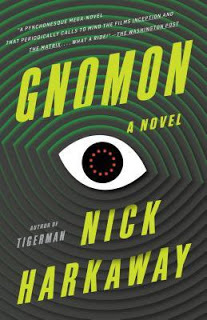 1. Pack Your Shit, You're Going On A Trip:Gnomon is less a story and more of an experience. Like most detective novels, Harkaway invites the reader to try and figure out the mystery by peppering the narrative with clues as to the secret of the System and the weird, dystopia we find ourselves in.
2. Go Fugue Yourself:Although this particular novel works something like this. Think about a cartoon detective. You probably imagine some dude with his deerstalker cap and a huge magnifying glass hunched over scanning a carpet for the tiniest clue. Now imagine the author standing a few feet back, clutching the end of the carpet with an evil gleam in his eye and mischief in his heart. Yeah, faceplant into the carpet time.
That's you. You're the cartoon detective with an eyeful of magnifying glass splinters.
This is because part of the challenge is figuring out what is even real, and what is an intense fever dream conjured by, arguably, the most cussedly stubborn character in all of literature. In the book Hannibal, by Thomas Harris, the titular character is described as being drugged to confess a crime and he gives the officers a recipe instead.
Well drugged up, tied to a chair and with a team of doctors downloading her brain, Diana Hunter creates three entire stories to confound the doctors, Inspector Neith and, ultimately, us.
So eat it. Lector.
Although not literally; though I know that's how you will take it.
...
ANYHOO!
3. I Hope You Have A Dictionary Handy...Also, a book on Greek and Roman mythology, a functional knowledge of modern Ethiopian history, perhaps a piece on classical alchemy... The point is that Harkaway demands a lot from his readers. He tends to use words so obscure that even the dictionary gazes at you blankly when you go to look them up. He assumes a level of knowledge that I think most readers just aren't going to bring to the table. Not that you have to study to read this book, but, if you're anything like me, you'll read something, get confused, look it up and spend the rest of the evening falling down a Wikipedia hole.
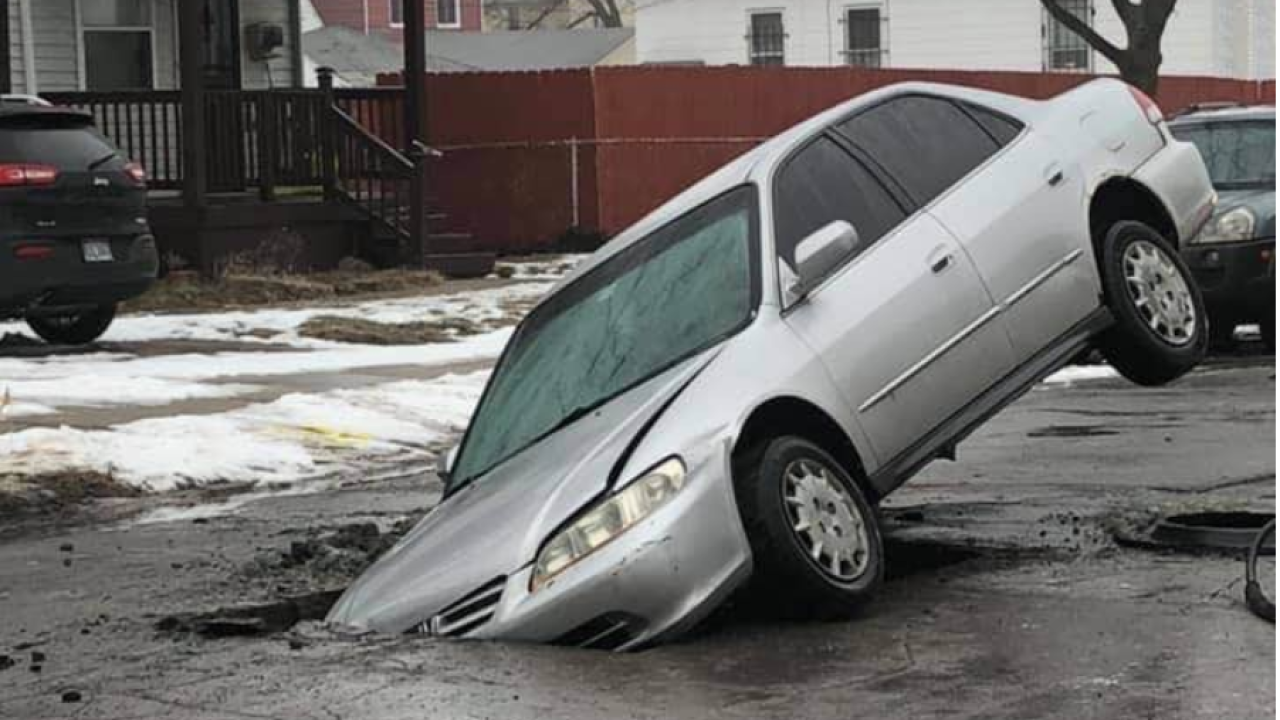
I guess what I am saying is this book is the equivalent of a poorly maintained street, except the potholes are Wikipedia holes. And they will swallow your fucking car.
 4. The Art of Creating Characters In Action:For those with self-control and who don't happen to know the Greek mythology of the four rivers of Hades, (yes that is a thing that comes up) the good news is that the characters really carry this story.
Both the real characters and the imagined ones have this uncanny ability to suck one into their world. We've got the cussing, sassy Ancient Roman alchemist searching for her dead son, the Ethiopian-born painter trying to remake the world, having survived the fall of Haile Selassie. Hell, even the pompous, greedy banker, who's thoughts begin and end inside his pants, comes off strangely charming.
5. Then there is Diana Hunter.This book is really about her, and we spend a good deal of the narrative learning about a woman that is so amazingly and stubbornly independent that she might have used her brain to kill herself out of sheer orneriness.
6. Except It's More Complicated Than That:Really, that could be the title of this book.
7. Our Intrepid Detective... Er... What's Her Name?The only character that really fell flat for me was Detective Neith, the cog in the System that dutifully fulfills her function until she decides not to anymore because that is what the plot requires. Also, she falls in love with a guy walking his dog. That must happen. Because plot.
Not that it's bad, but we spend so much time in literally everyone else's head that it feels Neith is just the vessel. She seems to have as much agency as a car; something to drive to the next stop on this wild tour.
8. Make The Time:And maybe be prepared to give this book a second read-through. This is just not a book one can pour through in a weekend before going onto the next one. It just isn't. Clear out a week of evenings. Maybe a couple of them. Brew some tea, pour the scotch, smoke a massive bowl... Whatever you need to do to get into the right mindset and take your time.
9. The Verdict ⭐⭐⭐⭐⭐:Despite the long passages of almost dream-like events where it's hard to pick apart what is actually happening, the confusing shifts in narrative and the sheer density of the book, I found myself totally sucked into the story. There are books that make morning and evening reading times feel more like a chore or an exercise in stoic discipline. And then there are those books that make it seem like the highlight of the day.
This was the latter. It was a book that forced me up way past my bedtime trying to sort out, not only what comes next but what is happening right now.
Again, if you're looking for a nice, clean, structured story, keep moving. There's no happiness here. But if you're in the mood for something a little weird and cerebral, then yes. Do it. Twice.
In the safest society humans have ever built, the System watches everything. Every thought is recorded, every movement analyzed. Memories are recorded so that any crime can be instantly investigated.
But when Diana Hunter dies on the operating table during such a procedure, Inspector Mielikki Neith is assigned to discover what went wrong. As she pours through Diana's memories she finds a glitch. A hack. A malfunction in the System.
In order to protect herself, Diana Hunter has created a series of false memories. Each one is so dense and so detailed that they are indistinguishable from real life. But as the inspector starts to live out each story, a series of clues will lead her to the truth about the System and the 'free' society she strives to protect.
 1. Pack Your Shit, You're Going On A Trip:Gnomon is less a story and more of an experience. Like most detective novels, Harkaway invites the reader to try and figure out the mystery by peppering the narrative with clues as to the secret of the System and the weird, dystopia we find ourselves in.
2. Go Fugue Yourself:Although this particular novel works something like this. Think about a cartoon detective. You probably imagine some dude with his deerstalker cap and a huge magnifying glass hunched over scanning a carpet for the tiniest clue. Now imagine the author standing a few feet back, clutching the end of the carpet with an evil gleam in his eye and mischief in his heart. Yeah, faceplant into the carpet time.
That's you. You're the cartoon detective with an eyeful of magnifying glass splinters.
This is because part of the challenge is figuring out what is even real, and what is an intense fever dream conjured by, arguably, the most cussedly stubborn character in all of literature. In the book Hannibal, by Thomas Harris, the titular character is described as being drugged to confess a crime and he gives the officers a recipe instead.
Well drugged up, tied to a chair and with a team of doctors downloading her brain, Diana Hunter creates three entire stories to confound the doctors, Inspector Neith and, ultimately, us.
So eat it. Lector.
Although not literally; though I know that's how you will take it.
...
ANYHOO!
3. I Hope You Have A Dictionary Handy...Also, a book on Greek and Roman mythology, a functional knowledge of modern Ethiopian history, perhaps a piece on classical alchemy... The point is that Harkaway demands a lot from his readers. He tends to use words so obscure that even the dictionary gazes at you blankly when you go to look them up. He assumes a level of knowledge that I think most readers just aren't going to bring to the table. Not that you have to study to read this book, but, if you're anything like me, you'll read something, get confused, look it up and spend the rest of the evening falling down a Wikipedia hole.
I guess what I am saying is this book is the equivalent of a poorly maintained street, except the potholes are Wikipedia holes. And they will swallow your fucking car.
 4. The Art of Creating Characters In Action:For those with self-control and who don't happen to know the Greek mythology of the four rivers of Hades, (yes that is a thing that comes up) the good news is that the characters really carry this story.
 Both the real characters and the imagined ones have this uncanny ability to suck one into their world. We've got the cussing, sassy Ancient Roman alchemist searching for her dead son, the Ethiopian-born painter trying to remake the world, having survived the fall of Haile Selassie. Hell, even the pompous, greedy banker, who's thoughts begin and end inside his pants, comes off strangely charming.
5. Then there is Diana Hunter.This book is really about her, and we spend a good deal of the narrative learning about a woman that is so amazingly and stubbornly independent that she might have used her brain to kill herself out of sheer orneriness.
6. Except It's More Complicated Than That:Really, that could be the title of this book.
7. Our Intrepid Detective... Er... What's Her Name?The only character that really fell flat for me was Detective Neith, the cog in the System that dutifully fulfills her function until she decides not to anymore because that is what the plot requires. Also, she falls in love with a guy walking his dog. That must happen. Because plot.
Not that it's bad, but we spend so much time in literally everyone else's head that it feels Neith is just the vessel. She seems to have as much agency as a car; something to drive to the next stop on this wild tour.
8. Make The Time:And maybe be prepared to give this book a second read-through. This is just not a book one can pour through in a weekend before going onto the next one. It just isn't. Clear out a week of evenings. Maybe a couple of them. Brew some tea, pour the scotch, smoke a massive bowl... Whatever you need to do to get into the right mindset and take your time.
9. The Verdict ⭐⭐⭐⭐⭐:Despite the long passages of almost dream-like events where it's hard to pick apart what is actually happening, the confusing shifts in narrative and the sheer density of the book, I found myself totally sucked into the story. There are books that make morning and evening reading times feel more like a chore or an exercise in stoic discipline. And then there are those books that make it seem like the highlight of the day.
This was the latter. It was a book that forced me up way past my bedtime trying to sort out, not only what comes next but what is happening right now.
Again, if you're looking for a nice, clean, structured story, keep moving. There's no happiness here. But if you're in the mood for something a little weird and cerebral, then yes. Do it. Twice.