Jeremy L. Jones's Blog, page 3
September 10, 2020
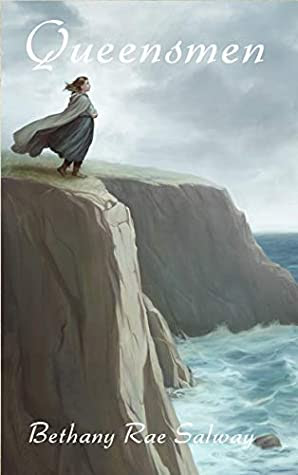
8 Things About the Queensmen
In the kingdom of Mackabine a cruel, greedy coalition has usurped the rightful ruler of the kingdom. In the small country of Geid, Lord Fenwith rules the land and sucks his subjects dry with excessive taxes.
But where there is oppression, there is hope. The Queensmen, a band of rebels loyal to the rightful regime have organized in every city in Mackabine with Jed leading Geid's division.
As those forces rise, Senna appears at Fenwith's court to become his housekeeper and informant. But the Queensmen agent quickly finds more than she bargained for as she and the Queensmen lead a new revolution in Makabine.
1. A New Genre, Hard Fantasy:
The book reads more like a historical fiction than fantasy which I rather liked. And the author skillfully crafts a complex feudal world that is largely accurate to the time period. And, in the process, there wasn't just a 'good vs evil' dynamic but a real-world struggle. Aint no magic, no dragons, just politics when it works and swords when that fails.
2. Senna, The Spy:The story largely revolves around Senna, a young woman who, if she had been born to the right family would easily be a powerful ruler. As it is, she appears early and quickly has the castle under her control. The story pretty much revolves around her trying to put the pieces together and keep the whole rebellion from falling into chaotic infighting. In a sense she runs the charge to reinstate the proper ruler. And she is only a little bit distracted by the handsome men she is aiding.
There is a romantic story line with her with the 'woman who loves two men' trope that bugged me at times but other readers might appreciate. And, even for me, it didn't get to the point where it took away from the rest of the story enough so that I couldn't enjoy it.
Every revolution needs one of these guys. Well, every revolution has one of these guys whether the Cause wants one or not. Headstrong, charismatic and with a brain that is often working just behind the rest of his body. He's got kind of a Robin Hood-eque feel to him. So much so that in the movie in my mind he was played by Howard Hill. It seemed appropriate.
4. Fenwith: The Er.... Well...Spoiler alert... well kinda. It does happen in the first 30% of the book but still. It's a rather nice twist that takes what one thinks the story is going to be and throws it up in the air for a while.
So bugger off now if you don't wanna know.
Okay ready?
He's the double agent.
Cole is a Queensmen that happened to be an albino during a time when there was an opening for a Baronship that was expected to be filled with a high-born albino gentleman. So he slides in and starts steering his little fiefdom to aid the rebels... while making sure that the rebels don't know.
Which, ya know, makes it kind of fun.
These and other dynamic characters really worked to pull me into the story. Most of it led by Senna who, despite having the aforementioned romance, never really loses her edge and keeps the story engaging. On the other side of the fight, however, is not as well defined. Yeah you got a group of men who are sitting where the rightful queen should be (that's right, girl power!) but that's about it. I never really developed a good sense of what ideologically was different between the two factions other than a nationalistic ideal of who was the rightful ruler.
6. Stakes please!The other downside is that it becomes clear pretty early that nothing bad is going to happen to your beloved characters. This is one of those books where, just when you think all is lost and everyone is dead, something swoops in at the last minute and everything is fine... ITS FINE EVERYONE!
Which, you know, there are those that get really annoyed by authors who kill and maim characters with little to no regard for the precious feels of their readers.
Me, I like reading a book knowing that people can die of shit goes south. Gives the story a little more urgency.
7. Good TimesBut, these issues aside, I did enjoy this book. The author crafts a beautiful, intricate world populated by engaging characters who are well defined, interesting and who’s motivations and goals are often at odds with each other. The narrative, although somewhat predictable as other reviews have pointed out, is not strickly linier either. The story does, at times, take a hard turn or a sudden drop and, though the stakes are a little light, it still makes for a fun read.
8. The Verdict ⭐⭐⭐⭐Overall pretty good. Especially given that it straddles a lot of genres that really aren't my brand of whiskey. Fans of fantasy or historical romance will probably find a lot more to love in these pages and I would highly recommend it for that audience. Especially since, I feel that a lot of the parts of the book I didn't like are tropes of those genres that are actually attractive to their audience.


August 19, 2020
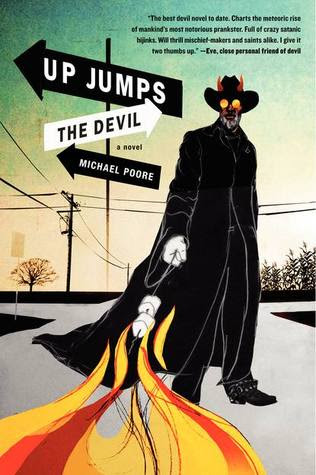
8 Things About Up Jumps The Devil
Meet John Scratch. A.K.A. The Devil and his newest pet project, America. Throughout the young nation's history, he has been there. Tending and shaping it to be a thing so grand that it rivals Heaven itself. And when he meets three luckless musicians at the crossroads, his project can finally be complete.
But there is still a lot he doesn't understand about humanity. And as his ambitions spiral farther and farther out of control through the drug and sex fueled 60's, 70's and 80's he begins to wonder if he, the worlds first love story, can ever find happiness.
1. "Not So Much A Fallen Angel As Sauntered Vaguely Downward"
This is one of those books where The Devil is not really evil. He's just immensely pragmatic, which can come across as evil sometimes but is not the same. And, in this case, he's a bit of a romantic. And more than a little bit of a hedonist. Which just serves to make him highly relatable. In this case, the over-arching goal of the Fallen Angel is not so much to corrupt the souls of humankind (because it actually seems to work the other way round) but to build civilization on Earth to the point that it rivals heaven. ... So his angel girlfriend will like it enough to stay.
2. AwwwwwwWWW!I know, right? Cute!
3. America: The Devil's CountryOne of the more amusing features of the book is that it bounces back and forth through American history to follow John Scratch appearing to famous people during great events to... adjust the course of history. The United States is The Devil's latest great attempt to build a civilization to rival Heaven.
4. So Heaven Must Be Pretty Great Huh?It's... endless ankle-deep water underneath a starry sky.
5. Uh, really?Yeah. There are a couple features of the book that you just gotta overlook. That is one of them. The other is that its hard to tell exactly what Scratch is going for when he is influencing the course of American History and how that is going to create a world that his angel lover is going to be able to live in. The whole issue is that being in the physical world is painful and unpleasant. So... not sure how a country of strip malls and pop music will fix that.
Most of the book follows a group of musicians who make a Deal With The Devil in the 60's and follows them through their path to the turn of the century. And maybe its all the weed, or the coke or the existence of the 80's, but whatever path the Devil had set got lost.
7. Less a Story, More A Critique:And maybe that's what I really dug about this. The tale of the three musicians never really goes anywhere. At least, it doesn't go where the Devil intended and he has a crystal ball that can see the future. The guy that the Devil helped get fabulously wealthy goes down a weird religious rabbit hole. The guy who was supposed to change the world drops out of the world. And the woman that was supposed to be a famous musician... well you just have to read it.
In short, there's a very real tale about where our nation is headed if one has the will to see it.
Overall, just a fun book to read. The writing is clever, the story is compelling, there's no way of really knowing what's just around the corner. And despite a rather meandering story line that sometimes loses its way, the characters are dynamic enough and the writing is fun enough to be one of those 'oh, it's 3am already? Okay one more chapter' books.
Highly recommended.
August 14, 2020
7 Things About Space Station Archon
With Earth's ecosystem collapsing, a group of young starship pilots are the planet's last hope for survival. The only thing standing in the way?
Incompetent and deceitful corporations
A journalist with ulterior motives
And a wreck of a space station that is perpetually incomplete.
Humankind's last hope seems as far away as the stars themselves.
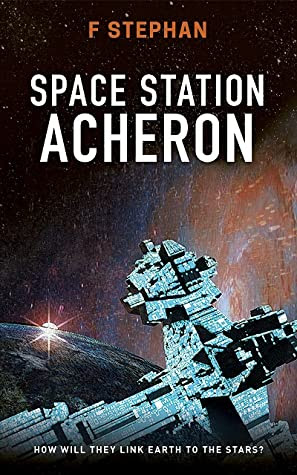
The book is interesting in that it crafts a story around probably the most frustrating part of shooting stuff into space. Namely the politics. For some reason Pillars of Salt sprang to mind in the fact that the story centers around a massive construction project and the politics either helping or hindering it. Except in space. With star ship pilots who use nanite technology to open wormholes and, occasionally, fight assassins and sentient tigers. Other than that, totally the same...
I like how this technology was done. In the book ninites are what give the star ship pilots the ability to open worm holes and travel across the galaxy. Its also handy in that it gives them super-human strength and the ability to heal. But they can be deadly for those who cannot control them which is unfortunate given that they are essentially a black market drug. So I really like this edgy dichotomy of something so essential to the advancement of humankind being so dangerous and so sought-after.
The story cuts quite a large swath through this world. From a completely reordered set of Geo-polictical politics, the competing factions and the very state of the Earth, I feel like the author did a lot of world building that we don't even get to see. It's a glimpse into a massive world on the scale of epic fantasy.
4. A World One Could Get Lost In... Literally:For me, however, that same strength turned out to be a bit of a liability as well. There were almost too many characters doing too many things in a different location at once. About halfway into the book, I felt like I should have been taking notes. By the last 25% I had all but lost the thread completely. Maybe it was me but there were a few factors that made this a hard read to follow.
5: Here! No there! Back over here again! Look there!:The chapters are literally two or three pages each which, you know, there's something about being on chapter 100 that makes you feel strangely accomplished. Maybe? The downside is, of course, that there is so much jumping from one scene to another and from one character to another that it's hard to connect all the dots.
6. Language Barrier:Another factor lies in the craft. The gears and the cogs; the tiny word nanites in the body that is the book. It's a bit clunky in general and is often a bit awkward. Consequently, I had trouble sitting back letting my mind immerse itself in the world. I think without that immersion its harder to really get into this story.
7. The Verdict, ⭐⭐⭐I wanted to like this a lot more than I did. There are such tantalizing, interesting, and fun ideas wrapped around this story but, in the end, the execution just wasn’t there. And maybe that’s on me. With my ADD-addled brain, I realize there are some books that just require a lot more work and focus on my end in order to enjoy. This might be one of those. But I have to know the reward is going to be there and I’m not completely sure that it is.
It’s worth cracking open and seeing for yourself. Your mileage may vary.
August 13, 2020
AThe Perfection of Imperfection
Author Commentary
Chapter 30
Cronus promptly shut his mouth. In his haste to keep up, he accidentally slammed his toe into a heavy box of tools. Maybe love was just like anything else outside the Neuvonet he thought, as he hobbled after Joana. Out here, where everything wasn’t controlled, love was awkward, clumsy, messy, and complicated, which is probably why the Neuvonet bored him. It was too perfect. In the worlds beyond the fabricated reality he and his people lived in for so long, nothing was exactly how it should be. Nothing felt completely right or followed any logical pattern.
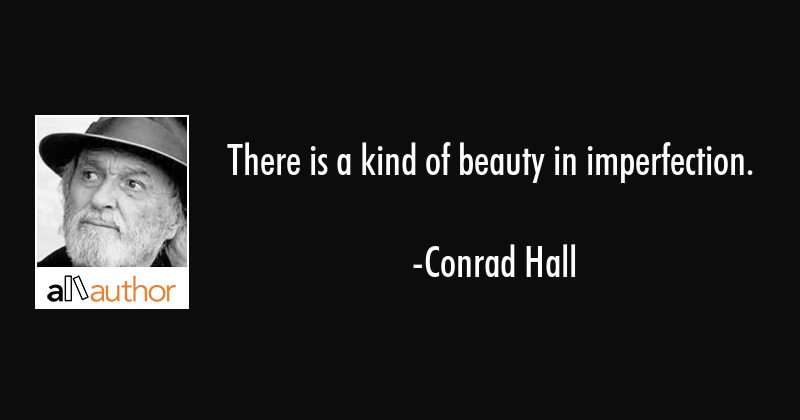
The perfection of the real world, Cronus decided, was in its imperfection.
Yep, this how I write a love scene.
If there is a theme to Templum, (and there might be a couple...five or six) it's this idea that perfectly controlled, safe, idyllic place are ultimately destructive. And I think a lot of beauty lies in the places where entropy and chaos are allowed to creep in.
I'm weird that way.
Cytherea, much like Cronus's Neuvonet world, is a place created for the pleasure and comfort and, ultimately entrapment of its citizens. And its a thing that we, all too often build for ourselves because, yeah why wouldn't we? We like pleasure and comfort because... uh... it's pleasurable. And comfortable.
I get suspicious of things like that.
I don't like cities that are too clean. I can't help but wonder what they are hiding and where they are hiding it. I always imagine that all the refuse of the society, the garbage, the poor, the misfits and the crazy people have been hounded out of town or tossed somewhere else. Of course that might be because as a someone who identifies with the misfits and the crazy people, I worry about myself.
I don't like things that seem tailor made for my enjoyment. I worry that there's something trying to steer me somewhere... usually toward buying something. Or buying into something. Besides shit I know that I like is boring. I mean, yeah, I like it. But there is a thrill in something new. We forget that.
Oh... the story?
Right, forgot there was a story there.
Um.... well we are setting up for the big reveal. This is the victory that's not quite a victory. That moment that defeat could be snatched from the jaws of victory, as it were.
July 31, 2020
8 Things About Me And The Robot
And in the process, he helps create the most powerful AI yet developed. But can it be trusted? Does trust even factor into a world of perfect logic?
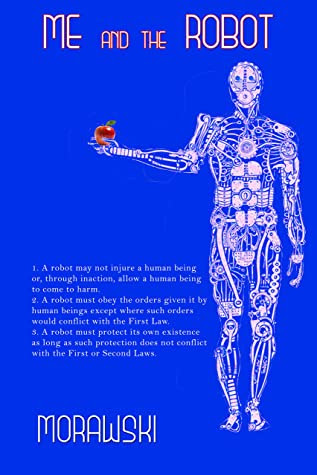
1. The Big Questions:The thing I did enjoy is the fact that the book goes out and tries to discuss some of the big questions when it comes to artificial intelligence and, indeed, where civilization will go in the future. Along with that some compelling universal questions about the nature of consciousness and what it means to be human. These are the questions I find fascinating myself and love the answers no matter how many times they are asked.
2. Welcome To The House Of Pain:The set up is awesome. Without going into it too far, the FTL travel we've developed is deadly to most life and, even those who survive it, feel the most intense pain imaginable. We join our main character, Ski, during one of these travels. Furthermore, nobody has survived more than nine trips through the 'Passage'. So you have this intense, eerie set up right from the get-go.
3. Entropy of Narrative:Unfortunately, things fall apart fairly quickly after this. The story veers from one situation to the next with very little connecting them. Even the main goal of Ski, trying to find a way for the colonist of Eden to provide enough food for Earth, gets lost as new ideas and new themes flood the narrative.
4. Beware Plot Holes:They are everywhere. The biggest one being this:Ski figures out that the reason Eden isn't producing enough food is because the robots aren't dexterous enough to pick fruit efficiently. In order to solve this, he (along with the Earth ruling council) decide to design the worlds most advanced AI in a humanoid body. This advanced superhuman doesn't exactly look forward to a life picking fruit so he designs simple robots to do it instead.
(raises hand)... so... if simple machines could have done the job... ... ...why did literally 50% of the book exist?
That's the biggest. But not the only one.
5. Warning, SSC (Strange Sexual Content) Ahead:Something else that stood out like a Penthouse tucked into the front of a church pew was the strange male sexual fantasy shoe-horned into the narrative. Eden for some reason has tons of women and almost no men. So Ski, of course, gets to enjoy endless sexual encounters with all the pretty girls. Although he does fall helplessly in love with one, whenever the story goes back to Eden, there are random sex scenes that aren't so much explicit as awkward.
It's like watching a movie where the main characters just start boinking each other for no reason other than a producer somewhere wanted it there because 'sex sells.'
6. 'I'm Doing A Thing To Further The Plot Of This Book':The most frustrating thing was the complete lack of character development. I feel like that alone, if done well, could fix or smooth over every other flaw in this book. But, sadly, the motivations of every character, especially Ski, changes on a whim.
The most glaring example comes early in the book where Ski falls in love with a woman, decides that he never wants to leave Eden and tries to figure out a way to stay. Next chapter, he leaves. ... Because that's what needed to happen.
I could think of a hundred reasons why Ski would eventually come to that decision but that isn't there. He goes because that's what the story demands right now.
7. Who Is Driving This Thing?:For me, this is a good example of the pitfalls of having the narrative drive the story. The characters move like robots, plot holes open because the events of the past get in the way of what needs to happen now, and ideas are brought up and left behind as the story chugs along. The result is a book that feels like its constantly veering wildly out of control towards and ending that makes absolutely zero sense.
8. The Verdict ⭐⭐⭐:I think a lot of my frustration with this came from the fact that I really liked a lot of elements in the book and I wanted to like the story. But the execution wasn't there. Maybe its because I like character-driven fiction but the flaws are, I believe, too big for most people to ignore.
Maybe you could. Your milage may vary.
It wasn't for me.
July 30, 2020
The Strange Symbolism of the Via Maxamilliano
This was one of the moments I had down in my notes from the get go. How exactly we got here got changed and some of the characters ended up a little worse off but we got here.
You might remember way back when they first enter the city Viekko's feeling of forboding walking into what he dubbed a 'kill zone.' And that was where the Story of Cytherea as told by Rainha Isabel began. The first line of that story was, 'Cytherea is unassailable. You will never win against the might of this city.
Since then the story became longer and more elaborate. But in order to save Cytherea and, indeed, themselves, I wanted to show that they had to break that story and show the people the truth. This is partly why Viekko's plan didn't work. He unwittingly tried to make the change using the exact same controls Rainha Isabel has been using to perfection this entire time.
In that way the Via Maxamilliano is the physical embodiment of that idea. The worst possible place to mount an attack against the city and, strangely, the only place it will succeed. Because the story that has been told is a complete fabrication.
I started writing this book long before 2016 and the election that sent my country into a four-year struggle with the idea of basic facts. But the theme felt correct when I was writing it then and it only feels more important now.
Govenments and other entities that seek to control us often use stories and lies to accomplish our goals. Sometimes they are minor, a company painting a rosy picture of the future while things are obviously going to hell. Sometimes they are major like... well, whenever President Trump opens his stupid lie-hole.
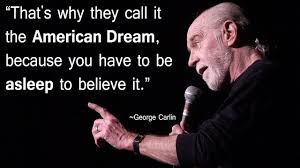
I like to believe, however, that bullshit like that cannot stand the light of day. And a lot of what is happening in the world right now is people waking up to the fact that we've been lied to. It was all just a story. The American Dream, Equal Protection Under The Law, Land Of The Free, The Shining Light On The Hill, all of them were just stories. And we are waking up.
I like to think —and maybe I'm just a naive idealist— that we, as a society, are where Isra is in this chapter. We are standing at the end of a path we've been told is a dangerous, destructive place to go. We've been warned time and time again that the path will destroy everything we hold dear.
But we too have little choice anymore and we are taking the first steps down our own Via Maxamilliano.
The Romance of the Doomed Mission
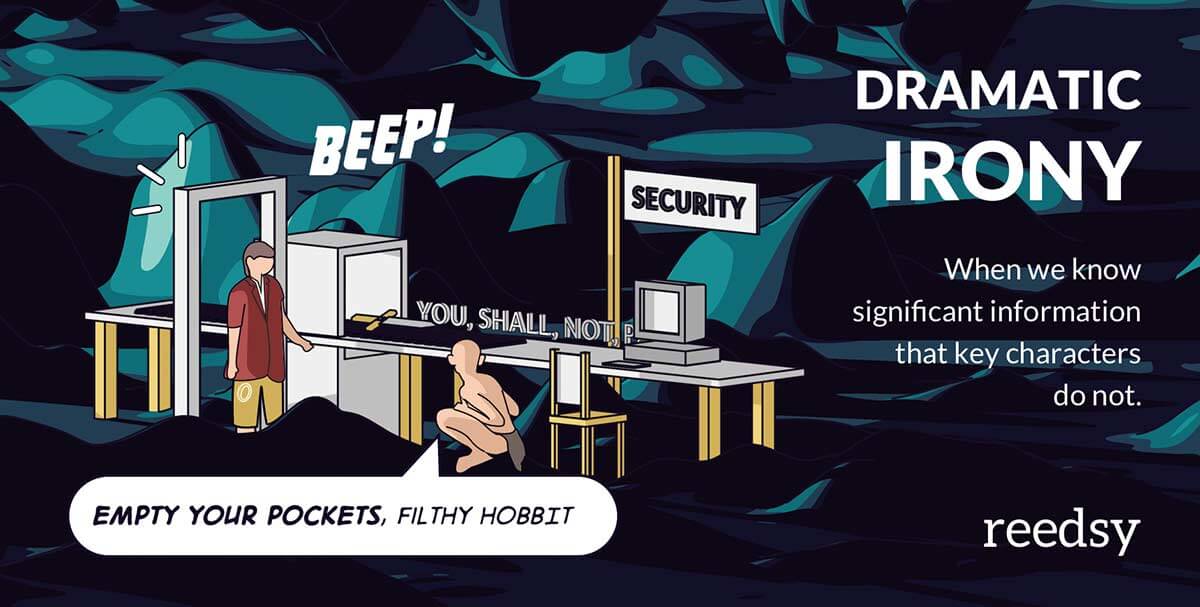
That's called dramatic irony.
By this time I wanted to show that basically every encounter between Cytherean and Corsario forces follows the same basic progression. The Corsario go in and raid, the Cythereans show up and form a shield wall, the Corsario fire a round... you get the idea. This basically served two purposes. First, I don't think that's a bad representation of how ancient battles went. In my reading about ancient warfare, I get the impression that there were rules to the Game of War. In fact all the way up to the Revolutionary war there is a strange organization to the killing. It's only very recently that war has devolved into a kind of hellish free-for-all. So it makes sense that a bronze-age society would have developed the same thing.
At least that's my impression. I'm sure someone who actually has a working knowledge of military history could point out exactly how backasswards I have this.
But also warfare is just another part of the endless cycle the Rainha has developed to keep the city under her thumb. It's amazing to me how many times in life we get caught in the same cycles. We drive ourselves crazy doing the same dumb-ass thing over and over again never stopping to realize that if we just changed one minor thing it would drastically improve our situation. In fact, in those rare times we do come to that realization and change something we usually hate ourselves for a bit because it took us that long to figure it out.
Or maybe that's just me.
But we know that Viekko is not, in fact, free of the Rainha's story yet. And that's about to come back and bite him.
Sometimes it takes us at our lowest to find the true path. And that's where Isra comes in...
July 24, 2020
10 Things About The Blue Crucible
After a corporate nuclear war, a group of police officers from all over the world find themselves in Colombia, Missouri. Will the world collapsing around them they are the last chance for law and order in the This Fallen World?

1. The How And The Why And The WTF?:
I saw the cover on social media and had to know. Keeping in mind that the author would have been writing this for probably a year, most likely years, before now I found it intriguing and wanted to know what it was like to try and sell a book like this right now. So I picked up the book and reached out to the author to see if he wanted to talk to me.
He never responded which... yeah that makes sense. If I wrote a hero cop book I don't think I'd be rushing to talk to every rando who sent me a message right now. But I really was interested in what it was like marketing this book right now, what his views were and how they may have changed.
That said, the offer is still on the table if you're reading this.
2. Reflections of Society in Literature:That said... there's not much to say. The book is very simplistic. It follows a group of cops. They are heroes (YAAAY!) They fight the corporations. They are evil. (BOOOO!) Although they apparently work for them, so that's a thing (YA.... wait what?) But they turn on them for no discernible reason and lead a military attack against the most powerful force in this Fallen World! (huh?)
3. Let's Talk About The Cops:They are perfect 2D characters. None really stand out, they are all fairly interchangeable. They fight for Truth and Justice in this Fallen World!
4. Okay... let's talk about the Corporations:
They are perfect 2D villains. They nuked the entire planet for no discernible reason. They are greedy and evil and care nothing but themselves in this Fallen World
5. What's with the 'Fallen World' thing?Couldn't tell you. Every chapter ends with this over-dramatic tag. It felt like the author was desperately trying to force some amount of tension and drama in a story that was clearly lacking both. Don't know if this is a feature in the series (this is apparently book 7 in the Fallen World series but the first by the author... so figure that out) or if this is a flair of this particular writer but it didn't work for me. In fact it was incredibly annoying.
6. Reflections of Ruins of Empire in literature:I did see something in my own work. Some of the feedback I've gotten from Saturnius Mons is the fact that the battles are long and tedious and over-described. In trying to create this action-filled sequence I, instead, strangely manage to be boring. And reading a something that almost reads like the screenplay of an action movie... I sorta get it. At several points my eyes glazed over and I had to go back to remind myself who was even fighting and why.
7. One Thing About The Police:
There's really nothing of any depth anywhere in this book but if there is one thing we can take away from it, it is this. The group of cops defending Colombia, MO are painted as these super-human figures with a fanatical devotion to duty and an almost Dudley Do-Right grasp on morality.
That's not how cops work. That's not how humans work. And if that's what people expect from the men and women who serve in that role... well it's no wonder they are failing so miserably.
8. Warning! Political Content Ahead:Since I opened the door on this, I might as well throw out my view as to what's going on with this issue. I think there are good men and women who do their best to carry out an impossible and largely thankless job. I also think policing holds a special attraction for those who crave authority and power and especially to those prone to abuse both. I think the entire system is rotten all the way to the core and has been exacerbated by our law and order fetish for the past forty years or so. Furthermore, I believe that is pretty clear that a lot of policing policy and tactics were developed as a kind of racist retaliation against the progress of civil rights over the past hundred plus years. And I think there is merit to the idea that we have looked to law enforcement to cure too many of societies ills and money would be better spent on social systems designed to address the cause rather than put more people behind bars.
And, overall, I think that what we are seeing is the final collapse of systems that were non-functional from the get-go, have become obsolete or have been stripped down and sold off to the highest bidder. Voters and politicians have been fairly happy to ignore these cracks for decades now and finally, in 2020 a storm has come that is going to blow the whole crumbling building to the ground.
9. Uh... So About The Book?The book... right. It's fine. It's simplistic but fans of post-apocalyptic action novels might get a kick out of it.
10. The Verdict ⭐⭐⭐
Maybe I just couldn't get into it. Maybe it's because I bought it hoping for deeper insight to our modern world, but it felt like the plot was leading the story by the nose. None of the characters had any motivation or agency. The story line was very liner pausing at the occasional cliffhanger and careening toward a predictable ending.
July 21, 2020
Okay Places Everybody, Places!
Nothing like getting everyone set up for a doomed encounter.
This scene is especially important for the Cronus / Jonana storyline. He's ready to give up on anything happening between him and the Cytherean engineer. He feels he's tried everything. He's tried letting her take the lead. He's tried taking some initiative. And he's tried running away screaming. What else is there?
On a related note, if you now have a semi-permanent handprint on your face from the number of facepalms Cronus has caused during this book, then I am doing my job correctly.
I don't know what it is about love and romance but sometimes the best thing to do is just give up. At least that is what my life taught me. I could never get a relationship to last more than a few months when I was young and decided it wasn't worth the effort. At the time I thought that I would pursue it again some day but, for the moment, I would just stop. Shortly after that decision, I ran into the woman who would become my wife. Well, to be fair, a car ran into her house but I did meet her there. So giving up and just letting things happen worked for me. Your mileage may vary.
I was not the one driving the car in case you were wondering.
....
ANYHOO!
The reason it works, at least for me, is I tend to overthink things. Especially things that involve human interaction. My fellow overthinkers can back me up, we know well this tendency serves us.
So Cronus here is not really giving up as much as he is focusing on something else. He is responding to external situations and, in a sense, showing what kind of person he is. That most hated of relationship advice 'be yourself' has some merit. But you can't just decide to 'be yourself'. It's like telling someone 'don't think of a purple cow.' 'Be yourself' is something that just happens when we are not thinking about it. That's what happened. And it means that, finally, we have a turning point in this story.
I didn't know that this was going to turn into relationship advice from a sci-fi writer, but there you go. Give up. Focus on something else. And, in that state, you can show what kind of person you really are and, in the process achieve what you want.
I love Viekko's speeches. He just strikes me as the type of person who would jump on a soapbox and offer some completely unsolicited words. And some of them might even make some sense. He's got that kind of simplicity and clarity of mind that just works for a military leader. In my mind I think Jayne Cobb in the Jaynetown episode of Firefly. Only with just a little more eloquence. Because Viekko is used to speaking in front of soldiers.
And there we are. Cronus is at the transmitter. Viekko is running the assault with Althea coordinating the effort. What could possibly go wrong?
Except we already know. Everything. Everything is about to go wrong.
July 14, 2020
8 Things About The Professor and The Madman
A true tale about the production of the Oxford English Dictionary that revolves around two very different but fascinating men. From Civil War battlefields to an Oxford writing shed, the surprisingly fascinating tale about an often overlooked achievement in human history.
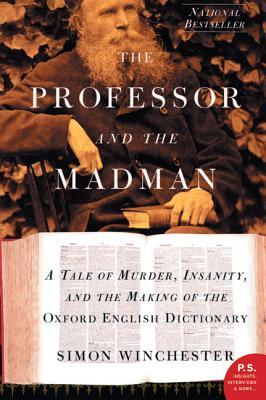
1. Murder! Mayhem! Lexiconography!The book opens with this dramatic scene. Dr. Murry having never met his dictionary's most prolific contributor is taken to a red brick estate outside of London. In a moment out of a British adventure novel, he walks into the main office, introduces himself, and says, "And you must be Dr. Minor. It is a pleasure."
And the man turns around. Cue dramatic music.
"No," the man says, "I am the Governor of the Broadmore Criminal Lunatic Asylum. Mr. Minor is our longest resident"
[Minor Chord!]
2. Okay Calm Down: The truth, as we come to find out, is much less dramatic. In fact, about two-thirds of the way through the book we find that even this scene was a breathlessly sensational account as written by the newspapers at the time.
In fact, the subtext, 'A Tale of Murder, Insanity, and the Making of the Oxford English Dictionary' is a bit over the top. A great deal more of the book deals with the strange art of crafting a dictionary than either murder or insanity.
3. But Would You Have Read A Book That Was Titled 'Perfectly Reasonable Account Of The Production Of A Dictionary?':Uh... no probably no.
4. Well, There You Go!Fair enough.
5. Come For The Mayhem, Stay For The Dictionary:Although the past of one of the characters, Dr. W. C. Minor, is steeped in murder and insanity. In that, he murdered someone and was sent to an insane asylum. He is a fascinating and sympathetic character that one can't help but admire and feel sympathy for.
But what actually got me into the book was the description of the history of dictionaries, how one goes about creating one, and how monumental a task the OED is. Which, yeah, it turns out cataloging every word ever used in the English language is, to put it mildly, a bit of a bitch.
6. A Victorian Bromance:One of the things I found most charming was the relationship between the editor of the OED, Professor James Murray. The author describes the relationship between two men that is both deep and excessively British. You can almost hear the throat clearing and the muttered, 'yes, well, quite, quite," between two men who clearly developed quite a lot of respect and —dare I say it— affection for each other.
7. Best Paired With Glass of Sherry And Your Dictionary:The voice that this book is written in is absolutely spot on. The story is told with language that borders on academic arrogance without crossing over. It is the language that one imagines that these characters lived in, complete with a load of obscure, needlessly complicated words.
I had to look a bunch up but, instead of pulling out my phone, I decided to dust off my own dictionary. It's not the OED but, respectable. In the process I found myself getting somewhat fascinated with this object that I've always had and, with access to the Internet, rarely use.
I like books that tell the full story about things we take for granted in this world. Especially things like this that turned out to be a strange monument of human achievement.
8. The Verdict ⭐⭐⭐⭐⭐:Highly recommended for people like me who love strange tales of history. Or people who like insight into strange times and places. I feel like some might get lost when the author dives into the particulars of the production of a dictionary but, then again, probably not. It's a nice, short, pithy book that, while not diving too deep into what it takes to produce a work like this, gives just enough details to make one look at the dictionary gathering dust on their shelves with a lot more respect.