Jeremy L. Jones's Blog, page 5
April 22, 2020
The Hell Is Althea Thinking?
Authors CommentaryChapter 18 It is about this point that the characters get completely out of my direct control.
I love the feeling of logical insanity. There's an eery feeling when you deep into a book, and the story around the characters gets so distorted through the lens of their experience that they do things that don't make any sense when seen from a larger perspective. Delilah S. Dawson's books Hit and Strike portrayed this feeling exceptionally well (especially Hit). It's unsettling. It makes your skin crawl. I rather like it in fiction.
That's what I was going for here.
While you are with Althea, everything she does totally makes sense just as it makes sense to her. If she wants to save even one person, this is what she must do. The idea 'if I can just save one person' is a weird and sometimes destructive rationalization. It's futility made honorable. Yet if Althea or anyone else stops and actually thinks about what she is doing; really thinks about it, it's goddamned insane. Stop and think about the logistics for a moment. At some point, somebody on the ship is going to notice, and Althea knows it. There's no good ending for this except for the small hint of a chance of a possibility that Althea helps the woman she is trying to help.
And then there is Isra.
She's got total blinders by now. Althea sort of sees her situation but doesn't care. Isra? It hasn't hit her yet. All she has her mind on is completing the mission. She needs to build a foundation for an alliance between Earth and Venus, or her entire project is toast. And she has it in her mind that there is this puzzle that she just needs to solve and, once that happens, she can manipulate the Rainha into doing whatever she needs.
But in the process, she needs to play along, and it's proving to be destructive. Whether she is doing it for her benefit alone or for the team remains to be seen. But the optics from Althea's point of view are clear. Isra's gone. She's abandoned them and is completely controlled by Isabel.
I dig that feeling. Watching characters one (hopefully) cares about doing the most batshit crazy, destructive things, and they are not even sure why themselves.
I love the feeling of logical insanity. There's an eery feeling when you deep into a book, and the story around the characters gets so distorted through the lens of their experience that they do things that don't make any sense when seen from a larger perspective. Delilah S. Dawson's books Hit and Strike portrayed this feeling exceptionally well (especially Hit). It's unsettling. It makes your skin crawl. I rather like it in fiction.
That's what I was going for here.
While you are with Althea, everything she does totally makes sense just as it makes sense to her. If she wants to save even one person, this is what she must do. The idea 'if I can just save one person' is a weird and sometimes destructive rationalization. It's futility made honorable. Yet if Althea or anyone else stops and actually thinks about what she is doing; really thinks about it, it's goddamned insane. Stop and think about the logistics for a moment. At some point, somebody on the ship is going to notice, and Althea knows it. There's no good ending for this except for the small hint of a chance of a possibility that Althea helps the woman she is trying to help.
And then there is Isra.
She's got total blinders by now. Althea sort of sees her situation but doesn't care. Isra? It hasn't hit her yet. All she has her mind on is completing the mission. She needs to build a foundation for an alliance between Earth and Venus, or her entire project is toast. And she has it in her mind that there is this puzzle that she just needs to solve and, once that happens, she can manipulate the Rainha into doing whatever she needs.
But in the process, she needs to play along, and it's proving to be destructive. Whether she is doing it for her benefit alone or for the team remains to be seen. But the optics from Althea's point of view are clear. Isra's gone. She's abandoned them and is completely controlled by Isabel.
I dig that feeling. Watching characters one (hopefully) cares about doing the most batshit crazy, destructive things, and they are not even sure why themselves.


April 15, 2020
8 Thoughts about She Who Comes Forth
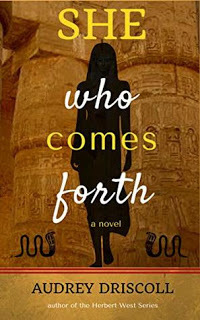
France Lighton arrives in Luxor, looking for adventure in the archeological digs of Ancient Egypt. What she finds is a life of busy-work, drudgery, and a few leering eyes from her male colleagues.
But when a mysterious stranger arrives, Lighton finds herself thrust into an ancient mystery that will rewrite history in the land of the pharaohs.
 1. Why Did I Like This Story So Much?:This is going to sound weird, or like a back-handed handed compliment, but I don't know a better way to say it. So here it goes:
Despite having a lot of elements that normally irritate me, I like this book a lot. I really got into it in a way that was almost confusing to me.
See? Sounds a little disingenuous. Let me explain:
2. Irritation #1, The Hell Is Up With The Cello?:France comes to Egypt with two possessions of note. Her emerald ring and her cello, both family heirlooms that she treasures. But the cello threw me at first as France treats it, and it acts like a character in its own right. I'm a musician and personifying one's instrument sorta makes sense, but, still, this seemed over the top and downright silly at first.
Except, it started to work. It spoke to France's loneliness in this strange world and, later, gave her an element of the supernatural. Which, in a story where there is ancient magic flickering in the background, added gravitas to the main character. I sometimes wonder in stories why a certain person was 'chosen' to be the hero of a particular tale, but, for France, it feels like destiny.
3. Irritation #2: The Sexy, Dark, Mysterious Stranger:Ugg... I hate this trope. It's common in the romance genre, which is just one of the thousands of reasons I avoid it. And when it sneaks its way into a book I'm reading, I get the overwhelming urge to throw it across the room.
Especially if the mysterious stranger in question is also rich? Book? Meet wall. At high velocity.
And I admit, the old pitching arm started a twitchin' when Adam Dexter entered the story. But... again, it started to work. The romantic angle helped pull the main character deeper into the story. And it added some depth to the character. It turns out that France, like most of us, loses her senses when sex enters the picture. But she's got enough presence of mind to break free and start poking at all the right holes... ... ...
That's what she said. BOOM!
4. Irritation #3: Oh, hello, plot! I was wondering when you were going to arrive!:A rule of thumb, if I'm past the halfway point and a real plot has yet to develop, I've already lost interest. I'm all for stories with a slow build, but there is a limit.
And that's not to say there was no plot in the first half of this book. There was a story, but it was mostly following France around Egypt as she tried to get her bearings.
But, again, it worked. And it worked because the author went to great lengths to create an immersive experience. They way she describes this time and place almost feels as if the author, herself, had lived it. (Apparently, she's never been to Luxor. Not in the 1960s. Not ever. Which is even more impressive to me.)
Maybe it's because she is describing a world that is interesting to me —I do love me some ancient Egypt— but it worked. Or, at least, I was willing to sit back and let her weave the world together before it was time for shit to get real. The sights, the sounds, the local color, and the mythology and magic of Egypt really captured my attention.
5. Irritation #4: The hell does this have to do with the Cuban Missle Crisis:Okay, this is one flaw that did stand out. So this story takes place during the Cuban Missle Crisis. It's a thing that is mentioned happening in the background. The dangers of nuclear armageddon are sorta...kinda... a theme sometimes. And I feel like the author was trying to weave these two worlds together, but that just didn't come together for me. I felt like it was a distraction that could have been left out.
6. So... what you hated this book?No! And that's my long rambling point. Looking back, I was looking through my notes, and I noticed a pattern. I would note something that normally irritated me only to find, a few pages later, that it no longer did. It made the story work, and that, above all, is the most important.
7. A matter of taste:The other thing I want to point out is that the above 'flaws' are mostly a matter of taste. I don't like the dark, mysterious, stranger trope but go surf the Amazon romance section, and you begin to realize that, not only do people like it, I think it's a multi-million dollar industry.
I gravitate toward punchy, gripping stories, but I have seen many a lament on Twitter's #writingcommunity about people wanting low-stakes immersive stories. No real plot, just a pretty picture. Don't understand that, but whatever.
The book still held my attention, so it occurs to me that a less bitchy reader would cruise through this book with nary a care in the world.
8. The Verdict: ⭐⭐⭐⭐⭐ I liked it overall. It was well written, and this particular time and place in history were painted with vivid colors. Most of the things that threw me for a moment were matters of personal preference which says to me that others would plow through this book without a care. If you're liking an Indiana-Jones-ish adventure with a hint of mid-century romance and spiced with a little ancient magic, this book is a good choice.
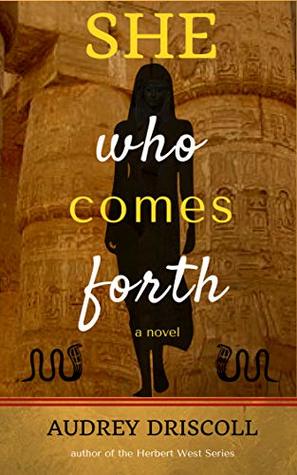
But when a mysterious stranger arrives, Lighton finds herself thrust into an ancient mystery that will rewrite history in the land of the pharaohs.
 1. Why Did I Like This Story So Much?:This is going to sound weird, or like a back-handed handed compliment, but I don't know a better way to say it. So here it goes:
Despite having a lot of elements that normally irritate me, I like this book a lot. I really got into it in a way that was almost confusing to me.
See? Sounds a little disingenuous. Let me explain:
2. Irritation #1, The Hell Is Up With The Cello?:France comes to Egypt with two possessions of note. Her emerald ring and her cello, both family heirlooms that she treasures. But the cello threw me at first as France treats it, and it acts like a character in its own right. I'm a musician and personifying one's instrument sorta makes sense, but, still, this seemed over the top and downright silly at first.
Except, it started to work. It spoke to France's loneliness in this strange world and, later, gave her an element of the supernatural. Which, in a story where there is ancient magic flickering in the background, added gravitas to the main character. I sometimes wonder in stories why a certain person was 'chosen' to be the hero of a particular tale, but, for France, it feels like destiny.
3. Irritation #2: The Sexy, Dark, Mysterious Stranger:Ugg... I hate this trope. It's common in the romance genre, which is just one of the thousands of reasons I avoid it. And when it sneaks its way into a book I'm reading, I get the overwhelming urge to throw it across the room.
Especially if the mysterious stranger in question is also rich? Book? Meet wall. At high velocity.
And I admit, the old pitching arm started a twitchin' when Adam Dexter entered the story. But... again, it started to work. The romantic angle helped pull the main character deeper into the story. And it added some depth to the character. It turns out that France, like most of us, loses her senses when sex enters the picture. But she's got enough presence of mind to break free and start poking at all the right holes... ... ...
That's what she said. BOOM!
4. Irritation #3: Oh, hello, plot! I was wondering when you were going to arrive!:A rule of thumb, if I'm past the halfway point and a real plot has yet to develop, I've already lost interest. I'm all for stories with a slow build, but there is a limit.
And that's not to say there was no plot in the first half of this book. There was a story, but it was mostly following France around Egypt as she tried to get her bearings.
But, again, it worked. And it worked because the author went to great lengths to create an immersive experience. They way she describes this time and place almost feels as if the author, herself, had lived it. (Apparently, she's never been to Luxor. Not in the 1960s. Not ever. Which is even more impressive to me.)
Maybe it's because she is describing a world that is interesting to me —I do love me some ancient Egypt— but it worked. Or, at least, I was willing to sit back and let her weave the world together before it was time for shit to get real. The sights, the sounds, the local color, and the mythology and magic of Egypt really captured my attention.
5. Irritation #4: The hell does this have to do with the Cuban Missle Crisis:Okay, this is one flaw that did stand out. So this story takes place during the Cuban Missle Crisis. It's a thing that is mentioned happening in the background. The dangers of nuclear armageddon are sorta...kinda... a theme sometimes. And I feel like the author was trying to weave these two worlds together, but that just didn't come together for me. I felt like it was a distraction that could have been left out.
6. So... what you hated this book?No! And that's my long rambling point. Looking back, I was looking through my notes, and I noticed a pattern. I would note something that normally irritated me only to find, a few pages later, that it no longer did. It made the story work, and that, above all, is the most important.
7. A matter of taste:The other thing I want to point out is that the above 'flaws' are mostly a matter of taste. I don't like the dark, mysterious, stranger trope but go surf the Amazon romance section, and you begin to realize that, not only do people like it, I think it's a multi-million dollar industry.
I gravitate toward punchy, gripping stories, but I have seen many a lament on Twitter's #writingcommunity about people wanting low-stakes immersive stories. No real plot, just a pretty picture. Don't understand that, but whatever.
The book still held my attention, so it occurs to me that a less bitchy reader would cruise through this book with nary a care in the world.
8. The Verdict: ⭐⭐⭐⭐⭐ I liked it overall. It was well written, and this particular time and place in history were painted with vivid colors. Most of the things that threw me for a moment were matters of personal preference which says to me that others would plow through this book without a care. If you're liking an Indiana-Jones-ish adventure with a hint of mid-century romance and spiced with a little ancient magic, this book is a good choice.
April 8, 2020
Isra's superpowers
How do you write a fight scene where instead of guns and bullets or punches and kicks they are using words and body language?
I don't know, but this chapter is me trying to write that.
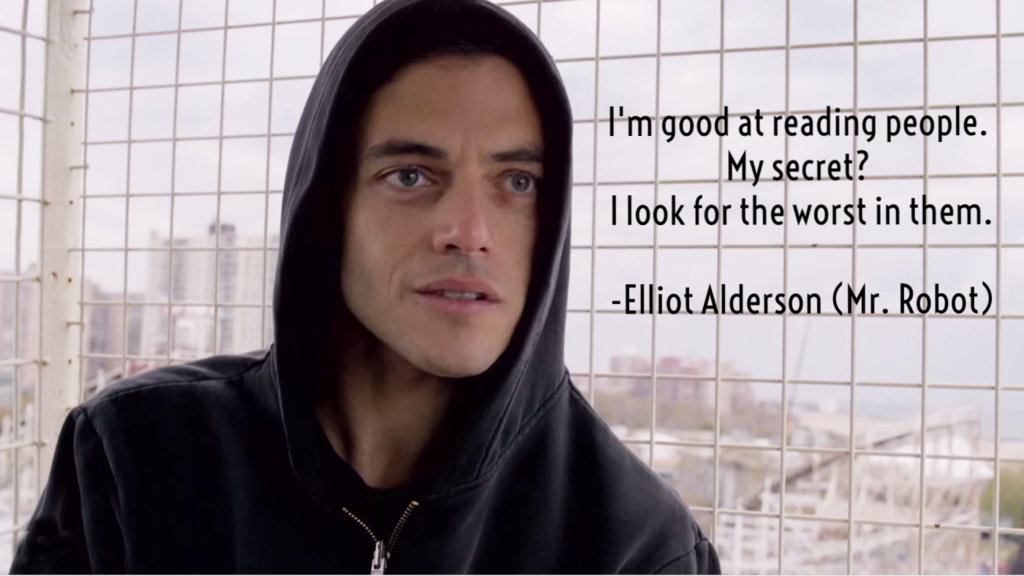
I've often said that Isra's superpower is the ability to read people. As she was described from Viekko's point of view in the first book, "Viekko wouldn’t go so far as to say she was psychic, but whatever innate skill or talent that psychics needed to convince people they were psychic, Isra had it. A lot of it."
I like that quality about her, especially in this group, but it's a hard thing to write about compellingly. Reading it aloud again I like how both Isra and the Rainha know that this is a farce. It's a dance of dominance with both sides simply playing a part that they think will get them what they want. To be honest I wonder if that is what goes through the mind of most politicians as they glad-hand and bullshit their way through their careers.
Although the thing that strikes me as odd is that Isra goes immediately submissive when she discovers what the Rainha's true desire is. I know why I made that choice at the time but it feels odd now. I think I meant it as a strategic retreat and regroup but it reads like a full-on route.
But maybe that is the right response. If this conversation is a mini-battle than learning what Isabel's real goal is like realizing that the hill you've been defending is literally nothing but a patch of dirt. The real prize is somewhere else.

I don't know, but this chapter is me trying to write that.
I've often said that Isra's superpower is the ability to read people. As she was described from Viekko's point of view in the first book, "Viekko wouldn’t go so far as to say she was psychic, but whatever innate skill or talent that psychics needed to convince people they were psychic, Isra had it. A lot of it."
I like that quality about her, especially in this group, but it's a hard thing to write about compellingly. Reading it aloud again I like how both Isra and the Rainha know that this is a farce. It's a dance of dominance with both sides simply playing a part that they think will get them what they want. To be honest I wonder if that is what goes through the mind of most politicians as they glad-hand and bullshit their way through their careers.
Although the thing that strikes me as odd is that Isra goes immediately submissive when she discovers what the Rainha's true desire is. I know why I made that choice at the time but it feels odd now. I think I meant it as a strategic retreat and regroup but it reads like a full-on route.
But maybe that is the right response. If this conversation is a mini-battle than learning what Isabel's real goal is like realizing that the hill you've been defending is literally nothing but a patch of dirt. The real prize is somewhere else.
April 7, 2020
Pandemic Diaries #1

I wonder if this is what it felt like for people living during WWI and WWII. Not for the soldiers obviously, but for the hundreds of thousands left at home and trying to continue daily life knowing that the world would fundamentally change.
This weekend was much like any other. It's spring here and I ventured outside to start building a garden space in my yard. There in the sun with music on the speakers and my hands in the dirt, I had to remind myself that beyond the fence, strange things were happening. This is history happening and we all are living through it.
That realization manifests in strange ways. At one point I sat down next to a tree for a little break and stared up at the sky. I realized that there were no planes. Not a single one. The Boise airport is not far from me it's not unusual to see commercial airplanes coming and going. Or hell, just crossing the airspace at 60,000 feet or wherever they fly normally. I wondered if, back when things were normal, I could look up for any length of time and not see an airplane.
There was not a single one that day. In fact, I glanced up several times while I worked and never saw a single one.
The world seems muted somehow. Quieter.
Going shopping, especially grocery shopping is a strangely awkward affair. We watch each other with suspicion and we keep our distance. We wait for people to get to the end of the aisle before we turn in. A stranger and I stood and waited while some guy, who seemed to be totally oblivious to the world around him, browsed the shelves as if this were a few months ago.
There was something very real that wanted to scream, "Fuckface! The rules have changed! Get your shit and get the fuck out!"
That reaction is probably not productive.
I wait. So does the stranger. And when the 'fuckface' in question finally done figuring out what he wants, me and the stranger negotiate a path around each other. She wants something on the shelf about where I am standing, I am trying to get to the other end. I have to break the sacred 6' space for a split second. I actually caught myself holding my breath as I rushed past as if the very air around this person was enough to infect me.
A lot of people started wearing masks but I haven't yet. It's the CDC recommendation but it doesn't make sense to me. The information we got earlier told us that face masks really don't do much to protect the wearer, rather they are to protect other people from the wearer.
I don't wear a mask at home and, really if I'm not going to great lengths to protect my wife from whatever I might be carrying at the moment, I could give a shit about the rest of you. I mean, no offense, but I like her more than you. And plus it feels like giving into the Fear.
The Fear is what will destroy us. So I give it roughly the same berth as I give the people at the grocery store.
But that's part of the problem. We live in a post-truth world which was at worst frustrating and, at best, amusing when we were worried about whether or not the idiot President actually said the thing that he totally said on camera. But the stakes are real now. Was the information I was given back then a reflection of reality? Did something change? Is what I am being told now the truth?
It's a strange time to live through so it's probably not a surprise that I wanted to document it. Because this is history and history should be documented. Who knows, maybe I break through, achieve some sort of fame for my writing and these little rants become interesting to people looking for insight into the world during the 2020 pandemic. Maybe it's just for my kid's or grandkid's history project. Or maybe just for me to look back and go, "Wow. Those were some fucked up times, right?"
Working in my garden felt the same. The trees were blooming. The garbage collectors picked up trash and the busy road on the other side of the fence still rumbled, hummed and occasionaly roared with vehicles. But it was noticably quieter.
And there were no planes.
This is our world. April of 2020.
March 25, 2020
Things fall apart and come together in interesting ways
Sometimes things spiral out of control in a really good way.
This chapter reads strangely to me now. In retrospect, I think I would have taken more time to develop this scene more. As it is, it feels like I quickly switched some things around in order to patch up a plot hole that the entire book would have fallen into.
That's because there was. And I did.
My first idea for Templum Veneris was to have Viekko, Isra, and Cronus completely entranced by the wiles of Cytherea. Viekko would fall completely for the hard, military life. Cronus would lose himself at the ship with Joana. And Isra would be completely enchanted by the Rainha's ability to control a population like Cytherea. That would leave only Althea to see the truth and try to get everyone else to come to their senses. The most important one being Isra, who would, by the end, be on the verge of turning on her crew.
Except that last one? It didn't make any sense when I looked at it.
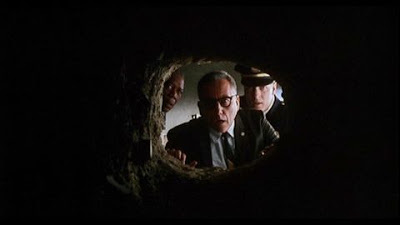 Forget the fucking poster... how thick are these walls between cells?
I've often said that Isra's superpower is the ability to read people and understand what they wanted and use that to her advantage. So it didn't make any sense for her to go along with this. It would be like a moment in a superman comic where he couldn't lift something because it was too heavy. Unless that thing was THE FUCKING SUN, it didn't make any sense.
If you've never had to patch up a major plot hole in a book, you should know it requires a lot of the literary equivalent of duct tape and WD-40. Whole chapters got overhauled. Some were deleted entirely and were replaced. The motivation changed from Isra being weirdly under the spell of Isabel to her having a contest of will and wits with the Cytherean queen.
And, as a result, I found something out about this character that I never knew before. I knew she was confident and brash, but I realized that it could stray into overconfident and reckless without her realizing it. She is about to play a game with Rainha Isabel, and she is completely unaware of how dangerous that game is going to get.
For now.
I ended up somewhere I never thought Isra would take me. But I'm glad she did.
This chapter reads strangely to me now. In retrospect, I think I would have taken more time to develop this scene more. As it is, it feels like I quickly switched some things around in order to patch up a plot hole that the entire book would have fallen into.
That's because there was. And I did.
My first idea for Templum Veneris was to have Viekko, Isra, and Cronus completely entranced by the wiles of Cytherea. Viekko would fall completely for the hard, military life. Cronus would lose himself at the ship with Joana. And Isra would be completely enchanted by the Rainha's ability to control a population like Cytherea. That would leave only Althea to see the truth and try to get everyone else to come to their senses. The most important one being Isra, who would, by the end, be on the verge of turning on her crew.
Except that last one? It didn't make any sense when I looked at it.
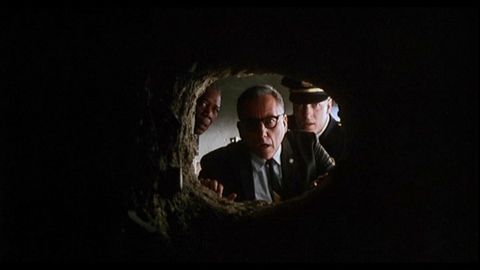 Forget the fucking poster... how thick are these walls between cells?
I've often said that Isra's superpower is the ability to read people and understand what they wanted and use that to her advantage. So it didn't make any sense for her to go along with this. It would be like a moment in a superman comic where he couldn't lift something because it was too heavy. Unless that thing was THE FUCKING SUN, it didn't make any sense.
If you've never had to patch up a major plot hole in a book, you should know it requires a lot of the literary equivalent of duct tape and WD-40. Whole chapters got overhauled. Some were deleted entirely and were replaced. The motivation changed from Isra being weirdly under the spell of Isabel to her having a contest of will and wits with the Cytherean queen.
And, as a result, I found something out about this character that I never knew before. I knew she was confident and brash, but I realized that it could stray into overconfident and reckless without her realizing it. She is about to play a game with Rainha Isabel, and she is completely unaware of how dangerous that game is going to get.
For now.
I ended up somewhere I never thought Isra would take me. But I'm glad she did.
March 19, 2020
7 Things About A Walking Shadow
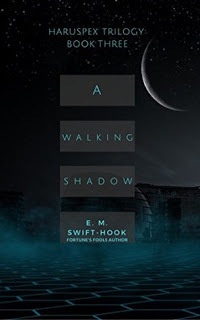
In the third installment of the Haruspex Trilogy:
Avilon is in stasis and his only hope for survival lies on Temsevar, a technological backwater currently at the mercy of the whim of a few powerful warlords including one overlord. Durban Chola, Jaz, and Cheris must navigate a primitive culture and a volatile political landscape if Avilon has any hope.
But there is more danger then any of them realize. Legendary hunter and assassin Archanbor has landed. He knows the planet better than anyone and he's got Chola in his sights.
1. Sci-Fi Noir Goes Midevil
This book caught me completely off guard pretty quickly as it seems to break completely from the first two books and E.M. throws us into a totally different world complete with a different feel to her writing. I can't quite pinpoint the difference in tone other than to say, less noir, more adventure.
2. Swords and Starships; Plate Armor and Laser Blasters:As usual, the author does a fantastic job immersing us in this new world. Taken by itself I really have no complaints. The characters are as engaging as ever especially how their personalities bounce off each other. The story flows seamlessly. I especially like Jaz's development in this book. Charging into battle on a horse oddly suits him.
But taken as part of the series, it just feels off.
3. This Universes' Tatooine:It's not unusual for an epic story to oddly turn around a group of people in some backwater in the middle of nowhere. In fact, I rather like that trope. Maybe it's because I live in the modern equivalent of that kind of backwater, but there is something charming about the idea of history turning around a place nobody could find on a map. ...Or a star chart as it were.
It feels like that is what is happening here but it also feels very sudden. The history of Chola and Avilon have always been shrouded in mystery but having origins on a planet like Temsevar... again it feels off somehow.
4. Why? Just... Why?Maybe I missed something but it feels out of place. Without going into spoilers, I have a hard time accepting that the characters all got their start on a technologically backward planet. It reminds me of the Tim Burton Planet of the Apes where they doubled down on a 'new surprise ending' but without an elaborate and contrived explanation, it doesn't make any sense.
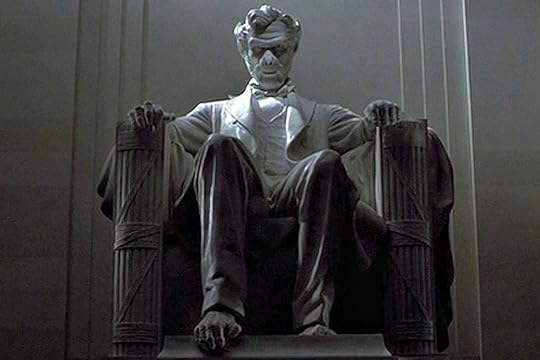 It's definitely not that bad. But the nature of the ending of this book did bring it to mind.
5. Okay, one spoiler:Well not really a spoiler because it happens in the first third of the book. Part of Chola's plan is to recover some of Avilon's mind that is stored away in a secret underground lab. This is a small facility containing highly advanced equipment in the middle of a society that has yet to enter an industrial revolution.
The explanation by the end of the book makes sense but I was still left wondering, 'Why this planet? What suddenly makes this place so special?"
6. That Strange Nagging Feeling:Which is not to say that I didn't enjoy the ride. E.M. Swift Hook is quite skilled at creating a narrative that lets me kick back and enter that 'movie in my mind' phase. Avilon and Cherish's relationship develops, as does the strange relationship between Jaz and Chola. I especially like the direction she took Chola by the end.
But the nagging question of, "Why here?" did pull me out of the book occasionally.
7. The Verdict ⭐⭐⭐⭐This is probably my least favorite of the trilogy. It's still a wonderful series that I would recommend to anyone that likes the idea of crime syndicates and intrigue in space. Furthermore, if someone was already two books into this series I wouldn't warn them off finishing. But, again, it just feels strange alongside the others. Maybe it's me and others will like the unexpected direction this story went.
Avilon is in stasis and his only hope for survival lies on Temsevar, a technological backwater currently at the mercy of the whim of a few powerful warlords including one overlord. Durban Chola, Jaz, and Cheris must navigate a primitive culture and a volatile political landscape if Avilon has any hope.
But there is more danger then any of them realize. Legendary hunter and assassin Archanbor has landed. He knows the planet better than anyone and he's got Chola in his sights.

1. Sci-Fi Noir Goes Midevil
This book caught me completely off guard pretty quickly as it seems to break completely from the first two books and E.M. throws us into a totally different world complete with a different feel to her writing. I can't quite pinpoint the difference in tone other than to say, less noir, more adventure.
2. Swords and Starships; Plate Armor and Laser Blasters:As usual, the author does a fantastic job immersing us in this new world. Taken by itself I really have no complaints. The characters are as engaging as ever especially how their personalities bounce off each other. The story flows seamlessly. I especially like Jaz's development in this book. Charging into battle on a horse oddly suits him.
But taken as part of the series, it just feels off.
3. This Universes' Tatooine:It's not unusual for an epic story to oddly turn around a group of people in some backwater in the middle of nowhere. In fact, I rather like that trope. Maybe it's because I live in the modern equivalent of that kind of backwater, but there is something charming about the idea of history turning around a place nobody could find on a map. ...Or a star chart as it were.
It feels like that is what is happening here but it also feels very sudden. The history of Chola and Avilon have always been shrouded in mystery but having origins on a planet like Temsevar... again it feels off somehow.
4. Why? Just... Why?Maybe I missed something but it feels out of place. Without going into spoilers, I have a hard time accepting that the characters all got their start on a technologically backward planet. It reminds me of the Tim Burton Planet of the Apes where they doubled down on a 'new surprise ending' but without an elaborate and contrived explanation, it doesn't make any sense.
 It's definitely not that bad. But the nature of the ending of this book did bring it to mind.
 5. Okay, one spoiler:Well not really a spoiler because it happens in the first third of the book. Part of Chola's plan is to recover some of Avilon's mind that is stored away in a secret underground lab. This is a small facility containing highly advanced equipment in the middle of a society that has yet to enter an industrial revolution.
The explanation by the end of the book makes sense but I was still left wondering, 'Why this planet? What suddenly makes this place so special?"
6. That Strange Nagging Feeling:Which is not to say that I didn't enjoy the ride. E.M. Swift Hook is quite skilled at creating a narrative that lets me kick back and enter that 'movie in my mind' phase. Avilon and Cherish's relationship develops, as does the strange relationship between Jaz and Chola. I especially like the direction she took Chola by the end.
But the nagging question of, "Why here?" did pull me out of the book occasionally.
7. The Verdict ⭐⭐⭐⭐This is probably my least favorite of the trilogy. It's still a wonderful series that I would recommend to anyone that likes the idea of crime syndicates and intrigue in space. Furthermore, if someone was already two books into this series I wouldn't warn them off finishing. But, again, it just feels strange alongside the others. Maybe it's me and others will like the unexpected direction this story went.
March 18, 2020
The point where it all changes.
This was one of those 'tentpole' chapters; a spot in the book where something happens and the characters careen into a new reality.
I really wanted to focus on the moment during this scene, especially taking time to delve into what Althea was feeling. Add to that the desolation of the environment as well as the unfeeling brutality by which the act was carried out. Reading aloud again, I wondered if I spent too much time trying to capture everything that was going through Althea's head, but again, it is a big moment. This is the moment that's going to send Althea on a collision course with the rest of the group so I didn't want there to be any question about her motivation.
In short, the Cythereans went and pissed off Althea. Now there's hell to pay.
****
In retrospect, this was a strange scene to cut away to in the middle of one of the turning points in the book. Isra is continuing to do what she came here to do, study Cytherean society. But I think the contrast is important. Again, we are setting up the coming conflict and taking a moment to establish what is going on in the character's heads will help explain the shit show that's coming. And Isra, for me, is trying to do a deeply unpleasant job as fast and as effectively as possible. At the same time I like to think she is operating on another level. As despicable as she finds Cytherean society to be, it's interesting how she reacts. Althea is one who, after seeing how the game is played, is more likely to toss the board and walk away.
Isra, she's going to play to win even if she hates it.
****
I always love whenever Viekko and Althea go at it. The way their personalities bounce off each other practically writes itself. I don't write a lot of sex scenes, mostly because I don't find it that interesting. I mean sex is interesting but its more of a participation sport in my opinion and one I don't think I could translate terribly well to paper. Or at least in the obvious physical sense. I understand there is a massive and very popular genre that disagrees but there you have it.
Yet, on some level, this is Althea and Viekko making love. It's shouty and angry and is probably waking the neighbors. Even reading it aloud I am tempted to shout into the page, 'for the love of all that is good and holy would you two go get a room and get this tension out of your systems?! Please and thank you!'
And again, I like the turn events have taken. Now it's Viekko who's playing the voice of calm reason. As Althea points out things have gotten weird enough that it's Veikko who's preaching diplomacy. Shit has gone off the rails when that happens.
Still, not completely out of the question. Somebody has to reign in Althea's wild side.
 Also a shout-out to Angela Vincent for wonderfully capturing this scene.
I really wanted to focus on the moment during this scene, especially taking time to delve into what Althea was feeling. Add to that the desolation of the environment as well as the unfeeling brutality by which the act was carried out. Reading aloud again, I wondered if I spent too much time trying to capture everything that was going through Althea's head, but again, it is a big moment. This is the moment that's going to send Althea on a collision course with the rest of the group so I didn't want there to be any question about her motivation.
In short, the Cythereans went and pissed off Althea. Now there's hell to pay.
****
In retrospect, this was a strange scene to cut away to in the middle of one of the turning points in the book. Isra is continuing to do what she came here to do, study Cytherean society. But I think the contrast is important. Again, we are setting up the coming conflict and taking a moment to establish what is going on in the character's heads will help explain the shit show that's coming. And Isra, for me, is trying to do a deeply unpleasant job as fast and as effectively as possible. At the same time I like to think she is operating on another level. As despicable as she finds Cytherean society to be, it's interesting how she reacts. Althea is one who, after seeing how the game is played, is more likely to toss the board and walk away.
Isra, she's going to play to win even if she hates it.
****
I always love whenever Viekko and Althea go at it. The way their personalities bounce off each other practically writes itself. I don't write a lot of sex scenes, mostly because I don't find it that interesting. I mean sex is interesting but its more of a participation sport in my opinion and one I don't think I could translate terribly well to paper. Or at least in the obvious physical sense. I understand there is a massive and very popular genre that disagrees but there you have it.
Yet, on some level, this is Althea and Viekko making love. It's shouty and angry and is probably waking the neighbors. Even reading it aloud I am tempted to shout into the page, 'for the love of all that is good and holy would you two go get a room and get this tension out of your systems?! Please and thank you!'
And again, I like the turn events have taken. Now it's Viekko who's playing the voice of calm reason. As Althea points out things have gotten weird enough that it's Veikko who's preaching diplomacy. Shit has gone off the rails when that happens.
Still, not completely out of the question. Somebody has to reign in Althea's wild side.
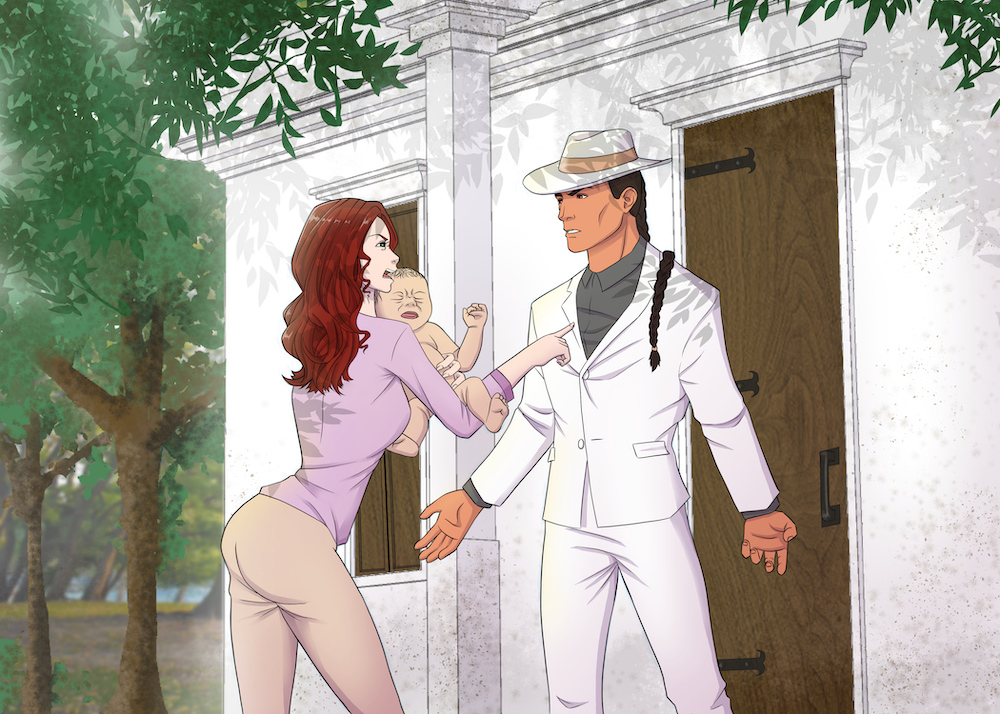 Also a shout-out to Angela Vincent for wonderfully capturing this scene.
March 12, 2020
9 Thoughts About Saved In Time
When Trevor finds a Time scope, a television-like device that can see through time, his life as a layabout, quirky inventor gets some direction. After trying to use the device to clear the name of the honorable senator Gordon Hoskins from a supposed relationship with mob boss Joe Petuccini he stumbles upon the dictatorial ambitions of Senator Bradley.
As he tries to keep Bradley from becoming the next President, Trevor finds hidden secrets about the origins of the Time Scope and the implications could affect the entire human race across the galaxy.
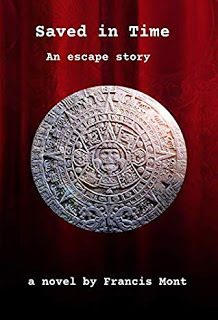
1. This book is about time travel right?What would you do if you had a device that could see through time? Honestly, I get positively giddy at the idea but, then again, I am a total history nerd. But off the top of my head, I would go back to an ancient battle and see exactly what it was like. I would want to see exactly what the historical Jesus Christ was like. I would want to see countless historical mysteries play out: the Kennedy Assassination, D.B. Cooper, the Roanoke Colonist, the Hanging Gardens of Babylon, the Sea People, Jack the Ripper, the Arc of the Covenant the life and death of Gengis Khan… the list goes on and on.
2. Oh, you want to start a detective agency? That's cool too. Really the only function that the Time Scope has in this story is as an omnipotent spy camera. Which... okay. That seems like amazing technology being used for a questionably benign purpose but let's go with it.
3. To Catch A Nazi:So Trevor uses the device to spy on Senator Bradly. Bradley in this book is openly saying horribly racist things and flat out says that he wants to start a global war for conquest. In order to stop Bradley's mad ambitions, Trevor, Hoskins, and Petuccini get together to come up with a plan to stop him. They use the Time Scope to spy on him at home and find him in some sort of secret Nazi room wearing a Nazi uniform and saluting a picture of Hitler.
4. It turns out Bradley is a Nazi:Spoiler alert. But not really. This happens in the first third of the book and, ya know, it's pretty obvious.
5. A Cast of CaricaturesI mention the complete lack of subtly or nuance above because it pervades the entire book.
There's something very 'tropy' about every one of the characters. There's our 'hero' Trevor who is every bit the bumbling, happless, tinkering nerd sterotype.
Senator Hoskins who is the 'good' senator. You can tell because he told us so.
Senator Bradly who is a nazi. (And who, sadly enough, was the most realistic character in the book given how political things are right now.)
Joe Petuccini who is the criminal mob boss... except he never actually does any crimes. Nor is he connected with a mafia family. To be honest I'm not sure why he's even portrayed as having connections to the mob.
6. And Then There Is Atlantis:
About halfway into the book, we are introduced to Atlantis. It is a world... somewhere... where an advanced society discovers Earth and the horrors we are visiting upon ourselves. And, being the super-advanced race, decide to fix Earthlings for their own good.
7. The Thesis:The author makes some valid points about how democracies can degrade and slide into authoritarianism. Although, again, the story lacks any subtly or nuance in making that point... yeah, fair enough.
Where it goes off the rails is the idea that what the world really needs is an elite group of highly educated people to come in and fix the dumber people for their own good. Which...
8. My Rebuttal:If one could assign a cause to the recent slide toward right-wing populism its because of this attitude. 'The elites' didn't become a dirty word because everything was going so well that the people had enough.
9. The Verdict ⭐⭐⭐I like weird shit and this book had a lot of it. It was sometimes funny (probably unintentionally so) always weird and, despite a lot of flaws, was oddly charming. I wouldn't recommend to someone interested in time travel fiction or political commentary. But if you're feeling in the mood for a book version of 'Plan 9' or 'The Room' give this one a look-see.
As he tries to keep Bradley from becoming the next President, Trevor finds hidden secrets about the origins of the Time Scope and the implications could affect the entire human race across the galaxy.

1. This book is about time travel right?What would you do if you had a device that could see through time? Honestly, I get positively giddy at the idea but, then again, I am a total history nerd. But off the top of my head, I would go back to an ancient battle and see exactly what it was like. I would want to see exactly what the historical Jesus Christ was like. I would want to see countless historical mysteries play out: the Kennedy Assassination, D.B. Cooper, the Roanoke Colonist, the Hanging Gardens of Babylon, the Sea People, Jack the Ripper, the Arc of the Covenant the life and death of Gengis Khan… the list goes on and on.
2. Oh, you want to start a detective agency? That's cool too. Really the only function that the Time Scope has in this story is as an omnipotent spy camera. Which... okay. That seems like amazing technology being used for a questionably benign purpose but let's go with it.
3. To Catch A Nazi:So Trevor uses the device to spy on Senator Bradly. Bradley in this book is openly saying horribly racist things and flat out says that he wants to start a global war for conquest. In order to stop Bradley's mad ambitions, Trevor, Hoskins, and Petuccini get together to come up with a plan to stop him. They use the Time Scope to spy on him at home and find him in some sort of secret Nazi room wearing a Nazi uniform and saluting a picture of Hitler.
4. It turns out Bradley is a Nazi:Spoiler alert. But not really. This happens in the first third of the book and, ya know, it's pretty obvious.
5. A Cast of CaricaturesI mention the complete lack of subtly or nuance above because it pervades the entire book.
There's something very 'tropy' about every one of the characters. There's our 'hero' Trevor who is every bit the bumbling, happless, tinkering nerd sterotype.
Senator Hoskins who is the 'good' senator. You can tell because he told us so.
Senator Bradly who is a nazi. (And who, sadly enough, was the most realistic character in the book given how political things are right now.)
Joe Petuccini who is the criminal mob boss... except he never actually does any crimes. Nor is he connected with a mafia family. To be honest I'm not sure why he's even portrayed as having connections to the mob.
6. And Then There Is Atlantis:
About halfway into the book, we are introduced to Atlantis. It is a world... somewhere... where an advanced society discovers Earth and the horrors we are visiting upon ourselves. And, being the super-advanced race, decide to fix Earthlings for their own good.
7. The Thesis:The author makes some valid points about how democracies can degrade and slide into authoritarianism. Although, again, the story lacks any subtly or nuance in making that point... yeah, fair enough.
Where it goes off the rails is the idea that what the world really needs is an elite group of highly educated people to come in and fix the dumber people for their own good. Which...
8. My Rebuttal:If one could assign a cause to the recent slide toward right-wing populism its because of this attitude. 'The elites' didn't become a dirty word because everything was going so well that the people had enough.
9. The Verdict ⭐⭐⭐I like weird shit and this book had a lot of it. It was sometimes funny (probably unintentionally so) always weird and, despite a lot of flaws, was oddly charming. I wouldn't recommend to someone interested in time travel fiction or political commentary. But if you're feeling in the mood for a book version of 'Plan 9' or 'The Room' give this one a look-see.
March 11, 2020
Where Jeremy Has To Write About Giving Birth
Author's Commentary Chapter 14
In retrospect, it's amazing how hard I worked to keep from writing a birth scene in this book. In previous drafts, I mused about strange, primitive hospitals where this scene could happen off-camera. I had Althea oddly stalking random women in the city before that became clearly awkward. I tried to skip it entirely but none of it worked. So it came to this:
Thinking back I have to laugh about how hard I tried to avoid it and I'm not sure why. Well, that's a lie. I know exactly why and the reasons are as follows:
#1: I'm a dude without kids.
So I've never even been in the room while it was happening. Nevermind participating in any way. Prior to writing this scene, my entire experience came from anecdotal evidence and movies. And I really don't need my profound ignorance being enshrined in print for all time.
#2: Births are gross:
Even the most body-positive person has got to grudgingly accept this. When a human comes out of another human, it gets messy. There's blood, shit and all sorts of strange fluids shooting across the room. Not to mention the part where a human rips its way out of another human. Hella alien-style. It doesn't strike me as something terribly pleasant thing to read.
#3: I'm Awkward Enough, Thanks.
This is somewhat related to #1, but without any real-life experience, I worried that it would be painfully obvious that I didn't know what I was talking about. You ever read a book (usually by a dude) and when they get to a sex scene it becomes SUPER OBVIOUS that they are uncomfortable with anything sexual? I have read a few of these books and they range from the hilarious to cringe-worthy.
I was worried that I would be that guy. I do not want to be that guy.
So I danced around the scene for two drafts. Althea either showed up after the baby was born or she was in a hospital where all the gross, dirty things were happening off-camera or I skipped it entirely and went right to the next scene.
The thing was is that there was something missing and I knew it. There was this giant hole in the narrative and next to that hole there might as well have been a sign that read, "The author doesn't want to describe what birth is like. Please move along."
In other words, I was being that guy.
I am pretty clearly fine describing violent scenes. I seem to have no problem with gunshots, stab wounds or anything else. I have graphically described bodies burned in a pile as well as the aftermath of a battle.
It was painfully obvious so I had to pull on my big girl panties and get to work.
I had to write this scene from Althea's point of view and she would be acting as a midwife. So I went looking for documents. On a related note, given the weird things I look up on a daily basis, I'm really curious how 'How to be a midwife' looked on my Google search list. It probably appears somewhere between 'how much does a head wound bleed' and 'how to pick a lock'.
I'm pretty sure I, like most writers, am on every FBI watch list ever.
But I did find some documents from the WHO that would, at least, give me some basic medical knowledge. After a couple of days reading along with some articles on how births were done in the ancient world (I immediately gravitated to the process used by the Ancient Egyptians for some reason)
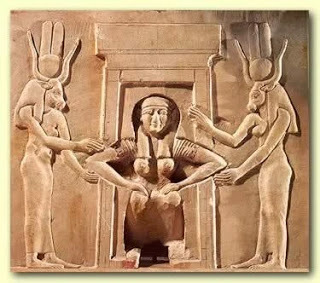 I am also lucky enough to have a family member that works as a PA who is willing to read over my work and act as an expert advisor. It's strangely intimidating to send a fictional written description of a birth to one's sister-in-law, especially when she works in the medical field and has three kids, but she was very helpful and helped me make some corrections to keep from looking too stupid.
Reading it again, I think the scene works. It's a frank description of daily life in a bronze-age society. Plus I just like the tension that builds in the scene. Althea is so gloriously out of her element that it's almost painfully obvious that she doesn't belong. And yet she pulls it off. Or does she?
In retrospect, it's amazing how hard I worked to keep from writing a birth scene in this book. In previous drafts, I mused about strange, primitive hospitals where this scene could happen off-camera. I had Althea oddly stalking random women in the city before that became clearly awkward. I tried to skip it entirely but none of it worked. So it came to this:
Thinking back I have to laugh about how hard I tried to avoid it and I'm not sure why. Well, that's a lie. I know exactly why and the reasons are as follows:
#1: I'm a dude without kids.
So I've never even been in the room while it was happening. Nevermind participating in any way. Prior to writing this scene, my entire experience came from anecdotal evidence and movies. And I really don't need my profound ignorance being enshrined in print for all time.
#2: Births are gross:
Even the most body-positive person has got to grudgingly accept this. When a human comes out of another human, it gets messy. There's blood, shit and all sorts of strange fluids shooting across the room. Not to mention the part where a human rips its way out of another human. Hella alien-style. It doesn't strike me as something terribly pleasant thing to read.
#3: I'm Awkward Enough, Thanks.
This is somewhat related to #1, but without any real-life experience, I worried that it would be painfully obvious that I didn't know what I was talking about. You ever read a book (usually by a dude) and when they get to a sex scene it becomes SUPER OBVIOUS that they are uncomfortable with anything sexual? I have read a few of these books and they range from the hilarious to cringe-worthy.
I was worried that I would be that guy. I do not want to be that guy.
So I danced around the scene for two drafts. Althea either showed up after the baby was born or she was in a hospital where all the gross, dirty things were happening off-camera or I skipped it entirely and went right to the next scene.
The thing was is that there was something missing and I knew it. There was this giant hole in the narrative and next to that hole there might as well have been a sign that read, "The author doesn't want to describe what birth is like. Please move along."
In other words, I was being that guy.
I am pretty clearly fine describing violent scenes. I seem to have no problem with gunshots, stab wounds or anything else. I have graphically described bodies burned in a pile as well as the aftermath of a battle.
It was painfully obvious so I had to pull on my big girl panties and get to work.
I had to write this scene from Althea's point of view and she would be acting as a midwife. So I went looking for documents. On a related note, given the weird things I look up on a daily basis, I'm really curious how 'How to be a midwife' looked on my Google search list. It probably appears somewhere between 'how much does a head wound bleed' and 'how to pick a lock'.
I'm pretty sure I, like most writers, am on every FBI watch list ever.
But I did find some documents from the WHO that would, at least, give me some basic medical knowledge. After a couple of days reading along with some articles on how births were done in the ancient world (I immediately gravitated to the process used by the Ancient Egyptians for some reason)
 I am also lucky enough to have a family member that works as a PA who is willing to read over my work and act as an expert advisor. It's strangely intimidating to send a fictional written description of a birth to one's sister-in-law, especially when she works in the medical field and has three kids, but she was very helpful and helped me make some corrections to keep from looking too stupid.
Reading it again, I think the scene works. It's a frank description of daily life in a bronze-age society. Plus I just like the tension that builds in the scene. Althea is so gloriously out of her element that it's almost painfully obvious that she doesn't belong. And yet she pulls it off. Or does she?
March 4, 2020
A day in the life...
Author CommentaryChapter 13
A lot of build-up in this chapter and a couple of minor interesting developments. But, mostly, this chapter is about world-building. I am trying to give the audience a fuller vision of how Cytherea functions as a society. Or, at least, how the Rainha wants people to believe it functions.
Althea is my favorite in this chapter. Again, in the last book, she was the sensible one. She served as a kind of tether for Viekko, who was very busy leaping over Titan like a superhero and Isra who seemed ready to let the whole operation, not to mention Titan, burn to the ground. Cronus was off in his little world causing problems. So Althea was a weird intermediary for the group.
So it's fun to watch her go off the rails a little bit and really use her skills of infiltration and social engineering. And it's fun to watch the inner rebel she has worked hard to suppress come out and get into trouble.
Meanwhile, Viekko is falling face-first into the Cytherean propaganda although that felt completely natural for me. Viekko's headstrong with a stupid sense of justice but it tends to get short-circuited when it comes to the horrible things one must do to survive. Though never stated directly (not yet anyway) we get the sense that life on Mars was hard for young Viekko and he's not proud of everything he had to do to ensure his survival along with that of his colony. So he is more willing to give people the benefit of the doubt.
But, overall, not much to say. This chapter is like mid-game chess where the players are positioning their pieces getting ready for a strategic strike.
...
...
At least I assume. I never, ever got the hang of chess. But it sounds good so I'm keeping it.
 Uh...guys?
A lot of build-up in this chapter and a couple of minor interesting developments. But, mostly, this chapter is about world-building. I am trying to give the audience a fuller vision of how Cytherea functions as a society. Or, at least, how the Rainha wants people to believe it functions.
Althea is my favorite in this chapter. Again, in the last book, she was the sensible one. She served as a kind of tether for Viekko, who was very busy leaping over Titan like a superhero and Isra who seemed ready to let the whole operation, not to mention Titan, burn to the ground. Cronus was off in his little world causing problems. So Althea was a weird intermediary for the group.
So it's fun to watch her go off the rails a little bit and really use her skills of infiltration and social engineering. And it's fun to watch the inner rebel she has worked hard to suppress come out and get into trouble.
Meanwhile, Viekko is falling face-first into the Cytherean propaganda although that felt completely natural for me. Viekko's headstrong with a stupid sense of justice but it tends to get short-circuited when it comes to the horrible things one must do to survive. Though never stated directly (not yet anyway) we get the sense that life on Mars was hard for young Viekko and he's not proud of everything he had to do to ensure his survival along with that of his colony. So he is more willing to give people the benefit of the doubt.
But, overall, not much to say. This chapter is like mid-game chess where the players are positioning their pieces getting ready for a strategic strike.
...
...
At least I assume. I never, ever got the hang of chess. But it sounds good so I'm keeping it.
 Uh...guys?