Cara Gilger's Blog, page 3
July 3, 2021
Book Review: My Wonder Line by Vicki Gooden
When my daughter came home from open heart surgery the first time she was quiet and reserved, eager to re-establish her three and a half year old kingdom of stuffed animals, dance parties in dress up clothes and coloring family portraits made of rainbow colored stick figures. When she returned home from open heart surgery at five and a half years old, she understood more and asked questions we hadn’t heard her articulate before. She asked questions about her stay in the hospital. She wondered about her scars. She asked questions about her future and she wanted to know if there was a book to help her make sense of her experience.
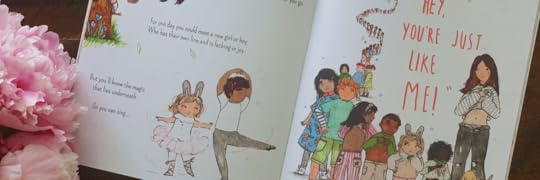
I searched and searched for a book that was on her level and couldn’t find much. I ordered a few things that had promise but ended up being written for adults or had sparse and dated illustrations. I wanted something that would engage her at her level and captivate her, but couldn’t seem to find anything that fit the bill.
So when I saw in a CHD parent group, Vicky Gooden’s book My Wonder Line I was excited to take a look. What I found was a beautifully illustrated and lyrically written story about a little girl’s heart scar.
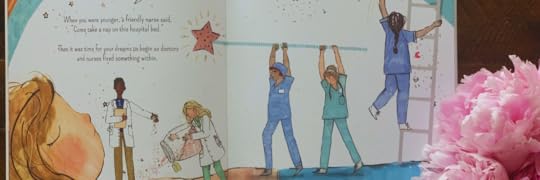
This is not a scientific look at the body, the anatomical heart or surgery, instead Gooden offers an exploration of chest scars that normalizes scars and takes an expansive look at all the different kinds of scars kids have for a variety of reasons. It is exactly the kind of book I wished I’d had to read at bedtime when my daughter was in preschool as an additional tool to help her build confidence in her scarred body and make sense of how her body is different and the same as other bodies.
My Wonder Line is the kind of book that would make a thoughtful and caring gift to a parent newly joining the heart community or the world of childhood surgeries. This book with a thoughtful card tucked in with a home cooked meal or with a Doordash gift card would be a lovely way to share practical and emotional support for parent and child alike.
My Wonder Line is not just the book I wish I had as a parent to a young heart child, but the kind of book that I will be sharing with other parents and kids as we make meaning of this strange and wondrous experience.
Like what you’ve read? Want more? Sign up for my twice a month newsletter (because we’re not spammy) and get original content you can’t find here on the blog. Reflections on faith and living, book recommendations and other good, nerdy fun. Sign up HERE.


June 15, 2021
As Featured On: Dying to Know
A few weeks ago I sent my family off on an adventure and logged onto Zoom in the quiet to sit and talk with the Rev. Annie Grogan. Annie and I were introduced through a mutual friend and fellow minister years ago, but our ministry paths didn’t cross until recently when Annie launched Dying to Know, a podcast created to explore and normalize conversations around the struggles of life and death.
For an hour we sat and talked about trauma, grief, being the parent of a cardiac child and how a 1% risk factor changed our lives. I talked about my research project with the Louisville Institute. We talked about the questions I now had about how we talk about grief and trauma in the church. It was a delightful conversation. I encourage you to listen to our episode The 1% Thing Can Happen and subscribe to Dying to Know.
June 3, 2021
2021 Summer Reading List
I am a notorious mood reader, wandering from one read to the next with little plan. This practice is as much about following my whims and curiosity as it is a small rebellion against all the years of assigned academic reading on strict coursework deadlines. All of that is to say, in any given season I am usually working from a general pile of books I would like to read but I also allow my whims to guide me. However, with an increase in ministry partners this summer, my reading will need to be strategic to be meaningful. So I am creating a short list of books I am hoping to get to this summer.
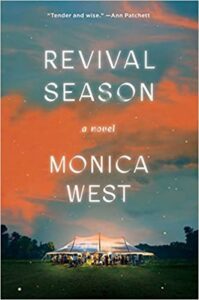 Revival Season by Monica West
The daughter of one of the South’s most famous Baptist preachers discovers a shocking secret about her father that puts her at odds with both her faith and her family in Revival Season, a debut novel Ann Pachett calls “tender and wise.” I am always looking for a nuanced view of faith and life in community, but the Pachett endorsement moved Revival Season up my list for the summer.
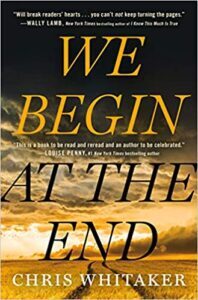 We Begin at the End by Chris Whitaker
Thirty years after the death of Star’s sister, Vincent is being released from prison to live in the small town where they grew up. Star is barely hanging, leaving her daughter Dutchess and son Robin to fend for themselves. We Begin at the End is a book that released to a lot of buzz earlier this year and has managed to be loved well after the hype of launch, so I am intrigued. Hopefully it lives up to the hype.
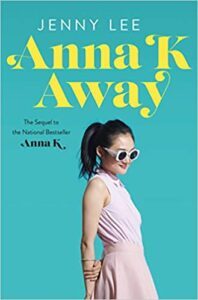 Anna K Away by Jenny Lee
The follow up to Jenny Lee’s instant success Anna K, the modern retelling of Anna Karenina that feels like a modern and far more diverse Gossip Girl, Anna K Away follow the same cast of characters as they move on from the events of the past, wrestle with old questions and form new relationships. I read Anna K last summer poolside and found it a delightfully entertaining read. Hoping the second book delivers like the first.
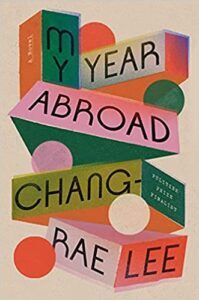 My Year Abroad by Chang Rae Lee
We still won’t be traveling much this summer so I am craving a book that will take me somewhere else for a while. What better than My Year Abroad, a story about a Tiller, a college student who travels abroad across Asian with his entrepreneurial boss Pong Lou, to help ease my travel bug? I haven’t seen this book many places since its release in February but the New York Times calls it “A manifesto to happiness—the one found when you stop running from who you are.” Which sounds pretty good to me.
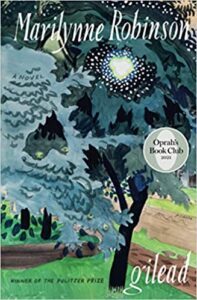 Gilead by Marilynne Robinson
I read Gilead in seminary for a Theology in Literature course years (decades?) ago and can’t remember a single thing about it. In 1956, toward the end of Reverend John Ames’s life, he begins a letter to his young son, an account of himself and his forebears. I am always on the hunt for the way literature captures themes in ministry life, so holding a hopeful thought for this classic book by Robinson.
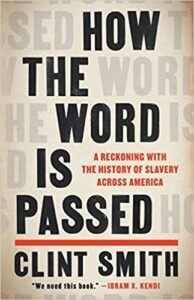 How the Word is Passed by Clint Smith
Beginning in his hometown of New Orleans, Clint Smith leads the reader on an unforgettable tour of monuments and landmarks—those that are honest about the past and those that are not—that offer an intergenerational story of how slavery has been central in shaping our nation’s collective history, and ourselves. I have long been a fan of Smith’s writing and way of constructing an argument and presenting data so I am excited for How the Word is Passed.
I am hopeful that with a short list that packs a punch, I will have an excellent reading season this summer. I would love to hear what you are reading this summer.
June 1, 2021
Spring 2021 Reading Recap
I thought about not sharing this list because it is quite short and could just as easily roll into the summer list. But then I realized that part of what helps encourage others to pick up reading is being transparent about how I read. That includes transparency when I am not reading. This spring season, due to an overwhelming amount of things taking up my time, I read very little. However, among the books I did have the chance to read, several were incredibly moving and thought provoking. It also stands out that while my reading life suffered through home renovations and client load, my reading life with my middle grade reader remained steady. We read several books together that I might not have read otherwise and that brought some entertainment. So maybe in this season less did turn out to be more.
Fiction
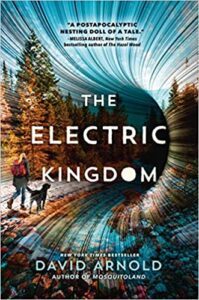 The Electric Kingdom by David Arnold
Format: Hardcopy; Length: 432 pages
A post-apocalyptic book likened to Station Eleven? A cast of young adults and kids that have that kids on an adventure vibe I love? Yes please. Thankfully The Electric Kingdom did not disappoint either the rave reviews or my high expectations. The story was layered and the multiple storylines came together well. It had just the right amount of suspense without teetering over the edge into horror or unnecessary violence.
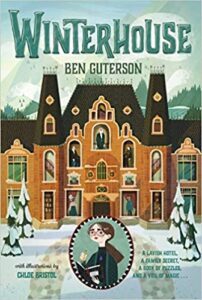 Winterhouse by Ben Guterson
Format: Hardcopy; Length: 384 pages
Winterhouse had all the potential–a girl and her friend who love to read and solve word puzzles fall upon a mystery while staying at a mountain side resort over winter break. Bonus, the illustrations were modern and clever. Unfortunately, there were problematic elements I couldn’t get past, namely the adults gaslighting the children without apology or remorse. Not something I want to normalize for the young readers in my house.
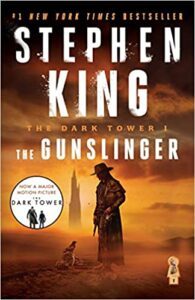 The Gunslinger by Stephen King
Format: Audiobook; Length: 8 hours
The first in the Dark Tower series, I listened to The Gunslinger while I sanded all 14 doors in my house one weekend. A strange and delirious ride, I am still not sure what I read and that makes it hard to foster the desire to read the other books in the series. Not for me, but maybe a post-apocalyptic, inter-dimensional fever dream of a book is for you?
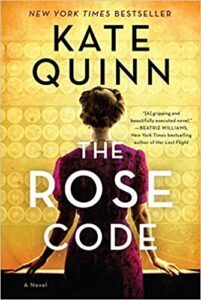 The Rose Code by Kate Quinn
Format: Audiobook; Length: 16 hours
I loved the Huntress (who does not like vengeful Russia spies hunting Nazis?) and found The Alice Network a total bore, so I was unsure if I would enjoy The Rose Code. Which means I was pleasantly surprised to find this WWII historical fiction about British code breakers fascinating and suspenseful.
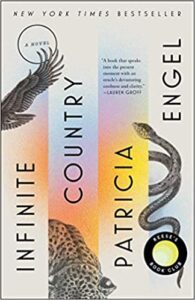 Infinite Country by Patricia Engel
Format: Hardcopy; Length: 191 pages
One of the best books I read this spring and a strong contender for top books for the year. Infinite Country is a sweeping intergenerational story of migration that packs a punch in its compact 190 pages. The story of a family straddling borders was not only beautifully written but deeply insightful.
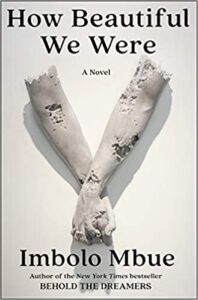 How Beautiful We Were by Imbolo Mbue
Format: Hardcopy; Length: 384 pages
The story of ecological and human destruction slowly imposed on a fictional African village by an oil company feels like a story taken from the headlines any given week. And yet, Mbue makes what feels like distant headlines deeply personal in How Beautiful We Were. This isn’t an easy read, but it’s a worthwhile one.
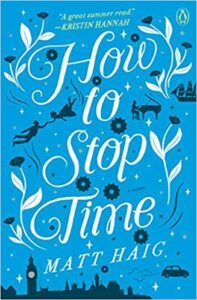 How to Stop Time by Matt Haig
Format: eBook; Length: 352 pages
How to Stop Time is a bit like if The Midnight Library and The Invisible Life of Addie LaRue made a book baby, that is if Addie LaRue had a plot. The story of a man that has lived for centuries and now, in his midlife, wondering how he can go on to build a life worth living. Moving between present day London and the past, Haig does what Haig does best and uses fiction to explore the question “what does it mean to live a good life?”
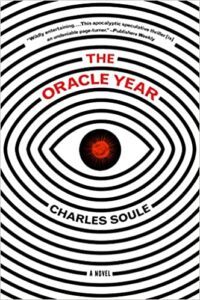 The Oracle Year by Charles Soule
Format: Hardcopy; Length: 402 pages
A backlist read that’s been sitting on my shelf for ages, The Oracle Year follows a man that wakes up with predictions about the future seared into his mind. What follows is a tale woven across continents, religion and politics as the Oracle races to figure out what the prophecies he’s been given mean and everyone else races to find him. Suspenseful and smart, I don’t know why this book sat on my shelf for so long.
Non-Fiction
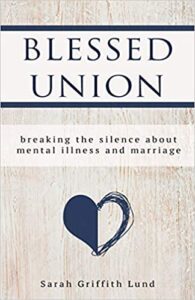 Blessed Union: Breaking the Silence about Mental Illness and Marriage by Sarah Griffith Lund
Format: eARC; Length: 160 pages
Mental health and marriage isn’t a topic widely covered in Christian circles. So it was a delight not only to read Blessed Union and reflect on my own marriage, but to interview the author for my interview series. You can read the whole piece HERE.
I am looking forward to summer reading. I hope that my selections are a bit more intensional in the next season. If you are curious you can see a few of the titles I am hoping to get to this summer. Or you can see what I read last summer,which is when I read many of my favorite books of last year.
May 23, 2021
Five Easy Ways to Use Picture Books to Teach Faith
As a parent, I find that incorporating faith on the fly in everyday moments, seems to have a different kind of impact on kid’s ability to engage the world. It’s why I find books such an important tool for parenting and faith. A few minutes carved out at bedtime or in the middle of the afternoon can become an impromptu moment ripe with opportunity to talk about what matters most and how we love our neighbors. Over the years I have loved these conversations. And I have learned that with some thought, I can create small conversations with my kids about their faith. Below are some of the tips and tricks I have used to turn ordinary moments into small, holy ones.
Asking Wonder Questions
“I wonder” questions are the secret sauce to parenting in general but especially for cultivating an inquisitive and compassionate faith life. I will often start my “I wonder” questions with characters and expand to situations. Starting from the concrete and warming up to the abstract, works like an ice breaker. Questions like “I wonder how that character felt when that happened?” Or “I wonder…what would you do if you were faced with that problem?”
Wonder is a way to frame questions and invite imagination and creativity. It signals that there isn’t one right answer that a child needs to search for to be loved or receive your approval. It allows them to be creative problem solvers and see the story from several angles.
Cultivating Empathy
In the same vein as “I wonder” questions I try to help my little readers imagine themselves in the lives of the characters in the story to build empathy. Some of my favorite books to do this with are Enemy Pie by Derek Mungsonand Those Shoes by Maribeth Boelts. For Middle Grade readers I love Out of my Mind by Sharron Draper and Guts by Raina Telgemeier. I try to ask questions that center the story from the margins–instead of asking my kids to identify with the protagonist in the story, I try to get my young readers to imagine what it might be like to be the parent, sibling or enemy of the protagonist.
The story of the good Samaritan is a story Jesus told to stretch the imagination of his followers. Jesus invites us to imagine that people are our neighbors and are part of the love and care of God. Reading can be a way to stretch the imagination and teach the stories of Jesus even when the story is not explicitly faith based.
Show Me What You Hear
One of my readers is a physical child, who would rather be climbing trees and riding bikes than sitting curled up with a book. So rather than asking them to sit still during story time, I give them play doh or a white board and dry erase marker and give one simple instruction for listening “show me what you hear.”
Sometimes I get strange and unrelated doodles, but sometimes I get a view of the story I didn’t have before. The exercise is less about getting any sort of right answer out of a young listener. Instead it’s about supporting all the different ways that kids listen and learn. I never doubt that while children may look as though their mind is somewhere else, they are very much absorbing the story of faith.
Tell Me What
One of my favorite pre-reading and early reading skills is also a great way to teach faith using picture books. “Tell me what you see on this page…” can be an excellent conversation starter. “Tell me what you thought the main character should have done…” is another one. With my older readers I might say “tell me about a time when you felt or saw or heard something” and connect it to the theme of the book. This method includes pre-reading and early reading skills, incorporating senses and wonder.
I’d love to hear how you keep the squirmy, learners in your house engaged in reading about faith. If you are curious what picture books we love see my list of 20 Children’s Books to Enrich Young Faith or my list of 11 More Books to Enrich Young Faith.
May 18, 2021
A Year of Living
We watched our two kids climb the steps of the play structure up to the platform where they could choose to slide or cross the structure and keep climbing. Calling out each other’s names and imaginary scenarios with delight as the late spring sun shone on their messy hair. You could feel how alive they were to be playing with their friends. Our virtual teacher had hosted a meet up for kids that had only interacted on Zoom all year at the park next to school.
In the shade on a bench I sat with another mother whom I knew in passing from volunteering at school the past few years. We swapped frustration about virtual schooling, worries about our career and desires to return to full time, undistracted work. We ticked off the ways we were worried about our kids academic and social progress, the two litanies intertwined into the new liturgy of pandemic parenthood.
Then she mentioned her older son, who would have turned sixteen this year.
“Tell me about your child.”
It’s the one phrase I have learned as a pastor and friend that creates space for as much or as little as people want to share. It’s the one phrase that communicates “I am interested in who your child was and who they are to you. Please, share at your pace.”
She told me about his accident and diagnosis, the years of care, the grief and it’s collateral damage. The bittersweet miracle of her two living children, close to my children’s ages. I nodded knowingly when she talked about hospital life and we compared notes on the finer nuances of children’s hospitals in our city.
Same sees same, and in the world of parenting the proximity to the death of a child creates a certain kind of knowing. While my child is still living, we both live with the knowledge that the vitality of a child could suddenly and without warning or reason change.
I’ve thought often about the parents in this pandemic who do not need a worldwide global pandemic to remind them in some sentimental fashion that life is fragile and fleeting. For whom this pandemic has been yet another monster pressing at the door they are trying to hold shut. I think about the parents in the heart community, who fight and advocate for every test and procedure to just gain their child a few more years, or young adulthood, or a full and robust life. For parents who have lost a child or have come in close proximity to the possibility, these aren’t hypotheticals considered from a distance. They are written into the fibers of our bodies, etched into our brain chemistry, forever a possibility in our worst imagination.
In one another, we find solace. In Facebook groups and on park benches we find no need to explain our caution. There is no stiff anticipation of shallow platitudes or quick dismissals. There is just a quiet recognition, a sense of grace to be in the presence of someone who through their own experience knows you own fears if not intimately, by proximity.
We laughed about how we were sending our kids back as soon as possible in the fall, for their own thriving and ours. And then she said “I’ve given them a year. I’ve kept them as safe as I could but the truth is I can’t keep them safe forever.”
I felt something turn in me, a lock unclicking.
Not because this was new knowledge. I know I cannot keep my loved ones safe, that is perhaps the whole point. It unlocked an acknowledgement that while many of our fellow humans have not done pandemic well, so many of the friends, faith leaders, non-profit directors and parents I know have done our best. We have navigated unknown territory with compassion and thoughtfulness. We have given one another a year. A year to reassess and reflect. A year to reprioritize and shift. A year to live.
April 6, 2021
Questions to Prevent Online Worship from Feeling Like an Overflow Room
The tension was so thick from the front seat of the wood paneled station wagon my brother and I could feel it all the way in the rear-facing third row. The lace trim on my socks itched against my ankles and I reached down to scratch at it. We were late to church, which was our weekly norm. The reason for all the marital fuming from the front seat was this particular morning was Easter Sunday.
We arrived at church and the ushers informed us that the service was full but that we could sit in the overflow room. In the fellowship hall chairs had been neatly lined up and a giant television on a rolling cart had been placed front and center. We were able to watch the brass ensemble accompany the choir, their music pure and muffled coming from the side door, its alternative vibrating tinny through the plastic TV speakers. My parents shooting accusatory glances over the top of my little brother’s well combed hair.
At my first church out of seminary, as we wrestled with the launch of a second campus and an expanding first campus, my senior pastor declared one day at staff meeting “No one wants to be sent to the overflow room! They are always done so poorly that it feels like a punishment. Here, if we have to create an alternate space for people to worship, we want them to feel like that space was created for them, we want it to feel special.” It had been years, but hot shame flushed over my cheeks at the staff meeting table. He was right, the church often at worst treats the overflow like a time out corner for late attendees or at best an opportunity to watch others worship.
Worship is not meant to be observed from the sidelines, or from a box TV wheeled into fellowship hall or from a laptop at home. Worship is an experience in which we participate in the divine in community. As churches pivoted last March to form online communities, we tested and tweaked and experimented with the tools and techniques of building faith communities digitally. We worked endlessly to help people reimagine that their living rooms, dens, desks and kitchen were holy, sacred spaces to experience God and to worship.
As many congregations make yet another monumental pivot from exclusively online worship, to a blend of limited in-person worship and virtual worship, there is a temptation to allow our virtual service to become the virtual overflow room. There is a temptation to let our digital worship spaces be the place where folks who are unable to attend in person can watch in person worship happen. With it we risk undermining the sacred spaces and sanctuaries we’ve taught people to build in their homes.
As easy as it is to slip into treating digital worship as the proverbial overflow room, it is just as easy to ask a few simple questions to keep both in person and digital worship engaging community experiences.
Does this invite engagement or viewership?
As we shift to worship that engages multiple communities at once some elements of worship will need to be re-thought. Liturgical elements such as children’s moments, prayer stations or passing of the peace can create moments of disconnect for online viewers if those moments are shaped to engage only in-person worship participants. Asking “does this children’s moment invite engagement for our whole worship community or viewership for our online community?” is a good way to begin thinking through adjustments to worship that engage the full community of Christ. Many of the liturgies we want to do in person with a thoughtful sentence or an email about supplies ahead of worship or in the chat can engage both communities well.
Are there verbal transition cues to maintain engagement?
The church is notoriously bad at giving verbal cues that help people engage in worship. However, good verbal cues are a practice in hospitality and disrupt the notion that “everybody here knows what to do, because everyone here is an insider.” As pastors and church leaders transition to in person and digital worship it will be essential to cue both the in person worshipers and online worshipers of what is happening where there are transitions. Introducing pre-recorded video clips, reminding people to gather their communion supplies at home or signal a deacon if you didn’t get your communion serving at the door of the sanctuary are all examples of verbal cues that help all worshipers in your community engaged and connected.
Do I reference both worship communities (in person and digital) evenly?
I think there is a strong case to be made for choosing language that doesn’t bifurcate your community. Just like naming individuals while preaching can create alienation, naming individual communities if not done thoughtfully can create the same awkwardness. Often the need to name in person and online community cannot be helped, so it is good to check in and make sure that both of the ways people are experiencing your worship community are referenced. If you say “welcome, its so good to see all your faces here with us this morning” balance that by adding “and please drop a hello in the chat for our online worshipers, so we can get a conversation going.” Otherwise, you run the risk of signaling that the only community that matters is the one that is able-bodied or geographically able to access worship. Small cues, like excluding one community can communicate big ideas about who your community is and what you value.
Is there a way to say this that doesn’t draw contrast to our two worshiping communities?
If we have learned anything in the past few years it’s that language cuts both ways. Language has the power to draw us together or further separate us. This is true when we are cultivating multiple communities within our community of faith. Asking “Is there a way to say this that doesn’t draw contrast?” is a practice in imagination. What language might emphasize us as a single community with multiple worship opportunities and ways to engage community? How might we articulate clearly the larger picture of what we are building as a community? Take some time to come up with some key phrases that will signal to your community of faith that each of these communities are vital to the whole of the community our churches are trying to build.
This moment of re-entry is an opportunity to thoughtfully reshape the communities we are building to be more expansive. Our online worship experiences have been more than a life-line this year of pandemic. It’s allowed people to peek into our stained glass windows to see if we are a community they might trust with their spiritual journey. It’s given the medically at risk the chance to connect with their faith community during an isolating time. Virtual worship has stretched our imagination for how we create meaning, connect to one another and experience the sacred. This season the Spirit is extending the same invitation–to imagine that holy spaces can be created everywhere in faithful and creative ways.
Like what you’ve read? Want more? Sign up for my twice a month newsletter (because we’re not spammy) and get original content you can’t find here on the blog. Reflections on faith and living, book recommendations and other good, nerdy fun. Sign up HERE.
March 31, 2021
Holy Week and the Rules of the Trail
As the trees begin to unfurl their spring leaves, we are beginning to turn our attention to planning our summer hiking adventure as a family. Since a child hiking has been an important spiritual discipline for me. I need to be in the wilderness. I need to hear the crunch of leaves underfoot, hear the bird calls echo from branch to branch, take the world in through a sun-dappled prism. For me, wilderness serves a unique purpose in my spiritual life. I need to be outdoors and be reminded that God created this great big, beautiful world and feel my troubles shrink in the presence of that awesomeness.
I also need to be reminded of the big picture of the story of God–that God takes us out of the Egypts of our lives and to a Promise Land, but that sandwiched between the terrible and the glorious there is the waiting…and the whining…and the unknown. The Christian story tells us that there is death and then there is rising…but first there is darkness and waiting and not knowing. Wilderness connects me to these big stories of my faith and reminds me to look at the stories unfolding in the present in a new way.
 A Sense of Wonder
There is a moment on every hike when the path turns or the tree line thins or the creek drops into a cascade that catches you by surprise. It’s one of the things that makes hiking so spiritual for me–the sense of wonder that can be just around the next bend in the trail. I love the way that long after a hike the traces of the experience allow my technology addled brain to be captured by a sense of wonder. As if by keeping my eyes open on the trail with the dappled sunlight pouring through the trees I train them ever so slightly to stay open when I return to my life, catching a glimpse of God out of the corner of my eye. In other words wonder bends the holy ordinary of my days towards noticing.
 Gratitude for the Trail Makers
Every path started from someone seeing a glimmer of possibility in the wilderness–a destination to be pursued, an easier or safer way to travel, a recognition that the existing path no longer worked. When I hike I have a profound sense of gratitude for those who saw the potential in the wilderness and put in the work to make my journey clearer and safer and possible. It reminds me to express gratitude for those who have mentored me so that my path was smoother, for those who struggled ahead of me so that my paths have been possible.
We Are the Trail MakersWhile I find hikers to be some of the most reverent, polite and kind people you will meet (I mean who wouldn’t be kind hyped up on exercise endorphins and the oxygen of vegetation) there are times when you will run across someone less experienced on the trail who has yet to learn how to respect the experience of creation. I am also teaching two young hikers how to be respectful and responsible in the wilderness. These moments always remind me that we are not just the people who use the trail, we are the trail makers. In our wilderness moments, we are called to not let the overwhelming and sometimes terrifying experience of wilderness wandering consume us or drive us to a place of fear. Instead, we are called to be the trail makers, that show others how to navigate what is difficult and scary and unknown.
 Never Go Alone
One of our biggest safety rules when we are out in the wilderness is that no one goes alone. Perhaps this is because we have little kids or maybe it’s because we understand that the wild, like all of life, is unpredictable. But I think this is a good rule for hiking and life. If you can, if you find yourself in between Egypt and the Promise Land, if you are traveling between Good Friday and Easter Sunday in the darkness of the tomb, take a friend, or two or ten. We are made for relationship and community and sometimes we need that community to help guide us through the wilderness.
This summer I look forward to the sun on my shoulders, small heads bobbing in front of me, picnics carried in packs and eaten on rocks or fallen tree limbs and the steady ache of muscles put to good use. I look forward to practicing awe and wonder and being reminded of God’s story of wilderness and promise.
Like what you’ve read? Want more? Sign up for my twice a month newsletter (because we’re not spammy) and get original content you can’t find here on the blog. Reflections on faith and living, book recommendations and other good, nerdy fun. Sign up HERE.
March 24, 2021
Interview with Children’s Author Glenys Nellist
When I first started writing in this space, one of my goals was to connect parents and Christian educators with easy, everyday resources to talk about faith at home. I have always loved picture books and love the way they inspire wonder. So I was overjoyed when one of my favorite Christian children’s book authors, Glenys Nellist, agreed to come on the blog and talk about writing, reading and her newest release Twas the Morning Before Easter.
Cara: You are my first children’s author to be interviewed this year, but many of my readers are Christian educators who first became readers for resources that teach faith to young children. Tell us a bit about how you became a children’s book author–it’s not a traditional vocation.
Glenys: I’ve always loved writing, even from a young age, but it wasn’t until my husband and I relocated from England to the USA that the door into the publishing world opened for me. I had been a public-school teacher in England. Once we came to Michigan, I stepped out of teaching and took on the role of Children’s Ministry Director in the small church where my husband was the pastor. Since the Sunday school curriculum was so expensive, I decided to write my own. In the course of rewriting the iconic tales from the Bible, I discovered that there’s always a new way to tell the old, old stories. I fell in love with this creative process and decided to write a Biblestory book of my own. Published in 2014, Love Letters from God became my first published book. This book went on to become a series, paving the way for twenty more titles.
Cara: Were there any particularly memorable books from your own childhood that shape your vision for how you want to write for children and families?
Glenys: I was born in the late fifties and although I honestly don’t recall having any picture books of my own, what I dorecall is being thoroughly immersed in the world of literature and story-telling; parents who read to me each night; the way I was transported to another world as I listened to their words (think Alice in Wonderland and other classics) and the way my dad told me stories from his imagination as we walked together in the evenings. My dad also had a favorite game that he would play with me and my siblings. It was called ‘show me.’ After he’d read to us at bedtime, he would show us the illustrations and we would take turns to find things hidden in the pictures. Therefore, since reading was, for me, an interactive experience, one where I was ‘called into’ the story and immersed in it, this has become an important part of my own writing for children. As I write, I ask myself such questions as: Will children be immersed in this story? Will they find themselves in its pages? Will they be transported to another place? Will they be thrilled with what they read? If I can answer yes to these questions, then I’m happy with my work.
[image error]
Cara: I mentioned many of my readers are Christian educators or parents interested in finding theologically sound resources for the children in their lives. One of the things I appreciate about your work is that it is both theologically age appropriate as well as community oriented. For example, in Twas The Morning of Easter, you teach the story of God’s good news without focusing on or over emphasizing violence as central to the story and in Little Mole Finds Hope, there’s a focus on what you can do to contribute to the well being of others. How do you view your role as someone who is shaping the faith imagination of children?
Glenys: Let me begin by saying that as an author and a Christian, my own faith journey and my own understanding of God is still growing, changing and evolving (which I think is a healthy thing!) Therefore, in my earlier works, such as Easter Love Letters from God, I didn’t fully appreciate the fact that many parents do not want to expose their children to any details that refer to the violence of the cross. Once I grew to appreciate and agree with this point of view, I wanted to write an Easter narrative that did not share any details of Jesus death, or hint at atonement theory. Twas the Morning of Easter begins AFTER the crucifixion has taken place and truly does focus on the Good News of the resurrection, without sharing anything that would upset little ones. Another feature of this title that I love is that it tells the resurrection story through the eyes of Mary Magdalene, thus highlighting the important role of women in the gospel.
In Little Mole Finds Hope, as well as offering tips to help a child who is feeling sad, my goal was to be able to reach into human hearts, both young and old, with a message of hope, regardless of a person’s beliefs. Hope is a universal human need, whether you are a person of faith or not, and it is a really exciting venture for me to be able to explore writing these ‘bridge’ titles.
I view my role in shaping the faith imagination of children as one of encourager, or nurturer, and hopefully one who helps little ones wonder as they journey and grow.
Cara: I love that you model that growing in your faith is part of the process, for young readers (and their parents). I’ve often wrestled in my own work as a Christian educator about when is the right time to introduce some of the more violent stories, I am glad to know I am not alone in my wrestling.
I enjoy equiping parents to think theologically about the books they chose to read to their little ones. What do you think is important to consider when choosing books for children that will shape their faith? What do you look for?
Glenys: My guiding principles when looking at faith-based books for children revolve around questions such as: Is this book one that will encourage the child to wonder? Does it leave room for children to question, without pointing them towards a pre-conceived answer? Will this text accompany children on their spiritual journeys, rather than direct them? Will this book allow children to deepen their relationship with God and form their own view of God, (for example, by simply referring to God as God rather than assuming that God is male) or does this story ‘preach’ to children? If it does, I generally avoid it.
Cara: I feel like each of your books has a spirit to it–Little Mole Finds Hope has such a spirit of gentleness from the illustrations to the story, I love reading it at bedtime to my rambunctious child to soothe her into a good night’s sleep. And your newest release Twas the Morning of Easter has a spirit of wonder, particularly since you incorporate questions into the prose. How do you create a unique spirit for each book?
Glenys: I honestly pray a lot! I know it might sound ‘cheesy’ but when I sit down to write, I know that God’s Holy Spirit is, in some mysterious way, writing through me. I often say that God is the real author and I’m just along for the ride! Henri Nouwen describes it best when he says: To write is to embark on a journey whose final destination we do not know. Thus, writing requires a real act of trust. We have to say to ourselves: “I do not yet know what I carry in my heart, but I trust that it will emerge as I write.”
Cara: Oh, I love that! What do you consider when developing the story and collaborating with an illustrator to create a cohesive sort of spirit to the reading experience?
Glenys: Since I am traditionally published, my role is to write the story. It’s the role of the publisher to find the illustrator whom they think will bring my words to life. In other words, I do not get to choose my illustrators, which is quite frightening! Fortunately for me, every single illustrator chosen to illustrate my books is one whom I would have chosen too.
Cara: I just learned something new about the children’s book publishing process—that process sounds like it requires a lot of faith in the relationships you’ve built and in God.
You published Twas the Night of Christmas last fall, this winter you released Twas the Morning of Easter and now I see that this fall you are scheduled to release Twas the Season of Advent–this is such a fun series and play on a well-known poem, what was your inspiration for it?
Glenys: In the days when I was writing my own curriculum for that small church, I had the idea one day to rewrite the Clement C Moore classic with a focus on Jesus. It was just fun to take his words and try to use some of his familiar rhythm and rhyme to bring the story of Jesus’ birth to life. I honestly never pursued publication of this title, and it wasn’t until I was having lunch with my editor after signing the contract for Love Letters from God, my first book, that she casually asked if I’d written anything else. “Well,” I replied, “I rewrote Clement C Moore’s The Night Before Christmas and made it about Jesus. But you’re probably not interested in that.. right?” Three years later, Twas the Evening of Christmas hit the shelves and quickly became one of my best-sellers. Fast forward two more years, and that same editor asked me another casual question: “Have you ever thought of writing a follow-up to Twas the Evening of Christmas called Twas the Morning of Easter?”
“No!” I replied, “But I’ll go and do it right now!” (Which is why that title is dedicated to her!)
I honestly can’t remember now if Twas the Season of Advent was my own idea or hers, but whosever it was, I’m super excited about it!
Cara: I am excited about it too! Where do you find joy in this work of writing for children and families?
Glenys: Everywhere! I just can’t tell you what it’s like to see little ones with one of my books in their hands, or parents who share stories of how my words have impacted their little hearts. I just have to pinch myself sometimes to know that this incredible privilege I have to be an author is real, and that somehow, by the grace of God, I get to write words that actually might usher children closer to God and assure them of the enormous, unfailing love God has for them.
Cara: Where can people connect with your work?
Glenys: I’d love for your readers to connect with me via my website, my Facebook Author Page, Instagram, Twitter, or to sign up for my monthly newsletter, Links to Lovely Things. And if anyone would like to peek at what’s coming next, here it is. Thank you so much for inviting me to share my writing journey, Cara! It was a joy!
March 13, 2021
Reflection Questions for a Year of Covid and Shaping A Life Beyond
This season clergy, therapist, teachers and community leaders are guiding communities through two major milestones–processing the one year anniversary of Covid’s drastic reshaping of our lives and the thoughtful reflection as to what is next as more and more people become vaccinated. My current congregational work has centered on coming alongside congregations who are thinking about how to teach people to be an in person community again, how to welcome and integrate new members of the community that have connected digitally and how to thoughtfully integrate in person and digital ministries into a sustainable and imaginative third model.
But all of this can feel like a lot when we as leaders haven’t processed our own experience this past year. I’ve been journaling lately and have several questions helpful as I reflect on this past year and think about the year ahead. I am sharing them here in case you want to use them for personal reflection, at the dinner table with family, in a small group setting or as part of a guided reflection.
The three things (stories, facts, objects, moments) from my life that best capture this past year of pandemic are:
In what ways has this year changed you (a place to start might be by thinking about the year’s impact personally, emotionally, spiritually, relationally, physically, financially)?
What things about you have managed to stay essentially you in the past year, despite change and challenge?
Of the things that have changed this year for you, what would you like to keep as you transition into a new phase?
What shape has your grief taken this past year?
What practices, relationships or small wonders saved you this past year?
I would love to hear how and in what context you’ve found these questions helpful, so please reach out or comment with your own experience.
If these are the kind of questions you are asking, sign up for my twice a month newsletter (because we’re not spammy) and get original content you can’t find here on the blog. Reflections on faith and living, book recommendations and other good, nerdy fun.