
Sue Heavenrich's Blog, page 8
April 16, 2020
My Brother the Duck

My Brother the Duck
by Pat Zietlow Miller; illus. by Daniel Wiseman
40 pages; ages 3 - 5
Chronicle Books, 2020
theme: siblings, STEAM, problem-solving
I’m Stella Wells, fledgling scientist.
Like scientists everywhere, Stella notices things. And the thing she notices is that her baby brother might be a duck! When mom came home from the hospital she held something wrapped in a blanket. It was yellow and its nose was flat and broad. But was her brother really a duck? Stella needs to do more research; collect more facts.
What I like about this book: I love how Stella conducts her research. She constructs a hypothesis, collects evidence (data), and even consults an expert. As she explains, “scientists can’t just wing it. They have to gather facts.”
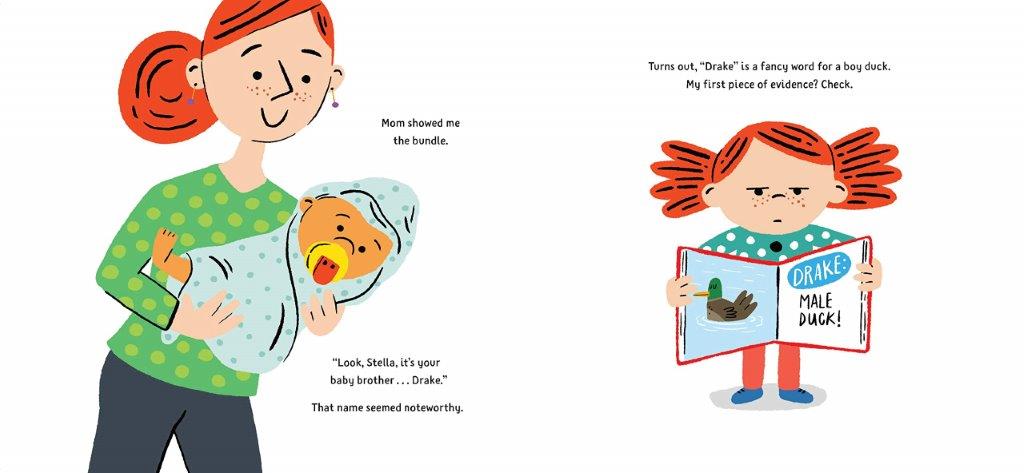
I love the illustrations, with notes full of data tacked everywhere. Definitely a must-read for new big brothers and sisters.
I managed to catch up with Pat for One Question :
Sally: What ways do you use science in your life? Or do you just "wing it"?
Pat: Like Stella in My Brother The Duck , I always think research is required. I'm naturally curious, and I spend a lot of time looking into why things happen or the history behind them or how things work. I don't conduct science experiments very often, but I do a lot of reading and researching and learning. And that helps me tell better stories. For this book, I had a lot of fun watching science experiment videos on YouTube to see what experiments a kid could do at home. And, I learned a lot about ducks – including this cool fact that’s not in the book: a group of ducks is called a raft, a team, or a paddling.
Beyond the Book:
Learn how to identify ducks living in your town . Here's a chart to help you out.
Use books or the internet to discover some fun duck facts . Here's one resource to check out.
Play a duck puzzle with this word ladder - click here for a free downloadable puzzle.
Sing along with a duck song! This is one I learned as a kid.
Pat is a member of #STEAMTeam2020. You can find out more about her at her website.
Today we're joining Perfect Picture Book Friday, an event where bloggers share great picture books at Susanna Leonard Hill's website. Review copy provided by the publisher.


April 9, 2020
A Basketful of Board Books
For for some reason a whole bunch arrived in my mailbox this spring, so I declare today Board Book Day! But definitely a day to not be bored.
themes: animals, creativity
 Animals in the Sky
by Sara Gillingham
Animals in the Sky
by Sara Gillingham
Phaidon Press, 2020
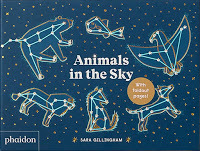
Did you know there are animals in the sky? If you’re a star watcher, you do. After all, the Big Dipper is part of a huge, sky-inhabiting bear! But there are so many other animals up in the sky. This book introduces young children (and their parents) to a sky-dwelling rabbit, the lion, fish, dog, an eagle, and a wolf. Like other board books, the pages are thick and durable, with a clue on the left side of the spread and the constellation on the right. But, surprise! The page folds out to reveal how the star pattern fits into the imagined animal. Can there be back matter in a board book? Sure – the last page unfolds to show even more sky animals, including one of my favorites, the Scorpion.
Who Loves Books? by Lizi Boyd
Chronicle Books, 2020
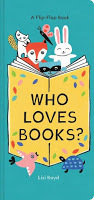
If you like to read – and who doesn’t? – you won’t be surprised to learn that animals love to read, too. At least in this book. Squirrel delivers books to fox, butterfly, and others from the Book Boat. But what makes this book fun to play with is that some pages are divided so that you can flip the flaps and create new combinations of who’s reading and who’s waiting for a book delivery. Those flippy flaps make for a book that stretches nearly twice as tall as a normal board book – a small price to pay for interactive pages to engage fidgety readers.
 ABC Dance! An Animal Alphabet
by Sabrina Moyle; illus. by Eunice Moyle
Workman Publishing, 2020
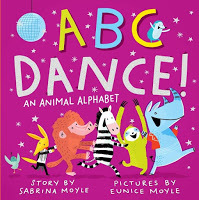
“Aardvarks arrive with a band of baboons…” and by the time you turn the page I guarantee your toes will be tapping. This is the perfect book to encourage youngsters (and us oldsters) to shake our boots with newts, rock out with rhinos, and slide with sloths. Dust off your dancing shoes and get ready to dance your way from A to Z. Bright, cartoony illustrations will encourage you to get your silly on.
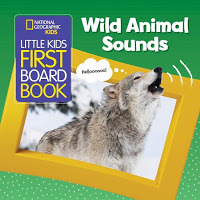
Wild Animal Sounds
National Geographic Kids, 2019
Snort like an elephant, sing like a frog… each page introduces animal sounds. Filled with wonderful photos of animals and fun facts, this book will have you talking like the animals in no time at all. It’s a great way to spend a rainy spring day – and pairs well with dancing like animals, too! The back spread features a matching game.
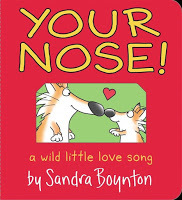
Your Nose! by Sandra Boynton
Workman Publishing, 2020
Of course there’s a Sandra Boynton book in my basket! How could there not be? This is a wild little love song about all types of noses, but especially the noses you know best. And yes – it IS a song… you can listen to it here.
Beyond the books:
Find animals in the sky . If you don’t have a sky map available, check out this link.
Learn some wild animal sounds. Here’s a fun video of wild animals with the sounds they make.
Put on some music and dance like an animal . Make a list of some animals from A to Z and then try moving the way you imagine they’d dance. Who knows? You might come up with some excellent dance moves!
Make your own board book. Here’s an excellent tutorial, but don’t worry if you don’t have all the “right stuff”. Be creative and improvise! I plan to use up those cereal boxes that have been accumulating behind the recycling box – and some paper bag strips to connect the boards.
Today we're joining Perfect Picture Book Friday, an event where bloggers share great picture books at Susanna Leonard Hill's website. Review copies provided by the publishers.
themes: animals, creativity
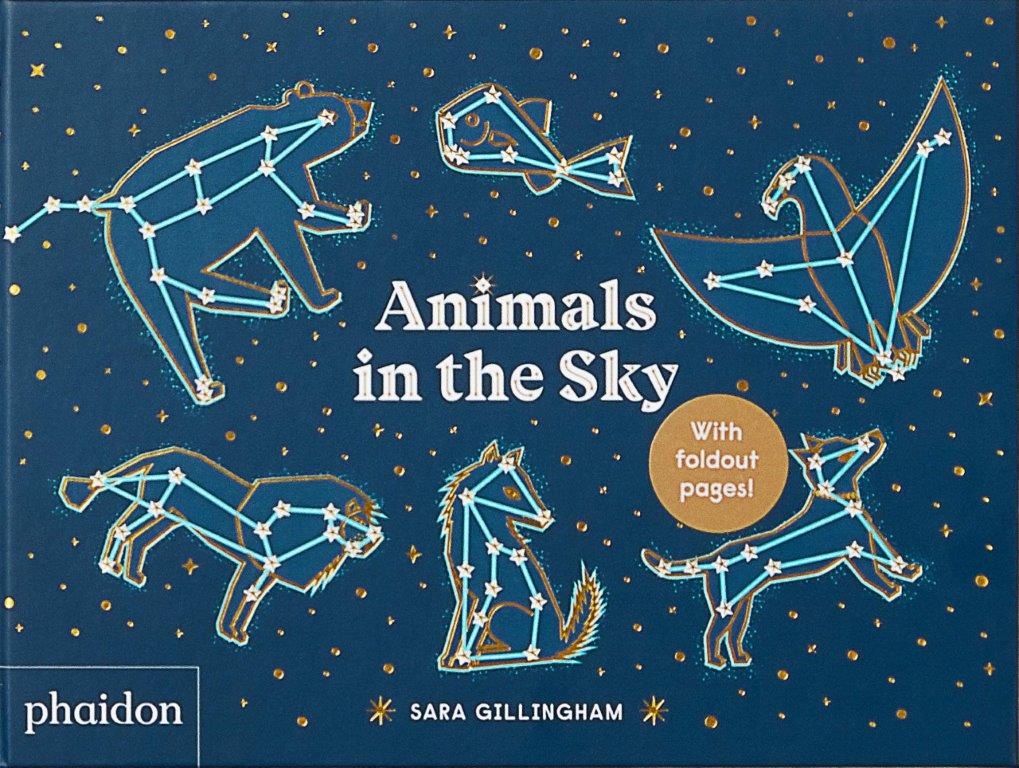 Animals in the Sky
by Sara Gillingham
Animals in the Sky
by Sara GillinghamPhaidon Press, 2020
Did you know there are animals in the sky? If you’re a star watcher, you do. After all, the Big Dipper is part of a huge, sky-inhabiting bear! But there are so many other animals up in the sky. This book introduces young children (and their parents) to a sky-dwelling rabbit, the lion, fish, dog, an eagle, and a wolf. Like other board books, the pages are thick and durable, with a clue on the left side of the spread and the constellation on the right. But, surprise! The page folds out to reveal how the star pattern fits into the imagined animal. Can there be back matter in a board book? Sure – the last page unfolds to show even more sky animals, including one of my favorites, the Scorpion.

Who Loves Books? by Lizi Boyd
Chronicle Books, 2020
If you like to read – and who doesn’t? – you won’t be surprised to learn that animals love to read, too. At least in this book. Squirrel delivers books to fox, butterfly, and others from the Book Boat. But what makes this book fun to play with is that some pages are divided so that you can flip the flaps and create new combinations of who’s reading and who’s waiting for a book delivery. Those flippy flaps make for a book that stretches nearly twice as tall as a normal board book – a small price to pay for interactive pages to engage fidgety readers.
 ABC Dance! An Animal Alphabet
by Sabrina Moyle; illus. by Eunice Moyle
Workman Publishing, 2020
“Aardvarks arrive with a band of baboons…” and by the time you turn the page I guarantee your toes will be tapping. This is the perfect book to encourage youngsters (and us oldsters) to shake our boots with newts, rock out with rhinos, and slide with sloths. Dust off your dancing shoes and get ready to dance your way from A to Z. Bright, cartoony illustrations will encourage you to get your silly on.
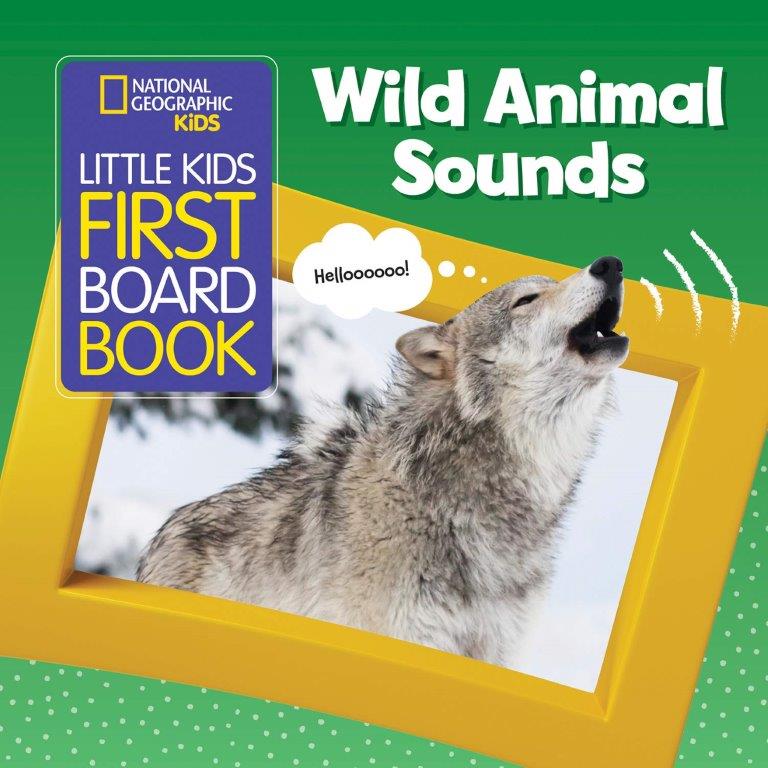
Wild Animal Sounds
National Geographic Kids, 2019
Snort like an elephant, sing like a frog… each page introduces animal sounds. Filled with wonderful photos of animals and fun facts, this book will have you talking like the animals in no time at all. It’s a great way to spend a rainy spring day – and pairs well with dancing like animals, too! The back spread features a matching game.

Your Nose! by Sandra Boynton
Workman Publishing, 2020
Of course there’s a Sandra Boynton book in my basket! How could there not be? This is a wild little love song about all types of noses, but especially the noses you know best. And yes – it IS a song… you can listen to it here.
Beyond the books:
Find animals in the sky . If you don’t have a sky map available, check out this link.
Learn some wild animal sounds. Here’s a fun video of wild animals with the sounds they make.
Put on some music and dance like an animal . Make a list of some animals from A to Z and then try moving the way you imagine they’d dance. Who knows? You might come up with some excellent dance moves!
Make your own board book. Here’s an excellent tutorial, but don’t worry if you don’t have all the “right stuff”. Be creative and improvise! I plan to use up those cereal boxes that have been accumulating behind the recycling box – and some paper bag strips to connect the boards.
Today we're joining Perfect Picture Book Friday, an event where bloggers share great picture books at Susanna Leonard Hill's website. Review copies provided by the publishers.
April 2, 2020
Python Catchers!
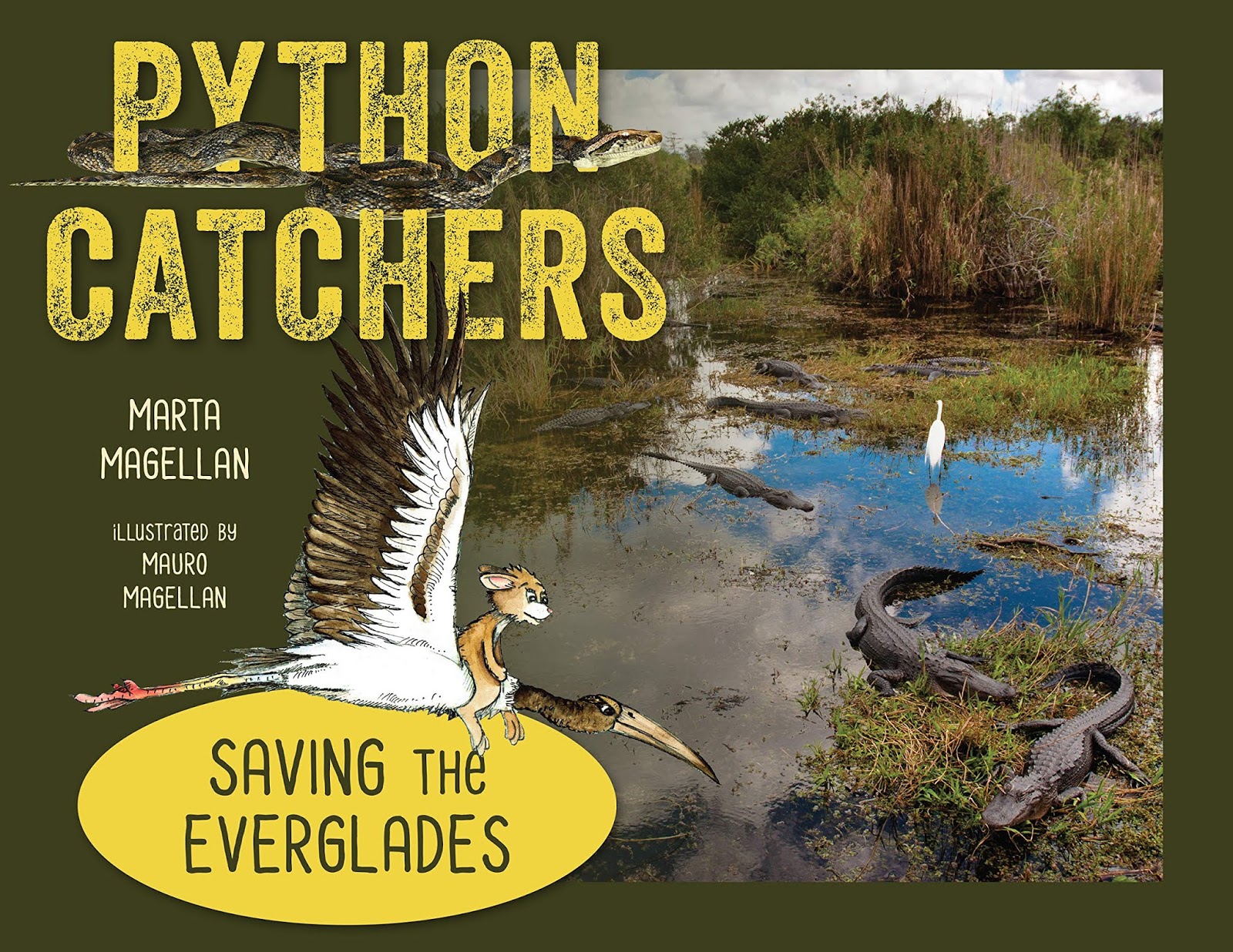
Python Catchers: Saving the Everglades
by Marta Magellan; illus. by Mauro Magellan
32 pages; ages 8 - 12
Pineapple Press, 2020
theme: environment, snakes
Be careful in there! I know the Everglades is your home, but there is a reptile in there that eats rabbits.
When Burmese pythons invade the Everglades, they gobble up just about everyone: otters, bobcats, raccoons, and even alligators! Wood Stork is on a mission to show Marsh Rabbit why the Everglades aren’t safe anymore – and what scientists are doing in an effort to restore balance.
Told from the point-of-view of the wood stork, we learn how the pythons got to the everglades and the damage they are doing to the environment.
What I like about this book: The dialog between Wood Stork and Marsh Rabbit is fun, and the spreads feature a mix of photo and illustrations. I really like the back matter that lists what you can do to keep invasives out of the environment. Plus there’s a page that focuses on invasive species and the cascading effects they can have in a food web.
I caught up with Marta by email to ask her One Question ~
Sally: How did you come to write the book from the wood stork’s point of view?
Marta: I wanted to use two cartoon animals to tell the story so that it would be more attractive to children, rather than a textbook-style explanation of the invasion. I wanted two native animals who are vulnerable to the python invasion. At first I thought of a fox (one of the animals disappearing from the Everglades) because mammals always look cute in children's book illustrations. The stork, while really "cute," is the only stork that breeds in the United States. For a long time it was listed as an endangered species. In contrast to the stork’s informational approach, the marsh rabbit makes comments that children might be thinking. Sometimes it makes silly comments (like eating carrot pizza) to bring some lightness into what in essence is a pretty grim subject!
Beyond the Books:
Meet some of the Everglades residents. Head out on this video tour with National Geographic.
Take a 3-minute tour of Everglades National Park . Video here.
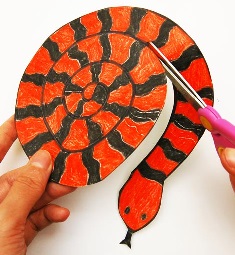
Read more about pythons in this Smithsonian article.
Make your own Burmese python . You can make one out of accordion folds, or make a paper chain snake, or you can cut a spiral from a paper plate to make a snake.
Marta is a member of #STEAMTeam2020. You can find out more about her at her website.
Today we're joining Perfect Picture Book Friday, an event where bloggers share great picture books at Susanna Leonard Hill's website. Review copy provided by the publisher.
March 26, 2020
The Oddmire
 The Oddmire, Book One: Changeling
by William Ritter
272 pages; ages 8 - 12
Algonquin Young Readers, 2019
from the jacket: Magic is fading from the WildWood. To renew it, goblins must perform an ancient ritual involving the rarest of their kind – a newborn changeling.
But when the time comes, something goes wrong. Kull, the goblin charged with trading a human baby for a goblin, is distracted. And when he turns back to the two babies in the crib, he can’t tell which is which – human or goblin – so he leaves both babies and returns to the goblin world.
And leaves a young mother with unexpected twins. and whispers amongst townsfolk about it being goblins. Or maybe a witch. The two boys, Cole and Tinn, grow up hearing tales that one of them may actually be a goblin. But which one?
Then twelve years, eleven months and twenty-eight days later the boys discover a note in a tree in an orchard where they aren't supposed to be. The note tells them to meet the goblins at a certain place on a certain night. Tinn and Cole decide to go together into the WildWood in which:
they lose their marmalade tartsare chased by a bearmeet a girlare captured by a witchand kidnapped
Basically, if anything can go wrong it will
This is a great story about children stolen, lost, sold to fairies, and … found. At its heart, it’s a story of adventure and love.
What I like about this book: Besides the tale of adventure and mishap, I love the language. Here’s a description of the town the boys live in, Endsborough… “a quaint community teetering on the edge of what could be only generously termed civilization. A dense forest … curled around the town the way a Great Dane might curl around a terrier puppy.” It sits at the end of a windy road, beyond towns that have already adopted gas lighting, a quiet town that doesn’t go looking for trouble.
I’m looking forward to reading book 2, The Unready Queen , due to be released this June.
 Thanks for dropping by today. On Monday we'll be hanging out at Marvelous Middle Grade Monday with other bloggers. It's over at Greg Pattridge's blog, Always in the Middle, so hop over to see what other people are reading. Review copy provided by the publisher.
March 19, 2020
If Sun Could Speak
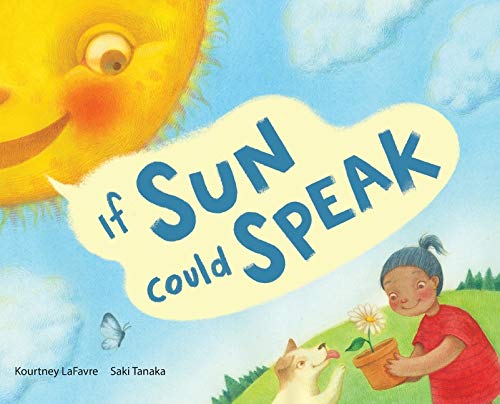 If Sun Could Speak
by Kourtney LaFavre; illus by Saki Tanaka
36 pages; ages 5 - 8
Spork, 2020
theme: sun, night & day
Allow me to introduce myself. I’m the sun – a glorious star.
Told in first person, this book introduces STEM concepts about day, night, planetary motion, and light. Kourtney LaFavre also introduces some world mythology about the sun and some scientific observations people have made from 99 BC to modern day.
What I like about this book: I like the timetable of discoveries about planets, stars, and the universe, from Lucretius and his On the Nature of Things to Stephen Hawking. So many important discoveries, such as light moves in a straight line, and Earth moves around the Sun, and how to tell what stars are made of. LaFavre includes the powerful message that readers can create their own experiments to answer questions they have about the natural world.
I caught up with Kourtney a couple weeks ago by email to ask her One Question ~
Sally: Kudos for scoring an interview with the sun. How did you decide to write using Sun's POV?
Kourtney: I think I was about five or six when I first discovered that the sun doesn’t actually rise and set. I had assumed that the sun was moving up and down in the sky, because the word RISE means to move upward. That was the definition that my five year old self understood, and five year old brains are very literal. It totally blew my mind that it was the earth’s movement that created sunrises and sunsets. And I felt mad that I was mislead to believe inaccurate information. I was frustrated whenever I heard people say anything about the sun RISING. That’s where the concept of a book told from the sun’s perspective began, to clear up any misunderstandings about the sun.
She explains more about her inspiration for the book in this blog post.
Beyond the Books:
Before clocks, people used the sun to tell the time. You can too – just build a sun dial.
Kourtney posted a bunch of activities on her blog . You can find them here.
Kourtney LaFavre is part of #STEAMTeam2020. You can find out more about her here.
Today we're joining Perfect Picture Book Friday, an event where bloggers share great picture books at Susanna Leonard Hill's website. Review copy provided by the publisher.
March 12, 2020
Whoo-ku.... whoo, whoo, whoooooo.....
 Whoo-Ku Haiku: A Great Horned Owl Story
by Maria Gianferrari; illus. by Jonathan Voss
32 pages; ages 4 - 8
G.P. Putnam's Sons Books for Young Readers, 2020
theme: owls, haiku, animal families
A great horned owl pair
Finds squirrel’s nest of oak leaves
Perched high in a pine.
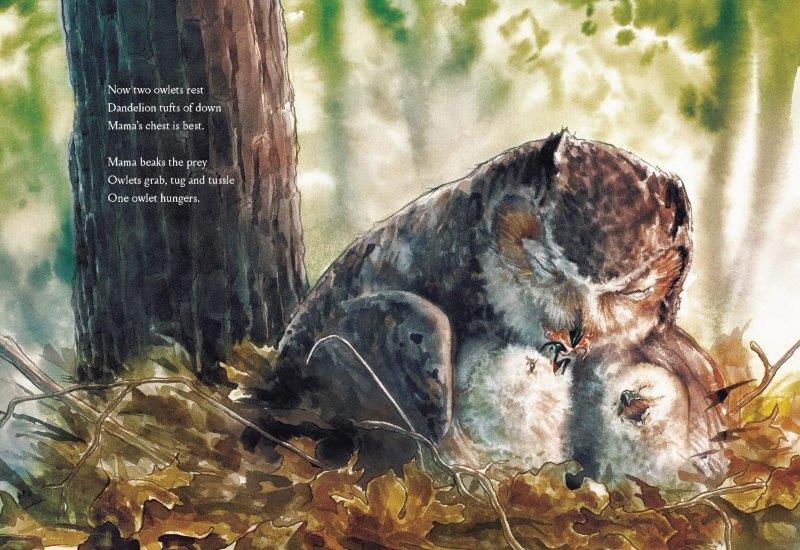
Pairing haiku with stunning ink and watercolor illustrations, Whoo-ku shows the life of a great horned owl.
What I like about this book: Just as haiku is the postcard of poetry, every whoo-ku in this book is a snapshot of that particular bit of a great horned owl’s life. The hard part, which author Maria Gianferrari does well, is linking them together to create a larger picture of the owls.
And there is Back Matter! Want to know more about owl feathers? Eggs? Owl pellets? It’s in the back matter, along with recommended books and websites for curious naturalists.
Last week I caught up with Maria long enough to ask One Question ~
Sally: How did you come to write this book in haiku?
Maria: Unlike most of my other books, this book began with the title, Whoo-Ku , so it’s the only book where the title actually dictated the form. When my daughter was in elementary school, we used to “write”/recite haikus on long car rides. She cleverly came up with that title and gifted me with her own written and illustrated Whoo-Ku book as a birthday present, a story of owls written in haiku. It’s one of my most treasured gifts! We had been reading haiku books like Wonton, by Lee Wardlaw, and Dogku, by the late Andrew Clements. Many years later I decided to try my hand at my own version of a haiku story, starring a Great horned owl family. And that’s how it all started!
Beyond the Books:
Learn how to identify great horned owls with this Audubon field guide.
What do great horned owls sound like? You can listen to their hoots and calls here.
Write some haiku about one of your favorite animals - or plants. Here's how. Grab some pencils or markers or paints and create some pictures. Whooo knows - maybe you'll end up with your own book!
Maria Gianferrari is a member of #STEAMTeam2020. You can find out more about her at her website.
Today we're joining Perfect Picture Book Friday, an event where bloggers share great picture books at Susanna Leonard Hill's website. Review copy provided by the publisher.
Whoo-Ku Haiku: A Great Horned Owl Story by Mar...
Whoo-Ku Haiku: A Great Horned Owl Story
by Maria Gianferrari; illus. by Jonathan Voss
32 pages; ages 4 - 8
G.P. Putnam's Sons Books for Young Readers, 2020
theme: owls, haiku, animal families
A great horned owl pair
Finds squirrel’s nest of oak leaves
Perched high in a pine.
Pairing haiku with stunning ink and watercolor illustrations, Whoo-ku shows the life of a great horned owl.
What I like about this book: Just as haiku is the postcard of poetry, every whoo-ku in this book is a snapshot of that particular bit of a great horned owl’s life. The hard part, which author Maria Gianferrari does well, is linking them together to create a larger picture of the owls.
And there is Back Matter! Want to know more about owl feathers? Eggs? Owl pellets? It’s in the back matter, along with recommended books and websites for curious naturalists.
Last week I caught up with Maria long enough to ask One Question ~
Sally: How did you come to write this book in haiku?
Maria: Unlike most of my other books, this book began with the title, Whoo-Ku , so it’s the only book where the title actually dictated the form. When my daughter was in elementary school, we used to “write”/recite haikus on long car rides. She cleverly came up with that title and gifted me with her own written and illustrated Whoo-Ku book as a birthday present, a story of owls written in haiku. It’s one of my most treasured gifts! We had been reading haiku books like Wonton, by Lee Wardlaw, and Dogku, by the late Andrew Clements. Many years later I decided to try my hand at my own version of a haiku story, starring a Great horned owl family. And that’s how it all started!
Beyond the Books:
Learn how to identify great horned owls with this Audubon field guide.
What do great horned owls sound like? You can listen to their hoots and calls here.
Write some haiku about one of your favorite animals - or plants. Here's how. Grab some pencils or markers or paints and create some pictures. Whooo knows - maybe you'll end up with your own book!
Maria Gianferrari is a member of #STEAMTeam2020. You can find out more about her at her website.
Today we're joining Perfect Picture Book Friday, an event where bloggers share great picture books at Susanna Leonard Hill's website. Review copy provided by the publisher.
March 5, 2020
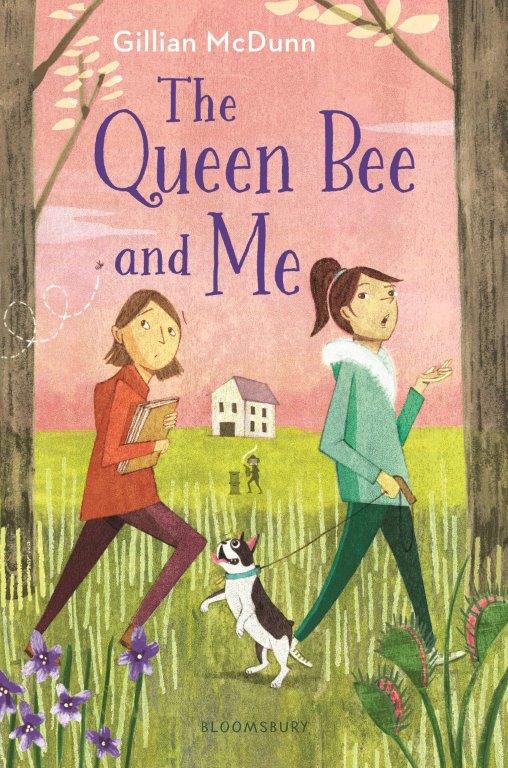
The Queen Bee and Me
 The Queen Bee and Me
by Gillian McDunn
288 pages; ages 8 - 12
Bloomsbury Children's Books, 2020
If I’m honest, it was the title that made me pick up this book. Anything related to bees – no matter how remotely – and I’m going to read the first page or two. Or, as in this case, the entire book. Especially when they open with a line like this:
There are two kinds of people in the world: those who want to look inside to see how stuff works and those who couldn’t care less.
And Meg, the main character, definitely wants to see how stuff works. She’s the kid who tales apart toasters, clocks, blenders, radios, microwaves. Though, she admits, “putting them back together is harder.” Raise your hand if you have found that out the hard way.
While she’s great with science stuff, Meg isn’t so confident with people stuff. Her best friend forever, Beatrix, is changing, there’s a new student in town, Meg really wants to take the science elective, but Beatrix is sure Meg’s gonna fall in line and join the dance class. When Meg is paired with a new girl for a research project, friendship dynamics get complicated.
And then there are the bees: a hive of honey bees that Hazel, the new girl, wants to study for their project. Bees are cool, Hazel explains, and essential for pollination. Without them, we wouldn’t have some of our favorite foods. There’s only one problem… well, maybe two.
Meg is afraid of bees because they sting.
And someone is trying to scuttle Hazel’s plan to raise her bees in town.
What I like love about this book: I love how author Gillian McDunn weaves real science into her novel of middle-grade life. I love how every so often we get a page from Meg’s Animal Fieldwork Project report. And I really love how Meg, with a bit of help, finds her voice to save the bees and her friendships, both old and new.
I give this book one huge Huzzzzzzzzah!
Gillian McDunn is a member of #STEAMTeam2020. You can find out more about her at her website.
Thanks for dropping by today. On Monday we'll be hanging out at Marvelous Middle Grade Monday with other bloggers. It's over at Greg Pattridge's blog, Always in the Middle, so hop over to see what other people are reading. ARC provided by the publisher.
February 27, 2020
Let's Dance!
 Let's Dance!
by Valerie Bolling; illus. by Maine Diaz
32 pages; ages 3 - 7
Boyds Mills Press, 2020
theme: dancing, rhyme, inclusion
Tappity-tap, fingers snap
Twist, twirl, slide, jeté! This verb-filled, rhyming book highlights dance moves from around the world. From ballet to disco, readers will feel their toes tapping to the rhythm of the words. Watch out! When you put the book down, you’ll want to leap, glide, and two-step across the floor.
What I like about this book: The action! With only four to six words per spread, author Valerie Bolling infuses the pages with movement. She captures the rhythm of dance in the rhythm of the language. Illustrator Maine Diaz captures the vibrancy of the diversity of dance from around the world, from Cuba’s cha-cha to the flowing long-sleeve dance from China.
I also like that there is just the right amount of back matter: a couple of sentences explaining each of the ten styles of dance.
A couple weeks ago, I caught up with Valerie by phone. We chatted about writing and kids – because that’s what happens when two teachers start talking – and dance. She graciously answered Three Questions:
Sally: Where did your inspiration come from?
Valerie: My inspiration for writing comes from my nieces. When they were young, they would spend a week with me a couple times a year. I began exploring the idea of writing children’s books. I also noticed that if you put music on, children dance!
Sally: I love that the pages are filled with action, with verbs. Can you talk about how that happened?
 author Valerie BollingValerie: I wanted to have fun with words in the same way that people have fun with dance. I’ve always loved to play with words and rhyme, though I confess to consulting an occasional online rhyming dictionary.
 I had a couple of dances in mind as I began writing wiggle hips, dip, dip… Some of the phrases were inspired by dances I remembered from a wedding. And I remembered watching a young man in a wheelchair; he lifted up the front wheels and did a combination of zig-zag moves.
I give a lot of credit to my editor who saw the potential in expanding the concept to include dances from around the world. She knew I wanted to include diversity – of dance and children, and her vision helped bring it to kids on a global level.
Sally: So, do you dance?
Valerie: Oh yes! Turn on the music and we’ll dance in the kitchen. I love to dance at weddings, on a cruise ship – wherever the music inspires me to tap my toes. The funny thing is, I never took a dance class until I went to college. Then I took an African dance class and learned the Kuku.
Beyond the Books:
Check out these videos of Kuku dance (Guinea) and Cha Cha ( Cuba)
Create your own dance. All you need is some music and enough space to move. Turn on the radio, spin the platter, or stream a tune and bust some moves.
Thanks to Valerie for joining us today. You can find out more about her at her website here. Today we're joining Perfect Picture Book Friday, an event where bloggers share great picture books at Susanna Leonard Hill's website. Review copy provided by the publisher.
February 20, 2020
Flight for Freedom
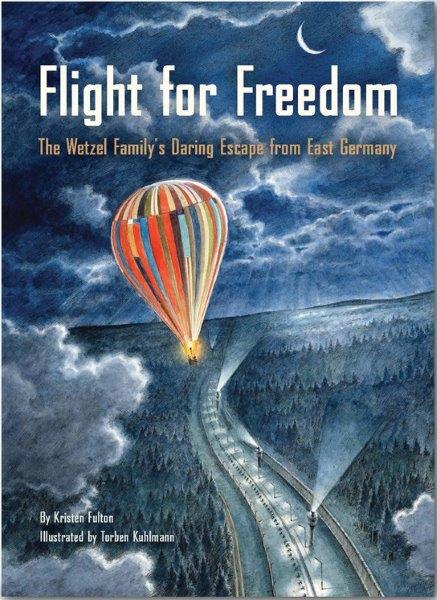 Flight for Freedom: The Wetzel Family's Daring Escape from East Germany
by Kristen Fulton; illus.by Torben Kuhlmann
56 pages; ages 5-8
Chronicle Books, 2020
theme: bravery, family, biography
In the days when Germany was divided by a wall, life was very different.
On one side, children watch TV and eat pizza. On the other, children wear uniforms and – if they are lucky – get to eat a banana once a year. Peter lived on the wrong side. The side with scratchy uniforms, no cartoons, and no fruit. Then one night, he discovered a picture of a hot air balloon hidden beneath his parent’s mattress. His parents had a plan!
What I like about this book: Kristen shows us how Peter’s family scrimps and saves to buy materials to build a hot air balloon. She shows how they work secretly into the dark night. She shows the urgency – they have one chance to try an escape – and the difficulty of both constructing the balloon and of choosing this path of resistance.
And there’s back matter galore! There’s an entire spread devoted to construction, materials, and engineering of the balloon. She’s included a page about escape attempts, and a note about how this story came about.
I met Kristen at a Highlights Foundation workshop about a year after she finished writing Flight for Freedom. I remember her dedication to finding the “golden nugget” of a story, and how she encouraged other writers to write the hard stuff and stick to the facts. I called her up last week and she graciously answered Three Questions:
Sally: What inspired this story?
Kristen: I was looking for my first nonfiction idea, you know, something to write about. I was perusing back issues of Time magazine and came upon a paragraph about a family escaping from East Germany in a hot air balloon. I immediately emailed Peter, using Google translator, and we corresponded. Eventually I traveled to Germany and talked to the family. I also visited the museum where the balloon is on display. Seeing the location and balloon really helped me feel the story in the way a character might feel it.
I also had an opportunity to see a section of the Berlin Wall on display at the Smithsonian. There were bits of graffiti on one side, and the other just had scratches and felt cold. That was the East German side. People couldn’t go near the wall because it was guarded by soldiers.
Sally: You finished Flight for Freedom back in 2012, and here we are, eight years later. Is that a long timeline for publishing?
Kristen: It is. The editor who initially acquired it ended up moving to another publisher. Fortunately, Ariel Richardson at Chronicle loved the original manuscript and that’s where the book found its home. The longest wait was for the illustrator; I really wanted Torben to do the artwork.
Sally: What advice do you have for writers?
Kirsten: Do your research. When you think you have enough, keep on going. If you’re writing a picture book, do as much research as you think you’d need to write a chapter book – you want to have enough that you can choose what you put into the story.
Then focus. In this book I focused on just one family and the balloon. With picture books, less is more because the illustrator will fill in the other half of the story with their art.
And, very important, stay true to the facts. Don’t change anything and don’t make anything up. Even when the research isn’t going your way, don’t fudge the truth.
Beyond the Books:
You can see the escape balloon and flimsy basket in this video, taken at the museum in Germany.
Read the Time article that inspired Kristen’s story here, and then another over at the Washington Post here.
Thank you for joining us today, Kristen. You can find out more about her books at her website.
We’ll join Perfect Picture Book Friday in a couple weeks - once the Valentine story contest ends. PPBF is a gathering of bloggers who share their reviews of picture books at Susanna Leonard Hill's website. Review copy provided by the publisher.
Sue Heavenrich's Blog

- Sue Heavenrich's profile
- 5 followers
Sue Heavenrich isn't a Goodreads Author
(yet),
but they
do have a blog,
so here are some recent posts imported from
their feed.

