
Sue Heavenrich's Blog, page 12
June 27, 2019
Pack your duffle for "Camp Average"
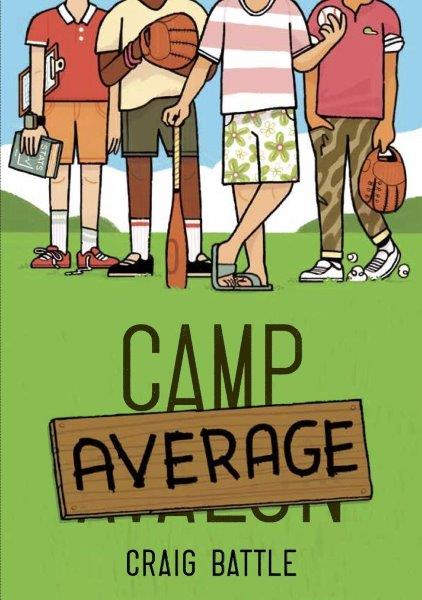 Camp Average
by Craig Battle
240 pages; ages 8 - 12
Owlkids, 2019
I spent many memorable weeks at summer camp – hiking, doing arts and crafts, canoeing, and learning archery – and later as a camp counselor. Author Craig Battle has spent his share of weeks coaching rambunctious boys at a sports camp. Years later he began wondering, what if a camp director pushed kids to become more competitive?
The first chapter sets the tone for this fun summer romp. We see yellow buses bumping their way over a potholed dirt road into camp [I’m pretty sure all roads into camps are required to have a minimum number of potholes]. From inside the buses comes a loud chant: “We’re number two!” as the buses roll to a stop at Camp Avalon – or Camp Average, as the kids call it. There’s a mess hall, the baseball diamond, the lake, and counselors wearing bright orange camp T-shirts. There are pranks, the annual telling of the camp legend, and camp food.
As the kids settle in to their cabins, readers settle in for some fun summer reading. Except all is not well at Camp Average! Because in the morning, when Mack and his buddies head to the main field, they discover it has been transformed. As Craig writes, “…it looked less like their old camp and more like something straight out of the NFL Scouting Combine, the event where college football players showcase their skills for professional coaches.”
And Mack and his friends do not like this one bit. They were looking forward to a summer of fun on the waterfront, and friendly ball games against the other camps. Now they are pushed to show athletic aptitude. The guys decide they need to nip this competitiveness in the bud – but how?
Over the summer the kids deal with interpersonal challenges as well as challenges on the field. I don’t want to give away the fun, but let’s just say that it’s harder to intentionally lose games than you’d think. This is definitely one book you’ll want to pack in your duffel for summer reading!
 Thanks for dropping by today. On Monday we'll be hanging out at Marvelous Middle Grade Monday with other bloggers. It's over at Greg Pattridge's blog, Always in the Middle, so hop over to see what other people are reading. Review ARC provided by the publisher.

June 20, 2019
Shelter dogs and midnight mischief
It’s Summer Solstice... a night of mischief and fun. Also the shortest night of the year. So why not spend part of it reading some fun picture books!
themes: family, friends, imagination
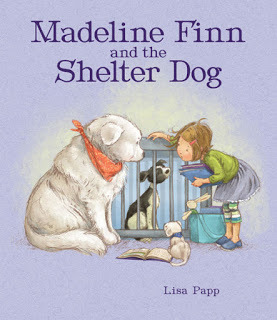 Madeline Finn and the Shelter Dog
by Lisa Papp
32 pages, ages 4 - 8
Peachtree publishers, 2019
I ask Mom every single day.
In the morning.
In the evening.
Even when we’re out…
Madeline Finn wants a dog – and finally Mom says yes! Now Madeline has to feed her new puppy, take him on walks, and make sure he has a safe home. Later, when she visits the animal shelter she notices that all the animals seem a little sad. What can she do to make them feel loved? “Mom,” she asks, “does anyone read to the shelter dogs?”
What I like about the book: This is a sweet story about how one small person can make a difference in the world – at least in the doggy world. I also like how that one act has a ripple effect, engaging even more people. I like that the story is grounded in compassion. And I love the warm and soft feeling that Lisa Papp’s illustrations generate.
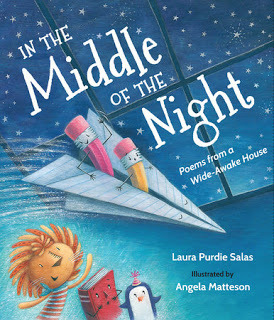 In the Middle of the Night: Poems From A Wide-Awake House
by Laura Purdie Salas; illus. by Angela Matteson
32 pages; ages 4-8
WordSong, 2019
Sun and moon have traded places –
Time for games! Time for races!
Did you know that when you fall fast asleep the things in your house wake up and play? I’ve always suspected this, and now Laurie Purdie Salas has collected the data – er, I mean she’s written a slew of poems imagining the shenanigans that go on while you sleep. Stuffed animals flip and skate, scraps of paper fold into planes and dive into the air… even the lunchbox is on a midnight mission.
What I like about this book: Pure imagination! Fun poems that will have you looking at the objects in your home in a new way – and may even have you documenting where and how you left them before nodding off for the night. I am sure my coffee cup goes on adventures as it is never where I thought I left it!
Beyond the Books:
Read to a dog – or two . Find out if your local shelter has a reading program, and how else you can help out. Here’s how one Shelter Buddies reading program works.
What do the things in your house do at night? Find out – and then share your discoveries by writing a poem or short story, or drawing a picture to show what goes on when the lights go out.
Today we're joining Perfect Picture Book Friday, an event where bloggers share great picture books at Susanna Leonard Hill's website. Review copies provided by the publishers.
themes: family, friends, imagination
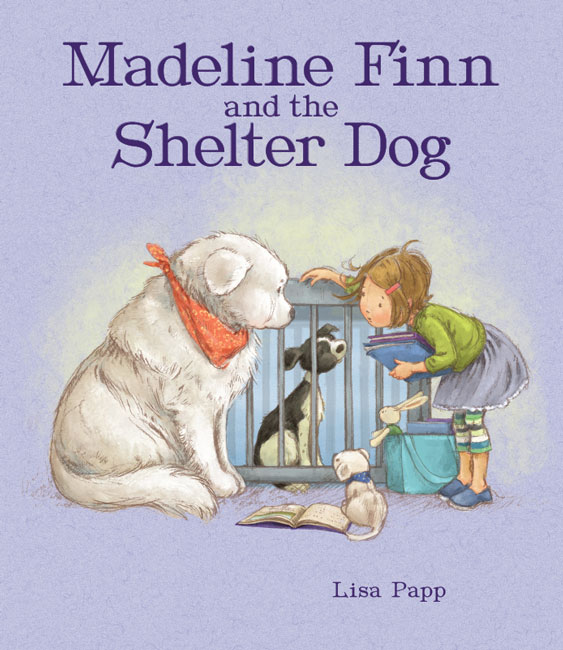 Madeline Finn and the Shelter Dog
by Lisa Papp
32 pages, ages 4 - 8
Peachtree publishers, 2019
I ask Mom every single day.
In the morning.
In the evening.
Even when we’re out…
Madeline Finn wants a dog – and finally Mom says yes! Now Madeline has to feed her new puppy, take him on walks, and make sure he has a safe home. Later, when she visits the animal shelter she notices that all the animals seem a little sad. What can she do to make them feel loved? “Mom,” she asks, “does anyone read to the shelter dogs?”
What I like about the book: This is a sweet story about how one small person can make a difference in the world – at least in the doggy world. I also like how that one act has a ripple effect, engaging even more people. I like that the story is grounded in compassion. And I love the warm and soft feeling that Lisa Papp’s illustrations generate.
 In the Middle of the Night: Poems From A Wide-Awake House
by Laura Purdie Salas; illus. by Angela Matteson
32 pages; ages 4-8
WordSong, 2019
Sun and moon have traded places –
Time for games! Time for races!
Did you know that when you fall fast asleep the things in your house wake up and play? I’ve always suspected this, and now Laurie Purdie Salas has collected the data – er, I mean she’s written a slew of poems imagining the shenanigans that go on while you sleep. Stuffed animals flip and skate, scraps of paper fold into planes and dive into the air… even the lunchbox is on a midnight mission.
What I like about this book: Pure imagination! Fun poems that will have you looking at the objects in your home in a new way – and may even have you documenting where and how you left them before nodding off for the night. I am sure my coffee cup goes on adventures as it is never where I thought I left it!
Beyond the Books:
Read to a dog – or two . Find out if your local shelter has a reading program, and how else you can help out. Here’s how one Shelter Buddies reading program works.
What do the things in your house do at night? Find out – and then share your discoveries by writing a poem or short story, or drawing a picture to show what goes on when the lights go out.
Today we're joining Perfect Picture Book Friday, an event where bloggers share great picture books at Susanna Leonard Hill's website. Review copies provided by the publishers.
June 13, 2019
Badger's Perfect Garden
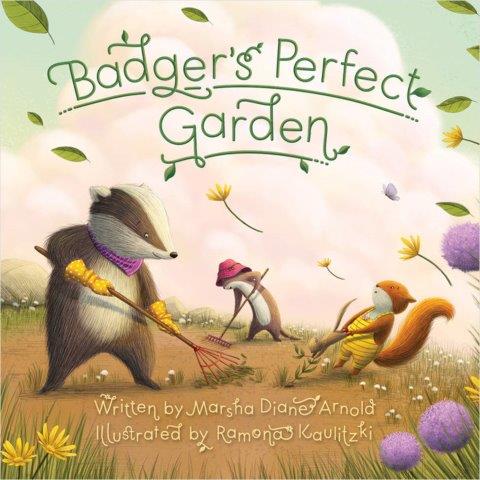 Badger’s Perfect Garden
by Marsha Diane Arnold; illus. by Ramona Kaulitzki
32 pages; ages 4-8
Sleeping Bear Press, 2019
theme: gardening, nature, friendship
One spring morning, Red Squirrel found Badger surrounded by dozens of jars.
The jars were filled with seeds. The seeds looked hopeful, just like Badger.
Badger wants to plant a perfect garden. That means getting the soil perfectly smooth. And planting perfectly straight rows. All of this takes a lot of time, but finally Badger’s garden is planted. All he needs is rain…. but then a HUGE storm washes away the seeds.
All is lost. Or is it?
What I like about this book: I love the idea that Badger is planting seeds that he has collected from local plants. And that his friends help him plant the garden. (As a gardener, I have yet to plant perfectly straight rows or get my soil perfectly smooth.) Having your garden washed away by a severe storm is becoming a more likely event these days, but I was a bit astonished that Badger didn’t head back out and replant.
That doesn’t matter, though, because what happens is even more fun. As most of us know (when we stop to think about it) seeds will grow wherever they find themselves. But what I really liked was that "the seeds looked hopeful!"
Beyond the book
Plant a garden. One year a skunk dug up a section of our yard (searching for beetle larvae). My kids turned the now grassless area into a flower garden. Here are some resources for gardening with kids: How to Plant a Garden, and Gardening Basics (with lots of info).
Seek flowers that are native to your region . Check with your local county extension, or find a list of native plants at National Wildlife Federation and Xerces Society
Go on a flower walk to learn more about what’s growing in your neighborhood . Here’s a list for a scavenger hunt.
Today we're joining Perfect Picture Book Friday, an event where bloggers share great picture books at Susanna Leonard Hill's website . Review copy provided by publisher.
June 6, 2019
Little Doctor and the Fearless Beast
 Little Doctor and the Fearless Beast
By Sophie Gilmore
32 pages; ages 5-8
Owlkids Books, 2019
theme: kindness, animals, imagination
There once lived a child the crocodiles called Little Doctor.
Little Doctor treats the creatures with care, bandaging and splinting and washing off scrapes and cuts. Then one day Big Mean shows up. Big Mean is every bit as big as her name implies, and when Little Doctor tries to take her temperature, Big Mean resists. But Little Doctor persists… and accidentally lands inside Big Mean’s big, toothy mouth – where she discovers something important. I don’t want to spoil this wonderful and sweet story, so please, please find a copy and read it for yourself. You’ll definitely want to read this story again and again.
What I like love about this book: The story seems so simple, and yet is a mile deep. It is about persistence, compassion, and respect. It also alludes to our human impact on the creatures who share this planet with us. I like that this story is inspired by a real-life crocodile doctor in the author’s family. And I really like the illustrations. They show us a lot about Little Doctor's life, from the way she dresses to the cool skeleton hanging from the ceiling of her room. They invite you to spend time on the page, poring over every detail.

Beyond the book:
Learn more about crocodiles here and here
Make a crocodile – you'll find a collection of many croc-crafts for kids here.
Plastic pollution is killing marine wildlife – even crocodiles. Learn more here. And here’s a list of ways you can reduce your use of plastic.
My colleague, Maria Marshall reviewed this book a couple months ago – you can find her thoughtful comments here.
Head over to Archimedes Notebook for some crocodilian nonfiction.
Today we're joining Perfect Picture Book Friday, an event where bloggers share great picture books at Susanna Leonard Hill's website . Review F&G provided by the publisher.
May 30, 2019
Mr Penguin and the Lost Treasure
 Mr. Penguin and the Lost Treasure
by Alex T. Smith
208 pages; ages 8-12
Peachtree, 2019
Mr. Penguin is a dapper gent, what with his hat and bow tie and satchel. He has just started a new business: Professional Adventurer. But it wasn’t going according to plan and he’s down to his last fish finger sandwich.
“It was supposed to have been nonstop Adventures—people ringing up with mysteries for him to solve, missing diamonds to find, jungles to run through under a shower of poison-tipped darts….” Instead, his phone stayed silent. And if he didn’t get an Adventuring job soon, there would be no more crabsticks!
Fortunately, the phone rings! Mr. Penguin’s services are required to find a Lost Treasure somewhere in the Museum of Extraordinary Objects. Accompanied by his sidekick, a karate-kicking spider named Colin, Mr. Penguin heads off on a crazy Indiana Jones-style quest.
What I like about this book:
The wacky characters, from Edith the pigeon lady to Mrs. Bones and her brother Montague.
The clues, including a carved saber-toothed ostrich tusk.
An X that literally marks the spot!
I like how Alex Smith uses color to help tell the story. Most pages include illustrations in black, white, and orange – great penguin colors. But as the adventurers descend into the darkness of the basement, the pages are gray with white text.
I like that there are lessons to learn. If a large knobby tree trunk floats by at exactly the same time you need to cross a river, you might want to check for teeth!
And I like that there is always a way to save the day, though it will invariably require a personal sacrifice. So carry extra candy bars – or fish finger sandwiches, as the case may be.
Beyond the Book: Have some fun with these Mr. Penguin activity sheets!
 Thanks for dropping by today. On Monday we'll be hanging out at Marvelous Middle Grade Monday with other bloggers. It's over at Greg Pattridge's blog, Always in the Middle, so hop over to see what other people are reading. Review copy provided by the publisher.
May 23, 2019
The Becket List
 The Becket List: A Blackberry Farm Story
 by Adele Griffin; illustrated by LeUyen Pham
208 pages; ages 7 - 11
Algonquin Young Readers, 2019
Rebecca Branch is a city kid, born and bred. From subways to sidewalks, she knows how to navigate her habitat. But now that third grade has ended, her family is moving to the country to live with Grandma at Blueberry Farm. Family includes mom and dad, who are veterinarians, older sister, Caroline, who is on the cusp of teendom, and Rebecca’s twin brother, Nicholas, who is his own person.
Rebecca is looking forward to being a country kid. She wants to get a “country dog” even though Mr. Fancypants has been a faithful canine companion. And she decides to change her name to Becket because, she points out to her family, “Rebecca doesn’t fit me…” Still, she does bring some of her old life with her, like an entire moving box filled with penguins. The stuffed kind, not the live, fishy, flippery kind.
One of the things Becket does is start a list about How To Be a Country Kid. The other thing she does is shout out “beautiful alerts” to remind people to enjoy the natural beauty around them.
Becket wants to be of use, so she adopts farm chores: feeding Grandma’s donkey, mule, and 97 chickens – including the mean Lady Godiva. There’s summer camp, a lemonade business, and tractor-driving lessons. But mostly, there’s a story about family and friendships and growing up.
Thanks for dropping by today. On Monday we'll be hanging out at Marvelous Middle Grade Monday with other bloggers. It's over at Greg Pattridge's blog, Always in the Middle , so hop over to see what other people are reading. Review copy provided by the publisher.
May 16, 2019
Birds! Birds! Birds!
themes: birds, family, don't give up
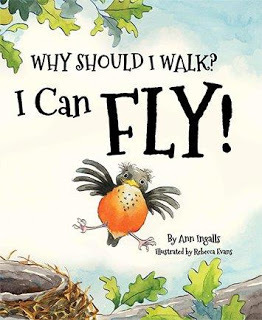 Why Should I Walk? I Can Fly!
by Ann Ingalls; illus. by Rebecca Evans
32 pages; ages 3-8
Dawn Publications, 2019
Why should I walk? I can fly.
I've made up my mind to try.
A little bird. A big sky. And mama's nudging him out of the nest. This is a mistake - he's sure - why can't he fly like ... chickadees, for example. And not being able to fly puts him in danger!
What I like about this book: It's told in first person, from the baby Robin's point of view. Who knew first flight could be so scary? For sure, kids will identify with his timidity in embracing something so drastically different.
If the text doesn't get you soaring, the illustrations will. They are bursting with humor and do a wonderful job revealing the Robin's emotions. Maybe it was fated that Rebecca Evans create the art for this book - when she was a first grader she rescued two injured baby sparrows and helped them learn to fly.
I also like that there's back matter: a "fact or fiction?" page, some thoughts about teaching baby birds to fly, and STEM activities.
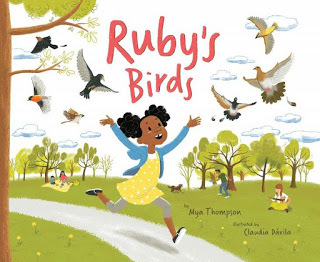 Ruby's Birds
by Mya Thompson; illus. by Claudia Davila
36 pages; ages 3-7
Cornell Lab Publishing Group, 2019
School's out. Mom and Dad are at work.
Ruby's home with grandma and Alex, the parrot. She's bored. But downstairs neighbor, Eva, asks if she wants to go to the park. They walk past the one with slides ... all the way to Central Park. To the woods, where Eva looks up and listens. Turns out that Eva's on a mission to find a Golden-winged warbler, and enlists Ruby's help.
What I like about this book: The birds that illustrator Claudia Davila sneaked onto each page - you have to search for them! I like that Ruby learns how to identify the warbler and shares her knowledge.
Of course, there is back matter! That's where you'll find more information about birds in the city. There's a handy list of birds that are in the book - birds you are likely to find in your town or city. And there's "Ruby's Tips for taking a nature walk"!
Beyond the Books:
Draw a Bird . It could be a robin (here's one way to draw a robin) or a pigeon (here's how to draw a pigeon like Mo Willems). Or you can download coloring pages from Why Should I Walk? to use as inspiration.
Learn more about the birds living in your town or city. Need info? Check out Celebrate Urban Birds and Feathered Friends for activities and identification.
Learn to identify birds by their songs and calls. Here's a "tweet cheat sheet" for Eastern Birds, and here's one for Western Birds - by amazing cartoonist, naturalist, and science writer Rosemary Mosco.
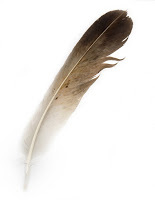 Take a close look at a feather.
If you find feathers on the ground, spend some time looking at them. Draw their shape and color them. Try to figure out who lost a feather. The best way to examine a feather is to get a chicken feather or other feather from a craft store so you can spend time looking at it with a magnifying lens. Here's a feather activity guide. (note: it is illegal to collect and keep feathers you find on the ground. You can draw them and, if you have a hand lens with you, take a closer look at them.)
Take a close look at a feather.
If you find feathers on the ground, spend some time looking at them. Draw their shape and color them. Try to figure out who lost a feather. The best way to examine a feather is to get a chicken feather or other feather from a craft store so you can spend time looking at it with a magnifying lens. Here's a feather activity guide. (note: it is illegal to collect and keep feathers you find on the ground. You can draw them and, if you have a hand lens with you, take a closer look at them.)
Today we're joining Perfect Picture Book Friday, an event where bloggers share great picture books at Susanna Leonard Hill's website . Review copies provided by the publishers.
 Why Should I Walk? I Can Fly!
by Ann Ingalls; illus. by Rebecca Evans
32 pages; ages 3-8
Dawn Publications, 2019
Why should I walk? I can fly.
I've made up my mind to try.
A little bird. A big sky. And mama's nudging him out of the nest. This is a mistake - he's sure - why can't he fly like ... chickadees, for example. And not being able to fly puts him in danger!
What I like about this book: It's told in first person, from the baby Robin's point of view. Who knew first flight could be so scary? For sure, kids will identify with his timidity in embracing something so drastically different.
If the text doesn't get you soaring, the illustrations will. They are bursting with humor and do a wonderful job revealing the Robin's emotions. Maybe it was fated that Rebecca Evans create the art for this book - when she was a first grader she rescued two injured baby sparrows and helped them learn to fly.
I also like that there's back matter: a "fact or fiction?" page, some thoughts about teaching baby birds to fly, and STEM activities.
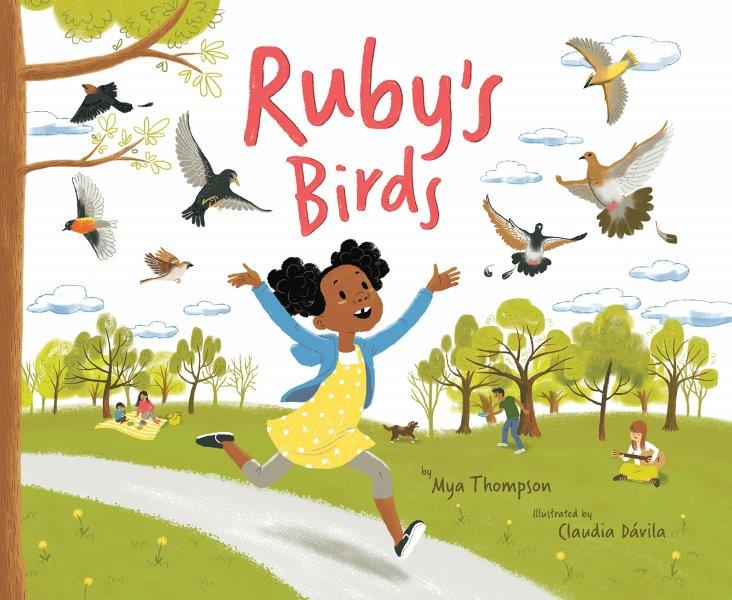 Ruby's Birds
by Mya Thompson; illus. by Claudia Davila
36 pages; ages 3-7
Cornell Lab Publishing Group, 2019
School's out. Mom and Dad are at work.
Ruby's home with grandma and Alex, the parrot. She's bored. But downstairs neighbor, Eva, asks if she wants to go to the park. They walk past the one with slides ... all the way to Central Park. To the woods, where Eva looks up and listens. Turns out that Eva's on a mission to find a Golden-winged warbler, and enlists Ruby's help.
What I like about this book: The birds that illustrator Claudia Davila sneaked onto each page - you have to search for them! I like that Ruby learns how to identify the warbler and shares her knowledge.
Of course, there is back matter! That's where you'll find more information about birds in the city. There's a handy list of birds that are in the book - birds you are likely to find in your town or city. And there's "Ruby's Tips for taking a nature walk"!
Beyond the Books:
Draw a Bird . It could be a robin (here's one way to draw a robin) or a pigeon (here's how to draw a pigeon like Mo Willems). Or you can download coloring pages from Why Should I Walk? to use as inspiration.
Learn more about the birds living in your town or city. Need info? Check out Celebrate Urban Birds and Feathered Friends for activities and identification.
Learn to identify birds by their songs and calls. Here's a "tweet cheat sheet" for Eastern Birds, and here's one for Western Birds - by amazing cartoonist, naturalist, and science writer Rosemary Mosco.
 Take a close look at a feather.
If you find feathers on the ground, spend some time looking at them. Draw their shape and color them. Try to figure out who lost a feather. The best way to examine a feather is to get a chicken feather or other feather from a craft store so you can spend time looking at it with a magnifying lens. Here's a feather activity guide. (note: it is illegal to collect and keep feathers you find on the ground. You can draw them and, if you have a hand lens with you, take a closer look at them.)
Take a close look at a feather.
If you find feathers on the ground, spend some time looking at them. Draw their shape and color them. Try to figure out who lost a feather. The best way to examine a feather is to get a chicken feather or other feather from a craft store so you can spend time looking at it with a magnifying lens. Here's a feather activity guide. (note: it is illegal to collect and keep feathers you find on the ground. You can draw them and, if you have a hand lens with you, take a closer look at them.)Today we're joining Perfect Picture Book Friday, an event where bloggers share great picture books at Susanna Leonard Hill's website . Review copies provided by the publishers.
May 9, 2019
How to Care for your T-Rex
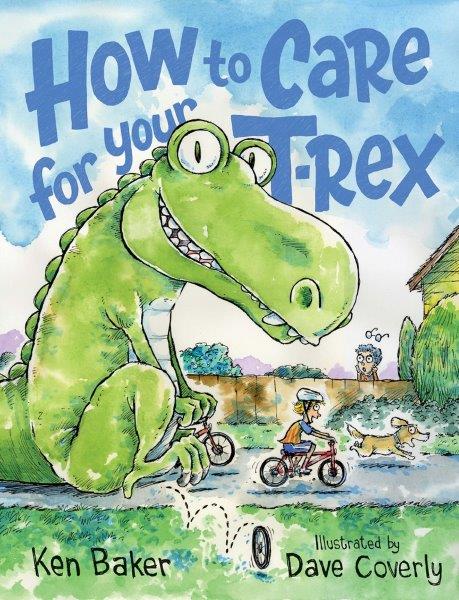 How to Care for Your T-Rex
Ken Baker; illustrations by Dave Coverly
36 Pages, Ages 4-8
Henry Holt and Co. (BYR), 2019
themes: pets, love, humor
When you take good care of your T-Rex, your T-Rex will take good care of you.
Like any other pet, a T-Rex requires the right sort of care and feeding. Exercise is an important part of their daily routine, because they sure do eat a lot – 300 pound of meat a day! From rise-and-shine to brushing teeth and goodnight stories, this book gives handy tips on caring for your reptilian companion.
What I like about this book: I love the cartoony art – it is so fun. And I love the speech balloons that add dialog without all that bothersome “he said, she said.” But most of all, I like the situations that T-Rex and his boy find themselves in. Like trying to teach T-Rex a few simple tricks that any dog worth its salt knows. Sit. Shake. Roll over. And other stuff you should teach it, like manners. And some things you simply can’t teach it, like how to rescue a cat from a tree.
But you know what I really like? I’ll wait while you take a guess…
I really like that it has Back Matter: a bunch of T-Rex facts that will delight any kid and surprise parents who haven’t kept up on dinosaur research.
Beyond the Book:
Can you run as fast as a T-Rex? Figure out how fast you can run. Then convert it into miles per hour. A T-Rex can run 12 miles per hour. Can you keep up?
Check out the trailer for the book here.
What do you think a baby T-Rex looked like? Draw a picture. Then check out this video from the American Museum of Natural History.
We're joining Perfect Picture Book Friday. It's a weekly event where bloggers share great picture books at Susanna Leonard Hill's website. Review ARC provided by the publisher.
May 2, 2019
How to Walk an Ant
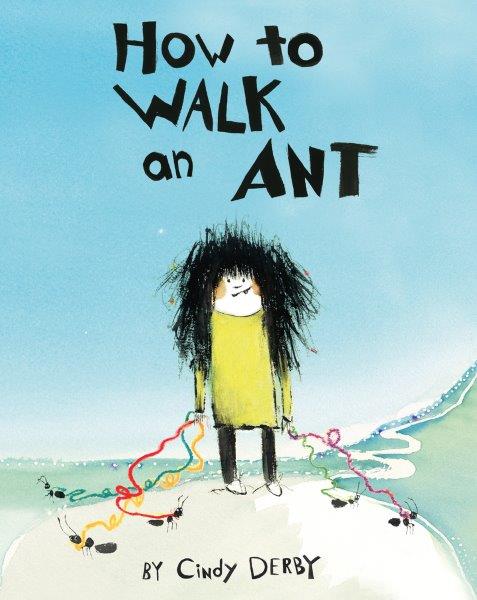 How to Walk an Ant
by Cindy Derby
40 Pages; ages 4-8
Roaring Brook Press, 2019
theme: imagination, bugs
My name is Amariyah, and I am an Expert Walker.
As in, she walks things. But not dogs. Not goldfish either. Amariyah walks ants – and she’s going to share her top tips so you, too, could walk ants for fun and profit!
What I like love about this book: I appreciate the matter-of-fact approach Amariyah uses. Step one, find an ant. Step two, politely introduce yourself. I see that this is where I have gone all wrong. Not once in my entire life have I properly (and with best manners) introduced myself to an ant.
I like the footnotes – yes, you most certainly can have footnotes in a picture book!
I like that Amariyah carefully explains how to secure a leash so as to not harm the ant. Not around the antennae, but between the thorax and the head. Not sure where that is? No problem – Appendix 2 illustrates ant anatomy. Yes, you most certainly can include appendices in a picture book!
I love that Amariyah calculates estimated ant travel times and touches on the potential problems of entanglement when walking multiple ants. It’s like herding cats, only with more legs.
But what I really love is that Amariyah encounters another insect walker, and after a tragic accident (resulting in bug burials) they start a joint venture. And yes! there is Back Matter.
Beyond the Book:
Go on an Ant Walk - with no strings attached. Just find some ants and follow them. You might want to draw a picture of what your ants look like (what color they are, how many legs, whether they have big heads with scary jaws). Definitely make a map to show where your ant goes. How many kinds of Ants live in your neighborhood? Here's an ant chart to help you out.
Make up a song for walking ants (or any other animal)...
More ant activities here!
We're joining Perfect Picture Book Friday. It's a weekly event where bloggers share great picture books at Susanna Leonard Hill's website. Review ARC provided by the publisher.
April 25, 2019
The Girl Who Drank the Moon
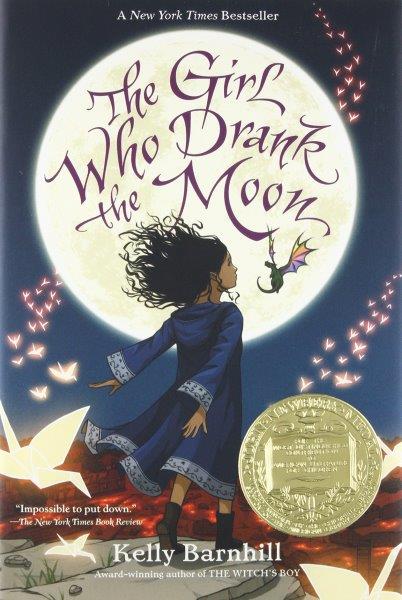 Reading this book is better than nibbling the ends off a Cadbury Royal Dark chocolate bar. And if you haven't read it yet - I know, how can you miss reading a Newbery medal winner! - then now's your chance. It's being released next Tuesday, April 30, in paperback. So fill up your mug with hot tea, grab a chocolate bar, and give yourself permission to go on a mini-vacation so you can enjoy a few hours of uninterrupted reading.
The Girl Who Drank the Moon
By Kelly Barnhill
400 pages; ages 10 – 14
Algonquin Young Readers, 2016 (2019 paperback)
Here's the scoop (from the back cover):
Every year, the people of the Protectorate leave a baby as an offering to the witch who lives in the forest to keep her from terrorizing their town. But the witch in the forest, Xan, is really kind and gentle. She shares her home with a wise Swamp Monster and a Perfectly Tiny Dragon. Xan rescues the children and delivers them to welcoming families on the other side of the forest.
One year, Xan accidentally feeds a baby moonlight, filling the ordinary child with extraordinary magic. Xan decides she must raise this girl, whom she calls Luna, as her own. As Luna’s thirteenth birthday approaches, her magic begins to emerge with unpredictable consequences, just when it’s time for Xan to go collect another child. Meanwhile, a young man is determined to free his people by killing the witch. And a volcano, dormant for centuries, rumbles within the earth…
Of course, the story is so much more complex than one can blurb on a book jacket. Or back cover. And, say my writerly friends and colleagues, the story seems so much darker for adults than for children. It could be that we older folk have forgotten the portals to the world of magic, have forgotten the secret handshake and password.
What I like love about this book:
As an emerging fiction writer who can't nail my character to a sheet of lined notebook paper, I fell in love with Kelly Barnhill's cast of characters:A Grand Elder who is nothing more than a bully and a thug, scheming ways to consolidate and keep political powerA reluctant Elder-in-Training who prefers carpentry to politicsA witch who is short and squat and "a bit bulbous about the belly" - not only does she resemble people I know, but there's that fun bit of alliterationA swamp monster with attitude - who else would have the chutzpah to roll his eyes at a witch?A tiny dragon who believes it is Simply EnormousAn abandoned baby, enmagicked by accidentI love the way folk tales of the bog-people are woven through the book. And the origin story: In the beginning there was only Bog.
I love that the book is filled with more than magic; there are ethical questions that make you pause and ponder.
And I love the way each chapter has a title. Some could have come from my own experience, like this one: "In Which a Map is Rather Useless".
Beyond the Book: Check out Barnhill's essay, in which she finds things she did not expect!
Thanks for dropping by today. On Monday we'll be hanging out at Marvelous Middle Grade Monday with other bloggers. It's over at Greg Pattridge's blog, Always in the Middle , so hop over to see what other people are reading. Review copy provided by the publisher.
Sue Heavenrich's Blog
- Sue Heavenrich's profile
- 5 followers
Sue Heavenrich isn't a Goodreads Author
(yet),
but they
do have a blog,
so here are some recent posts imported from
their feed.


