
Sue Heavenrich's Blog, page 13
April 18, 2019
Get Geeked Out!
 Geeked Out, a Lame New World
by Obert Skye
224 Pages, Ages 9-12
Henry Holt and Co. (BYR), 2018
I love a new series - especially when it contains the end of the world, the breakdown of society, and STEM connections. Plus zombies. And, as Obert Skye demonstrates, there is no better place to find all of these things than in a middle school.
The Otto Waddle Jr. High Government Outpost, to be exact. Society may be in danger, but middle school must go on! At least that's Tip's perspective.
Like middle schools everywhere, Otto Waddle is blessed with the usual cliques and clubs - though perhaps a bit more extreme than we're used to. There's Jocks, Sox, Goths, Loners, Freaks, Pens, and a few more. Then there's the Geeks. Tim's group of friends who are thinkers, not fighters: Owen, Xen, and Mindy. All members of the AV club who are tired of being picked on. So they plot a prank. It involves a pinata and lots of grease from the lunchroom. I won't go into the gross details; suffice it to say the prank goes horribly wrong.
Punishment is dealt. Vengeance sought. And somewhere along the line the friends decide to take a stand. They form a secret group, the League of Average Mediocre Entities (LAME). Because, seriously, who couldn't use a few heroes. What they lack in superpowers they make up for with science! All they lack are capes.
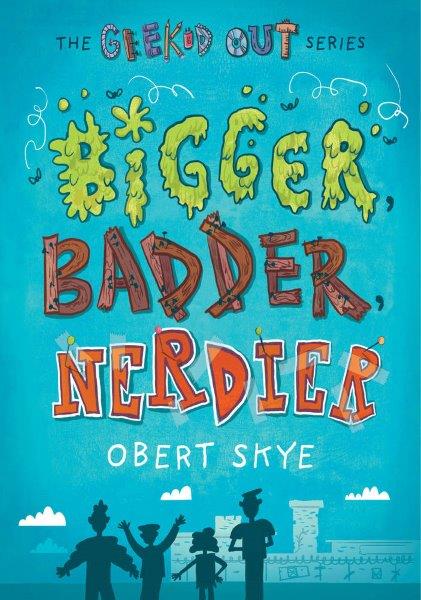 What I like about this book - besides the geek elements - is the laugh-out-loud humor and comic-style illustrations. This is the perfect book for car reading whilst driving to soccer/karate/orthodontic appointment... You can read an excerpt of the book here. But I guarantee you're gonna want to read more.
And guess what! Volume two is coming out at the end of this month. Titled Bigger, Badder, Nerdier , it is guaranteed to be... ah. It's right there in the title! Because Otto Waddle Junior High School is worse than ever. Now that Tip and his LAME buddies finally come into their superpowers mediocre powers they have new bad guys to deal with.
You'll find an excerpt of the new book here.
 Thanks for dropping by today. On Monday we'll be hanging out at Marvelous Middle Grade Monday with other bloggers. It's over at Greg Pattridge's blog, Always in the Middle , so hop over to see what other people are reading. Review copy provided by the publisher.

April 11, 2019
The Three Rules of Everyday Magic
 The Three Rules of Everyday Magic
by Amanda Rawson Hill
192 pages; ages 8-12
Boyds Mills Press, 2018
There's something about that moment right before the first star appears in the sky.
You know - that quiet time, when the whole world seems to be holding its breath and waiting. It's an almost magical time, except that Kate doesn't believe in magic. She does have some big wishes, though. Dad is gone and Kate misses him. Her guitar is collecting dust because she won't sing without him.
Then Grammy comes to live with them. She needs a bit of watching, because she's gone wandering. That's one big change in her life. Then her karate friend and neighbor, Parker, will be joining her class at school. He's been homeschooling till now. And one more big change: best friend Sofia is in a community theater production and seems to have found a new BFF!
When Grammy tells her the three rules of everyday magic, Kate can't resist believing. At least a little bit. So she tries to follow Grammy's rules (believe, give, trust) to bring her dad back to her. Things don't go as expected, because if the did we wouldn't have a story, right?
But will Grammy's magic and the karate wisdom from her Sensei help bring her dad back or heal the hole left by her best friend?
What I like about this book: the writing is so honest. Kate isn't perfect. She lies. She gets angry. She's just a kid. And while I don't really believe in magic, I really really want to believe that Grammy's simple rules of everyday magic can work for all of us. Because we could all use a bit more giving and trust in our lives, right?
I also like the language. Take this bit: "It smells like cows. Like grass and rain and mud all pressed together in a heap." I may not live where Kate lives, but I can identify with that fresh mowed-grass-before-the-rain smell.
 Thanks for dropping by today. On Monday we'll be hanging out at Marvelous Middle Grade Monday with other bloggers. It's over at Greg Pattridge's blog, Always in the Middle , so hop over to see what other people are reading. Review copy provided by the publisher.
April 4, 2019
Sweet Dreams, Sarah
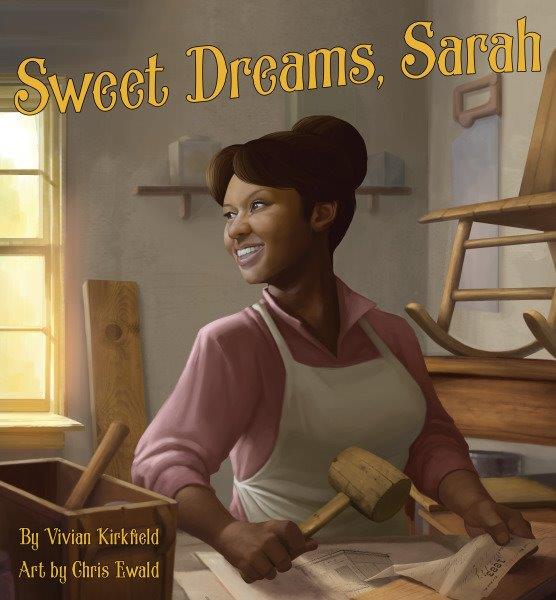
Sweet Dreams, Sarah by Vivian Kirkfield; illus by Chris Ewald32 pages; ages 7-11Creston Books, 2019
themes: nonfiction, women in history, inventor
Before the Civil War, Sarah obeyed her owner. Hurry up. Eyes down. Don’t speak.
But Sarah dreamed of a different life: a family and work she loved. When the war ended, she moved north with “hope in her heart, and dreams swirling in her head.” She married and helped run the family furniture store. And dreamed of creating something new: a bed that folded up when it wasn’t being used.
 What I like about this book: I like how Vivian Kirkfield shows us Sarah’s perseverance: when things don’t work the way she wants them to, she tweaks her design and rebuilds. She applies for a patent. Gets rejected. Tries again. What a great example of the drive and commitment it takes to create something new.
I like that Sarah builds more than a bed that folds into a desk. She builds a life of freedom, where she can realize her dreams.
I like the back matter: an author’s note about Sarah Goode and what a patent is. There’s also a timeline so we can put her life and invention into broader historical context. And… ta-da! There’s a timeline of black women patent holders from Sarah Goode (1883) to Janet Bashen (2006, web-based software program).
Beyond the book:
Meet some other black women inventors - click here.
Invent something! Have you ever thought, "gee, someone should make a _____________?" Inventors are the ones who say, “this would be better if....” Here's a video from Kid President about his inventions.
Can kids be inventors? You bet. Here's 10 inventions dreamed up by kids.
We're joining Perfect Picture Book Friday. It's a weekly event where bloggers share great picture books at Susanna Leonard Hill's website. Review copy provided by the publisher.
March 28, 2019
Garbage Island
 Garbage Island
written & illustrated by Fred Koehler
288 pages; ages 8-12
Boyds Mills Press, 2018
I was captivated by this book from page one, when we're introduced to Archibald Shrew. He's pedaling through the waves on his newly-invented sea cycle - "a pair of plastic bottles, poked through with Popsicle sticks and tongue depressors like paddle wheels" with rubber band belts, a framework of plastic tubing, and propelled by a coiled spring.
Next best thing to having a shrew as a main character is having an inventive shrew. Until those inventions go bolly-wonkers and cause all kinds of trouble.
Fred Koehler's debut middle grade novel is the first in a new series. Take one garbage patch, add an assortment of animals that normally don't live together, and force them to coexist in a community. Toss in an enemy, a kidnapping, a spider invasion, and mix well with politics and you've got a recipe for a fun, adventuresome read.
This book makes you want to raid the recycling bin to invent your own machines. Hopefully it will shine a light on a serious problem: the Pacific garbage patches. And while there aren't any shrew communities living on those patches - at least none that we know of - you might want to learn more about plastic in the ocean and its impact on wildlife. This post from the Smithsonian Institution is a good place to start.
Thanks for dropping by today. On Monday we'll be hanging out at Marvelous Middle Grade Monday with other bloggers. It's over at Greg Pattridge's blog, Always in the Middle , so hop over to see what other people are reading. Review copy provided by the publisher.
March 21, 2019
Nests
 Nests
Nests
by Pepe Marquez; illus. by Natalia Colombo
40 pages; ages 4-9
Starberry Books / Kane Press, 2019
In nature, there are many creatures.
Some live on land, some in the water, and some are birds. Those birds come in a great variety of sizes and shapes - and so do their nests.
This book combines spare, honest statements about birds and their nests with imaginative and bold artwork to put a fun spin on the concept of "home".
What I like about this book:
The illustrations! Natalia Colombo is an illustrator and graphic designer who lives in Buenos Aires. Her usual media include colored and black pencils, acrylics, pen, ink, and markers on different types of paper and in digital format. For this book, she says, "the illustrations are made with acrylics, and with a reduced color palette: orange, red, turquoise, blue and white. The characters are very simple, with large brush strokes and undefined contours and in contrast to the backgrounds. Then I worked on the computer to give more contrast."

It's those undefined contours that I love. They give the feel of featheriness to her birds. The hint of grassy tufts to her nests.
I love the wry juxtaposition of vibrant graphics with statements of fact. And the way Colombo interprets statements such as, "Some birds build their nests in very high spots." Her take: a nest built on the head of a giraffe! What fun!
Beyond the book:
1. Where do birds in your neighborhood build their nests? Try to find their nests and draw a picture of what their nest looks like. Here are some interesting nests.
2. Become a Nest-Watcher! Here's how.
3. Make your own nest out of tissue paper and glue. Here's how. Perfect for Easter eggs (or chocolate!)
We're joining Perfect Picture Book Friday. It's a weekly event where bloggers share great picture books at Susanna Leonard Hill's website. Review copy provided by the publisher.
March 14, 2019
Fake News
There is so much talk about "fake news" in the media that it's time to take a closer look. Michael Miller does in this new book.
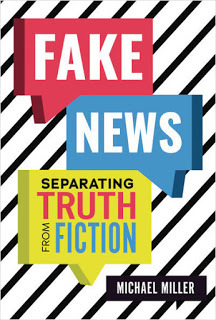 Fake News: Separating Truth from Fiction
by Michael Miller
112 pages; ages 12-18
Twenty-First Century Books (Lerner), 2019
Fake news is real and it matters, writes Michael Miller. The term “fake news” has been applied to stories that pose as news but are untrue and deliberately designed to mislead. But in recent years some people – especially those in power – are using the label “fake news” to cast doubt on legitimate news stories. Especially when those stories are critical of their policies.
But fake news isn’t always political. There are false medical as well as stories aimed at businesses. Maybe you heard that you could cure diabetes by eating carrots, that an X-box console killed a teen, or that a particular brand of bottled water contained “clear parasites” that no one could see.
Fake news isn’t new; it’s been around since the time of the Romans, when a senator read a false document accusing a military general of being a traitor. And, of course, fake news was a “vital part of spreading anti-Semitism in Germany before and during World War II,” writes Miller.
Why should teens care about fake news? Because a democratic society depends on educated voters, and relies on a free press to hold elected leaders accountable to the public. A free press is so important to democracy that the founding fathers gave it specific constitutional protection: the First Amendment.
Miller devotes an entire chapter to how real news works: how journalists do their jobs, how they document facts, and how they correct mistakes. He reveals the “many faces” of fake news, from tabloids to faked online news sites, propaganda, and satire. Yes – satirical, funny stories in the Onion are not “real news”.
He talks about how fake news is created for profit and for political ideology, and how social media comes into play. Miller dives into why people believe in fake news, bias confirmation, and even how political affiliation affects who is more susceptible to believing fake news. And he addresses the question: when fake news results in violence, can we ban it?
In the last two chapters, Miller describes how you can tell fake news from real news, and what you can do to fight fake news. The most important take-aways: get your news from reputable sources (he lists least-biased sources); read before you share; and when a news story is breaking, wait for information to be gathered rather than jumping on the first bandwagon that goes by. And though Miller urges kids to “debunk misinformation with facts”, there’s research that indicates biased people are fact-resistant.
As all good journalists do, Miller provides source notes and a bibliography. He also includes lists of books, websites and other media for further study. If I gave stars, this book would get a handful! Review copy provided by the publisher.
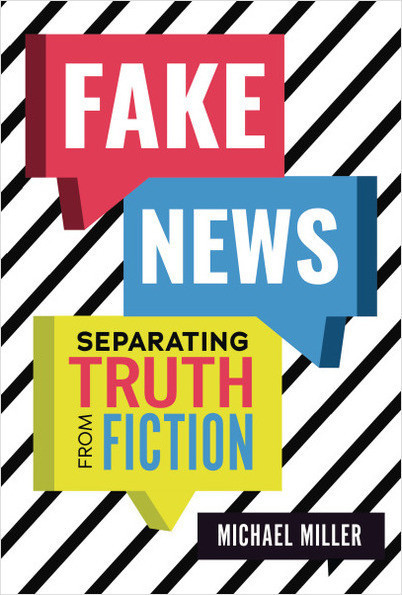 Fake News: Separating Truth from Fiction
by Michael Miller
112 pages; ages 12-18
Twenty-First Century Books (Lerner), 2019
Fake news is real and it matters, writes Michael Miller. The term “fake news” has been applied to stories that pose as news but are untrue and deliberately designed to mislead. But in recent years some people – especially those in power – are using the label “fake news” to cast doubt on legitimate news stories. Especially when those stories are critical of their policies.
But fake news isn’t always political. There are false medical as well as stories aimed at businesses. Maybe you heard that you could cure diabetes by eating carrots, that an X-box console killed a teen, or that a particular brand of bottled water contained “clear parasites” that no one could see.
Fake news isn’t new; it’s been around since the time of the Romans, when a senator read a false document accusing a military general of being a traitor. And, of course, fake news was a “vital part of spreading anti-Semitism in Germany before and during World War II,” writes Miller.
Why should teens care about fake news? Because a democratic society depends on educated voters, and relies on a free press to hold elected leaders accountable to the public. A free press is so important to democracy that the founding fathers gave it specific constitutional protection: the First Amendment.
Miller devotes an entire chapter to how real news works: how journalists do their jobs, how they document facts, and how they correct mistakes. He reveals the “many faces” of fake news, from tabloids to faked online news sites, propaganda, and satire. Yes – satirical, funny stories in the Onion are not “real news”.
He talks about how fake news is created for profit and for political ideology, and how social media comes into play. Miller dives into why people believe in fake news, bias confirmation, and even how political affiliation affects who is more susceptible to believing fake news. And he addresses the question: when fake news results in violence, can we ban it?
In the last two chapters, Miller describes how you can tell fake news from real news, and what you can do to fight fake news. The most important take-aways: get your news from reputable sources (he lists least-biased sources); read before you share; and when a news story is breaking, wait for information to be gathered rather than jumping on the first bandwagon that goes by. And though Miller urges kids to “debunk misinformation with facts”, there’s research that indicates biased people are fact-resistant.
As all good journalists do, Miller provides source notes and a bibliography. He also includes lists of books, websites and other media for further study. If I gave stars, this book would get a handful! Review copy provided by the publisher.
March 7, 2019
Cogheart
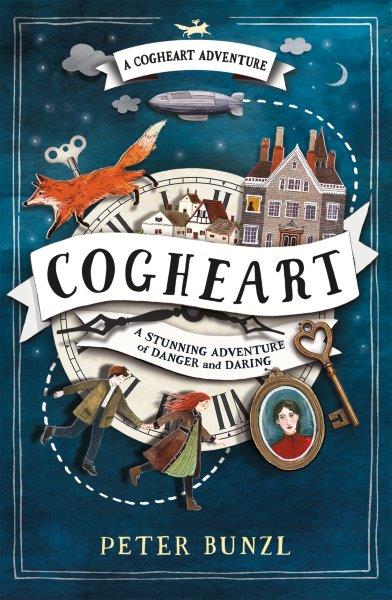 Cogheart
by Peter Bunzl
368 pages; ages 12 & up
Jolly Fish Press, 2019 (US edition)
Action! Adventure! Danger and Daring! What a great kick-off for the new series of Cogheart Adventures .
Thirteen-year-old Lily Harman is stuck at Miss Octavia Scrimshaw’s Finishing Academy for Young Ladies. She would rather be anywhere else, especially if it involved adventures and piracy, like the stories she reads in her penny dreadfuls – the Victorian equivalent of comic books. Instead, she’s condemned to classes on deportment and posture and the Art of Making Polite Conversation (in French, no less).
Then her father, a famous inventor, disappears on what should have been a routine zeppelin flight. Suddenly Lily’s life is turned upside down. Her father’s housekeeper Madame Verdegris, becomes her legal guardian and brings her back home. Lily is happy to be away from the pretentious school. She is happy to be reunited with Mrs. Rust, a mechanical servant who cooked so many of Lily’s meals.
But something strange is going on. Madame Verdegris is selling some of her father’s mechanicals off for salvage, and strange men metal-eyed men lurk in the shadows. Then there’s the clockmaker’s son, Robert, who has rescued Lily’s mechanical pet fox, Malkin. Why were metal-eyed men chasing – and shooting – at her fox?
I love the wild adventure that takes Lily and Robert across the rooftops of town. I love the mechanicals – and how each has its own winder. They are as precise as clockwork. I love Mrs. Rust’s wonderful lexicon of alliterative idioms. “Cogs and chronometers!” she exclaims. “Smokestacks and sprockets!”
And I love how the secret of the Cogheart is revealed. I’d say more, but there are metal-eyed men lurking in the shadows, so I must be off. I look forward to more exciting adventures in this series.
Thanks for dropping by today. On Monday we'll be hanging out at Marvelous Middle Grade Monday with other bloggers. It's over at Greg Pattridge's blog, Always in the Middle , so hop over to see what other people are reading. And drop by one of his earlier posts where he reviews Cogheart. Review from Advanced Reader Copy provided by Blue Slip media.February 28, 2019
How to Dress Like a Girl - or a Princess
Apparently, when I was very young I insisted on wearing dresses – the frillier the better. I’m told that I wanted to be a princess. What I remember, though, is playing cowboys and spies, and wanting to be a fashion designer (this will be a surprise to all my friends who know my taste in clothes). So here are two books that celebrate the complexities of growing up girl.
theme: girls, growing up, friendship
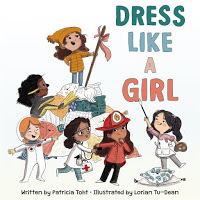 Dress Like a Girl
by Patricia Toht; illus. by Lorian Tu-Dean
32 pages; ages 4-8
HarperCollins, 2019
What does it mean to dress like a girl?
There are, apparently, rules one should follow to look your best. Perhaps you have heard someone say you shouldn’t wear white after Labor Day or never wear socks with sandals. Thank goodness Patricia Toht reveals secrets in how to heed rules “in your own way”. With great fun, she shows a diversity of ways that girls can interpret fashion advice.
On how to wear white, for example, think beyond the linen pantsuit to: a lab coat, angel wings, or perhaps a space suit! As to that “little black dress” – imagine it as a gown and you could be conducting a symphony. Or, adding a lace collar, be sitting on the Supreme Court.
What I like about this book: It’s fun! It encourages kids to think about fashion as an art, and as a way to self-expression. As Patricia notes, “Can’t find what you like? Then design something new!”
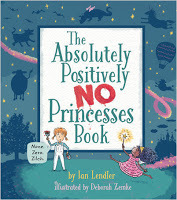 The Absolutely, Positively No Princesses Book
by Ian Lendler; illus by Deborah Zemke
36 pages; ages 4-9
Creston Books (Lerner), 2018
Greetings dear reader! My name is Lilliana Arianna de Darlingsweet-Amazingface!
But we can call her LaDeeDa for short. She is princess pink and speaks in fancy font. But Lita, who sports plain overalls and an attitude, insists that there is no room in the book for princesses. LaDeeDa offers to help Lita. She suggests a fancy dress, or bedazzling with glitter. Lita would rather work on a ranch, and tries very hard to push LaDeeDa off the page. Boundaries are crossed. Words are said. Feelings are hurt.
What I like about this book: despite my loathing of pink, this is a fun book to read. I love that the story is told through dialog, and that each character has her own font. And color. I like that this dialog begins before the first page, when LaDeeDa says Lita’s font has no flair. I smiled when LaDeeDa finds herself stepping in cow poo. At which time she pointedly says, “You don’t like glitter, but you have allowed a cow to poop in your book.” But what I really like is when LaDeeDa says that a real princess can do anything she sets her mind to. And I realized, it’s not princesses I don’t like, but the way they’ve been portrayed in our books and movies. But I still don’t like pink.
Beyond the Books
Make a paper doll model and design your own fashion line . This is way faster than sewing clothes for a doll. Here, one blogger tells how. Here’s another downloadable template for a doll. Now create some clothes. Hint #1 – if you don’t have tracing paper, tape your doll to a window and you can see its outline through a sheet of paper. Hint #2 – remember to include tabs for clothes.
Create your very own Superhero cape from an old (large) T-shirt. Here's how (video)
Check out this interview with Patricia Toht where she talks about the inspiration for her book, Dress Like a Girl.
What sort of things can a princess do if she puts her mind to it? Queen Elizabeth served in WWII as a truck mechanic. Check out this historic footage.
We're joining Perfect Picture Book Friday. It's a weekly event where bloggers share great picture books at Susanna Leonard Hill's website. Review copies & ARCs provided by publishers.
theme: girls, growing up, friendship
 Dress Like a Girl
by Patricia Toht; illus. by Lorian Tu-Dean
32 pages; ages 4-8
HarperCollins, 2019
What does it mean to dress like a girl?
There are, apparently, rules one should follow to look your best. Perhaps you have heard someone say you shouldn’t wear white after Labor Day or never wear socks with sandals. Thank goodness Patricia Toht reveals secrets in how to heed rules “in your own way”. With great fun, she shows a diversity of ways that girls can interpret fashion advice.
On how to wear white, for example, think beyond the linen pantsuit to: a lab coat, angel wings, or perhaps a space suit! As to that “little black dress” – imagine it as a gown and you could be conducting a symphony. Or, adding a lace collar, be sitting on the Supreme Court.
What I like about this book: It’s fun! It encourages kids to think about fashion as an art, and as a way to self-expression. As Patricia notes, “Can’t find what you like? Then design something new!”
 The Absolutely, Positively No Princesses Book
by Ian Lendler; illus by Deborah Zemke
36 pages; ages 4-9
Creston Books (Lerner), 2018
Greetings dear reader! My name is Lilliana Arianna de Darlingsweet-Amazingface!
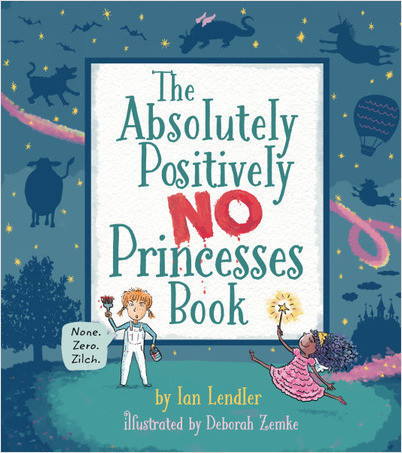
But we can call her LaDeeDa for short. She is princess pink and speaks in fancy font. But Lita, who sports plain overalls and an attitude, insists that there is no room in the book for princesses. LaDeeDa offers to help Lita. She suggests a fancy dress, or bedazzling with glitter. Lita would rather work on a ranch, and tries very hard to push LaDeeDa off the page. Boundaries are crossed. Words are said. Feelings are hurt.
What I like about this book: despite my loathing of pink, this is a fun book to read. I love that the story is told through dialog, and that each character has her own font. And color. I like that this dialog begins before the first page, when LaDeeDa says Lita’s font has no flair. I smiled when LaDeeDa finds herself stepping in cow poo. At which time she pointedly says, “You don’t like glitter, but you have allowed a cow to poop in your book.” But what I really like is when LaDeeDa says that a real princess can do anything she sets her mind to. And I realized, it’s not princesses I don’t like, but the way they’ve been portrayed in our books and movies. But I still don’t like pink.
Beyond the Books
Make a paper doll model and design your own fashion line . This is way faster than sewing clothes for a doll. Here, one blogger tells how. Here’s another downloadable template for a doll. Now create some clothes. Hint #1 – if you don’t have tracing paper, tape your doll to a window and you can see its outline through a sheet of paper. Hint #2 – remember to include tabs for clothes.
Create your very own Superhero cape from an old (large) T-shirt. Here's how (video)
Check out this interview with Patricia Toht where she talks about the inspiration for her book, Dress Like a Girl.
What sort of things can a princess do if she puts her mind to it? Queen Elizabeth served in WWII as a truck mechanic. Check out this historic footage.
We're joining Perfect Picture Book Friday. It's a weekly event where bloggers share great picture books at Susanna Leonard Hill's website. Review copies & ARCs provided by publishers.
February 21, 2019
It's NOT Hansel and Gretel BLOG TOUR
 Today I'm hopping aboard the Blog Tour for Josh Funk's brand new fairy tale mash-up,
It's NOT Hansel and Gretel
. And I'm excited to share this book.
Today I'm hopping aboard the Blog Tour for Josh Funk's brand new fairy tale mash-up,
It's NOT Hansel and Gretel
. And I'm excited to share this book.But first, a brief station-break to remind fellow writers about ReFoReMo - Reading for Research Month. Next month we'll be reading and researching mentor texts, and "picking the brains" of established authors. Authors like Josh Funk... So if you'd like to join in on the fun, head over to ReFoReMo and sign up. And now, back to our regularly scheduled BLOG TOUR!
I grew up with Fairy Tales. Thick volumes from the local library: Grimm's Fairy Tales, the Green Book of Fairy Tales, and on and on. So when authors write mash-ups and fractured fairy tales, I'm always game to read on!
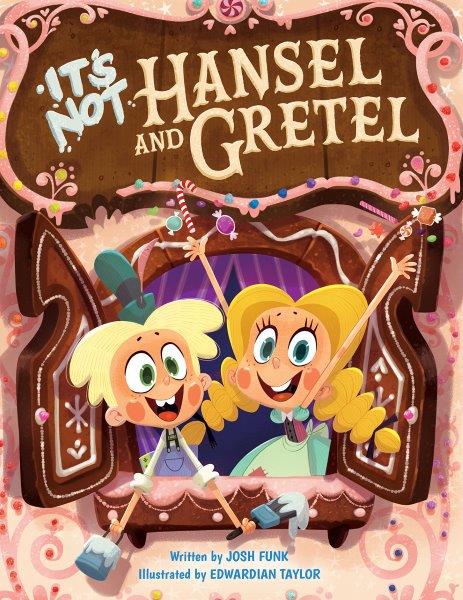 It's NOT Hansel and Gretel
by Josh Funk; illus. by Edwardian Taylor
40 pages; ages 4-8
Two Lions, 2019
themes: fairy tales, imagination
Once upon a time, Hansel and Gretel lived with their mama and papa on the outskirts of the woods.
So far, so good. This is how fairy tales - wait! Is that Jack, from "Jack and the Beanstalk"? What's he doing in this story? And what's with the narrator? Instead of sticking to telling the story, the narrator is warning the kids; telling them "that's not how the story goes!"
Who's in charge of this story, anyway? The characters.... who come up with crazy idea. When it's cold outside, Gretel thinks hanging out in an oven sounds like a great way to warm up. And when she's forced to do chores, Gretel rebels. She even scolds the narrator for calling the story Hansel and Gretel. Why not Gretel and Hansel?
What I like about this book: It's zany. If something could happen, it probably will. Why not have a unicorn in the story? I like how the text shows narration, and dialog is easily found in speech balloons. I also like how Hansel and Gretel modify the witch's recipes by substituting other things for "children" in the recipe.
If you like candy, the end papers will definitely appeal to your sweet tooth.
Beyond the Book:
Create your own fractured fairy tale , or mash-up. Start with a fairy tale character you like, toss in some characters from other tales, add a few tangents and side trails, and shake it up real good. Remember to let the characters talk to each other!
Think about the roles girl and boy characters have in fairy tales. What if they were reversed? What if a girl knight rescued a boy locked in a tower? Try switching roles in some of the fairy tales you read and see what sort of story you end up with.
Try your hand at making candy. You don'y have to live in a gingerbread house to make candy. But you might want to make some treats to share with a friend. Here are some kid-friendly recipes.
Want to know more about author Josh Funk? Here's his website. Today we're joining Perfect Picture Book Friday. It's a weekly event where bloggers share great picture books at Susanna Leonard Hill's website. Review copy provided by Blue Slip Media.
February 14, 2019
Lost in the Antarctic
A couple months ago I read Tod Olson's book,
Lost in Outer Space
, a story about Apollo 13. It was so fun to read that I knew I had to grab a copy of one of his new titles in the Lost series. It being one of those winters where the polar vortex comes whistling down with below-zero temperatures, this one seemed the perfect choice!
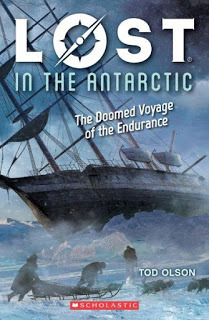 Lost in the Antarctic: the doomed voyage of the Endurance
by Tod Olson
224 pages; ages 8-12
Scholastic, 2019
Weddell Sea, Antarctica.
October 26, 1915
The ship didn't stand a chance, and Frank Hurley knew it. He'd been in the engine room with the carpenter, trying desperately to keep the water out.
The ship is the Endurance, trapped in a sea of ice 1,000 miles wide. She is being squeezed to death by the ice. With no time to spare, the crew rescues crates of food and pike tents and sleeping bags on the ice. For fourteen months the crew and scientists of this expedition to the Antarctic had made this ship their home. Now, in zero-degree weather, they would leave it and head off onto the ice. And, if they are lucky, to safety.
Lost is the tale of Ernest Shackleton's 1914 expedition. His goal: to cross the Antarctic continent by dogsled - a trek of 1800 miles. But to get to the continent they first had to navigate the Weddell Sea. And they were stuck in the ice.
Like other books in this series, it is a page-turning read. Gleaning stories from journals and letters, Tod Olson gives readers an inside look at an expedition that went sideways. There are maps, photos, packing lists, and enough ice and frigid weather to make you head to the kitchen for a mug of cocoa. He puts it in historical context: England was on the cusp of entering World War I as the Endurance set sail. While young men fought and died in trenches, Shackleton's men fought the elements and, sometimes, each other to survive.
There are moments of shared fun: a soccer game beneath the midnight sun; a race to determine once-and-for-all the fastest sled dog. There are moments of sheer terror: watching the ship sink with their stores of food; a wild slide down a glacier. There is no way you can read this book and not come away with a greater appreciation for central heating and a neighborhood grocery store.
Back matter provides perspective on Antarctica in this age of climate change, a list of sources, and end notes documenting dialog and events. If you're interested in learning more about the Endurance, check out the Weddell Sea Expedition. An international crew of scientists are exploring the Weddell Sea off Antarctica, using underwater robots, drones and other state-of-the-art technology. You can read their expedition blog here. But you may want to put on some gloves and a hat first!
 Thanks for dropping by today. On Monday we'll be hanging out at Marvelous Middle Grade Monday with other bloggers. It's over at Greg Pattridge's blog, Always in the Middle , so hop over to see what other people are reading. Review copy provided by Blue Slip Media.
 Lost in the Antarctic: the doomed voyage of the Endurance
by Tod Olson
224 pages; ages 8-12
Scholastic, 2019
Weddell Sea, Antarctica.
October 26, 1915
The ship didn't stand a chance, and Frank Hurley knew it. He'd been in the engine room with the carpenter, trying desperately to keep the water out.
The ship is the Endurance, trapped in a sea of ice 1,000 miles wide. She is being squeezed to death by the ice. With no time to spare, the crew rescues crates of food and pike tents and sleeping bags on the ice. For fourteen months the crew and scientists of this expedition to the Antarctic had made this ship their home. Now, in zero-degree weather, they would leave it and head off onto the ice. And, if they are lucky, to safety.
Lost is the tale of Ernest Shackleton's 1914 expedition. His goal: to cross the Antarctic continent by dogsled - a trek of 1800 miles. But to get to the continent they first had to navigate the Weddell Sea. And they were stuck in the ice.
Like other books in this series, it is a page-turning read. Gleaning stories from journals and letters, Tod Olson gives readers an inside look at an expedition that went sideways. There are maps, photos, packing lists, and enough ice and frigid weather to make you head to the kitchen for a mug of cocoa. He puts it in historical context: England was on the cusp of entering World War I as the Endurance set sail. While young men fought and died in trenches, Shackleton's men fought the elements and, sometimes, each other to survive.
There are moments of shared fun: a soccer game beneath the midnight sun; a race to determine once-and-for-all the fastest sled dog. There are moments of sheer terror: watching the ship sink with their stores of food; a wild slide down a glacier. There is no way you can read this book and not come away with a greater appreciation for central heating and a neighborhood grocery store.
Back matter provides perspective on Antarctica in this age of climate change, a list of sources, and end notes documenting dialog and events. If you're interested in learning more about the Endurance, check out the Weddell Sea Expedition. An international crew of scientists are exploring the Weddell Sea off Antarctica, using underwater robots, drones and other state-of-the-art technology. You can read their expedition blog here. But you may want to put on some gloves and a hat first!
Thanks for dropping by today. On Monday we'll be hanging out at Marvelous Middle Grade Monday with other bloggers. It's over at Greg Pattridge's blog, Always in the Middle , so hop over to see what other people are reading. Review copy provided by Blue Slip Media.Sue Heavenrich's Blog

- Sue Heavenrich's profile
- 5 followers
Sue Heavenrich isn't a Goodreads Author
(yet),
but they
do have a blog,
so here are some recent posts imported from
their feed.


