Timothy P. Brown's Blog, page 91
January 20, 2023
Today’s Tidbit… IFA Rule #14 Scrimmage Ball Handling
This is #14 in a series covering football’s original 61 rules adopted by the Intercollegiate Football Association in 1876. We review one rule each Friday.
As covered in the discussion of Rule 12, ball movement in rugby of the 1870s primarily came from driving the scrum toward the opponent’s goals and kicking the ball downfield from within the scrum. Heeling the ball back to be picked up by a teammate behind the scrum was not illegal but was frowned upon. While the latter was an unwritten rule, ru...


January 19, 2023
Today's Tidbit... Eliminating The Second Half Kickoff
Among the rules gridiron football borrowed from rugby was to flip a coin to determine which team could kick off or select a goal to defend. In the early days, teams switched goals after every score and following halftime. Changing goals after every score went away, but goal switching continued after halftime until fifteen-minute quarters replaced thirty-minute halves in 1910.
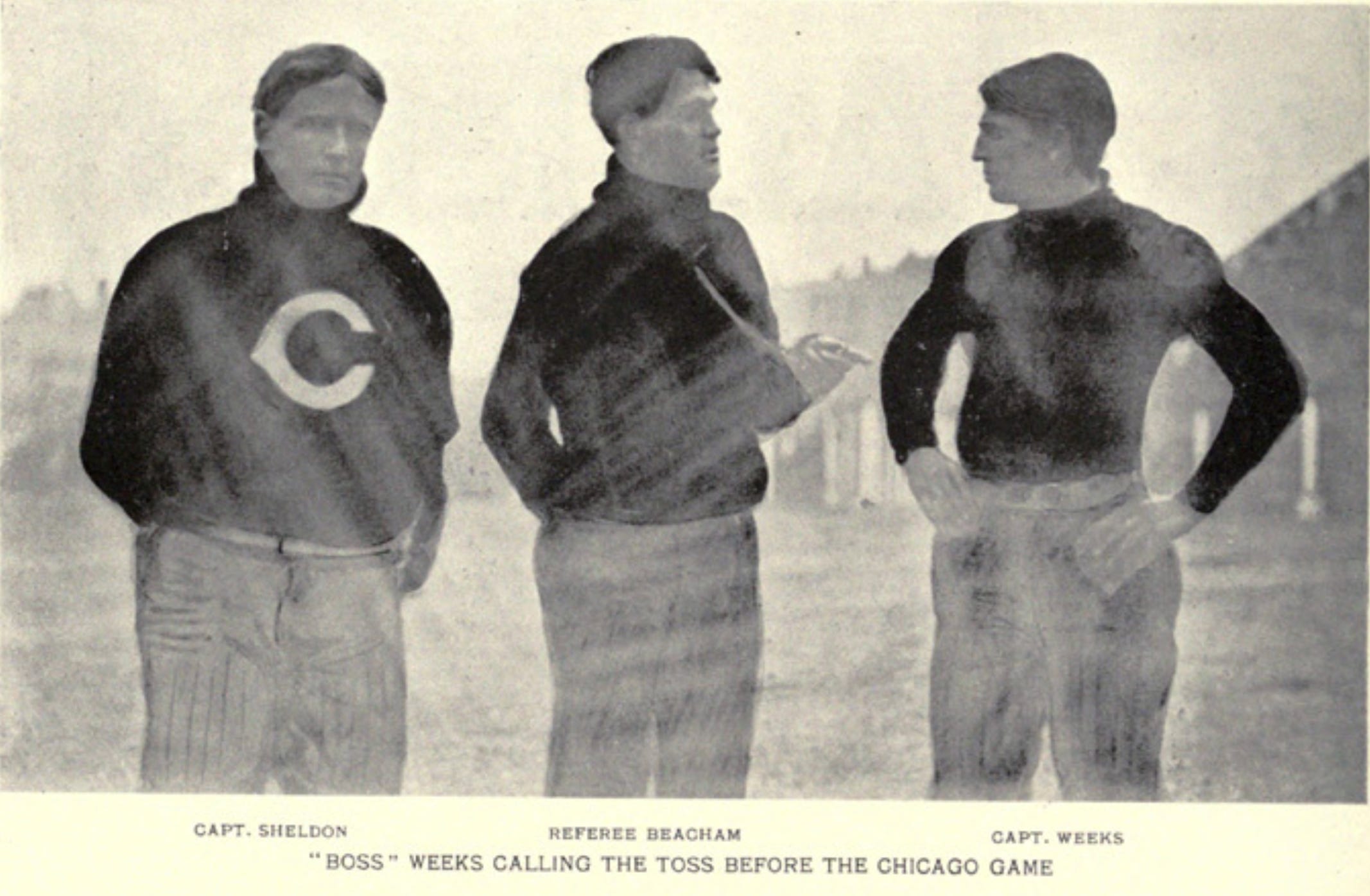 (1903 Michigan yearbook)
Although the details around these choices have changed, the second half has always started with a ...
January 18, 2023
Today's Tidbit... Rooming With Art Donovan at the 1953 Baltimore Colts Training Camp
I recently acquired a small collection of mid-1950s NFL playbooks and other documents, including the 1953 Baltimore Colts Training Camp Guidelines that outline the rules and regulations during the team's stay in Albert Normal Ward Hall on the campus of Western Maryland, now McDaniel College. We'll focus today on this document, which includes basic instructions and room assignments for the players, coaches, and assorted others.
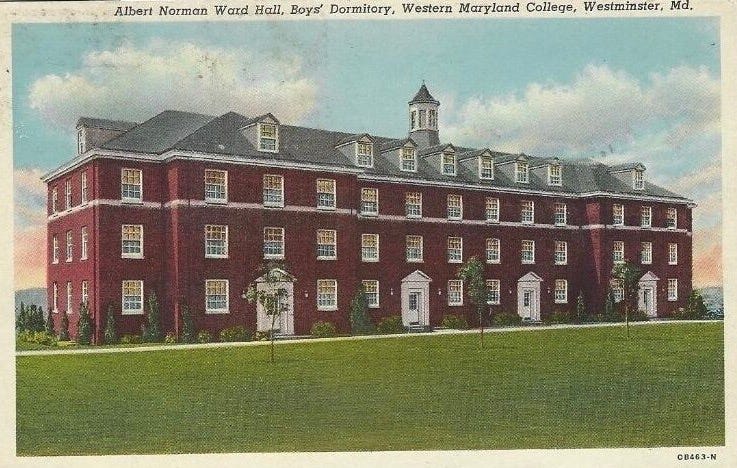
The franchise that is now the Indianapolis Colts traces its origins to...
January 17, 2023
Today's Tidbit... Harvard's Kicking or Graduates' Cup
Arthur Cumnock was Harvard's football captain in 1890 and is best remembered as the inventor of the nose guard, a forerunner of the face mask. As captain, Cumnock was the first to train his team during the spring (giving us spring practice) and to practice tackling indoors using what became known as a tackling dummy. (Amos Alonzo Stagg developed a similar device that year while captaining Yale.)
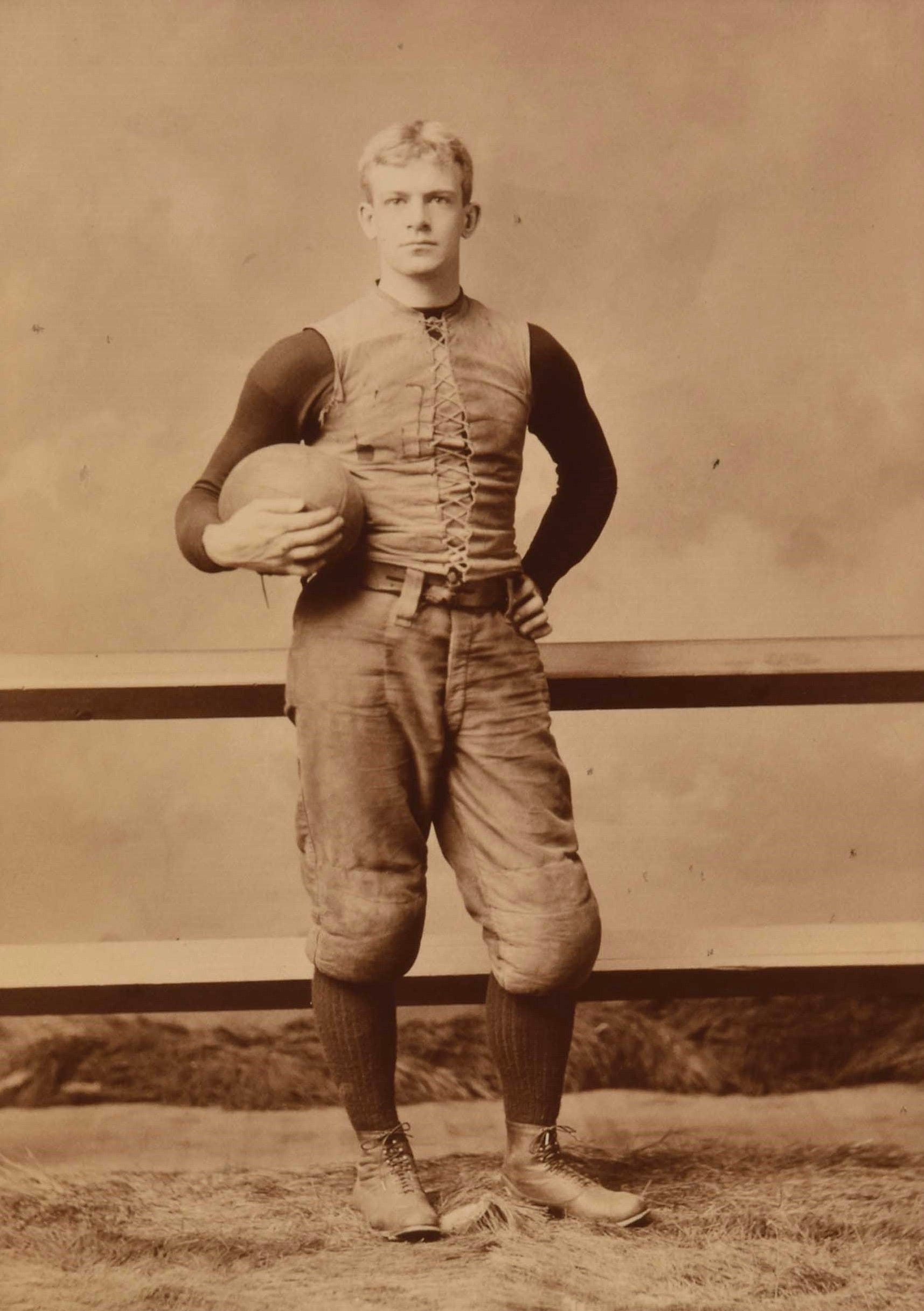 Cumnock at Harvard
As someone consumed with improving his team, Cumnock sought a way to improve the sta...
Pigskin Dispatch Podcast: The 1905 Experimental Game
Pigskin Dispatch podcaster Darin Hayes and I discuss a recent TidBit about an experimental game in 1905 to test the effect of potential rule changes. Click here to listen, or subscribe to Pigskin Dispatch wherever you get your podcasts.
Listen as we cover this story!
Subscribe for free and never miss a story. If you are a regular reader, consider a paid subscription to support my work.
For more football history, check out my books here.
January 16, 2023
Today's Tidbit... Opening Day at the Yale Bowl
The construction and opening of the Yale Bowl were watersheds in college football and American sports history. Substantially larger than any stadium in the country, it's opening in 1914 demonstrated Yale's commitment to football after a decade of tumultuous rule changes.
The highest capacity football stadiums in 1913 were at Harvard (42,000), Syracuse and Penn (30,000), and Yale, where Yale Field held 33,000 in its wooden bleachers. The Polo Grounds in New York held 55,445, though most major leag...
January 15, 2023
Today's Tidbit… The Return of the Weighted Football
A few weeks ago, I posted a story about George Allen inventing weighted footballs for quarterbacks and long snappers to build arm strength. Manufactured by Voit, they gained use in the 1960s before falling from favor.
I have since learned that a friend, Ron Pomfrey, has in his collection an unused Power Arm ball in the original box. The ball is an absolute beauty!
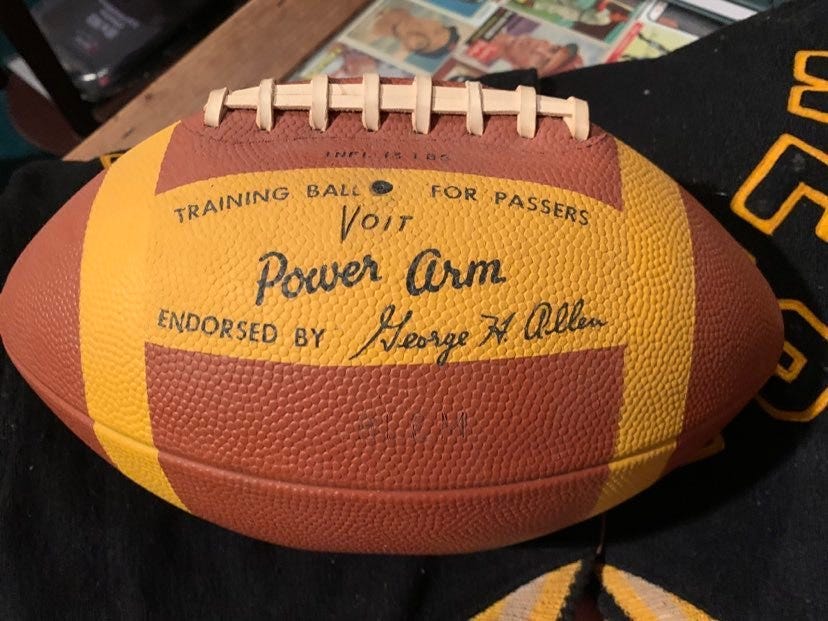
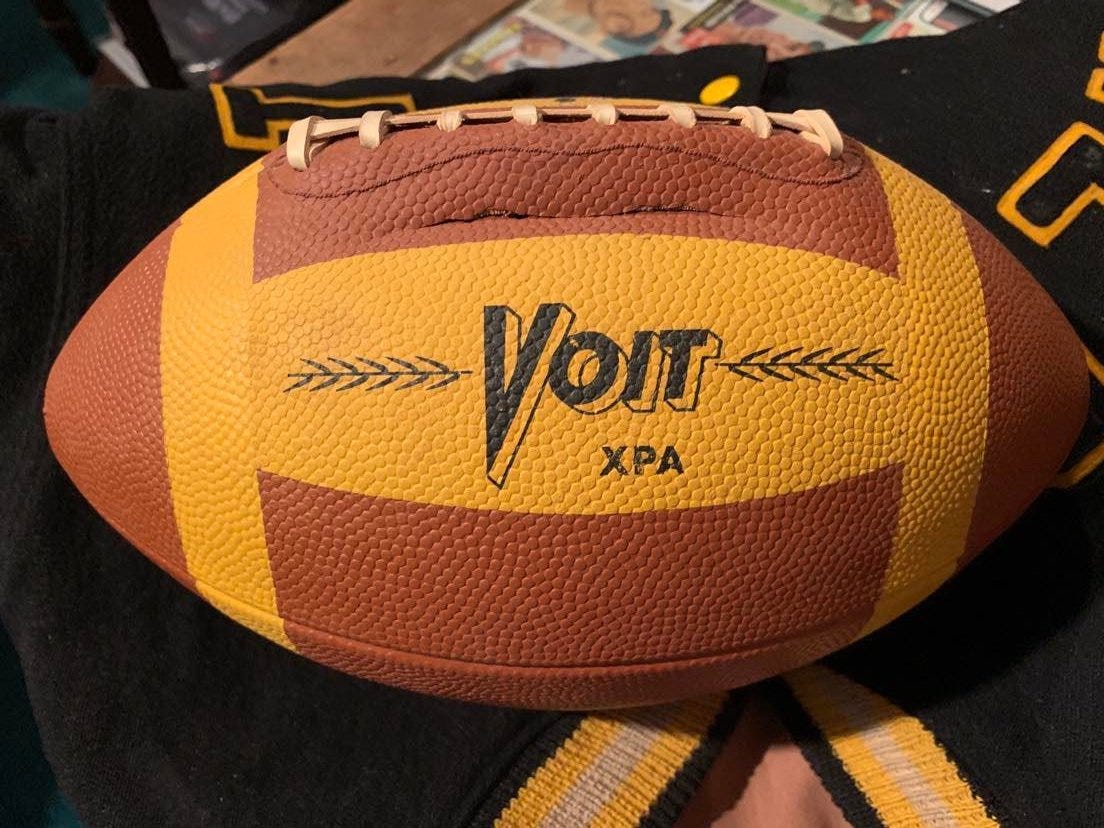
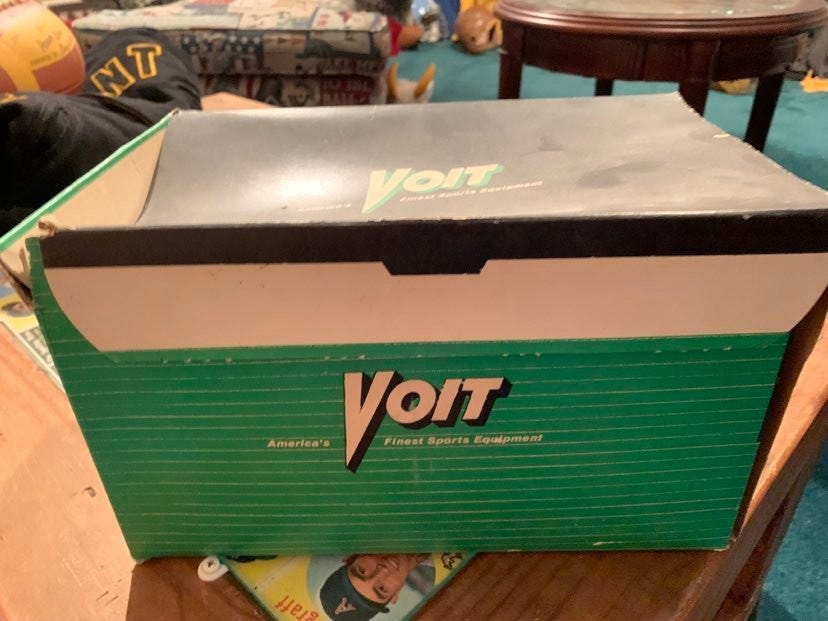
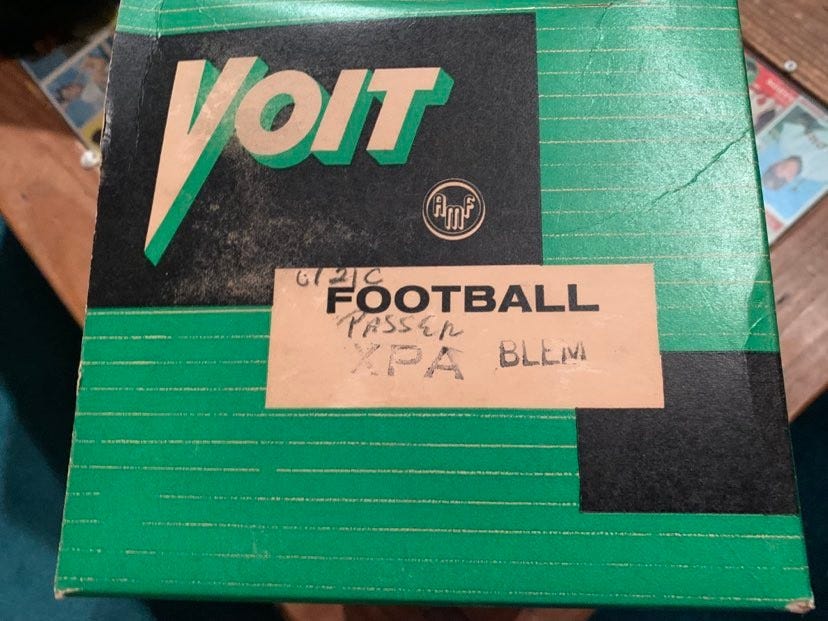
The white panels connecting the usual white stripes may have been for branding purposes only. Still, since the Power Arm is not a regul...
January 14, 2023
Today's Tidbit... Just A Boy Whose Intentions Are Good
Football has enacted a long line of rules to correct issues arising in big games, with the 1978 Holy Roller game between the Oakland Raiders and San Diego Chargers among the better-remembered examples. The Raiders trailed by six with 10 seconds left in the game when Kenny Stabler took the snap at the Chargers' 14-yard line. As Stabler was about to be sacked, the ball left his hands, bouncing forward. Another Raider went for the ball and did not gain possession but also pushed the ball closer to ...
January 13, 2023
Today’s Tidbit… 1876 IFA Rule #13 Dead Ball
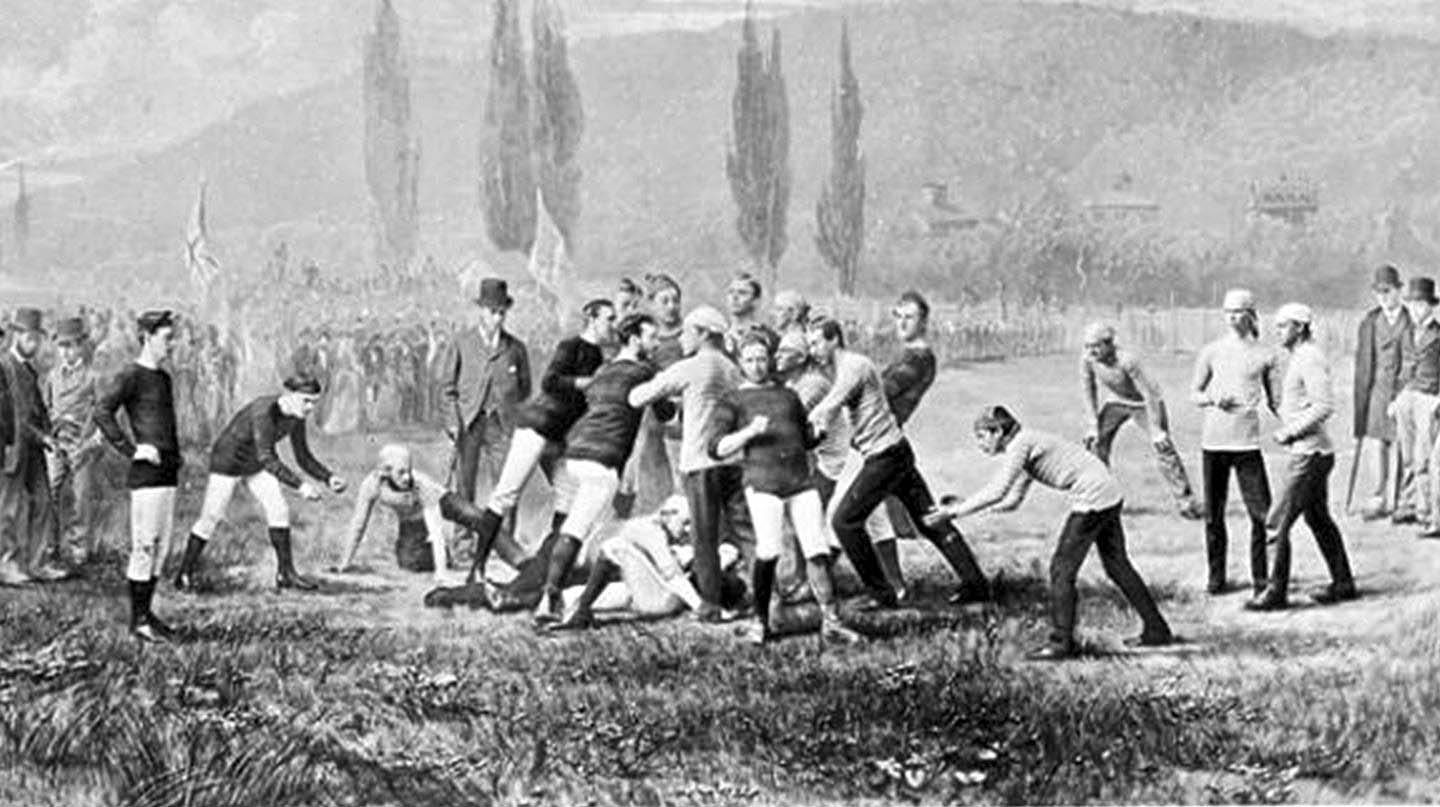 1874 Harvard-McGill rugby game (McGill Athletics)
This is #13 in a series covering football’s original 61 rules adopted by the Intercollegiate Football Association in 1876. We review one rule each Friday.
To understand Rule 13, readers need to consider Rules 8 and 12. Rule 8 says, "The ball is dead when it rests absolutely motionless on the ground," while Rule 12 indicates, "A player may take up the ball whenever it is rolling or bounding except in a scrimmage." So, the ball is dead when motionles...
The Origins of Six-Man Football
Stephen Epley was a teacher and assistant football coach at Nebraska's Beatrice High School in 1934 when he became concerned that many high schools lacked football teams, which he attributed to small enrollments and insufficient budgets.
In 1933, Nebraska had 505 high schools, but only 218 (43 percent) played football. Among the 317 schools with fewer than 100 pupils, only 68 played football. More broadly, there were 24,000 public high schools in the U.S., and while 18,000 played basketball, only...