Sharon Wray's Blog, page 20
March 4, 2025
A Mask for Mardi Gras
A few years ago, I wrote about the Mardi Gras traditions in New Orleans and other parts of the U.S. But since an entire year has gone by, and today is Mardi Gras again, I thought I’d write about the iconic Mardi Gras masks that originated in Venice, Italy.
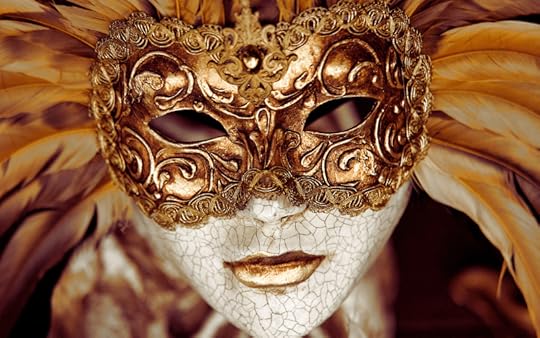
The Venetian mask and Mardi Gras (called Carnevale di Venezia in Italian) date back to the 12th century, though their popularity peaked during the Renaissance in the 16th and 17th centuries. Originally, these masks were worn during Venice’s Carnival season, those weeks between December 26th and Ash Wednesday, the first day of Lent. It was also a time when the rigid social hierarchy was temporarily suspended, allowing for greater social interaction and freedom. Masks quickly became a symbol of anonymity, permitting adults to act outside of their usual societal roles without fear of judgment or retribution.
The masks played an essential role in Venice’s everyday life for centuries, especially during the Republic of Venice’s peak. The Venetian Republic was a powerful and wealthy state, and the masks allowed Venetians—especially the nobility—to indulge in various activities (both benign and illicit) while hiding their identities. Each style of Venetian mask had a specific significance and use. Venetian masks were meticulously made and were decorated with gilding, feathers, lace, and intricate patterns. Some of the most iconic types include:
Bauta: A full-face mask with a prominent, slightly squared chin, covering the entire face. It allowed the wearer to eat and drink without removing the mask. The Bauta was often worn by both men and women to hide their identities during both public and private events.Colombina: A half-mask covering only the eyes and nose, often lavishly decorated. It was typically worn by women and represented elegance and mystery.Volto (Larva): A white mask that covers the entire face, usually paired with a black cloak. It was another popular style for complete anonymity.Moretta: A small, round, black velvet mask traditionally worn by women. It was held in place by a button inside the mouth, making the wearer mute, thus emphasizing the idea of silence and submission.Medico della Peste (Plague Doctor): The most famous and recognizable mask, it features a long, beak-like nose and was initially worn by doctors during the Black Death to protect them from illness.The Carnevale di Venezia began in the Middle Ages and grew in prominence during the 18th century. The word Carnevale is derived from the Latin “carnem levare,” meaning “remove meat,” referring to the celebration that precedes Lent, the 40 days of fasting leading up to Easter in the Christian calendar. The Carnival started as a public celebration before Lent, allowing people to indulge in hedonistic pleasures and grand feasts. It was also a time to relax, eat the last of the stored winter food, and ignore the city’s rigid class hierarchy. Masks allowed nobles to mingle with commoners.
The 18th Century is considered the golden age of Carnevale because it’s when Venice became one of Europe’s most important cities. The lavish celebrations included grand balls, parades, theatrical performances, and gambling. Venetian masks allowed for secrecy and intrigue as well less noble activities like political subterfuge and illicit romantic liaisons.
In 1797, when the Venetian Republic fell to Napoleon Bonaparte, the Austrian and French occupiers banned Carnevale and masks. The new rulers felt that masks were a threat to public order and political stability. For more than a century, Carnevale disappeared from public life in Venice, though Venetians continued celebrating it in private. It wasn’t until 1979 that Carnevale was revived by the tourist industry, hoping to entice people to visit the city. Now the Venice Carnival is world-famous and attracts thousands of visitors annually. The event runs for two weeks before Ash Wednesday and is filled with masked balls, processions, concerts, and public festivities.
In the 21st Century, Carnevale di Venezia features elaborate costumes and masks, often inspired by Baroque and Rococo styles, as well as historical figures from Venice’s past. The masks are a key part of the celebration, symbolizing not only mystery and elegance but also a connection to the city’s history of freedom, creativity, and artistry. But because it is now a huge spectacle, with acrobats descending from the Campanile in St. Mark’s Square, the Italian government is trying to figure out ways to limit tourism to the city due to the toll all these people and their merry-making are taking on the historic buildings.
While both Mardi Gras in New Orleans and Venice Carnival share roots in pre-Lenten festivities, Venice’s Carnevale is still known for its historical elegance and mask-making artistry. Meanwhile, Mardi Gras in New Orleans is more boisterous and focused on street parades, beads, and jazz music. I’ve been to New Orleans and Venice, but never during Mardi Gras due to the fact I don’t love huge crowds. But one day it might be fun to attend Mardi Gras and Carnevale to compare their festivities… and their masks.
The post A Mask for Mardi Gras first appeared on Sharon Wray.


March 3, 2025
Let’s Bake a King Cake
It’s that time of year again which makes me realize how fast the time is speeding by. But what time is it, are you asking? It’s almost lent so that means I’m off to bake a King Cake for Mardi Gras.
I’ve been lucky enough to spend a lot of time in New Orleans, the de facto center of Mardi Gras in North America. And it’s not a coincidence that the third book in my Amazon bestselling Deadly Force series, IN SEARCH OF TRUTH, takes place partially in New Orleans, including a sexy scene in a romantic hidden-away restaurant, a hunt through the French Quarter, and a chase through Lafayette Cemetery #1. But besides crazy partying down in New Orleans, what is Mardi Gras? In French, Mardi Gras means “Fat Tuesday.” Technically, Mardi Gras is the Tuesday before Ash Wednesday, the day before the Christian season of Lent begins. Mardi Gras Day always falls 46 days before Easter which means it can occur on any Tuesday from February 3rd to March 9th. Mardi Gras Day is also a transition day, dividing Church time between the end of the Christmas season and the beginning of the Easter season. And this year, Mardi Gras falls on Tuesday, March 4th and Ash Wednesday is on March 5th.

I know Lent doesn’t start for two days, but the King Cake recipe below takes time to rise and bake and I wanted to give you enough time to make it.
To add to the confusion, Mardi Gras isn’t just a day. It’s a season that begins on January 6th, also known as Twelfth Night since it’s the twelfth night after Christmas. January 6th is also the Epiphany, the night that Jesus showed himself to the three wise men. While many people eat King Cake only on Mardi Gras Day, others start eating King Cake on January 6th, to celebrate the Epiphany, and eat it through the entire season. I, for one, support any holiday that offers cake for two months.
Rumors say that the King Cake tradition appeared in New Orleans, a traditionally Catholic city, in 1870. It’s an oval-shaped cake that tastes more like a French pastry filled with cinnamon and pecans. Some people add in dried fruit like raisins or currants, and the oval shape represents the unity of faiths. The cake is decorated with a white frosting and three different colors of sprinkles. These three colors are known as the Royal Colors: Purple signifies Justice. Green signifies Faith. Gold signifies Power.

These colors represent the colors in a royal jeweled crown honoring the Three Wise Men who came to the Christ Child on Epiphany. To symbolize this event, a small plastic baby (or a piece of orange or a walnut) is baked into the King Cake. Although you want to make sure it’s not so small it could be swallowed or too large to break teeth. When the King Cake is served, everyone looks to see if they received the baby. The one who does is named “King” for a day. That King is then required to host next year’s party and provide the King Cake.
Whether you eat your King Cake all winter long, or just on Mardi Gras Day, you need to prepare ahead of time if you want to make your own. As a yeast bread, you need time to proof the yeast and let the dough rise–multiple times. Even if you don’t celebrate these holidays, it’s worth the time and effort to make this French delicacy. And when you serve it with your favorite hot coffee, you can laissez les bon temps rouler!
[image error] PrintKing CakeThis cake looks hard to make, but as long as your yeast works properly it's really not too difficult to make. Most of the 4 1/2 hours is spent waiting for the dough to rise. If it happens to be really cold in the house when you're making this, (because it's the middle of winter) turn the oven on low while you make the dough. When it comes time to let the dough rise the first time, turn off the oven and place the baking sheets in the warm oven. And if you don't want to add a plastic baby, you can use a small walnut or a piece of orange or even a quarter that's been well washed. Serve it with coffee and you'll never eat stale bagels again!Course Bread, Breakfast4 hours hours 30 minutes minutesServings 12Calories 380kcalIngredientsPastry1 cup whole milk1/4 cup butter room temperature2 .25 ounce packages active dry yeast2/3 cup warm water 110 degrees F1/2 cup white sugar separate out 1 Tablespoon to proof yeast2 eggs lightly beaten1 1/2 teaspoons salt1/2 teaspoon freshly grated nutmeg5 1/2 cups all-purpose flourFilling1 cup packed brown sugar1 tablespoon ground cinnamon2/3 cup pecans chopped1/2 cup all-purpose flour1/2 cup melted butterFrosting1 cup confectioners’ sugar1-2 Tablespoons cold watergreen sprinklespurple sprinklesyellow sprinkles2 plastic babies for good luck!InstructionsOn low heat in a small saucepan, scald the milk.Remove from heat and stir in the butter.Allow mixture to cool to room temperature.In a large bowl, dissolve yeast in the warm water. Add 1 Tablespoon of the white sugar. Let stand until creamy, 8-10 minutes. If yeast mixture doesn’t bubble and look creamy, toss it and start again.When yeast mixture is bubbling, gently whisk in the cooled milk mixture. Whisk in the eggs. Stir in the remaining white sugar, salt and nutmeg.With an electric mixer, slowly beat the flour into the milk/egg mixture 1 cup at a time.When the dough has pulled together, turn it out onto a lightly floured surface.Knead until smooth and elastic, about 10 minutes.Lightly oil a large, room temperature bowl. Place the dough in the bowl and turn to coat with oil.Cover with a damp cloth and let rise in a warm place until doubled in volume, about 2 hours.After 2 hours, punch the dough down and divide in half.Line 2 baking sheets with parchment paper.FILLINGIn a small bowl, combine the brown sugar, ground cinnamon, chopped pecans, and flour.Pour the melted butter over the cinnamon mixture and mix with a fork until crumbly.On a lightly-floured surface, roll dough halves out into large rectangles (approximately 10×16 inches).Sprinkle the filling evenly over the dough rectangles. Beginning with the wide side, roll up each half tightly.Transfer the dough rolls to the two baking sheets.Bring the ends of each roll together to form oval shaped rings.With a sharp knife, make cuts 1/3 of the way through the rings at 1 inch intervals.Let the dough ovals rise in a warm spot until doubled in size, about 45 minutes.Meanwhile, preheat oven to 375 degrees.Push the plastic babies into the cakes and back for 30 minutes.FROSTINGWhile baking, blend confectioners’ sugar and the water in a small bowl.Once the cakes come out of the oven, and while they’re still warm, drizzle the frosting over top of the cakes. Decorate with the green, purple, and yellow sprinkles.The post Let’s Bake a King Cake first appeared on Sharon Wray.
February 28, 2025
The Hungry {Romance} Writer: Red Velvet Sandwich Cookies
I can’t believe it’s the last day of February. It feels like it’s been a long cold winter and everyone I know, including, me, has been sick. But now that I’m feeling better and ready to write like the wind again, I’m also feeling the urge to bake the Valentine’s Day cookies that I wanted to make but didn’t (again, because I was sick).
[image error]These cookies aren’t hard to make, but they take a bit of time. Still, they’re definitely worth the effort, especially when you share them with those you love. I hope you all have a wonderful weekend and enjoy these last few weeks of winter.
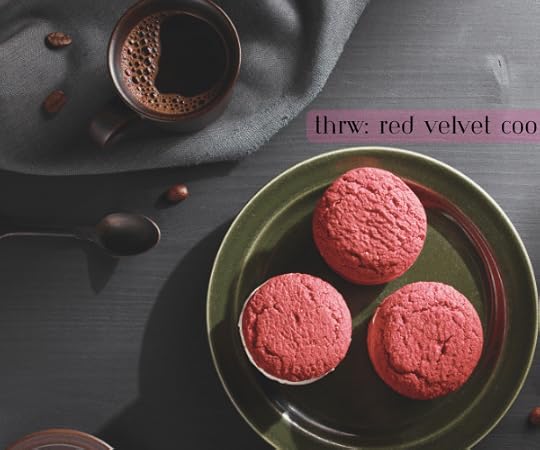 PrintRed Velvet Sandwich CookiesCourse DessertKeyword CookiesPrep Time 45 minutes minutesCook Time 10 minutes minutesServings 24 cookiesCalories 284kcalIngredientsCookies3/4 cup butter softened1 cup sugar2 large eggs room temperature1/2 cup sour cream1 Tablespoon red food coloring1 1/2 teaspoons white vinegar1 teaspoon pure vanilla extract2 1/4 cups flour1/4 cup baking cocoa2 teaspoons baking powder1/2 teaspoon salt1/4 teaspoon baking soda2 ounces semisweet chocolate melted and cooledFilling:1 package 8 ounces cream cheese, softened1/2 cup butter softened2 1/2 cups confectioners’ sugar2 teaspoons pure vanilla extractToppings:White baking chips meltedFinely chopped pecansInstructionsCookiesPreheat the oven to 375℉ and line two baking sheets with parchment paper.In a large bowl of an electric mixer, cream together the butter and sugar until fluffy, about 6-8 minutes. Beat in the eggs, sour cream, red food coloring, vinegar, and pure vanilla. In another large bowl, whisk together the flour, cocoa, baking powder, salt, and baking soda.Slowly beat the flour mixture into the batter. Then stir in the cooled semi-sweet chocolate.Drop the dough (about 1 Tablespoon per cookie) onto the baking sheets, at least 2" apart. Bake for 8-10 minutes or until the edges are set but the middle is still spongy. Remove from the oven and allow the cookies to cool on the pans for 2 minutes. Then move the cookies to wire racks to cool completely.Make sure you have an even number of cookies to make the sandwiches!!Fillingin another large bowl, beat together the cream cheese and butter until fluffy. Beat in the confectioners' sugar and pure vanilla. Mix until smooth. spread the filling on the bottom halves of the cookies. Cover with remaining cookies.Toppings (optional)Drizzle the cookies with the melted chocolate and top with the chopped pecans.Refrigerate the cookies until serving and afterwards.
The post The Hungry {Romance} Writer: Red Velvet Sandwich Cookies first appeared on Sharon Wray.
February 27, 2025
Sarah Munro’s Chai Vanilla Bath Oil
I love baths, but in the winter my skin gets so dry that I tend to take quick showers and then cover myself with lotions and creams. But when I get the chance, I love to make my own bath oils. And this one, infused with chai tea and vanilla, has a perfect wintery scent to help me feel better and more invigorated, especially after weeks of illness. If you prefer, you can heat the oil before using it, especially on days when it’s brutally cold outside.
For those of you new to this series, Sarah Munro, the heroine in ONE DARK WISH, the second book in the Deadly Force series, is an 18th century historian who inherited a collection of colonial-era herbal and homeopathic remedies. And, in this blog space, I’ve been sharing her recipes with you all. I’m adding this recipe to this collection because the scent of vanilla is considered (by perfumers) to be round, warm and sweet which can help you relax, even after the most stressful of days. And chai is made up of cloves, cinnamon, ginger, anise, and cardamom, all of which have warming properties and can help fight inflammation. I hope you enjoy this recipe and that it helps ease you through these last weeks of winter.
Ingredients:16 oz sesame oil4 oz sweet almond oil1/2 cup of dried chai tea leavesvanilla bean powderglass jar with a tight-fitting lid[image error] Directions for Chai Vanilla Bath OilUsing a food processor, blend down the dried chai tea leaves until the pieces are tiny, but not pulverized. A few bursts should do it.In the top of a double boiler on the stove, stir together the sesame oil, almond oil, and dried chai leaves. Then stir in the Vanilla Bean Powder.For about THREE HOURS, heat the oil on a low temperature so it infuses with the tea leaves. Don’t let it boil or simmer or get too hot, and monitor it frequently so that the water in the bottom of the double boiler doesn’t evaporate away. Add more water as necessary.Stir the oil frequently, while always checking the water levels, for these three hours. Yes, it’s a pain. But it’s the only way to get a good infusion.Strain the oil using cheesecloth and store in a glass jar with a tight-fitting lid. USAGE: Apply to your entire body after a shower or bath.
IMPORTANT DISCLAIMER ABOUT WILD PLANTS, FORAGING
, AND MAKING HERBAL REMEDIES:
Directions for Chai Vanilla Bath OilUsing a food processor, blend down the dried chai tea leaves until the pieces are tiny, but not pulverized. A few bursts should do it.In the top of a double boiler on the stove, stir together the sesame oil, almond oil, and dried chai leaves. Then stir in the Vanilla Bean Powder.For about THREE HOURS, heat the oil on a low temperature so it infuses with the tea leaves. Don’t let it boil or simmer or get too hot, and monitor it frequently so that the water in the bottom of the double boiler doesn’t evaporate away. Add more water as necessary.Stir the oil frequently, while always checking the water levels, for these three hours. Yes, it’s a pain. But it’s the only way to get a good infusion.Strain the oil using cheesecloth and store in a glass jar with a tight-fitting lid. USAGE: Apply to your entire body after a shower or bath.
IMPORTANT DISCLAIMER ABOUT WILD PLANTS, FORAGING
, AND MAKING HERBAL REMEDIES:I am not a medical professional and nothing written on this blog is medical advice. None of my statements have been evaluated by the FDA (I am legally required to give you this disclaimer).
It is important to do your due diligence before foraging, harvesting, and/or consuming any type of medicinal plant.
If you are taking any medications, talk to your doctor about any potential drug interactions.If you are allergic to anything, make sure whatever you are foraging is not in the same family. Example: While dandelions are typically considered safe, those who are allergic to ragweed, latex, daisies, or any other plants in the same or similar families, may not be able to consume dandelion.Always research potential side effects, dosage recommendations, and how to properly prepare and consume each medicinal plant.
Always make sure you are foraging what you believe to be. Fully prepare and study the anatomy before harvesting wild plants.
Always make sure your kitchen/work area is clean and that all materials are sterilized.
Do not forage plants from areas that have been sprayed within the past 2 years at the very least.
I am not legally or morally responsible for the health of any of my readers. Please do your own research!
The post Sarah Munro’s Chai Vanilla Bath Oil first appeared on Sharon Wray.
February 26, 2025
February Book Fairs & Reading Events Part 2
Although February is almost over, there are still so many fun reader events to enjoy! Today I’ve included a new charity anthology, Bookfunnel promos, and a live author interview. These are great events to help you find new books and authors. There are tons of books for every type of romance reader that are guaranteed to keep you warm during the last of these long, dark winter days.
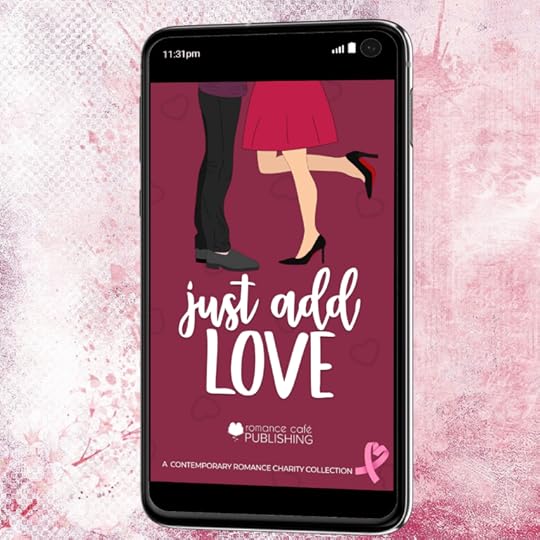 1Just Add Love Charity Anthology
An Instalove Romance Anthology! Dive into a world where love ignites in the blink of an eye with “Just Add Love,” a captivating collection of contemporary romance short stories. Each tale weaves the enchanting theme of instalove, exploring the magic that happens when two hearts collide unexpectedly. From encounters in bustling city cafes to chance meetings at picturesque parks, these stories celebrate the exhilarating spark of immediate connection. Follow characters as they navigate their emotions, face their fears, and discover the transformative power of love at first sight. Perfect for readers who believe in the beauty of spontaneous romance, “Just Add Love” invites you to experience heartwarming moments, laughter, and a few delightful surprises along the way. All proceeds go to Breast Cancer Research. Oh, and this anthology includes my Kingsmill Courtships novella His Perfect Valentine.
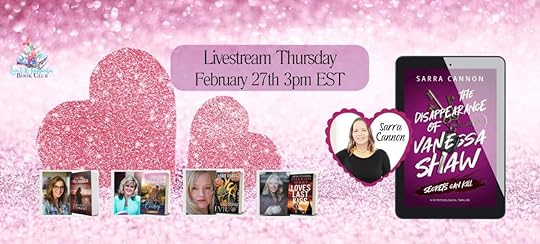 2The Isn’t it Romantic Book Club Group Monthly Livestream
The Isn’t It Romantic Book Club Group will be live-streaming on February 27th at 3 pm EST while we interview Sarra Cannon and her newest release The Disappearance of Vanessa Shaw! It’ll be live-streamed on our YouTube channel and we hope you’ll join us there!
 3Out-Of-This-World Stories Bookfunnel Promo
This collection includes sexy sci-fi romances, fantasy, and paranormal romances. It may include boxsets and anthologies.
 4February is for Romance Bookfunnel Promo
This bookfunnel includes free and on sale sexy romances, including small-town, sweet romances, historical, billionaires, and other popular contemporary romance sub-genres. It may include boxsets and anthologies.
 5Cupid’s Library of Love Romance Bookfunnel Promo
Cupid’s Library of Love includes free and on sale sexy romances, including billionaires, paranormal, urban fantasy and other popular fantasy romance sub-genres. It may include boxsets and anthologies.
The post February Book Fairs & Reading Events Part 2 first appeared on Sharon Wray.
February 25, 2025
To My Immortal Beloved: Part 2
Yesterday I wrote about one of the most mysterious love letters in history, written by composer Ludwig van Beethoven (1770-1827) intended for his “Immortal Beloved”.
[image error]The letter, written in pencil and never sent, was discovered after his death, tucked within his business papers. It was addressed to an unknown woman, and historians have long debated who the recipient was. The letter expressed deep longing and affection, “My angel, my all, my very self… Ever thine. Ever mine. Ever ours“, proving that whoever this woman was, he was in a deep, loving relationship with her. You’re welcome to read the post, but today I want to talk about the art of writing love letters.
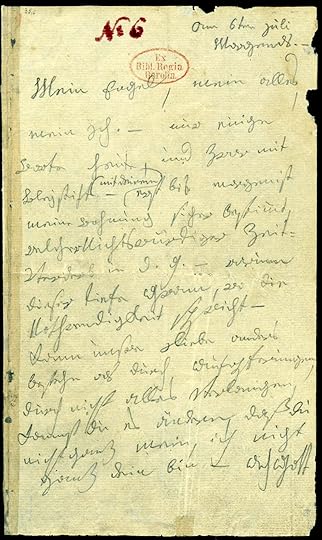
Despite the cliche that all love letters are sent between actual lovers, love letters can–and are often–sent between people who just love or care for each other. Parents send cards to children, best friends send notes to each other, etc. I’m sure you can think of many times when you’d sent (or thought about sending) a note to someone to make them feel better. And love letters don’t have to be about the physical side of love, they can also be sentiments of hope and joy you want to share with those you care about. Even a well written sympathy card can be a type of love letter.
And you can tell from this image of page 1 of Beethoven’s letter that while it’s written in cursive, it’s kind of messy. It’s not perfect.
So how do you actually write one of these letters? Well, luckily, it’s not as hard as it seems and I have 5 tips to help you get started.
Image Attribute: Dmitrismirnov, CC BY-SA 4.0 https://creativecommons.org/licenses/by-sa/4.0, via Wikimedia Commons
FIVE TIPS TO WRITING A LOVE LETTER TO ANYONE:
Personalization is KeyMake your love letters deeply personal. Reference shared memories, inside jokes, or future dreams. A love letter is most meaningful when it reflects the unique relationship between you and your recipient. Specificity counts. Include personal details about how your partner makes your favorite coffee each morning, or remind them of a moment you two shared and that you’ll never forget.Handwritten Adds a Special Touch
Handwrite your letter, even if you have messy handwriting and are using the back of a grocery list. There’s something special about receiving a physical letter—seeing the penmanship, knowing you took the time to put your feelings on paper. Handwriting adds an irreplaceable personal connection. It’s also a surefire way to make sure your letters become cherished keepsakes.Include Poetic Elements
You can be poetic without it being intimidating. How? Use metaphors (and other rhetorical devices) to describe your feelings. Describe nature and other beautiful imagery to evoke emotions. You can even borrow a favorite line from a poem or song that speaks to your relationship. Small touches like alliteration or repetition of certain words (like “always” or “forever”) can make your letter sound more lyrical.Express Vulnerability and Honesty
Love letters are a perfect opportunity to be vulnerable and open. Use these letters to express those feelings you find difficult to say out loud. Do you admire your partner? Are you proud of you child? Are you excited for your best friend? Or are you just grateful for their support? Mention how they’ve changed your life because genuine, heartfelt expressions make love letters memorable.Add a Small Keepsake or Memory
Adding something small with the letter can make it even more personal. (Look for things that won’t interfere with delivery of the letter, if you’re using the post office.) This small thing can be a dried flower from a past date, a photograph, a small drawing, or even a pressed leaf from a shared walk. Tiny mementos adds an extra layer of sentimentality, making the letter more than just words. These small keepsakes become a tangible memory of your relationship. Add the date and place. I know it seems silly, but we might know a lot more about Beethoven’s letter if he’d given us a few more details. And years later, when your beloved finds the letter, they’ll have a notation to help them remember the details about when they received this letter. (or future generations)
These elements can help you craft love letters that feel personal, genuine, and timeless. And while it seems like these kinds of letters are a lot of work, they are. I’m not going to pretend it doesn’t take time and effort to express yourself beautifully. But if you’ve ever received a love letter, you know how it can truly transform your day. So when you stress about time and creativity, just think about the reaction of your “immortal beloved”. I promise that these kinds of notes can change both of your lives.
The post To My Immortal Beloved: Part 2 first appeared on Sharon Wray.
February 24, 2025
To My Immortal Beloved: Part 1
One of the most mysterious love letters in history is from composer Ludwig van Beethoven (1770-1827), written to his “Immortal Beloved”. The letter, written in pencil and never sent, was discovered after his death tucked within his business papers. It was addressed to an unknown woman, and historians have long debated who the recipient was. The letter expressed deep longing and affection, “My angel, my all, my very self… Ever thine. Ever mine. Ever ours“, proving that whoever this woman was, he was in a deep, loving relationship with her.
[image error]There are questions about the date this unsent letter was written. There are notes stating “on the 6th of July” and “on the 7th of July”, but there is no other information about where the letter was written or the year it was composed. Many historians believe that the he wrote the letter in 1812 in Teplitz, Bohemia (now known as Teplice, Czech Republic). This is a period of time in Beethoven’s life when he was spending time at the spas in this area for treatment and rehabilitation. This time period and place is also where he met the German poet Johann Wolfgang von Goethe.
This unfinished love letter was originally published in Anton Schindler’s Beethoven biography of 1840, and there has been speculation that the intended recipient was Countess Jozefina Brunszvik de Korompa, a young woman Beethoven loved but who ended up marrying the much older Count Joseph Deym, her social equal. After Josefina’s widowhood, she and Beethoven continued a close friendship until her family forced her to end their too-close relationship due to the fact he was a commoner. Since this letter was written a few years after that friendship ended, it could’ve been written for someone else. Regardless, whoever the letter was intended for, her identity has sparked curiosity and speculation for centuries. And once you read the letter, which is really in three parts written over two days, you’ll regret the loss of letter writing skills in our modern world.
Below is the text of the letter, with Alexander Wheelock Thayer’s translation, which is in the public domain:July 6, in the morning.
My angel, my all, my very self—only a few words to-day and at that with pencil (with yours)—not till to-morrow will my lodgings be definitively determined upon—what a useless waste of time. Why this deep sorrow where necessity speaks—can our love endure except through sacrifices—except through not demanding everything—can you change it that you are not wholly mine, I not wholly thine. Oh, God! look out into the beauties of nature and comfort yourself with that which must be—love demands everything and that very justly—thus it is with me so far as you are concerned, and you with me. If we were wholly united you would feel the pain of it as little as I. My journey was a fearful one; I did not reach here until 4 o’clock yesterday morning; lacking horses the post-coach chose another route—but what an awful one. At the stage before the last I was warned not to travel at night—made fearful of a forest, but that only made me the more eager and I was wrong; the coach must needs break down on the wretched road, a bottomless mud road—without such postilions as I had with me I should have stuck in the road. Esterhazy, travelling the usual road hitherward, had the same fate with eight horses that I had with four—yet I got some pleasure out of it, as I always do when I successfully overcome difficulties. Now a quick change to things internal from things external. We shall soon surely see each other; moreover, I cannot communicate to you the observations I have made during the last few days touching my own life—if our hearts were always close together I would make none of the kind. My heart is full of many things to say to you—Ah!—there are moments when I feel that speech is nothing after all—cheer up—remain my true, my only treasure, my all as I am yours; the gods must send us the rest that which shall be best for us.
Your faithful Ludwig.
Evening, Monday, July 6.
You are suffering, my dearest creature—only now have I learned that letters must be posted very early in the morning. Mondays, Thursdays,—the only days on which the mail-coach goes from here to K. You are suffering—Ah! wherever I am there you are also. I shall arrange affairs between us so that I shall live and live with you, what a life!!!! thus!!!! thus without you—pursued by the goodness of mankind hither and thither—which I as little try to deserve as I deserve it. Humility of man towards man—it pains me—and when I consider myself in connection with the universe, what am I and what is he whom we call[328] the greatest—and yet—herein lies the divine in man. I weep when I reflect that you will probably not receive the first intelligence from me until Saturday—much as you love me, I love you more—but do not ever conceal your thoughts from me—good-night—as I am taking the baths I must go to bed. Oh, God! so near so far! Is our love not truly a celestial edifice—firm as Heaven’s vault.
Good-morning, on July 7.
Though still in bed my thoughts go out to you, my Immortal Beloved, now and then joyfully, then sadly, waiting to learn whether or not fate will hear us. I can live only wholly with you or not at all—yes, I am resolved to wander so long away from you until I can fly to your arms and say that I am really at home, send my soul enwrapped in you into the land of spirits.—Yes, unhappily it must be so—you will be the more resolved since you know my fidelity—to you, no one can ever again possess my heart—none—never—Oh, God, why is it necessary to part from one whom one so loves and yet my life in W (Vienna) is now a wretched life—your love makes me at once the happiest and the unhappiest of men—at my age I need a steady, quiet life—can that be under our conditions? My angel, I have just been told that the mail-coach goes every day—and I must close at once so that you may receive the L. at once. Be calm, only by a calm consideration of our existence can we achieve our purpose to live together—be calm—love me—to-day—yesterday—what tearful longings for you—you—you—my life—my all—farewell—Oh continue to love me—never misjudge the most faithful heart of your beloved L.
ever thine
ever mine
ever for each other.
There’s no question that Beethoven was deeply in love, but what fascinates me about this letter is the structure–and that’s something I’m going to talk more about in tomorrow’s post. Because like Beethoven, I tend to write on the same subject over a few days. While that’s a tiny thing to have in common with a brilliant composer, I’ll take it.  Until tomorrow….
The post To My Immortal Beloved: Part 1 first appeared on Sharon Wray.
February 21, 2025
The Hungry {Romance}Writer: Buffalo Chicken Wraps
It’s been a long week with sickness in the house and work deadlines and snowstorms. There’s also been taxes, generator issues, and a car that needed new brakes. So to say it’s been a busy week would be a huge understatement.
[image error]But since it’s Friday night, I’ve decided to make something easy and delicious, something we can eat while we sit around the fireplace and watch a movie. That means it’s time for my favorite Buffalo Chicken Wraps. They’re easy to prepare and I often serve them with a side of hummus and fresh veggies or a winter slaw. I hope you all have a wonderful weekend, and that we all stay healthy!
 PrintBuffalo Chicken WrapsCourse Main CoursePrep Time 30 minutes minutesServings 4Calories 895kcalIngredients1 cup flour1 teaspoon salt1/4 teaspoon pepper1/2 cup buttermilk4 boneless skinless chicken breast halves 4 ounces each1 cup olive oil1/2 cup hot pepper sauce1/4 cup salted butter melted4 spinach tortillas 10 inches1 cup shredded lettuce1 cup shredded cheddar cheese2/3 cup chopped tomatoes1/2 cup blue cheese salad dressingInstructionsIn a shallow bowl or plate, stir together the flour, salt and pepper. Pour the buttermilk into a bowl nearby and have a large plate ready to accept the breaded chicken. Dip the chicken in the buttermilk and roll in the flour mixture and place on the dish. Heat a large cast iron skillet over medium-high heat and heat the oil. Add the breaded chicken and cook for about 4-6 minutes on each side. The internal temp of the chicken should reach 170℉. Drain the chicken on paper towels and allow to cool slightly. Then cut the chicken into strips. In another bowl, stir together the hot pepper sauce and the melted butter. Dip the chicken strips into the hot/butter sauce, making sure to cover both sides. Place the chicken in the center of each tortilla. Add the lettuce, cheese and tomatoes. Spread the blue cheese dressing on top.Fold the tortilla edges over the filling and use toothpicks to keep them closed. Serve immediately.
 The post The Hungry {Romance}Writer: Buffalo Chicken Wraps first appeared on Sharon Wray.
February 20, 2025
Breaking the Book
I am a notebook hoarder. It’s not something I’m proud of, but it’s a problem I’ve had since childhood when I would spend my babysitting money on beautiful journals at Walden Books… and then store them under my bed. It took me years to realize that this situation wasn’t just a bad habit. It took me years to realize that this syndrome of not using the beautiful notebooks was a symptom of perfectionism. You see, I’d buy the book and then be traumatized by fear. Fear that I’d “mess it up”. Fear that I didn’t have the right pen, or that I’d have to cross something out and the notebook would no longer be perfect. It would no longer be beautiful.
[image error]I know this sounds strange, but I also know enough people who feel the same way. This silly, paralyzing thought that if you don’t use the notebook perfectly, if it’s not the most beautiful handwriting or the best doodles, it’s worthless. It wasn’t until I got pregnant that I realized how ridiculous–and damaging–these perfectionists tendencies were. I’d been sick during my pregnancy and had kept a journal while I was in the hospital. Maybe it was the overwhelming fear of losing my twins that drove away my worries over beauty and perfectionism, but regardless of why, I kept that journal religiously and it was a mess. This messy journal saved our family… and this is the story.
This was in the early stages of the internet and before cell phones, iPads, etc. That meant that I didn’t have access to a million streaming channels and couldn’t doom scroll for hours. I was stuck in a bed, almost upside down and pregnant with twins, for about 10 weeks. And I was bored. There was nothing to watch because there was no TV in the room. Well, there was the tiny rogue set my husband put in my room but since it had no remote I had to ask people to turn it on and off and change the channel. It was such a pain I ended up rarely watching it. Anyway, one day the nurse came in with a box of tissues, a small notebook, and a pencil. She told me that from now on I was to write down every single thing that happened while was in that hospital room. How many times I saw the doctors, all the medications and meals, etc. I was to document every single thing that happened, with time stamps, because one day I might need the record.
Totally bored, I figured why not. The next day I asked my husband to get me a larger notebook since I’d already filled up half of the small book the nurse had given me. But when he brought in one of my fancy notebooks I’d been hoarding (saving for the perfect moment), I hesitated. Since I had no control of the situation, I reluctantly decided to us this notebook to document my months in the perinatal ward. Weeks went by and I faithfully documented every single event that happened. The times and details of every meal, how many tissues I used, when I asked for the hand cream, etc. As the days continued, I found myself with all sorts of pens and pencils–whatever the nurses could find at their station and lend me. The journal got messier and noisier. I wrote down my schedules, then I added my feelings and worries and finally started documenting my vivid dreams. Since my room was next to the rooftop helicopter pad, I even kept track of when they’d land and take off.
By the time I had the babies and returned home, the notebook was almost all used up… and it was a mess. Filled with scratches, different colored inks, and even small crayon doodles of the strange things that happened while I was on hospital bedrest. But I was so busy with two tiny infants, born a few weeks early, that I just shoved my notebook into my desk drawer and got on with my life. A few weeks later, I received a certified letter from the hospital. It was a bill for $758,000. I almost dropped my daughter when I read the amount. There was no way we could ever pay off a bill like that. We were, essentially, bankrupt.
But instead of panicking, I called the insurance company and spoke to a lovely young woman who said she’d send me the itemized bill so I could review it. (Remember, this was over 20 years ago now!). It took a few days to receive it in the mail (no one had email yet!) and I discovered it was over 40 pages long, with tiny type, and listed over 1,000 small charges. I immediately realized that I was being charged for things that never happened, and I called the insurance company again. They asked me how I could prove the hospital bill was wrong, and I told them I had my journal. Well, to cut this long story short, it took almost a full year of working with the insurance fraud department–with my journal–to prove the hospital was lying about more than half of the things they’d charged me and the insurance company. I photocopied pages (again, before scanners) and mailed them to the insurance company. It took months to sort out, but at the end of the year the insurance company filed a fraud claim against the hospital and I ended up with a $300 refund check because of overcharges. So yay for my messy journaling!
But did I learn my lesson about the dangers of perfectionism? No. Of course not. It wasn’t until I decided that I wanted to shift my career from being a librarian to being an author that I hit another wall in this journey. I had joined a romance writers group and had gone to a few meetings with a new notebook. But during one of the meetings, a famous literary agent who was giving a lecture asked us to do some free writing in our notebooks. And, if we were courageous enough to read what we’d written aloud to the group, she’d consider asking for a full manuscript. (A full manuscript request is still a huge thing, even today, when querying agents). Except I was so worried about messing up–making the beautiful journal “less than” with my story that I barely knew how to write, I didn’t do anything. I was paralyzed with fear about how I didn’t know how to write, I wasn’t even sure if I was meant to become a romance writer, and all the other fears that plague artists. Combined with the fact I was using a new notebook my husband had given me to take notes, I just couldn’t bring myself to write down my story. This was a note-taking notebook, not a story notebook. It sounds so ridiculous now, but back then the monster of perfectionism had me within his teeth. Anyway, everyone else there wrote something, read it aloud, and ALL of them received a request for a full.
Except for me.
That night I went home and decided I was going to destroy this monster of perfectionism. So I pulled out all of my beautiful notebooks, grabbed the kids’ markers, and sat at the table. I was going to scribble in each of them, as if breaking the cursed hold they had on me. But then my kids appeared and, when they saw the notebooks, and markers, they went to work without me. They wrote in random pages, scribbled on the backs, used glitter glue and feathers, pulled out pages from the middle, and drew all sorts of pictures that looked nothing like the dinosaurs and princesses they believed them to be. But the fact their drawings had no relation to what they thought they were drawing didn’t matter to them. In fact, they were so happy and proud of their drawings that they ripped them out of my beautiful notebooks and hung them on the fridge. When they ran out of room there, they taped them to the walls around the house.
There weren’t afraid, or judging themselves, or concerned that the notebooks were ruined. And suddenly neither was I. As I held of the very expensive Rifle Paper notebooks that had been ripped and crayoned-over, I felt the stress melt away. I grabbed a grubby pencil, without an eraser, and started writing my story down on the sticky pages of these broken notebooks covered with glitter glue. It was as if the destruction of the notebooks was the permission I need to just start writing. Since the notebook was no longer perfect, what I wrote in it no longer needed to be perfect.
As the years went on, and I kept writing novels and getting rejected, I always performed the same ritual with a new notebook. I’d give it to one of my kids and let them write on the first page. As they got older, their scribbles turned into favorite quotes and supportive notes. And that was all I needed to get that notebook into action. Once it was no longer “whole”, once it was “broken in”, I could use it to handwrite stories, take notes, or just journal about my dreams. And then one day, as I pulled out a notebook I’d forgotten about, I found a quote written in the center of the notebook that my daughter had done for me in her best calligraphy. She’d done this a few years earlier, hoping the one day I’d find it when I needed a reminder that in order to be brave sometimes I just had to break the notebook.
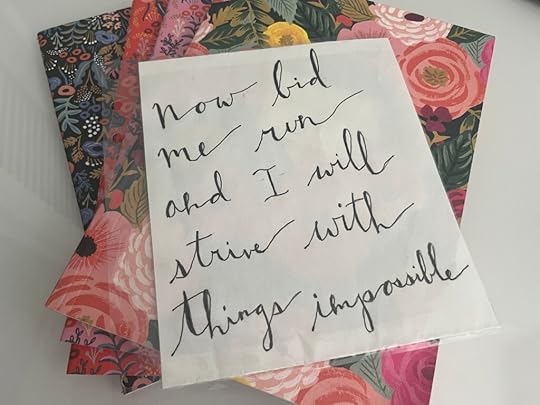
Now my hope for you all is when you’re faced with a dream, and its corresponding crippling fear, that you’ll remember to pull out the most expensive, exclusive, beautiful notebook you have and break it. Because on the other side of the breaking is where you’ll find your miracle.
{And for my curious readers, the story that I didn’t write down for that agent ended up, years later, getting me a different agent and sold to a traditional publisher. That story, One Dark Wish, is book 2 in the Deadly Force Series.}
The post Breaking the Book first appeared on Sharon Wray.
February 19, 2025
Sarah Munro’s Ginger Chews
It’s been weeks of sickness here, and I’m always trying variations on herbal cold remedies. Since I get tired of lemon-themed teas, I like to find other alternatives that taste great and also soothe a sore throat and offer relief to congested sinuses. As soon as I found a few recipes for ginger chews, I experimented and settled upon this one. They’re easy to make and taste great, and they did help me feel better.
For those of you new to this series, Sarah Munro, the heroine in ONE DARK WISH, the second book in the Deadly Force series, is an 18th century historian who inherited a collection of colonial-era herbal and homeopathic remedies. And, in this blog space, I’ve been sharing her recipes with you all. I’m adding this recipe to this collection because ginger and honey can help with inflammation, nausea, and can help boost your immune system.
Ingredients:2 cups pure water1/4 cup packed shredded fresh ginger root 3/4 cup sugar1/4 cup honey candy thermometer 7″ x 4″ glass pancoconut oil for greasing panparchment paper[image error]Directions for Ginger ChewsIn a saucepan, stir together the grated ginger root and water. Simmer for about 30 minutes or until about half of the liquid has evaporated. Strain the ginger and save 1 cup of the ginger water. Use the coconut oil to grease a 7″ x 4″ glass dish. Then cut a piece of parchment paper to fit the bottom of the pan. And then grease the paper with more coconut oil. Pour the ginger water into a large saucepan. Stir in the sugar and honey. Bring the mixture to a high heat, still stirring, until the mixture reaches 260 degrees. It must pass the water drop test.* It’s really important to reach this temperature exactly otherwise the chews will be too runny or too hard. Water Drop Test: use a cup of VERY VERY cold water and drop a small amount of the ginger syrup into the water. Then use a spoon to pull out the ginger drop. It needs to be not too soft and not too hard–just chewy enough to make it just right. (like in the fairytale! lol)Pour the syrup into the pan and allow it to sit for 30 minutes. After 30 minutes (and not too much longer), turn the dish over and remove the parchment paper. Then using a sharp knife coated in coconut oil, cut the candy into small chunks, about 1/2″ x 1″. Wrap the chews in parchment paper and they will store at room temperature for 4-6 weeks. They will last longer if you store them in the refrigerator. USAGE: For a sore throat, take a chew whenever you want. For digestive help, take 1 chew before or after each meal. For nausea or an upset tummy, take 2 chews every 3 hours.
IMPORTANT DISCLAIMER ABOUT WILD PLANTS, FORAGING
, AND MAKING HERBAL REMEDIES:I am not a medical professional and nothing written on this blog is medical advice. None of my statements have been evaluated by the FDA (I am legally required to give you this disclaimer).
It is important to do your due diligence before foraging, harvesting, and/or consuming any type of medicinal plant.
If you are taking any medications, talk to your doctor about any potential drug interactions.If you are allergic to anything, make sure whatever you are foraging is not in the same family. Example: While dandelions are typically considered safe, those who are allergic to ragweed, latex, daisies, or any other plants in the same or similar families, may not be able to consume dandelion.Always research potential side effects, dosage recommendations, and how to properly prepare and consume each medicinal plant.
Always make sure you are foraging what you believe to be. Fully prepare and study the anatomy before harvesting wild plants.
Always make sure your kitchen/work area is clean and that all materials are sterilized.
Do not forage plants from areas that have been sprayed within the past 2 years at the very least.
I am not legally or morally responsible for the health of any of my readers. Please do your own research!
The post Sarah Munro’s Ginger Chews first appeared on Sharon Wray.