
Mary Jane Walker's Blog: Adventures at Snow Farm Part 1 – Skiing with a broken shoulder! , page 40
April 15, 2017
A Maverick Traveller on: Global Warming right here in NZ & Recuperation
Coromandel state forest park
Last weekend I went to the Coromandel State Forest Park. The park is now mostly closed with the heavy rainfall received in March has meant most of the walking tracks are currently closed, which was disappointing. The area to my knowledge had received an entire month’s worth of rain in a single day that got me worried and thinking about the very real impacts of global warming on New Zealand.
Figures claim rainfall will rise in the area of Kauaeranga Valley by a massive 5% by 2040.
The New Zealand Ministry for the Environment (MFE) has put out some interesting predictions in relation to temperature rise and rainfall, so if it is something that interests you then definitely take a look.

Average temperatures now and predictions for 2090.
http://www.mfe.govt.nz/climate-change...
The Pinnacles walking track (which is a fabulous walk by the way and I talk about my trip in A Maverick New Zealand Way), is closed due to washout. The rain during the week of 8th of March was really bad and there were many slips in the area.
I went to the DOC office in the Kauaeranga Valley and met Debbie who told me that it was closed because of flooding and slips. The DOC rangers had been out and couldn’t find the track, it is pretty bad and is going to take a fair amount of time and work to get it up and running again. Sadly for us outdoor lovers!
So the Christmas dam was washed out, the popular Billy Goat Track is washed out too. The Coromandel area is really popular with people from Auckland who come there specifically to go trekking.

I have spent a lot of time in the Kahurangi National Park in the Nelson/Tasman region, most recently when I was volunteering for the Department of Conservation (DOC) and then broke my shoulder. In this particular area the predicted effect of global warming as soon as 2040, will see temperatures rise to by 3 degrees and rainfall increase by 2 percent.
One effect that has become recently very obvious is flooding. There has as recent as yesterday (5th Apirl 2017) been severe flooding across New Zealand. The town of Edgecumbe near Whakatane in the Bay of Plenty has declared a state of emergency. Severely affected areas include Wanganui, Wellington and sadly after severe earthquake damage, Kaikoura.
http://www.radionz.co.nz/news/national/328150/flooding-continues-what-you-need-to-know
In the South Island region of Canterbury they are expected to get 100mm’s of rain in 10 hours, with the annual average only sitting around 500mm’s a year. A serious increase and something to think about if not be concerned for.
So anyway my recuperation is going okay, I’ve had some up and down moments. Having a broken shoulder is quite a pain I can tell you. Rather than write about it I did a little talk about it, so here you go! Enjoy!
The post A Maverick Traveller on: Global Warming right here in NZ & Recuperation appeared first on A Maverick Traveller.


March 30, 2017
DOC Volunteering - what have I done now?
Volunteering at the Department of Conservation in Kahurangi National Park, New Zealand South Island
The reason why you haven’t heard from me for a while is because I was volunteering as a hut warden for the Department of Conservation (DOC) in Kahurangi National Park.
I was stationed out of Salisbury Hut, in the Motueka area in the South Island.
Being a DOC warden, you help manage the area in which you are stationed. Weeding, cleaning that sort of thing. It’s a great experience though and you get up close to NZ’s wildlife and can relax and breath in the crisp fresh air as you meander through the bush.
It is not the first time I have done DOC volunteering either, I have done it many times and actually I talk a lot about my experiences in my book, A Maverick New Zealand Way out on Amazon.
It was great this time around because I had cheeky weka (a chicken like bird) drinking out of my tea cup and trying to hitch a ride in my car! I got to see the native kaka and the iconic kiwi bird hiding in some tussock grasses (see my you tube channel).
Anyway all it all it was an amazing and actually really relaxing experiences, in and out of telephone reception and living a bit rough. I love it.
Anyway I went one day, as you do, on a trek which should have taken four hours. It was a beautiful walk on a well formed track, by a fantastic 1.5 metre waterfall. I stopped to take a drink from the crystal clear waters and then disaster struck!
And that’s what went wrong!
I fell and fractured my humerus, also known as a broken shoulder. Well the shock of it all looking at my x-rays. It was like a rude joke after a beautiful stay for 7 days.
20170228_164432
I went to the nearest hospital which was in Nelson and was attended to. DOC kindly paid for two nights of accommodation for me after the accident and the staff drove me around, they were very concerned! I decided I was not allowed to drive, so I decided I would fly back to Auckland instead of Queenstown because the hospitals were closer.
20170228_164354
Arriving back into Auckland I was wearing a special black support sling type garment to support my arm for the first few days. I was really amazed at how kind people were, in the post office and the supermarket everyone was offering to help me! People offered to carry things to my car and move things for me. What a great bunch of people Aucklanders are- no I really do mean that! What I did notice however is that when you are wearing a plain cuff people don’t notice there is anything wrong with you, I was at countdown and a cashier bumped straight into my shoulder! So I decided I would avoid going out into to many public places for a while because that hurt something horrible!
Compared to the rest of the world I think New Zealand has an accident compensation organisation called, ACC that provides home help who are debilitated.
ACC provided me with home help for three hours a week for seven weeks and they are lovely! They help me with food prep and cleaning, I am so thankful we have this service in New Zealand!
After taking pain killers for 2-3 days I decided I didn’t want to take anymore because I didn’t want to feel foggy, I have books to write and blogs to write and life moves on. It has been challenging dealing with the pain, but humans are strong! I have chosen to take the el natural route and have been using comfrey a lotion I put on the outside of my arm which is meant to help with broken bones and liquid arnica which is getting rid of the bruising. I had horrendous bruising! I have been taking turmeric capsules, which increases the blood flow.
I was very lucky it was a clean break so I didn’t need any metal, having metal though would have been a speedier recovery. I have made double sure my diet has been high in Calcium and Vitamin D.
What I find perplexing is the conflicting medical opinions of medical professionals. I have visited two orthopaedic surgeons and they both do say to prevent frozen shoulder you have to move. Well moving when it’s broken is quite difficult! There’s a fine line between moving it enough and moving it too much. I didn’t want frozen shoulder otherwise I’d never be able to life my arm above my shoulder again.
I think that fine line can be depicted by the pain level, so after two weeks I can clean the toilet, cut vegetables, I can’t vacuum. Doing anything that means lifting my arm above my shoulder will end up causing more injury and damage in the long run!
Both orthopaedic surgeons in Nelson and Auckland told me it was better to not have my arm taped up while it was healing. It’s better to let it be free and move it within a range and I thought right ok. I was also warned not to rest my arm on a pillow or use a sling because it can push the humerus bone upwards. I was told I can’t drive and they also advise no manual work for three months.
I decided on acupuncture, because in the past it has worked for me really well. Years ago a doctor told me I would never be able to go backpacking, the issue hasn’t reoccurred thanks to acupuncture.
Acupuncture is a type of traditional Chinese medicine where they put thin needles into healing spots in your body to help the body heal itself and relieve pain.
Both orthopaedic surgeons stated they didn’t know the benefits of it when I discussed this with them. I told them how it had worked for me in the past, both suggested I go to physiotherapy and take pain killers. I thought no I don’t like pain killers, they stop your functioning.
Well the benefits I have found, it helps remove the scar tissue, it also works on the ligaments between joints which help with mobility. Acupuncture uses warmth, like hot water bottles.
I also thought about taking a break for 4-5 days at the Te Henga Villas, an eco-art retreat by the ocean at Bethell’s beach north-west of Auckland city.
20170313_174655
If you go to a physio therapist, what they like to do is put ice on your injury and tape it up! I talked to my acupuncturist about this and went along to physio anyway, and they did just that. They taped my arm up but not the actual shoulder and said he was trying to drain the blood and bruising out of my arm.
I woke up that night at 2am with more pain then I had been in for a long time at, I ripped off the tape immediately.
I do consider myself lucky to have had the options available to me though. ACC has been wonderful, you do hear a lot of bad things in the media but I have nothing bad to say.
So moral of the story really is – Having a broken humerus is not much fun at all!
Safe and Happy Travels
-Mary Jane Walker
March 14, 2017
Volunteering at Kahurangi National Park – what could go wrong?!
What have I done now?!
Volunteering at the Department of Conservation in Kahurangi National Park, New Zealand South Island
The reason why you haven’t heard from me for a while is because I was volunteering as a hut warden for the Department of Conservation (DOC) in Kahurangi National Park.
I was stationed out of Salisbury Hut, in the Motueka area in the South Island.
Being a DOC warden, you help manage the area in which you are stationed. Weeding, cleaning that sort of thing. It’s a great experience though and you get up close to NZ’s wildlife and can relax and breath in the crisp fresh air as you meander through the bush.
It is not the first time I have done DOC volunteering either, I have done it many times and actually I talk a lot about my experiences in my book, A Maverick New Zealand Way out on Amazon.
It was great this time around because I had cheeky weka (a chicken like bird) drinking out of my tea cup and trying to hitch a ride in my car! I got to see the native kaka and the iconic kiwi bird hiding in some tussock grasses (see my you tube channel).
Anyway all it all it was an amazing and actually really relaxing experiences, in and out of telephone reception and living a bit rough. I love it.
Anyway I went one day, as you do, on a trek which should have taken four hours. It was a beautiful walk on a well formed track, by a fantastic 1.5 metre waterfall. I stopped to take a drink from the crystal clear waters and then disaster struck!
And that’s what went wrong!
I fell and fractured my humerus, also known as a broken shoulder. Well the shock of it all looking at my x-rays. It was like a rude joke after a beautiful stay for 7 days.

I went to the nearest hospital which was in Nelson and was attended to. DOC kindly paid for two nights of accommodation for me after the accident and the staff drove me around, they were very concerned! I decided I was not allowed to drive, so I decided I would fly back to Auckland instead of Queenstown because the hospitals were closer.

Arriving back into Auckland I was wearing a special black support sling type garment to support my arm for the first few days. I was really amazed at how kind people were, in the post office and the supermarket everyone was offering to help me! People offered to carry things to my car and move things for me. What a great bunch of people Aucklanders are- no I really do mean that! What I did notice however is that when you are wearing a plain cuff people don’t notice there is anything wrong with you, I was at countdown and a cashier bumped straight into my shoulder! So I decided I would avoid going out into to many public places for a while because that hurt something horrible!
Compared to the rest of the world I think New Zealand has an accident compensation organisation called, ACC that provides home help who are debilitated.
ACC provided me with home help for three hours a week for seven weeks and they are lovely! They help me with food prep and cleaning, I am so thankful we have this service in New Zealand!
After taking pain killers for 2-3 days I decided I didn’t want to take anymore because I didn’t want to feel foggy, I have books to write and blogs to write and life moves on. It has been challenging dealing with the pain, but humans are strong! I have chosen to take the el natural route and have been using comfrey a lotion I put on the outside of my arm which is meant to help with broken bones and liquid arnica which is getting rid of the bruising. I had horrendous bruising! I have been taking turmeric capsules, which increases the blood flow.
I was very lucky it was a clean break so I didn’t need any metal, having metal though would have been a speedier recovery. I have made double sure my diet has been high in Calcium and Vitamin D.
What I find perplexing is the conflicting medical opinions of medical professionals. I have visited two orthopaedic surgeons and they both do say to prevent frozen shoulder you have to move. Well moving when it’s broken is quite difficult! There’s a fine line between moving it enough and moving it too much. I didn’t want frozen shoulder otherwise I’d never be able to life my arm above my shoulder again.
I think that fine line can be depicted by the pain level, so after two weeks I can clean the toilet, cut vegetables, I can’t vacuum. Doing anything that means lifting my arm above my shoulder will end up causing more injury and damage in the long run!
Both orthopaedic surgeons in Nelson and Auckland told me it was better to not have my arm taped up while it was healing. It’s better to let it be free and move it within a range and I thought right ok. I was also warned not to rest my arm on a pillow or use a sling because it can push the humerus bone upwards. I was told I can’t drive and they also advise no manual work for three months.
I decided on acupuncture, because in the past it has worked for me really well. Years ago a doctor told me I would never be able to go backpacking, the issue hasn’t reoccurred thanks to acupuncture.
Acupuncture is a type of traditional Chinese medicine where they put thin needles into healing spots in your body to help the body heal itself and relieve pain.
Both orthopaedic surgeons stated they didn’t know the benefits of it when I discussed this with them. I told them how it had worked for me in the past, both suggested I go to physiotherapy and take pain killers. I thought no I don’t like pain killers, they stop your functioning.
Well the benefits I have found, it helps remove the scar tissue, it also works on the ligaments between joints which help with mobility. Acupuncture uses warmth, like hot water bottles.
I also thought about taking a break for 4-5 days at the Te Henga Villas, an eco-art retreat by the ocean at Bethell’s beach north-west of Auckland city.

If you go to a physio therapist, what they like to do is put ice on your injury and tape it up! I talked to my acupuncturist about this and went along to physio anyway, and they did just that. They taped my arm up but not the actual shoulder and said he was trying to drain the blood and bruising out of my arm.
I woke up that night at 2am with more pain then I had been in for a long time at, I ripped off the tape immediately.
I do consider myself lucky to have had the options available to me though. ACC has been wonderful, you do hear a lot of bad things in the media but I have nothing bad to say.
So moral of the story really is – Having a broken humerus is not much fun at all!
Safe and Happy Travels
-Mary Jane Walker
Featured image from fourcorners.co.nz
The post Volunteering at Kahurangi National Park – what could go wrong?! appeared first on A Maverick Traveller.
March 8, 2017
Update on the Dakota Access Pipeline
The Dakota Access Pipeline
ARTICLE FROM
https://www.theguardian.com/us-news/2...
A federal judge declined Tuesday to temporarily stop construction of the final section of the disputed Dakota Access pipeline, clearing the way for oil to flow as soon as next week.
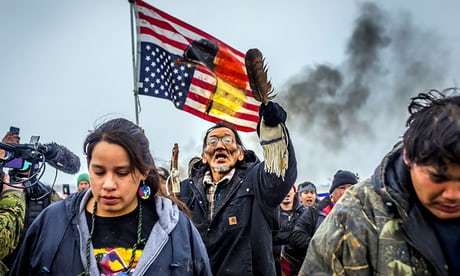
Private investor divests $34.8m from firms tied to Dakota Access pipeline
Read more
The Standing Rock and Cheyenne River Sioux had asked the US district judge James Boasberg in Washington to direct the Army Corps of Engineers to withdraw permission for the Texas-based developer Energy Transfer Partners to lay pipe under Lake Oahe in North Dakota.
The stretch under the Missouri river reservoir in southern North Dakota is the last piece of construction for the $3.8bn pipeline to move North Dakota oil to Illinois.
The tribes argued that construction under the lake violated their right to practice their religion, which relies on clean water, and they wanted the work suspended until the claim could be resolved.
When they filed the lawsuit last summer, the tribes argued that the pipeline threatened Native American cultural sites and their water supply. Their religion argument was new, however, and disputed by both the corps and the company.
Boasberg in his ruling Tuesday said the tribes hadn’t raised the religion argument in a timely fashion.
“Only once Dakota Access had built up to the water’s edge and the corps had granted the easement [for drilling] to proceed did Cheyenne River inform defendants that the pipeline was the realization of a long-held prophecy about a Black Snake and that the mere presence of oil in the pipeline under the lakebed would interfere with tribe’s members’ ability to engage in important religious practices,” the judge said.
Boasberg said he was likely to allow the tribes to continue making the religion argument, though he did not think it was likely to succeed.
“Although the tribe’s members may feel unable to use the water from Lake Oahe in their religious ceremonies once the pipeline is operational, there is no specific ban on their religious exercise,” he said.
The judge’s decision came as Native Americans from across the country gathered in Washington to protest Donald Trump’s policies encouraging oil pipelines. Native Americans are planning four days of activities, including lobbying lawmakers and culminating in a march on the White House. Tribal members and supporters plan to camp each day on the National Mall, with tipis, a ceremonial fire, cultural workshops and speakers.
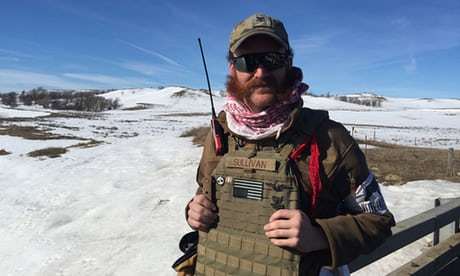
Standing Rock: arson accusation renews fear of police targeting military veterans
Read more
In February, Boasberg declined the tribes’ request to order an immediate halt to the pipeline construction, ruling that as long as oil wasn’t flowing through the pipeline, there was no imminent harm to the tribes.
The tribal attorney Nicole Ducheneaux countered in court documents that the mere existence of an oil pipeline under the reservoir the tribes consider to be “sacred waters” violated their right to practice their religion. The court battle is not over, as no final decision has been made on the merits of the tribes’ overall claims.
Both tribes also have asked Boasberg to overturn the federal permission for the Lake Oahe crossing and to bar the corps from granting permission in the future. The judge won’t rule until at least April.
The pipeline saga has endured for months. Hundreds and sometimes thousands of pipeline opponents who sided with tribal opposition to the pipeline camped on federal land near the drill site for months, often clashing with police. There have been about 750 arrests in the region since August. Authorities last month closed the camp in advance of spring flooding season and set up roadblocks to prevent protesters from returning.
Work under Lake Oahe had been held up in the courts until Trump last month instructed the corps to advance construction. The army is involved because its engineering branch manages the river and its system of hydroelectric dams, which is owned by the federal government. ETP began drilling under the lake 8 February.The company attorney William Scherman said in court documents that the pipeline could be moving oil as early as next week.
http://finance.yahoo.com/news/america...
https://www.theguardian.com/us-news/2...
Steel Made by Russian Company Tied to Putin Used in Keystone XL and Dakota Access Pipelines
http://www.ecowatch.com/steel-russia-...
The post Update on the Dakota Access Pipeline appeared first on A Maverick Traveller.
February 19, 2017
Luminate Festival and Back to it in NZ
I arrived back in to Auckland City and have been straight back into working, writing, writing and more writing! The busyness of everyday life – I mean hell my life is busy as is! After all my dramas with food poisoning, the underlying tensions in America and the other countries I had been after Trump was elected – I felt I needed a little space, a little air, a little down time too. Then something wonderful popped up one day. The Luminate Festival in New Zealand.
I hadn’t been before but I jumped on good old google and was sold. It was exactly the kind of thing I needed, to get back into the swing of things, rekindle my love of New Zealand and relax with like-minded people.
Luminate Festival is a family-community grounded event, live music, yoga and environmentally friendly. A gathering of down-to earth spiritual people from all over the world. Although before I got on the plan and headed there I was totally unaware it had such a large overseas following. While some might immediately jump to the idea of a typical hippy, tree-hugging woman and men in long shirts and skirts kind of festival– it was a lot more than that.
So I found myself on a plane from Auckland to Nelson, perched on the top of New Zealand’s South Island. The flight was great; I got beautiful views out over Taranaki and Ruapehu, mountains in the North Island.
Mount Taranaki, Richmond Ranges and Mount Ruapehu from the plane
When I got to Nelson I would have to drive further up for about 2 hours to a spiritual mountain area called, Canaan Downs, Pikikirunga near to the nationally famous Golden Bay. The area itself is known from its dramatic scenery, beautiful beaches and pristine forests used for an abundance of outdoor activities.
There were workshops on waste minimisation, presentations and group discussions on environmental issues, live music and a chill out lounge. There was even a circus where they had fire performances and dancing – I loved seeing that!
Range of activities, live music and performances
There was a Healing hub or Hauora, an electronic zone dedicated to that particular genre of music and authentic music played in the chill lounge and on the live stage. It was great and when I heard a good band play I would listen to them in both areas because you get a different perspective on their music. They would perform different songs in each area, to flow with the vibe.
As always I got absorbed into the festival, the people, the music, the environment – we were all one and the same, enjoying everything together. I realised this was exactly what I needed, a bit of time out from everything – including work. I met many interesting people from all over which was great too!
The Live Stage
There were a lot of Celtic themes I noticed in the festival, so that got me interested in its history – of course! I found out the modern day Luminate Festival is held in Scotland during October between summer solstice and autumn equinox. It is based on the First Harvest Festival that was held in Ireland (Lamma) and Scotland (Lughnasadh), with links to the ancient Druid festival called.
It was interesting because the festivals back then were held in mountains or atop hills, much the one in New Zealand. Canaan Downs is part of the Abel Tasman National Park, an area run by the Department of Conservation, so it’s no glam campground! Just the basics which was great!
Yoga at Luminate
What felt like on the other side of the world, which turned out to be just down the road, there was a beaching of 650 Pilot Whales at Farewell Spit an hour’s drive North East from the Festival. There is the idea that techniques used to find oil such as seismic surveying can affect the whale’s navigation. Interestingly there was some oil related exploration going on around New Zealand’s coast 6 days before the first pod beached themselves. National Geographic published this finding in 2014, and although some experts have said it is unlikely – it makes me wonder – it is a HUGE number of whales. It is the third biggest stranding in New Zealand history, topped by 1000 whales in 1918 in the Chatham Islands.
No one really found out about any of it until after the festival, when we all got back on to our phones and connected back up to the internet. It was a bit of a pity, as I was in the area and had a car – I would have gone to help in some way or another.
On another environmental note here, I found out that dairying is moving into the area of Takaka. I have some serious issues with this – pollution is the main one. Earlier this year there were concerns over the polluting of the Te Waikoropupu Spring, New Zealand’s largest fresh water springs in Golden Bay not far from where the festival was being held.
The Te Waikoropupu Springs hold significant cultural and spiritual significance to the locals and are unique in that they hold Stygofauna that live in the Arthur Marble Aquifer. The environmental concern for the springs is completely substantiated and I just hope they get some kind of plan together to prevent the polluting of the springs from dairy farming.
February 2, 2017
Whats happening in Hawaii? A Maverick Traveller
Well I’ll tell you, my introduction to Hawaii was not the tropical relaxing time I had envisioned and had very well been looking forward to. I arrived in the throes of severe food poisoning, courtesy of some fancy restaurant in Barracor, Cuba. Lesson 1 learned- food poisoning is everywhere in Cuba!
I think to put it simply- I was feeling f***ed! I had travelled to the Havana airport via two very long 12 hour bus trips.
I flew into the Kona International airport and then went to Waikiki, which was brilliant but really over touristy for me!
I got stuck into the food there, I figured it had to be cooked properly! So I had Mexican corn bread pizza with cottage cheese – delicious! I also got four fajitas which only cost like 10 USD’s which I thought was super cheap! While I was sitting there eating I got talking to a young guy and he said he felt his land was invaded. I thought well you didn’t fight back like Cuba did you? Well I suppose they do have a right to feel invaded. Freedom is priceless.
I also visited a traditional village that had Maori statues that were so like that from New Zealand I was quite surprised!
I was booked into a hostel, and really the hostels in Hawaii are amazing! It only cost me $50 a night in a two bedroom styled place. Hotels were hideously expensive- I looked online and by the time you add up all the hidden surcharges and booking fees they were well into the 2-3 hundreds. Over-priced in my opinion – so hostels again it would be.
I had prearranged to go to Maui or the Big Island of Hawaii, the second largest island in Hawaii. Roughly 150,000 people live on the island which is full of stunning scenery and volcanoes. That was my main reason for heading there – volcanoes! My food poisoning was just starting to settle slightly – I still felt off but that was NOT going to stop me going there. So I hopped on the plane and went.
I arrived in Kahului and I went straight to the closest walmart and brought myself a whole lot of camping gear – that was my plan to go and camp all around the island. I had read up in my guide book and it suggested going camping because it was a great way to see everything.
Unbeknown to me – camping in Hawaii is a strenuous effort. Unlike my guide book it told me to just turn up and pitch my tent – you actually have to book online. I turned up at one campground in Kohana iki and just pitched my tent. I stayed there for one night and found Spencer Beach Holiday Park. So I spent two days there, chatting to Dana, enjoying the sunsets and just enjoying life!
Apparently I couldn’t do that because (another fail on the guide book) I needed a permit. Lucky for me I met a guy from San Diego called Dana who lent me his permit to use while I was there until I could sort something out. He was an interesting character. He had been homeless in the mainland of the United States but had wound up here after a rather eventful and sad journey. He had lived in San Diego and there was a set up for homeless people there by the state government where they gave land to the homeless where they could build themselves homes or what ever they needed. Quite a grand gesture too, anyway Dana had set himself up quite well – built himself a house and a room he rented out on air bnb to earn some extra cash. The thing though is that areas like that you don’t always get the loveliest of people – so it ended up the neighbours were dodgy as and running a methamphetamine lab, right next door.
I do believe that some people just seem to miss out on things in life – through no fault of their own. Sometimes its just down to bad luck and getting ripped off or taken advantage of by other people. Sometimes people can even be too trusting – he told me how a book he had sent to the publishers was stolen and published by someone else. (He has since written 6 books and good on him).
Anyway it was quite interesting just sitting there and listening to his take on life and his stories. He left San Diego after living there for seven years, the P lab neighbours worked with some crook policemen and Dana ended up having his house burnt down, all his stuff stolen and then they accused him of threatening them with a gun so he ended up in jail for 5 weeks. It turned out they were full of shit, (he never threatened them) so he got off the charge. One of the ladies who had accused him was in court because she had a list of criminal charges herself – I’ll bet one of them was stealing his stuff. He didn’t have a choice but to stay in prison because the bail was set at $25,000 which is a ludicrous amount! I mean I don’t know, everyone has their own stories and it was interesting anyway. I don’t judge all homeless people – I know they are not all unintelligent drop kicks and that sometimes it is simply bad circumstances that lead them to where they are.
I got a rental car and drove down the coast to Kailua-Kona and went past the site where Captain Cook landed. I loved the scenery – it was beautiful and reminded me a little bit of home. I also went for a short stroll in one of the national parks there, I wanted to do more walking and trails – but that wasn’t going to happen!
I heard about a local Hula festival that would be happening at the Sheraton hotel that night so I decided I would go. It was well worth doing and the Iolani Luahine Hula Festival held so much meaning behind it. Iolani Luahine was a well-known Hula dancer, famed in Hawaii for her dancing. She enrolled at one of the missionary schools set up on the island, only to find out Hula dancing was forbidden, so she changed schools. After graduating from university she started up Hula classes – realising her goal in life was to keep the traditionally dancing alive. She made huge steps in preserving the cultural dancing and so the festival is in memory of her and her efforts. I was so glad I went, it was fascinating to watch the performance and a really good show!
I met a lot of people on the beach who were homeless and would put up a hammock every night and would sleep there on the beach. I talked to a few of them which was interesting – I will write a chapter about homelessness in my upcoming book, A Maverick USA Way when I get to writing about my travels. Its something that affects our societies and something needs to be done. One lady I met was in her 50’s and she did studies for the council – she smoked cigarettes and marijuana and then couldn’t afford housing so that’s how she wound up homeless. I ended up sharing half my breakfast with her and getting her a coffee while she talked to me about her situation. I think I had enough after a few days, it does get tiring – you cant help everyone and you cant give 24/7. Anyway a lot of the locals told me that they felt Hawaii had become a dumping ground for the USA homeless, which was quite sad.
I also heard about the ex CEO of Facebook – Mark Zucherburg and how he was trying to file a lawsuit against locals who owned ‘quiet titles’ to the land surrounding his home that he brought with wife Priscilla in Hawaii.
Land rights in Hawaii were something of interest to me. When the US marines invade the Kindgom of Hawaii they replaced the traditional systems of land ownership with ‘private property’. Hawaiians traditionally use a system like many other Oceanic island countries (Cook Islands, Samoa, Tonga etc) where ownership of land is passed through the family. A sugarcane magnate called Spreckles was one of the first ‘Californian white’ people to obtain land in Maui – purchasing vast amounts of it from the King. His sugar cane farm became one of the largest in the world.
Traditionally Hawaiian people believe land is ‘aina’ – a spiritual entity that cannot be owned! Anyway Zuckerberg felt the heat of people’s opinions on social media and the outrage it caused so they have apologised to the people and backed out of their plans.
Hawaii is the 50th State to join the United States and with a population of 1.4 million people, it is the only US ‘owned’ state that lies in the Oceanic region. Sadly of the 1.4 million people who call Hawaii home only 2,000 of them speak the native language and 30,000 speak it as a native language. I wonder if they teach it schools, like they teach the similar Maori in all schools in New Zealand?
[Article: http://theconversation.com/zuckerberg...]
My next stop was in Kalapana. I made my way there feeling horrible and almost delirious and went to one of the first beach resort hostels I saw – I got a room for $60 a night, I think they felt sorry for me in my dire state. But that was great and the lady Anita who ran it was lovely! One Hawaii travel tip – ask the locals where to stay you might get it cheaper that way!
I stayed there for two days trying to recover – I think it was just the constant travelling that was also wearing me down. On the first day I ate some packaged tuna – not canned stuff, with gluten free pasta and tomatoes and that set me off again. I was getting really fed up so on that third day I pumped myself full of pills and made a spur of the moment booking. I thought bugger this I am going on a helicopter ride – so I did. It wasn’t cheap but I was getting sick of feeling sick – ha! So off I went, HELL what an experience! There were no doors on it and they were worried about things blowing out into the rotor blades so they told me to make sure everything I had was thoroughly secured. It wasn’t till we had taken off and I’m looking down and my jandal (or thong) clad feet that I regretted not wearing my sneakers – which I had literally worn for the last four months except today. I spent the whole time worrying I was going to either vomit or my shoes would blow off into the rotor blades and that would be the end of that.
It was an amazing experience and one I thoroughly enjoyed and would do again- yes I got a flutter in my stomach but not because of the food poisoning but because I can get scared of heights!
You could bike from Kalapana to go and look up close at the eruptions and the lava. I found this place called ‘Uncle Roberts’ and that’s where I got talking to a lot of the locals. The locals I talked to were sick of the homelessness. People stole their food and were living in public buildings in Pahoa and then burning them down, like the Akebono Theatre. Fair enough too, that they were sick of that.
[Article: http://www.hawaii247.com/2017/01/16/f...]
One thing I noticed around the island was the abundance of wild fruit that just grew everywhere, avocados in particular were everywhere and all over the roads!
I went up the coast to Hilo and I did a very silly thing. I brought this sausage meat that should have been heated up, it was warm. So I ate that along with some vegetables and boom – hello return of food poisoning. Hilo was a quaint town from what I saw.
Anyway I was feeling so rotten I found whatever accommodation I could online and booked it. I used priceline.com which owns booking.com, booked an apartment for two nights for $300 then the added fee of $50 for doing so – made for some expensive accommodation! Anyway I turned up and to my disgust the apartment was filthy! So I called the owner up and he said he’d come around and sort it out. At about 8pm this guy who looked pretty old (Id say 100!) turned up to make my bed – I said no, there was still rubbish in the trash can and the state of the apartment was filthy. So I left him there for an hour to tidy up and I got back and he still hadn’t finished! I was more than annoyed – I did not expect that after the price I had paid! So just be wary – of booking.com – don’t get ripped off like I did and then when you want to actually get hold of them you can’t! I rung 5 times and emailed and still nothing! There are better websites to use in my opinion.
I flew back to Oahu I wanted to go to north Oahu to north shore to see the Bonzai Tunnel. The huge waves that are used in all the world famous surfing competitions. And yes, Hawaii is famous for surfing – when the Americans arrived it was a well ingrained tradition. That was a great way to finish off my trip although I am still annoyed I couldn’t eat any of the beautiful island food. So off on the plan I go. Next stop: New Zealand.
January 17, 2017
Cuba- In awe or aghast! A Maverick Traveller
Being a maverick traveller, one would like to place oneself in the place of a local; just listen without judgement.
My first stop was the capital city Havana, it was coming up to New Years Eve and I was excited to see how Cuban’s celebrated. Well let me tell you it sure comes alive – the melodic tunes of salsa beats were everywhere, salsa on the streets and salsa in the houses! It was amazing!
I stayed in a Casa Particular, a term used to describe a guest style house where you live with a local family and help them out. The lady I stayed with was Mikalena, who was awesome – she spoke English and was very informative.
In Cuba there are a little over 11 million people living there, 3,000 of them are American citizens and every year 4 million tourists visit Cuba, whereas several years ago only 250,000 tourists visited.
The history of Cuba is fascinating and one of the first places I visited was the revolutionary museum. I found very enthralling it also showed me where and why the revolution took place, which was interesting. It was all about Fidel Castro, a revolutionary who along with his brother Raoul Castro and backed by a number of Cuban revolutionaries over threw the Fulgencio Batista government (whom was backed by the United States of America) in 1959. Beginning in 1953 Castro led 150 men to take over the government, he was caught imprisoned for 15 years and many of his men shot. Exiled from his homeland he fled to Mexico where he met fellow revolutionary, Ernesto “Che” Guevara. They sailed for Cuba with 81 men on board the boat Granma, where the local authorities were waiting for them, only 18 of them survived and they fled deep into the Sierra Maestra Mountains where Castro, his brother and Guevara trained men and built up their following again.
Map of where I went Cuba
Eventually Castro gained the upper hand and declared himself president in 1959, Castro upset relations with the United States when he nationalised all US owned businesses. The United States then gave the CIA permission to attack Cuba in the infamous Bay of Pigs (Bahia Dos Cochinos), which ultimately failed. Cuba had strong relations with the Soviet Union, and adding to the fears of the US they discovered nuclear missiles had been stored in Cuba, which is only 531km from Miami. Castro made some pretty hefty changes in legislation, he limited the private land people could own, eradicated private Cuban businesses which led to two million Cubans immigrating to Miami in the US giving Miami the nickname ‘Cuban Miami’. In 2008 he resigned and gave presidency to his brother Raul, for the people left in Cuba he is a hero and the museum show’s Fidel in a positive light. I had to admire the military skills of Fidel Castro (who I also thought was quite a good looking man!), although I hope we never get that close to war again!
Raoul will stand down in 2018, and a one year party election will take place – which doesn’t seem to be a problem as there are many candidates with different views. Many Cubans don’t want another Miami, as part of the thawing of relations with the USA, Americans can now travel to Cuba although there are many restrictions when they do. Prior to Barrack Obama relaxing this law, American’s were not permitted to travel to Cuba because of the permanent embargo in place enacted by John F Kennedy in 1962. The local currency, Pesos is equal to the USD, then there is the CUC peso which is for tourists – 4 CUC peso is equal to 1 Peso which is used by the locals only, which I thought was interesting. So locals have it cheaper – which is fair enough in some ways!
Wandering around Havana I was amazed at the society it had evolved into. There were no beggars, no homeless people, yes the wages were low but it seemed everyone had somewhere to live. Travelling around Cuba was easy and cheap, and mostly by bus. There were all these pastel coloured homes and buildings and these fabulous cars all from the 1950’s! It is a stunning place, it really feels like you’ve gone back in time! The availability of Wifi is very limited and you only get 30 minutes with very limited data! I couldn’t access google drive because it was too big, which was frustrating at first and why my blog has no entries until now! Wifi is not everywhere yet and social media is an entirely different topic! Social control is in line with that of China, it is monitored and controlled. It is funny after just being in the USA who now has a president who tweets to the masses as his main method of communication, the availability of Wifi will come and so will more change.
But after a while I got used to it and loved the fact that I wasn’t distracted by work – it actually became a real good holiday! I saw Churches everywhere – it seemed Christian people were allowed to practise openly and were not suppressed! I also found evidence of the African Voodoo religion around the island. There were small shrines with dolls and shells which was really interesting! Apparently people from Haiti had been brought to Cuba by the Spanish as slaves, the Haitians originally from Africa brought with them the practise of Voodoo.
Cuba was first discovered by Christopher Columbus in 1492, locals told me about a wooden cross he erected when he arrived although I’m not sure if it’s still there today. He arrived in the area of Bariay Bay an area in the North East of Cuba. Cuba was invaded and lived under Spanish rule from the 16th Century until the 19th Century, becoming the world’s largest producer of sugar. Spanish enslaved the indigenous people including the Taino-Arawak people and then later shot along with most of the indigenous people of Cuba. I visited one of the caves which is a burial site of the slaves, that put a dampener on things.
https://www.youtube.com/watch?v=SOkRm...
I was spending 21 days in Cuba and I went to the Buena Vista Social Club at Varadero Beach and then travelled to Cienfuego, after I went to the Bay of Pigs (the site of the American CIA attack), the Sierra Maestra Mountains, the Turquino National Park and then on to Santiago de Cuba.
After Cienfuego I had had enough of cities and so I went to Bayamo. It was from Bayamo I booked an excursion to go see Fidel’s hideout. I was able to actually walk right up into the Sierra Maestra Mountains and see Fidel Castro’s hideout where he hid after getting off the boat for three years from the CIA. That was really amazing to see! They called it the comandancia de la plata, high up in the Gran Parque Nacional Sierra Maestra and covered by dense bush and forest. It was from here that Fidel conducted attacks on the rural patrols in the area and finally at Batista himself. In my many talks with Rolando I reminded him that Cuba was very lucky to get independence, Hawaii never did!
The locals loved Che Guevara – there were more pictures of him around the Fidel – another interesting note!
I learned about Cuban’s strong ties with Louisiana in Florida, Louisiana was also under Spanish control in the 17th Century and many Cuban’s settled there and were then cut off from one another during the embargo. Nowadays Louisiana is pressing for open trading with Cuba, as Cuban will Import approximately 2 million dollars’ worth of food from them alone.
After I decided to climb the highest peak, Pico Turquino which was just under 2,000 metres in the neighbouring province of Santiago de Cuba, but in the same Turquino National Park. The day we left the wind howled and the rain poured, it was almost cancelled. My guide was great his name was Rolando, he had two children and his wife was a social worker.
There was a group of us, myself, one Australian (who was dressed in a tee-shirt and shorts) and three Frenchmen. We left at 11 in the morning, the sky threatened rained but didn’t thank goodness! My other Thank goodness moment was that I had packed my merino top, long pants and my sleeping bag – even though the Aussie guy laughed at me and told me I’d be fine.
Well it was 8 degrees two thirds of the way up and I was the one who laughed because the Aussie guy froze his butt off. We stayed in a hut which was great and Rolando showed me a lot of the plants along the way, orchids and bromeliads. They were beautiful, and even more beautiful was the stunning array of birdlife I saw all along the trail. I saw the national bird the Cuban Torgon, nightingale, woodpeckers are these tiny insect like hummingbirds- which really became a highlight of my trip! There were a lot of mosses around which Rolando pointed out to me and I thought they looked just like the ones in New Zealand.
video of hummingbird
https://www.youtube.com/watch?v=VKkOX...
I got a local Cuban perspective from my fluent English speaking guide Rolando, who accompanied me up the mountain, was an interesting three hour discussion after two days of getting to know each other. He told me his father and brother lived in a poorer part of Havana and couldn’t nake enough money from farming so he set out to be a tour guide. His father wasn’t well and that’s why he started up smoking he told me – must be the stress of it all.
The first time he went up the mountain was with his father when he was 16 years old, so after all the family income issues he took up tour guiding. He made about 20 Pesos a month (20 USD) and supplemented his income with tips – which they definitely need! On another tour I did we were taken to a coffee house, where the lady showed us her coffee bean farm and then also served us all coffee. The tour guide offered to take photos of us all and then charged us 5 Pesos for taking the photos. I refused to pay the cheeky guide and instead gave my money to the lady who gave us the coffee, it was only 2 Pesos but her grin was as wide as if I had given her 10! Tipping is something I would highly encourage you to do if you do go to Cuba – it’s the main way they get money and I think it is definitely needed! Even though I found a lot of things are free or really cheap in Cuba.
Raoul has made some recent changes to Fidel’s legislation which allows people to own two houses, one in the city and one in a rural area. The government also now allows people to run their own private businesses, like taxi drivers, the Casa Particulars and I even met a woman who helped run the only chocolate factory in Cuba. I don’t know what part of it she actually owns, whether it was the farm or the right to conduct tours but it was interesting.
I went to Baracoa a beautiful area not far from Guantanamo Bay. I thought it was a little more relaxed there and there were more indigenous people, which was good to see after so many had been shot by the Spanish. I had heard of the Guantanamo Bay Detention Camp, a naval base occupied by the US. They leased it from the Cuban government for 2,000 gold coins and they take prisoners of war from Iraq there, so they could use torture methods to get information. I was told there are still 55 people inside the prison.
To be completely frank now, in Cuba they have lines for everything! You have to wait in a line to just buy bread, even at the bakery which is filled with sugary food – and in fact I met a German lady who had brought all her own food with her because she was gluten intolerant – like me. I think it is affecting me now as I write this I have been unwell for three days and I can’t seem to shake it. I don’t know if it’s all the fruit juice I have been having with breakfast which is mixed with the local water. I’ve just stopped eating for now and hopefully will perk up when I get to Hawaii.
One thing that I find VERY noticeable in Cuban society is the lack of women. I mean they were there and part of the revolutionary alongside the men, but none are shown in propaganda or on the money. It’s all men and I find it a very machismo society. I’ve heard it’s not normal but still accepted for men to have two wives and the older one stays at home minding the kids. I found this all a bit of a shock – not a single woman on any of the currency, political advertising or propaganda.
I did learn that the government gives a lot of Cubans food rations so even the poorest people are still healthy and well fed! Apparently there are a lot of 16 year old single mothers in Cuba, a lot of men knock them up and then bugger off which is quite sad really. One of my Casa Particular mothers said it was a blessing when her husband died of pancreatic cancer – she even told me that in front of her sons – what do you say to that!?
Now accommodation and whether to stay at a hotel or a Casa Particular? Well hotels are quite pricey around 300-400 Pesos a night! The Casa Particular’s on the other hand can vary from 20 Pesos upwards a night and you have to be wary. I will not name names but one couple I met stayed in a communist run hotel and the staff stole their money and overcharged them by 90 Pesos. The Casa’s on the other hand are great but I will warn you – your booking can magically disappear or be cancelled and sold to the highest bidder. That has happened several times to me, and when I was in Baracoa, the lady running it told me she had nothing left. I was fed up and stood my ground and got quite assertive with her so she found me a bed in the lobby. I passed a room full of 5 Aussies sharing a tiny room with 3 double mattresses. I told them they looked like backpackers in New Zealand which they didn’t like and shut the door.
One thing NOT to do in Cuba is rent a car! I had read in my guide books not to bother because the price is ridiculous! I met another kiwi lady who had done that and spent something crazy like $1000 USD to rent a car for a short time! Crazy! While the buses are dirty and you have to wash your clothes every time you have been on one (they literally never get cleaned) its much better than getting into an overpriced car that breaks down all the time! Or you could opt for bike – everyone in Cuba owns one and that’s mostly how they get around, especially in towns further out from Havana!
Most Casa owners do really look after you well, the only thing is don’t expect hot showers – which is horrible when it is really cold and raining and windy but its all part of it I guess. It’s definitely what you pay is what you get – I heard of a couple who paid 40 Pesos a night and they got a hot shower whereas I was paying 25 Pesos. If you go to use a public toilet you have to pay 1 Pesos and there is no toilet paper or soap! The further rural you go the more you have to watch what you eat – 3 of the women on the bus from Baracoa had chronic diarrhoea (including me)! Although hotels were expensive I found out you can get it MUCH cheaper if you know someone who knows someone who works there, kind of thing! $38 Pesos will get you a awesome room with a great view – but only if you know someone who knows someone! I started to eat at hotels, but I’d always check the kitchens first!
Another thing is that everything is cash only – credit cards are not accepted anywhere. Buses were super cheap, my guide book told me to get on the trains and go around Cuba. When I entertained the idea and looked further into it, I found the trains were virtually non-existent. The railway tracks I saw were heavily overgrown with long grass and to be honest didn’t look all that safe. So bus was my main mode of travel and it was only 33 pesos from town to town. I got a bus from Baracoa to Camaguey inland for 33 pesos and then one from Camaguey to Havana again for the same amount. I thought that was totally reasonable!
One thing I loved about Cuba besides the stunning beaches, tropical forestry, hummingbirds, retro cars and pastel buildings was that it was safe! Like really safe, compared to places I’d just visited in the USA. Yes guys whistle out to you as you walk around but that’s all they do – it’s just something Cuban men do. But I walked around at night time and that was fine!
So my final notes on Cuba - Cuba do a tour it's not a holiday it's an adventure for A Maverick Traveller using sign language if you know no Spanish and I am definitely not interested in these men! Let’s just say I’m looking forward to clean kitchens and some good old Mc Donald’s in Hawaii!
January 15, 2017
My Time at Standing Rock Reservation
It’s a fight for pure drinking water. A basic human right. This is a benchmark global community issue; I have seen it first hand in Nepal where there is an ongoing battle between China and India over clean water sources. Clean water is the new gold.
While in recent news it has been declared that the Dakota Access Pipeline will not go ahead – that is not quite true. The Trump administration has said that they will overturn the ruling of the federal government and the pipeline will go ahead when they are inaugurated on the 20th of January 2017. Guess what? Trump’s secretary, Rick Perry sits on the Dakota Access Pipeline’s Board involved with building the pipeline – how convenient!
I had heard about the current situation while I was in Chicago at Standing Rock Reservation in North Dakota where thousands of protesters have gathered at the access camp to stop the oil pipeline that will cut through the Sioux lands and under Lake Ohae. I decided I had to go and I would travel 18 hours on a train to get to Standing Rock. I knew that New Zealand news crews had visited standing rock, like native affairs. I was a one woman band and I wanted to go and see it all for myself and in particular to meet the people.
The Standing Rock tribe belongs to the Sioux tribe and runs through North Dakota and South Dakota states. It is home to the American Indian ethnic groups of Hunkpapa Lakota, Sihasapa Lakota and Yanktonai Dakota. There are three main areas within the reservation, communities at Cannon Ball, Fort Yates and McLaughlin.
I had recently been to Michigan where I was handed bottled water at my accommodation because of lead poisoning in the water systems. Most of the town’s residents had got sick from the poisoning and I was told not to touch any of the tap water. This fuelled my fire to find out more about Standing Rock and to go there in support of their cause.
So I found myself sitting on a train for 18 hours from Chicago to a small town called Minot. It would take me another 257 kilometres of driving through snow to get to the Standing Rock access camp. When I arrived it was a frigid minus 27 degrees, I got to Alamo car rentals and had to trudge with wet feet through a metre of snow to find my car. It turned out to be a monstrous truck.
I stayed one night in Minot to practise driving such a big vehicle before I got out on the open roads. Minot was another town affected by oil, once a tiny town the population has tripled since 1992. I drove from Minot to Bismarck a halfway point to Standing Rock, Fort Yates in North Dakota the camp I was aiming for.
I arrived in Bismarck and found that the main highway had been closed by police. Bridges had been burned and the snow had also caused havoc on the roads. I was so close. I headed to a restaurant to figure out what to do next, when a young man approached me to use my phone. I let him and over heard that he had come from the exact camp I was planning on going to and that he needed a ride back to the campsite. I offered to buy him lunch and then drive him there if he knew another way to go.
His name was Ozzy and as it turned out he was one of the frontline warriors. He was my navigator in getting to the camp on an alternative route, along route 24 and 6 and then cutting through backroads.
I arrived at standing rock access camp, Oceti Sakowin on Thursday amidst a blizzard. It was freezing and being outside was difficult to breath. Yet amongst all the snow lay tipis and tents. People who came to support the cause got free meals and if it was available free accommodation.
The conditions were harsh, because of the rumours circulating that the pipeline has been stopped people were leaving. It was so cold I found it difficult to breath and if I removed my gloves for more than two minutes I was in danger of getting frostbite. The toilets had been removed and people were using buckets instead. It wasn’t ideal. Ozzy and his friends were not convinced. They had heard the Chief had asked people to leave Standing Rock but Ozzy and his friends wanted to remain there. Ozzy was from California but had left his job and gone to Fort Yates to show his support.
He introduced me to his reservation family; among them were Sasha and Chad. Sasha told me she was from a tribe who had not signed the treaty and therefore did not feel she was part of the United States of America. Chad was recuperating from tear gas and it had damaged his lungs. The tepees that were set up were ideal for the harsh conditions but people who had brought tents found it was too difficult in the snow. I met a woman from British Columbia, Dilli, who was leaving because of the weather. People were leaving to stay in the Sioux run casino while as another blizzard was forecast for the next day. I called the casino and they told me they were completely full and there was no accommodation left.
The camp family told me about how other tribes had signed contracts for a significant amount of money that let pipelines be built across their lands. A recent spill just 2.5 hours away from Standing Rock that leaked 176,000 gallons of oil the Belle Fourche Pipeline in Billings County into the creek reignited the fears the protesters at Standing Rock had. That particular pipeline has reported 10 spills since 2011.
I didn’t get to meet the Chief or LaDonna Tamakawastewin Allard, prominent leaders in the protests, although I have seen their inspiring posts on facebook.
“ All I know is we stand against this black snake we stand to protect the water we stand together as a people who can change world..” – LaDonna Tamakawastewin Allard, Facebook, 14 December 2016.
I witnessed a cleansing ceremony while I was there, I felt out of place – I am Scottish and we have lost our own language so who was I to be there to support these people.
There was an increasing presence of police and law enforcement around the areas – barring access to the reservation in some areas. David Archambault II is the chairman of the Sioux Reservation and he said, “Local and state law enforcement have increasingly taken steps to militarize their presence, to intimidate participants who are lawfully expressing their views, and to escalate tensions and promote fear” in a letter. The increase in law enforcement is making the supporters uneasy and question why, when everything should be winding down? There were rumours of all sorts of things circling around camp, making things feel very tense.
I offered food donations and in turn they offered me a place to stay. I thanked them but I said I would help in other ways. I offered to send them a Dictaphone so they could record their stories. There were reports circulating that the company was still drilling, despite the latest news that the federal government had declined the building of the pipeline.
Chad told me he believed humanity is doomed without clean safe drinking water. He said he would die fighting for it.
On my way back to Chicago on the train I met a paramedic-firefighter, Paul who had helped in building a make shift hospital. He said while people were leaving they were preparing to return in January when the Trump government was inaugurated.
I take my hat off to them all. Polluting water is madness and I agree completely with Ozzy, Chad, Sasha and all the other protesters at Standing Rock – it’s just common sense that humanity has clean drinking water. It’s an issue that is bigger than humanity, the environment and animals depend on it too.
http://www.scoop.co.nz/stories/WO1612...
Adventures at Snow Farm Part 1 – Skiing with a broken shoulder!

So, I wondered about trying gentler pu ...more
- Mary Jane Walker's profile
- 29 followers

