Andrew Rogerson's Blog, page 57
July 16, 2014
Is my business ready for franchising?
Is my business ready for franchising? The statistics from the International Franchise Association are simple and compelling. Every 8 minutes in the United States a new franchise opens its doors. At the last official count there were 828,138 franchises in the United States, which provides 9,125,700 jobs supporting an annual payroll of $304.4 billion producing goods and services of $802.2 billion.
Does this therefore mean every business owner should be able to franchise their concept? If you own and operate a business, does this mean franchising is right for you?
The answer to the last two questions should be a simple ‘no.’ However, if you are looking at the criteria to help you make that decision, here are eleven factors to consider.
These questions come from looking at whether your business is ready for franchising in the eyes of a franchisee. After all, a franchisee is going to have most of the final say whether they buy your franchise and therefore how successful you will be.
1. AuthenticFor a franchise to be successful or for franchise buyers willing to take a huge personal and financial risk it has to be authentic and have credibility. If your business is not quite at that point, get it there before putting it out into the market.
2. Strong franchise management and leadershipFranchise buyers are buying the concept. The concept was put together by the owner and their team and it reflects their integrity, skills, ability to communicate, and most important of all, the results they have generated. This is one of the most important aspects of the franchise and will determine its success or failure.
3. Sustainable and proven franchise modelFranchise buyers have plenty of concepts to choose from. Each potential franchise buyer moves through the buying process including attending a Discovery Day which is generally at the franchisors head office or nearby. The model or prototype the franchise buyer sees has to “Wow’ them and the “Wow’ factor sells. Do you have a model or prototype that ‘Wows’?
4. Different than other franchisesEveryone buys differences including franchise buyers. Pepsi or Coke. Ford or GM or Toyota. AAMCO or MAACO. A franchise concept must be adequately differentiated from its franchise competitors.
5. Positive market trendsWas cupcakes a fashion or positive new market entrant with positive trends? What about yogurt? What about pet care? Franchise buyers are looking for positive market trends and growth opportunities which they want to take advantage.
6. Affordable cost of capitalThe franchisor requires the franchise buyer to make a capital investment in their concept. It therefore has to be affordable.
7. Return On InvestmentIt not only has to be affordable but it also has to provide an adequate Return On Investment to the franchise buyer.
8. CreditworthyA franchise buyer will typically need to borrow to fund part of the purchase of the franchise and its start up. The franchisor therefore needs to provide a concept that third party lenders including the SBA will be willing to loan against.
9. ScalableThe franchise buyer wants initial training so they can get their franchise up and running and profitable as fast as possible. This therefore requires clearly documented systems and processes and these have to be kept up to date to keep the franchise concept relevant as the market and customer needs change.
10. VersatileThe franchise concept can’t be successful just in one or two local cities or markets, it must be versatile and adaptable to work in all markets.
11. Built on positive and continuous relationshipsJust like owning and operating a business is not a destination, that is, you never ‘arrive’ as things are always changing and hopefully going from good to better, a successful franchisor will have relationships with key suppliers and all the franchisees so everyone is successful.
There are companies that specialize in helping a franchise build and get ready to hit the ground running. They assist with strategic planning to grow the franchise, help with the mandatory legal documentation to meet federal and state requirements, franchise operations and training documentation, marketing services to attract franchise buyers and owners, support sales and training material and more.
In a nutshell, these companies help a business that has never franchised before, companies that are currently franchising and need to improve or want to grow quickly and companies that currently sell through dealers or distributors and want to see if franchising is right for them.
Give me a call on 916 570-2674 and let me connect you with the right franchise developer that can get you where you want to be or you are welcome to send an email to Andrew Rogerson.


July 14, 2014
Ready to start a business then KISS
So you are thinking about starting your own business or better yet, leap into becoming the next and biggest entrepreneur. You’ve read that 5 out of 6 millionaires achieve millionaire status by owning and operating a business so you want to get on with it.
Here’s a simple suggestion.
If you still have a full-time job and don’t want to waste time and money creating the right legal entity, keep things simple by using the simplest form of legal entity to run your business and this is a sole proprietorship.
The benefits of this idea are as follows. First, there are no special forms to complete or legal filings to be done with the Internal Revenue Service until you start hiring and paying employees. Your sales and expenses to operate the business are simply reported on your personal tax return but in a separate document called a Schedule C.
If you decide to operate as a sole proprietor but would prefer to use a name of the business that allows you to identify the service you offer, then you would file in your local county or parish a document called a DBA. A DBA stands for Doing Business As and allows you to create a business entity so you can operate your business. For example, if your name is Bill Smith and you want to run an auto repair shop, and the DBA is not being used by anyone else, you could file a DBA for Smith Auto Repair or Bill Smith Fantastic Auto Repairs. Once you file the paperwork in your county or parish, your bank will need a copy so they can create checking and deposit books for you to do your banking.
If you are worried about legal liability and being sued for the product or service you sell, the solution is simple and this is to talk to a commercial insurance agent and get an insurance policy to cover any liabilities you may be exposed to. The cost of the insurance premium will vary with the type and amount of insurance cover you need but this is a very quick and easy thing to do, the cost is tax deductible and the peace of mind it provides is well worth the investment.
Once your business gets established and now becomes a viable ongoing concern, you can then look into the best legal entity for you that provides the right legal protection and tax treatment of your profits. Another advantage of this approach is that it can save you a lot of time and expense if you create and use the wrong legal entity. If you have the wrong entity, everything needs to be unwound and moved to the right legal entity which can be very time consuming and frustrating as well incurring costs.
If you would like more information about selling a business, buying a business, buying a franchise or a related service such as valuing a business, please visit my website Services and choose from the drop down menu the information you would like.
For more immediate help you are welcome to send an email to Andrew Rogerson or give me a call on 916 570-2674.
July 10, 2014
Jim Carrey inspires all entrepreneurs
Jim Carrey inspires all entrepreneurs with a commencement speech he gives in 2014. In about one minute it explains why an entrepreneur becomes an entrepreneur. Here is the speech word for word that is recorded.
“You can spend your whole life imaging ghosts, worrying about the pathway to the future, but all that will ever be is what happening here and the decisions we make in this moment which are based on either love or fear.
So many of us choose our path out of fear disguised as practicality. What we really want seems impossibly out of reach and ridiculous to expect so we never dare to ask the universe for it.
I’m saying I’m the proof that you can ask the universe for it.
My father could have been a great comedian but he didn’t believe that that was possible for him and so he made a conservative choice instead he got a safe job as an accountant and when I was 12 years old he was let go from that safe job and our family had to do whatever we could to survive.
I learned many great lessons from my father. Not the least of which was that you can you can fail at what you don’t want so you might as well take a chance on doing what you love.”
If you would like more information about selling, buying or starting a business you are welcome to visit my website Business Advice Books.
July 7, 2014
DCA Partners Ron Crane talks Mergers and Acquisitions

Ron Crane, Managing Director at DCA Partners based in Roseville, CA, joined me on Money 2.0 to discuss the work they do at DCA and about being an entrepreneur.
Ron begins the discussion talking about the charity Shoulder to Shoulder he is involved with. Shoulder to Shoulder seeks to mentor fatherless boys in Del Paso Heights, where 70% of the boys in that community are fatherless. Ron says the program is all about supporting these young boys and breaking the cycle of fatherlessness. The program started about 7 years ago and includes other supplemental programs, such as the Moms Helping Moms program, that supports single mothers and further helps encourage their young boys to join Shoulder to Shoulder. Ron notes that they could use a lot more mentors as they move more towards a Big Brothers Big Sisters one-on-one mentoring format.
Ron goes on to talk about his background and his family’s history of being an entrepreneur. He says he currently works almost exclusively in representing companies that want to be sold or companies that want to expand through acquisition. We talk a bit about the takeover model rampant in the Silicon Valley. Ron says typically the larger technology companies grow by buying out smaller companies’ innovations.
Ron talks about who their typical customers are. He says primarily the businesses involved are between $5-50 million. He says they limit the number of clients the partners have at DCA because these sells can take up to a year and requires in depth analysis and thorough understanding of the company and industry involved before the sell goes to market. Often during this process suggestions for change and implementation of changes is a part of the process to make the sell more valuable.
Ron closes our interview with a bit of discussion on how bad 2009 and 2010 were for the managed acquisitions industry. He says 2012 and 2013 have been much better and it appears the economy is picking up a bit.
If you would like to hear my conversation with Ron Crane, you are welcome to listen by clicking here.
June 30, 2014
Diversity of new business owners

Earlier this year, BizBuySell.com released a report on the dramatic change in diversity of new business owners. The statistics are staggering. If you are thinking of buying or selling a business or if you simply have an interest in the change in age, sex or race and the change in demographics behind small business ownership, here are items to include in your thinking.
The demographic of raceThe report from BizBuySell includes interviewing just on 2,000 business owners and prospective business owners and the results of its survey identified:
74 percent of business owners identify themselves as Caucasian. Interestingly, this corresponds to the 2012 US Census where 77.9% of the US population see themselves as Caucasian.Asian/Pacific Islanders accounted for 12 per cent of the business buyer community which is interesting as they only represent 5.1% of the population in the Census.Within the demographic of being a natural born citizen,79 per cent of Caucasians identify as a natural born citizen.70 per cent of African Americans identify as natural born citizens40 per cent of Hispanics identify as natural born citizensLess than 10 per cent of Asians identify as natural born citizens while 52 per cent identify as naturalized citizens.The demographics of buyersThose that buy a business will create a totally different demographic to that at the moment. A number of demographics will be different and these include the following.
Caucasians that want to buy a business tend to be on the older side with 48 per cent listing themselves as 50 to 64 years old. Another 8 per cent were 65 or older. Only 3 per cent of Caucasians have an interest to buy a business between 18 and 29 years old.Of those African Americans that want to buy a business, 58 per cent fell into the age group of 30 to 49 years of age.This was the same for Asians, that is, 58 per cent of the 30 to 49 years of age want to buy a business while for Hispanics it was 53 per cent.Small business ownership remains a male dominated career path but the desire to own a business is growing among women especially for minorities. Up to 39 per cent of African American buyers have an interest in business ownership while in the Asian community there was only an interest of 23 per cent.What are the types of businesses they wish to buy?If you own a business and are thinking of selling, here are the businesses of interest to buyers.
Restaurants were the most popular category to all ethnicities with at least 20 per cent of buyers having an interest in this type of business with Hispanics at 35 per cent the highest number.22 per cent of Caucasians have an interest in the manufacturing sector.21 per cent of Caucasians have an interest in a bar or tavern while 24 per cent of Hispanics have the same interest.17 per cent of Hispanics have an interest in a beauty salon or barber shopFor the Asian community, 40 per cent have an interest in convenience stores, 36 per cent in gas stations, and 22 per cent in liquor stores.There were no statistics to suggest which ethnicity or age group were successful at closing the sale of a business or indeed what ingredients were necessary for that to occur. It would be my experience that race, age or sex simply do not matter as ultimately a business will sell if the purchase price is reasonable, finance is available and the business has potential.
If you would like more information about selling, buying or starting a business you are welcome to visit my website Business Advice Books.
June 28, 2014
When Is Doing It Yourself Worth the Time?
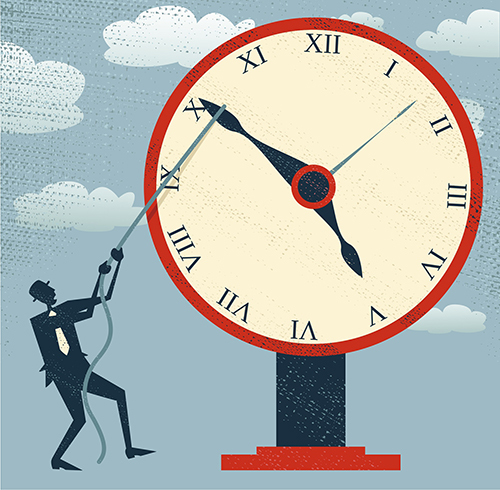
Nearly two out of five small business owners say their time is their company’s most valuable asset, and one in four would pay more than $500 for an additional hour of work per day, according to a j2 Global survey. Approximately 44 percent of respondents related their time management problems to wearing too many hats at their companies, often performing five or more distinct tasks within the organization. For many entrepreneurs, resolving this dilemma requires navigating a trade-off between the money you’d save doing it yourself and the time you’d gain paying someone else.
How Are You Budgeting Your Company’s Time?Based on a survey of 1,500 executives, McKinsey & Company recommends approaching time management systematically on the business level instead of just as an individual activity. How much time is each person spending on different tasks, and does that represent the best use of time? A one-person business can ponder the same questions with respect to how much time is allocated to various tasks during the work week.
McKinsey’s respondents were often surprised to find how much time they and their staff were spending on tasks besides their main job functions. Satisfied executives spent more time making key business decisions, defining direction, and motivating people. They spent fewer hours handling emergencies by email and telephone, attending unnecessary meetings, and reading long reports.
AdministrationMcKinsey’s survey found effective time managers used high-quality administrative support. If your preference or budget is to handle your own administration, PCWorld provides tips for using Google Calendar and Gmail more effectively to automate tasks such as reviewing daily agendas. If you’re seeking to hire administrative support without paying for full-time staff, VerticalResponse offers a guide on how to recruit a VA using resources such as oDesk.
ITTech support for tasks such as website management is a prime candidate for weighing the pros and cons of doing it yourself. If you’re tech-savvy, TechRepublic DIY IT Guy Jack Wallen offers tips for keeping your costs low. If you’d rather outsource your IT, Freshdesk marketer Aishwarya Hariharan reviews some factors to consider, including cost, scale, and quality control.
Graphic DesignCreative visual tasks such as logo creation and image editing provide opportunities to cut costs if you’re able to do some things yourself. You don’t need to be a trained graphic designer to create professional-looking logos using automated tools such LogoGarden’s pick-n-click online software. For those who’d rather hire specialists, job sites such as Elance help connect freelance graphic designers with small businesses needing their services.
Publicity and SalesAnother area where your skill set and budget might impact your decision to do it yourself is marketing and sales. If you have some copywriting skill and time to manage your own Internet marketing, you might be able to run your own promotional campaign with support from CRM systems such as as SalesForce or ZohoCRM. Alternately, Forbes writer Ilya Pozin argues that outsourcing your marketing can save you time and be more cost-efficient.
June 26, 2014
Contradictions of selling a business
Selling a business comes with many diverse challenges and contradictions. Helping a business owner sell their business, I find, is tremendously rewarding but equally incredibly challenging. The incredibly challenging part, as I found out today, has a technical definition and it’s called the ‘heterogeny of ends’.
According to Wikipedia, the ‘heterogeny of ends’ is “an ongoing behavioral sequence [that} must often be understood in terms of ever-shifting patterns of primary and secondary goals. For example, one may accept the invitation of a friend to attend an art show. Initially, the motive is simply the anticipation of a pleasant evening in good friendship, but in the course of that evening, one encounters a highly desirable work of art and wishes to purchase it. A whole new set of motives now enter the picture and exist alongside – and in addition to – the original motive.”
The heterogeny of ends is why it’s so hard to sell a business because there is an ever-shifting pattern of primary and secondary goals. For example, at its most basic, the owner wants to keep the business running and operating at its optimal so it will be bought. They also don’t want to work too hard as they don’t want the business to grow too much as the buyer won’t pay any more for it. Similarly, they don’t want the business to decline or this will discourage the buyer from buying the business.
The above is only one example. If the business sells, the seller will really now have the time to do the things they said they would always do. Having time to do the things they said they would do is also associated with getting old. Who wants to get old?
One of the biggest challenges for the seller and the business broker they choose to hire is that the seller expects the business broker to bring the highest price possible. That makes sense at some level however the seller has complete control of the variables that determine the value of the business; not the business broker.
Here’s what the seller controls that affects the value of their business and the decisions they are able to make.
A primary goal of the seller has been to pay the least amount of tax each year by limiting the profits realized on the sellers business, regardless of the legal entity.One of the strategies to lower the amount of tax paid and congress supports is by allowing a plethora of costs to be tax deductible. The fine line between what is being legally tax deductible and a personal expense on behalf of the owner and/or their family is in the end, a decision for the seller.This last situation adds to the heterogeny of ends as the seller now has an offer from a buyer and realizes that all those tax deductions they have been able to claim through the business will all of a sudden stop if they accept the offer from the buyer and sell.Another reality may arise for the seller and that is knowing how much they will need once they stop owning the business and lose any compensation they have been paying themselves to fund and maintain their current lifestyle.As the business becomes more profitable each year, the seller spends more with the expectation of increasing market share and becoming more profitable.A lot of businesses, for the owner, morph from being a business to provide a product and/or service into a lifestyle to support travel, playing golf, being a member of local organization or more. The seller now has to make sure enough has been saved or the sale of the business will generate the income they need.Too many sellers expect the final amount they will receive from the sale of the business to be the amount they get to keep. Unfortunately there are taxes and fees to pay.Because of the above variables it is not only important the seller of a business get a valuation before the business goes into the market but they also need a tax structuring report to understand how much the taxes will be and therefore the amount they get to keep if the business sells.
Are you thinking about selling your business and move to your next challenge? Would you like to know the value of your business? If you would like more information please visit my webpage Business valuation.
For more immediate help you are welcome to send an email to Andrew Rogerson or give me a call on 916 570-2674.
The contradictions of selling a business
Helping a business owner sell their business, I find, is tremendously rewarding but equally incredibly challenging. The incredibly challenging part, as I found out today, has a technical definition and it’s called the ‘heterogeny of ends’.
According to Wikipedia, the ‘heterogeny of ends’ is “an ongoing behavioral sequence [that} must often be understood in terms of ever-shifting patterns of primary and secondary goals. For example, one may accept the invitation of a friend to attend an art show. Initially, the motive is simply the anticipation of a pleasant evening in good friendship, but in the course of that evening, one encounters a highly desirable work of art and wishes to purchase it. A whole new set of motives now enter the picture and exist alongside – and in addition to – the original motive.”
The heterogeny of ends is why it’s so hard to sell a business because there is an ever-shifting pattern of primary and secondary goals. For example, at its most basic, the owner wants to keep the business running and operating at its optimal so it will be bought. They also don’t want to work too hard as they don’t want the business to grow too much as the buyer won’t pay any more for it. Similarly, they don’t want the business to decline or this will discourage the buyer from buying the business.
The above is only one example. If the business sells, the seller will really now have the time to do the things they said they would always do. Having time to do the things they said they would do is also associated with getting old. Who wants to get old?
One of the biggest challenges for the seller and the business broker they choose to hire is that the seller expects the business broker to bring the highest price possible. That makes sense at some level however the seller has complete control of the variables that determine the value of the business; not the business broker.
Here’s what the seller controls that affects the value of their business and the decisions they are able to make.
A primary goal of the seller has been to pay the least amount of tax each year by limiting the profits realized on the sellers business, regardless of the legal entity.One of the strategies to lower the amount of tax paid and congress supports is by allowing a plethora of costs to be tax deductible. The fine line between what is being legally tax deductible and a personal expense on behalf of the owner and/or their family is in the end, a decision for the seller.This last situation adds to the heterogeny of ends as the seller now has an offer from a buyer and realizes that all those tax deductions they have been able to claim through the business will all of a sudden stop if they accept the offer from the buyer and sell.Another reality may arise for the seller and that is knowing how much they will need once they stop owning the business and lose any compensation they have been paying themselves to fund and maintain their current lifestyle.As the business becomes more profitable each year, the seller spends more with the expectation of increasing market share and becoming more profitable.A lot of businesses, for the owner, morph from being a business to provide a product and/or service into a lifestyle to support travel, playing golf, being a member of local organization or more. The seller now has to make sure enough has been saved or the sale of the business will generate the income they need.Too many sellers expect the final amount they will receive from the sale of the business to be the amount they get to keep. Unfortunately there are taxes and fees to pay.Because of the above variables it is not only important the seller of a business get a valuation before the business goes into the market but they also need a tax structuring report to understand how much the taxes will be and therefore the amount they get to keep if the business sells.
Are you thinking about selling your business and move to your next challenge? Would you like to know the value of your business? If you would like more information please visit my webpage Business valuation.
For more immediate help you are welcome to send an email to Andrew Rogerson or give me a call on 916 570-2674.
June 24, 2014
Is being an entrepreneur right for you
A question I get asked regularly by buyers is how long does it take to research and then own and operate your business. The answer varies depending on the type of business the buyer wants to buy and many variables but it generally takes from 3 to 6 months if you buy an existing business or many years if you start your business from scratch. This is quite a lot of time so a business buyer needs to be patient with themselves and the acquisition process.
If you are thinking of becoming the next entrepreneur, my suggestion is that a good starting point is to look at your personal strengths, weaknesses and experiences so you can work from a position of strength and a positive place.
Decide which option works best for youOnce you decide that being an entrepreneur is of interest to you, the next step is to decide which option best fits your strengths, skill set and experience. Did you realize you had options? For some reason, most entrepreneurs think they only have one option and that is to start a business from scratch. However, there are two other options and they are to buy an existing business or buy the rights to a local franchise.
Just like anything in life where there are options and it’s a major decision, you do your research so you include the things that are important to you, exclude the things that are not and keep in front of you those items that you are not yet sure about.
How do you decide whether to be an entrepreneur?If you are thinking of starting a business from scratch, one of the first things you will find out is that 80% of businesses fail in the first two years as they are either undercapitalized and/or the business owner lacked the necessary skills. Saying the business is undercapitalized simply meant the owner didn’t have enough money to fund the business until it turned a profit.
If you plan to start a business from scratch, you also have to work through many of the following items. These include the need to come up with a product or service the market needs and is willing to pay you at the rate you can make a profit. As I mentioned above, you will need to have enough money to fund all the costs to start the business as well as your personal expenses.
Starting a business from scratch comes with the highest risk. You will need to create everything from scratch and it includes setting up the book-keeping, creating processes and procedures for your products and services, training employees, deciding and executing the sales and marketing, handling customer needs, meeting and working with suppliers and implementing different technology so you become as efficient and profitable as quickly as possible. Generally this will all have to be done with little to no access to third party finance from a bank who will be unwilling to lend until you have established what you do and can generate a positive cash flow.
Do you have money to invest in a business?Most entrepreneurs don’t have the interest, patience or creative idea to start a business from scratch. Instead, if you have money to invest in a business, you have two options. Buy an existing business or buy the rights to a local franchise.
Most entrepreneurs have a strong opinion about which is the best option. My experience has shown that those who are interested in buying the rights to a local franchise are more open to this idea because they can see the concept at work in the market and are able to see themselves owning and operating this type of business. In addition, their business experience has been working for a company where they have learned and mastered one particular skill that they enjoy and the type of franchise they wish to buy complements that skill and interest. In a franchise model, the franchisor offers their established brand, reputation and expertise combined with training and marketing support and requires the franchise buyer or franchisee to bring their skills, operations expertise and energy to make it a win/win.
Buy an existing businessThe third option, to buy an existing business, makes a lot of sense but is probably the hardest of the three options. What makes it the hardest is finding the right business in the right location (near where both the buyer and seller live,) at the right price and both parties being able to negotiate the myriad details to allow the business to move from the seller to the buyer. Selling or buying a business is complicated as there are so many moving parts. Some of the main ones include confidentiality to make sure customers, employees and suppliers don’t find out the business is for sale, the buyer having a down payment to buy the business with a good credit score and management/business experience to qualify for a loan to buy the business. Alternatively, the seller has to be willing to carry some level of finance; which they may or may not be willing to do.
There are many good reasons for a buyer to buy an existing business. It is the safest option as the owner has relationships in place with customers, suppliers, a landlord and trained employees. The business will have an established cash flow, reputation and position in the market.
Is being an entrepreneur right for you? If you have the drive to keep learning, access to finance to get your business goals going, a comfort with the level of risks you are taking then your chances of success are high. Successful entrepreneurs come in all shapes and sizes so the good news is that no-one size fits all.
If you would like more information about selling a business, buying a business, buying a franchise or a related service such as valuing a business, please visit my webpage Services and choose from the drop down menu the information you would like.
For more immediate help, you are welcome to send an email to Andrew Rogerson or give me a call on 916 570-2674.
June 19, 2014
Justifying the purchase price of a business
Buying a business is probably one of the most difficult decisions someone has to make. Buying a car and buying a house certainly rank up high with them because we need to have a car and we need to have a house but we don’t need to buy a business as we can go a get a job. Perhaps deciding to ask or accepting an invitation for marriage and buying a business are the most difficult decisions to make as the decision stays with us a long time and there is a tremendous amount of emotion invested; especially if the answer is yes.
The buying decision making process generally covers many months. It includes initial high level decisions to determine if the business feels right and whether it makes sense to continue through the demanding processes of negotiating the deal, worrying about how to fund and buy the business, if the buyer has the skill set to be successful, getting all the right legal documents and agreements in place and so much more.
The financial viability is a critical aspect for the buyer and seller. The seller has gone through their process to know what price they are willing to accept to sell the business. For the buyer, this can be a difficult process as they can be comparing Business A with Business B, deciding how much risk they could take and more.
The following suggestion is to provide a buyer with a way to decide if their justification of the purchase price of the business makes it a good decision. This is a fairly simple tool and like all tools, does not provide all the answers to all questions but I think helps guide a buyer about whether their initial investment makes any sense.
Purchase Price Justification formulaThe Purchase Price Justification formula goes as follows: Your numbers will be different to my example but simply get out a calculator and use this to analyze your numbers.
.tftable th {font-size:12px;background-color:#acc8cc;border-width: 1px;padding: 8px;border-style: solid;border-color: #729ea5;text-align:left;}
.tftable tr {background-color:#d4e3e5;}
.tftable td {font-size:12px;border-width: 1px;padding: 8px;border-style: solid;border-color: #729ea5;}
.tftable tr:hover {background-color:#ffffff;}Business purchase price$600,000Buyer downpayment (33.67% of the purchase price = $200,000)Net Profit or Sellers Discretionary Earnings of the business$200,000Minus annual Debt of $400,000 (For example, a 10 years SBA loan @6.75%)$56,297Minus current interest a buyer could earn on their downpayment$2,000Minus Buyers salary for owning and operating the business$75,000Minus any annual costs to replace capital equipment, for example$5,000Remaining cash flow for buyer$61,703Final Purchase Price Justification.tftable {font-size:12px;color:#333333;width:100%;border-width: 1px;border-color: #729ea5;border-collapse: collapse;}
.tftable th {font-size:12px;background-color:#acc8cc;border-width: 1px;padding: 8px;border-style: solid;border-color: #729ea5;text-align:left;}
.tftable tr {background-color:#d4e3e5;}
.tftable td {font-size:12px;border-width: 1px;padding: 8px;border-style: solid;border-color: #729ea5;}
.tftable tr:hover {background-color:#ffffff;}Return on downpayment if getting interest at a bank (currently 1%)$2,000Remaining cash flow for buyer per the above$61,703Average equity return ($400,000 divided by 10 years)$40,000Total$103,703
To calculate the annual Return On Investment simply divide the $200,000 into $103,703 and then divide by 100 = 51.85%. That is, if a buyer uses a downpayment of $200,000 to buy this business and is able to maintain the existing cash flow and repay the SBA loan after 10 years they will get a 51.85% annual Return On Investment; which is pretty impressive.
If the buyer wants to be aggressive and repay the SBA loan after 5 years the annual Return on Investment jumps to 71.85%. There are very few places to earn that sort of Return On Investment.
If you would like more information about buying a business please visit my webpage Buy a business or buy a copy of my book Successfully buy your business.
For more immediate help with buying a business you are welcome to send an email to Andrew Rogerson or give me a call on 916 570-2674.