Andrew Rogerson's Blog, page 53
December 16, 2014
IT department and your business success

We live in a world where digital information is king and those that maintain it go down in history as the Lancelots of the cyber round table. Like the white knight, we expect great things from them, including courtesy, preparedness, and forethought. When an IT department does not deliver, every aspect of your business will suffer, from customer service to production.
CommunicationIt is human nature to want to feel important, leaving a legacy in the wake of our accomplishments. For some of us, that translates to extra training and pride in our work. For others, we become self-important, alienating those around us. Like the computer guy from the Saturday Night Live skit, we order people to move and do our work with derision and no explanation. Communication is one-sided and antagonistic, impeding interdepartmental collaboration and data resourcing.
Since the primary job of the information technology department is to facilitate the transfer of data from one place to another, it needs to be part of its policies to look for ways to share data. Cross training essential. Not only does the marketing department need to understand data resources to best be able to mine for leads, the IT department needs to know what information is important to marketing.
Lost DataLosing data is bad. Losing data and having it show up on the Internet is exponentially worse. Protecting data is the IT departments greatest concern but, like the hammer that sees everything as a nail, we tend to use software and hardware to fix the issue. This compounds the risk from hackers and adds extra work to the team. The new theory of information safety recommends spreading the responsibility for data security throughout the organization. Cloud-based backup systems like the one offered by Mozy Enterprise allow all of the users to access data and verify the integrity of the information. Develop information procedures that outline exactly what other members of the organization should be looking for.
Reset RouterFor many companies, one of the primary functions of the IT department is customer care. Especially with computer technology, customers come in a variety of expertise from those that cannot find an icon to those with advanced degrees. A typical mistake of the customer service contribution from IT is assuming everyone knows less than you. Developing a fancy name for the act of turning on then off the system does not make it a complex operation. Customer service functions need to be ambidextrous in that they simultaneously solve the customer’s issue and create future sales. Teach your IT people how to deal with a wide range of people.
Dividing by ZeroAssuming that small problems will not become big problems is a common and costly mistake of the IT professional. At the turn of the millennium, computer people found that the double zero was going to crash important system around the world. Ultimately they fixed the problems with great expense and only minor issues but the issue could have been huge. Have your IT team perform a white paper experiment where they try to break your system. Come up with any possible way to access the system using backdoors, disrupt the programs with bad inputs, and crash the platforms with anything less than a hammer. After that, come up with the fixes.
If you would like more information about selling a business, buying a business, buying a franchise or a related service such as valuing a business, please visit my webpage Services and choose from the drop down menu the information you would like.
For more immediate help, you are welcome to send an email to Andrew Rogerson or give me a call on 916 570-2674.
The article IT department and your business success first appeared on Andrew Rogerson and Rogerson Business Services.


December 11, 2014
December 9, 2014
What are you selling?

Your business is for sale and what you selling? A buyer comes to see a business for sale and sees a boat in the yard at the back of the business. The business is a printing and direct mail business so the boat stands out and so the buyer has to ask, “Is the boat part of the business being sold.” Everyone laughs because the boat stands out and it does not make sense to be part of the sale, but the buyer has to ask because he’s curious.
In a different transaction, a buyer makes an offer for an auto repair business that the seller accepts. Just prior to the close of escrow, the buyer wants to do a final check to make sure all the equipment is on site and operational. The negotiations with the buyer and seller during the previous months have at times been difficult and so everyone is pleased to close the sale and move on. While the buyer is walking around he asks where the automatic jack is that he saw on a previous visit. The seller explains that he has a second auto repair location and the buyer must have seen it when it was being borrowed by his other location. As soon as the buyer hears this information he demands the automatic jack is part of the sale and it must be included because he saw it last time he came. The seller politely says that is not happening. The buyer now impolitely says he’s not buying the business if it is not part of the purchase price. The deal does not close. The agreed purchase of the business was $432,000. The cost of a replacement automatic jack is about $2,000.
What are you selling?If you are selling your business, be crystal clear what the buyer gets and does not get. A standard document I request a buyer to provide is a list of fixtures, furniture and equipment (FF&E). I provide a template if the seller does not have one so they can create a summary for me. A list of FF&E should readily be available as at a minimum, it would be used as part of an annual tax return.
Read More Here is more information about the steps to sell a business.
What you are selling is more than FF&E.When you sell your business it may include more than FF&E. For example, if the owners have life insurance that won’t be part of the sale. (You can actually add back the cost of the annual premium if the business pays for the life insurance and that will increase the value of the business.)
I currently have a seller of a business with an ownership interest in other companies with other partners. Part of the reason he has this outside interest is because the business he is selling is a customer of those businesses. You could argue that the seller does not need to disclose that information to a buyer and that the buyer is free to do business with another company however, it simply makes sense to let the buyer know. When you sell a business a critical rule is to disclose, disclose, disclose.
My suggestion is to not only disclose but do it early in the transaction. If it’s important to the buyer (for whatever reason) you can have a conversation about it and if necessary, come to an agreement that works for both parties. It’s not wise to make these disclosures either at the last minute or during due diligence when a lot of time and effort has been made to get to this point in the transaction. Buyers hate surprises deep into a transaction as their reaction is; what else is the seller not sharing with me.
What are you not selling?If you own the building it will be obvious to state whether it’s part of the sale. If you have family members that work in the business, will they continue or will they leave? Are the paid market rates for the work they provide? A lot of business owners pay their family members at a higher pay rate. If they stay, the buyer will want to pay them what they would pay the market rate for that position.
When you are selling your business and putting your thoughts together, make it simple on yourself. Put your feet in the shoes of the buyer and answer the question; if I was buying this business what would I need to include so I can operate it the way I do now. If you have too much inventory or outdated inventory, get rid of the excess and don’t make the buyer do it. If you have personal items that are important to you, take them out before a buyer sees them and thinks they are part of the operation of the business and therefore part of the sale.
Are you thinking about selling your business? Would you like to know the value of your business? If you would like more information please visit my website Business valuation.
For more immediate help you are welcome to send an email to Andrew Rogerson or give me a call on 916 570-2674.
The article What are you selling? first appeared on Andrew Rogerson and Rogerson Business Services.
December 1, 2014
Enjoy the season that sustains your reason

The 2014 Holiday Season moves into full swing now that Thanksgiving has come and gone. And so, to you and your loved ones, Season’s Greetings and Happy Holidays.
Has 2014 been the year you hoped and expected?
How you answer this question will depend on what’s important to you or the reason that sustains you to get out of bed each day. If your primary reason is to put a roof over your head and those you love, provide food, maintain good health and buy gas for the car(s) to keep everything going and you have been successful all year then life is good. If your primary reason is this and more and again you have been successful, then life is good.
How does 2015 look?
Based on what I’m seeing, 2015 is setting up to be an awesome year for those that own and operate a business or are thinking about doing so, Here’s why:
According to an article in the Wall Street Journal, the US economy in the 3rd quarter of 2014 saw a revised GDP figure of 3.9%. This is the fastest pace the US economy has experienced in more than a decade.The price of oil has come down from a peak of $115 per barrel to now $70 and is expected to go lower. This will bring the cost of a gallon of gas to less than $2.50 and according to an article on CNBC, will provide an approximate $125 billion tax cut.According to data from Custora, internet sales on Black Friday were up 20.6% compared to a year ago. It also said that if the data holds up, Black Friday’s online sales may even surpass 2013’s Cyber Monday to become “the biggest shopping day in U.S. history.”CNBC also reported that US Corporate profits hit a new high of $1.87 trillion or 10.3 per cent of GDP. This means US Corporations have money to return to investors and money to spend on improving their business.The US unemployment rate per the Bureau of Labor statistics shows at the start of the year the rate was 6.6%. In October it was 5.8% and is expected to finish the year at about 5.7%. Lower unemployment means more people have jobs which gives them money to spend.Small business lending continues to grow. According to the Coleman Report, at the end of September, 2012, $15.15 billion dollars in 7A loans were approved. At the end of September, 2013 the figure was $17.87 billion. At the end of September, 2014 the figure was $19.19 billion. The growth in small business lending shows an increase in small business entrepreneurs and small businesses are the growth engine of the economy.The recent US elections brought a Republican congress in both the House of Representatives and Senate. The good news is that not only are Republicans pro-business, but the next elections are two years away and so we don’t have to worry about elections for another two years.The great thing about Thanksgiving and the Holiday season is that it reminds and allows us to slow down and reflect on what’s important to us. We each have a reason for being and our own means of measuring our success. That is, we each have a different reason that motivates and sustains us and keeps us going during the rest of the year. So once again, Season’s greetings, best wishes for a Happy Holiday and a wonderful New Year and I hope 2015 is your best year ever.
If you would like more information about buying a business, buying a franchise, starting a business or selling a business, please visit my website Business Advice Books.
The article Enjoy the season that sustains your reason first appeared on Andrew Rogerson and Rogerson Business Services.
November 28, 2014
Narrow your franchise options
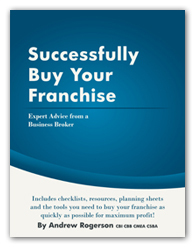
Franchise options come in all shapes and sizes. For the franchise buyer, their first two primary criteria are the amount of money they have to invest in a franchise and what particular industry group they would like to own and operate their franchise.
How much to invest in a franchiseThe amount of money available to invest is a function of the franchise buyer and their resources. If they don’t have all the cash to buy and start their concept, finance may be available as an SBA loan if the franchisor and the franchise is approved and part of the Franchise Registry.
This link connects with more information about what criteria a franchise buyer needs to qualify for an SBA loan.
Franchise choices of a groupOnce the franchise buyer knows their finance options and industry group options the next step for the franchise buyer is to narrow down franchise choices in a group that meet their criteria.
There are many new franchise opportunities available. Click this link to search our database of over 360 franchises in more than 37 different industries.
Narrowing down the franchise choicesOnce the franchise investment and franchise group is clear, the reasoning becomes more tactical to find the right choice. Good items to put on a check list and work through with each franchise choice includes:
The length of time the franchisor has been in business.Most franchises don’t immediately open their door and sell franchises. Most franchises open as a single business, develop and build their concept getting feedback from customers.
With positive feedback from the market, the business owner then goes through a long and expensive process to make sure they meet legal requirements both at a federal and state level, their marketing is in place not only to attract franchise buyers, but also the material each franchisee needs to help build the franchise brand, technology requirements are in place and accounting and other back-office processes operate successfully.
How long has the franchisor been franchising?The amount of time the franchisor has been in business is important. Equally is the number of franchises they have sold and are operational. One of the best options available to a franchise buyer is being able to phone existing franchisees to see how they find their experience working in the franchise and being a franchisee. This option is not available when a business buyer buys an existing business.
Just like in the real economy, franchises go through different stages that include starting, evolving, developing, growing and changing. Before you make your final franchise selection, understand what stage each franchise is that is on your final list and whether that stage is positive or negative to you.
If you would like more information about buying a franchise please visit my webpage Buy a franchise or buy a copy of my book: Andrew Rogerson and Rogerson Business Services.
November 27, 2014
2014 Tax Planning Tips

Most business owners have a calendar tax year, that is, from January 01 to December 31. From what I am seeing in the market, most business owners have had a very good year. Are you having a very good year? If so, that means you will have taxes to pay and these may be more than last year.
Here are some tax planning suggestions to finish off 2014.
Annualize your most recent Profit and Loss statementTo understand if you need to be proactive with any 2014 tax planning, it’s a very simple two step process. Step one is to run a current Profit and Loss statement that is complete say to the end of September or October (the later the better) and then run the same Profit and Loss for the same period for 2013.
How do they compare? Are there any major variations? Do you expect an increase or decrease in sales and/or expenses through to the end of the year?
If the above is too complicated and you use accounting software, export your data and ask your Enrolled Agent or CPA to give you some feedback.
Start or add to your retirement planIf you don’t like paying taxes then put some of your money into a retirement plan. Putting money into a retirement plan due to the success of your business comes with complications. Your Enrolled Agent or CPA will have some advice about the tax consequences. If you do your own payroll, you will need to make sure your deductions are correct and that your payroll taxes are paid on time.
You may also want advice from a financial planner how to best invest the money. There are different plans you can use from Individual 401(k) plans to SEP IRAs to SIMPLE plans that may or may not require you to include employees in the plan. If a plan requires employee participation, make sure you are comfortable with it. If the business is doing well and you are considering bonuses or pay increases, opening a retirement plan may be a better option. If you have time, read IRS Publication 560.
Generally everything must be in place by December 31 so start on this now as the professional help you may need may not be available on your schedule…plus it’s more complicated than you may expect.
Thank your employees – legallyA great business is all about great employees. Period. Customers will only keep returning if their needs are met and that’s the role of the employees to ensure that happens.
Because employees are such a valuable asset to the business, treat them accordingly. The IRS has strict rules about what benefits are and are not tax deductible to the business and it’s all available by clicking here – IRS Publication 15-B which is a guide to fringe benefits. For final approval, run your options past your Enrolled Agent or CPA.
Last year you were able to deduct up to $500,000 and write it off immediately for what was called a Section 179 Deduction. This year that tax deduction has gone back to the old level of a maximum of $25,000…unless Congress decides to extend the $500,000 before they recess for the year.
Section 179 deduction options include upgrading computers be it hardware or software, office furniture and vehicles.
Do you have the best legal structureWhen we start a company we are never sure whether to start as a Sole Proprietor, LLC, Corporation or whatever. We may get advice from a tax professional and/or attorney…or we may not.
As your business evolves and changes, it’s worth looking to see if the current legal entity is the best option. If the business is growing and making money, different legal entities offer different protections.
If you would like a 2 page summary of the different options available to you, click the following link: creating your legal entity.
It is especially important to analyze entity structure if your business is now netting more than $100,000 per year. Keep in mind that if you incorporate, you will now be required to take money out of the business via payroll rather than simple draws. There is a lot more paperwork involved under this status, but the tax benefits and protection that a corporation offers may prove more beneficial. Always discuss these options with your attorney and tax pro before making a decision.
If you would like more information about selling a business, buying a business, buying a franchise or a related service such as valuing a business, please visit my webpage Services and choose from the drop down menu the information you would like.
For more immediate help, you are welcome to send an email to Andrew Rogerson or give me a call on 916 570-2674.
The article 2014 Tax Planning Tips first appeared on Andrew Rogerson and Rogerson Business Services.
November 26, 2014
Experience from selling businesses
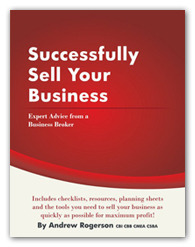
What’s your experience from selling a business? Oliver Wendell Holmes, Sr. was a physician, poet, professor, lecturer and author that lived in 19th century Boston, MA. One of his famous quotes is “A moment’s insight is sometimes worth a life’s experience.”
Here are some of my moments of insight I’ve gained from selling businesses that I hope smooth your experience. Most business owners will not do this very often and as result, can easily miss-step. My goal is to maximize your chances of success.
Here are 10 items to consider:
1. It takes time to sell a businessLife is busy and hectic with so much to do yet so little time. This seems even more so for business owners as there are multiple things to be done and done properly or there is a danger the very thing to protect, the business, will wither and die.
If life is hectic and you own a business, how do you expect to find the time to package and present your business for sale, learn and understand all the steps and in the process of finding a new owner, get it all right?
When you start to think that it is time to sell your business you are right. Sometimes the final step of closing the sale of a business can take years as it requires getting the proper accounting in place, written processes and procedures, understanding finance options, tax responsibilities and more.
If you plan to sell your business it will take more time and require more of your time than you expect as there are too many things you simply do not control. Once you decide to sell, put time on your side so you do as much as you can on your terms.
Put yourself in the shoes of the buyer.
You make initial inquiries about buying a business for sale. Your initial interest is to look at the Profit and Loss, Tax Returns and Balance Sheet to make sure the business is making as much as the broker or seller says it does. The only reference point at this stage for the buyer is a set of financial statements. If the Profit and Loss doesn’t add up or the Balance Sheet does not make sense, for most buyers it doesn’t make sense to continue to spend their time as what they are seeing makes them uncomfortable.
The appearance of the sellers financial records, files and reports are a big deal and must pass the first test for a buyer to keep going.
Here is more information about how to value a business.
3. Appearances matterQuestions from the buyer will flow from the financial statements. The quality of responses and the requests for supporting documents and how it’s presented is a big deal. If so far is so good, the next step is a conference call for the buyer to ask initial questions so they get a feel for the honesty and integrity of the seller and if they think they can work with them. If what they are seeing is making sense then the buyer will keep going. If it isn’t, they’ll cut their losses and move on.
At this point in the transaction, all a buyer has guiding their next steps is appearances. That is, appearances matter.
4. What are you selling?Not every buyer can qualify to buy any business. If your business has a license then this is the first thing to disclose to potential buyers. If you are selling a medical practice in California, the buyer must hold a current California Medical license or they cannot own and operate the practice.
Similarly, a business may have a California Contractors license such as a General Contractors License and/or a special license such as plumbing or electrical etc.
Another example is an ABC license to sell alcohol. If the buyer has a record from drinking and driving they will not qualify to get an ABC liquor license no matter how hard they try.
In addition to license disclosures, disclose any other information that may filter out potential buyers as it’s better to do it early than try to do it later. Examples include but are not limited to if the business has union or non-union employees, if all employees have signed an I9 immigration form, if the business has a Profit Sharing plan, health insurance for the owners and employees and any pending litigation. Buyers do not like surprises when buying a business.
Here is more information about the tax impact of selling a business.
5. All transactions die three timesSelling a business or buying a business comes with many steps and processes. Emotions run high for a prolonged period of time, especially if there are delays.
As a broker that specializes in the buying and selling of a business, it is not unusual for the transaction to die up to three times. At the end of the day, the business is sold by the owner and it’s bought by the buyer because all details have been disclosed and there is a motivated seller and a motivated buyer. If one party is not motivated enough the deal doesn’t close. It’s as simple as that.
It’s also very normal for melt downs, frustrations and temper tantrums to occur as its part of the territory of buying and selling a business.
6. Understand the ebb and flow of a dealThere is a pattern that happens in almost all deals. In the initial stages, the seller is the most important player in the deal as they get to decide what and how much they disclose to a potential buyer. If the seller feels the buyer doesn’t have the right traits they can choose to delay or make comments to discourage the buyer.
Once the buyer makes a formal offer and the seller decides to accept it, the focus and impetus now moves to the buyer for a number of reasons. This includes the buyer conducting their due diligence to make sure they are happy with the representations of the seller. If the buyer needs to obtain third party finance, that can be a slow and difficult process. Is the buyer focus just on this transaction or do they have others in play? Will the buyer be able to qualify to take over the lease, how much training does the buyer need and more.
Once all the deal points are done and escrow is nearing closure, both buyer and seller need to come together so the goodwill the seller enjoys passes to the buyer.
7. A buyer does not have to buyThe sale of a business generally starts with the owner or seller deciding it’s time to do something different. The buyer however has to do most of the heavy lifting to get it all done. This includes negotiating the deal points, putting these deal points into a purchase agreement, making sure the financial statements reflect the representations of the seller, they are correct and up to date and more. At the end of the day, though, most buyers if they close the sale want to buy but they are generally under no obligation to do so.
For a seller with multiple offers, choose the option that makes the most sense and stay focused on it. Trying to negotiate with multiple buyers simply creates too much as the ebb and flow of a deal is in constant motion.
8. Get Advice from Experts to Sell Your BusinessThere are a range of experts that can help a seller through the process of selling their business. Most business owners have not sold or have only sold one business before. It makes perfect sense for them to get legal advice from a qualified attorney, accounting and tax advice from a CPA or Enrolled Agent and how to invest the proceeds of the sale and appropriate life and other types of insurance from a financial planner.
Of course, I see my role as a business broker as critical in helping both the seller and the buyer by being the primary professional in the transaction putting valuations together, reviewing, collecting and disclosing documents at the appropriate time, handling the marketing of the practice to attract as many buyers as possible and when they inquire, having the right documents in place ready to go. In my own case, two other services I other include a valuation of the business with an 18 page written report and having a broad range of third party lenders who will look at providing finance to a qualified buyer. Plus, don’t forget my primary benefit which is being a sounding board for both buyer and seller to ensure any and all of their questions are answered as a deal will not close while any question remains outstanding on either the buyer or sellers side.
9. Manage your ExpertsGetting help from trusted advisors is good business. Professionals that know you and what you do allow for good ideas and the right information to be shared quickly and easily. However, make sure you control these experts and make sure they are the right expert for the right question. A seller I was working with recently had a tax question for his CPA. The tax question turned into a written report and a bill to the seller for $2,000 which is not what they were expecting.
Not all attorney’s specialize in the buying and selling of a business. If an attorney is inexperienced they can kill the deal as they may be too worried about giving wrong advice or being held responsible for the decision of the seller and so it makes more sense to them to kill the deal and therefore keep their client.
10. Life happensSelling a business comes with many moving parts. A lot are predictable but also many are not. Health issues, financial issues, business and personal time pressures and just the demands of staying on top of it all. So much is easily disrupted as life happens and it is what it is.
Are you thinking about selling your business?
Would you like to know the value of your business?
For more immediate help you are welcome to send an email to Andrew Rogerson or give me a call on 916 570-2674.
The article Experience from selling businesses first appeared on Andrew Rogerson and Rogerson Business Services.
November 25, 2014
Grow your business by buying one

Whether you already own a business and want to grow, or you want to break into the business world with the acquisition of an established company, there are many things to consider before you begin the process.
One of the primary benefits of purchasing an established company is that you won’t have the struggle of building a business from the ground up and can work with the current established foundation. However, keep in mind that you could inherit the negatives as well, such as a questionable reputation or deeply entrenched operations that will be more difficult to optimize and clash with the way your business runs.
Here are 11 things to consider if you want to buy a business and grow:
1. Timing Is EverythingWhen planning to acquire a business, consider whether the timing and fit are right for your company and if it will help it grow beyond what it could on its own.
There are many points to consider when deciding if the time is right to acquire a business. You will need to evaluate your readiness on a financial and personal level and conduct market research on the industry.
2. Familiarity with the industryOne of the things I’ve learned in business is to do things from a position of strength. You don’t start a marathon without training for many months prior to the event if you want to finish. That’s equally true if you want to win a sprint. Without training you will strain a muscle and never finish.
If you plan to buy a business, make sure you have a genuine interest in the industry and how it works and equally important, that industry has a long-term future and it relates to your current business or area of expertise.
3. Potential ROIThe magic of a business is in its numbers which are only available through their financial statements. In a privately held company, financial statements are closely guarded. Once you get hold of the financial statements, test their quality as you need to know when you calculate your potential Return On Investment if the numbers make sense.
Hopefully your business has a stellar reputation. A reputation requires protecting and making an investment. If you plan to buy a business, talk to existing customers, suppliers, landlord and those in the same industry to see if there are good relationships. A business with a strong reputation can easily be dragged down by a business with a bad or poor reputation. Also go online and see what reviews and comments are available and contact the Better Business Bureau. If the reputation of a business is too tarnished, and relationships are not in good shape, they may be too hard to turn around.
5. Does the acquisition bring synergiesA basic reason to buy another business is to generate synergies, that is, organic and non-organic growth plus lower costs because of an increase in buying power all flowing to the bottom line. Make sure you know your industry and where your business currently sits and will it make your business stronger. Here is more information about buying a business.
6. Will buying the business strengthen Daily OperationsThe strength of a business is how it executes on a daily basis. A business has a culture or “way of doing things” that many times is subtle. Buying a business to blend with the existing business may create a clash of cultures. In 2001 and 2002 I worked at Hewlett Packard which acquired Compact. To make the merger as positive as possible, HP was the blue team and Compact was the red team with the goal to blend all processes and procedures into a new standard called purple. There was so much animosity between the blue and red teams that the merger was hopelessly drawn out while costs and benefits took much longer than necessary.
Prior to announcing any new acquisition, put strategies and tactics together that complement the current philosophy and culture of the business. Even consider hiring a professional team to help with bringing both businesses together.
7. Weaknesses or Struggles of the BusinessThrough exploring the reputation of a business to buy, it can also reveal the strengths and weaknesses of the business. To help define and analyze what you find, consider putting together your advisory team with legal, finance, accounting, tax and marketing skills. What may look like a weakness to you could be a strength in another context or through the eyes of your trusted advisors. Equally, what may be a strength could be a weakness.
8. Are all decision makers on boardYou may or may not have a team of trusted advisors but at a minimum you should have other perspectives be they from your senior managers, family or trusted professionals. Making the right acquisition is not a quick or simple process and it is also not for the faint of heart as it comes with risk. Be aware that your closest advisors may be more than happy for you to say “No” to the acquisition as say yes as they may consider you don’t have enough time, already work too hard or simple don’t need to take the risk.
9. Can you handle the financial risk?At the end of the day, one of the biggest risks will be a financial risk. If your buy the right business the benefit will flow to the bottom line. If you buy the wrong business, it will hurt the bottom line. Before you find out if your acquisition benefits or hurts the bottom line, make sure your business is financially strong enough to make the purchase including the costs of sustaining the business purchase until the bottom line turns very positive.
10. Making the ChoiceEnsuring that the company you are acquiring is a good choice for you and your business requires a lot of planning and research. At the end of the day it’s as complicated as a Yes or No.
Before you make that final decision make sure you have the time. Buying a business requires overseeing the current operations and blending them with your business. Once again, it will require sacrificing many hours of time and taking away from your current focus.
In your journey to find a business for sale, you may come across a business that is a better fit but not for sale. It’s very unusual for any business to not be for sale as a good business should always be run as if it’s for sale. Finding out is only a matter of making a phone call whether you do it yourself or hiring a professional like me to help you.
11. Alternatives to AcquisitionIf you are not prepared to acquire, or if the timing is not right, you may consider alternatives to acquiring a business. These include:
Merge: Rather than an outright acquisition, a merger combines your business with another existing business to fuse current business activities. Mergers usually occur to diversify or grow a company’s current market and activities.Alliance: Similar to a merger, an alliance is an agreement between two parties where they agree to work together for a mutual benefit by sharing goals and actions. It’s also referred to as a Joint Venture. This is usually done to draw more business by sharing marketing strategies and if after a while everything is working, the next natural step is to merge; if both parties can agree on the purchase price, terms and conditions.New location: Perhaps your strategy can be no more complicated than opening a new location for your current business. This reduces your risk by allowing you to expand your market and find new customers without the hassle or risk of purchasing a separate company.If you would like more information about buying a business please visit my webpage Buy a business or buy a copy of my book Successfully buy your business.
For more immediate help with buying a business you are welcome to send an email to Andrew Rogerson or give me a call on 916 570-2674.
The article Grow your business by buying one first appeared on Andrew Rogerson and Rogerson Business Services.
November 24, 2014
BizBuySell.com and their tools

I spoke with Curtis Kroeker, President for Vertical Marketing at CoStar. CoStar is described as a commercial real estate, information, and resource services company.
Curtis says CoStar acquired a company called LoopNet in the last few years, which is a commercial real estate online marketing platform. Curtis says LoopNet has four verticals, two of which target the businesses-for-sell marketplace – BizBuySell.com and BizQuest.com – and two land-for-sell verticals – LandsOfAmerica.com and LandAndFarm.com. He says these four verticals report to him.
Curtis goes on to discuss the sheer number of businesses that are being sold and purchased month on month and explains how quickly numbers are refreshed. He says they are focused on the United States market, although they do sell some international businesses on BizBuySell.com.
Curtis talks about the typical clientele (franchisees and franchisors) CoStar services through their businesses-for-sell sector. He says their website search tools include numerous variables to help users drill right down to what they are seeking. He also notes that they have an extremely comprehensive business broker directory. Curtis says they also have many business valuation tools and educational materials available for both franchisees and franchisors.
Curtis also shares his perspective on the overall state of the market and whether or not he believes it is a good time to buy or sell a business.
If you would like to hear my conversation with Curtis Kroeker, you are welcome to listen by clicking here. Curtis was my second guest in this episode. The conversation begins at 28:20 into the recording.
The article BizBuySell.com and their tools first appeared on Andrew Rogerson and Rogerson Business Services.
November 20, 2014
Run Your Business from Afar

You are finally running the business of your dreams. Maybe you realize that very business is going to require some extensive (and unexpected) travel to a remote village. Or maybe you just got invited on a once-in-a-lifetime yachting trip that offers a front-row view of the glaciers and wildlife of Alaska. You’d give anything to go, but how will the company you’ve worked so hard to create stay afloat without your physical presence? And even more than that, how will it soldier on with you being far removed from the normal perks of civilization like cellphone connectivity, accessible Internet and all the systems you work within in your office? Fear not. That remote village and Alaska (and anywhere else) are within your grasp. Here are three ways you can keep your business operating at its peak while you go wherever duty (or pleasure) calls.
Automate with ConfidenceMost business owners are aware that automation doesn’t usually equate to “setting and forgetting” the system. In fact, many marketing automation platforms for instance, require a lot of work on the part of a human being to strategize and set them up, then regularly re-evaluate and switch up tactics. Automatic? Not as much as the name implies. However, more solutions are on the horizon that are truly (more) automatic.
Genpact recently released a Rapid Automation (RA) technology that simulates the interactions people would have with ERPs, Microsoft Office documents, databases and more. The solution essentially allows a computer to handle tasks and processes that traditionally have required humans’ control, and it does so quickly, without intermission, and with minimal errors. So when you were kidding about wishing a robot could take over your HR, IT, testing, accounting, billing and other tasks, you can joke no more. Look into these RA systems for some true automation.
Without traveling to another state or country, you’ve likely run into the problem of not being able to access the Internet, or getting a very weak connection. This happens all the time at local coffee shops, the airport, or even occasionally at the office. If you’re wanting to tap into your traveler roots and head to more remote locations, WiFi is usually one of the toughest nuts to successfully crack.
Consider getting a hot spot for your online needs. Most hot spots operate by turning your cellular connection into an Internet connection, so you may still need to be within arm’s reach of civilization. But you might be surprised by how far these can take you. You don’t necessarily need to go through your cellphone provider, as other companies offer this service alone with no contracts and a lower cost structure. If you’re simply traveling to a crowded city, for example, a hot spot is even more ideal for productivity. Use Uber instead of renting a car, turn on your hot spot, and work from the backseat while you safely crawl through traffic to your destination.
Stay in Touch with SatelliteGoing somewhere where the idea of phone service is as crazy as seeing a magic genie? No problem. It’s time you look into the miracle of satellite phones. Satellite phones free you from having to worry about cell towers or your proximity to an established city. These phones can connect you virtually anywhere you go. You have to join a work meeting from that yacht? You can. Unlike average cellphones, satellites aren’t restricted by location.
So instead of daydreaming about getting up and taking that trip you want (or need) to take, do it. Your business can stay intact and running smoothly, even with you thousands of miles away. Look into more advanced automation systems, getting on board with your own hot spot and embracing a satellite phone. You’ll find yourself footloose and fancy free, without having to sacrifice your business’ success. Bon voyage!
If you would like more information about buying a business, buying a franchise, starting a business or selling a business, please visit my website Business Advice Books.
The article Run Your Business from Afar first appeared on Andrew Rogerson and Rogerson Business Services.