Mary Kingswood's Blog, page 4
March 21, 2025
Review: The Gentleman in the Ash Tree by Rosanne E Lortz (2023)
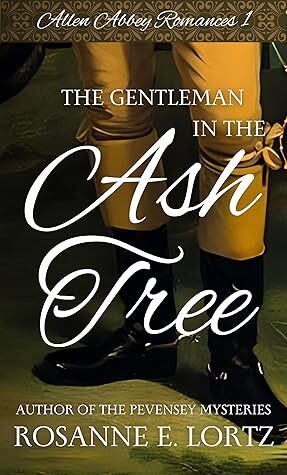 A charming and sweet novella, too short in many ways, but a delightful read.
Here’s the premise: Eloise Blackburn is helping her young sister fly her kite when the pesky thing gets lodged in an ash tree. Eloise is persuaded to discard her shoes and stockings and climb the tree to retrieve it, but there’s a catch – a strange man is already aloft, hidden in the leafy canopy of the tree. He claims to be a cousin of the neighbouring Allen family, from the West Indies, called Crispin, but Eloise has never heard of him. However, her parents, it transpires, recognise him as the son of the eldest Allen brother, James, who was disinherited years ago. All he was left in his father’s will was a chest and the contents thereof. He’s come back to England now that his father has died to claim the inheritance, but the Allen family deny all knowledge of him.
So the mystery is laid out clearly – where is this mysterious chest? And why are the Allens so keen to disclaim all knowledge of their cousin? But alongside the mystery is the romance between Eloise and the flirtatious Crispin. The blurb describes him as ‘cheeky’, but actually he’s more than that, and Eloise is immediately smitten. It appears he’s equally smitten with her – or is he? Maybe he’s just amusing himself with a little light flirtation before disappearing back to the West Indies?
There isn’t much more to say about this, because frankly the book is too short to develop the characters beyond their initial positions, and the romance comes to the boil far too quickly for my taste. But I loved Crispin and his outrageous behaviour, completely understood why Eloise fell for him (I would have done too, like a shot) and only wished he had been a bit more open about some aspects of his history that caused his lady love some unnecessary grief. But then there would have been even less of a story without it, so never mind.
A lovely read from a new-to-me author. Five stars.


Review: Miss Vincent’s Vow by Rachel Knowles (2024)
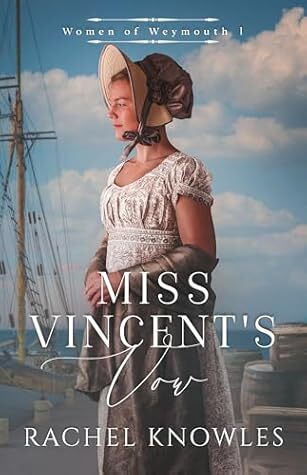 An interesting read by a new-to-me author, with a terrific premise, a lot of misunderstandings and miscommunications, and some difficult family situations, which I read avidly.
Here’s the premise: Cassandra Vincent’s rector father has died leaving her destitute, and her brother is away at sea. In desperation, she advertises for a position as a companion. Only one person replies – merchant Jethro Hunt, who wants to impress his investor by being more adept socially, so he needs a genteel wife. He offers her a business deal – a marriage of convenience, nothing more, if she will help him move in society. Cassandra prefers marriage, even if it’s not a love match, to the alternatives. Because she’s about to be thrown out of the rectory by the incoming resident, they marry immediately.
Now, this is a wonderful situation – two people who know very little about each other, thrown together by circumstance, and inching their way towards an accommodation. Things are bound to be a bit rocky, and so they are, not helped by the fact that they both continually make assumptions about what the other wants, and don’t think to simply ask. How hard would it be? Quite hard, apparently.
To make things more difficult, there’s a stepsister, Julia, who’s taken a different route, working as a teacher at the local school until a suitable husband comes along, and then there’s Eugenia, who was betrothed to Cassandra’s brother, Alexander, but abandoned him when a better offer came along, having now married Jethro’s business rival, Mr Frampton.
Eugenia is a real piece of work, who is unspeakably rude to Cassandra in her own house, and Cassandra, who sometimes has all the gumption of a wet noodle, simply sits there and takes it with very little pushback. Now, this is an overtly Christian book, so there’s an element of turning the other cheek, but when someone is insinuating, and not very subtly, that the hasty wedding was for suspicious reasons, I’d have thought a more robust response is called for. It’s possible to do that without being nasty, surely?
And then there’s Alexander himself, who is less than well-behaved. I wasn’t entirely comfortable with the Christian tone regarding these less than admirable characters – the flighty Julia, the rude and avaricious Eugenia and the sneering, selfish Xander. The strong implication is – if only they followed more Christian principles like Cassandra and Jethro, they’d be good people. But Eugenia and Xander aren’t so much unChristian or immoral as downright bad-mannered, and Jethro, for all the time he spends praying, isn’t a great advert for Christian charity. He far too often comes across as grumpy, and he jumps to wrong, and very negative, conclusions about Cassandra all the time.
And this is my main complaint about the book. Jethro and Cassandra are constantly at cross purposes because they simply won’t talk to each other. Something happens, they see the other’s reaction and they promptly misinterpret it. It’s maddening. I wanted to bang their heads together so many times. They know very little about each other, so it’s not unreasonable to say, ‘Is it all right if I…?’ now and then. And they keep circling round the marriage of convenience business. Why not simply say, ‘Look, I know what we agreed, but if ever you want to change that, I’m willing. And if not, that’s fine, too.’ You know, talk to each other, like sensible adults.
And despite all that, I devoured the book in no time. There’s some nice business at the end with Mr Wade, Jethro’s backer, which turned out to be more complicated than I’d expected, and a big, dramatic finale to resolve the romance. A beautifully written book free from typos and Americanisms. I noticed a couple of historical quibbles. Angst is a twentieth century word, and male cooks were very rare (and expensive!) in the Regency. Otherwise, a great read (apart from all those misunderstandings). Four stars.
February 24, 2025
Review: The Viscount’s Pearl by Melissa Addey (2025)
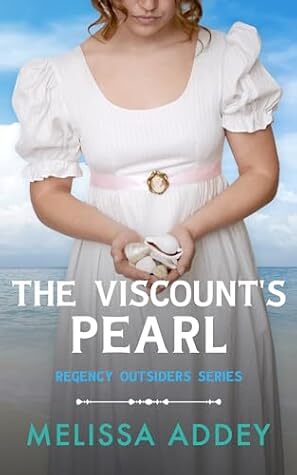 Another awesome read, slightly marred by a few issues, but Addey really knows how to create fascinating, unique and yet totally believable characters.
Here’s the premise: Frances Lilley is about to embark on her fourth season, to the despair of her parents. She’s just too different to ‘take’, but she doesn’t mind. All she wants is to be left alone to collect shells and use their unique beauty to decorate her home. If it were up to her, she’d settle happily for spinsterhood and a house of her own near the sea. Laurence Mowatt is the consummate man about town, socially adept and taking advantage of his freedom to enjoy discreet liaisons with married women. As the heir to a viscountcy through his mother—
Wait. Let’s talk about that. Laurence’s uncle (his mother’s brother) is a viscount, and somehow Laurence in his heir, both to his fortune (which is fine) and his title (which is problematic). There are titles inherited through the female line, but mainly in Scotland. In England, it’s so vanishingly rare that it really ought to be explained. And no, the uncle can’t choose who inherits the title. That was cast in stone at the time the title was created, and can’t be changed. But the whole book is built around the title he’s going to inherit, so let it pass.
Anyway, as the heir to a viscountcy from his uncle, and also to his father’s estate, he’s a very desirable match for ambitious mothers and their daughters. He knows he ought to marry, and he’s decided he will do it soon, but he’s not hanging out for a love match. A marriage of convenience will do him very well, and he’s even picked out his future wife, Lady Honoria.
But his benevolent uncle has other plans for him, plotting a little to throw him into the way of his god-daughter, Frances. The two meet at Lord Barrington’s house at Margate, in Kent, where Frances is spending her days happily shell-gathering. At first, she won’t look him in the eye and is monosyllabic, but as they spend more time together he discovers that she’s intelligent and articulate, with a refreshingly honest approach to life.
This part of the book is delightful, as Frances gradually learns that not all young men are worthless fools, and Laurence gradually learns that not all young ladies are simpering imbeciles. But the season beckons, and they both return to the fray, she in increasing despondency and he growing tired of the endless games. Even a house party with an array of suitable young men and the chance for more meaningful interaction than a dance at a ball produces no offers. In despair, her parents accept an offer for her from sixty-year-old Lord Hosmer, who promises to tame her, forcibly if need be. In desperation, she writes to Laurence, offering herself for his marriage of convenience, if only he will rescue her from horrible Lord Hosmer. Which he agrees to, and they have one day of happiness at Margate before Lord Barrington dies and everything changes.
And this is where the book goes off the rails for me. Laurence bundles Frances off back to London and her parents and sets about the business of being the new Lord Barrington, which takes him weeks. And in all that time, he doesn’t write to Frances, doesn’t send word to her, doesn’t write to her father to explain his intentions, doesn’t put a notice of the betrothal in the papers. No, just no. Here’s a nice bloke, shaping up nicely as hero material, drifting away from his hedonistic life, happy to be marrying Frances, in love with her, even, yet he can’t write her a single letter? Even if he thinks she only wants a marriage of convenience, surely he would have at least told her what he was up to, and given her some idea of his plans? Wouldn’t he have wanted to write to have the pleasure of her writing back to him?
So I can’t believe in the slightest in this new, thoughtless Laurence. Of course, it ratchets up the tension enormously, in case she gets dragooned into marrying horrible Lord Hosmer, but it is just too implausible for me.
There’s one other implausibility that also grated on me, in that when Frances finally gains a house of her own, she’s allowed to live there alone. No unmarried woman would be so unconventional as to live alone. She should have had a married woman or a respectable older spinster to protect her reputation.
However, all comes right in the end, inevitably, and if there were a few bumps in the road, these latter troubles were entirely character driven and therefore believable. I loved Laurence’s efforts to please Frances, even if he sometimes got it wrong. Probably it would have been better just to ask her what she wanted, but they were lovely romantic gestures, so I can’t quibble over that. There is some sex in the book, and some misunderstandings along the way, resolved in what sounded like a pretty uncomfortable way.
Normally, the problems that worried me would knock the book back to three stars, but Addey is such an awesome writer that I couldn’t do it. Frances is so beautifully drawn as an autistic character, Laurence is (apart from that one lapse) a wonderful hero, Lord Barrington, with his fascinating but delicately sketched history, is a charming matchmaker, and an honourable mention for Margate and its beaches, a character in its own right. And it’s a pleasure to read a book free of typos and Americanisms. So four stars it is.
Review: Lady For A Season by Melissa Addey (2024)
 This is possibly the most unusual Regency romance I’ve ever read. It sounds seriously unworkable, but although I had a few issues with it, overall the author does a magnificent job overcoming the inherent implausibilities for one of the most resounding characters arcs ever.
Here’s the premise: Maggie was left at a foundling hospital as a baby by her mother, raised in the strict atmosphere there to be a useful and hard-working member of society. At the age of twenty, she’s taken to a cottage many miles away where her job will be to act as ‘companion’ to a lunatic, confined there by his family for his own good. Edward is a quiet, nervous young man, not much older than Maggie, but as she encourages him to enjoy himself a little, even to play (the inevitable snowball fight), he begins to open up a little and she begins to wonder whether he’s really mad or whether his withdrawn nature and nightmares are merely symptoms of some traumatic experiences.
Every two months, a doctor comes to administer ‘treatment’ to Edward, which is described in graphic and horrifying detail. The author’s note at the end assures the reader that everything described was actually used at the time. We can only be thankful that medicine has moved on since those benighted times.
But then comes disruption. Edward is a son of the Duke of Buckingham, and now that his father and elder brother are both dead, he’s taken back to his home of Atherton Park to be groomed for the London season, where he is to marry and sire an heir or two. His mother insists on his compliance, but he insists on having Maggie, the only person who ever cared for him, by his side during a process he finds terrifying. So Maggie is to be dressed in finery and put through the season, too, masquerading as an impoverished distant cousin, and the few months before then are spent preparing both of them to appear in society.
There’s a huge amount of detail of the preparations – the clothes, the dancing master, the art master, the learning about cutlery, even the choosing of ribbons. Frankly there was way too much of this for my taste, and it could have been summarised in a couple of paragraphs, but if you ever wanted to know exactly what a lady needs for the season, this is the book for you.
So off we go to London, first for the Little Season in the autumn (which to my understanding wasn’t a thing, but never mind) and then for the main season from Easter onwards. The author has them returning to London very early in the year purely (I suspect) so she can take the main characters for a day at the Frost Fair, when the Thames was so ice-bound that all sorts of stalls and entertainments took place on it. To be honest, while interesting, I didn’t think this added much to the story.
Thus to the season proper, where Edward is hounded to the limits of his endurance and beyond by ambitious girls and their mothers keen to catch a duke, and Maggie becomes a success, too. And no one seems to guess that she’s not really aristocracy, not even lower gentry, but a working class girl. This is the point where I have to grit my teeth, because the difference in accent would be huge and not easy to overcome, even with a great deal of training, but I didn’t see any mention of it. Well, Maggie is a bit of a Cinderella, so let’s just go with the flow.
All the while, there’s the dark threat hanging over Edward that if he doesn’t do as he’s told, he’ll be locked away again, and this time forever. If he complies, he’ll still live a restricted life but he’ll have some freedom. So he goes along with it for that little sliver of hope, and Maggie helps him. So even though the two have clearly fallen in love, they’re terrified to do anything about it, thinking that Edward’s mother and his doctor have all the power. The moment when he breaks free, realising that – he’s a duke! He can do whatever he wants! – is absolutely glorious, and makes this book truly special.
A few minor quibbles. Side-saddles with twin pommels were a Victorian invention, as were dance cards (although the paper fan style sounds charming). I was also uncomfortable with using a real duke’s title. The author explains that the Duke of Buckingham’s title is now extinct, and was so during the Regency, which is true, but there were real Duke’s of Buckingham both before and after, so it seems cheeky to me. It’s not hard to make up a name. Still, kudos for pointing out that there were fewer than thirty non-royal dukes at the time. Not a lot of people know that, and if you read much Regency romance, you’d be forgiven for thinking there were thousands of them. There’s one gratuitous and totally implausible sex scene, although tasteful rather than graphic.
But none of this made much difference. I loved the original characters (a lunatic and a foundling! How many authors would even dare?), I loved the slow-build romance, I loved seeing Edward ever so slowly becoming the self-confident young man he was destined to be. I also loved the free-spirited Lady Honoria, and hope she turns up in a later book. And oh the joy of a book free from typos and Americanisms. Highly recommended. Five stars.
Review: Lady Lisa’s Luck by Anne Barbour (1993)
 This was recommended by Lady Catherine’s Salon member Rabia Bawany in a Sunday Review, and I found it an absorbing read, even though I wanted to bang the principals’ heads together at times. Would it hurt to talk to each other, people?
Here’s the premise: Lady Elizabeth Rushlake is an unusual Regency lady, for she has a little hobby of dabbling in stocks and shares, which she takes far more seriously than her expected role of finding a husband. She dominates her mother and younger sister, and is altogether not the usual submissive female. But there’s a reason for that. Six years ago, she fell deeply in love with Chadwick Lockridge, and would have married him, except that foul rumours about him drove him away to India and broke her heart. But one day she’s shaken to discover that Chad has moved into the house next door, and is set on re-establishing himself in society. She’s determined not to be drawn in again, and he seems indifferent to her now. Perhaps she should settle down with long-standing friend and admirer Giles Daventry? But then rumours start to circulate about Chad again and things get decidedly murky.
This is not the sort of book where the villain is revealed in the final chapter. We know his identity from a very early stage, so the only surprise is how long it takes Liza to cotton on. Meanwhile, Chad and Lisa are circling warily round each other, veering from icy disdain to passionate kisses and all points in between. Since we see into both characters’ heads, we know right from the start that they both harbour feelings for the other, and they both feel betrayed by the other. It’s a classic case of a misunderstanding that could have been cleared up in five minutes over a cup of tea, but no, it gets dragged out for the whole book. I accept that they were both very young when the first break-up happened, but surely their older and wiser selves could have been more sensible?
If the main romance is slightly lacking in the common sense department, there’s an array of minor characters to lighten the mix. Liza’s lively younger sister Charity was fun to watch, although she had her own outbreak of stupidity. And Chad’s oddball collection of servants and informers who helped him track down the villain were a delightful bunch of eccentrics. At least one of them turns up in another book, so I’ll have to look that up.
The finale is suitably dramatic even if not very original (shenanigans at Vauxhall’s? Who would have thought it?), and the romance (in fact all the romances, because there are several) end in resounding fashion. This is the first Anne Barbour I’ve read, but I shall certainly be looking out for more of her work. There are lots of minor typos that probably result from careless digitisation, but they were only a minor irritant. An unusual and intriguing read. Four stars.
Review: A Dangerous Affair by Judith Hale Everett (2024)
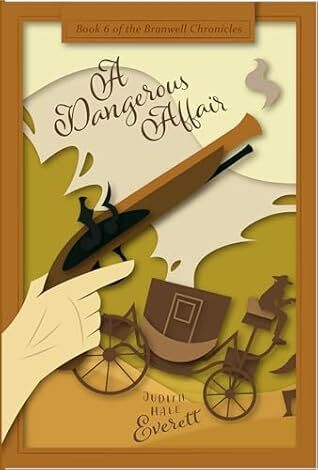 I’ve loved everything this author’s published, so I knew this was a safe bet. It’s a wonderful read, literate and engaging, with a plot that’s never predictable. Some reviewers find the heroine unlikable, but I found her fascinating and totally believable.
Here’s the premise: Clara Mantell is the daughter of an unredeemed rake and sister to another, and has learnt that men are despicable, untrustworthy creatures, and she will never submit herself in marriage to one. Steadfast, honourable men like neighbour Lawrence Simpford hold no attractions for her. Instead, she plays her own game with rakish men, charming them into falling in love with her in order to break their hearts and teach them a lesson. But that can be a dangerous game for a woman, even one so resourceful and self-sufficient as Clara.
No, Clara’s not really an admirable character, but with her family history it’s unlikely she would grow up to be a simpering, demure miss. Her weak mother is no help, although having recently married a good man (was this in an earlier book? I don’t remember) she’s beginning to make better decisions about her friends. But she has no influence over Clara, who sets out to entice two of the most notorious rakes into her web, confident that she can best them.
And Lawrie, poor love-lorn Lawrie, tries his best to protect her or at least to rescue her when she gets into real trouble, and gets nothing but contempt for his pains. The two have some spectacular blow-ups, and it’s only when Clara feels that she’s lost Lawrie’s friendship for ever that she begins to appreciate and realise how necessary he is to her comfort.
Meanwhile, her efforts to keep control of her two rakes are beginning to unravel, and things take a decided turn for the worse. The finale is pretty dramatic stuff, and although it gets a little bit over the top, with more than one ‘just when you thought it was all over’ moment along the way, it’s very readable.
Clara might be a hard-hearted flirt, but the banter between her and her rakish admirers is wonderful, I loved the determined way Clara managed to get her own way so often, and Lawrie made a terrific hero. Three cheers for stepfather Mr Noyce, too, who exerted some subtle influence on Clara. I almost knocked off a star for that melodramatic ending, but the writing is so wonderful that I didn’t have the heart to do it, so five stars it is.
February 9, 2025
Review: The Difficult Life of a Regency Spinster: Kate by Susan Speers (2024)
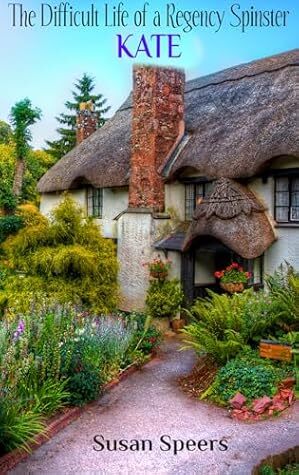 Another fascinating and refreshingly different tale from this author, who never fails to surprise. Not for her the well-worn tracks of Regency tropes leading to the predictable conclusions. Every book is a unique read, and while some are more absorbing than others, I’ll read anything she writes.
Here’s the premise: Kate Carteret has been left in an awkward position by the untimely death of her sister and brother-in-law, leaving behind four small children. A kindly (but not that kindly) relation lets them have a cottage on his Sussex estate at a peppercorn rent, but Kate must earn a living to support them. Her cousin Bella is left in charge on the domestic front, while Kate goes to London, initially as a companion to an elderly lady, but when that falls through, as a singer on stage, since she has a magnificent singing voice. But then Bella elopes with a naval officer, and Kate has to return to the village of Fairlea to take charge of the children. Conveniently, her theatre is closing for the summer anyway, so she has several months to rescue the situation and decide how to look after the children in the future.
I have to confess, this is one of the more implausible openings I’ve come across. Kate’s musical talent is unsuspected, even by her family, since she was never allowed to sing ‘forcefully’, and her identity was successfully concealed on stage by make-up and a wig. This leaves her able to return to Fairlea as just another impoverished spinster. Meanwhile, two of the admirers of her operatic persona in London now appear in the neighbourhood, Sir Anthony Chiswick and Lord Maule. Sir Anthony merely gave her flowers, but Lord Maule has been pressing her to become his mistress. Yet somehow neither of them recognise her.
There’s a lot of potential here for conflict, especially with Lord Maule, but somehow the author shies away from that. Instead, she throws an enormous cast of peripheral characters into the mix. Sir Anthony’s unhappy sister-in-law. The vicar’s pushy and spiteful daughter. Lady Plum and her five unmarriageable daughters, together with an appropriate number of potential suitors. And one couple I was delighted to see – Hervey and ‘Fliss’ from ‘Felicity’, now happily married with a brood of their own.
All of this generates a surprisingly conventional Regency, with invitations for Kate to al fresco breakfasts, dinners and even a ball, with the usual romantic interludes. The main romance, between Kate and Sir Anthony, proceeds slowly but inexorably to its rather low-key conclusion. Although Kate dithers about whether she’s suitable marriage material, or whether he’ll walk away when he hears about her stage performances, somehow none of it ever comes to much more than her own inner thoughts. I would have liked at least one confrontation between them, at least. As it is, the road seems a little too smooth.
The real interest in the book for me is with some of the peripheral characters. The unhappy Lady Sybil is one whose story could have been a little deeper, and less easily resolved. The friend Iris, another respectable gentlewoman reduced to earning her living, was another I’d like to have seen more of. And then there were the two most fascinating characters in the book, the livewire youngest of the Plum brood, Gracie, and the seemingly unreformed rake with the surprisingly complex back story, Lord Maule. A whole book on those two wouldn’t go amiss. Lord Maule’s actions at the very end took me completely by surprise (and that’s a good thing – I love to be surprised!).
Overall, this isn’t one of Speers’ best outings, and the romance was far too flat to be interesting, but the glimpses of more intriguing stories amongst the walk-on parts brings this up to four stars. And now on to L.
Review: Lady Whilton’s Wedding by Barbara Metzger (1995)
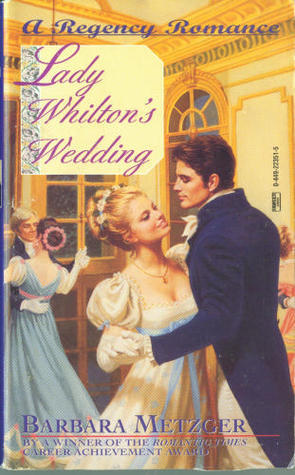 This is probably the silliest book I’ve ever read. It starts well with an interesting premise well handled, then veers sharply into extreme farce from which it never really recovers, the romance being shoved aside in the scampering round after dead bodies (yes, really! If you’ve ever wondered what a Regency version of Weekend At Bernie’s looked like, this is as close as you’ll get).
This is how it starts:
‘It was an arranged marriage. Unlike most such marriages of convenience, this one was arranged by the bride-to-be herself. Miss Daphne Whilton of Woodhill Manor, Hampshire, left the crowded lawn of her birthday party and approached Lord Graydon Howell, heir to the Earl of Hollister, where he stood apart from the other guests under a shading elm tree. She kicked him on the shin to get his attention and said, “All of the other boys are toads. You’ll have to marry me, Gray.’’
Lord Graydon rubbed his leg and looked back toward the others. The boys were tearing around, trying to lift the girls’ skirts. The girls were shrieking or giggling or crying for their mamas, who were inside taking tea with Lady Whilton. At least Daffy never carried on like that. And she could bait her own hook. He nodded. “I s’pose,” he said, and they shook hands to seal the contract.’
Isn’t that glorious? Of course, they’re children, so inevitably as they grow up they change somewhat, but they’re still best friends, and the marriage is still an understood thing. And then Daphne reaches an age to make her debut, comes up to London and is incensed to see Graydon entertaining his mistress in a box at the theatre directly opposite her. There’s a huge dust-up, the engagement is off and he removes himself from her orbit by joining the army. So far, so very promising, and when her mother and his father decide to get married and Graydon is scheduled to be home in time for the wedding, I had the highest hopes of a slow and steady rapprochement.
And then everything went off the rails in spectacular fashion, devolving in double quick time into a morass of disappearing dead bodies, incompetent thieves, a wicked baron, a similarly wicked valet, a pickpocketing dog and a whole heap of equally implausible stuff. And in the background, one of those hugely overplanned, flower-bedecked, inviting the entire extended family weddings that never actually happened in the Regency. And that’s without mentioning the dull but respectable rival suitor and the rejected mistress. I plodded dutifully through it, in the hope that the romantic denouement would redeem the book, but it really didn’t.
In a book of this age, I don’t expect the deep character-driven romance that modern readers enjoy. I can accept that the Heyer ideal of a ‘Regency romp’ was still holding sway. That’s all fine. I can even accept that the hero might have had a mistress in the past. But what I can’t accept is a hero who professes himself chastened by his lady-love’s admonishments and determined to be worthy of her and win her back, yet the first thing he does when he returns to Blighty from his army stint – the very first thing! – is to set up a mistress again. I get that the ex-mistress turning up to the wedding is intended as comedy relief AND an obstacle for the reinstatement of the hero with the heroine, but please, this man is not hero material.
So for that alone this only rates two stars for me. If you really love the old-style comedic romp, and you don’t mind the implausibility of it or the constant trickle of Americanisms, you might well enjoy this, but it wasn’t for me, sadly.
Review: Surrender to the Earl by Gayle Callen (2013)
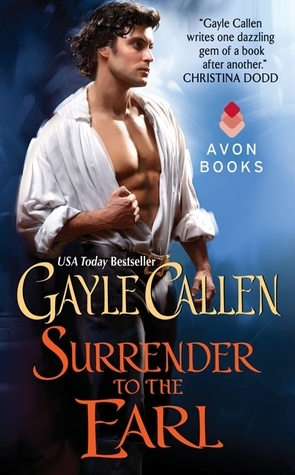 A chance encounter via Bookbub for 99p, but this looked unusually interesting. It turned out to be a good read, the Americanisms weren’t too annoying and the sex, while somewhat implausible, was an integral part of the plot. Victorian, rather than Regency, but none the worse for that. Apart from a few references to copious petticoats, one would never guess this was set in 1843.
Here’s the premise: Audrey Blake is a widow, abandoned by her fortune-hunting husband after one night of marriage so that he could join the army, where he promptly gets himself killed. Blind since a childhood illness, Audrey isn’t thought capable of managing her husband’s estate on her own, so she stays at home managing the household, taken for granted by her father, ignored by her brother and resented by her sister. All she wants is to escape, but it doesn’t seem as if there’s any way.
But then Robert, the Earl of Knightsbridge, a former soldier who knew her husband, comes to pay his condolences. Guilty because he feels his actions got her husband killed, he wants to find some way to be of service to her. What could be more fortuitous? Get me out of here, she implores him. But how to get her away from her father? Robert suggests a fake engagement. His own estate is not far from Audrey’s and as her pretend fiance, he can help her settle in. Later, she can break off the engagement. What could possibly go wrong?
Actually, less than you might think. The two successfully make their escape from Audrey’s home, although the journey isn’t without difficulties. A thief breaking into Audrey’s room at the inn provides an opportunity for a semi-naked Robert to rescue her. Now, Audrey can’t see all that well-honed manly flesh, but she can certainly feel it, and compare it with her husband’s less well-proportioned form. And so we’re well away with the beginnings of lustful thoughts on both sides.
This early part of the book, before things really hot up sexually, is beautifully done, and the spiky exchanges between the two are incredibly realistic. She’s fiercely determined to be independent and not be pitied or patronised, so she quite rightly gets cross when he jumps in to smooth the way. He, on the other hand, is an earl and an officer, used to being in charge, and finds it difficult to step aside and let her do things her own way. As he explains to her, she’s his fiancee and that makes him protective of her. ‘It’s what men do,’ he says. The adjustments they both have to make are fascinating.
At Audrey’s small estate, she finds the servants behaving rather oddly, and things happening that seem designed to make her leave. She’s determined to stay, and is smart enough to bring the servants in line and (eventually) to find out just what is going on. Meanwhile, Robert is visiting frequently, helping her meet her tenants and the locals, and generally making himself useful. And (needless to say) the two are slowly falling in love.
And if that were all, this would be a fairly standard traditional romance. But right from the start, even though the engagement is fake, Robert is all over Audrey, first with kisses (and perhaps some of that is necessary to convince everyone that the engagement is real) but later with more passionate interludes, and he tries to persuade her to have an affair with him, even if she doesn’t want to marry. I have to say that I can’t quite approve of Robert’s actions, and there’s a point near the end when he basically seduces her, even though he’s well aware that if she ends up pregnant, she will have to marry him, whether she wants to or not. Not nice, especially when he’s talked so much about patience. A little restraint wouldn’t go amiss, but then she collapses into a puddle of lust at the first kiss, so perhaps it’s not too surprising.
The end of the book tips into a maelstrom of revelations on both sides and multiple changing of minds back and forth, only resolved when Audrey’s sister, who started off as something of a nasty piece of work and magically transformed into a heroine mid-book, bangs their heads together, and they all lived happily ever after, no doubt (including the servants and the rosy-cheeked yokels). Well, one doesn’t look for too much realism in a work like this.
A few Americanisms, but nothing too outrageous, and otherwise very well written and enjoyable from start to finish. The sex scenes are well done if not always plausible (the dining table? Really?). Audrey is perhaps a shade too quick to find her way around a new house, but it’s so nice to see a properly disabled heroine that I’m not going to quibble. Five stars.
I would have bought the other books in the series, but the price was outside my comfort zone, and book 1 hinged on a marriage by proxy (a complete no-no in English law) so I decided to pass. Shame.
January 31, 2025
Review: Miss Lockharte’s Letters by Barbara Metzger (1998)
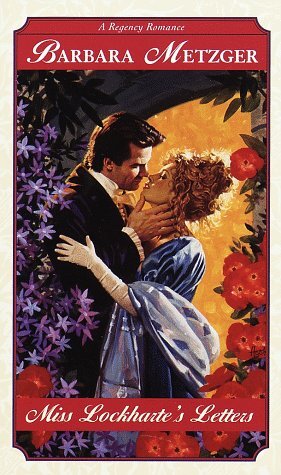 A seriously peculiar book, wildly implausible and with a veritable tsunami of anachronisms but very, very funny, for all that.
Here’s the premise: Miss Rosellen Lockharte has fallen on hard times. Her clergyman father has died, leaving her penniless, and although her uncle tried, rather half-heartedly, to introduce her into London society, his daughter’s machinations got Rosellen compromised and banished in disgrace. Since then she’s been eking out a poor living teaching penmanship to the daughters of the aristocracy at a rather shady girls’ school. An outbreak of influenza at the school makes her so ill that she’s convinced she’s going to die. As a last act before death, she decides to write to all the people who, in one way or another, set her on this road to poverty and illness, to tell them (after listing all their transgressions) that she forgives them. Except for one, Wynn, Viscount Stanford – his crime is too heinous for forgiveness.
Rosellen survives the influenza, but several mysterious accidents leave her even worse off than before. But help is on its way, in the shape of most of the people she wrote to, but particularly Viscount Stanley, who is the first to actually reach her in her paltry attic room. He’s brought flowers and is ready to beat a hasty retreat, but a single tear as he’s about to leave makes him decide to help her. He whisks her away from the school, thinking he’ll send her to one of his more distant estates to recover and be looked after, but after various mishaps, he gradually develops a new plan – he’ll take her to London, to the care of his mother and sister, and introduce her into society and… well, we can see where this is going. This is one of the pleasures of the story, Wynn’s gradual realisation that, however prickly and spirited and independent Rosellen is, she’s exactly right for him.
I’m going to be honest, and say that credibility isn’t this book’s strongest suit. The ‘accidents’ that befall Rosellen and her miraculous escapes from them are almost too silly for words, some of the characters are pretty silly, too, not to mention the dog, and Wynn’s determined refusal to believe that someone is trying to kill her is really carried too far. But the moment when he realises the truth is just perfect. “You could have been killed,” he says, horrified. “I could have lost you.”
The romance, once it gets going, is the strongest part of the book. The plot is distinctly wobbly (why does the villain keep trying to murder Rosellen even when the reason for it is gone?), the loose threads are more or less tied up at the end almost as an afterthought, and I’m still not entirely clear where the fifty pounds came from, or why. As for historical accuracy, forget it. But it’s the funniest book I’ve read for months, and that alone makes it worthy of four stars. Here’s just one sample that made me laugh out loud:
‘Uncle would turn purple with apoplexy at the price of Rosellen’s ball gown. Aunt Haverhill would go ashen at the low cut. Clarice would turn green with envy. Rosellen was pink with pleasure.’