
Emily B. Martin's Blog, page 3
August 29, 2018
Sadie By Design Guest Post and Giveaway!
AUGUST 2018 This month, I am so stoked to bring you an extra-special guest post PLUS the biggest Creatures of Light giveaway yet! As many of you saw, earlier this month I attended Electric City Comicon, hosted by the Anderson County Library System in South Carolina. There I got to moderate a panel with three fantastic SFF authors, judge the Fan Art Contest, and do some super-fun live-drawing for an excitable peanut gallery. It was a great event, but the biggest thrill for me, hands down, was seeing the legendary Sadie by Design cosplay Queen Mona.
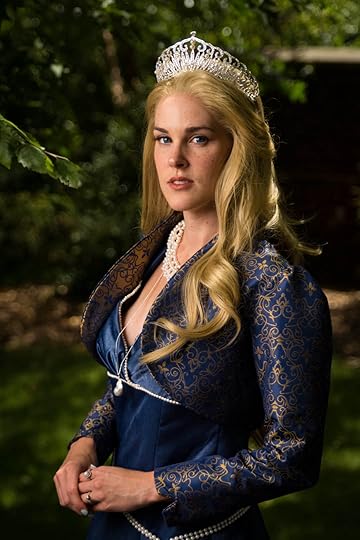
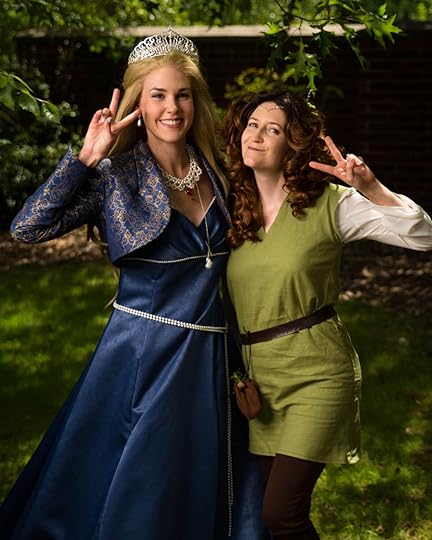
 Look at this gown! Look at it! Look at her crown! Her pendant! Her hair! Her freckles! From the moment Sadie told me she was thinking of cosplaying Mona, I knew she would be absolutely perfect, but I never expected to be this blown away by her work. Her friend and fellow cosplayer Virginia also showed up in a spot-on rendition of Mae.
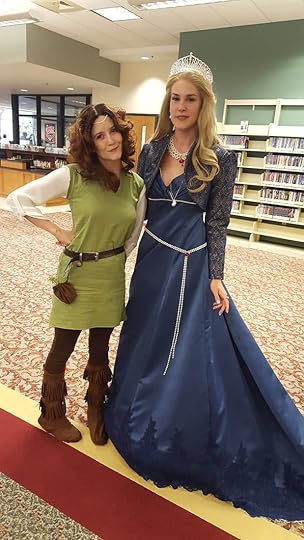
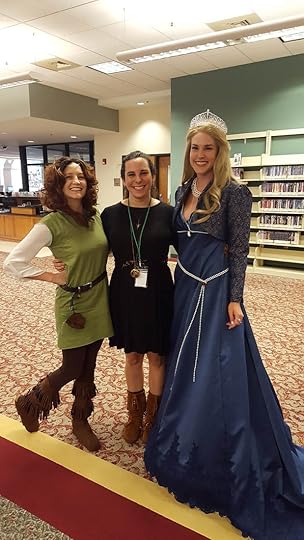 My heart, y’all. I think many authors would agree that the ultimate dream is seeing artwork inspired by our books. I spent the day in a sort of foggy high, grinning and clapping every time Sadie glided elegantly through the event. Unsurprisingly, she won second place in the Adult Cosplay Contest. And now she’s been gracious enough to break down her process for you and provide some insights into how she meticulously and lovingly created such fantastic cosplay.
And to make things EXTRA special, we’ve collaborated to bring you the epic CREATURES OF LIGHT PRIZE PACK GIVEAWAY! One lucky winner will receive a signed trilogy set from me, two stunning photo prints of Sadie’s cosplay, and a handful of CoL bookmarks and stickers. Check out all the details and enter to win at the end of this post!
Now it’s my honor to introduce Sadie from Sadie by Design---take it all in below the jump!Cosplay Breakdown: The Making of Mona Alastaire’s Coronation Dress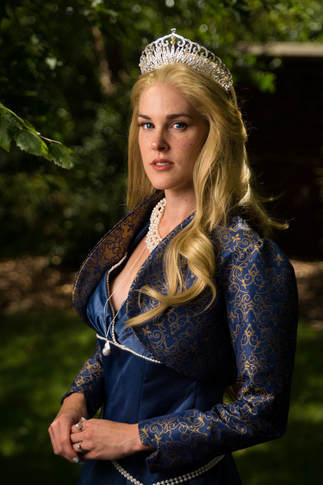 I had the pleasure of meeting Emily B. Martin at Electric City Comic Con 2017. Her books were an easy sale for me because they had female protagonists and were written by a local author, but she also makes her own cover art and fan art for her stories! I’m definitely guilty of buying books at conventions then taking forever to read them, but I devoured this story. It was agonizing waiting for the final installment, Creatures of Light, to come out. With her amazing storytelling skills, inspiring female leaders, and fantastic character design, I knew that I had to cosplay from her books. Thus the Mona project began. Why Choose Mona?You may wonder what made me settle on Mona over the other wonderful ladies in the novels. I think there is a bit of Gemma, Mae, and Mona inside all of us, but Mona really spoke to my soul. The inner growth that Mona experiences throughout the course of the trilogy is truly touching. I personally have not always been the greatest at expressing my personal feelings, and am still learning this. I also feel like I have gone through a wonderful journey of true self-discovery over the last five years of my life as well.
 There are so many versions of Mona being a Queen of Lumen Lake but also of fashion, and it took me a while to settle on her coronation gown as the design to bring to life.MaterialsSourcing the material is often the most tedious part of making a cosplay. It is an emotional and budgetary investment that can take longer than creating the costume itself. Mona wears a lot of jewelry, and it took a lot of time to find the perfect material for each piece of this outfit. I did my best to link to the different websites or products that were used for this where applicable.
Sewing Patterns (Simplicity 2442, Vogue 2788)
Dress material (All About Fabrics)
Bodice lining (JoAnn’s)
Zipper (JoAnn’s)
Lace trim (Lace Beauty)
Pearl trims (All About Fabrics)
Bolero material (All About Fabrics)
Tiara (Amazon)
Red pendants ()
Red Bead (Allearringsandsuppli)
Large Pearl (Wen Pearls)
Jewelry making supplies (Hobby Lobby)
Pearl necklace (Amazon)
Pearl Earrings (Amazon)
Pearl strands for belt (Amazon)
Wig (K’ryssma Wig on Amazon)
Petticoat (Amazon)
Pearl Ring (gift)
The Making of MonaBolero
The bolero was the first bit of this costume that I tackled. Even though the dress is beautiful, I’ve had my eye on the fabric I made this from for over a year at All About Fabrics in Anderson, SC. It was so exciting to finally have an excuse to buy it.
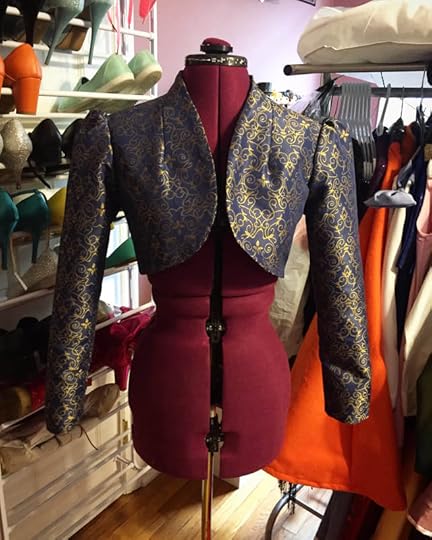
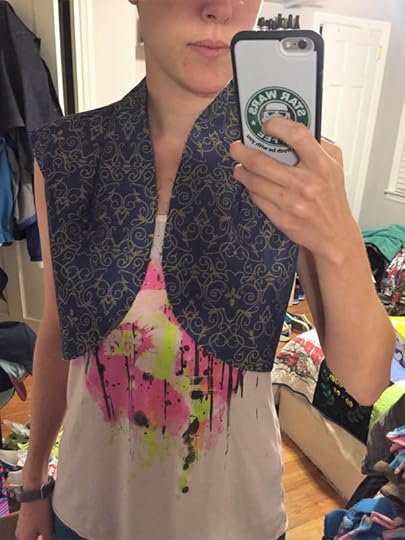 The construction of this jacket was actually really simple. I used Simplicity 2442 for the base pattern, which had 4 pieces. The only modification I made was to lengthen the sleeves from a ¾ sleeve to a full length sleeve. The pattern calls for a lining, and since the fabric I chose was just opposite colors on the wrong side, I used the same fabric reversed to line the jacket.
 Dress
Dress
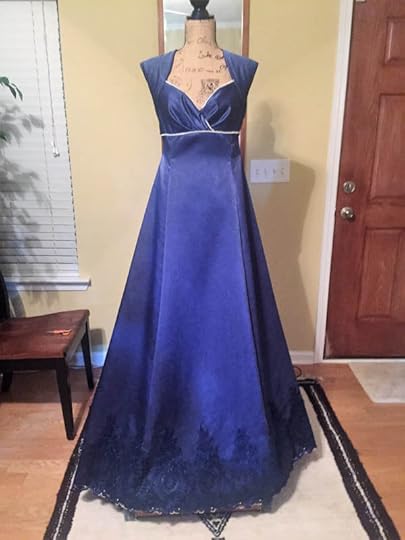
This dress was a monster just from the sheer amount of fabric required for her train, which was not an optional feature. I spliced two patterns together to create this dress. I used the top of Simplicity 2442 and the skirt from Vogue 2788. The patterns actually didn’t need any modification to work well when attached to each other. I did lengthen the dress about 4 inches because I’m quite tall, 5’8”.
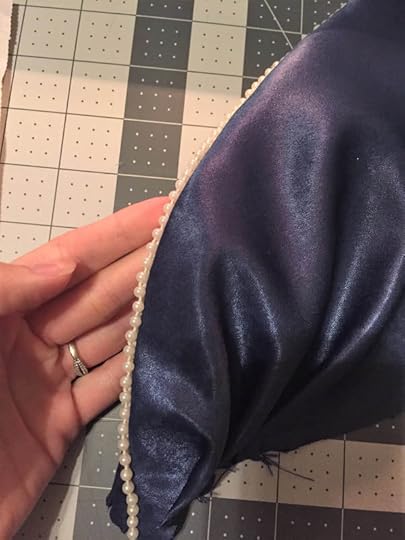
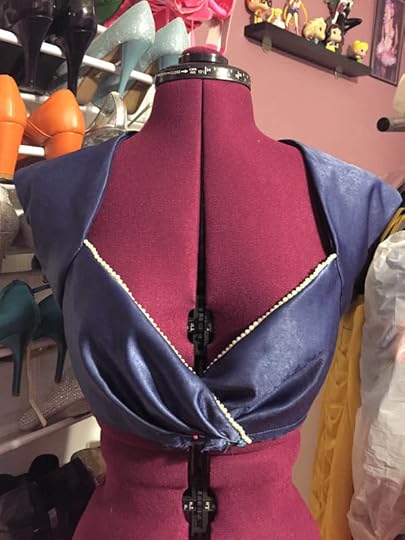 The real work on this dress came from adding the trims. The bodice pearls were easy to sew into the seams of the dress from the way they were constructed. The bottom pearl trim was extremely frustrating because the pearls got in the way of the needle, which caused us the breaking of about 8 needles during the process of adding this hem.
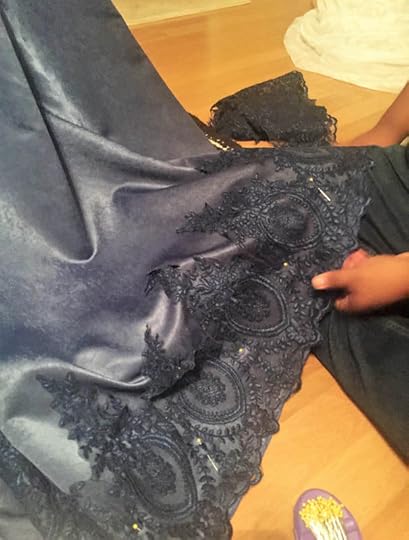
 The final detail was the lace, which was my “challenge yourself to do something new” on this project. I really avoid hand sewing where I can, and this required a lot of it. Luckily, my friend Jon, owner of Jon Pierce Fashions, and Sybil, White Knight Cosplay, had a hand sewing party with me. They not only taught me how to apply a lace applique, but helped me get this detail knocked out as a team in about two hours.
 Jewelry
No cosplay, but especially, no Mona cosplay is complete without accessories.
The item I spent the most time searching Etsy for was her signature pearl. The largest pearl ever found in Lumen Lake. I definitely wanted it to be real. I liked this process because through my searching I learned a lot about pearls that I didn’t know. I ended up purchasing a fireball pearl that is a freshwater pearl, and it is about the size of my large toenail (~17mm wide x 32mm long).
Emily's note: The royal pearl is one of my favorite parts about Sadie's ensemble--I love its natural irregularity, just like Mona's would be, and I appreciate the use of your toenail to gauge the correct size, based on Mae's first observation: "an iridescent pearl the size of my toenail."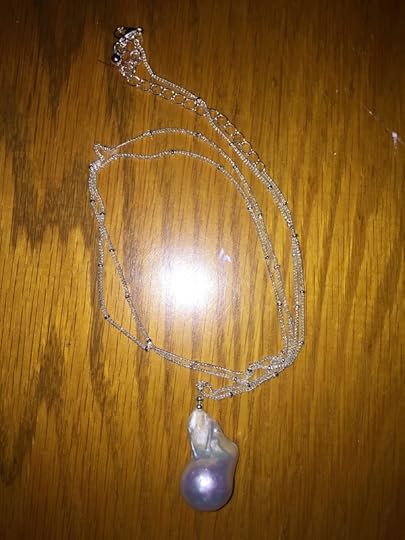 The pearl necklace she wears was a combination of a necklace pre-bought on Amazon and adding additional pendants and beading to finish the look. Her belt was also the same red pendant added to some pearl stranding that simply wraps around her waist and clasps at the red pendant.
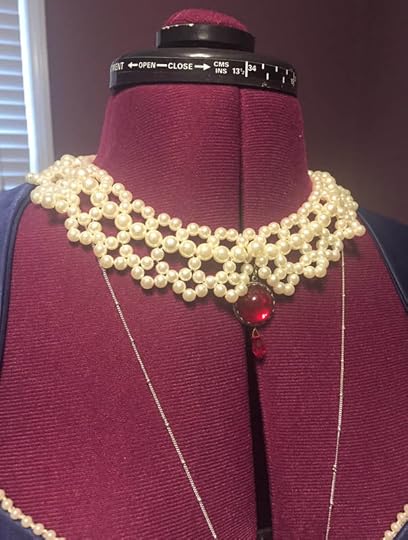 The earrings, wig, and crown were all purchased from Amazon. The tiara was an extra special adventure in shopping as well. I have learned there are thousands of tiaras available on Amazon, and you will eventually find what you need if you search long enough. I don’t want to admit how much time I spent looking for a tiara that looked like a cresting wave with pearls on it. I love that with Emily’s input, I was able to find a tiara with exactly 12 pearls on it to represent the twelve islands, and it was absolutely perfect to finish my look.
The Completed LookI wanted to take a moment to thank Emily for many different things. 1. For letting me internet stalk you when you barely knew more about me than that girl you briefly met at ECCC. 2. For always taking the time to respond to my endless questions through reading your books and the making of this cosplay. 3. For inspiring myself and many other young readers. This never would have been possible without you. You’re the best!
I still plan to make the scepter for this costume, and do several other more fitting photoshoots in the future. This is hands down my favorite outfit I have made for myself to date. I also hope to bring some of Mona’s other looks to life in the future, but for now please enjoy the amazing photos by Scott Thomason and Linc Williams below.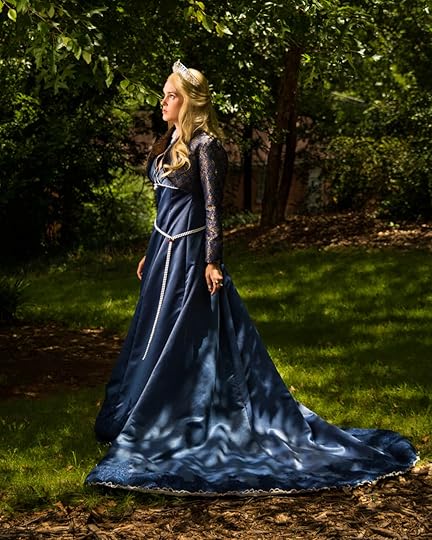
 Bonus picture with Virginia, Quercus V, as Mae.
 A million thanks to you, Sadie! Your work is absolutely stunning, and it's amazing to see the whole process laid out. And now, for the...Creatures of Light Prize Pack Giveaway!
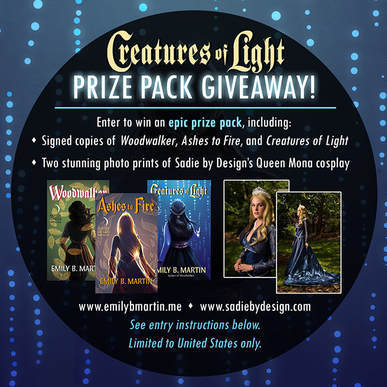 It’s the biggest Creatures of Light giveaway yet! Enter up to six times to win a prize pack containing a signed trilogy set, two photo prints of Sadie by Design’s Queen Mona cosplay, and a handful of bookmarks and stickers. Contest runs from Friday, August 31st to Friday, September 7th at midnight EST. Entrants must provide a valid email address to be entered. Winner will be contacted privately for a mailing address at the end of the contest. Unfortunately, due to shipping costs, this contest is limited to the United States only.a Rafflecopter giveaway August Art RoundupI produced a ton of artwork this month, largely thanks to the inspiration from Sadie and the cosplayers at Electric City Comicon. One of them mentioned she'd like to cosplay Gemma but needed more references of her wardrobe, which kicked off a ten-day long costume design spree of all my major protagonists. Other August work included a mashup of Dhonielle Clayton's The Belles and Vogue magazine's Beyonce cover, and fan art of Sadie and Virginia in their cosplay attire.
See full portfolio
What I'm ReadingI Am Not Your Perfect Mexican Daughter, Erika Sánchez
It’s the biggest Creatures of Light giveaway yet! Enter up to six times to win a prize pack containing a signed trilogy set, two photo prints of Sadie by Design’s Queen Mona cosplay, and a handful of bookmarks and stickers. Contest runs from Friday, August 31st to Friday, September 7th at midnight EST. Entrants must provide a valid email address to be entered. Winner will be contacted privately for a mailing address at the end of the contest. Unfortunately, due to shipping costs, this contest is limited to the United States only.a Rafflecopter giveaway August Art RoundupI produced a ton of artwork this month, largely thanks to the inspiration from Sadie and the cosplayers at Electric City Comicon. One of them mentioned she'd like to cosplay Gemma but needed more references of her wardrobe, which kicked off a ten-day long costume design spree of all my major protagonists. Other August work included a mashup of Dhonielle Clayton's The Belles and Vogue magazine's Beyonce cover, and fan art of Sadie and Virginia in their cosplay attire.
See full portfolio
What I'm ReadingI Am Not Your Perfect Mexican Daughter, Erika Sánchez
Cinder, Marissa Meyer
The Ice, Laline Paull
The Hobbit, JRR Tolkien (out loud to my kids)
Upcoming EventsEasley Library Fan Art Class, September 11. I'll be presenting another free class on the power and value of fan art, and as usual, I'll be doing a live-drawing demonstration of a pop-culture character YOU'LL help me choose! Captain Kimberly Hampton Memorial Library, Easley SC, 5-6:30 PM.
More details on my Events page!
This month, I am so stoked to bring you an extra-special guest post PLUS the biggest Creatures of Light giveaway yet! As many of you saw, earlier this month I attended Electric City Comicon, hosted by the Anderson County Library System in South Carolina. There I got to moderate a panel with three fantastic SFF authors, judge the Fan Art Contest, and do some super-fun live-drawing for an excitable peanut gallery. It was a great event, but the biggest thrill for me, hands down, was seeing the legendary Sadie by Design cosplay Queen Mona.
Look at this gown! Look at it! Look at her crown! Her pendant! Her hair! Her freckles! From the moment Sadie told me she was thinking of cosplaying Mona, I knew she would be absolutely perfect, but I never expected to be this blown away by her work. Her friend and fellow cosplayer Virginia also showed up in a spot-on rendition of Mae.
My heart, y’all. I think many authors would agree that the ultimate dream is seeing artwork inspired by our books. I spent the day in a sort of foggy high, grinning and clapping every time Sadie glided elegantly through the event. Unsurprisingly, she won second place in the Adult Cosplay Contest. And now she’s been gracious enough to break down her process for you and provide some insights into how she meticulously and lovingly created such fantastic cosplay.And to make things EXTRA special, we’ve collaborated to bring you the epic CREATURES OF LIGHT PRIZE PACK GIVEAWAY! One lucky winner will receive a signed trilogy set from me, two stunning photo prints of Sadie’s cosplay, and a handful of CoL bookmarks and stickers. Check out all the details and enter to win at the end of this post!
Now it’s my honor to introduce Sadie from Sadie by Design---take it all in below the jump!Cosplay Breakdown: The Making of Mona Alastaire’s Coronation Dress
I had the pleasure of meeting Emily B. Martin at Electric City Comic Con 2017. Her books were an easy sale for me because they had female protagonists and were written by a local author, but she also makes her own cover art and fan art for her stories! I’m definitely guilty of buying books at conventions then taking forever to read them, but I devoured this story. It was agonizing waiting for the final installment, Creatures of Light, to come out. With her amazing storytelling skills, inspiring female leaders, and fantastic character design, I knew that I had to cosplay from her books. Thus the Mona project began. Why Choose Mona?You may wonder what made me settle on Mona over the other wonderful ladies in the novels. I think there is a bit of Gemma, Mae, and Mona inside all of us, but Mona really spoke to my soul. The inner growth that Mona experiences throughout the course of the trilogy is truly touching. I personally have not always been the greatest at expressing my personal feelings, and am still learning this. I also feel like I have gone through a wonderful journey of true self-discovery over the last five years of my life as well.
There are so many versions of Mona being a Queen of Lumen Lake but also of fashion, and it took me a while to settle on her coronation gown as the design to bring to life.MaterialsSourcing the material is often the most tedious part of making a cosplay. It is an emotional and budgetary investment that can take longer than creating the costume itself. Mona wears a lot of jewelry, and it took a lot of time to find the perfect material for each piece of this outfit. I did my best to link to the different websites or products that were used for this where applicable.Sewing Patterns (Simplicity 2442, Vogue 2788)
Dress material (All About Fabrics)
Bodice lining (JoAnn’s)
Zipper (JoAnn’s)
Lace trim (Lace Beauty)
Pearl trims (All About Fabrics)
Bolero material (All About Fabrics)
Tiara (Amazon)
Red pendants ()
Red Bead (Allearringsandsuppli)
Large Pearl (Wen Pearls)
Jewelry making supplies (Hobby Lobby)
Pearl necklace (Amazon)
Pearl Earrings (Amazon)
Pearl strands for belt (Amazon)
Wig (K’ryssma Wig on Amazon)
Petticoat (Amazon)
Pearl Ring (gift)
The Making of MonaBolero
The bolero was the first bit of this costume that I tackled. Even though the dress is beautiful, I’ve had my eye on the fabric I made this from for over a year at All About Fabrics in Anderson, SC. It was so exciting to finally have an excuse to buy it.
The construction of this jacket was actually really simple. I used Simplicity 2442 for the base pattern, which had 4 pieces. The only modification I made was to lengthen the sleeves from a ¾ sleeve to a full length sleeve. The pattern calls for a lining, and since the fabric I chose was just opposite colors on the wrong side, I used the same fabric reversed to line the jacket.
DressThis dress was a monster just from the sheer amount of fabric required for her train, which was not an optional feature. I spliced two patterns together to create this dress. I used the top of Simplicity 2442 and the skirt from Vogue 2788. The patterns actually didn’t need any modification to work well when attached to each other. I did lengthen the dress about 4 inches because I’m quite tall, 5’8”.
The real work on this dress came from adding the trims. The bodice pearls were easy to sew into the seams of the dress from the way they were constructed. The bottom pearl trim was extremely frustrating because the pearls got in the way of the needle, which caused us the breaking of about 8 needles during the process of adding this hem.
The final detail was the lace, which was my “challenge yourself to do something new” on this project. I really avoid hand sewing where I can, and this required a lot of it. Luckily, my friend Jon, owner of Jon Pierce Fashions, and Sybil, White Knight Cosplay, had a hand sewing party with me. They not only taught me how to apply a lace applique, but helped me get this detail knocked out as a team in about two hours.
Jewelry
No cosplay, but especially, no Mona cosplay is complete without accessories.
The item I spent the most time searching Etsy for was her signature pearl. The largest pearl ever found in Lumen Lake. I definitely wanted it to be real. I liked this process because through my searching I learned a lot about pearls that I didn’t know. I ended up purchasing a fireball pearl that is a freshwater pearl, and it is about the size of my large toenail (~17mm wide x 32mm long).
Emily's note: The royal pearl is one of my favorite parts about Sadie's ensemble--I love its natural irregularity, just like Mona's would be, and I appreciate the use of your toenail to gauge the correct size, based on Mae's first observation: "an iridescent pearl the size of my toenail."
The pearl necklace she wears was a combination of a necklace pre-bought on Amazon and adding additional pendants and beading to finish the look. Her belt was also the same red pendant added to some pearl stranding that simply wraps around her waist and clasps at the red pendant.
The earrings, wig, and crown were all purchased from Amazon. The tiara was an extra special adventure in shopping as well. I have learned there are thousands of tiaras available on Amazon, and you will eventually find what you need if you search long enough. I don’t want to admit how much time I spent looking for a tiara that looked like a cresting wave with pearls on it. I love that with Emily’s input, I was able to find a tiara with exactly 12 pearls on it to represent the twelve islands, and it was absolutely perfect to finish my look. The Completed LookI wanted to take a moment to thank Emily for many different things. 1. For letting me internet stalk you when you barely knew more about me than that girl you briefly met at ECCC. 2. For always taking the time to respond to my endless questions through reading your books and the making of this cosplay. 3. For inspiring myself and many other young readers. This never would have been possible without you. You’re the best!
I still plan to make the scepter for this costume, and do several other more fitting photoshoots in the future. This is hands down my favorite outfit I have made for myself to date. I also hope to bring some of Mona’s other looks to life in the future, but for now please enjoy the amazing photos by Scott Thomason and Linc Williams below.
Bonus picture with Virginia, Quercus V, as Mae.
A million thanks to you, Sadie! Your work is absolutely stunning, and it's amazing to see the whole process laid out. And now, for the...Creatures of Light Prize Pack Giveaway!
It’s the biggest Creatures of Light giveaway yet! Enter up to six times to win a prize pack containing a signed trilogy set, two photo prints of Sadie by Design’s Queen Mona cosplay, and a handful of bookmarks and stickers. Contest runs from Friday, August 31st to Friday, September 7th at midnight EST. Entrants must provide a valid email address to be entered. Winner will be contacted privately for a mailing address at the end of the contest. Unfortunately, due to shipping costs, this contest is limited to the United States only.a Rafflecopter giveaway August Art RoundupI produced a ton of artwork this month, largely thanks to the inspiration from Sadie and the cosplayers at Electric City Comicon. One of them mentioned she'd like to cosplay Gemma but needed more references of her wardrobe, which kicked off a ten-day long costume design spree of all my major protagonists. Other August work included a mashup of Dhonielle Clayton's The Belles and Vogue magazine's Beyonce cover, and fan art of Sadie and Virginia in their cosplay attire.
See full portfolio
What I'm ReadingI Am Not Your Perfect Mexican Daughter, Erika SánchezCinder, Marissa Meyer
The Ice, Laline Paull
The Hobbit, JRR Tolkien (out loud to my kids)
Upcoming EventsEasley Library Fan Art Class, September 11. I'll be presenting another free class on the power and value of fan art, and as usual, I'll be doing a live-drawing demonstration of a pop-culture character YOU'LL help me choose! Captain Kimberly Hampton Memorial Library, Easley SC, 5-6:30 PM.
More details on my Events page!


July 29, 2018
So Your Hero is Roughing It, Part Two
JULY 2018
 I followed Gary Paulsen’s advice up until I reached grad school, when my life was overtaken by academia and, later, motherhood. But now, with two kids eager to devour the same adventures and worlds I did, and with my re-entry into the world of literature as an author, not just a reader, I’m happily rediscovering his wise advice to thirteen-year-old me. Reading isn’t just a pastime; it’s a gateway and lifeline to a broader human experience. Would I be a park ranger today if I hadn’t been transported to Brian Robeson’s L-shaped lake in northern Canada?
Hatchet was a foundational book for a lot of the scouts, rangers, and outdoorsfolk I hang out with—the story of a kid like us, a city boy from a stressful household, who finds himself lost in the rugged wilderness with a small hatchet as his only tool. It was equally captivating and terrifying to stumble along with Brian as he guesses his way through survival, relying on memories of action movies and shipwreck stories, giving childish names to the things he comes to rely on—gut cherries, foolbirds, food fish. And Hatchet certainly isn’t Gary Paulsen’s only survival story. Most of his work—even his autobiography and sci-fi work—is threaded with themes of struggle and cohesion with nature.
Survival remains one of my favorite tropes in literature. From childhood favorites like Island of the Blue Dolphins (O’Dell) and The Sign of the Beaver (Speare) to recent favorites like The Moor’s Account (Lalami) and In the Heart of the Sea (Philbrick), I’m a sucker for a story that throws a character into a wild unknown and forces them to adapt. And now that I’m a published author, I’m not just a sucker for reading these characters, but writing them, too. In fact, I’m mere paragraphs away in my current manuscript from stripping every bit of gear from my protagonists and pushing them into a fifty-mile expanse of waterless desert. Granted, I’m not sure how I’m going to get them across, but at this point they’re cleverer than me, and I expect they’ll show me.
Part one of “So Your Hero is Roughing It” focused on equipping your characters with the most basic gear they might need to survive a quest. This installment focuses instead on what happens when you take all that stuff away. I’ll make the same disclaimer here as I made in Part One: this is not a survival guide. Don’t screenshot this blog and head off into the Yukon. This is a resource for writers and role-players looking for plot nuggets and worldbuilding ideas. I’ve kept things relatively generic on purpose—a lot of your details will depend on what environment your characters are traveling through. Finding medicinal plants in a temperate rainforest is going to be a heck of a lot different from finding medicinal plants in high steppes. This is just a framework, not an in-depth guide.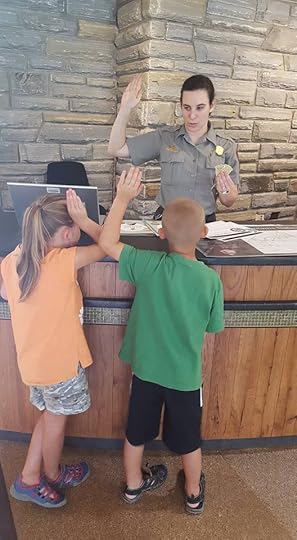 And I swear not to base my survival on some hack author’s blog I followed from Instagram.Read more after the jump!So your hero is roughing it—really roughing it now! Their gear is lost, their food’s run out, and mother nature’s howling jaws are closing in. What’s a hapless protagonist to do!?
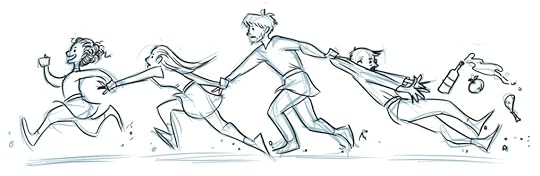 If you're some characters, charge headlong into certain death.1. WaterI started with water in Part One, and I’m going to lead off with it again. Lack of water renders any other survival technique obsolete. If your protagonist can’t carry it with them, they’re going to need to plan their travel around how to obtain it. This can be as simple as following an available river course. But what if they’re being chased, or the river is contaminated, or there simply isn’t a river to be found?
Water runs downhill. We agree on that, right? It’s pretty universal unless you’re getting real wild with your worldbuilding. That means in most landscapes, water is going to collect at the bottoms of slopes and basins. An exception to this is desert canyons—water is more often found at the head of a canyon than the lower drainages because seeps and pools frequently run only a short distance before drying up. In very arid places, water is sometimes surprisingly found in “pockets” high up on rocky ridges, where rainwater and dew collects and has no place to drain away. This information, however, wouldn’t be something the average traveler would know—most characters are going to follow their instincts and look for water downhill.
If there are no pools or creeks to be found, digging for water might be necessary—your character will want to look for patches of thick vegetation or shade as indicators of moisture. This can be iffy when near salt water, though, which of course is dangerous to drink. In The Moor’s Account by Laila Lalami, a fictional re-telling of the doomed Narváez expedition in the 16th century, several of Mustafa’s companions give in to their thirst and drink brackish water, only to have dehydration come all the faster from vomiting.
For the really desperate, mud, plant pulp, or even dung can be wrapped in a shirt and squeezed to release water. But this isn’t just unpleasant—it can be dangerous as well. Contaminated water is almost worse than no water at all, because the aforementioned vomiting and diarrhea will only hasten dehydration. If your character has no way to purify dirty or fouled water, either through boiling, filtering, or treating it with chemicals or magic, they’re going to have to be extra careful about evaluating their water sources. And as we all learned from Sokka and his Friendly Giant Mushroom, not all cacti have drinkable liquid inside.Plot nuggets: Magic spells to purify water; dizziness, cramping, and disorientation that comes with dehydration; depending on a water source only to find it fouled by animals (particularly large mammals), poisoned with minerals like gypsum, or infiltrated with salt water.
2. ShelterThe need for shelter can depend on the nature of your quest. If your characters are having to move quickly, there might not be time to build even temporary shelters. It might be good enough to simply find a place your protagonist can hunker down, with care to choose a site that’s flat, out of the wind, and high enough to avoid flooding. But if your character is having to find a place in the wilderness to hide for a while, or protect a wounded companion, there are a few options.
Caves are a typical first choice for someone seeking shelter. Even rock walls or overhangs can be a good foundation, provided they’re relatively protected from the wind and wet. In books where characters are somewhat stationary and looking for an enclosed, easily defendable shelter--Hatchet, Island of the Blue Dolphins, Clan of the Cave Bear--protagonists usually choose a cave of some kind.
Of course, caves have their drawbacks, as Thorin and Company can attest to, though goblins aren’t everyone’s biggest concern. Caves can be habitats for other creatures as well—a ranger friend of mine was leading a backcountry trip and camped his group in a cave, only for everyone to wake up at three AM to it’s actual tenant—a mountain lion—screaming at them. Years later, I would recognize almost the exact same occurrence in Megan Whalen Turner’s Thick as Thieves--get out of there, Costis! Besides wildlife and goblins, caves can be wet, hard to access, and dark. But a good cave—one that’s dry and unoccupied—can be a literal lifesaver.
If your character is traveling, or there are no caves around, temporary shelter can be built from a variety of material—branches, brush, sod, mud, hide, and even snow. Lean-tos and conical structures are some of the simplest, usually made from a framework of branches and covered with reeds or brush. Take care when researching and using names for some of these structures—wickiups, wigwams, and tepees are excellent portable shelters and comfortable to sleep in, but they aren’t make-believe or fantasy creations. Many Native American and First Nations tribes have a long history of building and using these structures and still keep their building traditions alive today. A Shoshone wickiup may look completely different from an Apache wickiup (with one conical and one domed). These aren’t terms to throw around because they sound interesting. They’re real, and they have a living history. Do your research. Write with integrity. Portable structures made from available materials have been made across the world for all of human history, but that doesn’t mean you can slap a name on them without its greater context.
The same goes for snow shelters. A decent, if not warm, shelter can be made from burrowing into a snowbank or hollowing out a mound of snow, but again, take care what you’re calling them. Know the difference between an igloo and a quinzhee (one is permanent, the other temporary), and know where the terms come from. Now, it might not matter to your character or the story what they’re called—if they’re trying to survive the night by tunneling into a snowbank, they may be too close to hypothermia to need anything more than oh god just a hole out of the wind help my fingers are falling off.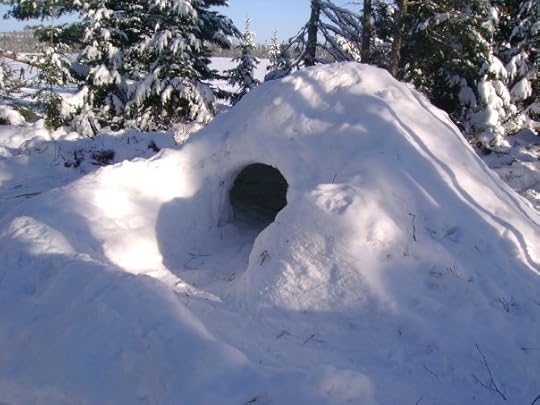 SAVE ME DREAD ICE HOLE (actually this was a very comfortable quinzhee to sleep in, though changing clothes was no fun.)Plot nuggets: A poorly-built brush shelter catching fire during the night; unconventional shelters like hollow trees (damp, probably buggy) or sea cliffs (gusty, susceptible to tides); companions comparing or bickering over their traditional shelter construction (MY people use reeds, well MY people use sod); a quinzhee built on a frozen lake trapping heat so well it starts to thaw the ice underneath (that happened to my campmates in the middle of the night, like a terrifying water bed).
3. First AidI’m not going to get into the specifics of herbalism in this section, because it depends so much on what’s available in your environment. Your best resources, if you’re planning to use real plants and remedies, is to research what indigenous people of your region would have relied on. Park rangers and publications can be especially helpful with this kind of thing—some of my biggest resources for building Mae’s herbalism in Woodwalker was a traditional wildcrafter I worked with in Great Smoky Mountains, demos and exhibits put together by members of the Eastern Band of Cherokee in the Qualla Boundary, and accounts of Appalachian granny women.
But plants, like water, can be dangerous if misidentified. If your protagonist is unsure, or if there simply aren’t the right medicinals available, they may have to rely on more general knowledge to treat injury or illness. Some common issues associated with outdoor travel and their related treatments are as follows:
(Note: these are GENERAL and only meant to give a sense of immediate action. If you’re writing in depth about any one of these, do more research than what’s presented here. Take a first aid course; read survival accounts. Do not send the Mayo Clinic after me.)Hypothermia (extreme cold, moving from chills to lethargy to death): Slow warming of the victim by building a fire, removing and replacing wet clothing, offering hot drinks, and sharing body heat (despite popular accounts in romance literature, getting naked is not technically necessary, but your characters don’t have to know that).Heat exhaustion or stroke (sometimes coupled with dehydration): Rest in a shaded place; slow but continuous hydration; covering with cool, wet cloths; fanning.Altitude sickness (generally hits over 7,000 feet): Tons of water, tons of rest, and moving slowly up elevation.Poisoning (generally from accidentally ingesting the wrong plant, spoiled food, or tainted water): Continued hydration while the body purges itself through vomiting and/or diarrhea.Snakebite: Keeping the victim calm. There are a million folk remedies for treating snakebite, but the primary thing is not allowing the victim to freak out, which makes the poison pump through the system faster.Animal bite: Apply pressure until bleeding stops, flush and clean the wound, bandage. Stitches might be necessary.Poison Ivy: Scrubbing the contact area with wet sand; daubing rashes with mud.Soft tissue injuries (like a muscle strain, sprain, or twist): Remember the mnemonic RICE- Rest, Ice, Compression, and Elevation. Have your character elevate the injured area (particularly for an ankle or knee), cool it with ice or wet cloth, and wrap it tightly. This is for pain relief only, not a cure.Broken bone: This is bad news bears for an untrained traveler. The primary thing is to stop any bleeding and immobilize the area. Splinting above and below the injured site can help, but an ordinary civilian trying to realign a broken bone often does more harm than good. If the victim goes into shock (i.e., flips their lid because their idiot companion is trying to set their broken arm), lay them down with their head below their waist and their legs elevated. And then find a medical professional, quick. Sommmetimes easier said than done. (Photo: In the Heart of the Sea, from CW Atlanta)Plot nuggets: Concocting some wild, absurd remedy for snakebite (“quick, repeat this nonsense mantra sixty times while staring at this yellow flower!”) to act as a placebo and distraction to keep the victim calm; magical healing spells that work for one thing but not another (“I… I know the chant for sunburn…” “I have FROSTBITE, you useless warlock!”).
4. FireWe’ve all seen it portrayed—a stranded hero who rubs a few sticks together and produces glorious flame. You probably don’t need me to tell you that it’s not quite that simple. Starting a fire without matches is an extremely difficult task for the inexperienced. I’ve never done it—I’ve made my characters do it, but I certainly never have. Youtube is your friend here—there are plenty of historical reenactors and survivalists who can show you how to start a fire with minimal equipment.
The primary things for your protagonist to remember are the three ingredients a fire needs to burn: heat, fuel, and oxygen. If your character can come up with these three things, they should be able to get a blaze going. The classic image of the spindle stick or hand drill is among the most difficult methods to get a spark, and people who can use those methods effectively are considered highly accomplished. But there are other ways your character might win a spark. In Hatchet, Brian accomplishes it by striking his hatchet on a particular rock, throwing sparks (the heat) into a nest of birch bark fluff (the fuel) and blowing on the sparks (the oxygen). In Woodwalker, Mae uses the mirrored lid of her compass to concentrate sunlight into her tinder.
Fuel should already be stockpiled before trying to coax a spark, or else your character faces the heartbreak of their hard-won heat consuming the fine fluff before they can feed it with larger tinder. Once it’s lit, fire is precious. Your character would want to be very careful about banking their coals to keep them hot overnight for fear of having to struggle to create a spark again the next day.
Fortunately, once the fire is lit, it can actually be transported. If your character has to travel, they can carry live coals with them. They can nestle a hot coal into a bundle of shredded bark and then wrap it with thick lengths of bark until it resembles a fat cigar, or the bundle can be stuffed into an animal horn, like a bison’s. A coal can stay lit this way for at least half a day, or longer if well-preserved.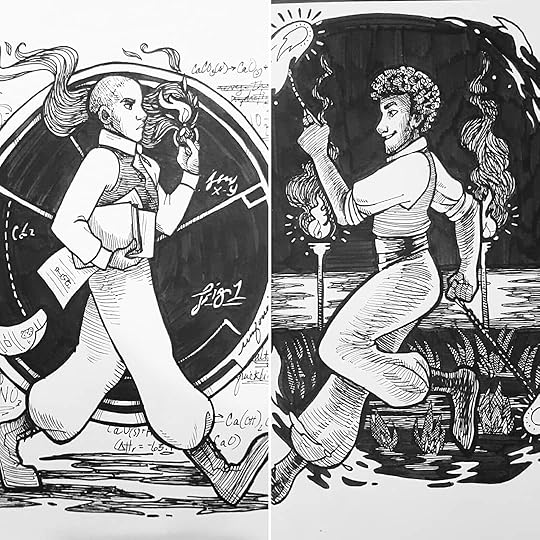 Alternatively, pack your friendly neighborhood pyrotechnicians for the journey.Plot nuggets: Reluctance to leave or bank a fire once it’s lit; unconventional fuel like dried dung, peat, shredded paper money, or hair (like in Andy Weir’s The Martian).
5. FoodLike medicinal plants, food is going to depend largely on your environment. Subsistence food history is a fascinating subject, and is as diverse as ecosystems worldwide. So these will also be generalized suggestions designed to guide your character’s choices in obtaining food.
Plants are probably going to be the first thing your protagonist looks for, because they’re easier to obtain than game and don’t always need cooking (though many do). Roots and seeds are going to be some of the most nutritious plant products, but leaves and berries will be more easily recognizable by the inexperienced and require less prep. Good ways to prepare roots with minimal equipment are roasting in coals like potatoes. Seeds can be dried or ground into a meal and mixed with water to make a mush. Some plant pollen, like cattail, can also be used like flour to make mush or something akin to biscuits.
Before moving to hunting large game animals, your protagonist might consider smaller animals like insects and amphibians. Large insects like grasshoppers and cicadas can be plucked from plants in the early morning when they’re chilled and slow. They can be boiled or roasted and served in stews, either whole or ground into a meal. Frogs are a nutritious food source and are usually caught with a sharpened stick, spear, or bow and arrow.
The next step up on the options for game are large birds and mammals. If your protagonist is traveling with a weapon like a bow and arrow and is already an accomplished hunter, they may be able to hunt enough game to feed themselves. But if they have no weapon, or have never hunted before, or simply can’t spare the time and energy for active hunting, they may want to set traps. Deadfall traps are some of the simplest to set up, followed by snares. Again, Youtube is your friend. There are a variety of different ways to rig a trap or snare, from elaborate contraptions that funnel animals into them to something as simple as a rock propped on a stick.
Fish, too, can be trapped if there’s no way to use a hook and line. One of Brian’s breakthroughs in Hatchet is when he realizes he can build a pond to store live fish rather than stalking them through the shallows. Fish and game should be sun-dried or smoked into jerky for storage, and then cooked when ready to eat.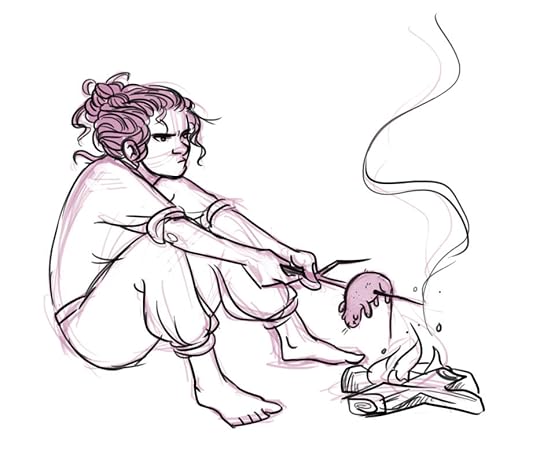 Eighty percent of Mae's exile just looked like this.Plot nuggets: An initial despair at the lack of food around them only to realize with time and experience that nature is a stocked pantry if you know how and where to look; confusing a benign plant with a dangerous plant, like wild carrot for water parsnip or water hemlock; don’t forget about eggs!Survival stories, when well-researched, can be gripping tales of human humility and perseverance. Even when survival is just one of several themes or tropes used in a plot, it’s almost guaranteed to increase the stakes for your characters. Fewer things unite or divide a group more profoundly than struggling simply to stay alive (Station Eleven, Lord of the Flies, In the Heart of the Sea, The Poisonwood Bible). And fewer things make us think more about the duality of our own frail nature and strength of spirit than tales of people who survive against all odds (Life of Pi, Island of the Blue Dolphins, Daughter of Fortune, The Martian).
A great book that expands on these points is Outdoor Survival Skills by Larry Dean Olsen. It has the drawback of being rife with cultural appropriation and cringey hubris, but the methods and materials inside provide a great toolbox for your characters. Other good resources are the Mayo Clinic and Red Cross guidelines for first aid—while they use modern equipment and terminology, it's a useful starting point for what a protagonist should do for a wounded companion. The National Park Service website has plant and animal guides for each national park, which can give a good idea of what your protagonists might encounter in their environment. And, of course, fiction like Paulsen’s Hatchet, Brian’s Winter, and The Transall Saga, seafaring and shipwreck accounts, tales of rugged expeditions (check the Juvenile section of your library for great illustrated books), and preserved indigenous knowledge and history (check your sources; write with integrity) can all provide great jumping-off points for equipping your characters to survive whatever finely-tuned hell you’ve thrust them into.
Now, back to flinging my protagonists into the desolate Water Scrape! They might kill each other or fall in love; I’m not sure which yet.July Art RoundupJust like... a reckless amount of Coco fan art, including several in-depth comics that are too vertical to include here. You can find them all on my Tumblr under the Coco tag. The only other piece I did this month was a celebratory Queen's Thief piece after the cover reveal for Return of the Thief. See full portfolio What I'm ReadingUpcoming EventsAfterimage, Naomi HughesBeyond a Darkened Shore, Jessica LeakeRebel Rising, Beth RevisHatchet, Gary Paulsen (it's been a while)
The Silver Chair, CS Lewis (out loud to my kids)The Magician's Nephew, CS Lewis (out loud to my kids)Did you get some value out of this post? If so, please consider buying me a coffee by donating $3 to my Ko-fi account:It's Electric City Comicon time! This is an awesome local con put on by the Anderson County Library system. Saturday, August 4, 10 AM - 5 PM at the Anderson Main Library, South Carolina. My schedule will be as follows:
>10 - 11 AM: Live drawing demonstration, Artists' Alley
>1 PM: "Other Worlds" Panel with authors Beth Revis, Ashley Poston, and Jessica Leake
>2 PM: "Other Worlds" Booksigning
>3 PM: Live drawing demonstration, Artists' AlleyGet all the details on my Events page!
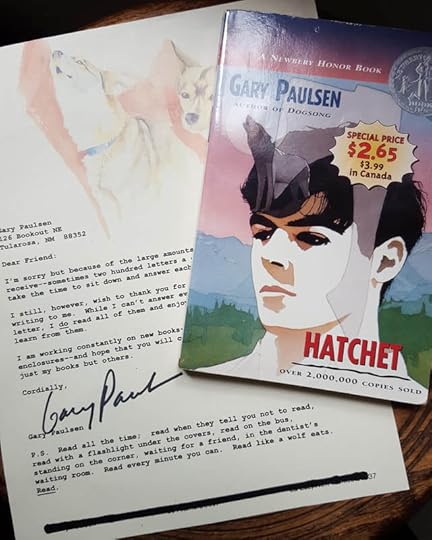
My name is Brian Robeson and I am thirteen years old and I am alone in the north woods of Canada.When I was in seventh grade, during the dawn of dial-up Internet and Angelfire websites, I wrote a fan letter to Gary Paulsen telling him how much I loved his adventure books. He replied with a signed typewritten letter and a Polaroid photo of him on a sailboat in a gray Alaskan inlet. The postscript of the letter went like this:
All right, he thought, that’s simple enough.
I was flying to visit my father and the plane crashed and sank in a lake.
There, keep it that way. Short thoughts.
I do not know where I am.
-Hatchet, Gary Paulsen
Read all the time; read when they tell you not to read, read with a flashlight under the covers, read on the bus, standing on the corner, waiting for a friend, in the dentist’s waiting room. Read every minute you can. Read like a wolf eats. READ.
I followed Gary Paulsen’s advice up until I reached grad school, when my life was overtaken by academia and, later, motherhood. But now, with two kids eager to devour the same adventures and worlds I did, and with my re-entry into the world of literature as an author, not just a reader, I’m happily rediscovering his wise advice to thirteen-year-old me. Reading isn’t just a pastime; it’s a gateway and lifeline to a broader human experience. Would I be a park ranger today if I hadn’t been transported to Brian Robeson’s L-shaped lake in northern Canada?
Hatchet was a foundational book for a lot of the scouts, rangers, and outdoorsfolk I hang out with—the story of a kid like us, a city boy from a stressful household, who finds himself lost in the rugged wilderness with a small hatchet as his only tool. It was equally captivating and terrifying to stumble along with Brian as he guesses his way through survival, relying on memories of action movies and shipwreck stories, giving childish names to the things he comes to rely on—gut cherries, foolbirds, food fish. And Hatchet certainly isn’t Gary Paulsen’s only survival story. Most of his work—even his autobiography and sci-fi work—is threaded with themes of struggle and cohesion with nature.
Survival remains one of my favorite tropes in literature. From childhood favorites like Island of the Blue Dolphins (O’Dell) and The Sign of the Beaver (Speare) to recent favorites like The Moor’s Account (Lalami) and In the Heart of the Sea (Philbrick), I’m a sucker for a story that throws a character into a wild unknown and forces them to adapt. And now that I’m a published author, I’m not just a sucker for reading these characters, but writing them, too. In fact, I’m mere paragraphs away in my current manuscript from stripping every bit of gear from my protagonists and pushing them into a fifty-mile expanse of waterless desert. Granted, I’m not sure how I’m going to get them across, but at this point they’re cleverer than me, and I expect they’ll show me.
Part one of “So Your Hero is Roughing It” focused on equipping your characters with the most basic gear they might need to survive a quest. This installment focuses instead on what happens when you take all that stuff away. I’ll make the same disclaimer here as I made in Part One: this is not a survival guide. Don’t screenshot this blog and head off into the Yukon. This is a resource for writers and role-players looking for plot nuggets and worldbuilding ideas. I’ve kept things relatively generic on purpose—a lot of your details will depend on what environment your characters are traveling through. Finding medicinal plants in a temperate rainforest is going to be a heck of a lot different from finding medicinal plants in high steppes. This is just a framework, not an in-depth guide.
And I swear not to base my survival on some hack author’s blog I followed from Instagram.Read more after the jump!So your hero is roughing it—really roughing it now! Their gear is lost, their food’s run out, and mother nature’s howling jaws are closing in. What’s a hapless protagonist to do!?
If you're some characters, charge headlong into certain death.1. WaterI started with water in Part One, and I’m going to lead off with it again. Lack of water renders any other survival technique obsolete. If your protagonist can’t carry it with them, they’re going to need to plan their travel around how to obtain it. This can be as simple as following an available river course. But what if they’re being chased, or the river is contaminated, or there simply isn’t a river to be found?Water runs downhill. We agree on that, right? It’s pretty universal unless you’re getting real wild with your worldbuilding. That means in most landscapes, water is going to collect at the bottoms of slopes and basins. An exception to this is desert canyons—water is more often found at the head of a canyon than the lower drainages because seeps and pools frequently run only a short distance before drying up. In very arid places, water is sometimes surprisingly found in “pockets” high up on rocky ridges, where rainwater and dew collects and has no place to drain away. This information, however, wouldn’t be something the average traveler would know—most characters are going to follow their instincts and look for water downhill.
If there are no pools or creeks to be found, digging for water might be necessary—your character will want to look for patches of thick vegetation or shade as indicators of moisture. This can be iffy when near salt water, though, which of course is dangerous to drink. In The Moor’s Account by Laila Lalami, a fictional re-telling of the doomed Narváez expedition in the 16th century, several of Mustafa’s companions give in to their thirst and drink brackish water, only to have dehydration come all the faster from vomiting.
For the really desperate, mud, plant pulp, or even dung can be wrapped in a shirt and squeezed to release water. But this isn’t just unpleasant—it can be dangerous as well. Contaminated water is almost worse than no water at all, because the aforementioned vomiting and diarrhea will only hasten dehydration. If your character has no way to purify dirty or fouled water, either through boiling, filtering, or treating it with chemicals or magic, they’re going to have to be extra careful about evaluating their water sources.
And as we all learned from Sokka and his Friendly Giant Mushroom, not all cacti have drinkable liquid inside.Plot nuggets: Magic spells to purify water; dizziness, cramping, and disorientation that comes with dehydration; depending on a water source only to find it fouled by animals (particularly large mammals), poisoned with minerals like gypsum, or infiltrated with salt water.2. ShelterThe need for shelter can depend on the nature of your quest. If your characters are having to move quickly, there might not be time to build even temporary shelters. It might be good enough to simply find a place your protagonist can hunker down, with care to choose a site that’s flat, out of the wind, and high enough to avoid flooding. But if your character is having to find a place in the wilderness to hide for a while, or protect a wounded companion, there are a few options.
Caves are a typical first choice for someone seeking shelter. Even rock walls or overhangs can be a good foundation, provided they’re relatively protected from the wind and wet. In books where characters are somewhat stationary and looking for an enclosed, easily defendable shelter--Hatchet, Island of the Blue Dolphins, Clan of the Cave Bear--protagonists usually choose a cave of some kind.
Of course, caves have their drawbacks, as Thorin and Company can attest to, though goblins aren’t everyone’s biggest concern. Caves can be habitats for other creatures as well—a ranger friend of mine was leading a backcountry trip and camped his group in a cave, only for everyone to wake up at three AM to it’s actual tenant—a mountain lion—screaming at them. Years later, I would recognize almost the exact same occurrence in Megan Whalen Turner’s Thick as Thieves--get out of there, Costis! Besides wildlife and goblins, caves can be wet, hard to access, and dark. But a good cave—one that’s dry and unoccupied—can be a literal lifesaver.
If your character is traveling, or there are no caves around, temporary shelter can be built from a variety of material—branches, brush, sod, mud, hide, and even snow. Lean-tos and conical structures are some of the simplest, usually made from a framework of branches and covered with reeds or brush. Take care when researching and using names for some of these structures—wickiups, wigwams, and tepees are excellent portable shelters and comfortable to sleep in, but they aren’t make-believe or fantasy creations. Many Native American and First Nations tribes have a long history of building and using these structures and still keep their building traditions alive today. A Shoshone wickiup may look completely different from an Apache wickiup (with one conical and one domed). These aren’t terms to throw around because they sound interesting. They’re real, and they have a living history. Do your research. Write with integrity. Portable structures made from available materials have been made across the world for all of human history, but that doesn’t mean you can slap a name on them without its greater context.
The same goes for snow shelters. A decent, if not warm, shelter can be made from burrowing into a snowbank or hollowing out a mound of snow, but again, take care what you’re calling them. Know the difference between an igloo and a quinzhee (one is permanent, the other temporary), and know where the terms come from. Now, it might not matter to your character or the story what they’re called—if they’re trying to survive the night by tunneling into a snowbank, they may be too close to hypothermia to need anything more than oh god just a hole out of the wind help my fingers are falling off.
SAVE ME DREAD ICE HOLE (actually this was a very comfortable quinzhee to sleep in, though changing clothes was no fun.)Plot nuggets: A poorly-built brush shelter catching fire during the night; unconventional shelters like hollow trees (damp, probably buggy) or sea cliffs (gusty, susceptible to tides); companions comparing or bickering over their traditional shelter construction (MY people use reeds, well MY people use sod); a quinzhee built on a frozen lake trapping heat so well it starts to thaw the ice underneath (that happened to my campmates in the middle of the night, like a terrifying water bed). 3. First AidI’m not going to get into the specifics of herbalism in this section, because it depends so much on what’s available in your environment. Your best resources, if you’re planning to use real plants and remedies, is to research what indigenous people of your region would have relied on. Park rangers and publications can be especially helpful with this kind of thing—some of my biggest resources for building Mae’s herbalism in Woodwalker was a traditional wildcrafter I worked with in Great Smoky Mountains, demos and exhibits put together by members of the Eastern Band of Cherokee in the Qualla Boundary, and accounts of Appalachian granny women.
But plants, like water, can be dangerous if misidentified. If your protagonist is unsure, or if there simply aren’t the right medicinals available, they may have to rely on more general knowledge to treat injury or illness. Some common issues associated with outdoor travel and their related treatments are as follows:
(Note: these are GENERAL and only meant to give a sense of immediate action. If you’re writing in depth about any one of these, do more research than what’s presented here. Take a first aid course; read survival accounts. Do not send the Mayo Clinic after me.)Hypothermia (extreme cold, moving from chills to lethargy to death): Slow warming of the victim by building a fire, removing and replacing wet clothing, offering hot drinks, and sharing body heat (despite popular accounts in romance literature, getting naked is not technically necessary, but your characters don’t have to know that).Heat exhaustion or stroke (sometimes coupled with dehydration): Rest in a shaded place; slow but continuous hydration; covering with cool, wet cloths; fanning.Altitude sickness (generally hits over 7,000 feet): Tons of water, tons of rest, and moving slowly up elevation.Poisoning (generally from accidentally ingesting the wrong plant, spoiled food, or tainted water): Continued hydration while the body purges itself through vomiting and/or diarrhea.Snakebite: Keeping the victim calm. There are a million folk remedies for treating snakebite, but the primary thing is not allowing the victim to freak out, which makes the poison pump through the system faster.Animal bite: Apply pressure until bleeding stops, flush and clean the wound, bandage. Stitches might be necessary.Poison Ivy: Scrubbing the contact area with wet sand; daubing rashes with mud.Soft tissue injuries (like a muscle strain, sprain, or twist): Remember the mnemonic RICE- Rest, Ice, Compression, and Elevation. Have your character elevate the injured area (particularly for an ankle or knee), cool it with ice or wet cloth, and wrap it tightly. This is for pain relief only, not a cure.Broken bone: This is bad news bears for an untrained traveler. The primary thing is to stop any bleeding and immobilize the area. Splinting above and below the injured site can help, but an ordinary civilian trying to realign a broken bone often does more harm than good. If the victim goes into shock (i.e., flips their lid because their idiot companion is trying to set their broken arm), lay them down with their head below their waist and their legs elevated. And then find a medical professional, quick.
Sommmetimes easier said than done. (Photo: In the Heart of the Sea, from CW Atlanta)Plot nuggets: Concocting some wild, absurd remedy for snakebite (“quick, repeat this nonsense mantra sixty times while staring at this yellow flower!”) to act as a placebo and distraction to keep the victim calm; magical healing spells that work for one thing but not another (“I… I know the chant for sunburn…” “I have FROSTBITE, you useless warlock!”).4. FireWe’ve all seen it portrayed—a stranded hero who rubs a few sticks together and produces glorious flame. You probably don’t need me to tell you that it’s not quite that simple. Starting a fire without matches is an extremely difficult task for the inexperienced. I’ve never done it—I’ve made my characters do it, but I certainly never have. Youtube is your friend here—there are plenty of historical reenactors and survivalists who can show you how to start a fire with minimal equipment.
The primary things for your protagonist to remember are the three ingredients a fire needs to burn: heat, fuel, and oxygen. If your character can come up with these three things, they should be able to get a blaze going. The classic image of the spindle stick or hand drill is among the most difficult methods to get a spark, and people who can use those methods effectively are considered highly accomplished. But there are other ways your character might win a spark. In Hatchet, Brian accomplishes it by striking his hatchet on a particular rock, throwing sparks (the heat) into a nest of birch bark fluff (the fuel) and blowing on the sparks (the oxygen). In Woodwalker, Mae uses the mirrored lid of her compass to concentrate sunlight into her tinder.
Fuel should already be stockpiled before trying to coax a spark, or else your character faces the heartbreak of their hard-won heat consuming the fine fluff before they can feed it with larger tinder. Once it’s lit, fire is precious. Your character would want to be very careful about banking their coals to keep them hot overnight for fear of having to struggle to create a spark again the next day.
Fortunately, once the fire is lit, it can actually be transported. If your character has to travel, they can carry live coals with them. They can nestle a hot coal into a bundle of shredded bark and then wrap it with thick lengths of bark until it resembles a fat cigar, or the bundle can be stuffed into an animal horn, like a bison’s. A coal can stay lit this way for at least half a day, or longer if well-preserved.
Alternatively, pack your friendly neighborhood pyrotechnicians for the journey.Plot nuggets: Reluctance to leave or bank a fire once it’s lit; unconventional fuel like dried dung, peat, shredded paper money, or hair (like in Andy Weir’s The Martian).5. FoodLike medicinal plants, food is going to depend largely on your environment. Subsistence food history is a fascinating subject, and is as diverse as ecosystems worldwide. So these will also be generalized suggestions designed to guide your character’s choices in obtaining food.
Plants are probably going to be the first thing your protagonist looks for, because they’re easier to obtain than game and don’t always need cooking (though many do). Roots and seeds are going to be some of the most nutritious plant products, but leaves and berries will be more easily recognizable by the inexperienced and require less prep. Good ways to prepare roots with minimal equipment are roasting in coals like potatoes. Seeds can be dried or ground into a meal and mixed with water to make a mush. Some plant pollen, like cattail, can also be used like flour to make mush or something akin to biscuits.
Before moving to hunting large game animals, your protagonist might consider smaller animals like insects and amphibians. Large insects like grasshoppers and cicadas can be plucked from plants in the early morning when they’re chilled and slow. They can be boiled or roasted and served in stews, either whole or ground into a meal. Frogs are a nutritious food source and are usually caught with a sharpened stick, spear, or bow and arrow.
The next step up on the options for game are large birds and mammals. If your protagonist is traveling with a weapon like a bow and arrow and is already an accomplished hunter, they may be able to hunt enough game to feed themselves. But if they have no weapon, or have never hunted before, or simply can’t spare the time and energy for active hunting, they may want to set traps. Deadfall traps are some of the simplest to set up, followed by snares. Again, Youtube is your friend. There are a variety of different ways to rig a trap or snare, from elaborate contraptions that funnel animals into them to something as simple as a rock propped on a stick.
Fish, too, can be trapped if there’s no way to use a hook and line. One of Brian’s breakthroughs in Hatchet is when he realizes he can build a pond to store live fish rather than stalking them through the shallows. Fish and game should be sun-dried or smoked into jerky for storage, and then cooked when ready to eat.
Eighty percent of Mae's exile just looked like this.Plot nuggets: An initial despair at the lack of food around them only to realize with time and experience that nature is a stocked pantry if you know how and where to look; confusing a benign plant with a dangerous plant, like wild carrot for water parsnip or water hemlock; don’t forget about eggs!Survival stories, when well-researched, can be gripping tales of human humility and perseverance. Even when survival is just one of several themes or tropes used in a plot, it’s almost guaranteed to increase the stakes for your characters. Fewer things unite or divide a group more profoundly than struggling simply to stay alive (Station Eleven, Lord of the Flies, In the Heart of the Sea, The Poisonwood Bible). And fewer things make us think more about the duality of our own frail nature and strength of spirit than tales of people who survive against all odds (Life of Pi, Island of the Blue Dolphins, Daughter of Fortune, The Martian).A great book that expands on these points is Outdoor Survival Skills by Larry Dean Olsen. It has the drawback of being rife with cultural appropriation and cringey hubris, but the methods and materials inside provide a great toolbox for your characters. Other good resources are the Mayo Clinic and Red Cross guidelines for first aid—while they use modern equipment and terminology, it's a useful starting point for what a protagonist should do for a wounded companion. The National Park Service website has plant and animal guides for each national park, which can give a good idea of what your protagonists might encounter in their environment. And, of course, fiction like Paulsen’s Hatchet, Brian’s Winter, and The Transall Saga, seafaring and shipwreck accounts, tales of rugged expeditions (check the Juvenile section of your library for great illustrated books), and preserved indigenous knowledge and history (check your sources; write with integrity) can all provide great jumping-off points for equipping your characters to survive whatever finely-tuned hell you’ve thrust them into.
Now, back to flinging my protagonists into the desolate Water Scrape! They might kill each other or fall in love; I’m not sure which yet.July Art RoundupJust like... a reckless amount of Coco fan art, including several in-depth comics that are too vertical to include here. You can find them all on my Tumblr under the Coco tag. The only other piece I did this month was a celebratory Queen's Thief piece after the cover reveal for Return of the Thief. See full portfolio What I'm ReadingUpcoming EventsAfterimage, Naomi HughesBeyond a Darkened Shore, Jessica LeakeRebel Rising, Beth RevisHatchet, Gary Paulsen (it's been a while)
The Silver Chair, CS Lewis (out loud to my kids)The Magician's Nephew, CS Lewis (out loud to my kids)Did you get some value out of this post? If so, please consider buying me a coffee by donating $3 to my Ko-fi account:It's Electric City Comicon time! This is an awesome local con put on by the Anderson County Library system. Saturday, August 4, 10 AM - 5 PM at the Anderson Main Library, South Carolina. My schedule will be as follows:
>10 - 11 AM: Live drawing demonstration, Artists' Alley
>1 PM: "Other Worlds" Panel with authors Beth Revis, Ashley Poston, and Jessica Leake
>2 PM: "Other Worlds" Booksigning
>3 PM: Live drawing demonstration, Artists' AlleyGet all the details on my Events page!
June 29, 2018
At First Sight
JUNE 2018 So you know how I said last month that I was
finally getting a Wacom Cintiq
to replace my external Intuos tablet? Well, I did it! It wasn't an entirely seamless process, complete with the gutting realization that the Cintiq wasn't compatible with my current laptop, but after some setbacks I got it set up in the past week and have started tinkering with it. And with June's blog structured for readers of my trilogy, what better way to break it in than by drawing a bunch of pictures of my protagonists!
So you know how I said last month that I was
finally getting a Wacom Cintiq
to replace my external Intuos tablet? Well, I did it! It wasn't an entirely seamless process, complete with the gutting realization that the Cintiq wasn't compatible with my current laptop, but after some setbacks I got it set up in the past week and have started tinkering with it. And with June's blog structured for readers of my trilogy, what better way to break it in than by drawing a bunch of pictures of my protagonists!
While romance isn't the central part of the Creatures of Light trilogy, it's a strong current throughout all three books. Partnerships--both platonic and romantic--play a big role in driving the plot and upping the stakes. And the romances, be they past or present or on the rise, are not simple, sweet things. They're messy, and bittersweet, and at times very, very hard. Some fall apart over the course of the trilogy, some bloom. But they all have an impact, leaving characters different people from who they were before.
So this blog post features an illustrated snippet from each protagonist's first meaningful interaction with their significant other. Some are right there in the text, and some are only hinted at. Obviously, there are spoilers ahead ! But I've arranged and labeled them by book, so if you've only read Woodwalker, you can stop without spoiling the rest; likewise for Ashes to Fire. If you haven't read any of them.... get out now while you still can! (Shameless link to book one in the series here!)
See them all after the jump!Okay, ready? Last chance to bail!*Woodwalker spoilers below! *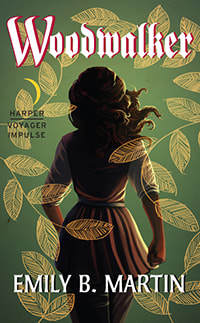 Mae and Valien
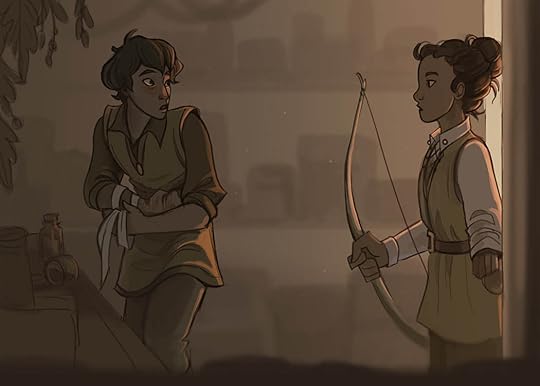
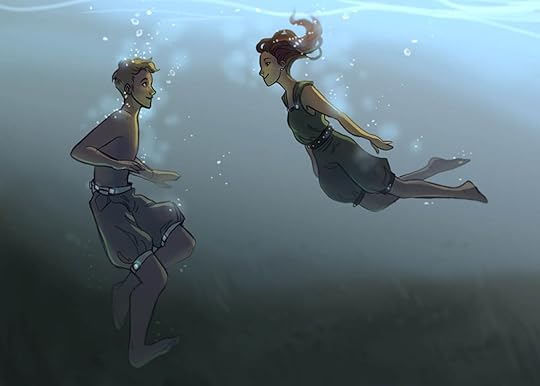
Arlen and Sorcha
You can see other spoiler art for Woodwalker in my Spoiler Art gallery ! Only book one is included there, so it won't spoil the other two.*Ashes to Fire spoilers below!* Mona and Rou
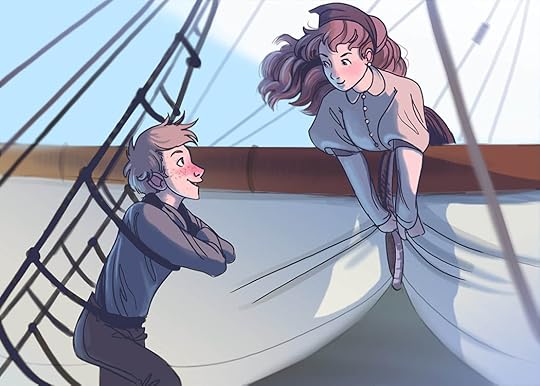
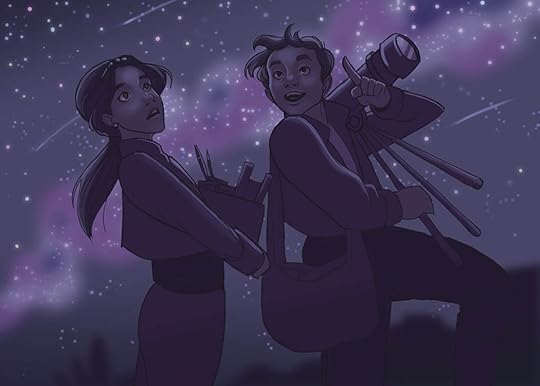
 Gemma and Celeno
Bonus: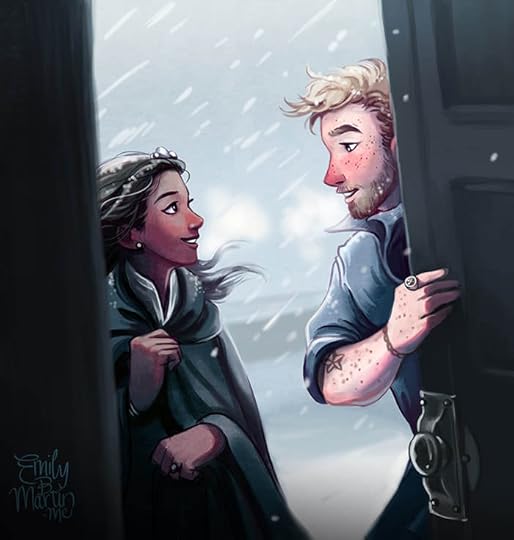
So you know how I said last month that I was
finally getting a Wacom Cintiq
to replace my external Intuos tablet? Well, I did it! It wasn't an entirely seamless process, complete with the gutting realization that the Cintiq wasn't compatible with my current laptop, but after some setbacks I got it set up in the past week and have started tinkering with it. And with June's blog structured for readers of my trilogy, what better way to break it in than by drawing a bunch of pictures of my protagonists!While romance isn't the central part of the Creatures of Light trilogy, it's a strong current throughout all three books. Partnerships--both platonic and romantic--play a big role in driving the plot and upping the stakes. And the romances, be they past or present or on the rise, are not simple, sweet things. They're messy, and bittersweet, and at times very, very hard. Some fall apart over the course of the trilogy, some bloom. But they all have an impact, leaving characters different people from who they were before.
So this blog post features an illustrated snippet from each protagonist's first meaningful interaction with their significant other. Some are right there in the text, and some are only hinted at. Obviously, there are spoilers ahead ! But I've arranged and labeled them by book, so if you've only read Woodwalker, you can stop without spoiling the rest; likewise for Ashes to Fire. If you haven't read any of them.... get out now while you still can! (Shameless link to book one in the series here!)
See them all after the jump!Okay, ready? Last chance to bail!*Woodwalker spoilers below! *
Mae and Valien
"And this name?" Mona asked. "Redhand?""And then I coached him through hitting all his targets left-handed for the first time and we made out." --SubtextColm and Ama
"Ah. Yes. The name Val chose when he turned thirteen. His father wanted him to take something more in line with the family tradition, but of course Val didn't want to. ... There was a tremendous fight. Vandalen took a swing with a candlestick. He missed, but as Val dodged the blow, he fell and landed with his right hand in the fire grate."
She winced. "The scars on his palm..."
"It was a bad burn. To this day he can't feel anything with that palm. I found him by accident in the Guard supply room a few hours after it happened, trying to dress the wounds with his other hand. I had only just met him at that point, so I didn't ask what had happened, but he let me clean and dress the burns. ... Eventually, he and I grew close enough for him to tell me."
-Woodwalker
"Hi, Colm," I said. "How are you feeling?"Obnoxiously happy! Boyish, un-tragic Colm and cheerful, brave Ama, perhaps realizing for the first time that he's more than just her best friend's brother.
He stirred feebly. "Ama," he said, his voice raw.
Mona ceased her busying with the mug. I leaned forward. "What?"
"Ama." His fingers edged along the ground, searching. They found the fabric of my cloak and closed over it in a fist. He sighed.
I patted his hand awkwardly. "Sorry Colm. I'm not your mother."
"No."
I turned to Mona. She was sitting very still, clasping the mug. "Ama," she said, watching Colm sink back into sleep. "His wife."
I looked back at him, his chest rising and falling with shallow breaths. The chain around his neck was just visible under his collar.
"Did she die that day?" I asked.
"Yes. They had been married less than a year." She glanced down at the mug in her hands. "You said I couldn't have had friends as a child. You were wrong. I had one. Ama, the daughter of one of my councilors. She was one of the very best divers in Lumen, able to get to the deepest beds few others could reach. ... She had a delightful sense of humor. She used to tease me--the only person, really, to treat me like a teenage girl rather than a queen. Colm always liked her, ever since we were small, and after a while, she decided she liked him back. They were obnoxiously happy together."
-Woodwalker
Arlen and Sorcha
"What is THAT?" Mona asked later that evening, when we were laying out our wares.It becomes pretty clear by the end of Woodwalker that both Mona and Arlen alike misunderstood his relationship with Sorcha. Though Mona claims they'd only courted for two weeks, I expect Arlen would have known Sorcha longer, probably from climbing along the shrouds and yardarms in the shipyard with the other Blackshell kids. It would only be shortly before the Alcoran invasion that Arlen would work up the courage to approach her on his own, still passing it off as just lounging in the rigging while she worked, which she wouldn't buy for an instant. (PS for all you tall ship buffs, because it's bothering me too--I know the shrouds are on the wrong side of the yardarm, but the staging didn't work otherwise.)
Arlen cradled the jasper pendant in his hands. "For Sorcha," he said wistfully. "To give her when we return, as a token of my love."
She closed her eyes, pained. "You courted her for two weeks before the Alcorans invaded, and yet you wasted a handful of silver buying her a pendant?"
"She loves me."
"She slapped you." Mona plucked the money bag off his belt. "Which I now have the urge to do. Rivers to the sea, be sensible. You don't even know if she's still alive. Don't waste our money."
-Woodwalker
You can see other spoiler art for Woodwalker in my Spoiler Art gallery ! Only book one is included there, so it won't spoil the other two.*Ashes to Fire spoilers below!*
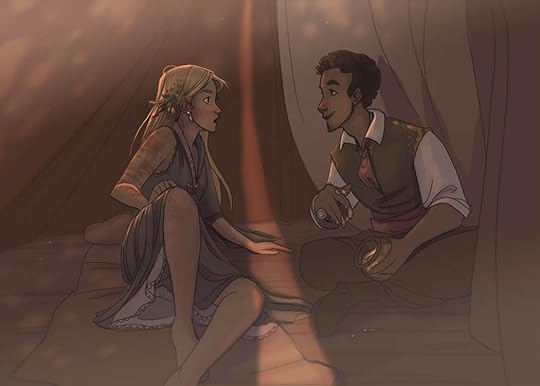
Mona and Rou
I woke with the same disorientation as before. My stomach churned with nausea, and my head was groggy and aching. I was lying on my left side again. Dappled light pressed against my eyelids. I smelled rot, and burnt hair, and honey.Illustrating this scene made me aware of two things: first, how weirdly similar it is to Mae and Val's first meeting in the supply closet, sans the slapping (if it's an author tic, I need to get more creative with my subplots). And second, exactly how stressful it would have been for Mona to wake up in these circumstances given her romantic history. It's a wonder the credits didn't roll right then and there.*Creatures of Light spoilers below!*
Honey?
Someone was holding my burned arm. Someone was spreading something thick and sticky over my skin.
Someone was putting honey on my skin.
My eyes flew open. A figure was bent over me, his face less than a foot from mine. I lurched away, wrenching my arm from his grasp. He uttered some exclamation, grappling with the open honey pot clutched between his knees. I scrabbled backward into a canvas wall, my legs tangled in a mess of sheets. Pain raced up my arm, but I braced myself against the plank floor and staggered to my feet.
I had to bend at the knees and tilt my head--I was in some kind of low tent, the thick canvas stretched over a pitched frame. A faded curtain was strung up the middle of the space as a partition. Morning light shone through the loose tent flap. But sitting between me and the flap was a man, trying to stem the flow of honey dripping over his hand.
A man with nut-brown skin and a thatch of coarse, curly hair.
"You," I blurted.
It was the fire spinner I had seen from across the dock. He stoppered the pot of honey, awkwardly, because his hand was still sticky.
"Morning, lolly," he said. "Let me finish dressing that burn for you."
I took a tiny step toward him, cupped my palm, and slapped him across the ear as hard as I could.
-Ashes to Fire
Gemma and Celeno
"What did your tutor say when you proposed your thesis?" I asked. "Go on, what did she say when you suggested a cosmic source, instead of an atmospheric one?"Gemma and Celeno's origin story went through several iterations with the rewrites of Creatures of Light, but they all involved helping one another with their studies (in the first draft, they were children when they met, and they watched a butterfly emerge from a chrysalis). And while this scene focuses on Celeno's research, it was a reciprocal relationship, as they both recall half a chapter later:
"That I was wasting my time."
"Yes. And despite that, you pursued it anyway. Years of work with the optical engineers to develop the right lens. Months of sleepless nights at your telescope."
I could still feel the deep-set exhaustion as I slogged through my own lessons in the days after we sat bent over his planisphere and squinting along his astrolabe, charting the exact angle and origin of the streaks of light flying through the sky. He'd been desperate to find an illustrator who would actually accompany him into the field, not just work from his notes, but I hadn't needed the double fee he'd offered to accept. His energy was infectious. I'd had a dutifully Alcoran reverence for the stars before, but his fascination quickly became my own, and I wanted answers to his questions as much as he. We'd hiked up a hundred different hilltops in the dead of night and shared every emotion between us.
-Creatures of Light
"What's so funny?"Poor Celeno. Poor Gemma. Things were good until the world got in the way.
My lips twitched behind my fingers. "Drowning cicadas."
His gaze dropped to the space between our feet, but not before I glimpsed his cheeks rounding into his own smile. I was filled suddenly with the memory of that day, lying in the shade of the cottonwoods on the canyon rim, the treetops thick with the drone of cicadas.
"I was trying to ask you to dance with me at Starfall..." he began, as if reluctant to dredge up the memory.
"...and I didn't realize it," I said. "I was collecting data for my thesis..."
"...and making me hold the vials while you shoved the poor wiggling things into the alcohol." He fought to get his smile under control before he looked back up. "It did affect the romance of the proposition."
-Creatures of Light
Bonus:
"You're different than I expected...."*winky face emoji*June Art RoundupActually, beyond the illustrations above and some commissions, I didn't produce much beyond these two pieces for my fan art classes (the next one is July 12th!). A Weasley Twins redraw and a Moana live-drawing demonstration. See full portfolio What I'm ReadingUpcoming EventsStation Eleven, Emily St. John MandelBlind Descent, Nevada BarrEndangered Species, Nevada BarrAristotle and Dante Discover the Secrets of the Universe, Benjamin Alire Sáenz (audiobook narrated by Lin-Manuel Miranda!)Afterimage, Naomi HughesThe Voyage of the Dawn Treader, CS Lewis (out loud to my kids)The Horse and His Boy, CS Lewis (out loud to my kids)Did you get some value out of this post? If so, please consider buying me a coffee by donating $3 to my Ko-fi account:Pendleton Library Fan Art Class: The second of two free programs, where I'll talk about the power and value of fan art and do a live-drawing demonstration. The first one was SO fun! Thursday, July 12, 6:30 PM. Electric City Comicon: Our excellent local comicon! I'll be moderating a panel with several other awesome regional authors, and I have intel that there may be some Creatures of Light cosplay. (frantic shrieking) Saturday, August 4, 10-4. Get all the details on my Events page!
May 30, 2018
Katara Progress Video and Tutorial
MAY 2018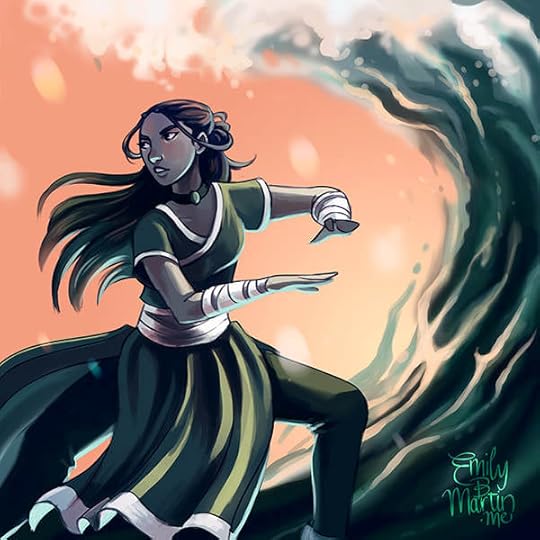 I've said it before and I'll say it again: fan art--and fan fiction--gets a bad rap, despite having this amazing power to build community, support other creators, and expand an artist or writer's skills. It took me a long time to stop feeling embarrassed about creating fan art and -fiction--now I can look back and see all the strides I've made because I was inspired by my favorite books or movies to draw and write, and I can safely say I wouldn't be at the same place, technically or stylistically, without sketchbooks and Word documents full of fan-fueled creations.
It's timely, then, that I'll be giving two presentations this summer on the power and value of fan art! I'll be sharing some work that has made a difference in my career and doing a live-drawing demonstration of a popular character the audience will help me pick (for more info, see my Events page). To get ready for these programs, I asked my Facebook and Twitter followers to vote on a character I should draw for my May blog post. Out of a poll of four cool young women, Katara beat out Hermione, Eowyn, and Moana!
I got into Avatar: The Last Airbender in undergrad, which at the time felt way too old to be watching a kid's anime, but now I love referencing it as an example of masterful storytelling, worldbuilding, and character arcs. And I hadn't drawn Katara in so long! So here she is---check out her progress video and art tutorial below the jump!Lately I've been playing with getting more stylistic with my pieces, pushing my color palettes and strengthening my forms and composition. So I wanted to try something a little different than Katara's typical blue palette. Not shown in the video are the thumbnails I referenced from tai chi photos online or the handful of rough sketches I made and discarded before I settled on this pose (largely because I forgot I was supposed to be recording).
The main steps for this piece are similar to the ones in Celeno's progress video from February. After laying down a rough sketch I was happy with, I followed this basic process:
1. Base colors- Slapping down really fast color just to get a sense of my palette. As you can see from the video, these changed pretty dramatically as things went on.
2. Line art- Reducing the opacity of the sketch layer, creating a new layer on top, and using a small pastel brush (see my Brushes image below) to refine the line work.
3. Adjusting colors- Altering the background and creating a distinct color layer for Katara in a contrasting value.
4. Basic highlights/shadows- Throwing down some brights--a dramatic tint along Katara's right side and a more subtle bounce light underneath her left side, and adding a purplish shadow through her interior. I put each of these shades on a different layer, masked to the flat color layer underneath and set to either Color Dodge or Multiply, so I could adjust them.
5. Refining- I duplicated and then merged all of Katara's layers, created a new one on top, and started blending colors and defining details, while keeping some roughness for energy.
6. Background- Adjusting colors/refining background shapes. For water, I like using a big soft brush for swaths of color juxtaposed with crisp edges. For some of the bubbles, I used a brush I created to draw freckles--it's basically just a hard round brush with Scatter and Opacity Jitter adjustments. You can see these bubbles in the video, but I took most of them out after the fact and tweaked the water a little more, so they didn't actually end up in the final image.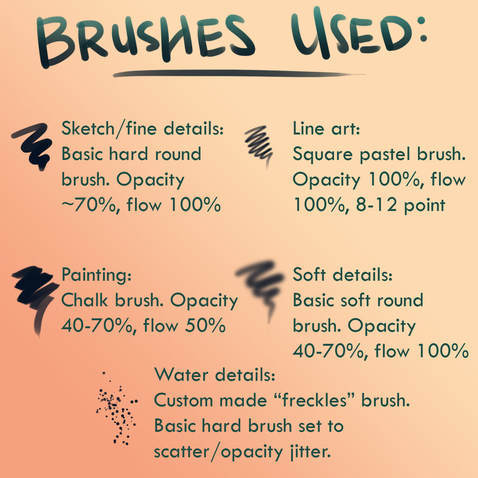 Finally, I flattened the image and used my color balancer to do some final color adjustments, and added my signature (another custom brush I use on all my pieces).
 *^*Water Tribe!*^*If the universe is on my side, this piece may also have the distinction of being my very last one on my Wacom Intuos tablet! I've been creating digital art for thirteen years now, and throughout that time I've only ever used external tablets that plug into my laptop and sit off to the side; I started on a Wacom Graphire in high school before graduating to the Intuos after college. My Intuos still has life in it (so does my Graphire, actually--it's hard to beat Wacom quality tablets), but lately I've started to feel the limitations of working within a 7-inch rectangle that's not even in front of my eyes. I'm not able to achieve the control I need over my lines, and too much time is spent undoing and redrawing marks that aren't quite in the right place, or at the right curve. I've gotten so used to using my hotkeys to fix these kinds of mistakes that they've just become a seamless part of my process, but I'm at the point where it's slowing down my work and limiting what I can produce.
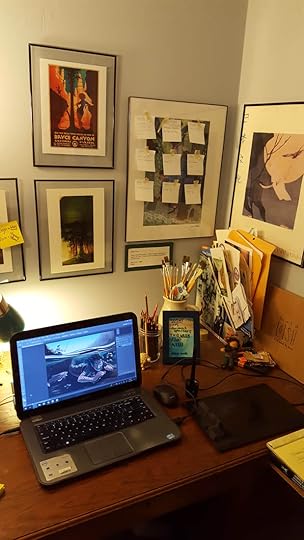 But shhh, don't tell it that.So last week I did something I've been planning and budgeting for a while--I ordered a Wacom Cintiq, which is essentially a large free-standing monitor that you draw on directly. For the first time, I'll have my work under my hand, and sixteen whole inches of space to move and rotate and zoom.
It does feel a bit like a divorce, but I expect I'll still use my Intuos for remote work, and for the fan art programs this summer.
Just... don't tell my Intuos until it's absolutely necessary, okay? It's like the grown-up version of Toy Story. I don't want it to get jealous or depressed and throw the Cintiq out the window. I don't think I can claim equipment sabotage on my taxes.May Art RoundupA few mermaids for Mermay, a portrait of a new protagonist, and some Musketeers fan art. All the mermaid pictures are available as prints in my INPRNT shop ! See full portfolio What I'm ReadingUpcoming EventsTempests and Slaughter, Tamora Pierce
Borderline, Nevada Barr
The Hazel Wood, Melissa Albert
Prince Caspian, CS Lewis (out loud to my kids)
Did you get some value out of this post? If so, please consider buying me a coffee by donating $3 to my Ko-fi account:City Lights Discussion and Signing: I'll be back at one of my favorite bookstores in Sylva, NC to read a little from Creatures of Light and talk books and publishing! Friday, June 15, 6:30Anderson Library Fan Art Demo: The first of two fan art programs. Bring your sketchbooks! Copies of Creatures of Light will be available for purchase. Monday, June 25, 6:30More details on my Events page.
I've said it before and I'll say it again: fan art--and fan fiction--gets a bad rap, despite having this amazing power to build community, support other creators, and expand an artist or writer's skills. It took me a long time to stop feeling embarrassed about creating fan art and -fiction--now I can look back and see all the strides I've made because I was inspired by my favorite books or movies to draw and write, and I can safely say I wouldn't be at the same place, technically or stylistically, without sketchbooks and Word documents full of fan-fueled creations.It's timely, then, that I'll be giving two presentations this summer on the power and value of fan art! I'll be sharing some work that has made a difference in my career and doing a live-drawing demonstration of a popular character the audience will help me pick (for more info, see my Events page). To get ready for these programs, I asked my Facebook and Twitter followers to vote on a character I should draw for my May blog post. Out of a poll of four cool young women, Katara beat out Hermione, Eowyn, and Moana!
I got into Avatar: The Last Airbender in undergrad, which at the time felt way too old to be watching a kid's anime, but now I love referencing it as an example of masterful storytelling, worldbuilding, and character arcs. And I hadn't drawn Katara in so long! So here she is---check out her progress video and art tutorial below the jump!Lately I've been playing with getting more stylistic with my pieces, pushing my color palettes and strengthening my forms and composition. So I wanted to try something a little different than Katara's typical blue palette. Not shown in the video are the thumbnails I referenced from tai chi photos online or the handful of rough sketches I made and discarded before I settled on this pose (largely because I forgot I was supposed to be recording).
The main steps for this piece are similar to the ones in Celeno's progress video from February. After laying down a rough sketch I was happy with, I followed this basic process:
1. Base colors- Slapping down really fast color just to get a sense of my palette. As you can see from the video, these changed pretty dramatically as things went on.
2. Line art- Reducing the opacity of the sketch layer, creating a new layer on top, and using a small pastel brush (see my Brushes image below) to refine the line work.
3. Adjusting colors- Altering the background and creating a distinct color layer for Katara in a contrasting value.
4. Basic highlights/shadows- Throwing down some brights--a dramatic tint along Katara's right side and a more subtle bounce light underneath her left side, and adding a purplish shadow through her interior. I put each of these shades on a different layer, masked to the flat color layer underneath and set to either Color Dodge or Multiply, so I could adjust them.
5. Refining- I duplicated and then merged all of Katara's layers, created a new one on top, and started blending colors and defining details, while keeping some roughness for energy.
6. Background- Adjusting colors/refining background shapes. For water, I like using a big soft brush for swaths of color juxtaposed with crisp edges. For some of the bubbles, I used a brush I created to draw freckles--it's basically just a hard round brush with Scatter and Opacity Jitter adjustments. You can see these bubbles in the video, but I took most of them out after the fact and tweaked the water a little more, so they didn't actually end up in the final image.
Finally, I flattened the image and used my color balancer to do some final color adjustments, and added my signature (another custom brush I use on all my pieces).
*^*Water Tribe!*^*If the universe is on my side, this piece may also have the distinction of being my very last one on my Wacom Intuos tablet! I've been creating digital art for thirteen years now, and throughout that time I've only ever used external tablets that plug into my laptop and sit off to the side; I started on a Wacom Graphire in high school before graduating to the Intuos after college. My Intuos still has life in it (so does my Graphire, actually--it's hard to beat Wacom quality tablets), but lately I've started to feel the limitations of working within a 7-inch rectangle that's not even in front of my eyes. I'm not able to achieve the control I need over my lines, and too much time is spent undoing and redrawing marks that aren't quite in the right place, or at the right curve. I've gotten so used to using my hotkeys to fix these kinds of mistakes that they've just become a seamless part of my process, but I'm at the point where it's slowing down my work and limiting what I can produce.
But shhh, don't tell it that.So last week I did something I've been planning and budgeting for a while--I ordered a Wacom Cintiq, which is essentially a large free-standing monitor that you draw on directly. For the first time, I'll have my work under my hand, and sixteen whole inches of space to move and rotate and zoom. It does feel a bit like a divorce, but I expect I'll still use my Intuos for remote work, and for the fan art programs this summer.
Just... don't tell my Intuos until it's absolutely necessary, okay? It's like the grown-up version of Toy Story. I don't want it to get jealous or depressed and throw the Cintiq out the window. I don't think I can claim equipment sabotage on my taxes.May Art RoundupA few mermaids for Mermay, a portrait of a new protagonist, and some Musketeers fan art. All the mermaid pictures are available as prints in my INPRNT shop ! See full portfolio What I'm ReadingUpcoming EventsTempests and Slaughter, Tamora Pierce
Borderline, Nevada Barr
The Hazel Wood, Melissa Albert
Prince Caspian, CS Lewis (out loud to my kids)
Did you get some value out of this post? If so, please consider buying me a coffee by donating $3 to my Ko-fi account:City Lights Discussion and Signing: I'll be back at one of my favorite bookstores in Sylva, NC to read a little from Creatures of Light and talk books and publishing! Friday, June 15, 6:30Anderson Library Fan Art Demo: The first of two fan art programs. Bring your sketchbooks! Copies of Creatures of Light will be available for purchase. Monday, June 25, 6:30More details on my Events page.
April 29, 2018
So Your Hero is Roughing It, Part 1
APRIL 2018
 And draw.However, I have to admit, when I read a quest where there’s no mention of packs or bags—or more blatantly, when there’s a movie adaptation and no depiction of characters carrying gear—the ranger in me convulses a little. You, human, hiking through the wilderness—where’s your water bottle? Your map? Your fire kit? Your blanket?
 WHERE ARE YOUR EFFING TREKKING POLES, ARAGORN?I get it—bulky packs look silly (which is why Samwise carries one for comic relief), and too much time spent on travel minutiae can bog down a story’s pacing. But in fantasy worldbuilding, it’s often the mundane details juxtaposed with fantastic elements that create a complex, lived-in world. Seeing Hermione trying to stew mushrooms in a billy can in Harry Potter and the Deathly Hallows shows us how dire things can get, even for wizards. And seeing Mrs. Beaver determined to pack a few necessities despite the complaints of the others show that while strange and wonderful, Narnia is still a dangerous place for the unprepared.
This is one of two segments I’m planning to write on the topic of quest practicality—in this post I’ll focus on the most basic gear a typical human might need to survive in the wilderness, while the second installment will be on improvising the rest from the surrounding environment, like first aid, shelter, and clean water. This is all written for like-minded authors collecting ideas to flesh out their world- and character-building, not for adventurers looking to pull a Christopher McCandless and strike out into the wild. We can have that conversation another time, when I’m wearing my ranger hat.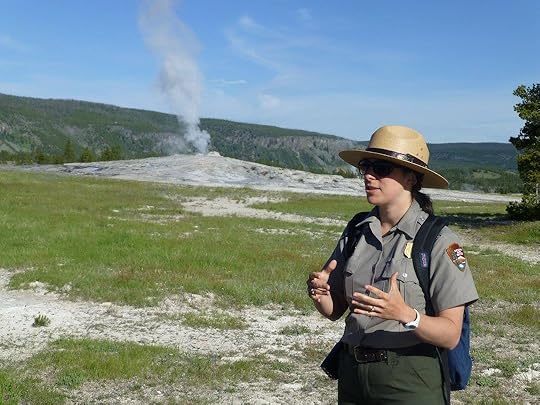 Ranger Emily says, please don’t wander into backcountry Alaska to live in an abandoned bus. Start with, like, a state park or something, and maybe a tent.So! Your protagonist is roughing it. Maybe they’re on the run. Maybe they’re hunting for a magical artifact. Maybe they have to destroy an ancient weapon and the giant eagles are all binge-watching NOVA or whatever. At any rate, your characters are trekking across the wilderness. If they have basic human needs, some of the gear they may need to survive are…
1. WATER
Everybody needs it. Okay, Legolas, maybe not you, but we’re focusing on humans, thanks. If there is only one necessity your character carries with them, make it be something they can carry water in. A skin, a canteen, a bottle, a magical dipper that never runs dry, a human skull (choose this one only for aesthetic; skulls are leaky)—whatever makes sense for your story. Water is the primary driver of human survival and will absolutely have an impact on how, when, and where your characters travel.
How much water you need depends on your environment. In Woodwalker, Mae and the others are in the Silverwood, a damp, forested mountain range with ample flowing streams and seeps. They can probably get away with a single canteen each, taking care to refill when the opportunity arises without much purposeful travel. But in the deserts of Alcoro, Gemma would need to be much more intentional about where she’s moving and when, traveling strategically from water source to water source, or following a rivercourse.
Of course, there’s a big difference between water and clean water. I have a friend who once had to hike without gear down a mountain in a thick, subtropical rainforest, following a flowing river—but because the water was so brackish, he couldn’t drink it, and by the time he reached a road, he was dangerously dehydrated. I won’t touch much on cleaning water in this post, but it is important to note whether a water source has been fouled by animals, is dangerously sterile with minerals or glacial till, or is infiltrated with salt water. That is, of course, unless you want a great bonding moment between your characters brought on by giardia and projectile vomiting! Most of these tips can be ignored if you are purposefully trying to up the stakes.
Consider packing: A water bottle, canteen, skin, cup, or other container
Plot nuggets: Planning travel around the availability of water, grumbling about the weight of carrying water (it’s the heaviest thing in your pack) only to get worried as the weight begins to lighten, straining leaves out of a canteen as you fill up.
2. WARMTH
It’s been a while since I read The Hunger Games, but one thing I remember is the backpack Katniss grabs right out of the gate in the first book. One of the items inside is a sleeping bag. High five, Suzanne Collins! Katniss probably couldn’t have survived her injuries without it!
Because we’re so insulated from the outside world, we tend to forget that nights get cold. Even in warm, humid climates, come dawn, your character’s body has cooled down, and they would be uncomfortable at the least. More risky are dry climates, which lose the heat of the day almost immediately upon the sun setting. If your characters are damp with sweat, or wet, or without a fire, a night outside with no protection can quickly devolve into hypothermia.
 Which means Mae is either too tired to care or has embraced the icy grip of death.Just as important as a cover is protection from the ground below. We lose a lot of heat to lying on soil or rock. Plus, the ground is generally an extremely uncomfortable place to sleep. The best variation of sleeping gear would be big enough to wrap around the body. Don’t want to carry a bedroll? Do your characters wear cloaks? Awesome, use those. Cloaks are an amazing garment that in my opinion should have been forcibly revived by now.
Consider packing: A blanket big enough to roll up in, a bedroll or sleeping bag, a heavy cloak, a woven mat
Plot nuggets: Stiff necks and backs upon waking up, sleeping with a warm hat on, being wet with dew in the morning, begrudgingly snuggling together to share warmth.
3. LIGHT
Emily, you say. Isn’t this going a bit overkill? Just have your characters travel during the day.
Oh, proverbial reader, scoff if you want, but tell me, have you ever had an experience where something went wrong during a travel itinerary? Maybe your plane was delayed, or your Uber driver gave you a squicky feeling, or your GPS led you to Bob’s Country Bunker. Despite our most carefully-laid plans, things will often go awry while traveling. It’s no different on a foot quest.
Here, let me tell you a story:
Dateline July 2008, rural New Mexico. A group of three young, dingo-headed backcountry staff decide at approximately 5 PM that they are going to take the long way back to base camp, hiking off-trail down a rivercourse. The afternoon has been hot and dusty, and for a while hiking in the river is a welcome relief.
Until it gets dark. Who could possibly have seen this coming??Surprise! These three Sir Edmund Hillaries don’t have flashlights in their packs because they hadn’t considered how much longer the hike off-trail would be compared to on-trail. Darkness falls quickly and profoundly, slowing down their progress even more. By 9 PM, they’re finally out of the river, bruised, shivering, hungry, and still two miles from camp. After a long stumble across sagebrush flats, they roll into Tent City around 10 PM, tear into a couple of MREs like a pack of wolverines, and make a pact never to forget to pack a flashlight again.
(Spoiler: Exactly ten days later, they find themselves accidentally hiking at night again, this time twenty miles from base camp with a lost car key to boot, but at least this time, they have a flashlight.)
Don’t be my campmates and me. It makes for a great story afterward, but hiking blind at night is not only slow, it’s dangerous. A full moon might suffice in an open environment, but in forest or cloud cover, darkness can be almost absolute, and travel through anything rougher than flat ground nearly impossible. If your characters are traveling at night for stealth or to minimize the heat of the day, consider giving them a light source.
Consider packing: A lantern, a torch, a flashlight, a magical light source (Lumos!). Bonus: red- or blue-colored glass in a lantern will help preserve night vision.
Plot nuggets: Hiking at night can be terrifying. Every snap and sigh sounds like a bear. Even with a light, a hiker can develop tunnel vision from only seeing that one illuminated spot. It’s easy to lose your head in the dark, which can lead to great bonding moments between characters as they try to coach the other through the ordeal.
4. SHOES
Okay, I almost left this one out, but the ranger in me wouldn’t allow it. I’ve seen too many people set out into the Grand Canyon wearing flip flops, and I’ve read too many characters who run off in bare feet or heeled dress shoes. Mae does it in Woodwalker after her boots rip apart. But she also gets blisters as a result.
If your character sets out in subpar footwear, they’re going to feel it before too long. This is something of a plot point in Rachel Hartman’s Tess of the Road--a sturdy set of boots is what facilitates Tess’ transformative journey in the first place.
Even a good set of shoes will chafe or blister given enough time, and blisters can be surprisingly debilitating. Footwear is particularly important if your characters are traveling in snow—blisters suck, but frostbite is worse.
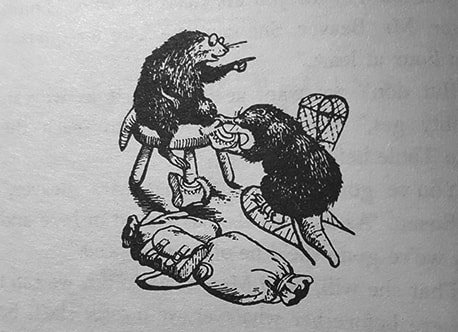 Just ask Mrs. Beaver.Consider packing: Boots, sturdy shoes with good soles, sandals that don’t flap
Plot nuggets: A rookie traveler purchasing a brand-new pair of boots only for them to blister horribly the first day (boots should preferably be broken in before walking long distances). Cooling aching feet in a stream, identifying a “hot spot” before it turns into a blister, blisters where you least expect them (the knuckles of your toes, the pad of your foot, in between your toes).
5. FOOD
I mean, obviously your characters need food (sit down, Legolas, nobody cares). The reason I left it for last is because this one is often the most easily come by, unless you’re drifting in a boat in the middle of the South Pacific for ninety days and you don’t want to eat Chris Hemsworth (“we’ve been stove by a whale!”). A character with a sense of the landscape can perhaps forage or hunt or barter with passersby. But depending on the land can be unreliable, or impossible in the wrong season, and there’s a very real chance of accidental poisoning. So if your characters can’t find food around them, they’re going to need to carry it with them. A lot of it.
Food is the biggest user of space in a typical pack. People need a lot of calories during rugged travel. I know someone who spent the last third of his Appalachian Trail through-hike basically shotgunning packets of peanut butter, because it was the lightest and most efficient food product he could carry. Trail food needs to be hearty and hard-wearing, able to store without spoiling, preferably not too heavy, and able to be packed down to take up as little room as possible.
Just as important as the type of food is how it’s being carried—it has to be contained in something that will keep it from getting wet or infested, or from spilling in the rest of the pack. Waxed paper, oilcloth, plastic (if your technology allows), tin cans, glass jars, corked bottles, or boxes are all options.
Consider packing: Hardy food in durable packaging. The options for this are endless, and will depend on your story’s technology, food culture, and length of journey.
Plot nuggets: Getting sick of the same food, or, alternatively, developing a surprising taste for tough fare. Badly-packaged food spilling or crumbling in a pack, prioritizing food that doesn’t have to be cooked, eating things you would never dream of eating on a typical day (after a grueling all-day trek, I once shared a pot with my campmates that contained all of the following: instant mashed potatoes, freeze-dried peas, chicken, buttermilk pretzels, and dehydrated spiced apples, all reconstituted with weak Gatorade. We ate it cold with tent stakes because we had no cutlery and were too tired to light our stove—and nothing could have tasted better. This was with the same two campmates mentioned previously.)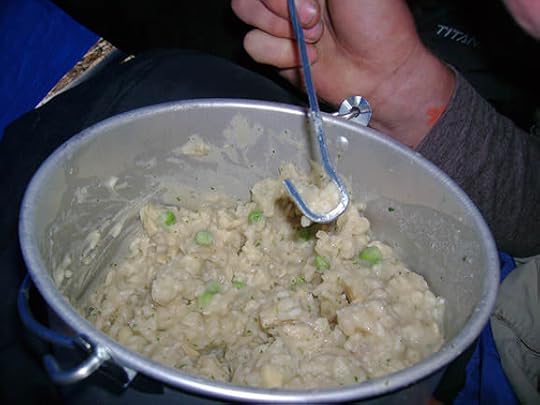 The fact that none of us died that summer remains one of my life's biggest mysteries.Obviously there are a lot more items that will make a character’s journey safer and more pleasant—some form of shelter, wayfinding materials (like a map), changes of clothes, a first aid kit, firelighting tools, and rain gear, to name a few. And of course many of these things can be improvised from the environment, rather than carried, which I’ll get into in part 2. But doing that requires a working knowledge beyond just basic hiking. If your character doesn’t have in-depth survival skills and is pressed for time, the essentials above could be the difference between life and death, or life and a supremely unpleasant journey. Give them water, food, dependable shoes, some kind of blanket or outwear, and preferably a light source.
And then take it all away and watch them panic!April Art RoundupA whole bunch of Queen's Thief fan art for a week-long Tumblr fanfest, and... that's about it. See full portfolio What I'm ReadingHeart of Iron, Ashley PostonWays of the World: A History of the World's Roads and of the Vehicles that Used Them, M.G. Lay (research for my current manuscript)First Mail West: Stagecoach Lines on the Santa Fe Trail, Morris F. Taylor (more research)The Lion, the Witch, and the Wardrobe, C.S. Lewis (out loud to my kids)Did you get some value out of this post? If so, please consider buying me a coffee by donating $3 to my Ko-fi account:Upcoming EventsM.Judson Sketching and Signing: I'll be at one of our coolest local bookstores with an easel and a pile of books, chatting about art and writing. It's informal, so drop in any time between 9:30-12:30. Saturday, May 12th, Greenville SCClemson-Central Spring Author Showcase: Come show your love for some regional authors and your public library system! Sunday, May 20th, 3:30-5:30, Clemson-Central Library, SC
“What are you doing, Mrs. Beaver?” exclaimed Susan.Ah, the quest—a staple of fantasy literature both classic and modern. Rugged journeys through wild lands, relying on wit and luck and the kindness of strangers. Quests and survivalism remain some of my favorite tropes to both read and write.
“Packing a load for each of us, dearie,” said Mrs. Beaver very coolly. “You didn’t think we’d set out on a journey with nothing to eat, did you?”
“But we haven’t time!” said Susan.
“Now don’t you get fussing, there’s a dear,” said Mrs. Beaver, “but just get half a dozen clean handkerchiefs out of the drawer.”
-The Lion, the Witch, and the Wardrobe
And draw.However, I have to admit, when I read a quest where there’s no mention of packs or bags—or more blatantly, when there’s a movie adaptation and no depiction of characters carrying gear—the ranger in me convulses a little. You, human, hiking through the wilderness—where’s your water bottle? Your map? Your fire kit? Your blanket?
WHERE ARE YOUR EFFING TREKKING POLES, ARAGORN?I get it—bulky packs look silly (which is why Samwise carries one for comic relief), and too much time spent on travel minutiae can bog down a story’s pacing. But in fantasy worldbuilding, it’s often the mundane details juxtaposed with fantastic elements that create a complex, lived-in world. Seeing Hermione trying to stew mushrooms in a billy can in Harry Potter and the Deathly Hallows shows us how dire things can get, even for wizards. And seeing Mrs. Beaver determined to pack a few necessities despite the complaints of the others show that while strange and wonderful, Narnia is still a dangerous place for the unprepared.
This is one of two segments I’m planning to write on the topic of quest practicality—in this post I’ll focus on the most basic gear a typical human might need to survive in the wilderness, while the second installment will be on improvising the rest from the surrounding environment, like first aid, shelter, and clean water. This is all written for like-minded authors collecting ideas to flesh out their world- and character-building, not for adventurers looking to pull a Christopher McCandless and strike out into the wild. We can have that conversation another time, when I’m wearing my ranger hat.
Ranger Emily says, please don’t wander into backcountry Alaska to live in an abandoned bus. Start with, like, a state park or something, and maybe a tent.So! Your protagonist is roughing it. Maybe they’re on the run. Maybe they’re hunting for a magical artifact. Maybe they have to destroy an ancient weapon and the giant eagles are all binge-watching NOVA or whatever. At any rate, your characters are trekking across the wilderness. If they have basic human needs, some of the gear they may need to survive are…1. WATER
Everybody needs it. Okay, Legolas, maybe not you, but we’re focusing on humans, thanks. If there is only one necessity your character carries with them, make it be something they can carry water in. A skin, a canteen, a bottle, a magical dipper that never runs dry, a human skull (choose this one only for aesthetic; skulls are leaky)—whatever makes sense for your story. Water is the primary driver of human survival and will absolutely have an impact on how, when, and where your characters travel.
How much water you need depends on your environment. In Woodwalker, Mae and the others are in the Silverwood, a damp, forested mountain range with ample flowing streams and seeps. They can probably get away with a single canteen each, taking care to refill when the opportunity arises without much purposeful travel. But in the deserts of Alcoro, Gemma would need to be much more intentional about where she’s moving and when, traveling strategically from water source to water source, or following a rivercourse.
Of course, there’s a big difference between water and clean water. I have a friend who once had to hike without gear down a mountain in a thick, subtropical rainforest, following a flowing river—but because the water was so brackish, he couldn’t drink it, and by the time he reached a road, he was dangerously dehydrated. I won’t touch much on cleaning water in this post, but it is important to note whether a water source has been fouled by animals, is dangerously sterile with minerals or glacial till, or is infiltrated with salt water. That is, of course, unless you want a great bonding moment between your characters brought on by giardia and projectile vomiting! Most of these tips can be ignored if you are purposefully trying to up the stakes.
Consider packing: A water bottle, canteen, skin, cup, or other container
Plot nuggets: Planning travel around the availability of water, grumbling about the weight of carrying water (it’s the heaviest thing in your pack) only to get worried as the weight begins to lighten, straining leaves out of a canteen as you fill up.
2. WARMTH
It’s been a while since I read The Hunger Games, but one thing I remember is the backpack Katniss grabs right out of the gate in the first book. One of the items inside is a sleeping bag. High five, Suzanne Collins! Katniss probably couldn’t have survived her injuries without it!
Because we’re so insulated from the outside world, we tend to forget that nights get cold. Even in warm, humid climates, come dawn, your character’s body has cooled down, and they would be uncomfortable at the least. More risky are dry climates, which lose the heat of the day almost immediately upon the sun setting. If your characters are damp with sweat, or wet, or without a fire, a night outside with no protection can quickly devolve into hypothermia.
Which means Mae is either too tired to care or has embraced the icy grip of death.Just as important as a cover is protection from the ground below. We lose a lot of heat to lying on soil or rock. Plus, the ground is generally an extremely uncomfortable place to sleep. The best variation of sleeping gear would be big enough to wrap around the body. Don’t want to carry a bedroll? Do your characters wear cloaks? Awesome, use those. Cloaks are an amazing garment that in my opinion should have been forcibly revived by now.Consider packing: A blanket big enough to roll up in, a bedroll or sleeping bag, a heavy cloak, a woven mat
Plot nuggets: Stiff necks and backs upon waking up, sleeping with a warm hat on, being wet with dew in the morning, begrudgingly snuggling together to share warmth.
3. LIGHT
Emily, you say. Isn’t this going a bit overkill? Just have your characters travel during the day.
Oh, proverbial reader, scoff if you want, but tell me, have you ever had an experience where something went wrong during a travel itinerary? Maybe your plane was delayed, or your Uber driver gave you a squicky feeling, or your GPS led you to Bob’s Country Bunker. Despite our most carefully-laid plans, things will often go awry while traveling. It’s no different on a foot quest.
Here, let me tell you a story:
Dateline July 2008, rural New Mexico. A group of three young, dingo-headed backcountry staff decide at approximately 5 PM that they are going to take the long way back to base camp, hiking off-trail down a rivercourse. The afternoon has been hot and dusty, and for a while hiking in the river is a welcome relief.
Until it gets dark.
Who could possibly have seen this coming??Surprise! These three Sir Edmund Hillaries don’t have flashlights in their packs because they hadn’t considered how much longer the hike off-trail would be compared to on-trail. Darkness falls quickly and profoundly, slowing down their progress even more. By 9 PM, they’re finally out of the river, bruised, shivering, hungry, and still two miles from camp. After a long stumble across sagebrush flats, they roll into Tent City around 10 PM, tear into a couple of MREs like a pack of wolverines, and make a pact never to forget to pack a flashlight again.(Spoiler: Exactly ten days later, they find themselves accidentally hiking at night again, this time twenty miles from base camp with a lost car key to boot, but at least this time, they have a flashlight.)
Don’t be my campmates and me. It makes for a great story afterward, but hiking blind at night is not only slow, it’s dangerous. A full moon might suffice in an open environment, but in forest or cloud cover, darkness can be almost absolute, and travel through anything rougher than flat ground nearly impossible. If your characters are traveling at night for stealth or to minimize the heat of the day, consider giving them a light source.
Consider packing: A lantern, a torch, a flashlight, a magical light source (Lumos!). Bonus: red- or blue-colored glass in a lantern will help preserve night vision.
Plot nuggets: Hiking at night can be terrifying. Every snap and sigh sounds like a bear. Even with a light, a hiker can develop tunnel vision from only seeing that one illuminated spot. It’s easy to lose your head in the dark, which can lead to great bonding moments between characters as they try to coach the other through the ordeal.
4. SHOES
Okay, I almost left this one out, but the ranger in me wouldn’t allow it. I’ve seen too many people set out into the Grand Canyon wearing flip flops, and I’ve read too many characters who run off in bare feet or heeled dress shoes. Mae does it in Woodwalker after her boots rip apart. But she also gets blisters as a result.
If your character sets out in subpar footwear, they’re going to feel it before too long. This is something of a plot point in Rachel Hartman’s Tess of the Road--a sturdy set of boots is what facilitates Tess’ transformative journey in the first place.
Even a good set of shoes will chafe or blister given enough time, and blisters can be surprisingly debilitating. Footwear is particularly important if your characters are traveling in snow—blisters suck, but frostbite is worse.
Just ask Mrs. Beaver.Consider packing: Boots, sturdy shoes with good soles, sandals that don’t flapPlot nuggets: A rookie traveler purchasing a brand-new pair of boots only for them to blister horribly the first day (boots should preferably be broken in before walking long distances). Cooling aching feet in a stream, identifying a “hot spot” before it turns into a blister, blisters where you least expect them (the knuckles of your toes, the pad of your foot, in between your toes).
5. FOOD
I mean, obviously your characters need food (sit down, Legolas, nobody cares). The reason I left it for last is because this one is often the most easily come by, unless you’re drifting in a boat in the middle of the South Pacific for ninety days and you don’t want to eat Chris Hemsworth (“we’ve been stove by a whale!”). A character with a sense of the landscape can perhaps forage or hunt or barter with passersby. But depending on the land can be unreliable, or impossible in the wrong season, and there’s a very real chance of accidental poisoning. So if your characters can’t find food around them, they’re going to need to carry it with them. A lot of it.
Food is the biggest user of space in a typical pack. People need a lot of calories during rugged travel. I know someone who spent the last third of his Appalachian Trail through-hike basically shotgunning packets of peanut butter, because it was the lightest and most efficient food product he could carry. Trail food needs to be hearty and hard-wearing, able to store without spoiling, preferably not too heavy, and able to be packed down to take up as little room as possible.
Just as important as the type of food is how it’s being carried—it has to be contained in something that will keep it from getting wet or infested, or from spilling in the rest of the pack. Waxed paper, oilcloth, plastic (if your technology allows), tin cans, glass jars, corked bottles, or boxes are all options.
Consider packing: Hardy food in durable packaging. The options for this are endless, and will depend on your story’s technology, food culture, and length of journey.
Plot nuggets: Getting sick of the same food, or, alternatively, developing a surprising taste for tough fare. Badly-packaged food spilling or crumbling in a pack, prioritizing food that doesn’t have to be cooked, eating things you would never dream of eating on a typical day (after a grueling all-day trek, I once shared a pot with my campmates that contained all of the following: instant mashed potatoes, freeze-dried peas, chicken, buttermilk pretzels, and dehydrated spiced apples, all reconstituted with weak Gatorade. We ate it cold with tent stakes because we had no cutlery and were too tired to light our stove—and nothing could have tasted better. This was with the same two campmates mentioned previously.)
The fact that none of us died that summer remains one of my life's biggest mysteries.Obviously there are a lot more items that will make a character’s journey safer and more pleasant—some form of shelter, wayfinding materials (like a map), changes of clothes, a first aid kit, firelighting tools, and rain gear, to name a few. And of course many of these things can be improvised from the environment, rather than carried, which I’ll get into in part 2. But doing that requires a working knowledge beyond just basic hiking. If your character doesn’t have in-depth survival skills and is pressed for time, the essentials above could be the difference between life and death, or life and a supremely unpleasant journey. Give them water, food, dependable shoes, some kind of blanket or outwear, and preferably a light source.
And then take it all away and watch them panic!April Art RoundupA whole bunch of Queen's Thief fan art for a week-long Tumblr fanfest, and... that's about it. See full portfolio What I'm ReadingHeart of Iron, Ashley PostonWays of the World: A History of the World's Roads and of the Vehicles that Used Them, M.G. Lay (research for my current manuscript)First Mail West: Stagecoach Lines on the Santa Fe Trail, Morris F. Taylor (more research)The Lion, the Witch, and the Wardrobe, C.S. Lewis (out loud to my kids)Did you get some value out of this post? If so, please consider buying me a coffee by donating $3 to my Ko-fi account:Upcoming EventsM.Judson Sketching and Signing: I'll be at one of our coolest local bookstores with an easel and a pile of books, chatting about art and writing. It's informal, so drop in any time between 9:30-12:30. Saturday, May 12th, Greenville SCClemson-Central Spring Author Showcase: Come show your love for some regional authors and your public library system! Sunday, May 20th, 3:30-5:30, Clemson-Central Library, SC
March 29, 2018
Creatures of Light Original Prologue
MARCH 2018 Some of you know that Creatures of Light had to be almost entirely rewritten just a few months before publication--particularly if you were lucky enough to follow along my slow deterioration into temporary insanity while on deadline last summer. The book as it exists now was written in about three and a half months. While there are a few snippets that remained the same from the first incarnation to the next--like some of the travel through the cave system, and a bit of the interaction with Gemma's mother--most of it is completely different. Different characters died, different characters fell in love, different countries ended up with alternative political systems. And almost none of it revolved around the protagonist, Gemma--which became the main reason the story needed a complete reorientation.
The book is much stronger now, thanks to the guidance from my agent and editor and feedback from my betas. And one of the many gifts the rewrite has given me is an entire manuscript of unpublished material. Most of it is irrelevant now, but the prologue below still could have happened within the canon of the current book. In it, we see Mona, Mae, Rou, and Colm a few weeks after the end of Ashes to Fire, with Mona sick in bed and still trying to get stuff done anyway. I never truly loved this prologue, because unlike the first two books, it didn't add any extra layers to the story--and again, none of it revolves around the protagonist at all. But it's got a few little fun snippets, and probably still happened in the interlude between books 2 and 3. Check it out below the jump!
Warning: There are some spoilers for Woodwalker and Ashes to Fire included, so proceed at your own discretion!
Creatures of Light Original Prologue“Oh.” Mona puckered her lips. “Oh great Light—that’s absolutely vile.”
“Drink it all,” Ellamae said, swirling the rest of the tincture in the pot.
“I have a personal physician, you know,” Mona said irritably as she raised the mug again. “A highly skilled healer who knows all about infection.”
Ellamae snorted. “You’ll forgive me if I don’t put much stock insomeone who still thinks feverfew can actually treat a fever.”
“At least she doesn’t brew up poison.”
“I don’t, either. That’s rich in tannins, is what it is. And anyway, if you want to blame anybody…” Ellamae jerked her thumb over her shoulder, where Rou was watching the process with visible anxiety.
“I don’t blame you,” Mona said as Rou opened his mouth. “Don’t let Mae tell you otherwise.”
“He set you on fire,” she said.
“He did not. I don’t blame you,” Mona repeated more forcefully as Rou dragged his hand over his face. “What happened in Lilou was an accident, and it’s just a misfortune of the last few weeks that the burn didn’t get cared for properly. We were focusing more on getting back to Lumen Lake.” She waved to the documents on the side table, attempting to refocus the conversation. “And anyway, a little fever on my end isn’t going to get you out of responding to these documents, Mae.”
“Oh, let Val do it,” she said, corking her various bottles.
“He’s not here. And you know the ordering of the Guard better than he does. I want to draft a response together.”
She sighed and dropped into an armchair by the fireplace. “Tell me again exactly what the terms are? I was distracted the first time.”
“You were ignoring me,” Mona said, raising the paper. “The Winderan and Paroan monarchs have given us their official alliance, and we are drawing up the formal terms of the treaty for their review. We need Celeno to understand that if he moves against one of us, he moves against all of us.”
Ellamae propped her double-fringed boots on the end of Mona’s bed. “So tell him that. You move against one of us, you move against all of us. There, done. Drink the rest of that tincture.”
“That’s not adequate, Mae, and you know it,” she said irritably, scribbling something in the margin of the document. “Work with me. I think we need to have some kind of plan in place for the transmission of messages between the coast and the Silverwood. We need to be able to communicate quickly with Matariki.”
“All right, sounds good.” Ellamae nodded to Colm, who was just coming through the bedroom door with a stack of parchment in his hand.
“No, it doesn’t sound good—you have to tell me what role the Silverwood Guard…” Her emphatic admonishment was drowned suddenly under a wave of coughing. She leaned back, clasping a handkerchief over her mouth.
Everyone moved at once. Ellamae jumped from her chair and swiped the teetering mug from her hand. Rou lunged for a cold cloth soaking in a basin. Colm set his own stack of parchment on the coverlet and plucked the document from Mona’s lap to keep it out of harm’s way.
As Rou dabbed her forehead with the cloth, Colm glanced at the lengthy document, written out in Mona’s smooth, elegant handwriting. “Perhaps you should do this another time, Mona.”
“Yes,” Ellamae said, planting the mug of bitter-smelling tea back in her hand. “You need to rest.”
Mona struggled to regain control of her breath, her cheeks bright pink against the pallor of her face. “No,” she said. “We’re getting this done now so it can be sent over the mountains tomorrow, and if you don’t want it to kill me, then stop being so obstinate. This is more important than anything we’ve done so far.” She looked down at the stack of parchment Colm had set on her knees. “Is this the information I asked for?” She reached for the top document.
“Yes. No!” He snatched at the sheaf she held in her hands, her quick gaze darting down the page. “No, the others are. That’s just…”
Her eyes widened and then narrowed considerably. She looked up at Colm. “What in the name of the Light is this?”
He plucked it out of her hand. “Just a curiosity. Some of the work the Alcorans left behind.”
Ellamae glanced at the title as she stirred a fresh mug of tea to supplement the still-full one in Mona’s hand. “An Evidence on the Cosmic Origin of the Meteor and its Radiant. What does that even mean?”
“I don’t care what it’s called,” Mona said, her eyes glittering dangerously. “I care about whose name is on it. Why are you reading Celeno’s academic work? I asked you to compile the missives between him and his captain while they occupied the lake.”
“And I did.” He nodded to the stack of papers still on the bed, folding the sheaf of parchment and tucking it back under his arm. “And I came across this in the meantime. It’s nothing, Mona.” He shrugged. “Just curiosity.”
He turned and headed for the door. She clenched her mug with both hands, watching him leave the room with a startled, wary glint in her eye.
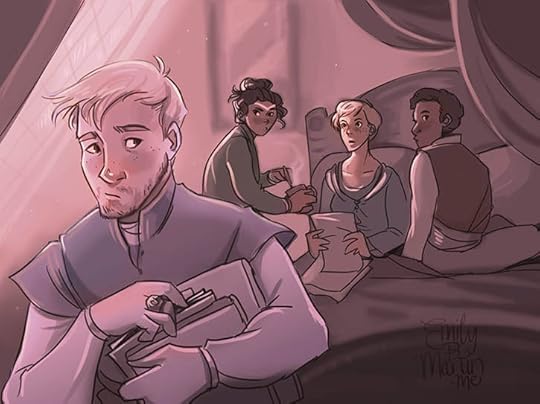 Creatures of Light can be purchased from any major book retailer,
or ordered through your favorite indie bookstore or local library!March Art RoundupSome fan art for Children of Blood and Bone and The Gentleman's Guide to Vice and Virtue, some lighting practice, and a few commissioned character sketches. See full portfolio What I'm ReadingChildren of Blood and Bone, Tomi AdeyemiThe Raven Boys, Maggie StiefvaterTess of the Road, Rachel HartmanHeart of Iron, Ashley PostonOutdoor Survival Skills 6th Edition, Larry Dean Olsen
Did you get some value out of this post? If so, please consider buying me a coffee by donating $3 to my Ko-fi account:Upcoming EventsDon't forget about the Creatures of Light Coloring Contest ! The winner will receive an illustrated trilogy set. We've already had some awesome entries, and there's still a few weeks before it ends, so keep them coming!April 14th: I'll be at the Anderson Library How-To Fair, talking about ways to get outside and explore South Carolina with your family. I'll have some books to sell and sign but mostly I'll be in park ranger mode.April 19th: Live-Drawing Demo at the Pelham Road Library! I'll be holding a discussion about character design and digital art whilst (and at the same time) drawing on-screen. Come watch the mayhem; details on my Events page.
Some of you know that Creatures of Light had to be almost entirely rewritten just a few months before publication--particularly if you were lucky enough to follow along my slow deterioration into temporary insanity while on deadline last summer. The book as it exists now was written in about three and a half months. While there are a few snippets that remained the same from the first incarnation to the next--like some of the travel through the cave system, and a bit of the interaction with Gemma's mother--most of it is completely different. Different characters died, different characters fell in love, different countries ended up with alternative political systems. And almost none of it revolved around the protagonist, Gemma--which became the main reason the story needed a complete reorientation.The book is much stronger now, thanks to the guidance from my agent and editor and feedback from my betas. And one of the many gifts the rewrite has given me is an entire manuscript of unpublished material. Most of it is irrelevant now, but the prologue below still could have happened within the canon of the current book. In it, we see Mona, Mae, Rou, and Colm a few weeks after the end of Ashes to Fire, with Mona sick in bed and still trying to get stuff done anyway. I never truly loved this prologue, because unlike the first two books, it didn't add any extra layers to the story--and again, none of it revolves around the protagonist at all. But it's got a few little fun snippets, and probably still happened in the interlude between books 2 and 3. Check it out below the jump!
Warning: There are some spoilers for Woodwalker and Ashes to Fire included, so proceed at your own discretion!
Creatures of Light Original Prologue“Oh.” Mona puckered her lips. “Oh great Light—that’s absolutely vile.”
“Drink it all,” Ellamae said, swirling the rest of the tincture in the pot.
“I have a personal physician, you know,” Mona said irritably as she raised the mug again. “A highly skilled healer who knows all about infection.”
Ellamae snorted. “You’ll forgive me if I don’t put much stock insomeone who still thinks feverfew can actually treat a fever.”
“At least she doesn’t brew up poison.”
“I don’t, either. That’s rich in tannins, is what it is. And anyway, if you want to blame anybody…” Ellamae jerked her thumb over her shoulder, where Rou was watching the process with visible anxiety.
“I don’t blame you,” Mona said as Rou opened his mouth. “Don’t let Mae tell you otherwise.”
“He set you on fire,” she said.
“He did not. I don’t blame you,” Mona repeated more forcefully as Rou dragged his hand over his face. “What happened in Lilou was an accident, and it’s just a misfortune of the last few weeks that the burn didn’t get cared for properly. We were focusing more on getting back to Lumen Lake.” She waved to the documents on the side table, attempting to refocus the conversation. “And anyway, a little fever on my end isn’t going to get you out of responding to these documents, Mae.”
“Oh, let Val do it,” she said, corking her various bottles.
“He’s not here. And you know the ordering of the Guard better than he does. I want to draft a response together.”
She sighed and dropped into an armchair by the fireplace. “Tell me again exactly what the terms are? I was distracted the first time.”
“You were ignoring me,” Mona said, raising the paper. “The Winderan and Paroan monarchs have given us their official alliance, and we are drawing up the formal terms of the treaty for their review. We need Celeno to understand that if he moves against one of us, he moves against all of us.”
Ellamae propped her double-fringed boots on the end of Mona’s bed. “So tell him that. You move against one of us, you move against all of us. There, done. Drink the rest of that tincture.”
“That’s not adequate, Mae, and you know it,” she said irritably, scribbling something in the margin of the document. “Work with me. I think we need to have some kind of plan in place for the transmission of messages between the coast and the Silverwood. We need to be able to communicate quickly with Matariki.”
“All right, sounds good.” Ellamae nodded to Colm, who was just coming through the bedroom door with a stack of parchment in his hand.
“No, it doesn’t sound good—you have to tell me what role the Silverwood Guard…” Her emphatic admonishment was drowned suddenly under a wave of coughing. She leaned back, clasping a handkerchief over her mouth.
Everyone moved at once. Ellamae jumped from her chair and swiped the teetering mug from her hand. Rou lunged for a cold cloth soaking in a basin. Colm set his own stack of parchment on the coverlet and plucked the document from Mona’s lap to keep it out of harm’s way.
As Rou dabbed her forehead with the cloth, Colm glanced at the lengthy document, written out in Mona’s smooth, elegant handwriting. “Perhaps you should do this another time, Mona.”
“Yes,” Ellamae said, planting the mug of bitter-smelling tea back in her hand. “You need to rest.”
Mona struggled to regain control of her breath, her cheeks bright pink against the pallor of her face. “No,” she said. “We’re getting this done now so it can be sent over the mountains tomorrow, and if you don’t want it to kill me, then stop being so obstinate. This is more important than anything we’ve done so far.” She looked down at the stack of parchment Colm had set on her knees. “Is this the information I asked for?” She reached for the top document.
“Yes. No!” He snatched at the sheaf she held in her hands, her quick gaze darting down the page. “No, the others are. That’s just…”
Her eyes widened and then narrowed considerably. She looked up at Colm. “What in the name of the Light is this?”
He plucked it out of her hand. “Just a curiosity. Some of the work the Alcorans left behind.”
Ellamae glanced at the title as she stirred a fresh mug of tea to supplement the still-full one in Mona’s hand. “An Evidence on the Cosmic Origin of the Meteor and its Radiant. What does that even mean?”
“I don’t care what it’s called,” Mona said, her eyes glittering dangerously. “I care about whose name is on it. Why are you reading Celeno’s academic work? I asked you to compile the missives between him and his captain while they occupied the lake.”
“And I did.” He nodded to the stack of papers still on the bed, folding the sheaf of parchment and tucking it back under his arm. “And I came across this in the meantime. It’s nothing, Mona.” He shrugged. “Just curiosity.”
He turned and headed for the door. She clenched her mug with both hands, watching him leave the room with a startled, wary glint in her eye.
Creatures of Light can be purchased from any major book retailer,or ordered through your favorite indie bookstore or local library!March Art RoundupSome fan art for Children of Blood and Bone and The Gentleman's Guide to Vice and Virtue, some lighting practice, and a few commissioned character sketches. See full portfolio What I'm ReadingChildren of Blood and Bone, Tomi AdeyemiThe Raven Boys, Maggie StiefvaterTess of the Road, Rachel HartmanHeart of Iron, Ashley PostonOutdoor Survival Skills 6th Edition, Larry Dean Olsen
Did you get some value out of this post? If so, please consider buying me a coffee by donating $3 to my Ko-fi account:Upcoming EventsDon't forget about the Creatures of Light Coloring Contest ! The winner will receive an illustrated trilogy set. We've already had some awesome entries, and there's still a few weeks before it ends, so keep them coming!April 14th: I'll be at the Anderson Library How-To Fair, talking about ways to get outside and explore South Carolina with your family. I'll have some books to sell and sign but mostly I'll be in park ranger mode.April 19th: Live-Drawing Demo at the Pelham Road Library! I'll be holding a discussion about character design and digital art whilst (and at the same time) drawing on-screen. Come watch the mayhem; details on my Events page.
March 10, 2018
Creatures of Light Coloring Contest!
 The Creatures of Light trilogy is complete! Help celebrate the last book in the series by participating in the
Creatures of Light Coloring Contest
! One randomly-drawn winner will receive a full trilogy set, with author-illustrated title pages and matching bookmarks!
The Creatures of Light trilogy is complete! Help celebrate the last book in the series by participating in the
Creatures of Light Coloring Contest
! One randomly-drawn winner will receive a full trilogy set, with author-illustrated title pages and matching bookmarks!The contest runs from March 12 to April 15, 2018. Get all the details, rules, and, of course, coloring pages in the Coloring tab!
Happy scribbling!
February 16, 2018
Celeno's Design: Mini-Tutorial
FEBRUARY 2018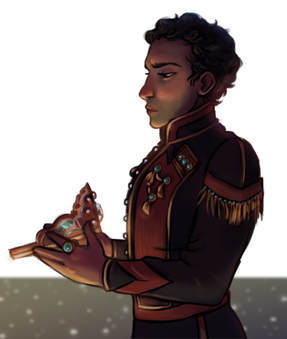 This month, in the lead-up to the Creatures of Light paperback release, I've been producing all kinds of bonus content--including character profiles for a few final main characters. The most significant, of course, is Celeno, Seventh King of Alcoro and sort of the unwitting epicenter of all the messes everybody's sorting through in the series. His character design has remind fairly constant from my early drafts--my mom fan-cast him as Oscar Isaac pretty early on, which has given me a good stable design foundation (as well as a phone gallery full of Poe Dameron screencaps).
For Celeno's official character portrait, I took a video of my Photoshop process, from sketch to finished product. Check it out below the jump:There's no voice-over on this video, though there are on a few of my other videos , with tutorial narration on Mae's portrait that includes tips on brushes, textures, etc. The basic process is a loose sketch, followed by more refined line art on a separate layer. I turn off the sketch layer and add a flat color layer under the line art, during which I use the Hue/Saturation tool to set my palette (this helps me keep things from getting too saturated). I merge the line art and color layers and add a Multiply mask, usually in a purple or blue hue, and then erase large sections of highlights. I merge those, and then it's just painting painting painting. I use the color picker to select mid-tones and spend most of the time just smoothing everything out. Add some final Screen highlights, and ta da! A color character portrait.
The neat thing about these character profiles is that I've been doing them now for three years, posting them with each new book release. Because they're all in the same format, it's easy to see the slight shifts in my style from then to now.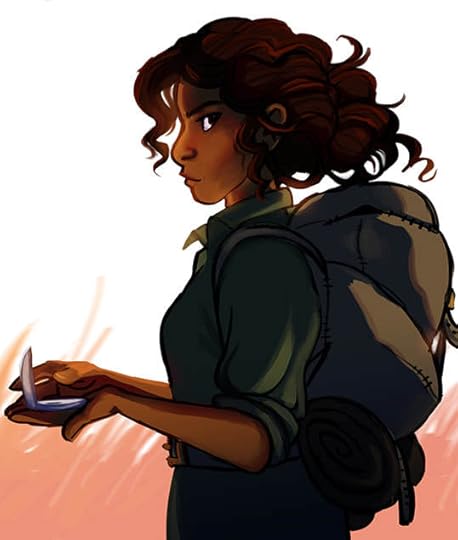 The first one I did was Mae, done back in the halcyon days of early 2016 as I was prepping for Woodwalker's release. I was making some breakthroughs with communicating light and shadow, playing around with rim lighting and backlighting, as well as forcing myself to be a little looser with my brush strokes. While they're not super bold, those rough edges were a big step for me, part of my quest to ease up my style and keep the energy in my pieces.
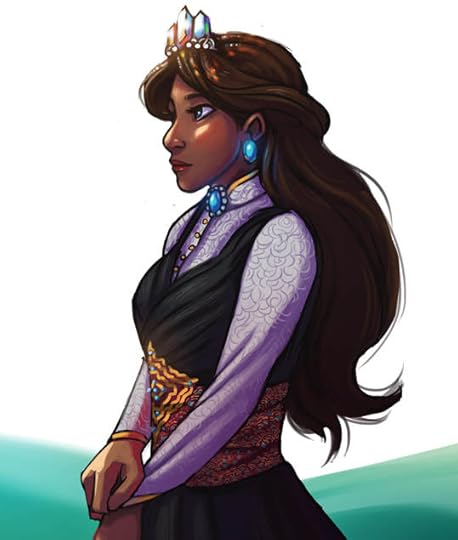 The following year, early 2017, saw Gemma introduced with Ashes to Fire. I think I took the obsession with lighting a little too far in this piece, adding ambient shine pretty much anywhere I could. This was also right at the cusp of my crusade to mature my style, after one too many instances of people assuming my series was middle-grade fiction thanks to the unicorn vomit palettes and candy-eyed cartoons I was posting. Almost all of 2017 was spent muting my colors and maturing my style to something that more closely matched the YA-Adult crossover nature of the books.
 Which brings us to Celeno. It's pretty neat to see the jump between Gemma and Celeno here--colors are softer, lighting is more subtle, he's a little less cartoony. Part of that is the more solemn nature of his character over Gemma's, but a lot of it has to do with that intentional refining of my "look."
I'm probably still always going to work with a pseudo-Disney style, and I still have a long way to go in honing my grasp on color theory and composition. But it's nice to see my pieces taking on a little more "grown-up" feel to them. For more on my artistic process and character design throughout this trilogy, take a look at the awesome video produced by my publisher, Harper Voyager. This one does have narration and showcases more progress clips and insights behind the designs for different characters: Finally, if you like watching these kinds of progress videos, you should check out the event I'll be doing at the Pelham Road library in Greenville, SC on April 19! I'll be doing a live-drawing demonstration, while talking about my process for character creation. If you're in the area, come check it out! Details on my Events page.February Art RoundupMy just-for-fun output was pretty low this month as I was producing all kinds of material for the Creatures of Light launch party! See full portfolio What I'm ReadingNews and Upcoming EventsDaughter of Fortune, Isabel AllendeThe Gentleman's Guide to Vice and Virtue, Mackenzie LeeChildren of Blood and Bone, Tomi AdeyemiDid you get some value out of this post? If so, please consider buying me a coffee by donating $3 to my Ko-fi account:Big excitement coming up with the Creatures of Light release party on March 6! The always-awesome Anderson County librarians and I have been working on so much awesome stuff for this party. Food, freebies, coloring pages, prizes, and a Choose-Your-Own-Adventure game! Oh, right, and BOOKS! Get all the details on myEvents page. There will be several more regional events for Creatures of Light in the next few months, so keep an eye on my Events page!
This month, in the lead-up to the Creatures of Light paperback release, I've been producing all kinds of bonus content--including character profiles for a few final main characters. The most significant, of course, is Celeno, Seventh King of Alcoro and sort of the unwitting epicenter of all the messes everybody's sorting through in the series. His character design has remind fairly constant from my early drafts--my mom fan-cast him as Oscar Isaac pretty early on, which has given me a good stable design foundation (as well as a phone gallery full of Poe Dameron screencaps).For Celeno's official character portrait, I took a video of my Photoshop process, from sketch to finished product. Check it out below the jump:There's no voice-over on this video, though there are on a few of my other videos , with tutorial narration on Mae's portrait that includes tips on brushes, textures, etc. The basic process is a loose sketch, followed by more refined line art on a separate layer. I turn off the sketch layer and add a flat color layer under the line art, during which I use the Hue/Saturation tool to set my palette (this helps me keep things from getting too saturated). I merge the line art and color layers and add a Multiply mask, usually in a purple or blue hue, and then erase large sections of highlights. I merge those, and then it's just painting painting painting. I use the color picker to select mid-tones and spend most of the time just smoothing everything out. Add some final Screen highlights, and ta da! A color character portrait.
The neat thing about these character profiles is that I've been doing them now for three years, posting them with each new book release. Because they're all in the same format, it's easy to see the slight shifts in my style from then to now.
The first one I did was Mae, done back in the halcyon days of early 2016 as I was prepping for Woodwalker's release. I was making some breakthroughs with communicating light and shadow, playing around with rim lighting and backlighting, as well as forcing myself to be a little looser with my brush strokes. While they're not super bold, those rough edges were a big step for me, part of my quest to ease up my style and keep the energy in my pieces.
The following year, early 2017, saw Gemma introduced with Ashes to Fire. I think I took the obsession with lighting a little too far in this piece, adding ambient shine pretty much anywhere I could. This was also right at the cusp of my crusade to mature my style, after one too many instances of people assuming my series was middle-grade fiction thanks to the unicorn vomit palettes and candy-eyed cartoons I was posting. Almost all of 2017 was spent muting my colors and maturing my style to something that more closely matched the YA-Adult crossover nature of the books.
Which brings us to Celeno. It's pretty neat to see the jump between Gemma and Celeno here--colors are softer, lighting is more subtle, he's a little less cartoony. Part of that is the more solemn nature of his character over Gemma's, but a lot of it has to do with that intentional refining of my "look."I'm probably still always going to work with a pseudo-Disney style, and I still have a long way to go in honing my grasp on color theory and composition. But it's nice to see my pieces taking on a little more "grown-up" feel to them. For more on my artistic process and character design throughout this trilogy, take a look at the awesome video produced by my publisher, Harper Voyager. This one does have narration and showcases more progress clips and insights behind the designs for different characters: Finally, if you like watching these kinds of progress videos, you should check out the event I'll be doing at the Pelham Road library in Greenville, SC on April 19! I'll be doing a live-drawing demonstration, while talking about my process for character creation. If you're in the area, come check it out! Details on my Events page.February Art RoundupMy just-for-fun output was pretty low this month as I was producing all kinds of material for the Creatures of Light launch party! See full portfolio What I'm ReadingNews and Upcoming EventsDaughter of Fortune, Isabel AllendeThe Gentleman's Guide to Vice and Virtue, Mackenzie LeeChildren of Blood and Bone, Tomi AdeyemiDid you get some value out of this post? If so, please consider buying me a coffee by donating $3 to my Ko-fi account:Big excitement coming up with the Creatures of Light release party on March 6! The always-awesome Anderson County librarians and I have been working on so much awesome stuff for this party. Food, freebies, coloring pages, prizes, and a Choose-Your-Own-Adventure game! Oh, right, and BOOKS! Get all the details on myEvents page. There will be several more regional events for Creatures of Light in the next few months, so keep an eye on my Events page!
January 24, 2018
6 Tips for Writing Nature as a Character
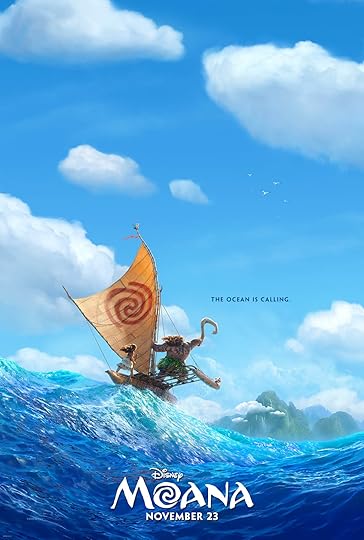 "The ocean is a friend of mine." - Moana | Source: Disney.comJANUARY 2018
Quick, when I say Harry Potter, what’s the visual image that springs to your mind?
It’s probably a picture of the protagonists decked out with wands and robes, right? But is that all? Are they drifting in a void? Or do you see the setting around them—vast, mischievous Hogwarts castle, with its shifting staircases and moving portraits? The mysterious library, the murky lake, the rolling grounds?
As writers, we hear a lot about worldbuilding—the art of creating a deep, well-rounded world that provides the physical and cultural setting for our plot. When this is done well, any mention of a story instantly gives the reader a vivid mental picture. But worldbuilding can go a step further! Instead of just being a setting or backdrop for your characters to move through, it can become almost another side character—something that your characters don’t just react to, but interact with. Something that gives heft to the plot and affects the story. A great visual example of this kind of storytelling is Disney’s 2016 film Moana, about an adventurous girl who voyages across the ocean. Compare it to a film like 2010’s Tangled (listen, I have two little girls, all right? You’re lucky I’m not blogging about the latent societal microaggressions in My Little Pony). Tangled is a great movie with beautiful animation, but for the most part, the environment is a backdrop. Rapunzel is merely moving through her world, not interacting with it. But the team for Moana took a different approach and made Moana’s environment a tangible, interwoven part of her identity and journey.
We as writers can do this, too! Here are a few ideas for how to make your environment its own character in your story. Moana hits all six of them, and I bet you can find other examples, like Harry Potter, that do the same.
A note: All these examples are related to a natural environment, because I’m a park ranger writing nature-nerd fantasy, and cities make me anxious. But many of these tips could be applied to a built environment, as well. Angie Thomas does this beautifully in The Hate U Give, making Starr’s neighborhood into a tangible part of her struggle and symbolism. Daniel José Older does it, too, in Shadowshaper—the built environment plays a role in his magic system. Urban or natural, fantasy or not, there are lots of ways to bring your environment to life!1. Get specificYour character is in a forest! They see a tree! It’s a big tree! With a bird on a nest and the nest on a twig and the twig on a branch and the green grass grows all around, all around, and the green grass grows all around…
If you want your environment to be more than just a backdrop, a good first step is to dig a little deeper into what it’s made up of. You don’t have to name every plant and animal your character happens upon, especially if they’re in an unfamiliar landscape, but using well-placed specifics can give your reader a quick and vibrant mental picture of your world. Even in a “generic” landscape—a forest, a plain, the ocean—naming specifics will define your environment. Is there a moose in your forest? Then I know I’m probably in a rugged, temperate wilderness, not a copse next to an English cottage. Are there acacia trees? I’m on an equatorial savannah, not a rolling moor. Are there narwhals spouting? Then I know I’m sailing a cold, icy bay, not a tropical lagoon.
Maybe you’re making up your own creatures or using mythical beasts—well-placed details familiar to readers will still help paint them a picture of your imaginary landscape. Is your camp overrun by werediggers? Your reader doesn’t know what a weredigger is, but if they have large ears to cool off and can store water in their bulging chevron crests, then we know that they’re probably in a hot, arid place. Naming such details can open the door for your narrator to hint at the rest of the landscape without relying on awkward info-dumps.
Detailing other parts of your environment can be a great way to thread in your cultural history, as well. Humans always leave traces behind, from ancient terraces reclaimed by a forest to a name carved into a century-old tree. Megan Whalen Turner uses this technique masterfully in the Queen’s Thief series. She gives a deep, lived-in feel to her world by moving her characters through orderly groves of ancient olives, sheltering them in farmhouses abandoned during famine, and orienting them using tiny alters to local gods as waypoints. These landmarks segue naturally into conversation about the religion, mythology, politics, and history of her world. The Grecian environment isn’t just a setting, it’s a lens into the story and the perspectives of her characters.
In Moana: Consider the coconut… we know the movie is set in a fantasy Polynesia. Even without the cultural clues, the crystalline ocean, volcanic islands, and recognizable flora all paint a vivid portrait of the South Pacific.2. Explore your narrator's point of view
“The following morning, a thick fog rolled into our campsite. It shrouded the trees and trickle of a creek, pressing down on us like a blanket. I woke up slowly… and greeted the sensation like an old friend, relishing the way it condensed on my skin and corkscrewed my hair.
As I drew in a deep breath, however, my quiet reflection was broken by an unqueenly grown.
“Oh, rivers to the sea, this is disgusting!”
I opened my eyes to see Mona sitting up, peeling her drenched cloak away from her skin. “I’m sick of these wretched mountains. I’m sick of waking up soaking wet and covered with dirt, and I’m sick of having bugs crawl over me while I sleep!”
-Woodwalker
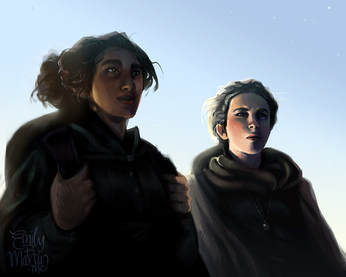 Mae and Mona's first glimpse of the Silverwood Mountains.It’s safe to say that my first novel Woodwalker would be an entirely different book if written from Mona’s point of view. While Mae is a native of the Silverwood and tuned in to the pulse of the forest, Mona is an outsider, and a finicky one at that. Readers may notice that while we get lots of specific names of plants and animals in Woodwalker, in the second book, Mona tends to call things more generically—a weed, a bird, a snake. Where Mae greets the natural world with enthusiasm and detail, Mona prefers to keep her distance. But! One big distinction is that Mona is always aware of water. Where Mae might see a river or lake as an obstacle, Mona, who comes from a culture of swimmers and divers, would see it as a possible route or escape. They have intensely different perspectives on the exact same environment.
Whether your characters are moving through a natural environment or a built one, they’re going to have opinions and reflections on what’s happening around them. Use these to illustrate your world—give your reader shivers when your protagonist is standing in the spray of a towering waterfall, make them uneasy when your protagonist eyes a dark storm blowing over the plains. Make your protagonist interact with the world around them, even if it’s just in passing thought. Not only does this expand your world, but it helps define your characters, too, showing us what they notice, what they’re drawn to, and what they fear.
Consider, too, your character’s greater culture and their relationship to it. Does your character fall in line with their culture’s beliefs, or are they an outsider to their own people? If your primary culture is a highly advanced society known for its mile-high skyscrapers, and yet your protagonist finds themselves drawn to the scrubby dandelions growing in the sidewalk, that introduces us to a conflict between your character and their community. But if your protagonist has deep, intimate ties to their tree-dwelling, moss-farming culture, it’s going to be a huge step for them to undertake the trek to the underground slag mines.
Showing us your character’s unique relationship to the world around them creates a window both inward and outward—building their environment through their perspective while illuminating the conflicts warring inside them.
In Moana: My favorite example of this is Moana and Maui’s differing reactions to the Kakamora. Maui sees them as wicked little pirates. Moana? She utters one confident word: “Coconuts.” She grew up on an island where the coconut is king—she can handle sentient ones. 3. Make your environment mirror your plotThere’s a reason why so many movies use weather and environment as emotional cues—your zombie attack isn’t going to be nearly as dramatic if it’s a sunny afternoon in the cemetery, and your ragtag group of warriors won’t seem nearly as victorious if the battle doesn’t end in a blaze of sunrise (see: like every cinematic Tolkien battle ever).
Think of the land of Narnia during the course of The Lion, the Witch, and the Wardrobe. As the power of the White Witch fades, so does the eternal winter. As hope grows, the snows melt and spring flowers bloom, culminating in full summer on the seashore as the Pevensies are crowned by Aslan.
If your character isn’t on a physical journey, you can still bring the environment to them. In Year of Wonders by Geraldine Brooks, a small English village is hit by the bubonic plague in 1666 and decides to quarantine itself. The protagonist, Anna, is literally trapped in a town of death and disease, but the environment around her still plays a distinct role in the story—the changing seasons mirror the despair and hope in the plot, and her budding skill with using the medicinal herbs growing in the village develops her sense of self and purpose.
In Moana: When Maui leaves Moana, when she pleads with the ocean to pick someone else, when all is lost, we see the environment around her mirror her hopelessness—an endless, motionless, noiseless sea, with her adrift in the middle.
4. Alternatively, do the oppositeHahaha, rule number one is there are no rules!
Having some incongruous natural event or landmark that seemingly jars with the character’s wants and needs can create a vivid feeling of unease, tension, or even humor. This is one of the driving factors in Sara Beth Durst’s The Queen of Blood, set in a world of lush, primeval forests filled with nature spirits. However, instead of being benign and helpful, these nature spirits’ sole desire is to violently destroy humans. This creates an amazing tension throughout the whole book—gorgeous landscapes juxtaposed with the reality that the protagonists could be horribly maimed by nature at any moment.
Whichever method you’re using at the moment, whether the environment is mirroring your plot or opposing it, don’t let it slide by your protagonists unremarked. See point 2—use your character’s point of view to interact with and react to the natural events around them.
In Moana: Think of the climactic scene where Moana realizes who Te Kā is. As the elements all swirl and rage around her, everything slows down. The music becomes calm and tranquil, reflecting Moana’s sudden realization. There’s a vivid juxtaposition between the raging lava and water and the calm, gentle song Moana sings. (“I know your name” gets me in the feels every time.)
5. Heck, make it sentientTo continue in the vein of The Queen of Blood, few things will make your environment a dynamic character than actually making nature a character. A lot of writers do this, often in the form of gods and goddesses, demons and monsters, or mythical creatures. In Laline Paull’s The Bees, not only are the protagonists personified insects, but the very environment itself is described as an active player in the plot. The pollen-laden flowers whisper and reach for the forager bees, and the hive and honeycomb hold secrets and messages. The bees’ world is as alive and humming as they are.
If you’re writing fantasy, the world is your oyster. The possibilities for magic systems interwoven with nature are endless. Tolkien’s nature beings—Ents, stone giants, Old Man Willow. J.K. Rowling’s settings steeped in strange, living magic—the Forbidden Forest, the lake, the cave in the cliffs. Sara Beth Durst’s spirit forests that crave both destruction and creation.
You can dabble in this even if you’re not writing fantasy, or if your fantasy, like mine, has no magic. Nonfiction books like A Sand County Almanac (Aldo Leopold) and The Home Place (J. Drew Lanham) are saturated with the feeling that the environment around the narrators is a living, breathing being. The authors explore individual plants and animals’ histories, narratives, and voices. They highlight the personhood in what others might pass off as ordinary—or even worn-out, sometimes ugly—landscapes. Even though sentient nature is usually associated with fantasy worldbuilding, it’s a technique that can be explored in any genre.
In Moana: The ocean is portrayed as a living thing, able to communicate with Moana and aid her on her journey. One of the antagonists is Tamatoa the shiny crab, and Te Kā and Te Fiti both are elemental beings.
6. Use it as your palette
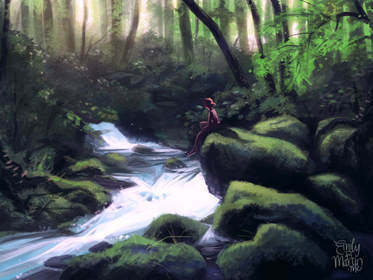 Mae in the Silverwood.If you have the ability and/or interest, you can research your setting and natural history so holistically that you use it as the palette to color your whole story—that is, using it to inform your characters, plot, and conflict.
In the very early stages of writing Woodwalker, I tried vainly to write like J.K. Rowling. Part of this was because I hadn’t read anything besides picture books since my two-year old was born, and part of it was because I wanted my books to have the same kind of depth to them, steeped with references to our own world. JKR does this through plays on words and nods to legend and classic literature—Remus Lupin, Rita Skeeter, Fleur Delacour. All of her names, places, spells, and products are meant to evoke or reference something we can relate to.
Rowling has a background in the classics. I do not. And I found myself obviously floundering to make use of the same kind of material. Finally I realized that I was going about things all wrong, of course. I couldn’t build off a skill set that I didn’t have—not without devoting myself to learning a Master’s degree-worth of classics in my spare time caring for a toddler and nursing an infant. Instead, I moved organically into building off the skill set I do have—a background in the natural world.
It started with my character names—Mae chooses an epithet, Hawkmoth, meant to mirror her skills and morals. Mona, cool and pale and queen of a country that relies on pearls as its wealth, has a name meant to evoke the pearly moon. Gemma, queen of a country that reveres the stars, takes her name directly from the brightest star in the Corona Borealis constellation, or Northern Crown. Everything else started snowballing around this new perspective—everything from how my different cultures celebrate their religion to how they swear. Characters draw their personalities and perceptions from their native natural world—Gemma, who comes from an arid desert country where fire is a deadly menace, shies away from Rou’s pastime of spinning flaming poi. Mona, whose country is literally a lake, is drawn toward it, enchanted. And on and on—the natural world became my springboard, my thesaurus, and my reference guide.
In Moana: Moana’s name, wardrobe, journey, signature song, and thematic symbolism (the pink conch shell) are all drawn from the natural world around her.
Obviously this kind of detail won’t appeal to everyone or work for every story. And that’s okay—all writers have different interests and backgrounds—that’s what makes authors unique. Tap into yours—find your niche. For me, who grew up following my entomologist dad dumpster diving to check cockroach baits and subsequently earned two degrees in Being a Park Ranger, the natural world was the strongest and most enticing avenue.
If you’re interested in making your environment play a stronger role in your story, there are lots of great ways to conduct your research. Regional nature guides can provide inspiration for names, culture, and imaginary creatures. Nature documentaries (PBS has lots of great ones you can stream for free) provide dynamic visual references. Books of nature-inspired poetry and folklore create vivid emotional connections. Chatting with or emailing an expert like a park ranger (surely you saw that one coming) can give enthusiastic, focused information specific to your plot (make sure you politely ask for an interview first instead of automatically assuming they can spare you their time). And of course, simply getting outside when possible can provide a fresh, holistic resource for your world.
What are your favorite books where nature plays a tangible role in the story?January Art Roundup See full portfolio What I'm ReadingThe Belles, Dhonielle ClaytonDaughter of Fortune, Isabel Allende
The Art of Loish: A Look Behind the Scenes, Lois Van BaarleEdible and Medicinal Plants of the Northwest, J. Duane Sept Did you get some value out of this post? If so, please consider buying me a coffee by donating $3 to my Ko-fi account: News and Upcoming EventsThe Creatures of Light e-book was released by Harper Voyager on January 23--the trilogy is complete!The paperback release, as well as the official launch party, are set for Tuesday, March 6! See details on my Events page.Join me and a group of Harper Voyager authors for a Twitter chat about writing and publishing on Friday, February 9 at 3 and 8 PM EST. Use the hashtag #SFFChat to join in!I'll be at the Greenwood Book Fair on Sunday, February 11. See Events page for details.
New Plan!
Hi all! After a few months' hiatus, the blog is back, with a fresh and more orderly outlook on life. Starting in January, I will be posting once-a-month content, geared toward one of three audiences: artists, writers, and readers of my work. Content may include art videos and tutorials, writing and publishing tips, and bonus content from my books. Additionally, each post will contain:A round-up of the artwork I did that month"What I'm Reading" Any relevant news or approaching eventsMy hope is that this provides a more focused, reliable resource for creators, and a fun landing pad for fans of my work! Thanks, as always, for your support!
-Emily
-Emily
Emily B. Martin's Blog

- Emily B. Martin's profile
- 145 followers
Emily B. Martin isn't a Goodreads Author
(yet),
but they
do have a blog,
so here are some recent posts imported from
their feed.

