
Ellen Booraem's Blog, page 4
March 5, 2014
March Book Review Club
 Click icon for more
book review blogs
@Barrie Summy
Gaaaaahhhh! It's March and the temperature's in the single digits! What is there to do but read a good book?
Don't forget to click the icon above for more reviews. Stay warm!
 How I Became a GhostBy Tim TingleThe RoadRunner Press, 2013
“Maybe you have never read a book written by a ghost before,” our young Choctaw narrator begins. “I am a ghost. I am not a ghost when this book begins, so you have to pay very close attention.”
How could this book not be a page-turner?
Our narrator, ten-year-old Isaac, meets his destiny on the Trail of Tears, the horrifying path walked by southeastern Native American nations after passage of the Indian Removal Act of 1830. The descendent of a trail-walker, Tim Tingle drew on family history and conversations with tribal elders to write this and other books about the event.
But HOW I BECAME A GHOST does not read like history—the story is immediate and real, thanks to a flat-toned yet evocative young narrator, journeying from innocence through cataclysm to an all-too-temporary justice.
When the book begins, Isaac’s chief concern is keeping his beloved dog, Jumper, from eating the chickens. (Jumper talks, our first clue that this is not just any old story.) Isaac lives with his parents and twelve-year-old brother in a Choctaw town a few miles from the nearest Nahullos, white people. One day, the family gets wind of Treaty Talk—never good news—and before long they and their neighbors are informed that they’re going to be moved far away.
In preparation for the disruption, Isaac’s mother takes him on a round of ceremonial visits to the elders. Isaac discovers that he can “see things before they happen”—in this case, elders burning or erupting in pustules. He keeps his horrible visions to himself, but they come to fruition when a band of Nahullos attacks the Choctaws, burning down their houses and driving them to an island in a nearby swamp. Later, in a show of friendliness, they deliver the now-infamous blankets imbued with smallpox.
Isaac’s family survives to join the death march to Oklahoma. By this time Isaac has made two more discoveries: He can see and talk to Choctaw ghosts, and he will soon become one himself. Terrifying, yes—but ultimately a comfort, as he learns that the great host of Choctaw dead stay near their people and step in to help when they can.
The book takes a suspenseful turn after Isaac’s death, when he and other ghosts help rescue a young girl enslaved by soldiers accompanying the march. The living rescuers include a shape-shifter boy who turns into a panther and the bonepickers, old women who tend the bodies of the dead as part of Choctaw funeral rites. It’s all very cool, yet we never forget the inexorable tragedy taking place around us.
This is the first book in a trilogy, and ends rather abruptly. I would have preferred more of a ringing conclusion that allowed the book to stand on its own, but I have to say this one accomplished its purpose: I’m ready and waiting for the next episode.
Dear FCC: I downloaded this book at my own expense after reading about it on the Cooperative Children’s Book Center listserve. And yes, I am tempted to wonder why cooperative children need their own book center. (I’m sure CCBC’s never heard that one before.)


February 5, 2014
February Book Review Club
Click icon for morebook review blogs
@Barrie Summy
It's snowing! And there's no school today--perfect for reading. My only regret is that I will not be reading THE REAL BOY for the first time, and will have to find my magic elsewhere.
Don't forget to click the icon above for more reviews!
 The Real Boy
By Anne UrsuIllustrations by Erin McGuireWalden Pond Press, 2013
The Real Boy
By Anne UrsuIllustrations by Erin McGuireWalden Pond Press, 2013Every now and then, reading a new book, I know within a page or two that I am in the presence of greatness. Being mostly Irish, I usually experience a spasm of negativity: “If I live to be 100, I’ll never write this well,” I mutter, tempted to throw the book across the room. But I soldier on (especially if I’m reading on a Kindle) and pretty soon the negative feelings are overwhelmed by the wonder of it all.
The most recent instance of this was Anne Ursu’s THE REAL BOY. One page in, I’d already noted the lovely writing, but that left me unharrowed. Then I read this: “The Asterians didn’t call themselves anything special, because when everyone else refers to you as the shining people, you really don’t have to do it yourself.”
And, a page or two later: “The apprentice’s name was Wolf, because sometimes the universe is an unsubtle place.”
Beautiful writing AND a wry narrator? Oh dear.
I’d read Ursu’s BREADCRUMBS a few years before. I liked it very much, but it didn’t really stick with me. This one will be in my head and heart forever.
As usual, the key is the main character. A young boy, Oscar, is the “hand” to a magician, spending his days in the cellar under the shop processing herbs that he grows and harvests outside of town. He is happy only when his schedule is regular, he’s surrounded by cats and plants, and he doesn’t have to deal with his fellow humans.
We find out early on that, while he is very smart and very skilled in his work, he is mystified and frightened by other people—he doesn’t know how to read their expressions, and struggles to find the literal meaning in the most frivolous comment. This an achingly beautiful rendition of autism—not as a disease or even a condition, but as part of who Oscar is. Sometimes it’s a barrier, sometimes an advantage. Marvelous.
Oscar lives in the Barrow, the most magical place on the island of Aletheia. The magic is in the soil, and therefore in everything that grows there. The Barrow surrounds the base of a tall hill, on the crest of which is the gleaming town of Asteri, whose wealthy residents rely on the magical goods the Barrow craftspeople create.
But all is not well. Children in Asteri are falling ill in mysterious ways, and a monster appears to be roaming the countryside. Something may be happening to the soil’s magic. In the grand tradition of authors torturing their characters, it’s not long before both the magician and his apprentice depart the scene, leaving poor horrified Oscar to tend the shop and deal with an increasingly panicky populace.
Oscar’s progress from cats to courage is utterly believable—inevitable, in fact. There are a couple of very cool surprises—one that tells you, “Hey, this is Pinocchio!” followed by a second that rearranges your brain cells all over again.
Oh, and by the way—everybody has dark skin, but it’s not an issue. It’s mentioned in passing in the text, confirmed by the wonderful illustrations. Yay.
I can’t possibly recommend this book enough. If you write books for a living, though, get your self-esteem in order before you start it.
Dear FCC: I bought this book because I liked the cover. I’m reviewing it because I had no other spiritual choice.
December 4, 2013
December Book Review Club
Click icon for morebook review blogs
@Barrie Summy
Christmas is coming. Hanukkah is still here. And of course you know that books make perfect presents, whether in hardcover or stocking-stuffer paperback. A box of tissues would be a good companion gift for this one.
Don't forget to click the link for more reviews!
 One for the Murphys
By Lynda Mullaly HuntPenguin/Nancy Paulsen Books, 2012
One for the Murphys
By Lynda Mullaly HuntPenguin/Nancy Paulsen Books, 2012Yup, you’ll cry.
I’d heard that about ONE FOR THE MURPHYS, Lynda Mullaly Hunt’s 2012 middle-grade novel about a wounded kid and her foster family.
“Nah,” I thought. “There’s no cute doggie and nobody dies. What’s to cry about?”
But there I was two nights ago, sitting in my darkened bedroom at 11:30 p.m., teary-cheeked.
As usual, it was the main character who did me in.
Carley Connors, 12, is put into foster care after her dreadful stepfather beats her and then practically kills her mother, who ends up in intensive care. All Carley remembers about the beating is one horrifying moment: When her stepfather was after her, her mother grabbed her ankle and held on so he could catch her.
Up to now, Carley and her mother have been a team—they shared jokes, watched movies, played hooky, and stole their clothes from the Salvation Army bin. But Mom’s a good-time gal, and in most ways Carley’s been bringing herself up.
“After what my stepfather has done,” Carley tells us, “I’m terrified thinking about what kind of foster home I may land in. The things that could happen to me.” To her surprise, she gets the Murphys, a picture-perfect American family. Dad’s a firefighter and Red Sox fan, Mom Julie stays home, the three boys fight sometimes but are basically good kids. Expecting the worst and handed the best, Carley finds it difficult to deal.
Determined to be prickly and uncooperative, Carley gradually is seduced by the wonders of a happy family. Julie Murphy especially bends over backwards to be what and where Carley needs her to be: buying her new clothes, making her lunch (with an encouraging note in it, no less), listening when required, backing off when necessary.
Carley does well in school. She acquires a best friend. She plays superheroes with the younger Murphy boys, and overcomes the older one’s misgivings. Despite her best efforts to the contrary, she’s almost happy. The only trouble is that this keeps feeling like someone else’s life, not hers.
Then her mother recovers and is exonerated in the beating. Will Carley return to her, or will she stay with the Murphys?
Carley’s a miracle of a character—you are with her from the first page, completely understanding why she keeps trying to undermine this best of all possible situations. Her relationship with Julie Murphy builds slowly, beautifully, believably.
Julie is a stealth character: the perfect mom, but not so perfect that you hate her or refuse to believe in her. You don’t realize how true she is until you look back on the book with wonder. Her wooing of her difficult foster child is heartfelt and real, as are her motivations.
Some reviewers have expressed mild concern about a possible message against non-traditional families, but this jaded old feminist didn’t worry about that. The story required a strong traditional family and that’s what we got.
If the book does have a minor flaw, it’s that there’s not enough of it. The Carley/Julie relationship gets enough ink to evolve naturally, but Carley’s bonds with her new best friend and with Julie’s husband and oldest son smoothed themselves out a tad quickly for my taste. That may be because I liked Carley so much I wanted to spend more time with her.
And it didn’t stop me from weeping like a baby at the end.
(Dear FCC: I’ve met Linda Mullaly Hunt a few times and I like her a lot. But I bought her book with my very own money and read it when I should have been reading six other things. Nobody said I had to write about it. )
November 6, 2013
November Book Review Club
Click icon for morebook review blogs
@Barrie Summy
Well, I missed last month's edition of the Book Review Club entirely, because I'm scum. But I'm delighted to return with a lovely, post-Halloween witch story, perfect for a rainy November afternoon. Enjoy, and don't forget to click the icon above for more reviews.
 The Brixen Witch
by Stacy DeKeyserMargaret K. McElderry Books, 2012
The Brixen Witch
by Stacy DeKeyserMargaret K. McElderry Books, 2012A fairy-tale retelling with a firm grasp on reality—what more could you want?
From its first chapter, Stacy DeKeyser’s 2012 middle-grade fantasy THE BRIXEN WITCH plunges you into life’s harsh details: If you allow yourself to be distracted by a golden guilder, you don’t kill any rabbits and your family has barley soup for supper. Again.
Also, if you’re infested with rats, a ferret’s a better bet than a guy with a fiddle.
As the rats would indicate, this is a retelling of “The Pied Piper of Hamlin,” except the piper’s a fiddler and there are sensible character motivations lacking in the original. But this is a story with texture and twists, mostly concerning a witch who isn’t what she seems and who has very bad taste in servants.
The best part of the book is Rudi, the farmer’s son whose life is nearly ruined by that golden guilder. He’s a lovely character, an earnest, well-meaning kid who makes a big mistake and then struggles to undo it. Rudy comes upon the guilder while hunting on the Berg, the mountain that overshadows his village, Brixen, and the home of a legendary witch. The coin in his pocket, he’s chased down the mountain and into his house by what might be a shrieking gale—or maybe the shrieking is something much, much worse.
Harrowed by nightmares, a tune that won’t quit, and—perhaps—an evil face at his window, Rudi learns from his grandmother that he’s done the unthinkable: He’s inadvertently stolen some of the Brixen Witch’s treasure. Oma—who knows more than she lets on—bundles him out the door at the crack of dawn to return the guilder, but he loses it in an avalanche. The tune and the nightmares end, and the face does not return, so Rudi persuades himself that the witch has her coin back and all’s good.
Then the rats appear.
There’s a brief, utterly charming interlude during which we experience village life with all its characters and disagreements. We get to watch Rudi and a professional rat-catcher let loose the ferrets and rid the village of its scourge. But then the rats return and someone else—someone much, much worse—shows up with an offer the village can’t refuse.
Throughout, there’s a sure sense of the realities of life in an isolated mountain village, or anywhere for that matter. Food is hard to come by, illness can kill, and any unexpected expense can lead to hardship for an entire village. People, moreover, are unpredictable—that grumpy guy who keeps complaining about everything turns out to have your back. We won’t even get started about Oma and that witch.
The writing flows by without distracting your attention from the story, which is layered and lovely. Put this one on your early Christmas list.
Dear FCC: I bought this book because I’m going to be on a panel with the author (American Association of School Librarians, Hartford, CT, November 16). I had no idea I’d end up loving it. So sue me.
September 4, 2013
The Book Review Club: September
Click icon for morebook review blogs
@Barrie Summy
After a long, semi-blissful summer vacation (the rain in Maine was a pain), the Book Review Club greets another autumn. Don't forget to click the icon to read the other reviews!
 The Ocean at the End of the LaneBy Neil GaimanHarperCollins/William Morrow, 2013
It’s odd, the distinction between a children’s book and a novel for adults. In the couple of weeks since I read it, I have repeatedly recommended Neil Gaiman’s tiny jewel of a new book as a middle-grade read like THE GRAVEYARD BOOK, his previous, mega-award-winning novel.
Please disregard. There’s sex in this book, although it’s described by a seven-year-old who finds it so inexplicable it almost fades into the wallpaper. Also, the sweet, sad theme of how we adults remember things (or misremember them) might not interest those who have just over a decade of memories to fool around with.
Part of my confusion may be that OCEAN borrows an important character, the “witch” Lettie Hempstock, from the decidedly middle-grade GRAVEYARD BOOK. Another might be that, except for a prologue and epilogue featuring the nameless narrator as a tired, sorrowful adult, most of this new story is told from his perspective at a solemn age seven. Lettie, the narrator’s guide and savior through a blood-chilling fantasy adventure, appears to be only eleven, although there are indications that she, her mother, and her grandmother may count their ages in eons.
Also odd: Why do so many Neil Gaiman books end up seamless? Reverse engineering them is nearly impossible—they (like Lettie’s grandmother) have existed whole since time began, and that’s all there is to it.
The story begins just after “the bad birthday party”—our narrator turned seven and nobody came to his party. If you had any doubt about the harrowing nature of this book, they’re dispelled by the description of unused party hats and cake eaten alone with a younger sister and her friend.
Soon after, a South African opal miner takes the kid’s bedroom as a boarder and runs over his cat, replacing it with a miserable beast called Monster, who mercifully doesn’t stick around. Then the opal miner follows suit, driving the household car up the lane and committing suicide in it.
The circumstances attract the attention of one of the weirdest otherworldly creatures Gaiman has ever created: Something that looks like a large, flapping canvas tent, who says it wishes to give humans what they want but goes about it in the most destructive possible way. For example: Money being at issue for both miner and household, our narrator wakes up one morning choking on a silver shilling lodged in his throat.
Under the tutelage of her mother and grandmother, Lettie steps in. She takes the narrator into a parallel world to confront the creature, and between the two of them they start a series of supernatural conflicts that at one horrifying point cause the narrator’s father to half-drown him in the bathtub. The poor kid is the only one who knows that something’s wrong, and no one will believe him. So, in the best middle-grade tradition (just kidding), he has to take action himself, with Lettie as guide and protector.
This is a deeply unsettling book, touching many of our primal fears. (Daddy’s trying to drown me!) But it also is beautiful and haunting, and so exquisitely written that you don’t even notice. On the surface, I didn’t enjoy it quite as much as THE GRAVEYARD BOOK, but I think that’s because it has a denser weave. I’m going to re-read it to see if I can even identify individual threads.
It’s a very short book. And it’s perfect. What a feat.
(Dear FCC: I got this book for my birthday, instead of a cake and party hats. Thank heavens.)
August 23, 2013
Trivial Pursuit, Celtic Girlhood Edition. (AND a raffle!)
 Win a signed book, three bookmarks and
temporary tattoos, plus
Fruity Foolers. (They're
important to the TEXTING plot.) For those who've been playing along at home, this post was supposed to appear Tuesday on Mod Podge Bookshelf as part of the TEXTING THE UNDERWORLD blog tour. Unfortunately, that was moving day for blogger Gabrielle, and she ended up without Internet access. So we agreed I'd share the post here as a rousing conclusion for my tour. It may appear later at Mod Podge as well.
This gives me a chance to host my own give-away! Enter below and win a signed copy of TEXTING THE UNDERWORLD plus the delightful swag pictured at right.
First, read this brilliant and educational post:
TEXTING THE UNDERWORLD introduces a young banshee named Ashling, who turns up in 12-year-old Conor O’Neill’s bedroom to await a family death. A banshee’s job is to announce the death by turning into a shrieking wraith, then accompany the Dear Departed to the afterlife.
Conor ends up trying to prevent the death, but in the meantime he goes to school as usual, leaving Ashling to twiddle her thumbs in his room. She discovers a set of old Trivial Pursuit cards in the closet, and finds out about the modern world from them. (For example, she learns that Vidal Sassoon was the official hairdresser of the 1984 Olympics.)
After two days of this, she’s bored to death (so to speak) and sets off for Conor’s school, where she tries to pass herself off as his cousin. She figures her Trivial Pursuit knowledge will help her fit in. It doesn’t.
For this post, I figured I’d switch things around and offer some trivia about Ashling’s life in fifth-century Ireland. She lived in the northern province of Uladh, called Ulster in English, before she was killed by cattle raiders and sent to the Underworld to serve the Lady who rules there.
Question: What was a crannog?
 A reconstructed crannog at the National Museum of Ireland. The photo is from a blog post by archaeologist John Bedell, which also shows a real crannog being unearthed by archaeologists. Answer: In Ireland and Scotland, a man-made island home-site in the middle of a lake or bog.
Details: Ancient Irish tribes tended to jostle for territory, and quite often raided each other for cattle and slaves. A family who wanted to be especially safe sited its home and outbuildings on a crannog. The house would be round, made of mud daubed on a woven wood frame, with a thatched roof. The whole family most likely would live in that one house, including slaves and foster children. (It was common to send a child to be brought up by another family, a custom that strengthened ties within the community and helped young people learn a trade.)
I think Ashling lived on a crannog—not that it did her much good in the end. She met her death as her family drove their cattle home from a festival in Armagh, the king’s seat for the Ui Neill, her people. Dal Fiatach raiders killed Ashling and her brother, took the cattle, and enslaved the rest of the family.
Question: When was a fifth-century Irish girl old enough to get married?
Answer: When she was 14.
Details: According to the law of the land (called Brehon Law), a girl could chose her own husband, but as a practical matter her father probably called the shots, as he did for her brother. If she’d lived long enough to be a bride, Ashling would have kept her own property after marriage. She could divorce her husband pretty much at will (the long list of legal justifications included lying and getting too fat!), and in that case would emerge from the marriage with her wealth intact. Anything the couple acquired together (cattle, for example) was divided according to the amount of work each did in the household. (Wouldn’t you love to hear that argument?)
In general, women had a lot of rights and privileges. There’s evidence that they served in society’s most powerful positions: as druids, poets (an important position), brehons (legal judges), and even warriors. Ashling’s mother taught her to fight with a sword; she also was exceptionally good at tending cattle, a family’s primary measure of wealth.
Question: What was Brehon Law?
Answer: The legal system that governed the Irish until the laws of the conquering British finally took over in the 1600s.
Details: Brehon Law was very, very cool. It wasn’t written down until the seventh century—before then, the brehons were responsible for remembering it all. The criminal law was based on compensation: If you did something bad, you either paid a fine or reimbursed the person you’d harmed. Settlements were agreed between the parties with the brehon’s guidance. The laws applied to everybody, from laborer to king.
 Question: What was a leine?
Answer: A tunic made of linen.
Details: No clothing survives from the fifth century, but based on stories and stone carvings it seems both men and women wore the leine (pronounced lay-in-ah). Ashling’s would have been ankle-length (the men’s shorter), although she might have worn a belt and hiked it up short if she was doing chores or tending her cattle. The leine was made of linen, usually white or unbleached (unlike the illustration--in fact, linen doesn’t take dye that well), with or without sleeves. It might have been embroidered around the neck, hem, or cuffs. The Irish indulged their love for color in the brat, a wool cloak worn over the leine, fastened with a brooch at the neck or shoulder and possibly with a decorative border.
Question: What is the Cattle Raid of Cooley?
Answer: An epic oral tale about a first-century queen who goes to war over a white bull.
Details: My favorite glimpse of ancient Irish womanhood is Queen Medb (pronounced “Maeve,” as far as I can tell) of Connaught. In bed one night, she and her consort, Ailill, get into an argument about which of them is richer. They wake everybody up and start trotting out all their possessions to compare. Discovering that Ailill is richer by one exceptional white bull, Medb sends to Ulster to borrow their exceptional brown bull. Upon Ulster’s refusal, she goes to war.
She eventually loses, although there’s some suspicion that the ending might have been manipulated by the Christian monks who transcribed the tale. Monks didn’t always approve of uppity women.
They certainly wouldn’t have approved of Ashling.
 Mebd of Connaught on Irish currency. I don't blame her for looking grumpy.
a Rafflecopter giveaway
August 2, 2013
Here comes the blog tour!
The blog tour is a marvelous invention--you get to travel without taking your shoes off in an airport and getting your ears all plugged up.
The official blog tour for TEXTING THE UNDERWORLD starts Monday, August 5, and runs every weekday through August 22. Many appearances (if not all) will involve book give-aways. Heartfelt thanks to all the generous bloggers who agree to host me!
TEXTING THE UNDERWORLD
2013 Blog tour
August 5The Children’s Book Review guest post: What’s a Banshee and How Did She End Up in My Book?
August 6Interview at There’s a Book
August 7Interview at Charlotte’s Library
August 8Book review by YA Books Central
August 9Interview and review at Wordspelunking
August 12Interview at Literary Rambles
August 13Review at Kidlit Reviews
August 14Interview at The Enchanted Inkpot
August 15Book review by Prose & Kahn
August 16 Give-away at From the Mixed up Files of Middle Grade Authors
August 19Give-away at The Picnic Basket
August 20Modpodge Bookshelf guest post: Being a Girl in Ancient Ireland
August 21Interview at Manga Maniac Café
August 22Interview at We Do Write
September (Date not yet assigned)
Two-day appearance on Cynsations, with these guest posts:1. Undertaking an Underworld2. Kill Your Fears by Writing About Them! (Yeah, Right)
The official blog tour for TEXTING THE UNDERWORLD starts Monday, August 5, and runs every weekday through August 22. Many appearances (if not all) will involve book give-aways. Heartfelt thanks to all the generous bloggers who agree to host me!
TEXTING THE UNDERWORLD
2013 Blog tour
August 5The Children’s Book Review guest post: What’s a Banshee and How Did She End Up in My Book?
August 6Interview at There’s a Book
August 7Interview at Charlotte’s Library
August 8Book review by YA Books Central
August 9Interview and review at Wordspelunking
August 12Interview at Literary Rambles
August 13Review at Kidlit Reviews
August 14Interview at The Enchanted Inkpot
August 15Book review by Prose & Kahn
August 16 Give-away at From the Mixed up Files of Middle Grade Authors
August 19Give-away at The Picnic Basket
August 20Modpodge Bookshelf guest post: Being a Girl in Ancient Ireland
August 21Interview at Manga Maniac Café
August 22Interview at We Do Write
September (Date not yet assigned)
Two-day appearance on Cynsations, with these guest posts:1. Undertaking an Underworld2. Kill Your Fears by Writing About Them! (Yeah, Right)
July 26, 2013
The Next Big Thing!
The lovely Lisa Gail Green tagged me for The Next Big Thing! (It's a meme in which a succession of authors answer the same round of questions about their books.) I admit I've done this before, but it's fun, so there.
What is the title of your next book?
TEXTING THE UNDERWORLD comes out August 15! It's been getting great reviews (a Kirkus star!) but I'm a nervous wreck anyway. The launch party is August 1 (Blue Hill Public Library, 7 p.m.) and I start a three-week blog tour August 5 at The Children's Book Review. (I'll post the complete tour schedule next week.)
What it’s about: Conor O’Neill always thought spiders—and his little sister, Glennie—were the worst kind of monsters life had in store. That was before an inexperienced young banshee named Ashling showed up in his bedroom.
The arrival of a banshee, as Conor soon learns, means only one thing: Someone in his family is going to die. Not only will Ashling not tell him who it is, it turns out that she’s so fascinated by the world above that she insists on going to middle school with him.
The more Ashling gets involved in his life, the harder it becomes to keep her identity a secret from his friends and teachers—and the more Conor worries about his family. If he wants to keep them safe, he’s going to have to do the scariest thing he’s ever done: Pay a visit to the underworld.
If only there were an app for that.
Where did the idea come from for the book?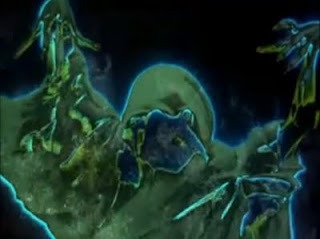 The banshee from Walt Disney's "Darby O'Gill and the Little People."
I hasten to say that my banshee is a red-headed girl. Most of the time.
I was leafing through Abbey Lubbers, Banshees & Boggarts, an illustrated encyclopedia of folklore collected by the late Katharine Briggs. I came upon a full-page illustration of a banshee, and she wasn’t what I expected. (My banshee experience started and ended with "Darby O’Gill and the Little People," a Walt Disney film that scared the pants off me when I was a kid.) According to Briggs, banshees weren’t always evil old hags—sometimes they were the spirits of young girls who died too soon. Ashling the banshee popped into my head right then and there, and I had the plot mapped out in three hours.
What genre does your book fall under?
It’s middle-grade fantasy. Depending on who you talk to, “middle grade” ranges from age eight to age fourteen. You can decide for yourself whether banshees and a trip to the underworld constitute "fantasy."
What actors would you choose to play the part of your characters in a movie rendition?
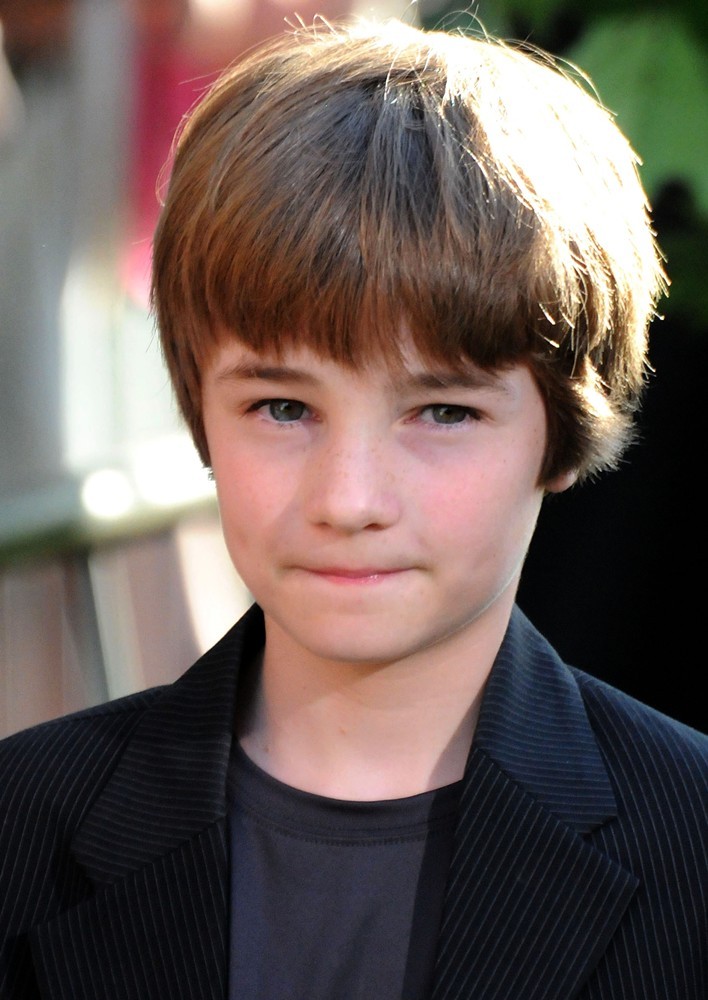
CJ Adams (“The Odd Life of Timothy Green”) would be a great Conor, and Elle Fanning would be lovely as Ashling. (She’d have to dye her hair red.) "Modern Family" star Rico Rodriguez is the perfed Javier. The other major character is Grump, Conor’s grandfather, a banshee expert who’s kind of a loveable curmudgeon. Gotta be Clint Eastwood.


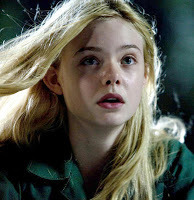
CJ Adams (right), Elle Fanning, and Rico Rodriguez (in case you needed telling)
Who is publishing your book?
Dial Books for Young Readers, a Penguin imprint.
How long did it take you to write the first draft of the manuscript?
Let’s see. I started it in the summer of 2010, and got going on it seriously in the fall. I had a first draft to my editor in June 2011, and we finished revisions a little less than a year later. There were a lot of empty months in there while my editor was considering my various proposals and I was working on other things.
Who or what inspired you to write this book?
On the surface it was just the idea of a young banshee. But also various family members and friends had died over the previous decade, and I had some thoughts about death that made this book even more interesting to me.
What else about the book might pique the reader’s interest?
There’s a mysterious connection between Conor and Ashling that becomes clear only when they finally visit the afterlife.
While she’s visiting Conor, Ashling’s chief source of information about the world is an old Trivial Pursuit game.
It turns out the Underworld does get a cell phone signal. Also internet.
And now (*drum roll*), I join Lisa in tagging Lena Goldfinch, author of SONGSTONE, AIRE, and THE LANGUAGE OF SOULS.
What is the title of your next book?
TEXTING THE UNDERWORLD comes out August 15! It's been getting great reviews (a Kirkus star!) but I'm a nervous wreck anyway. The launch party is August 1 (Blue Hill Public Library, 7 p.m.) and I start a three-week blog tour August 5 at The Children's Book Review. (I'll post the complete tour schedule next week.)
What it’s about: Conor O’Neill always thought spiders—and his little sister, Glennie—were the worst kind of monsters life had in store. That was before an inexperienced young banshee named Ashling showed up in his bedroom.
The arrival of a banshee, as Conor soon learns, means only one thing: Someone in his family is going to die. Not only will Ashling not tell him who it is, it turns out that she’s so fascinated by the world above that she insists on going to middle school with him.
The more Ashling gets involved in his life, the harder it becomes to keep her identity a secret from his friends and teachers—and the more Conor worries about his family. If he wants to keep them safe, he’s going to have to do the scariest thing he’s ever done: Pay a visit to the underworld.
If only there were an app for that.
Where did the idea come from for the book?
 The banshee from Walt Disney's "Darby O'Gill and the Little People."
I hasten to say that my banshee is a red-headed girl. Most of the time.
I was leafing through Abbey Lubbers, Banshees & Boggarts, an illustrated encyclopedia of folklore collected by the late Katharine Briggs. I came upon a full-page illustration of a banshee, and she wasn’t what I expected. (My banshee experience started and ended with "Darby O’Gill and the Little People," a Walt Disney film that scared the pants off me when I was a kid.) According to Briggs, banshees weren’t always evil old hags—sometimes they were the spirits of young girls who died too soon. Ashling the banshee popped into my head right then and there, and I had the plot mapped out in three hours.
What genre does your book fall under?
It’s middle-grade fantasy. Depending on who you talk to, “middle grade” ranges from age eight to age fourteen. You can decide for yourself whether banshees and a trip to the underworld constitute "fantasy."
What actors would you choose to play the part of your characters in a movie rendition?
CJ Adams (“The Odd Life of Timothy Green”) would be a great Conor, and Elle Fanning would be lovely as Ashling. (She’d have to dye her hair red.) "Modern Family" star Rico Rodriguez is the perfed Javier. The other major character is Grump, Conor’s grandfather, a banshee expert who’s kind of a loveable curmudgeon. Gotta be Clint Eastwood.


CJ Adams (right), Elle Fanning, and Rico Rodriguez (in case you needed telling)
Who is publishing your book?
Dial Books for Young Readers, a Penguin imprint.
How long did it take you to write the first draft of the manuscript?
Let’s see. I started it in the summer of 2010, and got going on it seriously in the fall. I had a first draft to my editor in June 2011, and we finished revisions a little less than a year later. There were a lot of empty months in there while my editor was considering my various proposals and I was working on other things.
Who or what inspired you to write this book?
On the surface it was just the idea of a young banshee. But also various family members and friends had died over the previous decade, and I had some thoughts about death that made this book even more interesting to me.
What else about the book might pique the reader’s interest?
There’s a mysterious connection between Conor and Ashling that becomes clear only when they finally visit the afterlife.
While she’s visiting Conor, Ashling’s chief source of information about the world is an old Trivial Pursuit game.
It turns out the Underworld does get a cell phone signal. Also internet.
And now (*drum roll*), I join Lisa in tagging Lena Goldfinch, author of SONGSTONE, AIRE, and THE LANGUAGE OF SOULS.
June 5, 2013
June Book Review Club
Click icon for morebook review blogs
@Barrie Summy
Tra-la, it's June. The garden's half in and so am I. But here's a book to lighten the load, and also to silence that pesky little voice that says you didn't do it justice in teenhood.
Don't forget to click the icon for more reviews!
 The Adventures of Huckleberry Finn
By Mark TwainOriginally published in 1885 Kindle edition, March 2011
The Adventures of Huckleberry Finn
By Mark TwainOriginally published in 1885 Kindle edition, March 2011Here’s a confession: I didn’t read Huckleberry Finn when everyone else did, back in middle school or high school. I’ve also never read Moby Dick, and I probably won't catch up with that one. (In college I read everything else Melville wrote, so I figure I’m exempt.) I still have hope for War and Peace.
What drove me from Huck Finn in my youth was the escaping slave Jim, whose dialect just took too much effort. ( An important lesson to us all—especially me, considering that my first book features a guy who often ta-a-alks like thi-i-is.)
 Jim confronts Huck's "ghost" in an
E.W. Kemple
illustration for the first edition.Here’s what Jim says when he thinks he’s confronting Huck as a ghost: “You go en git in de river agin, whah you b’longs, en doan ’do nuffin to Ole Jim, ’at ’us awluz yo’ fren’.” I didn’t want any part of that when I was a kid.
Also, I think I was uncomfortable with the N-word, which is sprinkled through this text. Although I don’t approve of banning books under any circumstances, or preventing kids from reading any of them ever, it’s clear why this one is a challenge for parents and teachers today. It definitely requires context and a lot of conversation. Both very good things.
All that said, halfway through this reading I announced to whoever was in the room (most likely the dog) that Huck Finn is the best American novel ever written. I bogged down later, but really this is a masterpiece. I started reading it this time around because I’d downloaded it free and I was away from home with my Kindle. I figured I’d dip into it before bed, and suddenly it was two hours later.
Huck is a marvelous character—a young reprobate, happiest lying flat on his back in the shade with a full stomach and a pipe in his mouth. And yet he is a total sweetheart, pretty much a friend to all and without the mischievous spark of his pal Tom Sawyer, hero of the Twain book that introduced Huck to the world. Despite a ramshackle upbringing with a horror of a drunken, thieving father, he is quick to recognize his sins and attempt to atone for them.
It’s this last characteristic that Twain uses to great comic and cosmic effect.
The action takes place along the southern Mississippi River before the Civil War, when slavery was in full cry. On the lam from his evil father, Huck ends up on a raft with Jim, who hopes to escape to the free territories of the west. Along the way, they have adventures with a rich, funny, pungent collection of con-men, robbers, murders, aristocrats, and common folk.
 Here’s the thing: Huck has been taught that slavery is the good and right way of things. He thinks helping a slave escape is a crime, even a sin that will condemn his soul to hell. Because he’s a nice guy and really likes Jim, though, his instinct is to help his friend out and keep him safe. There’s a fascinating battle going on inside of Huck, and we get to watch it play out.
 It’s genius. In 1885, twenty years after the end of the Civil War, Huck’s struggle to dehumanize Jim—and his failure—must have hit home like a howitzer shell.
Most of the book is hysterical, too, although I have to say that I could have done without the reintroduction of Tom Sawyer three-quarters of the way through. His ridiculous attempt to add swashbuckling complications to a simple rescue of Jim goes on way too long, and that’s where the book bogged down for me. I can’t help thinking that Tom’s there not for the advancement of literature but just because he was such a popular character with readers.
Hey, something had to pay for all those white suits.
If you, like me, managed to escape reading this book in middle school, I urge you to give it another try. Even if you did read it back then, you might want to pick it up again as an adult. It has pleasures and insights you might have missed during the Hormone Years.
Dear FCC: This book was free, and I downloaded it of my own free will. Neither Mark Twain nor his publisher gives two hoots what I have to say about it.
May 1, 2013
May Book Review Club
Click icon for morebook review blogs
@Barrie Summy
It's spring, and we're all rushing out the door to dig up the garden and soak up the sun. If you have a moment for reading--a body's gotta rest, right?--I strongly recommend this and its companion book.
Don't forget to click the icon for more reviews!
 Ghoulish SongBy William AlexanderMargaret K. McElderry Books, 2013
The authors I envy most are those who achieve what I guess I’ll call “texture”: a magical weave of darkness, wild imagination, humor, and heart. William Alexander is one of these, and his skills are evident in GHOULISH SONG.
This is a companion book to GOBLIN SECRETS, which won the National Book Award last year. Both are set in Zombay, a town divided between rich and poor, seamless and seamy, mechanical and magical. The river that splits the city is spanned by the Fiddleway, a marvelous bridge that is the crux of both books. It’s so broad that people have built houses on it, and its clock tower can be seen from almost everywhere. It’s a sanctuary for criminals, but also its central street is lined with musicians. Goblins live there if anywhere.
Kaile, our heroine, lives in Southside, the dusty, teeming, jumble-built poor side of town, home to witches and charms and curses. When we meet her, she seems a nice enough kid but unconnected to the world. She has good reason—her family, hardworking proprietors of a bakery and alehouse, doesn’t have time to express affection or listen to one another. Kaile keeps her thoughts to herself and does her work, waiting for a word of approval that never comes.
When a goblin gives her a flute carved from somebody’s bone, she grasps at it as a way to reconnect with the one family member who reached out to her: her grandfather, a musician who died recently. Unfortunately, playing the flute separates her from her shadow, which is bad news for a couple of reasons.
For one, Kaile’s shadow stays by her side, now a separate being who doesn’t like her that much. For two, nobody else can see the shadow, and a girl without a shadow is officially dead, a walking ghoul. Her family sings her funeral song and that’s it—she and her shadow are on their own in the dusty South Side streets.
Kaile sets out to discover the flute’s history and whether she can undo its curse. Her adventures eventually take her to the Fiddleway, where she learns that music is more than an entertainment: It’s a force that can either bind or pull apart. It will be her job to save her city by making sure it does the former.
There are so many wonders in these books: witches, goblins, and a ghoul made of drowned people’s bones; a Guard captain with mechanical legs, hands, and eyes; the city clock, on whose face a glass sun follows a glass moon across the sky. Kaile’s shadow is a gem of a creation, functioning as companion, alter-ego, and conscience, but also as guide. After all, who knows us as well as our shadows? (And it turns out we treat them horribly.)
The events in the two books are concurrent—we catch glimpses of the GOBLIN SECRETS characters in Kaile’s story, and the two plots end with the same event. You could read either one first. Alexander has said he’s working on a sequel to both. That’s a relief, because although each book is a complete and satisfying story, we have a lot more to learn about Zombay and its clock tower.
Dear FCC: I bought this book. The author is a colleague at The Enchanted Inkpot, but if I hadn’t loved his book I wouldn’t have written about it.


