Holly Walrath's Blog, page 6
July 26, 2023
The Horror of Women’s Pain
 Photographs by Erik Tanner for The New York Times
“The women interviewed are part of around 200 women who were supposed to receive the drug Fentanyl as part of the egg retrieval process but instead received inactive saline. The result was a horrific, sometimes ongoing, experience of pain at the hands of one drug-addicted nurse.”
Hospitals, Doctor’s offices, and medical procedures are some of my most intimate places of fear. That’s because I have dealt with chronic illness for most of my life, and as most chronically ill women have experienced, I’ve known the fear of being ignored, being put in pain without repercussion, and being disbelieved.
This fear is probably not helped by my True Crime obsession. I’ve become fascinated by stories about women’s health and crime ever since I started making note of the variety of ways the US Healthcare system mistreats women. Examples include the common practice of women receiving pelvic exams without consent at hospitals; how drug studies often excluded women for years because they might be pregnant, resulting in different (and often ignored) side effects and dosing for women; how even crash test dummies in vehicle studies were calibrated to men’s sizes for years; how the maternal mortality rate for women in the US is on the rise.
Women are routinely treated as if their health does not matter.
This is the center of the story behind “The Retrievals,” a new podcast from the New York Times, Serial Productions, and Susan Burton. The podcast records the experiences of women undergoing fertility treatments at Yale Fertility Center in 2020–2021. The women interviewed are part of around 200 women who were supposed to receive the drug Fentanyl as part of the egg retrieval process but instead received inactive saline. The result was a horrific, sometimes ongoing, experience of pain at the hands of one drug-addicted nurse.
True crime is no stranger to the intersection of crime and healthcare. There is a history of doctors, nurses, and medical professionals carrying out heinous acts. “Criminal,” the popular podcast hosted by Phoebe Judge, covered the Mayo Clinic outbreak of Hepatitis C in 2021 due to an employee using patients’ syringes before they underwent painful procedures, exposing nearly 30,000 patients. The popular podcast “Dr. Death” covers the story of Dr. Christopher Duntsch, a Texas spine surgeon with many older women patients who underwent horrific torture and mangling that wasn’t stopped by the Texas Medical Board. The case wasn’t resolved until two other physicians reported Duntsch to the police.
The list of uncovered crimes is longer. In 2009, a technician at Rose Medical Center was found to be swapping dirty syringes with Fentanyl-filled ones, resulting in over 11 patients testing positive for Hepatitis C. In 2016 and 2018, at UT Southwestern’s Clements Hospital, two nurses died of Fentanyl overdose after stealing it.
Despite all of this reporting and evidence — that Fentanyl is a substance that should be carefully monitored and yet, is clearly not being managed, to the detriment of patients’ lives — the women at the heart of “The Retrievals” were still ignored by their doctors and nurses.
There’s something particularly horrific about women’s pain experiences in healthcare. From transvaginal ultrasounds to abortions to surgeries, women are often at a higher risk than men for medical malpractice and device-related negligence. Some studies even find that male practitioners are at a higher risk of malpractice claims, which is probably because medical practice is a male-dominated field. But it puts into perspective how women are often ignored by their doctors.
“The Retrievals” dials down to one specific procedure: egg retrievals in fertility treatment.
The women in “The Retrievals” were subjected to egg retrieval procedures without pain medication. A nurse, sometimes the nurse responsible for administering the medication, was stealing Fentanyl. Despite telling their doctors, nurses, and staff at the clinic of their severe pain, the women were told they were “anxious” or that their experience was “surprising,” but not “alarming.”
In a cruel twist, many of the women who undergo IVF are queer women who are trying to build a family in an already antagonistic world. One woman in “The Retrievals” was a cancer patient trying to preserve her eggs before undergoing further cancer treatments that would make her eggs unviable. One was an addiction researcher who presciently guessed what was happening behind the scenes. One was an attending trauma surgeon who had to visit her own hospital as a result of the procedure.
These were intelligent, highly educated women. Many worked at Yale. Yet over and over again, in over 200 cases, sometimes over multiple procedures, the women were ignored.
What kept entering my mind as I listened to their stories was the larger economic picture. Fertility practices have become a sort of venture capital focus as of late. Private equity firms are pouring money into practices in a market estimated at $8 billion. Doctors at these clinics make anywhere from 200,000 to 400,000. Nurses make anywhere from 100,000 to 140,000. Women and their babies are seen as a cash cow.
IVF itself is a highly expensive process. Costs range from 15,000 to 30,000. Since IVF is often done out of pocket and not through insurance, the likelihood of foul play is higher. Other crimes perpetrated at IVF clinics in recent years include swapping the incorrect embryo, using embryos with cancer genes, incorrect destruction of eggs, and general fraud.
On the surface, it may seem like women not receiving pain medication is a crime without much harm. Sure, the women underwent a very painful procedure that should have been unpainful. But it’s this kind of attitude that ignores the actual risks. Tampered vials and needles can put patients at a higher risk of infection. Pelvic abscesses are more common in IVF when the procedure is not done to high sterile standards. These abscesses can impact pregnancy. And, of course, there’s always the risk of blood-borne illness like Hepatitis C.
“The Retrievals” is just five episodes, but it’s a valuable addition to the growing call for change. The podcast is an empathetic, complex, and fascinating exploration of women’s pain.
Interstellar Flight Magazine publishes essays on what’s new in the world of speculative genres. In the words of Ursula K. Le Guin, we need “writers who can see alternatives to how we live now, can see through our fear-stricken society and its obsessive technologies to other ways of being, and even imagine real grounds for hope.” Visit our Patreon to join our fan community on Discord. Follow us on Twitter, Facebook, or Instagram.
[image error]The Horror of Women’s Pain was originally published in Interstellar Flight Magazine on Medium, where people are continuing the conversation by highlighting and responding to this story.


July 24, 2023
Writing Nature Poetry in a Modern World

How Do We Reconcile Our Technological Existence and Nature’s Survival?
July 21, 2023
Black Mirror Season 6 and the Power of Situational Horror
 Images Courtesy Netflix
“What is it about Black Mirror that captivates us? Personally, I believe it’s the way it juxtaposes situational horror, scathing commentary on our technological society, and imaginative science fiction to create a truly captivating experience.”
I’ve been a Black Mirror fan since about Season Two and the episode “Be Right Back,” which hit on one of my greatest fears of losing a loved one to a car accident from texting. (I know that’s really specific, but it’s truly something I worry over every time my spouse leaves the house.) Another favorite episode of mine is the famously queer San Junipero, which I sometimes comfort re-watch just for the heck of it.
Every Black Mirror season feels like a little gruesome gift wrapped up for fans just like me who crave the over-the-top, wildly imaginative, slippery-slope scenarios that hit far too close to home. So when Season Six dropped on Netflix, a part of me wondered if we even deserve it.
What is it about Black Mirror that captivates us? Personally, I believe it's the way it juxtaposes situational horror, scathing commentary on our technological society, and imaginative science fiction to create a truly captivating experience.
But the best reason to watch the show, even if you’ve never seen it, is how it manages situations in horror.
A situation is the set-up for a plot. It’s not story — that’s dependent on characters and emotions. The situation is well-known to viewers from years of I Love Lucy, Seinfield, and How I Met Your Mother, comedy sitcoms that exploit easy set-ups for laughs. Situational horror does the same thing, only with the goal of creating fear in the viewer.
The best situations explore the answers to “What If” questions. In Season Six of Black Mirror, a fantastic example of this is the episode “Joan is Awful,” where an averagely terrible woman suddenly finds herself at the center of a new Streamberry (this world’s version of Netflix) drama that she is living daily. What if your life suddenly became a Netflix show?
 Interstellar Flight Press is a small independent press. We hope you’ll consider supporting us via Patreon if you love what we do. This helps us pay our writers more and publish excellent books. Small presses fill the gap by publishing works that wouldn’t get published otherwise.
The set-up hits on all of Black Mirror’s favorite tropes: Joan is trapped by her use of over-reaching technology (she, like most of us, signed away her rights in the fine print agreement to join Streamberry as a customer, and her phone is responsible for tracking her every movement); ridiculously Meta themes (Netflix publishing a show that criticizes Netflix is pretty clever); the episode takes the situation to its absolute extreme, becoming more and more absurd as Joan tries to deal with her overnight stardom; and it’s a great example of how creating a compelling situation can be the basis of a terrifying story.
The episode is bonkers, gruesome, and has a killer twist that you’ll love trying to figure out. Annie Murphy plays Joan to a T, really embracing the “awfulness” of the character, and the delightful cameos by Salma Hayek, Michael Cera, and Himesh Patel are a treat.
Situation makes a great story. Audiences want a situation that feels fresh and asks the viewer to think through what they would do (or in this case, how they would survive) when placed into a complicated situation. It’s how we manage our day-to-day lives, after all. We react to what happens to us, or else we make decisions that have unexpected repercussions.
When I teach writing classes, I often ask my writers to come up with ten tense situations. Think of the most intense, terrifying, complicated, and devastating scenario you can. Then write a story about it.
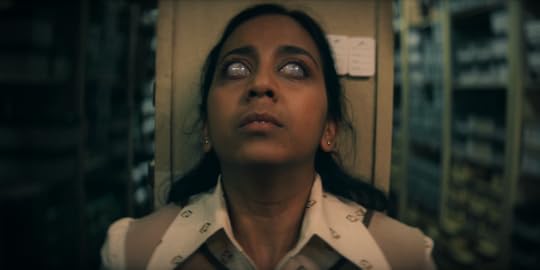
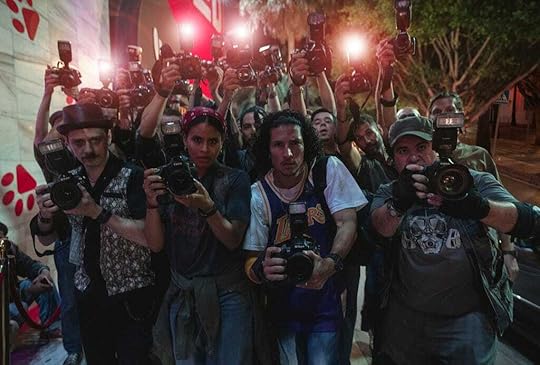
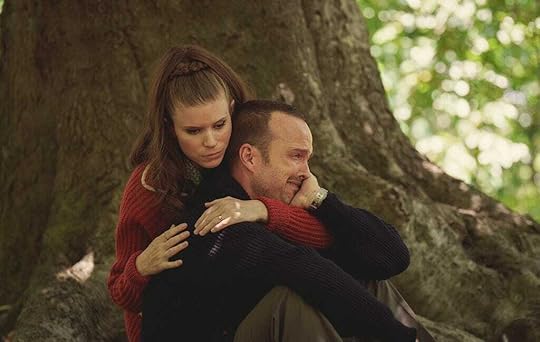
Every episode of Black Mirror Season Six chooses a tricky scenario and plays it out to the extreme. In Episode Two, a young man returns home to his sleepy Scottish town with the goal of filming a bland documentary, only to get roped back into a serial killer story with a personal twist. Episode Three explores the idea of body doubles as a way for astronauts to travel long distances in space. Episode Four puts a tabloid photographer smack-dab in the middle of a speculative nightmare. Episode Five forces a quiet sales assistant into a life-or-death series of terrible acts.
Each situation makes the viewer think — what will the twist be? How would I react in this situation? What’s going to happen next? And further, the writers of Black Mirror have managed to tie each situation to its most terrifying emotional conclusion, making the viewer both cringe and feel at the same time.
And that is the secret to fantastic storytelling.
I don’t know about you, but I’ll probably be re-binging the show this weekend, to relive some of my favorite horrific experiences from the safety of my living room.
[image error]Black Mirror Season 6 and the Power of Situational Horror was originally published in Interstellar Flight Magazine on Medium, where people are continuing the conversation by highlighting and responding to this story.
July 12, 2023
Introducing anOther Mythology by Maxwell I. Gold

“Maxwell I. Gold’s poetry pulls from the heart and bleeds truth onto the page.” — Michael Bailey, multi-award-winning author and editor.
Interstellar Flight Press is delighted to announce the publication of anOther Mythology by Maxwell I. Gold. From Thanatos to Hades, Maxwell I. Gold’s book of horror prose poetry reimagines myths from a queer perspective. Gold’s poetry merges camp sensibility and cosmic horror in poems that are beautiful, bloody, and barbed. A poetic soap opera of gods and monsters.
 About the Author
Maxwell I. Gold is a Jewish American multiple award nominated author who writes prose poetry and short stories in cosmic horror and weird fiction with half a decade of writing experience. Some of his books include Oblivion in Flux: A Collection of Cyber Prose from Crystal Lake Publishing and Bleeding Rainbows and Other Broken Spectrums from Hex Publishers. Five-time Rhysling Award nominee, and two-time Pushcart Award nominee, find him at www.thewellsoftheweird.com.
 About the Cover Artist
DAN SAUER is a graphic designer and artist living in Oregon. In 2016, he co-founded (with editor/publisher Obadiah Baird) The Audient Void: A Journal of Weird Fiction and Dark Fantasy, which features his design and illustration work. Since 2017, he has worked extensively on book covers and interior art for Hippocampus Press and other publishers. His art often takes the form of surreal collage and photomontage, as pioneered by artists such as Max Ernst, Wilfried Sätty, J. K. Potter and Harry O. Morris. In 2020, he launched his own publishing imprint, Jackanapes Press (www.JackanapesPress.com), which is devoted to publishing weird fiction and poetry.
Loosely based on Hesiod’s Theogeny, Maxwell I. Gold’s anOther Mythology deconstructs traditional mythic narratives and tropes in a defiantly transgressive take on cosmic origin stories. Indeed, the Muses must have conferred Hesiod’s kingly scepter of authority to Gold, and he uses it wisely. Gold fearlessly flings open closet doors, unveils dark deceptions, and reshapes the cosmos to unshackle the stars. A stunning reclamation of Greek myth. — Carina Bissett, award-winning editor of Shadow Atlas: Dark Landscapes of the Americas[image error]
Introducing anOther Mythology by Maxwell I. Gold was originally published in Interstellar Flight Magazine on Medium, where people are continuing the conversation by highlighting and responding to this story.
July 5, 2023
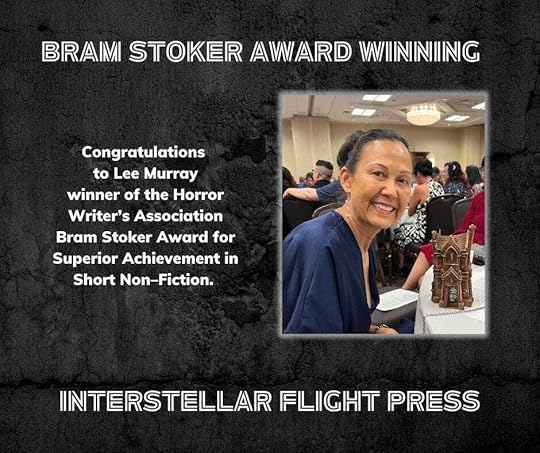
Lee Murray Wins Bram Stoker Award for Interstellar Flight Magazine Essay
“I think it says something about the horror genre and this community that we are allowed to write what we love.”
Interstellar Flight Press is delighted to announce that Lee Murray’s essay “I Don’t Read Horror (& Other Weird Tales)” from Interstellar Flight Magazine’s 2022 October horror-themed special issue has won the Horror Writer’s Association Bram Stoker Award for Superior Achievement in Short Non–Fiction.
At Interstellar Flight Magazine, we run a yearly horror special in October to celebrate one of our favorite genres across film, TV, games, books, and more. It’s a delight to publish works by authors like Lee Murray, who are game-changers in the horror genre. We thank Lee Murray for writing this fantastic essay, encouraging readers to try out horror in the kindest way. Horror is a vast and powerful genre that has something for everyone. Lee Murray was also kind enough to be the Guest Editor for our 2022 horror novellas submission call. Thank you, Lee!
We would also like to thank our readers. Interstellar Flight Magazine is a small, independent, volunteer-run adventure. We rely on the support of patrons, readers, volunteers, slush readers, and our fans. Thanks for keeping our little ship afloat in the stars.
If you love what we do, consider becoming a Patron. For just $1/month, you get access to our community Discord, where we have a weekly writing check-in and behind-the-scenes sneak peeks.
Without further ado, we’d like to share Lee Murray’s acceptance speech.
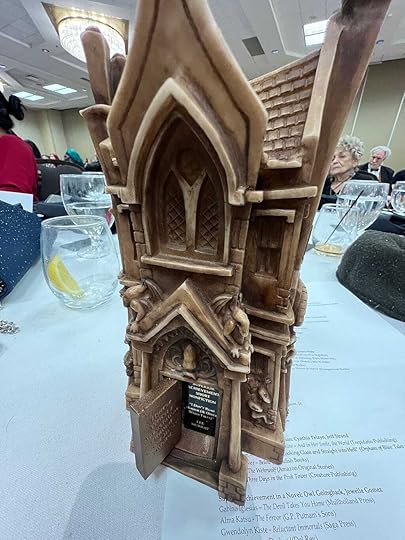
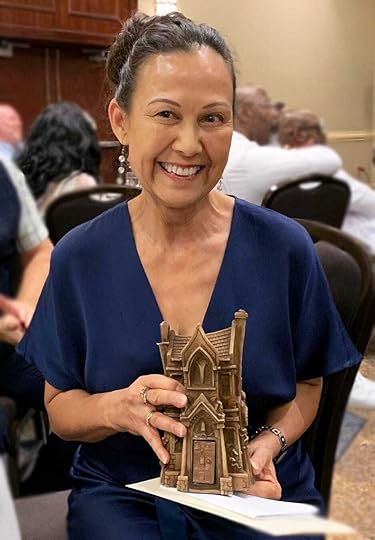 Lee Murray’s Acceptance Speech for the Horror Writer’s Association Bram Stoker Award for Superior Achievement in Short Non–Fiction
Brian Matthews said I had to write a speech….
Thank you so much, everyone. Wow.
It really is something to win this award with an essay that compares a literary genre to Brussels sprouts. I think it says something about the horror genre and this community that we are allowed to write what we love. And if what you love happens to be ghosts, or chainsaws, or Brussels sprouts, we try not to pull a face and hold it against you.
Thank you to all my friends and colleagues who supported this little essay. To those of you who reached out to me to tell me how much the work resonated. To my beta readers Grace Bridges and Celine Murray, and my editor, Holly Walrath, at Interstellar Flight Magazine, who gave the essay a home — and paid for it! To the Stoker committee and the jurors for all their hard work behind the scenes. And to my darling, David Murray, who does not like Brussels sprouts and doesn’t read horror but indulges me, anyway.
Mostly, I want to thank my fellow nominees for sharing their fantastic words and making me so proud to be among them. Our horror prom king, Kevin Wetmore, for scrubbing away the make-up on scary clowns — his work is on this ballot every year and consistently good — the indomitable L. Marie Wood, who has not one but two essays on the list on African American horror folklore and the horror of hair — I love that essay so much — and finally our Guest of Honour Cina Pelayo for her beautiful essay, “Ceci n’est pas un poème” in Stephanie Wytovich’s Writing Poetry in the Dark. I may be taking the little castle home, but to my mind, they are all winners. So please, can we have some applause for them? Thank you all so much.
I Don’t Read Horror (& Other Weird Tales)
 Interstellar Flight Press is a small independent press. We hope you’ll consider supporting us via Patreon if you love what we do. This helps us pay our writers more and publish amazing books. Small presses fill the gap by publishing works that wouldn’t get published otherwise.
Interstellar Flight Magazine publishes essays on what’s new in the world of speculative genres. In the words of Ursula K. Le Guin, we need “writers who can see alternatives to how we live now, can see through our fear-stricken society and its obsessive technologies to other ways of being, and even imagine real grounds for hope.” Visit our Patreon to join our fan community on Discord. Follow us on Twitter, Facebook, or Instagram.
[image error]Lee Murray Wins Bram Stoker Award for Interstellar Flight Magazine Essay was originally published in Interstellar Flight Magazine on Medium, where people are continuing the conversation by highlighting and responding to this story.
May 15, 2023
Announcing the Acquisition of “listen” by Gretchen Rockwell
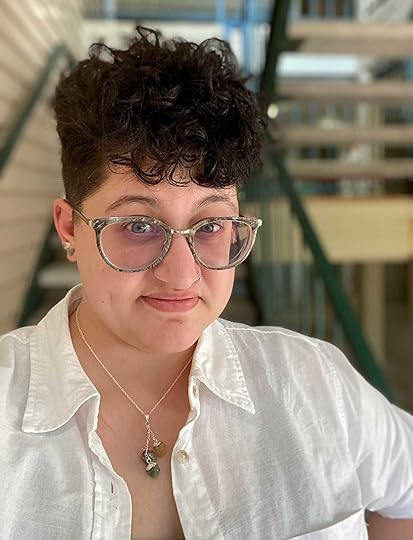
A Book-Length Cento Poem Celebrating Science Fiction’s Icons
May 12, 2023
Pride Month Speculative Poetry Reading!
 Beautiful Malady Book Launch and Pride Month Reading!
Join Interstellar Flight Press as we celebrate the publication of BEAUTIFUL MALADY by Ennis Rook Bashe with a pride month reading featuring queer poets! With readings by Ennis Rook Bashe, Gretchen Rockwell, J.C. Rodriguez, R. Thursday, Toby MacNutt, Silvatiicus Riddle, Rain Vega, T.C. Long, Angel Leal
Event Details:
Date: June 5, 2023, 6:00pm CST
Online via Zoom, Registration required
BEAUTIFUL MALADY
by Ennis Rook Bashe
A siren song of queerness, disability, and myth, these poems reinvent love, life, and death. BEAUTIFUL MALADY is an exploration of pain, weaving speculative poems about fairy tales, folklore, fantasy, and the supernatural with the reality of chronic illness and disability. Ennis Rook Bashe deftly creates a world where the broken body is beautiful.
About the Author
Ennis Rook Bashe is a queer romance novelist and poet whose work has appeared in Strange Horizons, Cricket, and Liminality Magazine. Their debut chapbook, Glitter Blood, was an Elgin Award nominee. If you enjoyed the disability-related themes in this chapbook, you may also enjoy their fantasy romance series Hunters of the Cairn, set in a world where only disabled and chronically ill people can become monster hunters. Find more Ennis at https://linktr.ee/ennisrookbashe.
Featured Readers
Maxwell I. Gold is a multiple award nominated author who writes prose poetry and short stories in weird and cosmic fiction. His work has appeared in numerous anthologies and magazines including Weirdbook Magazine, Space and Time Magazine, Startling Stories, Strange Horizons, Tales from OmniPark Anthology, Shadow Atlas: Dark Landscapes of the Americas and more. He’s the author of Oblivion in Flux: A Collection of Cyber Prose from Crystal Lake Publishing.Maxwell’s forthcoming books include a collaborative book of poems titled Mobius Lyrics with Bram Stoker Award winner Angela Yuriko Smith to be released in 2022, and Bleeding Rainbows and Other Broken Spectrums from Hex Publishers to be released in 2023. He lives in Columbus, Ohio with his partner and two dogs Marshall and Otto, and currently serves on the Board of Trustees for the Horror Writers Association as the organization’s Treasurer.
Gretchen Rockwell is a queer poet who can frequently be found writing about gender, science, space, and unusual connections. Xe is the author of the chapbooks body in motion (perhappened press) and Lexicon of Future Selves (Vegetarian Alcoholic Press) and two microchapbooks; xer work has appeared in AGNI, Cotton Xenomorph, Whale Road Review, Palette Poetry, and elsewhere. Find xer at www.gretchenrockwell.com or on Twitter at @daft_rockwell.
J.C. Rodriguez is a writer from Long Island, NY. His work has appeared in places like Phoebe, Barrelhouse, Waxwing, & Meow Meow Pow Pow. A previous recipient of fellowships from Brooklyn Poets & The Watering Hole, he is currently an MFA candidate at Syracuse University & a proud slush adventurer for Interstellar Flight Press. Find him online at https://brownmoon.rip
R. Thursday (they/them) is an educator, historian, writer, and all-around nerd. When not subverting Middle School Curricula, they can be found reading, watching cartoons, playing video games, cooking spicy dishes, or writing about vampires, wizards in space, queerness, mushrooms, mental health, and on a very good day, all of the above. They live in South King County, Washington, with the world’s most copacetic cat.
Toby MacNutt is a nonbinary trans, disabled & autistic author, artist, and teacher based in northern Vermont. Their work engages themes of embodiment, space and relationship from a queer and disabled perspective. Toby’s debut poetry and short story collection If Not Skin was published by Aqueduct Press in 2018; more recently their work has appeared in or is forthcoming from magazines such as Kaleidotrope, Strange Horizons, and The Future Fire, and as a self-published chapbook, “what cannot be held”. Find out more at www.tobymacnutt.com
Silvatiicus Riddle (He/They) is a Queer, Disabled, Neurodivergent, Rhysling-Nominated Dark Fantasy & Speculative Fiction Short Story Writer and Poet living in New York City with his husband and a menagerie of cats. He has been published by Abyss & Apex, Dreams & Nightmares, Enchanted Living, Liquid Imagination, and Spectral Realms, among others. He is currently putting together his first chapbook, expected to be released later this year.
Rain Vega (they/them) is a Latinx, bi-racial, disabled, non-binary writer living with a permanent stoma after a total colectomy. Their work explores disability through the lens of witchcraft and Mexican folklore.Their previous work has appeared in the Sagebrush Review.
T.C. Long (he/him) is a queer, trans disabled writer of literary fantasy from Upstate NY. He received his B.A. in Anthropology and English and spent several years in children’s publishing before transitioning to nonprofit work. A journalism contributor for the Trans Advocacy & Care Team (TACT) and an ESL tutor for migrant and refugee youth, he is also the founder of CALAMITOUS, a queer sci-fi and fantasy writing group. He is a devoted knitter and loves nothing more than a walk by the sea.
Angel Leal (they/them) is a Latinx, trans/nonbinary poet from Texas. Their work has been nominated for the Pushcart Prize, the Rhysling Award, and has appeared in Strange Horizons, Anathema: Spec from the Margins, Fantasy Magazine, Solarpunk Magazine, the Club Q Benefit Anthology “We Apologize For The Inconvenience” published by Beyond The Veil Press, and elsewhere. They are also a co-admin of CALAMITOUS, a queer sci-fi and fantasy writing group.You can reach them at their website: https://www.angel-leal.com/ or on twitter @orbiting_angel
 [image error]
Pride Month Speculative Poetry Reading! was originally published in Interstellar Flight Magazine on Medium, where people are continuing the conversation by highlighting and responding to this story.
May 8, 2023
April 24, 2023
Introducing Level Six: The Exciting Second Installment in the Killday Series!

“If you want a novel that leaves you terrified of how easily tiny changes multiply to planet-sized problems, don’t miss Level Five.” –Nerds of a Feather
We’re thrilled to announce that pre-orders are live on the second installment in the KILLDAY series from William Ledbetter!
Fifteen years after warring artificial intelligences nearly destroyed Earth, Abby, the daughter of Killday hero Leah Gibson, finds an artifact from that struggle, upsetting a delicate balance of power and dragging her into the middle of a new fight for humanity’s survival.
One AI faction is working with humanity to repair a biosphere teetering on the edge of collapse, while another faction cares only about elevating itself to a higher plane of intelligence and will destroy anyone who gets in the way. As the only humans still not controlled by AIs race to build huge orbital habitats in space, a more secretive organization grows in the shadows and idolizes the man who triggered the nano-replicator attacks that nearly destroyed the world. They, too, believe the only way to stop the AIs is to annihilate everything.
In Nebula Award winner William Ledbetter’s Level Six, one woman has the power to save humanity — if she can survive long enough to use it.
Read on for an excerpt from this latest scifi adventure!
From Level Six…The robot tractor rumbled to life, its powerful electric motor rising in pitch to a loud whine, scaring the horses into a nervous prance.
“What the hell?” Danny said. “Your dad said he’d come by later to — ”
The tractor lurched forward, spun through the yard in a tight u-turn, then raced down the driveway toward them.
At first no one moved, not quite understanding what was happening, then Juan leapt from the porch and screamed, “Run!”
Julio slapped Worf’s rump and yelled, “Go!”
Worf reared but Abby held on as the horse came down and bolted away from the oncoming tractor. She pulled the reins tight, refusing to let Worf run more than a few strides and wheeled left into Danny’s front yard.
The air around Abby sparkled briefly as dozens of hummingbird-sized robots streaked past her head with a loud shriek. They hit the tractor like a shotgun blast. Two of the huge tires exploded, sending long shreds of rubber flying in all directions. Sparkling air surrounded Julio too as several large rubber chunks erupted into sizzling white blobs just before hitting him, then fell to the ground.
The tractor dropped lower on one side as its metal rims raised gouts of asphalt and gravel from Danny’s driveway, but the tires on the other side still provided enough traction to drive it forward. It zipped past Danny, missing him by a foot, but hitting the old mailbox, which exploded into spinning splinters of wood. Then Abby screamed as the massive tractor hit Julio at about forty miles per hour. Only it didn’t exactly hit him. Julio’s sparkling cloud expanded to create a buffer between him and the tractor, pushing him ahead of it for a couple heartbeats, before he rolled away on one side.
Another wave of flying robots hit the control module sitting on the tractor’s top, but they disintegrated uselessly against the heavy-gauge wire brush guard and the machine wheeled around toward Abby. It was slower in the yard, the shredded wheels sending up rooster-tails of dirt and grass, but it still moved so fast there was no way to avoid it.
Juan stepped between her and the speeding tractor, raised a pistol in both hands, and fired repeatedly into the control box on top. Unlike the robot darts, the bullets were small and fast enough to pass through the wire guard and puncture the housing. Sparks and smoke spewed from the holes as Juan held his ground and emptied the entire magazine into the monster. It lurched, and bucked a few times, then swerved off to the left until it crashed through the corner of the porch and into the house, where it finally came to a stop.
“Shit,” Juan muttered. “I just poured that tea.”
 About the Author
William Ledbetter is a Nebula Award winning author with two novels and more than seventy speculative fiction short stories and non-fiction articles published in five languages, in markets such as Asimov’s, Fantasy & Science Fiction, Analog, Escape Pod and the SFWA blog. He’s been a space and technology geek since childhood and spent most of his non-writing career in the aerospace and defense industry. He is a member of SFWA, the National Space Society of North Texas, and a Launch Pad Astronomy workshop graduate. He lives near Dallas with his wife, a needy dog and three spoiled cats.
“A propulsive techno-thriller that steps outside the well-established tropes of a scientist struggling to save the world from being taken over by AIs who see no further need for humanity.” –Mike Finn’s Fiction
Now Available on NetGalley
[image error]Introducing Level Six: The Exciting Second Installment in the Killday Series! was originally published in Interstellar Flight Magazine on Medium, where people are continuing the conversation by highlighting and responding to this story.
April 21, 2023
Introducing BEAUTIFUL MALADY by Ennis Rook Bashe
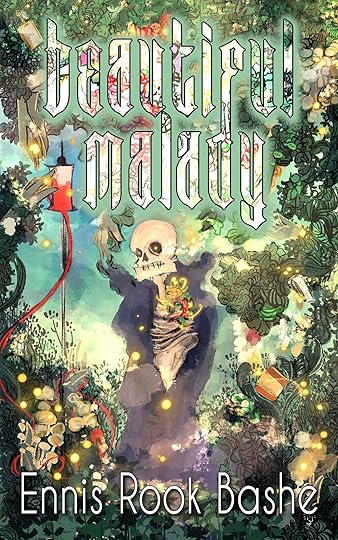
“The poems in Bashe’s collection are surprising in a visceral way, delicate and sharp like a finely crafted blade flaying apathy from our observations to leave a raw, vulnerable relief in the silken textures of syllables that invite us beyond the ordinary rush of senses. “Beautiful Malady” is brutal, beatific, and irresistibly beckoning; give in to the sweet melody of its pages and listen for the fairytale of your own heart’s uncertain delight.” — Saba Syed Razvi, author of In the Crocodile Gardens
A siren song of queerness, disability, and myth, these poems reinvent love, life, and death. BEAUTIFUL MALADY is an exploration of pain, weaving speculative poems about fairy tales, folklore, fantasy, and the supernatural with the reality of chronic illness and disability. Ennis Rook Bashe deftly creates a world where the broken body is beautiful.
 About the Author
Ennis Bashe is a queer romance novelist and poet whose work has appeared in Strange Horizons, Cricket, and Liminality Magazine. Their debut chapbook, Glitter Blood, was an Elgin Award nominee. If you enjoyed the disability-related themes in this chapbook, you may also enjoy their fantasy romance series Hunters of the Cairn, set in a world where only disabled and chronically ill people can become monster hunters. Find more Ennis at https://linktr.ee/ennisrookbashe.
About the Cover ArtistMICHIUMS is a Ringo Award Nominated nonbinary trans comic artist and illustrator whose work focuses on carving out homes in familiar places, connecting to old tales, and making comics focusing on queer narratives. Their work has appeared in various publications from Arledge Comics, DC Comics, King Features Publishing, Andrews McMeels and other indie/self-published publications. When not creating comics and designing merchandise, you can find them drinking far too much coffee and thinking about stories. You can find them on twitter at @requiempluie, on instagram at @michiums, and view their portfolio at michiums.carbonmade.com.
“With Beautiful Malady, Ennis Rook Bashe brings us into a brief but compelling visit into a world of ghosts and machines, cybernetics, mobility and accessibility and the queer edges of the undiscovered country. These verses draw you into questions with few certain answers, histories and vantage points that need to be heard and read repeatedly. ‘If I transcribed a pantheon I’d say: the god of magic is the god of death,’ we’re informed, and each poem moves with an assured voice and a striking imagination. This chapbook will linger with me for quite some time.” — Bryan Thao Worra, former Science Fiction and Fantasy Poetry Association President (2016–2022)
Available for review on Netgalley
[image error]Introducing BEAUTIFUL MALADY by Ennis Rook Bashe was originally published in Interstellar Flight Magazine on Medium, where people are continuing the conversation by highlighting and responding to this story.