Holly Walrath's Blog, page 19
November 26, 2018

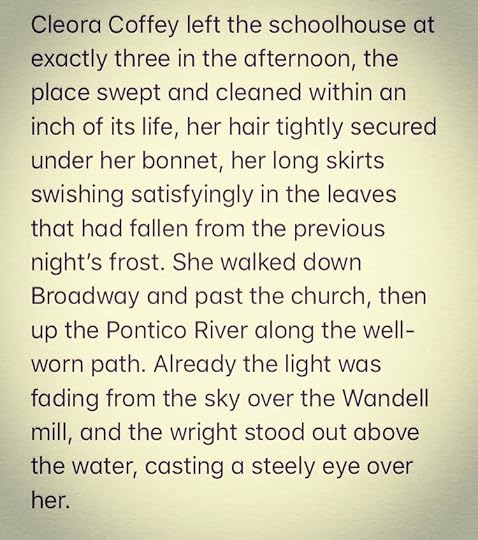 Here’s a bit from my #nanowrimo story #7, a retelling of the headless horseman. Poor unsuspecting Cleora! I am severely behind on my nano word count at 31,825 words today, but I’m having a lot of fun researching this story so I don’t quite mind.

November 23, 2018

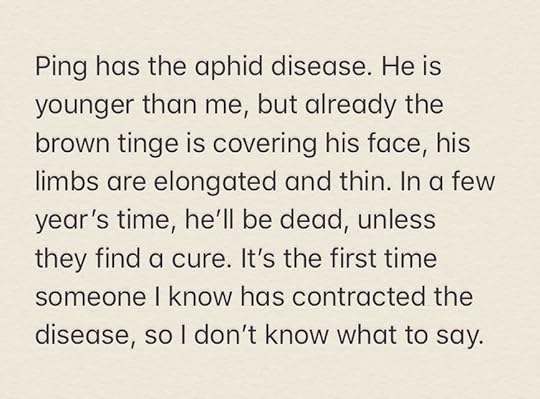 My #6 story for #nanowrimo is after the Japanese fairytale “Willow Wife.” I’ve adapted it into a near-future story of friendship and the challenges of our worldwide climate change.
 November 22, 2018
Riddled with Arrows Interview Spotlight

I was delighted to get to do a fun and quirky interview over at Riddled with Arrows literary journal. Riddled with Arrows publishes metafiction/ars poetica, one of my favorite genres of writing.
When did you first meet poetry?
HLW: I was maybe fourteen, sitting outside the crappy pizza joint across from my high school, where I often went to wait for my mom to pick me up after school. I think I was scribbling in my journal, you know, the kind of dreams and chapstick-scented hopes at that age. Maybe I was in love, or maybe just as lonely as only a teenager can be, when poetry came up to me. She had this lopsided grin on her face and she was wearing a cloak made of stars. Her face was cracked and two-toned like a faded map you might find rolled up in a scroll, hidden under the porch stairs in a dusty box buried in the dirt . . .
Read the full interview here . . .
November 18, 2018
NanoWrimo Story #5
 Story #5 of #nanowrimo 10 stories in one month is a retelling of the fairytale “Girl without Hands.” This one is super dark. Here’s a little excerpt: ͞
“You got the prettiest hair,” Nettie would say. That close, I could smell the forest on her. I didn’t like the forest, not one bit. It was dark and there were strange men that came through there sometimes, cutting over the Johnson’s land to the main road. Nettie smelled like she’d been lying in the dirt, and she sat there in the buff, shivering. Her face was smudged, and her boots were sitting near the fire caked with mud and frost, and her hands were hard and cold. She’d put her icy fingers out and wrap them around one of my braids. She’d run her hand up the braids. She’d kiss me on the cheek and I’d go stiff as a board, my hands against my sides, not thinking nothing at all.
Here's the original fairytale:
The Girl without Hands
Jacob and Wilhelm Grimm
A miller fell slowly but surely into poverty, until finally he had nothing more than his mill and a large apple tree which stood behind it. One day he had gone into the forest to gather wood, where he was approached by an old man, whom he had never seen before, and who said, "Why do you torment yourself with chopping wood? I will make you rich if you will promise me that which is standing behind your mill."
"What can that be but my apple tree?" thought the miller, said yes, and signed it over to the strange man.
The latter, however, laughed mockingly and said, "I will come in three years and get what belongs to me," then went away.
When he arrived home, his wife came up to him and said, "Miller, tell me, where did all the wealth come from that is suddenly in our house? All at once all the chests and boxes are full, and no one brought it here, and I don't know where it came from."
He answered, "It comes from an strange man whom I met in the woods and who promised me great treasures if I would but sign over to him that which stands behind the mill. We can give up the large apple tree for all this."
"Oh, husband!" said the woman, terrified. "That was the devil. He didn't mean the apple tree, but our daughter, who was just then standing behind the mill sweeping the yard."
The miller's daughter was a beautiful and pious girl, and she lived the three years worshipping God and without sin. When the time was up and the day came when the evil one was to get her, she washed herself clean and drew a circle around herself with chalk. The devil appeared very early in the morning, but he could not approach her.
He spoke angrily to the miller, "Keep water away from her, so she cannot wash herself any more. Otherwise I have no power over her."
The miller was frightened and did what he was told. The next morning the devil returned, but she had wept into her hands, and they were entirely clean.
Thus he still could not approach her, and he spoke angrily to the miller, "Chop off her hands. Otherwise I cannot get to her."
The miller was horrified and answered, "How could I chop off my own child's hands!"
Then the evil one threatened him, saying, "If you do not do it, then you will be mine, and I will take you yourself."
This frightened the father, and he promised to obey him. Then he went to the girl and said, "My child, if I do not chop off both of your hands, then the devil will take me away, and in my fear I have promised him to do this. Help me in my need, and forgive me of the evil that I am going to do to you."
She answered, "Dear father, do with me what you will. I am your child," and with that she stretched forth both hands and let her father chop them off.
The devil came a third time, but she had wept so long and so much onto the stumps, that they were entirely clean. Then he had to give up, for he had lost all claim to her.
The miller spoke to her, "I have gained great wealth through you. I shall take care of you in splendor as long as you live."
But she answered, "I cannot remain here. I will go away. Compassionate people will give me as much as I need."
Then she had her mutilated arms tied to her back, and at sunrise she set forth, walking the entire day until it was night. She came to a royal garden, and by the light of the moon she saw that inside there were trees full of beautiful fruit. But she could not get inside, for there it was surrounded by water.
Having walked the entire day without eating a bite, she was suffering from hunger, and she thought, "Oh, if only I were inside the garden so I could eat of those fruits. Otherwise I shall perish."
Then she kneeled down and, crying out to God the Lord, she prayed. Suddenly an angel appeared. He closed a head gate, so that the moat dried up, and she could walk through.
She entered the garden, and the angel went with her. She saw a fruit tree with beautiful pears, but they had all been counted. She stepped up to the tree and ate from it with her mouth, enough to satisfy her hunger, but no more. The gardener saw it happen, but because the angel was standing by her he was afraid and thought that the girl was a spirit. He said nothing and did not dare to call out nor to speak to the spirit. After she had eaten the pear she was full, and she went and lay down in the brush.
The king who owned this garden came the next morning. He counted the fruit and saw that one of the pears was missing. He asked the gardener what had happened to it. It was not lying under the tree, but had somehow disappeared.
The gardener answered, "Last night a spirit came here. It had no hands and ate one of the pears with its mouth."
The king said, "How did the spirit get across the water? And where did it go after it had eaten the pear?"
The gardener answered, "Someone dressed in snow-white came from heaven and closed the head gate so the spirit could walk through the moat. Because it must have been an angel I was afraid, and I asked no questions, and I did not call out. After the spirit had eaten the pear it went away again."
The king said, "If what you said is true, I will keep watch with you tonight."
After it was dark the king entered the garden, bringing a priest with him who was to talk to the spirit. All three sat down under the tree and kept watch. At midnight the girl came creeping out of the brush, stepped up to the tree, and again ate off a pear with her mouth. An angel dressed in white was standing next to her.
The priest walked up to them and said, "Have you come from God, or from the world? Are you a spirit or a human?"
She answered, "I am not a spirit, but a poor human who has been abandoned by everyone except God."
The king said, "Even if you have been abandoned by the whole world, I will not abandon you."
He took her home with him to his royal castle, and because she was so beautiful and pure he loved her with all his heart, had silver hands made for her, and took her as his wife.
After a year the king had to go out into the battlefield, and he left the young queen in the care of his mother, saying, "If she has a child, support her and take good care of her, and immediately send me the news in a letter."
She gave birth to a beautiful son. The old mother quickly wrote this in a letter, giving the joyful news to the king.
Now on the way the messenger stopped at a brook to rest. Tired from his long journey, he fell asleep. Then the devil came to him. He still wanted to harm the pious queen, and he took the letter, putting in its place one that stated that the queen had brought a changeling into the world. When the king read this letter he was frightened and saddened, but nevertheless he wrote an answer that they should take good care of the queen until his return. The messenger returned with this letter, but he rested at the same place, and again fell asleep. The devil came again and placed a different letter in his bag. This letter said that they should kill the queen with her child.
The old mother was terribly frightened when she received this letter. She could not believe it, and wrote to the king again, but she got back the same answer, because each time the devil substituted a false letter. And the last letter even stated that they should keep the queen's tongue and eyes as proof.
The old mother lamented that such innocent blood was to be shed, and in the night she had a doe killed, cut out its tongue and eyes, and had them put aside.
Then she said to the queen, "I cannot have you killed as the king has ordered, but you can no longer stay here. Go out into the wide world with your child, and never come back."
The old mother tied the queen's child onto her back, and the poor woman went away with weeping eyes. She came to a great, wild forest where she got onto her knees and prayed to God. Then the angel of the Lord appeared to her and led her to a small house. On it was a small sign with the words, "Here anyone can live free."
A snow-white virgin came from the house and said, "Welcome, Queen," then led her inside. She untied the small boy from her back, held him to her breast so he could drink, and then laid him in a beautiful made-up bed.
Then the poor woman said, "How did you know that I am a queen?"
The white virgin answered, "I am an angel, sent by God to take care of you and your child."
She stayed in this house for seven years, and was well taken care of. And through the grace of God and her own piety her chopped-off hands grew back.
The king finally came back home from the battlefield, and the first thing he wanted to do was to see his wife and their child.
Then the old mother began to weep, saying, "You wicked man, why did you write to me that I was to put two innocent souls to death," and she showed him the two letters that the evil one had counterfeited. Then she continued to speak, "I did what you ordered," and showed him as proof the eyes and the tongue.
Then the king began to weep even more bitterly for his poor wife and his little son, until the old woman had mercy and said to him, "Be satisfied that she is still alive. I secretly had a doe killed and took the proofs from it. I tied your wife's child onto her back and told her to go out into the wide world, and she had to promise never to come back here, because you were so angry with her."
Then the king said, "I will go as far as the sky is blue, and will neither eat nor drink until I have found my dear wife and my child again, provided that in the meantime they have not died or perished from hunger."
Then the king traveled about for nearly seven years, searching in all the stone cliffs and caves, but he did not find her, and he thought that she had perished. He neither ate nor drank during the entire time, but God kept him alive. Finally he came to a great forest, where he found a little house with a sign containing the words, " Here anyone can live free."
The white virgin came out, took him by the hand, led him inside, and said, "Welcome, King," then asked him where he had come from.
He answered, "I have been traveling about for nearly seven years looking for my wife and her child, but I cannot find them."
The angel offered him something to eat and drink, but he did not take it, wanting only to rest a little. He lay down to sleep, covering his face with a cloth.
Then the angel went into the room where the queen was sitting with her son, whom she normally called "Filled-with-Grief."
The angel said to her, "Go into the next room with your child. Your husband has come."
She went to where he was lying, and the cloth fell from his face.
Then she said, "Filled-with-Grief, pick up the cloth for your father and put it over his face again."
The child picked it up and put it over his face again. The king heard this in his sleep and let the cloth fall again.
Then the little boy grew impatient and said, "Mother, dear, how can I cover my father's face? I have no father in this world. I have learned to pray, 'Our father which art in heaven,' and you have said that my father is in heaven, and that he is our dear God. How can I know such a wild man? He is not my father."
Hearing this, the king arose and asked who she was.
She said, "I am your wife, and this is your son Filled-with-Grief."
He saw her living hands and said, "My wife had silver hands."
She answered, "Our merciful God has caused my natural hands to grow back."
The angel went into the other room, brought back the silver hands, and showed them to him. Now he saw for sure that it was his dear wife and his dear child, and he kissed them, and rejoiced, and said, "A heavy stone has fallen from my heart."
Then the angel of God gave them all something to eat, and then they went back home to his old mother. There was great joy everywhere, and the king and the queen conducted their wedding ceremony once again, and they lived happily until their blessed end.
November 17, 2018
On Zines and Zinesters

This past weekend I participated in Zinefest Houston - one of my favorite local events. In this event, local paper artists create zines to sell--small, hand-made, individual books, pamphlets, and other paper ephemera. I've participated twice and I always enjoy this well-crafted event. What I like about Zinefest is the audience. It's mostly young people who are interested in meeting other writers and artists. It's also one of the most diverse and well-attended events I go to every year. I always end up meeting some lovely folks!
For me, the zine is about vulnerability. You can put something in a zine that you might not want to put online. You can also show off your skills with your hands. Each zine I make is hand-folded, hand-cut, or hand-colored. In this way, zines are ephemeral and special. Like chapbooks, they usually focus on one specific theme. I love making them and buying them because I always learn new ways to play with paper. We often forget that paper is what physically connects us to readers. It's a precious resource. Perhaps this is why most of my writing starts out as a handwritten draft. That connection to paper propels my imagination. It says, it's okay to make a mistake, in a way that Word, with its myriad of editing options, doesn't.
Zinesters are some of the coolest people I've ever met. They might seem strange to outsiders, but every time I'm around them I feel at ease. It's like finding your tribe.
I'm already thinking up new ideas for next year's festival!
November 10, 2018
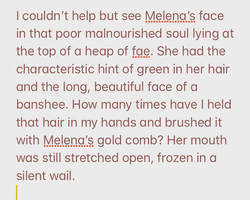 Day 11 of #NaNoWriMo and I’m on to my fourth fairy tale retelling. This one is quite dark. It imagines a world where fairies have been eradicated as part of a holocaust and fled underground. But a fairy anthropologist wants to find them to offer help.
November 8, 2018
NaNoWriMo Day 9: The Country Where Death is Not

An excerpt from my fairytale retelling of "The Country Where Death is Not." In my version, a young man hunts for a place to bring his dying mother. He is seeking a place to call home, a utopia, you might say. But what he finds is much darker than he expected.
This is the original tale, from Sudan:
The Country Where Death Is Not
Sudan
There was a man with his mother. The mother was much afraid of dying, therefore she wished to go into a country where there is no death. The son said, "Where is a country without death?"
She answered, "Well, there is such a country, bring me there!" The woman was very old.
So they traveled into a very, very distant country to reach the country where there is no death. They turned into a village and asked for water. When it was given them, the son asked, "Is there death in this country?"
The people answered, "Dear me, where do you come from that you ask such a question concerning death?"
He answered, "My mother is afraid of dying, so she wants a country where death is not."
The people said, "Why, go away!"
They went and turned to another village. There they asked again and received the answer, "Why, what kind of man are you that you ask about dying? Go away! There is death here."
Then they went to a very distant country and asked, "How is your country? Is there death in it?"
The answer was, "No, people do not die here."
The mother was very glad, she said, "Well done, my son, you have brought me to a country where there is no death."
Her son had a friend in that town, and to his home he brought his mother. He said, "Here is my mother, let her live with you. I shall go to our country, and after three years I shall return to see you and my mother." His mother was satisfied.
So the boy returned to his native country and stayed there for some time.
But his mother became sick; she got a headache; she said, "Friend of my son, I have a headache."
On that the boy arose and called the people together. The people came and sat down. The boy said, "I have called you because of the mother of my friend, who is here. Now collect money, that we may give it to her son when he returns. For she says her head is aching; and because of her sickness her meat will spoil. For that reason," he said, "she must be killed at once."
When the woman heard this, she began crying, "I am not sick! I have no headache!"
But the people said, "Never mind, seize her, or her flesh will be spoiled." So she was caught, brought, thrown on the ground and killed; her flesh was divided among the people, and they ate it. The next day they collected money and brought it to the friend of her son.
And her son came back. He sat down, they gave him food, and he ate. He asked, "Where is my mother?"
His friend answered, "My friend, your mother was seized with sickness, so we collected money, -- here is the money! -- and killed her, lest her meat should be spoiled. For as for us, we do not die in our country; if a man is seized with sickness, we kill him."
The boy replied, "Why, should I sell my mother? Never!"
Then he said, "I will but go."
His friend said, "You are angry?"
He replied, "No, I am not angry."
In the meantime the people came and wanted to eat the boy too. His friend therefore went to him saying, "Go, or you also will be eaten like your mother." He accompanied him into a distant country.
When the boy came home, he said to his people, "My mother has been eaten by a lion."
That is all; and the people said, "Your mother was a sinful woman. Is not death in all the world, and should there be a place where there is no death?"

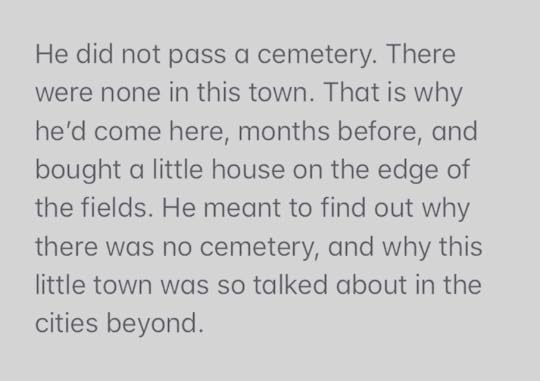 Day 8 of #nanowrimo, 2,300 words. Finished up my Beauty and the Beast (with lady Beast, set in the Scottish moors) retelling and on to a lesser-known fairytale, “The Town Where Death Is Not.” If you haven’t read this gory little tale, I highly recommend googling it.
November 5, 2018
November 4, 2018
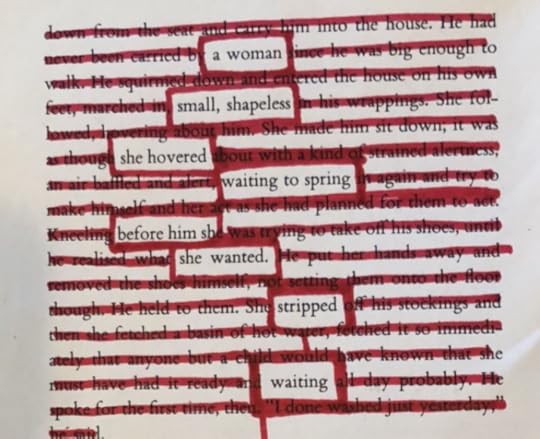
NaNoWriMo Day 3 + 4
I got a bit behind on updating my website and trackers because of house maintenance stuff yesterday, but here are the excerpts from day 3 (the ending of Mrs. Winkle - a take on Rip Van Winkle from a woman's POV) and day 4 (Beauty and the Beast):