Dave Zuchelli's Blog, page 7
January 24, 2019
What Do You See?
There’s an old story about Sherlock Holmes
that has made the rounds several times. In case you haven’t heard it, here it
is.
Sherlock Holmes and Dr. Watson go on a camping trip. After a good
dinner, they retire for the night, and go to sleep.
Some hours later, Holmes wakes up and nudges his faithful friend. “Watson,
look up at the sky and tell me what you see.”
“I see millions and millions of stars, Holmes” exclaims
Watson.
“And what do you deduce from that?”
Watson ponders for a minute.
“Well, astronomically, it tells me that there are millions of
galaxies and potentially billions of planets. Astrologically, I observe that Saturn
is in Leo. Horologically, I deduce that the time is approximately a quarter
past three. Meteorologically, I suspect that we will have a beautiful day
tomorrow. Theologically, I can see that God is all powerful, and that we are a
small and insignificant part of the universe. What does it tell you,
Holmes?”
And Holmes said: “Watson, you idiot, it means that somebody stole
our tent.”

I love that story. Some people like to state it more succinctly as in, “You can’t see the forest for the trees.” I prefer this longer version, but to each his own.
True of Preacher Types, et. al.
The way Watson was reading the sky is often
the way people like to read the Bible. We, so often, get caught up in the
minutiae of things, we don’t see the basic principle that’s present. This is
particularly true of us preacher types, but a lot of other folks get bogged
down in this stuff too.
It’s not that the little details aren’t important—they are. Still, one can get so mired in the intricate realities behind the writings, we miss the point entirely. It’s a little like going to a ballgame and focusing so much on one or two players we lose sight of the game itself. You come away having to ask what pitcher won and who had the most hits. You were an eye witness. How could you miss these things?
Alistair Begg is one of my favorite preacher/teachers.
When tackling a difficult passage, he’ll often say, “The main things are the
plain things, and the plain things are the main things.” In other words, don’t
get so hung up on the background details that you muddle what’s up front and clear.
Not the Sum and Total
The finer points are important because they can
bring clarity and focus to the passage at hand. They can help us flesh out the direction
of God in the midst of a meaning that could otherwise get lost on us. They can
provide context and direction when we’re attempting to discern the will of God.
They are not, however, the sum and total of the Gospel story.
Majoring in the minors is often a lot of fun. It’s interesting, and it stimulates the mind. But before we go on to those things, we might want to make sure the tent is still there.
[Dave Zuchelli is a graduate of Pittsburgh Theological Seminary and currently resides in Aldie, VA.]
The post What Do You See? appeared first on Dave Zuchelli.


January 22, 2019
The Living Dead
Jimmy Buffett once sang, “I’d rather be dying while I’m living than living while I’m dead.” I’m not totally sure what he meant by that, but I can guess. He was possibly implying that he’d rather live a lifestyle that was slowly killing him than live a lifestyle that might garner him eternal life. Feel free to correct me if I’m wrong. I’m not all that good at mind reading.
[image error]
It
probably will come as no surprise to you that I disagree with that mindset—at
least as I understand it. Still, it’s his mindset and he’s entitled to it. But,
if my Biblical understanding is correct, he’s been misinformed.
One Per Person
First of
all, we’re all going to die. As the old saying goes, “The statistics on death
have not changed. It’s still one per person.” Jimmy can (and should) enjoy this
life as best he can. We, like Mr. Buffet, only have one, so we may as well make
the best of it. Trying to live with a tad less hedonism and a little more love
for God and neighbor isn’t going to take away from la vida loca all that much.
In fact, it may even bring more joy than one might expect.
That isn’t the real problem with his philosophy, however. He seems to be implying that a lot of us refrain from many of the “fun things” so we can earn our way to Heaven. Anyone with a good grasp on theology knows that isn’t true. There’s not a blessed thing we can do to warrant salvation. It’s a gift, pure and simple. Any good thing we do is merely a response to the love of Christ.
I’m sure
people like Jimmy reach their conclusions honestly. We in the church have given
that false impression to people for years. We go around acting like we’re great
because we’ve got it all together. We don’t, of course, but our attitudes don’t
reveal that fact. I think the term for it is, “Holier than thou.”
Still Sinners
The real
truth of the matter is that, without Jesus, we’re lost sinners. With him, we’re
found—but still sinners. If we come across as do-gooders, it’s only because we
owe the Lord a debt we cannot pay. On our best days, our response to His
overwhelming love, grace, and generosity is to do what He desires for our lives.
We can’t add a thing to our salvation (although we often try).
When the call of Christ is on your life, you are made spiritually alive. The Apostle Paul puts it this way. “But now in Christ Jesus you who once were far away have been brought near by the blood of Christ” (Ephesians 2:13). Later in the same letter he wrote, “For you were once darkness, but now you are light in the Lord. Live as children of light” (Ephesians 5:8). You may notice that he doesn’t say this happened because we were good. Christ’s work alone will make us live when we’re dead.
[Dave Zuchelli is a graduate of
Pittsburgh Theological Seminary and currently resides in Aldie, VA.]
The post The Living Dead appeared first on Dave Zuchelli.
January 20, 2019
#Jesus
I was participating in a recent seminar when the leader said, “#Jesus.” That’s pronounced, hashtag Jesus, for all you digital immigrants. It was a seminar full of church workers, so we all laughed. It was much funnier in context, but the very idea to a Christian that you’d have to put a hashtag before Jesus’ name is a bit ridiculous.
The hashtag idea apparently started on Twitter. Placing the hashtag in front of a subject helps to facilitate a search for it. A room full of Christians would find it humorous to place one in front of Jesus’ name simply because we think everyone knows about him. Maybe that’s why the church is dying in many places. Frankly, there are slews of folks who don’t know about him. To many, his name is merely something you shout when you smash your thumb.
Sounds Great to Us
We
Christians have been weaned on Scripture that proclaims that “every knee should
bow” to the one with “the name that is above every name,” and that “every
tongue” should admit that He is Lord (Philippians 2:9-11). That sounds great to
us. To many others, however, it sounds like so much drivel. “Who is this Jesus
that he’s so important?” they might ask—as well they should. A lot of people
never bother asking, however.
It’s worse than that, though, because many Christians simply aren’t telling. Keeping Jesus a secret seems to be a lifelong activity for some. It begs the question, if we really believe He’s the Savior of the world, why in Heaven’s name aren’t we letting the secret out of the bag.
I
remember early in my Christian walk hearing the following story related by my
Pastor. He was in a service one evening when a young woman responded to a call
to follow Jesus. The congregation prayed with her, and she went out into the
world to live her new life in Christ.
No One Suspects!
The
following week, she came back to worship with that same congregation. Everyone
was curious to see how things were going for this new babe in Christ for whom
they had been fervently praying. When asked about it, she replied with a smile
saying, “It’s been great! No one else suspects yet.”
I’m pretty sure they set her straight on that as time went on, but some people live their entire lives that way. Either they’re afraid someone is going to find them out and think less of them, or they just don’t want to be bothered sharing the Good News. I suppose there are other reasons as well, but unless you live in a country where Christianity is outlawed, you may want to reconsider your stance.
There’s
a famous passage that states, “Whoever is ashamed of me and my words, the Son of Man will be ashamed of them when he comes in his
glory and in the glory of the Father and of the holy angels (Luke 9:26). Maybe a hashtag is in order
after all.
[Dave Zuchelli is a graduate of
Pittsburgh Theological Seminary and currently resides in Aldie, VA.]
The post #Jesus appeared first on Dave Zuchelli.
January 17, 2019
Lace ’em Up!
There’s an old saying I’m sure you have heard. It goes something like this. “Necessity is the mother of invention.” In other words, if we need it, someone will create it. It’s as American as apple pie. This is particularly true if it looks like there could be a profit in it.
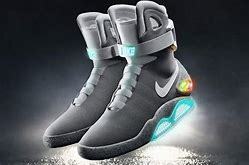
On the
other hand, some inventions avoid necessity and go right for the wallet. Case
in point: Nike Unveils Self-Lacing Basketball Shoe. I
ran across this news item this morning and was immediately sucked in. A
self-lacing basketball shoe… There might be exceptions along the way for some
folks, but I’m placing this one in the “unnecessary” category.
Bend Over
Even the
name is an oxymoron. Why do we have basketball shoes in the first place? I’ll
tell you why. Exercise! Why do we need a pair of sneakers that are self-lacing.
If you’d rather not bend over to tie your shoes, you’re probably not going to
have the inclination to actually work out either.
These handy-dandy toe-huggers are operated by an app on your phone. How twenty-first century is that? They’ve been labeled, “smart shoes.” I guess I can’t argue with that moniker—although, I’m smart enough to have been tying my own shoes since I was in single digits (or was that double digits?). Well, anyway, I’ve been tying my own shoes for several decades now. I don’t think I need shoes that are smarter than me.
I
remember when they started putting Velcro on tennis shoes to make it easier and
quicker to don them. I also remember hearing the laughter as people made fun of
those who actually bought them (probably because the only ones who wore them at
the time were the elderly and little kids). Then they went to sneakers with
eyelets for lacing but no laces at all. No one snickered at them (probably
because these were in style with the young folks).
A New Level
Nike has
taken all this to an entirely different level, however. I’m guessing no one
will make fun of these new shoes. In fact, people will probably clamor for
them. The price tag alone ($350) will set them apart as THE shoe to own—elite
footwear for the metro-sexual. The thought of them alone puts my twenty-dollar
Costco specials to shame. As they say, “Only in America.”
When John the Baptist announced the coming of the Messiah, he turned an interesting phrase to describe his arrival. He said, “After me comes one who is more powerful than I, whose sandals I am not worthy to carry” (Matthew 3:11). Now I know how he felt. If you’re worthy enough to own a new pair of Nike smart shoes, I would be reticent to even carry them across the room. It would be tantamount to borrowing someone’s Mercedes Benz. I’d be a nervous wreck the whole time I drove it for fear of putting a scratch in the paint job.
If you purchase a pair of these, can I be your friend?
[Dave Zuchelli is a graduate of Pittsburgh Theological Seminary and currently resides in Aldie, VA.]
The post Lace ’em Up! appeared first on Dave Zuchelli.
January 15, 2019
Sin: Everyone’s Favorite Topic
I just heard a fascinating statistic recently that I would never have guessed on my own. The Bible was divided up into chapters and verses in the late 1500s (no, it wasn’t written that way). We now have a total of 1189 chapters in Scripture. I’m sure glad they did that. Finding stuff would be a little tough without them. That’s not the interesting stat, however. What’s intriguing is that only four of those chapters don’t mention sin—four.
I haven’t been able to cross check that as
fact, but I’ll take the guy at his word for now. Snopes is, apparently, not big
on sin. Up until now, I didn’t think anyone was big on sin. I was wrong. From
the sounds of it, it was in the top ten list for the writers of Scripture. Now,
I’d kind of like to know which four chapters avoided the topic.
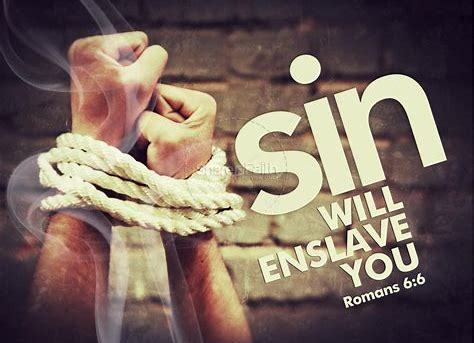
Obviously, a knowledge of sin is important.
If we don’t understand that we’re sinners, we don’t see the need for a Savior.
If we don’t see the need for a Savior, we’re doomed. I guess that’s why the
Biblical scribes fleshed it out for us so often. Ignorance is no excuse.
Psychology Has Replaced Scripture
We live in a time when large segments of the
world’s population have explained sin away—or, at least, try to do so. Even
preachers avoid the subject. They substitute things like positive thinking and
practicing moral behavior. Psychology has replaced Scripture in many pulpits.
As I think about it, I guess it shouldn’t be so difficult to believe that the topic of sin is raised in almost every chapter. It’s tough to talk about anything in life without bringing up the subject. We all sin—a lot. It’s a hefty part of the human condition. An objective look at ourselves reveals that fact. The Bible simply (and clearly) points out what should be obvious to us all.
The Apostle Paul gave us the famous line that
says, “All have sinned and fall short of the glory of God” (Romans 3:23). The “all”
includes you and me. I don’t care who you are. Fortunately, he immediately
points to the solution to our sin problem—Jesus. His grace and forgiveness are
the antidotes to the malediction we have no other way of curing.
Earning Your Way
Jesus, himself, was quick to point out
humanity’s shortcomings as well. He was once approached by a rich young man who wanted
into Heaven in the worst way. He asked Jesus what good thing he had to do to gain
eternal life. Jesus heard the word “good” and immediately informed him that no
one is good except God. In other words, if you attempt to earn your way in, you’ll
fail.
His alternative? Sell everything, give it away, and come, follow me (Jesus). The important part of that is the “follow me.” The man never even got close because his wealth got in the way. If only he had realized what was right in front of him.
[Dave Zuchelli is a graduate of Pittsburgh Theological Seminary and
currently resides in Aldie, VA.]
The post Sin: Everyone’s Favorite Topic appeared first on Dave Zuchelli.
January 13, 2019
Shut the Heck Up!
“Never miss a good chance to shut up.” ~Will Rogers~
Many of you probably don’t remember Will Rogers.
In fact, unless you’re nearly a hundred years old, you can’t possibly remember
him. He died in a plane crash in 1935—fifteen years before I was born. Rogers
was a well-known humorist and respected by his peers.
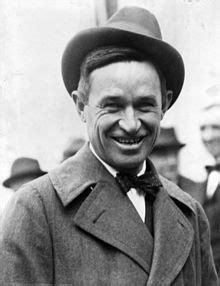
I feel like I remember him, but in actuality,
I remember his memory. I saw a biographical movie of his life once (one in
which his son, Will Rogers, Jr., played him). My Mom used to talk about the
things he said, and I think I read some of his stuff early on.
I’m pretty sure all this was emblazoned on my
mind by the scene in the movie that depicts him boarding the airplane for his
last ride. The camera zeroes in on his face as he peers out the tiny window of
the passenger plane. The look on his face was haunting. He had a woefully sad
look that made it seem like he knew he’d never see anyone again—and, of course,
he didn’t. His son did a great job portraying that expression (whether it
actually happened that way or not). I still remember that face. Although he was
a humorist, I picture him as a melancholy figure because of that scene.
“You could have fooled me.”
There is some dispute about whether he actually
said those words, but they seem to fit with many of the other things we know he
said. It’s that kind of remark that made him famous. Even if he didn’t say it, you
could have fooled me.
Anyway, just think about that maxim. “Never miss a good chance to shut up.” It has always struck me as a wise adage—regardless of who originally said it. In our day of social media, twenty-four-hour news commentary, and endless debate on just about everything, we seem to hold to a motto that reflects just the opposite sentiment. Our thought process seems to be based on a philosophy that could be summed up this way. “Never miss a good chance to shoot off your mouth.”
“Calmed and Quieted”
Although the Apostle Paul once told Timothy to
“be prepared in season and out of season” to preach the word (2 Timothy 4:2), Scripture generally
sides with the wisdom of Will Rogers. More than one verse spells out the virtues
of keeping quiet. The psalmist of Psalm 131, for example, tells us that he has “calmed
and quieted” himself (V 2). Several of the proverbs
are laden with advice to keep one’s mouth shut. Proverbs 17:28 tells us
that, “Even fools are thought wise if they keep silent…”
As someone who has been paid much of my life to speak, it might seem out of place for me to even bring this up. Still, I find it wise to hold my tongue much of the time. I also find that when I do run into trouble, it often stems from shooting from the hip. Thank you, Will Rogers.
[Dave Zuchelli is a graduate of Pittsburgh Theological Seminary and
currently resides in Aldie, VA.]
The post Shut the Heck Up! appeared first on Dave Zuchelli.
January 11, 2019
The Storm Before the Calm
It was a good time to run a errands. Well… Normally, it would have been a good time. I jumped into my trusty Wrangler and headed out to Costco—everyone’s favorite gathering place. Friday mornings are usually smooth sailing (even at the big box stores), but the place was a beehive. I didn’t understand the big to-do until I was standing in a long checkout line. Then it hit me. There was some snow in the forecast.

As you may know, anytime any kind of storm is
predicted, everyone and their sister has to raid the stores—even though, two
hours after the snow hits, the roads will be clear. We all know the prudent
thing is to stock up on bread, milk, and… Yes—toilet paper.
I’ve never quite understood the toilet paper
thing. I’m positive I don’t use any extra toilet paper when it snows. Some
people must, but I’m not sure why. Maybe it’s because they use the workplace
T.P. everyday. If they’re stranded at home, they’ll have to provide their own.
That excuse is about as thin as the paper itself, but are we talking 2-ply
here?
The Phenomenon
After years of watching this phenomenon, I
have to say I’m no closer to understanding it than I ever was. It may be one of
those mysteries that will live on long after I’m gone. Some people like to say
they’ll have a lot of questions for the Lord when they get to Heaven.
Personally, if I ask anything, it will be to get an explanation on the toilet
paper rush of aught nine (or any other year for that matter).
Most years, as well as most storms, are quite
mild where I live. Often, the actual storms are even enjoyable. What occurs in
the hours and minutes prior to the snowfall is when the real action happens.
It’s a veritable storm before the calm. I don’t think I’ll ever get used to it.
It catches me by surprise every time.
Don’t TP My Tent
Now that I think of it, this may have been
what Jesus was warning us about when he said, “Therefore do not worry about
tomorrow, for tomorrow will worry about itself. Each day has enough trouble of its own” (Matthew
6:34). Still, they don’t have many snowstorms in Galilee, so He may have
been referring to something else. Come to think of it, from what I understand,
they didn’t have many grocery stores in Jesus’ time either. Actually, when you
really get down to it, I’m not all that sure they even used toilet paper back then.
Charmin would have gone out of business before it got started (no matter how
soft it is). No wonder He wasn’t worried about tomorrow.
The modern day solution, of course, is for everyone to keep a stock of toilet paper laded at all times. It doesn’t take up much room, isn’t expensive, and will never go bad. You will not only have what you need, you’ll be in line with Scripture.
[Dave
Zuchelli is a graduate of Pittsburgh Theological Seminary and currently resides
in Aldie, VA.]
The post The Storm Before the Calm appeared first on Dave Zuchelli.
January 8, 2019
On Being Forgotten
I just heard a thought-provoking quote from one Count Zinzendorf. It reads, “Preach the Gospel…die…be forgotten.” It’s purported by some to be a slight misquote and certainly out of context. Still, it’s attention grabbing and noteworthy.
[image error]
Since he probably said (or wrote) this in
German, it’s understandable that it might be somewhat askew—word wise. Still,
the meaning is clear. The context was advice he was passing onto new
missionaries. He was warning them that sharing the gospel could bring suffering
with it. He wanted them to be wary of doing it for the wrong reason—pride. In
other words, “You’re not building a legacy here. You’re glorifying God” (my
extrapolation).
Zinzendorf was a leader in the Moravian
Church in the 1700’s. He is credited with being a pioneer of Christian missions
during that period.
Firsthand Knowledge
The Count certainly had a background that
could have given him firsthand knowledge of the subject of pride. He was born
into a rich Austrian family of noble descent. He was well educated, and his
accomplishments added to a resume that could have produced a swelling pride
within his own character. He knew whereof he spoke.
The advice is simple and straightforward. As followers of Christ, we’re not here to placate others or bring credit, fame, or praise to ourselves. We live to serve—at least, that’s what we attempt to do.
Obviously, Zinzendorf was not forgotten.
People are printing t-shirts
with his quote and name on them. He is a famous figure in the Protestant
mission movement. We still know the names of some of the missionaries he
supported as well. They preached the gospel, they died, but we still remember
them. Of course, his words went well beyond their face value.
He was merely attempting to convey the thought that it’s easy to get sidetracked. We see this play out often in today’s church. Too often, instead of servants, we see superstars—people who have talent and fall into the trap of believing their own hype. Getting a pat on the back begins to supersede the real reason they began their work in the first place. Eventually, they seem to become addicted to the adoration heaped upon them by their groupies and sycophants.
Big Fish in Small Ponds
Beyond that, a lot of folks become big fish
in small ponds. They build little kingdoms for themselves, and they call it
ministry. Zinzendorf’s words peal loudly in our time—or should.
Fame and esteem can be alluring spices to someone who otherwise seems to be lost in the shuffle. Sometimes we can’t avoid those enticements, but we can still remain humble enough to forgo the easily taken prideful avenue.
I write this as someone who has several books
on my shelf with my own name printed on them. I write books to help people, but
I fully admit that a small part me wants to be able to pass on that legacy to
my grandchildren. I find it good to be reminded of Zinzendorf’s words from time
to time.
[Dave
Zuchelli is a graduate of Pittsburgh Theological Seminary and currently resides
in Aldie, VA.]
The post On Being Forgotten appeared first on Dave Zuchelli.
January 6, 2019
Abdicate Your Throne
In some surprising news, it has been revealed that Sultan Mohammad V, King of Malaysia, has abdicated his throne. Anytime any monarch steps down, it’s big news. In this case, it’s a first. No other Malaysian king has resigned since the country had received its independence from Great Britain in 1957. No reason was given, but speculation has it that it’s due to his love interests. That sort of thing doesn’t usually stop folks from anything, but that’s a story for another time.
[image error]
Obviously, rulers don’t step aside every day.
Who would want to give up all that power, prestige, and probable influence? I’m
pretty sure I would have a problem doing it. It would have to be a pretty substantial
reason for me to muster up the gumption to give it all away like that.
Good King Jesus
On the other hand, that’s exactly what
Christian’s are required to do. We sit upon the thrones of our own lives, and then
along comes King Jesus. He calls us to follow Him, we hear His voice, and we
spend the rest of our lives attempting to give Him control. We’re not always overly
successful, but that’s the idea.
Abdicating the throne of our lives, just like abdicating royal thrones, is not an easy thing to do. It’s scary, courageous, and costly. It makes us vulnerable and puts us in surrender mode. It places us on a pathway to regions we might never have otherwise gone.
Giving up kingship means following another
ruler. It means allowing someone else to chart the way. It means giving up the
right to be in charge. It entails the invitation to help fight someone else’s
battles. You gear down to discover a new way of life, and then it’s full speed
ahead.
The cry to offer up your throne is called
dying to self. Alternately, it’s referred to as discipleship—following someone
else so closely that the mud from their shoes kicks up and splatters across your
face. It comes with a cost, but simultaneously, it offers great rewards.
Renouncing Your Kingship
The only good reason to renounce your
kingship is because the new King you’re about to follow is great than you. Furthermore,
He is the only one who can offer you everything because He created it all. No other
king has anything of lasting worth.
A lot of Christians prefer not to think about
such things. After all, we’re called, chosen, elected, and sealed for
salvation. Jesus, on the other hand, was very clear in these matters. On more
than one occasion, he spoke at length about the cost of following Him. Dietrich
Bonhoeffer called it the Cost of Discipleship.
Jesus threw around phrases like bearing your cross and hating your own life. He told illustrative parables about constructing tall buildings and fighting wars. In essence, abdicating your own throne is tantamount to engaging in warfare against your own ego. It’s probably the hardest thing you’ll ever do—and the wisest. Trust your destiny to God—the true King.
[Dave Zuchelli is a graduate of Pittsburgh Theological Seminary and
currently resides in Aldie, VA.]
The post Abdicate Your Throne appeared first on Dave Zuchelli.
January 4, 2019
Pinchbeck
I remember learning about alloys in junior
high. As you may recall, these babies result from the combination of two or
more metals to form a new, distinct entity. For example, bronze is an alloy of
copper and tin. Recently, I learned of a new alloy. Well, let me correct that
statement. I learned about an alloy of which I’d never heard. Its name is
pinchbeck.
[image error]
Pinchbeck is an alloy of copper and zinc.
It’s often the prime ingredient in things like watches and costume jewelry. It’s big claim-to-fame is the fact that it’s
cheaper than gold. If someone wants to make an inexpensive version, they are
likely to use pinchbeck.
To give you a better idea of this unseemly,
metallic amalgam, here are a few other definitions given my Webster and a few
of his cohorts—appearing valuable, but
actually cheap or tawdry. Synonyms: poor-quality, second-rate,
substandard, low-grade, inferior, common, vulgar, shoddy, trashy, tinny, and worthless…
There are several
more synonyms, but I’m guessing you get the picture by now. Apparently, it’s
used to make the kind of jewelry that turns your skin green.
Pinchbeck was first named after the English watchmaker, Christopher Pinchbeck. He died in 1732, but his name infamously lives on in the tawdry jewelry that even I can afford. I wonder how he would have felt about that. In any case, the term pinchbeck has become an adjective describing not only second-rate jewelry, but low-grade anything. If “low-class” is your motto, pinchbeck is your theme.
Paul and Pinchbeck
This leads me (as many things do) to the
Apostle Paul. While I’m sure he never heard the term, pinchbeck, I’m guessing
he would have used it had it been around in his day. It could have been a part
of his letters to the Corinthians, for example. He chided them for receiving a
gospel other than the one he had originally preached to them (2
Corinthians 11:4). Pinchbeck would have fit quite nicely there, as in,
“You’re listening to a pinchbeck gospel.” He would have been totally correct in
his statement, because this is easily done. We know that, because we see it
running rampant in our own time. People everywhere are easily snowed by a
good-sounding but worthless gospel submitted to them by preachers whose last
names may as well be Pinchbeck.
They replace the sacrifice of Jesus with
high-sounding platitudes and discipleship with positive feelings. Their goals
seem to be putting fannies in the pews and silver in their pockets. The results
are followers who feel good but have little or no knowledge of the truth. While
fannies in the pews could be a good thing, without hearts and minds that follow
Christ, they are simply taking up space.
The Gospel preached by Paul was (and is) hard
to swallow. It is so because there is a price to be paid for discipleship. It’s
not an easy-peasy road upon which to meander through life. Look for the pure
gold. Pinchbeck will leave you green around the gills.
[Dave
Zuchelli is a graduate of Pittsburgh Theological Seminary and currently resides
in Aldie, VA.]
The post Pinchbeck appeared first on Dave Zuchelli.