Dave Zuchelli's Blog, page 5
March 12, 2019
Just the Two of Us
Ever since I’ve retired from pastoral ministry, I’ve been doing a lot of weddings. I use a couple of websites as clearing houses (so to speak) to put myself out there before the public. People who are in between pastors (or don’t care to have one at all) occasionally seek out my services.

Sometimes, the wedding descriptions people give are either hilarious, incredible, or just plain hard to swallow. Reading them makes me wonder why they’re going through the process at all. It also makes me wonder if some of them even consider it to be “holy matrimony.”
“There is no Wedding...”
Recently, one guy posted his desire for an officiant to do his ceremony by saying the following: “There is no wedding…just the two of us getting married.” That one definitely gave me pause. I think I know what he meant, but it seems to me that getting married IS a wedding.
Another memorable one came when I quoted my fee to a prospective groom. I would have had to travel quite a distance, perform the service, and (of course) take care of the legalities. Because it was a small wedding, he balked at my price and answered, “Gee! It’s really just a formality.” I didn’t bother pursuing it any further, but I felt like saying, “If it’s just a formality, you don’t want me.”
To me, wedding ceremonies are a big deal. They’re such a big deal to my way of thinking that I wrote an entire book about them (The Last Wedding). Weddings are Biblically important. Jesus is recorded in the Gospel of John as performing his first miracle at a wedding reception (changing water into wine). If he thought it was important enough to do that, I’m guessing it was more than a mere formality in his mind.
“I’m not the Caterer”
I’ve never kept track of all the wedding ceremonies I’ve celebrated over the years, but I’m pretty sure it’s in the hundreds. It doesn’t matter how many people are there. If it’s just the couple and me, or if it’s done in the presence of hundreds of people, it’s still the same to moi (and, I suspect, to the Lord). My part in the ceremony doesn’t change with the number of people in the congregation. I’m not the caterer.
If it sounds like I’m whining a bit, I suppose I am. It just kind of irks me that people don’t take their vows before the Lord a tad more seriously. The most common ceremony request is that it be “short and sweet” (as if they were paying me by the hour). Wedding ceremonies are typically quite short anyway, but people seem bent on getting right to the reception. (I know–now I’ve moved past the whining and have gone right to complaining.)
I suppose I could start charging more by the minute–but in reverse. The shorter the service, the higher the fee. I’m sure that would be counterproductive, but it’s quite tempting. I don’t think anyone would go for it, though.
The post Just the Two of Us appeared first on Dave Zuchelli.


March 10, 2019
Not a Village Idiot
Last year during hurricane season, the storm chasing reporters were right on it. They swarmed into the tiny, coastal villages and interviewed everyone on site. One particular guy stood out to me, and I don’t think I’ll ever forget him.

The wind
was whipping around him and his wife as the reporter asked about the ensuing
tempest. Most folks had already left town for safer climes, and the
correspondent seemed to be a bit concerned. He asked if the guy and his spouse
would hunker down or exit the premises.
The
gentleman was trying to be patient as he answered the journalist’s queries. He
offered that he’d be staying until it was apparent that the coming hurricane
would make it too difficult to remain. At that point, he said, he and his wife
would get on their boat and head to safer areas.
“I’m a Sailor!”
By that
time, the broadcaster seemed to become a bit more anxious for the man and his
better half. He anxiously asked if the man thought he would be safe on the
ocean. In reply, the man abruptly announced, “I’m a sailor, not a village
idiot!” And with that, the interview was over.
I think the sailor stood out for me because I know I would have become impatient with the reporter’s incessant questioning as well. His retort was classic. I’d like to think I could have come up with such a quote in the heat of the moment. Those kinds of instances are really gratifying.
That’s
not to say it’s a good thing to become impatient with people. As they say,
patience is a virtue. In fact, the Apostle Paul told us that patience is part
of the fruit grown in us by the Spirit of God (Galatians 5:22). I’m guessing, however,
that we have to be fertile ground for such a harvest to be reaped in our lives.
Sometimes I’m all too happy to misplace my patience—it can be rather enjoyable cutting
irritating people to the quick.
Sons of Thunder
Once,
the Disciples were traveling through Samaria with Jesus. They came through a
certain Samaritan village where the people were less than hospitable to them.
The two brothers, James and John (the ones Jesus nicknamed, the “Sons of
Thunder”) lost patience with the attitude of the entire village. The turned to
the Savior and said, “Lord, do you want us to call fire down from heaven to
destroy them?” (Luke 9:54).
Even if you don’t know the story, you can probably guess what happened. Jesus reprimanded them, and he led his motley crew out of the unwelcoming village. My guess is that James and John were pretty quiet as they traveled on to the next town.
In life,
there are times when we feel as though we’re surrounded by people who think
we’re village idiots. The most satisfying reaction would be to call fire down
on their heads. That doesn’t seem to be the way of Christ, however. Maybe I
should ask for a bit more patience.
[Dave Zuchelli is a graduate of
Pittsburgh Theological Seminary and currently resides in Aldie, VA.]
The post Not a Village Idiot appeared first on Dave Zuchelli.
March 7, 2019
The Three Percenters
A recent study shows that if you are a “dedicated, Bible believing, church-going Christian” in the United States, you are among a group of about three percent of the population. I assumed that number would be low, but three percent surprised me. Translated to raw, people numbers, that’s just south of ten million individuals. That sounds better, but not much.

Part of
that, I suppose, is due to the narrow scope of the study. If you were simply
looking for “Bible believing” Christians, my guess is that the number would be
significantly higher. Once you throw in the “church-going” parameter, you
narrow it down considerably. There’s a growing number of Christians these days
who have given up on attending worship. They offer lots of reasons for this,
but it appears as though many of them are just, plain fed up. They don’t like
the way things are going, and they’re done. In fact, some sociologists have
labeled them as the “dones.” They still believe in Jesus, but they’re not too
keen on his church. I’m not a member of that group, but (in all honesty) I
can’t say as I blame them. The church has many ills, and it looks for all
intents and purposes that it might get worse before it gets better.
Finally,
the term, “dedicated,” really pares things down. A lot of people believe in the
Bible and attend worship in some regular fashion, but aren’t dedicated to the
cause. I realize it’s a relative term, but dedication these days seems to be
tilted toward gaining wealth, raising twenty-first century kids, and enjoying
one’s days to the fullest. Dedication to all-things-Jesus seems to be on the
wane. The unspoken, attitudinal question is, “What’s in it for me?”
A Bit Too Jesus-Like
Indeed…
What’s in it for you? Once you’ve attained salvation and eternal life, why
bother, eh? The unvarnished truth is very simple. At that point, you’re asking
the wrong question. It should no longer be what’s in it for you. It should be,
“What can I do for my Lord and those around me?” That might sound a bit too
Jesus-like for some of us, but that’s the Gospel my friend.
It reminds me a little of an old cartoon I once saw. It depicted a man sitting at his big desk that was adorned with a simple placard that read, “I’ve got mine.” In other words, “Time for you to go get yours.” Needless to say, this is not the Gospel message.
For
those of you who remain in the pack of dedicated, Bible believing, church-going
Christians, let me remind you of an old, Biblical concept. It’s that of the
“remnant.” Beginning in the Book of Genesis and continuing down through the
letters of Paul, we have been told that God would preserve a remnant—a collection
of people who would endure to the end. You might get lonely on occasion, but
just remember that you’re in a chosen group—chosen, not by you, but by our Lord
himself.
[Dave Zuchelli is a graduate of
Pittsburgh Theological Seminary and currently resides in Aldie, VA.]
The post The Three Percenters appeared first on Dave Zuchelli.
March 5, 2019
Sounds Like a Plan
I’m sure you’ve heard this sentence in recent years—“Sounds like a plan.” Chances are, you may have implemented this expression yourself. I know I have. However, when I do, I feel a bit uncomfortable about it. Loosely translated, this phrase usually means, “Yeah, let’s do that; but let’s not talk about it right now.” The upshot of such conversations is that they usually produce zilch. What sounded like a plan was not a plan at all. It was, in effect, a way to avoid the whole thing altogether.

I’m pretty sure that’s not our intent—at
least much of the time. Still, we say this knowing that the eventual result
will probably be no result at all. Why do we do this?
There’s an old saying that goes, “If you fail
to plan, you plan to fail.” I don’t know if this fits our situation exactly,
but it comes close. We toss these little phrases around so glibly, we rarely
give them any further consideration. Consequently, all our “big plans” amount
to nothing.
I’ll Pray About That
Christians are adept at these conversation
closers. The biggie, of course, is, “I’ll pray about that.” Translation: “No,
and don’t ask me again—at least for a long time.” I try not to use that one.
It’s been tossed at me way too many times for me to be serious about employing
it as a tactic of my own. Still, it sounds really spiritual and seems way more
polite than giving an abrupt, “No!” It’s almost as though it’s considered
un-Christ-like to say no.
The fact of the matter is, however, that Jesus was quite clear about our need to give a simple, “No” from time to time. He not only spoke about it, he did it. Once, he healed a bunch of people then left town to rest and pray. When the folks found him, they urged him to come back to town. They attempted to entice him with the argument that there were others who needed his touch. His answer was, “No.”
Check out the Sermon on the Mount. In Matthew
5:37, he says, “All you need to say is simply ‘Yes’ or ‘No’; anything beyond
this comes from the evil one.” Wow! Does that make you feel a bit uneasy?
From the Pit of Hell
If we take that literally, phrases like,
“Sounds like a plan,” arise from the pit of Hell. Hmm… I don’t know if he meant
it quite like that, but that sure sounds like it. I assume he was telling us to
be a bit more straightforward in the least. The context of this directive was a
discussion of oathtaking, so we’d have to look at it a tad more closely to
determine how this might apply to skirting the issue with quips like, “Let me
pray about it.” Still, our “yes” should mean “yes,” and our “no” should mean
“no.”
I hate writing about this subject because I abhor telling people, “No.” So, to your latest idea, I say, “Sounds like a plan.”
[Dave Zuchelli is a graduate of Pittsburgh Theological Seminary and currently resides in Aldie, VA.]
The post Sounds Like a Plan appeared first on Dave Zuchelli.
March 3, 2019
The Latest Dieting Trend
I just read an article entitled, “The Latest Dieting Trend is Not Dieting.” This awesome new discovery is called “intuitive eating.” I read it with great interest and felt the need to share it with my many readers (all three of you). It was a gratifying read—wonderfully revealing and full of insight and practicality. As I read it, I found myself both inspired and vindicated.

As it
turns out, I have been on this diet for most of my existence. Intuitively not
dieting is one of my best successes in life. After reading this marvelous
piece, I’m convinced that the growing expanse around my midriff is merely some
sort of mirage, and one day I will arise to find it miraculously gone (probably
when I wake up in Heaven).
Amateur Psycologists
To be
honest with you, I don’t really buy it. The whole idea is undoubtedly the
result of some amateur psychologist attempting to make us all feel good about
ourselves. That’s all well and good, but it’s probably not going to help me
lose my extra poundage—just sayin’.
Let’s look at this logically. This is a bit like saying, “The next trend in avoiding speeding tickets is by not avoiding them.” Under that scenario, you hit the accelerator every time you see a cop parked alongside the highway. Yeah… I’m sure that would work. At the very least, it would quell my many urges to become more like Mario Andretti. There’s nothing quite like feeling good about yourself—even if you go broke doing it.
Amateur
psychotherapy has become big business in this country. It’s everywhere you
look. You find it in the newsrooms, the bars, and even in the church. Myriads
of ex-pastors are becoming “life coaches.” That one has always amazed me. The
thought of someone hiring another person to help them decide if they should
apply for a job is mind boggling to me. I’m not putting these life coaches
down, mind you. If they can get folks to part with their hard earned money,
more power to them. Nevertheless, I prefer the old fashioned way of making up
my own mind.
Line-Upon-Line
The part
that really bothers me, however, is the fact that it’s made its way into today’s
preaching. We used to hear sermons entitled, “Sinners in the Hands of an Angry
God” and “It’s Friday, But Sunday’s Coming.” Now you’re more likely to be fed
stuff like, “Ten Ways to Improve Your Marriage” or “Three Steps to More Godly Parenting.”
Self-help is good, but there’s nothing like a line-upon-line exposition of the
Scripture to feed one’s soul.
A name has been given to this sort of preaching—Moralistic Therapeutic Deism. It contains a lot of good advice, but it’s missing the sovereignty of God—no authority, and even less salvation. The word, Gospel, means Good News. It doesn’t mean good advice. It’s great to pass along some good advice, but if that’s all you want to do, I suggest you become a life coach.
[Dave Zuchelli is a graduate of
Pittsburgh Theological Seminary and currently resides in Aldie, VA.]
The post The Latest Dieting Trend appeared first on Dave Zuchelli.
February 28, 2019
Culture Eats Strategy for Breakfast
For the past ten or fifteen years, there’s been a saying circulating among the business world that simply says, “Culture eats strategy for breakfast.” Frankly, I’d never heard that statement until my business-wise, lovely Bride said it to me recently. It seemed so foreign that I asked her to repeat it. After she repeated it, I asked her to e-mail it to me so I could ponder it further (I knew I’d never remember it otherwise).

After I mused over it for a while, it made
perfect sense to me. But just to make sure I comprehended it correctly, I
checked out what it meant to business-types on the Internet. I, apparently, got
it right in my thinking. The general consensus seems to be that “a company’s
culture normally thwarts any attempt to create or enforce a strategy that is
incompatible with that culture.” In other words, if you build your community
right, it will carry on as it should.
A Biblical Principle
What sounded like a cool, hip, and neo-modern
axiom turned out to be a Biblical principle. Jesus built this into his
disciples who, in turn, built it into other folks on down the line. If the
community is walking in the footsteps of the Master, false doctrine or teaching
doesn’t have a snowball’s chance in hell.
This, of course, often breaks down over time (as I’m sure many businesses and congregations have discovered). It breaks down because, inevitably, a few people slip into the “culture” who think they have a better way. Jesus was pretty clear on this, however. Just before his crucifixion, he told his disciples, “No servant is greater than his master, nor is a messenger greater than the one who sent him.”
The interesting thing about this is the fact
that he told them this just after he washed their feet. Peter, the brash one,
didn’t want the Master to stoop to wash his feet; but Jesus insisted. He went
on to tell them they should follow his example and wash each other’s feet. This
was understood as a sign of servitude and humility. What he was attempting to
teach them was that their culture was to be one of sacrifice and service.
It Plays in Peoria
Another thing he said that evening was that they would be blessed if they would do as he taught them. The church isn’t a business, but the culture the Lord was displaying would play in Peoria. It works for active congregations and apparently for successful businesses as well. In other words, don’t stray from the things
that bind you together, and they will keep you on the right path.
Today’s church, in many instances, has not heeded the words and intent of Jesus. They have replaced culture with strategy. It always sounds good when someone comes up with a stellar plan to advance the church, but if it doesn’t square with the Word of God, it will bring disaster in the end. Culture really does eat strategy for breakfast. I’d heard it after all.
[Dave
Zuchelli is a graduate of Pittsburgh Theological Seminary and currently resides
in Aldie, VA.]
The post Culture Eats Strategy for Breakfast appeared first on Dave Zuchelli.
February 27, 2019
MAGA Mania
This morning was a lot like other mornings. I woke up, got dressed, made myself a cup of coffee, and checked the news. The news was similar to other mornings as well. Another person wearing a red, Make-America-Great-Again, baseball cap was assaulted. This incident was a tad different than most, however.

The latest victim of
those-who-hate-all-things-Trump is eighty-one years old. Up until now, it seems
the assaulted ones have been teenagers, middle-aged white guys, and peaceful bystanders.
Since I don’t fit into any of those categories, I’ve been able to view these
things passively from a distance.
I’m Getting Edgy
Today, however, is a different day. The
eighty-one year old guy thing is beginning to hit a bit close to home. I’m not
eighty-one yet, but I’m definitely pointed in that direction. I’m past
middle-aged and am heading down the home stretch. This whole MAGA mania thing
is starting to make me a tad nervous.
It’s not that I own a MAGA cap. I don’t have one, nor do I desire to obtain one. Still, there are days I feel like donning such headgear just to get a rise out of a few people. I probably won’t for a few reasons. Number one, I value my health (what there is left of it). Number two, red just isn’t my color. It clashes with my bloodshot eyes. If they ever come out with a blue or black one, I might consider it—but even that is highly unlikely.
I’m just not that political. For me, politics
is a spectator sport. I never played football, but I enjoy watching it. I’ll
never enter politics, but I get a kick out of the blood sport it’s become. It
makes for great entertainment (or at least it would if the consequences weren’t
so serious).
Living in the Shadows
Alongside the story of the elderly gentleman
getting roughed up, there was a report of a gal getting deported by ICE for
doing something similar to a MAGA cap wearer in a restaurant. So much for
living in the shadows… I’m pretty sure, if I did something illegal, I’d lay low
for a while. I guess the political tension got to be a tad more than she could
handle.
It’s probably only a matter of time before congress steps in and enacts legislation that bans all red caps. That’s how they usually handle such things. Overkill is the word of the day. That, of course, would prove to be a problem for the World Series Champions (the Boston Red Sox)—not to mention the St. Louis Cardinals, the Philadelphia Phillies, and the Cincinnati Reds.
I don’t mean to make light of all this (well, yes, I guess I do), but it seems to me that people are getting weirder than ever—or at least, more sensitive. It’s affecting me, too. I saw a guy in a blank baseball cap the other day (no slogan, no logo). I felt like going over and punching him as I shouted, “Don’t you stand for anything?!” (1 John 3:16-18)
[Dave
Zuchelli is a graduate of Pittsburgh Theological Seminary and currently resides
in Aldie, VA.]
The post MAGA Mania appeared first on Dave Zuchelli.
February 24, 2019
Out for Blood
When I was a kid, my family and I played cards—a lot. We seldom played for money, but if we did, it was merely penny ante. What we usually played for, however, was blood. We were the quintessential illustration of the old phrase, “out for blood.” We were all about winning, and short of cheating, we did anything we could be victorious (at least I don’t remember anyone cheating—I could be wrong).

Then, I went to college. At school, I walked
innocently into the same scenario. The guys in the dorm played the same way I
was taught. Usually there was no money involved (unless it was the occasional
penny ante stuff), but everyone was out for blood. No need to get homesick
there. And since I played cards far more than I studied, it quickly and easily
became my home away from home.
It’s Just a Game
A couple days ago, the latest iteration of my
family (my lovely Bride, my oldest daughter, and I) decided to reinstitute the
almost forgotten tradition of playing 500 Rummy. We quickly discovered that we
all played by slightly differing rules. Just as quickly, we discovered that my
tradition of card playing was vastly different as my spouse’s. I play for
blood, while she plays for fun. As she aptly put it, “It’s just a game!”
This was a foreign phrase to me, so I looked it up. Sure enough, she was right. This changed everything, and we decided to stop keeping score. Wow! What a difference. It was much more fun than I had anticipated (although, playing for blood still runs deep in my veins—pardon the pun).
I also decided to look up the origin of the
idiom, “Out for blood.” I couldn’t find it, but I ran across another idiom that
seemed appropriate enough. It was, “Above board.” I had never thought about
that one, but my impression was that it had something to do with sailing.
Wrong…
Cardsharps
Above board has to do with card playing. This
is what the all-knowing Internet had to say about it. “Cardsharps place their
hands under the ‘board’ or table to stack the deck. If they keep their hands
above the board, they can be presumed to be performing without trickery.” That
made sense, but I had always thought that word to be “cardsharks,” not
“cardsharps.” And, since my spellcheck is rejecting the “sharks” version, I
suspect I have always been wrong. You learn something new every day.
Anyway, back to being “out for blood.” I had anticipated finding a connection between the saying and the cross of Christ. Since His blood was spilled on our behalf, I was hoping I could tie it in for today’s blog. Alas, there is no apparent correlation between the two. I could easily make one up, but intellectual honesty prevents me from doing so.
Suffice it to say, “Without the shedding of
blood, there is no forgiveness” (Hebrews 9:22). I suppose this applies to cards
as well as sin.
[Dave
Zuchelli is a graduate of Pittsburgh Theological Seminary and currently resides
in Aldie, VA.]
The post Out for Blood appeared first on Dave Zuchelli.
February 21, 2019
Never Enough
As I write this, shortstop Manny Machado has reportedly agreed to a ten-year, $300 million dollar contract to play for the San Diego Padres. I’m no mathematical genius, but, if my calculations are correct, he is slated to make thirty million dollars per annum for the next ten years. Chump change it ain’t.

He is,
by no means, the richest man in the world, but I wouldn’t mind being in his
position—at least, money-wise. Machado is 26 years old (far less than half my
age). I’ve never even bothered to dream of making that kind of money. I guess
it pays to be talented—literally.
Highest Ever
To take
it one step further, speculation has it that outfielder Bryce Harper will
probably sign a contract worth $326 million making him the highest paid player
ever. Harper, also, is a mere 26 years old. I remember when it was a huge deal
for a major league baseball player to make $100,000 a year (and every contract
was for only one year at a time).
Of course, if you think that’s a lot, check out the top actors of our era. Last year, George Clooney grossed $239 million while not even starring in a movie since 2016. The top ten actors collectively made almost $750 million for the year. I won’t even touch the subject of the business people who’ve been able to amass billions—I can’t even imagine. It’s no wonder the up-and-coming socialists in this country are talking about a 70% income tax rate.
The rising
economic tide in this nation has provoked a cultural divide between the so-called
haves and have-nots. Whether it’s jealousy or simple greed, a lot of folks are
beginning to buy into the idea that the top one percent ought to be paying
their “fair share.” Translation: We don’t think it’s right that you have all
that money—we want it.
God Had it Right
Apparently,
it’s not enough that the top one percent of Americans (who have an average income of more than $2.1 million)
pay 43.6% of all the federal
individual income tax. In addition to that little fact, MarketWatch reports that 45% of Americans
pay no income tax whatsoever. For some, that’s not equitable enough.
I think the Lord had it right. The Old Testament Jews were required to give a tithe (ten percent) of their yearly harvest. There was no graduated income tax—no sliding scale. Everyone was at the same rate. Of course, the idea was not to be legalistic about it. It merely seemed to be God’s way of saying, “Here’s the standard. Be generous to each other.” On top of that, there was no Heavenly IRS or police presence to force the Israelites into giving up their hard-earned, capital grains.
Of
course, comparing modern USA with an ancient, agrarian society is an apples and
oranges scenario. The principle remains, however. “From the one who has been
entrusted with much, much more will be asked.” Still, it’s God who should be
doing the asking.
[Dave Zuchelli is a graduate of
Pittsburgh Theological Seminary and currently resides in Aldie, VA.]
The post Never Enough appeared first on Dave Zuchelli.
February 19, 2019
A Legend in His Own Mind
There’s a famous Gospel incident about a young man who came to Jesus to ask an important question. The question had eternal consequences, but too often, we glean the wrong conclusions from Jesus’ answer.
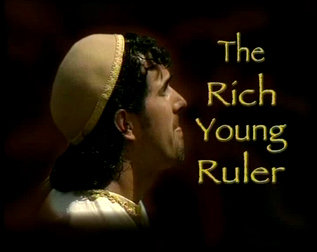
The guy
is often known as the “Rich, Young Ruler.” We call him that because it’s clear
from the accounts that he had great wealth. About halfway through, Matthew’s
version indicates that he was young. Luke’s version introduces him as a
“certain ruler.” In this context, the term, ruler, implies that the young man
was from the upper class.
A Clear Objective
The
ruler’s objective was clear. He wanted some directive that would rubberstamp
his good fortunes in the afterlife. If you conflate the gospel accounts, his
questions could be restated as, “Good teacher, what good thing must I do to
inherit eternal life?” Unfortunately, (not unlike a lot of us) he seemed to be
under the impression that he could earn his way into Heaven.
As He often did, Jesus (rather than give him an immediate, direct answer) asked him a question. In this case it was, “Why do you call me good?” He then informed the young man that only God is good and that he should follow God’s commands. The man informed Jesus that he had always followed the commandments of the Lord. In other words, “I’m good. Is there anything else I need to do to seal the deal?”
Anyone
who thinks they’re that good is a legend in his own mind. I remember thinking
similar thoughts when I was a very young man myself. I figured that, if I was
better than half the world’s population, God would admit me to His paradise
when I crossed over to the next life. Like the ruler in the Gospel story, I
assumed I could be good enough to cover all the necessary bases. Along the way,
however, I was rudely introduced to the truth of the Gospel. There was no thing
I could do that would be good enough to merit such a reward. I was a lousy
sinner, and there was nothing I could do to erase my past—even if I could
become perfect from that day forward (which I obviously could not do).
Stumbling Blocks
When
Jesus told the young man he should sell his possessions, give the money to the
poor, and follow Him, it proved to be a bit much for this particular ruler. We
often look at this as a call to be divested of our belongings. The important
part, however, was the call to follow Christ. The man’s riches just happened to
be his stumbling block. I suspect we all have a few of those.
What the man learned that day was he couldn’t earn, buy, or claw his way to Heaven. He had to rely on Jesus to take him there. Like many of us, it was too much to take. It’s a whole lot more fun when we can pat ourselves on the back for a job well done.
[Dave Zuchelli is a graduate of
Pittsburgh Theological Seminary and currently resides in Aldie, VA.]
The post A Legend in His Own Mind appeared first on Dave Zuchelli.