K.E. Garland's Blog, page 22
April 27, 2022


April 25, 2022
Writer’s Workshop: 3 Reasons Why you Should Consider a Blogging Series
If you blog on a schedule (i.e., every Tuesday at 11:00a), then you already use this feature. If you blog about one topic on a schedule (Writer’s Workshop), then that qualifies as a series as well. However, the type of series I’m referring to is the kind I shared a couple weeks ago reflecting on my travels. This type of series is more like Netflix. There are at least three posts, and they are serialized to come one right after the other. Once you’re done, you return to your regular posting schedule.
Here are three reasons you may consider this type of blogging style:
#1 Your post is too long. Most blogging “gurus” will suggest you write under 750 words. I agree. Anything longer, and you run the risk of losing your reader. The first blogging series I did was when my father died. I needed to write about my experiences with him; however, it ended up being a three-thousand-word document. I knew that was way too long…no matter how captivating I thought the story was. So, I broke up one essay into five and shared one a day leading up to his funeral. By that Saturday, people were invested in the narrative and genuinely offered me some much-needed support.
#2 You want to delve into a topic. Although I hate the phrase deep dive, deep diving aptly describes my purpose for blogging. If I want to remain surface level about a subject, then I use social media, like Twitter or IG, but when I wanna get deep—I blog. With the travel series, the only way I could fit everything in one post would have been to use bullet points with little explanation. Bullet points work, but the format wouldn’t have served my purpose if I really wanted you to lean into the story and the lessons with me. So, I opted for a series.
#3 You want feedback for a publication. I never write a series for this reason, but it is a thing. When I published the series about my father, another blogger provided some advice. “Flesh out your father’s character, and make him seem more multidimensional,” she said. Later, I had the inclination to publish this story in its entirety as a creative nonfiction work, and in addition to her feedback, a friend of mine also suggested adding some details to my father’s character.
Similarly, you can use the statistics feature that WordPress offers to understand which parts of the series garner the most attention. This may lead you to develop the best parts into a publication.
I know there are more reasons for writing a series that are focused on marketing (e.g., gaining more followers, etc.), but those don’t fit my personality or rationale.
Have you ever written a series? If so, feel free to share how it’s helped you in some way.
Journey to the Center of My Heart: Trusting My Inner VoiceSeptember 15, 20173 Reasons the Blogging Community is better than Social MediaMarch 14, 2018Writer’s Workshop: IntroductionsJanuary 31, 2022April 20, 2022
April 18, 2022
Monday Notes: 4 Takeaways from a Writer’s Residency
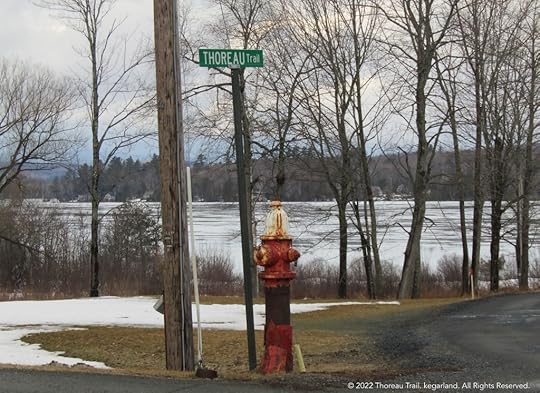
Last week, I explained that I’ve been in Monson, Maine for two weeks participating in a writer’s residency. As promised, here are four takeaways from my time there:
Clearing space is important.Before I flew to Maine, I knew it was necessary to clear space in several ways to make room for writing. I suspended all editing services and didn’t accept any new clients; I stopped judging essays for the Florida Writers Association; and I stopped writing new blogs. I focused on my actual job for one hour a day—don’t tell my director. Also worth mentioning, is that I’d already cleared space in other, more personal ways when I decided to release specific angst about people. I’m confident I couldn’t have done this if I was still worried about who was visiting, calling, or maintaining contact with me. It was taking up too much real estate in my head, which I believe can affect your creativity. Clearing space helped me to center my attention solely on my new project. While I was in Monson, I wrote for five or six hours straight, with the exception of eating meals and taking bathroom breaks.
There’s a difference between grind and flow.One of the other writers and I had a great conversation about the difference between grinding and flowing. Grinding can occur when you’re worried about the goal; flowing is akin to floating with no worries, yet somehow accomplishing the goal. If you’re doing something you love, but you find yourself stressed about it, then that is the opposite energy you probably want to have. Grinding can manifest in several ways. For me, I developed a headache and felt lethargic. (Remember, my body clearly talks to me). Once I sat down and evaluated why this could be, I determined it was not only because I’d been staring at my laptop too long, but also because I’d been thinking deeply about narrative and research connections too long. I was straining my brain. Even if you love something and are in the flow, you can still overdo it. I needed to not write for an entire day to remove the grind mentality.
Being around like minded people is pertinent.I really enjoyed being around other artists. On day three and nine, we had to do an artists share. I listened to and viewed some very interesting projects. Artists, no matter the medium, are different. They see life differently, and being around them felt as if I wasn’t in the real world. For example, no one called anyone’s project outlandish, no matter what the idea was. No one was negative or judgmental. Each person was supportive of whatever they heard. This warm response is different from how people interact outside of residencies. In my experience, non-artists always have a lot of questions, like why would you do that? What is that supposed to be? Why don’t you do it this way? There’s nothing wrong with constructive criticism, but I’ve noticed these questions are usually rooted in a lot of judgment. We’d all do better to take a page out of artists’ ways of functioning and simply head nod and find something nice to say about one another and our ideas.
I need more freedom than I thought.Every time I leave my house for an extended period of time, I realize freedom is top priority for me. But this time, being away from everyone and everything solidified it. From day one, I was hella excited to wake up whenever I wanted, with nothing to do for the day, except whatever I conjured up. Even though it was nineteen degrees one day, I bundled up and started walking toward the Appalachian trail. Another day, I made up my own yoga routine, and another day, I stayed in bed all day and wrote. No one questioned my safety when I was walking, my sanity when I stayed in bed , or my decision making when I decided to finish my book. My life and time were mine to create. If you’re thinking these seem like small things, you’re right. But guess what? If you’re not careful, then small things add up to one big ball of resentment. For me, I’ve realized I have to build a sense of freedom into my regular life. It’s mandatory.
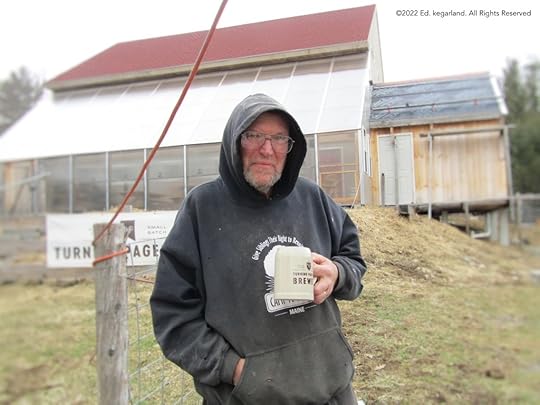
 Turning Page Farm
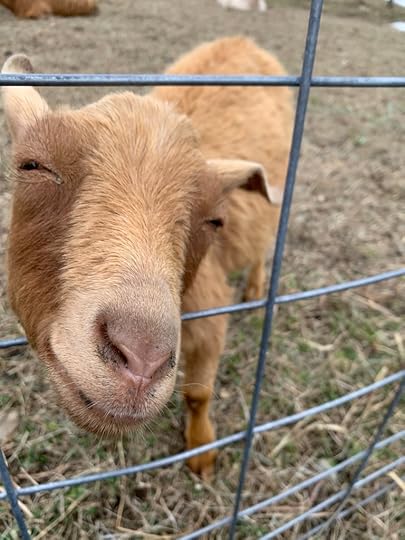
Participating in this residency is one of the few places I’ve gone in my lifetime where I felt as if I belonged. I didn’t expect to find a sense of belonging among people who, at first, seemed so unlike me. But as time wore on, I saw it clearly. There was an energy that bound us together. I understood when my housemate, who is a visual artist, didn’t wake until ten, spent the day in her studio until two in the morning, and then came home. Likewise, others understood when I closed the door, skipped lunch, and didn’t socialize sometimes. Other than having beer with goats, no one tried to guilt me into hanging out. There was a mutual understanding for artist’s behavior, and quite honestly, after getting to know each person, a common liberalism that superseded race, age, gender, or sexual identity constructs emerged. While I get along with mostly anyone because I love people and socializing, this residency showed me who my people are.
Monday Notes: 4 Takeaways from a Writer’s ResidencyMonday Notes: Monson Arts ResidencyMonday Notes: 8 Titles of Blogs I’m Not Going to WriteMonday Notes: Parenting from the Heart (Part II)Writer’s Workshop: Studying the CraftApril 11, 2022
Monday Notes: Monson Arts Residency
Who do you blame for not being the artist you were meant to be? That was one of the questions in The Artist’s Way.
It didn’t take long for me to come up with an answer. First, I blamed my parents. When I was in the fifth grade, I wrote a book called On the Farm. My fifth-grade teacher was so impressed, she entered the book into a citywide contest either named after or sponsored by Gwendolyn Brooks. I’ve written about this before. I didn’t win; however, now that I’m a parent, I wonder why no one asked me about my interest in writing. As an adult, I realized it’s probably because it was the same year my mother received a kidney transplant. She was hospitalized 150 miles away in Madison, Wisconsin. So, her illness probably took precedence over my perceived art.
Next, I blamed my grandmother. The year after my mother died, I announced to her that I was going to write a book.
“About what?” she asked.
“About my mother’s death,” I said.
“You think you’re the only person whose lost her mother?”
I didn’t answer, but what I did do is stop thinking about writing … anything … for a very long time.
After writing something similar to the above in my Morning Pages, I closed my journal and I cried. That was October 2021.
But as I continued The Artist’s Way activities, a thought emerged. I can do the writer things I wished my caretakers would have. I can nurture myself as an artist in ways I wished my parents would have. I can speak positively about myself as an artist in ways that I wished my grandmother would have. I’m an adult, and it’s up to me to live the life I want and to be the artist I want to be.
That’s part of what led me to applying for the Monson Arts Residency. I needed to submit the following:
a cover letter explaining why I wanted to come to Monson, Maine and what I’d be doing while I was there,a writing sample,a website, andtwo references.The first time I applied, I didn’t get it; however, the director encouraged me to re-apply in 2022, and if I did, he’d waive the application fee. I did, and this time, I was awarded the residency.
Cue the Prosecco!
 Holmquist House
I’ve been quiet on the blog because I was in Monson from March 27th to April 7th being the artist I always wanted to be.
For twelve days, I lived in a three-bedroom, two-bathroom house with a housemate. During that time, I received free breakfast from the General Store and lunch and dinner from a trained chef named Lou Lou. Lou Lou bought fresh groceries daily to prepare meals for us, like Ahi tuna tartare, pork belly, and congee with saffron. The intentionality of her meal creations was surreal. I had my own writing studio in another house that overlooked a lake with a view of the mountains. At the end of it all, I received a check for five hundred dollars. They paid me to be there. I was literally nurtured as a writer.
I have to repeat that. The nurturing I wished I had, I received from this writer’s residency, including being safe, secure, fed, and paid.
With nothing to worry about, I wrote no less than six hours a day, and with that, I was able to finish a draft of my second memoir.
I’m still in awe that I was even there. But I hope you see what I’m saying. I will always advocate for drilling down to the source of how you became who you are. After all, each of us is a product of our environments. But if you’re dissatisfied with the outcome of your upbringing, it’s equally important to take the reigns of your own life and do the things that will allow you to be who you desire. You’re the only one who can do that 
Next week, I’ll share the lessons learned/reinforced about myself while I was in Maine. Until then, let me know what you think in the comments.
Monday Notes: Monson Arts ResidencyMonday Notes: 8 Titles of Blogs I’m Not Going to WriteMonday Notes: Parenting from the Heart (Part II)Writer’s Workshop: Studying the CraftMonday Notes: Playing: It’s Not Just for Kids!March 14, 2022
Monday Notes: 8 Titles of Blogs I’m Not Going to Write
Frequently, I think of a title of an essay or a blog post, but then I don’t really have a lot to say about it. I’m doing a little spring cleaning of my phone and thought I’d share these with you before I delete them foreva.
Women and other ObjectsWomen used to be treated as objects. I’m talking about literal objects. For example, it is common in many cultures for the father to be “in charge” of his daughter and then when she marries, the husband is “in charge” of her. One clear is example is found in this article, 18 Countries where Women Need their Husband’s Permission to Work. I was going to write something about this, but honestly, I didn’t feel like researching more facts to prove my underlying point, which is that the United States isn’t too far from treating women like other countries do.
CliffsNotes and Sound BitesI’m sure by now you know that people will argue on social media about something that they haven’t fully read or even viewed. Well, people do this offline, too, and I’m kind of tired of it. I realized this while reading Will Smith’s memoir. I found that people really thought they could hold a conversation about Will because Jada hosts the Red Table Talk, where she shares personal stories. However, Will’s book includes additional information from his point of view. You cannot discuss Will (the book) if you haven’t read the book. You just can’t. I liken this to when people used to read CliffsNotes, instead of the actual novel. It’s never the same.
The Price We Pay for EntertainmentI recently watched We Need to Talk about Cosby, which is excellent, by the way. Prior to viewing, I already believed (if that is the right word) that Cosby drugged and raped women, so I didn’t watch for confirmation. I viewed this doc to see if there was another angle to the story, and there was. But afterwards, I thought about other famous men who’ve been accused of sexual deviancy (i.e., R. Kelly, Michael Jackson, etc.). There’s always this societal conundrum where we don’t want to give up our beloved entertainment seemingly at the risk of protecting or believing women. And I don’t get it. I don’t have to watch The Cosby Show ever again, and he didn’t even violate me. I can’t imagine how the women he actually hurt feel when they see his face on television.
Banning Critical Race TheoryThe first time I learned about critical race theory (CRT) was during my doctoral program in the early 2000s. However, while I was teaching high school English, specifically AP and Dual Enrollment, students read about and responded to texts in ways that demonstrated CRT. For example, I showed the documentary Murder on a Sunday Morning, about Brenton Butler, a Black Jacksonville teenaged boy who was falsely accused of killing a white woman. Students discussed and wrote about structural racism, the justice system, and their rights as teenagers should this happen to them (because after all, it happened in their city). When I hear about Florida banning CRT in public schools, so as not to “distort historical events,” I want to laugh because clearly there’s a misunderstanding about what CRT is, and I want to cry because academic freedom is being stripped right in public view, but no one seems to care.
Anything that isn’t Nurtured Won’t GrowRelationships, talent, whatever you can name, if you want it to blossom, then you have to nurture it.
Corona Chronicles: Why COVID is Still in the United StatesThis was going to be a criticism of everyone, including myself. Here’s a running list of what I’ve observed:
Not wearing a maskWearing a mask below the noseTaking a mask off to sneezeLoose and confusing restrictionsAllowing K-12 schools to be open without mask mandatesNot washing handsWearing a mask in the restaurant when you walk in, and then taking it off while you’re sitting down eating and socializingGatherings of more than 10 people, inside or outsideHaving rules for your establishment and not enforcing themSpreading false information. My daughter works at Starbucks. According to her manager, if you have COVID, you can come to work three days later, because you won’t be able to spread it to others. Let that sink in. Your latte may be coming with a dose of something unexpected.The American Dream and other Fairy TalesThis was probably going to be a critique of the myth of meritocracy and pulling oneself up by one’s bootstraps, but I don’t remember. I stand by the title, though.
Emotion WordsThe next time you interact with someone, remember this: everyone doesn’t know how to use their emotion words, so be kind.
As usual, please feel free to comment on any or all of these, or if you’re a writer, feel free to tag me if you’re feeling inspired to take on a topic
 VE with Will Smith, bell hooks, and Gary Chapman
March 7, 2022
Monday Notes: Parenting from the Heart (Part II)
Parenting is hard.
You never know if you’re really doing the right thing, until your children are young adults making decisions. To me, that’s where part of the proof is. Here’s how I know.
Today, is my youngest daughter, Desi’s first day of organic farming school. She now lives approximately 900 miles away in another state, so she can complete a two-year organic farming program.
While I believe that all children are born with their own personalities, I also believe that we as parents can either nurture or stunt those natural-born identities with our parenting style.
Desi choosing to be an organic farmer is an example of how Dwight and I nurtured her personality.
We both believe people should do what they want to do if they can live with the consequences. This concept extends to both of our daughters. Although we believe this idea, it hasn’t been easy to put into practice (well, not always for me, anyway).
For example, Desi graduated high school in 2020 with an international baccalaureate (IB) diploma. It’s as prestigious as it sounds. Because of her degree and intelligence, she could have attended any university in the world. But she didn’t want to.
Believe it or not, part of what was hard about parenting her through this was listening to everyone’s judgment associated with allowing our child not to attend college.
Doesn’t she know how important college is?
What I said: Of course, I have three degrees and Dwight has one. We’re walking examples of “go to college to be successful.”
What is she going to do?
What I said: She’s going to work and figure out what she wants to do.
She’s going to be at your house til she’s thirty.
This came from someone I’d just met. My actual response is too long and inappropriate for this blog.
Judgments withstanding, things have worked out. She took a year to think about her actual interests. She used the internet to research programs. She found an organic farming program: they pay her to attend, they pay for housing, and they will set her up to be a successful organic farmer.
Sounds like a win-win-win to me.
But what happens when success doesn’t come quickly or look like “success?” Dwight and I still nurture with the same belief system, but in a different way.
Our oldest daughter, Kesi was afforded similar freedoms.* She has the freedom to do what she wants. She was supposed to be a hairstylist but (in my opinion) got distracted. Distractions are okay. And again, children have different personalities. Life hasn’t unfolded the same for her. However, we still maintain Kesi can live how she wants. We would never try to impose what we think she should be doing onto her experience in life. That’s hella arrogant.
Nurturing Kesi looks like having lots of conversation about cause and effect. And the one consistent thing that Dwight and I do, aside from showing how not to live in fear and teaching how to be accountable for your own life is supporting our daughters no matter what they choose to do and no matter what the outcome.
We don’t withhold love, support, or encouragement because their lives don’t look like ours. They both receive the same words of affirmation, quality time, and financial assistance.
I’m pretty sure they both know we value intelligence and education, but they also know we respect whatever it is they want to do, whether that is organic farming or working at Starbucks.
*I hope it doesn’t sound like I think we can give freedoms. People are born free and liberated, but sometimes specific parenting styles can make it seem as if freedom to be who you want is something that children have to earn; and that’s not true.
February 28, 2022
Writer’s Workshop: Studying the Craft
There are many ways to study the craft of writing. You can earn a bachelor’s degree in English. You can attain an MFA in creative writing. You can even take a few classes here and there to learn from experts.
But what should you do if you’re like me and have no intention on setting foot in another university as a student?
Read. That’s what! Writers read, and it’s important to read books in the genre in which you intend to publish. For me, that’s memoir.
Writers read, and it’s important to read books in the genre in which you intend to publish.
Tweet
So, in 2018, I read ten memoirs to learn what bestsellers are made of and to understand what the pulse of a “good” memoir is. Here’s what I found out.
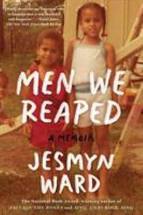
A “good” memoir focuses on one theme. My favorite memoir that demonstrates this basic principle is Jesmyn Ward’s Men We Reaped. The overarching question is why have so many of the men in her community died? The quick answer is the interrelated nature of racism, poverty, and gender. The long answer is her 256-page memoir, where chapters are written in a seesaw fashion. One chapter is devoted to understanding one man’s in-depth story, while the next chapter reflects Ward’s life as it was related to each man. By the end of the memoir, Ward has clearly made a case for how systemic racism affects human beings.
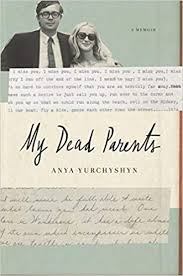
A “good” memoir has to present a bigger purpose. A bigger purpose doesn’t mean theme, necessarily, but it should answer the question: why is this author telling these stories? In My Dead Parents: A Memoir, Anya Yurchyshyn spends the first half of her book describing how much she disidentifies with her parents, how much she hates them, and how much their deaths don’t affect her. Part two digs deeper and explores who her parents really were prior to marriage and children and how this showed up in her life. This is ingenious. Anyone can write a book about why they dislike their parents. But she researches their histories as a way to see their identities, and then analyzes their lives outside of being her parents.
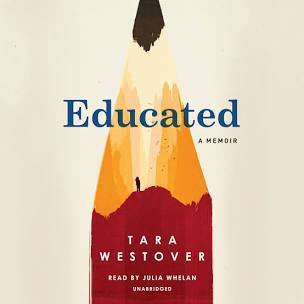
A “good” memoir weaves back and forth through time. This is a skill. Tara Westover’s Educated is superb at showing how to write a linear/not-linear story, which is important. While the overall story should be a cohesive narrative, it should travel back in time and then snap or slowly crawl back to the near present. For example, Westover remembers one of her brother’s violent acts from when she was an adolescent and then moves the story forward to a more recent memory of when she planned to visit home. The memory of the violence is important for how she will return and interact with her family in the book’s present.
A “good” memoir fits into a clear subgenre. Issa Rae uses humor for The Misadventures of Awkward Black Girl, which is a coming-of-age memoir. Kenan Trebinčević’s The Bosnia List: A Memoir of War, Exile, and Return is obviously a historical memoir, and so is The Girl Who Escaped Isis (Farida Khalaf and Andrea C. Hoffmann). Celebrity memoir is a thing, but more literary leaning ones, like Trevor Noah’s Born A Crime demonstrate sociocultural lessons. Finding Your Creative Muse explains more about these categories.
There’s nothing wrong with taking classes or seeking degrees; however, if you’d like to see what works for published authors, then I suggest reading in the genre you plan to write. I am also in no way advocating that you imitate the style of your favorite author. To me, that’s a no-no, but studying and learning about how others put words together? That’s a win for you and your growing body of work.
Are you intending to publish a book one day? Who’s your favorite author? What’s your favorite genre? What makes a book good?
February 21, 2022
Monday Notes: Playing: It’s Not Just for Kids!
“Christmas and birthdays are for kids.”
I hear this a lot, and whenever someone says it, I feel as if I’m being childish or something. I love celebrating Christmas and my birthday!
For Christmas, I go to the nail salon and have my toes painted full on Christmas colors: red on one foot, white, silver, gold, or green on the other. Sometimes, I alternate toes.
For my birthday, I love it when restaurant workers have some spectacular situation where singing and clapping are involved. When we were in Panamá, someone sang happy birthday to me in Spanish! Do you know how dope that was to be in Panamá while a Spanish-speaking singer sang Feliz Cumpleaños?
I also wonder if Christmas and birthdays are for kids, then what’s for adults? Paying bills, watching TV until you fall asleep, and getting colonoscopies? Yeah. No. That’s sounds awful.
But then I read Julia Cameron’s, The Artist’s Way. Her book helped me to see that playing—an activity also viewed as only for kids—is something that adults can and should do more of. Cameron associates play with opening up your creativity, but since finishing The Artist’s Way, I’ve recognized playing as a natural human activity that can simply get you out of your head.
Ways I’ve PlayedDwight and I went to a vegan fest at a park. As soon as I saw the swings, I suggested we swing, and of course, take photos and videos.
“You look so happy,” he said watching and re-watching me gliding higher.
“I was,” I confirmed. I felt free.
The day after Christmas, we drove to Myrtle Beach. That night we went to The Great Christmas Light Show. I saw a million little kids walking around with these lighted sword-looking things that shot out bubbles. As soon as I saw the kiosk, I bought one. If anything, being an adult is great in these situations because you don’t have to ask permission or have someone tell you no because you just got Christmas gifts. I shot bubbles out all the way to the car.
The next day, we went to Ripley’s Aquarium of Myrtle Beach. There was an exhibit called Penguin’s Playhouse. I don’t know if it was for little kids or not, but Dwight and I were able to crawl through a little tunnel, which led to a bubble where you could stand in the middle of the penguin habitat. Again, I felt so exhilarated. Crawling was fun and looking at the penguins from an insider’s perspective was, too.
So, I’ve added a new directive for myself and others. Go play! Celebrate holidays and birthdays, and all of the things. You’re not too old. I mean, pay your bills and go get your colon checked, too, but don’t let that be the only concept of adulthood that leads your life. It’s okay to “act like a kid.”
If you have other ideas for playing, feel free to drop them below.
View this post on InstagramA post shared by Kathy Garland (@kegarland)
February 14, 2022
Monday Notes: Understanding L❤️VE with Will Smith, bell hooks, and Gary Chapman
Recently, I read Will Smith’s memoir, Will, bell hooks’ All about Love, and Gary Chapman’s, The 5 Love Languages. Here are three common themes each book reinforced about my understanding of love:
Love is deeper than what we’ve learned.Each author makes clear that love is more than what we were implicitly shown and explicitly taught.
As a Black, feminist scholar, bell hooks’ message is that what many of us have learned about love is based on the fantasies of men, which is rooted in patriarchy. Therefore, she uses a more in-depth definition from social psychologist Erich Fromm. Fromm says that love is “the will to extend one’s self for the purpose of nurturing one’s own or another’s spiritual growth.” That’s deep, right?
Gary Chapman is a pastor, and much of what he writes is rooted in Christianity and scripture. For example, he alludes to Genesis 2:24, but he clarifies that “becoming one flesh … did not mean that individuals would lose their identity; it meant that they would enter into each other’s lives in a deep and intimate way.”
Pop culture icon, Will Smith describes the evolution of his relationship with Jada as something that grew to be more spiritual. They’ve publicly call each other “life partners,” which implies something more than riding off into the sunset with a beau.
As someone who’s been married for twenty-five years, the idea that love is more than what we’ve been fed resonates. My marriage to Dwight is the most transformative relationship I’ve ever had. He’s been instrumental to my self-evolution. Through our relationship, I have learned what it means to love someone and to be loved.
What you learn in your family of origin shapes how you view love.The idea that our families teach us how to love is not new; however, each author shares a nuanced approach to this concept.
bell hooks’ says that “to truly love we must learn to mix various ingredients—care, affection, recognition, respect, commitment, and trust, as well as honest and open communication.” She also suggests a family’s love doesn’t always feel like love because the love we receive from family is primarily care, which is just one component. Many of us do not learn each characteristic of love from our families. Do you see how this can pose a problem for future relationships?
Gary Chapman also explains that many of us have learned how to show love based on the family in which we were raised. For example, my mother showed love by giving gifts. She expressed this love language by throwing parties. I always had two birthday parties—one on my actual birthday and another on the weekend with either family or friends. Guess what I thought love was for a very long time? Guess what my primary love language is?
Will Smith’s memoir brilliantly illustrates how we pass on generational patterns of showing love, whether they worked for us or not. His abusive father showed love through a work ethic and the result of the work ethic, making money, which provided safety and shelter. bell hooks would call this care, and Chapman would label it acts of service. Will then showed that type of love to his wife and children, and even though their family looks hella successful, it backfired; his wife and children didn’t feel loved.
Love is a choice.Is love a choice? My experience makes me say no.
I maintain that I didn’t not choose to love Dwight any more than I choose to breathe. As soon as we met, our union was solidified. Gary Chapman found this concept so important he devoted an entire chapter to it. He calls this beginning, in-love phase “a temporary emotional high” and “on the level of instinct.” Everything after that is where he says the “real love” begins.
Cool. Chapman agrees with me. We don’t choose to be in love. But maybe we do choose everything after that, which maintains love?
bell hooks says it’s important to acknowledge love as a choice as a way to take ownership of our feelings and actions. She says, “to begin by always thinking of love as an action rather than a feeling is one way in which anyone using the word in this manner automatically assumes accountability and responsibility.”
This makes sense to me. Choosing to love or to be loving makes every act intentional, not some willy-nilly, out of control situation.
A story from Will Smith’s memoir that shows how love is a choice was about his daughter, Willow. Willow asked him this paraphrased question: Does it matter to you how I feel? He implied that every argument, every misunderstanding asks this question: Does it matter to you how I feel? He goes on to explain that we show each other the answer by our actions, by the choices we make, which reveal how we choose to love one another.
So, yep. I get it.
We can say, “I love you” a million times, but when it comes down to specific actions, are we choosing to be loving toward the person we say we love? The answer is the difference between someone feeling loved as opposed to just hearing words.
If you made it this far, thanks for reading. I know I got a little theoretical, but hey. It happens. Let me know what you think about love.
Monday Notes: Understanding LVE with Will Smith, bell hooks, and Gary ChapmanMonday Notes: BlueberriesWriter’s Workshop: IntroductionsDigestion, Gut Health, and Me: Healing (Part IV)Digestion, Gut Health, and Me: Adulthood (Part III)