K.E. Garland's Blog, page 23
February 7, 2022
Monday Notes: Blueberries
I moved to Covert, Michigan to live with my grandparents the summer of 1990, June to be exact. I was seventeen. My grandmother had tasked me with finding a job for the summer, and when I wasn’t successful, she decided I would make money working on her friend’s blueberry farm.
I’d like to remind you that I was born and raised on the west side of Chicago. I had never seen a fruit farm. However, my grandmother has also never been the type of person with whom you argue, especially not at seventeen. So, I put on my designer jeans and straw-brimmed hat (the kind you wear by a pool), and I rode with her to the farm.
Someone had decided it was a great idea for me to actually pick the blueberries. I grew more miserable as I rolled each blue ball between my fingers and dropped it into the pail. How did I get here? What can I do to not be here? That’s all I kept thinking.
Around noon, my grandmother’s friend came to get me. Apparently, I wasn’t picking fast enough for a profit margin. She thought it best to move me inside, where her family worked to check for bad fruit and pack the good ones. Although I was no longer picking, I still lamented my current position. What am I doing sitting in this shed packing blueberries? I should be home. I should be hanging out with my friends at Water Tower.
I don’t remember why, but I didn’t have to return the next day. I’m assuming it’s because I wasn’t very good at it or maybe someone noticed I did more daydreaming than packing.
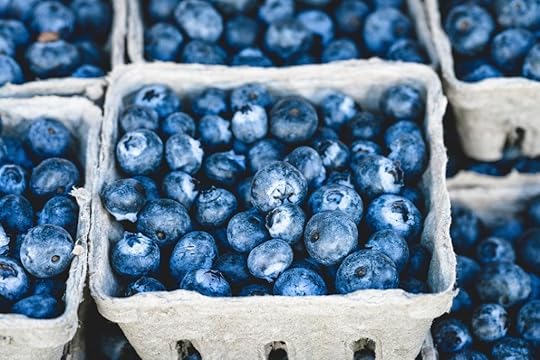
Decades went by, and I refused to eat blueberries. No blueberry pie. No blueberry jam. No blueberry muffins. You know how they give you a fruit cup at a restaurant? I’d eat everything, except the blueberries. It wasn’t that blueberry picking was so horrible. It was more that the circumstances surrounding how I ended up living in Covert (i.e., my mother dying and my father kicking me out of the house) and completing senior year there incensed me to my core. Blueberries reminded me of that year and the one before it, and for a long time, that experience was something I didn’t want to even think about, let alone eat.
I want to be super clear here. I didn’t consciously stop eating blueberries.
One day someone asked, “You want some blueberries?”
And I said, “Nope. No, thank you.”
I didn’t offer an explanation or biographical context. No one would ever know that I avoided this small, blue fruit because it triggered me in inexplicable ways. It’s something I unconsciously chose.
Today, I am fully aware that I made blueberries the issue, instead of recognizing the issue as the issue. People do this all the time, though. I don’t want to get all psychology here, but it is related to our amygdala and triggers, which can range from seeing blueberries to seeing someone raise their fist in anger.
There is always hope, though. As I began to heal from each phase of abandonment, I no longer avoided blueberries. First, I used frozen ones for smoothies. I mean, baby steps, right? Recently, I’ve begun buying them fresh from the store and popping them in my mouth for a snack. They’re not so bad. I see why they’re popular.
I suppose we all have our own “blueberries.” The key is when you realize what they are, to seek help as soon as possible. Otherwise, the next thing you know, you’re out here avoiding blueberries and missing out on delicious fruits 


January 31, 2022
Writer’s Workshop: Introductions
Introductions are important. Just think about your favorite song. Whether it’s the way the first note comes in or it’s the way an artist says the first word, the introduction to a song determines if you’ll continue listening or fast forward to something else.
Writing is no different.
A good first line or paragraph lets me know if I’ll be reading more of what the author has to say.
Let’s look at this intro to My Dead Parents:
My mother, Anita, died in her sleep in 2010, when she was sixty-four and I was thirty-two. The official cause of death was heart failure, but what she really died from was unabashed alcoholism, the kind where you drink whatever you can get your hands on, use your bed as a toilet when you can’t make it to the bathroom, and cause so much brain damage you lose the ability to walk unsupported. The case of her death was herself, and her many problems. (Anya Yurchyshyn)As someone who spends a lot of time reading and studying the writer’s craft, I loved this introduction. As soon as I read these eighty-four words, I thought man, if this is how the story begins, then I can’t wait to read the rest of this book!
[image error]Pexels.com" data-medium-file="https://kwoted.files.wordpress.com/20..." data-large-file="https://kwoted.files.wordpress.com/20..." src="https://kwoted.files.wordpress.com/20..." alt="" class="wp-image-5885" width="387" height="258" srcset="https://kwoted.files.wordpress.com/20... 387w, https://kwoted.files.wordpress.com/20... 774w, https://kwoted.files.wordpress.com/20... 150w, https://kwoted.files.wordpress.com/20... 300w, https://kwoted.files.wordpress.com/20... 768w" sizes="(max-width: 387px) 100vw, 387px" />Photo by rawpixel.com on Pexels.comTherefore, I focus for several minutes (sometimes days) on how I will begin any piece of writing. Let’s take “Monday Notes: Seeking Perfection” as an example. Because this was a blog post, I knew I couldn’t waste time getting folks engaged. Initially, I wrote this:
I awoke in a Northwestern Memorial Hospital bed with two women staring at me, one was the nurse and the other, my mother. They told me I’d been hit by a car.
This wasn’t the most engaging introduction for a few reasons:
Readers need to know why I was in the hospital sooner.Narrative is important. People prefer stories, even if they’re brief. So, I opted for an anecdote.Beginning in medias res (in the middle of things) is a strategy, but I’d begun too far in the middle. I needed to pull it back to provide a bit of context.Ultimately, the introduction became this:
I was hit by a car when I was fourteen years old. It was a Saturday. Because my father was the youth pastor, we were going to church to pick up teens for an activity. When we arrived, my then best friend stood across the street in front of the building. She yelled out my name, and without a second thought, I darted into traffic.
This first sentence may be a bit of a shocker. Most people (friends, family, or bloggers) don’t know I was hit by a car. So, I’d argue that a reader would want to read more about this. The next few sentences rewind the story a bit so that you can understand how I was hit in the first place. Then, the remainder of the blog delves deeper into the actual topic: A small imperfection, such as chipping my tooth has bothered me since I was a teenager.
There are many ways you can begin your writing. I’ve just described one: beginning with a narrative. You can also ask a question, begin with a quote, provide a statistic, or give a description.
Have you ever thought about how to begin your writing? Do you just start writing? Do you have a favorite first line from a song or book? Let me know in the comments.
January 27, 2022
Digestion, Gut Health, and Me: Healing (Part IV)
After the laryngopharyngeal reflux diagnosis, the doctor recommended a pill called Omeprazole, which lists lupus as one of its “rare” side effects. Rare or not, I refused to take it or the next prescription he provided. That’s how I ended up with a naturopath, Dr. Megan. Seeing a naturopath is one of the best decisions I’ve made.
Dr. Megan took a more integrative approach, meaning prescription drugs was not her first suggestion. She wanted me to heal on a metaphysical and physical level.
METAPHYSICALThird ChakraThe first thing that resonated with me was the importance of healing my third chakra, which is associated with personal power. I reflected on places where I felt stuck, such as my occupation. I thought about ways I currently give my power away, such as in conversations with family. Next, I did a guided meditation focused solely on the third chakra, and I used a mudra Dwight suggested. Immediately, I found myself speaking up in private, public, and professional settings.
The Artist’s WayDr. Megan also recommended a book called, The Artist’s Way: A Spiritual Path to Higher Creativity. Initially, I didn’t think I needed this book. I thought it was for wayward creatives. Even though I didn’t consider myself lost, I did have a tendency to downplay what I did create. So, I sat myself down, read a chapter each week, committed to writing Morning Pages, and took myself on Artist’s Dates. I kid you not, by chapter three, I felt lighter, more playful, and more creative than usual, which in some way helped to heal my body.
PHYSICAL*Elimination DietAnother thing Dr. Megan wanted me to do, against my will, was an elimination diet. She wanted to make sure I didn’t have a food sensitivity or food allergy. As much as I like to eat, this part stressed me out for a little while. But eventually, I saw the benefit of eliminating dairy, most meats, wheat, shellfish, soy, and specific spices. As much as I like to eat, the elimination diet gave my gut a much-needed rest. Think of it like a detox. It really made it easier for me to see how wheat and some dairy are problematic.
De-StressEven with all of these changes, my cough hasn’t gone completely away. However, it has subsided. During those times of little-to-no coughing, I’ve noticed something. When my stress increases, so does my cough. For example, if I have an editing client whose manuscript needs more work than I originally thought or students are pissing me off during finals week, the coughing begins and continues through the night. When life is easy going, there is almost no coughing.
This reaction is similar to when I was in Costa Rica. In that country, we had little access to “bad” foods, life was simple and free, and I didn’t have a care in the world. Panamá was the opposite. It was more like being in the States, especially with access to all the food I shouldn’t have been devouring.
So, in addition to yoga, meditation, a probiotic (with ashwagandha), and journaling, I have also begun taken longer breaks in between activities. For example, I used to go from grading college students’ work to editing a nurse’s dissertation with no visible break. Now, I sometimes sit and stare out of the window for five minutes. This has been one way to signal to my brain and body to calm down before we begin a new task.
When the ENT doctor first handed me the Omeprazole script, he said, “Don’t expect immediate changes. It took how long for you to develop this? It’s going to take time for it to go away, too.”
Although I opted not to take medicine, he’s still right. Healing is not linear, whether we’re talking about mental or physical health. I’m not at 100%, but I don’t feel bad about it. I feel better simply because I understand how I ignored how stress and anxiety affected my body over the years and now know what I can do to repair the damage. That’s what I continue to focus on each day.
Thanks to you if you’ve read one or all of these. It’s appreciated!
*My physical health maintenance already included working out four times a week and decreased intake of sugar and carbs. What’s described here is in addition to that regimen.
Digestion: First Day of Senior Year (Part I)
January 26, 2022
Digestion, Gut Health, and Me: Adulthood (Part III)
It was 2015, and my friend and I had just finished dinner at Chili’s, complete with one of those big, iridescent blue fishbowl-looking drinks. My belly was tight. My pants were tight. I looked like I would deliver a baby at any moment. It wasn’t the first time I had this feeling. It had been surfacing more and more, but only when I ate at restaurants like Chili’s.
Unlike previous years, I didn’t ignore this sign. I scheduled an appointment with Borland Groover to see what was going on. The gastroenterologist talked to me for a few minutes.
“Those chain restaurants use a lot of sugar and salt,” she said. “What you’re experiencing is common. I want to draw some blood just to be sure.”
The bloodwork came back normal. I stopped eating (and drinking) at chain restaurants. Crisis diverted.
Fast forward to 2021. Panamá City wasn’t as exciting as Costa Rica, and there was nothing left for Dwight and me to do, but eat, which was fine because I love food. I. ate. everything: pour-over coffee, ice cream, pizza, ropa vieja, fresh bass, ceviche and more ceviche. Y’all. The store up the street gave me their WhatsApp so I would know when the empanadas would be ready. I was out of control. But I didn’t know it until I was damn-near immobile on the couch with a seven-month-pregnant-looking belly.
A friend of mine had to tell me what I had was called “indigestion.” I’m not joking. I had no idea this was a symptom. I thought I’d never had it before, because even though I’d gone to the gastroenterologist in 2015, she never said that word.
(Again) I stopped eating out and drinking as much and I spent the last two weeks in Panamá walking three miles a day and biking. Crisis diverted, again.
Well, almost.
Ever since 2017, I had a cough that would come and go. My primary doc did a chest scan. Even though it came back clear, she couldn’t tell me what was wrong, and kind of like the poop thing, it was intermittent, so I ignored it. I figured it was no big deal. But in 2021, after indulging in Panamá’s cuisine and having indigestion, my cough returned. This time, with mucus.
By August, I saw an Ear Nose and Throat (ENT) doctor, who diagnosed me with having laryngopharyngeal reflux. I wrote about it here.
I guess the point of this elaborate series is to encourage those of you who are like me, those of you who see and feel what’s going on with your body but ignore it because it’s not that bad or because it doesn’t happen that often. Kind of like intuition, you always know what’s going on, especially if it’s physical because there’s literally a sign. You probably don’t need a doctor to tell you something’s wrong, but you do need a professional to provide a diagnosis and possible treatment.
Also, I know each of these events may seem unrelated, but in my gut (pun intended), I know they are interconnected. For example, after spending months listening to my body, I’ve learned that stress explicitly affects me. It begins in my belly like a message, and when I ignore it, it worsens.
Tomorrow, I’ll share what’s worked to mitigate these reactions.
Digestion: First Day of Senior Year (Part I)
January 25, 2022
Digestion, Gut Health, and Me: Undergrad (Part II)
In undergrad, my friend, Los and I spent many a day (and night) drinking all manner of liquors. We were in undergrad, so it was allowed, excused, and even possibly expected. Drinking was our pastime.
One night, he invited me to happy hour at Waldo’s. We walked to the campus bar, excited to eat twenty-five cent wings and two-dollar well drinks. We sat there for at least an hour talking and devouring food as if we’d never eat again.
On our walk back to the dorms, I had the sudden urge to poop. Luckily, we’d walked through the Student Union.
“I’ll be right back,” I told Los, while concealing how serious the situation was.
“You can’t wait til we get back?” he asked.
“No!” I almost shouted.
When I got to the stall, feces exploded everywhere—my underwear, pants, toilet seat. I was mortified. How was I going to clean all this up? How was I going to get home?
I guess the Fates were on my side. When I peeked out the bathroom door, I didn’t see Los or anyone else, so I found the nearest exit and bolted back to my room.
At the time, I thought it was an odd incident. But that’s all it was…an oddity. I chalked it up to Waldo’s cheap wings and jungle juice. Nothing like that had happened before, and nothing like that happened again…until my thirties.
I’ll spare the details, primarily because they’re repetitive and gross. The same exact thing happened a few more times, minus the wings and rum. There was even a time when I didn’t make it to the bathroom. That was a long ride home.
I know what you’re thinking. By the time I was over thirty, certainly I must have known that not being able to hold my bowels was not normal. Yes. Yes, I did. But I didn’t seek treatment because these occurrences didn’t happen frequently enough for me to personally deem them an issue. Over the course of ten years, I’d say this happened five times.
I also never sought a doctor’s opinion because shortly after I finished my doctoral program, everything stopped. I want to say, “like magic,” but I know that’s not the truth. It was probably akin to my senior-year tummy—stress. Once my stress levels significantly decreased, then loose, uncontrollable bowels disappeared.
And so, I continued living life as if everything was all good.
Digestion: First Day of Senior Year (Part I)
January 24, 2022
Digestion, Gut Health, and Me: Senior Year (Part I)
“The bus will be here soon,” my grandmother announced.
I hadn’t been on a school bus since the eighth grade, but it was different here. Here was a podunk town too small for a transit system. Everyone rode the school bus. Kindergartners and twelfth graders, alike, all on the bus headed to the same building to learn the required curriculum.
“Okay,” I replied, then excused myself to the bathroom for the second time that morning. I hadn’t even eaten breakfast, so I wasn’t sure why my stomach was gurgling and what my body was eliminating.
“Are you nervous?” My grandmother asked.
I was.
The first day of senior year was nothing like I’d envisioned. My friends in Chicago, the ones I’d gone to school with since first or seventh grade knew me. They knew I was part goofy, part serious. They knew if I looked at you funny, then I was probably judging your hair, clothes, or speech. But they also didn’t care. Would these new people understand, or would they do like most new people did with me and assume I was stuck up or bougie?
“No,” I replied. It was easier than admitting the truth and then having her turn my fear into a speech about the uselessness of fear or into some inspirational moment on apprehension.
I went to the bathroom one more time.
“The bus should’ve been here by now. School’s starting soon,” my grandmother said. “Bernie, you’ll have to take her.”
Divine intervention. My stomach was relieved. I wasn’t supposed to be on the school bus after all, not at seventeen, not my senior year, not today. Maybe God would also perform some act that reversed everything that had happened up until this point. Maybe I would be transported back to Chicago, where I would meet my friends on the L, where we’d revel in our senior status, mimic house music songs while waiting on the train, and fantasize about post-graduation plans.
My grandfather dropped me off in front of the one-story brick building.
“Have a good day,” he said.
“Okay, I replied,” and I knew I would because I planned on keeping quiet and shrinking into the building and its smallness, hoping no one would notice me or my sudden urge to use the bathroom every ten minutes. I hoped I’d disappear into this nothingness of a town.
Digestion: Undergrad (Part II)
January 10, 2022
Monday Notes: Talking to Myself (Kwoted)
In 2015, I published my first book called, Kwoted. It is a book of original quotes that would pop into my head during my commute between Jacksonville and Tallahassee. It is only available on Kindle, and aside from glowing reviews from my goddaughter and cousin, I’m not sure what the actual impact was.
Recently, though, it dawned on me that this book was me talking to me.
Setting and Attaining GoalsThis first section is heavy on believing in oneself and ignoring everything else, something I used to have an issue with. One kwote, “Remember, you can either perpetuate the status quo or envision a new reality; the choice is yours,” was solely for me. At the time, I was doing what I thought I had to do once I attained a terminal degree…work at a university, even if it meant sacrificing my time and health driving up and down the interstate. Once I realized I could create whatever kind of life I wanted, things changed.
Likewise, this kwote, “If you share your plans with someone and they give you the worst-case scenario, then find someone else to share your plans with” is something that used to be challenging. Whether it was a family member or a friend, I noticed there were two types of responses. Either someone would find 7,999 reasons why my ideas wouldn’t work, or someone would simply say, “That’s cool.” I started spending more time talking to the “That’s cool” people. My life improved.
Relationship PerspectivesAre you surprised that I have a section about relationships in this book? My dysfunctional relationship with my father influenced some of these kwotes. “Learn when enough is enough, for you, no matter what anyone else says,” is something I had to tell myself. This stemmed from years of everyone advising that my dad is still my dad, to convince me to continue talking to a man who made little to no effort to connect with me. Like any relationship, I had to determine when to end it.
There are also a few self-love kwotes in this part because I delved deep into understanding my self-worth and self-love issues. It was imperative that I begin to heal my past to have a better future with myself, which eventually improved my relationship with my husband and others.
Konscious Life PerspectivesFrom 1989-2014, I’d mostly lived my life on autopilot. I’ve written before about how my marriage had turned into a checklist of achievements. Well, my life, in general was about ticking boxes: attaining college degrees, teaching at a higher level, becoming department chair, graduating from a Tier 1 institution, and on and on and on. Enough was enough. I needed to take control by thinking about what I wanted to do. Section three begins with this kwote, “Sometimes you just need a different point of view in life.” I permitted myself to stop, tap into who I really was and what I really wanted, and then proceeded from there. For me, a “different view” meant a more conscious one.
“Give yourself permission to grow in ways that you value” was definitely to me. I needed to break free from the box I’d put myself in. Was I constantly achieving so that my dead mother would be proud? Was I accomplishing things to prove my biological mother’s decision to give birth wasn’t for naught? I had to figure it out, and I had to break free from the cookie-cutter way I’d learned to live that was based on society and familial values. I had to determine my own ideals and pathways.
Opinions and JudgementsI used to be quite the judgmental person. To be fair, I spent a lot of time with a very judgmental grandmother, and as we know, our caregivers are our first teachers. Eventually, I befriended people like me—judgmental. One friend and I used to sit on the phone and judge the shit out of others, like a part-time job. I’d gotten so bad that other friends called me out on my comments.
So, in 2014, I committed to trying not to judge anyone. Kwotes emerged. “You don’t have to denigrate other people’s choices in order to validate your own” is a passive way I noticed that people judge others. My favorite is “Your view of me doesn’t matter, and neither does my view of you.” This one tends to be controversial, but I stand by it. Once you’re living consciously and confidently, how can anyone else’s opinion (which is typically based on fear) matter? It doesn’t.
Kwoted was the voice I heard when as I struggled in these four areas. Whether it was my higher self, as some believe, my inner being, God, the Universe, or a higher power, it was there, guiding me on my journey to shape the person you know and the blog you read today.
Interested in this book? Purchase here.
Otherwise, as usual, I’d love to hear any comments about the kwotes I’ve shared.
Monday Notes: Talking to Myself (Kwoted)Monday Notes: Things I’m No Longer Doing in 2022Body Positivity Essay ContestMonday Notes: 2021 Year in ReviewMonday Notes: Happy Holidays!January 3, 2022
Monday Notes: Things I’m No Longer Doing in 2022
1: Persuading People to See My Point of View. A few years ago, I went to help my stepmother with her breast cancer surgery. I was happy to be able to help in any way I could, and she was grateful. However, before I left, she brought up something I’d written in my last anthology: Daddy: Reflections of Father-Daughter Relationships. In it, I described how my father used to leave the house and announce that he was “going to get laid.” I was sixteen at the time, and it seemed not only inappropriate, but also unnecessary.
She began the conversation with “Tony said that because of your mother’s condition, she wasn’t able to have sex very much, so when she died…”
For the next thirty minutes, she defended my father, his actions, and his words. And for those thirty minutes, I tried to convince her that he wasn’t quite the man she thought he was. I tried to get her to see my point of view.
But let me tell y’all something. It takes a lot of time and energy to convince someone to see your point of view, when their motive is really to defend someone else and their actions, and I’m not doing it anymore … with anyone.

2. Chasing People for Reciprocity. Maya Angelou once said, “When people show you who they are, believe them,” and I say when people show you the level of engagement they want to have in your life, act accordingly. The best example I have of this is when my sister-in-law agreed to make amends and develop a relationship.
“Do you want to Skype?” I asked.
“No,” she replied. “With the kids and everything, I don’t have time.”
“Do you want to talk on the phone?”
“I don’t really like talking on the phone. Anyway, people who talk on the phone usually just gossip,” she said.
After a bit more prompting, this is what she revealed, “Kathy, I’m good with seeing you every five years or so.”
Although my feelings were hurt by her honesty, I was grateful for her words. I used to be the type of person you had to bonk over the head with a message, and this was one of those times. She and I had two different definitions of relationship, and I didn’t need to keep trying so hard to develop the kind I was seeking, not with her or others who clearly show they’re not interested in the type of relationship I’d like to have.
3. Ignoring My Gut, Literally and Figuratively. 2021 brought my gut issues to the forefront. Digestion has been problematic since 2017, but I’d ignored it. I’d also been taught how to hold everything in, until it burst, and that didn’t serve me well. A laryngopharyngeal reflux diagnosis woke me up. It shouldn’t have taken me so long to seek treatment. But we learn what we learn when we learn it, right? I’ll write a longer post about this situation. For now, I’ll share this: I’ve learned that I don’t have to hold everything in. I can calmly speak my mind in the moment. If the other person doesn’t like what I’ve said or that I’ve said it, that’s their problem, not mine. I’ve learned that my body doesn’t like all of the foods, even though the pleasure center in my brain does. Honoring these two things has helped me pay attention physically and metaphysically to my gut.
Each of these examples are old situations, but they’ve persisted in my life throughout the years to varying degrees, with different people, and with subtleties. However, 2022 will be an intentional year of honoring these three specific points: I don’t need validation for how I feel about my experiences with people; I am grateful for current symbiotic relationships; and my gut always knows best.
What are you doing for 2022? Are resolutions your thing? Are you focusing on one word? How are you going to bring happiness into the new year?
Monday Notes: Things I’m No Longer Doing in 2022Body Positivity Essay ContestMonday Notes: 2021 Year in ReviewMonday Notes: Happy Holidays!Monday Notes: Nine DaysDecember 30, 2021
Body Positivity Essay Contest


Body positivity refers to the assertion that all people deserve to have a positive body image, regardless of how society and popular culture view ideal shape, size, and appearance.
Some of the goals of the body positivity movement include:
Challenging how society views the bodyPromoting the acceptance of all bodiesHelping people build confidence and acceptance of their own bodiesAddressing unrealistic body standardsWe at Navigating the Change and The Real Perimeno agree with advocates of the body positivity movement that beauty is a social construct that should not be tied to a person’s self-worth.
However, much of the body-positivity conversation has been focused on body size and fat shaming. We want to add to the conversation by opening up a discussion about age and menopause. Therefore, we’re hosting a body-positivity essay contest to broaden the conversation!
Essay PromptsPlease consider…
View original post 279 more words
December 27, 2021
Monday Notes: 2021 Year in Review
Sometimes, I feel as if I haven’t done anything. It might sound irrational, but it’s true. I stood in the middle of my room a few weeks ago and wondered what I’d really accomplished this year. It sounds like this: What have you done? Can’t you do more? So what you published a book? This happens frequently. I know where these “not good enough” thoughts come from, but I won’t be sharing root causes today. I mean…if you’ve been reading this blog long enough, then more than likely you can fill in the blanks.
Instead, I compiled a list. Initially, the point of the list was for me to see how ridiculous my “not good enough” thoughts were. It was supposed to be like a tangible pep talk for myself. But then I figured you may want to read one of these essays, too. So, here goes:
Stories of Sport: Critical Literacy in Media Production, Consumption, and DisseminationThe year began with a publication with my colleagues. Aside from being proud of myself for leading this project, it shows the both/and space in which I’ve begun to live. I can be both a scholar and a personal blogger. I don’t have to choose.
There’s Strength in SoftnessLife continued with one of my proudest essays. I’d been thinking about generational patterns, how we oftentimes unknowingly pass on ways of living that don’t suit our children. What are the effects of passing down generational patterns? How does it affect the child as an adult, who then becomes a parent? This was the purpose of There’s Strength in Softness.
Chicken Soup for the Soul: I’m Speaking Now: Black Women Share Their Truth in 101 Stories of Love, Courage and HopeShortly after, my essay Good Enough (that’s ironic, huh?) was published in the well-known Chicken Soup for the Soul (CSS) series. To be honest, I didn’t think anything about it at first, mainly because publishing my feelings about being an Affirmative Action hire in a special edition of Black women writers actually showed what I was saying (another irony). But then, a blogger friend, Shira D. tweeted “Thank you for speaking for us all.” And boy, did that shift my thinking. I really hadn’t even thought about it that way. The CSS franchise has only had a special edition of Black women writers once before, twenty-five years or so ago. Being selected as one of 101 writers is a big deal.
Pro-Choice: What Being It Actually MeansIf you’ve been following me for a while, then you probably remember reading a piece I wrote a couple years ago called What it Actually Means to be Pro-Choice. It was first published by PULPMag, which not only advocates for reproductive rights, but also freedom of sexuality, in general. I was excited when my blogger friend, da-AL wanted to re-publish it this year, especially given the current conversation and actions on abortion rights.
5 Reasons Critical Media Literacy is Important in the 21st CenturyI mentioned Shira D. earlier. I promised her some time ago to guest blog on Educating for Future Democracy Collaborative. Because the site is focused on democracy, and because democracy in the United States seems to be quickly waning, I thought it would be appropriate to write about the role critical media literacy can play in the twenty-first century.
 2021 (the year of the ox) is my Chinese New Year!What is Happiness?
Do you follow the hot goddess? If not, why? How can you not follow someone who is a self-proclaimed HOT goddess? Anywho, she asked me to answer one question: What is happiness? My and others’ answers can be found on her blog.
Navigating the Change: A Guide for the Menopausal JourneyOh, and I started another blog focused on all things menopause (and midlife). Aside from myself, several contributing authors have shared their own journeys with this global community. If I haven’t said it before, thank you to those of you who’ve written for the site in its inaugural year, and thanks to those of you who have liked, subscribed, followed, or shared something from it.
Spotlight on Menopause Advocate: K. E. GarlandKeisha over at The Real Perimeno deemed me a menopause advocate! That was surprising. But I’m here for the new title. My interview with her about Navigating the Change can be found on her site. Also, she and I will be bringing an essay contest to fruition very soon.
Navigating the Change with Kathy GarlandLori L. Tharps invited me to be a guest on her new podcast, My Bloody Hell. After listening to a few episodes and googling who Lori is, I was more than excited. My episode aired on November 3, 2021. I can promise you a whole lot of laughing and girlfriend-type conversation about perimenopause.
Top 10 Ways Perimenopause Helped Me Get My Sh*t TogetherQuite honestly, I think this was the best way to end my writing year. I went from not knowing wtf was going on with my perimenopausal body, to being able to tell you what hormone is currently affecting me and how to alleviate the shift. Tera’s invite to write a top 10 list about midlife couldn’t have come at a more perfect time.
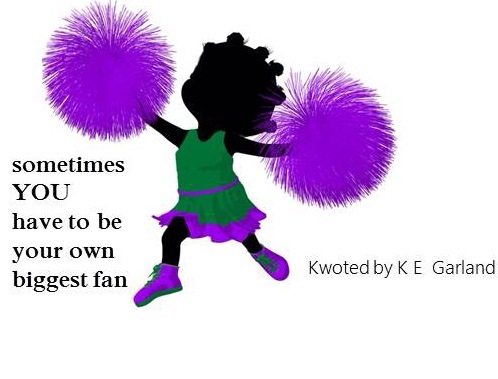
Julia Cameron said, “the antidote for shame is self-love and self-praise,” and I agree. I used to be really good at praising myself whenever I accomplished a task. Somewhere along life’s journey, I stopped. But I’m reclaiming that practice. When you do good work, you should be proud of yourself. I should be proud of myself. In 2022, I plan to be more intentional about celebrating myself when the process is complete. I know there’s a fine line between hubris, confidence, dismissiveness, and humility. But this year, I’ll be pushing those boundaries to find my own sweet spot. Strengthening my self worth has become a priority for living a full life.
What are you working on for 2022? What are you proud of from 2021?
Monday Notes: 2021 Year in ReviewMonday Notes: Happy Holidays!Monday Notes: Nine Days*Monday Notes: Third ChakraInspiring Image #126: Under the Bridge 2