
Heather King's Blog, page 39
November 28, 2021
A SHATTERING AWAKENING
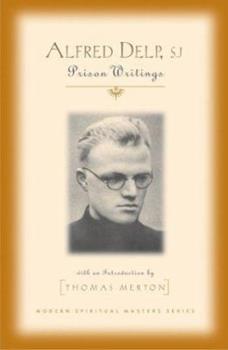
“Advent is the time for rousing. Man is shaken to the very depths, so that he may wake up to the truth of himself. The primary condition for a fruitful and rewarding Advent is renunciation, surrender. Man must let go of all his mistaken dreams, his conceited poses and arrogant gestures, all the pretenses with which he hopes to deceive himself and others. If he fails to do so this stark reality may take hold of him and rouse him forcibly in a way that will entail both anxiety and suffering.
The kind of awakening that literally shocks man’s whole being is part and parcel of the Advent idea. A deep emotional experience like this is necessary to kindle the inner light which confirms the blessing and the promise of the Lord. A shattering awakening; that is the necessary preliminary. Life only begins when the whole framework is shaken. There can be no proper preparation without this. It is precisely in the shock of rousing while he is still deep in the helpless, subconscious state, in the pitiable weakness of that borderland between sleep and waking, that man finds the golden thread which binds earth to heaven and gives the benighted soul some inkling of the fullness it is capable of realizing and is called upon to realize.”
—Fr. Alfred Delp, SJ, The Prison Meditations of Father Delp
When I first started attending Mass as a convert, I frequently walked up to St. Basil’s on Wilshire Boulevard in Koreatown, LA, at noon.
This is where I learned the Angelus, which we also prayed just before Mass began.
“The angel of the Lord declared unto Mary”…How beautiful, in the middle of a crowded city, in the middle of the day. There we were in the cavernous sanctuary. One of the sisters—not religious sisters, but blood sisters, who assisted with Mass–would lead us. They were both about 90 and spry with perfectly coiffed white hair and neatly pressed, old-lady skirts and cardigans. They lived together down the street, also walked, and per my friend Fr. Terry, who was a priest at St. Basil’s, had been coming forever.
At those noon Masses in the mid-90s, the age-old rituals of the Church began to seep into my body, blood and consciousness. That daily walk to the Church, the people and apartment buildings and hibiscus bushes that I passed. My sorrows and conflicts and worries and troubles that I’d think about en route.
Inside, the blessed hush, the cool, the holy water font, the Sign of the Cross.
The light filtered by the narrow stained glass windows set high in the wall. The cherrywood pews. The ragtag group—homeless people; businesspeople; people, mostly old, from the neighborhood. Young people, too–all ages–and a variety of races. The relief as I decided where to sit: Here, I don’t have to give an account of myself. The genuflection before taking my pew. The finding of that day’s antiphons and responsorial psalm in the back of the Breaking Bread missal/hymnal.
A moment of quiet as we gathered ourselves: waiting, watching, longing, hoping.
“The angel of the Lord declared unto Mary”….
After the Angelus, whichever of the old ladies who had led would say another prayer that over time, I came to memorize. “Oh Jesus, through the immaculate heart of Mary, I offer you my prayers, works, joys and sufferings of this day, in union with the holy sacrifice of the Mass throughout the world. I offer them for the intentions of your Sacred Heart”….
That, too, became part of the rhythm of my walking, my days, my nervous system.
Recently, I’ve taken during morning prayer to selecting a specific person in whose name to offer up those “prayers, works, joys and sufferings of this day.” I almost always instantly know who: often, someone I’ve thought ill of, judged, or felt hurt or slighted by the day before. It’s really a lovely practice. It leads me away from pretending that such “small” judgments, resentments, don’t matter: they do. I usually have a part in creating them, if nothing else by putting myself in a position where I knew, or should have known, I could be hurt. Sometimes I’ve had a part in perpetuating them, as in badmouthing the other person to another person who would listen, or just being incapable of letting the offense go and moving on.
Just as often, I end up dedicating my day to someone who’s in pain; groaning under the burden of an addiction, of depression, of familial and/or work responsibilities, conflicts, tragedies.
Or maybe it’s a friend for whom I’m simply incredibly grateful.
Fr. Delp wrote his meditations during Advent, in a Nazi prison. I highly recommend them as we enter this glorious, mysterious, liturgical season that reminds us the light shines in darkness, but the darkness has not overcome it.
He’d been arrested basically for following Christ, for believing in God, for being a Jesuit. He was hanged on February 2, 1945.


November 26, 2021
THE GUARDIANS OF MY DESK
Here’s how this week’s arts and culture column begins:
On my desk are two images.
One is the Rembrandt “Head of Christ” (1648) that hangs in the Philadelphia Museum of Art.
In it, Christ is pensive, with long dark hair, a soft moustache and beard. His eyes are cast downward and to the side. He looks as if he has been regarding our wounded, conflicted, fearful, yearning hearts with utter love for all eternity. He looks like he might have looked in the Garden of Gethsemane, contemplating his Crucifixion.
Both faces are deeply, vitally, uniquely alive. Both are fully, achingly human. They’re complex. They “contain multitudes,” to use Walt Whitman’s phrase. As members of the Mystical Body, we all do.
Those faces convict me—in a good way.
They say: “Really? You’re going to be that petty?”
READ THE WHOLE PIECE HERE.
November 24, 2021
CURE IS A PARADOX
“Thus is cure a paradox requiring two incommensurables: the moral recognition that these parts of me are burdensome and intolerable and must change, and the loving, laughing acceptance which takes them just as they are, joyfully, forever. One both tries hard and lets go, both judges harshly and joins gladly. Western moralism and Eastern abandon: each holds only one side of the truth.”
–James Hillman, Insearch: Psychology and Religion
I like the quote, but Christ—infinitely wider and deeper than mere “Western moralism” (or “Eastern abandon” for that matter) holds both sides of that truth, and then some. The paradox to which Hillman refers is the intersection of the Cross; the tension of the human condition that Christ, hands and feet nailed, in his love for us holds eternally. As St. Paul captured it so succinctly, “The thing we want to do, we don’t do; the thing we don’t want to do, we do.”
I’ve been thinking a lot lately, and reading a bit, about our shadow side, as the depth psychologists put it. That if we fail to acknowledge, embrace and love our dark places—we walk around partly unconscious. We tend to be victims. We tend to blame the Other.
As Hillman points out, the parts of us that we can change, we should, or should at least try to. With concerted effort, I can over time be more patient, more forgiving, less intent on “winning,” to name just a few of my own “parts.”
But one of the things I’m seeing out here in the desert is that there are a lot of parts of me that can’t and in a way sholdn’t change.
One, as I’ve mentioned recently, is that I’m “high-strung”–like a violin tuned a tad too high. Okay. I can live with that and I have to trust that everyone else can.
Another is my congenital introversion. As far back as I can remember, I have maxed out on human company at about the 3-hour mark. This was a problem during marriage, needless to say, and it was a huge problem during the time I worked in a law office. The second I could break free, I would go eat lunch by myself, beg for a research project so I could go sit in the library by myself, or go outside and take a walk by myself.
I am perfectly happy and in fact prefer to attend movies, museums and concerts by myself. I hike by myself, take road trips by myself.
I also LOVE people! I’m not shy especially. I’m not retiring. Given half a chance, I’ll commandeer attention and hog the conversation. I’m best with one or two or maybe three other people. Large social gatherings I don’t even get the point of.
That doesn’t mean I don’t also get lonely. In LA, there were so many people around all the time that I didn’t have a chance to get lonely–or rather to feel my loneliness–and in fact spent a lot of psychic and physical energy trying to get away from them. I was forever going off to retreats or writers’ residencies or some isolated cabin or casita.
But here in Tucson, it actually is quiet. I live in a house and though I can hear people go by outside on the sidewalk on my low-key street–walking their dogs, strolling with friends, talking on their phones–and there’s the usual amount of ambient college-town suburbanish sound, noise and people distractions are not a problem.
Tomorrow, Thanksgiving, I’ll speak at my favorite recovery meeting, hang out on Zoom for fellowship after, and then–take a long walk! I’m not cooking a turkey nor have I been invited to partake of one. I’m fine with that–but I will also say that this past week–and it may be the emotions that always seem to be brought on by the holidays–I realized–Oh! I am lonely!
It’s good for me to recognize this somewhat unfamiliar emotion. I always feel in exile, but loneliness is something different. I mentioned it, kind of wonderingly, to a friend and right away, he suggested, “What about online dating?”
I made a loud throwing-up noise. The kind of loneliness I’m talking about would so not be assuaged by “dating,” plus I would rather be poked with a sharp stick than curate a “dating profile,” plus I’m a nun.
The point is that my usual way of addressing an uncomfortable emotion is to try and fix it. Should I volunteer somewhere? I thought. But no, I don’t want to volunteer. While madly admiring and supporting those who are, I’m not and have never been the volunteer type. I’ve introduced myself to a couple of local priests and had breakfast with the ladies who say the Rosary after Mass and yesterday I took the owner of the house where I live to lunch and I email, talk with, and see on zoom many people each day. I see lots of people on my walks. I’m slowly exploring the city. That’s enough for now.
Definitely my prayer life is deepening, which cannot but be a good thing all around.
I think a lot of the people in long-term solitary confinement, who are essentially being tortured 24/7. Of those in Japan who die “lonely deaths”–unseen, unmourned. Of the place deep inside every human being that is not susceptible of being consoled by mere human company–though human company is pretty great, especially around a Thanksgiving dinner table!
I think of those parts of me are burdensome and intolerable and must change, and the loving, laughing acceptance which takes them just as they are, joyfully, forever.
And I am deeply, forever grateful to all of you! Wishing you a rich and scrumptious day of Thanksgiving.
November 22, 2021
CLARITY
I’ve had a couple of interesting experiences with/in prayer lately.
Or actually one experience: two variations.
Both times I was struggling and had become somewhat obsessed with a seemingly intractable conflict. One involved a personal relationship. The other had to do with one of my oldest unfruitful ideas: that if I were really a “good person,” I would give all my money away to the poor.
This is a notion that has flared and somewhat receded many many times over the course of my life. I needn’t go into the boring details.
I earmark a certain amount of money each month to give away. But lately I’ve been thinking a lot about tithing 10% (which would be more than my current alms count). (Side story: I brought the idea to Confession last week and the priest suggested that I tithe 10 percent of my income to—in so many words, him. “Good one, Father,” I chuckled. Then I realized he was dead serious. “Then the priest will pray for you!” he insisted. I suppressed the urge to ask, “Don’t we do that for each other for free?” and focused on the rest of what he said, a lot of which was quite valuable).
A normal person would just do it and shut up, but such simplicity is beyond me.
The point is that in both instances I prayed, I mean really prayed as in surrendered all notion that I could figure it out, change myself, force myself into a solution, et cetera.
And in both instances an “answer” came, in the form of an action that was straight out of left field. That didn’t address the situation head-on so to speak but came at it obliquely.
I won’t go into the first situation except to say that I opened myself up, took responsibility for my past actions, made myself vulnerable, left it at that, and feel at peace around it in a way I haven’t in years, or really ever.
Wringing my hands over a genuine or subconsciously contrived conflict is not the same as admitting defeat and powerlessness. Which involves coming to believe that a Power greater than myself can restore me to sanity, making a decision turn my will and my life over, embarking on an interior housecleaning and taking the actions to change the things I can.
As for the tithing, what floated up in prayer was, more or less: “Why not get back to your desk and the discipline of daily writing? Sure, tithe 10% if that helps set your mind at ease. But money is far from the highest, best thing you have to give. One major thing you have to give is your writing. It’s not much but it’s what you have.”
Instantly, I knew this was just right. I’d imperceptibly lapsed into one of my periodic Why bother? phases, coupled with the more recent Can I retire now? phase.
Not so fast, the answer came.
As my spiritual director pointed out later, a truer question might be not, Should I tithe? but Is that struggle taking you away from your true gift?
November 19, 2021
ZAPOTEC MASTER WEAVER PORFIRIO GUTIÉRREZ
Here’s how this week’s arts and culture piece begins:
California-based Zapotec textile artist and master weaver Porfirio Gutiérrez was born and raised in the historic Zapotec textile community of Teotitlán del Valle in Oaxaca, Mexico.
Zapotecs have lived in the Oaxaca Central Valley for over 2500 years. Today, they comprise the third largest indigenous group in Mexico, while 80,000 Zapotec reside in the Los Angeles area.
Gutiérrez learned to weave at the age of 12 and comes from a long line of master craftspeople who are bent on passing on their traditions to a new generation.
He divides his time between Oaxaca and Ventura, California, where he also has a studio and gallery.
READ THE WHOLE PIECE HERE.
November 17, 2021
NOODLE UP!
Yesterday marked yet another chapter in my glorious, daily-debacle life.
Yesterday I had a massage.
I am not big on taking time out of my day, or “pampering,” so booking such an appointment is always a bit of a stretch. I’ve had maybe twenty massages of various kinds over the course of my life. I never much like them. I look at them as akin to taking cod liver oil. They’re supposed to be good for you, and the Lord knows sitting in front of a laptop for hours does nothing to improve my aging body.
This was a new guy who had been recommended by the ladies at the local nail salon. I booked an hour, for “deep tissue.”
The massage guy, Viktor, I’ll call him, was nice enough. His studio rocked the usual dim lighting (provided by a row of plug-in “candles”), tuneless faux-sitar Muzak, and the scent of chemical floral-musk.
All typical, and so far so good. He asked what I wanted and I laughed, “Can you just fix my entire being?” Then I said I was a writer and spent a lot of time sitting, so probably my neck, shoulders and back.
I lay on my stomach and he proceeded to press, poke and smooth. I liked it. I thought things were going along great. I didn’t think of much of anything. I don’t have physical touch in my daily life and I was aware at one point that I was thinking, Please don’t hurt me, please don’t hurt me. Which is weird as I’ve never been physically nor sexually abused, but I suppose that is kind of my general plea to the universe.
I also have an unfortunate tendency when at the dentist’s, doctor’s, or massage studio to think of the people who were the victims of Dr. Mengele’s medical experiments under the Nazis.
So I started a Rosary: Tuesday, the Sorrowful Mysteries, The Agony in the Garden…
After a while Viktor started working on my right arm. Neither of us had said a word thus far. And suddenly, he barked, “Relax Let your arm go limp! You’re totally rigid. NOODLE UP!”
I shrank back, thinking, How can I relax when you’re criticizing me! Don’t you know I’m a dyed-in-the-wool PEOPLE PLEASER!
Seriously, I thought I had been relaxing. I felt like saying, You should see me when I’m nervous.
Instead, I said “Oh sorry! Okay.” And then I tried as hard as I could to relax. I thought I was doing a pretty good job at it. While I was relaxing and he moved on to my other side, I smiled, musing that my arm was no doubt a metaphor for all my personal interactions.
The thing is I sincerely want to help. So I’m always super aware of the other person. What do they want? How can I make it easier for them? This requires such a concerted effort—in my mind, toward generosity, pulling my own weight, going the extra mile—that I probably just make it harder for everyone else, not to mention myself!
Eventually he finished up and I got dressed and went out to pay him. “So what’s the diagnosis?” I chirped.
Viktor lounged back in his chair and said, in a not entirely friendly way, “Well you don’t have an ounce of fat on you. [Needless to say, I loved that part]. Your muscle tone is good. I don’t see any major areas of trouble. But—am I right in thinking you’re high-strung?”
I stifled a guffaw and he continued: “Because you’re completely unable to relax. Your whole body was contracted the whole time. It’s probably from decades of conditioning, but no therapist can really get in there and help you under those conditions. There’s just nothing to work with.”
For some reason, this made me burst into laughter. In my perverse way, I felt strangely proud. “I pray for an hour or two every morning!” I told him. “I take a long walk every day. Can you imagine what I’d be like if I didn’t do that stuff?”
Back in my car, I chuckled some more, already starting to write the story in my head. High-strung? No shit. Unable to relax? Duh. Why do you think I drank myself into oblivion every night for twenty years? You’d be nervous, too, if you had my brain. And for your information, I deserve a freaking medal for getting up and dressed every day, never mind trying to exercise a little “self-care” by booking a massage.
But as I drove to my next stop—a native garden in the Tucson foothills—I realized the guy’s remarks bothered me, too. What would I be like if I didn’t basically devote my life to regulating my nervous system to the point where I can function each day?
At Tohono Chul, I wandered among the desert honeysuckle, apricot mallow, and Mexican sage on the verge of tears. Basically the guy had corroborated what I’d always known: I’m in constant pain. Isn’t everybody? I’d always assumed.
Maybe—maybe not. I think it’s best to assume they are.
Whatever the case, I’ve learned to be careful who I share this stuff with. Right away, people suggest medication. Which I wouldn’t completely rule out. But what’s wrong with me is far, far beyond the capacity of medication to address, and what medication would address I’m not sure I’d want it to.
Then people suggest a therapist, like I haven’t been examining myself past, present and future—with the help of others—from every conceivable emotional, psychic, mental, sexual, moral, and spiritual angle for 34 years in recovery and 25 years in the Church. (Also, I’ve tried it).
And then they suggest some kind of Eastern meditation.
I’m not interested in meditation as a technique; I’m interested with being in right relationship with God: “I don’t say much of anything. I just love Him,” as St. Thérèse of Lisieux replied when asked about her own practice.
Besides, is it “unfortunate,” for example, to think of the victims of Dr. Mengele on the massage table? Or is it an effort to offer up my own pain in solidarity with those who are also suffering, or have suffered, or will suffer?
Well, that is the thing. We’ll never know. The fruit of prayer isn’t that we become calm. The fruit of prayer is that, whatever our makeup, temperament, history, genetics and wounds, we grow in love.
All I know is that the kind of peace that Christ brings is not necessarily the kind that allows us to relax our muscles. I was born high-strung and I’ll l die high-strung: so be it.
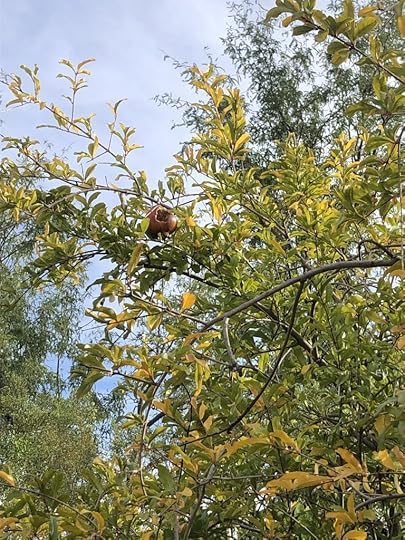
I wandered around the garden for almost two hours, pulsing with gratitude at the fall colors. The pomegranate trees were like liquid gold. A cactus wren sang from the crested saguaro. Clouds of monarch butterflies flitted among the scarlet heads of milkweed.
Here’s another thing about the peace of Christ: you might be in constant pain but you’re also in constant joy.
It was getting on toward dusk as I left. On my way out, I bought myself a year’s membership.
And driving home, I burst out laughing once again.
I’m waiting for the Second Coming! I realized. I’m not nervous–I’m just excited.

November 14, 2021
WHERE, LORD?
“Remember the wife of Lot. Whoever seeks to preserve his life will lose it, but whoever loses it will save it. I tell you, on that night there will be two people in one bed; one will be taken, the other left. And there will be two women grinding male together; one will be taken, the other left.” The said to him in reply, “Where, Lord?” He said to them, “Where the body is, there also the vultures gather.”
Taken from Luke 17:26-37, this has always struck me as a pretty thrilling, and frightening, passage. I’ve tended to visualize a situation akin to the Assumption where, like Mary, we will be whisked right in the middle of a juicy conversation body and soul into heaven: “What the…Hey, where’d she go?!” Reading and meditating on the passage last Friday, though, I’m thinking Christ means something different, or additional.
Notice he speaks of night—the time when the seed germinates; under cover of a darkness that doesn’t necessarily mean the sun has set, but in the sense of a place that is unseen to “the world.”
We’ve all been going about our day, a worker among workers, family member among family member, when an epiphany has “struck.” “It’s really not their fault; it’s mine!” “My sin is pride!” “I have never really loved God at all!” “Everything I see wrong in the other is really something that is wrong with me!” “I’m simply nauseatingly competitive!” “I owe an amends to my mother-in-law!” “I need to start tithing ten percent!”
Maybe Christ is saying, when you have such a realization, run with it. Do not look back. Don’t start analyzing and looking for loopholes and saying, “Well maybe, BUT.” Allow yourself to be taken up. Don’t count the cost. Don’t allow terror to take root. This is not the time to think But what about my neighbor—is he or she having the same epiphany? We either keep our own lamp in oil, like the Wise Virgins, or not.
So we allow ourselves to be taken up. And, unless we’ve literally died, we keep washing the dishes, grinding meal, working onyour essay, beside and among our “neighbors”–who often are not treating us all that well. If we look back, all we’re going to have left is our mortal, corruptible body. We will have allowed our spirit to be paralyzed; to become a pillar of salt, like Lot’s wife. There’s nothing ahead but spiritual death, which is far worse than bodily death.
And where death is—there also the vultures will gather.
 BIRD’S EYE VIEW OF A LANDSCAPE,
LEONARDI DA VINCI, c 1502
November 12, 2021
RESURRECTING THE DEAD: ART FROM DEATH ROW
Here’s how this week’s arts and culture column begins:
Nicole R. Fleetwood is the author of Marking Time: Art in the Age of Mass Incarceration.
There are two ways to read her book. One is as an indictment of the prison industry.
Here, however, I needed no convincing. The U.S has the highest rate of incarceration in the world, with almost 2.3 million people behind bars. Incarceration has increased 50% in the last 40 years. Black Americans are incarcerated in state prisons at nearly five times the rate of white Americans.
No human being, whatever his or her crime, should be subject, to name just one example, to the torture of 24/7 confinement.
The second way is as a book, as the subtitle implies, about the art made in prisons.
READ THE WHOLE PIECE HERE.
November 9, 2021
GOD’S SENSE OF HUMOR
We all have our own way of praying.
I’m 100% a morning person. So when I wake, I tend to jump from bed, throw open the shades, turn on the coffee, and repair to the living room sofa where I have my candle, incense, breviary ET CETERA.
I need to surround myself with others. So I am all about the angels, the Communion of Saints, the Mystical Body, Mary, Joseph, and the Holy Trinity.
I’m also a crab, a self-pitier, and a judger. So I like to start off with a few prayers to the Heavenly Host, namely:
“Holy Archangel Raphael, arrow and medicine of the love of God, inflame we implore you, our hearts with burning love, and let this wound never heal, so that we may be unfailing in love in everyday life, and overcome everything through love.”
Then the prayer to St. Michael the Archangel. Some people say “wander,” others “roam:” I like the phrause PROWL about the world seeking the ruin of souls.
Then, to cover all the bases, because I, for one, need all the help I can get, I made this one up:
“Holy Archangel Gabriel, celestial messenger of God, overshadow us with your wings, call us to bring new life into the world, and when we say Yes, with Mary, bear us up on your pinions and grant us the mercy, grace, and courage we need to persevere to the end.”
it goes on from there. Morning Prayer from the Divine Office, that day’s liturgy and reflection from Magnificat magazine. I often putter around in between, maybe saying the Angelus while making my bed, or praying for individual family members while filling the hummingbird feeder, or reciting the Just for Today bookmark put out by Al-Anon.
At some point I just sit silently, drinking in existence and not thinking of much of anything.
I also like to have a bit of “spiritual reading. For example, I just went back to Jean-Pierre de Caussade’s Abandonment to Divine Providence and read it slowly, a page or two at a time.
I doubled over laughing at this, my favorite passage. Because at the end of the day, this is kind of how it goes. We never know whether we’re “progressing” or whether we’ve been treading water for decades. Lately, I find I don’t much care. Whatever is happening, I’m alive, observant, and grateful.
“Oh! how we are brought to perfection by this hidden activity of which we are both the subject and the instrument, though we know nothing of it, for all we do seems to be the result of pure chance and our natural inclinations. Everything humiliates us. Whe we are actually inspired to speak, we think we are uttering only our all-too-human thoughts. We never know what spirit moves us, we are terrified by the most undoubtedly divine inspiration, and whatever we do or feel fills us with endless contempt for ourselves, as if our whole life were flawed and faulty. We always admire other people and feel vastly inferior to them, and their whole behavior makes us ashamed of ourselves. We mistrust any insight we have, place no reliance on our own thoughts, but pay excessive attention to the most trifling advice from others, if it seems good. God seems to keep us at a distance from all that is virtuous, only to plunge us into a profound humility. We do not think this humility is a virtue, but see it is the judgment of God.
What is really astonishing is that to those who have not been enlightened by God about the true state of affairs, we seem to be obstinate, disobedient, troublesome, contemptuous and angry.” [italics mine]
—Jean-Pierre de Caussade, Abandonment to Divine Providence, trans. John Beevers, pp 93-94
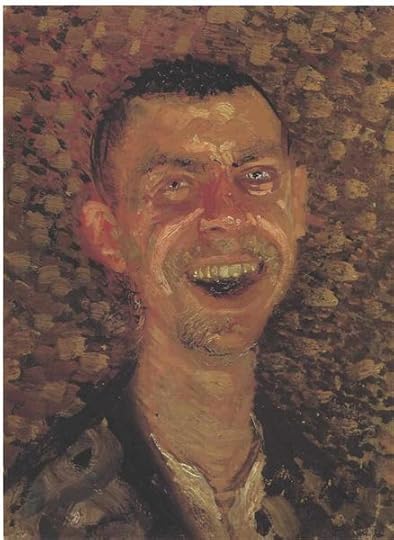 SELF-PORTRAIT LAUGHING
RICHARD GERSTL, 1907
November 7, 2021
HONEST AND DISHONEST WEALTH
Two of the Gospel readings this week are ones that have always stymied me.
Together they constitute Luke 16:1-16.
One is the parable of the unfaithul steward who gets fired for squandering his master’s goods, realizes he’s too weak to work and too proud to beg, and decides to cook the books in favor of the master’s debtors so that once he’s out on the street, they’ll welcome him into their homes.
And the master COMMENDS him, saying “For the people of this world are more shrewd in dealing with their own kind than are the people of the light. I tell you, use worldly wealth to gain friends for yourselves, so that when it is gone, you will be welcomed into eternal dwellings.”
The second reading continues on:
“I tell you, make friends for yourselves with dishonest wealth, so that when it fails, you will be welcomed into eternal dwellings.The person who is trustworthy in very small matters is also trustworthy in great ones; and the person who is dishonest in very small matters is also dishonest in great ones. If, therefore, you are not trustworthy with dishonest wealth, who will trust you with true wealth? If you are not trustworthy with what belongs to another, who will give you what is yours? No servant can serve two masters. He will either hate one and love the other, or be devoted to one and despise the other. You cannot serve God and mammon.”
What, I’ve always wondered, is dishonest wealth short of actually, say, stealing it from someone?
So this morning I googled “What did Jesus mean by dishonest wealth?”
And right away an 11-year-old blog post came up from a Msgr. Charles Pope (who’s probably some kind of universally-known Catholic luminary) in Washington, DC.
He considers a couple of other theories, then proposes this one:
“It refers to the fact that this world is unjust, and thus, all its wealth has injustice and unrighteousness intrinsically attached. We live in a world where the distribution of wealth, resources and money are very unevenly and unjustly distributed. Now world wide economies are very complicated matters and there may be any number of reasons for this. Some areas of this planet are just more fertile than others. Other areas have more oil etc. There is often a role that corrupt governments play in unjust distribution as well. It is a true fact that we are sometimes unable to effectively help the needy in certain countries because corrupt governments and individuals divert what is intended for the poor. But there is just no getting around it, this world has a very unjust and unequal distribution of wealth and resources for any number of reasons. We, in America, live at the top of the system and we cannot wholly ignore that our inexpensive goods often are so because workers in other parts of the world earn a mere pittance to manufacture or harvest our cheap goods. Much of the convenience and comforts of our lifestyle are provided by people who earn very little for what they do, often without medical benefits, pensions and the like.
Now again, economies are very complicated and we may not be able to a great deal to suddenly change all this. But we ought to at least be aware that we live very well and many others do not, and that our high standard of living is often the result of the cheap labor elsewhere. When I buy a shirt in the air-conditioned store and take it in my air-conditioned car back to my air-conditioned house with a walk-in closet, it ought to occur to me that the person who made and packed this shirt probably doesn’t live nearly as well as I do, earned very little for the work at that I can buy the shirt for less than $20 for reasons like this.
Now I am not calling for boycotts, (they probably just hurt the poor anyway), and I am not sure exactly how we got to such inequities in this world. I know it annoys me when some people simply want to blame Americans for every ill there is. There are other factors such as international corruption, bad economic theory and the like. There’s plenty of blame to go around. But the fact is, this world is an unjust place and every bit of wealth we have is somehow tainted by that injustice…
If that is the case, then what to do? Jesus is not unclear, for he goes on to counsel that we befriend the poor with our “unrighteous mammon,” that we be generous to others who are less fortunate. We who live so well need to remember that the monetary cost of a product may not fully express it’s true human cost. If we have been blessed (and boy have we been blessed) then we are called to bless others.
A final disclaimer – The question of poverty and or worldwide economies are complicated. I do not propose simple solutions. I am not an economist, I am not a socialist, I am not a communist. I am simply a Christian trying to listen to what Jesus is teaching. I am trying to internalize his teaching that I ought not be so enamored of the wealth of this world. For, it is steeped in unrighteousness even if I don’t intend that unrighteousness. I think I hear the Lord saying, “Be on your guard with money and worldly wealth. It’s not as great as you think. In fact, if you don’t learn to be generous, it may well be your undoing.” There is a powerful scripture addressed to us who have so much. It seems to offer hope for us if we follow its plan. I would like to conclude on it:
Command those who are rich in this present world not to be arrogant nor to put their hope in wealth, which is so uncertain, but to put their hope in God, who richly provides us with everything for our enjoyment. Command them to do good, to be rich in good deeds, and to be generous and willing to share. In this way they will lay up treasure for themselves as a firm foundation for the coming age, so that they may take hold of the life that is truly life (1 Tim 6:17-19).“
Then a fellow named Matt posted this comment:
“I have always had a hard time trying to understand what exactly Jesus is talking about in this passage. What’s the point? What do I do differently in my life because of what Jesus is saying here? What is he saying?
I don’t think I have found the answer to this question, but I did have this reflection recently as I read this passage about the dishonest steward: People use their intelligence, their cleverness, and their talents to do everything they can to help themselves. Most people put every ounce of effort into getting ahead or making more money. Some people use great intelligence in deceiving others and taking advantage of people. But what if we used our intelligence and effort to do everything possible to become holy and to help our neighbor? What if, instead of meditating on how to make a few more dollars, we spent our days and nights laboring to help one another? What if, instead of dreaming of riches, we dreamt of holiness? The dishonest steward used his cleverness to successfully make a way for himself after being fired. What if we used our cleverness to love one another? The dishonest steward put his talent to use to forward his cause. What if we used all of our talents to strive towards holiness and charity?”
Isn’t that great?
I always feel True North when pointed back to the fact that Christ’s kingdom is not of this world. It seems that the realization would lead to hopelessness, but in fact it leads to the fact that I’m invited to bear, along with Christ. the tension of the Cross. The fact that all wealth is in a sense dishonest is to me on a par with the fact that all government is also in a sense dishonest. That doesn’t mean we try to live without money, nor that we don’t do our part, by our own best lights, to be “good citizens.” But render unto Caesar what is Caesar and render unto God what is God’s. And accept that we’re never going to bring the Kingdom in being through politics or wealth, or even the redistribution of wealth, alone.
There’s a humility built in to this way of thinking. A humility that guards against ideology, self-rightneousness, finger-pointing, virtue-signaling, and the effort to “cleanse” in the creepy Nathaniel Hawthorne Scarlet Letter, “The Birthmark” way. We can try to cleanse all we want, but the poor we will always have with us. Including us.
Not cleansing–rather purity of heart. Also: money is for building relationships. Even the dishonest manager knew that. Money is to spread love.
The pinnacle of which comes into today’s reading: the Parable of the Widow who gave her last two mites.


