
Heather King's Blog, page 25
June 2, 2023
STRANGE VAGABOND OF GOD
Here’s how this week’s arts and culture column begins:
As Christ observed, “There are many rooms in my Father’s mansion” (John 14:2).
Thank heaven for that.
The communion of saints includes movers and shakers, the organizers, the administrators, the top ecclesiastical guns. There are the nuns who founded orders, built convents, and changed the face of education or health care. There are the martyrs, the stigmatists, and those who persevere through severe physical disabilities.
And every once in a while, there’s a figure so tragicomically out of step that I begin to believe there’s hope even for me.
READ THE WHOLE PIECE HERE.


May 31, 2023
THE VISITATION
“The Almighty has done great things for me, and holy is His name.”
How on God’s green earth did we get to May 31st? This entire year I have felt about three days behind. January was cataract surgery. February was agreeing to participate in and make a presentation at the New York Encounter: a voluntary contribution that all told what with reading, researching, pondering, writing, travel, encountering, and follow-up, seemed to take the whole month out of my life.
There was the glorious March week in San Miguel de Allende, a “vacation” for which I dearly paid upon returning home to more piled-up appointments, obligations and work. There was the five-day April retreat in Las Cruces which, like all of these events, was both respite, balm and toil all rolled into one.
There was the specter of a three-day zoom writing workshop that will at last occur this coming weekend and for which I truly can’t wait; the upcoming week in Detroit June 20-27; and the three months in Ireland July through September.
There was dental work–for which I have now been reduced to going to Mexico: more on this tragicomedy later.
And there was the giving of two mornings on prayer to the Maryknollers in Los Altos, which was accomplished a couple of weeks ago: an interlude I’m still processing, and that I’m thinking of especially this morning.
The Feast of the Visitation celebrates the journey of Mary, pregnant with Jesus, across “the hill country” to stay with her cousin Elizabeth who miraculously, since she’s past child-bearing age, is six months pregnant with John the Baptisst.
Scattershot though I can be in some ways, with all things to do with writing, speaking or sacred obligations, I am what you might say hyper-conscientious. I so wanted to honor these incredible missionaries. I so wanted to present ideas and reflections with meat.
I had asked to stay a few extra days at their Center, just to drink in the ambience and landscape and community. And I agonized for months over what to say.
Right away after the first session, I got: You need to speak louder, and slower. Some of these guys have trouble hearing. Which is so typical of life, especially my life, reality, etc. Whatever your meaty reflections, maybe say them in such a way that they can be heard?
Moreover, hardly had I launched into the second session when one of the guys raised his hand, and said, “Can you just tell us your story?”
Hah! How many times had I told myself over the last few months, For the love of God, don’t natter on about yourself and your sordid story. You’ve already writen about a zillion books about it. Talk about THEM! Think of THEM!
Nonethless, make no mistake, I can, and will given half the chance, hold forth at insane length on various aspects of my checkered though glorious life.
So in a totally spontaneous, led-by-the-Holy-Spirit way, I kind of laid it out. The alcoholism, the quitting the job as a lawyer, the conversion, the vocation. But also the excruciating love addiction, the divorce, the twenty-plus years of celibacy, the cultural exile and, partly because Mother’s Day was still fresh in my mind, the abortions.
For those of you who don’t know, there were three, pre-conversion, obviously.
And they–Fern, Swallow, and Warren are their names–have turned out to be “rich wounds” (a phrase that caught my eye from an unremembered hymn).
I told how after decades of working through, repenting, and healing, I now stand with the real, actual mothers to be recognized on Mother’s Day. Clearly I am only fit to touch the hem of the garment of the actual mothers who have given birth, nursed, raised, formed, suffered untold anxiety, and made an inestimable contribution to the world by bearing their children to term and caring for them.
Even apart from my three unborn children, and my inability/incapacity remotely to make the sacrifice of real mothers, however, I do consider myself a spiritual mother and therefore worthy to stand.
And this past Mother’s Day, when I stood with tears streaming down my cheeks as always, I had a new thought, which was that in my way I have mothered those children. It’s not that I think of them every other second, but it is that I carry them in my womb and next to my breast.
My whole life in fact consists of an effort to become the mother they deserved, and a preparation to one day meet them. The felix culpa–happy fault–of my sin is that consequently, my celibacy, my exile, my writing, prayer, dentist’s appointments, daily chores, travel, all become part of a second-by-second labor of, a straining toward, love.
Whether I’m admiring a California buckeye, balancing my checkbook, or sweating tears of blood over an essay–it is all, in a sense, for them, and by extension, for all of life and all the world.
That’s why I’m incapable of seeing abortion merely, or in some sense at all, through the lens of politics. To be for all of life is to be full of a strange joy even in the midst of terrible suffering. My abortions will always be a wound for me–my central wound, in fact–but in God, all things are made new. That doesn’t mean the wound disappears. It means the wound is very slowly, and very mysteriously, transformed.
It means I have flowered forth in a way I’m not sure I could or would have without the wound.
Somehow Mary and Elizabeth and the Visitation are right in the middle of all that–or I’m right in the middle with them, wound(s) (the Lord knows there are others) and all.
It is an objective, verifiable fact–and if you followed me around, you would see–that anywhere I am sitting–in an airplane, a park, a church–within minutes a mother will appear with a squalling infant and/or two to three hyperactive pre-schoolers, and plunk down immediately in front of, in back of, or beside me.
Seriously, it’s uncanny, I used to try to avoid such groups, but now I calmly wait for them, and inevitably, the event comes to pass.
I used to wish the children would sit somewhere else and stop crying. Now I realize they–and their sainted mothers–have come to greet me.
To visit me.
To guard me.
May 27, 2023
IN THE GARDEN OF THE RIGHTEOUS
Here’s how this week’s arts and culture column begins:
More than 27,000 individuals have been recognized as “Righteous Among the Nations” at Yad Vashem, the Holocaust memorial established in 1953 in Jerusalem. The criteria to receive the honor includes being a non-Jewish person who risked life, liberty, or safety to rescue a Jew from the threat of death or deportation; there must be eyewitness testimony or unequivocal evidence of their actions; and they must not have received any monetary or other rewards.
The number might seem large. But in his recent book, In the Garden of the Righteous: The Heroes Who Risked Their Lives to Save Jews During the Holocaust (Harper, $28.99), author Richard Hurowitz points out that 27,000 people represent one-half of one-hundredth of 1% of the European population during World War II, or about 1 in 20,000.
READ THE WHOLE PIECE HERE.
May 22, 2023
VISITING THE MARYKNOLLERS
I’m in Los Altos in the great, golden state of California with a group of Maryknoll Missioners and I must say in seventh heaven.
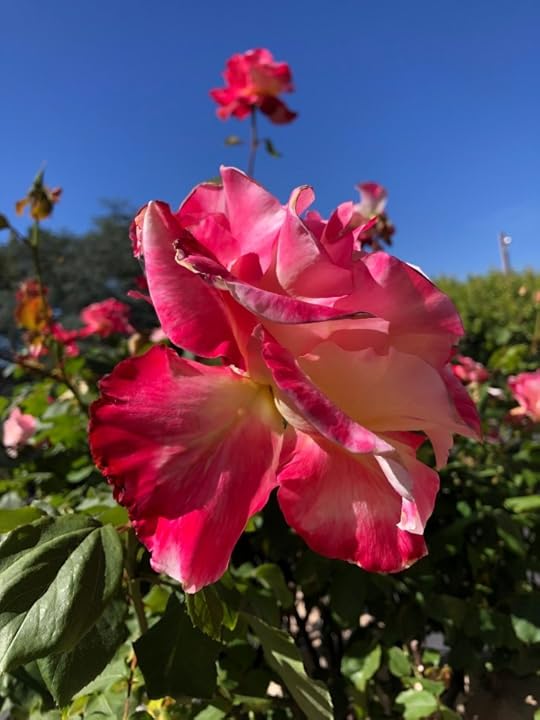
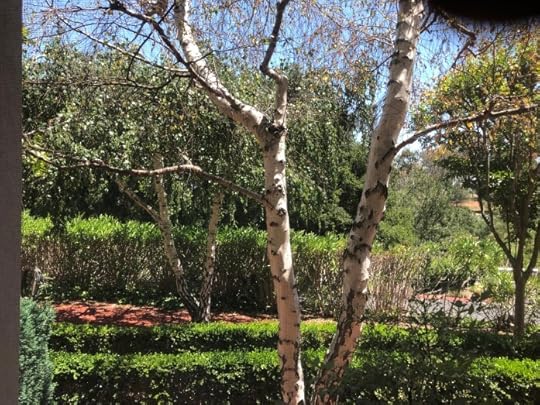
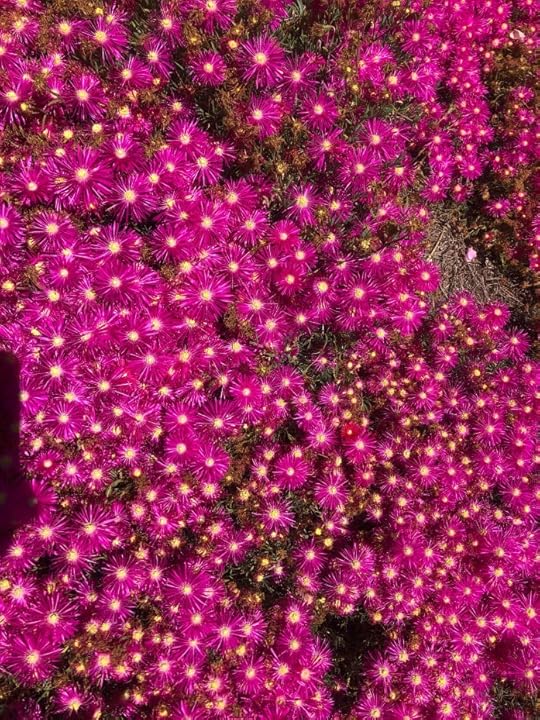
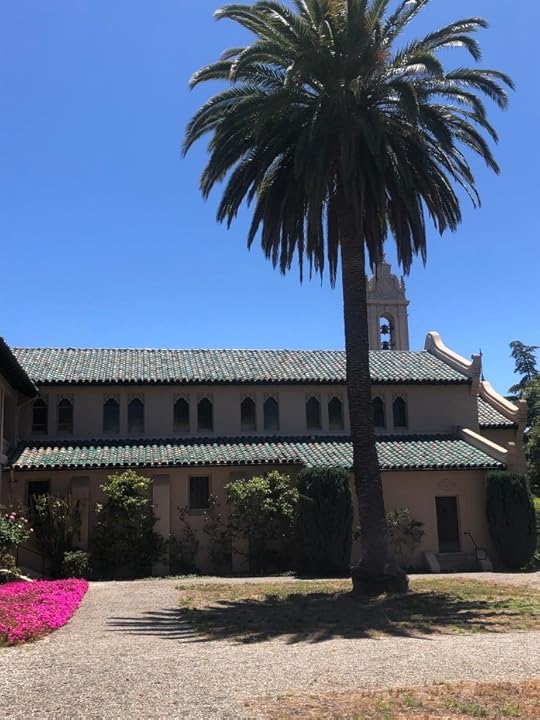
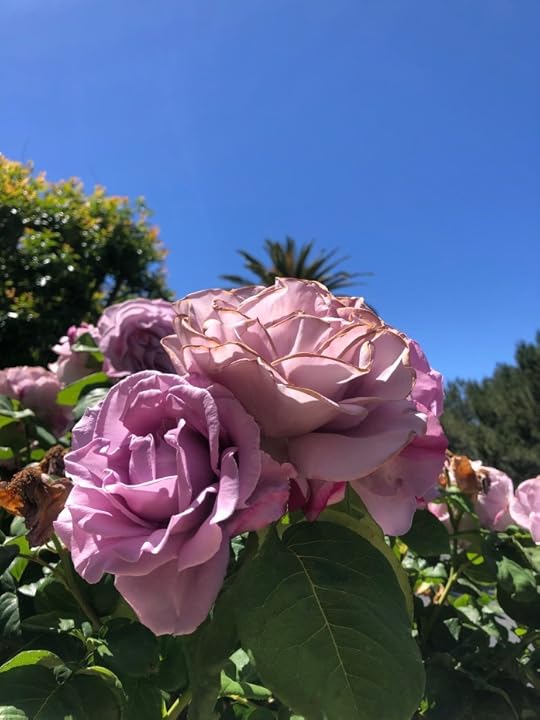
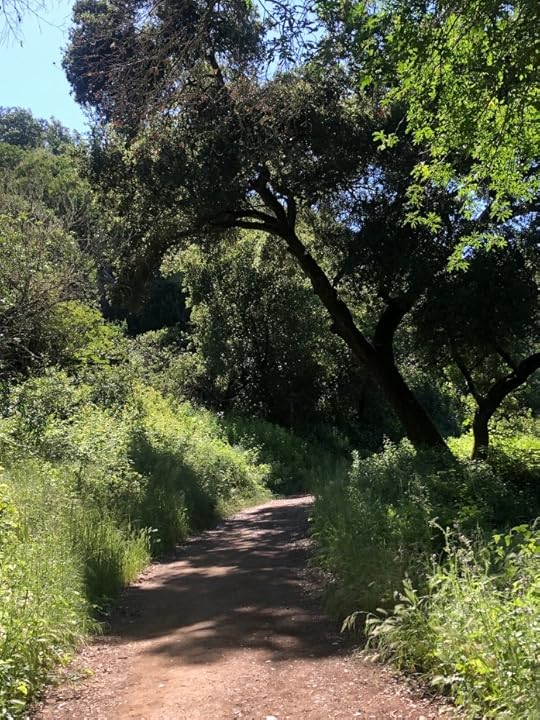
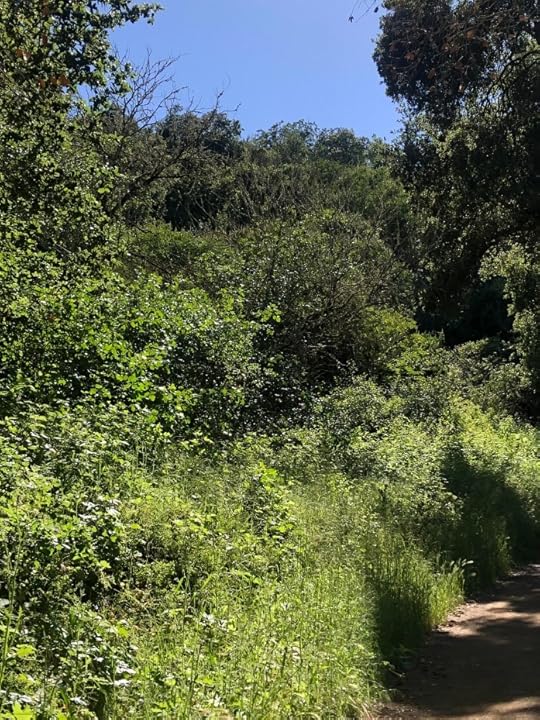
Directly across the Cristo Rey Drive lies the 4000-acre Rancho San Antonio Open Space Preserve, which contains 24 miles of trails: gorgeous wide trails of soft dirt that wind beneath towering stands of live oak, bay, and sycamore; that at times parallel gurgling streams and brooks; that are lined with all manner of blooming trees, shrubs, herbs, and wildflowers; and in many places are devoid-ish of people. I have made my way over each day and walked, 5, 6, yesterday 7 miles.
Los Altos is in the Bay Area, 45 minutes or so south of the San Francisco Airport. The weather has been LITERALLY PERFECT. I’m reminded all over again of how, why and when (forever) I love California. Some guy emailed me awhile ago to thank me for my writing and added a congratulations for moving out of LA–“Let’s pray the whole state falls into the sea sometime soon,” he said, at which I mightily bristled!
I replied, “Oh no, California is far too gorgeous and wild and wonderful and weird a place, and also has zillions of human beings in it (I did not add, By the way Mr. Catholic), ever for God to let it fall into the sea!” I know he meant well but this is what comes, if you ask me, from reading too much of the “news” and thereby thinking we “know” a place in its entirety…
In fact, I’m pretty sure I’d move back in a second–not to LA, but somewhere like…well, like Los Altos, which is only the wealthiest community apparently in the entire United State of America. So how about a studio, close to a church, quiet, with miles of walking nearby that I could use for a base to adventure and explore the neighborhood, country and world?
No seriously, I loved Sister Wendy Beckett‘s setup–she had a hermitage on the grounds of a Carmelite monastery but was not a member of the order. And for a certain period of her life, at least, she would periodically take off to visit museums all around the world in order to film PBS shows and write about art. Then she prayed for seven or nine hours a day.
I would instead read or play the piano or watch movies or garden for much of that time, and also would chafe at wearing a habit, and also am not holy and deep as Sr. Wendy was. But other than that, I’m just like her, and could write on spiritual matters, art and culture for the people who were putting me up, and also gladly pay rent. So if anyone has any ideas, let me know! Somebody’s got to be looking for a resident hermit–who leaves half the time.
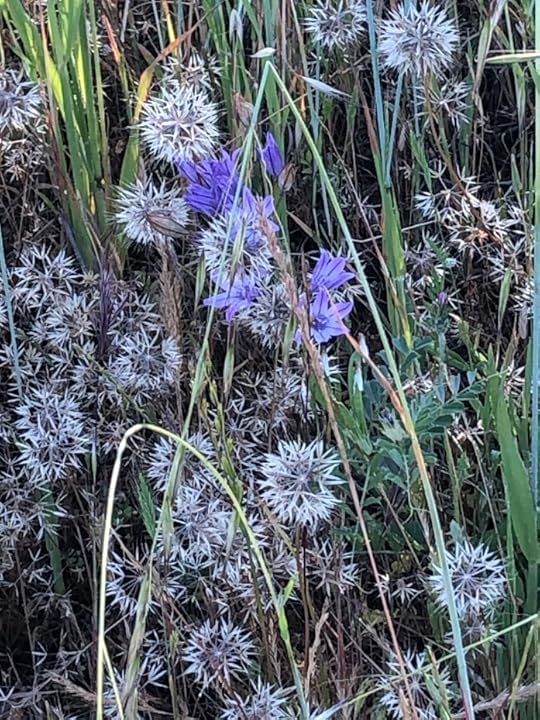
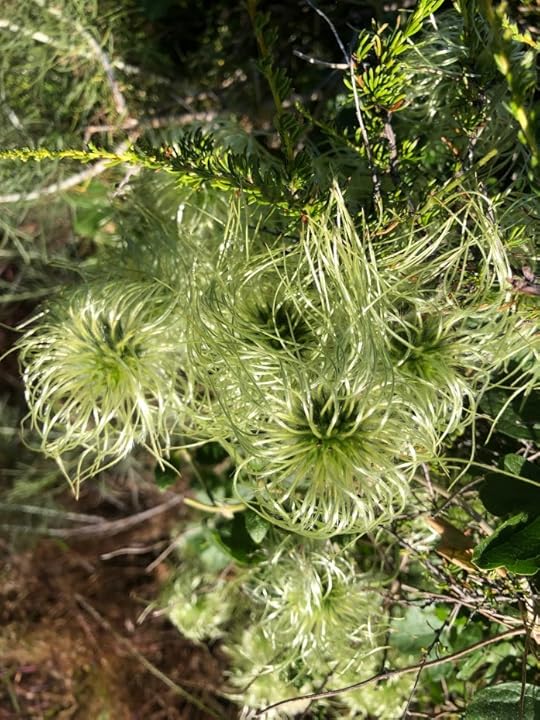
Which brings me to the Maryknollers themselves, who are knocking me out with their generosity of spirit, kindness, intelligence, wit and total humility in spite of the fact that most of them have spent 50 or 60 years in some remote (or on the other end of the spectrum, overcrowded) region of Africa, South or Central America, or Asia. Usually it sounds like in places that were boiling hot, humid, infested with mosquitoes, snakes, bats, and/or deafingly loud nocturnal frogs, and plagued by poverty, illiteracy, disease, and/or gang warfare. Helping with healthcare, education, the building of churches, hospitals and schools. And of course, always, providing the Sacraments: the Mass, Confession, baptisms, weddings, funerals.
Today my dear artist friend who lives elsewhere in the Bay Area is going to fetch me–I’ll spend the night at her place and tomorrow, we will journey to the San Francisco pier and board the ferry to THE ISLAND OF ALCATRAZ. Which among other features has beautiful gardens, started by the max-security prisoners decades ago and, as of 2003, restored and maintained by the collaborative effort of the Garden Conservancy, Golden Gate National Parks Conservancy, and National Park Service. That should yield a juicy arts and culture column.
Finally, from my real contemplative hermit friend in Maine, Brother Rex, this wonderful reflection:
Waiting: From trying to pray well, [St.] Clare [of Assisi] learned a lot about loving God. For one thing, she learned that love involves an enormous amount of waiting. You waited for your beloved to come upon the mountain tops; you waited just for a glimpse of him bouncing across the valley of your loneliness, and like a gazelle he was restless and seldom stayed long with you. And if you were too dependent on his visits, his tangible presence, then most of the time you felt lonely and frustrated, and your thoughts were preoccupied with the beloved and his next coming. And so you learned to live as independently of his felt presence as possible. You learned to expect little and greet every visitation as a gift, a surprise that would happen when you least expected it.
You prayed for his coming, but you were wise not to let your longing, your loneliness interfere with living, with what had to be done from moment to moment. You kept giving even when you felt nothing in return. And most of all, you learned to trust your beloved, to know deep within that love did do not depend on your experience of his presence. In fact, most of the time his love was a felt absence that prepared the heart for the ecstasy of meeting once again.
Life with Jesus was a drama of finding and losing, of separation and reunion. The price you paid for ecstatic union was the loneliness and heartache of continued separation, of wondering if he had abandon you, had ceased loving you. With the Lord, Clare experienced at times the ecstatic union of mind and heart and soul and body; the intervals between his visitations caused her more pain than she could think about. She tried not to remember the intervals; they would, after all, continue to recur without her dwelling on them. She tried to live in the present, hoping and praying, but not depending too much on the coming of her beloved. And by living in the present, Clare gradually learned that the contemplative life is not a living for ecstasy but a simple faith that knows the Lord is always present whether or not his presence is felt any tangible way.
–Murray Body, OFM, from Clare: A Light in the Garden
May 20, 2023
THE FRIENDS OF GRIFFITH PARK NEWSLETTER
Here’s how this week’s arts and culture column begins:
At more than 4,210 acres, Griffith Park is one of the largest municipal parks with urban wilderness areas in the United States.
Bordering Los Feliz, Burbank, Glendale, Atwater Village, the Hollywood Hills, the 5 and 134 freeways, and the LA River, it’s almost five times the size of New York’s Central Park and four times the size of Golden Gate Park in San Francisco.
In addition to the wilderness, the park includes the Griffith Observatory, the LA Zoo, the Gene Autry Museum, and Travel Town, with its own museum and a mile-long miniature train ride. A lot of people would like to see even more development.
The all-volunteer Friends of Griffith Park is the main voice advocating to keep the park in its most natural and beautiful state. It’s also the go-to nerve center for the general public.
READ THE WHOLE PIECE HERE.
May 12, 2023
“ALL CONSUMING” AT THE NORTON SIMON MUSEUM
Here’s how this week’s arts and culture column begins:
“All Consuming: Art and the Essence of Food,” a current exhibit at Pasadena’s Norton Simon Museum, features 60 paintings, prints, photographs, and sculptures spanning the years 1500-1900. How did artists during those four centuries respond to and shape food cultures?
In the first two galleries, food-based art is addressed through the themes of “Hunger,” “Excess,” and “Sustenance.” “Hunger” explores various facets of food deprivation. “Excess” features opulence and eroticism around food. “Sustenance” regards food through the lens of agricultural landscapes, labor, and commerce.
The idea is to present actions and dynamics that give food profound social meaning.
READ THE WHOLE PIECE HERE.
May 8, 2023
36 YEARS SOBER, YAH!!
Ha, watch out, I have been moved to get in front of the camera in the last couple of days! Today, May 8, I celebrate 36 years–whch just goes to show how OLD I am–of sobriety.
So I thought to reflect a bit on my lifelong introversion, also lifelong inability (not that I’m bragging to work up any kind of interest in or knowledge of world history, and the way the two have combined (along with other factors) to shape my approach to travel.
The day before, also riffing at least in part on the introvert/love-of-silence-and-solitude theme, I shared a bit about my recent hermitage retreat during which I read, among other things, Lewis Hyde’s The Gift and a biography with which I identified a little too closely in places, if you know what I mean, called Howard Hughes: His Life and Madness.
Deeply grateful for my life, my sobriety, and you, my readers.
May 5, 2023
SAN MIGUEL DE ALLENDE
Here’s how this week’s arts and culture column begins:
For years I’d heard of the charm and beauty of San Miguel de Allende, a small Spanish colonial city a few hours north of Mexico City. At long last, partly at the urging of certain people in my circle that I should “take a vacation,” I went.
The weather was perfect: 80 degrees or so, sunny, and with a breeze. My hotel featured an inner courtyard overgrown with vines and copa de oro flowers, a bubbling stone fountain, and a room with high ceilings, tiled floors, and wood-shuttered windows.
The rooftop terrace overlooked jacaranda trees in full bloom and the warm pink spire of Parroquia de San Miguel Arcángel, the cathedral around which the life of the city revolves.
READ THE WHOLE PIECE HERE.
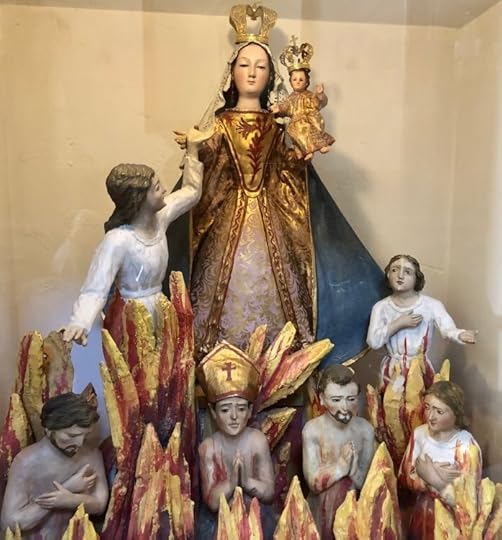 THE FIRES OF HELL
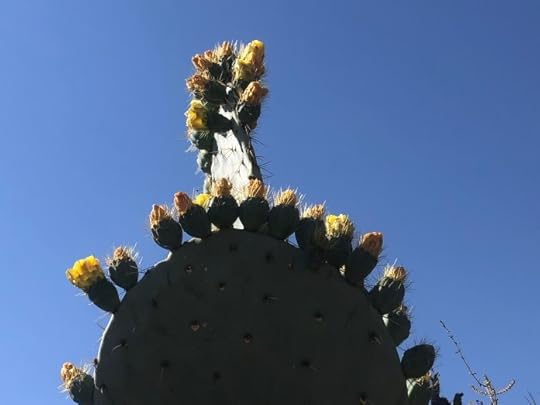 EL CHARCO DEL INGENIO, SAN MIGUEL’S BOTANICAL GARDEN
May 2, 2023
EMPTINESS
“The hardest cross to bear in life is the thought that we are wasting our time, that we are useless, that the world is rushing along and we, apparently, have not yet found our feet. For the missioner the monotony of merely marking time, of facing petty tasks, or even manufacturing small jobs to kill time, can be especially disheartening.
This monotony readily suggests to a nervous conscience that we could be doing better work elsewhere, that we are not really appreciated at our full worth, and that we are not given a chance to show what we could accomplish in busier circumstances. All of us have our daydreams of ideal conditions in which we modestly achieve wonderful success through our own plans, and in these dreams it is difficult at times to distinguish between inspiration and vanity. We all have our moments of dreadful tedium, when even our favorite books are distasteful and when we favor a chance visitor with unusual cordiality.
At such times we could recall with profit the words of the blind Milton: ‘thousands at His bidding speed, and post o’er land and ocean without rest; they also serve who only stand and wait.’ God needs us where we are; we are active even in being merely on call; and the Omnipresent God is beside us even when we feel alone. . . . Sentrywork is essential though seemingly inglorious.
There is a tendency in modern moods to emphasize the emotional side of religion; and we are all somewhat tainted with this error. We are only too prone to look for sensible consolations in our mission work, and in their absence we are tempted to take a grim view of life. The remedy for this self-centered condition is contemplation and service of God. Contemplation takes us out of ourselves and focuses our attention on God; service of God instinctively issues from our contemplation. We see that God needs us in His redeeming of the human race; and we forget ourselves in satisfying God’s needs.”
—Francis X. Ford, M.M., Stone in the King’s Highway,
Seek the answer in God’s grace, not in doctrine;
in the longing of the will, not in the understanding;
in the sighs of prayer, not in research;
seek the bridegroom not the teacher;
God and not man;
darkness not daylight;
and look not to the light but rather to the raging fire that carries the soul to God with intense fervor and glowing love.
The fire is God
—From The Journey of the Mind to God, by Saint Bonaventure
April 28, 2023
FROM PRODIGAL TO PRIEST
Here’s how this week’s arts and culture column begins:
Father Goyo Hidalgo, an LA archdiocesan priest, has written a book endorsed by Archbishop José H. Gomez. It’s called “From Prodigal to Priest: A Journey Home to Family, Faith and the Father’s Embrace” (Ave Maria Press, $14.95).
Hidalgo was born and raised in Spain in a deeply Catholic culture and family. He had an intellectually disabled brother who required 24/7 care. He revered his mother, strict but loving, who prayed the rosary and told him often that if he forgot to talk to God daily, then one day he would forget about him completely.
In the village where he grew up, priests were looked up to, emulated, admired. “Half our lives revolved around services that required a priest.” Desiring to follow in the footsteps of Padre Pio, he left home at the age of 10 and entered a seminary in Toledo.
READ THE WHOLE PIECE HERE.


