C. Litka's Blog, page 52
May 24, 2020
Origin Stories -- The Bright Black Sea (Part One)
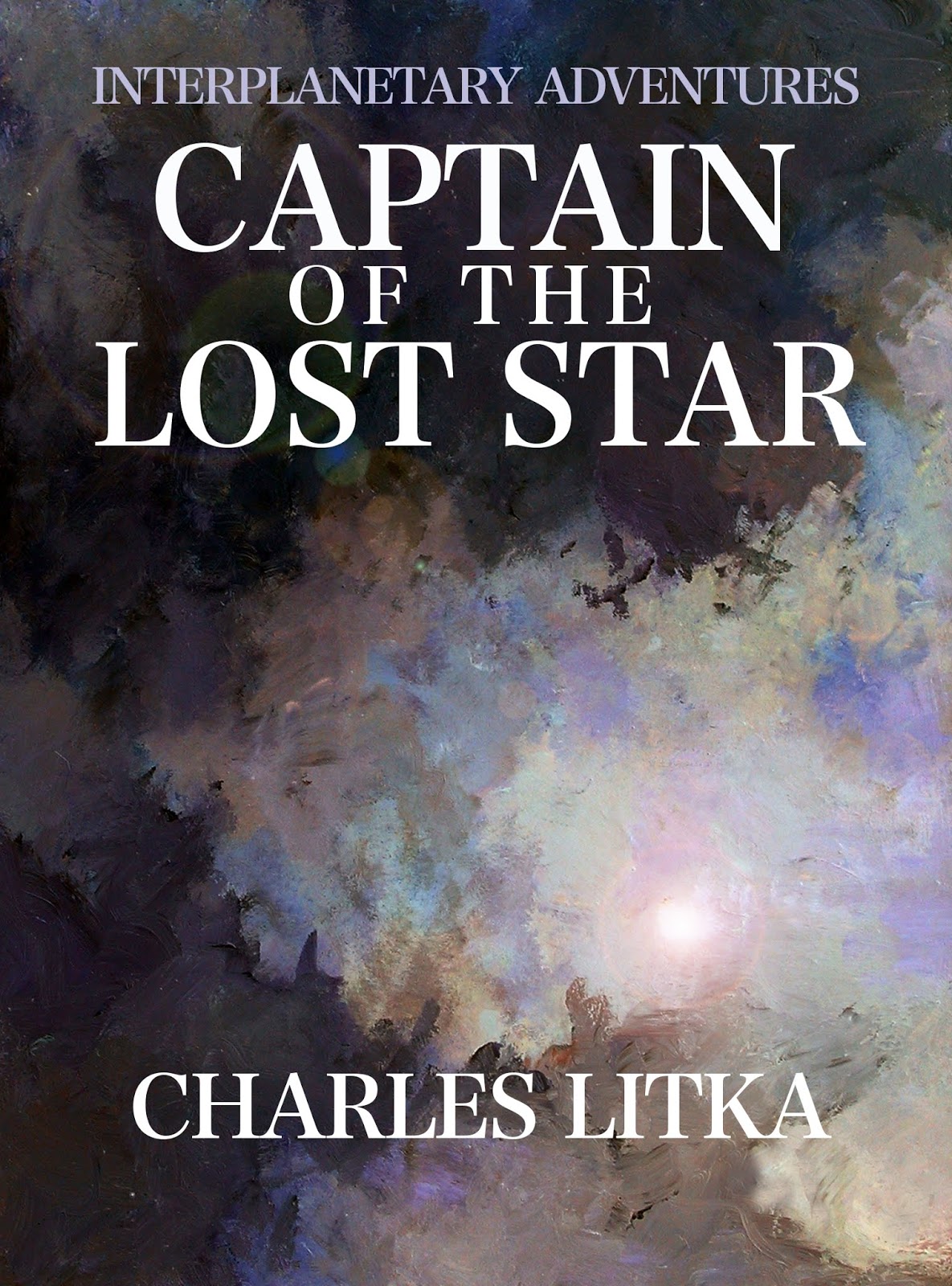 First cover with its first title. This would end up being the first 1/3rd of The Bright Black Sea
I can pin part of the blame for instigating The Bright Black Sea on a website/magazine called Raygun Revival. It was on the web from about 2006 to 2012 and featured short stories and serials recalling old fashioned space operas. I can’t say I actually read many, if any of the stories – I really can’t read books on a computer (the scrolling gets to me) but the idea of writing the type of story that they might welcome was certainly one of the threads that lead to The Bright Black Sea. I did start to write a short story – on my ipad – with the idea of submitting it to them, but I didn’t finish it, and it got lost… But while nothing concrete came from my interest in Raygun Revival, it planted the seed to write an old fashioned space opera.
 A cover prototype, never used.
Of course, I must go much further back in time than Raygun Revival to find the true origins of my space opera. I wrote it as a homage to all of the space operas of my youth, from E E Smith, Andre Norton, Heinlein, A Bertram Chandler, and many others who told stories centered around space ships. The space ship is, to me, the defining feature of space operas – it carries you to adventure.
However, the seeds of The Bright Black Sea were planted even earlier. I think I can go all the way back to the old Flash Gordon serials that I watched on the small screen of a b&w TV in the 1950’s. And from that on to the first SF books I read: the Tom Corbet, Space Cadet series, along with the Tom Swift Jr. books. My decision to set my story based on old fashioned rocket ships was both a challenge to myself and a nod Flash Gordon, Tom Corbet, Digg Allen, as well as Arthur C Clarke’s The Sands of Mars, the first “adult” SF paperback I read. No faster than light drive. No artificial gravity. It was “rockets away, lad!” And magnets in the soles of your shoes!

And it was a challenge. Those old rocket ship stories still had a solar system to explore when they were written, with the steaming jungles of Venus, the ancient ruins of Mars, the mines of the asteroid belt, and all the rest. Setting a rocket ship story in today’s solar system, while certainly possible, did not interest me. I wanted the romance of the jungles of Venus and the dead cities of Mars. So I had to invent a place where I could invent anything I cared to, without sacrificing the authenticity that using rocket ships brought to the tale. I would, of course, have to fudge science somewhat to get everything working – everything from inventing materials that would protect my spaceers from the deadly radiation of space, to making plasma/fusion propulsion easily do-able, to genetically engineering humans to be able to live in free fall, low gravity, or high gravity without health issues. I also wanted a wide canvas to paint my stories against, and, with travel between stars that were light years apart impossible with my rocket ships, I had to invent a place were I could cram as many planets and even stars into a relatively small space of space.
But they couldn’t be too close, either. If there is one thing that makes me close a book, it is when authors chose to set their stories in the “galaxy” and then make every planets a subway stop apart. The universe is really, really big. The galaxy is really big. And yet I often come across stories where stars are just several hours away from each other. And then, as often as not, they’re one feature planets – a desert planet, an ocean planet, a city planet…That being the case, why not set the story on a planet, or even a continent, and have cities or locales so that the heroes can drive, fly, or even take a train to? But before this turns into one of those observations directed at the clouds, I’ll just conclude by saying that I wanted my locales to be a realistic distance away from each other, but close enough that I could write a variety of stories about routine travel between them. So I gave each star a whole host of habitable planets, and packed the stars very, very close together by making them the debris of a failed supernova. In this way, I made travel between planets a matter of days or weeks with months between the solar systems. I created the Nine Star Nebula.
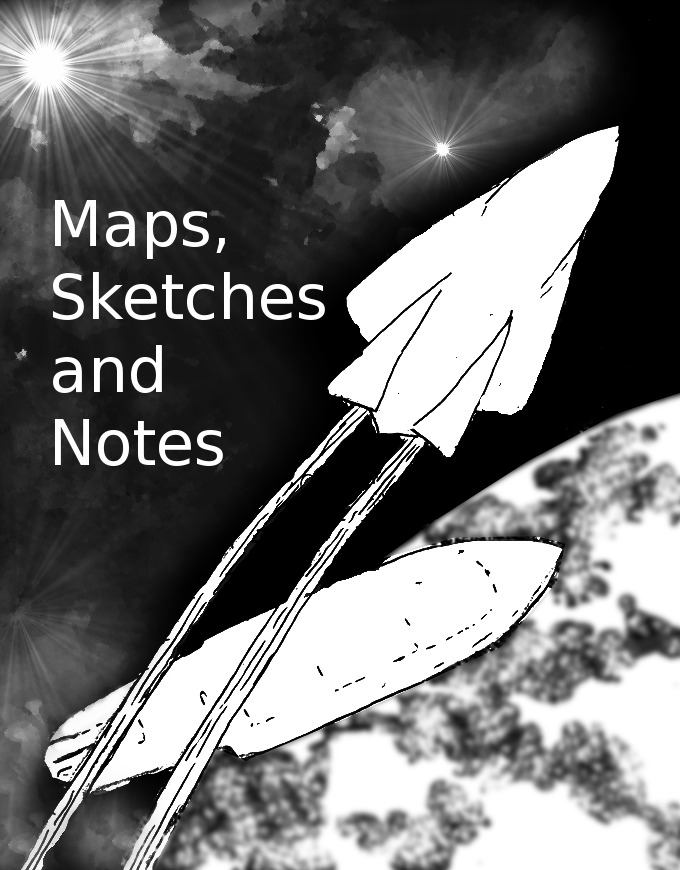 The Lost Star in orbit.
And that brings me around to yet another thread that lead to The Bright Black Sea,which is sea stories. I can remember at least looking at the Howard Pease’s “Tod Moran” series of juvenile sea stories on the library shelves while I was selecting Heinlein’s juvenile books. I don’t think I actually checked one out back then, though I did pick a few up when I came across them at book sales later in my life. Still, that seems to suggests that I was interested in sea stories from an early age as well. I certainly started reading them in late teens and 20’s. There were Basil Lubbock’s books about the China clippers, W Clark Russel’s Victorian era sea stories, C. S Forester, and later, Patrick O’Brian’s (and many other’s) stories of the Napoleonic era.There was Erskine Childer's The Riddle of the Sands as well as the tramp steamer stories of C J Cutcliffe Hyne, Guy Gilpatric, and others. I was never brave enough to go to sea myself, so I went to sea from my armchair. So, with my love of sea stories, I made my rocket ships, ships with crews, not airplanes with a pilot and perhaps passengers, or subway cars that whisk one from stop to stop.And I imagined that the distance between planets was an ocean to sail across in days or weeks, not something to fly over in a couple of a few hours.
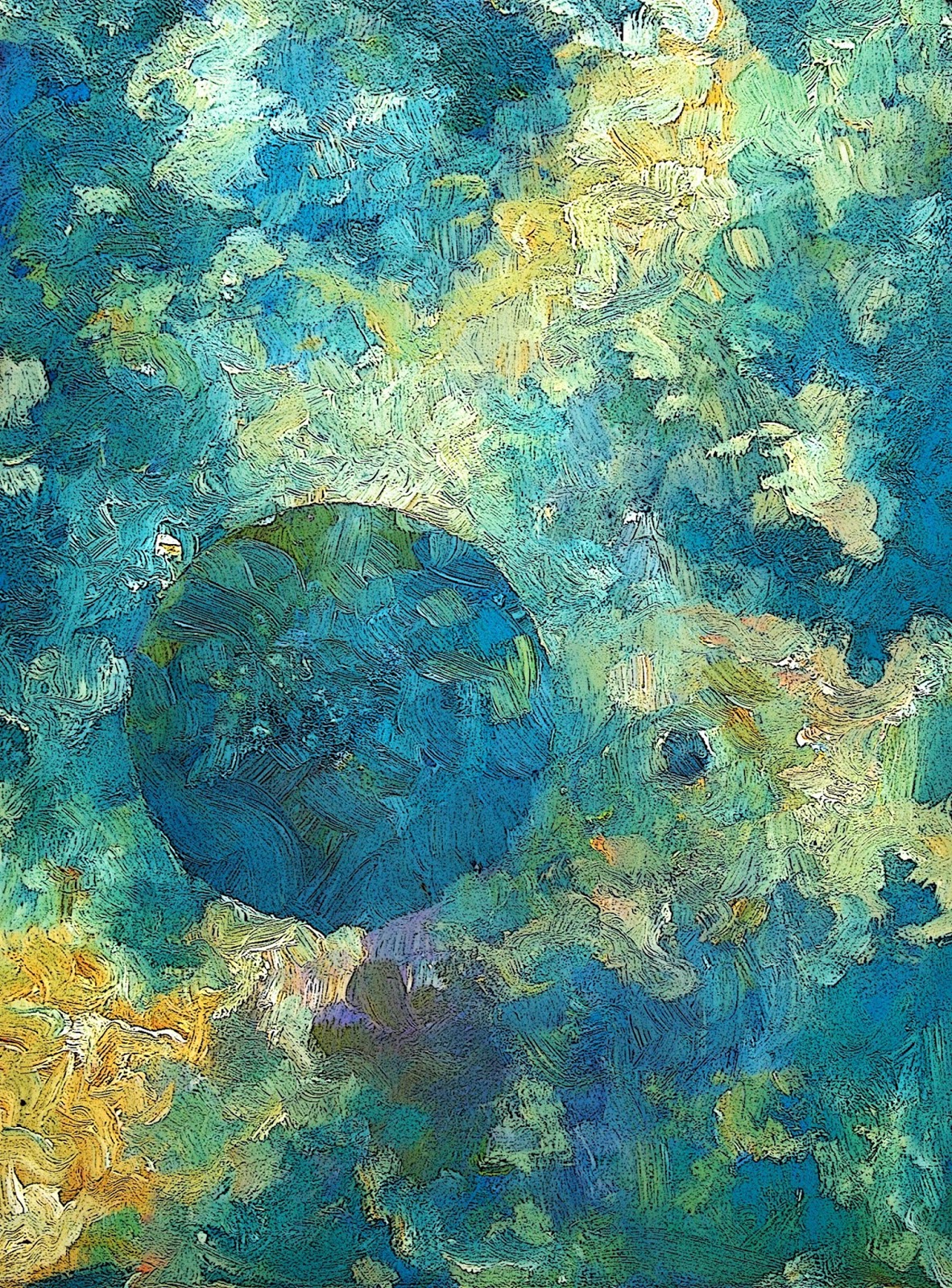 The ancestor painting of the present cover
 But seeing that I've a lot more to talk about, I think I'll bring this post to a close. In the next installment in this series I will discuss the how The Bright Black Sea came to take its present shape, what my original plan for it was, and how and why I abandoned that plan.
Stay tuned.


May 19, 2020
Origin Stories -- A Summer in Amber
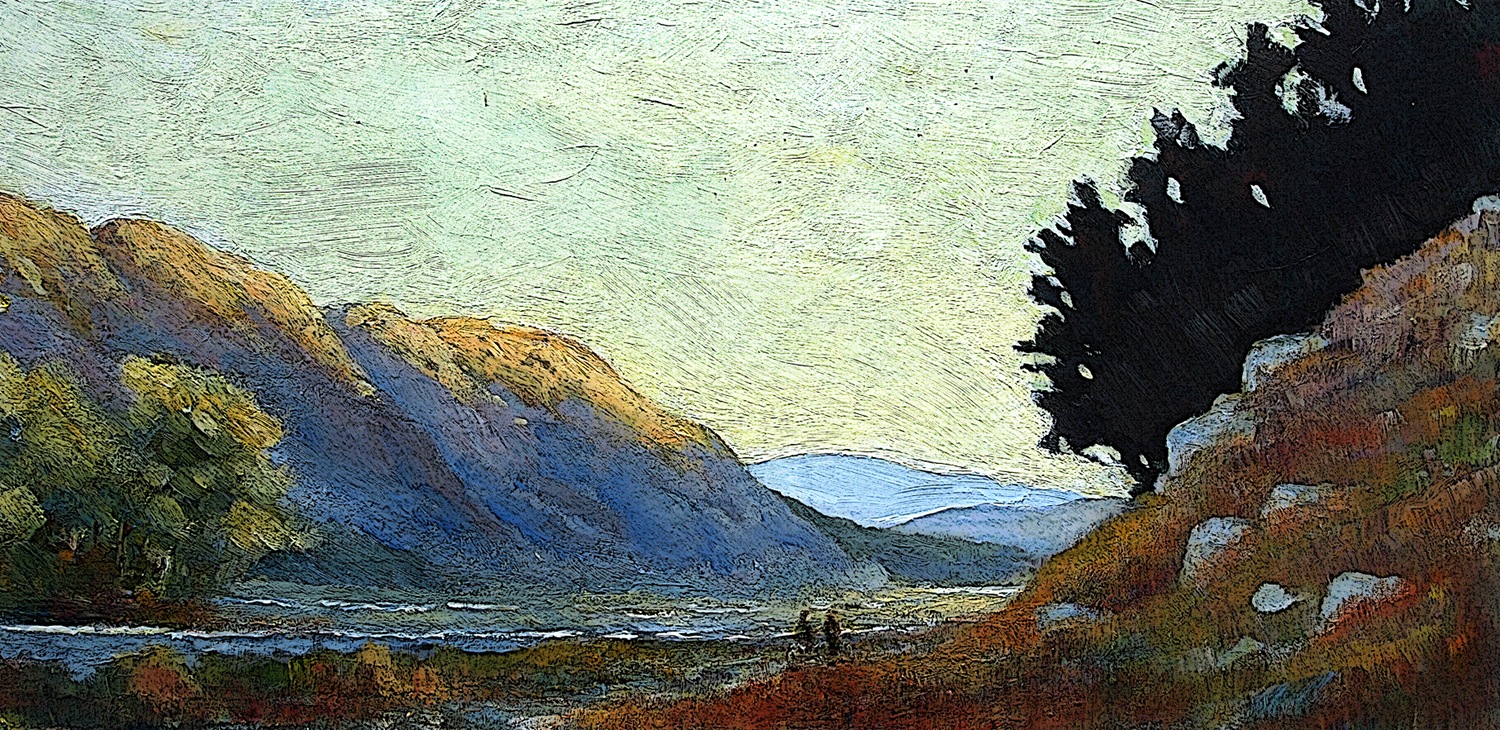 Evening, Maig Glen
I suspect that I had begun working the first “episode” or two of that would become The Bright Black Sea prior to starting A Summer in Amber, but since A Summer in Amber ended up being published first, I’ll discuss it first.
Perhaps I should begin by saying that I blame it all on Edgar Rice Boroughs. Boroughs was experiencing a great revival back in the mid-1960’s when I started reading science fiction, and I was a big fan of his stories as a teen. Still, I never realized just how much of an influence he had on my tastes in stories until I started writing my own. All his stories had an element of romance in them. There was always a princess to fall in love with and rescue, usually many times. I realized, only after I started writing my stories, that I always wanted that element in them as well. They didn’t seem complete without one, nor would they be as fun to daydream about. I am, however, very careful to make certain that my princess are usually the ones doing the rescuing. They’re more fun that way.
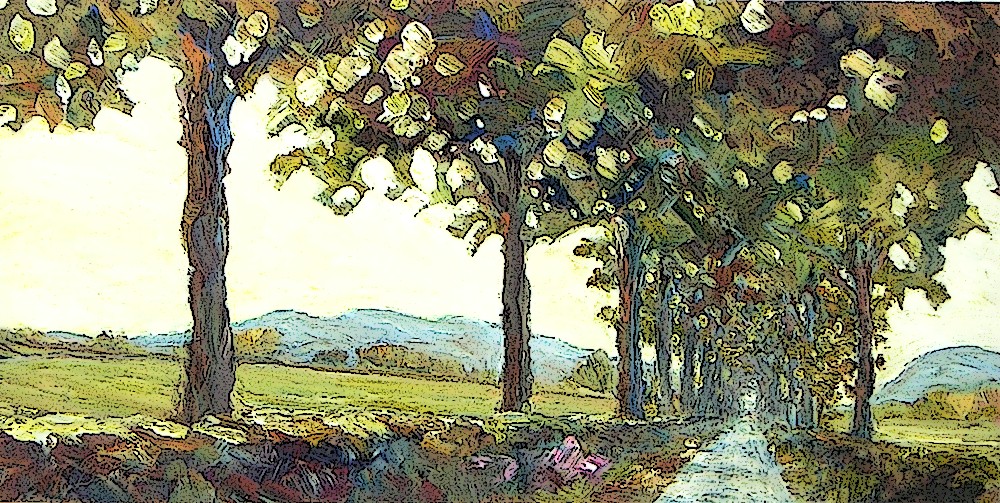 The Maryfield RoadNow on to A Summer in Amber. The first files I find for the story, then titled The Rhymer’s Gate, date back to March 2013. This fits with my time line, since I know that watching the first two seasons of Downton Abbey on Netflix sparked my desire to write this story. I enjoyed the atmosphere it created, both visually and with the music, and the romance. I was, however, certain that I could write a better one using the same theme – a commoner’s intrusion into the world of the upper classes – while avoiding that show’s soap opera entanglements. i.e. no dead bodies need be hauled around the house.
 My first thought was to write it as a period piece, like Downton Abbey. But I rather quickly rejected that idea. First, because it would require a great deal of research to get all the little details of everyday life in England in 1910 right, since I know that historical fiction readers are very picky about getting those things right. This would mean researching all sorts of things, from train schedules and times, to how telephones worked, as well as the manners and speech of the English of all classes of the time. And a thousand other things. It could, and no doubt has, been done. But it would involve a lot of work. I don’t really like work. And, well, in the end, I would mean that much of the backdrop of my story would reflect the research, work, and writings of other people, which made me uneasy.
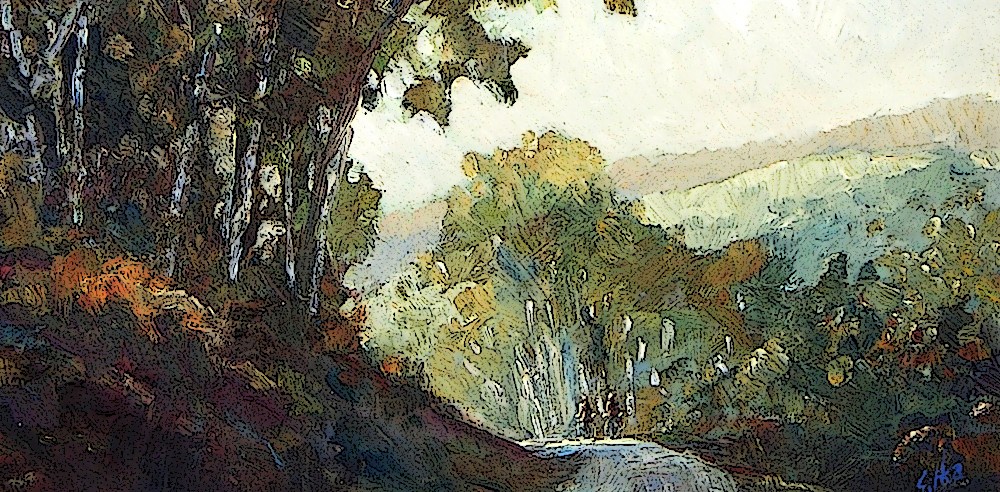 Glen RoadI can offer two examples of this phenomena from my experience. Many years ago I started reading a fantasy book that featured a sailing ship. As I read the description of this ship, I experienced a sense of deja vu. It seemed that I was reading an almost word for word description of the tea clipper Cutty Sark. Tea and tea clippers where an interest of mine in my youth, and so I happened to be quite familiar with such ships – in words, anyway – and the passage struck me as something I’d read before. Maybe it wasn’t. I never bothered searching for the description in the Cutty Sark book that it reminded me of, but it just seemed so eerily familiar.
 And then there is Connie Willis’s Blackout. I was also an avid reader of life in England in 1940, and the blitz. So that when I was reading her story, I got the distinct feeling that she had read, and incorporated into her story, incidents related in the sources I had also read. I know that she had spent a year researching the books, so this is not surprising. And while this is just a sense of deja vu rather than any suggestion of plagiarism, the fact that I could see, as it were, the bones of her story from my own reading in the history of the period, made me leery of doing something like that myself. I feared that if I wrote the story as a period piece, the work and writings of others would inevitably creep into my story. I didn’t want that. I wanted it all my own.
 Bridge over the Maig RiverThe other reason I decided not to write it as a period piece is that history is an iron master. If I set it in the same time period, all the young men would be going off to war in a couple of years, and the world would change in ways that are well known. So, unless I wanted to make a historical fantasy out of it, the future of my characters would be dictated not by me, but by history. I didn’t care to cede control of my characters and story to history. And if I was going to write a fantasy, I might as well make it all my own.
However, since I wanted that old-time feel to my story, I decided to set the story in a post apocalyptic future. One that would allow me to bring in all the old-timey stuff I wanted. Not only I could then mix old stuff together with some modern stuff as needed, but I could give the book a vaguely haunting, nostalgic air to it, like Downton Abbey had.This would also give me complete freedom to make up whatever I wanted, without a tremendous amount of research, which is to say, it saved me from having to work. It would be my world, and I’d call the shots. I figured that a story like this could fit – more or less – into the steampunk genre that was fairly popular at the time, and might still be. Sort of.
 Road to the HighlandsThe second major ingredient of A Summer in Amber was Scotland. The locale was inspired by the work of John Buchan and the stories he set in the Scotland of the first several decades of the twentieth century. Stories like The 39 Steps, John Macnab, and Huntingtower, plus the Scottish stories of Compton Mackenzie like Monarch of the Glen, Keep the Home Guard Turning, Whisky Galore and Hunting the Fairies. All these stories and their vivid description of the Scottish countryside brought that land to life in my imagination, and I wanted to revisit them in my story. I had traveled about Scotland on an extended holiday after I graduated from college, so I could bring a bit of personal experience to the stories as well. I should also credit the 1959 movie The 39 Steps with Kenneth More and Taina Elg. It is one of my favorite movies. It offers a rather romantic version of Scotland of the 1950’s. No low, grey skies to be found in its Scotland. The bicycle weekend in the story was inspired by a scene in the movie.
 So I had a theme inspired by Downton Abbey, and a setting inspired by the books of Buchan and Mackenzie. What I needed was a story to get my narrator to Scotland and on to the estate, if not into the house of the wealthy upper class laird.
 Evening in the GlenI set out to write a mystery/thriller centered around a legendary invention. I explored many ways the story could play out. At one time the secret was a theory that would lead to a great scientific revolution which was devised by one Hugh Gallagher who stayed at the estate – owned by the department head of the college that he taught at – during the Storm Years. There, with the aid of his wife, Selina, he had perfected this theory, or so legend had it. It was lost, and would be found… Another version, closer to the final version, had a lot more industrial spying, intrigue, and action in it. Rival firms were actively attempting to steal the secret that Sandy Say was deciphering, including waylaying him, stealing the papers, along with chases through the countryside. But… after working on it for a year and more, I realized that I wasn’t that type of writer. I couldn’t get that type of story to work. And so, in the end, I just decided to write a simple “What I did during summer vacation” romance. I made the “The Rhymer’s Gate” more central and dramatic in this version, replacing the thriller elements of the original concept, and things worked out. At least for me.
The story is actually based in a real place, though I changed all the names, slightly. If you find it, you can see, on Google street view, what the countryside looks like now. Though, of course, after the Storm Years, it looks somewhat different in the story – more overgrown and abandoned.
My goal as a creator is to bring something new into the world. And yet, as you can see, the seeds for whatever is new to the world in A Summer in Amber, were in the world already – brought there by creators before me.
 The aurora over the highlandNOTE: The illustrations for this post are samples of the chapter heading art I had created for an early version of the book. Art in ebooks is somewhat problematical (for me) and I decided that black and white versions for the print book wouldn't be worth the effort.
May 13, 2020
Origin Stories - Some Day Days
 An early cover, with my preferred spelling of the title
This is the first of my origin stories, in which I explore what inspired me to write each of my stories.
I should begin by mentioning that I don’t do market research. I haven’t read the 100 best selling books in my genre(s) to get a feel for what those readers expect. I haven’t studied their blurbs, nor have I modeled my covers after the best selling books in my genre. I also haven’t sold tens of thousands of books or make much money either, so take my method for what it’s worth.
All of my stories were inspired by self-imposed challenges, memories, or books I’ve read and enjoyed. I’ll talk about each of them in the order that they were written.
Some Day Days Original working title: Yours, (someday, maybe)My preferred title spelling would be "Someday Days", but "someday" is not universally considered a word, especially in Britain where the story takes place, hence some days.
Kiss of the White Witch, is the opening “piece” in my “fix-up” novel, Some Day Days, A Romance in an Undetermined Number of Pieces.It was the first story that I wrote that I eventually took all the way to publishing it. I have files dating back to 2009, with the working title of Tea and the White Witch. I wrote Kiss of the White Witch as a short story – or as short as I can write a story. It originally ran a bit under 10K works, so that it is really a novelette, though once it became part of the a much longer story, I fleshed it out even more. My attitude is that if a reader is in a hurry to get through my books, they probably should just move along.
It come to be written as a result of two challenges. The first was some sort of challenge to write a flash fiction story about a piece of technology and how it impacted the future. I don’t recall where I came across this challenge. In any event, the piece of technology I chose was something that was in its infancy (and still is) – a device that takes a video of what a person is seeing. Think of Google Glasses or those Snapchat sunglasses which have cameras that record a few minutes or seconds at a time. I took that ideas to the point were one’s entire day could be recorded on such a device. I called them “dynamic diaries”, or dyaries for short. And in the story, I briefly explored what implications such a device might have, if widely adopted, and used a romantic plot to do so.
My second challenge was self-imposed. I wanted to write the story using as much dialog as possible. I wanted the characters to tell their stories in their conversation. At the time I had read some stories written by a friend of my wife, which I felt could be told more engagingly and more interestingly by the people within the story. Most of us live our lives in first person singular, and to me that seems the natural way to tell a story. Life at ground level.
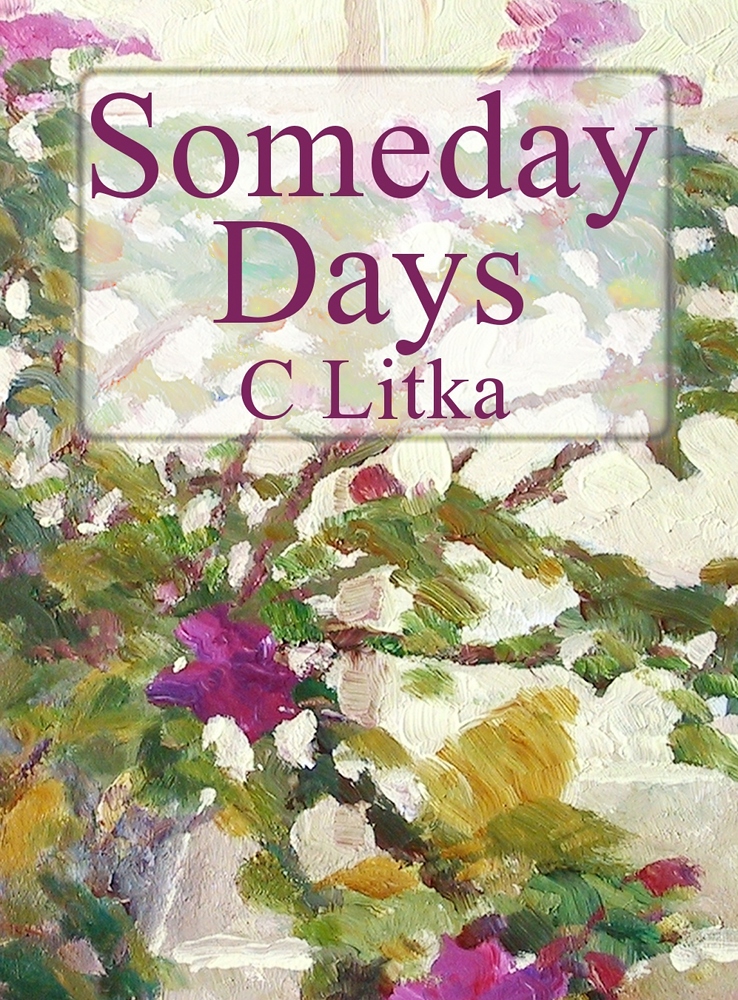 Another cover idea.
As it turned out, I fell in love with the lives of my characters, and so I continued to daydream about them and their friends, piece, by piece, scene by scene, over the course of many months. I began to set down more of their story, though my imagination raced far ahead of the written words.
However, by the time I got serious about publishing the story, several years later, many of those scenes had faded in my memory and had acquired that “been there, done that,” feel to them… And well, I didn’t have the energy to write the whole saga as I had imagined it, and doubted that there was a vast market for a Gone With The Wind sized romance novel. I had, however, written down the beginnings of Hugh and Selina’s romance and still had in mind enough of their story that I could write Some Day Days as the first story arc in their saga. And having spent a great deal of time on those stories, and, as I said, grown very fond of those characters, I decided that they deserved the light of day and so I published what I had written, even if it wasn't the complete story I had to tell.
I always considered Some Day Days as an experimental piece. In my early drafts I tried writing it as if it was a jazz piece played by Thelonious Monk, though, in the end, I did end up smoothing out my writing over the course of many revisions. I have always considered it a romance. However, I gather that these days, a true romance must have an “and they lived happily ever after” ending, which the story does have – only a couple of hundred thousand unwritten words later on. Oh, well. I did sneak that happily ever after ending into A Summer in Amber, which is set in the same time line, decades later.
And that is the origin story of Some Day Days. It began as an exploration of what recording our daily lives might mean, turned into an experimental romance, and ended up, just part one of a sprawling, unwritten, and now mostly forgotten story.
It is my least popular book, but I am actually rather proud of it. (Though, like all my work, I dread re-reading it, yet again, to be certain of that.) Popularity is not the yardstick I use to measure the success and failures in any of my creative endeavors. Thank goodness. I’d be a pretty sad fellow if it was.
 First print version (with original title spelling)
The cover scene is inspired by a narrow street in Oxford, England, perhaps Rose Lane, or Brewer Street, or some similar little street.
May 10, 2020
Them Algoristhm Blues
It seems that algorithms of Amazon are up to their old tricks again -- they've dropped price matching for both Sailing to Redoubt and The Prisoner of Cimlye this time around. They are now listed at $.99 each. You can get Kindle compatible mobi versions of both books on Smashwords.com for free. I was patient the last time they decided to try to sell Sailing to Redoubt for list price, but this time I won't be. I'll give them a week or so, and unless I sell more books than I anticipate, its new list price will be: $8.50.
My policy is to offer new releases with a list price of $.99 for a year, after which I list them at my "my books are as good as traditionally published books" price. It's a game of chicken.
My policy is to offer new releases with a list price of $.99 for a year, after which I list them at my "my books are as good as traditionally published books" price. It's a game of chicken.
May 6, 2020
Daydreaming

I’ve no intention of using this blog as a diary. However, every now and again I have, and will continue to use this space to talk about my process, or the non-process of my writing. This is one of those posts.
In the past year I have talked about my struggles to maintain a novel a year pace. I spent the better part of 2019 auditioning different story ideas in my head. Three or four of them made it all the way to the writing phase, with anywhere from 4,000 to 14,000 words written before I abandoned them. What I found hard was not the setting, nor the characters. Plots proved somewhat problematical, but at least at the beginning they seemed do-able, and I probably could have worked them out, if I had cared enough about the story. The core problem was simply maintaining any enthusiasm for the various stories. At some point in the process, I looked ahead at the story I had in mind, and realized that in some way I’d been there done that, or read something too similar, and because of that, it bored me.
I suppose, if I was making a living in this racket, and under a contract, I could’ve gotten down to work and written them all the way to the end. But since I’m doing this for fun – if it wasn’t fun, I wasn’t doing it. And I’m writing stories I like, and if I don’t like it, why would I spend months working on it?
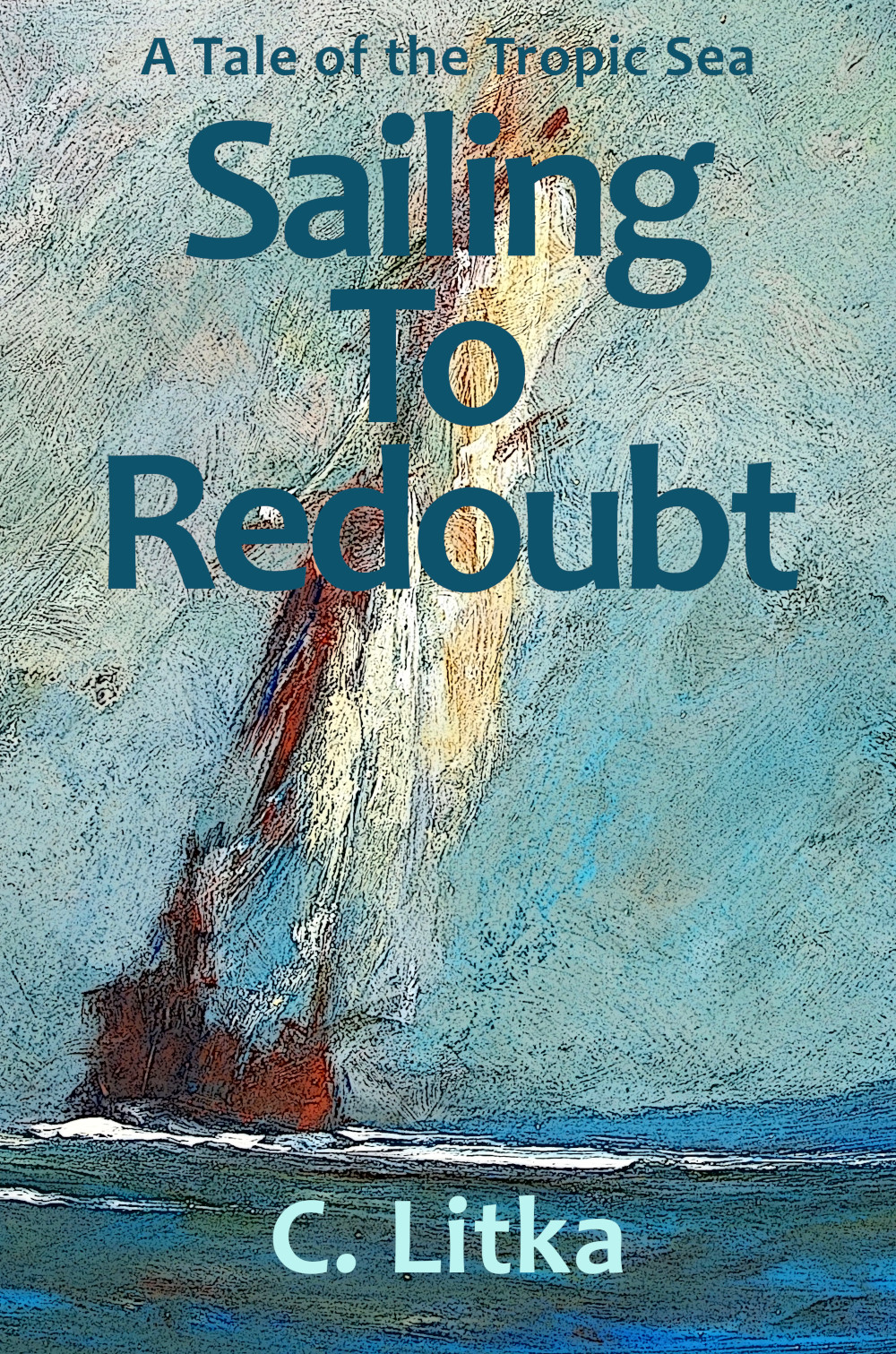 In the end, I circled back around to one of my first ideas, a sequel to Sailing to Redoubt. That book’s sales don’t, at this point, justify a sequel, in my opinion, and that was a big knock against that idea. Plus, try as I might, I couldn’t think of enough original ideas to make a long novel out of it, since I didn’t want to do storms, pirates, and lost cities again, and didn’t have any better ideas. But then, in desperation, I decide to scale back the story to just tell the story I knew that I wanted to to tell, without trying to invent some elaborate adventure to fill the story out. Suddenly the project looked do-able. To hell with the word count. That plan worked out well. I knew what I needed to write, and I knew that I needed to write the story sooner or later, since it completed Sailing to Redoubt, even though it could not be made fit into that story, realistically.With the story in mind, it took only 61 day from start to publishing The Prisoner of Cimlye. Now, while 54,000 words is a short novel for me, it is a pretty bog standard novel in the fast lane of indie-publishing. And when I look further back, to the science fiction novels of my youth, they were often only 35,000 – 55,000 words long.
So, in the end, I produced my 2020 novel, with eight months to spare. Theoretically I now have 20 months to produce another one to a keep on a novel a year schedule.
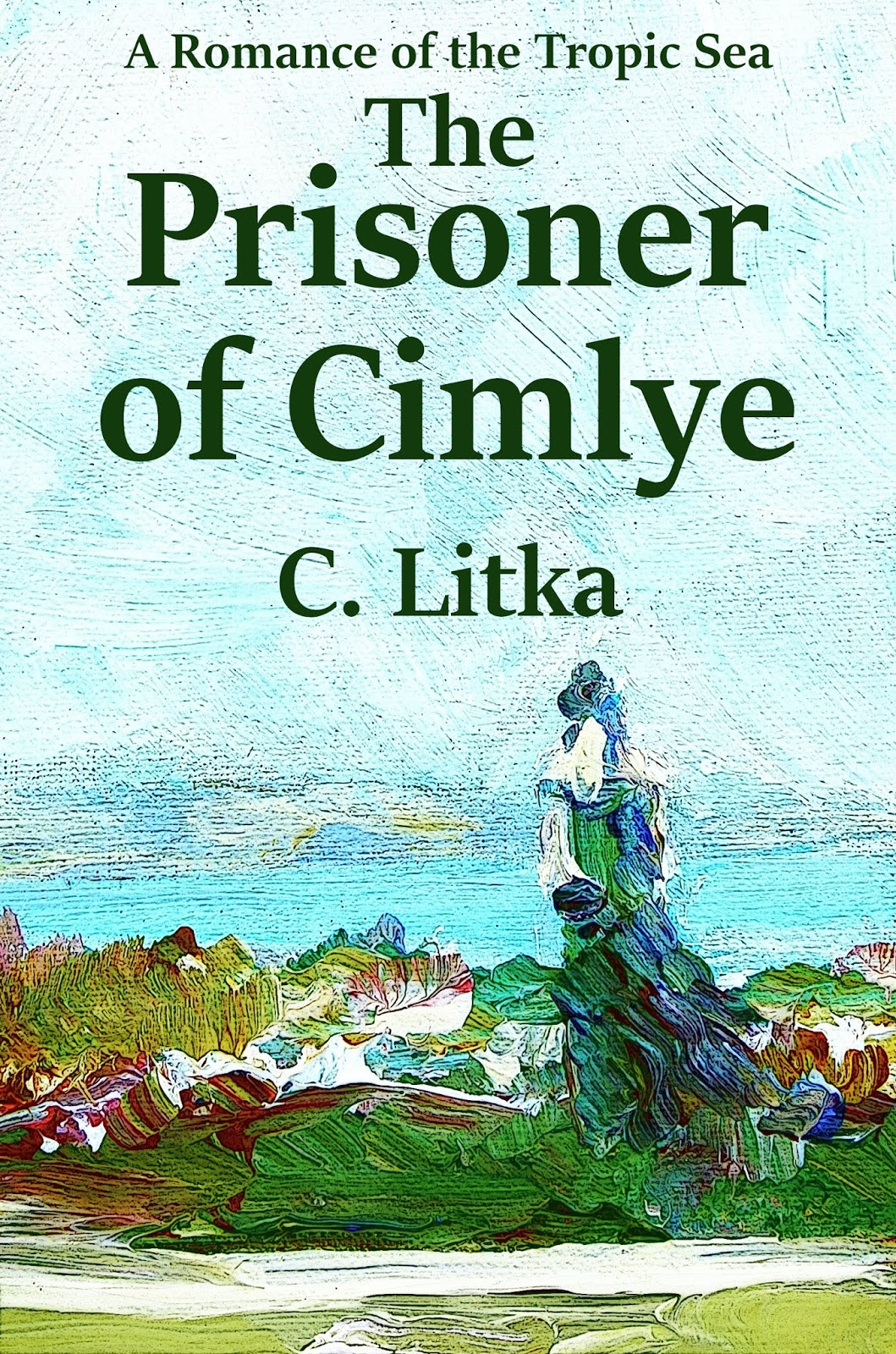 My original intention was, and may still be, to write another short, “episode” length novel sometime this year. I have a vague story in mind. Well, it's more of a setting than a story, but, as before, I currently lack the necessary enthusiasm turn it into an actual story.
So, faced once more, with my old roadblock, I’ve been thinking that perhaps my problem is that I’d trying to dream up stories: i.e. books with plots that my readers would enjoy. Instead, maybe I should be simply daydreaming. Daydreaming up a set of characters that I want to hang with. Daydreaming about a place I would like to explore. And daydreaming scenes that may evolve, eventually into a story. In short, stop trying to write a book in my head. And instead, live an imaginary life that I could, maybe, tell a story about, someday.
We’ll see.
May 1, 2020
Five Years in Self-Publishing
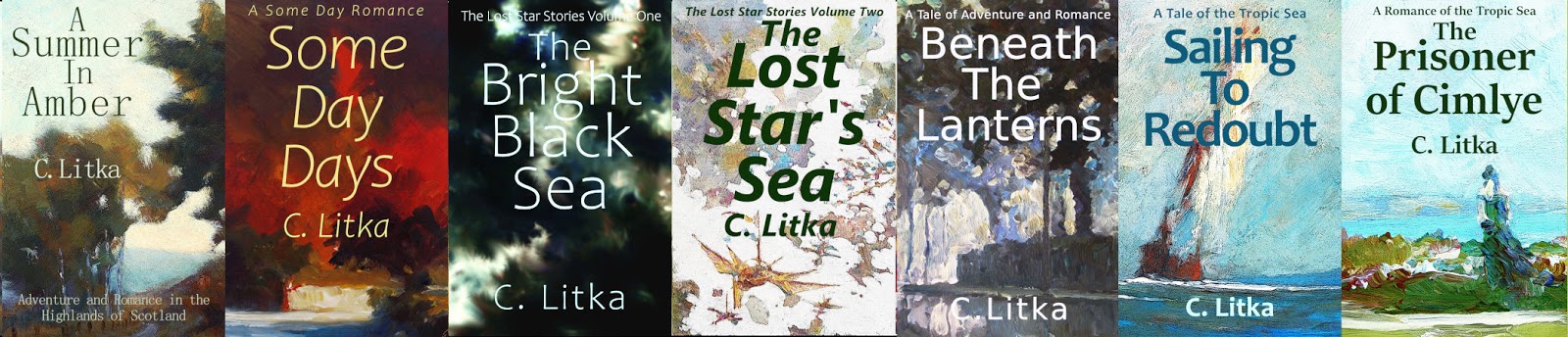
I published my first novel, A Summer in Amber, five years ago, on 23 April 2015. I had been writing it off and on, along with Some Day Days, and The Bright Black Sea, over the previous five or six years. I was writing them for the joy of creating daydreams and setting them to words. I never had any intention of trying to get them traditionally published. I haven’t the heart, or stamina, to play that game. And, at sixty-five years of age, I was too old to start a career in writing. Plus, I didn’t need the money. So it was either just write them for myself – or, if I felt that they were good enough, self publish them.
Five years ago, I decided that A Summer in Amber was good enough. So I self-published it on Smashwords and Amazon.
But, I didn’t care to play the indie-publishing game either. I’d do only what I enjoyed doing and not what I didn’t. I enjoyed dreaming up stories and setting them down in words. I liked to paint, and enjoyed making covers for the book. I don’t like to spend money. So I’d not spend money on them. Plus, I’m a shy person, and I am uncomfortable promoting my work. So between not liking to spend money, and hating the whole promotional process, I decided to make it easy for people to give my books a try by simply clicking the buy button, with no need to reach for their wallets. I opted to just share them for free. Better read than unread. I’d do it my own way. And have.
As a result, self-publishing has been a very enjoyable – and rewarding experience. I’m not tied to any deadlines. I don’t set a daily word count to make. Writing works best with a routine, and when I write, I do have a routine, putting in 2 to 5 hours a day in morning and optional evening sessions. But I only need to write 5 to 6 months (or less) in a year to produce one book a year, so I don’t get burned out. The rest of the time I just try to dream up stories. It’s getting harder these days to do that, but, remember, I have no deadlines that I must meet. So far I’ve made all the ones I set for myself. It’s stress-free writing. And thanks to my great volunteer beta readers, all my books have gotten better as time has gone on. Thanks, guys!
Of course, you don’t get rich doing what I’m doing in this business, but I not poorer for it either. I never intended to get rich in this business. I intended to have fun, and I am.
So what have I accomplished? My numbers for my fifth year in the business are below:
Book Title / Release Date
5th Year Sales* *Note: sales are mostly FREE books
Total Sales* To date
*Note: sales are mostly FREE books
A Summer in Amber
23 April 2015
818
7,216
Some Day Days
9 July 2015
726
3,853
The Bright Black Sea
17 Sept 2015
2,656
12,495
Castaways of the Lost Star
--
2,176
The Lost Star’s Sea
13 July 2017
1,962
5,983
Beneath the Lanterns
13 Sept 2018
1,087
2,240
Sailing to Redoubt
15 March 2019
1,043
1,604
The Prisoner of Cimlye
2 April 2020
244
244
Total 5th Year Sales
8,530
35,805
Yearly Sales History:Year One, 2015/16: 6,537 (3 books released) Year Two, 2016/17: 6,137 (1 book released) Year Three, 2017/18: 6,385 (1 book released) Year Four, 2018/19: 8,225* (2 books released) *1950 one day sales included. (6,275 w/o)Year Five, 2019/20: 8,530 (1 book released)
Past Yearly reports can be found here:Year 1: https://clitkabooks.blogspot.com/2016/05/a-window-to-self-publishing.htmlYear 2: https://clitkabooks.blogspot.com/2017/05/two-years-of-free-books.htmlYear 3: https://clitkabooks.blogspot.com/2018/05/3-years-in-self-publishing.htmlYear 4: https://clitkabooks.blogspot.com/2019/05/four-years-in-self-publishing.html
Highlights of Year Five
Despite my pessimistic forecast in my Year Four Review, Year Five was my best sales year yet, though only by 305 books. However, during Year Four Amazon reported a one day sale of 1,950 copies that they said were legit… but remains a mystery. If you discount that strange day, this year was significantly better than last year.
The sales of A Summer in Amber and Some Day Days have begun to lag, now five years after their release, both being down significantly from last year. On the other hand, The Bright Black Sea had its best sales year save for the year of its release. Sales of The Lost Star’s Sea remains steady at about 2,000 copies a year. Sales for the newer books were also up from last year, though still modest. No breakout hits, so far.
Amazon.Sailing to Redoubt was priced at $.99 on Amazon for several months in 2020, and I sold just a handful of copies, which tells me that I still don’t have a large enough of a following to even dream of making money selling by books. (But then, I don’t dream of doing it.) The fact that it was not free, however, suppressed its sales on Amazon, so I might have done a little better if they had not decided to price match that title. That said, I had a great run of sales after Christmas and the holidays, and though it tapered off, I can’t complain at all.
Smashwords. I had a great year on Smashwords. With their new storefront, I saw a significant bump in sales – until, 9 October 2020, after which, I didn’t. It seemed that a trap door was opened, and sales dropped into the pit below (with crocodiles). I don’t know what changed, but I still do pretty well on Smashwords, so I’ll not complain here either.
Google. For a while there it looked like my sales on Google where shooting up to over a hundred copies a month. But that did not continue. They fell back and have leveled off at between 50 and 70 copies a month. Nice, but unfortunately the 122 sales in October on Google proved to be a fluke. But, hey, 50 -70 copies rounds sales out nicely each month. So I’m not going to complain here either.
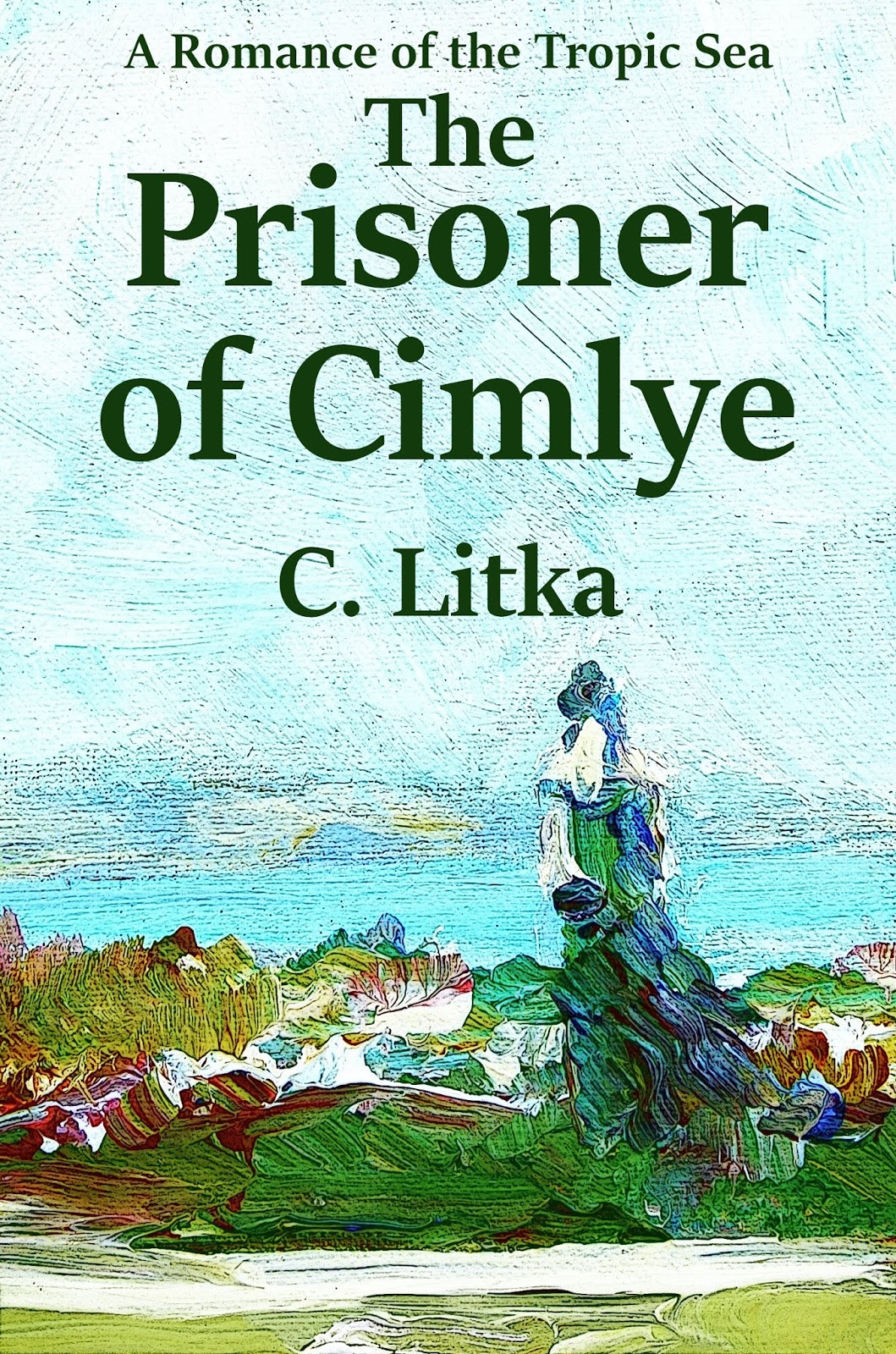
The Prisoner of Cimlye, 2020’s Novel. Unlike in year four, when I released two books, I only released one book during this year, The Prisoner of Cimlye, and that, just this past month, on 2 April 2020. Since it is the epilogue to Sailing to Redoubt, with sales of that book just a bit over 1,600 copies, I’m not expecting it to be my breakout book. I struggled this past year to come up with a story that I wanted to write, and didn’t lose interest in it after I started writing it. It happened a couple of times this past year. I’ve been avoiding sequels since The Lost Star’s Sea. Sequels appeal only to the people who have read – and liked – the previous book. I don’t think I have books that have sold in the volume that I would consider worth writing a sequel to. My theory is that it is better to keep casting for that breakout story with a brand new story until you catch the big one. That, anyway, was my thinking...
However, any port in a storm. Finding myself facing the prospect of not writing anything for more than a year, I decided to write a story that I had in my head and knew that I needed to write, sooner or later, even if it was a sequel to a book that has, to date, sold only 1,600 copies. I aimed to write just a novella, (40,000 words) and ended up with a nice, pulp-standard novel of 54,000 words. Better yet, I wrote and published it, start to finish, in just 61 days, just like the big sellers do on Amazon. And, a new release always gooses sales, so it is better than nothing.
I think this style of story will be my new standard going forward. I write episodic novels anyway, so writing and publishing an episode at a time, especially with established characters, seems to be the way to go forward, given my creative struggles.
Looking Forward to Year Six
Last year in my Four Years in Self-publishing post, link above, I wrote that I thought that this past year would be a tough year, and did not expect to do all that well for a number of reasons. While my results this past year defied my pessimism, all of the reasons I felt would make it hard to move books last year, still apply for this coming year. However, it is impossible to predict what effect the pandemic and economic downturn will have on my sales. Free books may look ever more attractive in the coming months, though I’m not holding my breath. Still, you never know.
I would like to publish at least one more short novel this calendar year, and perhaps two before I post my Year Six Review. We’ll see, plans gang aft agley.
So here I am, five years latter. It’s been fun. It’s been rewarding. And I think, given the actual amount of work I’ve put into the project, its been very successful. That’s my story, and I’m sticking with it.
April 28, 2020
All Systems Red Review
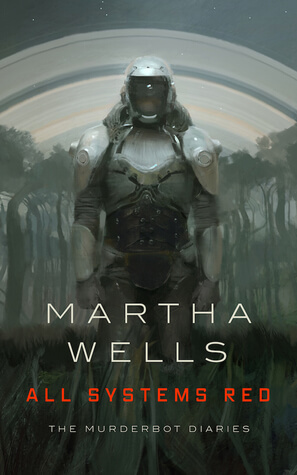 Image: https://dearauthor.com/book-reviews/overall-a-reviews/a-minus-reviews/review-all-systems-red-the-murderbot-diaries-1-by-martha-wells-2/
All Systems Red, by Martha Wells, is the first of four “The Murderbot Diaries” novellas feathering the SecUnit who calls itself Murderbot. It won the 2018 Nebula and Hugo Awards for best novella.
I don’t read a lot of contemporary science fiction, or indeed the science fiction of any era these days. Except for a few authors I know and like, I may sample just a book or two a year. So, given my limited exposure to modern science fiction, and as writer myself, what do I think of All Systems Red?
It was okay.
Damned by faint praise?
What may be more damning, in my view, is all the novellas that didn’t win. All Systems Red does not, in my opinion, set a high bar of excellence. So what does that say about the rest? Maybe there were not a lot to choose from, so the best of the lot didn’t have to be brilliant. I can't say.
Or it may be just me. I like novels, so a cut down novel, or an extended short story doesn’t fit my preferred style of story. That said, it was okay enough for me to read it to the end. I don’t read bad books to the end.
Since this is a famous four year old story, most science fiction fans have already read it, so I’ll skip the story summery, and just share my thoughts on the story.
The story opens with giant worm breaking out of a crater to threaten a survey team. The team’s hired security bot, “Muderbot” acts swiftly to save several members of the survey team from the jaws of this worm. It reads like an opening action scene straight out of lesson one of How to Write a Thrilling Story 101. In short, while it gets the job done of introducing the character, it is pretty standard, unoriginal fare.
And speaking of unoriginal fare, a planetary survey team facing danger on a planet is one of the most well worn tropes in the first three or four decades of science fiction, to the point were it is almost a cliché. No points for originality so far.
There is no real sense of place in the story. The planet is so generic that there are episodes of the original Star Trek with more convincing locales.
As for the story that follows… Well, Jason Sheehan says in his review for NPR, “The story itself is simple to the point of nonexistence.” It is certainly rudimentary. A series of unexplained computer system failures leads to finding another survey team on the planet massacred, which sends our team fleeing the unknown killers. The mystery of why the killers were acting this way, and how they were saved seems to have been pulled, more or less, out of the hat. Not that it matters. None of this stuff matters.
All this doesn’t matter because the story is a character study of the first (non)person narrator, Murderbot, a half mechanical, half biological “SecUnit.” It is sort of an introvert Bender – snarky, indifferent, haunted by its past, or rather what it can remember of its past, but, unlike Bender, very shy and uncomfortable around humans. Why a security bot is part machine, and part organic is not clear. It seems a weakness, not a strength, as there are pure sentient machines in the stories as well. I assume it is because Wells wanted to explore what a person is. Is this half machine a person?
Murderbot is, however, a special SecUnit because it had, somehow, managed to hack its control unit, its “governor,” giving it free will. It can no longer be controlled. I find it hard to imagine how it even knew how to disable its interior control governor without giving a hint to all the systems that monitored it, or how it reached it to alter it. And if it knew how, you’d think every other SecUnit, would know as well and be able to do it too. Just what makes Murderbot so extraordinary, and apparently unusual is not explained. Murderbot also seems to be able to hack any, or almost any, computer system. Not only is one is left wondering how it learned how to do so with relative ease, but you’d have to wonder why these systems wouldn’t be more secure than they apparently are. However, in a world where everything is connected and surveillance omnipresent, I suppose that being able to hack these systems to defeat them is a necessary skill for the stories in the series to work.
The story, as told by the SecUnit, Murderbot is largely concerned with the various procedures it implements to protect the humans in its charge from danger. During the story, Murderbot finds itself caring for its human charges, and they show concern for it – which makes it very uncomfortable. It prefers being treated as a machine rather than as a person, and finds it unnerving when they treat it like a person, and especially when they see it without its armor as basically a human. Jason Sheehan, whose review is actually very positive, sees the story as a “coming out” story – of a constructed entity finding its personhood, with the awkwardness and fear such a step entails for a very “shy” SecUnit.
Be that as it may, you still have to put up with the trite setup, almost nonexistent story line, the generic setting, and all the techno-procedural mumbo-jumbo that makes up the bulk of the story. I did, hence my “It’s okay” rating.
However.
Martha Wells is an experienced writer, so you should probably assume that she knows just what she’s doing. And in that case…
I also write first person narratives. My approach is that the narrator tells the story from his point of view. (All my stories use male narrators, hence the “his.”) A number of reviews have said that my stories need an editor – presumably to eliminate nonessential wordage. I would reply that it is the characters in the story who are telling the story and they are not professional writers. These characters may include details that are unnecessary for the story’s plot, from a professional writer’s point of view, but are, nevertheless, significant to the character. I think that these non-essential details make the story feel more authentic. I believe that Martha Wells is doing the same thing. Since she has the SecUnit Murderbot tell the story, it would, naturally, tell the story from its point of view. It may well be blind to the beauties of the planet. It may well view the human characters as flat, two dimensional more or less standard humans. And main focus of its story would be its techno-procedural actions that it used to protect the humans in its charge. Seen from this point of view, the limitations of the story that I outlined above, are simply the limitations and priorities of the story’s narrator, Murderbot. Which is clever.
Still. It took me four days to finish the story. And so it is still just okay.
And yet.
I have some additional thoughts after reading the three subsequent novellas in the Muderbot Diaries series, Artificial Condition, Rouge Protocol, and Exit Strategy. Since the series focuses on, and comes back around to the events of in All Systems Red, I can’t help but wonder if Wells and her publisher decided to take what would have been an episodic novel and divide it up and sell it as four novellas.
In any event, the three novellas that follow, are, in my opinion, much better stories. Murderbot becomes a more interesting character at as it continues to explore is personhood and its relationship with humans and other constructed entities. Not wanting to be a pet of the humans it saved in All Systems Red, it runs away to find its own life. In these stories Wells casts Murderbot as a Philip Marlowe type of hardboiled private eye, since now, without its armor, it can pass itself off as an augmented human. In Artificial Condition it hires itself to a group of people looking to hire a security consultant to ride shotgun on an iffy rendezvous with a dubious and dangerous person. And if Murderbot is now Phillip Marlowe in this story, it has acquired a new sidekick, a sentient ship who acts like a Nero Wolf type of character who can pull techno-strings and provide support in the background. All of which makes this story a much more compelling read. In Rouge Protocol,Murderbot is searching for evidence to help the people it saved in All Conditions Red, in their continuing fight against the evil corporation that tried to murder them. In doing so, it ends up saving another group of people from this evil corporation which is trying to protect its illegal activities. And inExit Strategy, we find Murderbot once again saving the leader of the first group, who had been kidnapped by the evil corporation.
In all of these stories there is a ton of techno-procedural mambo-jumbo – hacking this system and controlling those drones or that machine. They are thriller/military sf stories set in a high-tech dragon and dungeons maze within large space stations. In many cases I didn’t get a clear picture of the locales, but I guess that doesn’t matter in the end. The stories are about Murderbot, and if you like the character, you’ll enjoy the stories. I like character focused stories and so I enjoyed these stories, especially the last three. I’d give the series an almost four star rating as a whole, the opening story giving the series the "almost."
April 25, 2020
Remarks and Observations Directed at the Clouds
 Image: https://dearauthor.com/book-reviews/overall-a-reviews/a-minus-reviews/review-all-systems-red-the-murderbot-diaries-1-by-martha-wells-2/
This is another installment of my Observations and Remarks Directed at the Clouds project. A brief one. The odd thing about blogs is that they only work well if readers read every post as it is posted. Or if each post is completely unrelated to the others. Otherwise, you end up reading the posts backwards, and then have to make sense of them. Since I doubt that anyone reads this blog as each post is posted, I thought I’d just take a moment in the short post to bring anyone interested up to speed on what the current series of post is all about.
As I mentioned, in the first post of this series, that I’m not currently writing any fiction – the stories I’m considering writing have yet to jell to the point were I can confidently know that I can write them right to their end. And with that being the case, and with time on my hands, I decided to write a series of opinion pieces on various subjects. The first entries in this series, below, are on TV shows – one bad one, and a bunch of good ones, finishing up with the best in the post below. (Crash Landing on You).
My upcoming entry in this series will be a review of Martha Wells’ All Systems Red Murderbot novella. It’s been out now for something like four years, and I’m sure that just about everyone who would be interested in it, has read it. Still I am just now getting around to reading it – because it’s price was right. Free. This past week Tor.com gave away ebook copies of all four novellas in the series to promote Wells’ upcoming Murderbot novel. So with the price being right, I picked them up and will share my opinion of the first of them.
I have to admit that I don’t think I’m very good at writing these essays and reviews But, on the theory that practice makes perfect, I’m planning to continue to try my hand at it, on whatever subject I have a strong opinion about, especially the ones that I think the world should pay attention to. But wont. (“That’s a joke, son.”)
So here is a brief teaser of my upcoming All Systems Red review.
All Systems Red, by Martha Wells, is the first of four novellas feathering the SecUnit who calls itself Murderbot. It won the 2017 Nebula and Hugo Awards for best novella.
I am not much of a reader of contemporary science fiction, or indeed of science fiction from any era these days. I have a wall of books, but except for a few authors I know I like, I only sample a couple of books a year these days. So, given my limited exposure to modern science fiction, and as someone who writes stories as well, what do I think of All Systems Red?
It was okay.
Damned by faint praise.
To be continued….
April 21, 2020
Remarks and Observations Directed at the Clouds -- Crash Landing on You
 Crash Landing on You image: https://chingutotheworld.com/crash-landing-on-you-4th-highest-rating-in-tvn-history/
It’s been a bit of a struggle writing this review of Crash Landing on You. Why?Because I like it so much. It is perhaps my favorite TV show or movie of all time, if only because there areno actors in Crash Landing on You as bad as the actorwho played Gilbert Blythein Anne of Green Gables. So, because this show resonates with me, it is hard to know how much of what I see in it, you'll see as well. Still, I have to believe that most, thoughnot all, people – who take the time to watch the first two episodes – willfind it a very entertaining show, well worth their time. So, even if you take my ravings with a grain of salt, I think most of you willthank me for turning you on to this show. Feel free to let me know if I’m right or wrong.
In translation, Crash Landing on Youis a pretty silly title. It is also known as Love’s Crash Landing and Crash Landing of Love. My working title would be From the South, With Love.
In the first episode we meet Yoon Se-ri,awealthy South Korean entrepreneur and founder of a successful cosmetic company. Her father, the head of a vast conglomerate,has just been released from prison and intends to turn over the helm of his company to his heirs. (A disclaimer assures us that this is all fictional. It doesn’t resemble Samsung at all… move along.) GivenSe-ri’strack record of success, and the fact that his sons leave muchto be desired, he names Se-ri to the post, to their great dismay and anger. But before she can be officially named at the stockholders meeting, she goes hang gliding, and iscarried away by a sudden windstorm and tornado, disappearingwithout a trace.
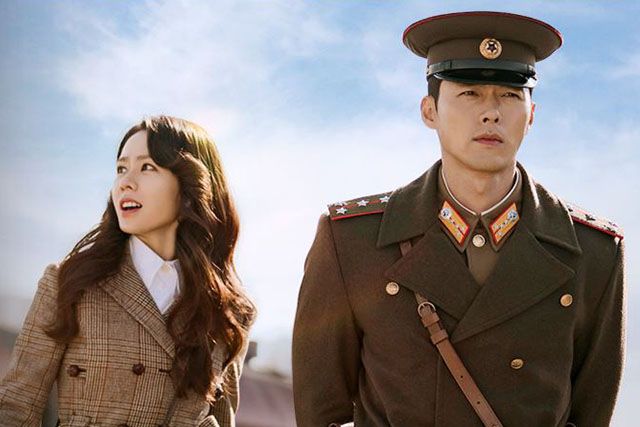 Yong Se-re and Captan Ri Jeong-hyeok image:https://www.thailandtatler.com/style/chopard-steals-the-show-in-crash-landing-on-you
The tornado scene is rather silly, but I have to believe that it’sa wink and a nod to the tornado scene in Wizard of Oz. The director, Lee Jeong-hyo, called the show a “fantasy,” and I can’t help but see the parallels between it and the Wizard of Oz. Both Dorthy and Se-ri find themselves in a strange land, Dorthy,not in Kansas, and Se-re,not in South Korea. They both want to find a way home. And they both meet interesting charactersalong the way, some friendly and helpful, whileothers are ruthlessly dangerous.
 Captured image: https://twitter.com/theaudreyjane/status/1229057269993590787
Se-ri wakes upthe morning following the storm to find herself dangling from a tree in her hang gliding harness. Thereshe is discovered by the North Korean armyCaptain Ri Jeong-hyeok, whosesoldiers are patrolling the North/South border. He orders her to come down, and when she unhitches the harness to do so, she falls, or, as she later corrects him, “descends” into his arms, hence the title. While she manages to escape him and his soldiers, she fails to find her way back across the demilitarized zone to South Korea and ends up in a North Korean village early the next morning. There, she is about to be discovered by the cruel and corrupt Lt Col. Cho, of the dreaded State Security Bureau, whose custody she rightly belongs in. But Captain Ri, fearful of what mighthappen to her in their hands, saves her from discovery – thusputtinghis head, and those of his faithful group of subordinates, in the noose bydoing so.
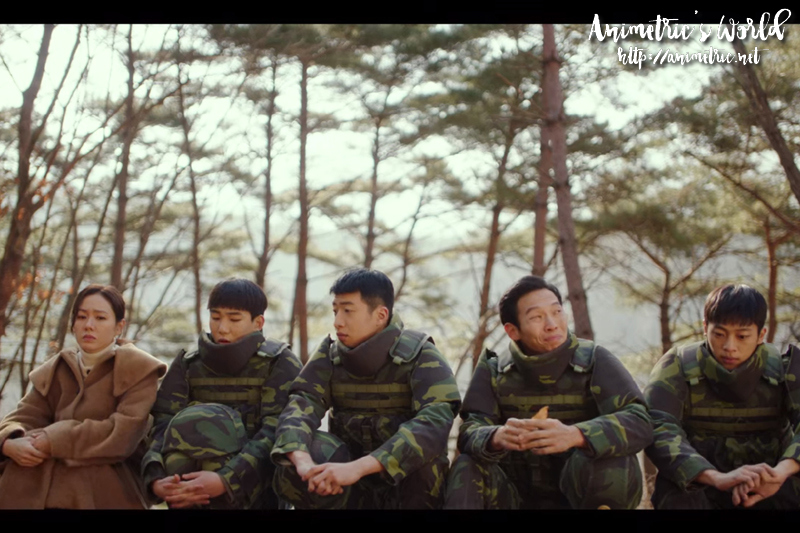 Si-re and Captain Ri's faithful crew image:https://www.animetric.net/k-drama-faves-crash-landing-on-you-review.html
And that, briefly, is the first episode. It sets up the premise and stakes, but I don’t think that you get the full flavorandconsiderable charm of this show until you get into the second and subsequent episodes, which is why I suggest that you watch the first two episodes, before deciding if it is worth your time or not.
So what makes it so special for me? First, the writing by Park Ji-eun. Shehas written a number of very popular TV dramas, and is know for her realistic dialog. I think the dialog in this showis brilliant -- witty andclever, powerful and revealing in turn. Credit must also be given to the subtitle translators, as it’s brilliance comes across in their translations. The plot is intricate, involving intrigues on both sides of the divide.And throughout the story there is always an underlying tension of the dire consequences, shouldher true origins be discovered. Sometimes it is muted, while other times it becomes acute, withaction scenes and some violence, but it’snot gratuitous. However,for me, I love the show for the characters Park Ji-eun has created. And not only the lead characters, but the supporting cast as well. There has to be at least two dozen characters that wecome to know as the show progresses. Many have backstories that make them seem like real people, with real feelings, and concerns. They’re not just there to dress the set, or to deliver lines to the main characters. And since the story has a run time of 19 ½ hours, Park Ji-eun can and does use that run time to bring many characters to life.
 Se-ri with the village ladies Image: https://www.soompi.com/article/1383215wpp/supporting-actors-and-exciting-cameos-that-helped-bring-crash-landing-on-you-to-life
The other thing that makes the writing great, is that she pays attention to details – to the little things, the quirks, vanities, fears, and ambitions of the characters are sketched in with a hundredcleverincidents, filled withlittle details in the settings, the scenes, and the everyday dialogues.
The actors, one and all, are wonderful. Son Ye-jin who plays Yoon Se-ri, is simply outstanding in the role. She was very good in Something in the Rain – she won awards for that role – but the character she plays here has so much more…. Is it agencythe word I’m looking for? Se-ri is smart, witty, kind, and yet vulnerable. She has faced adversity before, and once again rises to the many occasions in the story. Not only can Son Ye-jin play this role with effortless charm, but she can say so much with just a look. Plus there is great chemistry between her, and Captain Ri, played by Hyun Bin, despite him having to play the strong, silent type.
 Son Ye-jin imagehttps://mydramalist.com/people/293-son-ye-jin
And lastly, the production values. I don’t know how close the real North Korea is to the North Korea in this show, but it probably doesn’t matter. The settings are all well selected and shot beautifully. I’m no expert on cinematography, but I can’t help but be impressed by how creatively and expressively the scenes are filmed. Parasite, a South Korean filmwon the Best Film Oscar award in 2020, and though I haven’t seen it, I’m not surprised it did, after watching these Korean TV show. They know the art. If I have one complaint, itis that, like on all the Korean shows I watched, the background music sometimesescapes from the background, and canovershadow the scene. But that’s a minor gripe.
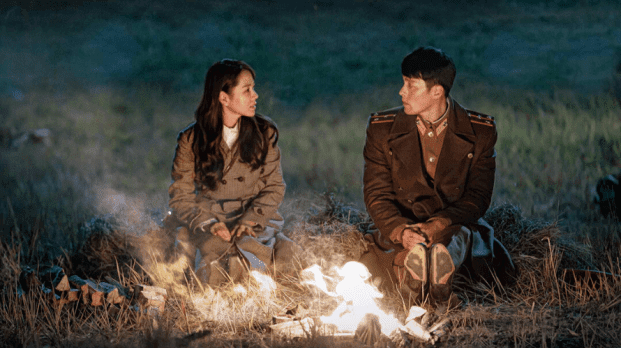 Yoon Se-ri and Captain Ri Jeong-hyeok image:https://www.seoultravelpass.com/en/products/514-drama-shooting-site-crash-landing-on-you-one-day-tour-by-cosmojin
I should note here, that at the end of each episode they start showing stills from the episode, with the theme music. THIS IS USUALLY NOT THE END OF THE EPISODE. I discovered that many of the episodes have a “post-credit” scene after this montage which add deft little touches to the episode, or fill in bits of the backstory of our main characters. I didn’t know this the first time we watched it, and I don’t think we missed anything important my not seeing them, but you’ll want to see them, so don’t leave early.
I’ve watched a lot of good shows from China, Taiwan, and Korea. Many of them are very good, all have been entertaining. But Crash Landing on You, lands just a little above the best of them. I don’t know why anyone wouldn’t be entertained by it. Of course, you have to read the subtitles if you don’t speak Korean, but I find that I really like reading subtitles. It draws you into the show because you are not only watching, but reading the dialog as the rest of the story – the action and scenery is shown to you. And, well, Korean is a very expressive language tonally – especially the way women speak it, so you'll not miss anything by reading the English translation. So, all in all, I think this show is a gem. And I have to admit that I’ve already watched it for a second time – and will watch it again, if not again.
Let me know what you think of it! Enjoy! (And stay safe!)
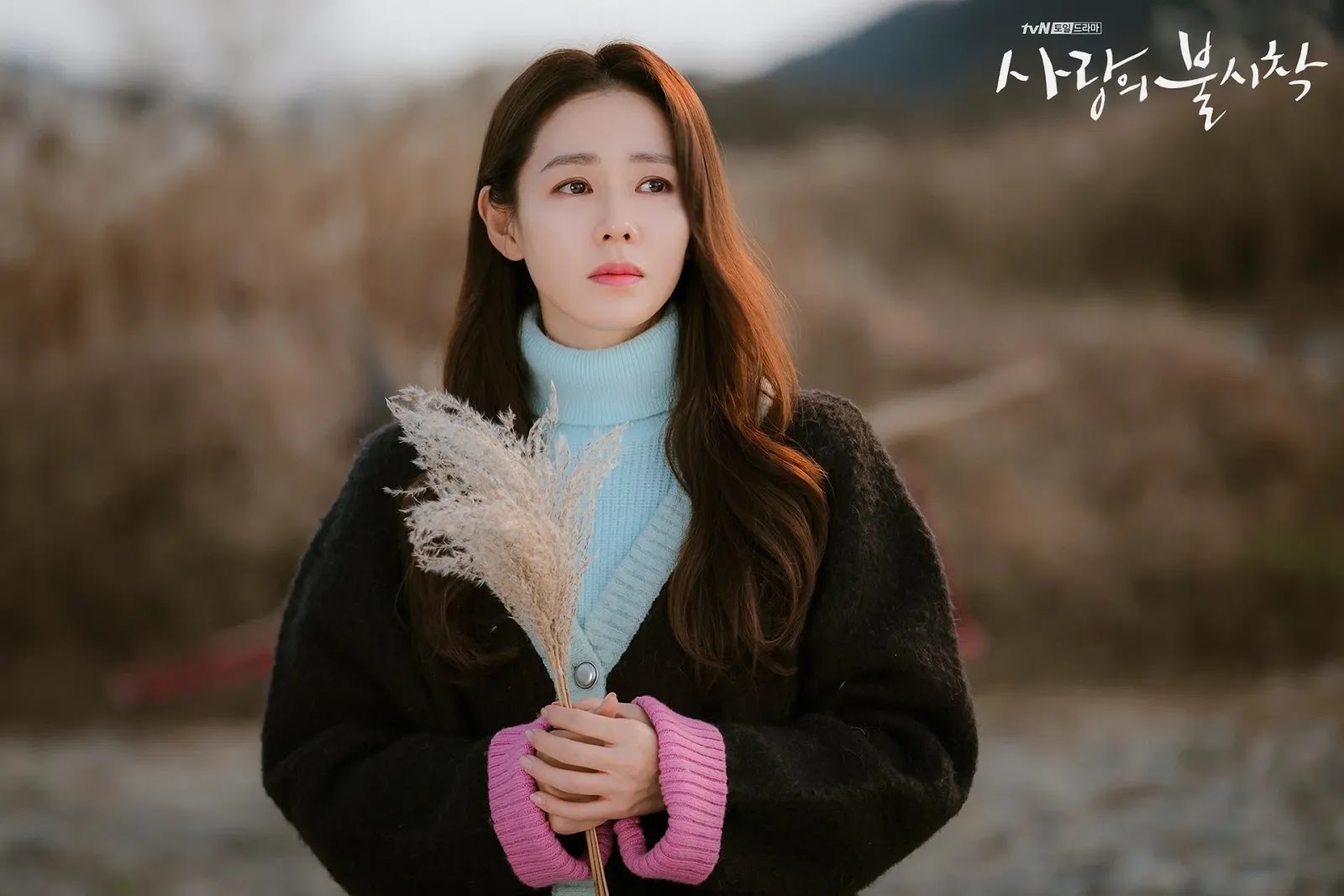 Se-ri image: https://www.hancinema.net/hancinema-s-news-chungju-confirms-shooting-location-for-crash-landing-on-you-137446.html
April 20, 2020
Remarks and Observations Directed at the Clouds -- Korean TV Shows
 My Sassy Girl Image: https://www.viki.com/tv/35705c-my-sassy-girl
In this episode of an old man yelling at the clouds, I’m going to highlight a number of excellent Korean TV shows, or if you're hip enough, “K-dramas.” I must admit that despite my interest in China and Asia, I have paid no attention to Korea. It seemed like a minor player in the area, sort of a minor offshoot of China and Chinese history. And as a result, I didn’t pay much attention to its TV shows many of which are offered by Netflix. I did sample one comedy, whose name I can’t recall, but it seemed rather silly, and quickly forgot it. Later, I tried three episodes of the historical drama Mr Sunshine, but found it a bit more violent than I cared for. All that changed when, with nothing else to watch, I tried the Korean historical drama, Rookie Historian Goo Hae-ryung.I think I watched three episodes before I decided to invite my wife to watch with me. (I audition these shows before suggesting that she might like them as well.) In any event, it was a winner.
Ah, don’t let the silly translation of the show titles put you off. The shows are nowhere near as silly as their English titles might suggest.
 Rookie Historian Goo Hae-ryung Image: https://www.tvtime.com/en/show/364834/recommendations
Rookie Historian Goo Hae-ryung (16 episodes Netflix)https://en.wikipedia.org/wiki/Rookie_Historian_Goo_Hae-ryung
The story is set in the 18thcentury Korea. It, like those Chinese historical dramas, is centered around the court of the Chosen Dynasty, who employed court historians that recorded everything that went on in the court. These historians were historically independent of the King’s authority and allowed to record what was said and what they observed, impartially. In the story it is decided to add a number of female historians to the department, in part, to try to discover who is behind a perceived threat to the king. Our heroine, Goo Hae-ryung, escaping from an arranged marriage, and wanting to be something more than a wife of an official, applies and is accepted as one of these female apprentice historians.
As with all the shows that I like, Rookie Historian Goo Hau-ryung is a mixture of comedy, romance, plus mystery, intrigue, danger and drama all deftly woven together in one story. And like almost all of the shows, it is carried along by an appealing female lead. The male romantic lead is a cloistered prince who moonlights as a writer or romance novels. The story unfolds, sometimes with a lighthearted episode, and sometimes with a dark episode full of danger and/or tears as the main characters come ever closer to the central mystery of what happened a decade before to bring to power the current kings slowly comes to light.
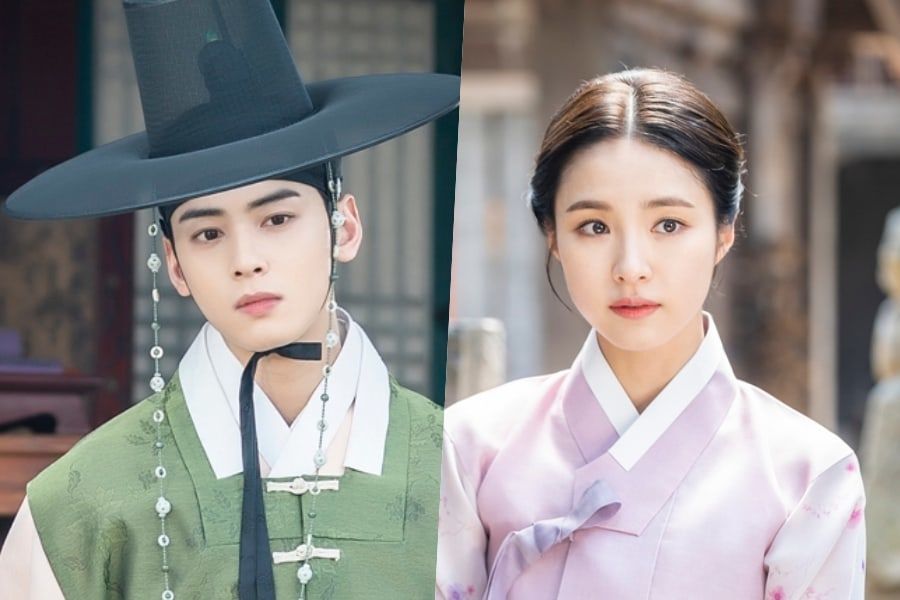 Rookie Historian Image: https://www.soompi.com/article/1333638wpp/astros-cha-eun-woo-and-shin-se-kyung-impress-on-1st-day-of-filming-for-rookie-historian-goo-hae-ryung
The actors, female and male, in this, and indeed, in all the Korean shows I’ll talk about are wonderful. The writing is clever, funny, and dramatic in turn – and so must be the translators as well. Compared to their Chinese counterparts, the settings are much less elaborate, and the courts less impressive, but I think the stories are tighter, and more focused.
On interesting feature of this and the following show, is that marriage is not the end all, be all of the heroine. In both, they pursue their own futures, independently of their true love.
I’d rate Rookie Historian Goo Hae-ryung 4 ½ stars.
Next up is another historical drama set roughly in the same time period as Rookie Historian. The name is still silly, the men still wear those silly looking hats and it still concerns intrigues of the court.
 My Sassy Girl Image: https://www.soompi.com/article/992093wpp/first-impressions-sassy-girl-drama-finally
My Sassy Girl (16 episodes Netflix)https://en.wikipedia.org/wiki/My_Sassy_Girl_(TV_series)
The heroine of this story is a princess, whose mother was supposedly killed in thwarted palace coup ten years before the beginning of the story. She is free spirited and bold, often escaping the confines of the palace. Worse for drink, she is saved from falling from a bridge by the male lead, a scholar just returned from China, and things get more complicated after that. Later, he is appointed the teacher for the princess’s little brother, and together, with much bickering in the beginning, they set out to unravel the mystery of her mother’s supposed death, and its implications in the court. Like Rookie Historian, there are lighthearted, largely comical episodes along with dark, dangerous, and dramatic episodes. Both my wife and I looked forward each evening to watching the next episode. (We limit ourselves to one a night.) Another winner.
Another 4 ½ star show.
I can highly recommend both of these shows, though it probably takes watching the first two episodes to get fully involved with the characters and the story line, but once in, I think that you’ll enjoy the ride.
Next we turn to shows set in modern Korea.
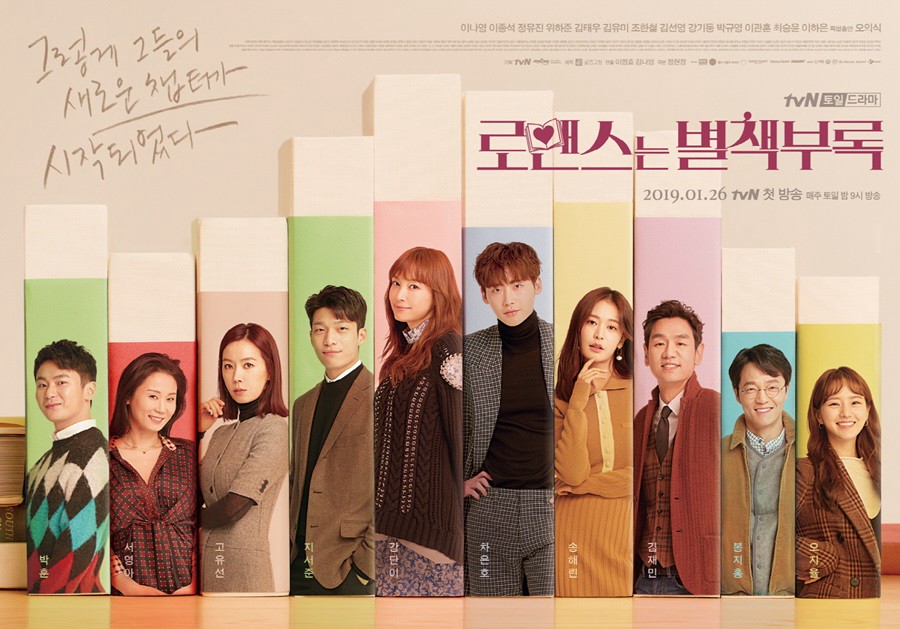 Romance is a Bonus Book Image: https://medium.com/@togoandoreoo/reasons-why-romance-is-a-bonus-book-is-a-big-bonus-everyone-2089c80b0a78
Romance is a Bonus Book (16 episodes, Netflix)https://en.wikipedia.org/wiki/Romance_Is_a_Bonus_Book
The story is largely set in a small Korean publishing house, and if you like books, it is interesting just on that account alone – how books to be published are decided upon, printed, sold and, if necessary, disposed of in Korea. The story concerns a woman who took time off from work in an advertising to raise her daughter. Now divorced, she tries to get back into the business, but finds that no one wants a 30 something year old woman who is 10 years out of the business. To make ends meet, she secretly works as the housekeeper of an old friend, and when she finds herself homeless, stays in his attic as well, until discovered. Unable to get a job in her field, she applies for an internship at this friend’s publishing firm, without listing her university degree, and gets the low level job… And well, once more we have a romantic comedy, with a dollop of mystery. It is a very character focused show, with a likable ensemble cast, and without any great soap opera/melodramatic endings, like a number of other shows like this seem to think you need.
I liked it a lot. 4 ½ stars, yet again.
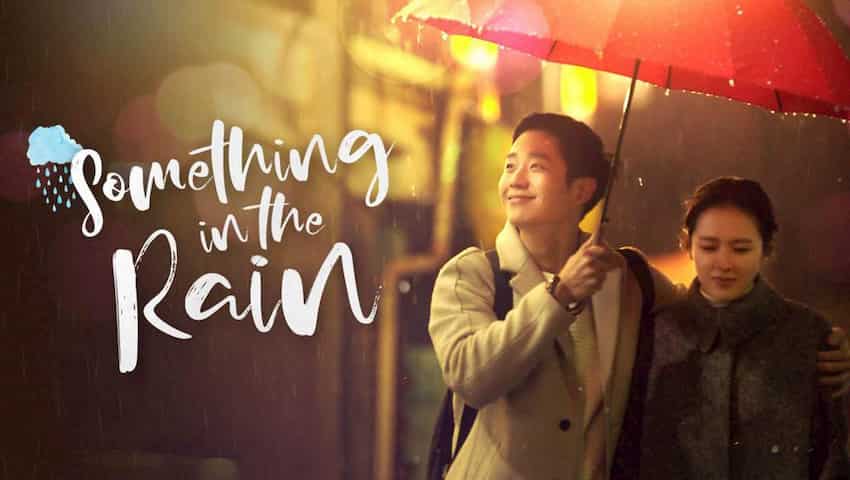 Something in the Rain Image: https://heychingu.com/157/something-in-the-rain-2018
Something in the Rainhttps://en.wikipedia.org/wiki/Something_in_the_Rain
This proved to be a darker romantic drama than I expected. It has its comedy elements, and its romance, but it has a lot more drama and heartbreak than I usually prefer. What it does have going for its female romantic lead, Son Ye-jin. Son Ye-jin is simply a wonderfully expressive actor. Here she plays a 35 year old coffee company supervisor who falls in love with her brother’s best friend, who is some 10 years younger. This romance is bitterly opposed by her mother, and most of the family, for reasons that are not quite clear to this viewer, (It might be a cultural thing that I’m missing.) and much drama and heartbreak ensues – along with drama at her office concerning pressing sexual harassment charges. Overall, not exactly my cup of tea, but certainly not bad. We watched the entire series.
On this one, I’d only give it 3 stars – but just because I like my entertainment more lighthearted.
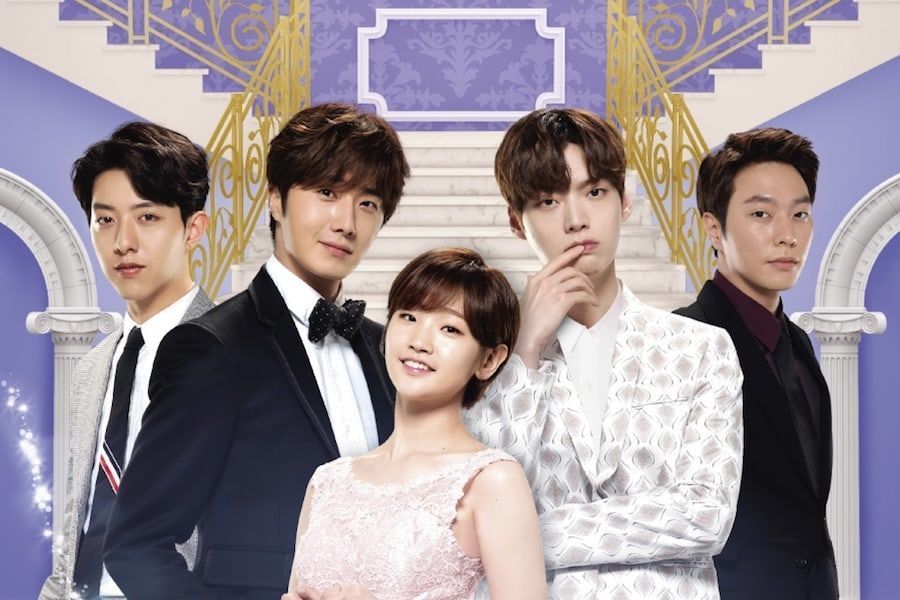 Cinderella and the Four Knights Image: https://www.soompi.com/article/1371147wpp/4-reasons-cinderella-and-four-knights-is-the-ultimate-guilty-pleasure
Cinderella and the Four Knights (16 episodes Netflix)https://en.wikipedia.org/wiki/Cinderella_with_Four_Knights
The premise of this show is that a very rich man has three grandsons from three different and deceased sons living in a modern mansion together, who don’t get along. Two of them are more or less jerks, one is nice, but none of them he considers suitable heirs to his wealth, as they are. One of them, on a bet, hires our heroine to play the role of his fiancee for the 5thwedding of his grandfather. The wealthy grandfather is impressed by the actions of our heroine and hires her to live in the mansion and make his grandsons better people. She accepts, needing the money to go on to college, and set out to complete the missions he assigns her. The first having all three cousins eat a meal together…
Like most of the other shows I’ve reviewed in this series, it is an enjoyable comedy/romance/soap opera. My biggest ding against this one is that it ends with a very melodramatic ending, that I didn’t think necessary. I like slice of life stories, and don’t need a dramatic ending. But I am likely in the minority on this issue.
Because I dislike melodramatic endings, I’m knocking half as star off: 3 ½ stars
Well, I see this rant has gone on longer than I had expected, and I still have one Korean show to go. It, however, is a show that I’m going to gush over, being perhaps the best show I’ve ever seen. I’m already watching it for a second time. So I think I’ll save that for its very own post, coming soon.
 Romance is a Bonus Book Image: https://aminoapps.com/c/k-drama/page/blog/romance-is-a-bonus-book-episode-8-preview/qkGs_Ru5B7be2E76omm20rRZEvpQpk7