Joshua D. Jones's Blog, page 14
August 23, 2016
Was Jesus Really Silent about Homosexuality?
 This morning the British papers are running headlines about 12 Church of England clergy who have entered same-sex ‘marriages’ with their boyfriends. Why one is allowed to be a Christian leader and have an unwed sexual partner - same or opposite sex - in the first place is a question most Christians throughout the world will be rightfully asking about the CoE. That aside, debate will certainly be reignited in Anglican circles everywhere over gay ‘marriage’, homosexual practice and related issues.
 For non-Christians, it will seem an odd debate as mainstream society see gender, marriage and sexuality as a form of individual self-actualisation and believe that one should be free to express these things however they wish – so long as they don’t hurt others. To people who aren’t Christian the whole discussion seems soooooo last millennia. But we Christians are foreigners to this world. And as there are those who – in the name of Christ – are saying we need to adjust our teaching to the new LGBTQ ideology, then debate is upon us whether we wish for it or not.
In any debate involving people’s lives, points of view need to be expressed both sensitively and accurately - especially this one. Misinformation – however well intended – helps no one in the long run. That’s why it’s important to access popular sound bites that are often used in social media discussions to determine their truthfulness. One such is the line:
Homosexual practice is consistent with Christianity because Jesus never spoke against it.
For those who aren’t Christians, this issue may stir curiosity. But for Christians, knowing what Jesus thought about any issue is of utmost importance. What does the evidence suggest about Jesus’ thoughts on this subject? Was Jesus really totally silent on the issue of homo-sex?
Arguing from Silence
First of all, arguments from silence are rarely successful in accomplishing their goal – whatever the discussion may be. If my aim is to argue that some popular figure would endorse my lifestyle choices just because they’ve never been on record as speaking against them, I make myself vulnerable to all sorts of rebuttals. For example:
Me : Abortion is fine. Jesus never said anything against it. Other Dude : Do you believe wife beating and genocide are ok? Me : No, of course not. Other dude : Can you show me a verse where Jesus directly speaks against either of those? Me : No - but just because Jesus doesn’t directly speak against it doesn’t mean he’s ok with it. Other Dude : Exactly.
Point is - whatever your position in the current sexuality and gender debate - an argument from silence is never a strong one. Especially when it comes to things Jesus supposedly said or didn’t say.
Was Jesus Totally Silent?
But that presupposes that Jesus was completely silent on this issue. That’s what many people say. But, given the evidence, is that an honest thing to argue?
Let’s look at three passages from Matthew’s gospel where Jesus seems to be making statements that are relevant to the issue. You can then decide for yourself.
Don’t assume that I came to destroy the Law or the Prophets. I did not come to destroy but to fulfil. For I assure you: Until heaven and earth pass away, not the smallest letter or one stroke of a letter will pass from the law until all things are accomplished. Therefore, whoever breaks one of the least of these commands and teaches people to do so will be called least in the kingdom of heaven. –Matt 5.16-19
Jesus upholds all previous prophets. It would be difficult for Jesus to say this any clearer. Whenever Moses and other prophets discussed homo sex (as an act – not merely a desire or orientation) it was always negative. (See More Here). Jesus fulfilled ceremonial law and cleanliness laws - and for that reason we no longer do certain things like sacrifice animals. Those laws are not erased, just fulfilled in Christ who is our continual priest and sacrifice for sin. All the moral law (lying, stealing, adultery, etc) and social principles (love your neighbour) are still there and Jesus warns us to neither disobey them or to teach others that it’s ok to do so.______
Secondly, Jesus said:
For from the heart come evil thoughts, murders, adulteries, sexual immoralities, thefts, false testimonies, blasphemies. These are the things that defile a man. -Matthew 15.19
 Jesus is giving us a list of what defiles us. You see that fourth term in the list, ‘sexual immoralities’. Notice the plural. Does it seem strange? Why is that term plural? Why not just say ‘sexual immorality’ defiles a man. There is a reason it’s in the plural. The Greek word used here is Porneia (from where we get the word pornography) and we could think of it as sort of junk drawer term in which we can put all sorts of sexual sins. But the Hebrew people were quite specific in what should be put in that drawer. For the people of God, Leviticus 18 was the porneialaws list - and yes it included male-male sodomy. There’s would not have been a single Jew in Jesus’ audience who would have not understood Jesus’ use of the term to include homo-sex along with all other sorts of heterosexual sins such as adultery and premarital sex. To state now – 2,000 years later - that Jesus would not have understood homosexual practice to be included under the banner of ‘sexual immoralities’ is culturally inappropriate and nothing short of exegetical imperialism.
But just like homosexual practice can defile us (as can heterosexual sins) it can also be forgiven and cleansed by Jesus. ______
Lastly, Jesus speaks about the nature of marriage while debating divorce:
Haven’t you read,” He replied, “that He who created them in the beginning made them male and female,” and He also said: “For this reason a man will leave his father and mother and be joined to his wife, and the two will become one flesh? So they are no longer two, but one flesh. Therefore, what God has joined together, man must not separate.” -Matthew 19.4-6
In his debate with other religious leaders, Jesus quotes from the book of Genesis as an authoritative source – meaning the Jesus still thinks Moses is relevant and should be listened to. In doing so, Jesus affirms the gender binary and that the difference is to serve as the basis for a marriage that should last a life time.
Though Jesus’ direct object of debate here was divorce, is it too much of stretch to see implications for the current debate over gay ‘marriage’? Is it really completely irrelevant?If one isn’t a Christian – and if you aren’t I’m impressed you’ve read this far – none of this really matters. You may as well simply say that you disagree with Jesus. Fine - at least you understand what’s being said so that you can disagree intelligently.
The Trinity
I’ve tried to highlight that reasoning from silence is weak – whatever one might be discussing. I’ve also highlighted that the popular idea of Jesus saying nothing relevant to a discussion on homosexual practice is shaky to start with. But lastly, we must point out a certain presumption within the original argument.
In saying that Jesus ‘never said anything about homosexual practice’ one is implying that Jesus had nothing to do with the writings of Moses and the prophets before his earthly ministry. We are also saying Jesus had nothing to do with the writings of Paul and the other apostles after his earthly ministry – writings that deal very directly with homosexual practice (See More Here).
As Christians, we cannot agree with that presumption. We believe that God is a triune God – the Father, Jesus the Son, and the Holy Spirit. We believe this one God inspired the writings of the Bible and was fully and equally involved in all of God’s words and acts throughout it. So when Moses wrote Leviticus, Jesus was there. When Paul wrote 1 Corinthians, Jesus was there. And when God rained down fire on Sodom, Jesus was there – in full participation and full agreement.
So What?
If a Christian was arguing that we need deeper same-sex friendships and that Western men should engage more in deep, affectionate brotherhood, than the Bible would be fully in his or her corner. We certainly need more love. But it is Freud - not Jesus - that has installed in us that sex is the pinnalce of human relationships. We are being intellectually dishonest if we try to use Jesus as a source to approve of any sexual sin – be it sex with your boyfriend before marriage, a mistress after marriage, polyamory, swingers, or homosexual practice.
_________________
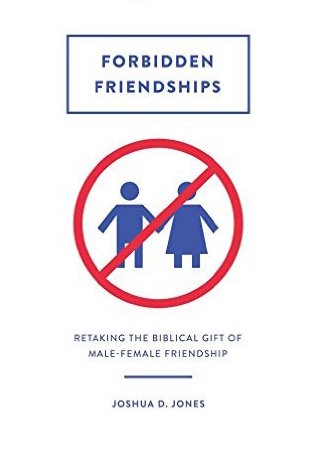 For a look at what the Bible says about close friendship between across the gender divide please check out Forbidden Friendships - available on Amazon in Paperback and Kindle in the
USA
and the UK.
For a look at what the Bible says about close friendship between across the gender divide please check out Forbidden Friendships - available on Amazon in Paperback and Kindle in the
USA
and the UK.


August 19, 2016
Why is the Cross such a Big Deal?
Biographers typically use 99% or more of their book to describe the details of a man or woman’s life. Their words, relationships and accomplishments are what is paramount. After describing their life achievements, the biographer takes a few paragraphs to describe the person’s death.
But with Jesus, it's completely different.
When you read the biographical accounts of Jesus – Matthew, Mark, Luke or John – you will notice that the whole book is building to a climax: his murder. Almost 50% of John’s gospel deals with the week of Jesus’ death. There is no other historical figure whose death commands so much attention.
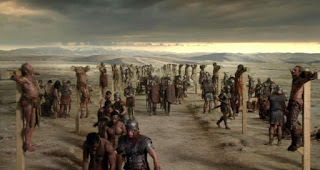 More songs have been sung about Jesus, more books written about him, more paintings painted of him – than any figure in history. In all this, it is the means of death – crucifixion – that commands the most attention. The result is that today the cross is the most widely recognised symbol in the world.
The Persians began the method of crucifixion by impaling someone with a single pole and letting them slowly die in a publicly. The Romans added the horizontal bar and sought to perfect this method by making it as drawn out and painful as possible. It was a type of death reserved for slaves or traitors. So terrible was this form of execution that a word had to be invented to describe its horrors. It is the word ‘excruciating’ – which means ‘from the cross’. Many people were executed in this way. Alexander the Great killed 2,000 people with this method after his siege of Tyre and the Romans executed Spartacus and 6,000 of his followers likewise - with dying men on crosses lining the roads to Rome to serve as an example.
Though this method was banished by the Emperor Constatine three hundred years after Jesus, there have been regular resurgences of crucifiction as a way of killing Christians throughout history - the most recent being in Afganistan, Syria and Iraq.
On the day Jesus was murdered, there were two rebels being executed near him. What seemed shocking to so many was that the early Christian movement referred to this death as ‘gospel’ or ‘good news’. It may still seem bizarre 2,000 years later. Even if one takes into account his resurrection three days later, wouldn’t it have been better if Jesus hadn’t been killed in the first place? Certainly not in such a horrific way?
Jesus’ last words give us clue as to why Christians see this as ‘good news’. He said seven words from the cross, but there are two which are the most well recorded and most known.
The first is: My God, my God, why have you forsaken me!
Jesus was not screaming ‘Ahhh! My hands, my feet!’ The worst pain Jesus was experiencing was not the physical torment, but the spiritual and physiological torment of being cut off from the Father he had always known in perfect love. Jesus was experiencing a depth of rejection that is far beyond what you and I will ever have to experience. He was drinking the full cup of hell – and he was doing it on our behalf.
Jesus lived a perfect life of love – unlike you or me. He then took the punishment and rejection that our sins deserve and exchanged his cosmic throne for humanity’s electric chair. The Creator God who must morally judge the universe is also the one being judged on our behalf. All of the darkness that we have brought into our lives, he takes upon himself and from that heart of darkness, he loves us.
Jesus’ other well-known phrase are his final words: It is finished!
Don’t pity Jesus. Don’t weep over him. He was a man on a mission. He voluntarily paid the price for your sin and has come through the other side - to save you from the gallows of your own foolishness. He has opened the door to bring into God’s family anyone who comes to him in trust and repentance. Three days later he was raised from the dead and now gives forgiveness and eternal life to anyone who comes to him in humility – regardless of background, intelligence, attractiveness, wealth or morality. There is no one so perverse that Jesus cannot heal them. There is no soul so soured with sinning that Jesus cannot make new.
That’s why the cross is such a big deal.
_______________________________
Joshua Jones is pastor of Therfield Chapel, near Royston.
Join us for church on Sunday, 10am, as we talk more about Jesus.
But with Jesus, it's completely different.
When you read the biographical accounts of Jesus – Matthew, Mark, Luke or John – you will notice that the whole book is building to a climax: his murder. Almost 50% of John’s gospel deals with the week of Jesus’ death. There is no other historical figure whose death commands so much attention.
 More songs have been sung about Jesus, more books written about him, more paintings painted of him – than any figure in history. In all this, it is the means of death – crucifixion – that commands the most attention. The result is that today the cross is the most widely recognised symbol in the world.
The Persians began the method of crucifixion by impaling someone with a single pole and letting them slowly die in a publicly. The Romans added the horizontal bar and sought to perfect this method by making it as drawn out and painful as possible. It was a type of death reserved for slaves or traitors. So terrible was this form of execution that a word had to be invented to describe its horrors. It is the word ‘excruciating’ – which means ‘from the cross’. Many people were executed in this way. Alexander the Great killed 2,000 people with this method after his siege of Tyre and the Romans executed Spartacus and 6,000 of his followers likewise - with dying men on crosses lining the roads to Rome to serve as an example.
Though this method was banished by the Emperor Constatine three hundred years after Jesus, there have been regular resurgences of crucifiction as a way of killing Christians throughout history - the most recent being in Afganistan, Syria and Iraq.
On the day Jesus was murdered, there were two rebels being executed near him. What seemed shocking to so many was that the early Christian movement referred to this death as ‘gospel’ or ‘good news’. It may still seem bizarre 2,000 years later. Even if one takes into account his resurrection three days later, wouldn’t it have been better if Jesus hadn’t been killed in the first place? Certainly not in such a horrific way?
Jesus’ last words give us clue as to why Christians see this as ‘good news’. He said seven words from the cross, but there are two which are the most well recorded and most known.
The first is: My God, my God, why have you forsaken me!
Jesus was not screaming ‘Ahhh! My hands, my feet!’ The worst pain Jesus was experiencing was not the physical torment, but the spiritual and physiological torment of being cut off from the Father he had always known in perfect love. Jesus was experiencing a depth of rejection that is far beyond what you and I will ever have to experience. He was drinking the full cup of hell – and he was doing it on our behalf.
Jesus lived a perfect life of love – unlike you or me. He then took the punishment and rejection that our sins deserve and exchanged his cosmic throne for humanity’s electric chair. The Creator God who must morally judge the universe is also the one being judged on our behalf. All of the darkness that we have brought into our lives, he takes upon himself and from that heart of darkness, he loves us.
Jesus’ other well-known phrase are his final words: It is finished!
Don’t pity Jesus. Don’t weep over him. He was a man on a mission. He voluntarily paid the price for your sin and has come through the other side - to save you from the gallows of your own foolishness. He has opened the door to bring into God’s family anyone who comes to him in trust and repentance. Three days later he was raised from the dead and now gives forgiveness and eternal life to anyone who comes to him in humility – regardless of background, intelligence, attractiveness, wealth or morality. There is no one so perverse that Jesus cannot heal them. There is no soul so soured with sinning that Jesus cannot make new.
That’s why the cross is such a big deal.
_______________________________
Joshua Jones is pastor of Therfield Chapel, near Royston.
Join us for church on Sunday, 10am, as we talk more about Jesus.
August 16, 2016
How the World will be Transformed
 I can get easily get distracted. Instead of living as a disciple of the Kingdom of Heaven, my use of time betrays me as a dumbassador from the Republic of Stupid. In addition to my own foolishness, the Bible also teaches that there are demonic forces at work in the world that play on our foolishness and keep us from God.
In today’s world, there’s a lot of pressure on Christian leaders to ‘build a greater platform’ in order to to change the world for Christ. We are told to build social media followings, get speaking engagements, and make ourselves known. We have many would-be soldiers of the cross trying to make gain popularity with people. But what does all that ultimately matter if we lose popularity in heaven? Does hell really get nervous if our tweets are many but our prayers are few?
Some Christian leaders put a lot of attention into personal appearance. Looking sharp, well dressed, and hip is all the rage. From skinny jeans in some churches to tailored suits in others – many preachers and worship leaders give great attention to their personal apperance and hygiene. But what does our outward cleanliness matter if we have dirty minds and unclean spirits? Does God distribute his anointing based on our fashion sense? We know better than to say ‘yes’, but our use of time betrays us.
Others put a lot of time and energy into staying in shape. Pursuing physical fitness is not bad – but it’s usually the good that takes the place of the best. Does it really matter how big my biceps are if my soul is puny? How proud should I be of my physical tone if my spirit is anaemic? One day my body's strength will fail me and I will have to lay my tired bones down down to rest in eternity's sea. Will I enter those waters with a mighty, well trained heart?
It's important that we are wise with our money. The Bible speaks of stewardship and our use of money does reflect the condition of our inner life. But if our cleverness with earthly riches only results in bigger personal accounts for us, what will that matter before the judgement seat? If we have worldly wealth but spiritual poverty then we are exposed as being nothing more than a special, multi-flavoured variety of insane.
Knowledge is also good. There are no brownie points in God’s economy for being a dummy. But even if we have vast theological knowledge – will that alone break the powers of darkness over our generation? I know many people who burned with the fire of God in their youth. But as the years past, their minds grew deeper, but their hearts became shallower. Their academic standing flourished while their knee bending wilted. You can have more theology degrees than Fahrenheit - but still have a frozen heart. Will this cause demons to tremble?
As we age, we may start to get grey hairs – may we not get grey hearts. In prayer we can maintain all the cheer and charm of life’s summer prime.
For those who are new, at first the hours may seem to drag. But as your heart muscles grow, the time gallops away as you engage with God in Spirit and in fire. Making time is not easy at first. Even this morning I awoke to pray only to find my twisted summer sleep hanging about me like sea weed. But intimacy with God - and a platform before heaven - grows by investing time, focus and energy. No shortcuts.
God does what nothing else will do - and he says that he will respond to focused, feverent prayer. Not just talking about prayer, preaching about prayer or blogging about prayer – but actual, heat producing prayer. Prayer for God’s Kingdom to breakthrough to our generation which is running faster than Usain Bolt towards a dark and Christless insanity.
____________________________________
For a look at what the Bible says about close friendship between Men and Women, check out Forbidden Friendships available on Amazon in Paperback and Kindle in the
USA
and the
UK
August 12, 2016
Vegan Musketeers, Biblical Interpretation & Dragon Swag
 Imagine you're walking through a high-school library when you come across a group students studying for a literature exam. They know in advance that one of the sections will be on 19th century French Novels. You hear one of the teenagers say, ‘I read The Three Musketeers. Anyone else?’ How surprised would you be to then hear…
‘Yes, it’s a fantastic vegan cookbook.’
‘For me it was stirring overview of global economic history – though I’m unsure about the author’s predictions of a violent rise of the proletariat.’
‘I was so happy when the wizard came back as D’Artagnan after his fall in the mines in Paris.’
You might interrupt – that’s now how The Three Musketeers goes. After all, you read the book in college and had seen film adaptations as a child. You know how it goes.
What if those students then respond to you by saying, ‘That’s just your interpretation. It means something different for us. Did you read it in the original French? There are different translations – maybe yours was different than ours.’
Would you even know how to begin to respond? Such statements about The Three Musketeers are absurd. And like many absurd statements - to address them adequately does take some reflection.
Are Interpretation Challenges Exagerated?
Admittedly, the example above is extreme. From Marx’s Communist Manifesto to Plato’s Republic, we trust reliable, scholarly translations and the ability of the human mind to make general sense of a work. Fortunately, no one really ever speaks in the above ways about most books. Sadly, the one book that our generation does speak of in these ways is the most important book this world contains.
I get the points raised by post-war, Existentialist philosophers like Derrida who rightfully point out that as finite and fallen humans we cannot 100% tak in the full depth and potential of meaning communicated to us by someone. In our finitude there is always room for us to understand more fully what is being said or written.
Admittedly, we also change - and that adds shades of meaning to what we hear and read. The words ‘I love you’ may mean one thing on our third date. But that same phrase may have much more depth and width on our 50th wedding anniversary.
Likewise with the Bible. When I first started reading the New Testament at age 12, I understood much of what I read and it had deep, life changing meaning for me. Now – after many years of studying it, reading it in different languages, and trying to apply it – the meaning is enhanced.
We may also freely concede that there is legitimate debate among translators – not just of the Bible, but of all works. Some translators try to translate books and letters with more of a word-for-word approach. Others try to translate sentence-for-sentence or even idea-for-idea. Though the general meaning will still be preserved, it gives the reading a different feel depending on what translation you choose. (My recommendation and practice for the Bible is to read scholarly translations of both methods.)
These issues regarding interpretation and translation are acknowledged. But when it comes to the Bible, sometimes people exagerate and stretch these ideas to undermind the readability and reliability of its message. In my pastoral experience, most of the time when this happens it’s not the parts of the Bible that people don’t understand that are bothering them – it’s the parts they do understand but that they don’t agree with. They don't want it to say what it says.
Dragon Swag
 Doubt is the new sexy. Some pretend that what the Bible ‘actually’ says is too difficult an enterprise for mere mortals. Preachers who do this are zeitgeist-posers who are trying to fit in with the cool kids. Getting up on stage and talking about what a hard week you’ve had and how you have issues with this week’s Bible passage, and how it’s a real struggle to understand why Paul would say something so harsh (a nice guy like you certainly wouldn’t have written that!) is to miss the point of Biblical preaching. The Bible acknowledges that we may struggle with doubt – but doubt is never meritorious.
Scripture refers to preachers as messengers and ambassadors. Imagine two armies getting ready for battle. Before the battle the lead general of the first army sends a messenger on a horse to the lead general of the other army. Now, whatever the message actually says – whether it is terms of peace or a call to surrender – one thing the recieving general will not do after reading the message is to look up at the messenger and ask, ‘So… how does this make you feel?’ The messenger is not asked how he feels about his general’s message - that's irrelevant to the main task.
Preachers, your own feelings and struggles with doubt and sin – and we all have these from time to time – are not the main issue. You do not need perfect faith to communicate the message. We simply need to relay the full counsel of the book we’ve been given.
Christians, if you do not embrace the beauty and truth of Scripture in your own life, you’ll always be a slave to the latest fad that sounds good. In surrender to God's word there is freedom from the swag of the dragon.
July 27, 2016
3 Minimals of Missional Fruitfulness
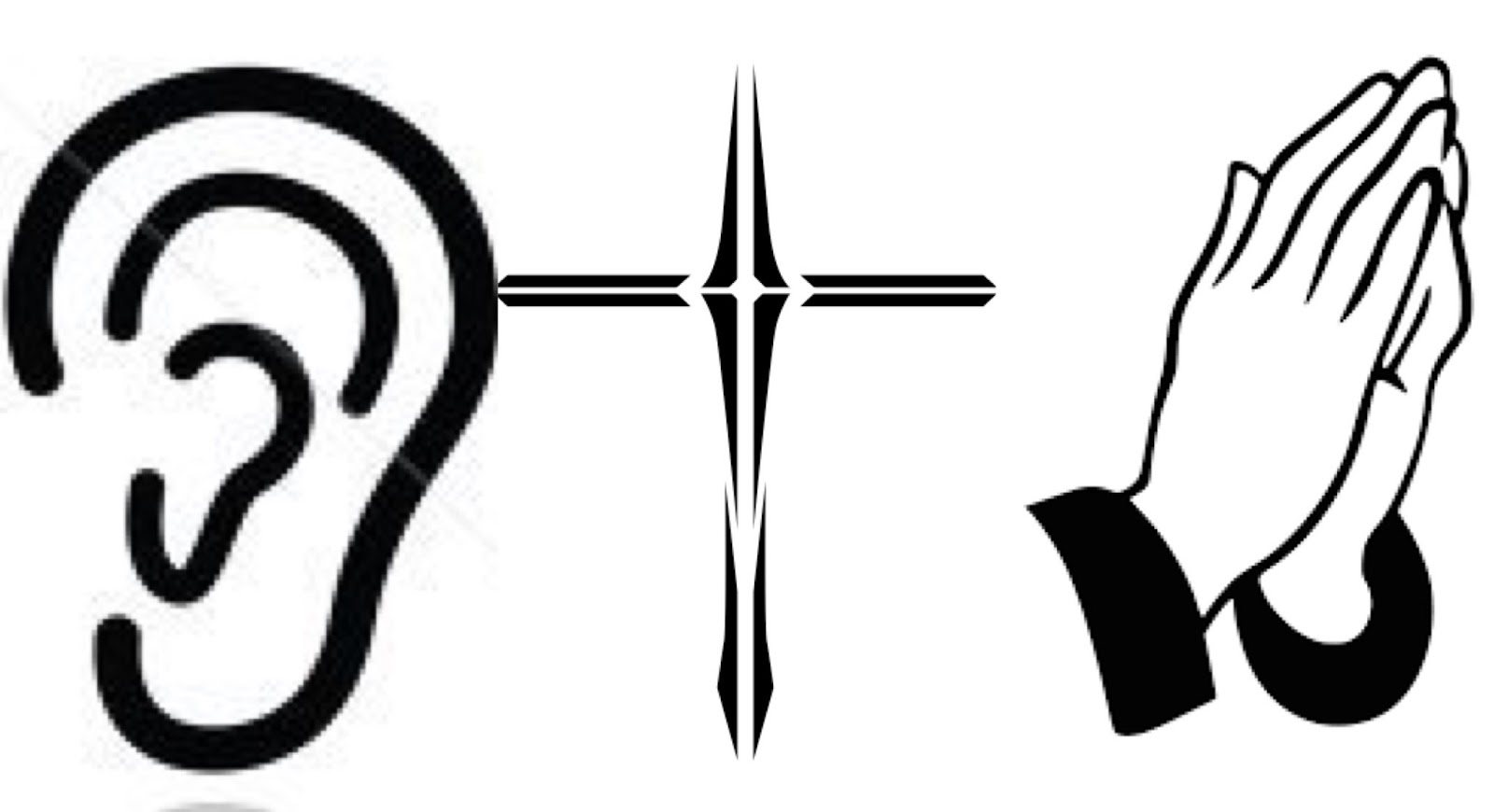 I have been sharing the message of Jesus for over 20 years - which means that most of my readers think I'm old and decrepit.
 Perhaps I am. But during those eons of exisistence I’ve lived in five separate countries and have had hundreds of conversations about faith in God. I’ve made plenty of mistakes in my attempts at missional living – I’ve certainly embarrassed myself on several occasions. Some teaching on how to ‘evangelise’ can be complicated or even weird. But I’ve found over the years that though missionaries come in all varieties, they share 3 minimals. Here are the 3 practices I’ve found that consistently aid me and other Christians in Christ’s call to be a fruitful witness.
Listen
It’s painfully cliché, but it’s true: God gives us two ears but only one mouth. When talking with people around you, learn to ask good questions so that you can… listen. God may have worked in their life in ways you know nothing about. Before you talk - you want to learn all you can about the person you will be speaking to. To not listen isn't just rude - it's unwise.
They have a history and may have certain reasons why they don’t follow Christ - even if those reasons are bad. People really do want to share their story. In order to talk they just need to feel safe – and know that you genuinely care. Be that person. After you’ve listened, politely ask permission if you can share your story. If they say yes, proceed to tell them of the impact Christ has had on you. Be gentle, courageous, and humble.
Good News
Once you’ve been invited to speak, get the message right. There are two parts to our message. The first part of our message is who Jesus is and what he’s done. This is called the ‘Gospel’ or ‘Good News’. We often mess up, thinking that the Good News is good advice. We tell people what they should or shouldn’t be doing: don’t do drugs, don’t get an abortion, stop sleeping around, start recycling, start giving to the poor, etc. Don't don't that - don't be religious twat. The Good News is that when we were helpless in our sins, Jesus came to save us by taking our place on the cross and by rising again to give us new life. We repent and find mercy in him. It’s not what we do, it’s what has been done for us that we are called to witness to.
The second part you share is your own story. It’s about what you used to be and how Jesus has changed you. It’s not about how you cleaned yourself up and no longer go the parties you used to go to. It’s not about how you used be selfish but now you’re really dedicated to helping your community. It’s not your self-improvement project. It’s about how you’ve experienced Jesus’ mercy in spite of your failures. For me that means saying how I was once afraid of death, but the resurrected Jesus has broken that fear in my life and given me deep peace. It’s me telling how I often feel lonely – but how I’ve experienced God’s faithfulness in my darkest hours.
Persistent Prayer
Lastly, pray. I don’t mean to insult you geniuses by mentioning this – but it’s the 101 basic that hell keeps getting us away from. When I persistently ask God for opportunities to be a witness, doors begin to open. We share the message, but it is the Holy Spirit who opens hearts and who guides our steps. A life of fruitful missional living begins with and is sustained by persistent, private prayer.
Cultivate these three minimals in your life, keep coming back to them when you get distracted, and let me know how God begins to use you.
____________
For a look at healthy friendships between Men and Women check out Forbidden Friendships available on Amazon in Paperback and Kindle in the
USA
and the
UK
July 25, 2016
Mirror, Mirror in my Mind
 So last night I came across a feisty atheist on Twitter who was using the popular hashtag #JesusChangesEverything in an apparent effort to provoke debate with Christians. His tweets were trying to discredit the existence of a good God by pointing to cruelty and suffering in the world. Being the loveable chap that I am, I decided to chivalrously render my services by helping him see the flaw in his logic. Any guesses how that went? Yes – an hour later we were still debating (check it out if you want @BlueCheezWhisky). Most of the debate focused on mirror neurons (MN) and the ability of science to explain morality.
The challenge we Twitterati must face is that we exercise a medium that doesn’t allow much room for developed debate. It’s like trying to do synchronised swimming with a friend in a bathtub – there’s want for elbow room. But the subject was a good one – and as I’ve encountered many atheists who employ similar reasoning – I thought I’d develop it some more here for those who may also encounter the argument.
What Are Mirror Neurons?
Wikipedia – the fount all of knowledge – defines it as:
a neuron that fires both when an animal acts and when the animal observes the same action performed by another. Thus, the neuron "mirrors" the behaviour of the other, as though the observer were itself acting. Such neurons have been directly observed in primate species.
Who Cares?The concept of MN is new - with the term being joined back in the 90s. It’s something I have a minor interest in them as I have an autistic son and one theory floating around at the moment is that autism is rooted in faulty MN processing.
It’s relevant to debate about God because MN is used as a materialist explanation of why humans have a sense of morality. What some atheists are now doing – including my tweeting doppelganger last night – is putting an incredible amount of childlike faith in MN theory. Many in the neuro-science world have pointed out how in the last six years MN theory has gotten far ahead of any actual evidence and called their zealots to calm down a bit (Here for More). The rosy-cheeked naiveté with which some are passionately embracing this infant theory has made some more seasoned scientists embarrassed apparently.
Mirror neurons are an exciting, intriguing discovery – but when you see them mentioned in the media, remember that most of the research on these cells has been conducted in monkeys... we’re still trying to establish for sure whether they exist in humans, and how they compare with the monkey versions. -Dr. Christian Jarett (British Psycological Society)
Can Biology Alone Explain Morality?
So last night - in an effort to dismiss morality rooted in the nature of God – my tweeting partner used MN theory as if it were dogma – and with great pontification. (Go ahead, read the tweets yourself). But to the point: as a Christian, how you should you respond to the claim that morality is just something burned into us by biology?
That there may be genuine biological factors to how our consciousness works, we Christians do not doubt. But neither do we get tossed to and fro by the latest waves of neurological theory which will only be replaced in a decade. We are adamant that evolutionary biology alone cannot account for it.
There are many strands of thought on how evolution alone can account for morality (MN theory is just one of the newest). But most are based on the idea of progress, working together in tribes over millions of years, and of learning the idea that what goes around comes around – that we all prosper better when we are kind to one another. It's theorised that our neurons formed altruistic patterns and – viola – empathy!
The result of this tale is that we see ourselves as progressed – in the 21st century West – to a place of great moral enlightenment. We look back at those primitives who lived just two hundred years ago and pat ourselves on the back that we are their moral superiors. Certainly we would never want to return to the morality of the Bible (whatever that’s supposed to be).
The question is, who decides that our moral practices are superior to those practiced 300 or even 3000 years ago? You? Me? Stalin? Do we who now live in our own culture deicide that our morality is superior to all others? That’s a bit cheeky.
‘Our morality is superior to yours!’
‘How do you know?
‘We checked or moral ideals, and our morality conforms to them better than yours does.’
We may look back at ancient cultures (or even other cultures today) and think them barbaric or immoral. But they might just as well return the compliment. It’s the imperialist in all of us that finds the morality that our group holds to as superior to all others.
This is why atheist Friedrich Nietzsche – and other existentialist philosophers – have reasoned that if ‘God is dead’, all things are permitted. They're right. They aren't advocating immorality as such, they are just consistent enough to recognise that if human life is an accident - that if human beings are just grown up germs who are only a brief abnormality of the universe - then any talk of ‘right’ or ‘wrong’ is just silly. All we have under such conditions is animal preferences. Your ‘moral beliefs’ are nothing more than chance atoms banging together in your head – no more right or wrong than a nun’s or a psychopath’s. You like beef, I like chicken. You like gang rape, but I don’t care for it myself. You may not like the fact our culture burns adulterers – you may do it differently in your country – but who are you to judge that it’s ‘wrong’?
The evolutionary theories usually skip over the huge ethical differences that do exist worldwide. In the West, we have gay pride parades. In Saudi Arabia, you get your head chopped off for sodomy. In America, I can leave my family religion and become an atheist. In Afghanistan I’ll be on the receiving end of an ‘honour’ killing for doing that. Who decides which culture now has the better evolved morality? What if North Korea is really on the cutting edge, and Swedes are the primitive ones?
Atheists can be moral people – more moral than many Christians I’ve met. I’ve met some who have all the moral zeal of a Puritan (you’re welcome). But what atheists cannot do is give a philosophically consistent explanation for their morality. When pushed back far enough, they are only speaking for what a person or group may prefer, not something that is inherently right or wrong.
Most atheists want to hold on to a concept of morality because they are moral creatures. They are moral creatures because they were created in the image of God with value, dignity and worth. Pride and sin have twisted and confused our moral faculties, but it’s still there. It is usually quite sharp and clear when judging others, but gets a bit evasive and muddle with excuses when we have to face our own trespasses.
Jesus did not come to give us super charged ethical information. He came to die in our place because – whether religious or irreligious, primitive or modern – we all fail to consistently live out what we know is right and true. He comes to offer us forgiveness and eternal life.
July 20, 2016
RE Class Descends into Cannibalism
 ROYFIELD, England – A Religious Education class at Patrick High-School, north of London, has begun frog worship and spear warfare. There has also been rumours of cannibalism at the school, something loal police are looking into. The unusual behaviour appears to have grown from the curriculum of one RE teacher who began teaching British Values – minus the Christian influence.
‘We should not force Christian ideas down the throats of those who come from homes of different faiths or no faith at all.’ Noted the RE teacher Brigitte Doodlesmith. ‘In order to teach an uncompromised British Values class, I had to look back to what British values were like before Christianity came to these Islands. As an ideology, Christianity really is a foreign way of thinking.’
When asked about encouraging the students to spear fight in the nude she quickly responded, ‘That’s a gross exaggeration. We are historically British about this - they wear body paint.’
When I pointed out the lack of text books Doodlesmith noted, ‘One of the things that Christianity imposed on us was literacy. Anglo-Saxon culture traditionally had little place for books. In our efforts to be truly British, this year we’ll be taking exams with finger paint.’
When asked if she was anti-Christian she spoke moderately, ‘Oh no. Christianity is fine for other cultures – it’s just not historically British. Christianity grew up in the Middle East – Jesus was certainly never meant to be a white man’s god. He’s culturally foreign to Western society as a whole.’
During the interview, Doodlesmith received word that a boy had been injured during a session of Anglo-Saxon tribal combat. ‘Aren’t you going to take him to the hospital?’ I asked.
‘No. It was Christians who really spread the use of hospitals here. Fortunately we have some 6th formers who a focusing on ancient Wiccan healing spells.’ Doodlesmith then added ‘He’ll need to recover and take vengeance. Anglo-Saxon culture was traditionally an honour bound society. This whole ‘Forgive your enemy’ stuff has no place in a Britain that has cleansed itself from this warped, Eastern ideology.’
Asked about the police and the cannibal rumours she replied, ‘We don’t go out of our way to encourage that sort of behaviour. But it is true that the Druids used to eat people’s brains in an attempt to grow in knowledge. We are telling our brighter students to take care – just as a precaution. We trust the officers will find nothing objectionable.'
The police were unavailable for comment.
_____________________________________
For a look at healthy friendships between Men and Women check out Forbidden Friendships available on Amazon in Paperback and Kindle in the
USA
and the
UK
July 15, 2016
Nice, France - and the Demons of our Day

Like many of you, I awoke this morning to learn about yet more people butchered by the hands of a hate-filled thug. Tragic! In the Anglo-Saxon world our political leaders have shied away from naming the ideology that these reoccurring thugs hold to. But last night the President of France rightly called it: he was a thug who embraced a version of radical Islam.
This time it is 84 innocent people killed in Nice, France. The weapon of choice? A truck. Last week it was almost 300 murdered in Bagdad. Before that party goers in Orlando. There’s a website that monitors terrorist attacks done in the name of Islam – most of which don’t make Western headlines. It’s averaged more than one a day for many years.
I spent five years in France – working not far from Nice – among both the secular French and the Muslim North Africans who settled there. I made friends with both groups. I thank God for the millions of professing Muslims around the world who – like my friends in France - want to live peaceful lives. But to pretend that there isn’t a strand of Islam that stands in historic succession to others and that wishes to conquer through violence is mere delusion. Mohammed was a warrior and Islam grew during its first three centuries through military conquest alone – not missionary preaching.
In the West, some people’s reaction to this Mohammedian bloodthrist is nationalism. This is growing in both Europe and USA. It was reflected in some of UKIP’s support of Brexit and in some of the more outlandish statements by Donald and his Trumpkins. From a standpoint of self-survival, it’s an understandable reaction. They see killing being done in the name of Islam – and as they cannot discern a peaceful Muslim from a militant one – they want to shut their borders to all. But though Islam may have a devilish streak, Nationalism has its own box of demons. Soviet Russia, Red China and Nazi Germany were all Nationalist movements of sorts.
The Crusades were also born of a Nationalist impulse. It is often forgotten that - from a European standpoint - the Crusades were a defensive war. After taking over all of North Africa and the Middle East, Islam was beginning to invade Europe, sword in hand. During this war, European kings raised armies to protect themselves from the Islamic armies. And - as Christianity was a fairly common thread that united most of these diverse European Kingdoms - they painted crosses on their shields as a show of unity (even though many of the soldiers were personally pagan.) Christian voices such as St. Francis of Assisi raised their voices in opposition to the idea of the Crusades (St. Francis was a gospel preacher trying to persuade Muslims to faith in Christ). But sadly voices such as his was drowned out and Nationalism painted with a Christian veneer went out to fight the invaders in a way that was as ruthless in spirit as that of the attackers. Islam has a long memory. And many of those Muslims in France with whom I shared the good news about Jesus reacted as if the Crusades were yesterday - and that they are a part of orthodox Christian activity.
Mohammed killed his enemies with his sword. Jesus allowed himself to be killed by his enemies. And it was form them that he died.
As Christians, we cannot react with fear. That is the whole goal of terrorism. Each day far more people are killed by vehicle and other accidents than by terrorists. But it’s the surprise and intentional way that terrorism is done that strikes fear in the hearts of those whose treasure and security is in this life. As Christians, our lives are hidden with Christ in God and we have no need to fear death. Islamic terrorism doesn’t increase the death rate. It remains the same: one per person. If we know that the same Jesus who beat death through his resurrection owns our very lives, we can have the strength we need to walk in both courage and compassion in the coming days.
Also, as Christians we cannot be cowards with our words – but nor can we afford to be reckless with them. There’s a significant element within Islam that poses a violent threat to the West – and it will only get a lot worse before it will get better. We do no one any favours be bring shy to say this. Thousands more will die – whether the West closes their borders or not. But we cannot respond to the sin of Islamic violence with the sin of indiscriminate Nationalism. Humans tend to embrace one demon in the hopes of being saved from another. But evil is within – not just without. God loves all people of all nations – and He’s not a fan of the unbelief and pagan sexuality of the West any more than he is the violence of the Middle East. He’s not rooting for France, the UK or the USA in that way. He’s no more on the unreligious Western side than He is on the religious Islamic side. He’s on His own side and through Jesus calls all men and women to himself.
There’s never been a better time to love, pray and preach the good news to secular Westerner and Muslim alike. France’s hope is Christ. As an immoral nation she’s been running from the Saviour, Teacher and King that loves her. Pray for her and for those blinded by the Islamic veil. #PrayforNice #PrayforTheIslamicWorld
L’Eglise en France – on prie pour vous. Elève avec puissance!
July 9, 2016
Keep Sane in the Midst of Racial Insanity
 The last few days have been emotional – both in the land of the living and in the pseudo-world of social media. Upon seeing emotionally charged pictures, videos and articles I found myself wanting to either repost or retweet - or else YELL in disagreement.
The words of the James, ‘be slow to speak and quick to listen. For the anger of man does not work the righteousness of God’ are especially relevant for Christians when social feelings reach code red levels. Here’s where society seems to be ATM. Most agree that racism is a problem in modern society. The problems seems to be in identifying exactly whose problem it is with different sides seeing the other as insane and their own side completely rational. Many in the #BlackLivesMatter camp will point to horrendous video of a police officer beating or shooting a black man. These videos leave one with the impression that most white police officers routinely oppress most black people and that injustice is a systemic issue. The #BlackLivesMatter camp is understandably hurt and angry and yells, ‘racism!’ Many in the #AllLivesMatter and the #BlueLivesMatter camps respond in various ways. One of those ways is to go on the defensive and dismiss such accusations with statistics – often with numbers that show every year more white people are shot and killed by police than black people. This raises emotions as white families then feel the tragic death of their loved one at the hands of police went unnoticed by comparison. Why didn’t their son get a hashtag? They are hurt and angry and yell back ‘reverse racism!’
That’s society around us. What are some things Christians need to keep in mind during the days ahead if we are to remain sane and and active with God's work?
First of all, we cannot be among those who dismiss racism as not a problem. Sin is buried deep in the human heart – which is why racism and other forms of discrimination come so naturally to us. If people feel hurt, we need to listen and extend love and compassion to white, black, Arab, Jew, etc. It may be tempting to dismiss both racism and reverse-racism as imaginary – but the sheer amount of hurting people on both sides should indicated that there is something behind these claims that need listening to.
Secondly, we need to be discerning and careful with our words. Emotional words spoken in reaction to half a news story or media sound bites often inflame tensions. Make no mistake, this stuff boosts ratings and sells papers. We need to be a people who hear the whole story before we make judgments and fire off on FB and start playing the blame game.
Lastly, we are part of a new society where Jesus is the King. Paul writes that for Christians ‘There is neither Jew nor Gentile, neither slave nor free, nor is there male and female, for you are all one in Christ Jesus.’ To enter into God’s new family we pass through the body of an innocent, murdered man – Jesus Christ. His blood was shed to wash and forgive the guilty. In this family things work differently than in the world around us. We receive each other – whatever race – as family because Jesus has adopted all of us into his big and generous home.
Practically, what does this mean? It means that I am limited in how I can change the world’s problems outside of this family. In the world outside, Jesus is not recognised as Lord, forgiveness is not a free gift that flows from on high, and people’s identities are not rooted in God’s kind grace.
It is different when we see racism in the church. In your church, you probably have people referred to as ‘deacons’. Do you know where that term comes from? It comes from Acts chapter 6 when discrimination began to creep into the church between those of Hebrew background and those of Greek background. Deacons were chosen to lay the smack down on that evil and to ensure that everyone was treated with justice.
 This is the legacy of Rev. Martin Luther King Jr. For all the flaws he may have had in his private life, he got one things right – he knew how to call people to repentance. Before King arrived, there had been secularists working in the Deep South who tried to end racial discrimination, but with little success. When King arrived, he knew that many there were either Christian – like him - or at least had a conscience that was sensitive to Biblical teaching. For that reason he didn’t go around saying, ‘You guys need to stop being so religious, get with the secular program, realise we all evolved from the same set of primates, etc.’ No. He opened his Bible to the prophet Amos and cried ‘Let justice roll on like a river and righteousness like a flood!’ Using Scripture he fought and beat Jim Crow where secular attempts had failed. He did the job of a deacon.
 Here’s the point: that worked for MLK because many of those to whom he spoke – both black and white – professed that Jesus was their Lord. King simply made them see the inconsistency between what they professed to believe and what they actually lived out - and many repented of their hypocrisy. Reconciliation and justice began to grow.
Today is different. We can still fight to correct the sin of racism whenever and wherever it begins to sneak into the church. But American and British society has taken a decidedly secular turn since King’s day and the prophet Amos is not quite as ‘down with the kids’ as he once was.
This mess will only get messier. We can try to be peace makers and speak calming words to enraged people – and our example may help in small ways. But we cannot fundamentally fix all of this world’s problems. We can, however, welcome people into a new world. Trying to teach forgiveness and reconciliation between humans is a distraction to our real task if we don’t first show them how to receive forgiveness from God – and that’s where the power resides. If the secular humanists are right, then ultimately #NoLivesMatter because human life is just a temporary accident of the universe. But if God created man in his image with dignity and worth, then #BlackLivesMatter because #AllLivesMatter and every life broken by sin can be fixed and forgiven because #HisLifeMattered.
If we want people to walk out a new life, we have to tell them about the new birth. It is our job to preach the good news to people of all races, in all nations. We welcome all people into God’s family. Here there is forgiveness for the cop who shot the innocent black man and for the black sniper who shot the innocent cop. Hearts of stone will be taken out and hearts of flesh given free of charge to the sinner. Let's be busy with that.
In the new world, the lion lays down with the lamb.
________________________________________
To read about reconcilaition and healthy friendships between Men and Women check out Forbidden Friendships available on Amazon in Paperback and Kindle in the
USA
and the
UK
July 4, 2016
'You're on the Wrong Side of History!' - 3 Ways to Respond
 I am thankful to God for Joseph - an atheist and LGBT friend that I met back when I resided in Ireland. Though we have a host of issues that we disagree over, he knows how to take it all in good stride and rarely makes a thoughtless argument or resorts to name calling.
Sadly, I have not experienced many people like Jo among those with whom I disagree - be they about God, LGBTism or other issues. This morning I awoke to yet another message gernaded through social media at yours truly. The ill-defined term ‘homophobic’ was the – rather uncreative – pejorative of choice. Why did they toss this term at cuddly, lovable ol’ me? For for the unfashionable crime of holding to the Biblical (and historical) idea of marriage being something that can only exist between a man and a woman.
One of the popular soundbites being chanted in debates at the moment is the accusation that one ‘is on the wrong side of history’. Now we hear this used in a few different contexts – not just at those who dare to publicly question current LGBT orthodoxy. The one who has this faux argument shot at them is apparently supposed to shudder and recoil in defensive horror. Though ignoring it is always a fair option, some of you may wonder how to respond. Three ways come to mind:
The first is the pious response. Simply reply that being on the wrong side of history doesn’t particularly bother you. We are all going to give an account of our lives to the Creator – not to a history book. In the light of Eternity, being a part of the intellectual pezzonovantes of the day simply isn’t a big priority. And Lewis pointed out, anything that’s not eternal is eternally irrelevant.
The second is the cheeky response. Simply say that you’re not on the wrong side of history. In the case of the gay ‘marriage’ debate, those who understand that a marriage is fundamentally something between a man and a woman are on the same side of 99% of human history. Even the Romans and Greeks – who practiced sodomy with great enthusiasm – still maintained that marriage was between a man and a woman. (More Here). What people mean when they talk about being on the wrong side of history is being on the wrong side of their imagined future.
Lastly, we have the empathetic response. Simply point out that we are all on the wrong side of history - at least in how they mean the phrase. By saying, ‘You’re on the wrong side of history’ the pro-gay ‘marriage’ crew mean that younger generations increasingly embrace this part of LGBT ideology. Therefore people who don’t embrace this new view of sexuality and gender are on the wrong side of a growing social trend – and therefore of history itself. Simply reply:
But aren’t there some growing social trends that you are on the wrong side of? Nationalism is growing. What about the wealth gap between the rich and the poor? That’s increasing and showing no signs of letting up anytime soon. If you oppose nationalism or huge wealth gaps between the very rich and the poor, then you’re also on the wrong side of history – at least for the time being.
If the person you’re discussing with is someone like Jo - one who is at least semi-reasonable, thoughtful and open, - then I’ve found the last answer the most disarming and fruitful in paving the way for further respectful discussion.