Joshua D. Jones's Blog, page 13
October 14, 2016
Holy Halloween?
 The big ugly debate is upon us.
No, not the Presidential one. This debate involves dwarves and banshees of quite another variety.
As heated as the political scene may now be, it will pale to fervor with which Christians will begin debating if and how they will celebrate what is now commonly called "Halloween". This battle of ideas will be waged from the beaches of church pews to the hills of Facebook. There will be shots fired and people unfriended.
But what cyber surfing culture warrior would be complete without some historical trivia and theological sanity? Here you go...
The Background Story
The devil would love to steal All Hallow’s Eve (Halloween) away from Christians. He is making good progress at it too.
All Hallow’s Eve is neither American nor pagan in heritage. The name should be obvious enough. Hallow means ‘holy’ (‘Hallowed be thy name’) and it marks a three-day celebration of the victory of Jesus over the powers of darkness as experienced by departed saints and Christian martyrs - with November 1st being All Saints Day. These type of celebrations have happened since the 300’s AD and the date became formalised on the Church calendar in 835 AD by Pope Gregory.
Traditionally, this holy day was a time to remember Christ’s victory over darkness and to remember that we still have to battle against evil. As St. Paul writes in Ephesians 6,
For our struggle is not against flesh and blood, but against the rulers, against the authorities, against the powers of this dark world and against the spiritual forces of evil in the heavenly realms.
How have Christians historically celebrated this? By joyful mockery. Satan has lost his final victory, is a defeated foe and nothing pushes back his minions like Christian joy. It is from this tradition that people draw silly pictures of the devil and let their kids dress up as ghosts to show that he can no longer dominate the redeemed people of God - we no longer need to be afraid. Historically, Christians would even burn the costumes afterwards.
Now I confess, there has been a historic debate about this day. Catholics and Protestants have argued over how highly departed Christians should be viewed - with Catholics over-venerating past Saints. But both groups still see the main point being Christ's victory with his people over evil.
Halloween is also a historic occasion for friendship. Though sweets (candy) is abundant and cheap today, in previous centuries, giving these small gifts to children was more costly and an act of true Christian generosity.
Christmas and Easter
Christians are a redeemed people and as such we have a cheeky tendency to alchemise the culture around us. We make once wicked things into trophies for our God. We did this with Christmas and Easter. Those holidays have pagan roots – but we’re stolen the whole thing and redirected it to honour Jesus. No longer is Saturnalias worshipped mid–winter, now we sing the praises of Christ through carols.
But now pagans and the commercial industry is trying are trying to get revenge for Christmas and Easter by hijacking our All Hallow’s Eve – a holiday that started out Christian. They try to claim associations with ancient Celtic Harvest days. They want to change it into a day of celebrating the powers of darkness over the powers of light. Unfortunately, some Christians are unaware of their own roots and have let the pagans think for them - buying into this propaganda.
Letting let the pagans and mainstream commercial society have our day show's a certain type of cowardly insanity. We Christians are retreating from a holiday that was once wholly ours. Let's reclaim the victorious and hospitable traditions of the past and teach the children around us that through Christ's death and resurrection, we no longer need to be afraid.
Let’s celebrate All Hallow’s Eve big this year. The sweets you give your neighbourhood children should be far more generous and grad than those given to them by your unbelieving neighbours!
Let’s celebrate Christ's victory with style - until he returns for all his Hallows.
___________________
[Please Share]
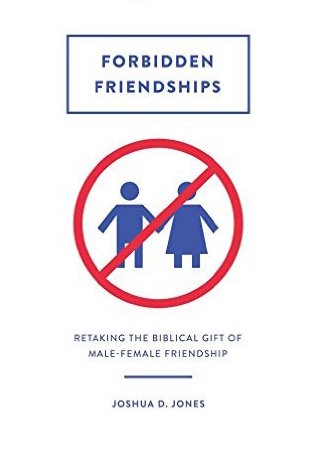 Need help with a male-female friendship? Check out Forbidden Friendships - available on Amazon in Paperback and Kindle in the
USA
and the UK.
Need help with a male-female friendship? Check out Forbidden Friendships - available on Amazon in Paperback and Kindle in the
USA
and the UK.


October 10, 2016
Confessions of a Lonely Christian
 Loneliness has been a regular visitor in my life since I was a teenager. He rarely announces in advance when he’s going to stop by. He doesn’t ring or text. He could swing by when I’m in a crowd or on my own.
 Loneliness likes to surprise me like that.
Sure, sometimes his visits make sense. Loneliness may come singing his sad tunes when I perceive a slight from a friend. Unmet expectations from those I care about can open the door for his arrival. But other times he seems to come for no apparent reason – when relationships and work seem to be going well. I can be joyful and at peace for a good while... then loneliness drops a surprise kiss on my soul like a fart from hell.
Like all Christians, I also experience temptations to sin. Nothing exotic – just the ordinary type of damnables. But loneliness in itself is not sinful to feel – it’s a form of brokenness and a symptom of living in a fallen world. Other Christians deal with other types of brokenness like depression or doubt. But neither of them are frequent visitors of mine.
The pain loneliness brings with him hurts so badly at times, I become near paralysed. I’m almost unable to work. I usually introvert my feelings, so only those who know me the best notice. But if I let it go, I'm not fun to be with. I just want to curl up in a ball on bed and cry or sleep or somehow just escape. As an adult, a father, a pastor, and a Christian I often feel ashamed for feeling that way – and even for writing it here. I sometimes think that if I was more emotionally mature, I wouldn’t feel this way.
Loneliness really is all it’s cracked up to be.
All types of people deal with intense loneliness: Muslims, Agnostics, Vegans, Christians, politicians, socialites, loners – it comes to married and unmarried people. Pin pointing the cause is not an exact science, but it probably has to do with life experiences, physiological make up, as well as spiritual and relational dynamics.
When I’m in such a state, words, time, and touches from loved ones help tremendously. (Yes, ‘touches’. I thrive on non-sexual, physical expressions of affection.) Everyone who deals with loneliness knows the comfort that can come from another human being. My wife - like a couple of other close friends - are good at speaking encouraging words when I'm down. But contrary to popular perception, marriage doesn't make it just go away.
But as a Christian, I also find two unique kinds of help that can’t be found anywhere else.
The first is the Embrace of Grace. Christianity is the only belief system in the world that teaches that the Creator God voluntarily embraced loneliness. He didn’t have to. As the Triune God – Father, Son and Holy Spirit – he eternally existed as a friendship, all within himself. He was always emotionally complete and happy.
But what did he do with that perfect acceptance and joy? He gave it all away. On the cross he put himself in our place and opened his arms wide to receive infinite rejection. And he did all this so that you and I can have the only type of acceptance that really matters – the embrace of the communal God.
The other comfort is the hope of Jesus’ promise. It won’t always be this way. If Jesus is who he says is – if he really did rise from the dead, then not only am I embraced by God, but I’m put in a new family. I’m so grateful for the fellow Christians in my life who love and accept me – people who I wouldn’t ever know if it weren’t for Christ. But as good as that is now, I know one day it will be far better. In this word Christians still struggling with sin like everyone else and we only see dimly.
But Jesus is preparing a place of perfect love for us. There will be no unrequited affection there. No embarrassment, insecurity or jealousy. You won’t have to be cool enough, pretty enough, or clever enough. The best moments of the most intoxicating relationship you’ve had here on earth is just a small foretaste of the love that is to come through that perfected family – for all eternity.
When loneliness visits me – this embrace and this hope gets me through.
___________________
[Please Share]
For a look at how the Gospel helps build satisfying friendship across the gender divide, check out Forbidden Friendships - available on Amazon in Paperback and Kindle in the
USA
and the UK.
September 26, 2016
Does the Bible Encourage Rape?
 The Bible encourages men to rape women.
Or so I’m being told by confident atheists on social media.
These secular prophets are basing their denouncements on the NIV English translation of Deuteronomy 22.28 which reads,
If a man happens to meet a virgin who is not pledged to be married and rapes her and they are discovered, he shall pay her father fifty shekels of silver. He must marry the young woman, for he has violated her. He can never divorce her as long as he lives.
So… does the Bible encourage or condone rape? Does the Bible command rape victims to marry their rapists? Or have we misunderstood something?
Sadly, the NIV did – in the estimation of many – translate this quite poorly (as did the HCSB and NET). Many other solid translations – such as the ESV, King James, Geneva Bible, the NLV and the NLT - do not use the idea of or the word ‘rape’ here. Why? What’s going on?
What is Lexical Range?
Let’s get technical for just a moment. The confusion has to do with the Hebrew verb that the NIV translates as ‘rape’. It’s the wordtaphas. Like many Hebrew words, it has a big lexical range. What does that mean?
Take the English verb ‘to hold’ for example. Is it a good word or bad word? Does a person usually want to be ‘held’?
As you would probably say, it depends on the context.
I want to be ‘held by’ someone I find attractive. I don’t want to be ‘held down by’ an aggressive person. And still more, if you’re going too quickly I may ask you to ‘hold on’ for a moment.
That Hebrew verb, taphas, is like our verb ‘to hold’. The connotations vary. Elsewhere it’s translated: manipulate, seize, catch, handle, hold, surprise, and take. At times, it has nothing to do with force. Some translations use two verbs here - one stronger and one weaker to help cover all the possibilities. The NLT - a version that seeks to translate the sense of a phrase rather than a word for word translation - uses the verb 'to have intercourse with'.
Of course, the actual word could mean 'rape' – but that would be at one end of the interpretive scale. Instead of just looking at the verb, we must ask what translation the wider context suggests? Most translators and commentators don’t think it should be 'rape'. Here’s why…
Context
First of all, rape was just discussed in the previous verses. It talks about a woman being raped in the countryside and crying out for help. In those instances capital punishment is recommended for the man and the woman goes free. In those verses the word used for ‘rape’ isn’t taphas (above). It’s a completely different word, chazaq – which also has a wide lexical range. But in these previous verses, the context is clear that it should be translated as ‘rape’. If verses 28-29 were continuing the discussion on rape, it would be logical to use the same verb and not introduce a completely new one.
Secondly, not only is the word different, but it seems contrary to what is being discussed above – laws that seeks to protect women from punishment when force is involved in illicit sex.
Significantly, these laws were also listed previously in Exodus. The word ‘Deuteronomy’ means ‘second law’. It's called this because it’s a recap of what was previously covered in the Pentateuch. When the law is mentioned for the first time in Exodus, the wording is slightly different and it avoids the ambiguity found here. It reads,
If a man seducesa virgin who is not engaged to anyone and has sex with her, he must pay the customary bride price and marry her. –Ex. 22.16
Given both the immediate context of the passage and the larger context of the Mosaic Law, we are within our rights to argue that the word should be translated ‘seduce’, ‘trick’ or even pssibly ‘to have intercourse’.
But Why Marry Her?
But all this may raise another question. Why this law? Why state that he should marry her? Is that being cruel to the woman?
The answer is simple: this law protected women. It protected them from players and all forms of sleazy dudes.
In the Ancient Near East, a girl who had given it up outside of marriage was damaged goods. She would stand little chance of finding a husband and thus securing her economic future.
By requiring guys to marry the girl – it drastically reduced the number of guys who were willing to chat a girl up just to bed her. This law killed the motivation of would be Casanovas who just wanted to knock boots with a girl and then move on - leaving her possibly pregnant and with little chance of finding a husband.
Not only does the law state that he must marry her, but it adds that he may never divorce her. Do you understand how significant that is? Under Mosaic Law, divorce could happen if one of the parties was unfaithful. But this law states that if a man has sex with a girl before marriage, then he cannot ever divorce her. He must continually support her always – regardless of what type of wife she becomes!
Can you see how this law was designed as a deterrent - to protect young women?
We also cannot forget the sub-clause. Mosaic Law also states that in this instance,
But if her father refuses to allow his daughter to marry him, the man must still give the usual payment for a bride who has never had sexual relations. –Ex. 22.17
That means if the father looks at the guy who seduced his daughter and thinks he’s a sleaze (and especially if he has reason to believe that the sex was forced or overly manipulated) then he can deny the man the right to marry his daughter – and still get the full bride price from the man!
Often critics of verses like these imagine that Ancient Near East was similar to our 21st Century, Western culture. It wasn’t. Women didn’t marry primarily for romantic reasons like today. They married to secure their financial future. Being a single gal simply wasn’t an attractive option. If she slept with a man, she didn’t HAVE to marry him – but she would almost always choose that as the preferable option. She could choose to say with mum and dad - but what happens when they die?
True Biblical Rape
Lastly, let’s remember the actual recorded incidences of girls getting raped in the Bible. Read Genesis 34. When the Diana got raped – all the brothers went to war over her and killed every man involved. The same happened with Tamar (2 Samuel 13).
Tonight if a girl gets raped in London… will there be the same passion to avenge her honour? Of course not. Rape was taken more seriously in the Bible than today.
Contrary to the accusation by secular preachers that this verse encourages rape - and thus puts women at risk - this law is one of the most protective, pro-woman verses found anywhere in the ancient world. The idea that the Bible encourages men to rape women is laughable to any careful reader - except those with an agenda to discredit it.______________________[Please Share]
For a look at how the Bible says men and women SHOULD treat each other, please check out Forbidden Friendships - available on Amazon in Paperback and Kindle in the
USA
and the UK.
September 24, 2016
What is a Harvest Service? (and who cares?)
 To readers who, like me, are of the urban variety - or those in outside the UK - this may require some explanation. What exactly is ‘Harvest’?
Harvest services here in the UK are when rural churches celebrate the agricultural harvest which affects the surrounding farming community. The closet thing Canadians and Americans have to this is holiday is Thanksgiving. It’s a time where thanks is given for what we have.
Now-a-days many may see such services as dated - as few of those who live in even rural settings are farmers anymore. Perhaps. But though some of the trimmings and trapping surrounding Harvest may be antiquated or nostalgic, it brings us to a too little discussed Biblical doctrine: gratitude.
Now this is more than just a small, side dish issue. Paul puts this at the very centre of the Gospel. He writes that the chief qualities of those who are lost is that they ‘don’t want to glorify God or give him thanks’ (Romans 1.21). Elsewhere, in Ephesians 2, Paul contrasts the heart that receives life as ‘the gift of God’ with those people who ‘boast’.
Which Soul do we Have?
A boasting life is one that sees the good things they have as what they deserve.A Harvest life sees all they have as a gift.
A bosting life is one that always looks to see if it is being treated fairly.A Harvest life seeks to give goodness – even to those who don’t deserve it.
A boasting life thinks that it deserves better than what it has.A Harvest life wonders why it is so rich with goodness.
A boasting life sees those with more and thinks, ‘I should have that.’A Harvest life sees those with more and are happy for them.
A bosting life sees those with less and thinks, ‘They should’ve worked harder.’A Harvest life sees those with less and freely gives and shares what they have.
A bosting life thinks that God owes it love and blessing.A Harvest life is thankful, happy and amazed that God allows it to exist.
A boasting life believes its need for forgiveness is small.A Harvest life feels the deep conviction that even on its best day, it needs much mercy.
A boasting life can only speculate on why Jesus had to die.A Harvest life cherishes the cross of Christ more than any earthly possession or relationship.
A boasting life is one of striving and trying to achieve.
A Harvest life is one of rest and gratitude for all that’s been given to it.
The Eternal Trajectory of Harvest
The boasting life is one turned in on itself. The ego grows and it's universe gets cramped. It's seeks to gain it's own life - and therefore loses it. In self absorption, it creates hell - as it travels there.
The Harvest life is one turned outward to God. The ego shrinks and lives in a Universe that gets ever larger and more adventuresome. It's seeks to loses itself in something greater - and therefore finds itself. In self-forgetfulness, it discovers love - as it travels there._____________________[Please Share]
For a look at how the Gospel changes friendship across the gender divide please check out Forbidden Friendships - available on Amazon in Paperback and Kindle in the
USA
and the UK.
September 21, 2016
How to Handle the 'Sinners will be Destroyed' Verses
 Trying to get good theology on Facebook is like trying to get good relationship advice on daytime television – you’ll be lucky if it happens.
Yet many of us – when asked about the essentials of the faith we profess – give answers that sound as if they were read from a meme on our newsfeed. Pop-culture Christianity is producing Christians who are high in enthusiasm but who handle their Bibles about as well as they do a unicycle on an oil slick.
This is understandable when someone is a new Christian – learning takes time and effort. But it should not stay this way. We're commanded to ‘correctly handle the word of truth’ (2 Tim 2.15) – so this is not just an unfortunate situation, it’s a matter of disobedience.
Our Biblical ignorance is no more evident than when we come face to face with the ‘destroy the sinner’ verses. We have some of these in the New Testament, but the bulk and the best known are in the Old. Some Christians manifest all the backbone of a gummy worm when challenged by outsiders with 'horrid' verse like,
All sinners will be destroyed; there will be no future for the wicked. –Psalm 37
Or,
The day of the LORD is coming --a cruel day, with wrath and fierce anger-- to make the land desolate and destroy the sinners within it. –Isaiah 13
People who aren’t Christians tend to see such verses harsh. But when they ask us about it, we fail to give them a clear and confident reply. Instead we drink a cowardice / ignorance cocktail, get all apologetic, and then try to explain that the verse doesn’t mean what it obviously says.
We hum and haw and mutter something about it being in the Old Testament, that God was a bit immature back then, and that he had a short temper. But now he’s cool and has picked up some hippy love – so we don’t need to be afraid. ‘Sorry for the misunderstanding – I hope the big bad verse didn’t hurt your ego.’
We need to stop saying sorry for the Bible and take our Scripture like we take our whisky – straight up.
Destroy all the Sinners
Some are surprised to find such verses in the Bible – thinking they are better suited to the Koran. But Mohammad’s deity only calls for the destruction of bad sinners. The Bible – by contrast – declares the destruction of all sinners.
In the Bible, God is seen as being far more holy than in any of Mohammed's fiery sermons.
We’re naughty by nature and must – and will - be destroyed. This is the very beginning of Christian theology and if we don’t understand this, we really don’t understand jack. In the second chapter of the Bible God declares
‘You must not eat from the tree of the knowledge of good and evil, for when you eat from it you will certainly die.’ –Genesis 2
Saying that sinners will die for their sin is one of the first utterances God gives to humanity.
Eve and Adam direct their hearts from God and eat the one forbidden fruit – and we their children do the same. The appropriate consequence is that we’re doomed to rot, like old fruit in the sun.
Why this is Good News
The ‘Good News’ of the New Testament does not negate the fact that sinners must die. Rather, Christ’s death and his resurrection give us a new way to die. The good news is that we can be destroyed – and as sinners we desperately need to be – and then made again. Jesus didn’t just die so that we can live – he died so that we can die.
Read carefully what Paul writes here,
If we have been united with him in a death like his, we will certainly also be united with him in a resurrection like his. For we know that our old self was crucified with him so that the body ruled by sin might be done away with, that we should no longer be slaves to sin— because anyone who has died has been set free from sin. –Romans 6
All sinners will be destroyed. This is good news for a Universe that’s had to with our moral sewage for long enough. But Jesus now also makes it good news for us as well – in him we can be destroyed as sinners, and raised up in a new and pure life.

Jesus was the only one who’s ever lived who perfectly worshipped God and never ate the fruit. He is the new and better Adam. He’s the only one who didn’t have to face destruction but who – in love - submitted himself to destruction for our sake.
If we identify with him in death, then we will be with him in resurrection. The seed will die, but it will not rot in the ground. It will grow and bear new life.
In Christ, we can - and must - embrace death like an old friend. _____________________[Please Share]Or see the related post The Old Testament Problem
September 19, 2016
'So What?' - How Christians waste Conversations
 Huh?He informed me that he didn’t like what the Bible had to say about sex.
Now he didn’t specify what he meant by that. Perhaps he was thinking that if he became a Christian he would have to stop knocking boots with his girlfriend. Either that or marry her – and he didn’t seem inclined to do either.
Ignorant of whatever his exact objection may have been, I still ventured to respond,
‘So what?’
He seemed surprised.
Forgetting our Orders
We Christians are easily distracted. We’ve been given our marching orders from Jesus – our Commander-in-Chief. He commanded us to give the world around us the message he entrusted us with. Paul summed it up this way:
‘I passed on to you what was most important and what had also been passed on to me. Christ died for our sins, just as the Scriptures said. He was buried, and he was raised from the dead on the third day, just as the Scriptures said.’ -1 Corinthians 15
Christianity is a unique in a number of ways. One of the things that sets the Bible apart from other religions and lifestyle philosophies is that it’s not primarily about morality and ethics. Oh, that’s in there – and it is important. But it’s not the main player.
The Biblical message is not so much about what we need to do, but rather about what has been done for us. Morality and ethics – sexual or otherwise - is merely a part of a coherent response to this good news. That’s why we deliver a message called ‘gospel’. Gospel is announcement of something important that has been done. It's a proclamation - a message with testicles.
The Conversation
Him: I don’t like what the Bible says about sex.
Me: So what?
Him: Well, isn’t that important. I think the Bible’s wrong.
Me: Does the fact that you don’t like what the Bible says about sex mean that Jesus couldn’t have risen from the dead?
Him: Huh? What does that have to do with anything?
If Jesus wasn’t raised from the dead, then it doesn’t matter what the Bible says about sex or anything else. You don’t have to believe any of it. The book is of no real importance to anyone.
But if Jesus was raised from the dead, then what it says on any and every subject is of ultimate importance to everyone.
As Christians, our job is not to convince society around us to adopt a particular view of morality, family, sex or ethics. We can deal with those issues in house (1 Cor. 5). Our primary call isn’t to try and patch up the old, sinking world – it’s to call people into a new one. That’s only possible if Christ has been raised.
But he has been raised. The death knell has been reborn into a wedding bell.
And everything shall be made well. ___________________
[Please Share]
For a look at how the Gospel changes friendship across the gender divide please check out Forbidden Friendships - available on Amazon in Paperback and Kindle in the
USA
and the UK.
September 16, 2016
Where I Turn Down a Gay 'Wedding' Invitation

Dear Katie,
I hope this letter finds you well. You’ve been in my mind lately as it’s been a few weeks since we’ve met up. We’re overdue to grab a coffee – I we can soon.
At the risk of sounding overly solemn, I want to thank you for the friendship we’ve enjoyed over the last four years. I enjoy our talks, our mutual love of whisky and I’ve receive your company as a gift from my God. You’re a great drinking buddy!
I also want to thank you for thinking of me as you sent out invitations for what I know will be a big day for you and Joanna. I’ve known you since before you met her (two years ago now is it?) and I appreciate all you’ve shared with me about how meaningful that relationship is to you. Knowing my appreciation, it may come as an unwelcome news to you that I must turn down the warm invitation you are extending to me. This is not a choice I make easily.
I’m writing all this in a letter so that you’ll have time to consider what I’m saying - as often these issues can be emotionally charged to the point of unreasonableness. It would be normal if your initial reaction was hurt and a feeling of rejection. But please resist that impulse. If you understand my reason for doing so, then I hope you’ll see it’s because I truly love you and want the best for you and not because I despise our friendship.
We See Everything Differently
You know that I am a Christian. You have rarely talked to me about my faith and my few attempts to bring it up has not - seemingly - met with much interest on your end. You asked me once what God thought about cheap beer and 80’s music - but I think that’s the extent of it (he’s not a fan in case you’ve forgotten). But our talks have revealed that we still share the love of many things: culture, films, music, books, and, of course, whisky.
But my relationship to God isn’t just a small piece of my life that can fit neatly into drawer. It’s rather a pair of glasses that enables me to see and interpret everything I else – just as your atheism affects everything you see – be it consciously or unconsciously. It’s because we each wear different glasses that my refusal to attend a day which is important to you may not make any initial sense - and may even seem rude.
But if you’ll be patient with me and consider how I see the world, then it is my hope that you’ll interpret this as an act of friendship – which it is truly meant as.
Why
Your atheism posits that all the world is the result of time and chance acting upon matter. But as a Christian, I believe the world was created with purpose as essentially good to be received and experienced with gratitude and lived out with the intention it was created for.
For that reason, you see our mutually beloved whisky differently than I do. You see it through the materialistic lens. You see your taste buds as the fruit of evolved germs that just so happen to derive a sense of pleasure when put in contact with 12 year old fermented grain mash. You may give thanks to me if I happen to buy you the drink – but that’s the extent of it.
But I see that glass differently. God knew we would figure out how to make whisky and so he gave us taste buds specifically created to enjoy it. He also gave us oak so that we could make barrels out of it and thus mature our scotch in a way that angels approve of. God allowed us to discover whisky because he is good, because we he wants us to have joy, and so that we could honour him by giving him thanks.
We both enjoy a dram – but for me it is an act of worship. For you it is a chance meeting of molecules. My whisky drinking is different from yours because my universe is different from yours. Our SexThe same is true for my sex. Like whisky, we may both enjoy sex - but I have sex different from you. And that’s not just because I’m a dude. As an atheist, you see sex as one of the accidents of the universe – more pleasurable than most perhaps, but still purposeless in the ultimate sense of the term.
But as a Christian, I believe sex is a gift given by a kind God whose good heart is bigger than Christmas. It’s a gift that is intensely purposeful and we should not use in accordance with any impulse we may experience. Like electricity, it is a great gift – but misuse of that powerful gift may harm. We have many rules regulating how electricity is managed in public places - not because we don’t value our citizens, but because we do.
God knew that he was going to save the world through Jesus sacrificially laying down his life in death and that he would be with his people in full, unrestrained love forever. Because God knew that’s where he was going to take human history, he created us as male and female and established marriage as the life-long union of one man and one woman and that relationship is to be the place where sex is to be used.
He does this for everybody’s sake (including those who are single) so that we can all see and be reminded of where God is taking us, should we want to get in on his plan of redemption. The husband is to love his wife as Christ loved the church and the wife is to respect her husband as the church does Christ. Marriage and sex - when used in the way God created - gives the world a picture of who God is and what he wants to do in the world.
But sin has infected this terrestrial globe and we are all sickened with it. We misuse sex in hundreds of ways – both heterosexual and homosexual in nature. We think sex is primarily about serving our desires, instead of glorifying the God who crafted and bestowed it. This is one of the many reasons we need forgiveness – we use his creation in a way contrary to the purpose he created it for. As Christians we believe that sex outside of marriage is sin because it is hypocrisy: our bodies are saying ‘I fully give myself to you’ but the rest of our lives are not in agreement. You Might Think…
You may be tempted to think that I am rejecting our friendship. Please don’t – I like you a lot. Throughout much of my life I have felt on the outside of any side you could find – I know only too well rejection’s fierce kisses. I do not wish to bestow those feeling on others – so I do not demand that someone else see the universe the exact same way I do in order to accept their company.
You may also think that in refusing your invitation I see myself as superior to you – that I’ve somehow earned more moral merit badges. That’s certainly not the case. I am readily prepared to grant – and not just for the sake of argument – that my life’s sin bucket is fuller than yours. My need for forgiveness – and therefore Jesus – is elephantine in proportions.Or, you may be tempted to think that my ultimate desire for you is that you ‘become straight’. Not really. In my new neighbourhood I am surrounded by heterosexuals who have prospering mutual funds, but bankrupt souls. They don’t know their Creator and neither heterosexuality, nor marriage, nor their money will earn any brownie points with Him.
Rather, my ultimate desire for you is that you’ll come to know Him. You may call this my (ahem) missionary position. And so it is. It’s a position borne out of sincere friendship. Though you express little interest in getting to know the one who has given you so much, you are still invited to His house.
Lastly, you may also be tempted to think that I see your relationship with Joanna – something you treasure – as being all evil. This is not the case either. There is much good that I’ve see in your relationship with her over the last two years that I can affirm. You love one another, care for one another and enjoy each other’s company. It seems you are good friends and friendship is a gift from God. Were you to throw a party celebrating your friendship, I would be there with bells on (and bottles).
But though there is much that is commendable, I cannot celebrate everything about it. God has given you this gift of friendship with Joanna. But instead of giving Him thanks for that intimate friendship and seeking his purpose for it, you have chosen to follow your impulses and have sexualised that friendship.
As a Christian I believe that sex is a work of art, and that when used outside of the purpose it was created for will only cause harm to those who do so. It is also an act of disrespect to the artist (God) who made it in the first place. I believe that in treating your friendship as if it were a marriage, you will ultimately hurt not only yourself, but Joanna as well – and by my attendance at your ceremony, I could not support that.
And that’s why
Of course – given your atheism, any talk of purpose (and therefore sin) is just silly. Life has no ultimate purpose - and therefore purpose cannot be violated. But as a Christian, it would be unloving for me to attend the ceremony and therefore support what I see would be harmful for you. I know you well enough to know that you (like me) are a person hungry for love. Like me you also suffer from loneliness at times. But it has been my experience that the ultimate love we’re both looking for is found in Christ.
Given my beliefs about the universe, humans, life, and love, my attendance would only be hatred dressed in the suit of politeness.
I understand if my refusal stings. Please consider it from my point of view, and know my intentions. From my end, I would truly love to continue the friendship we’ve enjoyed over the last four years. Like whisky and sex, I've recieved it as a gift from my God.
Every kind intention,
-Joshua
___________________
[Please Share]
For a look at what else the Bible says about close friendship across the gender divide please check out Forbidden Friendships - available on Amazon in Paperback and Kindle in the
USA
and the UK.
September 12, 2016
The Gospel According to Myrtle
 [NOTE: This post is different. It's longer for one thing. It's also a wedding sermon. The bride was my goddaughter, Annie Davies - now Chambers. It seeks to bring together two parts of the Bible that are significant for Annie - Isaiah's Redemption Song and the story of Hadassah (Esther). If the logic seems a bit hard to follow for some of my readers, I hope it made good sense for them.]
I first met Annie in Nottingham back in 2009 when she and her new friend, Tim Hogg, showed up at the Anglican Church that had just been crazy enough to hire me. The more I got to know her, the more I liked her. I was impressed by her warm spirit and her sharp mind. I started off as her mentor and spiritual father – and as such, I am very proud of her.
When she wanted to be baptised, she asked if I would be her godfather. But as she was over 18, the church rules didn't allow it. But the title stuck - even if it was an unofficial one. She said part of my role as godfather was to help her navigate the world of smelly boys and dangerous romances – though I’ not sure how much of my advice she ever followed in that regard!
I will be speaking most of message to both Annie and Samuel directly – I’m sure they don’t mid you listening in.
Good Advice
Well, you've already exchanged vows. Can't talk you out of it now. I guess I should start by giving you a small bit of advice. You will face challenges. Perhaps the biggest challenge of marriage is that sooner or later, the masks will have to come off. But I trust you’ll work through that.
 Sam washes Annie's feetAlso, this world hates what God has to say about sexuality and gender. Our generation in particular has swallowed its own special, multi-flavoured variety of insanity on this matter. Samuel, Christ calls you as the man to protect and provide for Annie. I have full confidence that you are man enough to do that. Annie, the Scriptures declare that “woman is the glory of man”. Part of your role is to take Samuel’s provision and make it glorious. You and I have shared a lot of poetry together and I know your artist’s heart. Glorifying Samuel’s provision will be no problem for you.
 Good News
But I don’t want to use this time to give you good advice. It will be the gospel – the gospel according to Myrtle. I want to give you good news. I’ll start my good news by wishing you a great first marriage. Now… what does that NOT mean? It does not mean that I doubt in any way the long term success of this marriage.
So… what do I mean then? Perhaps I should start by pointing out that today is not just a special day, it's a special date. It's a three year Annie-versery of sorts. Most people here won’t know this, but three years ago Annie was asked an important question: ‘Annie May Davies, upon the profession of your faith in Jesus, will you now be baptised?’. Annie was baptised this very weekend at the Lowes’ apartment three years ago.
Do you remember the passage I preached form at your Baptism? Of course you do. It was the Redemption Song. No, not Bob Marley’s – Isaiah’s. Over 500 years before Jesus walked the earth, Isaiah wrote a song of redemption and its found right there in chapters 54 and 55.As I am terribly unoriginal – and as a way to honour that date – I’m going to share with you now from that same passage. You may not be too surprised at that. You probably remember that Isaiah used a lot of wedding imagery as part of his redemption song.
For thou shalt forget the shame of thy youth
and shalt not remember the reproach of thy widowhood any more.
For thy Maker is thine husband
YHWH of hosts is his name
and thy Redeemer.
For those of you who have never experienced the joy of soaking up Isaiah’s song, let me share a bit of it with you. Why is this such a special passage? First, you need to know the context of the bible. The Bible starts with a wedding – but then sin makes it sad when people turn from God. Men and women feel guilt, shame, and the earth is smitten with briers. Briers and thorns are then a picture of what life on earth is now like as a planet separated from God – where existence can often be north of grotesque.
God then calls and establishes a people, Israel - who are sometimes faithful to him and sometimes not.
 Myrtle Tree in BloomIsaiah sings to the nation of Israel after they have messed up. It’s a song of compassion, reconciliation, and great future promise. It ends with the last verse of chapter 55 promising that God will turn your 'instead of the brier shall come up myrtle’. We don't know much about myrtles up here in Northern Europe. It’s a Mediterranean tree -fragrant – with beautiful purple berries at the right season. In Crete they still use the myrtle berries to make a sweet digestive liquor, Mitro – like a southern Jägermeister.
Now in the final words of the redemption song we see this image of the myrtle. Why? Well, being a theology student yourself you may find the following information interesting - even if it bores everyone else here. The Hebrew word for myrtle is 'hadas' and it was a sign of male virility in the Ancient Near East and still is in certain Jewish mystic circles. At times the bridegroom would wear it on his wedding night. Can you imagine Samuel here wearing nothing but myrtle leaves? The image does nothing for me - but perhaps it will for you.
However, in the centuries before Christ, the symbol of hadas (myrtle) became less masculine and increasingly feminised. Why? How did that symbolism get exchanged?
Hadassah (Esther)
The Bible may give us a hint. It may have happened because of an orphan girl. She had no parents and was adopted by her older cousin – a dude named Mordecai. She had the name ‘Hadassah’ – the feminised name of what was traditionally a masculine word. Why did she have that name? We don’t know. Perhaps her parents named her that for reasons we can’t know. Perhaps it was more of a nickname that people gave her when her thoroughly dude-ified cousin adopted her. People assumed if he was raising and mentoring her she was bound to become a tomboy with a tough masculine edge.
But of course, you know the story. Though she retained a fierce edge thanks to Mordecai’s encouragement, she became intensely feminine – uneclipsable even. She became the woman who captured the king’s heart, married and became the queen of Persia – and the saviour of the Jewish people.
Suddenly, in the centuries after Hadassah, myrtle starts to take on feminine connotations. Greek brides started wearing it on their wedding. It became the symbol of the love goddess, Aphrodite. Even here in the West ‘Myrtle’ is seen as a woman’s name, even if it’s a bit dated in our generation. Symbolically, there was an exchange – the myrtles went from the masculine to the feminine. And the best explanation is probably the redeemed orphan girl, Hadassah.
So why is this passage – and the story of Hadassah – good news? What is the Gospel according to Myrtle? It’s that we believe that is exactly what Jesus is doing. He’s turning briers into myrtles. In the gospels we seem him turning individual lives marked by sin and brokenness into something beautiful. We see it in the story of the condemned woman about to be stoned and the story of the lost son who is clothed by his father. The Bible not only begins with a wedding, it ends with a wedding too - as dear grandma Chambers just read. The earth will not forever be stricken with briers. It will one day be covered with a people dressed in myrtle – awaiting their bridegroom.
 The Cross makes the Wedding possibleHow is Jesus going to do this? We see it on that big cross in the reception hall. The bridegroom wore a crown of briers and thorns - so that humanity could wear a wedding wreath of myrtle. There was an exchange – the lovely myrtles went from the prince of heaven to his redeemed bride. He took nails and thorns so that humanity could have an eternal wedding dress.
That’s why this day is so important – because it points to that day. Yes we are happy for you two – but we’re happy for what your happiness points to. One day our great wedding will come and it’s the reason God created weddings in the first place. He didn’t just pick marriage and weddings as an illustration. He knew where he was going to take human history, and so he created man and woman and the relationship of marriage so that every wedding and every marriage could give all of us just a small finite taste of that day that is to come.
The Second Wedding
What will that day be like – when all the world’s briers become myrtles? One day the walls of this life will come crumbling down like stones from the hands of the condemned woman’s accusers. Then the new dawn will shot over the horizon like a bullet from a gun. A whole new reality will open before us – and we will finally wake up and realise that this whole life has just been a cramped shadow and a new land will lay open before us. We’ll breathe the air and feel - for the first time – that we really know what it means to be alive. It won’t be an airy fairy dreamy place. It’ll be more real than anything we’ve ever experienced. Loved ones will be there.
Imogen will be there with her knitting.Tim will be there with his boat.Samuel, you will be there – but you won’t have any of your doctor’s equipment because in that place there are no sick people.I hope to be there, but I won’t have any of my sermon notes there because people don’t need theology – they have Him. (Samuel, you and I will both need job retraining.)Irdi will be there with fresh loaves of sourdough bread.Adam will be there with his light sabre.Natalie will be there with passport stamps from all the countries she’s been to.Marla will be there with her blue dressJames will be there with his pocket knife andSophie will there with… her enthusiasm.
 Me, Sam, Annie and Irdi (my wife)For the first time – we’ll know each other. Those of us that were closest and dearest to us through this life – it will be like we only see them for the first time. We will finally understood each other. That whole realm will be a sea of perfect love. There will be no insecurity there. No jealousy. No fear that it will one day end. We won’t ever hold back on an affectionate impulse because we feel it might be misunderstood or that it might be unrequited. No! Quite the opposite. Every act of love and affection will always be returned in equal and full measure.
 And the coffee there... Annie, you remember that bourbon flat white you and I shared together at the London Coffee Festival? The coffee there will be even better.
In that place a table will be set. Far greater than any Thanksgiving Day feast. We will sit there in the cheer and charm of life’s summer prime – no longer to know the sourness of sin. You will be crowned in 50 shades of love and clothed in 50 shades of joy. We will arrive at history’s end – and that end will be a wedding. Your second wedding. A wedding of redeemed humanity – together. We will finally be home – in the place we were meant for.
And he will be there - the true bridegroom. The one whose love exceeds that of every mentor, spouse and friend like the ocean surpasses a mud puddle. And when we see his face we… well, human imagination and the languages of this present age are all together inadequate at describing what will happen.
 The best thing about your marriage today, is that it points to a greater one. This first marriage you are entering into now is great and wonderful BECAUSE of the second marriage that you two – along with all of the King’s hallows who are here - will one day enter into. A marriage without tears – where every day together with Him will better than the day before.
 Samuel, Annie – you will find greater strength to live out this marriage if you have a vision of the one that is to come.
May you leave celebrating this present and that future union.
____________________
[Please Share]
Also, for a look at what the Bible says about close friendship across the gender divide please check out Forbidden Friendships - available on Amazon in Paperback and Kindle in the
USA
and the UK.
September 5, 2016
The Problem of the Old Testament God
 Now I have three polite atheists who are among my aquaintances and with whom I have respectful and enjoyable dialogue. It can actually happen - not all atheists are like the ones I encountered last week on Twitter. These are the ones who sport the spirit of secular jihadism as they gallop their cyber, social media sands – furiously wielding their weary and well worn one-liners at the slightest hint of those who express gratitude towards a kind Creator.
When feeling the verbal tone of these bombastic blows, the paradoxical reality seems difficult to deny – here are those who simultaneously disbelieve in God and yet hate him. ‘Science has PROVEN God doesn’t exist!’; ‘There’s not even a small shred of evidence that God exists!’; ‘The God of the Bible is nothing but evil and cruel!’; ‘No rational person can believe in God!’
God's Old Testament Issues
But one of these aggressive athists inspired me. He saw something I posted and initiated this conversation:
Mr. J: If God exists, he must be cruel.Me: How do you arrive at that conclusion? Mr.J: The Bible. Me: What moral standard are you using to judge God’s actions in the Bible to be cruel?Mr. J: The morals of Jesus – forgive, don’t judge, love your neighbours, enemies, etc. Me: Why do you think we should take the teachings of Jesus to authoritative?Mr. J: Well, I didn’t say we should.
Obviously my Twitterati comrade has a dilemma. If we take God to court, who do we put in the judge’s seat? But his comment did bring up an important issue – the relationship between Jesus and the Old Testament (OT). This is more than an atheist issue. It’s an unresolved question for many Western Christians. You may have heard things like, ‘The God of the New Testament is different from the God of the Old Testament’. Or, ‘I don’t agree with some of the things in the Old Testament, but I’m totally into Jesus’. Or finally, ‘I know God said that in the Old Testament, but I don’t think that reflects the loving, inclusive attitude of Jesus.’
Apparently the God of the Hebrew BIble has a lot of PR issues among some 21st century, Western folk - certainly more issues than Jesus seems to be having. Richard Dawkins probably sums up the view of some in at the beginning of God Delusion with his typical borad stroke manner:
The God of the Old Testament is arguably the most unpleasant character in all fiction: jealous and proud of it; a petty, unjust, unforgiving control-freak; a vindictive, bloodthirsty ethnic cleanser; a misogynistic, homophobic, racist, infanticidal, genocidal, filicidal, pestilential, megalomaniacal, sadomasochistic, capriciously malevolent bully.But this same man (Dawkins) is also the one who wore an 'Atheists for Jesus' t-shirt. This demands the question: what exactly is the relationship between Jesus and the OT?
Fortunately, this is not a difficult question to adress. Answering it doesn’t demand a lot of nuance or qualification. Whether your interest is theological or just historical, the evidence is overwhelmingly clear: Jesus fully aligned himself with the God of Abraham, Isaac and Jacob – the God of Israel.
Jesus was a Jew brought up in synagogue, memorising the Torah and loving it. To Jesus, the words of Scripture were the very words of his loving Heavenly Father. Jesus did not see – like my atheist Twitterati – some caricature of the ‘Old’ Testament God as cruel. On the contrary, Jesus saw the God of Scripture to be kind and compassionate in all he does. He saw him as bringing justice to the oppressed and executing righteousness while also being patient with the wicked and giving them time to repent.
Jesus constantly quoted the Old Testament (he never saw it as ‘old’). Those words were not outdated to him – they were his daily bread. As he was tortured and killed, he was quoting from it.
 Jesus breathed and bled (OT) Scripture.
For Christians, it’s intellectually dishonest to claim to follow Jesus but have a different attitude towards the OT than he did. He fully aligned himself with the Bible – claiming to be its prophetic fulfilment. That’s not too hard to understand - even if it’s hard to swallow.
Are we more familiar with the Scriptures than he was? Have you read some passage in the prophets he somehow missed growing up? If you say you’re a Christian but feel uneasy about God’s actions in the OT, then maybe it’s not Jesus who was naïve in his embrace of the OT – maybe your view has been affected by a shallow understanding Scripture or by your own cultural values.
Atheist or Christian, if we have a problem with the Hebrew Scriptures, then we have a problem with Jesus.
So let's not ask 'What problem do I see in the God of the Old Testament?'. Let's rather ask, 'What problem might the God that Jesus worshipped have with me?'
I was encouraged the atheist I encountered last week thought of Jesus as an ultimate moral standard. May he find him not only a good judge, but also as a merciful saviour.
____________________
Thoughts? Feel free to leave comments on the FB link or engage on Twitter at @Bluecheezwhisky
Also, for a look at what the Bible says about close friendship across the gender divide please check out Forbidden Friendships - available on Amazon in Paperback and Kindle in the
USA
and the UK.
August 23, 2016
Is Jesus Really Silent about Homosexuality?
 For non-Christians, this seems an odd debate. After all, mainstream society sees gender, marriage and sexuality as a form of individual self-actualisation and believe that one should be free to express these things however they wish – so long as they don’t hurt others. To people who aren’t Christian the whole discussion seems soooooo last millennia. But we Christians are foreigners to this world. And as there are those who – in the name of Christ – are saying we need to adjust our teaching to the new LGBTQ ideology, then debate is upon us whether we wish for it or not.
In any debate involving people’s lives, points of view need to be expressed both sensitively and accurately - especially this one. Misinformation – however well intended – helps no one in the long run. That’s why it’s important to access popular sound bites that are often used in social media discussions to determine their truthfulness. One such is the line:
Homosexual practice is consistent with Christianity because Jesus never spoke against it.
For those who aren’t Christians, this issue may stir curiosity. But for Christians, knowing what Jesus thought about any issue is of utmost importance. What does the evidence suggest about Jesus’ thoughts on this subject? Is Jesus really totally silent on the issue of homo-sex?
Arguing from Silence
First of all, arguments from silence are rarely successful in accomplishing their goal – whatever the discussion may be. If my aim is to argue that some popular figure would endorse my lifestyle choices just because they’ve never been on record as speaking against them, I make myself vulnerable to all sorts of rebuttals. For example:
Me : Abortion is fine. Jesus never said anything against it. Other Dude : Do you believe wife beating and genocide are ok? Me : No, of course not. Other dude : Can you show me a verse where Jesus directly speaks against either of those? Me : No - but just because Jesus doesn’t directly speak against it doesn’t mean he’s ok with it. Other Dude : Exactly.
Point is - whatever your position in the current sexuality and gender debate - an argument from silence is never a strong one. Especially when it comes to things Jesus supposedly said or didn’t say.
Was Jesus Totally Silent?
But that presupposes that Jesus was completely silent on this issue. That’s what many people say. But, given the evidence, is that an honest thing to argue?
Let’s look at three passages from Matthew’s gospel where Jesus seems to be making statements that are relevant to the issue. You can then decide for yourself.
Don’t assume that I came to destroy the Law or the Prophets. I did not come to destroy but to fulfil. For I assure you: Until heaven and earth pass away, not the smallest letter or one stroke of a letter will pass from the law until all things are accomplished. Therefore, whoever breaks one of the least of these commands and teaches people to do so will be called least in the kingdom of heaven. –Matt 5.16-19
Jesus upholds all previous prophets. It would be difficult for Jesus to say this any clearer. Whenever Moses and other prophets discussed homo sex (as an act – not merely a desire or orientation) it was always negative. (See More Here). Jesus fulfilled ceremonial law and cleanliness laws - and for that reason we no longer do certain things like sacrifice animals. Those laws are not erased, just fulfilled in Christ who is our continual priest and sacrifice for sin. All the moral law (lying, stealing, adultery, etc) and social principles (love your neighbour) are still there and Jesus warns us to neither disobey them or to teach others that it’s ok to do so.______
Secondly, Jesus said:
For from the heart come evil thoughts, murders, adulteries, sexual immoralities, thefts, false testimonies, blasphemies. These are the things that defile a man. -Matthew 15.19
 Jesus is giving us a list of what defiles us. You see that fourth term in the list, ‘sexual immoralities’. Notice the plural. Does it seem strange? Why is that term plural? Why not just say ‘sexual immorality’ defiles a man. There is a reason it’s in the plural. The Greek word used here is Porneia (from where we get the word pornography) and we could think of it as sort of junk drawer term in which we can put all sorts of sexual sins. But the Hebrew people were quite specific in what should be put in that drawer. For the people of God, Leviticus 18 was the porneialaws list - and yes it included male-male sodomy. There’s would not have been a single Jew in Jesus’ audience who would have not understood Jesus’ use of the term to include homo-sex along with all other sorts of heterosexual sins such as adultery and premarital sex. To state now – 2,000 years later - that Jesus would not have understood homosexual practice to be included under the banner of ‘sexual immoralities’ is culturally inappropriate and nothing short of exegetical imperialism.
But just like homosexual practice can defile us (as can heterosexual sins) it can also be forgiven and cleansed by Jesus. ______
Lastly, Jesus speaks about the nature of marriage while debating divorce:
Haven’t you read,” He replied, “that He who created them in the beginning made them male and female,” and He also said: “For this reason a man will leave his father and mother and be joined to his wife, and the two will become one flesh? So they are no longer two, but one flesh. Therefore, what God has joined together, man must not separate.” -Matthew 19.4-6
In his debate with other religious leaders, Jesus quotes from the book of Genesis as an authoritative source – meaning the Jesus still thinks Moses is relevant and should be listened to. In doing so, Jesus affirms the gender binary and that the difference is to serve as the basis for a marriage that should last a life time.
Though Jesus’ direct object of debate here was divorce, is it too much of stretch to see implications for the current debate over gay ‘marriage’? Is it really completely irrelevant?If one isn’t a Christian – and if you aren’t I’m impressed you’ve read this far – none of this really matters. You may as well simply say that you disagree with Jesus. Fine - at least you understand what’s being said so that you can disagree intelligently.
The Trinity
I’ve tried to highlight that reasoning from silence is weak – whatever one might be discussing. I’ve also highlighted that the popular idea of Jesus saying nothing relevant to a discussion on homosexual practice is shaky to start with. But lastly, we must point out a certain presumption within the original argument.
In saying that Jesus ‘never said anything about homosexual practice’ one is implying that Jesus had nothing to do with the writings of Moses and the prophets before his earthly ministry. We are also saying Jesus had nothing to do with the writings of Paul and the other apostles after his earthly ministry – writings that deal very directly with homosexual practice (See More Here).
As Christians, we cannot agree with that presumption. We believe that God is a triune God – the Father, Jesus the Son, and the Holy Spirit. We believe this one God inspired the writings of the Bible and was fully and equally involved in all of God’s words and acts throughout it. So when Moses wrote Leviticus, Jesus was there. When Paul wrote 1 Corinthians, Jesus was there. And when God rained down fire on Sodom, Jesus was there – in full participation and full agreement.
So What?
If a Christian was arguing that we need deeper same-sex friendships and that Western men should engage more in deep, affectionate brotherhood, than the Bible would be fully in his or her corner. We certainly need more love. But it is Freud - not Jesus - that has installed in us that sex is the pinnalce of human relationships. We are being intellectually dishonest if we try to use Jesus as a source to approve of any sexual sin – be it sex with your boyfriend before marriage, a mistress after marriage, polyamory, swingers, or homosexual practice.
_________________
For a look at what the Bible says about close friendship across the gender divide please check out Forbidden Friendships - available on Amazon in Paperback and Kindle in the
USA
and the UK.