
Annette Oppenlander's Blog, page 10
November 6, 2014
Taking the Leap
This morning I was reading on the Writers Unboxed blog about how readers who don’t like the book you wrote may post bad reviews. The author talked about the content kicking off the reader’s imagination and that sometimes a reader is just not taken by a story. Whether it’s not to their taste, period, or as the author mentioned, not the right timing is immaterial. The fact is the story isn’t working for that particular reader. I agree because it happens to me all the time so why would it be any different for other people.
So what I wanted to write about today was my venture into publishing a first novel and how doing so will expose me to the world, including readers who may not like it. Naturally, I’m hard at work with my editor to create the best possible story. A story that entertains and moves and somewhere deep down has meaning. A DIFFERENT TRUTH is a young adult historical mystery, a parallel to the Vietnam War when the country was divided between pro-military establishment and peace movement and young men’s fates depended on lotteries. Taking place at a military prep school, it’s about a boy and his best friend, it’s about standing up for someone when everyone is against you, about hazing and hatred and not fitting in. Ultimately, it’s about standing up for what’s right.
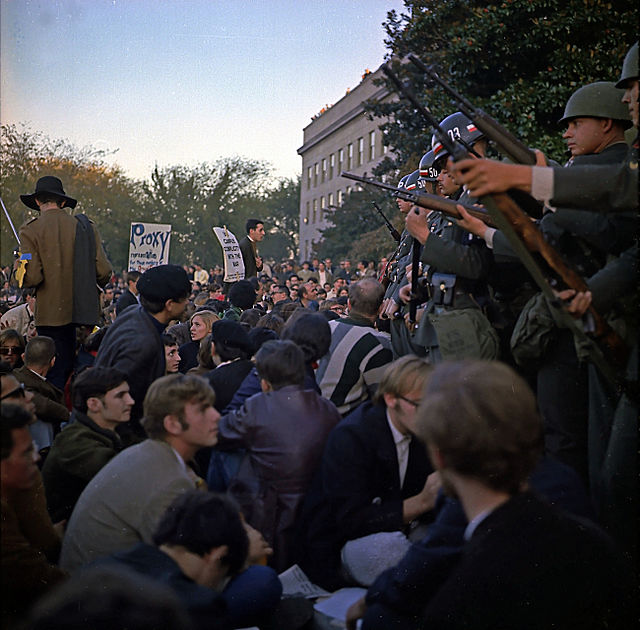
Vietnam protest Pentagon
Over the years I’ve read my fair share of books, usually I’m enjoying two or three at a time. I read young adult, the audience I mostly write for, historical fiction and books on craft as well as the books of authors in my network, no matter what they write. I’ve completed five manuscripts with many revisions each, collected feedback from writers in my critique groups for years.
I think I’ve done my homework. Yet there is this nagging thought of inadequacy. What if it’s not good enough? It’s like standing on the five-meter board in the public pool with everyone watching you make that first leap. It’s public and it’s personal. At the same time, if you’re serious about writing (which I am) and you consider writing your career for the foreseeable future (which I do) then there comes this point of no return.
You must go out and show your face, ignore the inner voices of angst and doubt, ignore the nervous jitters of showing yourself in public and stepping in front of your audience. You go and leap. For better or worse.
Preliminary Intro to A DIFFERENT TRUTH
In 1968, with the Vietnam War at its bloodiest, sixteen-year old Andy Olson is banished to Palmer Military Academy. Along with his best friend, Tom, he is plunged into a world where rules are everything and disobedience not an option. Andy doesn’t care about politics and grows increasingly irritated when Tom openly supports the peace movement. Messing with the establishment or Andy’s bullying teammates is dangerous—underestimating fanatics like Officer Muller, the tormentor of plebes a mistake.
It’s hard enough to make it through each day, avoid counselor Beerbelly’s spying eyes and extra marching. As long as Andy can play football and pursue his new love interest in town, he’ll do what they ask and count the days to graduation. But when Tom dies after being discovered lashed to a tree and the school calls it an unfortunate accident, Andy must decide whether to obey orders or finally take a stand and look for the killer.


October 9, 2014
Would You Like Some Styrofoam with Your Doughnut?
This post is a bit off my usual subjects, but I’m feeling pretty strongly about it so I wanted to share. Lately I’m traveling quite a bit, staying in typical mid-range hotels. I’ve been annoyed for a while now about hotel breakfasts.
I guess years ago hotels didn’t offer any breakfast, but now that they do, I wonder if we weren’t better off before. Have you taken a good look at what’s being served to middle-class America? We get sweet rolls, sugary cereal, donuts, apple juice from a machine, cardboard waffle dough from another machine, fake butter and if we’re lucky assorted premade eggs and meat patties.
What we eat is processed and sugary without nutritional value, clogging our arteries and sending our body into insulin overdrive.
Good morning, America.
Even worse is the uncontrolled usage of Styrofoam or expanded polystyrene foam plates and cups. Last month, I attended a week-long seminar near Memphis. The garbage cans in the breakfast room were overflowing with Styrofoam and plastic utensils. The same scenario happens in thousands of hotels and restaurants across the nation every day.

By cvilletomorrow (originally posted to Flickr as Spudnuts Sampler)
Why? Because it’s cheap! Saving a buck is the name of the game in corporate America, no matter what its long-term effects to our health and that of our children.
A Word about Styrofoam
The EPA and cancer research suspects that styrene is carcinogenic. 57 chemical byproducts are released when it is burned.
During manufacturing workers who are exposed to styrene develop acute health effects, including irritation of the skin, eyes, and upper respiratory tract, and gastrointestinal effects. Chronic exposure attacks the central nervous system, causing symptoms such as depression, headache, fatigue, and weakness as well as may cause minor effects on kidney function and blood.
In 1986 the EPA reported that Styrofoam was considered the fifth largest contributor of hazardous waste in the U.S.
Toxic chemicals leach from Styrofoam, especially when heated (think about your nice hotel cup of coffee in the morning), attack your health and reproductive system.
The production of Styrofoam releases hydrocarbons into the air where in the presence of sunlight they combine with nitrogen oxides, forming tropospheric ozone. Ozone is a horrific air pollutant that reduces lung-function, leads to chest pain, coughing, wheezing, and pulmonary congestion. Your beloved pet dog experiences permanent structural damage to its lungs.
Yumm.
What You Can Do
Why don’t we all request from our political leadership and every time we visit a hotel or restaurant that this practice is changed. How difficult is it to replace Styrofoam with recycled paper-based products? How much more does it really cost.
Why don’t we ask hotels for higher quality breakfast items like fresh fruits, granola and plain yoghurt?
Not sweet enough for you? There is always a doughnut shop around the corner.
September 15, 2014
Patience and Perserverance
In March 2012 I submitted a travel story to goNomad, a pretty well-known online travel magazine. At the time I was still into writing travel stories and I’d developed a longer piece about a trip we took with our friends, two American couples, to Germany. For a good two weeks I played guide as we visited Cologne, Tuebingen, the Black Forest and bicycled around Lake Constance.
The article for goNomad described a bit of unique shopping and a hike we took in my hometown, Solingen. After I submitted I didn’t hear back, so I got busy with fiction and never looked back. Just a few days ago I received an e-mail that my story is being published. It had only taken two-and-a-half years.
Read Germany: A Local’s Guide to Solingen now.

Solingen Crest
September 2, 2014
Tent Camping Isn’t for Cowards
Two weeks ago my husband and I set out to go camping in Michigan. We’d prepared well, bought a tent, dusted off sleeping bags, cooking utensils and air mattresses. We’d bought Michigan’s Best Tent Camping and Trout Streams of Michigan, we had bicycle gear, fishing gear and everything in-between. The GTI was packed to the gills.
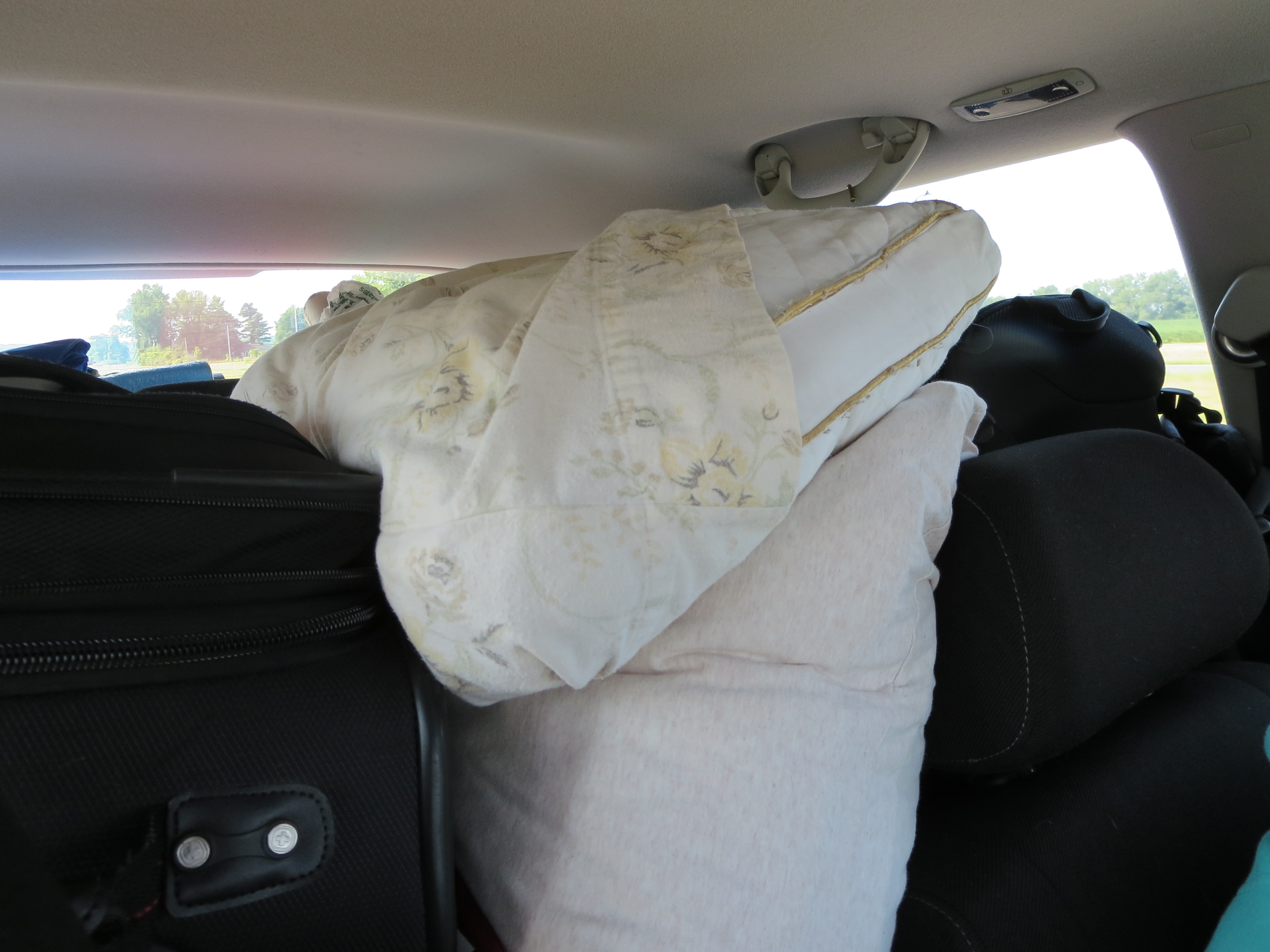
The GTI’s Backseat
We’d told ourselves to have an open mind, especially after 23 years of sleeping in plush hotel rooms. Our first stop was a rustic campground in Warren Dunes State Park along the southwest beach of Lake Michigan. So when we arrived we quickly set up our nice new tent on top of a nice new tarp, made beds and arranged our cook station.
Ready for a Swim
Since it was a hot humid afternoon and the mosquitoes immediately began to swarm we decided to go swimming in Lake Michigan. According to our map, a trail led across the dunes straight to water—nothing like a nice swim to cool and clean off.
Swimsuits on, we grabbed towels and headed into the woods. The trail soon climbed, the trees cool and whispering above. This was going to be great fun. Despite the cool air we began to sweat again. Strange that we saw nobody out here. When the trees thinned on top of the hill, we got excited. We’re there, we silently thought, glad to finally take a break. Not!
In front of us the dunes rolled in folds. We could see the lake… in the distance. Still we didn’t want to turn around and slid down the sandy slope through dune grasses. Birds sang. It was absolutely quiet otherwise, beautiful. Still we saw nobody. It was just us and nature. Even though the dune grew steeper we felt adventurous as pioneers. We took off our shoes, the sand warm and soft between our toes.
By the time we arrived on the beach we’d walked nearly an hour. The prize: a deserted beautiful stretch of Lake Michigan—our own personal beach. Cool and refreshed from the water we headed back, the dunes before us rising higher and higher. My thighs became unreliable, each step sliding backwards until I could hear my heart pounding in my neck. Since when had I gotten so out of shape?
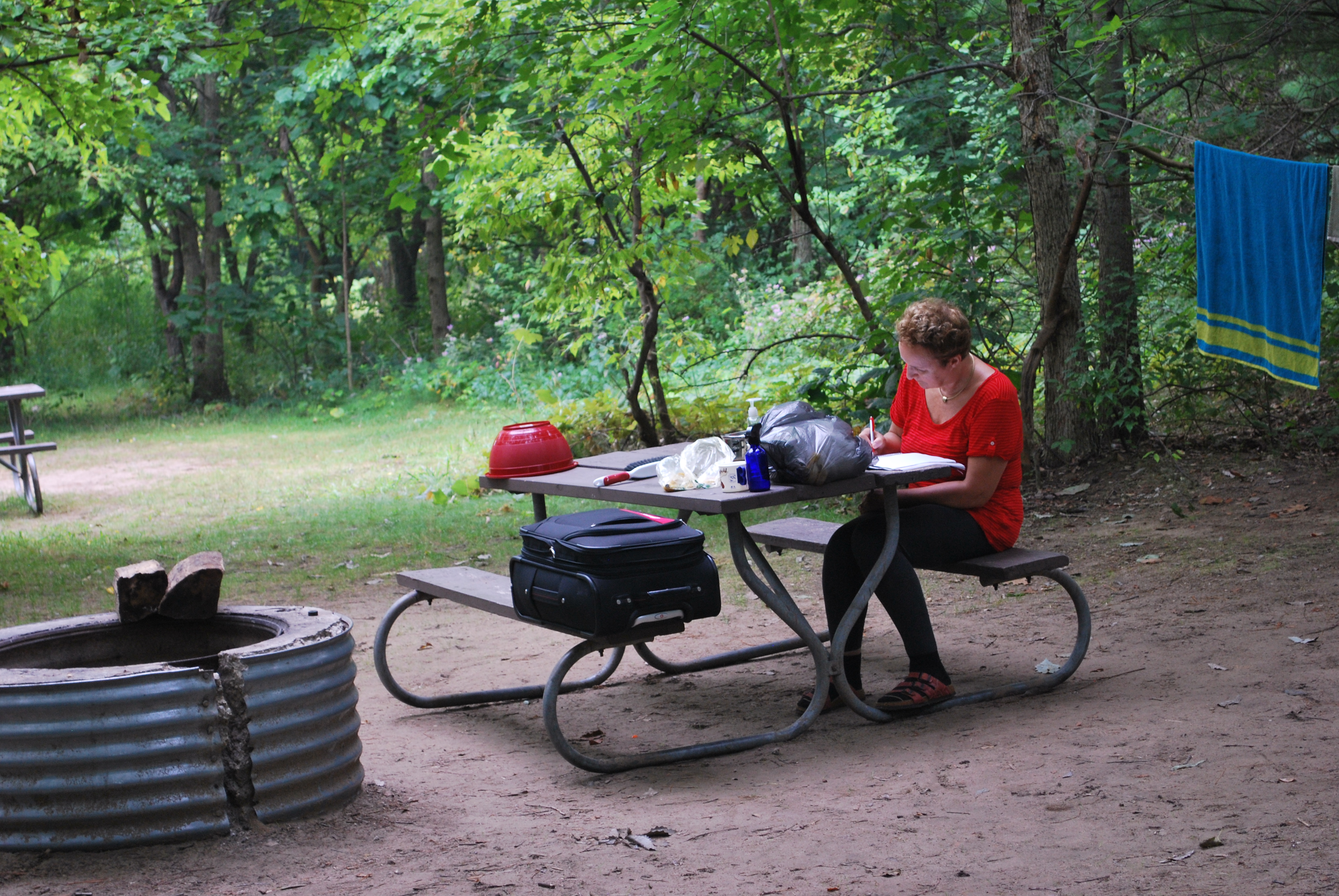
My Outdoor Office – Writing at Warren Dunes
Attempting to Sleep
Back in camp we were once again soaked in sweat and just like us the mosquitoes were ready for dinner. We tried our natural bug spray made with essential oils. The mosquitoes were unimpressed so we moved on to commercial strength. Better! Except now our skin felt even stickier with bug spray residue. A fire would’ve been nice but we were too tired. By eight p.m. we were in bed. As soon as I closed my eyes I noticed it: a terrible racket. Cars whooshed by at top speeds as if our tent sat ten feet from the road—Interstate 94. How could we have missed it?
No matter that I was tired and my legs ached from hiking. All I heard were trucks and cars. I asked myself how this campground could’ve been selected as one of the best campgrounds in MI. Obviously the author never spent a night here.
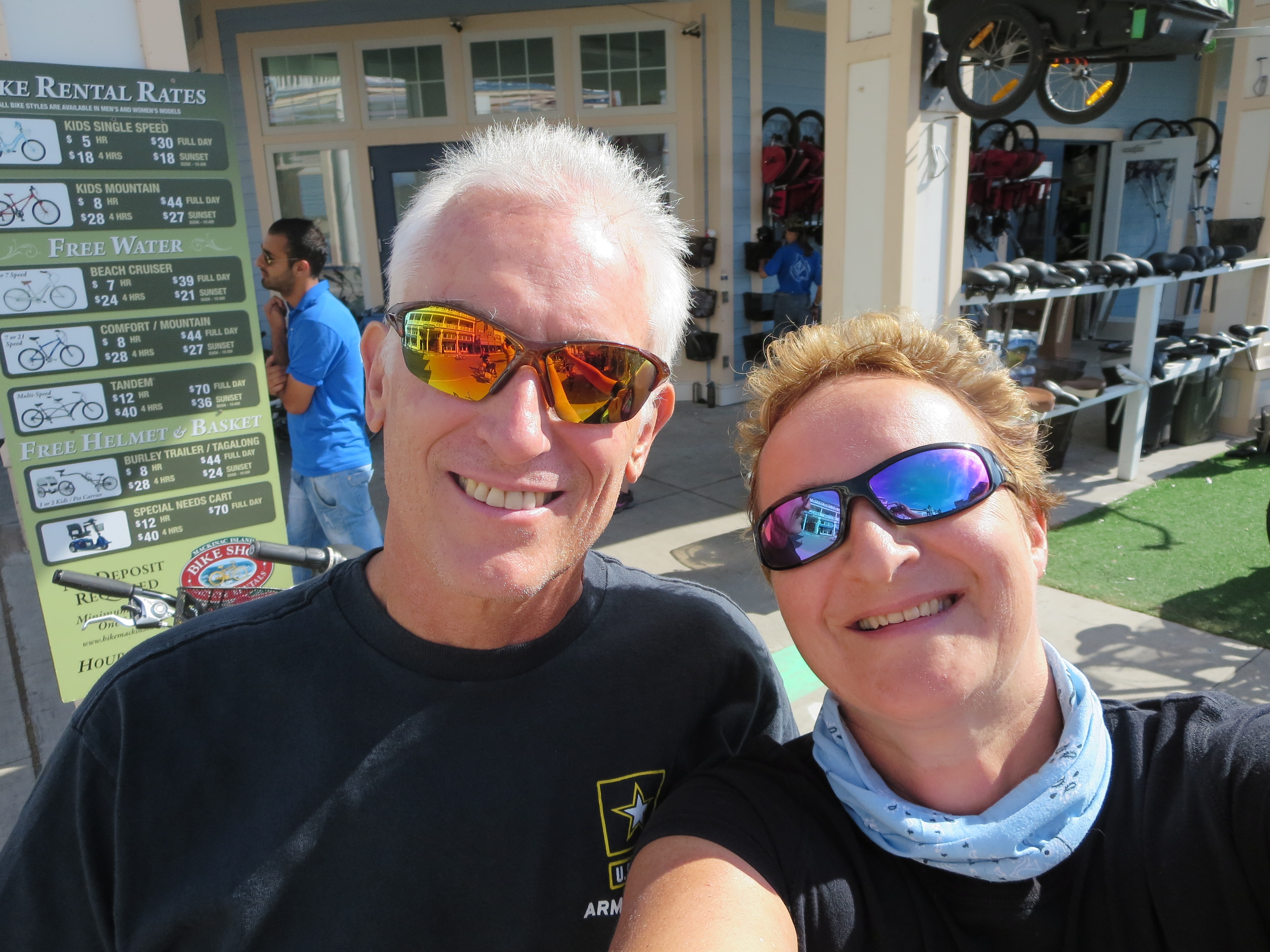
Keeping Our Sense of Humor
Needless to say I didn’t sleep much that night nor the following night we’d committed to. Well, the second night had the added bonus of a major thunderstorm and in the middle of that a deflating air mattress. I woke up around 10 or 11 when the storm hit. This one meant business as water pounded our tent and I wondered if we’d swim away, tent and all. By then the air mattress was at least half deflated and, lying on my side, I could feel my hipbone making contact with the ground. While my head was high on the extra firm pillow I had invested in, my bottom was low. I fell asleep eventually, the mattress lovingly folding around me, my entire backside on the ground. Isn’t camping fun?
Our gear wet, gritty with sand and mud, we packed up in the morning, vowing never to return. We snuck into the “plush side” of the park’s campground, took a shower and with a sigh of relieve headed for Rochester to visit our friends.
End Result
Of 12 days on the road we spent five nights with friends and family in real beds with nice indoor plumbing and two more nights in hotels. We didn’t fish at all and rode our bikes once. Total camping nights: four of which three were with rain.
If anyone is in need of a tent, let us know.
August 2, 2014
Do’s and Don’ts of First Chapters
As I’m renewing my struggle with the first chapter of a manuscript I wrote five years ago, I’m perusing a lot of the advice on first chapters. I’ve noticed that the majority of first chapters of contemporary fiction, no matter what the genre, are extremely well written. Often the quality diminishes later in the book, but by then the reader is hooked and won’t give up the story easily.
 So What Makes a First Chapter Truly Great?
We know that the first sentence must be powerful enough to entice the reader into continuing through the first paragraph, then the first page and so on. But what is it exactly the reader must be hooked with?
Before we get serious how about a bit of writing humor from famous author John Green.
Here is a List of Ten Things Your (and My) First Chapter Must Deliver
1. Introduce Protagonist(s) and Main Antagonist(s)
You should have a character bio for all your important players, but only give us hints about their looks and character, mostly through action, not a laundry list of traits.
2. Develop Setting (Time and Place), Better Yet Put it in Context
I just learned in a great class by Daniel José Older at the Midwest Writers Workshop that context is developed from place, time and power. ‘Power’ are the forces that define the setting in much greater detail. For example power can be institutions such as governments, religion, education, media, financial system, employment, family, medical and community. Power can also be race, sex and gender, violence, age, family, language and culture. There are more but this gives you an idea what context is influenced by. So in chapter one, we must create a feel of this context the characters are acting in. The use of changing context alone can propel your story forward.
3. Set Up Your Story and Character Arcs
4. Hook the Reader
Your protagonist must face either emotional or physical peril caused by an inciting incident. Not only that, the reader must care about your protagonist.
5. Action or Mystery
The most common advice for writers is to begin the story with action. Blood-dripping murder must happen on page one or else. Maybe. In some genres such as thrillers there is often a gruesome or highly scary incident in the first two pages. If anything I advise to read a hundred books in your genre before deciding on the level of activity. In many cases, setting up the action requires a lighter hand, something more mysterious and brooding, something we feel rather than see yet. All we know is that something is coming at us – our protagonist – and it’s bad.
6. Stakes not Steaks
Your story beginning must include stakes. While it doesn’t have to be life and death, whatever is “at stake” has to matter. It cannot be some unimportant issue like your protagonist losing a knickknack or being scolded for missing school.Yawn, so boring.
7. Tight and to the Point
Avoid long sentences and flowery script.
8. Voice
Developing a strong voice takes practice. Your protagonist’s actions, internal and external dialogue, his choice of words, the flow of his thoughts all determine voice. Is he perky, self-confident or sad? In order for us to follow the protagonist, he must be likable (not perfect by any means). He cannot be whiny nor should he engage in truly despicable activities.
9. Theme
What is your story’s theme? Summarize in one sentence what your book is about. Whatever it is, it must be reflected and hinted at in your first chapter. Can you imagine reading a first chapter that leads you to believe the book is a romance and turns out to be a thriller? Be consistent and establish your manuscript’s theme from the beginning.
10. Add Dialogue
Today’s readers expect dialogue, exchanges of words that hint at each character’s motives, reveal conflict, move the story forward and make the story interesting enough to continue reading.
In addition to setting up your story, you also want to avoid common writing mistakes. Most of them have to do with craft and are easily avoidable. A great book about common mistakes is THE FIRST FIVE PAGES by Noah Lukeman. Consider making it a staple on your book shelf. The author lists the most common mistakes and reasons why agents and publishers turn down manuscripts. Don’t give them that chance. Buy and study the book.

Think by Ch. Weidinger
Five Common First-chapter Mistakes (There are plenty more…)
1. Presentation
Everything from stained paper and unprofessional fonts to grammar and punctuation
2. Generous Use of Adverbs and Adjectives
Do I need to explain further?
3. Sound
Reading aloud identifies sounds that are too similar or sentences that don’t flow.
4. Comparisons
Analogies, similes and metaphors – the use of too many, the wrong ones or worse, cliches
5. Showing versus Telling
Let characters speak through their feelings, body sensations, language and dialogue. However, too much showing can get in the way of flow, so use a mix of both.
Are we confused yet? When reading this blog, I’m cringing at the task ahead. Again the best advice I can give is to read a hundred opening chapters. See what you like and determine why? Take notes and analyze.
Let it all simmer in your head for a few days or even weeks. Then go back and write your first chapter.
July 23, 2014
Bicycling Away the Lethargy of Summer
Last night I went for a bike ride. Nothing special except that I hadn’t been in the saddle since May. While my husband was chugging away the miles and training for a triathlon I’d found excuses not to ride. It was too hot, I was too tired, laundry was piling up, I had to walk the dog, there was writing and editing to do.
Watching my thighs descent into jiggle mode, I finally decided it was time. The wind blew hot and steady like a hair dryer, but I bravely climbed on the seat. Even more bravely, my husband volunteered to go “slow” next to me. The first round—we ride a circle through our neighborhood—about two miles felt as if my legs were filled with lead. On each small hill, the route meanders up and down, I’d almost come to a stop, frantically shifting into smaller gears, while my husband easily passed me up.
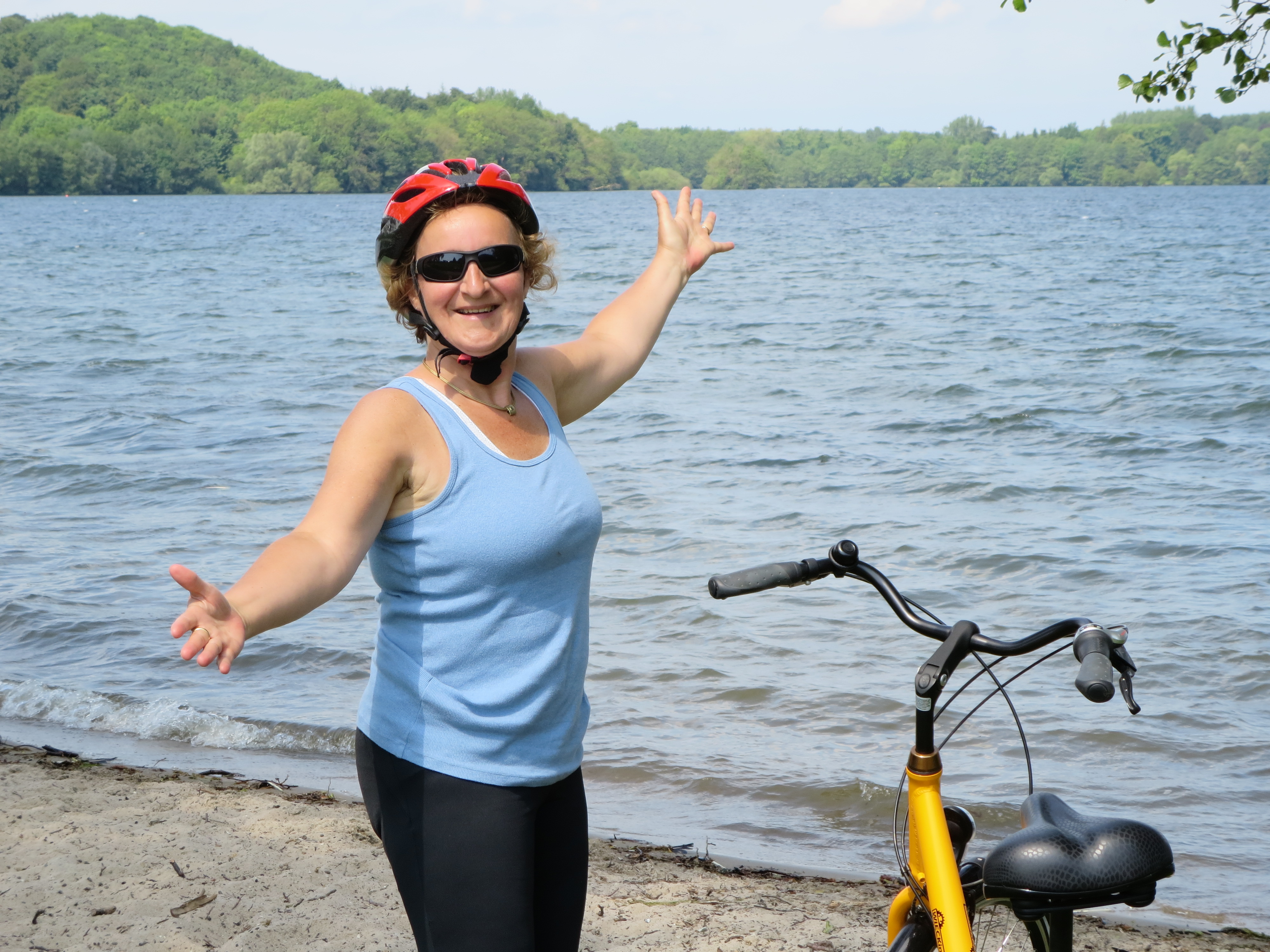
Riding Around the Neighborhood while Remembering the Ploener See in Germany
In round two I decided my bike was broken. Gears rattled and my chain ground in protest. I was destroying the bike, my husband commented dryly. No, I insisted, it was definitely the bike. In round three, things were becoming smoother, I was a little faster and didn’t have to shift as much. By round four, the grinding and rattling had stopped.
By the time I finished and my husband began his “real” ride, I was smiling (thanks to the dopamine). I’d successfully overcome the lethargy of summer. Soon it’ll be time for another ride. Got to get those legs in shape.


