
Linda Holeman's Blog, page 5
January 29, 2014
The Inspiration Behind the Prose
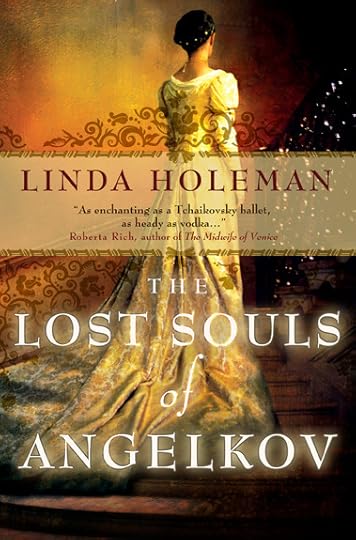 With The Lost Souls of Angelkov fresh up on Amazon and Kobo (Traverse Press, 2014) I thought I would share some of my thoughts on the background for the novel. Many people ask if this story holds any of my own Russian family history - I'd love for you to know more. You can also check out a video clip I recently uploaded to Goodreads for some authentic family photographs from my past. And feel free to comment on the post with any questions for me!
My paternal grandparents were Russian, immigrating to North America prior to the 1917 Revolution. My grandmother brought with her the oral history of her life as a village peasant. The most memorable story was of her five-year old brother. A group of men – sometimes my grandmother called them Cossacks, sometimes Tatars – thundered through their village on horseback and my grandmother watched helplessly as her little brother was swept away. He was never seen again. And so Russia became a place of mystery and intrigue for me. I open my novel with that very fact: a stolen child. In the mid-nineteenth century, Russia was a country whose people lived in either great wealth or abject poverty. I wanted the backdrop of this novel to be about a pivotal time in Russian history, and what more pivotal than an act as huge as the 1861 serf emancipation? At the time of the emancipation there were more than 23 million serfs living under terrible conditions. A Russian landowner’s wealth was measured not just by his property, but also by the number of serfs, also known as souls, he possessed. The manor serfs worked on the estates themselves, while the vast majority lived in villages and worked the land, paying the landowner taxes for the use of this land. And some…some were serf musicians.Performing publicly was seen as beneath the aristocracy, and so the serf orchestra originated: boys pulled from the peasant population and trained to be performers. Mid-century there were over 300 serf orchestras. But no matter how great the skill, each musician remained at the disposal of his master. Within these pages is a child stolen for money as well as one given up for music. The major characters – Antonina, Lilya, Grisha and Valentin – struggle to survive not only in a country chaotic with unrest, but also within a microcosm, on the crumbling estate of Angelkov, with all its lost souls.


January 15, 2014
A book that really resonated with me over the holidays.
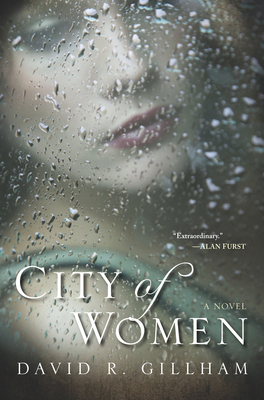 Part of the joy of “holidays” is the fact that I give myself permission to read whatever I choose, guilt-free. Because of the amount of research reading necessary while writing my historic novels, I can usually only carve out the last hour of each day for the joyous act of reading for pleasure. So over the holiday season I was able to devour a few new books – in daylight! One I was particularly taken with was City of Women, by David R. Gillham. I’ve always been drawn to novels with a World War II European backdrop, so this one, set in 1943 Berlin, appealed to me.
Sigrid, a young German woman, is pulled into a dangerous role by her own conscience: she has to do what she instinctively, intellectually and emotionally knows is right. Working against the immoralities of the regime, she struggles to conceal her secrets from her cold and unemotional soldier husband, her icy “party” mother-in-law, her prying neighbours, and her suspicious work colleagues. Furthering the danger to her own life, she begins a secret, passionate affair with a Jewish man, believing it is his wife and daughters she is hiding while they await their transport to Sweden and safety.
The novel is filled with gripping tension and page-turning conflict, and Sigrid, flawed, uncertain, and yet possessing her own brand of courage, is the kind of protagonist I love to find in a novel.
December 22, 2013
December 2013
 I’ve let this year slip by without adding any posts – I’ve spent all of 2013 working diligently on my next novel – more about that a little later – and I’m blaming this new book on why I’ve been a bit underground. My 2014 Resolution will be to keep my website and Goodreads updated!
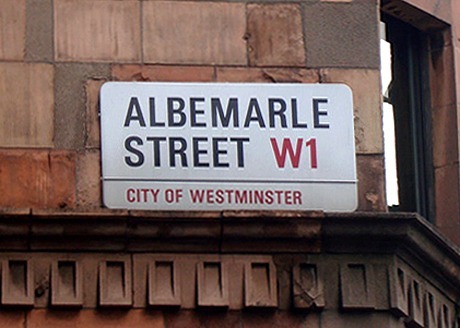
But in between edits I had the opportunity to spend some time in London, and as always, was inspired in many ways. As well as all the usual visits to galleries and museums and charming street markets, it was a wonderful highlight to meet my literary agents Camilla and Jemma at the Marsh Agency. Over tea and biscuits I learned the fascinating history of their premises at 50 Albermarle Street in Mayfair. This beautiful building was the meeting place for literary and political types at the beginning of the 19th century, and from here that the publisher John Murray II ran his empire. Starting in 1812, the drawing room became the venue of literary soirees, and over the years drew authors such as Lord Byron, Sir Walter Scott, Oscar Wilde and Charles Darwin, among others . It was Murray who published Jane Austen’s Emma, Northanger Abbey and Persuasion, and in the drawing room that Charles Darwin discussed drafts of On the Origin of Species. But one of the most fascinating stories came after Lord Byron’s untimely death. Murray, when handed Byron’s memoirs, decided them too scandalous to be published – fearing it would damage both Byron’s as well as his own reputation. And so he burned them in the fireplace of that elegant drawing room. What a heady experience it was to visit the building where Lord Byron’s infamous legacy was rendered into ash and soot!


