Jamie Parsley's Blog, page 51
October 1, 2017
17 Pentecost
 October 1, 2017
Ezekiel 18.1-4;25-32; Matthew 21.23-32
+ Anyone who knows me for any time knows how I LOVE cemeteries. I know. It’s weird. It’s morbid. But they sort of obsess me to some extent.
I love to think about all the stories contained in a cemetery—all the stories that are untold, all the stories that are just mysteries. I love also how each cemetery is unique in its own way. Each has its own characters, its own “feel.”
Of course, we now have our own memorial garden here at St. Stephen’s, which also is unique in its way. But, what few of us know is that, just a few blocks north of this church, there are two cemeteries. Unless you actually get out of your car and walk into the actual cemeteries you wouldn’t even know they’re there.
And I do invite you to go and visit theses cemeteries. If you do, you’ll see, in each, a large boulder.
In one cemetery the boulder is inscribed COUNTY CEMETERY #1. The one is located at the end of Elm Street. Where the road forks, one to the Country Club and the other to the former Trollwood, right there, on the left fork toward Trollwood, is the cemetery. You’ve probably driven by it countless times and never had a clue.
County Cemetery #2 is located on the other side of the old Trollwood, just within
 sight of where the old main stage stood. Back along an oxbow in the Red River, there is a stretch of grass and another boulder. This one says COUNTY CEMETERY #2. My great-grandmother’s third husband (talk about an interesting story!!) was buried in this cemetery in 1936.
 A third County Cemetery was located on north Broadway. In 1984, those graves were moved to Springvale Cemetery, over by Holy Cross Cemetery, near the airport, because they were falling into the Red River through erosion. One of my great-uncles, who died in 1948, is actually buried in that cemetery.
For the most part, many of the graves in Springvale are marked. But in the first two cemeteries, there are no markers at all. No individual gravestones mark the graves of the people buried in the first two cemeteries. In fact, if you walked into them, you would have to force your mind to even accept the fact that it is a cemetery.
But there are hundreds of people buried in those graveyards. Hundreds.
These are the forgotten. These were Fargo’s hidden shame. Beginning 1899 and going through the 1940s, this where the prostitutes, the gamblers, the robbers were buried. 100 years ago next year, in the Fall of 1918, the Spanish Flu hit the world hard, and Fargo was definitely not spared. Many of the unclaimed victims who died in the epidemic were buried in the County Cemetery #1.
This is also where all the unwanted babies were buried. There are lots of stories of unwanted babies being fished out of the Red River in those days. This is where the bodies of those unnamed babies were buried.
And when one walks in those pauper cemeteries, one must remind themselves of those words we hear from Jesus this morning in our Gospel reading.
“Truly I tell you, the tax collectors and the prostitutes are going into the Kingdom of God ahead of you.”
There, in those cemeteries, lie the true inheritors of the Kingdom of God.
Last week in my sermon I quoted the great Reginald Fuller, who said:
“[This] is what God is doing in Jesus’ ministry—giving the tax collectors and prostitutes an equal share with the righteous in the kingdom.”
That—and those words of Jesus we heard in this morning’s Gospel reading—are shocking statements for most of us. And they should be. It should shock us and shake us to our core. It’s a huge statement for him to make. Partly it does because, things haven’t changed all that much.
OK. Yes, maybe we don’t view tax collectors in the same way people in Jesus’ day did. But, we do still have a similar view regarding prostitutes—prostitutes are still looked down upon by our society in our day. Jesus uses these two examples as prime examples of the “unclean” in our midst—those who are ritually unclean according the Judaic law.
We, of course, have our own versions of “unclean” in our own society. They are the ones in our society that we tend to forget about and purposely ignore. But we really should give them concern. And I don’t meant from a judgmental point of view.
I mean, we should give all those marginalized people we ourselves may consider “unclean” by our own standards our compassion. We should be praying for them often.
Because to be viewed as “unclean” in any society is a death knell. It is a life of isolation and rebuke. It is a life of being ostracized. The unclean are the ones who have lived on the fringes of society. They are the ones who have lived in the shadows of our respectable societies.
The “unclean” of our own society often live desperate, secret lives. And much of what they’ve have to go through in their lives is known only to God.
These are the ones the so-called “alt-right” religious in our society view as “unclean.” (And yes, there ARE alt-right religious people, closer than most of us want to admit. These alt-right religious bullies have essentially destroyed the Church and been a bane to my existence from early on).
These victims of alt-right religious persecution need us and our prayers. They need our compassion. They definitely don’t need our judgment.
As uncomfortable as it is for us to confront them and think about them—or to BE them—that is exactly what Jesus is telling us we must do. Because by going there in our thoughts, in our prayers, in our ministries, we are going where Jesus went. We are coming alongside people who need our thoughts, our prayers, our ministries. And rather than shunning them, we need to see them as God sees them.
We see them as children of God, as fellow humans on this haphazard, uncertain journey we are all on together. And, more importantly, we see in them ourselves.
Because some of them ARE us.
Some of us here have been shunned and excluded and turned away. Some of us have been bullied by the alt-right religious. Some of us have been treated as less than we are by these established religious people who smugly claim to be doing the “right” thing.
So we can understand why prostitutes and tax collectors were viewed with such contempt in Jesus’ day.
The point of this morning’s Gospel is this:
The Kingdom of God is not what we think it is.
It is not made up of just people like us. It is not some exclusive country club in the sky. (Thank you, O God, that it is NOT some exclusive country club in the sky!) And it is certainly not made up of a bunch of “alt-right” Christians who have done all the right things and condemned all the “correct” sins and sinners.
It is, in fact, going to be made up people who maybe never go to church. It will be made up of those people we might not even notice. It will be made up of those people who are invisible to us. It will be made up of the people we don’t give a second thought to.
As I said, in our society today we have our own tax collectors, our own “unclean.”
They are the welfare cases.
They are the homeless.
They are alcoholics and the drug or opioid addicts and the drug dealers.
They are the lost among us, they are the ones who are trapped in their own sadness and their own loneliness.
They are the gang leaders, they are the rebels.
They are the ones we call pagan, or non-believer or heretic.
They are the ones we, good Christians that we are, have worked all our lives not to be.
This is what the Kingdom of heaven is going to be like. It will filled with the people who look up at us from their marginalized place in this society. It is the ones who today are peeking out at us from the curtains of their isolation and their loneliness. They are the ones who, in their quiet agony, watch as we drive out of sight from them.
They are the ones who are on the outside looking in.
They are the inheritors of the kingdom of God and if we think they are not, then we are not listening to what Jesus is saying to us.
When we think about those county cemeteries just a few blocks north of here, we need to realize that had Jesus lived in Fargo, had he lived 1900 years later and had died the disgraceful death he died, that is where he would’ve ended up. He would have ended up in an unmarked grave in a back field, on the very physical fringes of our city.
In fact, Jesus isthere.
He is wherever the inheritors of his kingdom are.
Those cemeteries for me are potent reminders of who inherits. They are potent reminders to me of who receives true glory in the end. It is these—the forgotten ones, the ones whom only God knows—who are in glory at this moment.
Of course, we too are the inheritors of the Kingdom, especially when we love fully and completely. We too are the inheritors when we follow those words of Jesus and strive to live out and do what he commands. We too are the inheritors when we open our eyes and our minds and our hearts to those around us, whom no one else sees or loves.
So, let us also be inheritors of the Kingdom of God. Let us love fully and completely as Jesus commands. Let us love our God. Let us love all those people who come into our lives. Let us look around at those people who share this world with us. And let us never cast a blind eye on anyone. Let us do as God speaks to us this morning through the prophet Ezekiel:
Let us “turn, then, and live.”


September 24, 2017
16 Pentecost
 September 24, 2017
Matthew 20. 1-16
+ I recently came across a big, black three-ring binder that I called my “Commonplace Book.” About 20 years this binder contained all the copies of the documents I needed when I was going through the process of ordination. There was even a checklist inside the cover, with dates as I progressed toward ordination.
I have to admit: as I look at it now, all these years later, it all seems so…cut and dry. It seems so effortless when I look at it now. But, let me tell you, anyone who knew me then and knew the arduous journey I took during that time knew: there was nothing cut and dry or effortless about any of it. It was often an uphill struggle. It seemed for every step forward there were two steps backward. And there were a few times when I had to say to myself,
“This is all so unfair!”
Now, that’s not a very adult thing to say. Any of us who have made it to adulthood have learned, by now, that none of it is fair. One of the biggest things we learn as adults is that life is not fair. And no one promised us that it would be.
Still, we do still cling to that belief. Things should be fair. A perfect world would be a fair world.
And when it comes to our relationship with God, fairness takes on even more of a meaning. God should be fair, we think. And it seems that when God is not fair, what do we do? We rage. We get angry.
God should be on our side on this one. Right?
But, it seems, not always is God on our side on some things. The scale of fairness is not always tipped in our favor.
To put it in the context of our Gospel reading today, I often feel like one of the workers who has been working from the beginning of the work day. The parable Jesus tells us this morning is, of course, not just a story about vineyard workers.
The story really, for us anyway, is all about that sense of unfairness. If you’re anything like me, when you hear today’s Gospel—and you’re honest with yourself—you probably think: “I agree with the workers who have been working all day: It just isn’t fair that these workers hired later should get the same wages.”
It’s not fair that the worker who only works a few hours makes the same wages as one who has worked all day. Few of us, in our own jobs, would stand for it. We too would whine and complain. We would strike out.
But the fact is, as we all know by this time, life is not fair. Each of here this morning has been dealt raw deals in our lives at one point or another. We have all known what it’s like to not get the fair deal. We all have felt a sense of unfairness over the raw deals of this life.
But, as much as we complain about it, as much as make a big deal of it, we are going to find unfairness in this life.
Of course, our personal lives are one thing. But the Church—that’s a different thing. What we find in today’s parable is exactly what many of us have had to deal with in the Church. The story of the parable is that everyone—no matter how long they’ve been laboring—gets an equal share. And in Jesus’ ministry, that’s exactly what happens as well.
As one of my personal theological heroes, the great Reginald Fuller, once said of this parable: “[This] is what God is doing in Jesus’ ministry—giving the tax collectors and prostitutes an equal share with the righteous in the kingdom.”
The marginalized, the maligned, the social outcast—all of them are granted an equal share. To me, that sounds like the ministry we are all called to do as followers of Jesus.
To be a follower of Jesus is strive to make sure that everyone gets a fair deal, even when we ourselves might not be getting the fair deal.
And there’s the rub. There’s the key. Being a follower of Jesus means striving to make sure that all of us on this side of the “veil” get an equal share of the Kingdom of God, even if we ourselves might not sometimes. That is what we do as followers of Jesus and that is what we need to strive to continue to do.
But…it’s more than just striving for an equal share for others. It also means not doing some things as well.
What do we feel when we treated unfairly? Jealousy? Bitterness? Anger?
It means not letting jealousy and bitterness win out. And that’s probably what we’re going to feel when others get a good deal and we don’t. Jealousy and envy are horribly corrosive emotions. They eat and eat away at us until they makes us bitter and angry.
And jealousy is simply not something followers of Jesus should be harboring in their hearts. Because jealousy can also lead us into a place in which we are not striving for the Kingdom.
Those of us who are followers of Jesus are striving, always, again and again, to do the “right thing.” But when we do, and when we realize that others are not and yet they are still reaping the rewards, we no doubt are going to feel a bit jealous.
We, although few of us would admit it, are often, let’s face it, the “righteous” ones. We the ones following the rules, we are the ones striving to live our lives as “good” Christians. We fast, we say our prayers faithfully, we tithe, we follow the rules, we do what we are supposed to do as good Christians. Striving for the equal share for people, means not allowing ourselves to get frustrated over the fact that those people who do not do those things—especially those people whom we think don’t follow the rules at all, those people who aren’t “righteous” by our standards—also receive an equal share.
It means not obsessing over the fact that, “It’s not fair.” Even when it is unfair. Because when we do those things, we must ask ourselves a very important question (a question I ask a lot):
why do we do what we do as Christians?
Do we do what we do so we can call ourselves “righteous?” Do we do what we do as Christians because we believe we’re going to get some reward in the next life? Do we do what do because we think God is in heaven keeping track of all our good deeds like some celestial Santa Claus? Do we do what do simply because we think we will get something in return? Do we do what we do so we can feel good about ourselves at the end of the day?
Or do we do what we do because doing so makes this world a better place?
This is the real key to Jesus’ message to us. Constantly, Jesus is pushing us and challenging us to be a conduit. He is trying to convince us that being a Christian means being a conduit for the Kingdom of God and all the very good things that Kingdom represents.
In us, the Kingdom breaks through. Without us, it simply will not.
We do what we do as Christians because whatever we do is a way in which the barriers that separate us here from God and God’s world is lifted for a brief moment when we do what Jesus tells us to do. When we live out the Law of loving God and loving our neighbor as ourselves, the “veil” is lifted and when it is lifted, the Kingdom comes flooding into our lives. It does not matter in the least how long we labor in allowing this divine flood to happen. The amount of time we put into it doesn’t matter in the least to God, because God’s time is not our time.
Rather, we simply must do what we are called to do when we are called to do it. Jesus came to bring an equal share to a world that is often a horribly unfair place. And his command to us is that we also must strive to bring an equal share to this unequal world. And that is what we’re doing as followers of Jesus.
As we follow Jesus, we do so knowing that we are striving to bring about an equal share in a world that is often unfair.
We do so, knowing that we are sometimes swimming against the tide. We do so, feeling at times, as though we’re set up to fail. We do so feeling, at times, overwhelmed with the unfairness of it all.
And just when we think the unfairness of this world has won out—in that moment—that holy moment—the Kingdom of God always breaks through to us. And in that moment, we are the ones who are able to be the conduit through which the God comes.
So, let us continue to do what we are doing as followers of Jesus. Let us strive to do even better. In everything we do, let us attempt to lift that veil in our lives and by doing so, let us be the conduit through which the Kingdom of God will flood into this unfair world. And let us do together what Jesus is calling us to do in this world
Let us love—fully and completely. Let us love our God, let us love our selves and let us neighbors as ourselves.
As we all know, it’s important to come here and share the Word and the Eucharist on Sundays. But we also know that what we share here motivates us to go out into the world and actually “do” our faith.
As followers of Jesus, we are full of hope—a hope given to us by a God who knows our future and who wants only good for us—God who really is a fair God! Let us go forth with that hope and with a true sense of joy that we are doing what we can to make that future glorious.
September 20, 2017

September 17, 2017
15 Pentecost
 September 17, 2017
Matthew 18.21-35
+ I am going to ask you a question this morning. Do you have any “bad” friends? Or maybe the better term is “frienemies.” I’m not saying murderers or criminals or Nazis. I mean, do you have friends who might not be very loyal or faithful or even nice to you, but whom you still consider a friend?
I think we all do. I know I do. And, I have to admit, sometimes they drive me crazy. I want to be loyal to them. I want to like them. But sometimes, it’s really hard. And sometimes—sometimes!—I just don’t have to have anything to do with them. I want to distance myself from them and be done with them. Those people who claim to be friends, but who hurt us, sometimes do so unintentionally. Sometimes I seem to have inordinate amount of them in my life at times.
So, of course, those are the people who come to mind when I read our Gospel reading for today. It is not my “enemies” I think of when I hear the Gospel. It’s my “bad” friends or “frienemies.”
In our Gospel reading, we find Jesus challenging us on this issue. He is telling us, once again, maybe something we don’t want to hear. Today we find Jesus laying it very clearly on the line.
Peter has asked how many times he should forgive. “Seven times?” he wonders.
But Jesus says,
“Not seven times, but, I tell you, seventy-seven times.”
In other words, we must forgive those who wrong us, again and again.
Yes, even those bad friends, those friends I really sometimes just want to give up on.
It has taken me a long time to learn the power of this radical kind of forgiveness. And it has not been easy for me!
But, the problem here is that, as hard it is for me with my bad friends and with this radical forgiveness, I have to remember something very important.
I have been, at times, a bad friend to someone. I have been a “frienemy.” Probably to too many people. I am the person who sometimes has caused issues. I am the person that has caused those people distance themselves from me in turn.
And I have to own that. I have to face the fact that what I do matters to others and to God. Being a jerk people has consequences. And, I realize, on top of all that, I still retain the wrongs that I felt had been done to me and I cannot sometimes get around what had been done to me.
I harbor sometimes real anger at people—and not righteous anger, you know, like toward Nazis. Petty, selfish anger.
And all this causes me to be in a state of almost constant war and conflict with those people, whether they are aware of it or not (most of them are not).
I am not proud to admit any of this—to myself or to anyone else. But, I am a fallible human being, like everyone else here this morning.
All this led me to another sobering thought. A few weeks ago I preached about being a life-long pacifist. Being a pacifist is something I am very proud of in my life. My pacifism, at least at this point in my life, is anchored squarely in our Baptismal Covenant in which we promise, with God’s help, to “strive for justice and peace among all people.” I have tried very hard to live that out in my life—all my life.
I have been very quick to speak out and protest wars and invasions. I have no problem standing up and saying “no” to wars that happen “over there.”
But to be a true pacifist, to be a true seeker after peace, we all must cultivate peace in our midst. When we say that we will “strive for justice and peace among all people,” that means us individually as well. We must be peaceful in what we do and say. And peace begins with respect for others. Peace begins with responding to Jesus’ commandment to love others as we love ourselves.
Or, as our Baptismal Covenant asks of us, we strive to “seek and serve Christ in all persons,” loving our neighbor as ourselves.
Peace also involves with loving ourselves, with making peace with ourselves. With forgiving ourselves 77 times or more. And that is the first step.
I hate to admit it, but I am often at war with myself. And that war often overflows into my relationships and the world around me. If we are truly going to be seekers after peace, we must start by making peace with ourselves.
We must forgive ourselves seventy times seven, and we must forgive others. In seeking and serving Christ in all people, in loving our neighbors as ourselves, we must forgive. In striving for justice and peace among all people, in respecting the dignity of every human being, we cannot retain the sins done against us, but must work to forgive them.
As Christians we must actually grant forgiveness to those who have wronged us in whatever way. That is what all of us, as baptized Christians, are called to do. In a practical way, we can just simply their name and say, “I forgive you in the name of Christ.”
Sometimes, if we are fortunate, we may be able to forgive some of these people to their face. More often than not, we never get that chance. On very rare occasions, those people will come to us in repentance asking for forgiveness.
But more often than not, they will never ask for our forgiveness. And they probably will not change their behavior.
Which brings me to one side note: Forgiveness does not equal taking abuse from others. We can forgive what people have done, but we are not called to just go back to old ways of abuse. If someone has abused us physically or emotionally or psychologically, we must protect ourselves and not allow that behavior to continue.
But we can still forgive even those people. Forgiving does not mean forgetting.
But forgiving does mean that when we forgive them—they are forgiven. It is just that powerful! When we forgive, those wrongs done against us are forgiven. What we loose of earth—what we let go of, what we forgive on earth—is truly loosed in heaven. And when we realize that, we then must move on.
We must allow true peace—that peace that we, as baptized Christians, strive for—we must allow that peace to settle into our hearts and uproot any lingering anger or frustration that still exists there. We must allow that peace to finish the job of forgiveness. This is what it means to forgive. This is what it means to forgive again and again—even seventy-seven times, or a hundred and seventy-seven times, or seven hundred and seventy-seven times.
As I have said, we must forgive ourselves too! That is the forgiveness of ourselves. We sometimes have to forgive ourselves of the wrongs we have committed against ourselves and others.
When I talked earlier about allowing the anger and the pettiness in my life to control my life, in those moments, I was wronging my own self. I failed myself in those moments. And often, when we fail ourselves, we wallow in that failure. We beat ourselves up. We torture ourselves unduly. Let me tell you, I have done it on many occasions.
But in those moments, there is no peace in my heart either. I am allowing the war against myself to rage unabated within me.
Only when we are able to finally forgive ourselves, will we be able to allow true peace to come into our lives. And while I have forgiven others many times, the only one I have ever had to forgive seventy times and much, much more is myself. And again, it is as easy as I saying to myself, “Jamie, I forgive you, in the Name of Christ” and to allow that absolution to do its job of absolving—of taking away the wrongs I have done.
So, let us forgive. Let us forgive others. Let us forgive ourselves. And in doing so, let us let the peace of Christ, with whom we are intimately involved, settle into our hearts and our lives. And let that peace transform us—once and always—into the person Christ desires us to be.
September 10, 2017
Dedication Sunday
 September 10, 2017
Genesis 28.10-17; 1 Peter 2.1-5,9-11
+ I love our Dedication Sundays. I really do!! It is this one Sunday each year when we really get to celebrate St. Stephen’s and all it is and does. We get to celebrate what it has been, what it is and what it will be. And today, we get to even celebrate a special something about St. Stephen’s: its music ministry. Which is definitely something that needs celebration.
We celebrate this ministry because we are dedicating and blessing our fourth stained glass window, dedicated to St. Cecilia, the patron saint of musicians. We’ll get into her in a second.
But, first, as we look back over our 61 years of ministry, we realize that music has been a very big part of that ministry from the very beginning. I don’t know who the first organist was at St. Stephen’s. I actually don’t know many of them, actually. But they were all important to this congregation. Whether they were only organists or where choir directors as well, a lot of music has filled this nave and resounded from these walls.
A lot of voices, many of them who are now no longer with us in this world, sang those amazing Episcopal hymns over these 61 years. Please think about them this morning for a moment.
Music is this ever-flowing river. It has been flowing long before we ever came on the scene. And it will be flowing long after we are gone.
But, this morning, as we sing these hymns, as we celebrate our long ministry of music, I want you to just think about how your voices and your talents as musicians (or, as in my case, lack of talents) joins with the voices of those have sang here over the decades. Your singing of these hymns is a very beautiful and wonderful way to step into that ever-flowing river of music. It is your way of joining with those voices who sang here once, but who sing now in a place of unending music and beauty.
Now, I’m no musician, as you all know. But, I am a poet. And as a poet, I can say that my earliest poetic influence were hymns.
One of my favorite poets, whom I quote regularly, is Elizabeth Bishop. Although she was agnostic, she very proudly said, “I am full of hymns,” I am as well. I only, in the last ten years or so realized how the hymns I grew up hearing and singing were my first—and certainly most consistent—influence in my life.
The hymns of my childhood and youth come back to me now with an emotional and spiritual force equivalent of the sky falling upon me. Nothing touches me and caused uncontrollably floods of tears quite like hymns. And nothing helps salve my sorrow as hymns do.
This is why music is essential to our worship of God. Our church music is not just sweet background musicIt is not meant to happy, clappy and sweet. It is essential to our worship. And it is this that we celebrate today.
We also celebrate St. Cecilia today. St. Cecilia was a Roman noblewoman who converted to Christianity. As a Christian, she decided to not marry, to devote herself entirely to Christ. However, the story goes, she was forced to marry a Roman nobleman by the name of Valerian. She was, it seems, not happy to do because during the entire marriage ceremony she sat apart from everyone singing praises to God.
On the wedding night, Cecilia was not happy to do her “marital duty,” shall we say. So, she, quite bluntly, told Valerian, that an Angel of the Lord was watching her and would punish him if he tried anything with her.
Poor Valerian, I imagine, regretted at that moment ever marrying this poor crazy young woman. But he played along. He asked to see the angel. Cecilia told him that he could, but only if he went to third milestone on Via Appia and was baptized there by none other than Pope Urban I.
So, what did Valerian do? He went to the third miles, was baptized by the Pope and…
…he saw the angel.
The stood beside St. Cecilia, crowning her with crown of roses and lilies.
In 230, she, along with Valerian, his brother Tiburtius and a Roman soldier by the name of Maximus, were martyred for the Christian faith. Her body lies in the catacombs of St. Callistus, but were later transferred the church of St. Cecilia in Tastevere.
St. Cecilia has been a very important saint in the long history of the church, and represents in a very real way the importance of music in liturgical worship and prayer. And that is the important thing to remember today.
Music is essential for us liturgical Christians. For us, for whom the Book of Common Prayer and the holy Eucharist are vital, music too is important and vital.
Just imagine, for one second, what a Sunday morning would be like without music, without the richness and beauty of music.
We, at St. Stephen’s, sometimes forget how fortunate we are. We, in our worship, we get to use all our senses. We get music, we get bells, on Wednesday nights we get incense. We get to use all the gifts God has given us to return to God a beautiful offering.
These hymns we sing are not quaint little songs. These not happy little ditties we sing to make us smile and make us feel smug. The hymns we sign are offerings to God. It is prayer, set to music. It is worship with all our senses, with all our gifts.
And that is why it is important that we be grateful for James, for our cantors Michelle and William and Alice and Leo, for all our parishioners like the Sandos, the Tacklings, the Demmons and Amy (who is playing flute for us today) who are so willing to share their wonderful gifts of music with us in worship. I, for one, am so very grateful for all our musicians, all our music.
And I am very thankful for James. Although he is not one to toot his own horn (no pun intended), music for James is more than just something he does. I know for a fact that, for James, music is a true offering to God.
For him, it is a vital and essential part of the worship we do here on Sunday mornings. And that deeper commitment shows in all that does for us and for God here.
On our website, we are described as a
“growing, inclusive community of artists, poets, musicians, professionals, writers, students and searchers for God.”
I love that description of us. Because that is definitely who we are.
This past week I wrote a small blurb for the Capital Campaign, which is about to launch today. I wrote,
St. Stephen’s is, to say the very least, a unique place. There are not many congregations quite like it. It is for this reason so many people are drawn to this out-of-the-way church in the far reaches of Northeast Fargo. But this spiritual powerhouse of a church means so much to a wide variety of people…this wonderful, eclectic place which has become home to so many people [as it ] continues to be what it is—a vital embodiment of the all-encompassing love and acceptance of Christ in this world. I very proudly boast of all that God has done here. I have no qualms about boasting about what all of us are doing here at St. Stephen’s.
In our wonderful reading this morning from St. Peter, we find him saying,
“Once you were not a people,but now you are God’s people;once you had not received mercy,but now you have received mercy.”
When we look around us this morning, as we celebrate 61 years of this unique, spiritual powerhouse of a congregation, we realize that truly we are on the receiving end of a good amount of mercy. We realize that mercy from God has descended upon us in this moment. And it is a glorious thing.
So, what do we do in the face of glorious things? We sing! We make a joyful noise to God! And, as unbelievable as it might seem at times, we cannot take it for granted. We must use this opportunity we have been given. We realize that it is not enough to receive mercy. We must, in turn, give mercy.
We, this morning, are being called to echo what St. Peter said to us in our reading this morning. We, God’s own people, are being called to
“proclaimthe mighty acts of [God] who called [us] out ofdarkness into [that] marvelous light.”
We proclaim these mighty acts by our own acts. We proclaim God’s acts through mercy, through ministry, through service to others, through the worship we give here and the outreach we do from here.
I love being the cheerleader for St. Stephen’s. Because it’s so easy to do. God is doing wonderful things here through each of us. Each of us is the conduit through which God’s mercy and love is being manifested.
In our collect for this morning, we prayed to God that “all who seek you here [may] find you, and be filled with your joy and peace…”
That prayer is being answered in our very midst today. That joy is being proclaimed in song today. And although it may seem unbelievable at times, this is truly who God works in our midst. God works in our midst by allowing us to be that place in which God is found, a place in which joy and peace and mercy dwell.
So, let us continue to receive God’s mercy and, in turn, give God’s mercy to others. Let us be a place in which mercy dwells. Because when we do we will find ourselves, along with those who come to us, echoing the words of Jacob from our reading in the Hebrew Bible this morning,
“How awesome is this place! This is noneother than the house of God, and this is the gate ofheaven.”
September 3, 2017
13 Pentecost
 September 3, 2017
Matthew 16.21-28
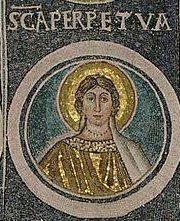
+ Our very own Annette Morrow and I had a very interesting discussion this past week. Annette is getting ready to give a presentation on the early Christian martyr St. Perpetua. Annette is kind of an expert on St. Perpetua. In fact, you might have been lucky enough to have heard her sermon during our Wednesday night Lenten Masses on St. Perpetua and her martyred companions. It’s fascinating! She’s become quite the expert on St. Perpetua. And you should hear her talk about St. Catherine of Siena!
But our discussions of early Church martyrs are always fun for me. After all, the martyrs of the early Church were definitely the rock stars of their age. They were loved. They were emulated. They were, in some cases, often disturbingly, imitated.
To be murdered for Jesus at that time was a great honor at that time. And some Christians almost too willingly sought out a violent death for Jesus, believing that such a death would guarantee them a place in heaven.
In fact (and this was the point of the discussion Annette and me this past week), some essentially committed suicide for Jesus. Like St. Pelagia who jumped from a roof while being pursued by Roman soldiers or St. Dominia who jumped into a river with her daughters rather than sacrifice to the Roman gods.
Such behavior now is, of course, universally condemned by the Church. As it should be!
And such behavior is most definitely seen as strange and bizarre by our own standards. As it should be!
But this discussion of martyrs does cause us to ask some questions of our selves.
The big question is: if worse came to worst, would we be willing to die for Jesus? Would we be able to take to heart the words of today’s Gospel, when Jesus says,
“those who lose their life for my sake will gain it.”
Now, for those of us who were raised in the Roman Catholic faith, some of us heard about the differences between “blood martyrdom” and something called “dry martyrdom.” A “wet” or “blood” martyr is someone like St. Pelagia. A dry martyr is one has suffered indignity and cruelty for Jesus but has not died violently in the process.
Suffering for Christ then doesn’t just mean dying for Christ either. There are many people who are living with persecution and other forms of abuse for their faith. And it is a perfectly valid form of martyrdom (martyr of course means “witness”)
The point of all this martyr talk is that we need to be reminded that as wonderful as it is being Christian, as spiritually fulfilling as it is to follow Jesus and to have a deeply amazing personal relationship with God, nowhere in scripture or anywhere else are we promised that everything is going to be without struggle. We all must bear crosses in our lives, as Jesus says in today’s Gospel.
“If any want to become my followers, let them take up their cross and follow me.”
We all still have our own burdens to bear as followers of Jesus And those burdens are, of course, our crosses. While we might understand losing our lives for Jesus’ sake might be easier for us to grasp, picking up our cross might seem like a vague idea for us.
Bearing our crosses for Jesus means essentially that, as wonderful as it is being a Christian, life for us isn’t always a rose garden. Being a Christian means, bearing our cross and following Jesus, means facing bravely the ugly things that life sometimes throws at us. Facing bravely!
I don’t think I have to tell anyone here what those ugly things in life are. Each of us has had to deal with our own personal forms of the world’s ugliness.
As we look around at those who are with us this morning, most of us here this morning have carried our share of crosses in this life. Most of us have shouldered the difficult and ugly things of this life—whether it be illness, death, loss, despair, disappointment, frustration—you name it.
The fact is: these things are going to happen to us whether we are Christians or not. It’s simply our lot as human beings that life is going to be difficult at times. It is a simple fact of life that we are going to have feasts in this life, as well as famines. There will be gloriously wonderful days and horribly, nightmarish days. We, as human beings, cannot escape this fact.
But, we, as Christians, are being told this morning by Jesus that we cannot deal with those things like everyone else does. When the bad things of this life happen, our first reaction is often to run away from them.
Our instinct is fight or flight—and more likely it’s usually flight. Our first reaction is numb our emotions, to curl up into a defensive ball and protect ourselves and our emotions.
But Jesus is telling us that, as Christians, what we must do in those moments is to embrace those things—to embrace the crosses of this life—to shoulder them and to continue on in our following of Jesus. By facing our crosses, by bearing them, by taking them and following Jesus, we was able to realize that what wins out in the end is Jesus, not the cross we are bearing.
What triumphs in the end is not any of the other ugly things this life throws at us. Rather, what triumphs is the integrity and the strength we gain from being a Christian. What triumphs is Jesus’ promise that a life unending awaits us. What triumphs is Jesus’ triumph over death and the ugly things of this life.
What we judge to be the way we think it should be is sometimes judged differently by God. We don’t see this world from the same perspective God does. And as a result, we are often disappointed.
Yes, our burdens are just another form of martyrdom—another albeit bloodless form of witnessing to Christ. And, like a martyr, in the midst of our toil, in the midst of shouldering our burden and plodding along toward Jesus, we are able to say, “Blessed be the name of God!”
That is what it means to be a martyr. That is what it means to deny one’s self, to take up one’s cross and to follow Jesus. That is what it means to find one’s life, even when everyone else in the world thinks you’ve lost your life.
So, let us take up whatever cross we’re bearing and carry it with strength and purpose. Let us take our cross up and follow Jesus. And, in doing so, we will gain for ourselves the glory of God that Jesus promises to those who do so.
August 27, 2017
12 Pentecost
 August 27, 2017
Matthew 16.13-20
+ At times, I occasionally mention someone during my sermons that I think you should know about. And what I love is that you actually follow up on occasion. I see you writing down those names on occasion. And you sometimes even engage me later.
Well, I have a new one for you today. Some of you might have heard of him.
His name is Matisyahu. Matisyahu is an American reggae singer. But, about ten years ago, when he first became popular, he was unique because he was a Hasidic Reggae singer. Yes, I did get that right.
I remember the first time I ever saw him. It was quite an experience. He appeared, in yarmulke, payot (the earlocks) and beard. And he sang like you wouldn’t believe.
I followed his career pretty closely over the years. And I am still a huge fan. Some of his songs about God are some of the most beautiful songs you will ever hear. Matisyahu does
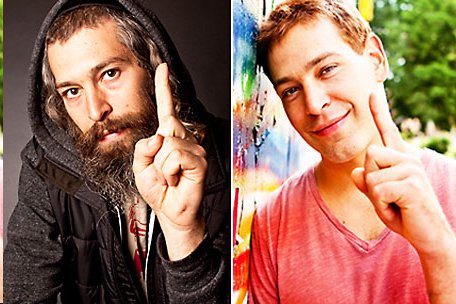 not look not like he did ten years ago, however. He doesn’t because he actually shaved his beard and separated himself from Hasidic practice. Which was very controversial. Shaving his beard was looked down upon by many people.
 I just recently read a fascinating article about Matisyahu’s decision. He said he found himself separating himself from the more strict aspects of Judaism because all the rules actually got in the way of his relationship with God. Religion, he said, got in the way of his relationship with God. He’s still Jewish, mind you. And an Orthodox Jew too.
As I read the article, I had to relate. At times, I realize, that being a priest often feels like I’m married. Married to the Church—capital C. And like any marriage, there are good days, and there are not such good days. Well, that’s definitely the way it is with the Church—capital C.
I often wonder why God even called me to the Priesthood. I am not the typical person called. Now, I know this is a shock to all of you, but I do not like authority. I do not like being told what to do. I never have. And I probably never will. I respect authority. I will follow the rules. But, let me tell you, I don’t always like it.
There are days when I don’t like the Church—capital C, or the authority of the Church or the hypocrisy of the Church. There are days when I really don’t like some bishops, or some fellow clergy, especially when Bishops act pompous and full of themselves and when clergy act like weasels. There are days when I don’t like Church leaders—not just ordained ones—who coerce and manipulate the Church.
Probably most of us here would say we have felt the somewhat same way about the Church at times. In fact, I know you have. Because that is why you are here at St. Stephen’s.
There are days when we all groan when we see or hear other Christians get up and speak on behalf of the rest of us. There are days when we are embarrassed by what some Christians say or do on behalf of Christianity. There are days when we get frustrated when we hear clergy or other authorities pronounce decrees that, in no way, reflect our own particular views or beliefs. And there are times when we get downright mad at the hypocrisy, the homophobia, the misogyny, the ambivalence, the silence in the face of oppression and evil and war, the downright meanness we sometimes experience from the Church.
Most of us—idealistically, naively maybe—wonder: wait a minute. The Church isn’t supposed to be like this. The Church is supposed to be a place of Love and Compassion and Acceptance. It is supposed to be a place where everyone is welcomed and loved.
Knowing that and comparing the ideal view of the Church with its shortcomings only make us feel more helpless, listless, angry, and disgruntled. And that’s all right.
I personally think that’s a somewhat healthy way of looking at the Church. Because we have to remind ourselves of one thing: What we find ourselves turning away from and what we are often tempted to run away from is not God. What we are running away from is a human-run, human-led organization. We are running away from a celestially planned treasure that has been run (and very often mis-run) throughout two thousand years of history by fallible human beings.
In today’s Gospel, we find this wonderful interchange between Jesus and Peter. Peter, when asked who he thinks Jesus is, replies,
“You are the Messiah, the Son of the living God!”
Yes! That’s definitely the right answer! But, Jesus responds to this confession of faith with surprise.
He responds by saying,
“I tell you, you are Peter, and on this rock I will build my church, and the gates of Hades will not prevail against it.”
Of course, as you might know, Jesus is playing a little word game here with the words “Peter” and “rock.” In Jesus’ own language of Aramaic he would have said, “You are Kepha (Peter is also called Cephas at times in the Gospels) and on this kepha (or rock) I will build my church.”
Now, depending on who you are, depending on your own personal spiritual leanings, this reading could take on many meanings. If you’re more Catholic minded—and especially if you’re more Roman Catholic minded—it certainly does seem that Jesus is establishing the Church on the Rock of Peter—and of course in that tradition Peter at this moment becomes essentially the first Pope.
I don’t hold to that view, personally. On this one, I’m a bit more Protestant or Reformed minded. For people like me, it could be said that the Church is being established not on Peter himself, but on the rock of Peter’s confession of faith.
Either way, Jesus is commending the Church to Peter and to his other followers. And this is important, especially when we examine who Peter is.
Jesus commends his Church to one of the most impetuous, impulsive, stubborn, cowardly human beings he could find. Peter, as we all know, is not, on first glance, a wonderful example for us of what it means to be a follower of Jesus. He is the one who walks on water and then loses heart, grows frightened and ends up sinking into that water. He’s the one who, when Jesus needs him the most, runs off and denies him not just once, not twice, but three times, and even then cannot bring himself to come near Jesus as he hangs dying on the cross.
But…you know, Peter is maybe a better example of what followers of Jesus truly are than we maybe care to admit. Yes, he is a weak, impetuous, cowardly, impulsive human.
But who among us isn’t?
Who among us isn’t finding someone very much like Peter staring back at us from our own mirrors?
And the thing we always have to remember is that, for all the bad things the Church has been blamed for—and there are a lot of them—there are also so many wonderful and beautiful things about the Church that always, always, alwaysoutweigh the bad.
Obviously most everyone here this morning must feel that same way as well to some extent. If you didn’t, you wouldn’t be here this morning. Most of us are able to recognize that the Church is not perfect. And I think that, when Jesus commended his Church to people like Peter, he knew that, as long as we are here, struggling on this “side of the veil,” so to speak, it would never be perfect.
But that, even despite its imperfection, we still all struggle on. Together.
I love the Church and I love the people who are in the Church with me, sometimes even the ones who drive me crazy. And I sometimes even love the ones with whom I do not agree or who lash out at me for their own personal issues. Why? Because that’s what it means to be a follower of Jesus. That is what it means to be the Church.
I am here in the Church because I really want to be in the Church. I am here because the Church is my home. It is my family. It is made up of my friends and Jesus’ friends.
I am here because I—imperfect, impetuous human being that I am—am part of the Church because I love my fellow Christians, and I don’t just mean that I love Desmond Tutu and all those Christians who are easy to love. I love those who are hard to love too. I love them because, let’s face it, sometimes we are those same people too.
Sometimes we are the ones who drive people from the Church as well. And sometimes we ourselves drive our own selves away from the Church.
But as long as we’re here, as long as we believe in the renewal that comes again and again in recognizing and confessing our shortcomings and in professing and believing in and what it means to be a baptized Christian, then we know it’s not all a loss. As long as I struggle to not be the person who drives people from the Church, but works again and again in my life to be the person who welcomes everyone—no matter who they are and where they stand on the issues—into this Church, then I’m doing all right.
Because the Church Jesus founded was a Church founded solidly on the rock of love. The Church’s foundation is the fact that Jesus is the Messiah, the Son of the living God and the message to us as followers of this Son of the Living God, the Messiah—the bringer of freedom and peace—is that we must love God and love each other as we love ourselves.
But the Church that is firmly founded on the Messiah, the Son of the Living God—when it founded deeply on that balanced love of God, of each other and of ourselves—then it truly becomes the Church Jesus founded and left to us. If we are the Church truly built on a love like that then, without doubt, the gates of Hades will not prevail against it. And as long as I’m here, and you’re here, we are going to make the Church a better place. We need to be the Church from which no one wants to leave.
So, let us be the Church we want the Church to be—because that is the Church that Jesus founded. Let us be the Church that Jesus commended to that imperfect human being, Peter. In those moments when we find ourselves hating the Church, let’s not let hatred win out. Let love—that perfect, flawless love that Jesus preached and practiced—eventually win out.
We are the Church. We are the Church to those people in our lives. We are the Church to everyone we encounter. We are the reflection of the Church to the people we serve alongside.
So let us be the Church, and if we are, we will find ourselves in the midst of that wonderful vision Jesus imagined for his Church. And it will truly be an incredible place. It will truly be the Kingdom of God in our midst.
August 20, 2017
11 Pentecost
 August 20, 2017
Matthew 15.10-28
+ Now I know this might come as a surprise to most of you, but I have, at times, gotten myself into a bit of trouble with my mouth. I sometimes say things I maybe shouldn’t say. I do not have much of a filter. I sometimes find myself speaking out on things and then, maybe, possibly, regretting something I have said. And, in those moments, there’s no one to blame but myself.
I know I’m not alone here. We are a congregation of people who speak out, who use words well to convey convictions and beliefs. Which is why many of you are here at St. Stephen’s. We are definitely NOT a cookie cutter congregation.
Sadly, though, for me anyway, as I look back in my life at those times when I’ve been “in trouble” it was almost always because of something I said. There have been times when, even as the words are coming out of my mouth, I wish I could just grab them in the air and swallow them before they get too far. I have no filter, sometimes. And it’s been a long-time “growing edge” for me to work on.
We realize very clearly that the words spoken really do have ripple effects. If we think, when we say something either on the offense or defense, that those words will not have consequences in the long-run, we deceive ourselves and the truth is not in us.
Jesus tells his followers—and us—in this morning in our Gospel reading—
“it is not what goes into the mouth that defiles; it is what comes out of the mouth that defiles. ”
(As a vegan, I may have to disagree with that a bit) But yes, these are words that hit home for me, and no doubt, for many of us. We were all raised reciting that little verse:
Sticks and stone may break my bonesBut words will never hurt me.
Guess what? Words actually DO hurt. In fact words do more than hurt. They do more than just create a ripple effect.
Words can destroy.
Words can tear down.
And sometimes the words don’t even have to be directed at someone or something. Words spoken behind people’s backs, that we think won’t hurt them if they never hear them, hurt and destroy too.
Words are oftentimes much more painful and hurtful than sticks and stones.
And when it comes to our relationship with God, the words we say carry much weight.
In today’s Gospel we find Jesus making very clear statements:
“…what comes out of the mouth proceeds from the heart and this is what defiles. For out of the mouth comes” all kind of evil intentions.
“These are what defile a person…” he says.
Jesus is clear here about what makes one unclean. The words that come out of our mouth are really only the end result of what’s in our hearts. The words that come out of our mouths are really only little mirrors of what is dwelling within us.
When we say dumb things, we are harboring dumb things in our hearts. When we say hurtful, mean things, we are carrying hurt and meanness in our hearts. And what’s in our hearts truly does make all the difference.
If our hearts are dark—if our hearts are over-run with negative things—then our words are going to reflect that. When we talk about something like “sin,” we find ourselves thinking instantly of the things we do. We think immediately of all those uncharitable, unsavory things we’ve donein our lives. And when we realize that sin, essentially, is anything we chose to do that separates us from God and from each other, it is always easy to instantly take stock of all the bad things we’ve done.
But it’s not always what we “do.” Sometimes, we can truly “sin” by what we say as well. The words that come out of our mouths can separate us from God and from each other because they are really coming from our hearts—from that place in which there should really only be love for God and for each other.
We have all known Christians who are quick to profess their faith with their mouths, but who certainly do not believe that faith in their hearts. And, I think, we have also known people who have kept quiet about their faith, who have not professed much with their mouths, but who have quietly been consistent in their faith. If we profess our faith with our mouths, but not in our hearts, we really are guilty to some extent.
Probably few things drive us away faster from church than those self-righteous people who shake their fingers at us and spout their faith at us, but who, in turn, don’t show love, compassion and acceptance to others.
The name we encounter in the Gospels for those people who do not practice what they preach is “hypocrite.” And throughout the Gospels, we find that Jesus isn’t ever condemning the ones we think he should condemn.
He doesn’t condemn the prostitute, the tax collector, any of those people who have been ostracized and condemned by society and the religious organizations of their times. The ones Jesus, over and over again, condemns, are the hypocrites—those supposedly “religious” people who are quick to speak their faith with words, who are quick to strut around and act religiously, but who do not hold any real faith in their hearts.
The Pharisees that Jesus is having trouble with in today’s Gospel, are not at all concerned about what is in their hearts. Their faith has nothing to do with their hearts. They are more concerned about purification rites. They are more concerned about making sure that the food one eats is clean and pure—that it hasn’t been touched by those who are unclean. They are concerned that they are the clean ones and they are concerned that there is a separation from those that are unclean. They are more concerned with the words of the Law, rather than the heart of the Law. They are more concerned with the letter of the Law, rather than the spirit of the Law.
We, as followers of Jesus, must avoid being those hypocrites. With everything in us, we must avoid being those people.
Yes, I know: it’s just easier to stick the letter of the Law. It’s easy to follow the religious rules without bothering to think about why we are following them. It’s just so much easier to go through the motions without having to feel anything. Because to feel means to actually make one’s self vulnerable. To feel means one has to love—and, as we know—as we see in the world right now—love is dangerous. Love makes us step out into uncomfortable areas and do uncomfortable things.
But the message of Jesus is all about the fact that to be a follower of Jesus means not being a hypocrite. That is ESSENTIAL. The message of Jesus is that to be a follower of Jesus means believing fully with one’s heart.
We at St. Stephen’s are saying, again and again, not just by our words, but by our actions, that we are a people of a God who is love—we are a people here at St. Stephen’s who believe all people are loved and accepted, fully and completely by that God. And how do we do that? How do we show that and preach that? We do that by loving and accepting all people. Even when that is hard! We do that by knowing in our hearts that God loves and accepts us all, no matter who or what we are.
To proclaim the Good News, we need to do so by both word and example. It is to truly practice what we preach. It is to go out into the world beyond these walls and say, “this is a place—and we are a people—wherein love dwells. We are a people who strive to embody that radical, all-encompassing love of a God of love.
So, let us take to heart what Jesus is saying to us in today’s Gospel. Let us take his words and plant them deeply in our hearts. Let the words of his mouth be the words of our mouth. Let the Word—capital W—be our word. And let that Word find its home, its source, its basis in our hearts.
When it does, our words will truly speak the Word that is in our hearts.
Let us allow no darkness, no negativity to exist within our hearts. Let us not be hypocritical Pharisees to those around us. But let us be true followers of Jesus, with love burning within and overflowing us.
As followers of Jesus, let love be the word that speaks to others. Let our hearts be so filled with love that nothing else can exist in it but love. Let us strive to live out our Baptismal Promises with God by proclaiming “by word and example the Good News of God in Christ.” And if we do—if we do just that—we will find that Good News pouring forth from our mouth and bringing joy and gladness and love and full acceptance to others—and even to ourselves.
August 14, 2017
The Feast of Blessed Jonathan Myrick Daniels
 The Feast of Blessed Jonathan Myrick Daniels
The mirror sees ushonestly. It reflects our colorsand glorifiesour differences. It blurs the imperfectionsand accentuates our fake smiles
We ask insteadfor fire. A burningfrom above. Burn awaythese cataracts of ignoranceand prejudice.Turn to ashes our adolescent mindswe delight in.Consume our inbred instincts. These human eyes, after allwill soon enoughgo blind with deathand turn to ash.
But true vision—true sight—prophecy—will survive us.
Calm the violence that grows within uswhen we are frightenedand challenged. Instill within us peacefulnessand a love that helps us to embrace color—to see, in our various tints,the holiness of flesh.
Love us in the colors of our skin—in our reds, in our blackness, in our yellowsin our browns and in our whiteness.
Love us for the fire that burns in us—that inferno ofof compassion and truth—that flames stronger than all flesh.
Love us for the life within us—for the frail breathhere, with us, in this momentand gone, in an instant later.
Love us for the blood in our veins—the same blooddrained from your veins.
Make us, truly,as you are One.
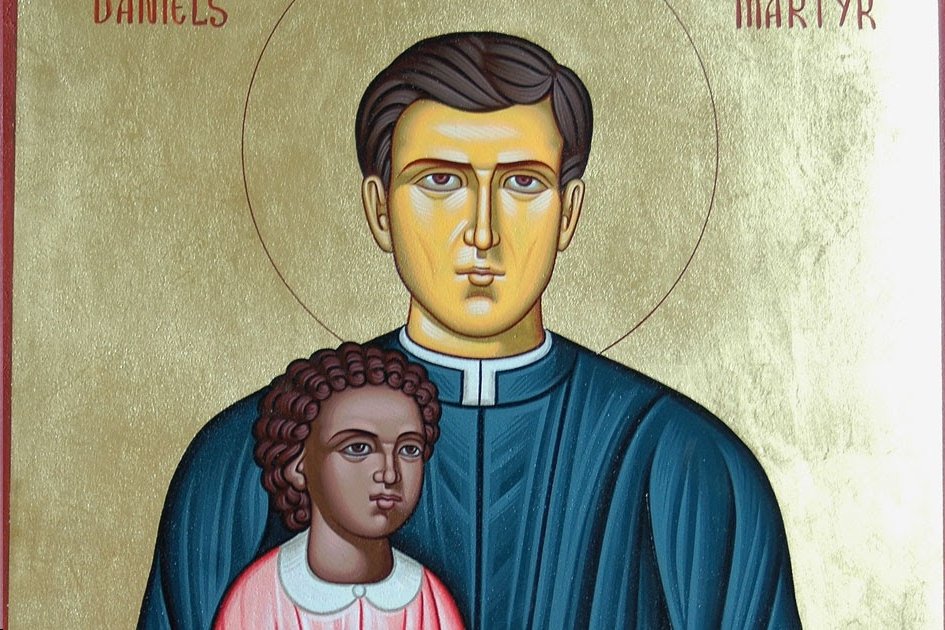
Jonathan Myrick Daniels (1939-1965) was an Episcopal seminarian who was shot and killed in August 20, 1965 in Selma, Alabamawhile defending a young girl during the Civil Rights demonstrations in the city. His feast in the Episcopal Church is celebrated on August 14.
Originally published in the anthology, Race and Prayer: Collected Voices, Many Dreams, edited by Malcolm Boyd and Bishop Chester L. Talton. Published in 2003 by Morehouse Publishing.
August 13, 2017
10 Pentecost
 August 13, 2017
1 King 19.9-18; Matthew 14.22-33
+ As we gather this morning, the world seems in turmoil—even more so than usual. I had hoped and prayed that we would not be facing what we are now facing in this world—this show-down of nuclear powers or the amazingly overt racism that manifested itself yesterday in Charlottesville, Virginia.
It is all sobering. And it is all very frightening. And it causes me to return to someone would understand all of this.
I am speaking of Thomas Merton. If you do not know Thomas Merton, you must find out more about Thomas Merton. I cannot stress that enough. You will never regret knowing more about Merton.
Merton was an American Roman Catholic Trappist monk at Gethsemani Abbey in Kentucky, who died in December 1968. And in the turbulent 1960s he was, despite being a monk in a very enclosed monastery separated from the rest of the world, a radical, to say the very least. He was a pacifist who spoke out loudly against the war in Vietnam at a time when few priests and monks did so. And he spoke out loudly and clearly on the issues of racial discrimination that was coming to the forefront in the United States 50 years ago. And because of his views, let me tell you, there are many people returning to Merton, especially now.
Merton’s voice from 50 years ago is echoing to us across the abyss this morning. In fact,
 an article that just appeared in the Jesuit magazine America asks the question: What would Thomas Merton be saying about the current situation with North Korea? I would add, what would be his response to Charlottesville? His response would not surprise many of this morning.
Merton would be telling us that, as Christians, we have only one response. We, followers of Christ, the Prince of Peace, have only peace as our option. And not just a supernatural peace, not such a warm fuzzy sense of peace. But real, practical peace in this world. Merton wrote,
“Christ Our Lord did not come to bring peace to the world as a kind of spiritual tranquilizer. He brought to His disciples a vocation and a task, to struggle in the world of violence to establish His peace not only in their own hearts but in society itself.”
In other words, we must strive for peace—not only a supernatural, spiritual peace, but actual peace in this world, in society. Because, there are consequences to war, to actions, to words thrown in violence and anger, to hatred and anything hate-fueled, to tweets, and to a car driven into a crowd, as we all know. There are consequences to the votes we cast. And there are consequences to racism and inequality and homophobia in this world.
Merton writes,
“We cannot go on playing with nuclear fire and shrugging off the results as ‘history.’ We are the ones concerned. We are the ones responsible. History does not make us, we make it—or end it.”
And exactly 50 years ago, in the summer of 1967, Merton wrote this about the racial issues that were raging at that time,
"The problem as I see it is no longer merely political or economic or legal or what have you (it was never merely that). It is a spiritual and psychological problem. . . . We are living in a society which for all its unquestionable advantages and all its fantastic ingenuity just does not seem to be able to provide people with lives that are fully human and fully real."
He wrote that 50 years and it rings as loudly right now as if he wrote it this morning.
Merton would understand the storms we are living within right now, right here. And he would be asking us, “Seriously? You’re still dealing with these things after all these years?”
Sadly, yes, we are. It’s not a pleasant place to be this morning.
And I want to be very clear. I want there to be no doubt on what I am about to say:
Warmongering is a sin.
Racism is a sin.
You cannot be a Christian and be a warmonger.
You cannot be a Christian and be a racist.
You cannot be a Christian and be an anti-Semite or a homophobe or sexist.
And I never thought in a million years that I would have to say this in 2017, of all years, but you cannot be a Christian and also be a Nazi, a neo-Nazi, a member of the KKK or Alt-Right.
You cannot hate and still be a Christian. (unless, of course, you hate injustice or inequality or or homophobia or war).
It’s as simple as that!
(If you have any issue with what I have just said, don’t attempt to debate me on it. Do not try to convince me otherwise in the narthex or at any other time.)
So, how do we respond to this violence and war and racism and collective and personal anxiety and fear we are experiencing?
Well, today, in our reading from 1 Kings and from our Gospel reading, we get an idea. In those scriptures, there are storms. We find, in our reading from First Kings, that the prophet Elijah is being confronted with first a storm, then an earthquake and then a fire. And in each of them, he finds that, despite their magnificence, despite the fact that they are more powerful than Elijah himself, God is not in any of them. He does not hear the Word of God coming to him out of these instances.
For our life right now, I can tell you, God is not in any type of nuclear response to what is happening. And I can tell you God is definitely not in the storm of hatred and violence we find at a neo-Nazi rally!
For Elijah, God speaks to him not in the storms, but rather in the “sheer silence” after the storm.
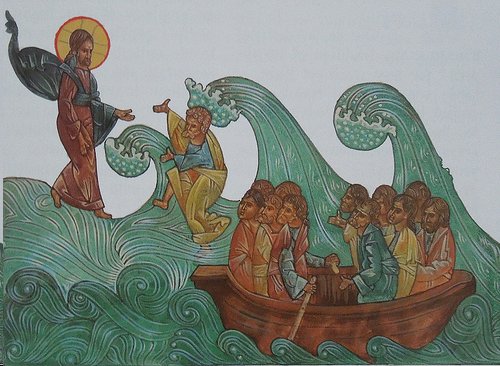
Our Gospel reading is similar in many ways. There too is a storm. And this one is just as frightening. The disciples in the boat are buffeting, they are trying to make their way back to shore and cannot because the storm’s wind is against them, and they are clearly afraid.
A word we keep experiencing in our gospel reading for today is “fear.” The disciples see Jesus, think he’s a ghost and they cry out in fear. And Jesus says to them,
“Take heart, it is I; do not be afraid.”
Peter, audacious as he is, then gets out of the boat and starts walking to Jesus. But when he notices the storm raging around him, he becomes frightened and begins to sink.
Fear brings him down.
Jesus then reaches out his hands and lifts him from the water and stills the storm.
These scriptural storms speak very loudly to us on this particular Sunday morning. We understand these kind of storms today. We know the fear storms of whatever kind can produce.
In the storms of this world in which we live, we often find ourselves at a loss. We too often do unpredictable things in these storms like Peter. We do the equivalent of getting out of a boat and attempting to walk on water. We find ourselves doing naively audacious things. And while doing it, we sometimes lose heart, we become afraid, and we begin sinking.
This is what storms and fear do to us. This is what terror does to us. These things sap us of our energy, of our joy, of our bravery and they leave us vulnerable to them.
Fear causes us to lose heart. It causes us to lose our joy and our gladness and our happiness. It saps our life and our energy from us. It gets in the way of standing up against injustice.
And that is why, during those storms, during those moments of false courage, during those times of raging fear, we need to lean into the storm and we need to hear that calm voice speaking to us with familiar words:
“Take heart, it is I; do not be afraid.”
In the storms of our lives, in the raging tempests of fear, these are the only words we can cling to. God, again and again, says to us,
“Do not be afraid.”
Do not be afraid of the things this world can throw at us.
Do not be afraid of things you cannot change.
Do not be afraid of wars and rumors of wars.
Do not be afraid of North Korea or Kim Jong-Un.
Do not be afraid of Nazis and neo-Nazis and the Alt-Right and hatemongers.
Do not be afraid, but also let us not stand here passively in the face of the storm. Rather, let us take courage and let us embody the Price of Peace in our lives. Let us be true children of the God of Peace. Let us be symbols of peace and love and acceptance in this world. Let us strive actively for peace, as we speak out against war, against aggression, against racism, against inequality, against violence in action and words. And I never thought I would ever have to say this, BUT, let is speak out against Nazis!
For those of us who live in faith, we have no reason to fear. Faith means trust. Faith means being able to look to God, in those storms of our lives, and know that although frightening things may rage about us, with God, we can find the calm center of our lives.
As we strive for peace, even in those choppy waters of our lives and the world, we need to look up and see Jesus, the Prince of Peace, standing there.
This reminds of the greatest part of the Gospel reading for today. In the midst of that storm, as Peter sinks into the waters, Jesus doesn’t simply stay put and raise Peter miraculously from the waters from a distance. Rather, Jesus actually comes to Peter where he is in that storm and lifts him out of those waters. And that is the image we can take away with us as well. In the storms of this world and of our lives, as we sink deeply into the dark waters of anxiety and fear and war and anxiety, when we call out to Jesus, he comes to us in peace, where ever we are and he raises us up. He instills peace in us. And, in peace, he leads us back to a place of safety.
But it doesn’t end there. We also in turn must go out in peace into the storm, without fear to help others, to lift them up and lead them from the waters of chaos.
So, let us follow this Prince of Peace. Let us allow the Prince of Peace to reign, to come to us and let him lift us up from the waters of chaos. In telling us not to fear, in taking our hand and raising us up from the darkness of our lives, he stills the storms of our lives as well. He stills the storms of anxiety and depression and frustration and war and racism and hatred and fear that rage in us and all around us.
There is a wonderful prayer from the Book of Common Prayer of the Anglican Church in New Zealand that I often pray with people I visit in the hospital or who are suffering from any anxiety or fear. The prayer begins,
O God of the present moment,
O God, who in Jesus stills the storm and soothes the frantic heart,
bring hope and courage to those who trust in you.
That is our prayer today as well, as rumors of war and violence and hatred churn around us. We also should pray that the God, who in Jesus stills the storms of our lives and soothes our frantic hearts, truly does bring hope and courage and eternal peace to us, who trust in God. And when Jesus does, we will find an abundance of hope and courage in our lives so that we can live our lives fully and completely in peace—without any fear—as God intends for us.
Let us pray.
O God of the present moment,
O God, who in Jesus stills the storm and soothes the frantic heart,
bring hope and courage to us—us, who live here, at this time of fear in the midst of the storm—for we trust in you. You are God, and we need you. Amen.