Jamie Parsley's Blog, page 50
December 2, 2017
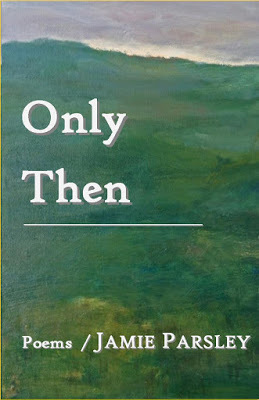
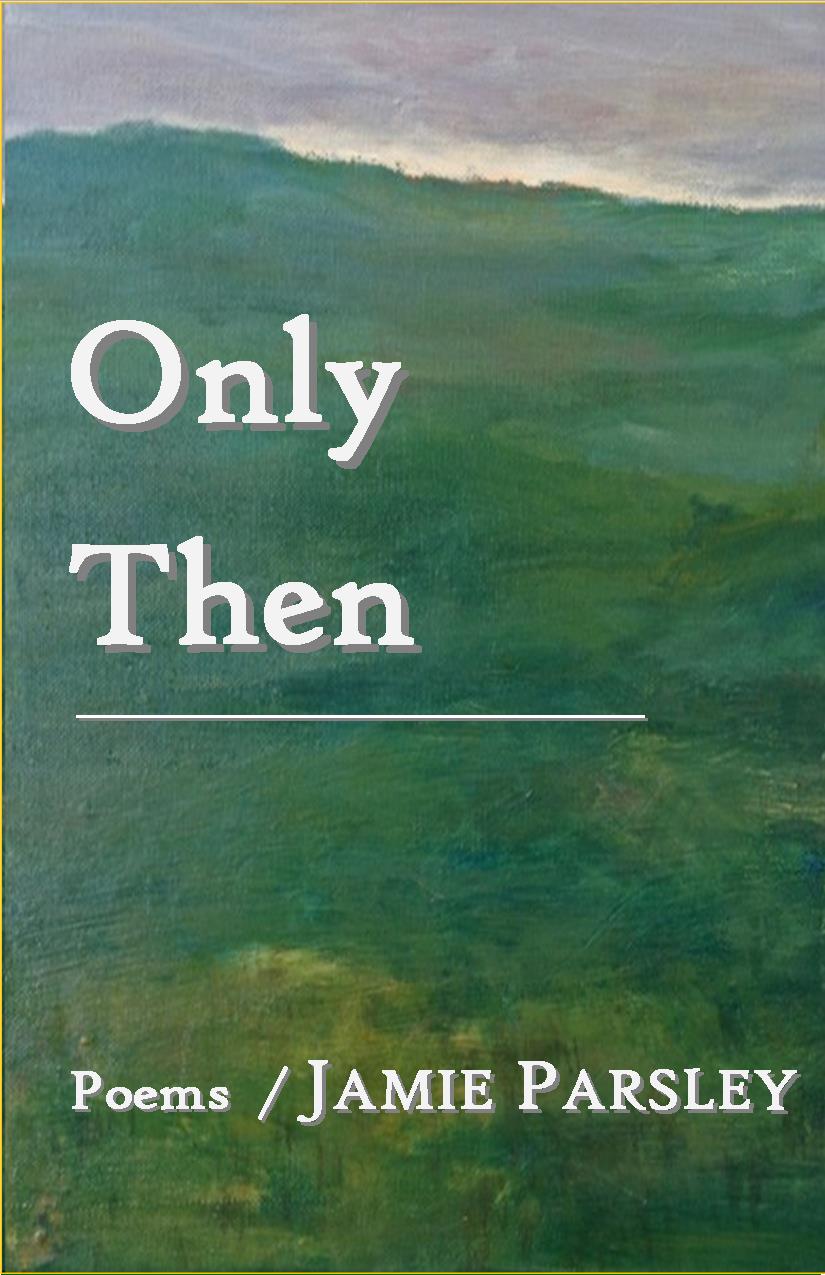
The cover of the new book of poems!
Here’s the cover of my next (lucky #13) full-length book of poems, ONLY THEN, which will be published in January 2018 by Pilgrim Soul Press, featuring this wonderful painting by Gin Templton.


November 26, 2017
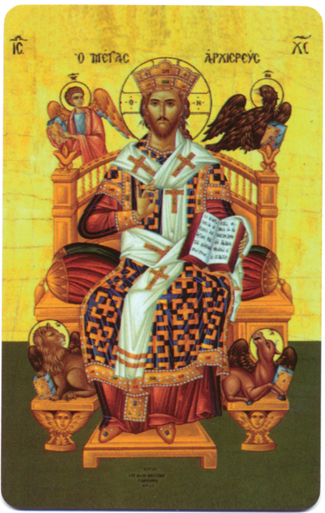
Christ the King
 November 26, 2017
Ezekiel 34.11-16, 20-24; Matthew 25.31-46
+ For any of you have known me for any period of time, you’ll know this about me before too long:
I have an issue with authority. I know: you look at me and you think, “”That guy is no rebel. He’s such an Anglo-Catholic! Look at him up there in his black clericals, cassock and vestments. He looks like a person who follows the straight and narrow.”
And, yes, I actually kind of do.
But I still have issues with authority. Especially when authority attempts to control and to manipulate. I have issues with authority when authority becomes lazy or when authority is misused or when authority is used for things that run counter to following Jesus. And don’t even get me started on politics and the current political situation!
Yup, I have issues with authority. I had issues with teachers telling me what to do in school. I’ve had issues with clergy who got a bit too heavy-handed and with Bishops who have thrown their weight around too liberally. And I have certainly resisted when I see any church leaders (ordained or not) try to control or manipulate a congregation or a church body.
And resisting authority in any way is not easy. Let me tell you, there are often repercussions for such resistance. Being the rebel labels one. It puts one of the fringes, even more so for those who are already out on the fringes.
But, this is the way it is. And my conviction is clear: sometimes being a follower of Jesus means doing exactly what Jesus did.
And, as we know, Jesus had a few issues with authority himself. Which makes this whole Christ the King Sunday even more interesting.
This issue of authority came up in a fascinating little article I just read about Christ the King Sunday from All Saints Episcopal Church in Pasadena, California, The article, written by Melissa Hayes, the Director of Liturgy at All Saints, is fascinating.
For example, according to the article “Pope Pius XI instituted the Feast of Christ the King in 1925 to remind Christians that their allegiance was to their spiritual ruler in heaven as opposed to earthly supremacy, which was claimed by Benito Mussolini.”
Very, very interesting! Especially considering how many of us might be feeling about the current political situation.
Hayes goes on to write,
“Our group [at All Saints] discussed Jesus standing against the empire and what that leadership looks like. We admitted our human response to someone of great spiritual authenticity is to venerate them – even if titles and hierarchies are not important to them. Our findings led us to conclude that Jesus ‘kingship’ does not involve domination or triumphalism — but the radical, all-powerful compassion and love of Jesus seeking justice for all.”
So, yes, today, is Christ the King Sunday. And for some reason, I don’t have much of an issue with the idea of Christ as King, despite my deep-seated issues with authority. I love this idea of Christ as Ruler.
And, as you know, I love preaching about the Kingdom of God. The Kingdom of God is a good thing to preach about.
Also, it’s an important Sunday for another reason. It is the last Sunday in that very long, green season of Pentecost. Today, for the Church, it is New Year’s Eve. The old church year of Sundays—Church Year A—ends today. The new church year—Church Year B—begins next Sunday, on the First Sunday of Advent. So, what seems like an ending today is renewed next week, with the coming of Advent, in that revived sense of longing and expectation that we experience in Advent.
Today, we get this reading from the Prophet Ezekiel, with all its threats of judgement and punishment. But, we also hear God saying things through Ezekiel like,
“I will seek out my sheep. I will rescue them from all the places to which they have been scattered on a day of clouds and thick darkness.”
And (I love this one)
“I feed them with justice.”
We also get to hear Jesus tell us that story of the sheep and the goats, echoing in many ways our reading from Ezekiel.
Now, I actually don’t hate this parable—even with its threat of punishment (on which everyone gets hung up), and its judgment. I love this story because there is something beautiful and subtle going on just beneath the surface, if you take the moment to notice. And that subtle aspect of this story is this: If you notice, the reward is given not to people who work for the reward. The reward is not given to people who help the least of their brethren because they know they will gain the reward.
The reward is granted to those who help the least of their brethren simply because the least need help. The reward is for those who have no regard or idea that a reward awaits them for doing such a thing.
Now I don’t think I need to tell anyone here who the least of our brethren are. The least of our brethren are the ones who are hungry, who are thirsty, who are naked, who are sick and who are in prison.
I think this ties in beautifully to our own ideas of why we do what we do as followers of Jesus. Why do we do what we do, we must ask ourselves? Do we do these things because we think we’re going to get a reward for doing them? Or do we do these things because by doing them we know it goes for a greater reward than anything we ourselves could get?
In our Gospel reading today, we find that the Kingdom of God is prepared for those who have been good stewards, who do good for the sake doing good. It is prepared for those who have been mindful of what has been given to them and have been mindful of those around them in need.
For us, we need to realize that the Kingdom is prepared for us as well. It is prepared for us who have sought to be good stewards without any thought of eternal reward. For us who strive to do good for the sake doing good. It is prepared for us who have simply done what we are called to do as followers of Jesus.
To love God, and to love others.
That is why we do good.
For us, in our own society, we find that these same terms found in Jesus’ parable have a wider definition.
Hungry for us doesn’t just mean hungry for food. It means hungry for love, for healing, for wholeness. It means hungry, also, for God.
Thirsty doesn’t just mean for water. Thirsty for us means thirsty for fairness or justice or peace. And thirsty for God.
Naked doesn’t just mean without clothing. It means, for us, to be stripped to our core, to be laid bare spiritually and emotionally and materially, which many of us have known in our lives. We have known what it means to be spiritually and emotionally naked.
To be sick, doesn’t necessarily mean to be sick with a disease in our bodies. It is means to be sick in our hearts and in our relationships with others. It means to be sick with despair or depression or spiritually barrenness.
And we all know that the prisons of our lives sometimes don’t necessarily have walls or bars on the doors. The prisons of our lives are sometimes our fears, our prejudices, our addictions, our very selves.
To not go out and help those who need help is to be arrogant, to be selfish, to be headstrong. To not do so is to turn our backs on following where Jesus leads us.
Because Jesus leads us into that place wherein we must love and love fully and give and give freely—of ourselves and of what we have been given.
It means to “feed with justice,” as God tells us in Ezekiel.
I like that because that is definitely what we have all been striving to do here at St. Stephen’s. That is what that window in which we celebrate welcoming all as Christ and which we will be dedicated in a few weeks is all about. We practice our radical hospitality to everyone who comes through our doors. And, I think, we accept everyone who comes through those doors fully.
Here, we not only welcome people, but I think we allow people to be the people God created them to be—without judgment, without prejudice, just as the Kingdom no doubt will be. And is.
Again, that brings us back to Jesus’ parable. The meaning of this story is this: If you do these things—if you feed the hungry, if you give drink to the thirsty, if you welcome the stranger, if you clothe the naked, if you visit the sick and imprisoned—if you simply respond to one another as human beings—if you do these things without thought of reward, but do them simply because you, as a Christian, are called to do them, the reward is yours.
The Kingdom is not only awaiting us in the next world, on the other side of the veil. The Kingdom, when we do these things, is here. Right now. Right in our midst.
As Christians, we shouldn’t have to think about doing any of those things. They should be like second nature to us. We should be doing them naturally, instinctively.
For those of us who are hungry or thirsty, who feel like strangers, who are naked, sick and imprisoned—and at times, we have been in those situations—we find Christ in those rays of hope that break through into our lives. It is very similar to the hope we are clinging to in this moment as we enter Advent—that time in which the Light of Christ is seen breaking into the encroaching darkness of our existence. And we—in those moments when we feed the hungry, when we give drink to the thirsty, when we welcome the stranger, when we clothe the naked, when we visit the sick and imprisoned—in those moments, we become that light in the darkness, that hope in someone else’s life.
We embody Christ and Christ’s Kingdom when we become the conduits of hope.
So, as we celebrate the end of this liturgical year and set our expectant eyes on the season of Advent, let us not just be filled with hope. Let us be a true reflection of Christ’s hope to this world. Let us be the living embodiment of that hope to those who need hope. And in doing so, we too will hear those words of assurance to us:
“Come, you that are blessed by my Father, inherit the kingdom prepared for….”
I am going to close today with the prayer they pray at All Saints, Pasadena on this Christ the King Sunday. It’s a beautiful prayer. So, let us pray,
Most Gracious God, who in Jesus of Nazareth showed us an alternative to the kings, queens and emperors of history, help us to revere and emulate Jesus’ leadership: To love, and to seek justice for all people. Help us to recognize the true grandeur and life-changing power based in loving you and all of our neighbors. In Christ Jesus with you and the Holy Spirit, may we co-create a world ruled not through domination, but in that radical and all-powerful compassion and love. Amen.
November 19, 2017
24 Pentecost
 November 19, 2017
Matthew 25.14-30
+ Last week, in my sermon, I just happened to mention in a kind of jokey, passing manner that I have been accused of being full of hubris once or twice in my life. After Mass last week, someone came up to me and said, “Did someone really say you were full of hubris? If so, I just want to say, they obviously don’t know you very well. That made me feel pretty darn good last week.
But I had to say, there have been much worse things said about me behind my back (and to my face) than being accused of hubris. As you may or may not know, the priest is often the catch-all of a congregation. If things are going bad in a congregation, the priest often is the one who gets the blame, whether or not she or he really is the problem. If people want to complain about things in a congregation, it is often much easier to complain about a priest.
Now, I knew this fact long before I ever went into the priesthood. I tell anyone who is heeding a call to ordained ministry that the first thing they need to develop is a very thick skin.
Luckily, here at St. Stephen’s, I have not had that issue much. People here seem pretty content with me for the most part. And I’m grateful for that. And if there are criticisms, which trust me, usually get back to me (they just do), I usually can go with it.
But there is one accusation that cuts through the thick skin of my “Priest armor.” Actually, maybe I shouldn’t even share my personal Kryptonite with you, but, I will…
The one accusation I don’t handle well is actually one that has never been leveled at me here at St. Stephen’s (at least I haven’t heard it). It’s an ugly word. It even sounds ugly. And it cuts deeply.
Words with the letter “z” often seem to have a razor-edge to them. The word is…
..”lazy.”
I despise that word. Now, you can say I’m full of “hubris” all you want. But, “lazy” is not something I handle well.
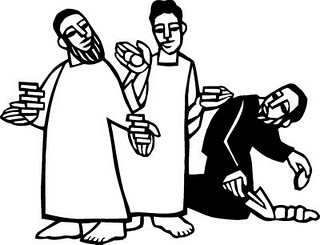
All this talk of laziness ties in well with this strange, difficult parable for this morning. We get this parable of the talents, of money lent and the reward awaiting those who were entrusted with the money, complete with its not-so-subtle wag of the finger at us. Trust me, I did not purposely pick this scripture for today; it just happened to come up in the lectionary today.
This parable is actually a very good story for us. Most of us can relate to it. We understood how good it is to have people invest money for us and to receive more in return. It certainly speaks in a very special way to us in this strange, scary and unstable financial environment in which we are living at this moment.
But, this parable isn’t really about money at all, as we probably have guessed. The parable is about taking what we have—and in the case of today’s reading Jesus is talking about the Gospel—and working to expand it and return it back to God with interest.
We, as Christians, are called to just this: we are called to work. We are called to do something with what we’ve been given. And the worse thing we can imagine as Christians is being called by that ugly word I mentioned earlier:
“lazy.”
Lazy.
See. It cuts like a razor.
None of us want to hear that word directed at us, especially regarding our faith. It is that shaming admonition we hear in this parable:
“You wicked and lazy slave!”
It’s not what we want to hear. Rather, we want to hear:
“Well done, good and trustworthy servant; you have been trustworthy in a few things, I will put you in charge of many things; enter into the joy of your master.”
Over and over again in Scripture, we find this one truth: God is not really ever concerned with what we have; but God is always concerned with what we dowith what we have. And we should always remind ourselves that it is not always an issue of money that we’re dealing with when we talk about what we have. The rewards of this life include many other things other than money—an issue we sometimes forget about in our western capitalist society.
The fact is, God is not always concerned about who we are or what we do. God does not care about or hubris. God does not care about our ego. But, God is always concerned with what we do with who we are and what we do. And when we’re lazy, we purposely forget this fact.
When we’re lazy, we think we can just coast. We think we can just “get by.” We think we can just give lip service to our gratitude and that is enough. We expect others to do the hard work while we sit back. But it isn’t enough.
To be "good and trustworthy” is to take what we have and do something meaningful with it. By doing something good, we are showing our gratitude for it.
In this week leading up to Thanksgiving, we might find ourselves thinking about all the things in our lives we are thankful for. And we shouldbe expressing our thanks to God for those things. But what God seems to want from us more than anything else is to let that thankfulness be lived out in our lives.
Yes, we should give thanks to God with our mouths. But we must give thanks to God with our actions.
Today, we are reminded that, essentially, from that first moment when we became Christians in the waters of baptism, we are called to live out our thankfulness to God in our very lives, in what we do and how we act. Our thankfulness should not simply be the words coming from our mouths, but also the actions we do as Christians.
Let me tell you, right now, in places like Alabama, we see Christians behavior deplorably. I am not going to hold back on this issue. What we see there, right now, with the defense of Roy Moore by people who use their Christian faith in their defense is a brand new low in Christianity.
For Christians to hide behind their Christian faith and the Bible in their defense of someone like Moore is morally, reprehensively wrong. Each of us should be offended to our very core by them and their talk. When Christians know something is wrong and still refuse to turn away it, is hypocrisy. True and real hypocrisy.
And I want to be clear: this has nothing to do with forgiving someone who is a repentant sinner. I hear not repentance in any of the stories coming out Alabama. This is an affront to God, to the teachings of Christ and to everything we hold dear as Christians.
This is not what God wants from our actions. This is not what baptized Christians do.
As Christians truly thankful to God for all we have been given, we are to live a life of integrity and purpose and meaning.
Integrity.
Purpose.
Meaning.
And we must stand up again and again to what is wrong.
We show our thankfulness to God in our stewardship—in the fact that we are thankful by sharing what we have been given. By sharing the goodness we have been given. And in that sharing, we find the true meaning of what it means to be gracious. In that sharing, we find purpose and meaning in our lives. In that sharing, we find true contentment.
We all have our treasures in this life. We all have these special things God has given us. It might be our talents, it might be our know-how, it might be a blessing of financial abundance. It might just be our very selves.
We have a choice with these treasures. We can take them and we can sit on them. We can store them away and not let them gain interest. And in the end, all we have is a moldering treasure—which really isn’t a treasure at all. Or we can take a chance, we can invest them and, in investing them, we can spread them and share them.
During this stewardship season, the message is not “Give” The message of this stewardship time is “be grateful.” Be grateful to God for the treasures of this life.
These are the things we have—our talents, our God-given abilities, the material blessings of our lives—and to be truly thankful for those things, we need to be grateful for them and to share them.
We can’t hoard them, we can’t hug them close and be afraid they will be taken from us. And we can’t go through life with a complacent attitude—expecting that others are going to take of these things for us. We must share what we have. And we must share what we have with dignity and self-assurance and with a graceful and grateful attitude.
We must not be the lazy slave who hoards what is given him, afraid to invest what he has. We must instead be like the wise servant, the one is alert and prepared, the one who is truly gracious.
And if we are, we too will hear those words spoken to us—those words we all truly long to hear—
“Well done, good and faithful one…enter into the joy of your master.”
November 12, 2017
23 Pentecost
 Stewardship Sunday
November 12, 2017
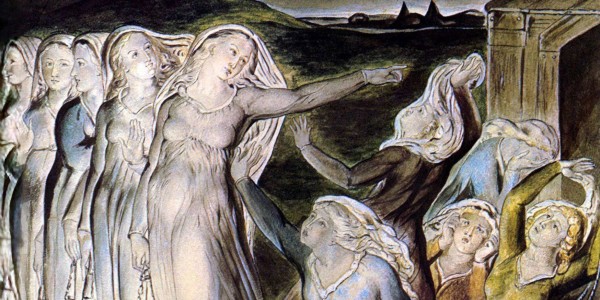
Matthew 25. 1-13
+ Now, I realize as I make this statement you’re going to no doubt think immediately, “Oh there goes Father Jamie, full of hubris, crowing on and on about himself!”
Actually, I don’t think any of you think that about that me. I’ve never heard any of you accuse me of hubris in my life.
But, there are times when I hear from someone who has come to me for some pastoral help who say, in the end, “Wow! You’re actually pretty wise!”
As though surprised that I might actually be wise.
I also get this sometimes from people:
“Huh. You’re actually fairly smart about things!”
Some days, yes, I am can be kind of smart. On good days.
In my younger days I was considered really smart and maybe been a bit wise. But I think the older we get, our intelligence and wisdom just sort of even out.
Or maybe we just put the flames of our intelligence under a bushel at times.
But there is an interesting question we need to ask ourselves sometimes.
What does it mean to be wise?
Certainly wisdom is something that is held up as admirable from a scriptural prospective. There is, after all, much said about wisdom in the scriptures.
And we need to be clear here: being wise and being smart are two very different things. We can be intellectually smart. Trust me, there’s a lot of intellectually smart people here at St. Stephen’s! There’s a lot of education under this roof.
But wisdom is something else. And one doesn’t necessarily have need to have a terminal academic degree to be wise.
From a scriptural perspective, we find two kinds of wisdom. We find the wisdom of the world, which more often than not, is seen as base-less according to scripture. World-based wisdom is fleeting, after all. By one definition, it is seen as “based on intuition and experience without revelation, and thus has severe limitations.” (The New Bible Dictionary).
The other kind of wisdom we find in scriptures is, of course, true wisdom. True wisdom is the wisdom that comes from God. It is a wisdom instilled within us by the Spirit and, by the Spirit, shared with others.
True wisdom is a beautiful goal to work toward. But…I want to stress, it is not something we ourselves can gain on our own. True wisdom does not come from reading lots of books, knowing lots of languages nor does it depend on the kind of school we went to or how many letters we have behind our names.
Certainly, we all strive for true wisdom in one sense or the other. We long to be wiser than we are sometimes. We all expect wisdom to descend upon us gradually over time, with the years, so that when we are finished with our journey here on earth, we will have a nice stockpile of wisdom at the end. The fact is, as well know, life doesn’t really work that way.
True wisdom is often elusive. Just when we think we have it, when we think we have grasped it, when we think we are truly wise, it wiggles away from us and we are left empty of it. And we realize: actually, maybe, I’m not really all that wise, after all.
But true wisdom is the ideal. It is the better place to be in our world.
And this morning, we find Jesus telling us this parable of the wise and foolish bridesmaids, complete with its not-so-subtle wag of the finger at us. The parable we encounter this morning truly is a strange one to say the least.
Reginald Fuller, the great Anglican theologian, found several questions unanswered in this parable. Fuller wondered:
“Whose house was the groom entering—the bride’s or his own—and in whose house did the marriage feast take place? What made the groom arrive so late? Would a wedding feast have taken place after midnight? Who were the bridesmaids, and if so why did they have to escort the groom?”
And of course, if you notice, no mention is made of the bride at all. Which is very interesting. Ultimately Fuller conceded that we know too little about the marriage customs of the time to answer these questions fully.
And ultimately, for us, it really doesn’t matter. Because, in the end, it only makes sense we make it our own story.
We find ourselves finding an analogy in it, as we attempt to do in all the parables. Without the analogy, these stories are essentially pointless to most of us.
And so, we find that in the story we do see the bridegroom is Jesus. The Bridegroom’s return is the second coming; The bridesmaids are the good and the bad among us Christian. And the wedding feast is that great feast that awaits all of us at the end of our journeys. This is probably the best way to proceed with this story and as such, it gives us plenty to take with us.
In examining the parable from this perspective, we find ourselves asking: who is it we want to be in this story? Do we want to be the foolish bridesmaids, the ones who go about in the night with our ears closed and not thinking ahead to what awaits us? Or do we want to be like the wise bridesmaids who are ready—who are ready to heed the calling, and to be ready for the Bridegroom when he comes to us?
Certainly we can look at this parable from the perspective of the end times—of that time when Christ makes his return among us on the Last Day.
But even then the story does not quite apply well to our everyday lives. Yes, it’s good to prepare for the Last Day. But I still have to get through tomorrow and this coming week.
So, this parable can simply be applied to the simple fact that Christ often appears to us in our lives right now, right here.
Christ often appears to us in disguise. Our job as Christians in this world is be prepared and to be open for those moments when God in Christ breaks through to us, when Christ visits us when we least expect him. And that is how we should remember he comes to us sometimes.
Christ appears to us sometimes in someone we might not expect. And sometimes Christ might appear to us as that person who challenges us, who jolts us out of our complacency and pushes us just outside the limitations we have set for ourselves. That is the story of the wise bridesmaids.
We do not know how or when Christ appears in our lives. But we should always be open. We should always be welcoming. We should always be ready.
When Christ comes to us, he will appear to us as someone who opens our eyes from complacency and forces us to see the present for all its stark, ugly reality—a reality we did not necessarily see before as ugly. When Christ appears to us, he will challenge us. He will nudge us outside the boundaries we have set for ourselves. He will shake us to our very core and make us tremble there.
So, we ask ourselves this morning: when he appears to us, will we be ready? Or will we find ourselves annoyed and put out by that visitation? Will we find ourselves devastated and hurt by it? Will we simply turn into ourselves in some defensive mode and block him from us?
The message we can take away from today’s parable is this: are we ready when Christ comes to us? The parable today reminds us that we have a choice: we can either be wise or we can be foolish. Wise here means more than just being smart, as I said.
Trust me, in that moment when Christ appears, it will not matter that we have read the right books and gone to the right schools.
It means being prepared. It means being savvy enough to know that life is going to throw us a few surprises and in those moments we need to be ready. To be truly wise means to know full well that the things this life throws at us doesn’t defeat us. To be wise means that we go through this life prepared.
On this Stewardship Sunday, of course, we discuss being prepared quite a lot. Stewardship time is a time for us to use our resources with real wisdom and t help us be prepared. Stewardship is a time for us to look with wisdom at the financial resources we have as well as the gifts we have and decide how we are going to share those resources in a place like St. Stephen’s.
St. Stephen’s is a place where we strive hard to be prepared for Christ appearing among us and with us.
In a few short weeks, on December 17th, we will dedicate and bless our next stained glass window. That window reflects perfectly so much of what we do well here at St. Stephen’s. The message in the window dedicated to Sts. Benedict and Scholastica, is:
LET ALL WHO ARRIVE BE RECEIVED AS CHRIST
This comes from the Rule of St. Benedict. This is something we have been doing here at St. Stephen’s for many, many years. The question to ask ourselves during this Stewardship time is, how can I help to make sure that all who arrive here at St. Stephen’s are received as Christ, the Bridegroom.
As we near the Advent in a few weeks, we can already hear that familiar rallying cry:
be prepared.
That is also the rallying cry for Stewardship time.
Be prepared.
We need to be like the wise bridesmaids. We need to prepared when Christ, the Bridegroom comes to us. We need to welcome him and receive him as he deserves to be received in whatever guise he chooses to come to us. Like those wise bridesmaids, we need to be wise, we need to be savvy.
We can’t go through life with a complacent attitude—expecting that others are going to take of these things for us. That is why we give of our finances, of our time and of all our resources.
We must not be the foolish bridesmaids who wander about aimlessly, unprepared for what life throws at them, expecting others to give and to work. We must instead be like the wise bridesmaids, who are alert and prepared, who are ready to heed the call of the bridegroom—Christ—when he calls upon us in the dark night of our lives. We must be wise and ready in case he shows up at times other than we expect.
So let us be wise. Let us be prepared. Let us bring the oil to fill our lamps through the long night.
Whenever we celebrate a baptism here at St. Stephen’s, we add a wonderful statement when we hand the baptismal candle, lit from the Paschal Candle, to the parents and godparents. We say:
Receive the Light of Christ, so that when the Bridegroom comes, you may go forth with all the saints to meet him; and see that you keep the grace of your Baptism.
We are hearing those words anew this morning. Let us keep the grace of our Baptism. Let us continue to carry the Light of Christ within us, so that when the Bridegroom comes, we may rush to meet him. Let us be prepared for that glorious day when the Bridegroom calls us by name and invites us in to the banquet.
November 5, 2017
All Saints Sunday
 November 5, 2017
1 John 3.1-3
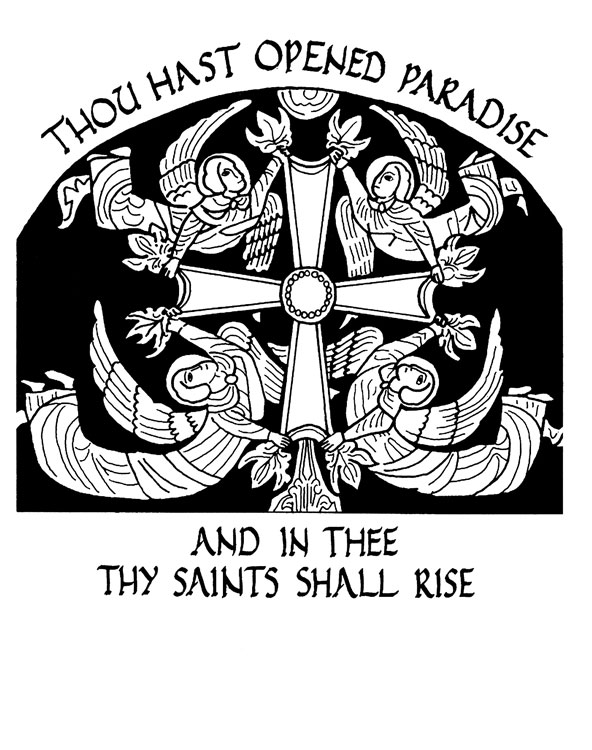
+ In case you might have noticed it, today is a special Sunday. All Sundays, of course, are special. But today is even a bit more special, if you haven’t noticed.
Out in the Narthex, we have the All Saints altar. We have the photos and mementoes and the Book of Remembrance, with the names written in it of all our departed loved ones. Here in the Nave, we have the white paraments on the altar, and of course I’m all decked out in white as well (as you can see).
And we are celebrating even a bit more than we usually do. We’ll renew our Baptismal vows. You’ll get sprinkled with water. We’ll take joy in our baptism.
See, it’s a Sunday to celebrate. Which, as you all know, I LOVE to do. I love to celebrate. I will look for any little opportunity to celebrate. Well, today we have plenty to celebrate.
First, we are celebrating the saints. We are celebrating all those saints that we know of, like the Virgin Mary and our own St. Stephen. We are celebrating the saints we have remembered in our beautiful new windows. We celebrate those saints because they are held up to us as examples of how to live this sometimes difficult life we live as Christians.
And, as those saints would no doubt tell us, it is hard to be a Christian sometimes. It is hard, as we all know, to follow Jesus, and to do what Jesus tells us to do—to love. It is hard to be, as John says in our first reading for today, the children of God, as Jesus himself is the Child of God.
The saints have shown this fact to us. They have shown us how to be these very children of God.
We celebrate that today.
We celebrate, by our baptismal vows, that we are loved children of a loving and accepting God. We are also celebrating the saints we have personally known. We are celebrating the saints we have known who have come into our own lives—those people who have taught us about God and shown us that love does win out, again and again. The saints in our own lives are those who have done it, who have shown us that we can be successful in following Jesus, even if they weren’t always successful at times in their own lives.
My favorite saints—both those celebrated by the larger church and those I have known in my own personal life—are the ones who were not, by any means, perfect. I’ve always been drawn to those saints who failed, who messed up occasionally. I like them because I’m like them. I too have messed up. I too have failed. I too have failed in following Jesus and loving others.
But what those saints show us is that it’s all right. When we fail, we just get up again, brush ourselves off and keep going. And what they show us more than anything else is that when we fail to love, we need to love even more and somehow, it is made right.
The other part of this morning that we are celebrating is the future saints in our midst. The future saints? Who could those possibly be?
We are the future saints. We celebrate ourselves today—we, the future saints gathered here to worship God. Together, we strive to follow Jesus, to love God and each other and to serve those we encounter. That is what it means to be future saints.
Often, as we have known, saints are hidden from us. Saints often are the ones we least expect to be saints. But we have all known saints in our lives.
This morning, on this All Saints Sunday, and on a fairly regular basis, I think about the saints who have worshipped with us here at St. Stephen’s. Today, we are reminded that they are still with us. I occasionally look out and I can see still them with us at times.
I can still see Harriet Blow’s wheelchair.
I can see Betty Spur in that back pew.
I can still see Greg Craychee as an acolyte up front.
I can still see Angel Brekke and Betty De La Garza and her mother Georgia Patneaude, here with us, smiles on their faces.
And for those who might not know who these people were, it’s just a reminder that ordinary people worshipped in these pews and in this building over the years and are now gone, but are still, in so many ways, with us. And that, is why we celebrate the saints. That is why we celebrate the saints with the different commemorations we have of them at our Wednesday night Eucharists throughout the year. That is why they are in our windows. And that is why we celebrate them especially on Sundays like today.
We celebrate the saints because they lead the way for us. They show us how to live this sometimes difficult life as Christians. They show us in their successes and they show us in their failures. And we celebrate the saints as well because we too are the saints. We are the future saints, who will one day be gathered around the altar of the Lamb, where we will partake of that glory without end.
There is something that you hear me preach about regularly, especially at funerals. I often mention that “veil” that separates us from those who have gone on before us. I mentioned that that veil is actually a very thin one, even though it often seems like a very thick curtain But there are moments when that veil is sort of lifted and we can see that very little actually separates us from those saints who have gone on before us who now dwell in the nearer Presence of God.
This morning, we are actually able to see that veil lifted. We see it lifted every time when we gather at the altar to celebrate the Eucharist, and God draws close to us. At the Eucharist, those saints who are now worshipping God in heaven and those who worship God here on earth—we are, in that one holy moment, together. The distance between us, in that moment, is brought close. And we catch a clear glimpse of what awaits.
This is not some isolated act we do, here in St. Stephen’s Church in north Fargo on a cold morning in November of 2017. Every time we celebrate the Eucharist, we do it with every Christian on this earth who also celebrates it. And when we celebrate the Eucharist, all we are doing is joining, for this limited time, the worship that is going on in heaven for all eternity.
We are reminded this morning that our true vocation as Christians is to be saints. Our inheritance is to be children of our loving God. It is a wonderful vocation we are called to.
So, let us—the future saints of God—truly celebrate today. Let us celebrate the saints who have gone on and who are still with us in various ways. Let us celebrate the saints who are here with us, right now, on this joyful morning. And let us celebrate ourselves, as we look into our future with God with delight and true joy.
October 29, 2017
21 Pentecost
 October 29, 2017
Leviticus 19.1-2, 15-18; Matthew 22.34-46
+ Today, for us Episcopalians, is the Sunday before All Saints Sunday. Here at St. Stephen’s, it’s the Sunday we put the names of our departed loved ones on the list, to be prayed for at Wednesday night’s Requiem Mass. It is the Sunday we put out mementos of our departed loved ones on the altar in the Narthex, bedecked with saints relics and statues.
But, for a few of us, this particular Sunday may have a bit more relevance. Today, as you may or may not know, is the Sunday in the Lutheran churches in which the 500thanniversary of the Reformation is celebrated. Since some of us are former Lutherans, we may feel a bit nostalgic today, as we hear “A Mighty Fortress” and all those heart Lutheran hymns we heard this morning.
For the rest of us, we all understand that we are a religious minority in this area. We are surrounded by Lutherans and Lutheran churches in this area. Its influence is deep here.
I don’t talk about it much, but I myself was Lutheran until I was fifteen years old, when I was received into the Roman Catholic Church. I actually stopped identifying as a Lutheran around age 13. I didn’t leave the Lutheran Church in anger. I wasn’t frustrated by any policies or dogmas in the Lutheran Church. I never heard a sermon in that church preached against homosexuality or women. In fact, I don’t remember anything being controversial being preached there.
Later, when I heard people tell me their horror stories of the churches in which they were raised, I found myself thankful that I never experienced any of that as a child in my Lutheran church. In fact, I really liked the Lutheran pastor who confirmed me. I admired him greatly and mourned him deeply when he died. I still know many of the people in that congregation. And I felt very much at home in that congregation. In fact, one day, my ashes will be buried in the cemetery of that church.
My reasons for leaving the Lutheran Church were simply reasons of conviction. And maybe a bit of weird teenage rebellion. I was drawn to Catholicism, and eventually to the Episcopal Church. While other teenagers dabbled with atheism and Satanism, my rebellion was becoming a Catholic. And let me tell you, that got a reaction in my family probably the other two rebellions would not have received.
And there are differences between us and the Lutheran Church, as any of you who were Lutheran, know full well. Because that, after all, is why you’re here.
There is no doubt that the Reformation changed Europe and the world 500 years ago. Without it, the Episcopal Church would not be what it is today.
So, we are thankful today. But, having said all that, I realize in very profound ways, that I am no longer a Lutheran on many levels. It has been a long time, after all.
And I am quite honest about this: I am no Lutheran preacher. I have never claimed to be. And no matter how hard I might try, I will never be one. Once, when I preached at my parents’ Lutheran congregation shortly after I was ordained to the priesthood, I was told afterward that I didn’t preach long enough. I guess that’s true.
When I preach, I am not very complex. I have no fancy theological agenda behind any of my preaching. My message is very consistent—for better or for worse. It is a message I heard in that Lutheran church growing up, that has stayed with me all these years. My message is this, in case you’ve been totally asleep during my sermons over the past nine years and may have missed it:
The theme of almost every sermon is: love.
Again and again, it’s love. And there aren’t too many Sundays that go by that I do not reference the summary of the Law that we find in our Gospel reading for today. For me, this is what it’s all about. This Gospel reading isn’t just a summary of the Law. It is a summary of Christianity itself.
This is what we must do as Christians. Plain. And seemingly simply (but maybe not so simple).
Now, I once was scolded a bit—this was at another congregation, mind you—for preaching too much about love.
“You always preach about love,” this parishioner told me.
But the fact remains that this is essentially all Jesus preached about as well. The gist of everything Jesus said or did was based solidly in what we hear him summarize in this morning’s Gospel. In fact, every sermon and parable he preached, was based on what we heard today. Every miracle, and even that final act on the cross, was based solidly on what we heard this morning.
In today’s Gospel Jesus is clear. Which commandment is the greatest? he is asked.
And he replied:
“You shall love the Lord your God with all your heart, and with all your soul, and with all your mind.’ This is the greatest and first commandment. And a second is like it: ‘You shall love you neighbor as yourself.’ On these two commandments hang all the law and the prophets.”
He can’t get any clearer, as far as I’m concerned. And it is these two commands, both of which are solidly and unashamedly based in love, that he again and again professes.
In his day, Jesus, like all good, pious Jewish men, was required to the pray this scripture, called the Shema, every day. The Shema is the prayer all Jewish men were required to pray each day on waking. The Shema is the first Commandment:
“You shall love the Lord your God with all your heart, and with all your soul, and with all your mind.”
Every day of his adult life, Jesus prayed this prayer. It was the basis of his entire spiritual life. And this commandment, along with the commandment to love others, is the basis for his entire teaching.
When he says, “On these two commandments hang all the law and the prophets,” we can also add the Gospel. The Gospel, along with the law and the prophets, is based on these commandments. And so is our entire faith as Christians.
I don’t think I can get any clearer on this. I hear so often from Christians—not a whole lot of Episcopalians, but other Christians—that their faith as Christian is based solely on accepting Jesus Christ as their personal Lord and Savior. I have no problem with that in actuality.
Our Baptismal promises in the Book of Common Prayer are based on accepting Jesus as our Savior as well. In the Baptismal promises asked of a person about to be baptized (or their parents and godparents if they are too young) is that all-important question:
“Do you turn to Jesus Christ and accept him as your Savior?”
And, of course, we do.
But, for Jesus, the real heart of the matter is not in such professions of faith. He never commands us to make such statements for salvation.
What he does command us to do again and again, to love.
To love God.
And to love one another.
And, as you’ve heard me say, Sunday after Sunday from this pulpit, when we fail to love, we fail to be Christians. Any time we fail in these two commandments, we fail to be Christians. We turn away from following Jesus and we turn away from all that it means to be a Christian. I think the organized Church sometimes misses this fact. And we, as Christians, sometimes miss this fact as well.
We sometimes think: maybe this is too simple.
Love God, love others. It’s too simple.
Well, first of all: it is not. It is not easy to love God. It is not easy to love Someone who is, for the most part, invisible to us. And, as we struggle with all the time in our lives, it is not easy to love others. I don’t need to tell anyone here this morning that is sometimes very hard to love others. So, it is not too simple.
But we still want something more occasionally. And when we do, we find ourselves making confessional statements, like putting a statement such as accepting Jesus Christ as our personal Lord and Savior as the be-all and end-all of our faith. By the way, it is not the be-all and end-all of our faith. And nowhere does he command us to accept him as our personal Lord and Savior, though I hope we all do strive personally to do so.
We also fall into the trap of depending on things like dogma, or the Law, or Canons (or Church Laws), or any of the other rules that define it all for us specifically. Certainly, when we start doing so, we enter that territory that Martin Luther rebelled against and felt needed to be reformed. The fact is, all of those things, confessional statements, dogmas, church laws or any of those complicated rules, are pointless if they are not based on these two laws of loving God and loving others.
If anyone wants to know what Christians believe and who we are, these two Laws are it. They define us. They guide and direct us. And when we fail to do them, let me tell you, they convict us and they judge us.
So, yes, I know I am guilty of preaching the same thing all the time. But I do unashamedly. I do so proudly. I do so without any sense of remorse.
Here I stand.
Because all I am doing when I preach about loving God and loving others, is what Jesus did. I am following Jesus when I preach those laws. But more importantly than preaching about them, I hope we can all strive to live those laws in our lives. I try to in my own life as Christian and as a priest. I try to help others to do that as well.
So, let us love unashamedly. Let us love without limit. Let us love radically.
As our reading from Leviticus tells us, “let us be holy” because our God is holy.
Let the love that guides us and directs and, yes judges us and convicts us, be the one motivating factor in our lives. Let it be the foundation and basis of each ministry we are called to do. Let love—that radical, all-encompassing, all-accepting love—be what drives us. And let us—each of us—be known to everyone by our love.
October 15, 2017
19 Pentecost
 October 15, 2017
Isaiah 25.1-9; Matthew 22.1-14
+ I believe I’ve shared this with you before, but in case you haven’t heard it, I’ll tell it again. When I was finishing up my Master of Fine Arts some twenty years ago, I did my critical thesis on my view that there were two types of writers.
There were those writers who were on the inside looking out.
And there were those who were on the outside looking in.
If you think about it, it’s actually quite true.
Think about your favorite writer or poet or playwright or novelist or theologian. Think of about their perspective on life or the world.
And you can guess about where your favorite poet-priest is on that spectrum (it’s not hard to guess)
If you examine them closely you will see that they are either on the inside looking out, or on the outside looking in.
And since the writer’s perspective is all-important to literature, these perspectives are vital. Essentially then there are the “insiders” and the “outsiders.” It was fun for me to explore these two perspectives in literature for that thesis.
But, later, as a priest, I have discovered that these perspectives—literature itself—truly does reflect reality. As you look at your own life, you no doubt think you have a pretty clear understanding of where you stand on that spectrum. You probably think either that you are the outsider or the insider.
But, I always caution people on this. Don’t be quick to claim one or the other, because this perspective might change in your life. Circumstances might often put you in the opposite perspective. Or sometimes, your own choices put you in that perspective I’ve seen it happen again and again.
And I see it very clearly in our Gospel reading for today—a reading that caused a great amount of personal struggle this past week. And “struggle” is definitely the right word for this reading. It’s a weird story, to say the least.
It’s just such a pointless story isn’t it? I know, I shouldn’t be saying that about one of Jesus’ parables. But, to be honest, I just don’t like it. The structure is so off. There’s almost nothing, at face value, worth redeeming. I just don’t like the story. But…let’s not throw it out yet. Let’s not completely abandon this story just because we find it unpleasant. If we did that every time we read the scriptures…well...I’ll just leave it there.
First of all, it definitely seems that Matthew has an agenda in this story. Obviously Matthew is directing this at the Jews. And when we see it from that perspective, it kind of starts making a bit of sense.
So, let’s reframe the story a bit:
The first guests, as we discover, are Israel.
The first slaves represent the prophets, who were also beaten up and killed for trying to tell them what God wanted.
The second slaves are the apostles. And, if you notice, the second group of people are very different than the first group.
At this point, “everyone” has been invited. “Everyone” is a very important clue to this story. “Everyone” means everyone.
So, what Matthew is trying to have Jesus tell us is that Israel ignored God’s message, and as a result, the Kingdom was given to others. Last week, I preached about how sobering that thought is—the fact that the Kingdom of God can be given to others. The Kingdom can—and has been—given to others
So, we have these slaves going out and inviting. They were called to invite everyone—not just the elite. Not just the best guests. Not the fancy wedding guests. Everyone.
To echo my original thought: for Jesus, everyone is invited to be an “insider” in his Kingdom. You don’t have be on the outside looking in to his Kingdom. That’s great. That’s wonderful. But, what happens next in the story is the real pivot here. The second coming happens. This is the “final judgment.” The King arrives! Now, that sounds great. We’re all looking forward to the Second Coming. We’re all looking forward to the King—God—arriving.
But wait….
It’s not all pleasant and beautiful. Why? Because someone gets thrown out. This poor guy who isn’t wearing a wedding robe gets thrown out.
What?
Wait!
Didn’t Father Jamie just say that Jesus invites everyone to be an “insider” in the Kingdom? So, what’s this now? If everyone gets invited, who cares if someone is wearing a robe or not?
Now it sounds terrible to us.
But, but, but…
Let’s keep it in the context of its time. At that time, not wearing the wedding robe that was provided to the guests was an insult. It was essentially a way of saying that, Yes, I’m here at the wedding, yes I’m going to eat and drink, but I’m not really going to participate.
I’m going to get what I need out of this, but once I do, I’m gone. I’m not really going to make a commitment to this feast. I’m going to be a bad guest. And thisis the real gist of this story.
Now, we’ve all known bad guests. Maybe we ourselves have been bad guests ourselves. We’ve seen them at weddings. We’ve had them at parties. We’ve seen them here in church.
They’re people who come and take and take and take, and expect the host (or hosts) to do everything for them, but then don’t participate. They stand off to the side, and complain, and backbite and fold their arms when something doesn’t go THEIR way. They refuse the wedding garment—they refuse the gifts that have been given to them.
Now, the good thing about this is that, it’s all about choice. We all have a choice. We choose to go to “the wedding.” We choose to be a good guest or a bad guest. God did not make us into mindless robots. But there are ramifications to what we choose.
My motto for life, as you have heard me say a million times, is this:
the chickens always come home to roost.
The fact is, by not wearing the robe, we’re not really present. We’re saying no to the King. For us, it’s kind of the same.
We can be here. We can sit here in our pews. Or up there in the presider’s place. But we don’t have to be a part of it all. We can be obstinate. We can cross our arms and critique everything about the sermon or the liturgy or the music or the way the altar is set up, etc. And not that anyone here has done any of these things (at least I haven’t heard), but we can imagine that people might complain about the capital campaign, or about the new windows or about all the changes that are being made or about how there are so many people in church on Sunday. We can close our minds and hearts and be bitter and complain. We can nitpick or backbite or stomp our heels because we don’t like it.
We can “choose” to be the outsider.
We’ve all known those kind of people in the church.
You know what, sometimes I am that person in church. Sometimes I am obstinate, and I complain about things.
I’ll confess: I pride myself on being the “outsider.” After all, I’ve been an outsider for a long time. But it’s a choice I made. And there are consequences to that choice. I can be continue to stand aloof, my arms crossed and frown at everything.
Or I can be a part of it all.
And not just here, in church on Sunday. As we know, it’s a lot more than just church on Sunday that makes us Christians—that makes us good or bad Christians.
Ultimately, it is about what we do out there. If we are jerks to people, if we are close-minded, if we judgmental, if we’re sexist and homophobic and mean-spirited, then we’re not really doing a good job as Christians.
If we refuse to love, we’re refusing the wedding robe.
The fact is, everyone is invited to the banquet. I say it again and again. We’re all invited. And, here’s the rub:
it really isn’t hard to get in.
At all.
But sometimes it is really hard to be a good guest at the banquet. Sometimes, we really just don’t want to participate. Sometimes, you know what, I just don’t want to be a part of it. Sometimes it’s just easier to cross my arms and pout in the corner. Sometimes it’s easier to not love and respect others. Because, we’ve so often not been loved and not respected by others.
Sometimes, we’re just used to being on the outside looking in. And sometimes it’s just hard to make the transition to being an “insider” after being outside for so long. And that’s our choice to react like that.
But it’s not what is expected of us. We’ve been invited to the banquet! We have an easy “in” to the banquet! We are invited, finally, to be an “insider.” We should be glad! We should be excited. We should don that wedding robe and do whatever else needs to be done to be a good guest.
Because, here’s the other stark reality of it all:
It’s not fun being the outsider.
I can tell you that by first-hand experience. It is not fun being all by one’s self on the outside of the party, looking in at everyone who’s there.
But, that’s sometimes where we put ourselves. That’s where we often go to pout and feel bad about ourselves.
Luckily Jesus, who truly does love us, who truly does want us at the banquet, never lets us stay out there—outside the party—for long. Jesus does not let us stay the “outsider” for very long. The invitation from Jesus keeps coming.
“Come in,” he says to us. “Come in from the cold. Come in from the dark. Come in and join the party.”
Because, it IS a party. And all he have to do accept the invitation. All we have to do is put on the wedding garment. That’s all the bad guests had to do to rejoin the party.
So, let’s do just that. Let’s put on the wedding robe. Let us not cast ourselves off into the exterior. Let us not alienate ourselves with our bitterness and anger. But let us join the banquet in love. Let us heed the invitation. Let us celebrate, and be joyful and be glad. That’s what our Host wants from us.
And when we do, we can truly echo those words we hear today from Isaiah:
“This is our God, the one for whim we have waited…Let us be glad and rejoice in our salvation.”
October 8, 2017
18 Pentecost
 Matthew 21.33-46
October 8, 2017
+ I’m sure you’ve noticed, but there is a lot of zealous people out there, especially recently. There is no end of people giving very impassioned opinions. Especially in the wake of the Las Vegas shooting one week ago tonight, people on both sides of the issues are giving very clear and defined opinions about gun control and politics. Just take a quick perusal of Facebook.
And, for the most part, being zealous for something is not a bad thing by any means. I would rather have someone zealous for an opinion with which I might not agree than know someone lackluster. At least the discussion will be interesting.
But this morning, I am going to ask you a very important question:
What are you zealous for?
For what do you have real zeal, real passion?
I know. Yes, some of us have real zeal for sports. And certainly, here at St. Stephen’s, I know there is a lot of zealousness for political opinion and causes.
As am I. I am very zealous politically, and theologically, and spiritually, and poetically. You all know that. If I have an opinion on something, you’ll probably know it in no time at all, even if you might not agree with it. Trust me, I am full of zeal!!
But zeal is a word we don’t use too often anymore. And, at least in this part of the country, we are, for the most part, uncomfortable with zeal. Zeal equals emotion for any of us. And certainly zeal involves an emotional attachment to something.
Now, as I said, it is not a bad thing by any means to be zealous. It’s good to be challenged occasionally (respectfully, of course). It keeps us on our toes. And it humbles us.
Well, this morning we definitely have one of those parables that challenges us, that keeps us on our toes. It may even make us a bit angry and that definitely forces us to look more closely at ourselves.
Let’s face it, it’s a violent story we hear Jesus tells us today. These bad tenants are so devious they are willing to kill to get what they want. And in the end, their violence is turned back upon them.
It’s not a warm, fuzzy story that we can take with us and hold close to our hearts.
The Church over the years has certainly struggled with this parable because it can be so challenging. At face value, the story can probably be pretty easily interpreted in this way: The Vineyard owner of course symbolic of God. The Vineyard owner’s son of Jesus. The Vineyard is symbolic of the Kingdom. And the workers in the vineyard who kill the son are symbolic of the religious leaders who will kill Jesus. From this view, we can see the story as a prediction of Jesus’ murder.
But there is another interpretation of this story that isn’t so neat and clean and finely put-together. It is in fact an uncomfortable interpretation of this parable. As we hear it, we do find ourselves shaken a bit. It isn’t a story that we want to emulate. I HOPE none of us want to emulate it. But again, Jesus DOES twist this story around for us.
The ones we no doubt find ourselves relating to are not the Vineyard owner or the Vineyard owner’s son, but, in fact, the vineyard workers. We relate to them not because we have murderous intentions in our heart. Not because we inherently bad. But because we sometimes can be just as resolute.
We can sometimes be just that zealous. We sometimes will stop at nothing to get what we want. We are sometimes so full of zeal for something that we might occasionally ride roughshod over others. And when we do so, we find that we are not bringing the Kingdom of God about in our midst.
Zeal can be a good thing. We should be full of zeal for God and God’s Kingdom. We too should stop at nothing to gain the Kingdom of God. But zeal taken too far undoes the good we hoped to bring about.
The most frightening aspect of our Gospel story is the fact that Jesus tells us that the kingdom can be taken away from us. It can be given to others.
Our zeal for the kingdom has a lot to do with what we gain and what we lose. Our zeal to make this kingdom a reality in our world is what makes real and positive change in this world.
At the same time, zeal can be a very slippery slope. It can also make us zealots. It can make us fanatics. And this world is too full of fanatics.
There are plenty of good examples of fanatics in this world right now, from the far right Evangelicals to ISIS to those poor people in North Korea who are held hostage to a brain-washed religion-like ideology. This world is too full of people who have taken their religion so seriously that they have actually lost touch with it.
This story we hear Jesus today tell us teaches us a lesson about taking our zeal too far. If we become violent in our zeal, we need to expect violence in return.
And certainly this is probably the most difficult part of this parable for most of us. For those of us who consider ourselves peace-loving, nonviolent Christians—and we all should be that kind of a Christian—we cringe when we hear stories of violence in the scriptures.
But violence like the kind we hear in today’s parable, or anywhere else in scriptures should not just be thrown out because we find it uncomfortable. It should not be discarded as useless just because we are made uncomfortable by it.
As I have said, again and again, it is not just about any ONE of us, as individuals. It is about us as a whole.
If we look at the kind of violence we find in the Scriptures and use it metaphorically, it could actually be quite useful for us. If we take some of those stories metaphorically, they actually speak to us on a deeper level. If we take the parable of the vineyard workers and apply it honestly to ourselves, we find it does speak to us in a very clear way.
Our zeal for the kingdom of God should drive us. It should move and motivate us. We should be empowered to bring the Kingdom into our midst.
But it should not make us into the bad vineyard workers. It should not make into the chief priests and Pharisees who knew, full well, that they were the bad vineyard workers.
A story like this helps us to keep our zeal centered perfectly on God, and not on all the little nitpicky, peripheral stuff. A story like this prevents us, hopefully, from becoming mindless zealots.
What it does allow and commend is passion. What it does tell us is that we should be excited for the Kingdom.
True zeal makes us uncomfortable, yes. It makes us restless. It frustrates us. True zeal also energizes us and makes us want to work until we catch a glimpse of that Kingdom in our midst.
This is what Jesus is telling us again and again. He is telling us in these parables that make us uncomfortable that the Kingdom of God isn’t just some sweet, cloud-filled place in the next world. He is telling is, very clearly, that is it not just about any ONE of us. It is not about our own personal agendas.
The Kingdom of God is right here, in our midst. And the foundation of that kingdom, the gateway of that Kingdom, the conduit of that Kingdom is always love.
Love of God, love of neighbor, healthy love of self.
This is what Jesus preached. That is the path Jesus is leading us on. This is the path we walk as we follow after him. And it is a path on which we should be overjoyed to be walking.
So, let us follow this path of Jesus with true and holy zeal. Let us set out to do the work we have to do as workers in the vineyard with love in our heart and love in our actions. And as we do, we will echo the words we heard in today’s Gospel:
“This is what the Lord is doing; it is amazing in our eyes.”
October 5, 2017
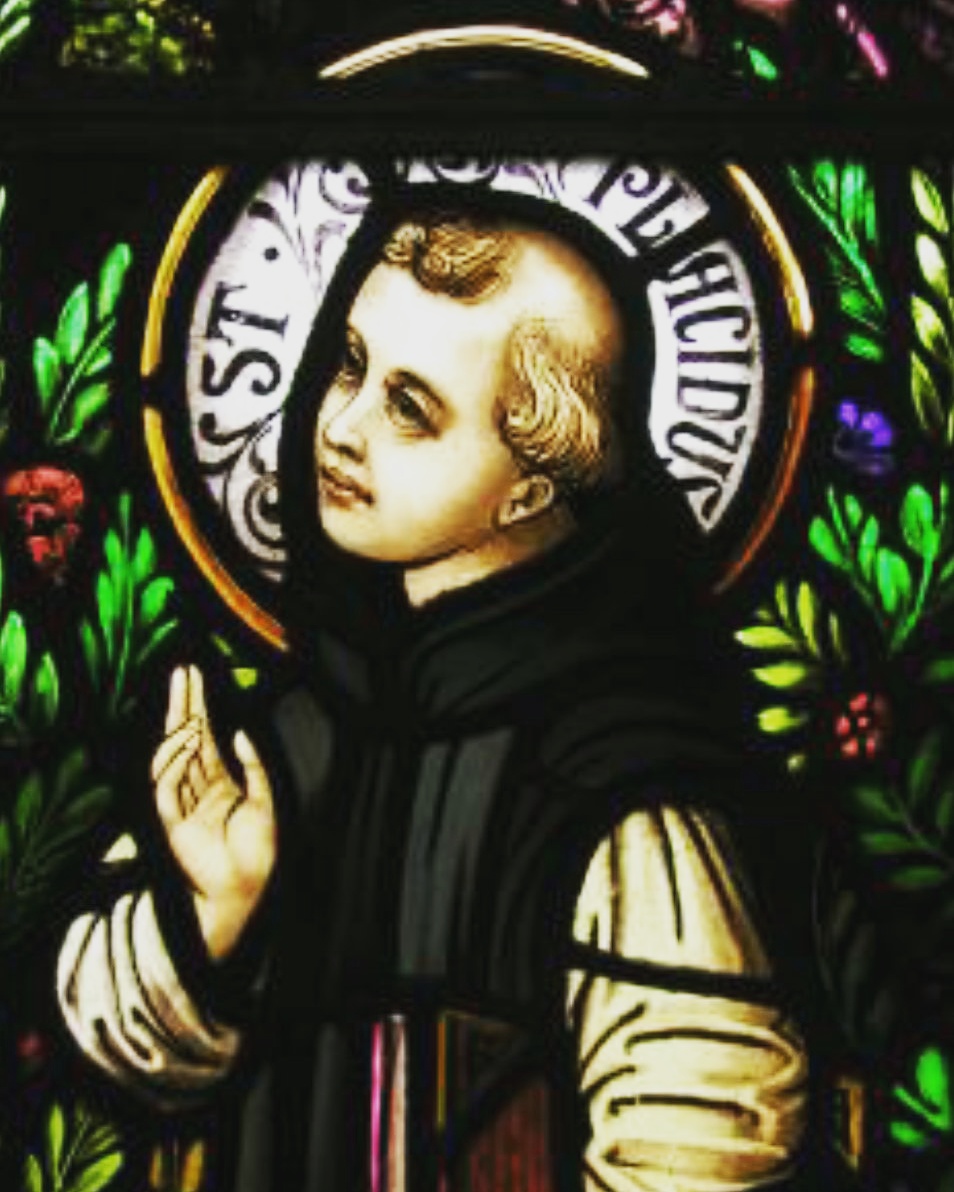
Today is the feast day of St. Placid, whose name I took w...
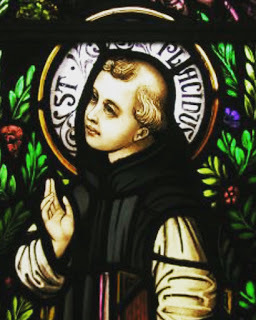
Today is the feast day of St. Placid, whose name I took when I became an Oblate of St. Benedict 25 years ago.
October 2, 2017
A PASTORAL LETTER FROM FR. JAMIE IN THE WAKE OF THE MASS ...
A PASTORAL LETTER FROM FR. JAMIE IN THE WAKE OF THE MASS SHOOTING IN LAS VEGAS ON SUNDAY, OCTOBER 2, 2017
October 2, 2017
Dear Members and Friends of St. Stephen’s
In the wake of the violence of October 1st in Las Vegas, I ask your prayers for Las Vegas, for the victims who died, for those who are injured, for those who survived. For family and friends and all those affected by this violence.
Please pray. But, please don't stop at prayer. Rather, let prayer be the motivating factor in our lives at this time. Prayer should ignite the fire within us to stand up and act.
And so, I also ask at this time for your actions as well.
I ask for your action as followers of Jesus and peacemakers for the Kingdom of God.
Speak out!
Work hard in any way you can to prevent violence and counteract hatred.
I ask you not to let your anger win out, because anger caused this violence.
I ask that you not let your fear win out, because fear fed this violence.
Speak out loudly and clearly. And let the whole world hear you.
The people of St. Stephen’s represent a wide spectrum of political belief. In this divisive time, those beliefs often separate us from each other. However, in this moment, we are united.
I ask you to do anything and everything you can to bring about real change in this moment of darkness, hatred, violence and fear. This is what it means to be a follower of Christ in this world.
And may the Peace of God which passes all understanding be with us and remain among us now and always.
O God, you have bound us together in a common life. Help us, in the midst of our struggles for justice and truth, to confront one another without hatred or bitterness, and to work together with mutual forbearance and respect; through Jesus Christ our Lord. Amen
-peace,
Fr. Jamie+
October 2, 2017
Dear Members and Friends of St. Stephen’s
In the wake of the violence of October 1st in Las Vegas, I ask your prayers for Las Vegas, for the victims who died, for those who are injured, for those who survived. For family and friends and all those affected by this violence.
Please pray. But, please don't stop at prayer. Rather, let prayer be the motivating factor in our lives at this time. Prayer should ignite the fire within us to stand up and act.
And so, I also ask at this time for your actions as well.
I ask for your action as followers of Jesus and peacemakers for the Kingdom of God.
Speak out!
Work hard in any way you can to prevent violence and counteract hatred.
I ask you not to let your anger win out, because anger caused this violence.
I ask that you not let your fear win out, because fear fed this violence.
Speak out loudly and clearly. And let the whole world hear you.
The people of St. Stephen’s represent a wide spectrum of political belief. In this divisive time, those beliefs often separate us from each other. However, in this moment, we are united.
I ask you to do anything and everything you can to bring about real change in this moment of darkness, hatred, violence and fear. This is what it means to be a follower of Christ in this world.
And may the Peace of God which passes all understanding be with us and remain among us now and always.
O God, you have bound us together in a common life. Help us, in the midst of our struggles for justice and truth, to confront one another without hatred or bitterness, and to work together with mutual forbearance and respect; through Jesus Christ our Lord. Amen
-peace,
Fr. Jamie+