
Rod Dreher's Blog, page 653
October 30, 2015
SJWs Ruin NYU Fall Ball
At New York University, some insane SJW law students sent this “open letter” to the deans out to the entire student body via the campus listserv. (Yes, this blog has readers at NYU):
Dear Dean Jason Belk and Dean Trevor Morrison,
The Mental Health Law and Justice Association writes this open letter in order to express grave concern and outrage at the triggering, disrespectful, and harmful suicide imagery displayed at Fall Ball.
During last night’s Fall Ball, which was organized by NYU Law’s Office of Student Affairs, there were video projections on the windows inside of Greenberg Lounge of silhouetted people engaging in what we can only imagine were intended to be “spooky” activities. One of the images projected displayed a man dying by suicide. Because MHLJA follows the recommendations of the American Foundation for Suicide Prevention to not discuss suicide methods and firmly believes in publishing content that is safe for all members of our community, we will not provide any more details about the projection. However, members of our organization do have photographs of the images, should your administration need corroboration.
Suicide is the second leading cause of death on college campuses. Worldwide, someone dies by suicide every 40 seconds. For members of our community who have lost someone to suicide or who have had personal experiences, this topic is not a Halloween gimmick.
In addition to the suicide imagery, MHLJA condemns other projections displayed, which showed violence against women and interpersonal violence.
Our campus should be a safe space for all members of our community, particularly those who are most vulnerable. Violence and the difficult mental health challenges people face are not a joke, a gimmick, or a spectacle.
In addition to publicly expressing our concern, the Mental Health Law and Justice Association makes itself available to all members of our community who would like to find a safe and welcoming space to reflect on these issues. We encourage all who are interested to reach out to us by emailing vbl216@nyu.edu or skg356@nyu.edu. We also encourage all students who may have been triggered yesterday to visit NYU Counseling and Wellness, located at 726 Broadway, 4th Floor, Suite 402. Walk-in hours are available today from 10am to 6pm, Saturday from 10am to 3pm, and Monday – Thursday 10am-8:30pm. At the end of this letter, you can also find a list of off-campus resources.
To all members of our community: If you or someone you know is thinking about suicide, please seek help. You are important to us and we want you to stay.
Because we believe that this unfortunate situation is the result of the stigma surrounding mental health and widespread misunderstanding of suicide, the Mental Health Law and Justice Association will be hosting an event on suicide prevention at the law school. Anyone who would like to be involved in helping us plan this event can contact vbl216@nyu.edu or skg356@nyu.edu.
Dean Belk and Dean Morrison, we urge you to issue a public apology to all members of our community who may have been triggered and ask that you make a commitment to ensuring that all future events, communications, and programs are verified to avoid harm to members of the mental health community and those whose lives have been touched by suicide. The Mental Health Law and Justice Association makes itself available to the administration to discuss how this can be achieved moving forward.
In Solidarity,
The Mental Health Law and Justice Association
http://www.law.nyu.edu/studentorganizations/mentalhealthlawjusticeassociation
Did I say these people are crazy? Because they are. Halloween is supposed to be scary and transgressive, you morons! If you don’t like it, stay home!


SJWs Ruin Halloween
What is it going to take to stop these idiots? A trip to Mardi Gras? Help, help, they’re being microaggressed by costumes!:
Pocahontas, Caitlyn Jenner and Pancho Villa are no-nos. Also off-limits are geisha girls and samurai warriors — even, some say, if the wearer is Japanese. Among acceptable options, innocuous ones lead the pack: a Crayola crayon, a cup of Starbucks coffee, or the striped-cap-wearing protagonist of the “Where’s Waldo?” books.
As colleges debate the lines between cultural sensitivity and free speech, they are issuing recommendations for Halloween costumes on campus, aimed at fending off even a hint of offense in students’ choice of attire. Using the fairly new yardstick of cultural appropriation — which means pretending for fun or profit to be a member of an ethnic, racial or gender group to which you do not belong — schools, student groups and fraternity associations are sending a message that can be summed up in five words: It is dangerous to pretend.
“If there’s a gray line, it’s always best to stay away from it,” said Mitchell Chen, 21, a microbiology major and director of diversity efforts at the Associated Students of the University of Washington. The university emailed to all students this week a six-minute video of what not to do for Halloween.
“If there’s a gray line, it’s always best to stay away from it.” That could be the motto for an entire generation.
Watch the video. If you go to this SJW-infested university, you should basically stay home on Halloween. Somebody, somewhere, is bound to be butthurt by anything you do.
Racist, Sexist, the Usual
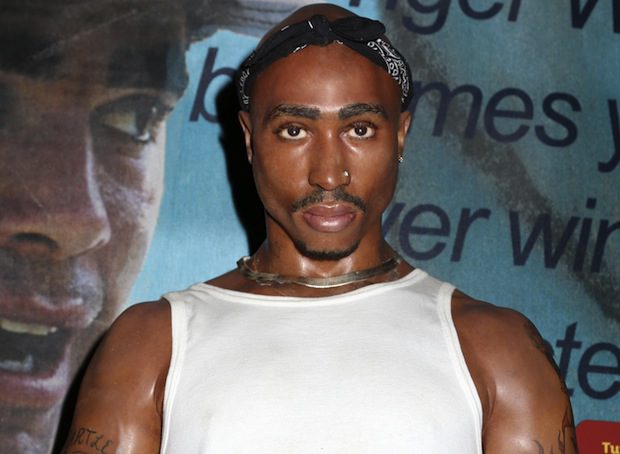
Here’s my take on why Rod Dreher and his ilk are so obsessed with me: first, I am a woman who dares to do theology that does not flatter the male ego, and second, I am a WHITE female who praises, loves, and calls a “theologian” a black man like Tupac. Perhaps it is this last offense that enrages him the most. Tupac has earned a title that he has fallen short of.
More, please. I beg you.
The Fork in the Road
Gloria Steinem, 81, has a new book out called My Life on the Road. Here is what it says on the dedication page:
THIS BOOK IS DEDICATED TO:
Dr. John Sharpe of London, who in 1957, a decade before physicians in England could legally perform an abortion for any reason other than the health of the woman, took the considerable risk of referring for an abortion a twenty-two-year-old American on her way to India.
Knowing only that she had broken an engagement at home to seek an unknown fate, he said, “You must promise me two things. First, you will not tell anyone my name. Second, you will do what you want to do with your life.”
Dear Dr. Sharpe, I believe you, who knew the law was unjust, would not mind if I say this so long after your death:
I’ve done the best I could with my life.
This book is for you.
That son or daughter would be 58 years old now, and may have produced grandchildren to comfort Steinem in her old age. To bring her joy. She made her choice, and it wasn’t for life, but for self. To be 81 years old, to publish a memoir, and to dedicate it to the doctor who killed your unborn child in your womb — what a sad waste of life. Two lives. That dedication is an epitaph and an indictment.
Revolution in the School Restroom
The Obama administration says that it’s a violation of federal law for schools to deny use of their preferred bathroom to transgender students. More from the AP:
The U.S. Department of Education and the Department of Justice made that argument in a friend-of-the-court brief submitted late Wednesday in support of a Virginia teenager who is suing for access to the boys’ restrooms at his high school.
The government’s filing says a Gloucester County School Board policy that requires 16-year-old junior Gavin Grimm to use either the girls’ restrooms or a unisex bathroom constitutes unlawful bias under Title IX, the 1972 law that prohibits sex discrimination in education.
The policy denies Grimm “a benefit that every other student at this school enjoys: access to restrooms that are consistent with his or her gender identity,” lawyers for the two departments wrote. “Treating a student differently from other students because his birth-assigned sex diverges from his gender identity constitutes differential treatment on the basis of sex under Title IX.”
The administration’s position in Grimm’s case represents its clearest statement to date on a modern civil rights issue that has roiled some communities as more children identify as transgender at younger ages.
While not legally binding, it signals to school districts that may be wrestling with how to accommodate transgender students while addressing privacy concerns raised by classmates and parents which side of the debate they should take if they want to avoid a federal investigation.
Don’t think you can get out of this by taking your kids out of public schools. Title IX applies to private schools too, as long as they receive federal money. While this is much more applicable to colleges and universities (who benefit from federal financial aid assistance, research money, and so forth), some private schools receive federal money through particular programs. According to the US Education department, those programs include teacher training, assistance for poor students, aid teaching English to immigrant students, gifted and talented programs, and other things.
Want to keep that federal money teaching poor Latino immigrant kids how to speak English in your inner-city Catholic school? Better let boys use the girls restroom, or the might of the US Government will come down hard on you.
It’s coming. For some school districts, it’s already here.
This is one reason why the 2016 election is going to be massively important. Hillary Clinton will certainly keep this outrageous policy. I doubt very much a Republican president will. But I don’t know that for sure. In any case, politics remains important, but at best it will be a delaying action for matters like this. In Weimar America, trans is a cultural juggernaut.
Gnostic Nun, Cyborg Catholicism
It looks like maverick Villanova theologian Katie Grimes has some interesting company on the theology faculty at the Catholic university. Sister Ilia Delio, a Franciscan nun, has been awarded an endowed chair in Christian theology there. She looks forward to transhumanism changing the Catholic Church. Excerpts from her essay:
It is interesting that a male, hierarchical church shares common ground with the male aims of science and technology. Could it be that science and religion are instilled with the same utopian ideal, the restoration of Adam to his divine perfection? Is it possible that each area is focused on the same goal and thus can respectfully keep one another at arm’s length? After all, what would be the point of the church embracing modern science and thus opening up to evolution and gender complementarity, if evolution points to an unknown future thus transcending the myth of Adam? Similarly, if science opened up to the values of religion what would motivate scientific and technological development beyond the myth of Adam? In other words, does the Adam myth constrain a new synthesis between science and religion?
To bring science and religion together into a new unity requires a new level of consciousness, a new type of person, one who is free of the Adam myth and its corresponding misogyny. This is where transhumanism can play a profound role. To guide my thoughts, I turn to the social philosopher Donna Haraway who, in 1990, wrote a cyborg manifesto in which she saw a way forward for gender equality through technology. A cyborg is a hybrid of biology and machine and can range from humans with pacemakers and prostheses to robo-humans. Haraway uses the hybridization of the cyborg as a symbol of overcoming the dualisms of Western thought, including patriarchy, colonialism, essentialism and naturalism. According to Haraway, the cyborg symbolizes a reconstruction of gender, moving away from Western patriarchal essentialism and toward “the utopian dream of the hope for a world without gender,” a world where gender is not defining of identity but transcended by lines of affinity. The cyborg is a creature in a post-gender world; it has no origin story such as original perfection, bliss, falleness and death and is free from the defining limits of nature. Cyborg imagery can suggest a way out of the maze of dualisms in which we have explained our bodies and our tools to ourselves. According to Haraway, cyborgs can now construct their own identity by choice and not fear.
Cyborgs can construct their own identity by choice. Therefore, to be fully free, we must use technology to make ourselves transhuman. More:
Transhuman technology signifies that reality is a process constituted by a drive for transcendence. Nature, in a sense, is never satisfied with itself; it always presses to be more and for novelty. When we participate in this drive for new possibilities, we participate also in God. This is the dimension of holiness in technology. When we are immersed in the drive for transcendence, we share in the ultimate depths of reality we call God. The myth of Adam has created enormous divisions in science and religion and has stifled human evolution. Transhumanist technologies, symbolized by the cyborg, provide hope for a more unified world ahead – if we develop and create technologies with this aim in mind.
Read the whole thing. You can almost hear that old familiar hiss.
Writing in First Things this month, Villanova philosopher Mark Shiffman has a very different take on transhumanism. The essay is behind the paywall. In it, Shiffman says that in the theology that leads to transhumanism, “We become
more godlike through our own efforts of self-transcendence, rather than through humble prayer and petition and self-giving love.” Excerpt:
Today, the most ambitious Cartesian dreams of life extension and enhancement set the agenda for “transhumanism.” Although it styles itself a philosophy, transhumanism is really a religious movement with a twenty-frst-century marketing campaign (under the brand “H+”). Like their prophet Descartes, transhumanists think of the human being as a consciousness hosted in a body, and of the body as a machine that the will can manipulate by means of reason. Transhumanism adds a new technological claim: Computing advances are on the verge of bringing about the “singularity,” a convergence of artificial, computer-based intelligence and human, brain-based intelligence. This convergence will allow us to transfer ourselves out of the “wetware” of the brain and into super-sophisticated hardware, thus enhancing our powers and possibly securing a kind of immortality. We are on the brink of transcending the bodily limits that have previously constrained humanity, thereby becoming transhuman.
It’s easy to write transhumanism of as a fringe phenomenon of science fantasy. But this is a mistake, for elements of it are already engulfing us.
Yeah, I’ll say — right there on that Catholic campus, holding an endowed chair in the theology department! More from this fantastic essay:
In [sociologist and transhumanism advocate Steve] Fuller’s interpretation, the Judeo-Christian doctrine that we are made in the image of God means that we have as-yet unrealized, godlike possibilities, and original sin denotes the weakness and drag of our non-godlike bodies. On this reading, Christianity mandates rebellion against our finitude through efforts to rise spiritually above the failures of the body.
This, in fact, is not Christian orthodoxy at all, but rather Gnosticism, one of the great heresies. Augustine explicitly rejected Gnosticism [Emphasis mine — RD] in the Manichean form he knew intimately. He understood original sin as the disordered will to self-exaltation. Far from being a source of sin, our embodied condition is
pronounced good in the first chapter of Genesis.
Like Marcion, a Christian heretic excommunicated in the second century, the Gnostics repudiated the depiction of God in the Hebrew Scriptures, beginning with the affirmation in Genesis 1 that the whole creation of earth and the heavens is good. According to Gnosticism, only pure spirit is good; the body and the material world are evil and the source of all evil. Gnostics wanted to purify and detach their spirits from material existence by ascetic disciplines, including abstention from sex and procreation. It was the culture of death calling itself Christianity.
The culture of death calling itself Christianity. Plus ça change. Um, I know we’re not supposed to talk about theologians being heretics, because it is “serious business that can have serious consequences for those so accused,” but I’m pretty sure there’s a Gnostic nun sitting in an endowed chair of theology at Villanova, a school that prides itself on its “Augustinian spirituality.” Does this not bother the people who hired her? I know, it’s a naive question, but still.
See, this is why the effort from the Catholic left to police the theological discourse is so harmful: it prevents us from calling things what they are. And that is serious business that can have serious consequences. This is not a game.
October 29, 2015
Why Study Academic Theology?
Catholic Bishop Robert Barron takes Ross Douthat’s letter-writing critics to task:
The letter to the Times is indicative indeed of a much wider problem in our intellectual culture, namely, the tendency to avoid real argument and to censor what makes us, for whatever reason, uncomfortable. On many of our university campuses this incarnates itself as a demand for “safe spaces,” where students won’t feel threatened by certain forms of speech or writing. For the first time in my life, I agreed with Richard Dawkins who recently declared on Twitter, “A university is not a ‘safe space’. If you need a safe space, leave, go home, [and] hug your teddy…until [you are] ready for university.”
Along those lines, I found it very weird last night when the Catholic writer Grant Gallicho (), on Twitter faulted me for writing critically about Villanova theologian Katie Grimes, a signatory of the anti-Douthat letter. He said my post was “creepy”; I asked him to explain. He tweeted:
@roddreher The way you singled out a young academic for Internet shaming. Scouring her oeuvre. Petty. Talk about the letter or don’t.
— Grant Gallicho (@gallicho) October 28, 2015
I responded:
@gallicho I didn’t “scour her oeuvre”; a reader found those things she posted on https://t.co/5bFwUWdhQA. They speak for themselves.
— Rod Dreher (@roddreher) October 28, 2015
To which he replied:
@roddreher A reader. You trumpeted it. You have a readership. It’s unseemly.
— Grant Gallicho (@gallicho) October 28, 2015
It went back and forth like that a few more rounds. As a sign of — I don’t know, fatigue? desperation? — he tweeted petulantly:
@roddreher How boring. You vacated Catholicism ages ago.
— Grant Gallicho (@gallicho) October 28, 2015
Well, that’s persuasive. All this over something I wrote yesterday examining three academic papers that anti-Douthat critic and Villanova theologian Katie Grimes put into the public realm. In the letter she signed, Grimes, who is in her twenties and works as an assistant professor of theology at Villanova, questioned the conservative Catholic Douthat’s ability to write about theology topics on the pages of the Times, as he is not a trained theologian. In a follow-up blog post, Grimes clarified that she doesn’t believe laypeople ought to keep silent; her critique, she said, is more specific:
I object not to the privileging of un-credentialed voices but to the Times’ inconsistent standard of credibility. When it wished to employ an editorialist about the economy, it selected a Nobel Prize winning professor. When the New York Times publishes articles about global warming, they trust the judgments of “credentialed” scientists. One wonders why the New York Times does not extend to the discipline of theology the same respect? In other words, while one does not need a PhD to perceive and to live God’s truth, one does need some sort of systematic training to pontificate (pun intended) about questions of church history and liturgical, moral, and systematic theology. These can be found outside of the theological academy, but they must be found somewhere.
So perhaps rather than calling Mr. Douthat “un-credentialed,” the letter should have asked the New York Times the following question: with what criteria did they determine Mr. Douthat competent to act as an arbiter of theological truth?
Yesterday, in the comment thread on the Douthat affair, one of this blog’s readers posted a link to the four Grimes papers that Grimes has uploaded to Academia.edu. The reader suggested that there was something unusual about them. I went to the site and read three of the four, hence the blog post that grieved the heart of Grant Gallicho. Admittedly I was tough on Grimes, because I think her paper topics are silly, and conclusions either silly or monstrous. I linked to the full papers and published excerpts from them so readers can draw their own conclusions.
Why did I do this? Because Grimes signed a letter implicitly calling on the Times to prevent Douthat from writing about Catholic theology, because he’s a supposed ignoramus, and she elaborated that opinion journalists writing about theology ought to have “some sort of systematic training” in theology before writing about it. Well, let’s have a look at a sample of what Katie Grimes — holder of undergraduate and master’s degrees from Notre Dame, and a PhD from Boston College, and a job as an assistant professor of theology and religious studies at Villanova — has come up with as a result of her systematic training at two of the country’s top Catholic universities.
She offered in public, for the public’s consideration (which is why you upload something to Academia.edu), a paper about reading Thomas Aquinas through the lens of gender theorist Judith Butler, and concluding that the Magisterium (the teaching authority of the Catholic Church) has misunderstood the medieval theologian, who actually would have considered homosexual acts to be morally licit. She posted a paper in which she lauds gangsta rapper Tupac Shakur as a “theologian.” And she posted a paper in which she contends that the Eucharist and Baptism, the two central sacraments of the Catholic faith, are fatally compromised by white supremacy, and that the Catholic Church can only find redemption if it begins lobbying the government to force white people to leave their homes. Excerpt from that paper:
The vice of white supremacy must be unmade by the transformative grace of Black Power, which places black life and freedom first. Theologians need to learn to care less about how to persuade whites to do the right thing and more on what they need to be made to do. Rather than intensifying projects of moral suasion, the church ought to begin devising strategies of white corporate coercion.
It is considered “unseemly” by Gallicho and those who agree with him that I harshly criticized Grimes’s work. Apparently criticism online amounts to “Internet-shaming,” and it is morally wrong for me, as a 48-year-old journalist, to criticize, even ridicule, the work of a 24-year-old theologian — the holder of a master’s degree and a doctorate in theology, mind you — because she is young.
What patronizing garbage. The truth is, I suspect, they know perfectly well that this kind of theology is hugely embarrassing to the cause of shutting down commentary from Douthat and those like him. If people know that this is the kind of thing that the professional Catholic theologians and their fellow travelers laying into Douthat write, and consider to be credible theology (versus Douthat’s newspaper columns), that the progressive Catholic cause suffers. If you are writing a letter trying to convince The New York Times that professional theologians know better than educated laymen about such matters, and this is the kind of work one of the signatories does, well, it makes you look less than persuasive.
Now, that list of signatories is long — see the letter here — and contains a number of Catholic theologians who have been at this for much longer than Grimes has. It would be unfair to single out one scholar (and a very junior one at that) to represent the whole. To be sure, it’s very easy for people outside the academy to glance at the research and work that academics produce and go, Ha ha, look at those crazy professors and their weirdo work! Academic work is often by its very nature obscure and difficult, and subjects that may seem impenetrable, even comical, to outsiders may in truth be valuable and necessary. I get that. But sometimes, it really is ideological crackpottery. Whether Grimes’s three papers I considered are groundbreaking or insane, you can decide for yourself. What is pathetic, though, is the special pleading of progressive Catholics who say it is unfair to criticize the work of an assistant professor at a major Catholic university, because she’s starting her career.
Anyway, theologian Kevin Ahern writes today to denounce my blog post as “calumnious,” and to explain why what I saw in those papers is not what’s really there. Excerpt:
Reading academic, peer-reviewed journal articles is hard work. Often in our own work, when preparing to cite a particular article at length, it is necessary to spend many days very carefully reading a single article. The reasons are fairly obvious: the article is advancing a thesis that is often complex; said thesis may cause you to re-think your own work, or lead it in a new direction; the research for the article leads the reader into an almost-endless array of theological insight (most of which the reader will be at least somewhat unfamiliar with). Grimes’s articles that Dreher cites in his post are no different from the generic peer-reviewed essay we cite above. They are meticulously researched, or else they never would have been accepted for publication. This is key in this debate, which has focused so much on orthodoxy: acceptance of these articles does not rely on whether the reviewers agree with Grimes but whether she makes a thorough argument and supports it with ample evidence. It would hardly be possible to give any one of these articles a fair reading in a short time. So, what we get from Dreher are some selected quotations without attending to Grimes’s more complex theses in these articles. Of course, such proof-texting of a text would lead to a failing mark in most introductory theology courses, so, as teachers, we can’t let it go by the wayside here.
OK, but I am confident that, as an undereducated but literate layman who somehow still has all his teeth, I would not much change my opinion on these peer-reviewed essays if I sat there steeping in them for days. The overwhelming impression I get from reading them is that they were written by someone who despises the Church and the Christian tradition. I’ll explain that later, but first, I’ve been dialoguing via e-mail with several professional theologians in the past day or two, most of them Catholic, all of them what you would call “orthodox.” I asked them if they could help me to understand how stuff like Grimes’s gets called professional theology. One of the theologians writes:
In Joseph Cardinal Ratzinger’s “The Nature and Mission of Theology” he talks about how the Church’s authority is not extrinsic to theology, but is the very ground of its existence, the condition which makes the nature and task of theology intelligible. The project of modern liberal thought cannot allow this. It colonizes Christian thought so thoroughly that it tempts the theologian to see him or herself the “lords of faith.”
Ratzinger provides an image for this which he finds in the magnificent Romanesque cathedral in Troia, a small town in the Apulia region of southern Italy. There he finds a relief on the pulpit dating from 1158 showing a lamb being pounced upon by a greedy lion, tearing into the lamb. This he says symbolizes the way in which the lion as a symbol of power constantly seeks to devour the the lamb which is a symbol of the Church. There is also a third animal in the relief, a small white dog throwing itself with tooth and jaw against the lion. The intentions of the courageous hound are clear. But will the small dog be consumed by the lion, or will his bite release the lamb from the lion’s bite? Ratzinger says that the small dog a symbol for the theologian who understands themselves to be the servants of the faith.
The modern liberal project requires theologians to conform themselves to a different standard, a standard extrinsic to the Church. This problem is not restricted to any one theologian. It has become the standard habit of theology to make the Church’s comprehensive understanding of faith and reason to conform itself to the new knowledge that arises from human experience. Just read the American Academy of Religion and you will see this in spades. It’s fine to single out theologians — young or old — who embody this approach to theology. But the problem is pandemic. The comprehension of the faith always seems to depend on some standard external to the Church — Judith Butler, Tupac, Base Communities, the experience of being Black, Hispanic, Male, Female, a sex addict — but when this happens to the theologian, he or she is always the lion and never the small white dog in the Troia pulpit. This theologian reads all of theology through the power box, instead of through the lens of seeking truth and understanding of the one true deposit of faith which is guarded by the apostles.
The great temptation of the theologian, Ratzinger says, is the temptation to make ourselves (our experience, our time, our culture) to be the lord of faith. But the only authentic vocation for the theologian is ecclesial. The theologian who understands him or herself as a servant of the faith is, in fact, the only one who is actually doing theology. All the rest saw off the branch upon which the whole theological task rests.
There is a whole sociology of knowledge aspect to this question which can be looked at from a purely secular point of view. The way people get formed, who they read, who they are told are most admirable, which essays and books are recommended, all build up certain standards for making intelligible judgments. The AAR or the CTSA are guilds which habituate students to a way of doing theology that is much more akin to the lion rather than the hound with a torch in his mouth.
Another theologian answers my query thus:
I have 20 answers and none. You practically have to go back 40 years to talk about how the liberal establishment took over these programs in the 70’s and has had to perpetuate itself by finding younger scholars who reject the JPII-BXVI papacies, and so have had to appeal in particular to PhD’s from Jesuit faculties (Fordham and Boston College in particular). The latter cultivate an idea of a radically adaptive Catholicism that is open to radical changes in the area of sexual ethics and (to some extent) abortion and that are solidly politically left leaning.
The left is especially worried about hemorrhaging: the loss of mainstream Catholics influenced primarily by the culture and that leave the Church because of a perception of its irrelevance and obsolescence in the modern secular world. So they reach out (desperately at times) to find ways to connect Catholic tradition with contemporary culture, to show the relevance of the former, while advancing the liberal causes they believe in. This makes for what many perceive as an internally incoherent and caricatural Catholicism that the secular left is unimpressed by and that traditional Catholics find alienating and unintelligible. It does engage secularized Catholic students, perhaps, but often only to deepen their confusion. Nor is it typically analytically rigorous, so it forfeits the respect of the philosophical disciplines insofar as it refuses to engage consistently the foundational principles of Catholic dogma.
I said, in an email exchange with this theologian, that I wonder if part of the progressive theologian outrage over the attention I paid to this young Notre Dame and BC-trained theologian has to do with the angst they have of what people outside the academy will think of theology if they see the kind of thing that actually passes for academic theology in progressive quarters. He responded:
Well, that is no doubt true. Part of the issue is also that they want to maintain the moniker of authentic Catholic identity in Catholic institutions even as they seek to modify them (or transform them rather radically albeit gradually) and this means that it is awkward to see this kind of caricatural theology that seems clearly to betray Catholic theology or even to fail at being Catholic manifest in the light for all to see.
I will add more to this long post if any of the other theologians I reached out to answer.
If I were a young person with a passion for theology and a love for the Church, and I thought I would reach the end of my studies as the sort of theologian who writes about St. Tupac and the Dumb Queer Ox, I would stay away from the formal study of theology for the sake of my own faith. And if I were any kind of believing Catholic, I would read things like this and begin to lose faith in the university institutions who produce and reward theologians who think like this. Of course this is just one graduate, but she was formed by elite Catholic theological institutions, and must be thought very good at what she does, else she wouldn’t have landed an assistant professorship at a place like Villanova straight out of her PhD program.
This fall, Grimes is teaching two introductory courses, called Faith, Reason, and Culture, plus a senior-level undergraduate course on racism and the Catholic Church (that was her doctoral thesis topic). It’s hard not to wonder what kind of introduction to the Catholic tradition these freshmen get in her class. For all I know, she handles the meat-and-potatoes intro courses like anybody else would. My guess from her writing is that she has intense passion for her work, and I bet that’s a passion she communicates to her students. The most memorable professor I had in my undergraduate years awoke in me a passion for philosophy. Though I never wanted to be an academic, I can honestly say that the passion that teacher gave me for the life of the mind, and for philosophical ideas, has guided my journalistic career. That intro course may be the first time most of those students will have encountered the study of Christianity and culture at that level. What will they come away knowing about the Catholic Church (Villanova is a Catholic university, if you don’t know) and what it has meant to Western civilization?
I know, it’s only three papers, but the impression I get from reading the work of Prof. Grimes that’s out in public is that this is someone who does not love the Church and its tradition, but is learning it to burrow inside and to “burn down the master’s house,” so to speak.
And that is the general impression one gets of the theological enterprise as seen from outside the academy. Mind you, I know good and faithful Catholic theologians who work within the academy. One of my friends used to teach theology at Villanova, and I know him to be a highly engaged, orthodox Catholic (N.B., I have deliberately not contacted him about this topic, because I don’t want to put him on the spot). Please understand, I’m not picking on Villanova here; I visited there last month, had a great time, and sat in on some wonderful humanities courses. I would send my kid to Villanova (though not to study theology). I am trying to understand why so many contemporary theologians seem so very hostile to the tradition they are supposed to serve, and why deconstructing — even destroying — that tradition appears to be a goal of theirs.
A reader of this blog who writes under the moniker WhiskeyBucks writes:
I watched in horror at what a top-flight humanities grad program did to my sister. She went in a lively, driven, extreme talent with original thoughts. I was so excited that she got into the program. Now she just sees Dead White Zombies on every street corner, feels compelled to deconstruct the oppressive subtexts of hardware stores and ice cream, and is ONLY friends with people who consider themselves revolutionary academics because they use the c-word on Tumblr as a performative rebellion against whatever social poltergeist that they proxy for their daddy-rage. Not to mention the only job she can find is bagging groceries, is more depressed than I’ve ever known her, and “can’t” bring herself to talk to her priest, because her little tribe has turned her against him.
So Katie Grimes isn’t the problem, she’s the product of the problem.
Another reader, Andrew W., who is not a theologian but is an academic, writes:
There are a number of disciplines that survive in academia because while they don’t produce a lot of graduates themselves, they’re embedded in the general curriculum as general studies requirements. Women’s studies or various minority studies come to mind. A person who decides to major in one of those disciplines is pretty much committing themselves to either trying to find a job where the degree itself doesn’t matter, or becoming an academic in that field. Religious studies has become one of those disciplines, and like most of them, the real way to get kudos in the discipline is to put on the appearance of challenging the status quo.
There are several problems with that. First of all there’s the difficulty of an academic discipline where much of the primary material involves the supernatural. Generally the academy is going to be materialist and taking these things at face value is not going to go over well. On the other hand an incoming Freshman who actually chose to come to a religious university very well may believe or even have had an experience of the supernatural. I can’t think of any other discipline where this is an issue.
Another problem is that religious studies programs are also supposed to be a starting point for the ministry, but they’re not really geared for that. Interesting as the anthropological and social background of the scriptures may be (even if they aren’t forced into a Marxist/feminist oppression narrative) religious texts are still ultimately meant to be applied.
As another person mentioned many Catholic universities in their promotional literature sell themselves as a place where the student’s faith is going to be nurtured. My Alma Mater, which was non-sectarian, also did this. What actually happens is the faith is deconstructed on the presumption that the student will develop a more mature faith in the process. Unfortunately if the follow-up to that is one story after another of virtuous victims suffering at the hands of an evil patriarchal misogynist religion if a person — and this is going to be most of the students in those required general studies courses in religion — isn’t all that interested in religion, they’ll tune out the professor, or they’ll give up the faith. If they are interested in religion they’ll either rebel, clam up, or become one more quasi-religious SJW attempting to reform the faith whether the faithful like it or not. Now that’s one heck of a bait and switch, particularly at 40 to 80k per year tuition.
That’s why I think these people went into panic mode when Ross Douthat used the word “heresy”. If word gets out that the religion departments at Catholic Universities are teaching a curriculum that is hostile to the Catholic tradition itself, and actually are encouraging the students to believe things which are recognized and condemned heresies (denial of Christ’s divinity, denial of the real presence in the Eucharist, Pelagianism) tens of thousands of parents and students are paying top dollar to send their students to Catholic schools that aren’t Catholic when they could send them to a state school at a fraction of the cost and the Newman center wouldn’t be actively trying to undermine the faith they had as children.
The humanities are having a terrible time of it in colleges today. Jacques Berlinerblau of Georgetown, writing in the Chronicle of Higher Education, has deplored the habit humanities faculties have of holing up in their ivory towers. Excerpt:
There are many compelling explanations for the sorry plight of the humanities in 21st-century America. I have little interest in expounding upon them here, other than to observe that we, as a guild, are fanatically and fatally turned inward. We think and labor alone. We write for one another. And by “one another,” I mean the few hundred or so people who inhabit our fields—hectares and patches of scholarly specialization.
For the humanities to persevere (and for humanists to stop perennially bemoaning their miserable fate like the despondent cast of Chekhov’s Uncle Vanya) we must exorcise the demon of inwardness. We must cure ourselves of a psychological affliction that compels us to equate professionalism with specialization, erudition with footnotes, and profundity with the refusal to tackle broader questions not of interest to “one another.”
My contention is—and state legislators, boards of trustees, and belt-tightening administrations are there with me—that the humanities had better start serving people, people who are not professional humanists. Our survival as a guild is linked to our ability to overcome our people problem. If we don’t, well, then just get used to more memos from the provost announcing the “strategic migration of faculty resources” to the B School and away from your liberal-arts college.
The public redemption of the humanities that I have in mind begins in graduate school. (As for the present post-tenure generation, Dante’s warning to abandon all hope, lasciate ogni speranza, seems fitting.) The change will occur when we persuade apprentice humanists to engage their audience and then equip them with the tools to do so. Who composes that audience? In order of importance: students, scholars not in one’s field, and cultivated laypersons.
Now, ask yourself: whose interests are served by professional Catholic theologians whose research and writing focuses on queering medieval theologians, the theological wisdom of gangsta rap, and the racial malignancy of the Church? As Prof. Grimes has written, the Church is so evil and given over to white supremacy that the sacraments themselves are compromised ? She writes:
This corporately vicious operation of white supremacy within the corporate body of Christ requires theologians to change the way they conceive of liturgy, ethics, and the relation between the two. In pervading the church’s corporate body, I contend, the vice of white supremacy permeates all of its practices, no matter how sacred.
Is it true that the Catholic Church, like other churches, has been guilty of perpetuating white supremacy, either affirmatively or passively, by not standing up to it? Undoubtedly, and this is a shameful blot on the Church’s past. Even so, how can you love a Church that you believe to be virtually demon-possessed by race hatred, and that exorcising it requires you to destroy its visible body and its ancient practices? If I thought that were true, I would want nothing to do with an institution so rotten, and if I were inside it, I would work as hard as I could to destroy it. It may be theology, of a kind, but is this really what Catholic theology should be about? It’s empowering within Catholic institutions the very ideology that seeks to destroy Catholicism, or so it seems to me.
Philip Rieff wrote, in The Triumph of the Therapeutic:
The death of a culture begins when its normative institutions fail to communicate ideals in ways that remain inwardly compelling, first of all to the cultural elites themselves. Many spokesmen for our established normative institutions are aware of their failure and yet remain powerless to generate in themselves the necessary unwitting part of their culture that merits the name of faith. “Is not the very fact that so wretchedly little binding address is heard in the church,” asked Karl Barth, rhetorically, in 1939, “accountable for a goodly share of her misery—is it not perhaps the misery?” The misery of this culture is acutely stated by the special misery of its normative institutions.
Theological faculties are normative institutions. If they fail to communicate the ideals of the Christian faith — and in Catholic theological faculties, the Catholic faith — they will die, and so will the faith. This is happening in America right now. To what extent are theological elites the problem? Or are they the solution?
And: do they care one way or another, or are they, like Berlinerblau says of many academic humanists, only focused on writing for their tiny sect of insiders?
The professional theologians I know — most, but not all, of them Catholic — are diverse thinkers, but one thing that unites them is a love for the Church and the Christian tradition. I hadn’t thought of it till now, to be honest, but the thing I notice about all of them is that they treat the tradition with reverence — not slavishly repeating what they’ve been told, but engaging it as a servant, seeking to deepen knowledge of the divine and its workings within that tradition, and to steward the tradition through the challenges of our own place and time. What I see in the attitude of many progressive theologians is a rejection of the tradition, bordering on a contempt for it — and indeed a passion for rupturing the tradition, and remaking it according to their own ideological ends.
This does not give life. In fact, it is poison. I met an Evangelical law student earlier this month who told me that at her undergraduate college, a well-known Evangelical institution, the theology faculty had torn her faith down, but they gave her nothing with which to build it back up. She said she was one of the few undergraduates she knew to make it through without losing her faith.
Again, hers was an Evangelical school, supported by Evangelicals, many of whom surely have no idea that the theology department there sees its mission as relieving undergraduates of the burden of their religious belief. Mind you, I heard a theologian from a different Evangelical school saying recently that many of his students find themselves traumatized by some of the things they learn in their theology classes, because those things don’t line up neatly with the simple lessons they learned in Sunday School. But if they stick with it, they will emerge with a deeper faith, because they will have understood the roots of Christianity much better. This scholar is orthodox, though, and so is his institution. For now, anyway. Students (and their parents) can trust this institution and its professors to challenge the students on matters of faith, but to do so in a way that helps them grow in understanding and fidelity to the tradition. Why? Because these professors are faithful to it themselves, and receive the faith as a gift to be loved, and passed on in love. I believe this is not an academic exercise. Actual souls are at stake.
If the mission of any theological faculty is to be found in St. Anselm’s phrase, “faith seeking understanding,” then it appears to this layman that more than a few professional theologians really want their students to understand that the faith is nothing more than man-made nonsense, and what man has made he can remake in his own image. So, why study academic theology? Does one do it to shore up the master’s house, and maybe to add new rooms onto it, based on the experience of living in it during a different time? Or does one study academic theology to tear the house down and build something more modern on the footprint?
And how do people outside the academy know the difference? Here again is the “Apologia for Theological Inquiry” posted on the Daily Theology blog by one or more (it’s unclear) of Grimes’s defenders. Read it and see what you think. I don’t trust it. At all. But then, I don’t have a theology degree. What am I missing?
UPDATE: Michael Peppard, who teaches theology at Fordham, writes:
At the end of Peter Steinfels’s book, A People Adrift, he suggests to folks like me (in Catholic institutions), that we “have often generally assumed the defense of innovation while leaving the task of protecting continuity to the hierarchy.” I think this is correct. But he says that in the future, “we will have to broaden our own sense of responsibility for the whole Catholic tradition.” This is a noble endeavor, and it is a great fit for the classroom. And “the future” of that comment is now.
So why doesn’t more of Catholic theology protect continuity? Why so much attempted innovation — some successful, life-giving, even true, but some not? One reason I haven’t seen discussed yet here is the entire research paradigm (in which I also participate): the rubber meets the road in the area of scholarly publication. One challenge I perceive is producing scholarly work that is faithful to tradition and also passes the originality test necessary to be worthy of a major journal or publishing house. It is paradoxical to get something published in a major venue within the wissenschaft paradigm that is conservative in the sense of preserving tradition – why would the publisher do that? Most scholarly publishers aren’t interested. And where would a tenure committee rank something like that? As long as university promotion committees say that what they value primarily is the production of new ideas, there will be up-and-coming scholars pushing boundaries. Outside of universities on the research paradigm, it’s possible things are different, but then again, even those professors were mostly socialized into the research paradigm during their top-tier graduate programs, so the ethos is quite widespread. That’s how I see it, in a descriptive, not evaluative, sense.
UPDATE.2: A theologian who will be anonymous here writes:
While I can’t speak specifically about Katie specifically (because I don’t know either her or her work), I can say that her “type” is common, especially in theological ethics. Having looked over Katie’s CV and skimmed a few essays, I would dispute anyone who claimed she wasn’t doing interesting, or even sound academic theological ethics. Is her stuff trendy? To be sure. Is her stuff perhaps overly determined by its trendiness? Perhaps; I would have to read her far more carefully than I have before I could even begin to assess it for that. I did think her essay on Butler and Aquinas was academically feasible, even though it was seriously wrongheaded in presuppositions, interpretation, and conclusion. But, hey, people can be wrong. I don’t think that delegitimates her as a “real theological ethicist,” or even as a real Catholic ethicist. (I don’t know her personal faith, if she has one). So that’s my only qualifier to what follows.
I think academic theology in general suffers, not from a Nietzschean will-to-power, but a far more banal will-to-sophistication. You could couple this with a corresponding will-to-coolness. Theology finds itself in a terribly embattled, insecure place in the university. I think many departments are driven by an inarticulate desire to prove themselves to their peers and, by so doing, justify their place in the increasingly secular, hostile landscape of higher education.
There is a deep-seated fear that a lot of theologians have, I think, that their peers will dismiss them as fideistic, illogical, or intellectually spurious. “Divine revelation” isn’t a particularly academic concept and so the idea of doing any thinking—let alone ethics!—based on, emerging from, in working in conversation with, divine revelation simply doesn’t compute in the positivistic culture of academia. Doing theology as faith seeking understanding will be met with a cynical and dismissive eye, we theologians fear. [Aside: this goes to show the crisis of confidence theologians have in themselves and in theology as a discipline. I think you could make the argument that a great deal of theology is done today by people who view faith as an intellectual liability, rather than the source of their intellectual inquiry.] And so theologians will sometimes set out to prove their intellectual and academic merit by adopting modes of discourse that carry authority, that are sexy and popular, among their peers.
Lately, so it seems, the popular discourse that theology has adopted has been the critical theory of folks like Foucault, Horkheimer, Adorno and the Frankfurt School and so on. Such discourse has been popular in the humanities and the social sciences, so by adopting this discourse, Theology shows its relevance and its intellectual savviness. A lot of my friends and colleagues who work in the intersection of Theology and Political Science or Theology and Sociology will describe their theological projects as “Marxian” (as distinct from “Marxist,” though I remain a bit fuzzy on the difference between them).
I think a lot of contemporary Theology at least adopts the method of Marxian, critical theory in an attempt to join the intellectual “inner circle” (to use C.S. Lewis’ phrase) and so justify our continued presence at the academic table. It gives the discipline of Theology some cultural cachet; it makes Theology look hip, exciting, sophisticated, and relevant. No more of this arid Trinitarian theology! No more of this oppressive sacramentality! Away, you dry scholastic speculation! We are talking about the real world now. Take us seriously!
I also think adopting this kind of discourse is tempting—and dangerous—because it enables us to frame intellectual discourse as a kind of justice. We can congratulate ourselves for boldly “speaking the truth to power” and defending those voices that have been unfairly neglected or unjustly silenced. Theology, in this sense, is finally focusing on the “least of these”—and so now truly doing the work Jesus wanted us to do. I think a lot of universities—and Theology departments too—simply assume that Theology has long been held under the oppressive regime of normative forms of privileged discourse. These forms of discourse are often perceived as unfairly neglecting or unjustly silencing other discourses and perspectives. To counter this privilege, real or imagined, we must talk extensively about “diversity,” “privilege,” “bias,” “structural oppression” and so on. I don’t necessarily have a problem with that when it is grounded in the imitatio Christi and the desire to share in God’s healing of the world. But I think such work can easily make Christ into an extension of a pre-existing political ideology. When that happens, we are no longer doing theological ethics. We are just doing the ethics of our own presuppositions and tastes and sprinkling a little Jesus on top. The Right does this; and so does the Left. It also lets us congratulate ourselves for “doing justice” by, well, just talking about it —raising awareness! — rather than actually doing it. But I digress.
I think the other reason Theology departments are so drawn to this kind of Marxian critique is that helps academics ward against the charge of being elitist. We think—or at least I have thought—that such discourse breaks academia out of the perceived irrelevance to the “real world” that became such a concern after the Boomers. Such discourse, we think, brings us out of the elite Ivory Tower, where academics (apparently) have always sat in privileged and comfortable distance from the messiness of real life. Such discourse brings academic thought into the realm of the people again, man: “We do our theology in the streets (with Tupac)!” And while there may be something profoundly Christian in that—following the kenotic descent of Christ to the form of a slave—I fear that the motivation is, again, not imitatio Christi, but something far more self-serving.
So in the end, I think part of the draw of Theology departments to trendy theology and subversive, transgressive approaches to ethical issues is, well, it makes our department look good. It shows our intellectual sophistication to our academic colleagues and our “of the people, for the people” to the world beyond that damned Ivory Tower.
Like I said, I don’t know Katie Grimes at all, so none of this is directed at her. I’m speaking more of an academic type that I’ve encountered over and over. In that type, my fear is always that theology is being done primarily as an academic, and thus career-focused discipline, rather than as a religious or spiritual vocation. As Dante saw over and over, when theology becomes the instrument to an end other than prayer and the worship of God, things are bound to go wrong. I don’t know the hearts of the people involved, of course, so I can’t speak to their motivations with any confidence. But this is my sense of academic theology’s current state.
Jeb’s Goose Is Cooked
Before the Summer of Trump, Jeb Bush seemed to be the inevitable GOP nominee. Well, if not inevitable, then at least most plausible on paper. The one thing he had to overcome was his last name, by which I mean the legacy of his brother’s failed presidency. If he could do that, it would likely be smooth sailing for him.
It hasn’t happened. His George W. Bush’s legacy hasn’t even been much of an issue to this point, but Jeb’s campaign is dead in the water, and sinking fast. This brutal assessment by Chris Cillizza, written after last night’s debate, nails it. Excerpt:
He just isn’t all that good at this. And he knows it.
There’s no other conclusion that you could draw after watching Jeb Bush flail in Wednesday night’s Republican presidential debate. Bush looked overmatched and lost — an image made all the worse by the fact that he was positioned on the stage in Boulder, Colo., next to Marco Rubio, his one-time political mentee but now quite clearly his superior in the race.
Bush’s attempt to attack Rubio was a metaphor not only for his debate performance but for his campaign. Knowing he needed to land a clean punch on Rubio, Bush piggybacked off a question from the moderators about Rubio’s sparse attendance record in the Senate and tried to attack. But Bush doesn’t really like attacking. And he backed into it from the start. “Could I bring something up here?” he asked, before somewhat awkwardly and, if I’m being honest, nervously, said this of Rubio: “I expected that he would do constituent service. Which means that he shows up to work.” Then Bush, in an obviously prepared line, joked that Rubio was following a “French work week.” (Ugh. Sad trombone.)
Rubio, ready for the hit, calmly dispatched a series of facts — including that John McCain missed lots and lots of votes in 2008 and Bush still backed him — before delivering this howitzer: “The only reason you are doing it now is because we are running for the same position, and someone has convinced you that attacking me is going to help you.”
The crowd cheered. Bush folded his hands and tried to respond. It didn’t work. It was over — in more ways than one.
Read the whole thing. If you didn’t see Jeb’s feeble attempt to smack Rubio, and Rubio’s taking him to school, it’s here:
If I were a Bush donor, I would either close my checkbook or redirect my tithe to Rubio. Jeb said the other day:
If this election is about how we’re going to fight to get nothing done, then I don’t want to have any part of it. I don’t want to be elected president to just sit around and see gridlock become so dominant that people are literally in decline in their lives. That is not my motivation. I got a lot of really cool things I could do other than sit around and be miserable, listening to people demonize me and feeling compelled to demonize me.
Hey, I agree! I don’t blame him one bit for feeling that way. It’s a perfectly sane way to feel, and I think it speaks well of Bush’s humanity that he thinks this way. But it speaks very poorly of his prospects to be president. Given his somnolent debate performances so far, it’s all too easy to see Hillary Clinton eating him alive in the campaign.
I don’t know, though, if Bush, having raised so much money (a total of $133 million, far ahead of his GOP rivals) has a graceful exit. I suspect his donors will, in effect, make the call for him after last night’s debate, by finding some better investment to make.
Me in Colorado Springs This Weekend
 Hey, Colorado Springs, I can happily report that yesterday, my doctor cleared me to travel this weekend (a back injury forced me to cancel my North Carolina trip at the last minute), so I will be in your town Friday and Saturday for a couple of talks sponsored by the Anselm Society.
On Friday night, I’ll be talking about How Dante Can Save Your Life, at Holy Trinity Anglican Church, 7-9 pm. Details here. Excerpt:
Following the death of his little sister and the publication of hisNew York Times bestselling memoir The Little Way of Ruthie Leming, Dreher found himself living in the small community of Starhill, Louisiana where he grew up. But instead of the fellowship he hoped to find, he discovered that fault lines within his family had deepened. Dreher spiraled into depression and a stress-related autoimmune disease. Doctors told Dreher that if he didn’t find inner peace, he would destroy his health. Soon after, he came across The Divine Comedy in a bookstore.
In the months that followed, Dante helped Dreher understand the mistakes and mistaken beliefs that had torn him down and showed him that he had the power to change his life. Dreher knows firsthand the solace and strength that can be found in Dante’s great work, and distills its wisdom for those who are lost in the dark wood of depression, struggling with failure (or success), wrestling with a crisis of faith, alienated from their families or communities, or otherwise enduring the sense of exile that is the human condition.
If you’ve read the book, I hope you’ll come anyway, because the final chapter, so to speak, had not yet been written. And it was holy and beautiful, filled with hope and resolution. Plus, I’ll be jacked up on back pain medication, and you never know, I might start speaking in tongues, or something.
On Saturday afternoon from 2 to 4 a bunch of us are getting together downtown to talk about the Benedict Option. Details here. You will be doing me a big favor if you come and share your own opinions and experiences. I’m working on a book about the Ben Op, as you know, and I genuinely benefit from learning from these discussions — and, in turn, so will readers of the book.
Do you know about the Anselm Society? You should.
Ben Carson Is A Creationist. So?
Jeff Jacoby told a liberal colleague the other day that he would not vote for Ben Carson for president, but thinks he would make an excellent Surgeon General. After all, Dr. Carson, a Seventh Day Adventist by faith, is a pediatric neurosurgeon who for over two decades ran his department at Johns Hopkins Hospital, one of the best in the world. Time magazine once called Dr. Carson one of the best doctors in the country.
That wasn’t good enough for Jacoby’s liberal colleague, who wanted to know how on earth Jacoby could support a Surgeon General who is a creationist. If he rejects the science on something as fundamental as that, how can he be trusted? Jacoby answered, in part:
The best-known and most beloved surgeon general of all — C. Everett Koop — is remembered for his early leadership in fighting AIDS and for warning bluntly that smoking was harmful. Liberals admired him for putting public health before politics or ideology. Yet Koop, too, was skeptical of Darwinism. “It has been my conviction for many years that evolution is impossible,” he wrote in a 1986 letter. Like Carson, Koop also believed that Genesis should be taken at face value, not as “something like parables.” Yet those views clearly were no barrier to Koop’s nonpareil service as surgeon general.
Similarly, Carson’s decades of remarkable medical achievement should quell any suggestion that his biblical views about the development of life “in the beginning” have impeded his scholarship and skill at saving and improving lives in the present. All faiths (including dogmatic atheism) incorporate teachings that cannot be supported by mainstream science. Water into wine? Manna from heaven? Golden plates from an angel in New York? A universe that spontaneously created itself?
Jacoby’s last point is especially interesting. I’ve noticed over the years that very little winds up secular liberals like creationists, especially when people they would otherwise respect (like, say, a pediatric neurosurgeon) confess to taking a scientifically implausible, religiously informed view of how the universe began. I suppose it has to do with the role the Scopes monkey trial plays in our national historical narrative, but in my experience, creationist belief is kryptonite for secular liberals.
Thing is, as Jacoby points out, most of us who profess any religious faith at all — and even dogmatic atheists — believe in things that cannot be proven by science. If that were to be an insurmountable barrier to serving as Surgeon General, the current holder of that office, Dr. Vivek Murthy, would have to resign; he is a believing Hindu, and man, do they ever believe weird things. No believing Catholic or Orthodox could serve, because their strange and unscientific beliefs include the conviction that bread and wine become in some mysterious way the body and blood of God after a priest says certain words over them. All believing Christians, for that matter, believe that the infinite, eternal God entered into time and became a man, and not just a man, but a Galilean Jew whose mother was, get this, a virgin. And after they killed him, he rose from the dead and flew off to heaven.
It’s very strange, you have to admit.
Jews who profess Judaism not only believe that God exists, but they also believe (as do Christians) that He revealed himself exclusively to a tribe of desert nomads, out of all the people on earth, and chose that tribe for a special mission in history. Crazy! Believing Muslims confess that God sent an angel to a prophet praying in a cave in Arabia, and dictated a holy book to him. That really happened, according to Muslims. It might seem silly to you, but that’s what they believe.
Should no believing Jew, Muslim, or Christian ever be allowed to serve as Surgeon General because they believe things that cannot be proven scientifically? For that matter, you cannot prove scientifically that there is a purpose to human life. I have an atheist friend who is a staunch humanist, who believes that the purpose to life is to love others and to do good. She can’t explain to you why she believes that, only that she does. A Ditchkins type could demolish her in 90 seconds. But this is her faith. Though she wouldn’t call it faith, this is her faith.
“Can you regard someone’s religious creed as preposterous, yet entrust the person who is faithful to that creed with public office?” asks Jacoby. “Of course; Americans do it all the time.”
Yes, we do, because that’s how it is among us humans.Secular liberals who freak out in the presence of creationist beliefs are pretty much virtue-signaling. We use science to help us to understand the material world, and how it works, but most of us believe in something beyond the purely material, which is to say, beyond the reach of science’s ability to know. We experience life as a poem, not a syllogism.
Rod Dreher's Blog

- Rod Dreher's profile
- 508 followers

