Jennifer R. Hubbard's Blog, page 64
February 6, 2013
Downtime
A friend and I were talking today about pressure, especially the pressure to be constantly busy, doing, achieving. As a human being I need rest, and as a writer I need a certain amount of downtime for the creative gears to turn. But we've been trained to view rest and downtime as laziness, procrastination, wasting time.
There has to be a middle ground between wasting time and burnout. I happen to believe that much of what we call "goofing off" is actually necessary rest and recreation. We haven't been taught to value this downtime; we're encouraged to be workaholics. We keep doing studies that show that we need more sleep, but we keep structuring our society to give ourselves less sleep. We schedule ourselves from morning to night. If we sneak in breaks, we feel horribly guilty over what we "might have done" with that time.
But we're not robots, and there is more to life than producing output 24/7.
It's okay--even essential--to take a break now and then.
There has to be a middle ground between wasting time and burnout. I happen to believe that much of what we call "goofing off" is actually necessary rest and recreation. We haven't been taught to value this downtime; we're encouraged to be workaholics. We keep doing studies that show that we need more sleep, but we keep structuring our society to give ourselves less sleep. We schedule ourselves from morning to night. If we sneak in breaks, we feel horribly guilty over what we "might have done" with that time.
But we're not robots, and there is more to life than producing output 24/7.
It's okay--even essential--to take a break now and then.


February 4, 2013
What's going on
Today I bring you a couple of announcements, and a vignette:
If you're in the Philadelphia area, you may want to check out the
In other news, today appears to be the launch day for the German version of Try Not to Breathe, titled Atme Nicht. I share it here just because I find it interesting to see how covers get reinterpreted in different editions:
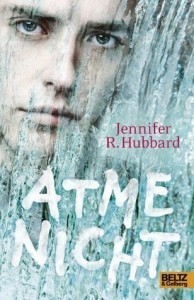
I like how they used some of the images from the book. Anyway, if you're in Germany, check it out! ;-)
Finally, for your amusement, a scene from the writer's room:
Cat (not actually saying this, but acting it out with emphatic body language and vocal pleas ranging from adorable mews to annoying yowls): Come play with me! Come play String!
[String is a game in which a human minion waves, dangles, and drags a string for the feline master to pounce upon. It is SO MUCH FUN and HIGHLY ADDICTIVE, judging by the frequency with which a particular cat of my acquaintance asks to play it.]
Writer: I can't. I'm working.
Cat: But if I can't play String, I may die.
Writer: I doubt that.
Cat: You really want to risk it?
Writer: I'm getting enough drama from my manuscript, thank you.
Cat: You are a great trial to me.
If you're in the Philadelphia area, you may want to check out the
In other news, today appears to be the launch day for the German version of Try Not to Breathe, titled Atme Nicht. I share it here just because I find it interesting to see how covers get reinterpreted in different editions:
I like how they used some of the images from the book. Anyway, if you're in Germany, check it out! ;-)
Finally, for your amusement, a scene from the writer's room:
Cat (not actually saying this, but acting it out with emphatic body language and vocal pleas ranging from adorable mews to annoying yowls): Come play with me! Come play String!
[String is a game in which a human minion waves, dangles, and drags a string for the feline master to pounce upon. It is SO MUCH FUN and HIGHLY ADDICTIVE, judging by the frequency with which a particular cat of my acquaintance asks to play it.]
Writer: I can't. I'm working.
Cat: But if I can't play String, I may die.
Writer: I doubt that.
Cat: You really want to risk it?
Writer: I'm getting enough drama from my manuscript, thank you.
Cat: You are a great trial to me.
February 2, 2013
Pre-release
I love this time with a book: when it's nearly finished, and I'm just making small changes to it. It's complete and shiny new. Few people have read it yet. Anything is possible. It hasn't yet been rated, categorized, or appraised.
It's true that many wonderful things can follow this time. It's true that I want people to read this book. It's true that I wouldn't want this pre-release time to last forever. (In this case, it will last for seven and a half more months, and by then I will be more than ready for it to end.)
But this is a special time, in and of itself. The waiting time, the time Before.
It's true that many wonderful things can follow this time. It's true that I want people to read this book. It's true that I wouldn't want this pre-release time to last forever. (In this case, it will last for seven and a half more months, and by then I will be more than ready for it to end.)
But this is a special time, in and of itself. The waiting time, the time Before.
January 31, 2013
Food for thought
Over at YA Outside the Lines, Catherine Ryan Hyde posted about gratitude. She tells a nice story about her cat and dog (with pictures!). And then, this line struck me:
"But I ultimately decided that my goal is to have the most fulfilling life I can have, not the easiest."
And I started thinking about all the situations where that statement could apply. It's even a good answer to the question, "Why write?"
When things are difficult, I do want them to be easier. But then there is this idea of fulfillment, quality. It's why we don't all take the easy road. It's why we spend years studying, practicing, putting in the sweat.
"But I ultimately decided that my goal is to have the most fulfilling life I can have, not the easiest."
And I started thinking about all the situations where that statement could apply. It's even a good answer to the question, "Why write?"
When things are difficult, I do want them to be easier. But then there is this idea of fulfillment, quality. It's why we don't all take the easy road. It's why we spend years studying, practicing, putting in the sweat.
January 29, 2013
Facing fear: The man hiding in the basement
My series of guest posts on the topic of fear continues with this visit from Jacqueline Jules on the "Boogey Man in the Basement:"
Fear, like a boogey man crouching in the cellar, is always waiting to attack me. Since childhood, panic has made me hide under the bed when I could have been living my life more fully.
Imagining the worst is easy. Calming myself is not. In recent years, I have made a conscious effort to fight the imagined monsters in my head through my poetry. I wrote the following poem, “Boogey Man at the Bottom” during a period of stress when I worried about the health of a loved one. Forcing myself to stay out of the basement, where my fears where waiting to strangle me, took great effort. So I gave myself a visual, a picture of myself standing at the top of the stairs, considering the danger of descending. In my poem, I listed the reasons why it was a poor choice and convinced myself to walk away.
For weeks after finishing the poem, whenever I found myself dwelling on frightening thoughts, I repeated the lines of my poem, “Why go down there?” It gave me comfort. Anticipating the worst is like running into the arms of the boogey man. It does not help us. But closing the creaky door with peeling paint and seeking lighted rooms above ground certainly does.
BOOGEY MAN AT THE BOTTOM*
by Jacqueline Jules
Close the creaky door with peeling paint.
Why go down there?
The steps are rotting and the light bulb’s broke.
Turn off the flashlight
and the shadows it makes.
Turn away
from crumbling cinder block and scurrying rats.
Why go down there?
The boogey man is grinning at the bottom
with brittle white arms. You don’t need his bony hug.
Resist the quaking steps, the creepy darkness.
What will you find besides the sticky kiss of cobwebs,
the bad breath of moldy dust?
Seek a room without shadows, above ground.
Close the creaky door with peeling paint.
Walk away.
*“Boogey Man at the Bottom” appears in Imitation Fruit, Issue 10, April 2012
http://imitationfruit.com/Issue_10/boogey_man/boogey_man.htmlJacqueline Jules is the author of 24 books including the Zapato Power series. Visit her at www.jacquelinejules.com
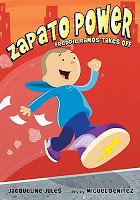 Freddie Ramos comes home from school and finds a strange box just for him. What's inside? ZAPATO POWER — shoes that change Freddie's life by giving him super speed!
Fear, like a boogey man crouching in the cellar, is always waiting to attack me. Since childhood, panic has made me hide under the bed when I could have been living my life more fully.
Imagining the worst is easy. Calming myself is not. In recent years, I have made a conscious effort to fight the imagined monsters in my head through my poetry. I wrote the following poem, “Boogey Man at the Bottom” during a period of stress when I worried about the health of a loved one. Forcing myself to stay out of the basement, where my fears where waiting to strangle me, took great effort. So I gave myself a visual, a picture of myself standing at the top of the stairs, considering the danger of descending. In my poem, I listed the reasons why it was a poor choice and convinced myself to walk away.
For weeks after finishing the poem, whenever I found myself dwelling on frightening thoughts, I repeated the lines of my poem, “Why go down there?” It gave me comfort. Anticipating the worst is like running into the arms of the boogey man. It does not help us. But closing the creaky door with peeling paint and seeking lighted rooms above ground certainly does.
BOOGEY MAN AT THE BOTTOM*
by Jacqueline Jules
Close the creaky door with peeling paint.
Why go down there?
The steps are rotting and the light bulb’s broke.
Turn off the flashlight
and the shadows it makes.
Turn away
from crumbling cinder block and scurrying rats.
Why go down there?
The boogey man is grinning at the bottom
with brittle white arms. You don’t need his bony hug.
Resist the quaking steps, the creepy darkness.
What will you find besides the sticky kiss of cobwebs,
the bad breath of moldy dust?
Seek a room without shadows, above ground.
Close the creaky door with peeling paint.
Walk away.
*“Boogey Man at the Bottom” appears in Imitation Fruit, Issue 10, April 2012
http://imitationfruit.com/Issue_10/boogey_man/boogey_man.htmlJacqueline Jules is the author of 24 books including the Zapato Power series. Visit her at www.jacquelinejules.com
 Freddie Ramos comes home from school and finds a strange box just for him. What's inside? ZAPATO POWER — shoes that change Freddie's life by giving him super speed!
January 27, 2013
Finding our community
My monthly post is up at YA Outside the Lines. It's about finding our community. A sample:
"Several years ago, I was talking to a friend ... 'I wish I knew some other writers,' I told my friend. ...
I wanted to find people who were making, or trying to make, a career out of writing. I was, in that sense, lonely. ..."
"Several years ago, I was talking to a friend ... 'I wish I knew some other writers,' I told my friend. ...
I wanted to find people who were making, or trying to make, a career out of writing. I was, in that sense, lonely. ..."
January 26, 2013
What I always forget about drafting
It's always difficult to adjust to the messiness of a first draft: its tangents and sketchiness, its incompleteness, its redundancies, the parts that will need to be deepened and the parts that will need to be lopped off. But if a bowl of raw batter can become a cake and an acorn can become an oak, I guess I can manage to turn this fragmentary collection of scenes into a book.
January 24, 2013
Thankful Thursday
Today is (officially) the debut of the paperback:
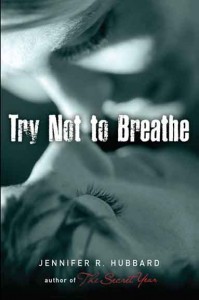
with a lovely quote from The Horn Book across the front cover.
So yes, this is a thankful Thursday. And thank you, because a writer without readers is just talking to herself.
I hope it's a happy day for you, too.
with a lovely quote from The Horn Book across the front cover.
So yes, this is a thankful Thursday. And thank you, because a writer without readers is just talking to herself.
I hope it's a happy day for you, too.
January 22, 2013
Prologues
Writers have a long-running debate over the question of whether to prologue or not to prologue (if I may twist Shakespeare and turn a noun into a verb). Some readers skip prologues. After all, it's asking a lot of a reader to invest mental energy in imagining a world and getting to know characters who then vanish after a few pages, possibly never to reappear. But prologues, like any other writing tool, can work sometimes.
I think prologues should be careful not to tip the writer's hand too far. The prologue shouldn't introduce the very piece of information that the main character will spend a whole book seeking: the identity of the jewel thief; the answer to what's-in-the-mystery-box; the truth about where the MC came from. Those mysteries can be hinted at, but if they're completely solved in the prologue, then we have little motivation to read on. It's no fun waiting too long for a main character to catch up with us.
A good test for a prologue is this: If I cut it out altogether, does the book hold together? Actually, that's a good test for the necessity of any chapter, any scene.
I think prologues should be careful not to tip the writer's hand too far. The prologue shouldn't introduce the very piece of information that the main character will spend a whole book seeking: the identity of the jewel thief; the answer to what's-in-the-mystery-box; the truth about where the MC came from. Those mysteries can be hinted at, but if they're completely solved in the prologue, then we have little motivation to read on. It's no fun waiting too long for a main character to catch up with us.
A good test for a prologue is this: If I cut it out altogether, does the book hold together? Actually, that's a good test for the necessity of any chapter, any scene.
January 20, 2013
Memoir
Author Beth Kephart has a book coming out this year about writing memoirs called Handling the Truth, which I'm eagerly awaiting. She's also teaching a class in memoirs. Agent Sarah LaPolla tweeted recently, "Passing on memoirs is the worst. I mean, all rejections are the worst but memoirs just kill me. ... I love them."
So I've been thinking about memoir, the pleasures and pitfalls of this form. The pleasures include the intimacy, the depth an author can achieve when going over ground on which he or she is an expert. Honesty and insight bring out the best in this type of writing.
One of the biggest challenges is that of making one's own life interesting to other people, answering the question, "Why would anyone else need to read this?" The beginning memoir-writer has to figure out what to include, and what to leave out, and in what order to arrange things, but most of all the why.
Some of the first memoirs I read were those of high-altitude mountaineers. I read them because I wanted to know what it was like to stand on top of the world--or to try and fail. To spend so much time and effort and money, to lose friends, to risk injury and death, in the pursuit of that unusual dream. What does it bring you up against? What does it make you face? How do such journeys change people? The sense I got from most of the accounts was that, while summits and new routes to summits were always goals, there was a certain satisfaction from just being in such places and participating in such climbs. Although satisfaction is perhaps too mild a word. The highest mountains in the world are unbelievable in scale, unsurpassed in beauty.
But life-risking adventure is not the only worthwhile subject for memoir. My favorites also include Plant Dreaming Deep, May Sarton's account of rehabbing an old house in New Hampshire and learning to live alone; Drinking the Rain, Alix Kates Shulman's story of "living off the land" on more levels than just the literal; and Ivy Days: Making My Way Out East, by Susan Allen Toth, about a Midwestern girl's stint in an elite Eastern college in the 1950s. Especially do I love the chapter "Summa" in the latter book. It's about reaching for the utmost achievement, and what that costs, and what happens as a result. But like all good memoirs, it's about so much more.
source of recommended reads: bought
So I've been thinking about memoir, the pleasures and pitfalls of this form. The pleasures include the intimacy, the depth an author can achieve when going over ground on which he or she is an expert. Honesty and insight bring out the best in this type of writing.
One of the biggest challenges is that of making one's own life interesting to other people, answering the question, "Why would anyone else need to read this?" The beginning memoir-writer has to figure out what to include, and what to leave out, and in what order to arrange things, but most of all the why.
Some of the first memoirs I read were those of high-altitude mountaineers. I read them because I wanted to know what it was like to stand on top of the world--or to try and fail. To spend so much time and effort and money, to lose friends, to risk injury and death, in the pursuit of that unusual dream. What does it bring you up against? What does it make you face? How do such journeys change people? The sense I got from most of the accounts was that, while summits and new routes to summits were always goals, there was a certain satisfaction from just being in such places and participating in such climbs. Although satisfaction is perhaps too mild a word. The highest mountains in the world are unbelievable in scale, unsurpassed in beauty.
But life-risking adventure is not the only worthwhile subject for memoir. My favorites also include Plant Dreaming Deep, May Sarton's account of rehabbing an old house in New Hampshire and learning to live alone; Drinking the Rain, Alix Kates Shulman's story of "living off the land" on more levels than just the literal; and Ivy Days: Making My Way Out East, by Susan Allen Toth, about a Midwestern girl's stint in an elite Eastern college in the 1950s. Especially do I love the chapter "Summa" in the latter book. It's about reaching for the utmost achievement, and what that costs, and what happens as a result. But like all good memoirs, it's about so much more.
source of recommended reads: bought