Jennifer R. Hubbard's Blog, page 62
March 14, 2013
Facing fear: Waves of fear
I've gone visiting today, to the blog of Jody Casella. Jody interviewed me about trunk novels, networking and time (mis)management, so please click if you're interested.
In the meantime, Alison Formento is stopping by here, with the latest guest post in my series about writers confronting fear!
Waves of fear…
by Alison Formento
I visited the ocean for the first time when I was twelve. It's a cliché, but terror gripped my insides the moment I stuck a toe into the waves off the coast of Cape Canaveral. The queasy fear churning in my gut might have been the greasy French fries we'd eaten on the car ride to the beach that day—or maybe because my dad kept humming the "da-dump, da-dump" theme music from Jaws.
I stepped deeper into the Atlantic Ocean that day, shivering as saltwater splashed against my knees. A gull swooped by, skimming across the top of the waves like the rocks I like to skip across a lake back in Arkansas.
Something clicked in me, and I let go of the fear.
That click, or release, is a feeling I still carry with me, especially when I'm drafting a new story and I'm afraid I'll never finish it—or I fear the draft won't be good enough to share, even with trusted writing friends. I may delete chapters or whole scenes. I try writing from a new perspective. I take hikes or walk along a beach. I think and talk to myself. I read. I read more.
Then—click. The fear fades.
I face the draft again and write new words, new sentences. The story moves like ocean waves. It may even soar. Fearless and free.
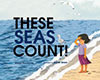
ALISON FORMENTO is the author of award-winning picture books This Tree Counts!,This Tree, 1, 2, 3, These Bees Count!, These Seas Count!, and the upcoming young adult novel Twigs.
In the meantime, Alison Formento is stopping by here, with the latest guest post in my series about writers confronting fear!
Waves of fear…
by Alison Formento
I visited the ocean for the first time when I was twelve. It's a cliché, but terror gripped my insides the moment I stuck a toe into the waves off the coast of Cape Canaveral. The queasy fear churning in my gut might have been the greasy French fries we'd eaten on the car ride to the beach that day—or maybe because my dad kept humming the "da-dump, da-dump" theme music from Jaws.
I stepped deeper into the Atlantic Ocean that day, shivering as saltwater splashed against my knees. A gull swooped by, skimming across the top of the waves like the rocks I like to skip across a lake back in Arkansas.
Something clicked in me, and I let go of the fear.
That click, or release, is a feeling I still carry with me, especially when I'm drafting a new story and I'm afraid I'll never finish it—or I fear the draft won't be good enough to share, even with trusted writing friends. I may delete chapters or whole scenes. I try writing from a new perspective. I take hikes or walk along a beach. I think and talk to myself. I read. I read more.
Then—click. The fear fades.
I face the draft again and write new words, new sentences. The story moves like ocean waves. It may even soar. Fearless and free.
ALISON FORMENTO is the author of award-winning picture books This Tree Counts!,This Tree, 1, 2, 3, These Bees Count!, These Seas Count!, and the upcoming young adult novel Twigs.


March 12, 2013
Reader meets book
I keep acquiring new books despite the fact that I already live with teetering piles of the yet-to-be-read. Not to mention the books I'd like to reread.
But the important thing about choosing a book is that I have to be in the mood for it. It has to be the right time. Often I'll scoop up a book at a store or a yard sale or a giveaway table because I know I want to read it sometime--just not today. For example, Code Name Verity is in my TBR stack. I know this is going to be riveting and hard-hitting and emotionally wrenching, so I need to wait until I have the necessary time and the emotional fortitude. Then there is Hotel Kid, a book about a boy who grew up in the Hotel Taft in the 1940s. I will probably read this when I'm feeling nostalgic (yes, I am capable of nostalgia for times I never even lived through). Also on deck: Epic Fail, which I expect to be fun, and you would think that surely a person is always in the mood for a fun read, but I am just as often in the mood for serious reads.
This is only a small sample of the books that have been waiting for me. Some have been waiting for years.
I go through phases, too, where I can't get enough of a certain topic. I have gone through periods of reading about Lewis and Clark, the Manhattan Project, Himalayan mountaineering, and Beat writers, just to name a few. I cycle in and out of them. Chances are, if I see a book on one of these topics, I'll snatch it up, even though I won't open it until I'm in that phase again. Richard Rhodes's The Making of the Atomic Bomb is one of the best books I've ever read on the subject, and deserving of the Pulitzer it won. But it's a meaty read, and not likely to be interchangeable with a light romance if the latter is what you're really in the mood for. It's not what I'm going to read when I'm on a contemporary-YA streak, or when I'm working my way through my humor shelf.
We often talk about the fact that "not every book is for everyone," and that's true. But it's also true that not every book is for every mood. There are books I love but still have to be in the right frame of mind for. And as writers, we also hope that our books find their readers at the right moment. Sometimes people say to me, "I have your book, but I haven't read it yet," and I completely understand. It has to be the right time.
But the important thing about choosing a book is that I have to be in the mood for it. It has to be the right time. Often I'll scoop up a book at a store or a yard sale or a giveaway table because I know I want to read it sometime--just not today. For example, Code Name Verity is in my TBR stack. I know this is going to be riveting and hard-hitting and emotionally wrenching, so I need to wait until I have the necessary time and the emotional fortitude. Then there is Hotel Kid, a book about a boy who grew up in the Hotel Taft in the 1940s. I will probably read this when I'm feeling nostalgic (yes, I am capable of nostalgia for times I never even lived through). Also on deck: Epic Fail, which I expect to be fun, and you would think that surely a person is always in the mood for a fun read, but I am just as often in the mood for serious reads.
This is only a small sample of the books that have been waiting for me. Some have been waiting for years.
I go through phases, too, where I can't get enough of a certain topic. I have gone through periods of reading about Lewis and Clark, the Manhattan Project, Himalayan mountaineering, and Beat writers, just to name a few. I cycle in and out of them. Chances are, if I see a book on one of these topics, I'll snatch it up, even though I won't open it until I'm in that phase again. Richard Rhodes's The Making of the Atomic Bomb is one of the best books I've ever read on the subject, and deserving of the Pulitzer it won. But it's a meaty read, and not likely to be interchangeable with a light romance if the latter is what you're really in the mood for. It's not what I'm going to read when I'm on a contemporary-YA streak, or when I'm working my way through my humor shelf.
We often talk about the fact that "not every book is for everyone," and that's true. But it's also true that not every book is for every mood. There are books I love but still have to be in the right frame of mind for. And as writers, we also hope that our books find their readers at the right moment. Sometimes people say to me, "I have your book, but I haven't read it yet," and I completely understand. It has to be the right time.
March 10, 2013
Making it better
Life often throws stuff at us that we'd rather not deal with, from the little annoyances like sleet and head colds, to the major leagues of hurricanes and plagues and the like. (And sometimes major tragedies wear the deceptive clothing of the annoyances, which seems extra unfair somehow--"But it was just an inch of water!" "But it was just a little bee sting!") Anyway, we all deal with a certain amount of crap.
And sometimes we make the crap worse for one another. We cut one another off in traffic, we gossip, we throw our trash on the ground where others will have to deal with it. We say mean things.
And sometimes we make life better instead of worse. We bring someone flowers, or clean the food-spatter off the microwave at work, or donate blood. We go out of our way to tell someone how special he or she is.
In tribute to a friend named Mike Yasick, Beth Kephart posted this on her blog: "He demonstrated, repeatedly, why it is far more rewarding, in this life, to be a force of good. Negativity is all sharp edges. Unprovoked cruelty solves no problems. ... Why throw spears when there's a bowl of chocolate near? ... Why not make somebody happy?"
Which also reminds me of John and Hank Green, and the movement they started known as Nerdfighters, whose purpose they describe as "to increase awesome and decreas[e] world suck." And also reminds me of The Birthday Project, which encourages people to celebrate their birthdays with random acts of kindness (here is a list of suggestions).
I'm grateful for all the ways, large and small, in which the people around me choose to be kind rather than cruel, encouraging rather than negative, patient rather than brusque, generous rather than stingy. You're making the world a better place.
And sometimes we make the crap worse for one another. We cut one another off in traffic, we gossip, we throw our trash on the ground where others will have to deal with it. We say mean things.
And sometimes we make life better instead of worse. We bring someone flowers, or clean the food-spatter off the microwave at work, or donate blood. We go out of our way to tell someone how special he or she is.
In tribute to a friend named Mike Yasick, Beth Kephart posted this on her blog: "He demonstrated, repeatedly, why it is far more rewarding, in this life, to be a force of good. Negativity is all sharp edges. Unprovoked cruelty solves no problems. ... Why throw spears when there's a bowl of chocolate near? ... Why not make somebody happy?"
Which also reminds me of John and Hank Green, and the movement they started known as Nerdfighters, whose purpose they describe as "to increase awesome and decreas[e] world suck." And also reminds me of The Birthday Project, which encourages people to celebrate their birthdays with random acts of kindness (here is a list of suggestions).
I'm grateful for all the ways, large and small, in which the people around me choose to be kind rather than cruel, encouraging rather than negative, patient rather than brusque, generous rather than stingy. You're making the world a better place.
March 8, 2013
The joys of deletion
Today I'm the guest blogger at Lydia Sharp's blog, The Sharp Angle, where I dish about deletion and give six "common places to cut back a manuscript, should you find yours getting too wordy ..."
A sample:
"We don’t have to tell readers everything we know about our characters ... . Even when the history is directly relevant, a little mystery can be a good thing. If readers sense friction between two characters, that friction will pique their curiosity and raise the tension in the scene."
A sample:
"We don’t have to tell readers everything we know about our characters ... . Even when the history is directly relevant, a little mystery can be a good thing. If readers sense friction between two characters, that friction will pique their curiosity and raise the tension in the scene."
March 6, 2013
What people have been reading all these years
The other day Nathan Bransford linked to Kahn's Corner, where Matt Kahn is reading the top-selling books from each of the past 100 years (although, since some books topped the list more than once, there are 94 books in all). You can see Kahn's complete "100 years, 94 books" list here. The idea intrigued me, partly because I look forward to seeing what someone else has to say about the works of Booth Tarkington and Sinclair Lewis; partly because I find the range of books fascinating (from The Grapes of Wrath to Valley of the Dolls), and partly because it emphasizes how fleeting public acclaim is. Booth Tarkington, for example, won two Pulitzer Prizes and was a bestselling author, yet he's not read widely (or even much, I would venture to say) nowadays. It's also interesting that a single author can so dominate the list (that would be John Grisham, occupying more than 10% of the list's slots, leaving every other author in the dust).
I couldn't resist counting to see how many titles on that list I've read, and it turned out to be ten of the 94. But bestsellerdom is only one way to look at the changing tastes of readers. I thought it would be interesting to look at the list of Pulitzer Prize winners for fiction/novels over roughly the same time period (they only go back to 1918; also, the prize hasn't been awarded every year). The list is below, behind the cut. And while there's some overlap between the two lists, there isn't much.
It turns out I've read nine of the 85 Pulitzer-winning books. And although I've read other works by Faulkner, Steinbeck, Sinclair, Updike, Wilder, Hersey, Michener, Hemingway, Porter, Styron, Grau, Welty, Stafford, Lurie, Roth, Eugenides ... I just haven't read anything they won Pulitzers for. (Perhaps I'm a jinx?) Another thing that struck me was that I've read more Pulitzer winners from the 'teens and '20s than from recent years--in fact, the most recent winner I've read is 1983's The Color Purple. I haven't read many of the bestsellers from recent years either. It brought home to me how much my reading tastes have veered away from mainstream adult fiction. For years I've been reading young-adult fiction, and adult nonfiction (especially memoir and essays), and when I do read adult fiction, it's usually something that has flown under everyone else's radar.
I should also say that when I refer to books I "haven't read," I actually think of them as books I "haven't read yet." Some part of me expects that I'll get around to reading every book, eventually. That is the part of me commonly referred to as "delusional."
If you had to read all of the books on one list or the other, which list would you prefer?
(Pulitzer winners behind the cut)
2011 A Visit from the Goon Squad (Egan)
2010 Tinkers (Harding)
2009 Olive Kitteridge (Strout)
2008 The Brief Wondrous Life of Oscar Wao (Diaz)
2007 The Road (McCarthy)
2006 March (Brooks)
2005 Gilead (Robinson)
2004 The Known World (Jones)
2003 Middlesex (Eugenides)
2002 Empire Falls (Russo)
2001 The Amazing Adventures of Kavalier & Clay (Chabon)
2000 Interpreter of Maladies (Lahiri)
1999 The Hours (Cunningham)
1998 American Pastoral (Roth)
1997 Martin Dressler: The Tale of an American Dreamer (Millhauser)
1996 Independence Day (Ford)
1995 The Stone Diaries (Shields)
1994 The Shipping News (Proulx)
1993 A Good Scent from a Strange Mountain (Butler)
1992 A Thousand Acres (Smiley)
1991 Rabbit at Rest (Updike)
1990 The Mambo Kings Play Songs of Love (Hijuelos)
1989 Breathing Lessons (Tyler)
1988 Beloved (Morrison)
1987 A Summons to Memphis (Taylor)
1986 Lonesome Dove (McMurtry)
1985 Foreign Affairs (Lurie)
1984 Ironweed (Kennedy)
1983 The Color Purple (Walker)
1982 Rabbit is Rich (Updike)
1981 A Confederacy of Dunces (Toole)
1980 The Executioner's Song (Mailer)
1979 The Stories of John Cheever (Cheever)
1978 Elbow Room (McPherson)
1976 Humboldt's Gift (Bellow)
1975 The Killer Angels (Shaara)
1973 The Optimist's Daughter (Welty)
1972 Angle of Repose (Stegner)
1970 Collected Stories (Stafford)
1969 House Made of Dawn (Momaday)
1968 The Confessions of Nat Turner (Styron)
1967 The Fixer (Malamud)
1966 Collected Stories (Porter)
1965 The Keepers of the House (Grau)
1963 The Reivers (Faulkner)
1962 The Edge of Sadness (O'Connor)
1961 To Kill a Mockingbird (Lee)
1960 Advise and Consent (Drury)
1959 The Travels of Jaimie McPheeters (Taylor)
1958 A Death in the Family (Agee)
1956 Andersonville (Kantor)
1955 A Fable (Faulkner)
1953 The Old Man and the Sea (Hemingway)
1952 The Caine Mutiny (Wouk)
1951 The Town (Richter)
1950 The Way West (Guthrie)
1949 Guard of Honor (Cozzens)
1948 Tales of the South Pacific (Michener)
1947 All the King's Men (Warren)
1945 A Bell for Adano (Hersey)
1944 Journey in the Dark (Flavin)
1943 Dragon's Teeth (Sinclair)
1942 In This Our Life (Glasgow)
1940 The Grapes of Wrath (Steinbeck)
1939 The Yearling (Rawlings)
1938 The Late George Apley (Marquand)
1937 Gone with the Wind (Mitchell)
1936 Honey in the Horn (Davis)
1935 Now in November (Johnson)
1934 Lamb in his Bosom (Miller)
1933 The Store (Stribling)
1932 The Good Earth (Buck)
1931 Years of Grace (Barnes)
1930 Laughing Boy (Lafarge)
1929 Scarlet Sister Mary (Peterkin)
1928 The Bridge of San Luis Rey (Wilder)
1927 Early Autumn (Bromfield)
1926 Arrowsmith (Lewis)
1925 So Big (Ferber)
1924 The Able McLaughlins (Wilson)
1923 One of Ours (Cather)
1922 Alice Adams (Tarkington)
1921 The Age of Innocence (Wharton)
1919 The Magnificent Ambersons (Tarkington)
1918 His Family (Poole)
sources of Pulitzer list: http://www.pulitzer.org/bycat/Fiction
http://www.pulitzer.org/bycat/Novel
I couldn't resist counting to see how many titles on that list I've read, and it turned out to be ten of the 94. But bestsellerdom is only one way to look at the changing tastes of readers. I thought it would be interesting to look at the list of Pulitzer Prize winners for fiction/novels over roughly the same time period (they only go back to 1918; also, the prize hasn't been awarded every year). The list is below, behind the cut. And while there's some overlap between the two lists, there isn't much.
It turns out I've read nine of the 85 Pulitzer-winning books. And although I've read other works by Faulkner, Steinbeck, Sinclair, Updike, Wilder, Hersey, Michener, Hemingway, Porter, Styron, Grau, Welty, Stafford, Lurie, Roth, Eugenides ... I just haven't read anything they won Pulitzers for. (Perhaps I'm a jinx?) Another thing that struck me was that I've read more Pulitzer winners from the 'teens and '20s than from recent years--in fact, the most recent winner I've read is 1983's The Color Purple. I haven't read many of the bestsellers from recent years either. It brought home to me how much my reading tastes have veered away from mainstream adult fiction. For years I've been reading young-adult fiction, and adult nonfiction (especially memoir and essays), and when I do read adult fiction, it's usually something that has flown under everyone else's radar.
I should also say that when I refer to books I "haven't read," I actually think of them as books I "haven't read yet." Some part of me expects that I'll get around to reading every book, eventually. That is the part of me commonly referred to as "delusional."
If you had to read all of the books on one list or the other, which list would you prefer?
(Pulitzer winners behind the cut)
2011 A Visit from the Goon Squad (Egan)
2010 Tinkers (Harding)
2009 Olive Kitteridge (Strout)
2008 The Brief Wondrous Life of Oscar Wao (Diaz)
2007 The Road (McCarthy)
2006 March (Brooks)
2005 Gilead (Robinson)
2004 The Known World (Jones)
2003 Middlesex (Eugenides)
2002 Empire Falls (Russo)
2001 The Amazing Adventures of Kavalier & Clay (Chabon)
2000 Interpreter of Maladies (Lahiri)
1999 The Hours (Cunningham)
1998 American Pastoral (Roth)
1997 Martin Dressler: The Tale of an American Dreamer (Millhauser)
1996 Independence Day (Ford)
1995 The Stone Diaries (Shields)
1994 The Shipping News (Proulx)
1993 A Good Scent from a Strange Mountain (Butler)
1992 A Thousand Acres (Smiley)
1991 Rabbit at Rest (Updike)
1990 The Mambo Kings Play Songs of Love (Hijuelos)
1989 Breathing Lessons (Tyler)
1988 Beloved (Morrison)
1987 A Summons to Memphis (Taylor)
1986 Lonesome Dove (McMurtry)
1985 Foreign Affairs (Lurie)
1984 Ironweed (Kennedy)
1983 The Color Purple (Walker)
1982 Rabbit is Rich (Updike)
1981 A Confederacy of Dunces (Toole)
1980 The Executioner's Song (Mailer)
1979 The Stories of John Cheever (Cheever)
1978 Elbow Room (McPherson)
1976 Humboldt's Gift (Bellow)
1975 The Killer Angels (Shaara)
1973 The Optimist's Daughter (Welty)
1972 Angle of Repose (Stegner)
1970 Collected Stories (Stafford)
1969 House Made of Dawn (Momaday)
1968 The Confessions of Nat Turner (Styron)
1967 The Fixer (Malamud)
1966 Collected Stories (Porter)
1965 The Keepers of the House (Grau)
1963 The Reivers (Faulkner)
1962 The Edge of Sadness (O'Connor)
1961 To Kill a Mockingbird (Lee)
1960 Advise and Consent (Drury)
1959 The Travels of Jaimie McPheeters (Taylor)
1958 A Death in the Family (Agee)
1956 Andersonville (Kantor)
1955 A Fable (Faulkner)
1953 The Old Man and the Sea (Hemingway)
1952 The Caine Mutiny (Wouk)
1951 The Town (Richter)
1950 The Way West (Guthrie)
1949 Guard of Honor (Cozzens)
1948 Tales of the South Pacific (Michener)
1947 All the King's Men (Warren)
1945 A Bell for Adano (Hersey)
1944 Journey in the Dark (Flavin)
1943 Dragon's Teeth (Sinclair)
1942 In This Our Life (Glasgow)
1940 The Grapes of Wrath (Steinbeck)
1939 The Yearling (Rawlings)
1938 The Late George Apley (Marquand)
1937 Gone with the Wind (Mitchell)
1936 Honey in the Horn (Davis)
1935 Now in November (Johnson)
1934 Lamb in his Bosom (Miller)
1933 The Store (Stribling)
1932 The Good Earth (Buck)
1931 Years of Grace (Barnes)
1930 Laughing Boy (Lafarge)
1929 Scarlet Sister Mary (Peterkin)
1928 The Bridge of San Luis Rey (Wilder)
1927 Early Autumn (Bromfield)
1926 Arrowsmith (Lewis)
1925 So Big (Ferber)
1924 The Able McLaughlins (Wilson)
1923 One of Ours (Cather)
1922 Alice Adams (Tarkington)
1921 The Age of Innocence (Wharton)
1919 The Magnificent Ambersons (Tarkington)
1918 His Family (Poole)
sources of Pulitzer list: http://www.pulitzer.org/bycat/Fiction
http://www.pulitzer.org/bycat/Novel
March 5, 2013
2013 NYC Teen Author Festival
If you're anywhere near NYC, mark your calendars for any or all of these events later this month. I participated last year and plan to be a spectator for at least one day this year.
2013 NYC Teen Author Festival
http://www.facebook.com/NYCTeenAuthorFestival
Monday, March 18 (Mulberry Street Branch of the NYPL, 10 Jersey Street b/w Mulberry and Lafayette, 6-8):
I’ll Take You There: A Change of Scenery, A Change of Self
Gayle Forman, Kristen-Paige Madonia, Bennett Madison, Jennifer E. Smith, Melissa Walker
moderator: David Levithan
Tuesday, March 19 (WORD Bookstore, 7-8:30, 126 Franklin St, Greenpoint):
The Only Way Out is Through: Engaging Truth through YA
Crissa Chappell, Tim Decker, Ellen Hopkins, Amy McNamara, Jessica Verdi
moderator: David Levithan
Wednesday. March 20 (42nd St NYPL, South Court room, 6-8):
Imagination: A Conversation
Holly Black, Lev Grossman, Michelle Hodkin, Alaya Johnson, Robin Wasserman
moderators: David Levithan and Chris Shoemaker
Thursday, March 21:
SOHO Teen night, 6-9pm (Books of Wonder, 18 W18th St)
Celebrate the launch of SOHO Teen, featuring readings by Jacquelyn Mitchard, Joy Preble, Margaux Froley, Elizabeth Kiem, Heather Terrell & Ricardo Cortés, and Lisa & Laura Roecker.
Friday March 22, Symposium (42nd Street NYPL, Berger Forum, 2nd floor, 2-6)
2:00 – Introduction
2:10-3:00: He Said, She Said
He: Ted Goeglein, Gordon Korman, Lucas Klauss, Michael Northrop
She: Susane Colasanti, E. Lockhart, Carolyn Mackler, Sarah Mlynowski, Leila Sales
moderator: David Levithan
3:00-4:00: Taking a Turn: YA Characters Dealing with Bad and Unexpected Choices
Caela Carter, Eireann Corrigan, Alissa Grosso, Terra Elan McVoy, Jacquelyn Mitchard, Elizabeth Scott, K. M. Walton
moderator: Aaron Hartzler
4:00-4:10: Break
4:10-4:40: That’s So Nineteenth Century
Description: A Conversation About Playing with 19th Century Archetypes in the 21st Century
Sharon Cameron, Leanna Renee Hieber, Stephanie Strohm, Suzanne Weyn
moderator: Sarah Beth Durst
4:40-5:30: Alternate World vs. Imaginary World
Sarah Beth Durst, Jeff Hirsch, Emmy Laybourne, Lauren Miller, E. C. Myers, Diana Peterfreund, Mary Thompson
moderator: Chris Shoemaker
Friday March 22, Barnes & Noble Reader’s Theater/Signing (Union Square B&N, 33 E 17th St, 7-8:30)
Eireann Corrigan, Elizabeth Eulberg, Jeff Hirsch, David Levithan, Rainbow Rowell, Nova Ren Suma
Saturday March 23, Symposium (42nd Street NYPL, Bergen Forum, 2nd Floor, 1-5)
1:00 – Introduction
1:10-2:10 – Defying Description: Tackling the Many Facets of Identity in YA
Marissa Calin, Emily Danforth, Aaron Hartzler, A.S. King, Jacqueline Woodson
moderator: David Levithan
2:10-2:40 -- New Voices Spotlight
J. J. Howard, Kimberly Sabatini, Tiffany Schmidt, Greg Takoudes
2:40-3:30 – Under Many Influences: Shaping Identity When You’re a Teen Girl
Jen Calonita, Deborah Heiligman, Hilary Weisman Graham, Kody Keplinger, Amy Spalding, Katie Sise, Kathryn Williams
moderator: Terra Elan McVoy
3:30-3:40 – Break
3:40-4:20 – Born This Way: Nature, Nurture, and Paranormalcy
Jessica Brody, Gina Damico, Maya Gold, Alexandra Monir, Lindsay Ribar, Jeri Smith-Ready, Jessica Spotswood
moderator: Adrienne Maria Vrettos
4:20-5:00 – The Next Big Thing
Jocelyn Davies, Leanna Renee Hieber, Barry Lyga, Maryrose Wood
Saturday March 23: Mutual Admiration Society reading at McNally Jackson (McNally Jackson, Prince Street, 7-8:30):
Sharon Cameron, A.S. King, Michael Northrop, Diana Peterfreund, Victoria Schwab, Nova Ren Suma
hosted by David Levithan
Sunday March 24: Our No-Foolin’ Mega-Signing at Books of Wonder (Books of Wonder, 1-4):
1-1:45: Jessica Brody, Marisa Calin, Jen Calonita, Sharon Cameron, Caela Carter, Crissa Chappell, Susane Colasanti, Zoraida Cordova,
Gina Damico, Jocelyn Davies, Sarah Beth Durst, Gayle Forman, Elizabeth Scott
1:45-2:30: T. M. Goeglein, Hilary Weisman Graham, Alissa Grosso, Aaron Hartzler, Deborah Heiligman, Leanna Renee Hieber, Jeff Hirsch,
J. J. Howard, Alaya Johnson, Beth Kephart, Kody Keplinger
2:30-3:15: A.S. King, Emmy Laybourne, David Levithan, Barry Lyga, Brian Meehl, Alexandra Monir, Michael Northrop, Diana Peterfreund,
Lindsay Ribar, Rainbow Rowell, Kimberly Sabatini, Tiffany Schmidt
3:15-4:00: Victoria Schwab, Jeri Smith-Ready, Amy Spalding, Stephanie Strohm, Nova Ren Suma, Greg Takoudes, Mary Thompson, Jess Verdi,
K.M. Walton, Suzanne Weyn, Kathryn Williams
2013 NYC Teen Author Festival
http://www.facebook.com/NYCTeenAuthorFestival
Monday, March 18 (Mulberry Street Branch of the NYPL, 10 Jersey Street b/w Mulberry and Lafayette, 6-8):
I’ll Take You There: A Change of Scenery, A Change of Self
Gayle Forman, Kristen-Paige Madonia, Bennett Madison, Jennifer E. Smith, Melissa Walker
moderator: David Levithan
Tuesday, March 19 (WORD Bookstore, 7-8:30, 126 Franklin St, Greenpoint):
The Only Way Out is Through: Engaging Truth through YA
Crissa Chappell, Tim Decker, Ellen Hopkins, Amy McNamara, Jessica Verdi
moderator: David Levithan
Wednesday. March 20 (42nd St NYPL, South Court room, 6-8):
Imagination: A Conversation
Holly Black, Lev Grossman, Michelle Hodkin, Alaya Johnson, Robin Wasserman
moderators: David Levithan and Chris Shoemaker
Thursday, March 21:
SOHO Teen night, 6-9pm (Books of Wonder, 18 W18th St)
Celebrate the launch of SOHO Teen, featuring readings by Jacquelyn Mitchard, Joy Preble, Margaux Froley, Elizabeth Kiem, Heather Terrell & Ricardo Cortés, and Lisa & Laura Roecker.
Friday March 22, Symposium (42nd Street NYPL, Berger Forum, 2nd floor, 2-6)
2:00 – Introduction
2:10-3:00: He Said, She Said
He: Ted Goeglein, Gordon Korman, Lucas Klauss, Michael Northrop
She: Susane Colasanti, E. Lockhart, Carolyn Mackler, Sarah Mlynowski, Leila Sales
moderator: David Levithan
3:00-4:00: Taking a Turn: YA Characters Dealing with Bad and Unexpected Choices
Caela Carter, Eireann Corrigan, Alissa Grosso, Terra Elan McVoy, Jacquelyn Mitchard, Elizabeth Scott, K. M. Walton
moderator: Aaron Hartzler
4:00-4:10: Break
4:10-4:40: That’s So Nineteenth Century
Description: A Conversation About Playing with 19th Century Archetypes in the 21st Century
Sharon Cameron, Leanna Renee Hieber, Stephanie Strohm, Suzanne Weyn
moderator: Sarah Beth Durst
4:40-5:30: Alternate World vs. Imaginary World
Sarah Beth Durst, Jeff Hirsch, Emmy Laybourne, Lauren Miller, E. C. Myers, Diana Peterfreund, Mary Thompson
moderator: Chris Shoemaker
Friday March 22, Barnes & Noble Reader’s Theater/Signing (Union Square B&N, 33 E 17th St, 7-8:30)
Eireann Corrigan, Elizabeth Eulberg, Jeff Hirsch, David Levithan, Rainbow Rowell, Nova Ren Suma
Saturday March 23, Symposium (42nd Street NYPL, Bergen Forum, 2nd Floor, 1-5)
1:00 – Introduction
1:10-2:10 – Defying Description: Tackling the Many Facets of Identity in YA
Marissa Calin, Emily Danforth, Aaron Hartzler, A.S. King, Jacqueline Woodson
moderator: David Levithan
2:10-2:40 -- New Voices Spotlight
J. J. Howard, Kimberly Sabatini, Tiffany Schmidt, Greg Takoudes
2:40-3:30 – Under Many Influences: Shaping Identity When You’re a Teen Girl
Jen Calonita, Deborah Heiligman, Hilary Weisman Graham, Kody Keplinger, Amy Spalding, Katie Sise, Kathryn Williams
moderator: Terra Elan McVoy
3:30-3:40 – Break
3:40-4:20 – Born This Way: Nature, Nurture, and Paranormalcy
Jessica Brody, Gina Damico, Maya Gold, Alexandra Monir, Lindsay Ribar, Jeri Smith-Ready, Jessica Spotswood
moderator: Adrienne Maria Vrettos
4:20-5:00 – The Next Big Thing
Jocelyn Davies, Leanna Renee Hieber, Barry Lyga, Maryrose Wood
Saturday March 23: Mutual Admiration Society reading at McNally Jackson (McNally Jackson, Prince Street, 7-8:30):
Sharon Cameron, A.S. King, Michael Northrop, Diana Peterfreund, Victoria Schwab, Nova Ren Suma
hosted by David Levithan
Sunday March 24: Our No-Foolin’ Mega-Signing at Books of Wonder (Books of Wonder, 1-4):
1-1:45: Jessica Brody, Marisa Calin, Jen Calonita, Sharon Cameron, Caela Carter, Crissa Chappell, Susane Colasanti, Zoraida Cordova,
Gina Damico, Jocelyn Davies, Sarah Beth Durst, Gayle Forman, Elizabeth Scott
1:45-2:30: T. M. Goeglein, Hilary Weisman Graham, Alissa Grosso, Aaron Hartzler, Deborah Heiligman, Leanna Renee Hieber, Jeff Hirsch,
J. J. Howard, Alaya Johnson, Beth Kephart, Kody Keplinger
2:30-3:15: A.S. King, Emmy Laybourne, David Levithan, Barry Lyga, Brian Meehl, Alexandra Monir, Michael Northrop, Diana Peterfreund,
Lindsay Ribar, Rainbow Rowell, Kimberly Sabatini, Tiffany Schmidt
3:15-4:00: Victoria Schwab, Jeri Smith-Ready, Amy Spalding, Stephanie Strohm, Nova Ren Suma, Greg Takoudes, Mary Thompson, Jess Verdi,
K.M. Walton, Suzanne Weyn, Kathryn Williams
March 3, 2013
Work in progress
Before is a dream, and after is an accomplishment, but during is ... something else entirely.
I've long despaired over the ugliness of the early drafts of any writing project, but now I wonder why.
A haircut doesn't look so great right after the first snip.
A half-built building isn't really a building: it's a construction site.
Mid-surgery isn't a pretty time.
In its early stages, a cake is just a bowl of raw batter.
Anyone who's ever had work done on a house knows what a mess that can be in the "during" phase.
Many kinds of work proceed through preliminary phases, interim steps. Writing is just one of them.
I've long despaired over the ugliness of the early drafts of any writing project, but now I wonder why.
A haircut doesn't look so great right after the first snip.
A half-built building isn't really a building: it's a construction site.
Mid-surgery isn't a pretty time.
In its early stages, a cake is just a bowl of raw batter.
Anyone who's ever had work done on a house knows what a mess that can be in the "during" phase.
Many kinds of work proceed through preliminary phases, interim steps. Writing is just one of them.
March 1, 2013
Stats and slowing down
Today, I have a duo of equally absorbing posts from different ends of the writing-world spectrum. In the business department, we have the results of a Goodreads survey with some reader statistics; in the quality-of-life department, a post about slowing down.
Survey Stats
Thanks to Jon Gibbs for linking to this article, an analysis by Goodreads of survey on how readers find and read some books. There are limits on interpreting these data: only two books, both quite well-known, are discussed. It would be interesting to see how readers discover books that aren't as widely buzzed-about. The results came from a survey of Goodreads readers--a specific and apparently self-selecting community. The survey was also designed to answer publishers' questions, some of which interest me more than others.
But, those disclaimers aside, there are some interesting items in there. Such as, the prominent place of "trusted friend" and "everyone talking about it" as big reasons for people to read a book. And the fact that 37% of their survey respondents read e-books on cell phones, which boggles my mind, since the last thing I ever look for is a smaller screen on which to read. (Obviously, these must be young people who have not yet begun the squinting, arm's-length reading, and "Why does print have to be so small?" travails of middle age.) Another "wow" is the role of libraries as the most popular place for respondents to get their books. The print/e-book percentage for those two books is also interesting (almost half-and-half for one book, with print retaining a slight edge; more like two-thirds print/one-third other formats for the other book).
Then there is the preferred-format question. The largest group, 45%, prefers to read print and e-books. 21% like both formats plus audiobooks. When people prefer only one format, here's how it breaks down: print 23%, e-book 9%, audiobook 1%. While I expect e-book adoption to continue to grow, so far these numbers support what I've always maintained: readers and authors are best served by books being available in a variety of formats. We should not hasten to push the e-book or the print book out of the marketplace.
Slowing Down
And now, for a change of pace. Julie Owsik Ackerman recently blogged: "... I also fill my days completely. Do I have five minutes before a friend arrives? I’ll put in a load of laundry and wash the dishes. Ten minutes before Daniel will likely wake? I’ll write a draft of an essay, check my email, and call the portrait studio about ordering those wallets. Yes, I’m efficient, but many days I feel harried and stressed. I hoped that by slowing my pace to a jog, I might enjoy life more ..." Follow the link to see her plan.
Survey Stats
Thanks to Jon Gibbs for linking to this article, an analysis by Goodreads of survey on how readers find and read some books. There are limits on interpreting these data: only two books, both quite well-known, are discussed. It would be interesting to see how readers discover books that aren't as widely buzzed-about. The results came from a survey of Goodreads readers--a specific and apparently self-selecting community. The survey was also designed to answer publishers' questions, some of which interest me more than others.
But, those disclaimers aside, there are some interesting items in there. Such as, the prominent place of "trusted friend" and "everyone talking about it" as big reasons for people to read a book. And the fact that 37% of their survey respondents read e-books on cell phones, which boggles my mind, since the last thing I ever look for is a smaller screen on which to read. (Obviously, these must be young people who have not yet begun the squinting, arm's-length reading, and "Why does print have to be so small?" travails of middle age.) Another "wow" is the role of libraries as the most popular place for respondents to get their books. The print/e-book percentage for those two books is also interesting (almost half-and-half for one book, with print retaining a slight edge; more like two-thirds print/one-third other formats for the other book).
Then there is the preferred-format question. The largest group, 45%, prefers to read print and e-books. 21% like both formats plus audiobooks. When people prefer only one format, here's how it breaks down: print 23%, e-book 9%, audiobook 1%. While I expect e-book adoption to continue to grow, so far these numbers support what I've always maintained: readers and authors are best served by books being available in a variety of formats. We should not hasten to push the e-book or the print book out of the marketplace.
Slowing Down
And now, for a change of pace. Julie Owsik Ackerman recently blogged: "... I also fill my days completely. Do I have five minutes before a friend arrives? I’ll put in a load of laundry and wash the dishes. Ten minutes before Daniel will likely wake? I’ll write a draft of an essay, check my email, and call the portrait studio about ordering those wallets. Yes, I’m efficient, but many days I feel harried and stressed. I hoped that by slowing my pace to a jog, I might enjoy life more ..." Follow the link to see her plan.
February 28, 2013
Grand delusion
My monthly post at YA Outside the Lines is up. A sample:
"... So my particular brand of delusion is the expectation that I’ll sit down and type a coherent story, proceeding forward every day while knowing and believing in the story, and finishing each day satisfied with my progress. Why I believe this, I have no clue. No book I’ve written has ever worked this way. ..."
"... So my particular brand of delusion is the expectation that I’ll sit down and type a coherent story, proceeding forward every day while knowing and believing in the story, and finishing each day satisfied with my progress. Why I believe this, I have no clue. No book I’ve written has ever worked this way. ..."
February 26, 2013
Listening
Writing requires a phase I think of as "listening." Waiting for scenes to pop into my head, waiting for character voices, trying to tune into the right channel. Sometimes I feel like Jodie Foster's character in the movie Contact, listening for any recognizable signal to emanate from the sky.