
Lea Wait's Blog, page 78
October 21, 2022
Weekend Update: October 22-23, 2022
 Next week at Maine Crime Writers there will be posts by Kate Flora (Monday), Dick Cass (Tuesday), Matt Cost (Thursday), and Charlene D’Avanzo (Friday).
In the news department, here’s what’s happening with some of us who blog regularly at Maine Crime Writers:
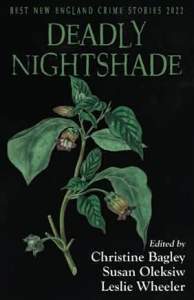
Maine Crime Writers John Clark, Brenda Buchanan, Vaughn Hardacker, and Kate Flora, along with alum Bruce Coffin, have stories in the new collection from Crime Spell Books.
Results of drawing for giveaway:
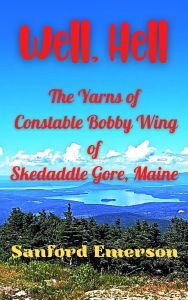
The winner of a print copy of guest Sanford Emerson’s Well, Hell is Kait Carson. Congrats and thanks to all who left comments.
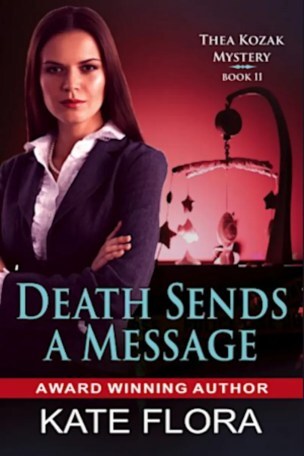 Death Sends a Message (the Thea Kozak Mystery Series, Book 11)NEW RELEASEPUBLISHER DESCRIPTION
A Newborn, a Baby Carriage, and an Ice Cream Cone Leads to a Lingering Mystery in DEATH SENDS A MESSAGE by Kate Flora
–Freeport, Maine, Present Day–
Independent school consultant Thea Kozak is adjusting to motherhood and enjoying maternity leave, having just purchased a hat for her newborn son, when a hysterical woman gains her attention. The woman, also a new mother, claims her baby has just been kidnapped. Determined not to get involved, Thea flags down a police officer and hands off the problem. She returns home to her husband Andre, intending to enjoy their precious weeks of parental leave.
But Thea’s kindness soon brings trouble to her doorstep when a police officer asks questions about her relationship with Addison Shirley, the mother of the kidnapped child, who claimed Thea was a friend before she disappeared.
The couple’s hopes for a peaceful respite are quickly replaced with a break-in, a stalker, and a private school crisis involving star athletes and sexual assault that only Thea can handle. Thea and Andre wrestle with the lingering mystery and competing priorities while reexamining their future…if they live to face it.
Publisher’s Note: Kate Flora is known for taking readers on a near breathless experience with a surprise at every turn. Fans of Sara Paretsky, Laura Lippman, Sue Grafton, and Julia Spencer-Fleming will not want to miss this series.
“If you like your heroines smart, brave, tough, and exuberantly aware of the possibilities of the human heart, look no further than Thea Kozak.” ~S.J. Rozan
”…a terrific, in-your-face, stand-up gal…Stephanie Plum and Thea Kozak have a lot to say to each other.” ~Janet Evanovich
“Kate Flora does what all the great writers do: she takes you inside unfamiliar territory and makes you feel right at home; you climb in and are along for the whole ride.” ~Michael Connelly
“I’ll follow Thea Kozak anywhere. She is simply one of the most refreshing and original heroines in mystery fiction today. And Kate Flora is the rare, graceful writer who pays close attention to how long it takes the body and the heart to heal.” ~Laura Lippman
An invitation to readers of this blog: Do you have news relating to Maine, Crime, or Writing? We’d love to hear from you. Just comment below to share.
And a reminder: If your library, school, or organization is looking for a speaker, we are often available to talk about the writing process, research, where we get our ideas, and other mysteries of the business, along with the very popular “Making a Mystery” with audience participation, and “Casting Call: How We Staff Our Mysteries.” We also do programs on Zoom. Contact Kate Flora


October 20, 2022
“A Mother Moose Won’t Stop Until She Gets You”
Sandy Interviews Wildlife Biologist Ron Joseph on his upcoming book.
I got to know Ron Joseph when he was the wildlife biologist stationed in Greenville where I have a home on Moosehead Lake. I asked Ron to review my first novel,  knowing that he’d let me know if I’d strayed from accurate wildlife science or had somehow ducked the threat to Maine’s forest.
He wrote a Deadly Trespass review that still warms my heart:”…a beautiful book that brilliantly captures the battle to conserve Maine’s mythical woods…”
Now Ron’s collected essays and columns and wonderful, delightful but also poignant stories will published in December. I think he brings the “mythical woods” home to us by opening his history and his heart.
As we talked this week, there was lots of laughter as well as serious moments where he shared his concerns, especially about songbirds: his specialty and also the animals that have his heart.
You can hear Ron relate more of his life and spellbinding stories in this Maine Historical Society interview. It’s great! He’s great!
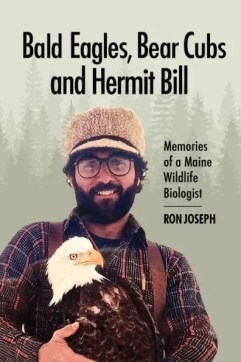 More than that, you can preorder his book now. ….. Bald Eagles, Bear Cubs, and Hermits: Memoirs of a Wildlife Biologist. It comes out in early December, and I know exactly who’s going to get one from me as a holiday gift.
I interviewed Ron on October 13th.
Many people have encouraged you to share your wildlife biologist stories. Why?
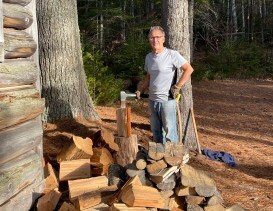
Ron … simply chopping wood
“I think there’s a growing interest in a simple life and in the natural world. And I think people want to disconnect from their devices and live that life and hear about that life as well.” Ron also thinks encounters and relationships with the natural world increase empathy for others and empathy for wildlife. (See his goose story … coming up.)
What story has most resonated with readers?
Ron says he’s had the most feedback on a story about a declining goose who approached people for companionship. After people kept telling him about the unusual goose, he traveled north to see for himself. Ron was “surprised and stunned” when the goose came to him and, with cloudy, almost-blind eyes, wanted to be close to him. She held her, felt her backbone and how desperately thin she was, and he checked her band. She was thirteen years old and had traveled from the Northwest Territories, almost 4,000 miles. Ron’s story about the goose seeking out and needing humans and his strong feelings for her resonated strongly with readers of his columns. “When I started out as a biologist, it was scientific consensus that animals didn’t have emotions like we do. Clearly, the science on that has really changed.”
What are some of the tensions wildlife biologists (everywhere) must navigate as they go about their tasks?

Anti-coyote bumper sticker
Ron was quick to answer. “A declining faith in science. Distrust in science.” He thinks in Maine some of this came from the coyote controversy where scientists were clear that killing coyotes would not reduce their numbers. The sporting community felt that was untrue and was very visible and loud about reducing coyotes to protect the deer herd. “However, Maine now has both more deer and more coyotes, even though we have the most liberal coyote hunting laws in the country. There’s no bag limit; hunters can take out as many as they want,” Ron said.
And speaking of deer, Ron shared that it was frustrating to have too many deer in southern Maine. Professionals recommended that the herd be reduced. “Residents who resisted the science came to realize that deer overpopulations ate their gardens and even potted plants on their porches, and they increased the spread of Lyme disease and were dangerous roadway hazards.”
What are some uniquely Maine wildlife biologist challenges?
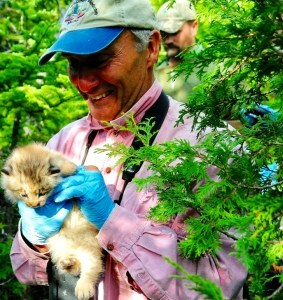
Ron with a lynx kitten
“Maine has two forest ecosystems that exist next to each other in a transition zone.” He explained that the eastern deciduous forest lies up against the northern boreal forest that needs cold temperatures to support a mix of conifers and other species.

pine marten
“With warming, the deciduous forest moves further north, displacing the boreal forest and animals that need the cold, a shorter warm season, and the trees, plants and habitat in a boreal forest. Lynx, moose, pine marten, and the rare Bicknell’s thrush and many species that live in our boreal forest face increasing stress.”
What’s the most dangerous Maine animal and why? (Are humans involved in causing this danger?)

When a cow moose pulls her ears back, look out.
“A cow moose with a calf. I always tell people to never try and take a picture of a moose calf. I have been charged by a mother bear with cubs, but she stopped short in a bluff charge. Mother moose don’t stop until they get you. I was out in the woods taking a breeding bird survey when a calf came out of the woods and then a female moose showed up on the other side of me. I knew I couldn’t outrun her, so I climbed up a slash pile and she tried to climb up after me, but tangled branches caught her legs and stopped her.” He chuckled. “I was so lucky to have that slash pile.”
In a recent interview you mentioned that song birds are in trouble. Why?
“Songbirds are highly migratory. They spend over half the year in South America. There’s loss of habitat there as well as here, so it’s like the candle’s being burned at both ends. I remember doing breeding bird surveys in the 80’s and 90’s and there were so many singing we couldn’t really count the birds. Twenty years later I could go out and hear and count each individual bird. That’s how many we’ve lost.”
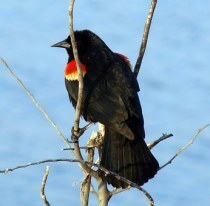
I asked him about clear cutting. “I don’t think it’s necessarily bad. For example, after a cut, the raspberries come in thick and this early successional forest supports many birds who feed there. I don’t support using herbicides after a cut to create site conversions over to softwoods. We still need the kind of diversity that comes after a cut, but I think when biologists from all over the world look at Maine’s north woods, they think we are very lucky to have what we have.”
People love wildlife. What are some things they do right or wrong?
“People are planting more native species to feed birds and animals that depend on Maine plants. That’s good. But in general, just give wildlife room. If you find a fawn, leave it there. Give wildlife space to be.”
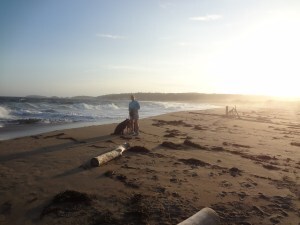
Please leash dogs on beaches when sandpipers are present. Yup, that’s me with Jackie and Tiggie.
And Ron was clear about some people not understanding how dogs can affect even small species. When an area has dog limitations (on leash) or prohibitions, he wants people to follow the rules. “Like the sandpipers on the coast. Dogs like to chase them, but after traveling from the arctic, the birds have to double their weight to make the trip to South America. If their feeding regime get interrupted, they have to land in a place like New Jersey to bulk up and that place is like a buzzsaw of hazards for those birds.”
Folks fled to more remote, rural locations during the pandemic. What’s your take on that?

Boreal forest on top of Moose Mt. in Greenville
Ron shared a very large laugh. “I’d like to interview them after black fly season.” He knows many are staying and building big homes, so he’s concerned that trend will “fragment the forest.” He wants people “to build near existing towns.”
If you could wave a magic wand to benefit wildlife, what would you wish?
His answer was quick. “I want us to get greenhouse gasses to 350 parts per million. We need to avoid the huge increases that are happening now. I think we are now at 415 parts per million, way over where we need to be if we want to protect what we care about.”
(A Sandy note; Find more info on this dramatic increase here.)
*******************
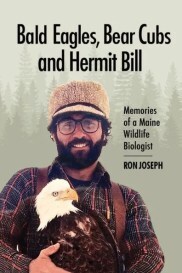 In His Book, Bald Eagles, Bear Cubs, and Hermits: Memoirs of a Wildlife Biologist, Ron shares his stories of growing up in rural Maine and working as a wildlife biologist. The book includes humorous stories, such as one about the time he had to count piles of deer dung on designated mile-long lines and encountered a woman who bluntly asked, “So you went to college for that?” Other stories border on the absurd, including one of an influential legislator who pressured Ron to spray concentrated wolf urine on 30 miles of Route 201 in a harebrained waste of taxpayer money to supposedly reduce moose-vehicle collisions. Many of the book’s stories have previously been published in Down East, Maine Boats Homes and Harbors, Bangor Daily News, Moosehead Messenger, PenBay Pilot, and elsewhere.
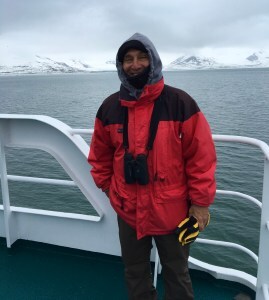
Ron, birding in Norway
More About Ron: Ronald Joseph was born in Waterville, Maine. Spending childhood summers on his maternal grandparents’ nearby dairy farm, he became fascinated with songbirds, often spending hours perched on stacks of hay bales in a post-and-beam barn watching swallows feed their nestlings. Ron’s mother encouraged his love of birds by giving him a copy of Peterson’s Field Guide to Eastern Birds. His first bull moose sighting would also leave a deep impression: chased by his grandparents’ dog, the moose ducked beneath a clothesline, and escaped across a hayfield with a bra attached to his antler. Birdwatching, though, became Ron’s passion, inspiring him to pursue a B.S. degree in wildlife conservation and a M.S. in zoology. In 1978, he began a 33-year career, first as a state wildlife biologist, and later as a federal biologist specializing in the restoration of eagles, peregrines, and other endangered species in Maine. Now retired, Ron volunteers for the Kennebec Land Trust, participates in the Maine Bird Atlas, a statewide citizen science project evaluating songbird population trends, and he also leads Maine birding trips.
********
Sandy’s debut novel, “Deadly Trespass, A Mystery in Maine” won a national Mystery Writers of America award, was a finalist in the Women’s Fiction Writers Association “Rising Star” contest, and was a finalist for a Maine Literary Award. The second Mystery in Maine, “Deadly Turn,” was published in 2021. Her third “Deadly” is due out in 2023. Find her novels at all Shermans Books (Maine) and on Amazon. Find more info on Sandy’s website.
October 19, 2022
New England Crime Bake should be on every writer’s calendar
Like all writers, I’m often asked by aspiring writers about how to get started, as well as many other “how to” things (get published, get an agent, punctuate a clause… you name it).
The number one thing I always suggest, no matter what the question, is that they should attend the New England Crime Bake, which takes place in Dedham, Massachusetts, the second weekend of November every year. (Except 2020, when it was online in a very excellent way).
If you’ve been reading this blog for any length of time, you’ve heard me preach this before around this time of year. Others on this blog write about it, too. There’s a reason for that.
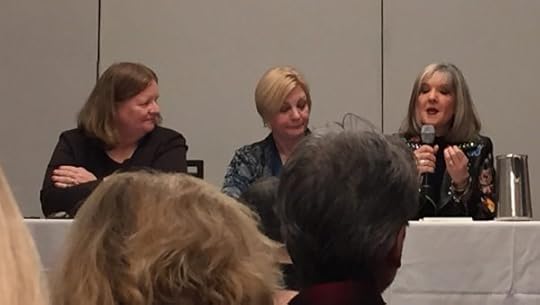
Barbara Ross, Paula Munier and Hank Phillippi Ryan on a panel at the 2015 Crime Bake.
New England Crime Bake is where you can attend conferences about writing, talk to agents and publishers, get a manuscript critique, rub shoulders with your writing heroes, but best of all, hang out with 250 other writers, editors, publishers, agents and people who just love mysteries and writing, who can offer information, support and a lifetime of friendship.
There are also tables of books to buy, fun times in the bar, plenty of coffee, raffles, games and all sorts of other fun.
It also, like nothong else, will give you motivation to write and the belief that writing is a thing you, too, can do. Your genre doesn’t have to be mystery to get something out of it — much of what’s discussed is applicable to writing in general.
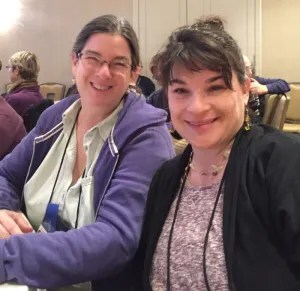
Me and my sister Rebecca at 2015 Crime Bake — her first, my eighth.
You also don’t have to be an aspiring writer to attend. Many of the writers there are, well, whatever you are when aspiring is way back beyond your rearview mirror. I’m past aspiring, and have gone every year since my first one in 2008. My sister, Rebecca, tagged along in 2015 because one of her favorite writers, Elizabeth George, was the guest of honor, and has attended every year since because she has so much fun.
This year’s will be my 15th and it’s always my favorite weekend of the year.
This year’s New England Crime Bake is Nov. 11-13 at the Dedham-Boston Hilton in Dedham, Massachusetts. If you can’t make it this year, put it on your calendar for next year. You won’t regret it.
October 17, 2022
Momma, don’t let your babies grow up to be writers! (and a giveaway)
 Hello, there. Sandy Emerson here. I’m Kathy/Kaitlyn’s husband and this is my first-ever attempt at writing a blog; so years from now, when you talk of this—and you will—be kind.
“Are you sure?” Kathy asked, looking at me with a raised eyebrow as I sat nervously next to her on the edge of a kitchen chair that I’d hauled into her office. Shadow the cat peered at us around the corner of a nearby filing cabinet.
“OK,” I said, as my stomach did a flipflop and my mind took an imaginary swan dive off one of those jeezley high cliffs way down in Mexico that we used to see on Wide World of Sports. “Do it.”
Shadow padded from the room, shaking her head in disgust.
With a knowing grin on her face my darling wife of fifty-three years clicked the button on her computer mouse and launched into the world the result of seven years’ work, for once not her own but, believe it or not, mine. Well, Hell—The Yarns of Constable Bobby Wing of Skedaddle Gore, Maine was finally loosed upon an unsuspecting and no doubt largely indifferent reading world.
I looked at Kathy and said, with a sigh, “Is it always this exhausting?”
She smiled knowingly. “Yup.”
On March 13, 2015, the redoubtable John Clark posted to this blog: On to a challenge I hope some of you will accept. One of my down the road fantasies is to write a book with sixteen short crime stories, each one set in a different Maine county. One of the really cool things about our state is the number of unusual place names that are real. Ever been to Pripet? How about Wonderland, Pumpkin Valley, Sabino or Slab City (there are three of them). Given such a richness, one could spend hours just coming up with names for each story that would spur a reader’s imagination before they even start reading. Here are a few that I pulled off the top of my Head. The Revenge of the Roque Bluffs Rogue, A Plague of Poison Ployes in Plaisted, The Cardinal Sinner of Sabbathday Lake, Night of Nastiness in Norridgewock and The Twisted Temptress of T9, R7…. So, good readers, Below are the sixteen county names. Grab your handy Delorme Atlas or similar tool and come up with the best story titles for each one. Post them here or email them to me the list I think is most creative with a worthwhile prize mailed to the winner after being announced in my next post here at MCW.”
Brenda Buchanan immediately posted sixteen titles, one for each county. She’s wicked smart, for a lawyer. I posted one—”Deceitful Doings in Dallas (Plantation).”
We were the only takers and John never chose a winner, which is just as well as Brenda should have won for sheer volume—and imagination!
The next morning I woke up with a first sentence running through my head.
“Frenchy Plourde had a reputation as a wicked dink, so it was no real surprise that he had a nasty, pissed-off expression on what was left of his face that January morning when I found him frozen to the floor of his cabin.”
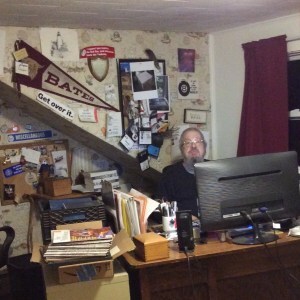 During the next six days Bobby Wing and his world were born. A native Mainer and Coast Guard veteran, Bobby retires to a tiny western Maine mountain town, where, after gaining the friendship and trust of the locals, he is appointed Constable, Fence Viewer, Deputy Fire Warden and Animal Control Officer. The hitch is, because of the Maine state law on police training, which is very expensive and time consuming, Bobby is not granted any police powers to go with his titles. He must, therefore, handle the “stuff” that comes up in town—some of which can get pretty weird—using only his local knowledge and understanding of his neighbors, his senses of humor, whimsy and empathy and his gift of gab. The stories are presented in Bobby’s voice and point of view, as if they are being told directly to the reader over a beer at Sally’s Motel and Bar and Live Bait and Convenience Store. Bobby’s humorous stories of murder, romance, mystery, redemption, adventure, reluctant derring-do and the wages of sin often tend to go on some and staying on topic isn’t always his strong suit, especially if he’s had a couple.
The 4350 word first draft of what came to be titled “Devious Doings in Dallas” was complete six days later on March19. Since I have been her first beta reader over fifty times, Kathy returned the favor. Her first comment was “This is actually pretty funny,” which was encouraging. She suggested that I might consider submitting it to the yearly anthology Best New England Crime Stories. After a bit of tweaking here and there I submitted the final draft of 4400 words on April 2, 2015.
 To my amazement I received an email on July 6, from the then editors of the anthology—which included alumna of this blog Barb Ross—accepting “Devious Doings in Dallas” for Red Dawn, the 2015 installment. Upon signing the publication contract I received a check for the magnificent sum of $25.00—signed by Barb, by the way! It also survived the first round of judging for the yearly Al Blanchard award. Amazing! With some revision it has become the second yarn “Devious Doings” in Well, Hell.
Four more “Bobby Wing” stories were to follow between March 13, 2015, and April 15, 2017. All were submitted to Best New England Crime Stories anthologies. Two of them were not taken and appear in print, with significant improvement, for the first time in Well, Hell. “Daybreak Dismay in Dallas” appeared in Windward in 2016. It appears in Well, Hell as a yarn entitled “Wicked Lust and Dismay.” “Deadly Discovery in Dallas” was written and submitted to Ellery Queen Mystery Magazine in September of 2015 and sat there for 11 months before being rejected. It was accepted for Busted in 2016 and appeared in the 2017 anthology. It has become “Deadly Discoveries,” the third of Bobby’s yarns.
There was a hiatus in my writing between 2016 and 2019 but from then to date I have written five more stories in the series. According to my records I decided on July 25, 2021 to rewrite all my “Bobby Wing” yarns and change the locale to the fictional town of Skedaddle Gore, which was named after a local story of Civil War draft dodgers who “skedaddled” from New York to a spot on the shore of remote Kennebago Lake in Davis Township north of Rangeley which became known locally as Skedaddle Cove.
Four of the five most recently written yarns erupted from my keyboard in a six-month burst I still have a problem believing, from late 2021 to July of this year. At that point I realized that I probably should do something about getting them into print, otherwise what was the point? After watching Kathy/Kaitlyn deal with the writing process in the traditional manner for almost forty years, I decided that at my age I just wasn’t patient enough to go through the rigmarole of getting an agent, signing a representation contract and then sitting around, maybe for years, waiting for said agent to do something.
With modest success Kathy has been republishing several of her earlier books through Draft2Digital, an online self-publishing service which charges the writer a fee—which is far less than most agents charge—only upon sales, which they arrange through a whole raft of platforms such as Amazon, Barnes & Noble, Apple iBooks, and many others. She offered to help me through the process and I hired her as my copy editor and publisher on the spot. What the heck, she works cheap!
 I had not counted on the possibility that there might be a downside to this arrangement but over the next two months my lovely and talented spouse suddenly became a professional tyrant, putting me through every agonizing bit of the editing process. Microsoft Spellcheck was, I soon learned, woefully insufficient for our purpose and my seventh-grade punctuation and sentence structure training was totally inadequate—Oxford comma, anyone? I also learned that “stet” only works if your editor is not making dinner.
I truly believe that I have now read and reread Well, Hell so many times that I could probably recite it from memory. Despite some “interesting” discussions and a crushing ego deflation or two, my manuscript and our marriage appear to have survived, and . . . it’s out! It’s even selling! Break out the bubbly! Oh, wait . . . I don’t drink. Right. I forgot. Diet Mountain Dew will have to suffice.
Just for giggles I checked the Microsoft Word meta data on all the files that eventually made up Well, Hell and learned a few interesting things. The final draft contained 69,328 words and was, over the years, actively being written or edited for a total of 452 hours, which works out to 56.5 eight-hour days or 2.8 working months. I also apparently made a total of 9502 edits while producing this book. No wonder I felt exhausted when Kathy hit “send.” At the federal minimum wage of $7.25/hr. I should therefore realize an income, before taxes of course, of at least $3,277.00, right? Maine’s minimum wage is $12.75 so I actually should get the “Maine bonus” of $5,763.00, or about eight cents a word. Now I just have to sell 1213 e-copies to achieve that goal. Piece of cake!

UPDATE: AUTHOR COPIES HAVE ARRIVED!
The trade paperback edition is now available, too. To be entered to win a print copy of Well, Hell, simply leave a comment on this post. The winner will be drawn on Friday the 21st and announced in the Weekend Update for October 22-23.
Sanford Emerson is a native Maine-iac and “boomer” who came of age in the 1960’s and still remembers most of it. Retired after a thirty-five year law enforcement career, he owns a woodworking business and writes humorous mystery stories set in the western Maine mountains. He is married and his wife is still alive. To buy a copy of Well, Hell, follow this link
Putting the Dead in Deadline
 Limbo: an uncertain period of awaiting a decision or resolution; an intermediate state or condition.
We don’t need to discuss the religious or ethnochoreography* definitions. (*the study of dance. Now you’ve learned a new word. Good luck pronouncing it and using it in conversation. How low can you go?)
I am writing, but I have no deadline. Yes, I’m out on submission, a fraught place for any traditionally published writer to be. When Farewell Blues came out a year ago, I was prepared to follow it up with another 1920s-era mystery series. I wrote a proposal for three books and several sample chapters. Alas, my publisher (who had acquired my original publishing company, thus inheriting me) passed, claiming historical mysteries were not selling well enough for them to buy any more at the moment. I got the best kiss-off e-mail. They loved me, loved my work, but business is, indeed, business.
What could I do? Continue to write, of course. But. Very. Slowly. It took me forever to finish the first book, and it’s taking me another forever to write the second. I have a little over 52,000 words, and as I have referenced in past blog posts, I feel mired. Not blocked, exactly, but as no one is holding a poison pen to my head, why worry? Why hurry? Apart from the fact I’m not going to live forever, I can write at my leisure and get the books out whenever if I decide to self-publish.

Which I really, really don’t want to do. So many of my writing friends tout its benefits, but I feel unequal to the task. The writing/editing part is fine; it’s the promotion and distribution angle which defeats me. I’ve been to workshops on algorithms and advertising and keywords and networking and have wanted to run screaming from the room.
So, I’ll continue to peck away anyhow and hope my agent finds a home for the series eventually. I’ve had around 25 books published, which is nothing to sneeze at if I have to rest upon my dubious laurels. I even have a couple of ideas for some Maine mysteries, which I am not allowing myself to explore further until I get through the current swamp. Only 20,000 words to go.
I’m wondering—instead of dawdling, should I set my own deadline? Is Christmas too far away? Halloween is entirely unrealistic. Thanksgiving? Valentine’s Day, just to give myself plenty of time to procrastinate? I need someone to tie me to the desk chair and crack that whip.

If you write, how many words a day do you aim for? Do you work better under pressure? I won’t tell you how many times I woke up at 4 A.M. in college to write a paper for an 8 A.M. class. And yes, my scheduling skills were really deficient. 8 A.M.!!! What was I thinking?
If you’d like to check out my latest amorphous idea, click here. Lady May and the Memoir of Death | Maggie Robinson
October 14, 2022
Weekend Update: October 15-16, 2022
Next week at Maine Crime Writers there will be posts by Maggie Robinson (Monday), guest Sanford Emerson (Tuesday), Maureen Milliken (Thursday), and Sandra Neily (Friday).
In the news department, here’s what’s happening with some of us who blog regularly at Maine Crime Writers:
An invitation to readers of this blog: Do you have news relating to Maine, Crime, or Writing? We’d love to hear from you. Just comment below to share.
And a reminder: If your library, school, or organization is looking for a speaker, we are often available to talk about the writing process, research, where we get our ideas, and other mysteries of the business, along with the very popular “Making a Mystery” with audience participation, and “Casting Call: How We Staff Our Mysteries.” We also do programs on Zoom. Contact Kate Flora
October 13, 2022
Reading (and Writing) Biographies
 Kaitlyn Dunnett/Kathy Lynn Emerson here, today writing about reading (and writing) biographies. Like most girls of my generation, I grew up reading girls’ adventure/mystery series (Beverly Gray and Judy Bolton were my favorites, along with Nancy Drew and the rest), but I also read a lot of biographies, especially biographies of famous women.
From 1950 to 1961, Landmark Books published over a hundred biographies aimed at young readers. They were sanitized, I’m sure, but the stories were still fascinating and gave me a lifelong appreciation of well-told nonfiction. I did a quick survey of Wikipedia’s list of Landmark titles for those years. Not surprisingly, the majority of subjects were men. That said, the offerings also included biographies of some pretty interesting women. I can remember reading their books on Dolly Madison, Betsy Ross, Elizabeth I, Marie Antoinette, Joan of Arc, Florence Nightingale, Catherine the Great, and Queen Victoria.
I read biographies for young people from other publishers, too (I was a big borrower at our local library) and can remember being fascinated by the stories of singer Jenny Lynd and of Edith Cavell, an English nurse who was executed by Germany during World War I for helping POWs to escape.
 The first of my books to be published was a collective biography of ordinary women of sixteenth-century England—not because that’s the first book I wrote, but because my novels set in that period failed to sell and I had all this research left over! When the rights finally reverted to me, I expanded and updated the text and the result is a very big e-book original titled A Who’s Who of Tudor Women. I’ve mostly written novels over the years, but one of the books I wrote for for young readers ages eight to twelve was a biography of nineteenth-century journalist Nellie Bly. The original version was titled Making Headlines. I recently reissued a new edition titled simply Nellie Bly, a biography. I also compiled and edited my grandfather’s memoirs (The Life of a Plodder), but that was an Indie project from the start.
But I digress. The real reason for this blog is to share my very recent (and near future) reading of biographies. By sheer chance, new books by three biographers whose work I’ve enjoyed in the past have just come out or are about to.
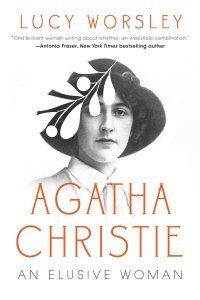 Lucy Worsley’s Agatha Christie, An Elusive Woman is a fresh look at Christie’s life, including a convincing explanation for her mysterious disappearance (and a thorough debunking of the theory advanced by Hollywood). Worsley’s previous books cover a wide range of subjects, and she makes frequent appearances in documentaries on various aspects of British history. She has an easy-going style of writing that almost makes you feel you’re reading a novel, but the book is well-researched and thoroughly documented. Her day job is curator of historic royal palaces and her office is in the Tower of London. Is that cool, or what? Anyway, I highly recommend this biography.
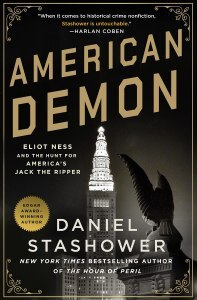
Daniel Stashower’s American Demon is also a page-turner, but I give you fair warning that although it is a biography of Eliot Ness, its focus is on Ness’s hunt for a serial killer in 1930s Cincinnati and the details are pretty graphic. I first met Dan at an early Malice Domestic. Back then he was writing a mystery series featuring Harry Houdini’s smarter brother as the amateur sleuth. He’s since won numerous awards for his nonfiction, most of which has a mystery/crime connection. I recommend any of his titles, but this one is particularly interesting to anyone whose image of Eliot Ness comes solely from The Untouchables.
 Gareth Russell’s Do Let’s Have Another Drink won’t be available until November 1, but I’m really looking forward to what promises to be a unique look at Queen Elizabeth, the Queen Mother. Like the other two biographers, Russell moves around in history to choose his subjects. I haven’t read his book on the Titanic, but I loved his take on Catherine Howard, fifth of the six wives of Henry the Eighth. It is well researched and documented, includes numerous details I hadn’t seen elsewhere (and since this is my period of history, that takes some doing), and is written, like the other two biographies I’m recommending, in a relaxed style that doesn’t turn readers off by being too pedantic (a failing, sad to say, of many biographies). The premise of the new one? Apparently Queen Mum was known for her witty remarks. Since she also liked her tipple and lived to be over a hundred years old, quite a number of bon mots have survived.
Any suggestions to add? Feel free to recommend your favorite biographies/biographers, present or past, in the comments.

Kathy Lynn Emerson/Kaitlyn Dunnett has had sixty-four books traditionally published and has self published others, including several children’s books. She won the Agatha Award and was an Anthony and Macavity finalist for best mystery nonfiction of 2008 for How to Write Killer Historical Mysteries and was an Agatha Award finalist in 2015 in the best mystery short story category. She was the Malice Domestic Guest of Honor in 2014. Her most recent publications are The Valentine Veilleux Mysteries (a collection of three short stories and a novella, written as Kaitlyn) and I Kill People for a Living: A Collection of Essays by a Writer of Cozy Mysteries (written as Kathy). She maintains websites at www.KaitlynDunnett.com and www.KathyLynnEmerson.com.
October 12, 2022
Now The Real Work Begins

Vaughn C. Hardacker
My seventh thriller novel, RIPPED OFF, is scheduled for release. I believe that one of the biggest shocks new writers get is when they learn that writing a novel is only the beginning of the process. Most writers enjoy writing, it’s what we do… many of us do not enjoy selling. I speak with many of my colleagues, and most of us have a tendency to isolate… we do it every time we sit down to put words on paper. Unless you are Stephen King, Michael Connelly, or Robert Crais, you must do most of the promotion. I have often been told, “You’re one of the best writers nobody has heard of.”) How does this all come together? The steps (as I see them) are as follows:
HOW DO I WRITE?
The idea. What is the basic plot? In RIPPED OFF, it was “What would happen if, after being divorced for the fourth time, a retired hitman learns that his financial manager and accountant have stolen his retirement funds?” The step includes researching specific areas needed for the plot to be credible. I’m a pantser, so I begin writing, believing that the story will take me where it wants to go. Therefore, I do not outline. I have tried many times but have yet to complete an outline.Finish the first draft.Edit the first draft.Develop a query letter. Query agents and/or publishers.Once accepted, await the editor’s comments. Make corrections as needed (rewrite as needed).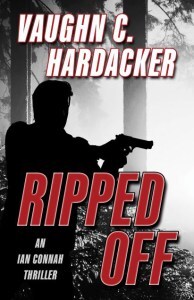
Coming January 2023
When the publisher gives you a release date. (I find this to be the most challenging part of the process), develop a marketing plan (campaign). The campaign should include: (a) how many ARCs (Advanced Reader Copies) will be required. (b) Develop a list of people to receive ARCs. Consider people who are published authors, book reviewers, etc. (DO NOT SEND COPIES TO RELATIVES… they will tell you what you want to hear, not what you need to hear.).
Design documents for a mailing campaign. I write a cover letter, a press release, a possible poster that can be used for appearances at bookstores and libraries, an 8 X 10 author photo, an 8 X 10 cover photo of the book’s cover, and a USB drive with all of the aforementioned.Consider what promotional items you might hand out at personal appearances, conferences, etc.Mail the package to places and people who are in a position to assist you.We aren’t finished yet. If you don’t have a webpage, get one. I recommend having it professionally designed. It is best if you pay a bit more to purchase a URL and a secure server. If you obtain a site via a provider, Yahoo, Verizon, etc., they will provide you with both. However, you will not own them, the provider will.
Of all this, the most critical thing is obtaining book reviews {step 7. (b) above.} from known authors and book reviewers. Some will charge you a fee for them. Your publisher may assist here, sending review copies to reviewers such as Publisher Weekly. (Do not assume that paying for a review will guarantee a positive one. Reviewers know that their success depends on their credibility, which comes from giving accurate, unbiased reviews.) There are many online places to get reviews, Bookbub, and any professional organizations to which you belong (International Thriller Writers–ITW). Approach media outlets such as local radio and television stations, and offer to do an interview either via phone or in person. Don’t overlook word of mouth. I have gone so far as to give complimentary copies to people who are in a position to spread the word.
Finally, don’t overlook Amazon. If you don’t have an author page with them, get one. Amazon is another place to obtain reviews.
If anyone is interested in obtaining a free copy of my campaign package, contact me via my website https://www.vaughnchardacker .net.
October 11, 2022
No Time To Write—And Yet I Continue To Write
These days I have no time to write—and yet somehow I keep on writing. Between long hours working, handling a complicated estate, and the dramas of family life, I’m finding virtually no time to sit in front of the computer and type out work. And yet somehow I end up being productive. Maybe being busy is the best medicine for getting things done.
How can this be?
People always tell me that they could never write a book. That it is too long and daunting a task. That they have no time to write a three hundred and fifty page novel with complex ideas and a consistent theme. I can somewhat understand their apprehension. Writing a novel is a long and daunting task. It does take time. But it is a hard process in different ways than many think.
People’s assumption about the grueling process are wrong, in my estimation. At least the way I write. I don’t regularly sit for ten hours a day writing. In fact, during the first draft, I usually write my 1300 words in an hour of so. Sometimes faster if I’m on a roll. I know you’re asking, where did I pick the random number of 1300 words a day? The number just developed in my head throughout the many years of my writing.
To be honest, I do write the first draft lightning fast. It’s the best process for me. I come up with an idea and then develop it as I write the book, changing things when the characters whisper to me to go in a different direction. I view my initial blueprint like directional poles that I can pull up out of the ground if I feel the plot is going in a different path. A writer must be adaptable, flexible and willing to listen one’s characters’ voices. Fitting a square peg in a round hole never worked for me, as far as rigid outlines go. So I guess you could say I’m in the middle of the spectrum when it comes to being a pantser or plotter.
The faster I write, the better I stay focused and into the plot. When I take a week off from writing, I find myself lost. I have to go back to the beginning chapter to see where I am. Themes stay consistent when I write every day. The characters never leave my mind. Voices stay unique. The flow of the plot moves with lightning speed when I write fast and often. And I hate leaving my story during this phase, because I am often curious to know what will happen next, as if I am also a reader and not just the master and commander of the story.
I view my word tally like earning money. The more I write that day, the more words/money I can deposit it my literary bank. If I know I have a weekend where I cannot write, I write extra and bank the words into my account so I don’t fall behind. Having a certain amount in my bank each week is an absolute requirement for me during this initial phase, and if I don’t have it my account, I have to work harder to catch up. I view myself like a worker trying to get as much overtime pay as I can, greedily earning as much as possible before the OT runs out. Writing that fast, on the first draft, I usually have a working manuscript in one or two months. And all that time I had only written maybe an hour a day.
Now that I have a working manuscript in two months, it’s time to edit. It may not be the best manuscript, but at least I have something I can work with. This requires an hour a day reworking sentences and developing plot themes and subplots. I love editing, so the work comes easy to me. I edit while watching TV or listening to the radio in my free time. Again, an hour a day, usually. Sometimes longer if I’m really enjoying myself. And I do all this around my hectic schedule, knowing if I don’t do it in my free time the work will not get done.
In six months I have a finished novel to submit.
I love writing, but it’s hard in ways non-writers don’t understand. It’s a heartbreaking and often painful endeavor. It’s like continually beating one’s head against the wall. While I’ve done pretty decently financially at this, it’s not something one does to get rich. Many times I’ve wanted to quit. Many many times. Often I wish there was an AA meeting for writers like me to attend. Because writing, in my case, is like having an addiction, albeit healthy one. I keep going back to it for some crazy reason, even if I don’t want to. It’s selfish. Egotistical. Isolating as hell. Hard on the back and hands, as my carpal tunnel can attest to. And yet it gives my life a certain richness and purpose. It completes me in ways I can’t describe. I dream with purpose. On the other hand, being a writer continually eats away at my soul: rejection, bad reviews, the monastical life—then having to be an amazing public speaker after months of talking to yourself and dealing with your multiple personality disorder.
Oddly, I hate speaking in front of a crowd about my book. I can happily speak about anything else, but not my book. Why? How do you talk about a thriller novel, a book with many twists and turns, without giving away the plot? There was one of my books where the mere mention of the plot gave away the huge twist midway through. I’d rather talk about music or my favorite pizzas. History. Sports. I wish authors could be like musicians and play our books onstage like music, entertaining without ruining the very nature of the art. And reading a passage seems silly to me. The act of reading a novel is subversive and a profoundly private experience. It loses steam when spoken out loud in front of a crowd.
And getting published today is getting harder and harder. The pandemic made it punishing. I had a hardcover novel set to publish in April of 2020 and then everything shut down and the COVID killed my book. Now there is a paper shortage and books are getting pushed back. In fact, my publisher asked if any of their authors wanted to delay the publication of their book. Since the first of my thrillers comes out in the summer of 2023, it didn’t affect me.
The point is, writing the novel is an incremental process that you can do every day if you allot a small part of the day to it. It’s like becoming a millionaire; you invest a little every year and let your wealth build. Like Einstein said, “Compound interest is the eighth wonder of the world.”
So if you want to write that book you have stuck in your head, don’t look at the whole. It’s too daunting. Break it down into its parts and do a little writing each day. You’ll be surprised what you come up with in a year’s time. But be prepared to become an addict.
As for quitting writing, I’m not sure I could ever do it. Maybe one day I’ll conquer this addiction of mine. Maybe not. Through all the ups and downs, on the whole I think it has enriched my life. We’ll see if that continues going forward. Yeah, we’ll see. It might take the Grim Reaper to cure what ails me me.
October 10, 2022
FEEDBACK – WHAT WORKS FOR YOU?
by Jule Selbo
The second book in my Dee Rommel Mystery Series, 9 DAYS, is out and it’s fun to get feedback from readers.
Some of the reactions come in through the message feature on my website, some from family (mine’s a big one so there’re lots of opinions), some from friends, or from people in my condo building in Portland, or from the “regulars” I join at my favorite (nearly daily) haunts.
The best feedback is people sharing tidbits from their own expertise or snippets of their life stories in relation to my imaginary character’s life. A breakfast buddy at Becky’s (Commercial Street, Portland) teaches scuba diving, and he wondered if Dee Rommel might, one day, be looking for an odd item like the ones he’s discovered buried deep underwater in the rocks and sand of Casco Bay. And then I got a story of an emotional wedding-anniversary-dive he took with his recently passed wife.
 Another buddy has a ham and cheese omelet every morning and is now retired. He used to build swimming pools in peoples’ backyards. He’s unearthed some suspicious bones, trinkets and oddities.
 Another coffee-drinker is an Auto Parts guy, he finished 9 DAYS and wanted to remind me that catalytic converters and other parts in some cars can be made with precious metals like platinum, palladium, rhodium, silver and gold (and that’s why the market of stolen parts is always hopping).
A book club member living in midtown Portland (the club had read 10 DAYS and invited me to eat cheese and drink wine with them) was a city history buff and told me that Dee (whose father loved history) would definitely know about the underground tunnel that connected the old Press Herald on Congress Street and its printing facilities – and the other underground spaces of Portland (seems there were a lot of subterranean bowling alleys at one time). He winked at me and told me access could be arranged.

A woman at the Armory Bar at the Regency Hotel (Milk Street, Portland), after reading 10 DAYS and 9 DAYS, asked what Maine locations Dee might be traveling to in 8 DAYS. I told her I was working on a scene in Yarmouth – she knew the histories of the Catholic, the Universalist, the Congregational and the Baptist churches in the town’s center. (Her grandfather and father had been pastors and I got details of the vagaries in growing up a preacher’s kid.) I don’t imagine Dee as a regular church-goer, but that didn’t negate me thinking that an empty church, at night, in a winter storm, might be a good hiding place for someone…
My family’s got a funky, unheated, thin-walled cabin with nice views of loons on Damariscotta Lake. I have a morning routine – up early to make the 6 am opening at Moody’s Diner (Route 1 in Waldoboro). I carry a notebook with me and write while I chew on scrambled eggs and toast.
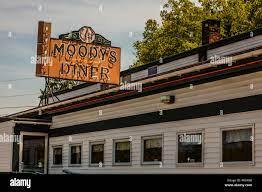 One of the waitresses (Shelly) has read both Dee Rommel books and loves to talk about which supporting characters she wants to come back in the next stories. Just the other day she gave me a semi-glare and told me she needs (expects) to know – soon-ish– more details about bad-guy Billy Payer (10 DAYS) and how he might be involved in the assault that left Dee with a permanent injury. Shelly seemed a bit vexed Billy didn’t have a larger presence in 9 DAYS. Since I’m working on 8 DAYS now (about 1/3 of the way through) – I almost told her I hadn’t planned to get back to Billy until 7 DAYS or 6 DAYS – but I went home and decided that it might be a good idea to keep that “B” story alive more “soon-ish” – now it’s become a “C” story in 8 DAYS.
After Moody’s Diner I usually head back to Jefferson (where the funky camp is) and stop at the Jefferson Market on Route 32 for any needed supplies. Lyn, the owner of the market, has put a small bookshelf full of “local authors” near the checkout counter.
 She’s been selling 10 DAYS for the last six months and has now added 9 DAYS. Customers who buy the books relay their thoughts to Lyn – who relays them to me. Some have worries/premonitions regarding Dee’s boss (private investigator Gordy Greer) and why he’s pushing Dee so hard to get her own license. Some have opinions on the relationship Dee has with her mother. Or insight on Dee’s lovers. Even about her best friends – and why the hell can’t Dee get a dog?
I realized that most of the feedback is not focused on the specific, stand-alone plots of the books. It’s questions and/or concerns pertaining to the character of Dee. About her self-esteem issues and the massive chip on her shoulder and will she ever be able to open her heart.
That realization made me think of a Michael Connelly interview I read. Connelly (Bosch series, Lincoln Lawyer series and more) mentioned that readers are often providing reactions and fodder – and that it enhances his writing. Not specifics (he’d stop them if anything turned into a pitch and quickly recite, for legal reasons, that he could not listen to story ideas). His readers’ input tended to focus on the flavor or history of Los Angeles or experiences or thoughts on father/daughter relationships.
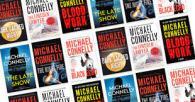
Connelly also stated that he always kept in mind the words of Joseph Wambaugh (The Onion Field, Choirboys,and the Hollywood Station Series and so much more): “The best crime novels are not how cops work on cases; it’s how cases work on cops.”

Of course, it doesn’t have to be a cop. It can be a private investigator (like Dee), an amateur sleuth, or anyone investigating…
I guess the readers’ questions and interests are helping me see what’s bringing them back to the next books. I have 8 more to go and I want them to keep reading.
Although it’s not my nature to write to please someone else (therein lies madness I think), but it IS my nature to question if what I find interesting is interesting to others. And it feels good that readers are finding Dee interesting.
Who likes to talk to readers about their books and characters and who doesn’t like to talk about them at all? Who does it help? Who does it hinder?
Lea Wait's Blog

- Lea Wait's profile
- 509 followers

