
Lea Wait's Blog, page 74
December 23, 2022
Weekend Update: December 24-25, 2022
 Merry Christmas everyone!
Next week at Maine Crime Writers there will be posts by Dick Cass (Monday), Matt Cost (Tuesday), and Charlene D’Avanzo (Thursday), and there will be a group post on Friday.
In the news department, here’s what’s happening with some of us who blog regularly at Maine Crime Writers:
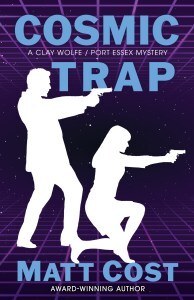
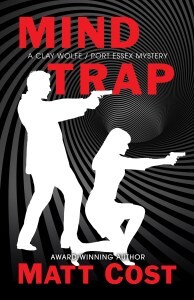
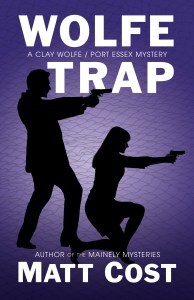
Matt Cost published the fourth book in his Clay Wolfe/Port Essex Trap series, Cosmic Trap, this past week. The first book in the series, Wolfe Trap, came out on Audible this week as well. The second book, Mind Trap, will be out on audible next month.
Kate Flora: A new Apple program to produce audio books has chosen some of my Joe Burgess mysteries as part of their initial rollout. Here’s a link to Redemption: https://books.apple.com/us/audiobook/redemption-a-joe-burgess-mystery-book-3/id1640348627?itsct=books_box_link&itscg=30200&ls=1
And here’s their blurb about the book:
This is an Apple Books audiobook narrated by a digital voice based on a human narrator.
“Great characters, interesting plot, action-galore and ‘cop-speak’ that is realistic enough to put you right in the thick of things, this is a police-procedural that is not to be missed.” ~John E. Donovan, Verified Reviewer
Burgess’s hopes for a calm Columbus Day picnic slam up against reality when two boys spot a dead body in the water.
It’s Reggie the Can Man—a damaged, alcoholic veteran who Burgess has tried to patch back together since they returned from Vietnam. Now, Reggie’s fight for redemption is over.
Then the ME questions Reggie’s accidental drowning, giving Burgess one last chance.
As Burgess dives deep, he uncovers Reggie’s ex-wife, his scofflaw son, industrial toxins, corrupt businessmen, and that Reggie isn’t the only one in need of redemption.
“Redemption was right up there with those by my favorite mystery writers (Ian Rankin, Carolyn Rose, Felix and Dick Francis).” ~David Edgar Cournoyer, Verified Reviewer
“Excellent, fast pace, intriguing story line. Well developed characters and storytelling. Loved the series, can’t wait for next novel.” ~Normy, Verified Reviewer
THE JOE BURGESS MYSTERIES
Playing God
The Angel of Knowlton Park
Redemption
And Grant You Peace
Led Astray
A Child Shall Lead Them
A World of Deceit
An invitation to readers of this blog: Do you have news relating to Maine, Crime, or Writing? We’d love to hear from you. Just comment below to share.
And a reminder: If your library, school, or organization is looking for a speaker, we are often available to talk about the writing process, research, where we get our ideas, and other mysteries of the business, along with the very popular “Making a Mystery” with audience participation, and “Casting Call: How We Staff Our Mysteries.” We also do programs on Zoom. Contact Kate Flora


December 22, 2022
The Snake. Jane Goodall. River Evil …
 Lately I’ve been thinking a lot about good and evil and feeling the power of evil way too much.
And then I watched President Zelensky’s speech to the U.S. Congress (12.25.22). It struck me that this man has come to symbolize both. He is willing to hold close the evil done to his country and his people—hold it so close that he can spill it out raw to people who need to know and even feel it. But the part of him that shines triumphant, even in this dark, brutal winter, is his goodness and his willingness to share the goodness and sacrifice of his people so we can also share it and lean toward it.
Over two decades ago I wrote a letter about good and evil to my daughter as she was deep in despair after September 11th.  Today I share it with you on the darkest night of the year. More light coming soon…
********************
September 12, 2001
Today I woke, thinking of the plane hitting the World Trade Center… and thought of you and how you told me last night that you did not want to live in such a bad world.
When I was a sophomore in high school, I turned away from my “church” religion because no one at my church could explain why children suffered and died in huge famines, floods, and wars. Years later, in college, reading widely about how people have always tried to reconcile the nature of both good and evil existing in the world, reading about how we have evolved into better creatures while at the same time committing atrocities against each other, I must have come to my own resolution about good and evil.
I hope that you will also come to your own understanding and not feel defeated by yesterday’s horrors.
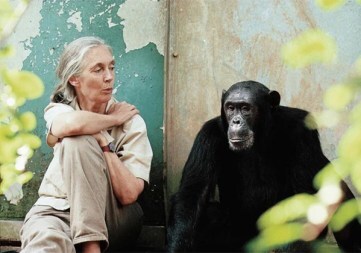
“It is these undeniable qualities of human love and compassion and self-sacrifice that give me hope for the future. We are, indeed, often cruel and evil. Nobody can deny this. We gang up on each one another, we torture each other, with words as well as deeds, we fight, we kill. But we are also capable of the most noble, generous, and heroic behavior.” ― Jane Goodall, Reason for Hope: A Spiritual Journey
In fact, recently, you gave me a reminder of how we accept evil and good as part of our world, how we find triumph and goodness in the middle of despair. You asked me to read Jane Goodall’s book “A Reason For Hope” and I did. Jane thought the world of the chimps was a more perfect, natural world. Their society was caring and nurturing; how could humans be destroying such creatures, she thought. She and her research staff were shocked to witness the chimp wars where (probably maintaining territorial control) they snatched and killed the babies of family members, pulled apart chimps they had known for years, and committed various atrocities against each other.
It was a dark time for her. This darkness was reflected in the evil Jane felt around her as the jungle was destroyed and as she came to feel strongly about our cruelty to animals in labs and research. At the end of her book, she comes through the darkness, sees beyond the evil to the essential goodness in the chimps, to our ability as humans to make progress: regrow the jungle, plant trees, enact new laws and procedures for lab animals, develop products without animal testing. Faced with evil in a very personal way, she decides that hope and goodness are the stronger element and she finds clear examples of their stronger powers.
I hope that you do too.
Humans have always had to deal with the problem of evil. Every culture tries to explain how they are related, linked, even useful to each other. Without the blackest darkness of night, could we celebrate the rippling sunshine on rivers. Can we know the light—feel the joy of light—without knowing the darkness? That is the question.
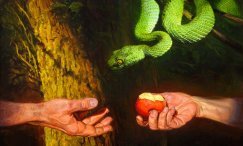
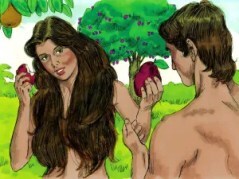 Christians believe the Bible’s good and evil origin story. Eve is expelled from the Garden of Eden (a perfect place where there is no good or evil), because she listens to the devil (serpent) and eats the apple that gives her the knowledge of good and evil. God expels her from the garden, saying she will live this knowledge. She will “bring forth children in pain.”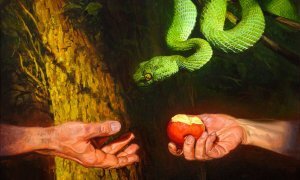
So he sent us out with pain, but in this story, he sent us out with children. And for me, (as you know) that has been the greatest gift. In our creation story, we were sent out with both pain and joy … and children.
All cultures around the world have stories about the origins of good and evil, but always the good—the hope—triumphs.

Magazine cover: Bill Cosby’s accusers.
I can-actually see that around me. When I was your age, assaulting women was considered a private affair or not worthy of much attention. Unless the woman died. Now we have evolved to understand the evil of the misuse of power and rage. Women (in many countries) have the right to a safe life. Does this stop the evil of abuse? Not always, but we made progress recognizing the value of women and their right to be protected.
I see this evolution as the triumph of good, not in a perfect world, but the growth of goodness because we are working to protect and take care of people and we did not do that before.
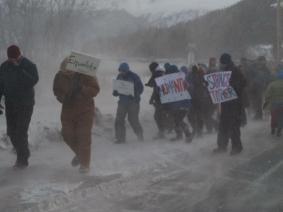
Haines, Alaska’s version of the Women’s March. January 21, 2017

In Maine, The Great Works dam comes down. In the text, check the amazing video link to the story.
Years ago, people tried to dam every river in sight. Even today in China, the mighty and gorgeous Yangzee is dying underneath the crime of the biggest dam on the planet. I believe that one day, the Chinese will know the evil of this crime against nature. Here today, in our country the dams are starting to come down. I never thought that in my life, I would see this turn of events, that people would see this particular evil, this crime against the value and health of rivers and actually begin to reverse the process. I do see examples of the triumph of goodness and knowledge over the forces of darkness, evil and ignorance.
But I do believe we will always have both in the world.
Last night after you went to bed, on the news they showed the long lines of New Yorkers waiting to give blood: out the hospital doors, down the streets—people all waiting hours to give blood, to do what they could. That is an image of powerful good that is at least as powerful to me as the one of the plane slamming into the building.
I know that you have experienced your own darkness, but you have been lifted up and carried on by the goodness and light of the many people who love you and have helped you through the darkness. I know you must sort out your own personal truth about good and evil.
I wrote you this letter to let you know that we are all on a search, we all have moments of doubt, and that we all have questions about evil. For me, the goodness of your being here outweighs any evil the world may toss my way. I have confidence that you will find your way as you walk between the darkness and the light; and I DO love you more than all the chocolate chip cookies on earth.
Moo
******************
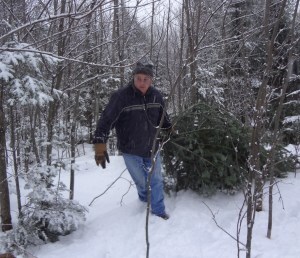
Thank you, Bob!
Sandy’s debut novel, “Deadly Trespass, A Mystery in Maine” won a national Mystery Writers of America award, was a finalist in the Women’s Fiction Writers Association “Rising Star” contest, and was a finalist for a Maine Literary Award. The second Mystery in Maine, “Deadly Turn,” was published in 2021. Her third “Deadly” is due out in 2023. Find her novels at all Shermans Books (Maine) and on Amazon. Find more info on Sandy’s website.
The Snake. Jane Goodall. River Evil Reversed.
Lately I’ve been thinking a lot about good and evil and feeling the power of evil way too much.
And then I watched President Zelensky’s speech to the U.S. Congress (12.25.22). It struck me that this man has come to symbolize both. He is willing to hold close the evil done to his country and his people—hold it so close that he can spill it out raw to people who need to know and even feel it. But the part of him that shines triumphant, even in this dark, brutal winter, is his goodness and his willingness to share the goodness and sacrifice of his people so we can also share it and lean toward it.
Over two decades ago I wrote a letter about good and evil to my daughter as she was deep in despair after September 11th. Today I share it with you on the darkest night of the year. More light coming soon…
********************
September 12, 2001
Today I woke, thinking of the plane hitting the World Trade Center… and thought of you and how you told me last night that you did not want to live in such a bad world.
When I was a sophomore in high school, I turned away from my “church” religion because no one at my church could explain why children suffered and died in huge famines, floods, and wars. Years later, in college, reading widely about how people have always tried to reconcile the nature of both good and evil existing in the world, reading about how we have evolved into better creatures while at the same time committing atrocities against each other, I must have come to my own resolution about good and evil.
I hope that you will also come to your own understanding and not feel defeated by yesterday’s horrors.
“It is these undeniable qualities of human love and compassion and self-sacrifice that give me hope for the future. We are, indeed, often cruel and evil. Nobody can deny this. We gang up on each one another, we torture each other, with words as well as deeds, we fight, we kill. But we are also capable of the most noble, generous, and heroic behavior.” ― Jane Goodall, Reason for Hope: A Spiritual Journey
In fact, recently, you gave me a reminder of how we accept evil and good as part of our world, how we find triumph and goodness in the middle of despair. You asked me to read Jane Goodall’s book “A Reason For Hope” and I did. Jane thought the world of the chimps was a more perfect, natural world. Their society was caring and nurturing; how could humans be destroying such creatures, she thought. She and her research staff were shocked to witness the chimp wars where (probably maintaining territorial control) they snatched and killed the babies of family members, pulled apart chimps they had known for years, and committed various atrocities against each other.
It was a dark time for her. This darkness was reflected in the evil Jane felt around her as the jungle was destroyed and as she came to feel strongly about our cruelty to animals in labs and research. At the end of her book, she comes through the darkness, sees beyond the evil to the essential goodness in the chimps, to our ability as humans to make progress: regrow the jungle, plant trees, enact new laws and procedures for lab animals, develop products without animal testing. Faced with evil in a very personal way, she decides that hope and goodness are the stronger element and she finds clear examples of their stronger powers.
I hope that you do too.
Humans have always had to deal with the problem of evil. Every culture tries to explain how they are related, linked, even useful to each other. Without the blackest darkness of night, could we celebrate the rippling sunshine on rivers. Can we know the light—feel the joy of light—without knowing the darkness? That is the question.
Christians believe the Bible’s good and evil origin story. Eve is expelled from the Garden of Eden (a perfect place where there is no good or evil), because she listens to the devil (serpent) and eats the apple that gives her the knowledge of good and evil. God expels her from the garden, saying she will live this knowledge. She will “bring forth children in pain.”
So he sent us out with pain, but in this story, he sent us out with children. And for me, (as you know) that has been the greatest gift. In our creation story, we were sent out with both pain and joy … and children.
All cultures around the world have stories about the origins of good and evil, but always the good—the hope—triumphs.
Magazine cover: Bill Cosby’s accusers.
I can-actually see that around me. When I was your age, assaulting women was considered a private affair or not worthy of much attention. Unless the woman died. Now we have evolved to understand the evil of the misuse of power and rage. Women (in many countries) have the right to a safe life. Does this stop the evil of abuse? Not always, but we made progress recognizing the value of women and their right to be protected.
I see this evolution as the triumph of good, not in a perfect world, but the growth of goodness because we are working to protect and take care of people and we did not do that before.
Haines, Alaska’s version of the Women’s March. January 21, 2017
In Maine, The Great Works dam comes down. In the text, check the amazing video link to the story.
Years ago, people tried to dam every river in sight. Even today in China, the mighty and gorgeous Yangzee is dying underneath the crime of the biggest dam on the planet. I believe that one day, the Chinese will know the evil of this crime against nature. Here today, in our country the dams are starting to come down. I never thought that in my life, I would see this turn of events, that people would see this particular evil, this crime against the value and health of rivers and actually begin to reverse the process. I do see examples of the triumph of goodness and knowledge over the forces of darkness, evil and ignorance.
But I do believe we will always have both in the world.
Last night after you went to bed, on the news they showed the long lines of New Yorkers waiting to give blood: out the hospital doors, down the streets—people all waiting hours to give blood, to do what they could. That is an image of powerful good that is at least as powerful to me as the one of the plane slamming into the building.
I know that you have experienced your own darkness, but you have been lifted up and carried on by the goodness and light of the many people who love you and have helped you through the darkness. I know you must sort out your own personal truth about good and evil.
I wrote you this letter to let you know that we are all on a search, we all have moments of doubt, and that we all have questions about evil. For me, the goodness of your being here outweighs any evil the world may toss my way. I have confidence that you will find your way as you walk between the darkness and the light; and I DO love you more than all the chocolate chip cookies on earth.
Moo
******************
Thank you, Bob!
Sandy’s debut novel, “Deadly Trespass, A Mystery in Maine” won a national Mystery Writers of America award, was a finalist in the Women’s Fiction Writers Association “Rising Star” contest, and was a finalist for a Maine Literary Award. The second Mystery in Maine, “Deadly Turn,” was published in 2021. Her third “Deadly” is due out in 2023. Find her novels at all Shermans Books (Maine) and on Amazon. Find more info on Sandy’s website.
December 20, 2022
A Man with a Gun, or a Beaver, or a Bear?
Kate Flora: I am progressing, much more slowly than I’d hoped, toward the end of the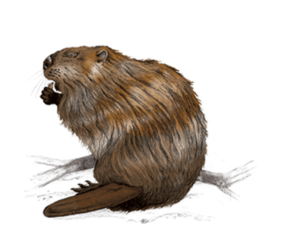 next Joe Burgess mystery, Book eight, Such a Good Man. I’ve known since long before I started the book who the killer and victim are and why the victim was killed. Unlike many of my books, I didn’t know much beyond that. In a way, writing the book has been a lot like reading a book. I am discovering what the story is about as I go along, just as my readers will.
Recently, I was working on a section of the book and found myself feeling bored. I wasn’t sure whether it was my plotting, or the pace of the story, or my writing (all equally upsetting, I think.) I jokingly posted on Facebook that since I was finding my storytelling boring, it was probably time to bring in a man with a gun. My helpful FB friends suggested that instead of a man, I should bring in a beaver. Or perhaps a bear. Or was that a bear with a gun?
Those suggestions helped to lighten my mood and make me stop worrying about whether the book is sufficiently compelling to keep my readers reading. For the draft, at least, I’ve put in a bear, although a bear without a gun. Whether he gets to stay in the book depends on rewrite, of course. But in earlier books, Burgess has noted that while most people don’t see them, if you’re a cop driving around a city at night, especially a city with parks and rural surroundings, you’ll see all sorts of wildlife. So it is possible that the bear will stay.
 Thinking about the bear, and whether a book can be boring, and how a writer constructs a story’s plot, reminds me that at this point, with 24+ published books, and another five or six in the drawer, I’ve written enough books to know that every book is going to be different. I may think I’ve got the process knocked and I know what I’m doing, and then a book will come along that refuses to conform to what I know. Books have their own rhythms and their own needs. Sometimes it will feel almost like automatic writing. The characters will be telling the story and I am just along to take notes. Once, they did that for nineteen chapters and then decamped. When I protested that they’d abandoned me, they said, “You’re the writer. Figure it out.”
Back when I had less experience, it used to scare the heck out of me when characters took over. I used to protest that I was in charge and I used to be terrified about how I could make the story work when I didn’t know why my characters were doing what they were doing. Now, when a character does something unexpected, or steers the story in a new direction, I’ve learned to go with it. Let them show me where they want to go.
Years ago, when I was just learning about how characters could misbehave, or stubbornly refuse to let themselves be written, I was listening to a panel of authors at the Exeter, New Hampshire library. A writer in the audience described a book she was writing in which her central character was being difficult and she disliked the character and didn’t know what to do about it. Two of the panelists gave her advice. The first said to tell the character to straighten out and cooperate or she was out of the book. The second said the writer should take the character for a ride in the car and talk over their difficulties.
To me, very new to the writing game, hearing experienced writers articulate both strategies was fascinating. It was also fascinating, at an early writers’ conference, to hear writers talking about the voices in their heads, and how they got increasingly insistent as the day wore on until the writer sat down and “let them out.” It’s cool to be part of a profession where hearing voices in our heads is actually okay and normal.
I’ve also learned, often from going back and rereading a draft of a book, how much of 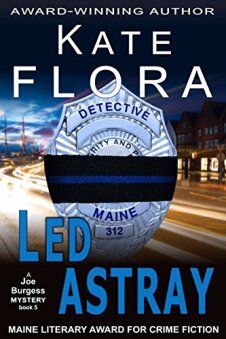 writing is taking place on an unconscious level. I’m struggling with making scenes vivid and making dialogue fit the characters and keeping the pace of the story brisk. When I reread, I will find, on another level, that I’ve been using colors, and time, and the weather to underscore my character’s mood and challenges. In Led Astray, it wasn’t until I’d read the draft that I realized the weather was dark and gloomy from the opening scene and didn’t lighten until Burgess has solved the crime and rescued a child at risk.
No doubt there are many, many more lessons ahead. I’ve come to see my writing process as a wheel. It goes around, and along the way I master parts of my craft, and then I start over at a different level and learn a whole new set of skills or refine the ones I’ve learned. Or, as I sometimes see it, it is an endless uphill trajectory. Not a daunting trajectory but an exciting one, one on which I am always learning, always getting challenged by what I need to learn, always, I hope, getting better at the job or at least some aspects of the job.
Lately I haven’t been very excited about the process—that boring writing problem I began with—but writing this down reminds me that it will always be this way. Probably there is an important lesson about from writing a boring scene that will inform many future scenes. Maybe the that brown bear, ambling down a city street, is more than just a bear. It’s a surprise and challenge for me as well as for my readers. It may jar me and my characters out of traditional thinking to consider something new.
Enough. Happy Holidays to all our MCW faithful. We appreciate your presence, your comments and your thoughts. If you haven’t read it yet, I’ve written you a new holiday story for 2022, The Rescue. I hope you enjoy it. The Rescue. kateclarkflora.com/the–rescue/
December 18, 2022
Christmas in Moosetookalook
Kaitlyn Dunnett/Kathy Lynn Emerson here. Although I haven’t written any new Liss MacCrimmon mysteries in the last few years, the fictional village of Moosetookalook, Maine and the characters who live there are still close to my heart. For one thing, although Moosetookalook may not be a real place, it could be. There are certainly plenty of similar communities in my part of the state, and some of them get quite festive for the holiday season.
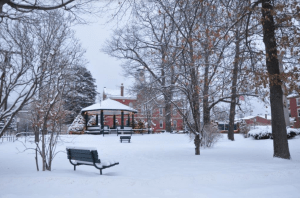
Meetinghouse Park, Farmington (photo by Don Waterhouse)
Take Farmington, Maine, the next town over from mine. They have Christmas traditions, of course, but they also celebrate Chester Greenwood Day. Chester, back in the late nineteenth century, invented earmuffs and manufactured them right there in his home town. Originally the state legislature declared December 21, the first day of winter, as Chester Greenwood Day. Farmington held a parade and hosted assorted competitions and concerts. But before long it occurred to the organizers that they could get even more mileage out of the fame of their local hero if they moved the festivities to the first Saturday of December, before the students at U. Maine Farmington left for Christmas vacation. It seems to have worked. If you decide to attend next year, keep in mind that everyone is expected to wear earmuffs, even pets. There are even extra large pairs to go on vehicles.
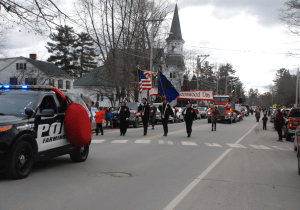
But getting back to Moosetookalook, two of the thirteen books in my series are set during the Christmas season. This wasn’t my idea. Editors of cozy mysteries really like Christmas books. But I was happy to comply with the suggestion, as long as I got to add my own strange little twists.
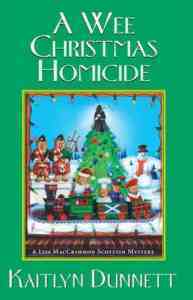
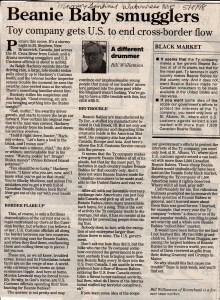
The idea for A Wee Christmas Homicide came from a column I had clipped out of one of Maine’s daily newspapers way back in May of 1998. Remember Beanie Babies? For a year, maybe two, they were all the rage—the Christmas present every kid wanted to find under the tree. When they were in short supply, some clever but dishonest entrepreneurs came up with the idea of smuggling the Canadian version across the border into Maine. For my book, which was published in 2009, I invented Tiny Teddies and gave three shops in Moosetookalook, including Liss MacCrimmon’s Moosetookalook Scottish Emporium, the last stockpile of the legitimate article. Then I added a “Twelve Shopping Days of Christmas” promotion, sponsored by local businesses, a chase on snowmobiles, a love triangle, whoopie pies for desert on Christmas Day, and (of course) a murder.
The second Christmas mystery, Ho-Ho-Homicide, was inspired by something very close to home. When it was published in 2014, my husband and I were operating a mom-and-pop, cut-your-own Christmas tree farm that opened the day after Thanksgiving and continued selling trees until Christmas Eve. For fictional purposes, I enlarged the operation, changing it into one that shipped trees to the city instead of selling them locally. Liss is roped into helping an old high school friend who has just inherited the Christmas tree farm from a relative who vanished mysteriously years before—right after a body turned up, neatly netted, in a shipment of his trees. I must admit, I got a kick out of finding a unique use for the netter that was essential to our little business.

Of course there are lots of twists and turns to the story, and an assortment crimes in addition to murder and attempted murder. I hoped readers would enjoy all the Christmas-related details and recommend the book to their friends, but never in my wildest dreams could I have imagined what would happen the following year. It was shortly after the paperback reprint edition came out that someone on the Tonight Show staff came across a copy and thought the title and subject matter might be good for a few laughs. The result? Jimmy Fallon held up Ho-Ho-Homicide, wisecracked about the possibility of a “ho” in the plot (which wasn’t actually too far from the truth), and then gave me the kind of pull-quote many a writer would kill for: “It’s got two things that everyone likes: Christmas . . . and murder.”
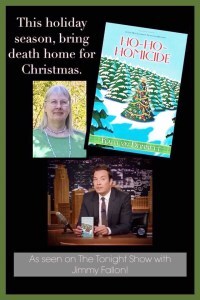
Although both books are getting hard to find in print editions, they are still available through libraries and in electronic format. Other books in the series that are set in winter are The Corpse Wore Tartan, The Scottie Barked at Midnight, and A View to A Kilt.
Merry Christmas, everyone!
Kathy Lynn Emerson/Kaitlyn Dunnett has had sixty-four books traditionally published and has self published others, including several children’s books. She won the Agatha Award and was an Anthony and Macavity finalist for best mystery nonfiction of 2008 for How to Write Killer Historical Mysteries and was an Agatha Award finalist in 2015 in the best mystery short story category. She was the Malice Domestic Guest of Honor in 2014. Her most recent publications are The Valentine Veilleux Mysteries (a collection of three short stories and a novella, written as Kaitlyn) and I Kill People for a Living: A Collection of Essays by a Writer of Cozy Mysteries (written as Kathy). She maintains websites at www.KaitlynDunnett.com and www.KathyLynnEmerson.com.
December 16, 2022
Weekend Update: December 17-18, 2022
 Next week at Maine Crime Writers there will be posts by Kaitlyn Dunnett/Kathy Lynn Emerson (Monday), Kate Flora (Tuesday), Maureen Milliken (Thursday), and Sandra Neily (Friday).
In the news department, here’s what’s happening with some of us who blog regularly at Maine Crime Writers:
Kate Flora: Every Christmas for the past several years, I’ve written a Christmas story for my/our readers. This year, I thought I was going to skip it, but having reread the other four, I was reminded of how much I like writing short stories, and of how nice it is to have a good story with a happy ending at this season. So here, for December 2022, is a link to this year’s story, The Rescue. kateclarkflora.com/the-rescue/
If you enjoy this one, and haven’t read the stories from past years, you can find them all at: www.kateclarkflora.com
A reminder that our December 30th post will give updates on what to expect in the way of books and stories from MCW writers.
For those who like writing advice, no one is better placed to advise on writing twisty suspense than Jeffrey Deaver. Here’s a great blog post with some of his advice:
And finally, belatedly, the winner of a copy of The Maine Mulch Murder is: Kay Garrett. Send your snail mail address and I can mail you a copy.
An invitation to readers of this blog: Do you have news relating to Maine, Crime, or Writing? We’d love to hear from you. Just comment below to share.
And a reminder: If your library, school, or organization is looking for a speaker, we are often available to talk about the writing process, research, where we get our ideas, and other mysteries of the business, along with the very popular “Making a Mystery” with audience participation, and “Casting Call: How We Staff Our Mysteries.” We also do programs on Zoom. Contact Kate Flora


December 15, 2022
Existential Essentials
The holidays used to throw me into a tizzy when our kids were little. There were four of them, and we let them ask for three things each, just like the number of the Wise Men’s gifts. I may have been an English major, but even I can multiply. And then there were stocking stuffers and other odds and ends, which resulted in large charges on our credit cards.
We’ve come to our senses now, with too many in-laws and grandchildren to buy individual gifts for. The grandkids usually get money unless they’re still young enough for toys, and we do a Yankee swap for the adults with a cash limit. I try to buy something that I’d like for myself, just in case I wind up with it, LOL.
I am inundated with “stuff.” Before we moved here three years ago, I wore a path to Goodwill to give away a ton of household and personal items, and I did a big free yard non-sale this summer. But there is still too much in the Robinson household. My desk is a disgrace, with hard candy, dog breath bites, Mucinex, gummy vitamins, and 22 notepads lifted from hotels amongst the detritus. I need Marie Kondo in the worst way. Nothing is sparking joy, and I wonder if the mess is depressing my creativity.

I am surrounded by non-essentials. Which makes me think about little luxuries I’d really hate to do without. I don’t want diamond rings or expensive perfumes or cocktail dresses. Or cocktails, for that matter. But I do like scented soaps, face creams, and illustrated coffee table books featuring gardens and historic houses. Cold bottled water. The occasional can of real, hi-test Coca-Cola. I have an unfortunate addiction to lipstick, and have been on a half-century search for the perfect shade. I also have a weakness for Christmas decorations. Like money in the bank, my Kindle has 105 pages of mostly unread books just waiting for me to commit.
That’s pretty much it in terms of “things.” When it comes to writing, I need quiet and privacy, except for that dog with bad breath, who sleeps in the desk keyhole on top of my feet. No playlist, no TV. A working Internet connection is of course necessary, so I can find out how much 100 English pounds in 1923 are worth in today’s money. I’m in the process of killing my third swivel chair since 2019, and I’m not entirely sure how long my computer’s going to last, but the rolltop desk is in good shape. Except for all the crap on it.
I’ll have to do some cleaning before the family comes. The kids like to play Roblox on my computer and even they will be appalled at the current state of the desk. But seeing them will be much better than all the life clutter, closet contents, and cosmetics combined. And I can take time off from writing and not feel guilty, too.
What “little thing” would you like to find in your stocking? Have a warm and wonderful holiday season.
For more info about Maggie and her books, please visit www.maggierobinson.net
December 12, 2022
Eddie Gein
I have spent the past week in bed battling the worst case of flu I can remember. I crawled out of bed to write a blog due on December 13 (it’s now December 12) only to find that although I made it to my computer I have the stamina of a new born. As such I’ve taken the liberty of reposting an old blog about a meek little old man from Wisconsin who was the basis for many of the serial killers we know from television, books, and movies. Happy holidays everyone.
Memorable Fictional Killers From A Single Source!Posted on December 18, 2018 by Vaughn C. Hardacker

Vaughn
Vaughn Hardacker here: At some point in a writer’s career they will be asked: Where Do You Get Your Ideas? It’s one of those questions that seems easy to answer until you’re standing before a group or sitting on a panel looking at the faces of an audience. My first impulse is to ask myself What humorous but insightful response can I give? The truth of the matter is that in my case there is only one answer: The real world.
In my novel SNIPER I was influenced by the D. C. sniper killings. In THE FISHERMAN it was Robert Pickton a Vancouver, B.C., killer who lamented that his quest to kill 50 women had come up just short at 49. The motivation for Black Orchid was the Black Dahlia case of 1947.
Surprisingly enough some of crime fiction’s most recognizable serial killers all came from a single source: a relatively unknown and diminutive reclusive named Edward Gein. Born at the turn of the century into the small farming community of Plainfield, Wisconsin, Gein lived a repressive and solitary life on his family homestead with a weak, ineffectual brother and domineering mother who taught him from an early age that sex was a sinful thing. Eddie ran the family’s 160-acre farm on the outskirts of Plainfield until his brother Henry died in 1944 (it is believed that Edward killed his brother, but it has never been proven) and his mother in 1945. When she died her son was a thirty-nine-year-old bachelor, still emotionally enslaved to the woman who had tyrannized his life. The rest of the house, however, soon degenerated into a madman’s shambles. Thanks to federal subsidies, Gein no longer needed to farm his land, and he abandoned it to do odd jobs here and there for the Plainfield residents, to earn him a little extra cash. But he remained alone in the enormous farmhouse, haunted by the ghost of his overbearing mother, whose bedroom he kept locked and undisturbed, exactly as it had been when she was alive. He also sealed off the drawing room and five more upstairs rooms, living only in one downstairs room and the kitchen.
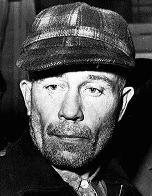
Ed Gein killer and grave robber.
Following her death in 1945, his mental health disintegrated. After Gein was apprehended as a suspect in a 1957 murder, the investigation of his home yielded a highly disturbed man who kept human organs and fashioned clothing and accessories out of body parts. He spent the rest of his life institutionalized, his story fueling the creation of such infamous movie characters as Norman Bates (Psycho), Jame Gumb (Buffalo Bill of The Silence of the Lambs), Leatherface (The Texas Chainsaw Massacre) as well as numerous lesser-known hack and slash horror movies.
Surprising is the fact that when compared to Ted Bundy, Gary Ridgeway (the Green River Killer) and the aforementioned Robert Pickton, Gein was more of a grave robber than a serial killer. He was convicted of two murders.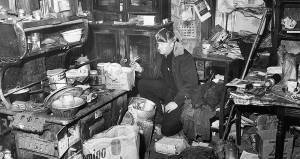
Under questioning, Gein confessed to killing Bernice Worden and three years earlier, a woman named Mary Hogan. Additionally, he admitted to digging up numerous corpses for cutting off body parts, practicing necrophilia and fashioning masks and suits out of skin to wear around the home. (I am underplaying the horrific extent of Gein’s psychosis but an internet search on him will bring forth the full extent of his illness and resultant crimes.) With that sort of evidence, authorities attempted to connect him to other murders and disappearances from recent years, but were unable to draw any definitive conclusions.
In early 1968, Ed Gein was determined fit to finally stand trial. That November, he was found guilty of the murder of Bernice Worden. However, he was also found insane at the time of the murder, and as such he was recommitted to Central State Hospital.
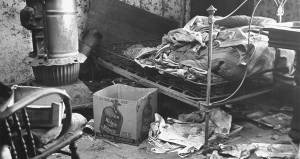
Gein’s Bedroom
Save for his attempt to petition for a release in 1974, which was rejected, the mild-mannered Gein made virtually no news while institutionalized. Later that decade, his health failing, he was transferred to the Mendota Mental Health Institute, where he died of cancer and respiratory illnesses on July 26, 1984.
As I write this it becomes obvious to me that there is a lot of truth to the old saying: The truth is stranger than fiction.
Around the Bend

John Clark on what happened to one of my story starts from my January blog post. If you remember that far back, I posted ten possible story beginnings. They were intended to become short stories, but a funny thing happened.
This one became a book about a teen who found himself in an alternate universe: 6-What kind of person kicks their kid out during the worst blizzard in a decade? I wondered, but already knew the answer as I staggered along the edge of Route 27, leaning into a twenty-plus mile an hour wind spitting flesh-biting ice particles. My parents were religious zealots and I’d made the mistake of yawning during grace at the dinner table. It wasn’t my first sin, but in their eyes it was the straw that broke the camel’s back. So here I was staggering along getting closer to frostbite with each step.
Little did I know that another would become, as Yogi Berra said, “Deja Vu, all over again.” This time it was number 8: The Emma Clarice was considered a myth by most people living near the Narraguagus River. If it was real, folks said, the wreck would have been located by now, especially since treasure hunters had high tech metal detectors and drones. I might only be sixteen, but I knew something about the river nobody else did.
I decided to challenge myself to complete Nanowrimo (National Novel Writing Month), where one tries writing 50,000 words in the month of November. I did it successfully thirteen years ago with an effort called Afternoon Break, a techno thriller about two academic librarians who find themselves in a completely scary and different world while on their walk.
This time, the imps in my head took over almost immediately, directing the narrative and flow in a completely unexpected direction. The main character turned out to be a twelve year old girl (who may or may not be human) named Thiery. The river doesn’t appear until well into the story, because it begins in a flimsy tent in the forest outside Gettysburg, PA.
Thiery has only two memories and every time she tries to remember more, it’s as if her head is full of static, or tangled lengths of fuzzy string. Here’s how it begins.
Mum and I were dancing under a half moon on a South Carolina beach. We’d waited until the last few stragglers had gone to their cars and driven away before creeping from the undergrowth where we hid out most of the time. I loved twirling and swooping to music only we could hear. Needing to stay unobserved for long stretches would be frustrating for anyone, but was torture for me at my age.
We had no permanent home and precious few belongings, but most of the time neither fact bothered me. Mum never hesitated to remind me I was special and she loved me more than anything else in the universe. We were skip-dancing through the warm surf when I saw eyes glaring from where we had left the safety of the trees. I turned to warn Mum when everything began dissolving.
~~
I awoke, knowing something was wrong, but didn’t know exactly what until I turned over to discover Mum was cold and lifeless. Feeling numb, I got up, peed in the woods like I did every morning, then climbed the tallest tree I could find. When I reached the topmost branch, I closed my eyes and ‘searched’, instinctively knowing this was necessary if I was to be safe. Safe from what, I couldn’t say. In hindsight, a skinny and undernourished twelve year old standing on a trembling branch seventy feet off the ground should have been a recipe for disaster. Instead, I ‘saw’ everything spread out below me like an illustrated map. After tracing some of the glowing lines going away from the tree, I realized there were dots of various colors moving in the distance. They must be people, I thought. The more I studied them, the stronger a sense I had that warmer colors were attached to nicer, more compassionate beings. The warmest colors weren’t people, but a group of dogs playing together, surrounded by slightly cooler hues that must be their owners.
I shimmied back to the forest floor and started running toward their location, breaking into an open field. Just when I thought I’d collapse, the first pup noticed me, gave a joyful bark, and led the rest in my direction. I lay on my back and allowed the pack to lick me silly while I cried for the first time in ages.
Most people would be disgusted when attacked by a pack of slobbering canines, but I was still in shock after awakening beside the corpse of the only family I knew, so their enthusiastic greeting was more than welcome. I closed my eyes and attempted to catch my breath while scratching one especially soft pup behind the ears.
The murmur of concerned voices increased as their owners ran to see what the dogs were attacking, Various ones separated themselves the nearer the crowd got, and I heard snatches from pet owners who were unsure whether to be more concerned about liability, or my welfare.
“What is it?”, “It’s a kid, I think.” “Should we call for an ambulance?” “I’ll call the park ranger.” The flurry of words swirled over me like a giant swarm of bees while I continued to tickle whichever pup had curled up by my side behind its big fluffy ears.
My heartbeat slowed and I realized I was getting some sort of intangible support from the dogs. It was as if they recognized my traumatic state and had extra emotional nourishment to share.
None of the adults attempted to come close or talk to me, and I was fine with that. Granted my instinct, when I spotted them from the top of the tree, was to seek help, now that I’d done so, I had no idea what to do, or say. In hindsight, I guess at that moment you could have called me feral.
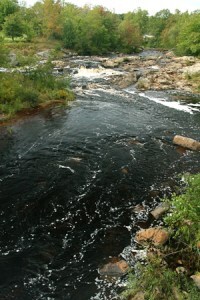
I’m at 58,000 words right now, and really enjoying the flow and how complex the story has become. Stay tuned for more.
December 9, 2022
Weekend Update: December 10-11, 2022
Next week at Maine Crime Writers there will be posts by John Clark (Monday), Vaughn Hardacker (Tuesday), Maggie Robinson (Thursday), and guest Kristen Seavey (Friday).
In the news department, here’s what’s happening with some of us who blog regularly at Maine Crime Writers:
In case you missed these in the past, here are links to the four Christmas stories I’ve written for you. If you enjoy them, let me know.
Reform School: A Christmas Story
The Good Bad Guy – A Christmas Story

An invitation to readers of this blog: Do you have news relating to Maine, Crime, or Writing? We’d love to hear from you. Just comment below to share.
And a reminder: If your library, school, or organization is looking for a speaker, we are often available to talk about the writing process, research, where we get our ideas, and other mysteries of the business, along with the very popular “Making a Mystery” with audience participation, and “Casting Call: How We Staff Our Mysteries.” We also do programs on Zoom. Contact Kate Flora
Lea Wait's Blog

- Lea Wait's profile
- 509 followers

