
Lea Wait's Blog, page 65
April 27, 2023
Books That Feature Nature
Charlene D’Avanzo: What’s in your mind’s eye when you imagine New Jersey? It’s probably not a wilderness larger than most national parks – but that’s what is there and it’s called The Pine Barrens. A recent PBS program featured this forested land still so undeveloped people call it wilderness. And it’s big – nearly the size of Yosemite National Park and larger than most national parks in our country.
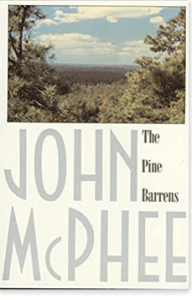 After watching the PBS piece I thumbed through my own well-read copy of John McPhee’s The Pine Barrens. McPhee, staff writer for The New Yorker and Pulitzer Prize winner is also author of Coming Into The Country featuring the Alaska Wilderness, The Control of Nature, my favorite The Founding Fish (about shad), and many more.
McPhee’s The Pine Barrens begins with “The Woods from Hog Wallow” – 650 acres of virgin forest in southern New Jersey. In contrast to the rest of densely packed New Jersey (1000 people/square mile) the Pine Barrens hosts about 15 folks in the same area. The self-named “Pineys” collect sphagnum moss in the spring, blueberries in summer, cranberries in fall, and cordwood during the winter. Locals live off these harvests.
McPhee’s account is a non-fiction classic about a huge swath of southern New Jersey that remains rural simply because of its sandy, nutrient-poor soil. The area’s residents were sometimes thought to be, he writes, “weird and sometimes dangerous barefoot people who live in caves, marry their sisters and eat snakes.” McPhee’s account of these folks is factual and therefore much kinder.
Of course there are also excellent novels (“eco-fiction”) in which the environment plays a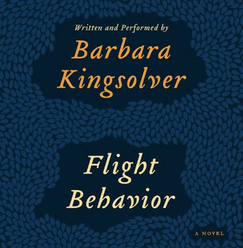 major role as premise or as character. Top of my list is Barbara Kingsolver’s Flight Behavior which features our changing climate’s impact on monarch butterfly migration. The story is narrated by Appalachian housewife Dellarobia Turnbow who stumbles upon a spectacle – millions of monarch butterflies congregating in a field near her house. Kingsolver draws on her Appalachian roots and background in biology in this compelling piece about the very real impacts of global warming.
Other outstanding examples include John Steinbeck’s The Grapes of Wrath, The Overstory by Richard Powers, and A Thousand Acres by Jane Smiley.
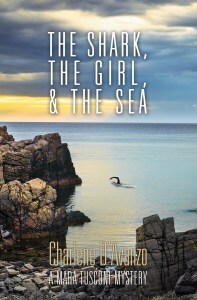 I’ll end with a my own “eco-mysteries” which feature Maine oceanographer Mara Tusconi – The Shark, The Girl, & The Sea; Secrets Haunt The Lobsters’ Sea; Cold Blood Hot Sea, Demon Spirit, Devil Sea; and Glass Eels, Shattered Sea. The ocean theme is pretty obvious, but I am a marine ecologist after all.


April 25, 2023
A Dog Vacation (It’s Mud Season)
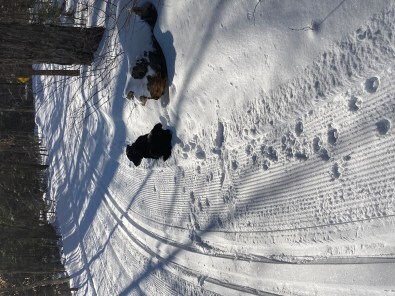
While the trailer was getting ready, my mom and I went skiing. Why does the best snow always happen when we are packing?
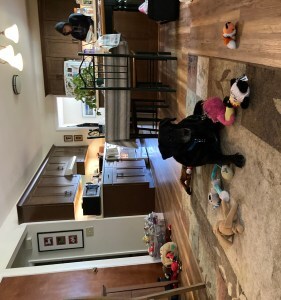
Sandra Neily ; Opps, I missed my scheduled posting last week, but Raven’s travel post is all ready to share with you. She (my dog) is partial mostly to pictures.
Raven here:
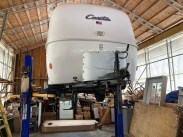
Please fix it so we get there.
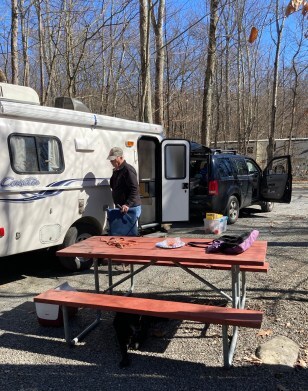
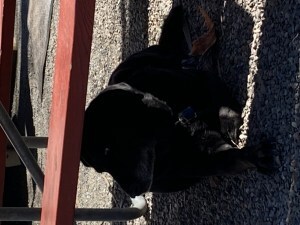 When something breaks, duck under the picnic table.
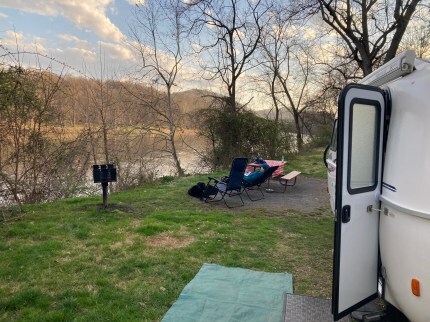
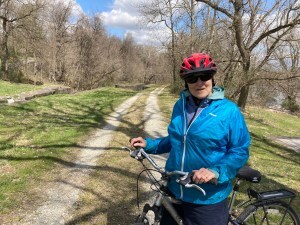
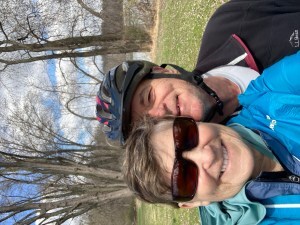
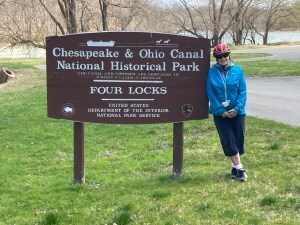 At McCoy’s Ferry I get the great AM walk; they get the afternoon off.
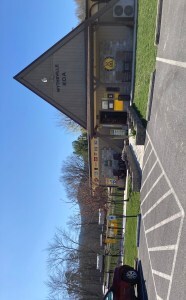 I think KOA must mean Kinda Outrageous Airstreamers. But mom choses places for off-leash walks when we have to do one-night-quick-lets-get-out-of-here stops. Thx, Mom.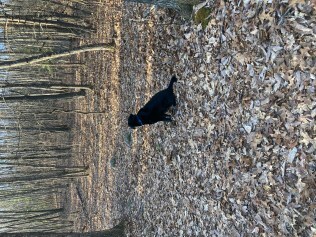
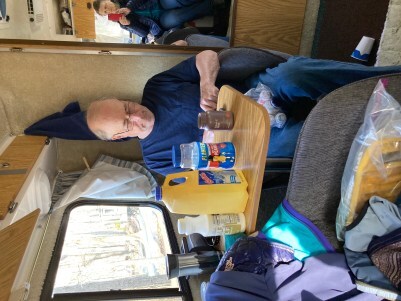
They say it’s cozy inside. Oh sure. Stuff gets dropped on me. They use carrot bits to move me around so they can use the bathroom. That’s OK; I like carrots.
I love my Asheville dog cousins and all their toys. I love Aunt Joy. She loves me, too.
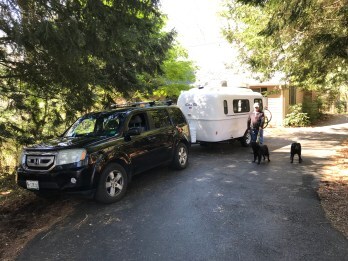
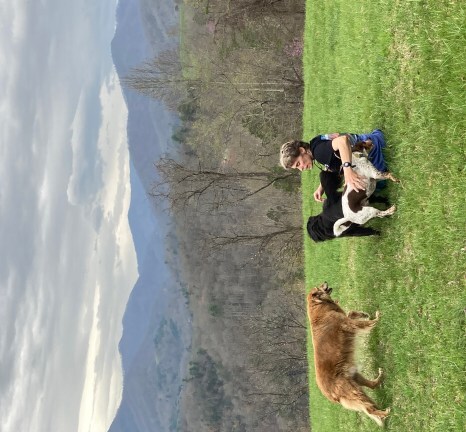
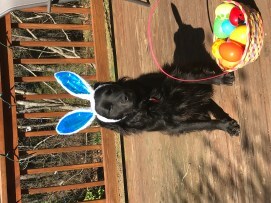
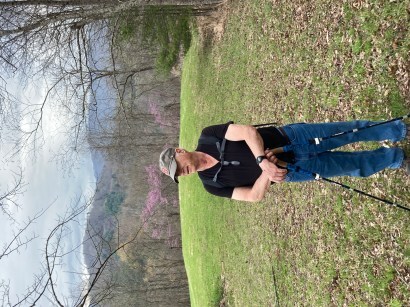
We had trips to streams in the Smokies and mountains. Mum likes to lie on rocks if there’s no trout biting. I do too. Bob almost never gives up.
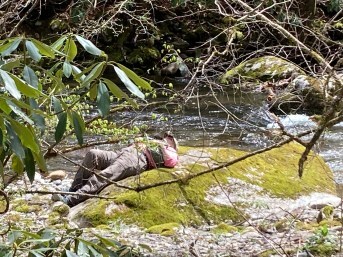
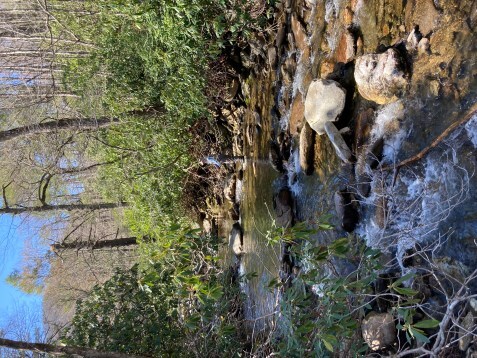
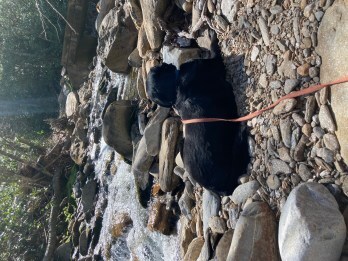
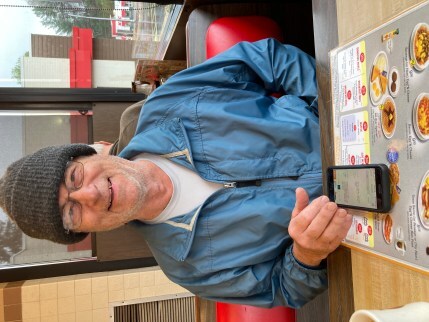
The way home was not as much fun (except for Kit and his beg-from-all-campsites dog, Dirk O’Daring. They got invited to Maine.) Bob loved the Waffle House; carrots are better.
Someone left fresh tracks in the mud (Yup, still mud) outside my front door. 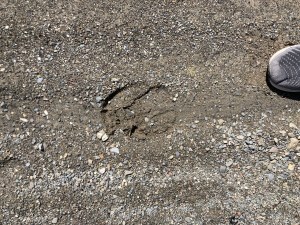 I rolled in snow. I hauled out moose antlers mom piled under the feeder, chewed on bony ends, and listened for hiding chipmunks. Home was really good. When I am with my family, I’m happy and we’re happy together.
(ps: moose. it was a moose)
Sandy’s back: On the road, I did edit the last chapter I’d written on mystery #3.
Bob and I listened to a C.J. Box murder mystery where I was reminded of this writing lesson: if a scene is hot, slow it way, way down. (Tree splinters powder hair a different color after a bullet’s narrow miss.)
If a scene is not hot, speed it up or cut it.
I tried to reread “Middlemarch” and failed miserably. I know the novel is a masterpiece, but I lost the plot during the decades-long sentences. I did, however, appreciate the flashes of George Eliot’s brilliance. Often, a character’s wisdom just smacks me: “But what we call our despair is often only the painful eagerness of unfed hope.”
Boom.
I plan to get my own copy of “Middlemarch” so I can highlight moments that smack me and slowly savor a few pages at a time. Write notes in the margins. Maybe we will have an author-to-author conversation. (Maybe I’ll be a third through by 2024 NC trip. The redbud and dogwood will be like fairy blossoms hanging in woods just starting to get green. Back home, moose will think it’s a good time to eat all the birdseed that got spilled on the snow.)
Sandy’s debut novel, “Deadly Trespass, A Mystery in Maine” won a national Mystery Writers of America award, was a finalist in the Women’s Fiction Writers Association “Rising Star” contest, and was a finalist for a Maine Literary Award. The second Mystery in Maine, “Deadly Turn,” was published in 2021. Her third “Deadly” is due out in 2023. Find her novels at all Shermans Books (Maine) and on Amazon. Find more info on Sandy’s website.
My Dog’s Vacation (From Mud Season)
While the trailer was getting ready, my mom and I went skiing. Why does the best snow always happen when we are packing?
Sandra Neily ; Opps, I missed my scheduled posting last week, but Raven’s travel post is all ready to share with you. She (my dog) is partial mostly to pictures.
Raven here:
Please fix it so we get there.
When something breaks, duck under the picnic table.
At McCoy’s Ferry I get the great AM walk; they get the afternoon off.
I think KOA must mean Kinda Outrageous Airstreamers. But mom choses places for off-leash walks when we have to do one-night-quick-lets-get-out-of-here stops. Thx, Mom.
They say it’s cozy inside. Oh sure. Stuff gets dropped on me. They use carrot bits to move me around so they can use the bathroom. That’s OK; I like carrots.
I love my Asheville dog cousins and all their toys. I love Joy. She loves me, too.
We had trips to streams in the Smokies and mountains. Mum likes to lie on rocks if there’s no trout biting. I do too. Bob almost never gives up.
The way home was not as much fun (except for Kit and his beg-from-all-campsites dog, Dirk O’Daring. They got invited to Maine.) Bob loved the Waffle House; carrots are better.
Someone left fresh tracks in the mud (Yup, still mud) outside my front door. I rolled in soft snow until I was wet and happy. But here’s the truth: When I am with my ‘hoomans,’ I’m always happy; we’re happy together.
(ps: moose. it was a moose)
Sandy’s back: On the road, I did edit the last chapter I’d written on mystery #3.
Bob and I listened to a C.J. Box murder mystery where I was reminded of this writing lesson: if a scene is hot, slow it way, way down. (Tree splinters powder hair a different color after a bullet’s narrow miss.)
If a scene is not hot, speed it up or cut it.
I tried to reread “Middlemarch” and failed miserably. I know the novel is a masterpiece, but I lost the plot during the decades-long sentences. I did, however, appreciate the flashes of George Eliot’s brilliance. Often, a character’s wisdom just smacks me: “But what we call our despair is often only the painful eagerness of unfed hope.”
Boom.
I plan to get my own copy of “Middlemarch” so I can highlight moments that smack me and slowly savor a few pages at a time. Write notes in the margins. Maybe we will have an author-to-author conversation. (Maybe I’ll be a third through by 2024 NC trip.)
Sandy’s debut novel, “Deadly Trespass, A Mystery in Maine” won a national Mystery Writers of America award, was a finalist in the Women’s Fiction Writers Association “Rising Star” contest, and was a finalist for a Maine Literary Award. The second Mystery in Maine, “Deadly Turn,” was published in 2021. Her third “Deadly” is due out in 2023. Find her novels at all Shermans Books (Maine) and on Amazon. Find more info on Sandy’s website.
When is Enough Enough? by Matt Cost
When is enough enough? That is a question we struggle with on a daily basis in America. We are born into a culture that always wants more. I am a product of this exposures and experience of my edifying enrichment. It is the American way to always want more.
The Algonquin people told tales of the wendigo, a malevolent spirt that appeared as a man that had feelings of insatiable greed and hunger, and in their telling, had a desire cannibalize other humans. The more flesh the wendigo ate, the hungrier it grew, wanting more, more, and still more.
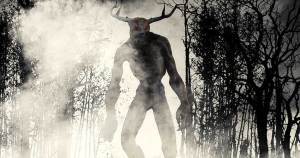
This has come to be symbolic of any person, group, or movement with an overwhelming appetite and greed for ever greater consumption of food, power, wealth, or material possessions. This is the America that we live in, a place where enough is never enough. We need bigger houses, fancier cars, more clothes, appliances—the latest in technology and gadgets. More.
This voracious hunger that can never be fulfilled is something that I often see and most certainly have experienced as a writer. There is always a desire for more, a reaching past what is had, to spy upon what could be next. As writers, we need to sometimes hit the pause button, and stop to smell the proverbial roses.
I’ve always wanted to be a writer, or have since the age of eight, anyway. There were many bumps along the way. I wrote my first manuscript when I was twenty-two years old, fresh out of college. I am Cuba. A mere thirty-one years later, that book was published, creating my first traditionally published novel.
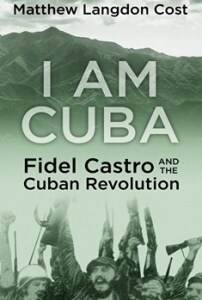
I might interject that this was a rather patient time for me, and many roses were smelled, perhaps too many. But it was not for a lack of wanting. And when that first book came to fruition, my hunger grew ravenous. I signed a contract with Encircle Publications. Then came the cover reveal. Then the ARC. Then it was launch day. Book signings. I had written, published, and was selling copies of my own book. But I wanted more.
Here, I will discuss the potential more that was desired, without commenting upon which rung of the ladder I have currently reached. In my mind, I have already reached the top, and realized that the peak might not be quite as exciting as the climb. You know, that old thing, it’s the journey and not the destination that matters.

A writer writes a book. Edits it. Feels pretty good about it. Decides to shop it an agent or maybe directly to a publisher. A publisher decides to offer a contract, the deal is signed, and roughly a year later, the writer, now an author, receives ARCs in the mail. A fabulously exciting milestone that is only eclipsed by book release day, which coincided with a launch party in which the newly crowned author is praised by family, friends, and perhaps a solitary stranger from the wild he wanders into the celebration by mistake.
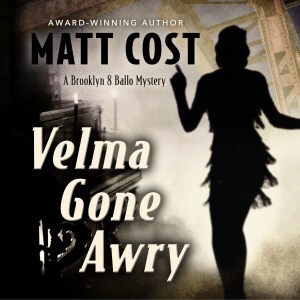
Okay, so Velma had a pub date of April 12th. Maybe this will be the one? The one what?
A book has been written, edited, sold, published, and launched. Then what? The author wants to be recognized for their work in terms of awards and sales. A modest award is realized by a company that nobody has ever heard of, and a trickle of sales leak out, the author following the Amazon Author Central page to see how the book is doing, even though the algorithm developed by Amazon has almost nothing to do with actual sales.
More. This is not enough. The author wants more and bigger awards. Increased sales. Slamming their way through social media sites to promote their baby, attending expensive conferences to network and brand themselves and their book—scrapping and scraping to gain notoriety and fame, the author manages to win a more substantial award, one that people have actually heard of, and sales tick up another notch.
But this is not enough. The author wants to win an Edgar, a Booker, a Nobel, or a Pulitzer. They want to open the New York Times and see their name on the list, and if really greedy, they want that name to be on the very top. The author wants the major conferences to woo them, offer them to be the guest of honor, wined and dined, and treated like royalty.
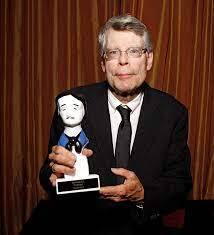
But what happens when there is no more more to lust after? When the awards have piled high and the sales are on par with Stephen King?
And this one author, wonders, if perhaps, it is not just enough to write. Write on.

Matt Cost was a history major at Trinity College. He owned a mystery bookstore, a video store, and a gym, before serving a ten-year sentence as a junior high school teacher. In 2014 he was released and began writing. And that’s what he does. He writes histories and mysteries.
Cost has published four books in the Mainely Mystery series, with the fifth, Mainely Wicked, due out in August of 2023. He has also published four books in the Clay Wolfe Trap series, with the fifth, Pirate Trap, due out in December of 2023.
For historical novels, Cost has published At Every Hazard and its sequel, Love in a Time of Hate, as well as I am Cuba. In April of 2023, Cost will combine his love of histories and mysteries into a historical PI mystery set in 1923 Brooklyn, Velma Gone Awry.
Cost now lives in Brunswick, Maine, with his wife, Harper. There are four grown children: Brittany, Pearson, Miranda, and Ryan. A chocolate Lab and a basset hound round out the mix. He now spends his days at the computer, writing.
April 23, 2023
Maine summer author tour tips for readers, writers and libraries
As April nears its end and we (fingers crossed!) have the worst of the winter weather behind us, the Maine author talk and book-selling tour is heating up along with the temperatures. That means there’s an author talk coming to a library near you very soon. Or an author table at your local craft fair or arts festival, or some other event involving a local author or authors.
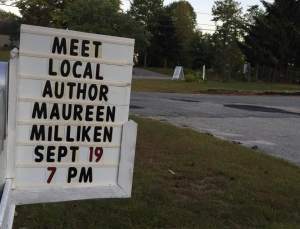
Libraries are an authors best friend.
I’m in the rare position of being a published Maine crime writer, as well as chair of my town’s library board of trustees. As our library works on lining up author for our golden “summer visitor” season, I am also working on lining up events for myself. From both perspectives, it occurs to me that everyone can use tips on how to make author events productive and enjoyable.
Authors do appearances and events to engage with readers get their name and their books into the public conversation and possible make some spare change. I sometimes come across the misperception that authors make good money doing events, but I know few who do. After the cost of gas, producing marketing materials, and in many cases taking time away from earning money on their day job, there’s little profit. Sometimes the author ends up taking a loss.
I’m not complaining or looking for sympathy. I’m clarifying, with the belief that the key to success for all involved is for readers, event hosts and even writers, to look at these events from that persepctive.
That said, I promised tips, not a lecture. So here they are (with some lecture thrown in):

I wait for an author talk attendee to make a decision on buying a book at Rodgers Memorial Library in Hudson, N.H, as fellow author Coralie Jensen listens to an attendee. The library very nicely set us up at a table after our talk. And there was cake.
TIPS FOR READERS
If an author is giving a talk at your local library, bookstore, or other venue, consider attending, even if the genre isn’t your cup of tea. Your local library is the workhorse of community engagement, and there’s no better way to support it than to show up.
Even if the talk is not at a library, these talks are almost always free and they’re a good way to support your community nonprofits or businesses, and engage socially, even if you don’t buy a book (and you don’t have to, more on that later). Bring your friends or family members. You may be surprised at how much you enjoy it. Some tips:
If the book looks interesting, read it beforehand. This not only will enhance your appreciation of the talk, but also helps when Q&A time rolls around. It can be awkward when there’s no Q. Authors love questions or comments from people who read the book. The author won’t be mad because you read the book beforehand instead of buying one at the event. I promise.Even if you haven’t read the book, come with questions. A favorite is “Where do you get your ideas?” But things like “Why did you start writing?” “Why do you write mysteries (or whatever) instead of some other genre?” “What did you wish you knew about writing before you started?” are all good icebreakers. Don’t ask a question that can be answered with “yes” or “no,” instead ask one that will elicit a story, advice or insight.Don’t be shy, please ask questions! But, unless the author invites questions during the talk, make sure to wait for the Q&A to ask them.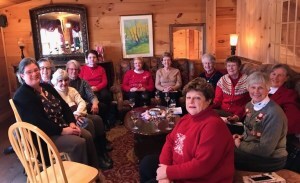
Me (at left, in black) and a local book group who asked me to talk at their pre-Christmas meeting. It was a great event!
While your own writing journey or your interset in writers other than the event guest is very, very interesting, the rest of the audience wants to hear from the featured author. Be sure your question is not a speech about your writing or personal preferences or anything else like that in the guise of a question.
You don’t have to buy a book, and the author doesn’t expect everyone who attends to buy one. Don’t let the fact you don’t want to buy a book keep you from attending. Authors are even happy if you read the library’s copy, or borrow a copy from a friend. They are happy anytime someone reads their books, no matter how they get it.If you plan to buy a book, bring cash, especially lower denominations (too many $20 bills and the author runs out of change). While many authors are digital-savvy and use Square and Venmo, you can’t count on it, and even if they do, you can’t always count on those functions working.If the author is selling their books themselves (as opposed to having someone else taking money and making change), please, after the talk, allow the author to get to the book table. Don’t corner the author or launch into a long dialogue, even if it’s to say nice things. I have not mastered the are of cutting someone off diplomaticall. I imagine many authors have the same issue. Keep that in mind and be aware of what’s going on around you. If the author is nodding politely, but looking anxiously over your shoulder at the book table, take a hint. If there is someone standing next to you holding a book and money, step aside. This also applies to author tables book or craft fairs, or any other author selling event.If you see an author selling books at your local craft fair, art walk or farmers’ market, you don’t have to be a buyer to talk to the writer. Most authors love talking about their books and anything else, and they don’t expect every discussion to result in a sale. Be sure to take a free bookmark or other free marketing material to show you appreciate the author and are interested in their work.If there is free candy or other freebies at the author’s table, take one, not a handful. Especially if you are not buying anything.Any author who’s been behind a table at a book or craft fair more than once has heard it all, so you won’t hurt their feelings by saying. “I don’t read books,” “I think writing is a waste of time,” “I only read Stephen King,” or any other “joke.” But the author also won’t be impressed or think you’re funny. Just an FYI.
My first ever author talk, at my local library in Belgrade in 2015.
TIPS FOR LIBRARIES (AND OTHER HOSTS)
Setting up and hosting an author talk is a lot of work. It can be disheartening if after all that, no one shows up. Getting the word out and making author talks fun make all the difference. Most authors will stand up in front of a room of two people and 28 empty chairs and do the same talk they would if there were 30 people there, but but boy is it tough.
It’s all about marketing. It’s up to the library, or host, to make sure patrons and the general public know about an event. (The author is responsible too, more on that later). Post it on your library (or organization) Facebook page, but don’t assume everyone is looking at Facebook all the time. Printing out flyers and putting them in local stores and other places where the public will see them, old school, actually gets the word out better. Make sure you send a news release or fill out the events calendar form for your local newspaper (if you still have one) in plenty of time for it to get online or make print. Usually, you need to do it at leat two weeks in advance. Also, be sure all your friends, board members and everyone else, shares the Facebook event post.Marshal the troops. Don’t be shy about using the old-school organizing trick of pressing membership, friends, volunteers and family to show up and to bring friends. Stress to them it’s important for your organization that there is an audience. If members don’t care, why should the public? And if you’re a member, yes, you’re busy, but work that 90 minutes or hour into your schedule. This shows the community, as well as authors, that the library or organization cares and takes its community commitment seriously.Make it fun. Have food, even if it’s just cookies from the grocery store and lemonade. And to ensure the food doesn’t sit there untouched, build in a 15-30 minute “meet and greet” before the talk (not after, when everyone will be heading home). Don’t advertise that the talk starts at 6:30, but there’s a meet and greet at 6. Instead, build the social time into the actual event. The event begins at 6, with a meet and greet and refreshments, followed by the talk.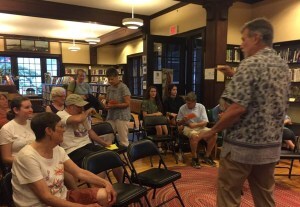
Maine Crime Writer Dick Cass (right) warms up the crowd before an MCW making a mystery panel in 2019 at Rangeley Public Library, with himself, me and Kate Flora, as Dick’s wife, Ann, hands out materials to the audience. The more authors, the merrier!
Think outside the box. Most libraries or organizations hosting events have an events budget. Use it to incentivize attendance. Buy a couple of the author’s books and raffle them off at the event. Have a trivia quiz about the author’s books, with prizes for winners. There are a lot of things that can be added to an event that signal to the community it’s going to be a lot of fun. Be sure you mention them in your marketing, too!Communicate with the author. Most authors don’t charge a fee, but they do welcome an honorarium. If your library does, make that clear when you invite the author, and specify the amount. I get it, people are uncomfortable talking about money, but the author needs, and deserves, to know. If you don’t offer an honorarium, make that clear as well (and talk to your trustees about setting up a fund for one). While authors don’t do events for the money, they’re more likely to agree to come to your library if it’s not going to cost them money. They shouldn’t have to wonder, but should know. Whatever you do, don’t do what one library that invited me did, and charge a percentage of the author’s book sales. Usually, the author’s take is already small and they’re making very little on that night’s sales. Don’t nickel and dime authors, or you’ll find they’ll go somewhere else. I told that library no thanks.Commuicate II. Find out in advance if the author needs A/V equipment, and nail down the specfics. Find out if they need a table for their books (yes, they will). Let them know what time to get there and how long you think the event will last. Discuss the format, and let them know if you have something in mind, or find out if they do.Be sure to provide water for the author.Be the author’s guardian. Make sure, for instance, that they can get to their book-selling table after the event. Run interference if someone is monopolizing them. Offer help carrying items to and from their car.Consider having more than one author at a time, and check out writing groups, like Maine Crime Writers and Sisters in Crime, to see what programs they offer.Be sure to take photos, or have someone take them, and post them on your library or organization’s social media to show everyone how much fun it was. The more you make sure the community knows that events are a thing, and that people are going to them, the more they’ll be a thing, and the more people will go.
It’s not just about books — merch and promotion will draw people to the table.
TIPS FOR AUTHORS
No one will, or should, care as much about your success and your books as you do. That means that it’s up to you to put 100% effort into any event you do. If you don’t, why should anyone else?
It’s also a mistake to quantify any event, whether it’s a talk or table-selling, by how much money you make. The engagement with readers and the community, having your name on marketing materials, and being out there, has benefits you can’t measure.
It’s all about marketing. You don’t have to be a whiz at every social media form, but be sure that the ones you use advertise your events. Make sure all publicity has at least three of the five Ws: What, Where and When. (The others are Who and Why, and if they’re relevant, get them in, too). Market early and often. Yes, the library, organization or craft fair should market too, but that doesn’t mean you’re off the hook.Be a good guest. Libraries have limited budgets, small staffs and are juggling a lot. Take care of your needs and responsibilies as much as possible, rather than expecting to be catered to. If you’re selling at table event, arrive and set up in the time frame they ask you to. Follow the rules for how much space you can take up and when you can leave. Whether it’s a talk or a table event, you’ll likely have to lug your stuff around yourself, so make provisions for that, even if it means buying a shopping dolly or making your entourage tag along.Communicate clearly with your host. Make sure you know what time you’re expected, and get there early so you can set up and make sure everything’s in order. If you need equipment, a table or anything else, let them know beforehand. Double-check a day or two before the event on time, expectations, what you’re bringing and what they’re providing. If you’re doing a table-selling event, find out if it’s up to you to bring your own table, pop-tent, etc. If you do a lot of these types of events, those items are fairly cheap, get your own so you’ll be prepared. Having a couple decent tablecloths to use solely at events is a must, too.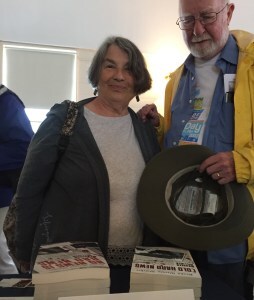
My parents top by the table at Books in Boothbay in 2016. They show up even when I bet them not to.
Have merch. Invest in bookmarks (there are many design and order websites, like Vistaprint and Staples, and they’re relatively inexpensive). Be sure that your web address is on them, as well as something eye-catching. Try to make them usable long into the future by not putting time-specific information on them. Give them away for free at all events and stick them in a book whenever someone buys one. Other low-cost items, like magnets, postcards, buttons and stickers also keep your information with someone long after the event. Also make a sign (again, cheap on Vistaprint or Stables), that introduces you and your books, and a second cheaper and smaller sign that says how much your books are and what type of payment you take. You can put it all on one sign, but you may have to update as prices and payment methods change.
Any time your books are available for in-person sale, have copies of every title clearly labled “Display Copy,” prominently displayed, for people to handle and paw through. Othewise, you’ll end up with a bunch of unsellable used-looking and soiled books.Visuals help at talks. A talk is much more entertaining if you have visuals. I take a lot of photos around Maine, so use them in a slide show to enhance my talk. I also make sure my talk works without the slides in case there are technical issues. You don’t have to do what I do, but consider ways to make your talk interesting and unique.Technical issues. I’m fairly savvy with computers, video equipment and more, but have found people speak different languages when it comes to technology. If you have a slide show or presentation, make sure you are very specific about what equipment you have and what you need to make it work. I’m talking cords, cables screens, monitors, the space to allow projected images, etc. I’ve spoken at events where my cords and their ports didn’t match up, even though we confirmed that they would. If they don’t have a monitor, but an old-school screen, and there’s a way for you to project, make sure it’s worthwhile as far as the light in the room, the setup of chairs and other logistics go. Most libraries have decent A/V equipment, but some don’t. Be sure you arrive early enough to make sure everything works, so you’re not trying to figure it out in front of 30 people. The nature of the beast is that the event where you’ll have technical issues is the one with your biggest audience of the summer. It never happens at the events where the only attendees are you, the librarian, your mother and someone who wandered in to return a book. Do a dry run at home. Do several dry runs. My rule is that if I can’t solve the technical issues after 10 minutes of screwing around with the equipment (before show time, not when, or after, it’s supposed to be starting), I scrap the slide show and speak without visuals.Marshal the troops. If you have friends and family who are willing, get them to attend. This will ensure there’s at least a minimal audience.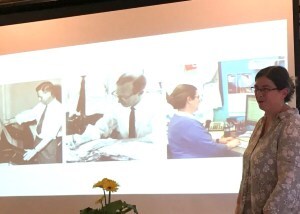
A nice slide show always enhances an author talk. I sometimes show this slide when I talk about how I was a journalist before I was a mystery writer, showing my grandfather and dad, also newspaper editors. just be prepared to call an audible if there are technical issues.
Make your talk interesting. Plan what you’re going to say beforehand, rather than deciding you’ll wing it. Give your talk a framework or narrative arc. You’re an author, you’ve got this! I usually do a short intro of who I am and how I got into writing, then structure my talk as “The top questions authors are asked.” I tweak it and adjust for each talk, depending on the audience.
If you MUST read… I don’t read at my author talks unless the library asks me to. It’s just a personal preference. If you do, keep in mind that people listening to out-of-context reading, even if it’s your awesome opening scene, will lose interest if it’s too long. One rule that occurred to me as I stood holding an empty wine glass wishing I could sneak over to refill it as an author launched into chapter 2 after slogging through chapter 1, is that you should never read longer than it takes someone at an event to finish a glass of wine.Collaborate. Look for ways to do events with other authors. It helps ease the stress and adds intrest to the event for the audience, and also give you fresh ideas, and is much more fun that going it alone.Think twice before saying no. Some of the best events I’ve done have been things like book groups or other non-traditional events that don’t offer an honoraium. My philosophy is that if people like my books and want to hear me talk about them, I’ll be there.Roll with it. When I first started doing author talks, Gerry Boyle gave me some great advice. He said that when he does a talk, he goes without expectations and rolls with whatever is expected by the library. (Sorry, Gerry, if I’m getting this wrong but that’s how I remember it). My philopshy, after eight years of doing author talks, is: Be as prepared as possible, but also be prepared to roll with what the library wants or whatever disaster occurs.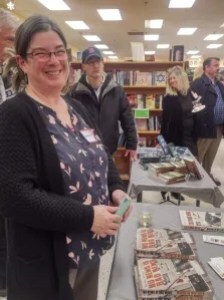
I always try to be positive and pleasant at an event, no matter how much it goes against my normal personality.
At library talks, find someone to handle the payment part of your book sales if you’re not partnering with a professional bookseller (most smaller authors don’t). Many book sales and goodwill from readers are lost as the author tries unsuccessfully to disengage from a talkative attendee keeping the author from engaging with anyone else. Yes, the ideal solution is to learn how to politely get to the table and sell books, no matter who tries to stop you, but that’s easier said than done.
Be sure you have a variety of cash (ones, fives, 10s), so you can make change. People only carry $20 bills, if they carry cash at all. Even though I know you hate technology, getting a Square reader and signing up for Venmo is easy and it will increase your sales. In fact, people with smart phones can use Square without a reader if the person buying has Apple wallet or another phone-based pay function. But also have cash on hand. The more able you are to sell books in a 21st century way, the more books you well sell.Be your best promoter. All the other items above are part of this, but there’s more. Whether it’s at a library, or five hours at a table, engage with people about your books. You don’t have to do a hardcore sales pitch, but be prepared to talk about what you do and what your books are about in a conversational way. There should not be one quesiton at a Q&A you can’t answer. Feel positive and be positive. Even if you’re not a social person and it doesn’t come naturally. I know no one will believe this, but I have social anxiety and it’s an effort to engage pleasantly with strangers, particularly for hours on end. But at least it’s talking about my books and writing, not quantum physics or block chain. Two people show up? Give the same talk you would as though there are 30. No one bought a book all day at the arts festival? Well, at least people took bookmarks, talked to you about your books, and your name was on the program. Some guy comes up and says, “I never read books! They’re a waste of time!” (You’d be surprised how many this has happened to me at an event). Smile your sweetest smile and say, “I’m sorry to hear that. It’s your loss.”Celebrate the event. Take a photo of the library, any signs with your name they put out, the audience, and get someone to take a photo of you, then put it all on your social media. Make sure to tage the library or organization that hosted you.After it’s over, send a note to the library or organization that invited you to talk thanking them.Remind yourself how lucky you are and how hard you have worked to be in a position where you are talking about and selling a book or books that you have written.April 21, 2023
Weekend Update: April 22-23, 2023
 Next week at Maine Crime Writers there will be posts by Maureen Milliken (Monday), Matt Cost (Tuesday), Sandra Neily (Wednesday) Charlene D’Avanzo (Thursday), and Kait Carson (Friday).
In the news department, here’s what’s happening with some of us who blog regularly at Maine Crime Writers:
Coming soon (June 9-10): Maine Crime Wave! Lots of Maine Crime Writers will be there. Registration is now open. For more information, click here:
https://www.mainewriters.org/maine-crime-wave
An invitation to readers of this blog: Do you have news relating to Maine, Crime, or Writing? We’d love to hear from you. Just comment below to share.
And a reminder: If your library, school, or organization is looking for a speaker, we are often available to talk about the writing process, research, where we get our ideas, and other mysteries of the business, along with the very popular “Making a Mystery” with audience participation, and “Casting Call: How We Staff Our Mysteries.” We also do programs on Zoom. Contact Kate Flora
April 20, 2023
Publishing in the Modren Wurld (No Pictures)
Most of the writers I know who are interested in publishing their work are acutely aware of the odds against getting work out into the world in the current publishing climate. Some of the possible culprits are:
Too many MFAs with too few available academic jobsToo many employed MFAs who need publishing credits to survive in academiaThe ease with which you can self-publish a book or story, without troubling yourself too much about editing or design.Even, I suppose, AI—See this article for details on one magazine’s experience with AI-generated submissionsSo in the never-ending search for outlets, I’m experimenting with a different mode of publishing called Substack. You may have heard about Substack being in a contretemps with Twitter over cross-posting material from Substack, but that’s more an artifact of Elmo Musk’s continual fiddling and his magical thinking.
Substack calls itself a subscription newsletter platform, allowing writers to send digital newsletters and other materials directly to subscribers. It also includes a payment infrastructure, very simple to operate, that allows a writer to monetize their writing. If you’ve been reading Heather Cox Richardson’s Letters to an American, you’ve seen an example of a Substack newsletter.
Anyone can publish on Substack. A writer can charge for subscriptions or give them away, or they can charge for some content and give some away. The writer keeps 90% of any earnings; 10% goes to Substack, a more reasonable cut than most publishers’ royalty structures.
When I publish a new story or essay, Substack sends it by email to all subscribers. So I have no need to maintain a spreadsheet of email addresses or a Constant Contact account. And it provides metrics on how many people read each piece, etc.
How I’m using Substack is two fold:
As a publishing platformAs an archiveI can publish stories, essays, even novels, through the platform and make them freely available to people who might be interested in what I write. Publishing on Substack does not use any of my rights in a work, so if I can publish it elsewhere, I may. I’m trying to put out a new piece every ten days or so, and I mix up the genres while I try to find what people most want to read.
My Substack platform is growing slowly, but I do have paid subscribers, and it is a pleasure to have that kind of support. But even free subscribers gain value from seeing my work, which they can also share freely.
Having been writing for nearly forty-five years now, I have a large body of work, some of it published, some of it not. Substack also allows me to collect all those pieces from all those dark and spidery corners of my hard drive and have them archived in one place. This gives me an opportunity to publish pieces that I may not have pushed hard to get into publication before.
My next Substack experiment starts on June 1, when I will begin serializing my novella The Retrievers. I plan to publish a chapter a week, without charging, as an experiment to see if people will respond to reading fiction in that format. I’m interested, needless to say, what the response will be. But mainly, I’m interested in experimenting with new ways of getting my work out into the world.
You can find my Substack here. I’d love for you to subscribe (for free or for pay), share posts, or otherwise participate in the community I’m trying to create. As my oenological heroes Bartles and Jaymes used to say, “Thank you for your support.”
April 18, 2023
The World Through Childrens’ Eyes
Kate Flora: Yesterday would have been my mom’s birthday. She’s been gone for years
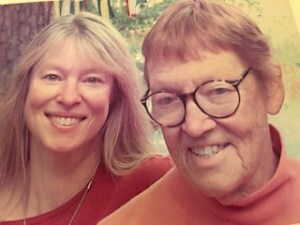
Me and my mom
but I still miss her every day. She was a writer–and my inspiration–and also a gardener, a baker, and a keen observer of the world around her. (She has kindly lent her observation skills to Joe Burgess.) Since I am thinking of her, I decided to share another one her posts from her essay collection, From the Orange Mailbox. This one is about interacting with her grandchildren. Those grandchildren are now about to leave their thirties, but still remember their adventures with, as my boys called her, Maine Grandma. This essay is from the chapter called April.
The important harvests of this farm are the impressions given to children who have lived or visited here, the memories they carry from their times upon these acres.
Last fall, my two-year-old granddaughter, Sara Beth, called my attention to a daddy longlegs she discovered in my living room. Then she pointed out a mommy longlegs and a baby longlegs. However, she soon announced that there were too many to name and wanted to know why I had so many of these creatures in my house.
I didn’t have an answer and not a reference book in this house provided any information on these eight-legged invaders. Last week, just before my grandchildren arrived to help me celebrate my birthday, Judy Hawkes’ book, My Daddy Longlegs, came in at the bookstore. No sooner had it been read than Sara Beth and Jacob, aged four, used for an escort for a trip through the cellar.
Armed with a flashlight, a plastic glass, and an old postcard, the three of us descended into the dirt-floored, cobwebby basement, stalked and captured two active specimens.
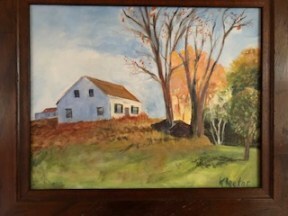
The farmhouse on Sennebec Hill, painting by Karin Rector
Back at the dining room table, we shared the magnifying glass to count the joints and knees and observe the second pair of legs which the daddy longlegs uses for hearing and smelling. Turning the plastic “cage,” we could see the lookout tower on top of the body with an eye on each side. We still needed more information because the body shapes of our Sennebec Hill daddy longlegs are not like the illustrations in the book. And when we have more time, we’ll build a daddy longlegs box so we can watch them eat and dance use their amazing second legs.
Jacob lives in a four-year-old world, part real, part make-believe, where every path has signs, “What if. . .?” On my birthday morning, we followed the spring run-off water down across the fields to the pond shore. Behind the kitchen garden where the small stream comes through the culvert, the water ran clear. But in the field, twigs and grasses had been pushed by previous run-offs into small dams holding the water in pools. With our sturdy sticks, we cleared the channels and watched chocolate swirls as the free stream surged forward. With his new waterproof boots, Jacob could wade and splash and watch mud settle on his black toes.
We meandered as the run-off did, back and forth following the contours of the land until we reached the lower field. Here we stopped to examine and pick at the matted mounds piled up by the force of water when the big snows melted. Soggy white patches like a scattered box of tissues wet down to earth caught our eyes. All along the swamp edge of the feel, we found flattened weeds whose slim mahogany pods (like small snap beans) had burst to spill masses of white, like the down of milkweeds. I stuffed samples into my pocket.
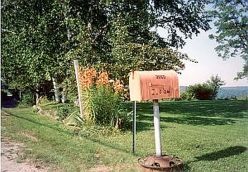
The world famous Orange Mailbox on East Sennebec Road.
Between the lapping waters of the pond edge and the firm mound of matted reeds and twigs left by the high water, the ground was scoured clean, the dark soil unlittered by a single leaf or twig. “It’s very quiet here,” said Jacob. “This is kind of a secret place. Maybe dragons lived here once. Or a trillion years ago some dinosaurs.” Then, looking back the way we’d come along the shore, he shook his head. “No. Dinosaurs couldn’t get between those trees. They’re much too large. But if a giant shark once lived in your pond, he could swim over and see this place. What’s that?”
“That” was the leaf-littered hollow between the barrier berm–built up by drifted-in plant parts–and the oak-bordered bank. Wider than grandma’s garage, the acidy water full of tough-fibered oak leaves discourages growth and looks like a quivering quagmire. We out-spooked each other with scary stories and beat back all the monsters with our magic swords.
Late that afternoon, Max, my younger grandson, became excited by something he was seeing. Kneeling down to his ten-month-old toddling size and following his eyes, I saw the sample weeds from the pond edge–now dry–exploding into miniature seed-carrying parachutes. Just the air currents of passing people were sending the bits of fluff up into space above the desk. The seeds, shaped like the eye of an embroidery needle–clung to individual feathery bits determined to find a place to root and grow more dogbane. We had identified the damp weed stalks and matted silk but had not expected the aerial display.
Daddy longlegs, dams, dark pools, and dogbane. What will my grandchildren remember from this April visit? And what farm excursions will their parents’ memories prompt them to suggest next time they come?
April 16, 2023
Back in MY Day
Kaitlyn Dunnett/Kathy Lynn Emerson here. Those in my age group (old farts) have a tendency to praise the good old days, just as our parents and grandparents did to us. Since those tales frequently ran along the lines of walking six miles to school in a blizzard, we always took them with a grain of salt. A similar wariness is warranted when “boomers” born in the first couple of years after soldiers came home from World War II start waxing nostalgic and making snide remarks about modern technology.
I am irritated by such things as word processing programs that want to correct my spelling and grammar, whether it needs correcting or not, and the intrusiveness of other people’s cell phone conversations, always carried out in loud voices. I am, frankly, in terror of future developments in AI. Even so, I would not want to go back to doing things the “old fashioned” way.
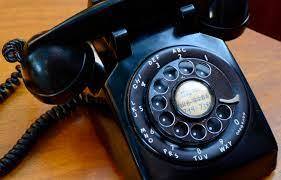 Before cell phones, there was no way to contact other people unless you had a landline and knew what number to call to reach them. One time back in the late 1960s, I was supposed to meet a friend to give her a ride back to college after spring break. When she did not show up at the pickup point I had no way to get in touch to find out what had happened. Was I waiting in the wrong place? Had she changed her mind or forgotten? The only thing I could do was wait around until it was really obvious she wasn’t going to show and then go on without her.Would that happen today? Probably not.
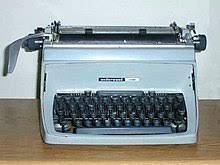
Before computers, I used a manual typewriter with carbon paper (and liberal applications of White Out) to produce my manuscripts. Enough said. Don’t even get me started on other office equipment.
Before e-mail and text messages, people wrote letters and made phone calls. The letters were long and newsy. Well, e-mails can be, too. There were lots of hour-long or longer phone calls to friends and family, even though long-distance calls could get expensive. I called my parents every Sunday for decades when I was in Maine and they were in New York and then in Florida. If they were still around today, I suppose we’d be in contact via Zoom or Face Time.
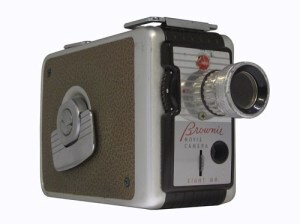 Before digital photos and videos, there was no way to tell if you had taken the shot you thought you had until you sent the film away to be processed. My snapshots tended to be out of focus, and I once shot a long sequence of friends in my college dorm with a filter on over the lens. And, of course, with 8mm film, there was no sound.
Before online search engines, research had to be done in print format. I actually miss spending time in the library stacks, but even the best university library wouldn’t have every book and article I needed. Inter-library loans helped, but there was still a lot that wasn’t available unless you could travel to the location where that material was housed. There were experts willing to share knowledge, just as there are now, but instead of instant access via the Internet, where we can ask questions on Google, join groups dedicated to special interests, and find online articles on the most arcane of subjects, back in the day the only options were a cold call on the telephone or a letter. If you could find a phone number or mailing address the recipient might or might not be willing to answer questions.
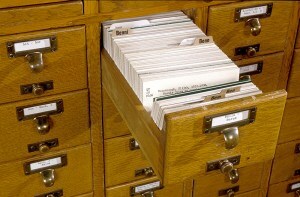
And did I mention that locating a book in a library required searching though a card catalogue? The system wasn’t difficult, but it took more than a couple of clicks with a mouse to find what you wanted. Thank goodness most libraries had a reference librarian on hand to help.
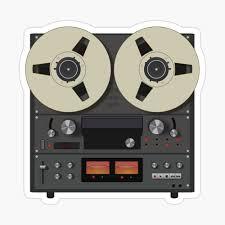 Before VHS, before DVDs, before Blu-Ray and streaming, I can remember being a young teen and recording episodes of Bonanza with a reel-to-reel tape recorder. I had a wicked crush on Little Joe Cartwright. The recorder was also handy for capturing crank calls to teachers during pajama parties and taping music off the radio.
Overall, things are both better and easier in 2023. I have one word of warning, though. To be able to contact someone by cell phone, the cell phone has to be turned on and the ringer has to be working. The other day, we thought our cat had gotten out of the house. When Sandy spotted a black cat out in the field and couldn’t find Shadow anywhere inside, he set off to try to catch the cat he’d seen. This involved tromping through muddy brown grass still dotted with snow, and thickets, and ditches full of cold snow-melt. I went looking, too, but I’m too wobbly on my pins to be much use, so after he started visiting the neighbors to ask if they’d seen her, I came back home. That’s when it occurred to me to double-check. I got out the cat treats, took them upstairs, and shook the container. Voila! Shadow emerged from underneath the bed. Relieved, I set about trying to reach Sandy to tell him the good news. Yes, you guessed it. He had his cell phone in a case on his belt but he didn’t have the ringer turned up and he couldn’t feel it vibrate. After he eventually came home, we found out that the black cat he’d been chasing belonged to one of our neighbors.
Modern technology has come a long way, but it doesn’t work if you don’t turn it on.
Kathy Lynn Emerson/Kaitlyn Dunnett has had sixty-four books traditionally published and has self published others, including several children’s books. She won the Agatha Award and was an Anthony and Macavity finalist for best mystery nonfiction of 2008 for How to Write Killer Historical Mysteries and was an Agatha Award finalist in 2015 in the best mystery short story category. She was the Malice Domestic Guest of Honor in 2014. Her most recent publications are The Valentine Veilleux Mysteries (a collection of three short stories and a novella, written as Kaitlyn) and I Kill People for a Living: A Collection of Essays by a Writer of Cozy Mysteries (written as Kathy). She maintains websites at www.KaitlynDunnett.com and www.KathyLynnEmerson.com.
April 14, 2023
Weekend Update: April 15-16, 2023
 Next week at Maine Crime Writers there will be posts by Kaitlyn Dunnett/Kathy Lynn Emerson (Monday), Kate Flora (Tuesday), Sandra Neily (Thursday), and Dick Cass (Friday).
In the news department, here’s what’s happening with some of us who blog regularly at Maine Crime Writers:
Coming soon (June 9-10): Maine Crime Wave! Lots of Maine Crime Writers will be there. Registration is now open. For more information, click here:
https://www.mainewriters.org/maine-crime-wave
An invitation to readers of this blog: Do you have news relating to Maine, Crime, or Writing? We’d love to hear from you. Just comment below to share.
And a reminder: If your library, school, or organization is looking for a speaker, we are often available to talk about the writing process, research, where we get our ideas, and other mysteries of the business, along with the very popular “Making a Mystery” with audience participation, and “Casting Call: How We Staff Our Mysteries.” We also do programs on Zoom. Contact Kate Flora
Lea Wait's Blog
- Lea Wait's profile
- 509 followers

