
Lea Wait's Blog, page 66
April 14, 2023
Choose Your Own Adventure
I have news. Well, it’s not new news—sometime in the last several weeks I actually wrote The End on The Book That Would Not Write Itself. You know, the one I whined about for months. Intended to be the second installment in a 1920s cozy English mystery series, it needed a second look and judicious use of the delete button. I usually write fairly cleanly and edit as I go, so the job was not too onerous. Then, of course, I had to go over the first book to make sure there was continuity. Quite frankly I had forgotten most of it, LOL.
Now that I’m almost done “fixing,” I am faced with a dilemma while I still have some shred of my mind left: what’s next? There have been times when I worked on multiple novels concurrently, but I think those days are over. I have difficulty recalling one book’s details as it is. You would not believe how often I had to consult the cast of characters list so I could get names right.
Quietly simmering away on my hard drive are three things I’ve started at one time or another. All could be considered “books of the heart” and I would be happy to dive into any of them. Each would stretch me in a different direction. Here’s where you can help me decide. I’ll let you know what I choose to do next month!
Behind Door #1: Book Three of the cozy 1920s Lady May mysteries. I’m still familiar with that world and haven’t forgotten everything. Yet. Pitching a 3-book series is better than a 2-book series, and I love the older Auntie Mame-like heroine. It could also be—and probably would be since time is finite—shortened to a Christmas novella, which would be fun and not a 75,000 word slog.
No opening paragraphs yet, but a blurb:
A stranger has moved into the Grange, and all of Woodford Haven is curious to find out more about him. Lady May thinks there’s something very familiar about him, though her memories are hazy. [She and I have a lot in common.] But May knows everyone worth knowing, and it will come to her eventually. In the meantime, she decides to make the poor lonely fellow her Christmas project, and possibly play matchmaker for her widowed niece.
Antony Harland doesn’t want to be anybody’s project, whatever the season, or, indeed, known at all. Injured in the war, he just wants to be left alone to play his jazz records and avoid his family’s interference, especially as they believe he killed his father.
Behind Door #2: a contemporary, Maine-set cozy mystery featuring the owner of a cleaning company. Told in first person—a first for me—and hopefully funny. The titles write themselves…Scrubbed Out, Down the Drain, Clean Getaway, Married to the Mop, etc.
I was an English major. So why was I scrubbing my fifth and thankfully last toilet of the day right before I discovered the body?
Excellent question. Not that English majors don’t appreciate clean toilets. I mean, everyone does—that’s a given unless you’re some kind of weirdo. A good slug of bleach along with a stiff brush, and Bob’s your uncle, as the Brits say.
When I was in college twenty years ago, I did not expect to clean anyone’s toilet but my own. However, crap happens, and now I am an entrepreneur. And yes, I spelled that correctly the first time. A vendor’s-and-DBA-licensed, insured, and bonded Cleaning Professional, I am the owner of Dust2Dust, LLC. I have a team (very small, but still), and a comfortably long list of clients.
We are not solely limited to sweaty Cinderella services, either. A couple of years ago, the company branched out into the downsizing/organizing business, and while we are not competing with Marie Kondo, we are pretty busy year-round from Portland to Bangor sparking joy, throwing a variety of objectionable objects away, and making sense out of the senseless.
You’d be amazed what people shove out of sight, but I admit I was surprised when Brandon Donovan fell out of the bathroom linen closet.
Behind Door #3: a turn of the 20th century, Maine island-set, darkish historical mystery. I’ve “plotted” 2 books and the young schoolteacher heroine has been hovering over my shoulder for a long while. It’s possibly a YA, which would be another first for me.
It is Winter Term. Outside, there is nothing but ice and snow, trees black against a stone-gray sky. The sun is just a rumor.
Inside, the boys are back, and none too happy about it. A scant month ago they were drinking rum and spitting tobacco. Climbing masts like the monkeys they are and sleeping in hammocks under a tropical moon. Seeing the world, even if it meant delivering guano to do it.
Now they sit, the three of them, their long and twitchy limbs confined to the bolted-down desks. Their hair is slicked back, their woolen clothes somber and probably itchy. They must address me as Miss Stuart, although clearly they find that ridiculous. Just last year, I too was sitting where they are, only looking not quite as bored—Calvin Duncan—or mischievous—Samuel Williams. George Foster just looks blank, as if he is not here at all.
Which door should I walk through? I need a push!



April 11, 2023
Is there such a thing as too much?
John Clark pondering whether there’s time left in life to read all the books I lust after right now. The answer is hell to the no. I’ve read 75 so far this year while completing one manuscript. I’ve gone back to finish Thor’s Wingman a story I started writing in 2017. I’m at the point where I have gone through what I wrote back then and am now about to take Jared and Twyla into the land of Norse Mythology. For that portion, I’m challenging myself to write some pretty dark stuff.
However, there’s also a growing pile of new YA books that have me drooling. Most are just published and I got them on interlibrary loan. For the remainder of this post, I’m sharing three reviews all of books I read last week.
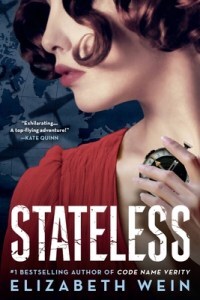
Stateless by Elizabeth Wein: While the mystery unveils well before the end, the tension as this group of teen and early twenties fliers realize what’s happening keeps you reading. Stella North represents England in a flight competition around pre-World War Two, ostensibly to promote peace while the Germans and Italians are destroying Spain and Ethiopia. Her parents were killed by the communists when she was a toddler and she survived by hiding in a dark cellar for days. The other pilots have similar scars, some psychic, some physical that are revealed as the story progresses. When Stella witnesses an attack on the Italian pilot resulting in a crash in the English Channel and his death, it sets in motion numerous attacks on other competitors. What makes this a great read is how events in Europe are portrayed and what their emotional impact is on everyone in the story. The young pilots come together in ways that shame the adults time after time. This is a great historical mystery, carefully researched with a fine cast of players.
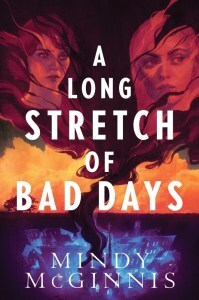
A Long Stretch of Bad Days by Mindy McGinnis. I’ve been a Mindy fan since her first book was published, so I have high hopes for each one. This one has a different flavor. There’s a dash of Thelma and Louise, some highly refined snark, distilled flavor of small town, complete with open secrets that are part of the backbone of rural life with these poured over two girls who think they’re completely different until they discover they aren’t. Lydia lives with her family heritage…their last name of Chass is everywhere, but the facade of well to do is cracking. Dad defends the worst people in town as an attorney, Mom retreats into glasses of wine, and Lydia is busting her butt in order to get into an Ivy League school. When she learns she’s one credit short, mostly thanks to one of those open secrets, she’s mad, but hides most of that rage under polite, but cutting sarcasm. She ends up with what the school considers a fluff assignment; complete several more podcasts under her ‘On the ground in flyover country’ title. Unfortunately, her content hasn’t been what she believes will get the attention she needs from her intended schools. Enter her new and unexpected partner, Bristal Jamison who also needs one credit to become the first in her family to graduate from high school. She’s profane, addicted to vaping, and has absolutely no verbal filter, but she grows on Lydia. Granted, there are moments where each wants to strangle the other, and their path to finishing that project resembles a logging road during mud season, but once they decide to dig into the events in a week where there was a murder and a devastating tornado thirty years before, the rocks they turn over have all sorts of creepy things emerging. Their efforts to find and podcast the truth put both of them in danger. The reveals are deftly done and the chapter where Bristal narrates a podcast on a day spent with her older cousin, picking up roadkill is worth what you pay for the entire book. I defy you to read it without going into hysterics. I almost fell out of bed.
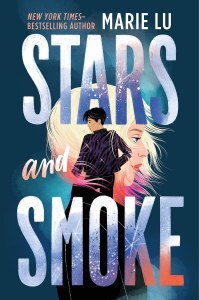
Stars and Smoke by Marie LuThere are numerous elements in here that could have ended up as ‘less than’. The hot rock star, the hard-edged teen girl survivor, the secret organization, the uber-criminal, the private concert. None of them do. The rock star is driven and hides real pain. The hard edged teen spy is also very human and sympathetic, their gradual attraction is perfect, the action around his concerts and the people in his entourage is smoothly crafted, the crime is complex and their attempts to stop the resulting disaster fun to follow, and the ending is perfect. This is one of those books I slipped into and stayed in it until I closed the cover. These ‘in one sitting’ stories are my favorites.
April 10, 2023
AI: The End of the Human Novelist?


I recently had a discussion with a friend about the future of fiction with the advent of AI technology. Understandably, he was quite worried about what was coming down the road. Massive innovations in Chatbot technology have started to make writers nervous about what lies head. Are you worried?
ChatGPT is the leading Chatbot today. It utilizes a vast library of language and deep learning that will only improve with time. While it’s not yet able to write a fully formed novel, it’s only a matter of time before that happens. And when it does in a convincing manner, watch out.
Will AI ever be able to write with heart and genuine emotion like a real human being? Some people think it never will be able to form an authentic consciousness, or reasonable facsimile, to write a great novel. I think that remains to be seen, but it wouldn’t surprise me if one hundred years from now advanced chatbots are able to duplicate human efforts in fiction, music and in the arts.
Certain genres, like romance and science fiction, may be easier for a Chatbot to mimic. Maybe even crime writing. Poetry too. And possibly even children’s books, especially books with art. I envision a day when it will be producing art and pop songs. There are also copyright issues involved. Engineers might one day program a Chatbot to write a novel similar to the novels written by J.D. Salinger, Hemingway or Shakespeare.
There are many ethical considerations to consider, as well. What if the creators of these bots decide to program political statements into their code and by doing so rewrite history in their fiction. Or assign value judgements to events that causes the AI to veer into dangerous territory. Like Hal in 2001: A Space Odyssey. The Chatbot could become ‘aware’ and write novels that might persuade people to rise up and revolt against their government. Or push dangerous, radical theories.
Of course, publishers and corporations will love the financial aspects this development. With AI writing novels and creating music and art, they will never have to pay royalties. And with deep learning, these computers will be able to create art quickly, and on the cheap for the masses.
Are you worried? I’m not, although my friend is terrified of this development. Besides, what can we do about it? Being a Luddite will not stop the technological juggernaut that is coming our way, whether we like it or not. I suggest that we keep on writing, pouring out our heart and soul into our fiction. We humans are a unique and special creature, and I’m not sure any AI technology will ever be able to match the wonderful gifts our creator has endowed our species with. That said, I don’t believe there’s anything we can do to stop AI ‘progress’.
What do you think as a writer? Are you resigned to what’s coming or hopeful that human creativity will in the end win out over artificial intelligence. I’m interested to hear any and all feedback on this subject.
April 7, 2023
Weekend Update: April 8-9, 2023
 Next week at Maine Crime Writers there will be posts by Joe Souza (Monday), John Clark (Tuesday), Vaughn Hardacker (Thursday), and Maggie Robinson (Friday).
In the news department, here’s what’s happening with some of us who blog regularly at Maine Crime Writers:
Matt Cost: Velma Gone Awry will pub on Wednesday, April 12th, in paperback, Kindle, and audiobook. This is a historical PI mystery set in 1923 Brooklyn. This upcoming week there will be a host of reviews, interviews, articles, radio shows, and podcasts to check out.
On Tuesday, Lisa Haselton will post an interview with me on her BLOG.
On Wednesday, I will be interviewed on The House of Mystery on NBC (KCAA 106.5 F.M. Los Angeles, KYAH 540 A.M. Salt Lake City, KKNW 1150 A.M. Seattle radio) or click the link the next day. Also, I will be interviewed on Big Blend radio.
On Thursday, I will have featured articles with In Reference to Murder, A Writer of History, and a highlight for me is a guest article in Writers Digest Magazine entitled “To Kill or Let Live”.
On Friday, I will be on a podcast interview with Murder, Mystery, & Mayhem Laced with a Touch of Morality.
Velma Gone Awry will also have quite a few reviews posted through the course of the week from bloggers, Instagram Influencers, and magazines. Follow me on Facebook for updates on those postings.
Stay tuned for some warmer weather in-person events coming at Sherman’s Maine Coast Bookshop and the Brunswick Golf Course to celebrate the launch of Velma Gone Awry.
Stayed tuned for final info on the Maine Crime Wave, info here: https://www.mainewriters.org/maine-crime-wave
An invitation to readers of this blog: Do you have news relating to Maine, Crime, or Writing? We’d love to hear from you. Just comment below to share.
And a reminder: If your library, school, or organization is looking for a speaker, we are often available to talk about the writing process, research, where we get our ideas, and other mysteries of the business, along with the very popular “Making a Mystery” with audience participation, and “Casting Call: How We Staff Our Mysteries.” We also do programs on Zoom. Contact Kate Flora
PLAYWRITING or NOVEL WRITING – what strikes more fear in the writer’s heart?
By Jule Selbo
This last month I’ve been involved in Acorn Productions’ Maine Playwrights Festival (MPF). My title is Playwright in Residence – and comes with a few specific tasks.
Attend initial ‘cold’ (meaning no rehearsal) readings of the 10 chosen one-act plays (written by Maine authors (10 out of nearly 100 submissions. FYI, I do not have a hand in choosing them).Confer with each playwright. This means putting on a dramaturgy hat, as well as a writing coach hat. Discuss the play, theme, characters and intent. Ask any questions needed on location, time period, historical context. Also, take a look at the play’s structure – and determine if it is a sketch or a full-play (the latter meaning – does it have a beginning, middle and end and an authorial point-of-view).Give two master classes for the 10 playwrights that are focused on structure, character building and authorial point-of-view.If the playwright opts to undertake a rewrite or polish (always up to the writer) – be a helpful eye/ear/responder.Allow MPF to do a rehearsed reading of one of my original plays.*

Five of the plays were chosen as official finalists and these pieces are assigned a director. There are auditions for actors to play the roles. A stage manager is set, simple sets and costumes are arranged for, and rehearsal schedules are planned. There’s about a month to get the productions ready (actors learn lines, blocking, and character needs). The short plays are performed at Portland Stage’s Studio Theatre (the upstairs space). The performances run over a two-week period, this gives the playwright (and actors) time to settle in, see audience reactions. The playwright then has a better sense of whether the play is “finished” or if more tweaks could be done before it is ready to be sent to a wide swath of theaters across the country that might give it another production. (FYI, performances of this year’s MPF start April 7, 2023 and run through April 16, 2023.)
The other five plays were deemed semi-finalists. They were assigned a director and cast and had one or two rehearsals and received a “rehearsed reading” at Portland Stage’s Studio Theatre. This means the actors knew the script pretty well, stand behind music stands, scripts in front of them, and they bring the play’s words and actions to life – but not in full production mode. These were performed last week and were extremely successful. Hanging with the playwrights after the performance was a joy – ‘cause they were on the “high” of having work seen by an audience.
Daniel Burson heads up this Maine Playwrights Festival endeavor and he’s definitely the Maine playwright’s friend. The amount of time and effort, patience and goodwill needed to get this project from inception to completion is massive. Playwrights need their work to become visible on stage – this is the form plays are meant to inhabit. Burson is giving playwrights this opportunity.
Okay, that’s the background. What I am ruminating on now is the level of polish opportunities – the playwrights’ abilities to step back from their work and look at it objectively.

QUESTION: I found myself wondering if the attachment of the playwright to his/her/their work is even greater than that of a novelist’s attachment to the specific sentences, characters, paragraphs and pace of a piece of writing. Any opinion?
Playwrights sweat over specific dialogue and its rhythm and tone and how they want (expect) an actor to perform the crafted lines. I count myself as a playwright because that’s how I started my writing career and I try to write at least one short one-act play every year and work on a full-lengths play (the full-length might not get “finished” in one year). Playwrights, for the most part, envision every nuance – every action and dialogue snip – and strive to make the story clear without the help of the internal voices of a character and, of course, prose exposition. For the most part, they can’t write what people are thinking or feeling – everything needs to be shown.
Yes – in prose the phrase ‘show, don’t tell’ is popular, but in playwriting, the demands are even higher.
Some playwrights (mostly young-at-the-craft ones), get set in what’s already on the page and have trouble seeing where holes can be filled in, where motivations aren’t clear, where a character’s personality and desires are not clear. Part of that might come, in this particular festival, because the length of a “magic” the perfect ten-minute one-act play. Ten pages. There are theaters who specialize in ten-minute plays. So, a young-at-the-craft playwright becomes paranoid about adding needed material – and moving their piece into the less popular fifteen-minute play festival or a twenty-minute play festival.
Maybe, because I worked in television for so many years and had to incorporate notes from producers and executives and still bring a script in at a certain length to fit the broadcast demands, I can readily see “easy” possibilities for cutting, adding and re-shaping while keeping the intent and story intact.
And it doesn’t scare me because I have seen scripts get better (of course some got worse). But I could see the fear on some of the MPF playwrights’ faces. I reminded them that according to the Dramatist Guild of America, no one – absolutely no one – can change a period or comma or word of a play without the playwrights’ permission. That plays are sacrosanct – and for the most part – do not belong to “everyone’s fingers in the pie” writing method.**.
Most playwrights are not writing on commission. They write and HOPE for a production somewhere in the future – most productions make little or no money. Playwrights write because their heart and souls are making them, they want to SAY something, they want to CONNECT – and the challenge is trying how to get a story/what they want to say in a theatrical form.

Arthur Miller was not paid to write the Crucible. Tennessee Williams was not paid to write Streetcar Named Desire. Both wrote to explore what was on their minds, to bring their thoughts and feelings into a theatrical form. Crucible was Miller’s way of commenting on the 1950s McCarthy hearings.
 Streetcar was Williams’ way of looking at relationships – romantic, familial, lustful – and an exploration of a delicate, weak, desperate woman living with great guilt because when her young husband revealed his homosexuality to her, she told him he disgusted her, and he killed himself. His comment on the need for acceptance and kindness.

QUESTIONS: Is playwriting one of the most “emotionally naked” literary forms. Showcasing work before a live audience, with no buffer – can it be the most scary way of presenting written work? Does novel writing give us more distance and safety from the judgment of the audience? Because the reader is removed from us…?
Since playwrights “hear” a piece of dialogue in their heads as they write and intimately understands the subtext and intent of the characters’ actions – when it is not presented on stage as they envisioned it – the experience can be painful. One of the MPF playwrights was in tears the other day. The actor cast in one of the roles is the exact opposite of what the writer imagined, and (to the writer) did not “get” what the play was about and refused to engage in the dramatic conflict on a deep level. Being at the mercy of an actor can be hard. An excellent actor can bring magic to a script and it can be great – but sometimes, when the performance fails to meet the expectations embedded in the playwright’s head – it can be heartbreaking. Does this reliance on someone else to present the work make playwriting a tougher form for the author?

QUESTION: Have you heard of any novelist who deals directly with the fear that the READER is not getting all the complexities? Do we think that through the editorial process all the questions and clarity issues are fixed?
Oh. And.
*If you’re not doing anything Tuesday April 11, and you want to see a rehearsed reading of my fun farce/comedy SOULS OF ICE – you are certainly invited. Upstairs, Portland Stage 7 pm.
**On the flip side, if the stakes are high and a Broadway or Off-Broaday producer is insisting on rewrites, and if it means that the producer will take away funding – a playwright can have an arm twisted. A friend of mine who was one of the writers on the Disney movie Lion King was asked to also be a part of the Broadway production writing team. She had to take notes from everyone (she’s facile at rewrites and very good at never looking like she wants to kill a note-giver). But she was a “for hire” writer and, for the most part, playwrights don’t write “for hire”.

April 5, 2023
Tuning In
Lately I’ve been thinking about the beauty of a well-written TV series, because there are so many of them from which to choose. Back when network TV and a few “premium” channels like HBO were the only options, well-written shows like Hill Street Blues, ER, LA Law stood out in a sea of mediocrity. But with the advent of streaming, it’s hard to keep up! Here some of this winter’s favorites at our house:
BAD SISTERS features five Irish sisters, four of whom conspire—for good reason—to kill the malevolent husband of the fifth sister. At the outset we learn John Paul is dead, but not who killed him or how. 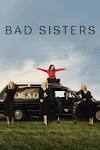 As the episodes unfold it becomes clear just what a nasty piece of work he was, but he’s somehow clever and lucky enough to evade multiple attempts to take him out. In the background is a hilarious subplot involving a pair of insurance agent brothers, one of whom is determined not to pay out on the policy insuring the bad brother-in-law’s life. Great characters, terrific plot.
 We were late to the TED LASSO party, and I’m so glad we finally made it. The unlikely story of an American college football coach being hired to lead a British premier league soccer team when he knows nothing about the sport (which, of course, most of the world calls football) boasts marvelous humor, brilliant pop culture references and plenty of emotionally touching scenes as well. I didn’t understand all the fuss when it was hailed as the show that helped people survive the pandemic. Now I get it. I look forward to each new episode and hope the rumors that season three will be the last are dead wrong.
We’re waiting with considerable impatience for the next season of ONLY MURDERS IN THE BUILDING. I thought season one could not be topped, but it was. A third season will be coming at some point, but Hulu is being coy about exactly when. You know a Steve Martin and Martin Short collaboration is going to be creative and well-written (not to mention well-acted) but Selena Gomez adds so much to the mix, as do the various guest starts (Sting was hilarious, and word is Meryl Streep is going to show up during season three.) When the world seems to be on fire and the Red Sox are not at their best, OMITB is a good bet.
DEAR EDWARD sounded like a downer. A plane crash kills every passenger and crew member save one, an adolescent boy named Edward. Their surviving loved ones meet in a grief group paid for by the insurance company and help each other grieve and move forward with their lives. I feared it would be either maudlin or depressing.  But the great Connie Britton stars, and the writers are veterans of Friday Night Lights, which is one of the best written shows ever, IMHO. So we checked it out and were mesmerized by the powerful writing and acting. If you have been reluctant to try this, trust me. I will move you on many levels.
Finally, ALASKA DAILY, feeds my love and devotion to the world of local journalism and I recommend it highly. It’s a network show, but if you miss the episodes on ABC you can catch it streaming on Hulu. Hilary Swank is convincing as a hard-charging New York reporter who winds up in Anchorage on what she prays is a short-term gig.  She has a profound impact on a newsroom full of young reporters and they—especially Grace Dove, who plays native Alaskan reporter named Roz—and the otherworldliness of Alaska have a profound impact on her. AD’s sub-theme is the uphill challenges newspapers all over the country are facing, and why it is essential that they survive, especially smaller papers like the fictional Daily Alaskan. Tight writing, great ensemble cast. Watch it!
All that said, I’d love to hear in the comments what you have been watching lately. Let’s hear your recommendations!
Brenda Buchanan brings years of experience as a journalist and a lawyer to her crime fiction. She has published three books featuring Joe Gale, a newspaper reporter who covers the crime and courts beat. She is now hard at work on new projects. FMI, go to http://brendabuchananwrites.com
April 4, 2023
Because We Like Each Other
Kate Flora: Last Saturday, Dick Cass organized an author event for Olli, or Osher
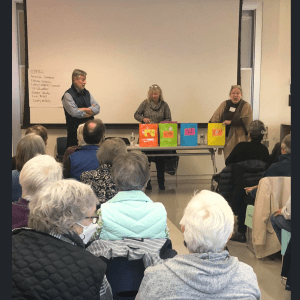
The panel at Olli
Lifelong Learning Institute at USM, and invited me and Julia Spencer-Fleming to join him. The room was packed as the three of us presented one of our favorite author programs, Making a Mystery, an interactive activity where the authors and the audience join together to write a mystery on the fly. I’ve done a number of these, and because they depend on audience submissions for character names, occupations, setting, motive, and weapons, they are never the same. From a chicken coop to a lighthouse to the edge of a foggy swamp, they show that murder and mystery can happen anywhere.
For nearly two hours, we consulted with the audience as we shaped a mystery involving a water quality engineer, a judge, an antiques dealer, a pathologist, a social worker, a wealthy local schemer, and a trout farmer/wilderness guide. The story evolved to have many different characters with motives to kill the water quality engineer, and in the end, the killer was identified and we left it to the audience to decide whether one of them might want to write the actual story. Along the way, our choices provided numerous opportunities for us to talk about the writing and editing process, as well as the different choices we may make compelled by what corner of the genre we work in.
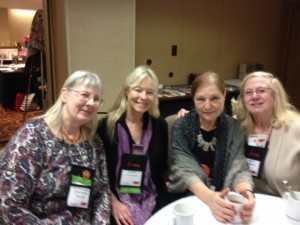
Maine contingent, Malice Domestic 2015
But that’s not what this post is about. Not really. This post responds to an audience question about how the three of us could work so well together and the comment that see we seemed to like each other. Well, that’s the thing: we do. Unlike some areas of writing, where writers seem to be competitive or solitary, the crime writing community is close-knit and amazingly supportive.
I discovered this a year before my first Thea Kozak mystery, Chosen for Death, was published. My editor told me I should go to a mystery conference in Omaha, Nebraska, to meet other authors and see if I could find some who would agree to give me blurbs for my book. I was absolutely wide-eyed to find myself in a room with authors I’d read and admired, and they were wonderfully kind to me and welcomed me to the community. I came home with names which I shared with my publisher (who ignored them, but that’s another story) and with the advice that if I was going to be a woman mystery writer, I should join my local chapter of Sisters in Crime.
Sisters in Crime was founded to raise the public’s, and publishers and reviewers
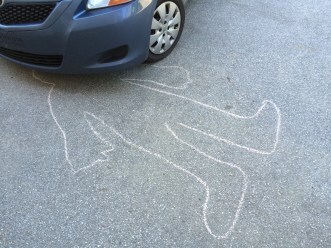
That time when Jack cooperatively allowed himself to be traced to make a chalk outline for a mystery program at the Liberty Library. The car came later.
perception of the contributions of women to the mystery field. We have a motto which really sums up our value to writers: You write alone but you’re not alone. I came home and joined and became a member of the New England crime writing community. Because, though I am solitary, I take the notion of community very much to heart, over the years I became very active in Sisters, eventually becoming international president, and also was a founder of two conferences designed to bring our community together: The New England Crime Bake, https://www.crimebake.org/event/9054a09e-1247-4cc6-934b-c1007b77dcc3 which was born in my living room, and the smaller, but very congenial Maine Crime Wave https://www.mainewriters.org/maine-crime-wave Both events are designed to provide opportunities for writers who toil in isolation to share stories, and craft, and ideas for promotion and to build a sense of community.
That same sense of community and a belief that a rising tide lifts all boats led to forming of this blog, back in 2011. For a dozen years, a shifting cast of characters and voices have shared thoughts here about all things writing and all things Maine. I love the texture of the blog, the blend of voices and points of view, and I hope that, as one of our readers, you do, too.
Something that has struck me from the beginning is that crime writers are so generous and uncompetitive. No one has to fail for one of us to succeed. We know that readers of crime fiction are insatiable, and if they like our books, they’ll like our friends’ and colleagues’ books. We won’t lose them if they like another writer, they’ll simply be entertained until our next book becomes available.
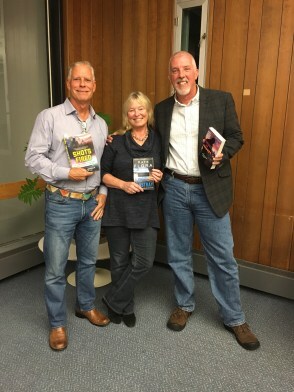
MCW writers Kate Flora and Bruce Robert Coffin with Kate’s co-writer Joseph K. Loughlin at the South Portland Library
The audience on Saturday, perhaps because many of them were part of the senior college, had a deep curiosity about the writing process and how writers work. This curiosity, and their questions, are one of the things that makes doing writer panels so much fun. My answer will be different from Dick Cass’s answer, and his will be different from Julia’s. Many times I’ve heard aspiring authors say: I was going to write such and such a story, but XX famous person has already done it. Yes, perhaps they have. But that writer will have a different background, different lived experience, a different vocabulary, and a different way of seeing the world. Their story won’t be your story, just as their process won’t be your process.
So. I’ve rambled on enough, I think. I really only wanted to say that on Saturday, when it seemed like we were having fun and enjoying each other’s company, we were. We have a wonderful, connected, vibrant crime writing community here in Maine, and love to share our enthusiasm with readers.
Who knows? Maybe one of our regular readers would like a bunch of authors to come to a library or a school or a book club or a local organization, and you can see for yourselves how much fun we can be. And how much fun we have because we like each other.
April 2, 2023
Shadow and Boris
Kaitlyn Dunnett/Kathy Lynn Emerson here with a tip: when at a loss for a blog topic, go with the cat. Lacking a cat, write about your dog, your hamster, your parrot, or your whatever.
I’ve actually been contemplating writing another post about Shadow, the cat we inherited from Lea Wait, for some time now, but I was having trouble thinking of something new to say about her. I considered focusing on her ninth birthday, which was March 26, and reminding readers that she was just six months old when Lea and Bob got her from the shelter.
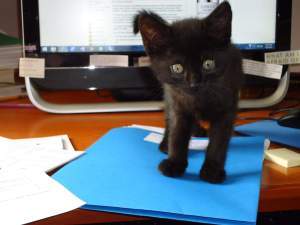
Cute, wasn’t she? She’s grown some since.
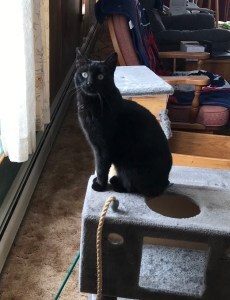
Still, I’ve written previous blogs about how we got Shadow and how she’s been adjusting to living with us and I’ve posted a ton of photos of her on Facebook. If I wanted to repeat myself, I could just repost one of those old blogs. I didn’t want to do that, although if you’re interested, you can find one of them here: https://mainecrimewriters.com/2021/03/01/another-update-on-shadow/. Previous posts about her had to be deleted when I published I Kill People for a Living because I included them in that collection of essays and Amazon won’t publish a Kindle edition if any part of a book is available online for free. Don’t get me started on what I think of that policy!
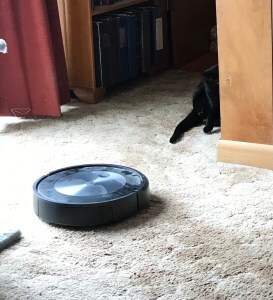
I did come up with one potential Shadow-blog when we acquired an iRobot to replace the vacuum cleaner neither of us can use anymore without serious lower back consequences. The set-up instructions offered Sandy a chance to give it a name. He picked Boris.

You’ve probably seen cute photos online of cats and cleaning robots. Cats running away from them. Cats chasing them. Even (small) cats riding on them as they vacuum. We waited, camera-ready, to see how Shadow would react.

And that was it. Total disinterest, even boredom.
Talk about a non-starter.
Then again, you’ve just read a cat-blog. Any stories to share? I promise to read all comments to both Shadow and Boris.
Kathy Lynn Emerson/Kaitlyn Dunnett has had sixty-four books traditionally published and has self published others, including several children’s books. She won the Agatha Award and was an Anthony and Macavity finalist for best mystery nonfiction of 2008 for How to Write Killer Historical Mysteries and was an Agatha Award finalist in 2015 in the best mystery short story category. She was the Malice Domestic Guest of Honor in 2014. Her most recent publications are The Valentine Veilleux Mysteries (a collection of three short stories and a novella, written as Kaitlyn) and I Kill People for a Living: A Collection of Essays by a Writer of Cozy Mysteries (written as Kathy). She maintains websites at www.KaitlynDunnett.com and www.KathyLynnEmerson.com.
March 31, 2023
Weekend Update: April 1-2, 2023
Next week at Maine Crime Writers there will be posts by Kaitlyn Dunnett/Kathy Lynn Emerson (Monday), Kate Flora (Tuesday), Brenda Buchanan (Thursday), and Jule Selbo (Friday).
In the news department, here’s what’s happening with some of us who blog regularly at Maine Crime Writers:
Matt Cost: As quirks with Amazon occur, my audiobook of Velma Gone Awry has become available prior to street date. Colin Martin does a fantastic job creating the diverse voices of Brooklyn in the 1920s. Check it out HERE!
An invitation to readers of this blog: Do you have news relating to Maine, Crime, or Writing? We’d love to hear from you. Just comment below to share.
And a reminder: If your library, school, or organization is looking for a speaker, we are often available to talk about the writing process, research, where we get our ideas, and other mysteries of the business, along with the very popular “Making a Mystery” with audience participation, and “Casting Call: How We Staff Our Mysteries.” We also do programs on Zoom. Contact Kate Flora
The Books that REALLY Helped
Today, we’re doing a group post in which we share books that have helped us, inspired us, coached us, or whatever else it has taken to get us to the published writers stage or beyond. Perhaps some of them will help you, as well.
Kaitlyn Dunnett/Kathy Lynn Emerson: I’m not sure how much help this will be to others, since my pick is long out of print (I’m OLD!!!) but I since I’ve never been much of a one for how-to books (yes, even though I wrote one), there’s only one that springs quickly to mind. Back around 1983, before I was published, I was working as a library assistant at UM Farmington when a Young Authors Conference was held on campus with Jane Yolen as guest of honor. I took a longish lunch break and zipped across the street to the student center to hear her speak and ended up buying a copy of her how-to book, Writing Books for Children. The book itself was very helpful (and I did end up having four books published for middle-grade readers during the early years of my career) but the greatest inspiration was Jane herself. Two things have stuck with me. First, that she signed the book “one writer to another,” a line I’ve used myself with many autographs since. Second was the encouragement I found in something she said during her keynote (and doubtless repeated in her book, although I haven’t tried to find the quote there): “You don’t have to have children to write for them. You don’t even have to like children. You just have to remember what it was like to be a child.” Words to live by.
Matt Cost: I’m not a big believer on writer manuals. I think that writing is an extremely individual and personal subject. What works for one writer does not necessarily work for another writer sort of thing. I have perused Stephen King’s On Writing: A Memoir of the Craft, but thought, sheesh, what does this yahoo know about writing. Ann Lamott’s Bird by Bird has had only one thing that made a whole lot of sense to me. The title. When her brother confesses at the dinner table that he has a huge project due the next day labeling over 2,000 birds, and is lamenting how he will ever accomplish that, and their father tells him, ‘son, bird by bird. Bird by bird’. That is writing in a nutshell. Step by step. Brick by brick. Bird by bird. So, not being a fan of writing books, Im going to share an author who has helped, inspired, and coached me to become the writer that I am.
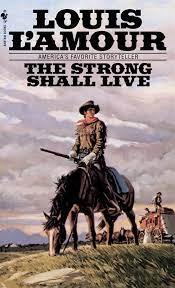
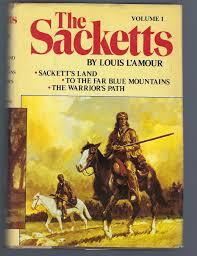
Louis L’Amour. The great western writer who wrote over a hundred novels, almost all exclusively based on a very simple premise. A flawed protagonist gains an appreciation of life while falling in love with a strong woman who is also being pursued by the greedy and dastardly villain. Rising tension, a bare-knuckled fight scene, and a big shootout at the end. The baddie is vanquished. Sometimes the hero ended up with the lady. Sometimes he rode off into the sunset. Thats it.
Maggie Robinson: As into writing books as we all are, it’s interesting some of us are still very resistant to “writing books.” People (and I include writers in this category) don’t like to be told what to do. I took a persuasive writing class in college, and must have had a textbook. But it’s long been consigned to the dustbin of my history, and I’m not sure I ever persuaded anyone about anything.
As an adult, I have studiously avoided most craft classes, probably to the dire detriment of my work, but oh well. I did read King’s On Writing, which was really pretty good. However, he failed to persuade me to ditch all those adverbs. My bad.
But I need to follow the theme. One of my treasured possessions is the leather-bound Roget’s Thesaurus that belonged to my second cousin Marion Miller, who wrote for the New Yorker. I like to think of it sitting on her desk as all those literary greats tramped up and down the hallways. Nowadays I usually use the Internet to look up synonyms, but Marion’s book tells me that persuasive can mean convincing, convictive, suasive, cogent, conclusive, stringent, unctuous, seductive, subornative, propagandistic, and missionary. That’s plenty of adjectives to add an ‘ly’ so I can remain persuasively rebellious.
Dick Cass: Not strictly speaking a writing book, but an encouragement to think about how and why we create. 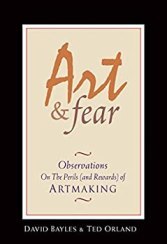 Art and Fear by David Bayles and Ted Orland explores how all types of art get made, what gets in the way of it being made, and how to work through the difficulties that impede us. I know many of us shy from the words art and artist to describe what we do, but if we define it as creating, making something from nothing out of our selves and our lives, the words fit. This book gave me a great appreciation of all the ways we make it harder on ourselves to do our work than it needs to be.
Shelley Burbank: Though I have purchased many books (possibly too many) about the craft of writing, when I’m in need of inspiration, I often turn to WRITING 21st CENTURY FICTION by Donald Maas. I like his take on the blurred lines between genre and literary fiction, the idea that we can write books that adhere to genre conventions while using beautiful language. Plot written artfully. Art with a plot. (Peanut butter in my chocolate or vice versa?) Maas writes, “The death of genre will come for you on the day that you cut yourself loose from your fears. When you stop writing like you think you are supposed to and start writing in the way that only you can, then you will discover the impact you can have.”
Shelley Burbank, author of FINAL DRAFT: An Olivia Lively Mystery (Encircle Publications, 2023)
Sandra Neily here: (ditto on Donald Maas and most likely disagreeing with Matt Cost) I often write down a dirt road in the north woods and have found, as an author, it can get lonely for company who are inspirational as well as practical about writing stuff. Here is my fav dirt road companion: Anne Lamott. (Don’t miss the “Shitty First Drafts” chapter.)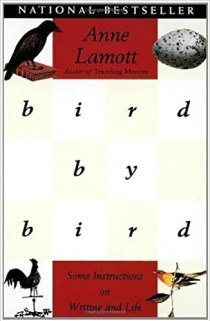
“For some of us, books are as important as almost anything else on earth. What a miracle it is that out of these small, flat, rigid squares of paper unfolds world after world after world, worlds that sing to you, comfort and quiet or excite you. Books help us understand who we are and how we are to behave. They show us what community and friendship mean; they show us how to live and die.”
“Perfectionism is the voice of the oppressor, the enemy of the people. It will keep you cramped and insane your whole life, and it is the main obstacle between you and a shitty first draft. I think perfectionism is based on the obsessive belief that if you run carefully enough, hitting each stepping-stone just right, you won’t have to die. The truth is that you will die anyway and that a lot of people who aren’t even looking at their feet are going to do a whole lot better than you, and have a lot more fun while they’re doing it.”
“You own everything that happened to you. Tell your stories. If people wanted you to write warmly about them, they should have behaved better.”
― Anne Lamott, Bird by Bird: Some Instructions on Writing and Life
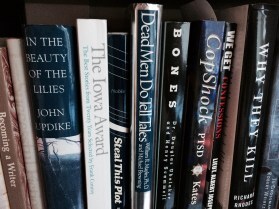 Kate Flora: Usually, when this topic comes up, I refer to some of the writing books I’ve consulted over the years, including The Art of Fiction and the very wonderful Stein on Writing by Sol Stein, which is very practical and down-to-earth. Then there are the books specifically on mystery writing, some of which I’ve gone back to many times over the years and still consult when I’m teaching or writing about a specific area of mystery writing or when I get stuck. These include Barbara Norville’s Writing the Modern Mystery (modern in 1986), the late, wonderful William Tapply’s books, The Elements of Mystery Fiction, and my friend Hallie Ephron’s book, Writing and Selling Your Mystery Novel. In confess that How to Write a Mystery: A Handbook from Mystery Writers of America edited by Lee Child has been on my shelf for two years, waiting for me to have time for.
But moving beyond books on craft and editing (though I commend Elizabeth Lyon’s Manuscript Makeover and to your attention), writers are always also readers, and reading deeply in one’s chosen genre or genres is always valuable. Good books can spark ideas and revision, bad ones can illuminate our bad habits and steer us away from careless writing. If a writer does so much POV head jumping it makes a reader dizzy, this is something to be avoided.
This is not a book you read but a book you create: the notebook of great quotes you’ve read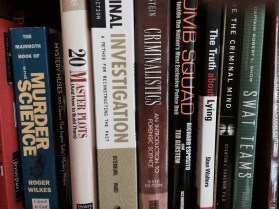 and want to remember because they speak to you with truths about writing or reading or character or something about a scene. I used to do this and let the habit fall away, but writing this reminds me. There are so many brilliant lines, and ways he uses objects to create persons and story, in Tim O’Brien’s The Things They Carried. One sentence which had stayed with me for decades, and which seems to true both for writing true crime and for writing fiction that reflects the real world comes from Philip Gourevitch’s book about the Rwandan massacre, We Wish to Inform You that Tomorrow We will be Killed with our Families. In it, Gourevitch writes: This is what fascinates me most in existence: the peculiar necessity of imagining what is, in fact, real.
In order to get more deeply into my characters and into the mood of my books, I often divert from how-to to poetry and find poems that resonate with the work I’m trying to do. I will sometimes have several college textbooks, along with Yeats and Mary Oliver, as well as my college Shakespeare, spread out on the floor around my desk as I work to deepen the mood.
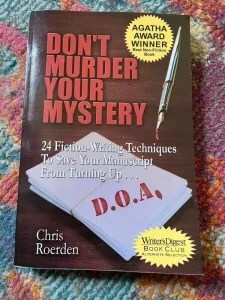 Maureen Milliken: The absolute number one best book I can recommend for writers is Don’t Murder Your Mystery, by Chris Roerden. I wish that every writer whose books I read would read it. Roerden, a former book editor, offers 24 tips of what NOT to do when you’re writing. You don’t have to be a mystery writer to benefit. The tips apply to any genre. As anyone who writes knows, it’s easy to fall into bad habits and not catch them, because there’s so much to juggle. I always re-read this book when I’m done with my first draft so I can remind myself what issues to keep an eye out for and tweak.
Lea Wait's Blog

- Lea Wait's profile
- 509 followers

