
Lea Wait's Blog, page 67
March 30, 2023
Short on story ideas? Become a bartender.
From time to time, we like to introduce our readers to new Maine mystery writers. Today we’re pleased to share a post from newly published author Albert Waitt.
Albert Waitt: As I was becoming a writer, I paid my bills by working as a bartender. I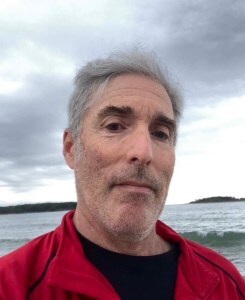 found that people had some funny ideas about those who sling drinks for a living, and they often laid at opposing ends of the spectrum. Many folks assumed that a casual relationship with morality and a more-than-professional familiarity with alcohol were job requirements. Others, however, swore by bartenders for their psychoanalytic powers, crisis management skills, and priest-in-a-confessional levels of discretion. There was one assumption shared by just about everyone, however: That bartenders heard a lot of good stories. That, I can assure you, is true. And it’s a story that I heard while working the bar at Hurricane Restaurant in Kennebunkport that became the impetus for The Ruins of Woodman’s Village, my crime novel released this month.
A couple of my Monday night regulars, who any journalist would verify as reliable sources, told me about a friend of theirs whose mother was a psychic. It seemed that whenever this woman drove through Kennbunk, she became anxious and uneasy on one particular section of road. Even in quiet York County there are unsolved murders, and it turned out that a main suspect in one of them lived at the spot where their friend’s mother never failed to become unsettled. Upon hearing this, my “writer’s brain” kicked into action.
I was sure a great crime novel could spring from the story. But my “writer’s brain” only sent me down wrong turns and dead ends as I tried to make it about a son who discovers his psychic mother’s old journals and tries to solve a disappearance thirty years in the past. After throwing out hundreds of pages, I found a way into my version of the story by focusing on a crime as it happened in 1986. When the main character became an easy-going police chief who fears he may be in over his head investigating the disappearance of two missing sisters in his postcard-worthy town–that’s when the narrative came together and suspense flooded the pages.
While the story I heard did not become the story I told, it did start me on the road to The Ruins of Woodman’s Village. That it wasn’t a direct route is no surprise. As every mystery reader and writer knows, things never go anywhere without a certain number of twists and turns.
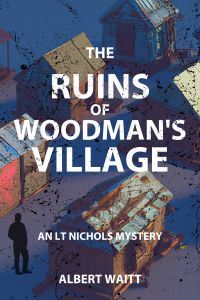 Albert Waitt’s mystery, The Ruins of Woodman’s Village, was published in March 2023 by Level Best Books. Set on the Maine coast in 1986, it is the first in a series featuring Police Chief LT Nichols. When two teenage sisters go missing from a backwoods shantytown, the easy-going Nichols’ summer of patrolling beaches and leading parades is over. His desperate search for the girls takes him from seaside bars and million dollar estates to abandoned farms and run-down shacks. As Nichols races to piece together the girls’ disappearance, he realizes that doing so may tear the façade off his postcard perfect town.
Albert Waitt is a writer based in Kennebunkport, Maine. His mystery, The Ruins of Woodman’s Village, was published in March 2023 by Level Best Books. Waitt’s first novel, Summer to Fall, was published in 2013 by Barrel Fire Press. His short fiction has appeared in The Literary Review, Third Coast, The Beloit Fiction Journal, Words and Images, Stymie: A journal of sport and literature, and other publications. Waitt is a graduate of Bates College and the Creative Writing Program at Boston University. Experiences ranging from tending bar, teaching writing, playing guitar for the Syphlloids, and frying clams can be found bleeding through his work.


March 28, 2023
Writer, whatever you do, get a real editor
I’m reading a book about a topic that really interests me, but it’s a tough read because the book is so poorly edited.
There are punctuation errors, particularly missing or unncessary commas, on every page. There are word use issues (weary instead of wary, for instance). There are things like “l” instead if “i” in the name Diana (which appears on almost every page).
The author wrote that someone fought in World War II, and after he returned home, he began working at a company “in 1941, the year [the company] opened.” It’s hard to know what the problem is there. Is the year a typo? Does the author not know when World War II ended? Maybe the guy he’s writing about wasn’t in the war at all? Maybe it’s a poorly constructed sentence, so it’s not saying what he meant it to say.
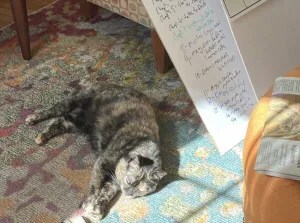
There’s really no good art to go with a post like this, but everyone loves a good cat, so this is Penny lying next to my book outline whiteboard. She’s very helpful when I’m writing!
A good editor would catch that and ask about it.
I don’t mean to pick on this one author. His is just the latest in a series of horrifically edited books I’ve read lately.
I know I’ve said it before, but the retired English teacher next door or your brother-in-law who’s “good with spelling” may come cheap, but they are not editors. A good editor will know publishing style, as well as recognize point of view issues, too much exposition, weak characters, bad dialogue, clauses that don’t match the subject, and all the zillons of other things that can drag down a book.
I’m not going to go into a long list of every single thing that needs to be looked at when a book is edited, but any book, no matter how awesome a writer you are, will have some of those things.
At author talks, when people ask about getting books edited, I get a lot of pushback when I say every single person who wants their book to land somewhere besides their mother’s bedside table needs an editor. It seems like a lot of people who write want to be told it’s OK to not pay for an editor. I’m not going to do that. [By the way, I haven’t edited books in years and don’t plan to, so this isn’t a sales pitch.]
I don’t care if you’re submitting to agents or self-publishing. Pay for a good editor. If you don’t have the money, save it up or find it.
The most frequent excuses I hear for not getting an editor are:
With texting and email, readers are a lot more tolerant about bad puncutation, usage, etc.Even books published by big publishers are poorly edited, so it doesn’t matter if mine is.It’s too expensive.I’m an editor, so I don’t need one.Not everyone’s an English major who obsesses about every little comma. Get off my back.My answer is that those “reasons” don’t matter. A reader may not realize they’re slogging through an unedited minefield, but their understanding and enjoyment of your book will still suffer.
If you care about your work and want other people to care too, present it in the best way possible. Get an editor.
Agatha Christie and The Guilty Party
Charlene D’Avanzo: Agatha Christie is called the “Queen Of Crime” for very good reason. She wrote an astounding 66 detective novels and 14 short story collections, many that feature fictional detectives Hercule Poirot and Miss Marple. Her murder mystery The Mousetrap is the world’s longest running play. The Guinness World Records calls her the best-selling fiction writer ever – her novels exceed two billion copies. In 1955 she was the first recipient of Mystery Writers of America’s Grand Master Award. More than 30 feature films are based on her work.
So what accounts for Christie’s absolutely astonishing record?
There were hints early on. As a child Christie was a voracious reader. She wrote her first poem when she was ten. Later, during World War II, she worked a London hospital. This accounts for her knowledge of poisons, which she put to excellent use. For example, a thallium poisoning case was solved by British medical workers who had read her novel A Pale Horse and recognized the symptoms she described.
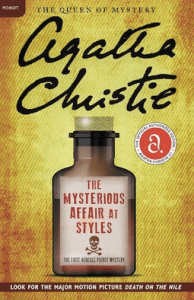 Christie wrote her first detective novel The Mysterious Affair At Styles in 1916. The book featured Hercule Poirot, a former Belgian police officer with “magnificent moustaches” and a head “exactly the shape of an egg” who went to Britain after Germany invaded Belgium. Christie’s inspiration came from Belgian refugees and soldiers she helped to treat as a volunteer nurse during the First World War.
Christie eventually grew tired of Poirot, much as Conan Doyle did with Sherlock Holmes. By the end of the 1930s, she wrote in her diary that Poirot was “insufferable”, and by the 1960s she felt he was “an egocentric creep. Poirot became the first fictional character to have an obituary in The New York Times, which was printed on page one on 6 August 1975.
After her marriage to an archeologist in 1930 Christie spent several months each year on 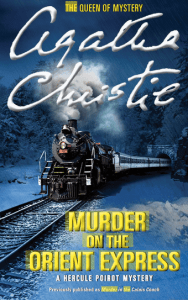 digs in the Middle East, and those travels informed her novels set in the Middle East (e.g. Death On The Nile). She used her experience of international train travel in her 1934 novel Murder On The Orient Express.
In her books Christie often made the unlikeliest character the guilty party. Christie said she wrote her books up to the last chapter and only then decided who the most unlikely suspect was. After that she’d go back and make the necessary changes to “frame” that person.
I’ll end with a quote Joan Acocella writing in The New Yorker: With Christie … we are dealing not so much with a literary figure as with a broad cultural phenomenon, like Barbie or the Beatles.
March 27, 2023
Quotes from the ‘20s Stolen by Matt Cost
As my historical PI mystery, Velma Gone Awry, is coming out on April 12th, I’m going to continue with my 1920’s theme. This time it is brilliant quotes from legendary characters. And the kicker is, these fabled women and men are all in the novel, and some of the quotes are also there, spoken by them.
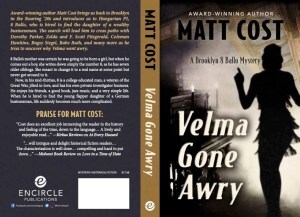
Let’s start with none other than one of the most quotable people of all time, Dorothy Parker. Her writing was only rivaled by her wit, and to have actually known her must’ve been a gift from the heavens.
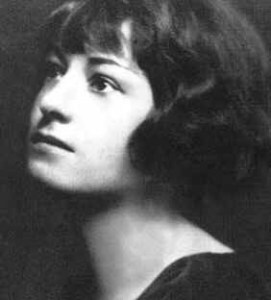
What does Dorothy Parker say about the writing business?
“If you have any young friends who aspire to become writers, the second greatest favor you can do them is to present them with copies of The Elements of Style. The first greatest, of course, is to shoot them now, while they’re happy.”
She was a woman who seemingly struggled with and enjoyed life simultaneously. Much of her best wisecracking involves drinking and sex, two topics that were largely taboo in the US before the Roaring ’20’s before the flappers crushed that old fashioned convention.
This quote makes it into Velma Gone Awry straight from her lips. As does another one less blog appropriate about telling somebody that she’s $%# busy, or vice versa.
“Take me or leave me; or, as is the usual order of things, both.”
And while this next one did not make the pages of Velma Gone Awry, I’m fairly certain it will before the series ends. Spoiler, it did not make it into the second one, City Gone Askew, either. Maybe the third time is the charm.
“It’s a small apartment, I’ve barely enough room to lay my hat and a few friends.”
Right after initially meeting Dorothy Parker, my PI, 8 Ballo, meets up with the writer, F. Scott Fitzgerald, and his wife, Zelda, who steals the limelight from her famed husband on the pages of Velma Gone Awry.

In her high school year book, Zelda lays out what she wants from life, and then proceeds to try and achieve that. She has a brilliant mind laced with a wild side and is the quintessential flapper of the 1920’s.
“All I want to be is very young always and very irresponsible and to feel that my life is my own-to live and be happy and die in my own way to please myself.”
Of course, we can’t totally bypass Scott, as he is one of the most fabulous writers of all time, even if there were a few duds layered in there. I particularly like what he has to say about the marketing end of the business, a notion that I can certainly abide. Well, maybe not the movies being a racket, but certainly the advertising.

“Advertising is a racket, like the movies and the brokerage business. You cannot be honest without admitting that its constructive contribution to humanity is exactly minus zero.”
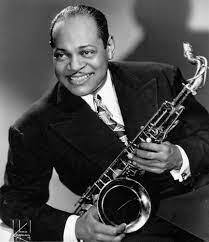
Coleman Hawkins did most of his speaking with the tenor saxophone, but he was early on credited with this sublime quote that knows no boundaries in its truth.
“If you don’t make mistakes, you aren’t really trying.”
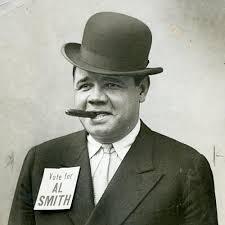
You can’t set a book in New York City without giving a nod to Babe Ruth, even if 8 Ballo is a Dodger’s fan. Spoiler, he is not much of an admirer of the Babe, who lived life larger than life and baseball combined, but did have a bombastic side. This quote sums up his character in Velma Gone Awry scene, minus the giving up alcohol and going to bed early.
“I’ll promise to go easier on drinking and to get to bed earlier, but not for you, fifty thousand dollars, or two-hundred and fifty thousand dollars will I give up women. They’re too much fun.”
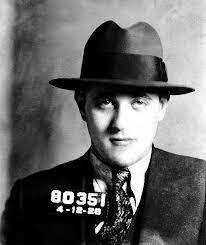
And of course, the 1920’s was rife with colorful gangsters. A very flawed character in Velma Gone Awry is Ben “Bugsy” Siegel, who is a young Jewish gangster with his own code of ethics while at the same time starting up a business that became known as ‘Murder Incorporated’.
“My friends call me Ben, strangers call me Mr. Siegel, and guys I don’t like call me Bugsy, but not to my face.”
With that concluding thought, feel free to leave your positive comments below and keep your criticism behind my back.
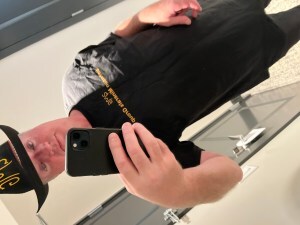
Matt Cost was a history major at Trinity College. He owned a mystery bookstore, a video store, and a gym, before serving a ten-year sentence as a junior high school teacher. In 2014 he was released and began writing. And that’s what he does. He writes histories and mysteries.
Cost has published four books in the Mainely Mystery series, with the fifth, Mainely Wicked, due out in August of 2023. He has also published four books in the Clay Wolfe Trap series, with the fifth, Pirate Trap, due out in December of 2023.
For historical novels, Cost has published At Every Hazard and its sequel, Love in a Time of Hate, as well as I am Cuba. In April of 2023, Cost will combine his love of histories and mysteries into a historical PI mystery set in 1923 Brooklyn, Velma Gone Awry.
Cost now lives in Brunswick, Maine, with his wife, Harper. There are four grown children: Brittany, Pearson, Miranda, and Ryan. A chocolate Lab and a basset hound round out the mix. He now spends his days at the computer, writing.
March 24, 2023
Weekend Update: March 25-26, 2023
 Next week at Maine Crime Writers there will be posts by Matt Cost (Monday), Charlene D’Avanzo (Tuesday), a guest post Flora (Thursday), and a group post (Friday).
In the news department, here’s what’s happening with some of us who blog regularly at Maine Crime Writers:
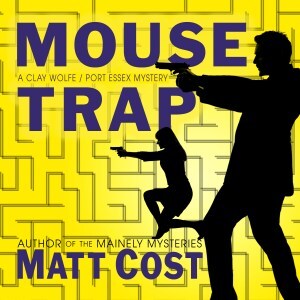
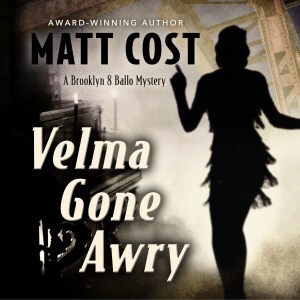
Matt Cost had his third Clay Wolfe/Trap book, Mouse Trap, come out on audio. It can be ordered HERE. The final publisher edits for his fifth Mainely Mystery novel, Mainely Wicked, have been completed and the book will be out in August. He has quite a few events planned for April for the release of Velma Gone Awry; A Brooklyn 8 Ballo mystery, which also be available for audio on street date. Stay tuned for presentation, podcast, article, interview, and review dates.
An invitation to readers of this blog: Do you have news relating to Maine, Crime, or Writing? We’d love to hear from you. Just comment below to share.
And a reminder: If your library, school, or organization is looking for a speaker, we are often available to talk about the writing process, research, where we get our ideas, and other mysteries of the business, along with the very popular “Making a Mystery” with audience participation, and “Casting Call: How We Staff Our Mysteries.” We also do programs on Zoom. Contact Kate Flora
March 23, 2023
Confronting the Horrors of Book Promotion
Kate Flora here, sitting in gorgeous Sedona, Arizona, surrounded by red rock cliffs I cannot see because of so much rain and fog. I am at my borrowed desk, thinking about what to write this week. Some of this post is recycled because I’m suffering from a mild case of blogging block. Yes, you heard it—this is yet another ailment to strike writers, and something else we have to worry about.
A bit of background: When I sold my first book, back in the early 1990’s, shortly after the Mayflower landed, my far more businesslike husband Ken smiled and said, “Congratulations, dear. Now you have a new job.” That new job, of course, was moving from the long, silent, thoughtful time spent writing my books (and my ten years in the unpublished writer’s corner) to the arena of publicity and promotion.
Had I but known! That was the pre-social media era. The pre-webpage era. It was a time when a writer wasn’t expected to be always on. On tour. On Facebook. On twitter. On message. Taking cute photos for her Pinterest page and generally studying with a bunch of experts about how to perfect the “Buy My Book” dance. Back then, talking about the book was much more about writing and storytelling and not the cult of personality. Back then, I would write for nine months and then spend three promoting the book
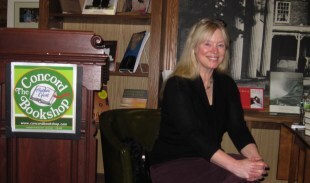
Me at a bookstore in earlier times
Flash forward a couple of decades. I still can’t dance. I still hate having my picture taken. I still cling to the Flaubertian idea that the work should speak for itself and the author should disappear into the woodwork. But now I clash with everything that pundits, experts, friends, neighbors, strangers, and the checkout clerk at the grocery store would say: Authors must have a platform. They must be branded. They must find ways to use publicity, in particular social media, to connect with readers because this where readers, especially younger ones, are finding and buying their books. They should have a tik tok presence, a book trailer, clever materials printed and ready to handout, a chatty newsletter for which they collect subscribers at every book event. They should have a street team ready to help promote the book.
It will no longer suffice to say: But I have a book due on July 1st and I’m way behind. Blogs must be written. Promotion must go on. But when I sat down to write today’s post, I found myself staring at a blank page. Thus turning to one from the past and giving it some tweaks.
How to overcome blogging block or the more general promotion block? There are the
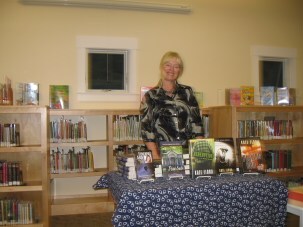
and at a library, back when I let people take my picture
obvious things to do. Take a walk. Take another walk. Take a shower. Great ideas always arrive in the shower, don’t they? Perhaps there is that never fail solution—take a drink. But the invisible sun is not over any yardarm (if such there were in Arizona) and I am not Hemingway. Eat chocolate? Drift over to ebay and buy a pair of shoes? Ah, but some of you are guys, and perhaps this won’t work for you. Then there is surfing the net.
Yup. This is the solution. Lacking clever ideas of my own, and hating self-promotion more than having a root canal, I look back through my old emails to see what clever promo ideas my friends have sent me. Today’s fishing expedition yields up some great food for thought.
My good friend Dale T. Phillips, author of many great mysteries and “How to be an Indie Author” frequently reminds me that I need to be sure all my books are available as audio books, so I’m not leaving money on the table. Along these lines, recently my publisher notified me that many of my Joe Burgess books are now available as audio books. Here are some links:
Redemption https://apple.co/3Z6nhBO“Redemption was right up there with those by my favorite mystery writers (Ian Rankin, Carolyn Rose, Felix and Dick Francis).” ~David Edgar Cournoyer,
And Grant You Peace https://apple.co/40nzEuv“…nailed the culture of a Portland cop…beautifully written, and suspensefully told.”
Led Astray https://apple.co/42wXw0E“If you’re a fan of Louise Penny’s Inspector Gamache series, Kate Flora’s Joe Burgess ranks right up there. Keeps you on the edge of your seat…”
I check for a reply to my email to the student who is crafting my book trailer, but so far, crickets in return. Before I go back and hunt down that email suggesting a platform other than mail chimp for crafting a new mailing list (mail chimp having lost my last one, and yes, I promise there will be one) I return that earlier blog about blogging block and find this.
Because controversy is good for all of us first thing in the morning (remember that 8:00 a.m. philosophy class in college?) my friend Barbara Ross posted this deliciously controversial piece at Maine Crime Writers some years back, about publicists and fiction. It is still absolutely true.
Four Lies that Publicists Will Tell You http://wp.me/p1GTyX-45A
Maybe you, faced with the task for book promotion via blogs or otherwise will be more inspired to brand yourself, develop a brilliant marketing strategy, challenge commonly held beliefs, or just crawl under a chair and moan. And then, get back to writing. Because if you haven’t written anything, you won’t have stuff to brag about, promote, and agonize over. And you won’t have to wonder what is the best way to brand you. And writing, in the end, is what we’re all about.
p.s. If you’d like to be a beta reader for the next Joe Burgess, Such a Good Man, let me know.
March 20, 2023
Opinions and Elbows
Brief Commercial Message
Kate Flora, Julia Spencer-Fleming, and I are presenting Make Your Own Mystery in Room 102 of Wishcamper Hall at USM on Saturday April 1, 2023 from 1 to 3 PM. It is a free presentation and parking in the USM garage is free on Saturdays. Books will also be on sale. Would love to see you there. If you’re unfamiliar with Make Your Own Mystery, here’s a description:
Using suggestions from the audience, three mystery writers (who write very different types of books) build a mystery novel on the fly, demonstrating some of the ideas and techniques that go into plotting and creating the stories. Audience members suggest character names, weapons, motives, geographic locations, and other pertinent information for the writers to build from. It’s an interactive event and generally results in hilarity, at the same giving readers a view into how writers work.
Now back to our regularly scheduled programming:
When I first started writing, I was hungry for advice. Until I saw how much of it there was. There were so many people with the one key to success, whether you wanted to write a novel to compete with Dostoevsky or with Stephen King. It was tough to filter through all of it, even if your intentions were clear and you knew what kind of writer you were. The books and programs and workshops could be opaque, contradictory, overly didactic, and sometimes just plain wrong.
I got to the point where, while I read for advice avidly, I only believed something I heard three or four times from separate sources, preferably (but not necessarily) reputable ones.
In that spirit, here are three bits of advice that have stayed with me through writing seven books.
E. L. Doctorow—“Writing is like driving at night in the fog. You can only see as far as your headlights, but you can make the whole trip that way.”
 This probably applies only if you’re the kind of writer who prefers not to work from an outline or other detailed plan. As I am. When I’m tearing my hair out, sure that I’m never going to get to the end of a book, flailing in the words, I take a small comfort in this.
Of course, one key to this advice is not to get distracted by what’s going on outside the beam of your headlights, what dangers lie, what distractions might dislodge you from the road. Because, yes, you can follow your headlights right into the ditch if you’re not paying enough attention.
 Ursula K. Le Guin—I once heard Ursula Le Guin in a workshop delicately chastise a young writer who was glorying in the twists and turns of her plot to the extent that none of us could quite follow what story she was telling. With the faintest gleam in her eye and the experience of sixty or more years writing serious fiction, she said “You must be able to explain your story to your dumb cousin Bunko.” I think of that every time I am tempted by a multisyllabic word or attributing a polymorphous perverse motive to a simple action. If Bunko doesn’t get it . .
Annie Dillard—I can’t locate the actual quote at the moment, but I recall a story in which a student wrote to her to ask if she thought he could be a writer. Her reply: “I don’t know—do you like sentences?”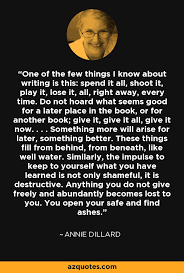
Because as much as we are captivated by the stories we want to tell, the characters we want to bring into the world, this is what the writing comes down to: the sentences. The first sentence of a story starts to close off the possibilities and the last sentence is, in a great story, inevitable. In between, each sentence must work on its own, and with its siblings, toward the ultimate expression of the entire story. If you don’t like sentences, you’re going to have many bad days as a writer.
Of course, opinions are like elbows—everybody has a couple. Embrace or ignore, but also understand that for all the advice out there, no one can teach you to write but yourself. Do you have a particular bit of advice that has helped you, either to write or to live?
March 19, 2023
Bingeing on BritBox
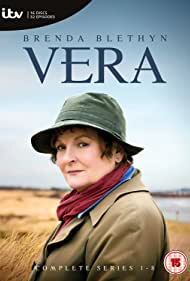 Kaitlyn Dunnett/Kathy Lynn Emerson here, today writing about bingeing on BritBox. I got hooked on binge-watching during Covid lockdown and used up most of what was free on Prime and on Spectrum’s On Demand and on Ovation Now. I watched a ton of movies and TV series on DVD, too, but streaming them on my iPad with headphones soon become a nightly habit.
By the time 2023 rolled around, I’d watched a heck of a lot of shows, including the complete series of Midsomer Murders, Boston Legal, The West Wing, Downton Abbey, Warehouse 13, Stargate: SG1, Stargate: Atlantis, The Good Wife, New Tricks, The Bletchley Circle, and Eureka.
There were other series I hadn’t seen and wanted to, but they either weren’t available or came with umpteen commercials. The local PBS station runs a lot of British shows, as does BBC America, but not always at convenient times and not with access to earlier (or later) episodes. I’d been hearing about BritBox for a few years (at Malice Domestic initially, so that’s definitely pre-Covid) and although I’m cheap and reluctant to commit to monthly payments for anything (Prime and our Spectrum bill being the major exceptions), I eventually realized that, for the price, subscribing to this streaming service is a real bargain.
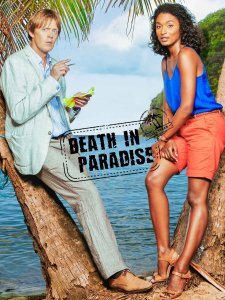 Since signing on in mid-January, I’ve watched all twelve seasons (most of them with 4 episodes) of Vera, seasons 4-6 (8 episodes each) of Death in Paradise (I have 1 and 2 on DVD and remembered 3 well enough from seeing in on TV that I didn’t feel the need to rewatch), season 1 (10 episodes) of Father Brown, The Seven Dials Mystery (movie), Mrs. Bradley Mysteries (episode 1—the others are supposed to be included in BritBox but come up with a rental charge from Prime, so I’m obviously not watching those yet!), and Bletchley Circle: San Francisco (6 episodes).
I jump around a bit, sometimes bingeing and sometimes just watching one episode before going to another series. My BritBox “watchlist” currently consists of the following:
All Creatures Great and Small (1978 version)—I loved this the first time around and won’t watch the new version
As Time Goes By—Dame Judi Dench doing comedy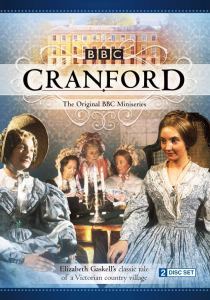 Ballykissangel—another I loved when it was on PBS years ago, especially for the Irish setting
Beyond Paradise (new series with one episode dropping each week)—spinoff from Death in Paradise featuring the detective from seasons 3-6 (he was also in Love, Actually)
Cranford—historical drama; episode one was hilarious, especially a bit with a cat, but I haven’t been able to get into episode 2. Since I like the cast, I’ll try again later
Death in Paradise (seasons 7-12)—mysteries set on a Caribbean island
Father Brown (seasons 2-9)—mysteries set in 1950s England
Pride and Prejudice—Colin Firth version in 6 episodes
Shakespeare and Hathaway—P.I. mysteries set in Stratford-upon-Avon
The Vicar of Dibley—another oldie with British comedienne Dawn French as the vicar
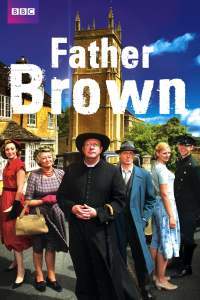 You’ll note that the mysteries are augmented by a scattering of comedies and historical dramas. There are lots of other older shows available of BritBox, too, some mystery series like Campion, Cadfael and Bergerac that I’ve seen before and some that are new to me, like Sister Boniface and Shetland—plenty to watch after I work my way through this first batch.
Of course, I still make time to watch other things. I watch three shows regularly on network TV: Young Sheldon, The Conners, and Finding Your Roots. Prime comes up with the odd new movie to rent or to buy not too long after they are in theaters, so this month I also saw 80 for Brady and Black Panther: Wakanda Forever.
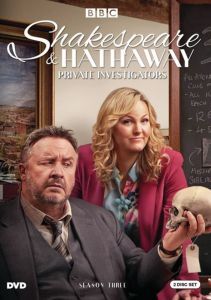 Did I mention that I love being semi-retired? I finally have time to binge-watch movies and TV shows to my heart’s content and, of course, to binge-read, too. I’m currently working my way through the first seventeen books in C. S. Harris’s Sebastian St. Cyr historical mystery series (second read on each) in anticipation of number eighteen being published next month.
What TV shows or mystery series (books or film) are you bingeing on? Do you go back to old favorites or only watch/read new material? Inquiring minds want to know.
Kathy Lynn Emerson/Kaitlyn Dunnett has had sixty-four books traditionally published and has self published others, including several children’s books. She won the Agatha Award and was an Anthony and Macavity finalist for best mystery nonfiction of 2008 for How to Write Killer Historical Mysteries and was an Agatha Award finalist in 2015 in the best mystery short story category. She was the Malice Domestic Guest of Honor in 2014. Her most recent publications are The Valentine Veilleux Mysteries (a collection of three short stories and a novella, written as Kaitlyn) and I Kill People for a Living: A Collection of Essays by a Writer of Cozy Mysteries (written as Kathy). She maintains websites at www.KaitlynDunnett.com and www.KathyLynnEmerson.com.
March 17, 2023
Weekend Update: March 18-19, 2023
Next week at Maine Crime Writers there will be posts by Kaitlyn Dunnett/Kathy Lynn Emerson (Monday), Dick Cass (Tuesday), Kate Flora (Thursday), and Maureen Milliken (Friday).
In the news department, here’s what’s happening with some of us who blog regularly at Maine Crime Writers:
An invitation to readers of this blog: Do you have news relating to Maine, Crime, or Writing? We’d love to hear from you. Just comment below to share.
And a reminder: If your library, school, or organization is looking for a speaker, we are often available to talk about the writing process, research, where we get our ideas, and other mysteries of the business, along with the very popular “Making a Mystery” with audience participation, and “Casting Call: How We Staff Our Mysteries.” We also do programs on Zoom. Contact Kate Flora
March 16, 2023
Success: Ruin Meals. Write 5th Grade Prose.
Sandra Neily here: This post is about simple food and simple writing. Both, easily digestible.
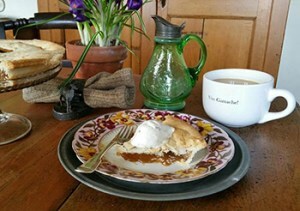
Sugar Pie from “The Cruelest Month”
Author Louise Penny has ruined me for any restaurant or pub memories I used to cherish. What’s more, she may have ruined every attempt to enjoy future restaurant meals, no matter how much I might be willing to pay.
Nothing anyone serves me can measure up to the food in her novels. I’ve read most of Penny’s books. The food in them is literally to die for.
Instead of a book page I want a flaky, just-out-of-the-oven croissant stuffed with chunks of maple-baked ham and melted Gruyere wafting out fresh rosemary, and I want it next to crisp Pommes frites with the Bistro’s homemade mayonnaise.

French Onion Soup from “Bury Your Dead”
And that is just what she feeds her cops for lunch!
Even after a harrowing escape, bedraggled survivors covered in concrete dust stumble into a wood-stove warmed home where fragrant pea soup, pungent beef stew, and apple crisp exhaling cinnamon—greet them. I think I could be caught in a collapsed house if I could eat like that afterwards.
Her website has a featured recipe for various novels. Yum!
But that’s not what I am writing about today.
Food is just one of her talents for bringing readers deeply into her fiction. 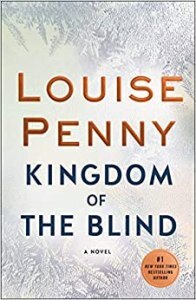 Driving along, I am listening to a Penny mystery novel filled with sophisticated, rambling discussions. We are asked to take deep dives down philosophical, moral, ethical, and sometimes literary rabbit holes.
How can she do that and still keep us turning page after page in anticipation?
Of course, there’s her amazing and artfully differentiated characters but also, pacing is the key. She reliably returns readers to drama, tension, and intense action, but here’s a deft trick she uses.
Penny’s syntax, grammar, and reading ease equal a fifth-grade readership. So, while much of the discussion is elevated, the language is easy to read.
I have no idea if she uses a Flesch Kincaid analysis or she just found her accessible, technical strategies as part of her talent, but here (below) I have used that device to analyze a passage from “The Brutal Telling.”
*********
“Chaos is coming, old son, and there’s no stopping it. It’s taken a long time, but it’s finally here.
The Hermit nodded, his eyes rheumy and runny, perhaps from the wood smoke, perhaps from something else. Olivier leaned back, surprised to feel his thirty-eighth-year-old body suddenly aching, and realized he’d sat tense through the whole awful telling.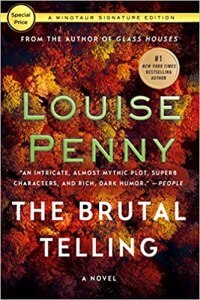
I’m sorry. It’s getting late and Gabri will be worried. I have to go.”
“Already?”
Olivier got up and pumping cold, fresh water into the enamel sink, he cleaned his cup. Then he turned back to the room.
“I’ll be back soon,” he smiled.
Then before closing the door, he whispered the single word that was quickly devoured by the woods. Olivier wondered if the Hermit crossed himself and mumbled prayers, leaning against the door, which was thick but perhaps not quite thick enough.
And he wondered if the old man believed the stories of the great and grim army with Chaos looming and leading the Furies. Inexorable, unstoppable. Close.
And behind the something else. Something unspeakable. He finally broke through the trees and staggered to a stop, hands on his bent knees heaving for breath. Then, slowly straightening, he looked down on the village in the valley.
Three Pines was asleep, as it always seemed to be. At peace with itself and the world. Oblivious of what happened around it. Or perhaps aware of everything but choosing peace anyway. Soft light glowed at some of the windows.
***********
Here’s the Flesch Kincaid analysis. Penny has 2.4 sentences per paragraph, 10.2 words per sentence, and a reading ease of 73.6. That adds up to a fifth grade reading level. That’s eleven-year-olds. (See a reading ease graph at the end of the post.)
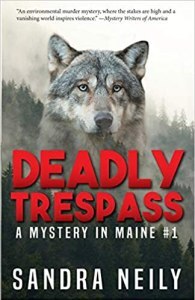 When I was writing my first novel, “Deadly Trespass,” I used the Flesch Kincaid device to analyze passages from other mystery and thriller authors. I wanted my work easy-to-read, even if the subject matter was complex.
Here’s what I found by typing up some pages from the following authors. (I included narrative as well as dialogue.)
Barr: Sentences per par 5.2. Words per sentence, 13. Reading ease, 78. Grade level, 5.6.
Evanovich: Sentences per par 6.2. Words per sentence, 7.5. Reading ease, 82. Grade level, 3.6.
Spencer Fleming: Sentences per par 4. Words per sentence, 10. Reading ease, 79.4. Grade level, 4.8.
Lee Child: Sentences per par, 7. Words per sentence, 16.4. Reading ease, 75.9. Grade level, 6.7.
(All authors averaged 4-5 characters per word. That’s a gross average that allows them to vary word length a lot. I think that goes to rhythm and pacing.)
 How Did I Do?
At the end of my first “Deadly Trespass” draft: sentences per paragraph 3- 4.5. Words per sentence 9-10. Reading ease, 79-86. Grade level, 4-5.9
My readability was right in the middle of successful authors I admired. While I now occasionally check a chapter, this easy-to-read goal is now part of my author voice.
Yes, what makes a story sing has many magical elements that are not reduced to math or analysis, but I was teaching myself by reading other authors: how they pulled readers onward page-by-page, whether by design or talent. I just wanted to learn.
Here’s how to use the device in Word.
Sandy’s debut novel, “Deadly Trespass, A Mystery in Maine” won a national Mystery Writers of America award, was a finalist in the Women’s Fiction Writers Association “Rising Star” contest, and was a finalist for a Maine Literary Award. The second Mystery in Maine, “Deadly Turn,” was published in 2021. Her third “Deadly” is due out in 2023. Find her novels at all Shermans Books (Maine) and on Amazon. Find more info on Sandy’s website.
The Flesch Reading Ease Score table. Writers should aim for a 60+ score minimum. The higher the page score, the easier it is to read. Especially on-line where scanning reigns!
ScoreSchool level: USANotes100.00–90.005th gradeVery easy to read. Easily understood, average 11-year-old90.0–80.06th gradeEasy to read. Conversational English for consumers.80.0–70.07th gradeFairly easy to read.70.0–60.08th & 9th gradePlain English. Easily understood: 13-15 age students.60.0–50.010th to 12th gradeFairly difficult to read.50.0–30.0CollegeDifficult to read.30.0–10.0College graduateVery difficult to read. Best understood, university grads10.0–0.0ProfessionalExtremely difficult to read. Best understood, univ. grads
Lea Wait's Blog

- Lea Wait's profile
- 509 followers

