Theodora Goss's Blog, page 5
June 21, 2022
The Covid Years
What did the Covid years do to us?
I ask this question knowing very well that Covid is not over, and that the Covid years will last as long as Covid lasts, which as far as we know will be all of our lifetimes. But I mean more specifically, what did the last two years do to us?
I can only write as one person, one witness on this earth. And here, in 2022, in the middle of what is probably one of the most spectacular years of my life, I find myself trying to figure out what I’m doing and what it all means anyway. I find myself floating, untethered, like the balloon in a famous painting by the Hungarian artist Pál Szinyei Merse. I saw an exhibition of his paintings at the Hungarian National Gallery earlier this year, because I was in Hungary teaching on a Fulbright fellowship. That’s what I mean by one of the most spectacular years of my life, and of course as a teacher I mean the academic year. In the fall I had a professional development leave of absence to research creativity in writing pedagogy, in the spring I had a Fulbright to teach at two Hungarian universities. I spent the spring living in Budapest, the longest I have been in Budapest since I was a child. Then I returned to the United States to pick up my daughter, and we are in Budapest now. That’s pretty spectacular, right? But wait, there’s more, because in a few weeks I will be going to London, to teach in a summer program for my university.
Sounds impressive, right? And yet I feel like Pál Szinyei Merse’s balloon, floating up in the sky, not sure where I’m going or why I’m going there.
I think in the last two years we have all lost our way a little. I remember how restricted we were, the limited mobility, the way all of our worlds suddenly shrank down. Some people did not mind it, but I minded it a great deal, just as I minded masking a great deal — I found that when my mouth was covered I automatically did not speak, and so I stayed silent. Even as I write this, I realize the trauma of it, which I did my best to not to think about at the time. I tried to focus on making sure I had food, toilet paper, hand sanitizer. I tried to do my job, teaching first online and then in an impossible hybrid format. At least once a week, I took a Covid test, as required by my university. Sitting here in Budapest, after months of being able to move around the world freely, express myself freely, I don’t want to remember it. I write about it only because of the balloon — because of what it did to me, and probably to us.
I don’t have an answer, exactly, to the question I posed above. I don’t know exactly what the Covid years did to me, except that I can feel their aftereffect. I can feel there is something wrong, that I’m not the same person I was before them. For one thing, I’m having trouble writing. Somehow, the silence of the Covid years began to fall over my life, like a feather blanket. I stopped saying what I thought. In some ways, I stopped thinking.
Joan Didion once said, “I don’t know what I think until I write it down.” That’s true for me as well — for me, writing is a form of thinking. Without writing, I lose part of myself, perhaps the most important part, the part that remembers. The part that forms the world in my head, so that it holds together and means something.
It wasn’t just Covid. Something else happened just as the Covid years were ending, as the restrictions were being lifted in Budapest. I can’t tell you exactly why the invasion of Ukraine had such an effect on me, but “Russian invasion” had been part of my mental furniture since I was a child and my mother told me about watching tanks on the streets of Budapest in 1956. Just as I felt that things were getting better, with Covid restrictions lifting, here they were getting worse again. (It feels almost trivial to talk about the psychological effects of the war in Ukraine when so many people are directly and personally affected — like the refugees I worked with this semester. But I know I’m not the only one feeling those psychological effects. Many people are feeling them, farther from Ukraine than I am.)
So here we are, here I am, like an untethered balloon, and I’m trying to find my way, figure out my direction. A friend sent me a quotation recently that has helped me:
“Love. Fall in love and stay in love. Write only what you love, and love what you write. The key word is love. You have to get up in the morning and write something you love, something to live for.” — Ray Bradbury
It’s the last part of the quotation that seems so important to me — something to live for. Writing something you love can be a thing to live for, it can provide that tether, tying you to the world, tying you to purpose and meaning. The key word for Bradbury in this quotation was love, but for me, right now, the key word is writing. You have to get up in the morning and write. It seems to me that if you do that, the love will come. It may not be there at the beginning, but it will develop through the writing process, through the pen on paper or fingers on keyboard.
This reminded me of something I had written some time ago, but I don’t remember where: “When you’re a writer, the cure for whatever ails you is always writing.” I know I said this, because it’s on Goodreads. It seems to me a rather smart thing to say, and quite true. Evidently, my younger self was wiser than I am now. I have lost her sense of certainly, and some of her perspective. I’m not sure what, if anything, I’ve gained in the Covid years. I suppose time will tell. But she was quite right that for a writer, the cure is writing.
Sometimes I find myself asking, why write? What makes my perspective so important that it needs to be presented? My younger self would not have asked that — she was more confident than I am. But anyway, I think it’s the wrong question. It’s not my business to decide whether my perspective is important or not. It’s only my business to write down what I think, how I feel, what it was like to be alive, as me, at this particular moment in time. (Strange, that what it was like. It was very strange. I still hoard toilet paper.)
There are two things I have learned about writing: First, I’m never entirely sure what I’m going to write when I start. I may end up someplace completely different than I expected. I learn what I think by writing it down. Without writing it down, I can’t even articulate it. That’s how my brain works; that’s how, I suspect, most writers’ brains work. Second, I always feel better after I have written.
In the city park, called the Városliget, there is a copy of Pál Szinyei Merse’s balloon. It’s tethered securely to the ground, and you can pay for a ride up into the air, then down again. It goes quite high. It’s not free, like ordinary balloons — it does not travel over unanticipated territory. It’s not at the mercy of the winds. But from it you can see the entire city. I’m sure this is a metaphor, although I’m not yet sure for what . . .
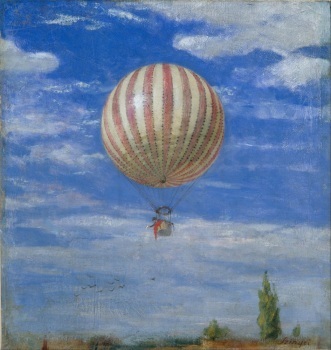
(The image is The Balloon by Pál Szinyei Merse.)


March 12, 2022
Living with Ghosts
When I returned to Budapest after eight months during which I was unable to travel because of the coronavirus pandemic, I thought that my apartment had acquired a ghost. In my absence, the apartment had been renovated. The originally plan had been for me to return periodically, to see the renovations in progress. But the pandemic put a stop to that. So I returned to an apartment transformed. The electrical system had been completely replaced. The walls themselves had been resurfaced and then painted. The floors had been sanded and revarnished. There were new lamps, new furniture. And there was an entirely new kitchen, to replace the Soviet-era kitchen where my grandmother had cooked on an old gas stove. Now there was a new gas stovetop from IKEA, with an electrical oven. The old apartment was still there underneath — I had not changed anything essential. The old walls and doors remained, although the windows had been replaced and updated, since the old ones, more than a hundred years old, were too damaged to save.
The new kitchen had lights under the counters — a particularly fancy touch that I thought was unnecessary, since the overhead lights were perfectly adequate. I’d never had lights under the counters before, and could not imagine how I would use them. The first night I spent in the new apartment, I turned them on to see how they worked — and they started to flicker on and off. Then they turned off. Then they turned back on.
Of course I understood what was happening. The kitchen had a pantry, a small room where my grandmother had stored her preserves. It had been transformed into my laundry room. But once upon time, that room had not been a pantry — it had been the room where a kitchen maid would have slept. In the nineteenth and early twentieth centuries, every middle-class family had a kitchen maid, both in Europe and the United States. Even in a not very large apartment, there would have been a room for the kitchen maid. She would have been a young woman, probably from the countryside, coming to make money and experience the world in Budapest. She would have been poor and overworked. It was completely clear to me: that kitchen maid had come back to haunt my kitchen, perhaps to protest the changes I had made to what had once been her domain.
I named her Szána, after the company that renovated my kitchen. I had a much better experience with Szána the ghost than the company. When I asked Szána Bútor to fix the lights, which they had installed, before I made the final payment on the kitchen renovations, they threatened me, first with accruing interest if I did not make the final payment immediately, and then with I’m not sure what — that they would “report me” if I dared to say anything negative about Szána Bútor or the renovations in public. I’m not sure to whom? But if the police come for me because I complained about a kitchen renovation company, you will know why. Anyway, there I was, stuck with Szána, my kitchen ghost. We got friendly, after a while. I would talk to her, and she would flicker on and off in a companionable fashion.
She is not the only ghost who haunts this apartment. There is the ghost of my grandmother. She is here in the old furniture, in some clothes of hers that are still hanging in one of the wardrobes, and most of all in her paintings. Right now they are wrapped in brown paper. I will need to unwrap them, take them out of the old frames she put them in, and get them reframed. Of course she could not afford to frame her own paintings properly. She found frames wherever she could, drove in the nails to secure the canvases herself. They are old and crumbling. When her paintings cover the walls, will she become more solid? Will she speak to me in Hungarian? I could use the practice . . . She is here in her embroideries, stacked in one of the wardrobes, and in the pillows she made. And of course in my memories of her.
There are even ghosts outside — I can see them from the windows. On the cobbled street below, I can sometimes glimpse the ghosts of Soviet tanks. Throughout my childhood, I heard stories from my mother about when she was a child and leaned out those windows, watching Soviet tanks rolling down the street in 1956. She was haunted by that memory, so I am haunted by the story. Particularly now, watching the war in Ukraine on the small screen of my cell phone. When I see the buildings of Ukrainian cities destroyed, I imagine what it would be like if it happened here, if this building was bombed in the same way. I don’t want to overstate this — it’s not that I agonize over it or believe it will happen. There is enough to agonize about in the situation in Ukraine. I would rather spend my agony on the people trapped in a nation that has been invaded, the refugees who are fleeing. But every once in a while, I imagine what it would be like if it happened here, as it has happened before. I have the nonsensical thought, what if this apartment was bombed and all those renovations went to waste? I know, it’s a silly thought — in that case, there would be much, much worse things to worry about than my renovations. But that’s how brains work. I’m following the Twitter feed of a woman who is currently in Ukraine, and her first post in the morning is always about coffee, then the bombings. I completely understand.
Budapest is a city haunted by the past. All European capitals are. There is so much more to write about that, but this post is already long enough, and here I wanted to write about my own particular ghosts. It’s strange to me that in this neighborhood, around Kálvin tér, I never get lost. The streets are narrow and twisting, but I always know which direction to go. I think it’s because these are the streets I walked as a child, with my mother or grandmother. Somewhere among them is the ghost of my childhood. I have seen her a few times, little Dóra, running or swinging in one of the local parks. She does not look the way I did when I was a child — no, she looks like one of the local children, at the park with their parents. She is the ghost of my childhood nevertheless.
Perhaps that is why I like living here so much. None of my ghosts are in America. They are all here, and it’s nice to have their company. Except the tanks. I could do without those. Let them remain memories, the ghosts of a terrible time. Let them always be evanescent, without effect, powerless. And little Szána is gone. After my rancorous exchange with Szána Bútor, I paid for an electrician to replace the transformer that Szána Bútor had installed. I rarely use the lights under the counter — the overhead lights, as I originally conjectured, are perfectly adequate. But when I do, they no longer flicker. My ghostly kitchen maid has flown off into the ether whence she came.
But it seems to me, thinking about my ghosts, that to be a home, a house needs to be a little haunted. There is something comfortable about living with spirits and memories — as long as some of them stay just that, vestiges of the past that do not invade our present.
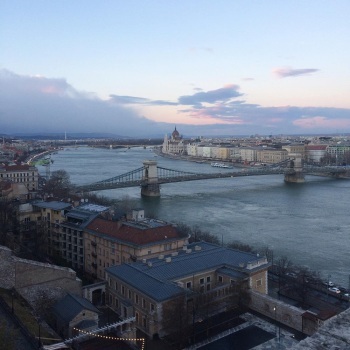
(I took this photo several weeks ago, when I had just come to Budapest, from the Castle Hill.)
February 10, 2022
Building a Nest
Little by little, I am building a nest.
Imagine a little brown bird flying around gathering twigs and bits of string — that’s me. Last summer, my daughter and I walked through the park near my apartment in Boston and saw two robins, male and female, flying back and forth, back and forth to their nest up in a tree. They were bringing things to it, and as we stood and watched, waiting, we saw that each time one of the parent birds would fly to the nest, little heads would pop up, little beaks would stretch out. Those things they were carrying — worms? insects? — went pop into the waiting, cheeping beaks.
My nestling is not here right now — she is back in Boston finishing her final year of high school. Nevertheless, I am building a nest, flying back and forth to Ikea and Jysk and Pirex and other home goods stores. Well, Pirex is not exactly a home goods store — it’s a stationery story, which to a writer is much the same thing. My home decor includes books and paper and pens and staplers and hole punches and index cards. Yesterday I realized that I did not have a staple remover, so I had to go out and find one in Budapest. There are all sorts of things I can’t do without, if I am to do my work — like a printer. Those things are also my home decor.
I think we don’t live in houses and apartments, exactly — those are just boxes around us. What we live in are the nests we create for ourselves, which are both physical and psychological. My physical nest includes soft rugs to walk on, pillows and warm blankets, places to sit and think. It includes boxes to store things in. (I find that I spend a lot of time working on and thinking about storage, certainly as much as I spend on decoration. Everything needs to have its proper place.) My nest includes the clothes in my closets, the cleaning supplies in the pantry, and after the early days of this pandemic, a nice big stack of toilet paper! It includes the oatmeal and raisins and almonds and brown sugar that I keep in the kitchen cupboard — and all my tea bags, enough for probably another month. My physical nest is made up of the colors and textures I have chosen, on walls and carpets and in furniture. It’s my version of twigs and string. And also, I suppose, worms.
My psychological nest is made up of the habits I develop as I live here, so that I don’t have to think too much about how I use this space. Some habits: I keep a notepad on the kitchen counter — that is my shopping list. If I run out of anything, I list it on the notepad so I can get whatever it is, whether apples or soap, the next time I go shopping. I keep a bowl of apples on the kitchen counter as well, so I can have at least one piece of fruit every day. Umbrellas are in a basket close to the front door, and shopping bags are on a hook on the front door, for quick grabbing. (In Europe, you always need to bring a shopping bag.) My psychological nest includes the time I go to sleep (often too late, I know, I’m working on it . . .) and the time I wake up. They include oatmeal for breakfast, yoga in the morning, reading before bedtime. Or the delicate dance of the dryer here in Europe, which includes putting clothes in the dryer, picking the right setting, waiting for the clothes to dry (which can take from anywhere between one and two hours), cleaning the lint trap, and emptying the water container — since water goes into a container rather than disappearing in a cloud of steam, as in the United States. I feel as though my clothes dryer and I are dancing a sort of waltz. The clothes dryer is definitely leading.
There is still quite a lot I need to do, to build a nest here. For example, after a year, my grandmother’s paintings are still wrapped in brown paper. I will need to take them out, but it will be a delicate operation because when I wrapped them, they were in old, sometimes crumbling frames that my grandmother had salvaged from wherever she could find them. Often, they are behind glass and held in with nails she drove into the frame herself. I will need to delicately get them out of their frames, put them into a portfolio, and dispose of the glass. They will need to be reframed, eventually. I still have a curtain to shorten, some minor repair work to the apartment. Shortly after I got here, there was a problem with the boiler, and a friend had to help me call a company to service the boiler (since my Hungarian is not up to phone calls with gas boiler repair companies, at least not yet). The boiler repair people came out, made sure the boiler was working properly, and put a sticker with the company’s telephone number on its side. That’s an important string in my nest.
I’m still very much working on this nest of mine. I think this is how we create homes, one piece of string at a time, one pillow or call to the boiler company at a time. Slowly we bring things into them, and then we add feathers from our own breasts, as birds do — you know that many birds line their nests with down they pull from their own bodies. We pull from our minds and hearts and sensibilities to feather our nests. Our feathers are the books we select, the art we love, the music we listen to — they make our nests soft and comfortable.
I’m not quite at soft and comfortable yet! Supply shortages have made it difficult to get some things. I have two desks to work on (one for writing, one for teaching), and one of them still needs a chair. I need a guest bed that has been out of stock at Ikea for months, a way to hang coats in the coat closet. I have an extra rug that I need to figure out how to return to Diego (not a person, a rug and flooring company), since I made a rug-related mistake, the sort of mistake one often makes in decorating. There’s something wrong with the billing for the electricity, and I have to figure out what — everything is more difficult in a foreign language. There are still so many little things to work on, but twig by string by feather, I’m getting there . . .
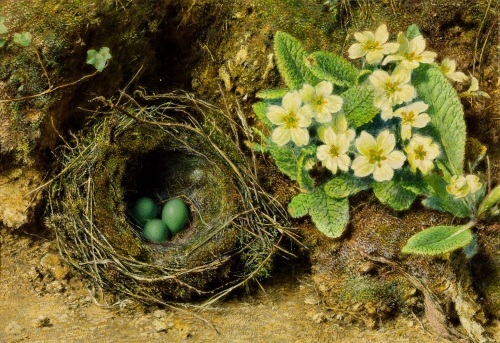
(The image is Primroses and Bird’s Nest by William Henry Hunt.)
January 29, 2022
Living and Dreaming in Budapest
I woke up this morning with a sense of how incredibly lucky I am.
This semester, I’m living and working in Budapest, teaching at two Hungarian universities with a Fulbright grant. I arrived a little more than a week ago, and I’ve spent the time since I arrived adjusting to an alternate reality — because that’s what happens when we travel, I think. At least when we travel to a place that is quite different from what we were used to.
I remember living in Boston, although at this point, after a week here, Boston is already fading from my mind. I remember that I used to shop at Whole Foods, and I used to walk to the park, and I used to ride what Bostonians call the T. I used American money and credit cards, thinking about what I spent in dollars. I checked the temperature in Fahrenheit. I measured in inches and feet. I left in winter, which in Boston is cold and snowy.
I flew on an airplane, a luxurious plane ride during which my cabin was almost empty — I was able to lie down across five seats and sleep most of the night, after watching Arsenic and Old Lace on the small airplane screen, during a supper of really quite bad tortellini (the exact same supper I was served the last time I flew on Swiss, so I should probably have chosen the chicken, but I was afraid that would be even worse). Airplanes and airports are interstitial spaces, betwixt and between. They transport us from one reality to another. I arrived in Zurich and started the transition, walking the twenty minutes from one end of the airport to another — one end is specifically for flights outside the European Union, the other is where small planes leave for central Europe. Halfway through, at passport control, I switched to my European passport.
And then, two hours later, I was in Budapest. Now I shop at Spar, and I walk by the Danube (called the Duna here, and she used to be a goddess), and I ride the metro. I use Hungarian money and a Hungarian bank card, shopping in forints. I check the temperature in Celsius, and measure in centimeters and meters. Yesterday I bought nine meters of fabric to recover the armchairs in the living room. It’s still winter, which in Budapest is cold and windy. There is almost no snow. I know that back in Boston there is plenty of snow right now, because my daughter is in the middle of a snowstorm, and on the small screen of her phone when I spoke to her last night, I could see that two feet had already fallen.
What a strange world we live in, where I can fly for ten hours and be in a completely different place, on a different continent. And then I can call and see her on a small screen, a magical screen that I keep in my purse.
I’m not sure human beings are ready for such a world. Our brains are still so primitive, our perception of reality so primitive. We perceive reality so contextually. When I arrived here, Budapest seemed unreal. I was sick from the airplane trip, as I usually am for the first few days, so I only saw it outside my windows. It was as though I was in a simulation. But then, in a sense we are always in a simulation: our brains construct reality based on the sensory impressions that come to it from outside. We are already in the metaverse. It just happens to be a metaverse with consequences, in which we bleed and die. (Fortunately, I did not do either. All I had to endure was bad tortellini.)
But human beings are also adaptable monkeys. Our adaptability is our greatest evolutionary advantage. Like weeds, we thrive in almost any environment. In a week, I have already adapted to Budapest — not perfectly, because I still speak bad, halting Hungarian, but I’m already used to walking around the city, riding the metro, shopping for groceries. I’m learning how to use the online systems I will need to teach here in Hungary. They are not so different — online educational systems are similar everywhere, it seems. I am used to hearing different languages everywhere I go. Mostly Hungarian of course, but also German, Russian, and even a little English.
Of course, I’m not here as a tourist. It helps that I’ve been to Budapest many times as an adult, and I’ve had time to build a set of habits here. I know where to buy sour cherry soup, I know which brand of tea I like. Little by little, visit by visit, I’ve built a life in this reality. It takes a little while, but I can transition back to being Theodora-in-Budpapest, and Theodora-in-Boston begins to seem like a dream I vaguely remember. The first time I spent more than a month in Budapest, I flew back to the United States and tried to buy a chocolate bar at the airport in Boston. I remember staring at the American money in my hand. I could not remember how it worked.
What I’m trying to say here, really, is that our brains are such strange things. Every night, I sleep and dream, and when I wake up, I am startled to find myself in Budapest — not because I’m no longer in Boston, but because I’m no longer in that dream land, which seemed so real while I was asleep. My dreams are always vivid, certainly as vivid as reality. But then, reality is also constructed in my mind based on sensory impression. As far as I know, the same parts of my mind that make dreams also construct my living world. I know this is the living world because it has a consistency that my dreams don’t. This is the world that looks the same when I wake up every morning, the world in which I move through time, growing older . . . At least, I think so, but the same squishy pink organ that constructs dreams also creates my sense of time.
So here I am, living in Budapest, feeling incredibly lucky to wake up to a view of the Nemzeti Múzeum outside my window. The hardest part of this semester will be being away from my daughter, who is finishing her senior year of high school. I was there for her college applications, and celebrated with her when she was admitted to her Early Decision university, but I worry about missing her final semester. And of course I miss her . . . At least we can talk every night on the small screen of my cell phone. However, I’m grateful that I can be here for so long this time, that I can live and work in this beautiful (although right now cold and windy) city. The difference between this experience and the metaverse is that in the metaverse, human beings build reality, while here, the reality of Budapest builds itself in me. I cannot alter the reality of the wind, or the value of the currency, or the fact that my boiler needs to be inspected. (It shut off for a while on Friday morning, and I got it going again, but I’m very glad that the gáz szerelő comes on Monday.)
It’s as though life is a dream with consequences. It is the consequences that keep life from being entirely a dream. I suppose this is why misfortune — death and illness — keep reality real for us. Without them, we might as well be living in a simulation.
Cold weather and boiler problems in Budapest — I’ll take them. Meanwhile, excuse me — I have a life to create in this beautiful old metropolis.
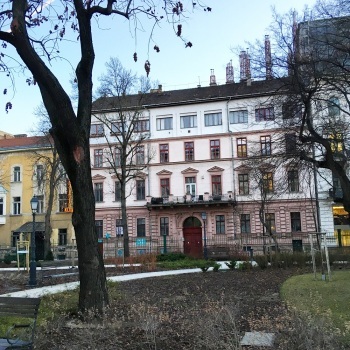

(This is winter in Budapest. Next time, I’ll try to write about building a nest here, since as you can see, my apartment is perched among the tops of the trees . . .)
December 26, 2021
The Process of Moulting
“What moulting is to birds, the time when they change their feathers, that’s adversity or misfortune, hard times, for us human beings. One may remain in this period of moulting, one may also come out of it renewed.” — Vincent Van Gogh
I don’t know what Van Gogh was going through when he wrote this. He was a man who went through a lot in his life — problems of all sorts, mental and financial. What would he make of the fact that his painting are now on shoes, umbrellas, shower curtains? I can’t imagine. But when I saw this quotation, it struck me because it seemed so very apt for our moment. We are in a period of adversity or misfortune — we are in hard times that seem to be getting better, then get more tentative and precarious again. We are moulting.
What is moulting, anyway? That fount of all knowledge, Wikipedia, says, “In biology, moulting (British English), or molting (American English), also known as sloughing, shedding, or in many invertebrates, ecdysis, is the manner in which an animal routinely casts off a part of its body (often, but not always, an outer layer or covering), either at specific times of the year, or at specific points in its life cycle. Moulting can involve shedding the epidermis (skin), pelage (hair, feathers, fur, wool), or other external layer. In some groups, other body parts may be shed, for example, the entire exoskeleton in arthropods, including the wings in some insects.”
First, let me say that I really like the word “ecdysis.” When I am feeling particularly moulty and don’t want to socialize or see other people, I will say, “Sorry, I can’t, I’m going through ecdysis.” And everyone will look at me strangely, as though I have some unusual disease. But moulting is a natural process — which doesn’t mean it’s a particularly pleasant one. Animals that are moulting always look rather awful. If you’ve ever seen birds moulting, you’ll remember that they are scraggly, gangly things, with feathers sticking out everywhere.
Some birds moult slowly, a few feathers at a time, so they can still fly. Others, like ducks and geese, moult all at once. Their flight feathers fall off, and for about a month they can’t fly. They are earthbound and vulnerable. If you feel yourself moulting, one question to ask is, are you moulting gradually, or all at once? If it’s all at once, you’d better hide for a while, until your flight feathers come in.
Of course this is a metaphor. Even mammals moult, and you’ve probably see it — there are seasons when cats and dogs seem to shed all their hair. That’s moulting. Snakes shedding their skin is moulting, hermit crabs shedding their exoskeletons is moulting. Actually, hermit crabs eat their exoskeletons after they moult — probably for some important nutritional reason. Frogs also shed their skins and eat them. There are different reasons animals moult. It can be to let them grow larger. It can be to enable metamorphosis. Birds moult because wings get damaged over time. Where old, damaged wings are shed, new wings can grow. Moulting maintains the bird’s health and agility.
So moulting is a natural process, part of a cycle of growth and repair. And yet, metaphorical moulting — the kind we human beings go through — can be deeply painful. Imagine what it means: you lose part of yourself, a protective part, a part that used to define you, like your skin or shell, or that used to enable you, like your feathers. A part that used to keep you warm, like fur. A part of your identity, a sort of home. Van Gogh says adversity does that for us, although it’s not just hard times — it’s also the inevitable process of growing, which is also a process of loss.
My daughter will be going to college next year. She is moulting. I can tell she feels it — both the exciting possibility of something different, something new, a new identity or way of being, and the frightening certainly of change.
In a sense, we have all gone through a period of moulting in these last two years. It has been an enforced moulting, when we have not been able to fly. Chickens in commercial hatcheries are sometimes put through forced moulting. They are put on a strict diet, or their food is taken away altogether, for a period of days. This forces them to moult — they lose about 25% of their body weight and also their feathers. Afterward, they lay more eggs. This sounds like what we’ve all been through, doesn’t it? We had to survive on less then we were used to — not necessarily less food, but less of the nourishment we need as human beings. Less interaction, less human contact, less art and joy. We missed museums and schools and going to a café with friends. We missed the old confidence and freedom.
I guess the question is, what will we come out of it with? The hens that are forced moult just lay more eggs for the farmers — that’s not a very encouraging metaphor. Wild ducks that moult are ready to fly hundreds of miles. I suppose how a metaphor applies to us always depends on ourselves. Van Gogh says we can come out of it renewed, and I certainly hope that’s the case.
As for me, I don’t know who I am yet, coming out of this experience. What does my new skin or shell look like? Do I have flight feathers? A new fur coat? I have no idea. All I know is that in life, we don’t have the option to stop changing and growing. Life, in its strangeness, its unpredictability, won’t let us.
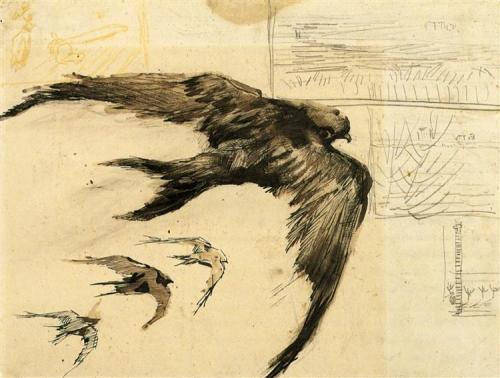
(The image is Four Swifts with Landscape Sketches by Vincent Van Gogh.)
December 19, 2021
Accomplishment Culture
This semester, I helped my daughter with her college applications. We talked about colleges, went through her essays together, talked through the application process and the decisions it involved — where to apply? early decision or not?
Early in the process, I learned how fundamentally it had changed from when I was applying to college. When I applied, I knew very little about the process — my mother had gotten her education in a very different system, so she could not tell me what to do, and my relatively small school in Virginia did not have good guidance counselors. A majority of its students went on to jobs, not colleges — those of us heading to higher education were in the Honors and AP classes. We basically spent our entire school day together, a small cohort of students who compared notes on the application process. The applications were still on paper, and the information we received arrived in the mail — there was no email for high school students. Even when I was in college, we communicated with professors by going to office hours or leaving notes in their departmental mailboxes. We did not have university email addresses. All that came later.
I was lucky to be in Virginia — the state universities were excellent. I applied to all of them, as well as some schools I was quite sure I would not get into, including Harvard and Amherst. My grades were not great — the truth is that I was often bored at school, and read a great deal on my own. But my SAT scores were very good, so these schools contacted me. I got interviews. At my Harvard interview, I got my first introduction to accomplishment culture. The interviewer asked me about my activities, my passions. I talked about being captain of the debate team, publishing in the literary magazine — my school activities. My passion, I said, was writing. She seemed disappointed. She told me that the candidate she had interviewed before me had founded his own business. That was when I realized Harvard was looking for something different, something that I could not even have conceived was possible. My responsibilities were doing homework and taking care of my brother after school. I was a teenager. I was supposed to start a business?
I am profoundly grateful that the exclusive private schools rejected me. All the Virginia schools accepted me, and I got a wonderful education at the University of Virginia for about $6000 a year. Then I went on to Harvard Law School and got myself into educational debt, which took years working as a corporate lawyer to pay off.
Now that we are in the era of the internet, all teenagers aiming for a school like Harvard know that they’re supposed to do more than become the captain of the debate team. They know they’re supposed to accomplish at a particularly high level — or their parents know, and lead them carefully through a process of founding charities, doing independent research. If they’re applying for the most selective schools, they need to show a résumé of accomplishments. When I started helping my daughter with her applications, I watched some of their videos online. They go through their statistics (grades, test scores, and a long list of extracurricular activities that will hopefully distinguish them from other candidates for admission).
My daughter had her own accomplishments, but I had never pushed her to do things like this. I had let her go her own way, follow her own interests. She had started a Redbubble store, proposed an independent art project. But we had never tried to build the sort of résumé these Ivy-bound teens were creating. Often with parental help — it was the parents who paid for expensive sports teams and trips abroad, who arranged for their children to do research in real labs. But these children were themselves steeped in a culture of accomplishment, where what they did mattered, at least to the extent that it could be documented on a college application.
My question is, is this actually good for our children? Because they are, after all, children. Bright and ambitious, but so young. Spending their high school years making sure they have the right credentials, making sure they have passions and following those passions, and documenting them, and hopefully publishing that novel or winning nationals, because eventually it will go on the college website: “Our class of 2026 includes a published novelist, a national fencing champion . . .” You don’t see the same sorts of accolades for teenagers who read a lot, or went off into the woods and thought about life, or babysat younger siblings, or worked at the local ice cream parlor every afternoon.
And yet, perhaps those are the sorts of things children should be doing?
I think this is a very American phenomenon. In Europe, the college admissions process depends on your grades and test scores. As far as I know, there are no essays asking things like “What is your favorite word? Explain why.” The process is much more straightforward. The universities are focused on preparing students for a profession or field of study. The amenities are more basic, and there are no sports teams. What makes it particularly American is the focus on showing what you can do, what you can accomplish. In a supposedly meritocratic society, you are judged not on who you are, but by your accomplishments — your visible, tangible accomplishments. The trophy. The certificate. The publication. This is equally true for the universities — they too are caught up in accomplishment culture. How many Noble laureates do they have? How many MacArthur or Guggenheim fellows? How selective are they? The numbers matter.
I’m not saying, of course, that European universities don’t have their own problems. But this seems to me a distinctively American issue, this focus on accomplishments and accolades that often have very little to do with a student’s field of study. There is an American need to prove that we are constantly producing, which leads to a culture of overwork and exhaustion that follows students into the working world.
The problem is that we are on an unsustainable trajectory. Students can only do so much before utterly collapsing — to be honest, I think some of them are already there. Universities can only raise their prices so high or become so selective. Students can only take on so much debt. I don’t like to say that the world was better at any particular point in history– it was better and worse. Every time is different. But the college application process I grew up with was less competitive. The process I glimpsed in my Harvard interview was still confined to the Ivies. Now it seems to be everywhere.
And I think we, as a nation, will have to think about this. Because human beings are not meant to be accomplishment machines — our society gains very little from teenagers, or even adults, adding the most impressive items possible to their résumés without thinking about what’s real, what really matters. And yes, of course teenagers and young adults can do wonderful things. I teach college students, and they are smart, passionate, dedicated, deeply and fundamentally authentic. They are much more than a list of accomplishments on a college applications, and what they bring into the classroom — their thoughts and ideas and interests, their inner lives — those are the most important things about them.
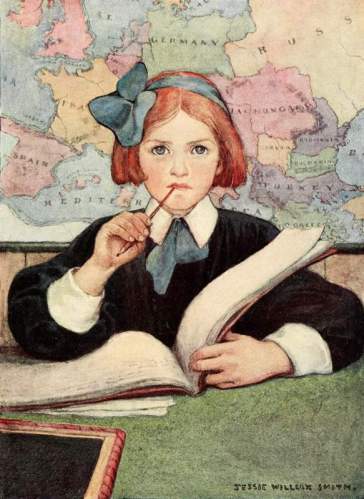
(The image is The Scholar by Jessie Willcox Smith.)
October 24, 2021
Get Off Your Phone
Yes, I’m talking to you. All right, no, I’m not talking to you. I’m talking to myself.
I’m not quite sure what happened during the pandemic. On the one hand, I was on my computer all the time. I had to teach classes on Zoom, and between classes, grading, and conferences, there were weeks when I spent more than forty hours in front of my laptop. I developed back problems, a stiff neck. And then, I spent more hours on my cell phone. Every morning, I would check to see how the world was doing. Every night, I would check again. And throughout the day. Because it seemed as though the world was burning, and I needed to know what was going on. I would check with fear that things were getting worse, hope that they might be at least a little better.
Even writing this takes me back to that time, which seems so far away but was less than a year ago — it feels as though there is a gulf between the world we are living in, with vaccines, and the world we lived in without. I got a vaccine as soon as I could — the one-shot Johnson & Johnson, which is what they had that day in the hospital, and I will get a second shot as soon as they let me, they being the powers that govern our lives, like the gods of old, speaking from on high.
I was on my cell phone all the time. I got used to checking it when I had a few spare minutes, scrolling through the news or social media, hoping for something. For good news, but some days it was also the only way I interacted with human beings. There were entire days on which the only people I saw were faces in the little boxes of Zoom. That was better than nothing, but in a way it was also worse, because now that we are in a better time, a more hopeful, normal time, I can feel its afteraffects. It’s as though I’ve developed an allergy.
During that time, I started to hate being on my computer. This is a serious problem, if you consider that I’m a writer. I’m being a writer right now, writing this. But after spending hours on Zoom, Slack, Digication, Doodle, Blackboard, and all the other online technology I used to teach my class, after hours of grading papers on my computer, I could not look at it anymore. I could not work on my own writing.
I reacted differently to my phone. I didn’t like being on it, exactly. But I was on it nevertheless, compulsively. Every time I looked at it, I experienced a tiny bit of panic, an indrawn breath and tightening of the chest. Had the world burned down since I last looked? I would check the New York Times, Washington Post, Facebook, Instagram, Twitter. No, the world had not burned down. But what about half an hour after — had it burned down yet? And an hour after . . . My response is not quite as bad, as drastic, now, but I still feel that compulsion to check.
In other words, my relationship to both my laptop and my cell phone has become dysfunctional. I suspect I’m not the only one. We have all been through the trauma of the past year. We are all responding to it in some way.
I’m not sure what to do about it. I’m trying to use my laptop more — I am once again, at long last, writing. I’m also trying to use my phone less, at least in the way I described above. I’m trying to stay off the news so much, and it seems to me that social media has grown significantly worse in the past year. Instagram, which I thought of as more innocuous than the others, a source of pretty pictures, is now half advertising. Twitter is the worst, a conglomeration of cute memes, playground bullying, and self-righteout outrage. I try to limit what I see, how I participate. I keep it partly from a sense that somehow, as a writer, I should have an account, and partly because it has become the only reliable way to contact customer service. Tweet at a company, and it will answer.
But I need to get off my phone, at least most of the time. Or I need to change the way I use it, so I’m not scrolling through, looking for something that my cell phone can’t provide. The problem is, I’ve never been addicted to anything in my life, except one thing — reading. I will read anything, anywhere. When I was a child, I would read compulsively, walking home from school. I learned how to walk and read at the same time. I would read the back of a cereal box if it was placed in front of me. I read deeply, immersively, compulsively.
But during the worst of the pandemic, I stopped reading books. I could not concentrate on anything — I did not have the mental focus or energy for long blocks of text. Instead, I read the news, Facebook posts, tweets. I learned to read and scroll, quickly, superficially, more skimming than reading. It is only recently that I started reading books again. And I found that reading books is, at least for me, fundamentally different from reading anything online.
Reading books, sitting on a comfortable sofa or bed, propped up against pillows, turning the pages with my hands, is a source of deep satisfaction. If I read at night before going to bed, I sleep better. It’s as though reading a book helps regulate my brain. When I read on my phone before going to sleep, I stay up later and have difficulty falling asleep. My sleep is more shallow, filled with anxious dreams. I don’t know if any scientists have studied this, but I think reading a book and reading my phone do different things to my brain. It processes these experiences differently.
Paradoxically, the sense of connection I don’t get scrolling through social media, I get reading a book. We think of reading books as a solitary activity, yet it connects us to something — I’m not sure what. Perhaps to ourselves? Whereas social media often leaves us feeling lonely. I don’t mean to criticize social media, because it certainly has its uses. I see wonderful art posted there, I learn about books and talks and conferences. Those are all good uses for it. Social media is good to the extent that it helps us actually connect — to artists we did not know about, to each other in the real, offline world. But it does not substitute for the real world. And it does not substitute for real, deep, extended reading.
It’s the difference between eating an apple and apple-flavored fruit jerky. An apple will leave you satisfied — you’ve had the real thing. Eat the fruit jerky, and you’ll be hungry again a half hour later.
They say the best way to change a bad habit is to substitute a good habit. So I’m going back to an older habit of mine — carrying a book everywhere. Yes, I’ll still have my phone, but hopefully I will check it less. I will read more, try to use my laptop more than the clever little device I carry in my purse that tries to be everything to me, bank and music and friends, but ends up being a petty tyrant and thief of time.
And if you’re reading this on your cell phone, stop for a moment. Listen to the birds or traffic. Take a deep breath.
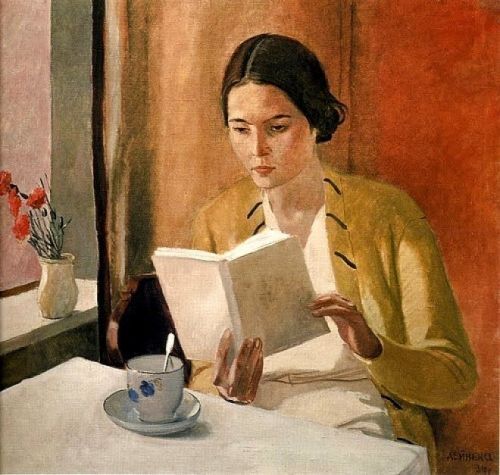
(The image is Young Woman Reading a Book by Aleksandr Deineka.)
October 6, 2021
A Noiseless Patient Spider
There is a spiderweb between the back porch and the chain link fence. That space is probably three feet across, and the spiderweb must be three or four feet tall. If you look at it slantwise, you can just see it shining in the light: a tight, intricate structure like the lace doilies my grandmother used to crochet. It’s so elaborate, and yet so delicate at the same time — elegant and architectural.
I am naturally afraid of spiders, and yet all I feel for this particular spider is admiration. She has made something so beautiful.
The night before last, it rained all night. It had been raining all day, it rained all night, and then it rained again all the next day — yesterday. Two days and one night of constant rain. I went out into the garden yesterday, and the web was hanging in tatters. But I went out again this morning, after a rainless night, and there is was — even more perfect than it had been. What a persistent creature she is, I thought. It reminded me of a poem by Walt Whitman:
A noiseless patient spider,
I mark’d where on a little promontory it stood isolated,
Mark’d how to explore the vacant vast surrounding,
It launch’d forth filament, filament, filament, out of itself,
Ever unreeling them, ever tirelessly speeding them.
And you O my soul where you stand,
Surrounded, detached, in measureless oceans of space,
Ceaselessly musing, venturing, throwing, seeking the spheres to connect them,
Till the bridge you will need be form’d, till the ductile anchor hold,
Till the gossamer thread you fling catch somewhere, O my soul.
Anyone who has taken a class in English literature will know this is a metaphor. The spider is the poet, creating airy structures out of his own substance.
I think about this poem a lot, because it’s about writing, and I feel as though it describes my own writing. I’m the spider, first taking everything into myself: everything I hear and see, all the sensory details of living on this planet at this particular time. All the things I read. Taking it all into myself, and then breaking it down into some sort of liquid — what is spider silk made of? I have no idea. Mostly proteins, I think. Anyway, from that liquid I spin some sort of thread, thin and fragile, almost intangible. After all, words are really no stronger than spider silk. If you pass your hand through them, they break apart.
But I spin it and arrange it into a web, into the sort of lace my grandmother used to make. She had so many patterns! Some for whole tablecloths, some for just a coaster. I create the pattern, and there it is — a structure made of words. Whitman writes about that first thread going out, the one that will anchor the rest of the web, but of course there is more to writing — you have to spin the whole web, create the whole pattern.
And then it rains, and then you have to do it over again. You have to sit quietly and patiently, and work and work and work. Like my grandmother making lace, sitting in her chair, with the crochet hook flashing as she worked, her hands building an order and a pattern that would not exist if she did not create it. She did not simply follow pattern books — she had been trained as an artist, and she created her own patterns. I still have some of her embroidery patterns, drawn in pencil or pen on translucent paper, in Budapest.
So I felt a kinship with my backyard spider. I have not disturbed her web since she first created it. Who knows what will happen to her over the winter — spiders do not live long. I saw her once, about a inch long, brown. Maybe spotted with lighter brown? I did not look too closely — as I mentioned, I am afraid of spiders, which is the silliest thing you can imagine, since she has no power to hurt me. Probably I am so large from her perspective that I do not even exist, like the house itself, or the clouds above. I am a force of nature, like rain.
I don’t feel much like a force of nature — there are forces so much larger than me, and most of the time I feel like that spider, working in a narrow space between the back porch and the chain link fence, trying to create something, hoping it will hold.
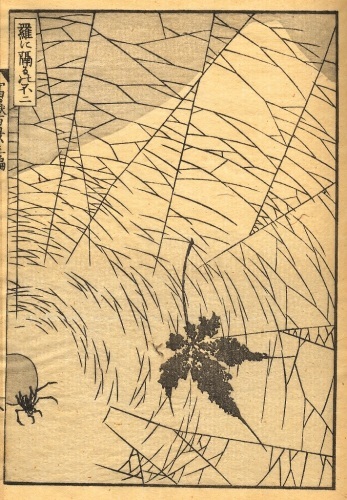
(The image is Mount Fuji Behind a Spiderweb by Hokusai.)
September 26, 2021
A Garden and a Bathtub
Someday, I would like to have a house with a garden and a bathtub.
After I graduated from law school, I moved with my then-husband to Larchmont, New York, so I could work in Manhattan. That apartment had a bathtub, but of course no garden. A year later, I left the New York firm and we moved back to Massachusetts, to a tiny house in a town called Wilmington. It had been a summer cottage, and then the house of a carpenter who had put in a heating system. It was so small that it had only four rooms: a living room, a bedroom, a kitchen, and a bathroom. Its most important attribute was being very, very cheap — those were the years I was trying to repay my law school loans as quickly as possible. Really, it was a house smaller than most apartments. It had a small but lovely garden, partly shaded by tall trees. I grew roses in a bed on the sunny side of the house, and shade plants among the tree roots. But it had no bathtub, only a shower. When the landlord decided to sell that house, we moved to an apartment in the city.
That apartment had the best bathtub ever — a deep Victorian tub, a real nineteenth century relic from an era when products were designed to be both sturdy and comfortable. Bubble baths in that tub were heaven. I developed a ritual of reading in the bathtub every night. But once again, I was in an apartment. There was no garden. Eventually, we moved to a house in the suburbs so our daughter would be in a good school system. It was probably the cheapest house in that very expensive school district — I could tell that it had been built in the 1960s. It had two bathtubs, neither of which were long or deep enough for a comfortable bath, and a yard so shaded by tall trees that I could not grow anything at all. The back yard of that house was a pine wood, the ground carpeted with needles and moss. Anyway, at that point I did not have the energy to plant a garden — I was trying to finish my doctoral dissertation and dealing with the worst depression I’ve ever had in my life. Either a workable bathtub or a sunny spot to grow some herbs would have helped.
After a separation and divorce, I lived in two city apartments, both in old buildings from the turn of the century, both with lovely bathtubs. Not as fancy as the old Victorian bathtub, that platonic idea of all bathtubs. But they did the work of bathtubs, which is to soothe the soul. A shower can get you clean — a soaking bath restores your spirit. Of course, they had no gardens.
I would probably have stayed in one of those apartments — I would probably be there now. But the building was being renovated, and I was told that at the end of August I and all the other tenants would have to move out. I scrambled to find another apartment. The housing market was horribly tight that year, even worse than it usually is in Boston. The apartment I’m renting now was my third choice, but the first two choices both fell through. It was the largest but also the most expensive, and . . . it did not have a bathtub, just a big shower.
Now, there are a lot of people who prefer showers, and I will admit the superiority of a shower in getting one clean. But they have an important drawback — one cannot read in them without imperiling one’s books. Books are not made to be showered on.
At first my apartment had no garden either, just a strip of dirt and grass along the side of the building. But during the first days of the pandemic, when the university abruptly shifted all of its classes online and the shops were closed — in those days when we were told to stay home — I asked the landlord if I could create one. I think gardening got me through that time. When it seemed as though life had fundamentally changed — as though we might never hug another human being or have toilet paper again — there were still plants to put in the ground. Slowly they grew and blossomed and faded and grew again next spring, as that terrible year passed. Now I have hostas and heucheras and astilbes in the shady bed, roses and lavender and herbs in the sunny bed. I have a garden.
I also have a bathtub, but it’s not here — it’s in Budapest. I wrote in another post about my grandparents’ apartment, which passed to my mother and then to me. All through the winter it was being renovated. I saw it again once the school year ended and travel restrictions eased for a while. It has a very fancy bathtub, almost too fancy for me, surrounded by beautiful tiles. A bubble bath in that tub is particularly luxurious, an indulgence. It seems almost decadent, like very rich chocolate.
So I have a garden and a bathtub . . . in different countries.
I should have a talk with the Fates, those annoying women. They probably think this is funny. “Let’s give her a garden, but no bathtub! Now let’s give her a bathtub, but no garden!” I can hear them cackling. They have a terrible sense of humor. If I could speak to them — they are somewhere in Greece, I believe, at the moment, and can’t travel as much as they used to because of Covid — I would tell them, “Dear, lovely Clotho, Lachesis, and Atropos. How nice you look — have you had a haircut lately? No? Well, the long, waving locks suit you. Anyway. I would like a house, and inside I would like it to have a bathtub, and around it I would like a garden. I’m not asking for anything extravagant. I don’t need a helicopter or a yacht. I’m not asking to be a billionaire (although enough money to retire on someday would be nice). I just want a house with a bathtub and a garden. And, if you don’t mind and have one lying around, a tortoiseshell kitten. Have a mentioned how nice your cave looks? No? Well, it’s so charmingly damp.”
That’s not asking too much, is it? I don’t think so . . .
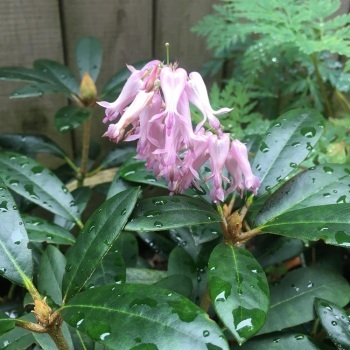
(Here are some fernleaf bleeding hearts, in the shady bed.)

(And this is my rosa Iceberg, in the sunny bed, blooming for the last time this autumn.)
February 21, 2021
The Apartment in Budapest
There were so many problems with the apartment in Budapest.
The electrical wiring dated from the 1970s. It had half the amperes of a modern apartment, if that’s the right way to say it — renovating the apartment was my first introduction to amperes. The outlets were in illogical places, the sockets were fifty years old. No one had actually lived in the apartment since my grandmother, after my grandfather’s death, had gone to live with her daughters in America. It had stood mostly empty.
The floors had probably not been refinished since they were first installed, in the early 1950s, when my grandparents moved in. They were hardwood parquet, built over a layer of slats and sand. My mother tells the story that when they first moved in, the parquet was not yet completed. My grandmother simply put a rug over the slats, and my mother used to pull up a corner, play with the sand underneath. There were spots where the varnish had worn off long ago, spots where the floor sagged because of damage to the underlying slats. There were bare spots where the old kályhák had stood (singular kályha, the ceramic stove that heats a room). One had stood in the bedroom — that one had been electrified. The one in the living room had still burned coal. They had been taken out ten years before, leaving spots in the floor that were partly bare, showing the slats and sand beneath, partly damaged wood.
The walls had not been painted since my grandfather painted them, perhaps thirty years before. The old yellow paint was chipping and peeling off the plaster. He and my grandmother had lived there since shortly after the Second World War. Like most people at that time, they had been quite poor. They had done everything themselves. The gas stove in the kitchen was still the one my grandmother had cooked on. I had to light the burners with a match. I was not brave enough to try the oven.
The kitchen and bath had been partly renovated after both of my grandparents died, enough to make them functional. But now that renovation had itself become a problem — the toilet leaked, the sinks were too small, the hot and cold taps in the kitchen had somehow been installed backwards. The washing machine was a hulking presence in the bathroom, the only room where it could be installed. The tile on the walls, while functional, was a swirling green that made one feel like the Little Mermaid, longing for land. It had been installed generously, in places that needed tile and places that . . . did not.
The biggest problem was the windows. They were at least a hundred years old, damaged by water and time. The window in the bedroom did not close properly, so the new radiators — the one new element in the apartment that did work, beautifully — struggled to do their job. The furniture was still my grandmother’s, a mixture of magnificent old pieces and cheap but convenient additions she had picked up where she could. There were three single beds with uncomfortable mattresses, one with a headboard that was broken and needed to be propped against the wall. One of them served as a sofa.
That was the status quo ante when I started renovating the apartment. I did not, exactly, take into account a global pandemic that would keep me from traveling to Budapest while all the work was being done. I would not be able to see it — the work — except in photographs sent to me by the designer. I would have to pick out lamps, paint colors, bathroom and kitchen tiles from websites. I would have to trust that the people doing the work knew what they were doing — which they did, of course, far better than I would have. After all, I’m not sure what an ampere is, or how many of them you need in Europe. Is a European ampere different than an American one? Do we count amperes differently here, like our insanity about length and weight and temperature? (I have recently learned to appreciate centimeters, kilograms, and celsius. They make life so much easier.)
By the time I am in Budapest again, which I hope will be sooner rather than later, vaccines willing, the apartment will be renovated. There are already new insulated windows. The floor has been refinished, the walls repainted. The bathroom has beautiful beige tiles, a shower and tub, a proper sink and cabinet. It looks reassuringly normal. The kitchen is still waiting for cabinets, the lamps are on their way, the curtain rods are coming. There are still things to do, and thank goodness for IKEA, the one-stop-shopping source for all things kitchen and bath. When I arrive, it will be to a mostly empty apartment, with only the magnificent old furniture left. That will have to be refinished and repaired at some point, once I write another book and earn more money, since this renovation was funded by the girl monsters in my first trilogy. (Thank you, Mary, Diana, Beatrice, Catherine, and Justine. There was a reason I made that building Dracula’s house in Budapest!)
Right now I’m just grateful that I could do this. I’m grateful for the designer, architect, electrician, plumber . . . the company that manufactured the windows, whoever builds things for IKEA, everyone who bought my books so I could pay the bills. Anyone involved in any way, large or small, with this renovation. During a time when it feels as though nothing is happening — it is February, I am teaching, it has always been February, I have always been teaching, February will last until the end of time — at least I know that something has been happening, even if it’s across the Atlantic ocean, in a fabled country I have not seen for months and months. But I hear it has excellent cake.
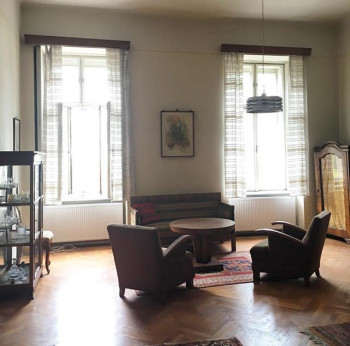
(This was the apartment the last time I saw it. The beautiful old furniture is still there. The Communist-era lamp will be replaced.)