
Dmitry Orlov's Blog, page 16
December 9, 2013
Blessed are the Idiots
P { margin-bottom: 0.08in; }
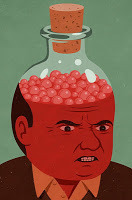 John HolcroftP { margin-bottom: 0.08in; }
One of the pleasures of running a popular blog is in reading the many interesting emails my readers send me, out of the blue, asking questions, suggesting new topics, sharing their ideas, correcting my typos, and sometimes even sending in something that I can publish. And one of the least pleasant aspects of running a popular blog is in reading emails sent in by idiots. The world is full of idiots. While most of them seem to be of the quiet, unobtrusive kind, who might quietly sit in a corner eating a pot of glue, there are also quite a few belligerent, vicious, willfully ignorant idiots who spontaneously go on attack and start defecating in my in-box. Usually I ignore them.Read more »
 John HolcroftP { margin-bottom: 0.08in; }
 One of the pleasures of running a popular blog is in reading the many interesting emails my readers send me, out of the blue, asking questions, suggesting new topics, sharing their ideas, correcting my typos, and sometimes even sending in something that I can publish. And one of the least pleasant aspects of running a popular blog is in reading emails sent in by idiots. The world is full of idiots. While most of them seem to be of the quiet, unobtrusive kind, who might quietly sit in a corner eating a pot of glue, there are also quite a few belligerent, vicious, willfully ignorant idiots who spontaneously go on attack and start defecating in my in-box. Usually I ignore them.Read more »


Press Release—Project Unspell
[image error]
Powerful New Tool Helps People Learn to Read and Write in English Without Years of Schooling
(via SBWire)
Beverly Hills, CA -- (SBWIRE) -- 12/09/2013 -- The creators of Project Unspell, a revolutionary software program that is currently being developed to help people learn to read and write English, are pleased to announce that they have launched a fundraising campaign on Indiegogo.com. Project Unspell offers an exciting new approach to circumventing the complexities of English spelling by providing a platform that allows people to learn proper pronunciation, read English text phonetically, and then easily convert it back into standard spelling.Read more »
Beverly Hills, CA -- (SBWIRE) -- 12/09/2013 -- The creators of Project Unspell, a revolutionary software program that is currently being developed to help people learn to read and write English, are pleased to announce that they have launched a fundraising campaign on Indiegogo.com. Project Unspell offers an exciting new approach to circumventing the complexities of English spelling by providing a platform that allows people to learn proper pronunciation, read English text phonetically, and then easily convert it back into standard spelling.Read more »
December 7, 2013
Adbusters Magazine Issue #186: Countdown to Catastrophe
P { margin-bottom: 0.08in; }
 The culture-jammers are at it again. The latest issue, on the newsstands now (if you happen to live some place progressive and/or liberal), is titled “The Big Ideas of 2047.” Spoiler alert! Here are the big ideas of 2047:Neoliberal economics is dead; growth is no longer GodProgress is now a spiritual rather than a materialistic questionProducts are priced based on ecological payoffUsury (lending at interest) is tabooIndividual rights are gone, replaced by individual responsibilitiesThis is the shape of the reborn, post-collapse world presented at the end of the issue. Read more »
 The culture-jammers are at it again. The latest issue, on the newsstands now (if you happen to live some place progressive and/or liberal), is titled “The Big Ideas of 2047.” Spoiler alert! Here are the big ideas of 2047:Neoliberal economics is dead; growth is no longer GodProgress is now a spiritual rather than a materialistic questionProducts are priced based on ecological payoffUsury (lending at interest) is tabooIndividual rights are gone, replaced by individual responsibilitiesThis is the shape of the reborn, post-collapse world presented at the end of the issue. Read more »
December 2, 2013
A Home in Harmony with Nature? Why, that's illegal!
P { margin-bottom: 0in; line-height: 100%; }P.western { font-family: "Times New Roman",serif; }P.cjk { font-family: "Times New Roman"; }P.ctl { font-family: "Times New Roman"; font-size: 10pt; }A:link { }
 Pete Ryan[This week's guest post is by Scott Erickson, author of The Diary of Amy, the 14-Year-Old Girl Who Saved the Earth, a fun little book to share with friends and family. It works, in a way that many other books don't. It tells the truth, in a way that's hard to ignore. And it gets away with it, because it is firmly in the category of humor/satire. This, it turns out, is necessary, because it turns out that any attempt to tell the truth without making it into a joke is automatically tagged as undemocratic, unpatriotic, elitist, sanctimonious, moralizing and overly negative...
Read more »
 Pete Ryan[This week's guest post is by Scott Erickson, author of The Diary of Amy, the 14-Year-Old Girl Who Saved the Earth, a fun little book to share with friends and family. It works, in a way that many other books don't. It tells the truth, in a way that's hard to ignore. And it gets away with it, because it is firmly in the category of humor/satire. This, it turns out, is necessary, because it turns out that any attempt to tell the truth without making it into a joke is automatically tagged as undemocratic, unpatriotic, elitist, sanctimonious, moralizing and overly negative...
 Read more »
November 25, 2013
The Story of “Er”
/* Generated by Font Squirrel (http://www.fontsquirrel.com) on November 21, 2013 */ @font-face { font-family: 'unspellregular'; src: url('http://www.soundimagemotion.com/unspe... } @font-face { font-family: 'unspellregular'; src: url(data:application/x-font-woff;charset=utf-8;base64,d09GRgABAAAAAChsABMAAAAASqwAAQAAAAAAAAAAAAAAAAAAAAAAAAAAAABGRlRNAAABqAAAABwAAAAcaX7In0dERUYAAAHEAAAAHQAAACAApwAER1BPUwAAAeQAAASrAAAI9JT4rnBHU1VCAAAGkAAAACwAAAAwuP+4/k9TLzIAAAa8AAAASAAAAGBwKUUtY21hcAAABwQAAADnAAABqjo9ZAJjdnQgAAAH7AAAACYAAAAmDp8GR2ZwZ20AAAgUAAABsQAAAmVTtC+nZ2FzcAAACcgAAAAIAAAACAAAABBnbHlmAAAJ0AAAGVwAADN8lpzttWhlYWQAACMsAAAAMQAAADYFAd2JaGhlYQAAI2AAAAAgAAAAJA5ICEVobXR4AAAjgAAAATEAAAHowGwNgWxvY2EAACS0AAAA4gAAAPa/v7LGbWF4cAAAJZgAAAAgAAAAIAGXAZNuYW1lAAAluAAAAPMAAAHWI85GunBvc3QAACasAAABFwAAAccKa6BpcHJlcAAAJ8QAAACeAAAA66YXUYF3ZWJmAAAoZAAAAAYAAAAGmhBSjQAAAAEAAAAAzD2izwAAAADOjdtAAAAAAM6zSo942mNgZGBg4ANiCQYQYGJgBMJKIGYB8xgACX0ArAAAAHjabdZfaFt1FMDx09s0vRYpQ1rr/hRU2q5/1q5N1z9p2j0laf40v6S/NGnWrlJlFpljA1GKoMgUBdeOYRUfRIqPRcYe9jwGY8gYOo7gyx4EEfVNxEeRmev33qalZSF8epN7fzcn53fPOZs0iEiLDMtZceLJuQVpvfTq25flmIQ4L54n/vWD7xvefP2ty+L67wIhcYKjKw3uF8HKs/KJbMqWPGlwOG42/CBPZNO56LznbDk7/L3tPHb+bfw9dDf0c6ja1Nb0srPVFA9HwoXwK+FLzuPwNXwTvh3+8cA9O+G/mo80b7kht8df56acLbe8e4/b466Gr7mr7od8jvBL8t5S8LdCFl3e99KNPvRjAIM4jQhGMYFJxBBHAmlkkEUOec9IgaNFESUsooJl+PHKEiFemXhl6cFJ9KIP/RjAKQxiCMMY8e/CKM5gDOOYwCSimEIM05hBHAkkMYsU0sggiznkYODvQoGjRRELKKGMRVRwDktYxnms+L+dTNbJZF165A3pRR/v+zGAQQzJLXZxXUa4FuE4ijHej3N+gveTmOJzjGMcCST5nEKa9xlkkYPhXL66wy9dl3lYFFFCmWuLHCtY4v0yx5C0e6/J8959OV79Jdj5JmmvPlc786t0Bk+ssn/2AWf/4Oyj4KwT3H3cOyLPSJu3zaejrNmWDu+mvOB9K0e9r+WYd0NOcOz0Pqeyg2+p3pKO6hWu3ubb1rj6kKt3gm+cYsVLrLjDivdZcZcV7wS/oos96UYPTqIXfejHAE5hEEM4jWGMIIJRnIH/GscEJhHFFGKYxgziSCCJWaSQRgZZzCEHg7y3JgWO87AoYgElUIGyiArOYQnLOI+V4He0e9fJ7jMys2RmycySmSUzS2aWzCyZWTKzZGbJzJKZJTNLZpbMLJlZMrNB/HFMYBJRTCGGacwgjgSSmEUKaWSQxRxyMMh7H5GZJTMbvIpYQAn0AJlZMrNkZsnMkpklM0tmVpp5hn9TBwXqYC14ygef8F4N/MNVt1YD7x5aQa3992etAi/sVmD1pjSyX6PUWmtQfbVv4Rs6vI66lRSjIm9wTwurNli1TUV+xcoNKvIqKzdY+TG9qfSmMmWUKaNMGaU/lf5U+lOZMkqPKv2pTBllyig9qvSoMmWUKaP0qNKjyoRRJozSp8qEUSaM0q9KvyoTRpkwyoRRelbpWaVnlQmj9K0yYZRf/ZC+VfpW6Vulb5Upo/SuMmWU3lV6V5kyypRR+leZMsqUUX/Pgz7+jkx/OrQf/l40Brvl96m/d3ufdnfSv7OPOz/gzi+felo8C2/sqWngT43V2jT4LTjjf8uFw/FZsRe/3tUr+1f9ZzlYmwoP6j7LF1nRzYp7rLjKivtBzXT6+0ulJ5DELFJII4Ms5pCDQd67SE1Hqelo0CFFLKAE/n2gpqPUdJSajlLTUWo6Sk1HqemonCCDT4l6nYiGiIaIhoiGiIaIhoiGiIaIhogmeOXZ1QLH+aCnDBENEQ0RDRENEQ0RDRENEQ0RDRENEc1+hQt71lp3V+p10uEVjUEn7XbRo/1p/eyhOVx/x0P79bT3hB2+rU06+V9JF9OkhX1Yka7/AXi3yaoAeNpjYGRgYOBi0GHQY2BycfMJYeDLSSzJY5BgYAGKM/z/DyQQLCAAAJ7KB2t42mNgZt7HOIGBlYGFdRarMQMDozyEZr7IkMbEgAbYkTkBkUHBDA4MvA8YWMP+hjEwsN5lmg4UZgTJMTExHQVSCgxMAAsaCwJ42mNgYGBmgGAZBkYGEFgC5DGC+SwMHUBajkEAKMIHZPEy2DPUMSxgWMtwgeEuwwcFLgURBX2F+AcM//+DdfIyKDA4IskzKAjA5Zn/f/3/5P/j/4f+b/s/5X/H/7IH6Q+SHng8kFSohNqLBzCyQZwIZjMBCSZ0BQwMLKxs7BycXNw8vHz8AoJCwiKiYuISklLSMrJy8gqKSsoMKqpq6hqaWto6unr6BoZGxiamZuYWllbWNrZ29g6OTs4urm7uHp5e3j6+fv4BgUHBIaFh4RGRUdExsXHxCYkM1ANJYLK0jDRdAAW/ObIAAXECAgICAJEAjwCSApEAqACoAHoAfQCgAKMApACmAHgAjQBEBREAAHjaXVG7TltBEN0NDwOBxNggOdoUs5mQxnuhBQnE1Y1iZDuF5QhpN3KRi3EBH0CBRA3arxmgoaRImwYhF0h8Qj4hEjNriKI0Ozuzc86ZM0vKkap36WvPU+ckkMLdBs02/U5ItbMA96Tr642MtIMHWmxm9Mp1+/4LBpvRlDtqAOU9bykPGU07gVq0p/7R/AqG+/wf8zsYtDTT9NQ6CekhBOabcUuD7xnNussP+oLV4WIwMKSYpuIuP6ZS/rc052rLsLWR0byDMxH5yTRAU2ttBJr+1CHV83EUS5DLprE2mJiy/iQTwYXJdFVTtcz42sFdsrPoYIMqzYEH2MNWeQweDg8mFNK3JMosDRH2YqvECBGTHAo55dzJ/qRA+UgSxrxJSjvjhrUGxpHXwKA2T7P/PJtNbW8dwvhZHMF3vxlLOvjIhtoYEWI7YimACURCRlX5hhrPvSwG5FL7z0CUgOXxj3+dCLTu2EQ8l7V1DjFWCHp+29zyy4q7VrnOi0J3b6pqqNIpzftezr7HA54eC8NBY8Gbz/v+SoH6PCyuNGgOBEN6N3r/orXqiKu8Fz6yJ9O/sVoAAAAAAQAB//8AD3jaxVoNcFvVlb73/ejPsqwfy8J2/CPLsmJEIqRnRRGOY8cYY4xx3VS4aer1htR1QtpgjPEGk/W6qZuGlGaNG0KzIaWZNMt42GzmPVkNNA0t0KU0w3i7mWzMZNoM7XZZcJcCw3QZGuyXPee+J1l2nPBTtkuQ/PR+7j333O985zv3XcKRJkK4HvFOwhMjWalQElqTNAqOP0QUg/jrNUmeg0Oi8HhaxNNJo8E5uyZJ8bzk8Dr8Xoe3iStXK+lBdat456V/ahKmCDRJNl+WaEh4B9o1kzhJ8oQEU0Qk+UIwaYbjpMiRIJUtIVmYlkkkZTSSUiEo0/SRkkOD5MZwTHL7Cqnk4H2bz5yZCvcKZ/kL9D/VZXO7sY9q7hgXZX0YiZ8k4UxQFqQUbyDXQVuGCJVNIdk4rRjMM4qZteeSeB+FT3Vq2RCNnSwdEt6ZS3FtcylmM7ksCf3QXjEpo7eQZBHa6S4olCQpCdeDk/me64orPVKKCiQiBCc5x7KSSk+EDWXSYLbk4jVBu8bbS8vwmhGuJU05VmiDyuUhuWhaKcyZkQvtSgENKm44dNtlU/m0QzHCsTGkmNgpHL5izZlRvDQoryo6Vffs217iDlpO1b309q14IBfZJ7kiowt6Yt8G/IZmJ82FJjgosE9aCnLgwG2fzHVb4QY7+3aw73z8xns87B546jr2FLRZnG5nWbqdErxnsjR9Zxme5xvsHI8jtjvQJ8tKSstWLvpPbigCf0djkssHH4lnH6OPfXwu/OClste7Xy97fWj/Axd37h96o+yNTb8ve23no0Ov7jjwwA9/1X3xnfvphkH6U3UdfgbVifvVm+mz+IHzMOv1arPgF3vJcnIjuYkcIkk/zJJcISmiOCOHI0m/aAlONvgrzUE2f0k7AiRXUgrh8opI0obzll9pMwXlapid2pBsnlaqjTMywfmgcFBtV0QaTOZW3hCJRFLhPOIC+OYVVsAvOWxXojBJpXBbPt7vMs4oawBkChEdTjkaVwr9Dqdyw03xOMK4wFPgcayk0ZrYKikquUupx7eSBqoCDrjgthsNRrcvWhmocuXDbQajga6KrYrWBOCW+kmDv27iwlRf/y+6z5wXTghuZ/23Xr9zz/FepVu9uDX+b6N9o7EY/exEs/evij/f8Pqedf02zlv9k+MHH9y5e9Q29ZS/YdlWXi2qX9P1jPrHvnrXCy84n+2FeOovoK8YWts/eNOwI75+57r8Sif4SCSNl62Gs8KLxE7KSSWpAX74Bkl60Xth+FLiwkxyHR5Uw4EbHKjkwoGAByX8TLKCRfUtIZlMpxw5pAfC0GFXCmkwZdZ+me2KH35FtV9Ru1IHv1awX0ozuLPQAU7zVsbjSl3U4UxWhH3xeBwDFxwXi6Cz8sFZFYGqWL6nQIowL1X5KowGF5XMlN109Xsae3sfaX1gVW9vz6PjX+4dq627s7N27drazs41te/y5X2zr9L/6u39zljvli29Y+Nb8IbPJ+CGuvWda2v5prHeXirV9I6NbemlW3of2XBTXd3aRKKutjb+wb3ijy7dSkfZlS1jeCM8vSFeV1eXSKytq6sFrG64bBerhbfI9SRGbiNbSbICfRpAV4bEmWQB/spFNzaLM1RuRQ8qQePMpDlITEFlNaAsaFcawUMOwNnt8Hd1EGAmxuVGRzJQ4wYvyfBbihOlOQSOK66pizPk1cTW0lhVoCqa7RuAF5yVAGhR6gvAH5/uLQ94K0bhhCvfAxiFmzLO29BbNtDZXebdtOnooUTnBmkntRZbBKvxKXuNRA2/35tYN3Tota1bf9jZeVf/HW1hNflwsOkpr311dajRGQ8GW/qu9xw7dp8vIW27/dbmfV3dtLNz59iW+g71udYV+asr9u0a8agvTGwMtO4cPjRYX0fD4UZ6oDvczp2oj5a0rPBFPY2faw6GWn0AU0Ivv88dIycY95dpzK/TPpWFkMxPK1zeDMYuQIcHvjed9N6PVM+eJUfnxrlB0USKiI8w7FK5mEHWYiSrAIjLwL0WAu50MujZY6tcko0aDQ67Rw9c7f+qo921Px5uv7uguaOwp2WopctuX55fErBYaSP1/fdjtOLQq7deUF9VL77T+u/fHhjzlnVG2w53djIbJLDBwGwoJaz7gumUdb57awF0z7PuJZgF7f9VUXugiveBDQUOu9FGpawusyyZG5/vq+MKQ6DvdsibL4LvbCQCmRl9Z9VSpiUCmR040gB0mBeSuWlFBDfawR6RA3tymD0xDxBYzGP0GAPGQKy9+pXBC9W/fuhLo7t79vJv3dvxH79pv7f5dMsLL7ScxnF2QU7t41tIDukgSQuiHKlYNkIWFUkY+hQjzAT2RWVrSLZMy1xEMQPihUjSbEEKNxuBwi1mPLQQM3COJg6iXgdoELfX4XN00dRT9Ifq7U/NTNCn1dsm1FZ6kvk5pJ6lBnIBxgoZ3YgqxCSQSkEzA21wIWbyUCegDuGNpEQI6n9k3p6yMtIHu9AN0CmyN4ZQFBg6VhMIvRIODzYX2alw4czQhi5ntzURDtjNGs5O0C66i4sCRqOEORYVEKaQrGOGV4Aez2SP/kdHrgv6OnGOdl24oLVXBt/vwlhYe1n2LxzL1dtD28vOYWsUtQ63jcVPvdaWzEva5HOS3obCgxbh7QqF+edyWDgxLULffBIlCE+1HO+mEqXnvquunBKfvXQz6qj6y1ahRHiZ5AG2QftZ0bp8kdSDpSxTLEOKK2Nm2o3kenCv3a5cB4nAxH4p5droa2JOr+ApcNmNnFiOuVFjcwcjJK6+YZDGaP7wJrphWP2tqg5veyHUemJfR6K27p+P7Ke/ff84baavyeqUeuG0+hb9zSkafWXvy8PDtOPd7z+hvoI+eBF8cB5ynZmsI0kTYhMdoBDIaBl5appGRRoF001GxJ8J8Ccb7SnRQm5A9IZ0pepigJAAii++eHtr9b7n+eqHnTesePLSPfx72Fc9xEGZcJYESK8+d36G/6QHsZArkrWgGl3EY4Jul4dk17TihAhw2lG4pqqYBXIxxEMViwcMgmqYFqcLwtIfl82OScFTXlHpictVTjmAceoBe+p1HYEEDgTmg19eLQfYaB7SvNHrrrc2ND33/Eh0fWv7g8+0ON3cj4TGQVr9x/sGhnzDXXs3r95cwudNnf7m3v57WuId24dva304sOXmnwyc3b33yPEh34ZwWyyc2P4UjjEM814M+n8VeYgkJRyjqM06U1/5TC1ArvPjiJexK5PeXD+OOBaSvdNKOYy43C5TkFMpkPTrYMgklKLaUbnmipAGmOtQci2HVLgavFDuBS9wcfk6x6Ro90voheVO+YY40ZVXWgMEKgy+aEEkWxIYfTXoEy0tllL84wOshZ+1BlpOjiU6N3Y/4fS7SvwFvQ0D7S1bU81+g9zQT52/evvWFU39Iw/tef8yuXfgzYcb+tvahvbX1lLue4I39si2NfEdTQ8cufel50+NJqLFZfKuqV27vr0HYkMCHISEXxILySUbiFYLsfAzSEqOyDiPY9izhWTrtGyOKAJ4xRhJClacecEATGgV8NCKIMiD4QtWNnwCQQoHuZj1o1AzQekEaIQCTeK+891z51JqmE6NK/y+2U1PqEdp9xPcHpyzxss2iNUU1E+Pa5oExbM2YUXpCXPihLlFEoKpLGDGVbHghZlpxKJNm5lSLXgDGkvUN72XYIWKc6VcsBKB7M75kw0KCsWR8ycigxaedDjdBXqpQKEFUC32ogoUMqWgpvNB9ilFFTAge3zRNPoqDMaAC3ifBzxLgGcPzJoXFEzjadtI7ReP3N7etXFX1+4bH/8q98bc9+ui1e3bX/rmXjoyor4t7xk9cqi2pGfbg/sT61vqTbxwQu0POL0jIz87873DX9pMWB3YDj7xQayWQ13RT5Il6BW/qOnd1IosIrOJINBWCIjgMPOIV6Nb0Giy144RmipkOV02I15NgNcITJjXwYalVIPGSAruEpS4ygooF2QSZ3rDyaKUVQjAdOlhMnAuIWvb64dp27vd3UlTsb1x9GDSUndX59bkt3aPDL91Znz8bHvHvn0tt9Q1/mBgYyedoLanac/w8Giw8bqN6pvqpa5g9cDg717a/9jBg8mHv9jVfddo3+ae9naWb9oYVlPEiTrBluZHTFwVmGhcIdk2ncpl057MtSEmc3nAZL5OiF43iib4h9TjdK2KtfG/822sHdiQCNn8hT9vmtn9D7x68nu+gcTET04+ET7SRw/RA2/KOAc84NICXPJLyCAryVrydyRZjHzi05wvofODMCM5aE8tO0nlejYFZRpBlNnlEPKIUcOoMYTM0cguIERTHo1SY3hPnqa7GmBqYiCeUznFviCPLJLnkF2MRWpWpTU0ToQRyaJAw91SE+JaXHc8uPO2YPt9A6+8PDRIbw62dYU20ZFdb5wdG/+XttbHRzoSnYndu9avD7a19Qze0tTY+LXRm+Iv7nomXBZsHz38NwPbt4+PdoarV4R7nzj9zdH+/vMD7eubbt79cEtrWzMn9twUX9fU1X5LU1MjYrcV/GYHDi4jIXK3lnsVN3jKjtO3DH9VilrBlrpB99uNLNkj+ToiSLN2OLKH8Gi5lpMR0mFwzvJyKM6syyBCTQ65EDB7QyVgtjCul2flrgIj5GqMxCjGawxc4LLRpTzUumNwhsaGGukdu9VfTN23/aRhe7xppKvLXyvfPfXgjlNNTQf6PrfxM+uHdre1c799aXw/VV8/8po6O6Ue7+v/wf41JXTbNnr7pju+PvKv+zrWN7ecOPyZ9g0bcfxBQM+s4GVrQrULVRLm9JSgqyQTDhrYVldIsiF9pK8UoVbi4RM8e/bshQt8i6bBQNuAnsyH9kEWks6rKsqkA/uy633ls1UoYo+k9aXsjCwpMd1XSMzoGhpAM+rPl0a/3lJo47afv3BmW+tgQbe1oxoKOKtmGSUll98SjgvVxECIK0rdZuouEcZmm/lT9Jkn6csp9YB6MIX2d5GLoMejzD+V8/65Mcs/Yc0/uiNAZbspfLoE1wd/EFwXjx+n8sQEWdSnJ2qm0G0Jf2q2WRhzpuhW+pWUGp1gPvNCQB8Wz5IKUkXuJUkf9lmprQWWYiQLgEhcKJskPsalAQbICoBhBaQLyCe+CIISZZAuFos0YIIuQIwqdiBSRSgFYBY5FKsb6ZRU6qnDVTPPnvjPjRk/I4yMqAFQZ3t3PnD+xR07gitGu8uKk17/vR3+/Ora+EMT9T7DkZ/z717YtXugT97a1PS33Y11I+OJDf0d3srG5s0tLXRn4zdmbWfPavgQLr8vdPMrtPVUqC7nVSWvqUpdWppw5VPhbTOAvPTiJHiZd0i8ICSePC7QnePj6jAfnX1ZX5vsFzaCMsB2Y3q7fLpxWZSwfdaqmG41KfJIySLKBK0DR7oD1n4/tE+48bk+xrfYfoLfy9rPJX9NkrnIFSaQwvO9WKSFo5gUiGjSv5lgYWu5ijEXBAvTBLiECcVc0sy0izlXEyy6JX6H5KIxHio4IfHB8aMc1/uUcEw9iXaN0z3q0JwKwwXroH+1F2yL6rZ9Jm2beBXbFAFdYWPLebiGyhkiGRNQvQuRK2xBgFMpbYuQUMfOgi1jaAuVxsdnE7xltifjp1HdTznks3rdMG+H+Zo+si7ykQl8lAOqgLfM6EVtxjNsntAvvKRNluaUPjZjAvqE/4K4ga2v5xIH+YqmJVkszVtj0KzJQ2swVyoGYi9/LkRlJ+ZuRbREIoojl+lLmwMdZEMH2ewKnzeTtDH82MzgKRcuPPFMXaY9xrxVDLUfIMrF1ak/Zh57+dWn1T/sOsqhwXN70GtiD/179T51NVqv4zjBcGwmq9M2C1fazIovwLIpB5xpYkBGQ3Lmp0yHzuwfM7BRxzTEsPqWpvspJfMBmD7AClcvirEtIYGPa3GGz+lYy35yHlgZZkwDR4NMGisaXrkx4cv63Nx+rZnBSZm0kBw9gK4cMAp8k7i057mxuQnm9Z+i1+ddLvSjy5GPBM0WhhPEax75qqYJsizJnUcsoHchXu2MpYgpwhCbNLLCw8izElixgml5AF5gaMUosPUh2eqQzaCbnLIlngVm3iVRFwAaDO4/yh1DaweyQE1/gfZeOswfxiDDtYl+cpzNXZWWoZih7CuzNIFBY0wv8bmh7ePCmEZmmv/TOS6H3HqtGNWm1Ip1vhaIZkadJj5T6wuRrMikOoNydXM/4+oe1MaAs/7BC8x4fe4zPLrlw7jqQ3h0kcd1Sr06n/IMG5qbv5yhMObk2fd0DlsYg+s+Wgwii+uoBKdcNRjVk1cGo8ZV28XtGQx+6Sr5K2nW8DgJjgd/sG8dg7IJ/AGCwAKFMFuHEdjc2HHCGAB5BKA1Lhsdcl58PtflUB1+bLaOHOUOpkNl9n9wxvjDDIAX9YBJ58E0diIfBzsLYZImcCExd3AeJ7NTDKQaTu7O4GTTn4mTLHAw6jbzSwOkWCMPhO9RLrE0QDTO6MvijLv+DM7IJor0XM2ThWK2xBcRhZnq8aUTBW24KlOQDNe6dFtvuRayFsLKmgUrnLq0VekpROwgbsbULceFiYWoEcp0vGTHkpFUX0uXgU+wp6zUwQCSBkdGiukY3JjB4C0fCYNmJvsUgwW1jjb7AkQIWYq9NFg+eQUqF+vAHFyh+sT6ZhF3paXO1WQObblS5iywB3Np1zXYiuVSLaEaMKFq3yxODNNAHAqfO6MYreAfA/OPgRGZwbxQCDIig1zlypDZk5qa0fmMY/Zl59Z5Xmv5sJlib/gmrSRXjxPTtGyNMK9gWOSYAIAZ8qILQDjXvwiI80lHHNLAuDDXoyZMfBSlzMThpI3koU3OtGjOTjEo/qxmsM0Rv0Iu6zKk/0opMq+bNQUIeb14LkUPiTatgqF65SeTEC456hU5rtfkQI3HRRQRKj79F58pkRxet88huYvpyPnzcynjxv1/mnqUvQ88BcE4Lp5GxPAS9TUf5mofF09fakI9YZg7Q3eLPui3QXvfp/Ai22xB9H6N09BFyqB1ZrCzd/8UYGPHKp0ZEMpsIHH4ol6H13D+PB1Rd6ldBunR95+EPoa4bv4c9G8gTgJDksEItp1Dewq85DPTIdp9iG4+pr6nvg93d88e5R6b28b0DhEGLqN6qEzvlNFWFLKOsxSr2+v2CgMf7DvcA88GhNP0lHgRnr1ef5cH1Xze/Hsgjg2APalQPr3EKLl8gYsn94oX1VeRw8BnPTrf1CzmsKULV6NetCwsLPnosM5mY1rhyviR79H5sfbD+XFxdr9GFwtqV37V/1PtiuNE8rpG7Qq2ffza1QJ8bgU+zwG+svDpN5+sdrVcrXZFW/io+sg1aleY579M7ar5hcu/ktSztQ9y+l0fWh8tpnPLtCxCXtPqVktuxjkWrW7V3bWI2KU0sWdq1ansMlUTgiSd0/nop1ej8tG5vqvVqHo/H6FG5aPZNSof/Xg1qgaNTI3Kabli8RjFTzLGdMkxkYGd5tEsffYX0xPFNFNlrs9CHk4vM4gSTu2lAzBukYRJUsRRQxJgr9z0926GkEynFQGGS1l/VIThGtO7B3GobJzq++kxar7s++QcZ17McZnKUlObGlbU3o9XExdSrImBfbAFDdOr/g9qPuCbp68Ed7oGT8/7+k+my5cu93KzncUKvHRxt7iu0zkv+mnVczrBBq5QzhoG7tb92/rx4gmHJmrUpS/ZLhlhadrKjrDFfv7UON28FKdrVRktuzKysvnkk9RBmrhdAPkFPPxJ2pyfqEW1VUbrfNy1IctHWhvSQDK8VM3PsPgX5UItDT+zRGmV0U0xPQ9v/Ei1VVYCztRT8/okK+0qFF/KWHJxF+LCyipDGf+4sLKq1zJwOmd8SjE7XztdZa0urc3Wfcz3CksrQ5qdEvsXpMUsNUYvn1e7uV3iK8DmCW2HQaqU7RzX9oWy99oW7YRG8YGQXMG8XmidkfMiycIK7Lyw1Mx27VUU4q8KfNWzXNv0iC8PA2zTp9tgNJRQ/ZU1HHgKPO6qQFUdrQlUBU80+GjH+ktHasv8Tc89f7O/ff1GeWigopb+bsDZV99/7FTf9oIB666Wnfcc7BhzOh9LPHLg0Lpm06Dz850/n9pe389y0xh81YrnwI/LtNy0dEaSHJJj7Lh47tIKeCYI4z+fHj97C1mlDZftNWY7TlzaCU96/ID+3IhSAeP3wIhZAFSUmINJgblCqDLje1V9/C4Yfh3bD5weaiAq4MjZ8MEjHvY+MNjb2gIDf67JXxY/QklXHS2vm5QbvHRwxwn1nLW15eEDY3c+5nSOdRy8Z3fTTuuAZ+/G5LGB2n7ngHOwfvvUmTsTLm1vnpPWC89w54GnbtLzM25YYPkNd3r5BH1Qy7RjbRvN9bjtU/HkzShBzer0Vk98YVlGC/QNuWzzqa8isJKG6ErKti05TS6LxVdYvblxWVls9ashfzjYKoVd91slX+uBFWudUd9UoKMoESorpvXVLSUlN/ulkMHg6cy32OhN8UTLSO0Ol8GZd4fNsa76Cwv3KpKsbYegO/iT9DGxCc5XzO9hzFmyvoQAcEkU6394RlsfYxpXzwvVV9O4JIftUzTONwMxxI3pchfbgOePMd70LWUDIyL8ZISPCyoPLq3nrz62T3BeOJE+73WfEMj83ky4Zsq+Zsq6hmQLlIDXwg6vA49np/4X1n4/rHjaY2BkYGAA4k1ld1rj+W2+MshzMIDAuc1e/TD6/66/EznWsd4FcjkYmECiAHYRDe8AAAB42mNgZGBgvfs3k4GBK+n/rv//OdYxAEVQQBUAsVMHnnjaZZEvSARBFMa/efPmFOMiFj3EJHIeIovBIAunRU+uXDFsOC5cEJNFXSyXTGIQMRlUrl40nMWgBhGbwWAwKxYNIsj6ZmdXVxz48b33Zt43/+gFC5BBcEPPSHyIpq5igo8BvkHQF6Fi5rCituMPvYsTuoBPl6iZQYQ0hCnp6aojjNIzYDwE+hZX/IDAANO8D19qFTOCGl9jmb8k7scSzaNEs7LGQ9H6mDqKfIcxE4EFmGqKxLqRywW941Cnoi0XJ/W1VBt/63m/rJfaGKazuEcdFHgTW7wufj2Mcyh3tpRTQuf3k5dzHqsgu489R1JvpZrbP/P419uO79UT9nSEkgnh2XdP3vFA5t7Ec1H0Vc78+KvqXdiQT/pMOZd8UrTuejMKTXQHBDtn12sf+AaGNEl0AAAAeNpjYGDQgcM4hjbGOCYOpi3MMcxVzHuYf7EYsBSwrGO5xvKHVYu1jnULmxrbDnYG9i4OPg4fjhecGZwzOJ9w/uCS4zLiWsF1hZuFO4h7BvcdHgueHJ4OnlU8H3i9eLN4V/D+4jPi6+Dbw8/Fn8C/gP+UAIdAgMA8gWeCZoIpgkWCSwQPCT4QYhIyEEoS2iD0TdhKuEt4n/At4T8iBiIVIotEroh8EdURLRBdIvpATEXMT6xCbJvYP3Ev8TrxPRJKEjYSSyRZgFBA0kAySLIIB6yT7JKcJrlEchMY7gMALLZCugAAAAEAAAB6AEoABQAAAAAAAgABAAIAFgAAAQABRQAAAAB42oWPu05CQRCGvyNIwILCwoIQs7GyUTlKApGeAsEQvIVSRMHEeAg3EwufwSfxOeCNKP3PZgChMZud/ebyz8wCe3yRIEhmCMiC8Y44a5ygSN44ySFN412OeDdOKf5tnKbGj3GGHAvjGQfBvvGcQnDMnfQjBjzzptPS22MiemRIyCkFfyqa2Fb2RrSpONnSbGbdVvZe3lD5VyLVudUEx7lsyMU/3ZdbOKq+w9jHO/Lr4q66Oc50G4p2pXR8aNaY/h9F3StiO+JT+ki5K9mpIk+KPEjX4cWqlzveqsdE3rWvjPcNZePdL8Vl2SKl9T9+AdDDQLMAeNptztVOQ2EQhdFv6u6CW3A9p1680BZ3d5oApQkhBNILeCx4KuAhsPNfsm9W9kwyGUz85avKDf/lBcQkZrFgxoIVG3YcOHHhxoMXH34CBAkRJkKUGHEaaKSJZlpopY12Ouiki2566KWPfgYYZIhhRhhlDA2dBElSpMmQJUeecSaYZIppZpilwBzzFClRZoFFllhmhVXWWGeDTbbYZodd9tjngEOOOOaEU84454JLKmIVG+988iF2cYhTXOIWj3jFJ34JSFBCEpYIr7xJVGISt1Xvnh9udXv9vqZpWtGoSaMWNGXx18TPXqkrE8qkMqVMKzPKrDKnzCsLhrq6q+uum1q1/nh9VXm6NUaJsmH6z9LPC98o/ks+AHja28H4v3UDYy+D9waOgIiNjIx9kRvd2LQjFDcIRHpvEAkCMhoiZTewacdEMGxgVnDdwKztsoFFwXUXAzOTEAOTNpjPCuaz8MH4bAqum1jZIRzGDexQXRwgVez1/4GqNjK7lQFFOIHqOOThXC4gl/MonMsN5HKpw7k8QC63GpzLCzKNh0kSYRofUAGvKpzLD+Ty6cO4kRtEtAGLB0BgAAAAAVKNmg8AAA==) format('woff'), url('http://www.soundimagemotion.com/unspe...') format('truetype'); font-weight: normal; font-style: normal; } span.unspell, p.unspell { font-family: 'unspellregular'; }
P { margin-bottom: 0.08in; }A:link { }
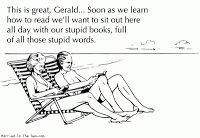 marriedtothesea.com[The Unspell Crowdfunding Campaign is in its second week. Over $5k has already been raised, but at this rate it seems unlikely to hit its target of $50k, so please help spread the word.]
[sbm KqT nLuS for YgS Ru ar lDnhN bnspEl: YEd hS nx vn bnspEl font vnT b Mc tu LuS ht on Yb MeP. stc tLunT for TItclS.]
Once upon a time Western Europe was a land of clear consonants and pure vowels. People would fill their lungs and shout to each other over great distances—across rivers and valleys—and understand every word. But then, just as one Western European nation after another was embarking on an empire-building campaign, something very strange happened. You see, they had to distinguish themselves somehow, to confuse and frighten each other, but the European Parliament hadn't been invented yet, and so they couldn't exercise their precious ethnic differences simply by talking a great deal of nonsense. They had to achieve the same effect through more traditional means: by distinguishing themselves in manners, attire and speech. In the case of manners and attire their approach was quite traditional as well: they cultivated a pompous and arrogant demeanor, and they sported crazy hats and lots of frills and embroidery. But in the matter of speech the way they chose to distinguish themselves was decidedly strange. I call it the Battle of Speech Impediments.Read more »
P { margin-bottom: 0.08in; }A:link { }
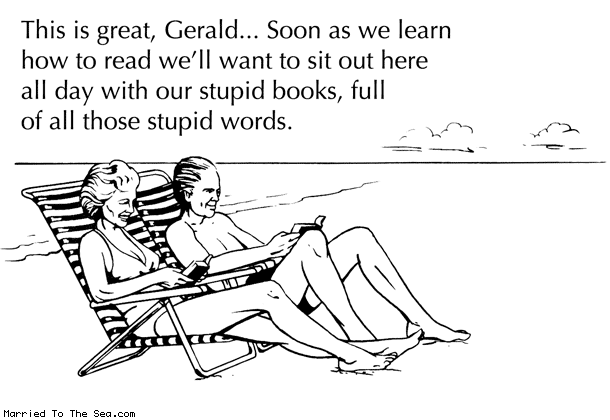 marriedtothesea.com[The Unspell Crowdfunding Campaign is in its second week. Over $5k has already been raised, but at this rate it seems unlikely to hit its target of $50k, so please help spread the word.]
[sbm KqT nLuS for YgS Ru ar lDnhN bnspEl: YEd hS nx vn bnspEl font vnT b Mc tu LuS ht on Yb MeP. stc tLunT for TItclS.]
Once upon a time Western Europe was a land of clear consonants and pure vowels. People would fill their lungs and shout to each other over great distances—across rivers and valleys—and understand every word. But then, just as one Western European nation after another was embarking on an empire-building campaign, something very strange happened. You see, they had to distinguish themselves somehow, to confuse and frighten each other, but the European Parliament hadn't been invented yet, and so they couldn't exercise their precious ethnic differences simply by talking a great deal of nonsense. They had to achieve the same effect through more traditional means: by distinguishing themselves in manners, attire and speech. In the case of manners and attire their approach was quite traditional as well: they cultivated a pompous and arrogant demeanor, and they sported crazy hats and lots of frills and embroidery. But in the matter of speech the way they chose to distinguish themselves was decidedly strange. I call it the Battle of Speech Impediments.Read more »
November 18, 2013
I Need Your Help
 I have been writing and speaking on the subject of collapse for the past seven years. Many people have found what I had to say interesting and significant. Some people have even made major changes in their lives, based in part on insights they were able to glean from my writings. But now I am ready for a major change myself. I feel that I have already said everything I could possibly say on the subject of collapse. My books remain in print, and this blog will stay online, available to anyone who wants to use these resources as collapse unfolds. But I need to take a break.
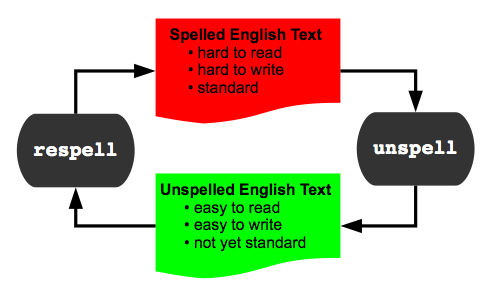
About a year ago, while overwintering back in St. Petersburg, Russia and helping take care of our newborn son, I conceived a scheme for making written English easier to learn and more accessible to everyone from special needs students and dyslexics to home-schooled children to just about everyone who has ever struggled with the horribly irregular English spelling. This scheme, which I called "Unspell," uses a dialect-neutral phonemic representation of spoken English. I invented a special set of symbols for this purpose. A year of work went into perfecting a system that captures all the significant phonological distinctions of English and that is easy to read, easy to write and easy to learn. Two pieces of software—called “unspell” and “respell”—will convert from English text to this representation and back in a process that is largely automatic, allowing people who have good command of spoken English to read and write perfect English without having to so much as look at English spelling!
While I was writing and speaking on the subject of collapse I was often asked what my qualifications are for doing so. Am I an economist, a historian, an anthropologist, a sociologist? Alas, I am none of the above, and that makes me an amateur. But as far as Unspell is concerned, I have all of the requisite qualifications: I have an advanced degree in applied linguistics, a degree in computer engineering, and well over a decade of experience working as a software engineer, engineering manager and systems architect in a variety of high-tech start-up companies.
I have been able to complete the design for Unspell in my spare time working together with a few volunteers. But now that it is time to develop and deliver software, this model will no longer suffice. I have to register and organize a company, buy software licenses, lease servers, pay contractors and so on. The first step is to raise some seed money, which will be used to put together a demo that can be shown to prospective investors. I hope to raise the seed money this month and to complete the demo during the first quarter of 2014.
And this is where I need your help. Writing and talking on the subject of collapse was interesting and perhaps useful. It was also very time-consuming, and definitely nonrenumerative. I hope that, in recognition of my efforts, you will consider helping me raise the seed money I need to launch this venture, either directly, by donating yourself, or by spreading word of Unspell among people you know. In return, I promise to do my utmost to give you the satisfaction of having helped create a major public good.
To find out more about Unspell, please visit http://unspell.it.
To donate, please go to the Unspell crowdfunding campaign at Indiegogo.com.
Thank you!
November 11, 2013
Collapsing Consciously
P { margin-bottom: 0.08in; }
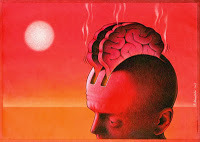 Pawel KuczyńskiCarolyn Baker's
CollapsingConsciously: Transformative Truths for Turbulent Times
is perhaps the most approachable book on collapse you are likely to find. Compared to Jarred Diamond's Collapse, which weighs in at just over 600 pages, Baker's is well under 200. And yet in these few pages Baker manages to tackle a topic which Diamond studiously avoids: Whatever shall we do about the fact that collapse is happening all around us right now?
Pawel KuczyńskiCarolyn Baker's
CollapsingConsciously: Transformative Truths for Turbulent Times
is perhaps the most approachable book on collapse you are likely to find. Compared to Jarred Diamond's Collapse, which weighs in at just over 600 pages, Baker's is well under 200. And yet in these few pages Baker manages to tackle a topic which Diamond studiously avoids: Whatever shall we do about the fact that collapse is happening all around us right now?
The reason Diamond avoids it is obvious: collapse is an unacceptable topic of discussion if it relates to us. It is perfectly fine to talk about past collapses, and perhaps even muse about future collapses, provided they happen to someone else. That's because we are exceptional and will go on forever. Here's a memorable example: I once gave a talk for the Long Now Foundation in San Francisco, and during the Q&A afterwards someone asked me about Russia's demographic crisis. Stewart Brand, who was reading off the questions from cards, chimed in to say that it looks like the Russians will be extinct in just a couple of generations (they aren't). So, Stewart, in how many generations are Americans going to be extinct? I need a number; what's the Long Now Foundation's estimate on that? Crickets...
And the reason collapse is an unacceptable topic of discussion if it relates to us, in the present or the foreseeable future, is that the moment you mention it, the topic stops being it, or us; the topic becomes you. What is wrong with you, why are you collapsing, and is it contagious? (Actually, just go away anyway, because you are probably bad luck.) This society operates on a combination of conformism and one-upmanship. Collapse as reality is nonconformist—in a society that worships success it is seen as defeatist and unpatriotic. It is also noncompetitive—because who on earth would want to buy it? “After all, who wants to hear that their very identity—the industrially civilized ego they have built throughout their entire lives, the ego that defines who they are—is, well, dying?” (p. 89) (By the way, this explains why my last book hasn't sold all that well.) In any case, if you keep at it, you come to be seen as a loser. Then you start feeling like an unlucky outcast, and before too long you end up with a psychological problem, and start asking yourself questions such as : “What's wrong with me?” “Have I gone mad?” and “Should I kill myself?”
Which is where Baker comes in: she is a trained psychotherapist, and her book is a self-help book. She takes your subjective reactions of hurt, loss, and bewilderment and gives them the status of objective reality. Yes, insanity is just around the corner from where you are standing, but that's a perfectly normal, justifiable reaction: “Anyone preparing for colapse inevitably, on some occasions, feels mad. How at odds with circumstance we are, and how profoundly crazy-making it feels!” (p. 8) Helpfully, she enumerates the panoply of emotions that normally accompany the dicovery of collapse: “crazy, angry, joyful, depressed, terrified, giddy, relieved, paranoid, stupid, guilty, liberated, grateful, despairing, heartbroken, courageous, compassionate, lonely, loved, hated.” (p. 8) For some, the discovery of collapse may not even be necessary: “...I have never met any resident of industrial civilization who doesn't carry some form of trauma in their bodies." (p. 20) And, I would add, their minds and souls as well. Symptoms may include “...sleepless nights, a weakened immune system, moodiness, anger, depression, despair, and, often suicidal thinking.” (p. 26)
Baker's prescription is to heal thyself: “...to become familiar with internal resources; to practice skills of self-soothing, deep listening and truth telling with friends and family, and regular journaling; and to have an ongoing, daily stillness practice that provides grounding and centering in the midst of chaos.” (p. 15) “Healing our own trauma prepares us for navigating the trauma of a world in collapse and also equips us to assist others who are traumatized by the changes and losses of an unraveling society.” (p. 22) And although much of the job that awaits us is a sort of post-collapse hospice care for the severely disturbed, that is by no means the full extent of it: “...hold in your mind the reality of what is and what is yet to come and, at the same time, hold in your heart the vision of what is possible for a transformed humanity, no matter how few in numbers, that is willing to step over the evolutionary threshold and become a new kind of human being.” (p. 83, my emphasis)
The old kind of human being comes in for a good thrashing. Baker singles out the emptiness of the pursuit of happiness: “...many people confess that their greatest happiness is derived from shopping... [and from] having no constraints on consumption...” (p. 32) The commercialized mind control field in which many people are trapped defines happiness by positive thinking, which “...has become an integral aspect of corporate culture.” (p. 32) “I believe that since the end of World War II, positive thinking has become the quasi-religion of industrial civilization, and the failure to maintain it has become tantamount to treason.” (p. 33) This almost totalitarian emphasis on happiness and positive thinking amounts to a system of enforced stupidity. To Baker, what matters is not happiness but joyand not positive thinking but meaning: “Happiness comes and goes, but meaning doesn't. The truth, of course, is that we can find meaning in experiences that are anything but happy.” (For example, in war.)
Finding meaning doesn't necessarily lift our mood or make us happy. But it does amplify our existence, making it less than completely trivial. To find meaning, we have to confront sadness, loss, and, ultimately, death. This is why the message of collapse is almost universally rejected: “To speak of collapse, peak oil, demise, downturns, economic depression, or unraveling is anathema, because it rattles the rice paper-thin bulwarks we have constructed around darkness and death.” This is rather at odds with the dominant culture: “It's so easy to disregard death, especially if one is an [Anglo-]American.” (p. 55) (The English tend to regard death as the ultimate embarrassment, and their cultural baggage is unfortunately still with us.) Add to it a dollop of positive thinking and sprinkle on the “New Agey mindset,” and you get people who act “as if human beings are the only species that matter and as if the most crucial issue is that those humans are able to feel good about themselves as the world burns.” (p. 55) Such people will not fare well: “The collapse of industrial civilization will be challenging for those who have been preparing for it; for those who haven't, it will involve massive trauma.” (p. 29)
But what does it mean to prepare of collapse? There is, of course, the question of the logistics of surviving collapse: reskilling, relocalization, community organizing and the like. There is also the task of finding meaning in it, beyond mere physical survival; to borrow an aphorism from Nietzsche, the task of gazing into the abyss, until the abyss gazes back at you. But “...most human beings who do have the capacity to stare down collapse seem to lack the ability to dig deeper into its myriad emotional and spiritual ramifications, focusing only on physical survival issues.” (p 12). (I suppose preparing for the zombie apocalypse does make you a bit of a zombie, as your attitude becomes: “Sure, I'll resort to eating brains if I have to!”)
Baker wonders whether the “emotionally myopic survivalists” might be busy creating a world eerily similar to the “vapid, vacuous, barren inner landscape engendered by industrial civilization?” It's largely a question of how they were brought up. Western education is riddled with binary thinking: “Black or white, either-or, this way or that way permeate the educational systems of modernity and torment our thinking about and preparation for collapse. When will it happen—in this decade or in the next? Will it be fast or slow? Should I take the lone survivor approach or go live in an ecovillage? Should I stay in my home country or expatriate? The binary questions are endless, and limitless obsession with them is likely to leave us in the same predicament as the proverbial dog chasing its own tail.” (p. 7)
People who have been conditioned to think that to make such binary distinctions is to be rational, analytical and productive are loathe to accept that perhaps black or white are just moods: on some days they may feel like collapse is already here, while on other days it may feel far off; sometimes it may feels fast, other days slow; some days you want to be alone, on other days you crave companionship; sometimes you want to flee the country and give up your passport, while on other days you contemplate wanting to coming back to visit.
The crisp delineation between the present and the future is an artificial construct too: both the present and the future are works of fiction—a bit of “framing” created for us by those expert professionals who craft “consensual reality” on our behalf. The emphasis on rational responses to collapse has produced efforts to achieve logistical resilience: “Anyone not involved in this kind of logistical preparation is only half-awake, yet many individuals believe that no other preparation is necessary. Might that not, in fact, be one characteristic of trauma?” (p. 27) Taking it just one step further, strictly logistical collapse preparation may be a form of compulsive behavior that is quite obviously maladaptive “...building one's isolated doomstead or underground bunker is not only profoundly dangerous but astoundingly unrealistic.” (p. 97, my emphasis)
Much of the doomsteading activity is a projection of middle-class angst—to which much of the world is immune: “...for all the suffering of abjectly impoverished human beings, they have seldom known any other standard of living and have learned how to survive on virtually nothing.” (p. 26) On the other hand, “Those living a middle-class existence can comfort themselves only for so long by reflecting on the plight of the destitute in far-off places. Their immediate reality is an anomalous deprivation, a stark loss of the familiar, and the looming reality that things will not get better, but only worse.” (p. 26) Lastly, “...it is much easier to build cooperative relationships with individuals who are fundamentally like us than it is to build them with those who, for a variety of reasons, may be very different.” (p. 69) And if the only acceptable way to prepare for collapse within your middle-class, anglocentric cultural milieu is doomsteading, then I suppose you build some doomsteads, even though this is “not only profoundly dangerous but astoundingly unrealistic.” (p. 97) To understand why this is so is to challenge some deeply held assumptions: that “...the privileges afforded to people of Anglo ethnicity...” (p. 73) will remain in place, or that “the dominant culture will prevail alongside a number of subcultures.” (p. 74) And this is already manifestly not the case.
But the thought that part of what is collapsing is the Anglo cultural hegemony would be so profoundly angst-inducing that it might provoke a psychotic break in some of her readers, and so Baker avoids spelling it out, tap-dancing around the issue in a way that strikes me as slightly comic. “To be ‘civilized’ is synonymous with being domesticated, restrained, and repressed, and if we participate in sexual behavior at all, we are encouraged to do so in a controlled, sanitized, or even surreptitious fashion.” (p. 63) Yes, she gets that part, which is why she puts “civilized” in quotes. It is apparent that she has wandered outside the mental security perimeter, has tasted the forbidden fruit, and knows what it means to be fully human: “Benjamin Franklin said it best, after returning from living with the Iroquois: ‘No European who has tasted Savage life can afterward bear to live in our societies.’” (p. 56) And it is clear why she thinks that staying within the cultural perimeter would be “profoundly dangerous [and] astoundingly unrealistic.” (p. 97): “...collapse will decimate our anti-tribal, individualistic, Anglo-American programming by forcing us to join with others for survival.” (p. 105) Yes, it would appear that the Anglo ethnicity will go down in history as the oddest of the odd: the anti-tribal tribe.
But if you are a fully paid-up member of that tribe, then it is perhaps Baker who can speak to you like no other. This comes through most clearly when she talks about the soul, by which I think she means the Anglo soul, because it seems that there are some differences here. “The soul blossoms and flourishes not by going upward but by going down into the depths of emotion, body sensation, and intimate communion with nature.” (p. 38) “The soul ... loves darkness, descent, downward mobility, and the razor-sharp adversities of the human condition. In dark times, it doesn't have to be guided; it knows exactly what to do.” (p. 39) To me, this all sounds very strange. In my native language, the words soul, spirit and breath are all variations on the same theme. This is not accidental but nearly universal: the Sanskrit ātman (soul) and the German atmen(to breathe) are the same word that has spanned continents and millennia. Like breath, the soul is light (weightless). It is luminous and lucid, not heavy or dark or drunk with emotion. It is apparent and visible, and shines in the eyes of those who happen to have one. (Soulless people have eyes like fish, and even children can be taught to spot them.) The action of soul and spirit is roughly analogous to magnetism: when another soul touches yours, it strengthens it withought weakening itself. A person whose soul is great is said to be selfless, accommodating, forbearing, self-sacrificing... And so when Baker writes that the “[s]oul waits like a crouched predator to deepen us...” (p. 40) I can't help feeling that she is talking about something a little bit different. Be that as it may; perhaps it speaks to you, and, cultural differences aside, I fully agree with her that “...what will be most valuable will not necessarily be a sharp intellect but a well-honed intuition” (p. 65) Being able to tell at a glance whether someone has a soul is definitely part of that intuition.
I also sense that Baker's soul is great, and that she is selfless, accommodating, forbearing and self-sacrificing. She worries about “...people of color, women, children, the elderly, and the LGBT community—the most vulnerable members of a society in chaos” (p. 43) and that “...the gains experienced by ethnic minorities, women, and gays in the past forty years will essentially be erased as berserk, belligerent males succeed in ruling the day.” (p. 43) Now, it bears pointing out that this has largely happened already. Look at the prison population, at the gangs that are active throughout the US military, and at narcocartels; look at the perpetually depressed, disintegrating inner cities or the rapidly slummifying suburbs. Only the still-sheltered middle class can place such things in the future rather than the present. She does point out that “[c]ircumstances will vary from one community and region to another. I use the word lumpy to describe this phenomenon.” (p. 44) “Avoid the lumps” is the only advice I can give.
But some of these lumps are rather large—as large as the Roman Catholic Church—making them hard to avoid. (One former Catholic described it as “[a] large multi-national, tax-exempt, authoritarian corporation, with a history of child sex abuse [that is] selling an invisible product.”) Baker points out that much of the mysogyny present in Western culture comes from the “irrational dread of the feminine archetype in general and women in particular” (p. 49) that has been present in Christian relgious thought ever since the church fathers expelled the Gnostics. She quotes St. Augustine, who thought that women “should be segregated as they are the cause of hideous and involuntary erections in men...” (Whereas those caused by the choir-boys are what?) She also points out both the Catholic church's and the Republican party's “war on women ... in which funding for contraception and abortion has been savagely cut, along with funding for programs that alleviate poverty.” (p. 51)
Not all of us can hope to avoid such lumps, and this brings us to what is perhaps the most important message of Baker's book: there is much to do, so get cracking! A change of direction is called for. Many people are still attempting to work jobs, while “...employment as we know it will probably not exist a decade from now and ... this time of massive unemployment creates space in our lives that allows us to prepare for a future of permanent unemployment.” (p. 5) Many people are still trying to stockpile advanced degrees or paper wealth, while “[i]n a post-collapse world, academic degrees and stock portfolios matter little.” (p. 104) In the meantime, there is much to do: “Volunteering in a homeless shelter, a daycare ceter for homeless children, a nursing home, or other agencies still in existence that serve vulnerable popultions is excellent psychological preparation for a time when none of these services exist. First, it puts you in a serving mode. You allow your innate compassion to reach out to other human beings in need. In addition, it causes you to ponder how you might deal with the situation in the future when members of the population you are serving are symbolically or literally on your doorstep. Furthermore, it expands your horizons beyond ‘me and mine’ to a sense of the commons and a camaraderie with the rest of humanity. (p. 67) “There is something about being of service in the current time that could have lasting benefits for us in the future, simply because a service mentality and especially a willingness to see the suffering of others in this moment provide us with critical emotional skills. In many cases, we may need to provide nothing except the capacity to listen.” (p. 67) “I venture to say that most collapse-aware individuals cherish some fantasies, no matter how frail or infrequently spoken of, of a new culture in which we live in authentic community, sharing resources, food, tasks, and recreation with each other. And we already know that such a culture will not be possible without an attitude of service and cooperation.” (p. 68) Such efforts may start out as responses to practical, mundane needs, but their results can transcend them: “Paradoxically, collapse may bring to our lives meaning and purpose that might otherwise have eluded us ... With civilization's collapse, we may be forced to evaluate daily, perhaps moment to moment, why we are here, if we want to remain here, if life is worth living, and if there is something greater than ourselves for which we are willing to remain alive and to which we choose to contribute energy.” (p. 106)
There are quite a few books on collapse that provide “food for thought.” Baker's does some of that too; but more importantly, she guides the reader in feeling about collapse, progressing from hopelessness and helplessness to hope, self-realization and a sense of belonging. And this, I think, is a singular achievement.
 Pawel KuczyńskiCarolyn Baker's
CollapsingConsciously: Transformative Truths for Turbulent Times
is perhaps the most approachable book on collapse you are likely to find. Compared to Jarred Diamond's Collapse, which weighs in at just over 600 pages, Baker's is well under 200. And yet in these few pages Baker manages to tackle a topic which Diamond studiously avoids: Whatever shall we do about the fact that collapse is happening all around us right now?
Pawel KuczyńskiCarolyn Baker's
CollapsingConsciously: Transformative Truths for Turbulent Times
is perhaps the most approachable book on collapse you are likely to find. Compared to Jarred Diamond's Collapse, which weighs in at just over 600 pages, Baker's is well under 200. And yet in these few pages Baker manages to tackle a topic which Diamond studiously avoids: Whatever shall we do about the fact that collapse is happening all around us right now? The reason Diamond avoids it is obvious: collapse is an unacceptable topic of discussion if it relates to us. It is perfectly fine to talk about past collapses, and perhaps even muse about future collapses, provided they happen to someone else. That's because we are exceptional and will go on forever. Here's a memorable example: I once gave a talk for the Long Now Foundation in San Francisco, and during the Q&A afterwards someone asked me about Russia's demographic crisis. Stewart Brand, who was reading off the questions from cards, chimed in to say that it looks like the Russians will be extinct in just a couple of generations (they aren't). So, Stewart, in how many generations are Americans going to be extinct? I need a number; what's the Long Now Foundation's estimate on that? Crickets...
And the reason collapse is an unacceptable topic of discussion if it relates to us, in the present or the foreseeable future, is that the moment you mention it, the topic stops being it, or us; the topic becomes you. What is wrong with you, why are you collapsing, and is it contagious? (Actually, just go away anyway, because you are probably bad luck.) This society operates on a combination of conformism and one-upmanship. Collapse as reality is nonconformist—in a society that worships success it is seen as defeatist and unpatriotic. It is also noncompetitive—because who on earth would want to buy it? “After all, who wants to hear that their very identity—the industrially civilized ego they have built throughout their entire lives, the ego that defines who they are—is, well, dying?” (p. 89) (By the way, this explains why my last book hasn't sold all that well.) In any case, if you keep at it, you come to be seen as a loser. Then you start feeling like an unlucky outcast, and before too long you end up with a psychological problem, and start asking yourself questions such as : “What's wrong with me?” “Have I gone mad?” and “Should I kill myself?”
Which is where Baker comes in: she is a trained psychotherapist, and her book is a self-help book. She takes your subjective reactions of hurt, loss, and bewilderment and gives them the status of objective reality. Yes, insanity is just around the corner from where you are standing, but that's a perfectly normal, justifiable reaction: “Anyone preparing for colapse inevitably, on some occasions, feels mad. How at odds with circumstance we are, and how profoundly crazy-making it feels!” (p. 8) Helpfully, she enumerates the panoply of emotions that normally accompany the dicovery of collapse: “crazy, angry, joyful, depressed, terrified, giddy, relieved, paranoid, stupid, guilty, liberated, grateful, despairing, heartbroken, courageous, compassionate, lonely, loved, hated.” (p. 8) For some, the discovery of collapse may not even be necessary: “...I have never met any resident of industrial civilization who doesn't carry some form of trauma in their bodies." (p. 20) And, I would add, their minds and souls as well. Symptoms may include “...sleepless nights, a weakened immune system, moodiness, anger, depression, despair, and, often suicidal thinking.” (p. 26)
Baker's prescription is to heal thyself: “...to become familiar with internal resources; to practice skills of self-soothing, deep listening and truth telling with friends and family, and regular journaling; and to have an ongoing, daily stillness practice that provides grounding and centering in the midst of chaos.” (p. 15) “Healing our own trauma prepares us for navigating the trauma of a world in collapse and also equips us to assist others who are traumatized by the changes and losses of an unraveling society.” (p. 22) And although much of the job that awaits us is a sort of post-collapse hospice care for the severely disturbed, that is by no means the full extent of it: “...hold in your mind the reality of what is and what is yet to come and, at the same time, hold in your heart the vision of what is possible for a transformed humanity, no matter how few in numbers, that is willing to step over the evolutionary threshold and become a new kind of human being.” (p. 83, my emphasis)
The old kind of human being comes in for a good thrashing. Baker singles out the emptiness of the pursuit of happiness: “...many people confess that their greatest happiness is derived from shopping... [and from] having no constraints on consumption...” (p. 32) The commercialized mind control field in which many people are trapped defines happiness by positive thinking, which “...has become an integral aspect of corporate culture.” (p. 32) “I believe that since the end of World War II, positive thinking has become the quasi-religion of industrial civilization, and the failure to maintain it has become tantamount to treason.” (p. 33) This almost totalitarian emphasis on happiness and positive thinking amounts to a system of enforced stupidity. To Baker, what matters is not happiness but joyand not positive thinking but meaning: “Happiness comes and goes, but meaning doesn't. The truth, of course, is that we can find meaning in experiences that are anything but happy.” (For example, in war.)
Finding meaning doesn't necessarily lift our mood or make us happy. But it does amplify our existence, making it less than completely trivial. To find meaning, we have to confront sadness, loss, and, ultimately, death. This is why the message of collapse is almost universally rejected: “To speak of collapse, peak oil, demise, downturns, economic depression, or unraveling is anathema, because it rattles the rice paper-thin bulwarks we have constructed around darkness and death.” This is rather at odds with the dominant culture: “It's so easy to disregard death, especially if one is an [Anglo-]American.” (p. 55) (The English tend to regard death as the ultimate embarrassment, and their cultural baggage is unfortunately still with us.) Add to it a dollop of positive thinking and sprinkle on the “New Agey mindset,” and you get people who act “as if human beings are the only species that matter and as if the most crucial issue is that those humans are able to feel good about themselves as the world burns.” (p. 55) Such people will not fare well: “The collapse of industrial civilization will be challenging for those who have been preparing for it; for those who haven't, it will involve massive trauma.” (p. 29)
But what does it mean to prepare of collapse? There is, of course, the question of the logistics of surviving collapse: reskilling, relocalization, community organizing and the like. There is also the task of finding meaning in it, beyond mere physical survival; to borrow an aphorism from Nietzsche, the task of gazing into the abyss, until the abyss gazes back at you. But “...most human beings who do have the capacity to stare down collapse seem to lack the ability to dig deeper into its myriad emotional and spiritual ramifications, focusing only on physical survival issues.” (p 12). (I suppose preparing for the zombie apocalypse does make you a bit of a zombie, as your attitude becomes: “Sure, I'll resort to eating brains if I have to!”)
Baker wonders whether the “emotionally myopic survivalists” might be busy creating a world eerily similar to the “vapid, vacuous, barren inner landscape engendered by industrial civilization?” It's largely a question of how they were brought up. Western education is riddled with binary thinking: “Black or white, either-or, this way or that way permeate the educational systems of modernity and torment our thinking about and preparation for collapse. When will it happen—in this decade or in the next? Will it be fast or slow? Should I take the lone survivor approach or go live in an ecovillage? Should I stay in my home country or expatriate? The binary questions are endless, and limitless obsession with them is likely to leave us in the same predicament as the proverbial dog chasing its own tail.” (p. 7)
People who have been conditioned to think that to make such binary distinctions is to be rational, analytical and productive are loathe to accept that perhaps black or white are just moods: on some days they may feel like collapse is already here, while on other days it may feel far off; sometimes it may feels fast, other days slow; some days you want to be alone, on other days you crave companionship; sometimes you want to flee the country and give up your passport, while on other days you contemplate wanting to coming back to visit.
The crisp delineation between the present and the future is an artificial construct too: both the present and the future are works of fiction—a bit of “framing” created for us by those expert professionals who craft “consensual reality” on our behalf. The emphasis on rational responses to collapse has produced efforts to achieve logistical resilience: “Anyone not involved in this kind of logistical preparation is only half-awake, yet many individuals believe that no other preparation is necessary. Might that not, in fact, be one characteristic of trauma?” (p. 27) Taking it just one step further, strictly logistical collapse preparation may be a form of compulsive behavior that is quite obviously maladaptive “...building one's isolated doomstead or underground bunker is not only profoundly dangerous but astoundingly unrealistic.” (p. 97, my emphasis)
Much of the doomsteading activity is a projection of middle-class angst—to which much of the world is immune: “...for all the suffering of abjectly impoverished human beings, they have seldom known any other standard of living and have learned how to survive on virtually nothing.” (p. 26) On the other hand, “Those living a middle-class existence can comfort themselves only for so long by reflecting on the plight of the destitute in far-off places. Their immediate reality is an anomalous deprivation, a stark loss of the familiar, and the looming reality that things will not get better, but only worse.” (p. 26) Lastly, “...it is much easier to build cooperative relationships with individuals who are fundamentally like us than it is to build them with those who, for a variety of reasons, may be very different.” (p. 69) And if the only acceptable way to prepare for collapse within your middle-class, anglocentric cultural milieu is doomsteading, then I suppose you build some doomsteads, even though this is “not only profoundly dangerous but astoundingly unrealistic.” (p. 97) To understand why this is so is to challenge some deeply held assumptions: that “...the privileges afforded to people of Anglo ethnicity...” (p. 73) will remain in place, or that “the dominant culture will prevail alongside a number of subcultures.” (p. 74) And this is already manifestly not the case.
But the thought that part of what is collapsing is the Anglo cultural hegemony would be so profoundly angst-inducing that it might provoke a psychotic break in some of her readers, and so Baker avoids spelling it out, tap-dancing around the issue in a way that strikes me as slightly comic. “To be ‘civilized’ is synonymous with being domesticated, restrained, and repressed, and if we participate in sexual behavior at all, we are encouraged to do so in a controlled, sanitized, or even surreptitious fashion.” (p. 63) Yes, she gets that part, which is why she puts “civilized” in quotes. It is apparent that she has wandered outside the mental security perimeter, has tasted the forbidden fruit, and knows what it means to be fully human: “Benjamin Franklin said it best, after returning from living with the Iroquois: ‘No European who has tasted Savage life can afterward bear to live in our societies.’” (p. 56) And it is clear why she thinks that staying within the cultural perimeter would be “profoundly dangerous [and] astoundingly unrealistic.” (p. 97): “...collapse will decimate our anti-tribal, individualistic, Anglo-American programming by forcing us to join with others for survival.” (p. 105) Yes, it would appear that the Anglo ethnicity will go down in history as the oddest of the odd: the anti-tribal tribe.
But if you are a fully paid-up member of that tribe, then it is perhaps Baker who can speak to you like no other. This comes through most clearly when she talks about the soul, by which I think she means the Anglo soul, because it seems that there are some differences here. “The soul blossoms and flourishes not by going upward but by going down into the depths of emotion, body sensation, and intimate communion with nature.” (p. 38) “The soul ... loves darkness, descent, downward mobility, and the razor-sharp adversities of the human condition. In dark times, it doesn't have to be guided; it knows exactly what to do.” (p. 39) To me, this all sounds very strange. In my native language, the words soul, spirit and breath are all variations on the same theme. This is not accidental but nearly universal: the Sanskrit ātman (soul) and the German atmen(to breathe) are the same word that has spanned continents and millennia. Like breath, the soul is light (weightless). It is luminous and lucid, not heavy or dark or drunk with emotion. It is apparent and visible, and shines in the eyes of those who happen to have one. (Soulless people have eyes like fish, and even children can be taught to spot them.) The action of soul and spirit is roughly analogous to magnetism: when another soul touches yours, it strengthens it withought weakening itself. A person whose soul is great is said to be selfless, accommodating, forbearing, self-sacrificing... And so when Baker writes that the “[s]oul waits like a crouched predator to deepen us...” (p. 40) I can't help feeling that she is talking about something a little bit different. Be that as it may; perhaps it speaks to you, and, cultural differences aside, I fully agree with her that “...what will be most valuable will not necessarily be a sharp intellect but a well-honed intuition” (p. 65) Being able to tell at a glance whether someone has a soul is definitely part of that intuition.
I also sense that Baker's soul is great, and that she is selfless, accommodating, forbearing and self-sacrificing. She worries about “...people of color, women, children, the elderly, and the LGBT community—the most vulnerable members of a society in chaos” (p. 43) and that “...the gains experienced by ethnic minorities, women, and gays in the past forty years will essentially be erased as berserk, belligerent males succeed in ruling the day.” (p. 43) Now, it bears pointing out that this has largely happened already. Look at the prison population, at the gangs that are active throughout the US military, and at narcocartels; look at the perpetually depressed, disintegrating inner cities or the rapidly slummifying suburbs. Only the still-sheltered middle class can place such things in the future rather than the present. She does point out that “[c]ircumstances will vary from one community and region to another. I use the word lumpy to describe this phenomenon.” (p. 44) “Avoid the lumps” is the only advice I can give.
But some of these lumps are rather large—as large as the Roman Catholic Church—making them hard to avoid. (One former Catholic described it as “[a] large multi-national, tax-exempt, authoritarian corporation, with a history of child sex abuse [that is] selling an invisible product.”) Baker points out that much of the mysogyny present in Western culture comes from the “irrational dread of the feminine archetype in general and women in particular” (p. 49) that has been present in Christian relgious thought ever since the church fathers expelled the Gnostics. She quotes St. Augustine, who thought that women “should be segregated as they are the cause of hideous and involuntary erections in men...” (Whereas those caused by the choir-boys are what?) She also points out both the Catholic church's and the Republican party's “war on women ... in which funding for contraception and abortion has been savagely cut, along with funding for programs that alleviate poverty.” (p. 51)
Not all of us can hope to avoid such lumps, and this brings us to what is perhaps the most important message of Baker's book: there is much to do, so get cracking! A change of direction is called for. Many people are still attempting to work jobs, while “...employment as we know it will probably not exist a decade from now and ... this time of massive unemployment creates space in our lives that allows us to prepare for a future of permanent unemployment.” (p. 5) Many people are still trying to stockpile advanced degrees or paper wealth, while “[i]n a post-collapse world, academic degrees and stock portfolios matter little.” (p. 104) In the meantime, there is much to do: “Volunteering in a homeless shelter, a daycare ceter for homeless children, a nursing home, or other agencies still in existence that serve vulnerable popultions is excellent psychological preparation for a time when none of these services exist. First, it puts you in a serving mode. You allow your innate compassion to reach out to other human beings in need. In addition, it causes you to ponder how you might deal with the situation in the future when members of the population you are serving are symbolically or literally on your doorstep. Furthermore, it expands your horizons beyond ‘me and mine’ to a sense of the commons and a camaraderie with the rest of humanity. (p. 67) “There is something about being of service in the current time that could have lasting benefits for us in the future, simply because a service mentality and especially a willingness to see the suffering of others in this moment provide us with critical emotional skills. In many cases, we may need to provide nothing except the capacity to listen.” (p. 67) “I venture to say that most collapse-aware individuals cherish some fantasies, no matter how frail or infrequently spoken of, of a new culture in which we live in authentic community, sharing resources, food, tasks, and recreation with each other. And we already know that such a culture will not be possible without an attitude of service and cooperation.” (p. 68) Such efforts may start out as responses to practical, mundane needs, but their results can transcend them: “Paradoxically, collapse may bring to our lives meaning and purpose that might otherwise have eluded us ... With civilization's collapse, we may be forced to evaluate daily, perhaps moment to moment, why we are here, if we want to remain here, if life is worth living, and if there is something greater than ourselves for which we are willing to remain alive and to which we choose to contribute energy.” (p. 106)
There are quite a few books on collapse that provide “food for thought.” Baker's does some of that too; but more importantly, she guides the reader in feeling about collapse, progressing from hopelessness and helplessness to hope, self-realization and a sense of belonging. And this, I think, is a singular achievement.
November 4, 2013
From the Mouths of Babes
 Gottfried Helnwein[This week's guest post is by Scott Erickson, who is an award-winning humor writer and the author of a satirical novel titled
The Diary of Amy, the 14-Year-Old Girl Who Saved the Earth
. I liked it. It is entirely disarming and strikes a good balance between humor and seriousness. There are enough jeremiads and diatribes and rants on this topic out there. Luckily, this isn't one of them because Scott's scathing social critique and mordant wit are delivered via a charming narrative device: a smart, earnest, precocious 14-year-old girl.]
Gottfried Helnwein[This week's guest post is by Scott Erickson, who is an award-winning humor writer and the author of a satirical novel titled
The Diary of Amy, the 14-Year-Old Girl Who Saved the Earth
. I liked it. It is entirely disarming and strikes a good balance between humor and seriousness. There are enough jeremiads and diatribes and rants on this topic out there. Luckily, this isn't one of them because Scott's scathing social critique and mordant wit are delivered via a charming narrative device: a smart, earnest, precocious 14-year-old girl.] A 14-YEAR-OLD GIRL EXPLAINS HOW WE CAN STOP THE ADDICTION TO ECONOMIC GROWTH THAT’S DESTROYING THE EARTH
Hi! I’m Amy Johnson-Martinez, the 14-year-old girl who’s saving the earth from environmental destruction. A lot of people don’t understand how the destruction of the earth is connected to our addiction to economic growth. Actually, a lot of people don’t even realize that we’re addicted!
Personally speaking, I think it’s kind of weird that economists don’t tell us about this. So I guess it takes a 14-year-old girl to tell you about it!
Read more »
October 28, 2013
Communities that abide: Finland
P { margin-bottom: 0.08in; }A:link { }
 [This week we continue the series with an article on Finland, by Eerik Wissenz. Few people know that before Russia came to exist as a country, and for many centuries after, communities of Finns were widely distributed over what is now Russian Federation territory, surviving mostly by hunting and fishing, and not making much of an impact. The Finnish way of relating to the land, which Eerik describes in this article, is nothing new: it is at least a thousand years old.
I have a strong personal connection to Finland, having grown up in Karelia, on Finnish territory which came to be annexed by the USSR during the winter of 1939-40. Due to a disasterous misreading of the operetta-like Finnish politics of the period, in which self-styled “communists” and “socialists” battled self-styled “fascists” over numerous pints of beer, Stalin had become frightened by the possibility that the real Fascists (i.e., German Nazi) troops would use Finnish territory to put themselves within artillery range of Leningrad (which they later did anyway). The war was a disaster for both sides.Read more »
[This week we continue the series with an article on Finland, by Eerik Wissenz. Few people know that before Russia came to exist as a country, and for many centuries after, communities of Finns were widely distributed over what is now Russian Federation territory, surviving mostly by hunting and fishing, and not making much of an impact. The Finnish way of relating to the land, which Eerik describes in this article, is nothing new: it is at least a thousand years old.I have a strong personal connection to Finland, having grown up in Karelia, on Finnish territory which came to be annexed by the USSR during the winter of 1939-40. Due to a disasterous misreading of the operetta-like Finnish politics of the period, in which self-styled “communists” and “socialists” battled self-styled “fascists” over numerous pints of beer, Stalin had become frightened by the possibility that the real Fascists (i.e., German Nazi) troops would use Finnish territory to put themselves within artillery range of Leningrad (which they later did anyway). The war was a disaster for both sides.Read more »
Dmitry Orlov's Blog

- Dmitry Orlov's profile
- 48 followers
Dmitry Orlov isn't a Goodreads Author
(yet),
but they
do have a blog,
so here are some recent posts imported from
their feed.

