
Dmitry Orlov's Blog, page 12
May 6, 2014
Resilient Health Care
 When I asked people to contribute content to the book on Communities that Abide, which is now nearing publication (with two chapters already at the proofreading stage), I didn't know quite to expect. The results went far beyond my expectations. This week I will highlight the chapter by James Truong, MD, who practices emergency and family medicine in rural Canada. His chapter, “Appropriate Health Care for a World In Flux: A Strategy,” is a must-read for anyone thinking about founding or joining a resilient community. It is an in-depth guide to health care in a world where the Health Care System that currently exists in the developed nations of the world is inaccessible, unaffordable, or nonexistent. His subtitle reads: “Monday: feed the family. Tuesday: don't get sick.” But what if you do? Dr. Truong explains the options.
 Read more »


May 4, 2014
Statecraft or Witchcraft?
 What has the US State Department been doing in Ukraine? It has been busy, and has succeeded in pushing the hapless nation, left destitute by 22 years of freedom and democracy oligarchy, to the brink of civil war. (Keep in mind, Russia came close to collapsing altogether by just nine years of freedom and democracy oligarchy.
Instead of offering you a rational and reasoned (and boring) geopolitical analysis, allow me to temporarily leave the modern world behind and retreat into the mindset of the Pilgrims who landed at Plymouth rock. Why don't we have us a good old-fasioned witch-hunt! After all, the people who have been pushing Ukraine in the direction of civil war while risking a nuclear confrontation with Russia are clearly doing the Devil's work, and so that makes them witches, correct? To find out who these witches are, we have to become expert witch-sniffers. (It's easy; you'll see.) Then we can make effigies of them and burn them at the stake. (No actual witches will be harmed in the process, of course.)
There are three witches, the story goes, three weird sisters. “Fair is foul, and foul is fair,” the weird sisters croak in unison, as they hover through the fog and filthy air. Eventually they settle down around the steaming cauldron:
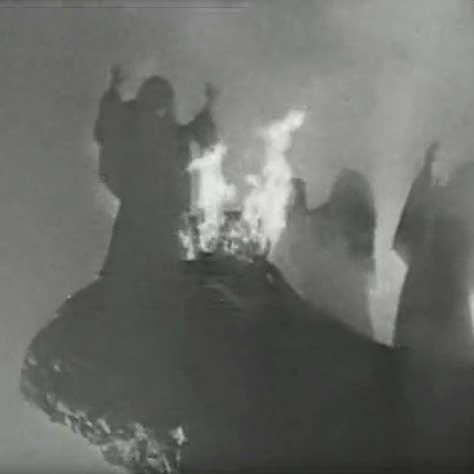
First Witch
Round about the cauldron go;
In the poison'd entrails throw.
Toad, that under cold stone
Days and nights has thirty-one
Swelter'd venom sleeping got,
Boil thou first i' the charmed pot.
ALL
Double, double toil and trouble;
Fire burn, and cauldron bubble.
Second Witch
Fillet of a fenny snake,
In the cauldron boil and bake;
Eye of newt and toe of frog,
Wool of bat and tongue of dog,
Adder's fork and blind-worm's sting,
Lizard's leg and owlet's wing,
For a charm of powerful trouble,
Like a hell-broth boil and bubble.
ALL
Double, double toil and trouble;
Fire burn and cauldron bubble.
Third Witch
Scale of dragon, tooth of wolf,
Witches' mummy, maw and gulf
Of the ravin'd salt-sea shark,
Root of hemlock digg'd i' the dark,
Liver of blaspheming Jew,
Gall of goat, and slips of yew
Silver'd in the moon's eclipse,
Nose of Turk and Tartar's lips,
Finger of birth-strangled babe
Ditch-deliver'd by a drab,
Make the gruel thick and slab:
Add thereto a tiger's chaudron,
For the ingredients of our cauldron.
ALL
Double, double toil and trouble;
Fire burn and cauldron bubble.
Second Witch
Cool it with a baboon's blood,
Then the charm is firm and good.
And then the three witches reach into the bubbling cauldron, and out of the rancid muck they mould a figure.

They hold it up, cristen it “Yatsenyuk,” place a crown on its head, and pronounce it Prime Minister of Ukraine.

And here is Yatsenyuk in real life; see the uncanny resemblance?
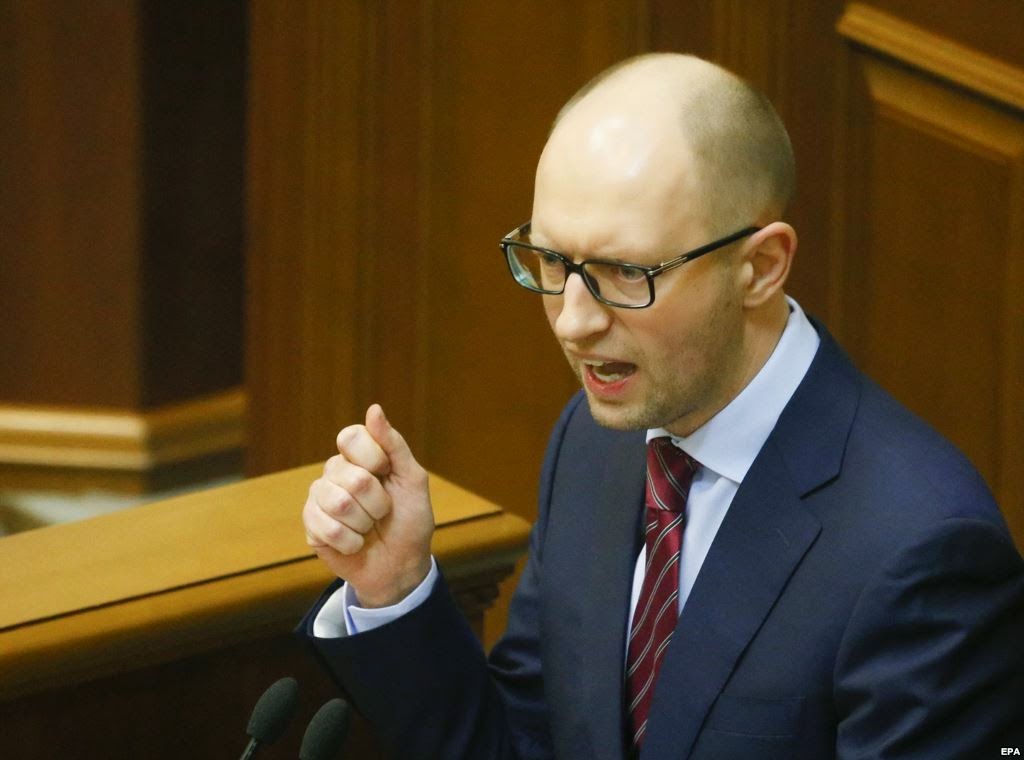
Who might these three witches in real life. The first, of course, is Victoria Nuland of the US State Department.

She is the one who, in a now famous leaked telephone conversation, dictated that Yatsenyuk should head up the Kiev junta. She also dropped an f-bomb on the EU. She bragged publicly about the $5 billion of taxpayer money she dumped into the steaming cauldron of Ukrainian politics, from which Yatsenyuk and the rest of the junta eventually emerged.
The second witch is Hillary Clinton, who appointed Nuland. I hope that this choice is uncontroversial. By the way, she compared Putin to Hitler, and this alone tells us that her mind has snapped.

And the third witch? Samantha Power, the US Ambassador to the UN, perhaps?

She once called Clinton a “monster,” but later apologized, perhaps realizing that she herself is a monster. She certainly behaves like one. One one recent occasion she accosted Russia's UN Ambassador, spraying him with saliva while screeching like a woman possessed. One of the funnier things she spewed forth: she is insulted by Russia's nuclear deterrent. (What else might she find insulting? The tilt of the Earth's axis, maybe?) She had to be taken by the elbow and escorted to her seat.
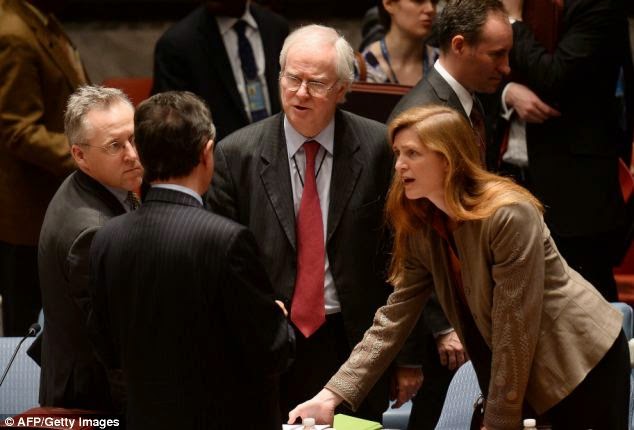
Witch-sniffing is easy, you see. Witches are hard to spot while they are casting their spell, but as soon as they realize that their spell is broken they begin to look very, very ugly. All of that demonic energy rises to the surface for all to see. A witch whose spell has been broken is invariably a hissing, screeching, spitting witch.
Mind you, not everyone involved is a witch. President Obama, for instance, is just a claymation figure that reads from a teleprompter, while the Secretary of State John Kerry was at some point replaced with a cardboard cut-out of himself, and, sadly, nobody even noticed. Nor are all the witches female; it's a gender-neutral pursuit.
There are even some Russian witches: Gary Kasparov, for instance. He is in the Putin=Hitler camp, but, paradoxically, also a poster-child for Russian freedoms, being able to come to the US, openly talk about overthrowing the Russian government, and then fly back to Russia without any problems. If an American were to do the same, he would be charged with terrorism and left to rot in indefinite detention. There is also the wannabe politician Alexei Navalny, who recently committed political suicide by doing the Putin=Hitler thing—on Ukrainian state television, no less.
How was the spell broken? Nothing stings quite as well as a resounding defeat on the international stage. Those who thought they were in control have just suffered a major defeat. On Ukraine so far, it's Russia 1, US Oligarchy 0: Crimea is once again Russian, the transfer of sovereignty happened peacefully and in accordance with the internationally recognized principle of self-determination, and this defeat is so embarrassing that nobody even wants to talk about Crimea any more. It's a done deal.
More defeats follow, as the boomerang effect of sanctions imposed on Russia. The US will not be able to withdraw from Afghanistan via the safe northern route that runs through Russia; instead, the endless convoys will have to run the gauntlet through Pakistan where the locals, incensed by endless drone attacks on their weddings and funerals, will do their best to blow them up. The US will not be able to launch military satellites, because the Atlas V rockets won't fly without the Russian-built RD-180 engines, for which there is no replacement. Nor is it likely that, as things escalate, US astronauts will still be able to get up to the International Space Station, since that requires a trip on the Russian Soyuz.
Not that the Russians have a lot of time for this nonsense. They are busy negotiating deals, like the oil barter deal with Iran which neatly circumvents the sanctions; like the long-term natural gas supply deal with China; and quite a few others. For example, Russia and China agreed to build a canal through Nicaragua, which will supplant the Pentagon-controlled Panama canal. Nicaragua will also get a GLONASS ground station (Russian-Indian replacement for the Pentagon-controlled GPS system), plus a Russian military base, to make sure that the US doesn't decide that it can do something about any of this. Nearby, Russia forgave $90 billion of Soviet-era Cuban debt, reestablishing close relations between Russia and Cuba and opening up Cuba to large-scale Russian investment. Russian companies will be developing Cuba's offshore oil and gas fields.
No doubt, the US would love to counter these moves, but it can't because it doesn't have the talent. Most of the experienced, professional diplomats quit in disgust during Bush Jr.'s reign, when they were forced to continually lie to the whole world about the wars in Iraq and Afghanistan. Now the diplomatic corps is loaded with incompetents whose only credentials are that they raised lots of money for Obama's election campaigns. At the next changing of the guard they will be replaced with the next crop of amateurs. It is little wonder that they are losing.
But these people are unaccustomed to being defeated, and defeat makes them livid and hysterical, and then they go and wax apoplectic in public, yelling and screeching and spraying saliva. You can tell that their minds have snapped when they start comparing everyone to Adolf Hitler. And you can see it all right on television. Meanwhile, the vast majority of the population in the US is perplexed. Except for the Lost Plane Channel formerly known as CNN, commentators on all the major news channels, even the super-blockheaded Fox News, are wondering aloud: “What the hell are we doing in Ukraine?” Well, we are trying to safeguard the interests of the Rockefellers and the Rothchilds, to be sure, but how does knowing that help you?
“How well is that going?” you might ask. Well by now all of eastern and southern Ukraine is in open revolt against the US-appointed junta in Kiev. The neo-Nazi “Right Sector” initially supported the junta and helped with the putsch that overthrew the democratically elected government. But then one of the “Right Sector” leaders, Sashko Bily got shot, most likely for opposing a plan to import a trainload of nuclear waste from the EU and dump it on the ground near Chernobyl. That train is still stuck on the Ukrainian border. Now the junta leaders are shaking in their boots because the “Right Sector” could stage another coup, this time against them.
How does the US react? It sends CIA Director Brennan to Kiev. Brenner orders the junta to attack their own citizens in the east, in an “anti-terrorist” operation.

“Kill them! Kill them all!” says Brenner, but Ukrainian soldiers refuse to fire on their own people and defect in droves.
Next, the US sends in their secret weapon, VP Joe Biden.

“Kill them! Kill them all!” says Biden, with similar results. What is the US to do? I think that only one choice remains: send in Senator John McCain.

If there is anyone who can scare the Ukrainians into fighting a fratricidal war, it's McCain. But what if that too fails?
Well, then the people in eastern and southern Ukraine may get their way. They are just some Russians—millions of them—who got stuck on the wrong side of the Russian border for over two decades. They aren't sure about everything—such as whether they want to join Russia. (They probably do simply because the pay is so much better on the Russian side.) But they are sure about one thing: they don't want to live under a foreign occupation run by a US-appointed junta for the benefit of a bunch of oligarchs.
And I bet neither would you. Maybe you can't help yourselves, the US not being a democracy and all, but maybe you can still do something to help the Ukrainians, by subjecting these warmongering witches to public ridicule. This ought to degrade their effectiveness by a notch or two. As I said, witch-hunting is easy. All you have to do is turn on the TV and see who else today is hissing, screeching, pounding the table, spewing vitriole and dropping the name “Hitler” gratuitously. Then you can go, get a bonfire permit, and burn them in effigy. That automatically makes for good visuals. All you have to do is add some interviews and commentary, and next thing you know you got yourself your own very popular witch-hunting Youtube channel!
April 28, 2014
Communities that Abide—The XIII Commandments
 The manuscript for Communities that Abide is coming right along. The co-authors and I are working away, and it looks like I'll be able to start editing sometime within the next two weeks. I am shooting to have the book out in time for the 3rd annual Age of Limits Conference, which will be held over the Memorial Day weekend at the Four Quarters Interfaith Sanctuary in Artemas, Pennsylvania. I'll be running one workshop at the conference (on community formation) and moderating the discussion at another.
By the way, Albert Bates and I need a ride to the conference. We'll be arriving in Baltimore (airport) on May 22 around 3pm. If you are driving to the conference and BWI is not too far off your route, please let me know. There will definitely be some perks involved, though I am not sure what they are yet. I am not sure whether a couple of hours of listening to Albert and me talk while we are driving to Artemas qualifies as a perk (although some people pay good money for that) so there will be some other perks to be sure.
In the meantime, here is an excerpt from the forthcoming book. As will quickly become clear, the sorts of communities the book addresses (ones that abide) go quite far beyond a fancy condo association with a community center, a community garden and some solar panels up on the roof.
If a community wants to abide, it probably should abide by...
The XIII Commandments of Communities That Abide
I. You Probably Shouldn't come together willy-nilly and form a community out of people that just happen to be hanging around, who don't have to do much of anything to join, and feel free to leave as soon as they get bored or it stops being fun. The community should be founded as a conscious, purposeful, overt act of secession from mainstream society, a significant historical event that is passed down through history and commemorated in song, ceremony and historical reenactment. A classic founding event is one where the founding members surrender all of their private property, making it communal, in a solemn ceremony, during which they take on new names and greet each other by their new names as brothers and sisters. The founding members should be remembered and revered for their brave and generous act. This makes the community into a self-aware, synergistic entity with a will of its own that transcends the wills of its individual members.
II. You Probably Shouldn't trap people within the community. Membership in the community should to be voluntary. Every member must have an iron-clad guarantee of being able to leave, no questions asked. That said, do everything you can to keep people from leaving because defections are very bad for morale. One good trick is to give people a vacation when they need it, and one good way to do that is to run an exchange program with another, similar community. There need not be an iron-clad guarantee of being able to come back and be accepted again, but this should be generally possible. Those born into the community should be given an explicit opportunity, during their teenage years, to rebel, escape, go out and see the world and sow their wild oats, and also the opportunity to come back, take the pledge, and be accepted as full members. When people behave badly, the threat of expulsion can be used, but that should be regarded as the “nuclear option.” On the other hand, you should probably have some rules for expelling people more or less automatically when they behave very, very badly indeed (though such cases should be exceedingly rare) because allowing such people to stick around is also very bad for morale.
III. You Probably Shouldn't carry on as if the community doesn't matter. The community should see itself as separate and distinct from the surrounding society. Its separatism should manifest itself in the way its members relate to members of the surrounding society: as external representatives of the community rather than as individual members. All dealings with the outside world, other than exchanging pleasantries and making conversation, should be on behalf of the community. It must not be possible for outsiders to exploit individual weaknesses or differences between members. To realize certain advantages, especially if the community is clandestine in nature, members can maintain the illusion that they are acting as individuals, but in reality they should act on behalf of the community at all times.
IV. You Probably Shouldn't spread out across the landscape. The community should be relatively self-contained. It cannot be virtual or only come together periodically. There has to be a geographic locus or a gathering place, with ample public space, even if it changes location from time to time. The community should be based on a communal living arrangement that provides all of the necessities. A community living in apartments scattered throughout a large city is not going to last very long; if that's how you have to start, then use the time you have to save money and buy land. A good, simple living arrangement, which minimizes housing costs while optimizing group cohesion and security, is to provide all adults and couples with bedrooms big enough for them and their infants, separate group bedrooms for children over a certain age, and common facilities for all other needs. This can be realized using one large building or several smaller ones.
V. You Probably Shouldn't allow creeping privatization. The community should pool and share all property and resources with the exception of personal effects. All money and goods coming in from the outside, including income, pensions, donations and even government handouts, should go into the common pot, from which it is allocated to common uses. Such common uses should include all the necessities: food, shelter, clothing, medicine, child care, elderly care, education, entertainment, etc. Members who become rich suddenly, through inheritance or some other means, must be given a choice: put the money in the pot, or keep it and leave the community. This pattern of communal consumption is very efficient.
VI. You Probably Shouldn't try to figure out what to do on your own. The community should have collective goals and needs that are made explicit. These goals and needs can only be met through collective, not individual, actions. The well-being of the community should be the result of collective action, of members working together on common projects. Also, this collective work should be largely voluntary, and members who are fed up with a certain task or a certain team should be able to raise the issue at the meeting and ask to be reassigned. It's great when members have brilliant new ideas on how to do things, but these have to be discussed in open meeting and expressed as initiatives to be pursued collectively.
VII. You Probably Shouldn't let outsiders order you around. It's best if the community itself is the ultimate source of authority for all of its members. It should have a universally accepted code of conduct, which is best kept unwritten and passed down orally. The ultimate recourse, above and beyond the reach of any external systems of justice or external authorities, or any individual's authority within the group, should be the open meeting, where everyone has the right to speak. People should only be able to speak for themselves: attempts at representation of any sort should be treated as hearsay and disregarded. You probably shouldn't resort to legalistic techniques such as vote-counting and vote by acclamation instead. Debate should continue until consensus is reached. To reach a consensus decision, use whatever tricks you have to in order to win over the (potentially vociferous and divisive) opposing voices, up to and including the threat of expulsion. A community that cannot reach full consensus on a key decision cannot function and should automatically split up. But this tends to be rare, because the members' status depends on them putting the needs of the community ahead of their own, and one of these needs happens to be the need for consensus. Decisions reached by consensus in open meeting should carry the force of law. Decisions imposed on the community from the outside should be regarded as acts of persecution, and countered with nonviolent protest, civil disobedience, evasion and, if conditions warrant, by staging an exodus. The time-tested foolproof way to avoid being subjected to outside authority is by fleeing, as a group. Oh, and you probably shouldn't waste your time on things like voting, trying to get elected, testifying in court, bringing lawsuits against people or institutions, or jury duty.
VIII. You Probably Shouldn't question the wonderful goodness of your community. Your community should have moral authority and meaning to those within it. It can't be a mere instrumentality or a living arrangement with no higher purpose than keeping you fed, clothed, sheltered and entertained. It shouldn't be treated in a utilitarian fashion. There should be an ideology, which is unquestioned, but which is interpreted to set specific goals and norms of behavior. The community shouldn't contradict these goals and norms in practice. It should also be able to fulfill these goals and comply with these norms, and to track and measure its success in doing so. The best ideologies are circularly defined systems where it is a good system because it is used by good people, and these people are good specifically because they use the good system. Since the ideology is never questioned, it need not be particularly logical and can be based on a mystical understanding, faith or revelation. But it can't be completely silly, or nobody will take it seriously.
IX. You Probably Shouldn't pretend that your life is more important than the life of your children and grandchildren (or other members' children and grandchildren if you don't have any of your own). If you are old and younger replacements for whatever it is you do are available, your job is primarily to help them take over and then to keep out of their way. Try to think of death as a sort of bowel movement—most days you move your bowels (if you are regular); one day your bowels move you. As a member of the community, you do not live for yourself; you live for the community—specifically, for its future generations. The main purpose of your community is to transcend the lifespans of the individual members by perpetuating its biological and cultural DNA. To this end, you probably should avoid sending your children through public education, treating it as mental poison. It has very little to do with educating, and everything to do with institutionalization. Also, if a child is forced to recite the Pledge of Allegiance in class, that creates a split allegiance, which you should probably regard as unacceptable. If this means that your community has to expend a great deal of its resources on child care and home schooling, so be it; after providing food, shelter and clothing, it's the most important job there is.
X. You Probably Shouldn't try to use violence, because it probably won't work. Internally, keep your methods of social control informal: gossip, ridicule, reprimand and scorn all work really well and are very cheap. Any sort of formal control enforced through the threat of violence is very destructive of group solidarity, terrible for morale, and very expensive. You should try to enforce taboos against striking people in anger (also children and animals). Use expulsion as the ultimate recourse. When dealing with outsiders, don't arm yourselves beyond a few nonlethal defensive weapons, don't look like a threat, stay off the external authorities' radar as much as possible, and work to create good will among your neighbors so that they will stand up for you. Also, be sure to avoid military service. If drafted, you should probably refuse to carry weapons or use lethal force of any sort.
XI. You Probably Shouldn't let your community get too big. When it has grown beyond 150 adult members, it's time to bud off a colony. With anything more than 100 people, reaching consensus decisions in an open meeting becomes significantly more difficult and time-consuming, raising the level of frustration with the already cumbersome process of consensus-building. People start trying to get around this problem by hiding decision-making inside committees, but that is incompatible with direct democracy, in which no person can be compelled to comply with a decision to which that person did not consent (except for the decision to expel that person, but most people quit voluntarily before that point is reached). Also, 150 people is about the maximum number of people with whom most of us are able to have personal relationships. Anything more, and you end up having to deal with near-strangers, eroding trust. The best way to split a community in two halves is by drawing lots to decide which families stay and which families go. Your community should definitely stay on friendly terms with the new colony (among other things, to give your children a wider choice of mates), but it's probably a bad idea to think of them as still being part of your community: they are now a law unto themselves: independent and unique and under no obligation to consult you or to reach consensus with you on any question.
XII. You Probably Shouldn't let your community get too rich. Material gratification, luxury and lavish lifestyles are not good for your community: children will become spoiled, adults will develop expensive tastes and bad habits. If times ever change for the worse, your community will be unable to cope. This is because communities that emphasize material gratification become alienating and conflicted when they fail to provide the material goods needed to attain and maintain that level of gratification. Your community should provide a basic level of material comfort, and an absolutely outstanding level of emotional and spiritual comfort. There are many ways to burn off the extra wealth: through recruitment activities and expansion, through good works in the surrounding society, by supporting various projects, causes and initiatives and so on. You can also spend the surplus on art, music, literature, craftsmanship, etc.
XIII. You Probably Shouldn't let your community get too cozy with the neighbors. Always keep in mind what made you form the community to start with: the fact that the surrounding society doesn't work, can't give you what you need, and, to put in the plainest terms possible, isn't any good. Over time your community may become strong and successful, and gain acceptance from the surrounding society, which can, over time, become too weak and internally conflicted to offer you any resistance, never mind try to persecute you. But your community needs a bit of persecution now and again, to give it a good reason for continuing to safeguard its separateness. To this end, it helps to maintain certain practices that alienate your community from the surrounding society just a bit, not badly enough to provoke them into showing up with torches and pitchforks, but enough to make them want to remain aloof and leave you alone much of the time.
***
This list of... um... commandments was been put together by looking at lots of different communities that abide. It is not dependent on what exact kind of community it is: whether it's patriarchal or grants equal rights to women, whether it's religious or atheist, whether it's settled, migratory or nomadic, whether it consists of farmers or carnival performers, law-abiding or outlaw, highly educated or illiterate, whether it's homophobic or LGBT-friendly, vegan or paleo... The only commonality is that they all have children, bring them up, and accept them into the community as adult members. These are biological communities that function as tiny sovereign nations, not one-way social institutions where people join up and die, such as monasteries, retirement homes, hospices and suicide cults. This wide range should allow you to set aside any fears that whatever community you envision forming or joining might be excluded, because, given the very wide range of variations between the communities I examined, finding an exact match to what you happen to like is, first, exceedingly unlikely and, second, completely irrelevant to uncovering the common traits that underpin their success.
April 21, 2014
The inevitable wisdom of going solar
p { margin-bottom: 0.08in; }a:link { }
 Cory ArcangelBy Eerik Wissenz, GoSol.orgfor ClubOrlov
Technological progress, to qualify as such, has to increase the efficiency of exploiting natural resources. This is quite intuitive if we keep in mind that the ultimate purpose of consuming resources in a modern economy is to enable us to consume more resources, producing the sine qua non of modern politics and economics, economic growth. So, if we consume resources more efficiently, we make it possible to consume even more resources, even more efficiently. There is no paradox here. We have chosen to build an economy which not only places no limits to consuming whatever resources are available, but considers doing so a desirable and noble undertaking. Making an economy more efficient simply creates more of it, exactly as we might expect.
Read more »
 Cory ArcangelBy Eerik Wissenz, GoSol.orgfor ClubOrlov
Technological progress, to qualify as such, has to increase the efficiency of exploiting natural resources. This is quite intuitive if we keep in mind that the ultimate purpose of consuming resources in a modern economy is to enable us to consume more resources, producing the sine qua non of modern politics and economics, economic growth. So, if we consume resources more efficiently, we make it possible to consume even more resources, even more efficiently. There is no paradox here. We have chosen to build an economy which not only places no limits to consuming whatever resources are available, but considers doing so a desirable and noble undertaking. Making an economy more efficient simply creates more of it, exactly as we might expect.
Read more »
April 18, 2014
The Geneva agreement on Ukraine, translated
p { margin-bottom: 0.1in; line-height: 120%; }a:link { }
 LavrovSemyon Uralov, odnako.org
The talks in Geneva resulted in an agreement that is in favor of all that is good and opposed to all that is bad. That's the basic gist of it; but what does that mean? Let's translate this memorandum from the language of high diplomacy into the language of the Ukrainian crisis.
Read more »
 LavrovSemyon Uralov, odnako.org
The talks in Geneva resulted in an agreement that is in favor of all that is good and opposed to all that is bad. That's the basic gist of it; but what does that mean? Let's translate this memorandum from the language of high diplomacy into the language of the Ukrainian crisis.
Read more »
April 15, 2014
RIP Mike Ruppert
 Mike Ruppert has shot himself. This makes me very sad, but I certainly won't think any less of him for his decision to take his own life. Everybody has that option. I'll remember him for the happy times we had together, and for the big difference he's made in so many people's lives, opening their eyes to what's really happening in the world.
Why technology doesn't matter—Oh but it does!
p { margin-bottom: 0.08in; }a:link { }
 Erika Deoudes[This week, Eerik is back, continuing the series which started with “the travesty of the anti-commons.” His solar concentrator company is picking up steam (pun intended). If your ecovillage needs a communal kitchen/laundry plus internet café, all powered by a solar concentrator array, you need to talk to Eerik.]
In my last series published on this blog I dispensed with the notion of “the tragedy of the commons,” pointing out its inadequacies, and its absurdity, given that the institution of private property depends for its existence the commons, which is both its origin and is instrumental to its preservation. Being the ultimate guarantor of private property, society has every right to assign duties to the private property holder, as well as to demand that private property be returned to the public realm should conditions warrant. Industry and finance often expropriate private land for some industrial purpose, so this principle is not in dispute. But it seems increasingly unusual to think that such expropriations should serve the public good.
Read more »
 Erika Deoudes[This week, Eerik is back, continuing the series which started with “the travesty of the anti-commons.” His solar concentrator company is picking up steam (pun intended). If your ecovillage needs a communal kitchen/laundry plus internet café, all powered by a solar concentrator array, you need to talk to Eerik.]
In my last series published on this blog I dispensed with the notion of “the tragedy of the commons,” pointing out its inadequacies, and its absurdity, given that the institution of private property depends for its existence the commons, which is both its origin and is instrumental to its preservation. Being the ultimate guarantor of private property, society has every right to assign duties to the private property holder, as well as to demand that private property be returned to the public realm should conditions warrant. Industry and finance often expropriate private land for some industrial purpose, so this principle is not in dispute. But it seems increasingly unusual to think that such expropriations should serve the public good.
Read more »
April 7, 2014
Business as usual
 Ben NewmanThinking about collapse is very useful because it allows you to prepare for it. And preparing for collapse is very useful too—from the pragmatic perspective of risk management. Consider the possibilities.
 If you prepare for collapse and it doesn't happen, then you look a tiny bit foolish. If you don't prepare for collapse and collapse does happen, then you look a tiny bit dead. Now, which would you prefer to be, foolish or dead?
Read more »
March 31, 2014
In the US, democracy is now a sham
 Dran[Guest post by Ray, just in time for April Fool's Day.]
The founding principle for this new form of government which emerged in the 18th century, was that the Common Man was the ultimate source of power. Citizen legislators would enact the laws and shape the nation’s destiny. But instead, our republic is now strong-armed by professional politicians. The two dominant concerns of these careerists are to STAY in power and to do the bidding of those who ENABLE them to stay in power. Anyone who doubts this statement might try explaining why campaign finance reform and term limits are perennially “off the table.” Actually, that is an understatement - they aren’t even in the building.
It is bad enough that the President, Congress and the Courts serve the interests of a minority that is so tiny that it is almost microscopic. What is even worse, is WHO that elite constituency is. It is exclusively THE BIGS: Big banks, Big corporations, Big agriculture, Big energy, Big pharmaceuticals, Big health care, Big high tech and the BIGGEST of them all - the military-industrial complex.
The “Vox Populi” – voice of the people is now as quaint and outmoded as telephone booths on street-corners. Even when there is a massive outpouring of disapproval for a policy - such as the enormous public outcry against Iraq Invasion 2 – the will of the people is disregarded. Instead, the “leaders” kiss the sterns of their financial backers. Ten million irate citizens cannot offset a single Halliburton.
But not only has genuine democracy vaporized, its putrid carcass is used against the ordinary person for whom it was initially conceived. Our demagogues give stirring speeches applauding our inalienable rights and the freedoms that our constitution protects. But at the same time, they barely whimper when a whistle blower reveals that the surveillance grid that is monitoring our behavior is beyond the wildest imaginings of Orwell or Huxley. And when the head of the Department of Omnipresent Surveillance admits that he lied to Congress, he is not prosecuted for perjury. Amazingly, he doesn’t even lose his job.
When the President signs the NDAA act which allows for “indefinite detention” of citizens without formal charges or without the right to a lawyer, it should be utterly clear that the boot of Soft-Core Tyranny is now on our neck. And that unchecked and almost unnoticed power continues to grow at an obscene pace. Examples of this are the militarization of small town police departments, the unending malignant growth of the Department of Homeland Security and the cessation of Posse Comitatus which keeps the military from being used as a domestic police force.
But even though our career politicians only represent the rich and the powerful, and even though they abet the steady erosion of our constitutionally ordained rights, it is even worse! That’s because despite making a mockery of democracy at home, they trumpet its virtues abroad. This is shameful Hypocrisy with a capital H.
What they are really trying to spread is not Democracy but Predatory Capitalism. They want to expand the sphere of influence of their financial backers who want greater market share in more and more markets. They do this through subtle intrusion via the IMF and the World Bank. Concurrent with this, they embrace the most corrupt and brutal local politicians they can find. The saying “He may be a genocidal dictator, but he’s OUR genocidal dictator” is not a punch-line in a joke. It is standard operating procedure for U.S. foreign policy. If this kinder, gentler approach fails, then the next steps are assassination or invasion. So the spreading of democracy leaves death, mutilation and destruction in its wake.
So, in conclusion, it appears to me that America is no longer a world-wide exemplar of how to sculpt a civilized society. Instead, it is far down the road to becoming a full-blown Corporate Police State. It has fallen so tragically, that it is now just a self-deluded leper strutting about the global stage - unaware that the theater has already emptied.
March 25, 2014
Putin jokes
 Joke #1: President of Israel calls up Putin and says: “Vladimir Vladimirovich, I didn't know you were a Jew!” Putin says, “I didn't either; what makes you think I am a Jew?” President of Israel says: “You got Americans to pay you $5 billion to take over Crimea. You must be a Jew!”
Joke #2: Putin is watching TV. Calls up his Chief of Intelligence: “Give Tyagnibok a medal for banning the use of Russian in Ukraine. What do you mean he isn't one of ours? Ok, give Yarosh a medal for the idea of blowing up Ukrainian gas transit lines. What do you mean, that's his own doing? How about that cretin Lyashko? How about those cretins from Svoboda—Miroshnichenko and others? So, DO WE HAVE ANY AGENTS ON THE GROUND IN UKRAINE AT ALL?! Where the hell are they? What the hell do you mean they bought a dump-truck of pop-corn and a tanker truck beer and are watching it like a movie?!!!” Hangs up in disgust. Calls again: “How could you let Muzychko get killed?”
Dmitry Orlov's Blog

- Dmitry Orlov's profile
- 48 followers
Dmitry Orlov isn't a Goodreads Author
(yet),
but they
do have a blog,
so here are some recent posts imported from
their feed.

