Rob Kitchin's Blog, page 16
September 19, 2020
Swim with me
Emma put down her fork.
‘What happened to Jack the joker?’
‘What?’
‘The bloke that I used to flirt but not flirt with?’
‘He’s got stage fright.’
‘There’s only one person in the audience.’
‘That’s making it worse. Along with imposter syndrome.’
‘Imposter …’
‘You were the impossible dream. Now …’
‘We’re on a date.’
‘And my feet can’t touch the bottom of the pool.’
‘Just relax and swim with me.’
Jack snorted a laugh.
‘Think of it as clothed skinny dipping.’
‘What?’
‘Are you seeing me as I’m seeing you?’
‘Err.’
‘Now we’re in the same pool.’ Emma smiled.
A drabble is a story of exactly 100 words.


September 16, 2020
Review of East of Hounslow by Khurrum Rahman (2017, HQ)
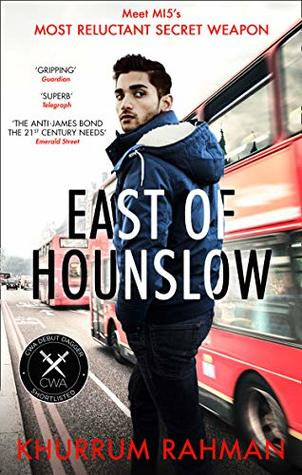 Javid – Jay to his friends – has been cruising through life as a small time dealer in West London. He keeps his head down, stays away from trouble, and goes to the mosque on Fridays, doing enough to get by but not attract attention. Just at the point where he’s bought the car of his dreams everything is turned upside down. The mosque is vandalised and Jay gets himself tangled up in a revenge attack while trying to protect a friend. During the fracas his car is stolen and with it the drugs and cash of a major supplier. Now Jay faces a tough choice, work for MI5 and rat on the supplier or be prosecuted for assault and face the consequence for the lost money. All MI5 want him to do is go undercover as a jihadist. Either way, his quiet life is over.
 East of Hounslow is the first book in the Jay Qasim series following the adventures of a small-time dealer turned reluctant MI5 agent. Rahman does a very nice job of flipping the everyday world of Jay from comfortable lad-about-town, who practises his Muslim religion and hustles to get by, to infiltrating an extremist cell who want jihad. It is the everydayness of the Muslim characters and their journey that adds an authenticity to the storytelling, though this feels a bit more paint-by-numbers with respect to the MI5 elements. Rahman portrays the lives of Muslims in Britain and how some become radicalised and many more do not without misbalancing the framing and plot. The dilemma set up provides a nice hook, and the plot unfolds at a nice pace with a couple of intriguing twists to a tense denouement. The ending seemed to unravel a little, with Jay more a bystander than a hero, but it overall the tale had a strong arc. Overall, a good blend of social and political commentary and thriller.

September 12, 2020
Are you going to ask?
Emma watched Jack enter the café.
He glanced around, his gaze briefly staying on her, then took a seat as far away as possible.
She waited five minutes before heading over.
‘Are you avoiding me?’
‘No.’ He continued to stare at his coffee.
‘You’re ignoring me at work as well.’
‘I … I didn’t want to make you uncomfortable.’
‘I’d have told you if I were. There’s a difference between flirting and harassment, Jack.’
‘Oh.’
‘So?’
‘What?’
‘Are you going to ask?’
‘Ask?’
‘What you want to ask.’
‘What?’
‘Do I have to spell it out? A date.’
‘Oh.’
‘So?
A drabble is a story of exactly 100 words.
September 10, 2020
Review of Austral by Paul McAuley (2017, Gollancz)
 Sometime in the near future climate change has led to the thawing and wilding of parts of Antarctica. It’s still a cold, harsh place, but it’s also home to a sizable and growing population attracted by its natural resources. Austral is the daughter of an ecopoet and a husky: a person whose genes have been edited to cope with the climate and environment, though her difference means she is feared and discriminated against by others. She’s had a tough life, first growing up on a remote island where ecopoets, who work with rather than exploiting nature, were isolated, then in an orphanage after her escape fails. After a time in prison, she’s now become a corrections officer in a labour camp and consort to a major criminal. He’s got plans to escape, enrolling her in his scheme to kidnap the daughter of a senior politician, who is related to Austral through her grandfather. Austral has other plans, however, snatching the girl herself and heading out into the wilderness. Her plan is to demand a ransom then use the funds to leave Antarctica. Her first priority though is to make good her escape and keep herself and the girl alive as the authorities and criminal gang try to track her down.
 The narrative takes the form of a story being told by Austral to her child, explaining her adventure, her relationship to the girl she has kidnapped, who’s her second cousin, the history of her family and of the populating and wilding of Antarctica, and the decisions that she took. The plot essentially follows her escape journey and its various twists and turns as the pair struggle across a tough, wild landscape and get themselves into scrapes. The world building is very nicely done, with a strong sense of place and landscape. And the tale is infused with thoughtful reflection on climate change, wilding and genetic modifications. Two other threads are woven in to the telling – the history of Austral’s grandparents and her own backstory, and a fantasy adventure that forms the story that the kidnapped girl is reading. The latter seems somewhat out of place and surplus to the main tale. The real strength of the book, however, is Austral and McAuley creates a convincing and interesting character who despite circumstances is determined to escape while acting in good faith to the girl she is forcing along with her.

September 5, 2020
Idiot boy
Turning from the bar, Tom almost tipped his drinks over Sarah.
‘Woah!’
‘Is idiot boy ever going to do the honourable thing?’
‘What?’
‘Jack. Is he going to ask Emma on a date?’
‘Not in this lifetime.’
‘He’s been dancing round her for months.’
‘He’s worried he’ll be accused …’
‘Of what? Of being a sap?’
‘Of ‘inappropriate behaviour’.’
‘What? Is he that dumb he can’t tell she wants to be asked?’
Tom nodded. ‘Can she not …’
‘She doesn’t think proper for the lady to make the first move.’
‘Then it’s doomed.’
‘Let’s aim for delayed? What’s the plan?’
A drabble is a story of exactly 100 words.
September 4, 2020
Review of A Capital Crime by Laura Wilson (2010, Quercus)
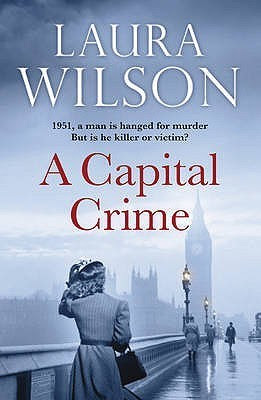 Winter, 1950. A young woman and a 14 month old child are found dead in a washhouse behind a terraced slum in London. The husband confesses to the murders, though he proves to be a congenital liar, constantly changing his story. It seems like an open and shut case and John Davies is convicted of the crime, largely on the evidence of another resident of the house, Norman Backhouse, and hanged. A couple of years later, the bodies of four recently disappeared women are found in the house and two more are buried in the garden. The key suspect is the Backhouse. It seems like a terrible miscarriage of justice has occurred, unless two different murderers had been living in the same house at the same time. DI Ted Stratton had misgivings about the first case, and they’ve come back to haunt him. Meanwhile, ex-war time agent, Diana Calthrop, finds her life sliding backwards as two marriages fail leaving her in dire straits, and Stratton’s daughter finds herself struggling to make sense of her sexuality, and neither woman should be wandering London when so vulnerable.
 The third book of the DI Ted Stratton series fictionalises the events at 10 Rillington Place, where two sets of murders occurred in the early 1950s sending two men to the hangman. The first murderer was convicted in part on the evidence of the second one, casting significant doubt on the initial investigation, trial and guilty verdict. The cases subsequently led to two inquiries, though their findings were inconclusive, and influenced the decision to end capital punishment. In Wilson’s telling DI Stratton is the lead officer in both cases. He has misgivings while investigating the death of a young woman and 14 month old child. John Davies is a simpleton with a temper who continually tells lies. Some of the evidence doesn’t quite add up, but most points to Davies, who has also confessed. And everyone involved in the case, including Stratton, think him guilty. When a couple of years later, six more bodies are discovered in the house and garden, Stratton wonders if he’d made a terrible mistake, despite the evidence and confession. Along with the investigation, Wilson spins two other threads through the story, both of which are hooked around women’s sexuality and position in society. The first follows Monica Stratton as she enters the workplace and starts to question her sexual identity. The second focuses on Diana Calthrop, a woman Stratton holds a flame for, and her fall from grace as she divorces her first husband and quickly enters another doomed marriage. In part, these are included to provide a thread through the series, but they do add to rather than detract from the story arc. The result is a very nicely plotted tale that is very strong on exploring the psychological side of investigating emotive cases with criminals who constantly lie and charting character development, in particular, Stratton, Monica and Diana’s lives. The pacing, atmosphere and sense of place and time adds to the telling. Overall, the strongest book in the series, in my view.

September 2, 2020
August reviews
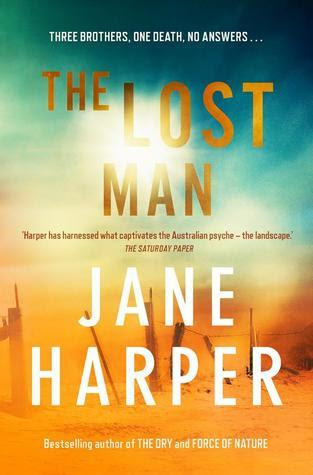 A good month of reading. My book of the month is The Lost Man by Jane Harper.
Silent City by Alex Segura **.5
The Lost Man by Jane Harper *****
A Philosophical Investigation by Philip Kerr ***
Bluebird, Bluebird by Attica Locke ****
Infinite Detail by Tim Maughan *****
One For The Money by Janet Evanovich ****
Joe Country by Mick Herron ***.5
August 31, 2020
Review of Silent City by Alex Segura (2016, Polis Books)
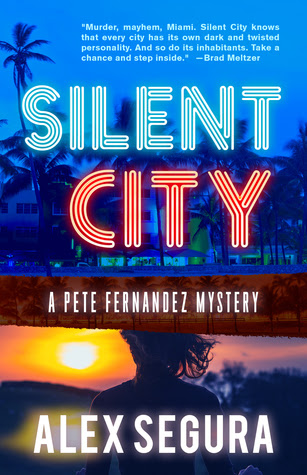 Dumped by his fiancée and his newspaper career on the skids, each day Pete Fernandez drinks himself into a stupor. When a writer for the paper asks him to look into the disappearance of his daughter, a reporter, Pete reluctantly agrees. It pretty quickly becomes clear that something is awry, though the police don’t seem to want to know. The journalist had been investigating a series of underworld murders committed by a mysterious hitman known as The Silent Death and it seems she might have been on the cusp of revealing his identity. He might be a mess, but Pete used to be a bloodhound reporter, and he’s soon ruffling feathers as he tries to track down the missing journalist. And as he digs deeper, he’s drawn into the world of his father, a homicide detective who’s recently died, and the body count of The Silent Death rises.
Silent City is a journalist turned PI tale set in Miami, following the attempt of a drunken, washed up reporter trying to track down a colleague who’d been working on a big story for the crime desk. It’s one of those tales where just about every character, regardless of their role, is already a part of the lead character’s life, the trajectory and mystery of the story is telegraphed from a very long way out, and the tale is driven forward by plot devices. And the characters were a little too typeset and one-dimensional. The result is a derivative crime thriller, told through workman-like prose, which has a decent pace, intrigue and tension, but is wholly unbelievable yet predictable. It passed the time, but sparked little else.

August 29, 2020
You deserve each other
‘I don’t think he’ll ever ask me out.’
‘He will. Eventually.’
‘I’m just a friend to him.’
‘A friend he wants to do naughty things with.’
‘He’s never even hinted at naughty.’
‘He sees you naked most of the time,’ Sarah said.
‘What? No!’
‘He’s practically drooling.’
‘Stop! He doesn’t see me that way at all.’
‘Well, you see him that way, so what’re you going to do about it?’
‘Nothing. He has to make the first move.’
‘It’s the twenty-first century, Emma.’
‘I’ll die of shame.’
‘You won’t.’
‘I probably will.’
‘Well, one thing’s certain. You deserve each other.’
A drabble is a story of exactly 100 words.
August 28, 2020
Review of The Lost Man by Jane Harper (2018, Abacus)
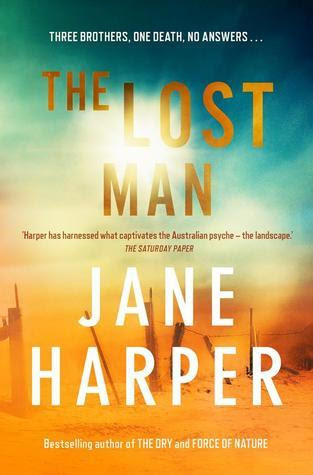 Deep in the Australian outback Cameron Bright’s body is discovered by his two brothers at Stockman’s grave, a bleak, isolated spot, having perished in the searing heat. His vehicle being parked some kilometres away suggests foul play, but other circumstantial evidence indicates misadventure or suicide. It’s not uncommon given the rural isolation and Cam seemed off-colour for weeks before his death. Nathan, the eldest of the siblings and social outcast, wants answers but the rest of the Bright family and ranch hands are more concerned with his mental wellbeing, their own problems, and preparing for the funeral and Christmas. And the police are several hours away, busy, and unconvinced that the death was anything more than a tragic incident. Nathan hasn’t spent this much time with others in a decade and he’d sooner retreat to his own failing ranch, but something about Cam’s death has got under his skin.
 Harper’s tale charts Nathan’s faltering investigation into his brother’s death, slowly revealing secrets and dark moments that shadow the Bright homestead. The telling is nicely evocative, with a strong sense of place, realistic rendering of ranch and family life, and tensions and social relations among an isolated, resilient community, and well-painted characters. The real strength of story is the tight crafting of plot, which is free of awkward or contrived plot devices; mixing reminisce and mystery it creates a slow burn sense of unease and intrigue, leading to an understated and satisfying denouement. The result is an engaging tale of a lost man wandering back towards redemption.