Rob Kitchin's Blog, page 15
October 17, 2020
Typecast
‘That’s Queen Victoria?’
‘Yes.’ The director squinted into a camera eyepiece.
‘But she’s black.’
‘And?’
‘Queen Victoria was white.’
‘To you maybe.’
‘It’s not a matter of opinion.’
‘And what about Cleopatra?’
‘Sorry?’
‘Was she as white as an English rose? Was Jesus as pale as a Scot?’
‘What?’
‘Everyone living in Palestine and Egypt were baby pink?’
‘John …’
‘Shall we daub her with white makeup like a minstrel?’
‘We need to recast.’
‘It’s what she says and does that matters not her skin colour.’
‘That’s not …’
‘So, white folks can play black characters but not vice versa?’
A drabble is a story of exactly 100 words


October 14, 2020
Review of Land of Shadows by Rachel Howzell Hall (2014, Titan Books)
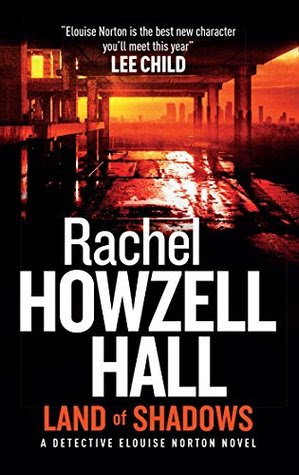 The body of a 17 year old black girl is found in an under-construction development. Homicide detective Elouise Norton and her new partner are assigned to the case. For Lou there are strong echoes with the disappearance on her sister, Tori, thirty years previously; not least the age and race of the victim and that the development is owned by Napoleon Crase, who owned the stored Tori was last seen hanging around. As they investigate, Lou tries to stay impartial but there are too many similarities between the two cases. She has never given up hope of discovering what happened to her sister, but that baggage might jeopardise the current investigation into an active killer.
Land of Shadows is the first book in the Detective Elouise Norton series set in Los Angeles. Lou grew up in a poor black neighbourhood and has worked her way out into a new life, though she is deeply scarred by the disappearance of her elder sister when she was a teenager. Her new investigation has echoes of Tori’s case involving the death of a young black girl and the chief suspect from thirty years ago. Along with her new white partner, Lou starts to follow leads, though she’s convinced she knows who the perpetrator is. To add to her stress, her husband is away in Japan on business and is conducting an affair. The tale then is a police procedural that is thoroughly personal to the detective. At one level this adds spice and tension, and on another feels like one massive coincidental plot device for that purpose. Consequently, while it’s an engaging read with an interesting lead character, there were some odd quirks that rang hollow – for example, it was a mystery to me as to why she’s allowed to investigate it at all, why there was a suggestion of suicide in Monie’s death, and why the original investigation into Tori’s death was so lackadaisical. While it builds to a tense denouement, the reveal felt a bit too contrived. Other than that, there’s a decent sense of place, it’s nicely paced becoming somewhat of a page-turner.

October 10, 2020
The way home?
Alicia stepped through the door and into a warehouse. Pallet racking towered above her.
Startled, she turned heels and barged through the fire escape.
The pub was half-empty; a Beatles song playing on the jukebox.
Alicia imagined the speech bubble over her head. ‘What the …’
She wandered to the front door and stared out at a car park.
‘You alright, love?’ The barman asked.
Ignoring him, she exited onto a theatre stage and into the glare of a spotlight.
Alicia raised a hand to her eyes. Every door opened to a new space.
But none seemed to lead home.
A drabble is a story of exactly 100 words
October 9, 2020
Review of A Game of Ghosts by John Connolly (2017, Hodder & Stoughton)
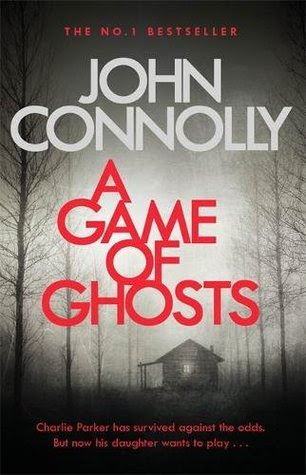 Charlie Parker is spending a lot of time talking to his lawyer. Rachel his ex-partner wants to restrict access to his daughter. Ross, a federal agent, has persuaded him to sign a contract to undertake work for the government. The first case is to track down Jaycob Eklund who has disappeared. Eklund was a private investigator obsessed with the paranormal, and in particular, The Brethren, a group of ghosts whose ancestors maintain their sect. The trail leads Parker, and his two friends Angel and Louis, to ‘Mother’, the custodian of a criminal empire, and her disturbed son, Philip, who also want Eklund found. As Parker follows the trail, his own ghost, The Collector, is also seeking out The Brethren. What evolves is a complex game of ghosts.
 Connolly spins a multi-layered story. The plot is fairly complex, and is heavily contextualised by previous instalments of the series that might make it a tricky read if read as a standalone. But that is also its strength, in that it builds on and ties off some of threads of the longer arc of the series. As usual, the prose and storytelling is engaging, the plot is compelling and entertaining with a strong sense of mystery and tension throughout, and Parker is put through the usual wringer with respect to both his personal and professional life. A chilling, page-turning read.

October 5, 2020
September reviews
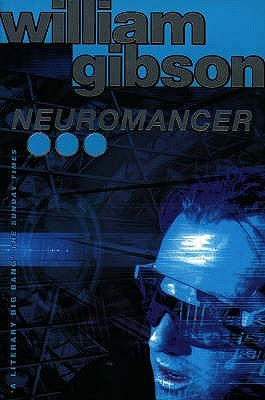 A very good month of reading, but Neuromancer was my read of the month.
 Your House Will Pay by Steph Cha ****.5
Neuromancer by William Gibson *****
East of Hounslow by Khurrum Rahman ****
Austral by Paul McAuley ****.5
A Capital Crime by Laura Wilson *****
October 3, 2020
Betrayal
Mark stopped typing.
‘I was wondering when you would appear,’ he said without turning.
Sarah didn’t reply, unable to speak.
The gun started to tremble in her hand.
‘What are you waiting for?’
‘You … you betrayed us.’
‘To save you.’
‘Karl is dead.’
‘The three of us would have …’
‘And the others?’
‘They would have died regardless. We were all …’
‘In the fight! But you betrayed them. The cause.’
‘We’ll rebuild. Start again.’
‘No. I …’
‘Sarah.’ Mark turned in his chair. ‘I have always loved you.’
‘Yet you never understood me. Us.’
Sarah pulled the trigger.
A drabble is a story of exactly 100 words.
September 30, 2020
Review of Your House Will Pay by Steph Cha (2019, Faber and Faber)

1991, two weeks after the Rodney King beating ignites race riots in Los Angeles, 16 year old Ava Matthews is shot dead in a Korean convenience store after tussling with the pregnant owner who thought she was trying to steal a quart of milk. Jung-Ja Han is subsequently cleared of murder and freed, but by then war has been declared on Korean communities by African-Americans, who loot and burn down their stores. 27 years later, the city is dealing with another unarmed, young black man shot dead by police, and Ava’s cousin, Ray, leaves prison after a ten year sentence for attempted armed robbery. Shawn, Ava’s brother, and his family are waiting for him hoping he can go straight this time. Grace Park is disturbed by the continued racial tensions in the city, but lives a quiet life, residing with her parents and working as a pharmacist in their store. Her world though is about to be turned upside down. When leaving the store together one evening, her mother is shot, and while she is in surgery Grace learns about her past. As the police investigate the shooting, Shawn finds himself grappling with a crime that still haunts his family, and Grace with the attempt on her mother’s life and a past crime she knew nothing about.
Your House Will Pay follows two families still living with the after-effects of a crime committed in the shadow of the Rodney King riots in Los Angeles. The two main characters are Grace Park, who wasn’t yet born at the time teenager Ava Matthews was shot dead by Jung-Ja Han for seemingly stealing a quart of milk, and Shawn Matthews, Ava’s young brother, who was in the store at the time. Shawn was already hanging round the fringes of a gang and his sister’s death tipped him into that life and prison until he found his feet and went straight. Grace grew up not knowing about her mother’s crime and how she walked free from court. Now her mother has been shot and Shawn and Grace find themselves grappling with the consequences. Cha sympathetically charts the pain, hurt and confusion in both families, while nicely contextualising the story in relation to the race riots and police brutality in 1991 and tensions between the African American and Korean communities, and the continued systemic institutional racism and Black Lives Matter in the present day. The character development is excellent, as is the portrayal of both families and their internal tensions and struggles. The plot is well-paced and balanced, with a well-judged thread of tension and intrigue running throughout. The only thing that seemed a little off was the ending, which felt curtailed and somewhat open-ended. Nonetheless, it is a powerful, thoughtful and thought-provoking read about racial tension, policing and justice in contemporary America.

September 28, 2020
Review of Neuromancer by William Gibson (1995, Harper)
 Case used to be a skilled hacker, until an ex-employer compromised his ability to jack into the matrix by crippling his nervous system. Instead, he is left to hustle in the dark economy of Chiba City. Now he’s being given a second chance, recruited by a mentally unstable former military operative, and paired with Molly, a mirror-eyed samurai, and the construct of a former hacker, to make a run against a powerful artificial intelligence orbiting Earth that serves the Tessier-Ashpool business clan. He finds himself caught in the middle of a deadly conflict between AIs and family members, with little choice but to continue given the poison stored in his body, the antidote held by his employer.
I’ve read Neuromancer a couple of times before and have written about the book in some of my academic work. It’s twenty years though since I last read it. It’s aged remarkably well given the centrality of digital technologies to the storyline. In fact, if it were published today it would hold up on the tech side of things given its precedence. And the storyline does as well; a cyberpunk thriller that pits Case, a has-been hacker, and Molly, a cyborg, street-smart samurai, against a powerful AI that serves a shady business clan. Along with a whip-smart, intriguing and well-paced plot, the prose is evocative and delightful. It’s easy to see why the book won so many awards and how it became so influential in shaping thinking about networked technologies and the worlds they create. It remains an excellent, engaging, thought-provoking read.

September 27, 2020
New book: Slow Computing: Why We Need Balanced Digital Lives
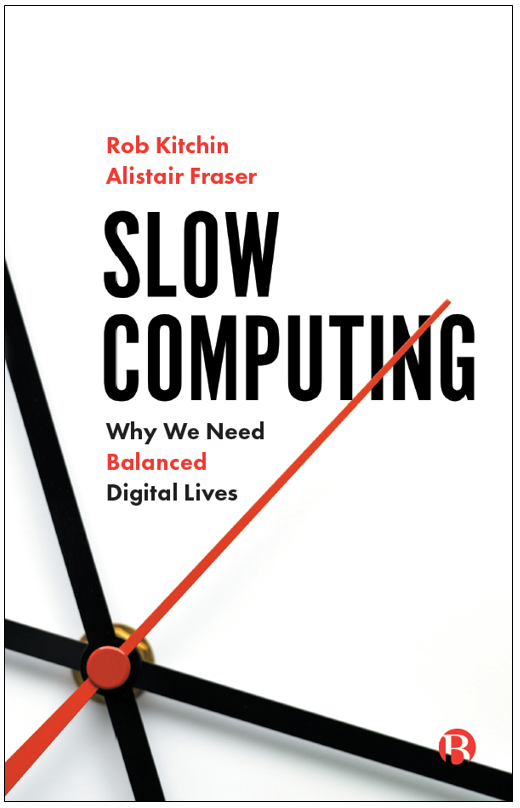 A BOOK ABOUT TAKING CONTROL OF OUR DIGITAL LIVES
 By Rob Kitchin and Alistair Fraser
Digital technologies should be making life easier. And to a large degree they do, transforming everyday tasks of work, consumption, communication, travel and play. But they are also accelerating and fragmenting our lives affecting our well-being and exposing us to extensive data extraction and profiling that helps determine our life chances.
Is it then possible to experience the joy and benefits of computing, but to do so in a way that asserts individual and collective autonomy over our time and data?
Drawing on the ideas of the ‘slow movement’, Slow Computing sets out numerous practical and political means to take back control and counter the more pernicious effects of living digital lives.
1 Living Digital Lives (PDF)
2 Accelerating Life
3 Monitoring Life
4 Personal Strategies of Slow Computing
5 Slow Computing Collectively
6 An Ethics of Digital Care
7 Towards a More Balanced Digital Society
Coda: Slow Computing During a Pandemic (PDF)
ISBN 978-1529211269
Bristol University Press, £14.99; 20% discount (£11.99) at: Bristol University Press, or £9.75 if sign up for BUP newsletter
September 26, 2020
A foggy night
Mist filled the yard like a giant pool of bubble bath. Only the roofs of the outhouses were visible.
‘Bruno?’
The dog didn’t reply.
‘You okay, boy?’
George stepped away from the door, disappearing into the fog.
Something clattered to the cobbles away to his left.
‘Hello?’
He inched towards the old stables, a faint scrabbling ahead.
‘Who’s there?’
‘Is everything okay, George?’
‘Shut the door and lock it,’ he called back.
‘George?’
Something lay on the ground ahead.
‘Bruno?’
Foam ringed the old dog’s mouth. A foot pawing the handle of a spade.
In the field a cow bawled.
A drabble is a story of exactly 100 words.