Rob Kitchin's Blog, page 14
November 21, 2020
It's never too late
‘I can’t do this anymore, Ruth.’
‘Do what?’
‘This. Meeting up. Going for walks.’
‘Oh.’ She turned to face him. ‘Why?’
‘Because …’ Brendan shrugged.
‘Are you breaking up with me?’
‘I’m not sure we were ever together.’
Ruth reached for his hand, which he pulled out of reach.
‘What about the last two years?’
‘We’ve been friends.’
‘Friends?’
‘Yes, companions.’
‘I thought that’s what you wanted? A companion.’
‘I did. I do. But I thought it might lead to something else.’
‘It still can.’
‘It’s too late for us to star in a rom-com.’
‘It’s never too late, Brendan.’
A drabble is a story of exactly 100 words.


November 17, 2020
Review of Broken Homes by Ben Aaronovitch (2013, Gollancz)
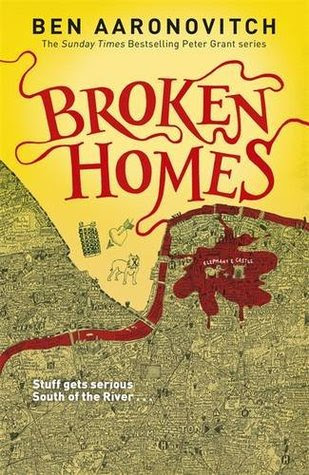 A trace of a blood in the boot of a car, the owner a suspected illicit practioner of magic. A locksmith cooked from the inside-out. A town-planner stepping off a platform in front of a train. The appearance of a stolen book on industrial-scale magic of German origin. PC Peter Grant is dashing between cases that appear to be linked to his nemesis, the Faceless Man. The leads point to a notorious sink estate in Elephant and Castle in South London, designed by an infamous German emigre. Not sure what he is looking for, but certain that the estate holds the key, Grant and his colleague, Leslie take up residence, assured that something strange is taking place.
Broken Homes is the fourth book in the urban fantasy meets police procedural, Rivers of London series. The story revolves around an estate in South London, notorious for its strange and fortress-like design that has made it a no-go area for authorities. The local council is seeking to knock it down to build something new. Residents want to be left alone. And another force seems intent on using it for something else. Peter Grant and colleagues, who specialise in policing strange phenomena, are interested in discovering more about the latter, which seems linked to some mysterious deaths elsewhere in London. It’s an enjoyable read, with a nice set of characters, intriguing elements, and usual humour. However, while there is a full story arc, the tale felt a bit too much like a bridging entry in the series, being a little too meandering and open-ended, with a number of threads that are unresolved or not fully explained. And the lack of backstory with respect to all the threads – the unit Grant works for, Lesley’s face, the Faceless Man, the Rivers – would make it a quite confusing standalone read. Nonetheless, an entertaining addition to the series.

November 14, 2020
Box room
Alysha nervously picked at her plate.
‘She can sleep in your room tonight,’ Frank said. ‘You can have the box room.’
‘We’re both sleeping in my room,’ Peter replied.
‘This is my house.’
‘And Alysha is my wife.’
‘Frank,’ Sylvia said, hoping to head-off a full-blown confrontation.
‘We’ll find a hotel.’
‘Peter.’ Alysha sought out his hand.
‘You’ll stay here,’ Frank said. ‘But in separate rooms.’
‘I’m sorry, mum.’ Peter rose to his feet. ‘You’re a racist prick, dad. Alysha’s pregnant. Twins.’
‘Peter,’ Alysha whispered.
‘He can reject us, but he’ll never get to be a racist prick to them.’
A drabble is a story of exactly 100 words.
November 12, 2020
Review of The Frangipani Tree Mystery by Ovidia Yu (2017, Constable)
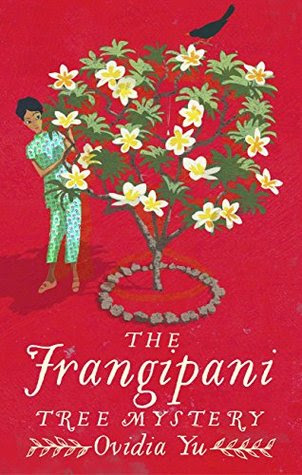 1936, Singapore. Sixteen year old Su Lin is coming to the end of her time at a mission school. She has ambitions to be a reporter, but her first step to achieving that goal is to avoid being married off to a much older man selected by her uncle. Her teacher has arranged for her to be the housekeeper for Chief Inspector Thomas LeFroy. At their initial meeting LeFroy is called away to investigate a suspicious death at the residence of the Acting Governor of the colony, taking Su Lin with him. The nanny has fallen to her death from a second floor balcony. Su Lin quickly spots some oddities with the death and persuades LeFroy to let her offer to replace the nanny, stay at the residence, and try to see what she can find out. He reluctantly agrees, though his enthusiasm dips when a second death occurs. Su Lin though is determined to protect the daughter she is minding and solve the case.
This is the first in a cosy series set in Singapore in the late 1930s. The story is a traditional big house mystery in the vein of the golden age of crime transplanted to the colony, with the majority of the tale taking place in the Acting Governor’s residence investigating the suspicious death of the nanny. Although the police are involved, the primary investigator is Su Lin Chen, a teenager who is asked to temporarily replace the nanny until another can be hired. Su Lin is observant, smart, quick-witted, and kind and is not going to let her polio-crippled leg hold her back. Grand-daughter of a major trader and money-lender, she’s determined not be married off to an associate of her uncle, and has ambitions to make something of her life. Despite the colonial attitudes and racism of the governor’s family she quickly fits into the household as she hunts for clues and uncovers secrets. Yu spins an engaging, well paced whodunit tale that has several twists and turns and leads to tense, though not overly surprising denouement. There’s a reasonable sense of place, though the focus on the residence and domestic relations means the colonial context and island society is somewhat in the background. The charm of the story, however, is Su Lin and the golden age feel of the tale. Definitely a series I’ll be continuing with.

November 7, 2020
Charade
‘Mr Smith, will you please answer the question.’
‘What’s the point? Everyone in this room thinks I’m guilty. Including my own lawyer.’
‘And are you?’
‘No. I didn’t kill that poor woman; but I have no way of proving it. Can’t we just skip forward to the sentencing?’
‘You haven’t been convicted as yet.’
‘That’s only a matter of time. We’re just wasting tax-payers money.’
‘An innocent man would contest the charges.’
‘This innocent man has been, but nobody wants to listen. Can’t we just end this charade?’
‘This isn’t a charade, Mr Smith.’
‘It is from where I’m sitting.’
A drabble is a story of exactly 100 words.
November 6, 2020
Review of Sicily ‘43 by James Holland (2020, Bantam Press)
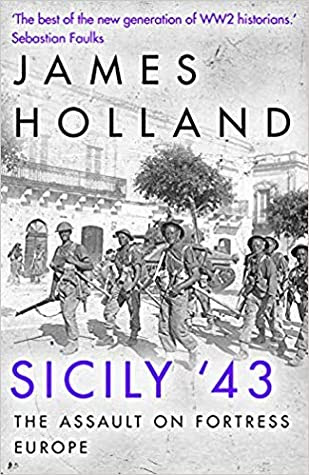 The invasion of Sicily by Allied troops in July 1943 was the first major assault on Fortress Europe. It remains the largest amphibious landing in a single day, with 160,000 troops coming ashore on D-Day, and involved a vast armada, aerial skirmishes, and British and American-led armies taking on Italian and German troops. While the Western half of the island was quickly over-run, the Eastern half involved a bloody series of battles. After 38 days it was all over with most of the Italians surrendering and the Germans withdrawn over the Messina Straits. James Holland provides an overarching description of the invasion and key battles, drawing on the testimony of combatants on both sides and civilians. Unlike other accounts that tend to disparage the Allied efforts, Holland makes the case that Sicily was a major success despite mistakes being made (notably the use of airborne troops and gliders which suffered major losses, including via Allied guns). He argues that the mountainous terrain that favoured defenders and hardened German opponents slowed progress despite total aerial dominance and uncontested sea support, rather than incompetence, poor planning and weak tactics. His contention is well made. In general, one gets a reasonable sense of how the campaign unfolded. However, trying the cram dozens of battles and encounters into a single volume using multiple personal narratives makes for a somewhat bitty and narrow narrative. On the plus side, there’s a sense of what Holland’s main characters went through. On the negative, there’s a lot of jumping about and less sense of how particular actions and the overall campaign unfolded. It’s a difficult balance to achieve and it felt a little out of kilter. It might have helped if the relevant maps were embedded in the text at the appropriate points and there was more of them. Overall, though an interesting account of gaining a key foothold on Axis territory.
October 31, 2020
Poor bastard
‘There,’ Dessie slid the fiver across the table, ‘she almost made the record.’
Cathy stopped and turned. ‘Were you betting on me?’
‘Most last just a few minutes; you were pretty game.’
‘I don’t believe this.’
‘You won’t meet a nice fella then Terry,’ Colin said, ‘but he’s cursed. Put him next to a woman and he’s a nervous wreck; either clams up or spouts gibberish.’
Cathy glanced back at her blind date, who was staring forlornly at his cup.
‘Then why does he do it?’
‘Probably the same reason as you. Except he does it without hope. Poor bastard.’
A drabble is a story of exactly 100 words.
October 29, 2020
Review of Crimson Lake by Candice Fox (2017, Penguin)
 Ted Conkaffey’s life has been turned upside down. The last known person to see a girl at a bus stop before she was abducted and raped, he’s accused of the crime. The case is withdrawn halfway through the trial leaving him neither acquitted nor convicted, but his reputation and marriage in ruins. His lawyer drives him north from Sydney to the wetlands of Crimson Lake, near to Cairns, and introduces him to Amanda Pharrell, a private investigator who has served time for killing another girl when she was a teenager. With the local community and cops starting to make Ted’s life a misery, he throws himself into investigating the disappearance of a local celebrity author with his new partner. At the same time he starts to dig into Amanda’s past, convinced there was more to her case than what’s on the public record. He’s pretty much given up on trying to prove his own innocence; the question is whether he’ll be able to stay in Crimson Creek long enough to solve the cases he’s working on before the locals force him to leave.
Crimson Lake is the first in a private investigator series set near to Cairns in North East Australia, featuring ex-detective Ted Conkaffey, a man wrongly suspected of kidnapping and raping a teenage girl, and Amanda Pharrell, an ex-con, who served time for murdering a fellow teenager. Ted has fled north to try and rebuild his life, knowing that he’ll never be able to shake-off the accusation unless the real culprit is caught. Amanda is all sharp angles, awkward, brazen, and with her own way of doing things. They make an odd pairing, but their circumstances enable them to form a working relationship. Their first case together is to investigate the disappearance of a local author who has gained fame and fans for Christian fiction, but whose lifestyle is far removed from pastiche of Old and New Testament he writes. As they hunt for clues and track down leads, the local community start to harass Ted and the cops threaten him with the aim of moving him on. Then the media track him down. Relatively tense from the start, Fox slowly ramps up the tension to create a taunt psychological thriller that interweaves three cases – Ted’s abduction, Amanda’s murder, and the author’s disappearance. Although somewhat unsettling and uncomfortable at times, there is strong character development, a good sense of place, and a nicely crafted plot that propels the story along with some good hidden twists leading to an enthralling denouement. And I was certainly left with a desire to see how Ted and Amanda’s lives develop in the next book in the series.

October 26, 2020
Review of Eureka Street by Robert McLiam Wilson (1996, Vintage)

Belfast in the early 1990s. The Troubles are still on-going. Friends Jake Jackson and Chuckie Lurgan don’t care too much for the sectarian divisions and violence. Jake is a lapsed Catholic with a disdain for republicanism and its violence who works as a repo-man. Chuckie is an over-weight, poor Protestant living with his mother. As they reach thirty, change is in the air. Jake’s English girlfriend leaves him and he’s had enough of repossessing property. Chuckie has decided he’s going to make money and he’s discovered a cunning way to get his initial investment. And a cease-fire seems possible. As Chuckie’s empire rapidly grows and he finds love with good-looking American, Jake struggles to move-on, finding himself working as a builder.
I first read Eureka Street when living in Belfast in the late 1990s and much of the story takes place within a mile of where I was working in the area just to the south of the city centre. And in many ways the novel is a kind of love story for the city and its people. It has a wonderful sense of place and is full of pathos and humour as Chuckie and Jake try to navigate being poor, working-class friends from different religions in a city still riven with sectarian tension and violence. Wilson does a fantastic job of developing the two characters as their lives transform over the course of a year and deal with various situations. It’s beautifully written and has a strong emotional resonance, with the story switching from laugh-out loud moments to deep melancholy and tears. It has as much relevance for understanding Northern Ireland now, as it did then. Definitely one of my favourite novels.

October 24, 2020
I didn't kill her
‘How many times do I need to say it? I didn’t do it.’
‘You took her behind the skip and you killed her.’ The police office tapped a photograph. ‘You stabbed her twenty two times in the neck and chest.’
‘I didn’t do it.’
‘You were found covered in her blood. You had the knife in your hand.’
‘I told you, I heard screams. I found her. I pulled the knife from her side.’
‘Yet you didn’t call for help.’
‘I didn’t leave either,’ Carrie said. ‘I was in shock.’
‘Or you had a guilty conscience?’
‘I didn’t kill her.’
A drabble is a story of exactly 100 words.