Rob Kitchin's Blog, page 12
January 25, 2021
Review of Empires of the Sky by Alexander Rose
 Empires of the Sky tells the story of the early days of powered flight and whether it would be airships or airplanes that would come to dominate air travel. For the most part it is a fairly detailed, lengthy history of airships, with a particular focus on Zeppelins and the men who would make and fly them. The Zeppelin story is one of triumph over adversity given their massive cost, many early disasters and Count Zeppelin’s political marginalisation. Even after the First World War, the company managed to keep going due to the political and corporate shenanigans of its new boss, Hugo Eckener, who pioneered international and transatlantic flights. With the rise of Nazism, however, Eckener’s vision became subverted for political ends and ended with the Hindenburg tragedy in 1937. Woven into the book is a much less well developed history of airplane development, with the thread evolving from a brief account of the Wright Brothers to focus on Pan American Airways and its cunning and ambitious boss, Juan Trippe. Like Eckener, Trippe was determined to create a network of international air travel and set about negotiating landing concessions and building airports across the Caribbean and Latin America, developing routes across the Pacific, and eventually the Atlantic. While airships initially had the advantage of better safety and passenger comfort, and longer fly times, they were expensive and required massive infrastructure. Despite Eckener’s dream, it would only be a matter of time as planes improved before the airship became obsolete for passenger travel. The story is a fascinating and engaging read, though it is somewhat misbalanced, especially in the context of its subtitle: “Zeppelins, Airplanes, and Two Men's Epic Duel to Rule the World”. It is basically a book about the rise and fall of passenger airships. Either the Pan Am material needed the same level of attention as the Zeppelin story, or it needed to be thinned out to keep the focus on the airship story. Nonetheless, an interesting account of early long-distance air passenger travel.


January 23, 2021
You're firing me?
‘You’re firing me?’
‘And we’ll be looking to bring charges.’
‘But I didn’t do anything!’
‘Exactly. You turned a blind eye.’
‘But I didn’t know what she was up to. How could I?’
‘You were her assistant. You processed some of the transfers.’
‘Because she told me to!’
‘To her own accounts. Did you not think it was strange?’
‘Every time I’ve raised an issue with you, you tell me to just do what I’m told.’
‘I’m your boss!’
‘And she was my line manager.’
‘You’re an accessory to burglary!’
‘You’re just looking for someone to blame now she’s fled.’
A drabble is a story of exactly 100 words.
January 16, 2021
That bastard
‘We need to chat, Therese.’
‘It wasn’t me. I’ve told them to leave her alone.’
‘Let’s sit in the kitchen.’
‘Lying cow.’
‘Come and sit.’ Detective Sergeant Carter skirted past her and filled the kettle.
‘So?’
‘Your brother-in-law left a letter. It’s a confession.’
‘What?’
‘He left the knife and a bloody shirt.’
‘No, no. That bastard killed himself.’
‘He couldn’t live with the hate. The abuse. He had an alibi.’
‘She lied for him.’
‘She didn’t. That’s why we never charged him.’
‘That bastard killed her.’
‘It was your brother-in-law.’
‘But ...’
‘You owe that family an apology, Therese.’
A drabble is a story of exactly 100 words.
January 10, 2021
Around the world in 365 days
 Despite the various lockdowns I did manage to virtually visit 27 countries via fiction in 2020. While my reduced reading meant fewer fiction trips than previous years, thanks to a Netflix subscription I made up for it through television and movies, with nearly all my viewing being non-English titles, mostly set in Asian or South America. Here's my fictional travels.
Antarctica
Austral by Paul McAuley ****.5
Australia
Crimson Lake by Candice Fox ****.5
The Lost Man by Jane Harper *****
Catching Teller Crow by Ambelin and Ezekiel Kwaymullina ****.5
Czech Republic
On Leaving a Prague Window by David Brierley ***
England
Broken Homes by Ben Aaronovitch ***.5
A Capital Crime by Laura Wilson *****
A Philosophical Investigation by Philip Kerr ***
Joe Country by Mick Herron ***.5
The Portable Door by Tom Holt ***
Elizabeth is Missing by Emma Healey ****
Fires of London by Janice Law ****
Our Friends in Berlin by Anthony Quinn ****
Good Omens by Terry Pratchett and Neil Gaiman *****
Trick of the Dark by Val McDermid ***.5
Freeze My Margarita by Lauren Henderson ****
Seventy Seven Clocks by Christopher Fowler ***.5
A God in Ruins by Kate Atkinson ****
Faroes
The Blood Strand by Chris Ould ****.5
Finland
Deep as Death by Katja Ivar ***
France
The Godmother by Hannelore Cayre ****.5
Germany
Leaving Berlin by Joseph Kanon ***.5
Ireland
The Scholar by Dervla McTiernan ***
Eureka Street by Robert McLiam Wilson *****
Holy Orders by Benjamin Black ***
Japan
Zen Attitude by Sujata Massey ***
Korea
The Plotters by Un-su Kim ****
Laos
The Merry Misogynist by Colin Cotterill ***
Russia
Red Square by Edward Topol and Fridrikh Neznansky ****
Dead Meat by Philip Kerr ****
Scotland
The Quaker by Liam McIlvanney ****
Singapore
The Frangipani Tree Mystery by Ovidia Yu ****
Sweden
The Abominable Man by Maj Sjöwall and Per Wahlöö ***
The Bomber by Liza Marklund ***.5
Turkey
Arabesk by Barbara Nadel ****
USA
Land of Shadows by Rachel Howzell Hall ***.5
A Game of Ghosts by John Connolly ****.5
Your House Will Pay by Steph Cha ****.5
Silent City by Alex Segura **.5
One For The Money by Janet Evanovich ****
Bluebird, Bluebird by Attica Locke ****
The Concrete Blonde by Michael Connelly *****
Black Betty by Walter Mosley *****
Finnegan’s Week by Joseph Wambaugh ****
Spook Country by William Gibson ****
Money to Burn by Katy Munger ****.5
The Eye of the Cricket by James Sallis *****
Dixie City Jam by James Lee Burke ***
Mucho Mojo by Joe Lansdale *****
Wales
The Dead House by Harry Bingham ****.5
More than one country
Neuromancer by William Gibson ***** (Japan, Turkey, Outer space
East of Hounslow by Khurrum Rahman **** (England, Pakistan, Afganistan)
Infinite Detail by Tim Maughan ***** (England, United States)
Autonomous by Annalee Newitz *** (United States, Morocco)
Garden of Beasts by Jeffery Deaver **.5 (United States, England, Germany, Sweden)
Legion of the Damned by Sven Hassel ****.5 (Germany, Austria, Russia)
The City in Flames by Michael Russell ***.5 (England, Ireland)
Auslander by Paul Dowswell *** (Poland, Germany)
Birth Marks by Sarah Dunant *** (England, France)
Friends and Traitors by John Lawton **** (England, Austria)
Black Cross by Greg Iles *** (England, US, Germany, Sweden, Scotland)
Rock, Paper, Tiger by Lisa Brackman *** (China, Iraq)
Fictional place
Blackfish City by Sam J. Miller *****
January 9, 2021
For a few brief moments everything was okay
‘What the … Miss, get down from there.’
Katya ignored him, staring at the water below.
‘Please. Miss.’
‘What’s the point?’
‘What?’
‘This life. They hated me because I was ugly. Now they hate me because of the plastic surgery.’
‘If you climb …’
‘For a few brief moments everything was okay. I made friends. Went to a party. Danced.’
‘And you can do it again.’
‘Then she recognized me and everything went back to how it was.’
‘It’ll change. You’ll see.’
‘It’ll never change. They’ll never hate me as much as I hate myself.’
Katya stepped off the bridge.
A drabble is a story of exactly 100 words.
January 3, 2021
Best reads of 2020
I read and reviewed 68 books this year, quite a bit down on the c.100 I normally read. I did read quite a few others related to work, but the main transfer of reading was to subtitles as I watched a large number of non-English television programs and movies in 2020 (probably over 90% of what I viewed, which was also massively up on previous years as for the first time we ventured beyond the six terrestrial channels). Of the 68 books read, I rated 11 as five star reads and another 9 as four and a half star reads. In part this was because I re-read a number of books that left favourable memories, which I last read over two decades ago.
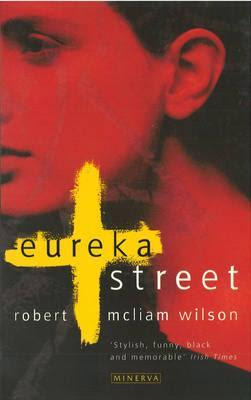 Eureka Street by Robert McLiam Wilson
A kind of love story for Belfast and its people. The story has a wonderful sense of place and is full of pathos and humour as Chuckie and Jake try to navigate being poor, working-class friends from different religions in a city still riven with sectarian tension and violence. It’s beautifully written and has a strong emotional resonance, with the story switching from laugh-out loud moments to deep melancholy and tears. It has as much relevance for understanding Northern Ireland now, as it did then.
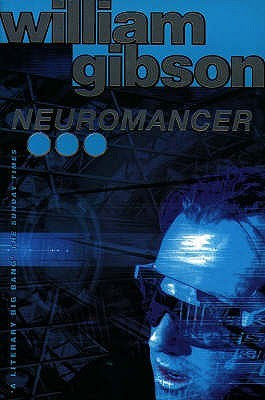 Neuromancer by William Gibson
Published in 1984, the tale has aged remarkably well given the centrality of digital technologies to the storyline. It's a cyberpunk thriller that pits Case, a has-been hacker, and Molly, a cyborg, street-smart samurai, against a powerful AI that serves a shady business clan. Along with a whip-smart, intriguing and well-paced plot, the prose is evocative and delightful. It’s easy to see why the book won so many awards and how it became so influential in shaping thinking about networked technologies and the worlds they create. It remains an excellent, engaging, thought-provoking read.
A Capital Crime by Laura Wilson
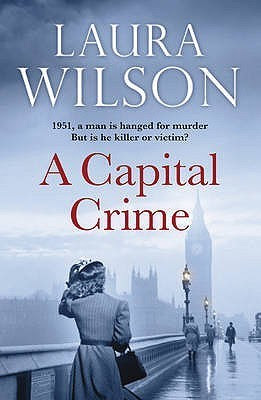
A fictionalised account of the events at 10 Rillington Place, where two sets of murders occurred in the early 1950s, sending two men to the hangman. The first murderer was convicted in part on the evidence of the second one, casting significant doubt on the initial investigation, trial and guilty verdict. In Wilson’s telling DI Stratton is the lead officer in both cases. The result is a very nicely plotted tale that is very strong on exploring the psychological side of investigating emotive cases with criminals who constantly lie and in charting character development. The pacing, atmosphere and sense of place and time adds to the telling.
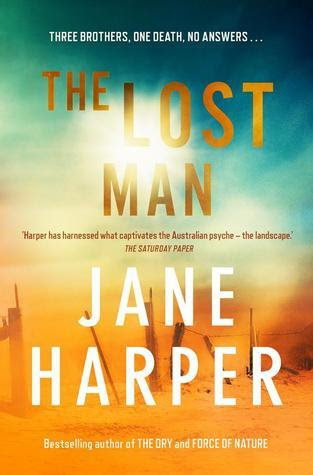 The Lost Man by Jane Harper
Deep in the Australian outback Cameron Bright’s body is discovered by his two brothers at Stockman’s grave, a bleak, isolated spot, having perished in the searing heat. Harper’s tale charts Nathan’s faltering investigation into his brother’s death. The telling is nicely evocative, with a strong sense of place, realistic rendering of ranch and family life, and tensions and social relations among an isolated, resilient community, and well-painted characters. The real strength of story is the tight crafting of plot, which is free of awkward or contrived plot devices; mixing reminisce and mystery it creates a slow burn sense of unease and intrigue, leading to an understated and satisfying denouement.
 Black Betty by Walter Mosley
Easy Rawlins has fallen on hard times; his property business has been hustled out from under him and he’s living in rented accommodation with his mute son and young daughter. He’s been asked by a white PI to find Black Betty, famed for turning men’s necks and wrapping them around her fingers. Easy's search for the aging siren quickly leads him into deadly trouble. As well as a compelling mystery, with a couple of nice sub-plots, Mosley does an excellent job at charting the social relations and geography of being black in Los Angeles in the early 1960s. Mosley nicely portrays racial tensions and injustices through a hardboiled style with a tender underbelly. A wonderful, noir read.
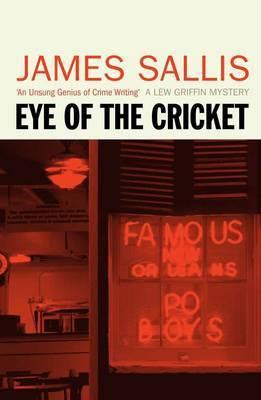 The Eye of the Cricket by James Sallis
 Lew Griffin is a some-time English literature academic, some-time detective, and always melancholy with a self-destructive streak, scraping by in New Orleans. Now in his 50s Lew finds himself looking for three missing children. He takes his usual meandering path through bars, restaurants, back streets, shelters, and philosophical reflections, meeting a new love on the way. But as usual he finds it difficult to keep everything on track. Sallis spins out the tale at a sedate, reflective pace, pausing to dwell on the nature and meaning of life and the social realities of being poor in the Deep South. I was captivated for the entire story.
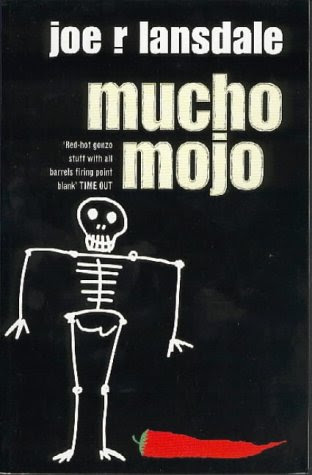 Mucho Mojo by Joe Lansdale
 My introduction to Joe Lansdale, one of my favourite authors. I first read the book in 1996. The tale is told from the perspective of Hap Collins, a middle aged, white field worker, who is best friends with Leonard Pine, a tough, queer black man, as they investigate the disappearances of a number of kids. The style is a kind of porch-told recounting of a mystery adventure, infused with dark humour that is captivating. The nicely spun plot mixes detection, romance and lost love, violent confrontations, and social commentary on race, religion, family and poverty in the Deep South. It has lost none of it vitality or social relevance, and Hap and Leonard are alive on the page. A wonderful, entertaining read.
 Infinite Detail by Tim Maughan
Infinite Detail tracks life before and after a catastrophic cyberattack that takes down the global internet and permanently disables every digital technology and system, following two threads, one set in Bristol, the other New York. Maughan nicely juxtaposes life before and after the crash, raising thoughtful questions and observations about a world becoming increasingly dependent on digital technologies. The result is an engaging tale about our digital and surveillance present and future.
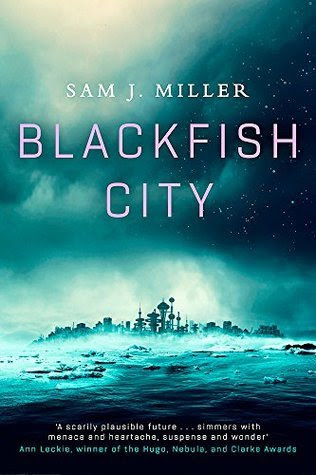 Blackfish City by Sam J. MillerPost-apocalypse, the world has been shattered geopolitically into a myriad of cities and wandering tribes. Qaanaaq is a floating city powered by geothermal energy constructed above the Arctic Circle. When a woman riding a killer whale and accompanied by a polar bear arrive it spawns rumours and unease. For four people her presence provides an impetus to resist the present order, with the story tracking their lives. The world building is very nicely done and blended into the mix is a swirl of climate, gender and bio- politics. The story rolls along at a well-judged pace, building to a strong denouement that provides a glimmer of hope without dimming a dark, stratified future.
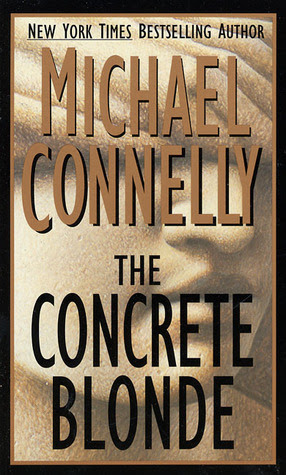 The Concrete Blonde by Michael Connelly
Bosch is on trial for shooting dead an unarmed man, Norman Church, believed to be the serial killer, The Dollmaker. On the opening day of the trial another body is discovered that appears to be a victim of The Dollmaker, but was murdered after Church’s death. Drawing on his experience as a veteran police and courts reporter for the LA Times, Connelly weaves together a well plotted police procedural with a feisty courtroom drama, creating a highly compelling, tense, and expertly plotted tale. There isn’t a single element out of place and the twists and turns keep coming. Interestingly, given present protests against policing culture and methods, there is a strong critical analysis of the police running through the book, written not long after the Rodney King riots.
January 2, 2021
We all will
‘She should have been yours,’ Lana said.
‘She was never going to be mine.’ Anders emptied the beer bottle.
On the far side of the room Neal and Kerry revolved in a slow dance.
‘True, but you fell for her anyway.’
‘You can’t control your heart, Lana. The best you can do is suppress it, but it still knows.’
‘Who’d have thought you’d have a soft-centre?’
‘The worst of it is; he doesn’t really care for her.’
‘She can’t control her own heart. None of us can.’
‘And she’ll get hurt.’
Lana cast Anders a forlorn glance. ‘We all will.’
A drabble is a story of exactly 100 words.
January 1, 2021
Last quarter reviews
 I haven't posted any monthly summaries of book reviews since Sept, so here's what was read in October, November and December. The standout read was Robert McLiam Wilson's Eureka Street.
The Killing Bay by Chris Ould ****
The Scholar by Dervla McTiernan ***
Forgotten Ally: China's World War II, 1937-1945 by Rana Mitter ****.5
The Merry Misogynist by Colin Cotterill ***
The Dead House by Harry Bingham ****.5
The Plotters by Un-su Kim ****
Deep as Death by Katja Ivar ***
Broken Homes by Ben Aaronovitch ***.5
The Frangipani Tree Mystery by Ovidia Yu ****
Sicily ‘43 by James Holland ***.5
Crimson Lake by Candice Fox ****.5
Eureka Street by Robert McLiam Wilson *****
Land of Shadows by Rachel Howzell Hall ***.5
A Game of Ghosts by John Connolly ****.5
December 31, 2020
Review of The Killing Bay by Chris Ould (2017, Titan Books)
 An international mix of anti-whalers have gathered in the Faroe Islands determined to stop the killing of pilot whales. The day after an unsuccessful attempt to save a pod of whales being driven by boats onto the shore the official photographer of the protest group is found murdered. The body has been arranged in a staged manner and evidence is directed to a local fisherman, who happens to be the son-in-law of a CID officer, Hjalti Hentze. Once a suspect is named Hentze absents himself from the case. The fisherman claims to be innocent but is generally uncooperative with the police. The man in charge is determined to follow the single line of inquiry despite the circumstantial nature of the evidence and clear indications of outside interference in the case. Sure that there is much more going on and unhappy with how their superiors are handling the murder case, Hentze and some of his like-minded colleagues pick away from the sidelines, ruffling a few feathers in the process. They are aided by Jan Reyna, a British police officer who is visiting the islands, looking into the early life of his mother.
The Killing Bay is the second book in the Faroes series featuring British police officer, Jan Reyna, and local detective Hjalti Hentze. This outing is set just a few days after the first, with Reyna still on the island, taking a break to try to find out more details about his mother’s life on the islands. One thread of the story follows Reyna’s family investigation, told in the first person. The other, told in the third person, follows the investigation into the death of an activist photographer, who had been a member of anti-whaling protest group. The chief suspect is Hentze’s son-in-law, who had met his former girlfriend on a number of occasions over the previous weeks and whose alibi does not stand up to scrutiny. Hentze absents himself from the case, but the way it is being managed and interference from outside authorities spurs him to take covert interest. While Hentze and a couple of colleagues do most of the running, they occasionally turn to Reyna for help. Ould creates a decent sense of place and both threads are intriguing, though the family inquiry is a little threadbare, and the murder a little drawn-out. There was no great surprise in the denouement, but that was fine as there’s nice character development and both threads were interesting journeys.

December 30, 2020
Review of The Scholar by Dervla McTiernan (2019, Sphere)
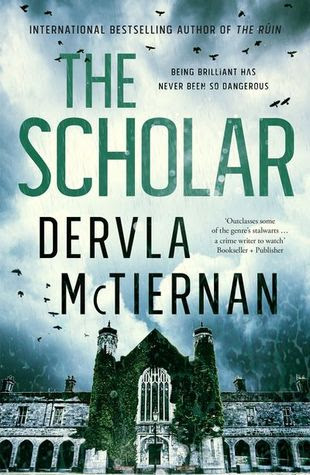 DS Cormac Reilly’s girlfriend Emma works in a privately funded biochemical lab at Galway University. Late one evening she discovers a young woman dead in the car park outside the lab. The first person on the scene is Reilly, who quickly takes charge. There’s no indication that Emma was involved in the death, but he’s well aware of a previous accusation of murder and a traumatic past. After a year of working cold cases he’s just been shuffled back into rotation. He knows he should absence himself from the case, but his instinct is to try to quickly clear Emma from the inquiry and move the investigation forward. However, it’s soon clear that it might be a high profile case when the ID of Carline Darcy, granddaughter of the founder of Darcy Therapeutics, a hugely successful pharmaceutical company and the sponsor of the lab, is found on the victim. The company is highly secretive and only willing to give the bare minimum of help to the police and office politics are not aiding the investigation either.
 The Scholar, the second book in the DS Cormac Reilly series set in Galway, charts Reilly’s quest to clear his girlfriend’s name and catch the killer. It’s a relatively straightforward police procedural, with one major thread focusing on the young woman murdered outside of the lab, and a secondary thread concerned with tying up the loose ends of a father’s attempt to kill his family. The two intrigue points on the major thread are the involvement of Reilly’s girlfriend as the discoverer of the victim and initial suspect, and the link to Carline Darcy, whose grandfather owns Darcy Therapeutics, which sponsors the lab. Reilly should absent himself from the case but doesn’t, and Darcy Therapeutics is obstructionist and has the police and university management tip-toing around the case. It makes for some intrigue and tension, though the story is quite linear and in the end quite quickly and easily wrapped up with little sense of mystery. Instead, the tale seemed designed to provide a window onto Reilly, his relationship to Emma and her past, and fill out some of their backstory. That works fine to a point, especially since it is told in an engaging voice, but also makes the story a somewhat staged. Overall, a fairly decent second instalment to the series.