Jeanette Larson's Blog, page 2
May 15, 2020
BirdNote: Chirps, Quirks, and Stories of 100 Birds from the Popular Public Radio Show
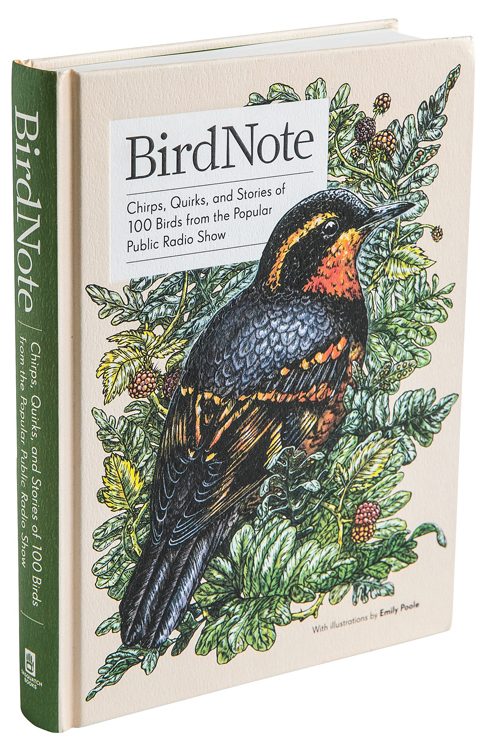 In 2004 Seattle Audubon’s team began writing “compelling stories about the intriguing ways of birds.” These short, one-two minute pieces, were recorded for local public radio. In 2006, the program began to expand and is now heard on over 200 public radio stations. In Austin, it can be heard as part of some Living on Earth segments on KUTX-90.5 FM. New and older segments can also be heard on-line at https://www.birdnote.org/shows/.
 The book, BirdNote, edited by Ellen Blackstone with illustrations by Emily Poole, is a compilation of 100 of the best stories from the radio show. Usually covering a single page, with an illustration of the bird being discussed on the facing page, each brief piece features the habits, quirks, songs, biology, and idiosyncrasies of a bird. Articles include: Is anting an avian spa treatment? How does a finch’s beak help it eat sunflower seeds? Why do some gulls have a red dot on their bills? Did you know that Red-winged blackbirds have a harem? The bright red “epaulets” warn other males to stay away from his many female companions. Roadrunners sound like a lonely puppy. And Barn swallows are natural pest control. The vignettes are informative, charming, poignant, and often humorous.
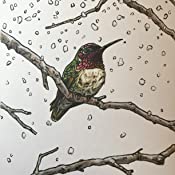 The short pieces make it easy to dip in and sample entries, but the index also allows readers to look up specific birds. This compilation, published in 2018, focuses a lot on birds of the Pacific Northwest, understandable given the origins of the program. More recent programs feature birds from all over North America, and even some worldwide birds. A feature from the program that is not able to be replicated in the book are the sounds and songs included in most episodes. These come from BirdNote’s partnership with Cornell Lab of Ornithology. On the other hand, the illustrations by Emily Poole are, of course, not seen with aural pieces and will be of special interest to artists and illustrators. Each segment is vetted by experts and the readers are professional narrators, storytellers, and DJs. Readers who are also listeners may hear these voices while reading an episode.
 Get a copy for yourself and as a gift for a birding friend.
Note: This post was originally written for Travis Audubon's blog, Smoke Signals.
FTC Notice: I purchased a copy of this book for review.


April 17, 2020
Bird Cams
Bird cams are fascinating and viewers can get caught up in the drama of watching birds in their native habitats or housing. With the Covid-19 virus keeping us physically distant from each other, in most jurisdictions you can still take bird walks. But if you can't, try bird cams. You get a real "bird's eye" view (sorry) of nests, feeders, and other boxes.
Click on the link to visit each bird camera. Most are live so, of course, the bird may be away from the location. Many sites do include recorded video to enjoy if the birds are not there or it is too dark to see them. I'll add more as I find them, and please let me know if any disappear (some are hosted by businesses or individuals). Watching bird cams is very soothing although there can sometimes be drama.
Note: These are not in any particular order.
Owl Cam from Cornell Lab Bird Cams sponsored byWild Birds Unlimited. Watch a Barred Owl
West Texas Feeders from West Texas Avian Research sponsored by Perky Pets. Watch Hummingbirds and other birds at feeders.
Sapsucker Woods Pond Cam hosted by Cornell Lab. Watch ducks, herons, and other water birds and waders.
Northern Royal Albatross hosted by New Zealand Dept. of Conservation. Many of us will never get to see these beautiful birds in real life.
Panama Fruit Feeder Cam at Canopy Lodge sponsored by Cornell Lab of Ornithology, the Canopy Family, and explore.org., features various fruit eating birds in Panama.
Eagle Cam hosted by explore.org. This cam focuses on a bald eagle nest is located near a trout hatchery in Decorah, Iowa
Osprey Nest sponsored by Hog Island Audubon Camp and explore.org. A pair of Osprey have been returning to this nest for years.
Cornell Feeder Watch Cam allows us to view common birds like doves and grackles feeding but also other birds passing through Sapsucker Woods.
March 9, 2020
The Nest That Wren Built

 Carolina wren nestlings
(photo by Randi Sonenshine)Following the pattern of the well-known rhyme, "The House that Jack Built," Randi Sonenshine tells the story of nesting Carolina wrens. Stanzas are filled with factual information (males help with nest building, spiders feast on mites that would threaten the nest) and gentle illustrations, ink and colored pencils on tinted paper, by Anne Hunter show eggs laid, hatchlings in the nest, Papa bringing food to the nest, and babies finally flying off on their own. A glossary defines bird terminology and a page of Wren Facts adds to the information provided in the poetry. The simple text and familiar rhythm of The Nest That Wren Built, make this a great read-aloud for kids preschool through first grade.
 Inside page
This is the bark, snippets of twine,spidery rootlets, and needles of pinethat shape the nest that Wren built.
 Nest in a cardboard box
 in the authors garage
(photo by Randi Sonenshine)Carolina wrens are more colorful than most wrens and fairly easy to identify by their musical song. Males and females look very similar, although the male may be slightly larger in size. They are generally found from central Texas to the east coast, north to the Great Lakes area. The adults live in pairs most of the year and may mate for life. They usually have two broods a year, although in the South they may have three. These are very beneficial birds, dining mostly on insects, adding a small amount of seeds and fruit to their diet. Carolina wrens are not picky about their nesting sites. While they are known to nest on tree stumps, shrubs, and branches, they may build their nest in mail boxes, hanging baskets, cardboard boxes in a garage, or even outdoor lights. They usually build several nests before deciding which to use so consider building a nesting box for them.
 Photo: By Dan Pancamo - Flickr: Carolina Wren
FTC Disclosure: I received a complimentary review copy from the publisher. I receive no compensation for reviewing the book.
March 2, 2020
Whooo-Ku Haiku: A Great Horned Owl Story
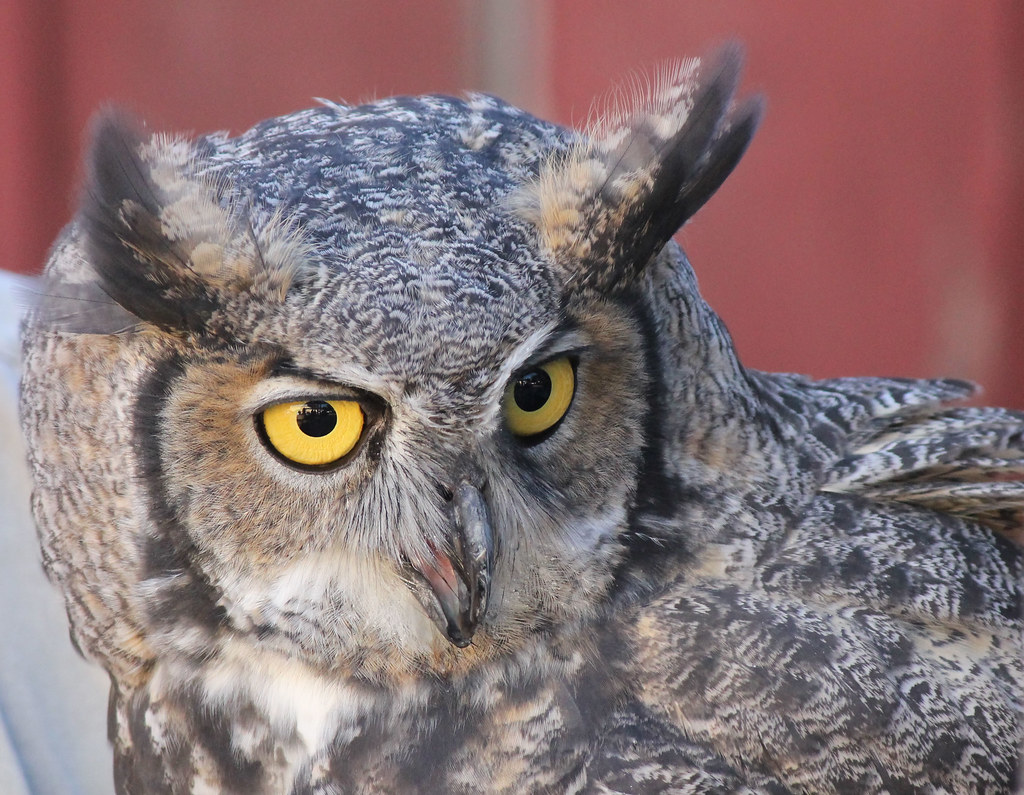
 There are more than 200 species of owls in the world and about 20 in North America. The Great Horned Owl is the most common and probably the most beloved. Through haiku, Maria Gianferrari introduces readers to a family of owls as they find a nest (Great Horned Owls don't make their own nests; they use abandoned nests in wooded areas), lay eggs, hunt, brood, and raise their young. Gianferrari doesn't shy away from the harsher parts of nature: an egg is lost to a crow's attack and a chick has to be rescued from a hawk. But we watch as two beautiful owlets grow up and soon fly off to find their own homes.
 (Photo from Creative Commons)
Told in three lines of 5, 7, and 5 syllables, haiku is an ancient and popular form for nature poetry. Gianferrari's story is lyrically told and packs in a lot of information in these sparse lines. The tale is so well told that most young readers probably won't even realize it is poetry. Some words will need defining (ex. Mama mantles is used to mean the spreading of wings and tail to cover something) but overall this will be very readable and understandable by most 2-6 graders.
Back matter provides more information on Great Horned Owls, including their big eyes, their weight and wingspan, and what they eat. References are made to excellent websites, including "Owl Pages," a great site that provides information on owls of the world and provides sound files to hear the owls.
 Interior page
Dreamy illustrations by Jonathan Voss were created using sepia ink and watercolors and provide clear representations of the owls' cycle of life, habitat, and habits.
Like most owls, Great Horned Owls are primarily nocturnal so we have to listen for them after dark. They usually begin hunting at dusk, so if you are lucky you may catch sight of this swift bird looking for food to bring back to a nest. Look also on fence posts and tree limbs on the edges of open areas. Unlike many birds, Great Horned Owls nest during the winter, so look high in trees like cottonwoods for birds incubating eggs. One way to encourage owls to stick around in your neighborhood is to build owl houses for them to nest in. These can be purchased but simple plans are also available on the Internet.
PRIZE: WHOOO? YOUU! The publisher, who provided an advanced copy of the book to me for review, will give away a copy to a US resident. Leave a comment here or email your information to Maria through her website, by March 21 to be entered in a drawing. One winner will be selected.
 WHOO’s Maria Gianferrari? She’s a self-proclaimed bird nerd with a special fondness for raptors. Her love affair with birds began in 7th grade science class when her teacher, Mr. Lefebvre, initiated a bird count. While walking in her neighborhood, Maria’s always on the look-out for all kinds of birds, and she loves searching winter tree tops for nests in her northern Virginia neighborhood where she lives with her German-scientist husband and German speaking daughter. This is her first book with GP Putnam’s Sons. She’s also the author of another bird book, Hawk Rising (reviewed here 6/5/2018). To learn more about Maria, please visit her website: mariagianferrari.com.
FTC Disclosure: I received a complimentary review copy from the publisher. I receive no compensation for reviewing the book.
February 12, 2020
Let's Discover Birds
 Divided into sections by characteristics (nesters, songbirds, water dwellers, etc.) the text in Let's Discover Birds explores the sounds and physical identification of a variety of birds. Each double page spread focuses on a couple of birds. Along with brief facts ("House sparrows nest in empty buildings and birdhouses."), there is an activity, a sticker, and fun facts ("A group of larks can be called an exaltation.") or jokes. Final pages encourage kids to fill in the shapes with stickers that are included.
Most of the birds, like geese, robins, and pigeons, will be fairly easy for kids to spot around their homes or in parks. Some, like puffins and kittiwakes will require a trip to an aquarium or specific areas of North America. The illustrations of the birds are realistic and clear with general identifications markings.
 This book is part of a spin-off series from an animated film, the illustrated characters are those from Helen Oxenbury's book, Let's Go on a Bear Hunt, but the family sets out to discover birds instead of bears. Other than the human characters, I'm not sure why this is a "We're Going on a Bear Hunt" book as the text doesn't follow the pattern of that fun action activity, but Let's Discover Birds will get the kids out of the house and looking for birds. Because this is an activity book with stickers and is designed for kids to write and color in, it won't be found in many libraries. Consider it as a gift for a budding birder.
FTC Disclosure: I received a complimentary review copy from the publisher. I receive no compensation for reviewing the book.
January 27, 2020
Audubon Makes Prints Free to Download
 Cedar Bird
(Audubon Society)
 American Avocet
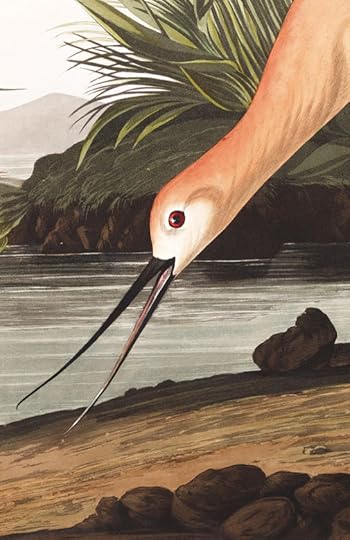
(Audubon Society)I'm a little late sharing this but it is still important news. In November, 2019, The Audubon Society announced that it has made 435 prints from the legendary Birds of America available for free download in high resolution images. The collection of life-size prints were based off of Audubon's own illustrations. They were painted en plein air, and have long been coveted "for their exactness as well as their outstanding beauty." They are displayed on the Audubon website in alphabetical order with the original accompanying text, making them a great resource for learning about birds. A second sort allows you to find state birds included in the collection (not all state birds are available, however). It's hard to decide on just a few favorites but you will find that you spend hours looking at the plates and learning about the birds, where and how John James Audubon found them, and reading his field notes. Each image page also includes links to the Audubon Guide to North American Birds for additional information. The Cedar Waxwing, for example, was labeled as Cedar Bird by Audubon. Check it out!
December 16, 2019
Crows Could be the Smartest Animals Other than Primates
 American Crow Blogging has been a bit slow lately, in part because I've been busy with a lot of life things. I hope to catch up on reviews in the new month or so. Yes, I've made that promise before. In the meantime I wanted to share a really cool article from BBC. It ties in nicely with a review from 2016 of
 Since we moved back to Central Texas I've been seeing a lot more crows. The American Crow is the "default" crow for most of North America and is closely related to Ravens (which are moving into new territories including Central Texas). There are about 40 species of crows and they are found all around the world.
One of the most interesting things in this article is the explanation of crow intelligence and how it differs from primate intelligence. New Caledonian crows, described in Turner's book, actually seek out specific plants to use as tools. Be sure to click on the video clip to see a crow working to accomplish a series of tasks. You can almost see the crow thinking through the process. Amazing! Click the link below for the BBC article.
 Pied Crow, Tanzania
Crows Could be the Smartest Animals Other than Primates
July 3, 2019
Birds of Every Color
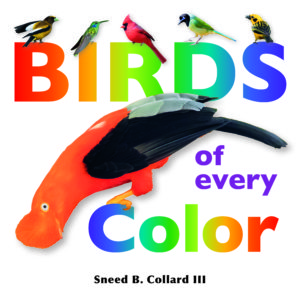 This is a simple and clever introduction to birds that will appeal to many ages. One of the main attractions of birding--the thing we ooh and ahh over--are the amazing colors of birds. From red to green and blue, from shimmering to surreal, Sneed B. Collard III has photographed and described the brilliance of feathers, feet, and other bird features. He explains the source of the colors--the food the birds eat that produce Carotenoids, melanins that the bird produces itself, keratin (like our fingernails) that produces structural coloration, and even refracted light going through feathers (which is also a type of structural coloration). While we love the beautiful and seemingly endless colors, colors serve a variety of purposes for the bird, ranging from recognizing individual birds of their own kind, to attracting mates, and hiding from prey. The colors serve an important purpose in bird survival.
Oversized photos are glorious and illustrate the birds in their natural habitats. Written for two reading levels, each page has short sentences ("Brown colors help birds hide.") for younger readers but also more detailed information about the bird, its colors, and habitat in longer paragraphs that will appeal to older readers. A final double-page spread invites readers to identify the colors seen in an array of multicolored birds. The book ends with a glossary of "Colorful Words."
 (Photo by J. Larson)Collard birds with his son, Braden, who took many of the photos. He is also the author, and photographer, of many other bird books, including
Fire Birds
and Warblers & Woodpeckers: A Father-Son Big Year of Birding.
(Photo by J. Larson)Collard birds with his son, Braden, who took many of the photos. He is also the author, and photographer, of many other bird books, including
Fire Birds
and Warblers & Woodpeckers: A Father-Son Big Year of Birding. It would be easy to quibble about birds that were not included. Some of my favorite, like the Painted Bunting, appear to have every color. However, what is clear is that Collard has covered a wide range of birds in all their dazzling glory very well. And readers will be on the lookout for even more!
FTC Disclosure: I received a complimentary review copy from the publisher. I receive no compensation for reviewing the book.
June 5, 2019
Crane & Crane
 In areas of high growth and construction, we often joke that the state bird is the construction crane. But in many areas of North America we can also enjoy seeing real, live cranes. (In Rockport, the only naturally migrating colony of whooping cranes spend the winters, but we also get sandhill cranes there.)
In Crane & Crane, Linda Joy Singleton compares the construction crane with the sandhill crane. She very simply, yet clearly, conveys a number of concepts that compare the object with a living thing. This allows her to show more than just the similarities, also visually demonstrating how nature inspires technology and how mechanical things can mirror the natural word.
Using double page spreads to show both a living crane and a construction crane, Singleton encourages readers to view these similarities as a sandhill crane lifts, stretches, honks, grabs, glides, and more. On the facing page a construction crane is performing the same actions and making the same sounds. By the end of the book readers discover that while the construction crane was building a house, the bird was building a nest. A final page labels parts of both cranes.

In addition to showing young readers how both cranes operate, the book teaches verbs. Only the final word, "home," is a noun. Children will enjoy looking at the details and can be encouraged to repeat and act out some of the words, especially onomatopoeic words like "plop" and "swoosh." Watercolor and crayon illustrations by Richard Smythe are bright and light and the pictures add a lot of details to support the single words on each page.
 Sandhill Cranes, Bosque Redondo, NM While Crane & Crane focuses solely on the sandhill crane, which are found in marshes and fields and prairies throughout much of the northern and southwestern parts of North America, there are many more species in the world with only the sandhill and whooping cranes native to North America. I do wish Singleton had included information specifically on cranes as children who like birds will want to know more about this amazing species. They are among the largest birds in North America with extremely large wingspans. They are also very vocal birds so check out websites like Cornell Lab of Ornithology that provide sound files.
FTC Disclosure: I received a free copy of this book from the author but receive no compensation for the review.
May 13, 2019
Sounds of Nature: World of Birds
 This is an interesting book because it is interactive, allowing readers to actually hear the sounds of birds in their natural environment. Organized by habitat--rainforest, mountains, desert, prairie, woods, ice, wetlands, city, ocean, and bush--each double-page spread features 6-7 birds, providing a brief description of its sound along with a "press here" button to hear one birdsong per group. The final double-page repeats the sounds (actually it is where the playback equipment is housed) and offers an overview of what a bird is, as well as information on the different orders of birds. The sound buttons are repeated with information on the habitats.

Two cautions: because of the choking hazard from the small sound producing part, the book is not for young children (3 and under) and because the sound producing part is in the back cover it can sometimes take a bit of pressure to produce the sound. The sounds in the book were created in association with Cornell Lab of Ornithology. Although it is not possible to identify individual birds in most cases, the book does offer a rare opportunity for kids to hear the sounds of emus, penguins, and other far-flung birds, and they will love creating a cacophony of sound by pushing the buttons. The illustrations are colorful and appealing and reasonably realistic enough to help with identification. The book was a 2019 Outstanding Science Trade Book for Students: K–12 (National Science Teachers Association and the Children's Book Council).
FTC Disclosure: I received a free copy of this book from the author but receive no compensation for the review.