Dan Jorgensen's Blog, page 410
March 13, 2018
No agonies over those word choices
“As a kid, I'd buy novels with these magnificent Chris Fosse covers which showed an enormous contraption hovering over a planet, and you'd always think 'Where's that going to come in?' And it never did! It was always slightly disappointing when the contents of a book never lived up to the cover.”– Alastair Reynolds
British SciFi writer Reynolds, born on this date in 1966, specializes in dark hard science fiction and what has been termed “space opera.” A native of Cornwall, he also lived in Wales, Scotland and The Netherlands, studying physics, astronomy and literature before deciding that what he really wanted to do was combine them all with his writing. He said reading historical novels also inspires science fiction. “There are similarities between historical novels and science fiction,” he said. “Being thrown into the Napoleonic Wars is just as much of a different world as space.”
The best way to check out Reynolds writing might be through his Revelation Space series, which includes a number of novels, two novellas, and eight short stories. It’s set over a span of several centuries in a consistent future universe he calls the Revelation Space universe.
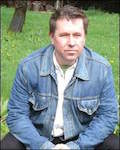
A one-time employee of the European Space Research and Technology Centre (part of the European Space Agency), he started full-time writing in 2004. Reynolds prefers using real science in his books, especially what he believes will be possible. But, he said he doesn’t hesitate to use what seems impossible – like faster-than-light travel – when it helps advance his stories. His advice to SciFi writers is to just move forward with ideas and your creativity.
“One of the big breakthroughs I had as a writer was when I stopped agonizing over every word.”
Share A Writer’s Moment with a friend by clicking the g+1 button below.


March 11, 2018
Splashing Into The Writing Pool
“My joke is that my father was a minister and my mother was an English teacher, so I'm trained to see the world in terms of symbols, which is hard when you just want to make toast.” – Libba Bray
Born Martha Elizabeth Bray in Alabama on this date in 1964, “Libba” grew up in Texas and now makes her home in New York City where she went to work as a book publicist and advertising specialist after college. After working on behalf of other people’s books for a number of years she dived into the writing pool herself and became a best-selling author right from the start.
 Her first novel, 2003’s A Great and Terrible Beauty – the first in the Gemma Doyle Trilogy – not only was a New York Times bestseller but also a Book Standard's Teen Book Video Awards winner. Bray also won the prestigious Michael L. Printz Award, recognizing literary excellence in Young Adult literature, for her 2009 book Going Bovine.
 Bray’s most recent books for young readers are the Divinersseries – three books and counting and all best sellers.
“I was a big reader as a kid,” she said. “It was Charlotte's Web that showed me you could feel as if you were actually living inside a book.”
Share A Writer’s Moment with a friend by clicking the g+1 button below.
March 10, 2018
Poetry's domain is in our hearts
“For poetry there exists neither large countries nor small. Its domain is in the hearts of all.”– Giorgos Seferis
Born in March 1900, Seferis – one of the most important Greek poets of the 20th century – had the rare distinction of being a star in both politics and poetry. He won the Nobel Prize for Literature while also serving as a career diplomat in the Greek Foreign Service, including a 5-year stint as Ambassador to Great Britain. Seferis was awarded the Nobel Prize "for his eminent lyrical writing, inspired by a deep feeling for the Hellenic world of culture." For Saturday’s Poem, here are three short Seferis poems. In The Sea Caves
in the sea caves
there's a thirst there's a love
there's an ecstasy
all hard like shells
you can hold them in your palm.
In the sea caves
for whole days I gazed into your eyes
and I didn't know you nor did you know me.
Just A Little More
Just a little more
And we shall see the almond trees in blossom
The marbles shining in the sun
The sea, the curling waves.
Just a little more
Let us rise just a little higher.
Denial
On the secret seashore
white like a pigeon
we thirsted at noon;
but the water was brackish.
On the golden sand
we wrote her name;
but the sea-breeze blew
and the writing vanished.
With what spirit, what heart,
what desire and passion
we lived our life: a mistake!
So we changed our life.
Share A Writer’s Moment with a friend by clicking the g+1 button below.
In The Hearts of All
“For poetry there exists neither large countries nor small. Its domain is in the hearts of all.” – Giorgos Seferis
Born in March 1900, Seferis – one of the most important Greek poets of the 20th century – had the rare distinction of being a star in both politics and poetry. He won the Nobel Prize for Literature while also serving as a career diplomat in the Greek Foreign Service, including a 5-year stint as Ambassador to Great Britain.
Seferis was awarded the Nobel Prize "for his eminent lyrical writing, inspired by a deep feeling for the Hellenic world of culture." For Saturday’s Poem, here are three short Seferis poems.
In The Sea Caves
in the sea caves
there's a thirst there's a love
there's an ecstasy
all hard like shells
you can hold them in your palm.
In the sea caves
for whole days I gazed into your eyes
and I didn't know you nor did you know me.
Just A Little More
Just a little more
And we shall see the almond trees in blossom
The marbles shining in the sun
The sea, the curling waves.
Just a little more
Let us rise just a little higher.
Denial
On the secret seashore
white like a pigeon
we thirsted at noon;
but the water was brackish.
On the golden sand
we wrote her name;
but the sea-breeze blew
and the writing vanished.
With what spirit, what heart,
what desire and passion
we lived our life: a mistake!
So we changed our life.
Share A Writer’s Moment with a friend by clicking the g+1 button below.
March 9, 2018
The pages that sell a book
“Nobody reads a mystery to get to the middle. They read it to get to the end. If it’s a letdown, they won’t buy anymore. The first page sells that book. The last page sells your next book.” – Mickey Spillane Born on this date in 1918, Spillane was a master of “successfully getting to that last page” with his tales. Born Frank Morrison Spillane, “Mickey” created one of the most memorable of characters, the hard-boiled detective Mike Hammer. At the height of his popularity in 1980, Spillane, who died in 2006, was responsible for a remarkable 7 of the year’s 15 top-selling fiction books featuring his hero.
Like many great writers, Spillane used “life experiences” as background for his own work, starting during his high school days in New Jersey. His jobs included a time with the circus, lifeguarding, meatcutting, bartending and flying – something that led to time in the Army Air Corps during World War II.
 Spillane, who died in 2006, said he was “a writer not an author” who also loved to read, especially about history. “I think a lot of authors like history because they want to be part of it,” he once said. During the course of selling well over 225 million copies of his books, he succeeded.
 Share A Writer’s Moment with a friend by clicking the g+1 button below.
March 8, 2018
From Vision to Reality
“Create a compelling vision, one that takes people to a new place, and then translate that vision into a reality.” – Warren Bennis
Born on this date in 1925, Bennis was a scholar, organizational consultant and prolific author, widely regarded as a pioneer of the contemporary field of Leadership Studies. He was Founding Chairman of The Leadership Institute at the University of Southern California.
A leader and innovator almost from his earliest days, Bennis grew up in the New York-New Jersey area, was a standout scholar and athlete, and at age 18 became one of the U.S. Army’s youngest World War II officers. Winner of the Bronze Star (for bravery) and Purple Heart, he studied at Ohio’s Antioch College after the war, then went on to earn a Ph.D. at MIT.
 His writing career began in the early 1970s after he was named President of the University of Cincinnati. While there he authored two books on leadership: The Leaning Ivory Tower and The Unconscious Conspiracy: Why Leaders Can’t Lead. Bennis, who died in 2014, went to USC in 1979 where he wrote most of his 27 books, including the bestselling Leaders and On Becoming A Leader, both translated into 21 languages. His book, An Invented Life was nominated for the Pulitzer Prize.
“There are two ways of being creative,” Bennis once said. “One can sing and dance. Or one can create an environment in which singers and dancers flourish. Leaders must encourage their organizations to dance to forms of music yet to be heard.”
Share A Writer’s Moment with a friend by clicking the g+1 button below.
March 7, 2018
Unpredictable - The Best 'Real World'
“No matter what I do, no matter how predictable I try to make my life, it will not be any more predictable than the rest of the world. Which is chaotic.” – Elizabeth Moon
Born on this date in 1945, Moon has written science fiction, fantasy, newspaper columns and opinion pieces – all after serving a stellar career in the U.S. Marine Corps. Her most notable work is the Nebula Award-winning novel The Speed of Dark.
A native of McAllen, TX, Moon wrote her first piece (about her dog) at age 6 and decided then and there that she would someday be an author. After her time in the Corps, she began writing a weekly newspaper column and had her first Sci-Fi piece published in Analog magazine when she was in her late 30s. That led to regular pieces in Analog and ultimately her first novel, The Sheepfarmer’s Daughter, winner of the prestigious Compton Crook Award.
While most of her work has military science fiction themes, she has had everything from biology to politics to a space opera as her focus. The Speed of Dark is a near-future story told from the viewpoint of an autistic computer programmer, inspired by her own autistic son Michael.
“You can . . . make explicit certain social problems which . . . would be prejudged or not encountered at all in real life, because people have set up defenses against it,” she said. “Fantasy allows you to get past defenses.”
 “My personal feeling about science fiction is that it's always in some way connected to the real world, to our everyday world.”
Share A Writer’s Moment with a friend by clicking the g+1 button below.
March 6, 2018
Valuable Mistakes
“The most valuable thing you can make is a mistake - you can't learn anything from being perfect.” – Adam Osborne
Osborne, born in Thailand on this date in 1939, was a pioneer in the computer book field, founding a company in 1972 that specialized in easy-to-read computer manuals. By 1977, Osborne & Associates had 40 titles in its catalog before selling out to publisher McGraw-Hill, which continued the imprint as "Osborne/McGraw-Hill.” He said writing, like science, often benefits from "trial-and-error" and writers should never be afraid to give something a go and edit it later. Osborne earned a chemical engineering degree from the University of Birmingham and went on to study and earn a Ph.D. at the University of Delaware. He started writing computer manuals when he observed how difficult existing ones were for the average person to read. In 1981, he introduced the Osborne 1, the world’s first portable computer, now displayed at the Smithsonian Institution.
In addition to his publishing, he co-wrote a best-selling memoir and founded Paperback Software International Ltd, a company that specializing in inexpensive computer software. Its clever ads featured Osborne arguing that if telephone companies applied the same logic to their pricing as software companies, a telephone would cost $600. His career was cut short when he developed an incurable brain disease and died in India at age 64.
 Once asked about his ongoing successes, he noted, “I take what I see work. I'm a strict believer in the scientific principle of believing nothing, only taking the best evidence available at the present time, interpreting it as best you can, and leaving your mind open to the fact that new evidence will probably appear tomorrow.”
Share A Writer’s Moment with a friend by clicking the g+1 button below.
Those 'Valuable' Mistakes
“The most valuable thing you can make is a mistake - you can't learn anything from being perfect.” – Adam Osborne
Osborne, born in Thailand on this date in 1939, was a pioneer in the computer book field, founding a company in 1972 that specialized in easy-to-read computer manuals. By 1977, Osborne & Associates had 40 titles in its catalog before selling out to publisher McGraw-Hill, which continued the imprint as "Osborne/McGraw-Hill.” He said writing, like science, often benefits from "trial-and-error" and writers should never be afraid to give something a go and edit it later. Osborne earned a chemical engineering degree from the University of Birmingham and went on to study and earn a Ph.D. at the University of Delaware. He started writing computer manuals when he observed how difficult existing ones were for the average person to read. In 1981, he introduced the Osborne 1, the world’s first portable computer, now displayed at the Smithsonian Institution.
In addition to his publishing, he co-wrote a best-selling memoir and founded Paperback Software International Ltd, a company that specializing in inexpensive computer software. Its clever ads featured Osborne arguing that if telephone companies applied the same logic to their pricing as software companies, a telephone would cost $600. His career was cut short when he developed an incurable brain disease and died in India at age 64.
Once asked about his ongoing successes, he noted, “I take what I see work. I'm a strict believer in the scientific principle of believing nothing, only taking the best evidence available at the present time, interpreting it as best you can, and leaving your mind open to the fact that new evidence will probably appear tomorrow.”Share A Writer’s Moment with a friend by clicking the g+1 button below.
March 5, 2018
Engaging Kids' Imaginations
“A lot of people don’t associate books with technology, but that’s such a mistake. Although I haven’t abandoned reading bound books, I’m a big fan of reading on digital devices. I am able to carry a library in my hand, on my tablet computer. To me that is a miracle. Quite frankly, I don’t care whether they’re reading a bound book or on a tablet computer. I just want kids to read. – LeVar Burton
Burton, who recently celebrated his 61st birthday, knows how to reach people with his acting skills, but it was his daughter Mica who knew the power of social media and urged him to transform the popular PBS show Reading Rainbow into a web experience as well. With a hugely successful crowd-funding campaign, the Burtons created an e-version of the show that kids and their parents have enjoyed ever since the show left the airwaves.
 Burton first broke onto the scene and into our consciousness as the young star of the television miniseries Roots. In 1983, he became the host of Reading Rainbow. During his 23 years as host it won five Emmy Awards. Meanwhile, Burton also became a household name for science-fiction fans for his role in Star Trek: The Next Generation. But he never gave up on insuring that kids had the opportunity to read and be excited by reading.
“Reading a hard copy book and reading a book on an iPad are slightly different experiences, but what they both have in common is that you must engage your imagination in the process,” he said. “As long as we are engaged in storytelling that moves the culture forward, it really doesn’t matter what format it is.”
Share A Writer’s Moment with a friend by clicking the g+1 button below